

Colombia’s 2016 Peace Agreement has led to an unexpected outcome: the discovery of a new species of dinosaur.
Researchers now know that, around 175 million years ago, a 12-metre long sauropod, roamed around an area of northern Colombia. The scientific world is attributing the discovery of this new species of herbivorous dinosaur to the improved security situation that exists in Colombia since the signing of a 2016 peace deal, which put an end to half a century of civil war.
Just two years after the signing of the agreement, it was deemed safe for a group of researchers from the Universidad del Norte, Barranquilla, and the University of Michigan, United States, to visit the Serranía del Perijá, and gather fresh data.
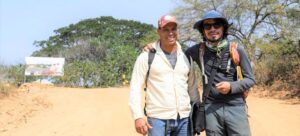
Searching for clues, 80 years on
The scientists returned to the place where a fossil of a dinosaur dorsal spine vertebra was found by a geologist working for an oil company in 1943. At the time no-one knew that it was part of a brand-new species and, after the find, the fossil was taken, along with some sediment samples, to the United States and given to the University of California scientific collection at Berkeley.
Aldo Rincón Burbano, professor at the Department of Physics and Geosciences at the Universidad del Norte in Barranquilla and one of the research leaders in Colombia, acknowledged that “without the security conditions provided in the area today, it would have been difficult to return to the field. This is due to the Peace Agreement.”
Those security conditions are monitored by the UN Verification Mission in Colombia, which was established by the Security Council in 2017 to support the progress of the Peace Agreement, and verify the reintegration of former combatants of the FARC-EP rebel group and their families into Colombian society.
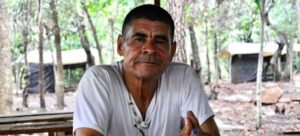
From fighter to guide
Former FARC-EP fighters provided logistical services, lodging, and guides for the researchers, as they tried to locate the site where the fossil had been unearthed some 80 years earlier.
Félix Arango, a 64-year-old former FARC-EP combatant who now works on an ecotourism project in Tierra Grata, accompanied them on long walks, searching for the exact spot. “I didn’t know they were looking for a dinosaur because they were studying rocks; luckily I was familiar with the area because the former 41st front of the FARC operated there”.
“We spent almost a year in the process, writing and searching, and although we didn’t find any new fossils, we managed to get to the site and find the same sediment collected alongside the vertebra in 1943”, says Mr. Rincón. “By studying the sediment, we were able to conclude that the vertebra was from a new genus, and a new species.”
They named the species Perijasaurus lapaz: the first part after the place where it was found, and the second as a tribute to the historic Peace Agreement. The dinosaur is similar to other sauropods of this period found in Asia, North Africa, and southern Patagonia, which were smaller than the later dinosaurs belonging to this group.
“We still must look for more fossils in rocks of the same age in other areas of the country. Including the Tatacoa desert in Huila; the Girón area in Santander; and Nobsa in Boyacá,”, says Mr. Rincón.
Mr. Arango, the former combatant who accompanied Mr. Rincón and his team, says that, hopefully, these other investigations can also tell the story of the experience of former combatants, who now, thanks to peace, play a different role in society.
Image: Digital reconstruction of Perijasaurus lapaz, a dinosaur discovered in Serranía del Perijá, northern Colombia.
