
More

    Honey Money Helps Bail Out Bangladesh’s Farmers From Debt, Endure Climate Change

    Keeping honey bees to supplement income from rice and mustard farming might not be a conventional model, but the bees are proving to be a boon in these times of climate change, helping farming families with some income to sustain themselves.

    Honey collection with mustard fields in full bloom and a blue sky in the horizon is now a common sight in the villages of Rajshahi. It brings money as the demand for honey burgeons. Coincidentally, it is also providing a boon for farmers affected by climate change.

    Honey production needs to keep pace with its perennial demand, that continues to grow in Bangladesh and also across the country’s border with India. This combination of the stars has ensured that there is an elaborate network of merchants willing to buy the golden viscous sweetener.

    It seems to have happened all of a sudden. and But NGOs workers who first introduced the idea among farmers in the late 90s are not surprised. The resilient farmers of Rajshahi have a long history indulging in cash crops. “Farmers here once practiced sericulture,” says Mobin Islam who works with a local non-government organisation (NGO) in the district. “Some years ago, they switched to growing groundnuts, until the floods destroyed the crop a few years ago.”

    Floods and misery in the char islands

    Lots of land in Rajshahi is char – river islands that have come up with the accumulation of silt. Growing groundnut here made sense to the farmers because the soil was sandy. Until the flood waters arrived.

    Farmers have suffered heavy losses because of the flooding for three years in a row. The flooding during the past three years have damaged crops and severely affected about 250,000 families. Experts warn that such disaster might come more often with the changing climatic conditions and apiculture farming is a boon as it aids the region’s resilient farming community.

    Earlier, the farmers took loans from the local moneylenders, or mahajans, and found it difficult to escape the debt trap. Many would migrate to Dhaka, Narayanganj, Gazipur and other cities in search of work. Some farmers also got help from different NGO.

    Vast stretches of the land are also barren, unfit for growing any crop. A small harvest of the aman rice crop, grown after the monsoon rains is all that they get from this land. Boro, or the winter crop, is a risk few farmers are willing to undertake. Instead, they grow mustard – and even though mustard is a subsistence crop, it helps sustain the bees. Hence apiculture, or honey bee farming. (All eight districts of the Rajshahi division put together are expected to produce no more than 3 lakh tonnes of mustard this year.)

    Government steps in

    The government has come in to support the honey producers. Local agriculture department officials provide the farmers with mustard seeds, fertiliser, boxes with a bee hive and honey bees, safety clothing, and importantly, training.

    Farmer Dulal Hossain collects about 25 kilos of honey from each of the boxes on this land every month. This got him six lakhs Bangladeshi Takas last year.

    Others who farm the local bee specie, serena, promoted by the NGOs say that they have a better demand. In fact, even the demand for the serena bees is high.

    Nepal Prime Minister Deuba Acknowledges “A New Variant Of COVID Has Been Detected In Nepal”

    0

    Addressing provincial chief ministers and government functionaries in an online interaction, Prime Minister Deuba spoke of “a new variant of COVID”.

    Nepal’s prime minister, Sher Bahadur Deuba, yesterday said that a new variant of COVID-19 has been detected in Nepal. Deuba said this while addressing a virtual interaction with the chief ministers of the country’s seven provinces and the concerned ministers of the federal government on Monday.

    Deuba did not mention the Omicron strain (B.1.1.529) of the SARS-CoV-19 virus during his address wired from Kathmandu’s Singh Durbar, according to Radio Nepal.

    Radio Nepal quoted the prime minister as saying, “It is said that a new variant of COVID has been detected in Nepal.”

    The prime minister stressed that an effective vaccine campaign was his governments present priority. This would help save lives.

    He said that though progress was made in the vaccination campaign against COVID-19, many doses are still lying in storage and have not reached the doorsteps of the people.

    He called on government functionaries, particularly the chief district officers, people’s representatives to work together with stakeholders in order to make the campaign effective.

    “I request all to actively engage in the campaign of protecting all the citizens from COVID-19 by administering them with a full dose of vaccine within mid-April, 2022,” Deuba said, according to Radio Nepal.

    Deuba appealed to security forces, health workers, political parties and others to ensure the full dose of vaccine.

    Experts worried

    On 6 December, a government spokesperson had confirmed the presence of Omicron variant of the coronavirus in two people, including a foreigner, in the country. But soon, the government went silent on the subject.

    Nepal’s health experts are worried. “The scene will be clear in the next two weeks, which is crucial for us,” today’s edition of The Kathmandu Post quoted infectious disease expert Prabhat Adhikari as saying.

    The previous peak in neighbouring India due to the Delta variant in March 2021 took around a month to spread in the landlocked country.

    Adhikari told the newspaper that “It will not take one month for the new variant to spread here is there is an outbreak in India, as the doubling time of the virus is only two to three days. Case doubling time for the Delta variant of the virus was six days.”

    The prime minister’s speaking about the “new variant of COVID” being detected in the Himalayan country could well put the spanner in the work of health experts like Adhikari.

    Red Cross, WFP Seek International Funds For Food As Afghanistan Faces A Grim Winter

    Kabul, 4 December

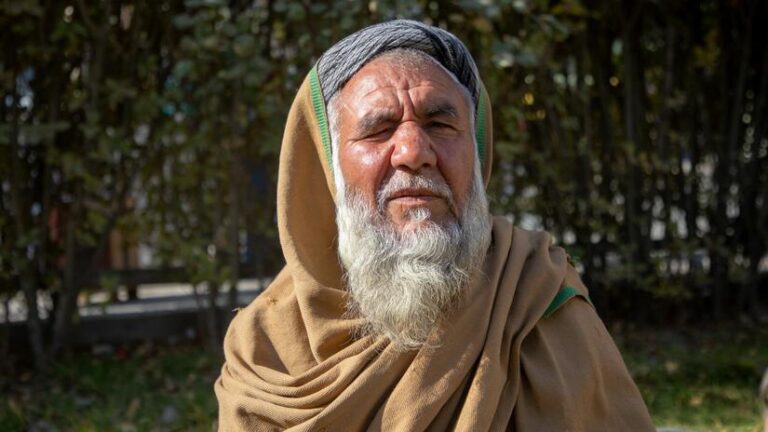
    Afghans are facing the worst drought and hunger crisis in living memory. Life-saving relief and supplies must reach people ahead of a harsh winter. The Red Cross and the World Food Programme have both geared up to serve the Afghan people and have sought aid from the world community.

    Afghanistan is in the grip of one of the worst droughts and food shortage crises in decades, threatening an unrivaled humanitarian catastrophe, says the says the International Federation of Red Cross (IFRC).

    The Red Cross warning comes on the heels of an earlier similar warning from the World Food Programme that pointed to a desperate food situation in the country. The WFP press statement spoke of Afghans selling their homes to be able to buy food. The  looming bitter winter is certain to make life more difficult for millions of Afghans, according to IFRC.

    Emergency food relief and winter survival kits are being urgently delivered by the Red Cross to people in areas worst affected by severe food shortages.

    Around 22.8 million people – 55 per cent of Afghanistan’s population – are experiencing high levels of acute food shortages. Severe drought has hit more than 80 percent of the country, crippling food production and forcing people from their land.

    Nearly 700,000 people have been internally displaced this year, joining some 3.5 million people already forced from their homes throughout the country, who all face a harsh winter, when temperatures can drop as low as -20C in some areas of Afghanistan.

    “Afghans have shown remarkable resilience in the face of this latest drought, growing hunger and decades of conflict,” says Mawlawi Mutiul Haq Khales, Afghan Red Crescent Acting President. “Millions of people are struggling to survive due to whole-scale crop losses, acute food shortages, and a lack of cash to buy basic necessities.”

    “Afghan Red Crescent teams have not stopped helping people with relief and healthcare, but the vast majority of families remain unassisted, lacking adequate food provisions, money for the very basic needs and survival kits to get through the harsh winter months ahead,” he said.

    IFRC is providing 3,000 tonnes of food relief for 210,000 people and winter survival kits are being urgently delivered by Afghan Red Crescent in some of the hardest hit provinces for those suffering shortages and loss of income. To mitigate the misery and hardships of winter, families are being provided with winter kits, including blankets, thermal insulation and heaters but additional funding is needed to expand the humanitarian operations.

    IFRC has sought 36 million Swiss francs to support Afghan Red Crescent to deliver emergency relief and recovery assistance to 560,000 people in 16 provinces worst affected by severe drought and displacement.

    The IFRC appeal is in addition to the US$ 2.6 billion sought by the WFP to feed vulnerable people in Afghanistan.

    An official of the IFRC said that this is the worst drought and hunger crisis faced by Afghans in living memory. Much faster international action is needed to avoid a humanitarian catastrophe in the coming months.

    “People are already going hungry in Afghanistan and conditions are continuing to deteriorate. I have spoken to doctors who are reporting increased cases of acute malnutrition among children. It will only get worse in the weeks ahead.”

    As well as immediate relief, IFRC appeal funds will help with establishing more drought-resistant crops and revitalising livestock, while supporting critical income generation for women, the elderly and those most at risk of spiraling poverty.

    The appeal by the two leading humanitarian organisations comes amid growing restlessness among people across Afghanistan over the Taliban’s incompetency in dealing with the humanitarian crisis in the country.
