More

    Venomous Snakes Slither into Nepal’s Hills as Climate Warms

    8,181 snakebite cases were officially recorded in the last year, 1,488 of which involved venomous bites. Experts believe the true number is much higher, especially in hill regions where data collection is sparse.

    The hills of Nepal, once considered too cool and rugged for many venomous snakes, are now becoming home to deadly reptiles long confined to the steamy plains of the Tarai in Nepal’s south. Health experts and scientists warn that climate change is driving this unexpected migration, raising urgent concerns about public health, preparedness, and medical infrastructure in higher-altitude regions.

    Dr. Prakash Budhathoki, spokesperson for Nepal’s Ministry of Health and Population, attributes this ecological shift directly to global warming. “Warmer temperatures at higher altitudes are facilitating the movement of lowland venomous snakes,” he said. “Clinical records from snakebite patients confirm the presence of Tarai-origin species in the hills.”

    Species such as kraits, cobras, and the highly venomous Russell’s viper are among those making this upward journey. Their presence has now been recorded in districts traditionally considered snake-free. Health workers in hilly districts like Dhading, Nuwakot, and Makwanpur have begun treating cases once seen only in the southern plains.

    “This is not just a case of a cobra being spotted in Lalitpur,” said Dr. Sher Bahadur Pun, Clinical Research Coordinator at Sukraraj Tropical and Infectious Disease Hospital in Teku. “It is an early sign that the cobra is adapting to the Kathmandu Valley’s environment.”

    In a striking example, a king cobra was spotted and confirmed to have laid eggs in the Gaurishankar Conservation Area – an area that includes Dolakha, Ramechhap, and Sindhupalchok districts, and reaches elevations as high as 7,181 meters. “This was unimaginable until recently,” Dr. Pun remarked. “It demands serious scientific inquiry.”

    Hills Increasingly Vulnerable

    While the Tarai still accounts for the majority of Nepal’s snakebite cases, experts warn that the hills are increasingly vulnerable. According to the World Health Organization (WHO), snakebites claim around 3,000 lives in Nepal each year, with over 37,000 bite cases reported annually. However, official government data recorded only 150 deaths last year – raising questions about underreporting and the lack of comprehensive surveillance.

    From January to mid-July this year alone, Sukraraj Hospital in Kathmandu has treated 378 snakebite patients – many from hilly districts. The number of daily cases surges during the monsoon, reaching as high as 25 per day. Fortunately, no deaths have been reported at the facility this year, but the trend is alarming.

    Health infrastructure in Nepal is poorly equipped to handle the rising threat. Of the 89 snake species in the country, 17 are venomous, and only 106 health centres are equipped to treat snakebite cases. Many local clinics lack antivenom or trained personnel. Nepal currently depends on polyvalent antivenom that does not cover all native venomous snakes, such as the green pit viper and the elusive Gurbe snake—both known for their potent venom.

    “Even when patients reach the hospital, they sometimes die because the antivenom available does not work on all species,” said Dr. Hemant Chandra Ojha, head of the Zoonotic and Communicable Disease Control Section at the Epidemiology and Disease Control Department (EDCD).

    According to Dr. Ojha, the changing climate is behind the broader shift in animal and insect populations. “Just like dengue and malaria have moved to higher altitudes, snakes are following,” he said. “Some may also be transported accidentally with goods from the lowlands.”

    Numbers much Higher

    The urgency of the situation is magnified by the fact that only about 20 per cent of snakebite victims in rural Nepal reach medical facilities in time. Many live in remote, economically disadvantaged areas where transportation is limited. Timely treatment – ideally within one hour – is crucial for survival.

    8,181 snakebite cases were officially recorded in the last year, 1,488 of which involved venomous bites. Experts believe the true number is much higher, especially in hill regions where data collection is sparse.

    To mitigate risks, Dr. Budhathoki recommends simple but effective precautions: keep homes and surroundings clean, avoid sleeping on the floor, use mosquito nets, and avoid storing trash that may attract rodents and, in turn, snakes, especially during the monsoon, when snake activity peaks.

    As Nepal’s climate continues to warm, the silent danger of venomous snakes in unexpected places is becoming a growing concern. The challenge ahead lies not only in monitoring their movement but in adapting healthcare systems to meet the threat slithering steadily uphill.

    Image: Hippopx

    At ‘Sahkar Samvad’ in Ahmedabad, Amit Shah Announces New Cooperative Initiatives on ICY

    The minister strongly defended the government’s decision to name the university after Patel, noting that though his contributions are massive, Patel chose humility over publicity.

    At an event marking the International Year of Cooperatives 2025, Union Home Minister and Minister of Cooperation Amit Shah held a ‘Sahkar Samvad’ with women cooperative workers from Gujarat, Madhya Pradesh, and Rajasthan in Ahmedabad. The dialogue highlighted a range of ambitious plans aimed at transforming rural livelihoods and strengthening the cooperative movement across India.

    Addressing a large gathering of women engaged in cooperative sectors, Shah underscored the historic contributions of Tribhuvandas Patel, whom he described as the father of India’s cooperative movement, and announced the establishment of the “Tribhuvan” Sahkari University in Anand district, Gujarat. The institution, named in Patel’s honour, is envisioned to produce a new generation of professionals to further the cooperative agenda in India.

    “Tribhuvandas Ji laid the foundation of the cooperative spirit in its true sense,” Shah said. “His work enabled over 36 lakh women in Gujarat alone to engage in business worth ₹80,000 crore, largely through cooperative platforms like Amul.”

    The minister strongly defended the government’s decision to name the university after Patel, noting that though his contributions are massive, Patel chose humility over publicity. “Even in Parliament, people asked who this man was. That’s the greatness of Tribhuvandas Patel – he didn’t seek fame but created it,” Shah remarked.

    Strengthening the Dairy Sector

    Shah outlined a multi-faceted strategy to boost rural incomes through the dairy sector, emphasising better dung management, animal health, and natural resource optimisation. He revealed that in the coming months, cooperative dairies would start leveraging cow dung to produce organic manure and biogas, creating an additional revenue stream for farmers.

    He stated that a system will soon be in place to ensure that 400 out of every 500 families involved in milk production in a village are associated with a cooperative. These cooperatives will also manage animal vaccination and dung utilization. “Within six months, these ideas will take a concrete shape and be implemented nationwide,” Shah confirmed.

    As a tribute to Patel, he urged all milk cooperatives to display his portrait and educate new generations about his visionary contributions to India’s cooperative ecosystem.

    Expanding the Role of PACS

    Shah also spoke about Primary Agricultural Credit Societies (PACS), describing them as potential hubs for rural development. He noted that PACS are now connected with Common Service Centres (CSC), Micro ATMs, Har Ghar Nal, Bank Mitra, and more than 25 such initiatives, following recent bylaw amendments.

    He encouraged PACS to diversify their services and urged villagers to be made aware of Jan Aushadhi Kendras that provide affordable medicines. “It’s essential that people in rural areas know they can buy medicine at much cheaper rates through these centres,” he said.

    Maximizing Market Opportunities

    Turning to crop cultivation, Shah advised maize and pulses farmers to register on the NCCF app, which allows institutions like NABARD and NCCF to procure directly at Minimum Support Price (MSP). “If the market offers better rates, farmers can still choose to sell in the open market,” he said, emphasizing the flexibility and profitability of the scheme.

    He also highlighted the growing demand for organic wheat, encouraging farmers to adopt natural farming practices and sell their produce via the National Cooperative Export Limited (NCEL) platform to secure significantly higher prices.

    Natural Farming for a Sustainable Future

    Speaking passionately about natural farming, Shah described it as a scientific practice that not only preserves soil and water but also increases crop yields. Sharing personal experience, he said his own field witnessed a 1.5 time increase in production after switching to natural farming.

    “Natural farming keeps you away from chemicals and closer to health,” he remarked. He elaborated on how earthworms serve as nature’s own fertilizer factories, turning soil into rich compost without the use of urea or DAP.

    The Cooperative Ministry, he added, has already formed national-level cooperative bodies to facilitate both the purchase and export of produce cultivated through natural methods. Profits from exports will be directly transferred to farmers’ bank accounts, ensuring transparency and benefit to the producers.

    Camel Milk Scheme and Future Plans

    In a significant announcement for Rajasthan and Gujarat, Shah revealed ongoing research into the medicinal properties of camel milk. He said the two state governments would soon jointly launch a camel milk value chain initiative, designed to boost prices for camel herders and conserve the native camel breeds.

    As the event concluded, Shah reflected on his dual roles. “Being Home Minister is a matter of pride, especially as Sardar Patel once held this post. But when I became Minister of Cooperation, I felt I got an even bigger responsibility – one that directly touches the lives of India’s poor, farmers, and animals,” he said. He announced plans to organize ten more cooperative chaupals in three states each to gather grassroots suggestions that will shape future policies under the Ministry of Cooperation.

    Kabul Residents Endure Severe Power Outages Amid Heatwave, Demand Urgent Action

    Afghanistan’s domestic power generation, though improving, remains insufficient. Hydroelectric, solar, and fossil fuel-based plants contribute to the national grid, but infrastructure limitations and growing demand have kept supply far below need.

    As temperatures soar across Kabul, residents of the Afghan capital are grappling with worsening power outages that have disrupted daily life and sparked growing frustration. With limited access to electricity during a brutal heatwave, many households are finding it nearly impossible to stay cool, access clean water, or manage daily routines.

    Ahmad, a Kabul resident, shared his frustrations: “Electricity usually comes after 5 PM and lasts for two or three hours, then it cuts out again. This has caused many problems and delays our personal work.”

    Masoud, another resident, echoed similar concerns: “We barely have electricity during the day. It goes off at 9 in the morning and returns around 5 PM, only to be cut again at 8 PM. We can’t run coolers, fans, or air conditioners at home, and more importantly, we’re also facing water shortages, which brings even more challenges.”

    Despite widespread complaints, Da Afghanistan Breshna Sherkat (DABS), the country’s main power utility, has yet to issue an official statement in response to the growing discontent. Several attempts to contact the company went unanswered.

    However, Amanullah Ghalib, former head of DABS, attributes the ongoing crisis to longstanding issues of high consumption and technical limitations in parts of the distribution network.

    “In the short term, the only solution is to quickly replace overloaded transformers,” Ghalib said. “There should also be proper coordination between Breshna and the municipality. Until Breshna upgrades its transformers, investors and those building high-rise apartments should bear the cost themselves.”

    The current energy crisis comes at a time when Afghanistan’s dependence on imported electricity has left the national grid vulnerable to external supply shocks. Prior to the Taliban’s return to power in 2021, the country imported about 80% of its electricity from neighboring nations, including Uzbekistan, Tajikistan, Iran, and Turkmenistan. Recent reductions in electricity exports from Uzbekistan have severely impacted Kabul’s already strained power supply.

    Rising Demand

    Meanwhile, Afghanistan’s domestic power generation, though improving, remains insufficient. Hydroelectric, solar, and fossil fuel-based plants contribute to the national grid, but infrastructure limitations and growing demand have kept supply far below need. A recent solar project, delivering 22.75 megawatts near Kabul, was a positive step, but experts say much more is needed.

    According to Khan Jan Alokozai, a board member of the Afghanistan Chamber of Commerce and Investment, energy reliability is not only essential for citizens but also critical for economic development.

    “The current plans in the electricity sector are good, and we hope serious consideration is given to launching a multi-billion-dollar hydropower project, which would be even better,” Alokozai said. “Without consistent electricity, both citizens and the industrial sector will continue to suffer.”

    Kabul’s power infrastructure also faces technical challenges. Transmission and distribution networks are outdated, and power losses due to inefficiency and equipment failure are common. Additionally, financial constraints are a major hurdle. Reports indicate that the Taliban-led government has struggled to pay for electricity imports, raising concerns about long-term reliability.

    Efforts to resolve the crisis have included the development of new transmission lines and strategic energy partnerships. A major transmission project from Uzbekistan to Kabul—facilitated by the Asian Development Bank—has helped stabilize supply in certain areas. The Taliban administration has also signed contracts with Iranian and Turkish companies to expand power infrastructure.

    Despite these initiatives, the residents of Kabul remain deeply affected by persistent blackouts. In both summer and winter, rolling power cuts have become a daily reality, making life increasingly difficult for families, students, businesses, and health facilities.

    “There have been many promises,” said Ahmad. “But nothing has changed. We’re still in the dark.”

    With electricity demand continuing to rise and the summer heat intensifying, Kabul’s power crisis underscores the urgent need for coordinated investment in both infrastructure and sustainable energy generation. Until then, millions of residents will be left to endure long hours without power, in sweltering heat, with little hope for immediate relief.

    Glacial breach in Tibet, Monsoon Rains Cripple Nepal‑China Corridor

    Search efforts continue under a national rescue operation led by security forces, with Prime Minister Khadga Prasad Oli visiting the site. Trade via Rasuwagadhi has halted indefinitely, forcing reliance on longer supply routes through India.

    A catastrophic combination of a glacial lake outburst in Tibet and widespread monsoon rains has unleashed devastating floods and landslides across Nepal, washing away critical infrastructure and severing ten major highways nationwide.

    Officials reported at least eight Nepali nationals killed and over two dozen missing, with several bodies recovered and multiple people rescued. The torrents also carried away parked trucks, electric vehicles awaiting customs clearance, and residential houses at the border. Search efforts continue under a national rescue operation led by security forces, with Prime Minister Khadga Prasad Oli visiting the site. Trade via Rasuwagadhi has halted indefinitely, forcing reliance on longer supply routes through India.

    Glacial flood destroys Miteri “Friendship” Bridge

    On Tuesday, a flash flood in the Lhende River – fed by an overflowing glacial lake in Tibet after torrential rain—swept downstream into Nepal’s Rasuwagadhi region, obliterating the Miteri Bridge that forms a vital link along the Galchi–Trishuli–Mailung–Syaphrubesi–Rasuwagadhi trading corridor. This bridge is essential for trade and movement between China and Nepal.

    Ten major highways are now blocked and transport networks are in disarray.
    According to Nepal Police Headquarters, the following major routes are now completely blocked:

    1. Koshi Highway (Sankhuwasabha)
    2. Mechi Highway (Panchthar)
    3. Pasang Lhamu Highway (Rasuwa)
    4. Kanti Highway (Makawanpur)
    5. Darwang Road (Myagdi)
    6. East–West Highway (Nawalparasi)
    7. Bheri Corridor (Dolpa)
    8. Jajarkot–Dolpa–Bheri Corridor (Rukum West)
    9. Jay Prithvi Highway (Bajhang)
    10. Miteri Bridge section on the Galchi-Rasuwagadhi corridor.

    In addition, four more road sections were blocked overnight due to heavy rainfall—these include Koilabas–Lamahi and Arjhun Khola–Ghorahi–Holeri–Gharti Gaun–Thawang–Lukum under the Shahid Marga Road Project. A significant landslide at Kharibot, Rolpa, has dumped massive boulders obstructing the Shahid Highway, though machinery is en route.

    Some previously affected routes have reopened to one‑way traffic:

    • Banepa–Nala–Bhaktapur
    • Kaligandaki Corridor in Baglung and Gulmi
    • Shahid Highway in Rolpa.

    Authorities are now managing directional flows to ease congestion and ensure safety.

    Floods strike additional districts overnight

    Following intense rainfall Tuesday night, four more sections suffered new blockages:

    • In Panchthar, the Hewa River overflow obstructed Kechana–Chandragadhi–Charali–Ilam–Phidim and Ganeshchowk–Taplejung–Olangchungola roads. Once waters recede, machinery and laborers will clear the routes.
    • In Salyan, flash flooding in Chorkhola cut access on the Amelia–Tulsipur–Sheetalpati–Tharmare–Musikot section of the Rapti Highway.

    The Department of Roads confirmed that 72 roads are currently partially operational (one‑way), five completely blocked, and 75 remain fully open.

    The scale of destruction is immense:

    • Miteri Bridge and surrounding roads were eroded by a massive flood surge from China’s side.
    • Machinery has been dispatched to landslide-hit zones like Rolpa’s Kharibot.
    • In Panchthar and Salyan, specialized equipment and labor will soon resume efforts once floodwaters subside.

    No timeline has been announced for full reopening of the key Nepal‑China corridor.

    Wider implications bring national concern

    This dual tragedy – a glacial lake burst and monsoon-triggered disasters – has plunged Nepal’s road network into unprecedented turmoil. With trade stalled at Rasuwagadhi, communities isolated in remote hilly regions, and rescue operations stretched thin, the magnitude of the crisis is clear.

    Infrastructure damage is vast: bridges destroyed, highways severed, and entire regions left cut off. Moreover, the human toll continues to rise, with dozens dead or unaccounted for.

    Authorities have urged communities, especially those in river corridors and high-risk districts, to remain alert and avoid travel until routes are declared safe. The Department of Hydrology and Meteorology forecasts continued rainfall over coming days, potentially worsening the situation.

    A government official said that Nepal is at a critical juncture. He said that rescue and recovery operations are pushing ahead, while restoration of key transport lifelines – most notably the Nepal‑China trade corridor – remains a top priority. “The next two to three days will be decisive in determining whether blocked highways and devastated communities can return to connectivity or if the nation will endure prolonged isolation.”

    ‘Pressure’ on Top Rights Body Alarms Pakistani Activists

    The commission’s call for public support has been echoed by several human rights and minority leaders, who view the apparent crackdown as part of a larger pattern of shrinking civic space in Pakistan.

    Concern is rippling through Pakistan’s civil society and minority communities after the Human Rights Commission of Pakistan (HRCP) accused the federal and provincial governments of actively suppressing its operations. The respected rights watchdog, known for its decades-long advocacy on behalf of marginalised groups, claims it is facing “arbitrary, illegal and unjustified actions” aimed at curbing its influence and independence.

    In a strongly worded statement issued on July 2, the Lahore-based HRCP warned that recent efforts by authorities to block its public events and intimidate staff represent an unprecedented assault on its mission since the organisation was founded in 1987.

    “These actions are not only unjustified, but also violate the basic freedoms of expression, association, and assembly,” the commission said. “Human rights defenders must be allowed to operate without fear of reprisal or undue interference.”

    Harris Khalique, HRCP’s secretary general, told OWSA that both federal and provincial governments were targeting their staff across various regions. “Police are being used to harass us. One of our team members was recently beaten by police in Sindh for participating in a peaceful protest,” Khalique said. Another staffer was summoned by police in Karachi for questioning, he added.

    The commission’s call for public support has been echoed by several human rights and minority leaders, who view the apparent crackdown as part of a larger pattern of shrinking civic space in Pakistan.

    Father Bonnie Mendes, founder of the Society for Human Development and a veteran rights advocate, called on minority communities to rise in defence of the HRCP. “Every Christian, Hindu, and underprivileged person should speak out in support of the commission,” Mendes said. “It has stood by victims of injustice for decades. Weakening it will only deepen the suffering of our most vulnerable citizens.”

    High-risk Situations

    Mendes highlighted the HRCP’s efforts in high-risk situations, including its fact-finding mission after the 2023 Jaranwala incident, where a Muslim mob torched multiple churches and Christian homes over blasphemy allegations. The commission’s report identified local clerics as inciters of the violence, a bold move that few other organizations dared to make.

    Faraz Pervaiz, a Christian activist and coordinator for the Thailand-based organisation, ‘The Refuge of David Mission Asia’, also condemned the Pakistani government’s actions. Speaking from exile, Pervaiz said that curbing the HRCP threatens not only domestic justice efforts but also Pakistan’s credibility on the global stage.

    “Silencing the commission means silencing our last hope for impartial documentation, legal support, and international attention,” said Pervaiz, who fled Pakistan in 2014 after facing blasphemy accusations. “This is about the survival of civil society in the face of growing authoritarianism.”

    Chaman Lal, chairman of the Hindu-run Samaj Sewa Foundation Pakistan, described the HRCP as a “beacon of hope” for religious minorities. “At a time when mob attacks, forced conversions, and false blasphemy charges are on the rise, this organization is often our only ally,” he said. “The government’s silence while hardline religious groups grow more aggressive is pushing minorities further into fear and insecurity.”

    Despite repeated attempts by OWSA to reach government officials for comment, no statement has been issued. One official declined to respond when contacted by phone.

    The HRCP’s situation has prompted renewed calls for the protection of human rights defenders in Pakistan, as well as scrutiny of the increasing restrictions on non-governmental organizations. Analysts warn that efforts to stifle the HRCP could trigger further alienation among minority groups and erode public trust in democratic institutions.

    As rights advocates rally in support of the commission, the broader question looms: will Pakistan’s civil society be allowed to function freely, or is the space for dissent shrinking beyond repair?

    Wada Na Todo Abhiyan launches Promises and Reality 2025

    The report says that despite an evident agrarian crisis in rural India, government’s policy direction seems to favour the corporatization of agriculture, which could further make farming unsustainable for small and marginal farmers.

    The Wada Na Todo Abhiyan, a campaign of over 3,000 civil society organisations committed to promoting governance accountability, released its flagship annual report, ‘Promises and Reality 2025’: A Citizens’ Review of the First Year of the NDA-III Government’ on Monday.

    The report offers an independent citizens’ review of the National Democratic Alliance (NDA) Government’s third term, focusing on its first year in office. It examines key gaps in democratic functioning, governance, and socio-economic development, with particular attention to the impact on vulnerable communities. The review is a collaborative effort, with contributions from academic experts, civil society organisations, experienced practitioners, and rights-based campaigns across the country. It has also been endorsed by 30+ civil society organizations in India.

    Elaborating on the salient features of the evaluation, the WNTA convenors said in a statement: “This year’s report spans nearly 30 chapters, organized across four broad themes: the status of democracy, development, governance, and marginalized communities offering an inclusive, comprehensive analysis of governance during 2024-25, with a focus on policies affecting the lives of India’s most vulnerable citizens.”

    A Generalised Approach to Development

    Keynote Speaker at the event, Prof Aditya Mukherjee, former Professor of History at JNU, and President of Indian History Congress, said “Our nation was built on five foundational ideas, inspired by the vision of Tagore: sovereignty that respects all nations, democracy and secularism that go beyond mere voting, a commitment to pro-poor policies rooted in the fight against colonial poverty, scientific temper over superstition, and the freedom to dissent.

    “Today, each of these pillars faces erosion. Even the very capacity to resist is under threat. And yet, in the face of this regression, civil society, activists, academics, and young people across India persist, refusing to let the soul of the Republic be quietly extinguished.”

    Prof. Tanweer Fazal (University of Hyderabad and BML Munjal University) said, “Development indicators did not include markers of caste and religion until a couple of decades ago. This evolution and the ideas of targeted development needed to address inequities get dismissed when development takes a generalised approach such as ‘sabka saath sabka vikas’“.

    Outdated Census Data

    On the status of development, the report highlighted the government’s announced launch of ₹3 lakh crore projects within the first 100 days, in line with its continuing achievements in infrastructure development in the past 11 years. The report says that government estimates also tout India as a global economic powerhouse – leading in real-time digital transactions globally, improved in ease of doing business, and projected as the fastest-growing major economy.

    The report speaks of corporate profits hitting a 15-year high in 2023–24, but wage growth lagged and employment rose just 1.5 per cent, indicating a “job-loss” growth model and stagnant incomes.

    The report also speaks of how the government’s infrastructure push overlooks productive manufacturing and technological innovation along with causing detrimental impact on vulnerable populations.

    Promises and Realities alludes to the outdated census data that is causing an estimated 13 crore eligible individuals to be excluded from receiving free food grains.

    It also speaks of the advancements in coal production reveal troubling contradictions to India existing climate commitments, environmental law rollbacks and weak climate policies undermine climate resilience for vulnerable communities.

    It says that there have been nearly three thousand (2936) disaster-related deaths in 2024-25, but financial policies remain ill- equipped for routine climate extremes and inadequate in addressing the multidimensional impacts faced by vulnerable communities.

    Rising Hate

    On the status of marginalised communities, the report says that the government’s claims of achievements towards commitment to welfare include completing over 4 crore homes under the Pradhan Mantri Awas Yojana (PMAY), 52 crore Mudra Yojana loans and support for 68 lakh street vendors under PM SVANidhi, ₹18,593 crore distributed to pregnant and lactating women under PMMVY, the extension of paid maternity leave, nurturing youth through the National Education Policy (NEP), skill development via PM Kaushal Vikas Yojana, and entrepreneurship support, backed by a ₹2 lakh crore package, and PM Janjati Unnat Gram Abhiyan aims to benefit approximately 5 crore people in 63,000 villages for tribal development.

    It says that despite defined targets, major implementation gaps persist in existing tribal development programmes – only 2,450 of 7,370 PM-JANMAN housing units are complete, piped water remains scarce, 40.6 per cent of the country’s tribal population remain poor, and FRA impact is limited. Despite an evident agrarian crisis in rural India, government’s policy direction seems to favour the corporatization of agriculture, which could further make farming unsustainable for small and marginal farmers.

    It adds that despite some policy and judicial advancements, persistent implementation gaps and unaddressed structural barriers continue across marginalised communities—evident in caste-linked manual scavenging deaths, underfunded disability and DNT schemes, and inadequate protections for transpeople.

    The report also speaks of the rising hate that religious minorities face, defined against the backdrop of over 840 attacks on Christians reported in 2024, while Muslims experienced voter exclusions, property demolitions, and political targeting under growing majoritarian nationalism.

    Trump Imposes 35 Per Cent Tariff on Bangladeshi Imports

    Trump’s decision to publicise these tariff letters through social media – before mailing official copies – has drawn criticism from diplomatic observers. Unlike his predecessors, who typically handled trade negotiations through private channels, Trump has opted for a direct and public approach.

    In a move set to impact Bangladesh’s key export sector, US President Donald Trump today announced a 35 per cent tariff on all goods imported from the South Asian nation, effective August 1. The decision, made public through Trump’s Truth Social platform early Tuesday Bangladesh time, marks a 2 per cent drop from the initially proposed 37 per cent rate but remains more than double the previous 15 per cent average tariff on Bangladeshi goods.

    The announcement came via an official letter dated July 7 and addressed to Dr Muhammad Yunus, Chief Adviser to Bangladesh’s interim government. Similar letters were reportedly sent to leaders of several other nations, each outlining their new tariff rates as part of Trump’s ongoing overhaul of global trade relations.

    “Please understand that the 35 per cent number is far less than what is needed to eliminate the Trade Deficit disparity we have with your Country,” Trump wrote in the letter. “There will be no Tariff if Bangladesh, or companies within your Country, decide to build or manufacture product within the United States.”

    Trump’s message also came with a warning: any retaliatory tariff by Bangladesh would be matched with further US tariff increases. “Whatever the number you choose to raise them by will be added onto the 35 per cent that we charge,” he stated.

    Bangladesh Among Several Nations Targeted

    Bangladesh is not alone in facing higher US tariffs. Myanmar and Laos will see the steepest duties at 40 per cent, followed by Cambodia and Thailand at 36 per cent, Serbia at 35 per cent, Indonesia at 32 per cent, and South Africa and Bosnia and Herzegovina at 30 per cent. More developed economies like Japan, South Korea, Kazakhstan, Malaysia, and Tunisia will face a 25 cent tariff.

    The move comes amid Trump’s push for “reciprocal tariffs,” a policy he has pursued aggressively since returning to the White House. These unilateral tariff decisions are seen as a sign that back-channel negotiations with multiple countries, including Bangladesh, have not yielded desired outcomes for the US.

    Vietnam Gains Competitive Edge

    Notably, Vietnam, a direct competitor of Bangladesh in the global ready-made garment industry, has emerged with a more favourable deal. Following a new trade agreement with the US, Vietnam will now face a 20 per cent tariff – significantly lower than the 46 per cent rate initially planned. In exchange, Vietnam agreed to eliminate all tariffs on US imports.

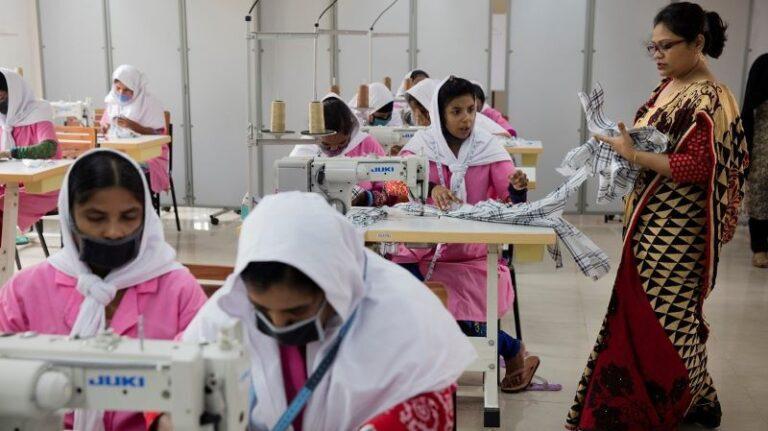
    This bilateral deal places Bangladesh at a disadvantage, especially given the significant role that the readymade garments sector plays in its economy. In the last fiscal year (2023–24), Bangladesh earned around Tk 15 billion from tariffs on US imports, but the new US policy could prompt economic disruption in its export-oriented industries.

    “If US buyers are unwilling to absorb the increased cost, Bangladeshi exporters may be forced to lower prices, squeezing already thin margins,” trade analyst Mahfuzur Rahman told a Dhaka-based business journal.

    Dhaka’s Response and Ongoing Negotiations

    The Bangladeshi government is making a last-ditch effort to negotiate more favorable terms. A high-level delegation led by Commerce Adviser Sk Bashir Uddin and National Security Adviser Dr Khalilur Rahman is currently in Washington for discussions with the Office of the US Trade Representative.

    “Dhaka is looking forward to a tariff deal with Washington DC, which, we hope, will be win-win for both countries,” Press Secretary Shafiqul Alam said in a social media post.

    Khalilur Rahman, a former UN trade policy official, confirmed that discussions are ongoing and have made “very good progress.” Talks are centred around a potential “Agreement on Reciprocal Tariff,” though the timing of Trump’s announcement casts doubt on whether any deal can be concluded in time to alter the August 1 implementation date.

    Departure from Diplomatic Norms

    Trump’s decision to publicise these tariff letters through social media – before mailing official copies – has drawn criticism from diplomatic observers. Unlike his predecessors, who typically handled trade negotiations through private channels, Trump has opted for a direct and public approach, often leaving foreign governments little room for pre-emptive discussion or revision.

    As the August deadline looms, Bangladeshi exporters are bracing for potential fallout. The higher import duties could dampen demand for Bangladeshi textiles and other goods in the US, the country’s single-largest export market.

    Industry leaders have called for urgent policy adjustments and fiscal support to help firms withstand the shock. “We need a coordinated response involving government subsidies, market diversification, and accelerated trade talks,” said Rubana Huq, former BGMEA president. For now, the ball remains in Washington’s court. Whether Bangladesh can secure a deal similar to Vietnam’s remains to be seen. Until then, the spectre of a 35 per cent tariff looms large over its export-driven economy.

    India: ‘National Biobank’ and India’s Longitudinal Population Data Study at CSIR-IGIB Kick Off

    Minister lauds the initiative, says personalised treatment regimens to be a reality in the future. CSIR-IGIB advances indigenous CRISPR trials on sickle cell anaemia, anti-microbial resistance, liver fibrosis and rare disorders.

    Union minister of state for science and technology, Dr. Jitendra Singh, inaugurated the state-of-the-art Phenome India “National Biobank” at the CSIR-Institute of Genomics and Integrative Biology (IGIB) in the capital today.

    The newly launched facility marks a significant stride towards building India’s own longitudinal health database and enabling personalised treatment regimens in future.

    The biobank will serve as the backbone of a nationwide cohort study, collecting comprehensive genomic, lifestyle, and clinical data from 10,000 individuals across India. Drawing inspiration from the UK Biobank model, the Indian version is tailored to capture the country’s unique diversity – across geography, ethnicity, and socio-economic backgrounds. Researchers believe the initiative will aid early diagnosis, improve therapeutic targeting, and bolster the fight against complex diseases such as diabetes, cancer, cardiovascular ailments, and rare genetic disorders.

    “Today, we hold the promise of a future where every Indian may receive individualised treatment tailored to their genetic makeup, lifestyle, and environment,” Dr. Jitendra Singh said while addressing the scientists and researchers at IGIB. “This transition to personalised healthcare is no longer theoretical – it is becoming a reality, driven by indigenous innovations.”

    Reflecting on the unique health challenges faced by Indians, Dr. Jitendra Singh noted the high prevalence of central obesity, a risk factor often underestimated. He highlighted past research showing that seemingly lean Indians may carry disproportionate fat around their waist, underlining the need for population-specific health strategies. “Our conditions are complex and deeply heterogeneous. This is where the Biobank becomes vital – it allows us to decode that complexity,” he said.

    Rapidly Evolving Scientific Landscape

    The minister emphasised that India’s scientific landscape is evolving rapidly, citing recent advances in quantum technology, CRISPR-based genome editing, and the fight against antimicrobial resistance (AMR). “India is no longer lagging behind – we are among the early adopters, sometimes even ahead,” he said. The Biobank, he added, will complement these efforts by generating the kind of high-resolution data that can power AI-driven diagnostics and gene-guided therapies.

    Dr. Jitendra Singh also called for deeper collaboration between research institutions, government departments like the Department of Biotechnology, and industry partners, particularly in areas such as AMR and drug development. “Research must extend beyond the lab – it must find takers in the market and beneficiaries in society,” he noted.

    The Phenome India Project, under which the Biobank has been launched, is designed to be a long-term, data-rich study tracking the health trajectories of individuals over several years. It will help scientists uncover disease patterns, gene-environment interactions, and response to therapies – all within the Indian context.

    Global benchmark

    Dr. N. Kalaiselvi, Director General of CSIR and Secretary, DSIR, commended the launch of the Biobank as a bold step toward India’s self-reliance in healthcare data. Describing the initiative as a “baby step” with the potential to evolve into a global benchmark, she noted that the diversity and depth of the Indian cohort data could one day rival or even surpass global counterparts like the UK Biobank. Dr. Kalaiselvi highlighted CSIR’s holistic efforts in areas like sickle cell anaemia through indigenous CRISPR-based therapies, affordable diagnostics, and collaborative interventions with tribal communities, while urging IGIB scientists to continue setting national examples in data-driven, people-centric research.

    Speaking at the occasion, Dr. Souvik Maiti, Director of CSIR-IGIB, reflected on the institute’s pioneering role in genomics over the past two decades. “We were the first institute in India to begin decoding the human genome at a time when sequencing tools were practically non-existent,” he said. Highlighting achievements such as the development of over 300 genetic diagnostics for rare disorders, extensive work on COVID-19 genome sequencing, and the launch of India’s first drug genome project, he emphasised IGIB’s mission of using global technologies to solve local health challenges.

    Dr. Maiti also pointed to ongoing work on women-centric studies, breast cancer genomics, and the development of indigenous CRISPR-based therapies for sickle cell disease, adding that IGIB’s research now extends to domains like space biology and AI-based pilot fitness assessments in collaboration with the Indian Air Force.

    Afghan Carpet Industry Seeks Government Support Amid Growth and Challenges

    An Afghan rug (or Afghan carpet is a type of handwoven floor-covering textile traditionally made in the northern and western areas of the country mainly by Afghan Turkmens and Uzbeks.

    Afghanistan’s private sector is calling for urgent government support to revitalize the country’s traditional carpet industry, a sector that employs over one million people and serves as a critical source of income for families, especially in the northern provinces.

    The Union of Carpet Producers and Exporters has emphasized the economic potential of the industry, urging for improved trade access, alternative routes to Pakistan, and the creation of permanent exhibitions to promote Afghan carpets globally.

    “In these 37 stages of production, around 1.2 million people are working, and this number is growing,” said Ghulam Qader Sakhizada, a board member of the union. “The government must pay more attention because this is an industry – one that represents our Afghan identity.”

    Despite recent growth in exports, union officials warn that a lack of structured support could threaten the long-term sustainability of the sector.

    The Afghanistan Chamber of Commerce and Investment echoed these concerns while reaffirming its commitment to supporting the industry. “Our exports have nearly doubled compared to previous years,” said Mohammad Younus Mohmand, the chamber’s first deputy. “We assure all those involved in carpet production, sales, and export that we will continue to stand with them.”

    Khanjan Alokozai, a chamber board member, stressed the broader impact of the industry: “If we don’t support and utilize it, people will lose jobs, and agriculture and livestock sectors will also suffer. This industry must be revived.”

    With its deep cultural roots and economic significance, the Afghan carpet industry remains a symbol of national pride and a potential pillar of economic recovery, if given the attention it needs to thrive.

    The Afghan Rug

    The Afghan carpet industry is a significant part of the country’s economy and cultural heritage, providing livelihoods for millions and contributing significantly to exports. Despite challenges like ongoing conflict and economic instability, the industry has shown resilience and continues to be a major exporter of hand-knotted carpets.

    An Afghan rug (or Afghan carpet) is a type of handwoven floor-covering textile traditionally made in the northern and western areas of the country mainly by Afghan Turkmens and Uzbeks. Over the past decades, the industry is seeing an expansion beyond its traditional area, being expanded to all 34 provinces of Afghanistan.

    Afghan rugs have won a number of international awards. The most notable Afghan rugs market in Afghanistan is in the affluent Shahr-e Naw area of Kabul. The cities of Peshawar, Islamabad and Quetta in Pakistan as well as Dubai in the United Arab Emirates are also notable for Afghan rugs markets.

    Weaving rugs in Afghanistan is an ancient tradition and business, which probably existed for thousands of years.

    Around 1.2 million people are involved in the rug business in Afghanistan. Others have put the number at around 2 million people.

    Afghanistan exported over 800,000 square meters of Afghan rug in 2021, which generated about $30 million dollars. Over $8 million worth of Afghan rugs have been exported in the first six months of 2024 to Turkey, the United States, the United Arab Emirates, Italy, and Uzbekistan.

    Some Afghan rugs are woven by the Afghan diaspora in Iran and Pakistan and some Afghan rugs have been sent to Pakistan, where they are given the label “Made in Pakistan” and then exported to other countries.

    The Soviet invasion and subsequent wars affected production, both in terms of scale and down quality. According to official figures, as reflected by Parsons, more than 17,000 m2 were exported to Afghanistan in 1979, meaning between 8,000 and 9,000 carpets and rugs. In 1983 exports declined to about 13,000 m2, by 1988 less than 15,000 remained to be returned. In the 1980s, the company sold a lot of old carpets, rugs, and rugs to Afghan families, meaning it was mostly bought by non-residents.

    UN Expert Warns of “Perfect Storm” Threatening Elections and Free Speech in Digital Age

    Drawing on a year-long consultation process with civil society, journalists, human rights defenders, electoral officials, and social media companies, Khan identified three intersecting trends that are accelerating the crisis.

    A top United Nations expert has issued a stark warning about growing threats to democratic elections and freedom of expression worldwide, calling it a “perfect storm” fuelled by disinformation, digital manipulation, and attacks on the media.

    At the 59th session of the Human Rights Council in Geneva, Irene Khan, the UN Special Rapporteur on freedom of opinion and expression, presented a landmark report examining the mounting vulnerabilities facing electoral processes in the digital age. Her conclusion: the foundational rights to vote and to express oneself freely are being simultaneously undermined—and in some cases, actively dismantled.

    “I have written this report on freedom of expression and elections because I’m deeply concerned that there is a perfect storm that is destroying both our right to vote and our freedom of expression at the same time,” Khan said.

    Disinformation, Authoritarianism, and a Weakening Media

    Drawing on a year-long consultation process with civil society, journalists, human rights defenders, electoral officials, and social media companies, Khan identified three intersecting trends that are accelerating the crisis.

    First, she highlighted the toxic political environment driven by authoritarian tendencies and democratic backsliding. “Freedom of expression is a fundamental human right enshrined in Article 19 of the Universal Declaration of Human Rights,” Khan said. “When it is suppressed, electoral processes are endangered and public trust in elections suffers.”

    Second, she pointed to the flood of disinformation and hate speech that increasingly dominates social media platforms, much of it facilitated by algorithms and amplified by digital tools.

    Third, she emphasized the decline of traditional news media, which are both financially weakened and often targeted by political actors, rendering them less able to fact-check or debunk falsehoods.

    “Election integrity and information integrity are closely connected,” Khan said. “Safe, free and fair elections require healthy, open information spaces in which accurate and independent information is easily accessible to the electorate.”

    Digital Manipulation and the Role of AI

    The report underscores how digital platforms and technologies are being exploited by both authoritarian regimes and populist politicians to manipulate information and restrict opposition voices. While manipulation of media and criminalization of dissent are not new tactics, Khan noted that the rise of influencers and artificial intelligence has added new, dangerous dimensions.

    “Unlike journalists, influencers are not bound by professional standards,” she said. “Influencers may also be susceptible to coercion by political candidates.” AI tools, she warned, are being used to generate deepfakes and distort narratives, potentially with devastating consequences for democratic discourse.

    UN Human Rights Chief Volker Türk echoed these concerns. In his vision statement Human Rights: A Path for Solutions, Türk described elections as “a litmus test of civic space and effective governance,” emphasizing that “States and societies cannot afford to fail this test.”

    Dehumanizing Rhetoric and Exclusion

    Khan’s report also raised alarms about the widespread use of dehumanizing rhetoric in political discourse, which targets individuals on the basis of ethnicity, race, religion, gender, language, and sexual orientation. Such hate speech, she said, is not limited to authoritarian regimes—it is growing even in liberal democracies, further polarizing societies and silencing marginalized voices.

    She stressed that undermining free expression in the name of fighting disinformation is ultimately self-defeating. “Freedom of expression is vital to healthy democratic discourse,” she said. While restrictions on information manipulation may be necessary, they must be legal, proportionate, and in line with international human rights standards.

    Recommendations for Action

    Khan’s report lays out a comprehensive set of recommendations aimed at governments, political actors, and technology platforms.

    To governments, she urged an immediate halt to internet shutdowns and arbitrary blocking of online content during elections, calling such measures “inherently disproportionate.” She also advocated for the decriminalization of libel and cyber-libel, and renewed public investment in independent, public-interest media.

    To political parties, Khan recommended adopting and enforcing codes of conduct, with full transparency about their collaborations with influencers and digital campaigners.

    To social media companies, she issued a call to develop and enforce consistent global election standards. Platforms must conduct robust human rights impact assessments of their content policies in electoral periods and ensure alignment with international legal standards.

    “Platforms should conduct heightened human rights due diligence and impact assessments of content moderation and curation policies ahead of elections,” she said.

    Finally, Khan emphasized the importance of multi-stakeholder, human rights-based strategies to combat disinformation. “Experience has shown that multifaceted, multi-stakeholder strategies grounded in human rights and combining a range of legal and non-legal measures are the most effective way to fight disinformation and other forms of information manipulation,” she said.

    Without swift and coordinated action, she warned, both freedom of expression and the legitimacy of electoral processes could suffer irreversible harm.

    “Unless all these factors are urgently addressed, the right to expression, as well as the right to vote, will be damaged deeply,” Khan concluded.