More

    The Fragile Thread: Afghanistan’s Struggle Against Climate Change

    For villagers like Nik Mohammad and Saduddin, the path forward is fraught with uncertainty. Repeated displacement, crop failures, and the unrelenting threat of natural disasters leave little room for hope.

    In Khak-e Darwish, a parched village in the western province of Badghis, Afghanistan, desperation has become a way of life. Once a thriving home to over 250 families, the village now stands nearly deserted. Severe droughts have stripped the land of its vitality, forcing 70 families to abandon their homes in search of survival elsewhere. For those who remain, like 45-year-old Saduddin, leaving feels inevitable.

    “The rest of the families currently living in this village will leave if the drought continues,” he says. In the absence of water and livelihoods, desperation has driven some residents to sell their kidneys to pay debts. “Ten people, including two women, have had to sell their kidneys. The rate of poverty is very high in the village,” he adds grimly.

    This is not just the story of Khak-e Darwish; it is the reality for millions of Afghans caught in the unrelenting grip of climate change. Decades of conflict and environmental neglect have made Afghanistan one of the world’s most vulnerable countries to the impacts of rising temperatures.

    A Nation on the Brink

    Afghanistan contributes little to global greenhouse gas emissions, yet its average temperature has risen 1.8 degrees Celsius since 1950—higher than the global average of 1.5 degrees. The consequences have been catastrophic: more frequent droughts, devastating floods, and deadly landslides.

    Around 80 per cent of Afghanistan’s 40 million people depend on natural resources for their livelihoods. Agriculture forms the backbone of the country’s economy, but rising temperatures have wreaked havoc on the sector. Flash floods, like the one that destroyed Saduddin’s wheat crop in 2023, are becoming more common, wiping out entire harvests.

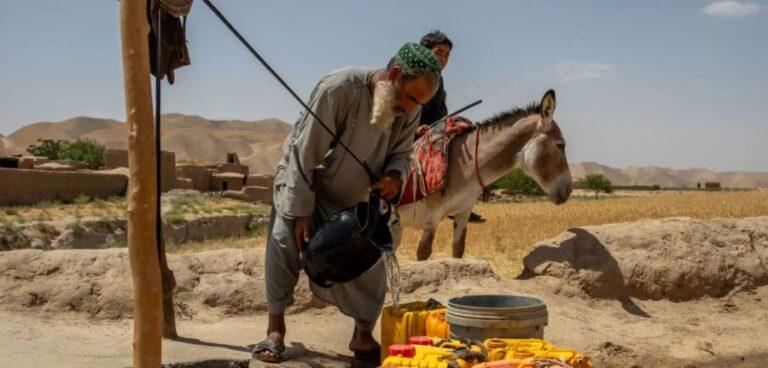
    For residents of Badghis, water scarcity compounds the crisis. Three decades ago, villagers could dig 12 meters to access groundwater; today, they must dig over 80 meters. The lone water well in Khak-e Darwish serves 180 families, who wait in long queues daily for their turn.

    “We need water more than bread,” Saduddin says, highlighting the dire need for basic resources.

    A Cycle of Despair

    In the provincial capital of Qala-e Naw, 65-year-old Nik Mohammad is all too familiar with the hardship wrought by Afghanistan’s changing climate. Droughts forced his family to leave their home in Qadis district and live in an informal settlement for three years. Evicted in 2022, he returned to his village, only to find the situation unchanged.

    “I borrowed money to cultivate peas and cumin, hoping for a good harvest. But the lack of timely rainfall meant I lost everything,” he says, now burdened with a debt of 40,000 Afghanis (about $600). With no other options, he sent one of his sons abroad to work, but the young man was deported due to a lack of legal documentation.

    “I have no other option than to leave again, but I don’t have the money needed to transport my family,” he laments.

    The Unrelenting Waters

    Afghanistan’s drought-stricken landscapes are punctuated by sudden, devastating floods. In May 2024, an unprecedented hailstorm struck Qadis district, triggering flash floods that reached depths of five meters. Ghulam Nabi, a resident, recounts how his family fled to the hills to escape the rising waters.

    “I lost almost all of my belongings, including carpets, furniture, and my animals—a cow and six sheep,” he says. The flood claimed one life, destroyed 720 homes, and decimated 150 gardens in the area. Nearly 200 families were forced to relocate to other villages or Herat province.

    “Floods like these were unheard of in our area,” Ghulam Nabi says, underscoring the increasing unpredictability of Afghanistan’s climate.

    A Crisis Exacerbated

    The collapse of Afghanistan’s Western-backed government in 2021 and the Taliban’s rise to power have further complicated the country’s ability to address its climate challenges. International donors halted billions in development aid, while humanitarian assistance has dwindled, largely due to concerns over the Taliban’s human rights record.

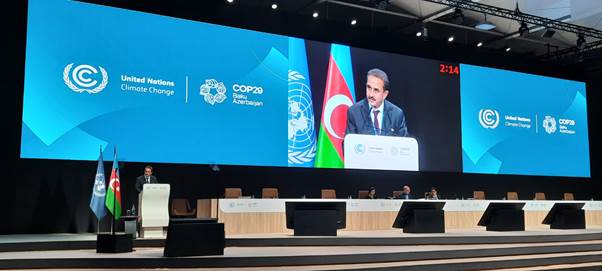
    At the annual UN climate conference in Baku, a Taliban delegation participated as observers. However, Afghanistan’s unrecognized government faces little hope of securing the international aid necessary to adapt to and mitigate climate change’s effects.

    Meanwhile, organizations like UNICEF report that eight out of ten Afghans lack access to safe drinking water. The International Organization for Migration (IOM) warns that climate change is increasingly driving displacement, with many Afghans migrating internally or fleeing the country.

    A Call for Help

    For villagers like Nik Mohammad and Saduddin, the path forward is fraught with uncertainty. Repeated displacement, crop failures, and the unrelenting threat of natural disasters leave little room for hope.

    “Help us with food and water so that we do not become displaced again,” Nik Mohammad pleads to the international community.

    But hope remains elusive for many. With every missed rainfall and each flood’s devastation, the threads holding communities together fray further. Without urgent action, the stories of Khak-e Darwish and Qadis could become the fate of countless villages across Afghanistan.

    As the world gathers at conferences like COP29, Afghanistan’s plight serves as a stark reminder of the disproportionate impact climate change has on vulnerable nations. For millions of Afghans, the stakes are not abstract—they are a matter of survival.
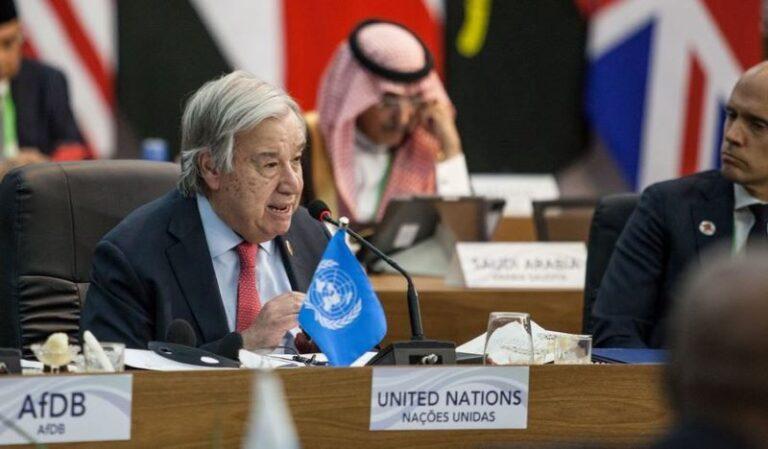
    ‘Breaking Point’ Reached on Climate, While ‘Outdated’ Global System Needs Urgent Reform: Guterres

    The UN chief challenged G20 nations to overhaul what he termed an “outdated and unfair” international financial architecture. Guterres said that the success of the UN Climate Conference is largely in the hands of G20 members.

    In a powerful appeal to the world’s largest economies during the G20 Summit, UN Secretary-General António Guterres on Tuesday called for urgent climate action and reform of international institutions, warning that current systems are failing to meet global challenges. 

    Speaking at the G20 Summit – a forum that brings together 19 countries and the European Union, accounting for 85 percent of the world economy – Guterres delivered a stark assessment.

    “Our climate is at a breaking point,” he told the gathering of industrial powers. “Unless we limit global temperature rise to 1.5 degrees Celsius, spiralling disasters will devastate every economy,” he told world leaders at the Brazil hosted summit.

    Critical role on climate

    In relation to COP29 which continues in Baku, Guterres stressed that “failure is not an option” warning of irreversible tipping points.

    The success of the UN Climate Conference is largely in the hands of G20 members: “The G20 is responsible for 80 percent of global emissions. So, we need you out front,” he said, calling for emission cuts of nine percent annually this decade.

    The Secretary General welcomed recent climate commitments from Brazil and the United Kingdom, while announcing a new Global initiative for Information Integrity on Climate Change, partnering with Brazil and UNESCO to combat climate disinformation.

    “The preservation of the Amazon is a case in point,” Guterres noted, linking Brazil’s hosting of COP30 in a year’s time to the urgent need for climate finance agreements at COP29. “We must succeed in Baku, build trust and incentivize the preparation of high ambition national climate plans next year”.

    Global governance in crisis

    The climate crisis, Guterres stressed, is compounded by challenges to global institutions. The Secretary-General pointed to the mounting global challenges, emphasising a deepening crisis in international cooperation.

    “We face a global governance deficit and global trust deficit. Poverty, inequalities and the climate crisis are getting worse, and peace is getting further out of reach,” he stated.

    His remarks come at a critical juncture following the recent UN Summit of the Future, which adopted the Pact for the Future aimed at strengthening multilateralism and global governance mechanisms.

    Reforms ‘must not become a mirage’

    “As wars grind on, innocent people are paying a terrible price and the Security Council is unable to stop them,” he said, urging that “reform must be pursued with determination and not become a mirage”.

    The UN chief challenged G20 nations to overhaul what he termed an “outdated and unfair” international financial architecture.

    “The world looks to you to act on the Pact’s commitments to accelerate reform,” he told leaders, emphasising the need to give fair representation to developing countries and shield vulnerable economies from global shocks.

    Path forward

    As the two-day Summit draws to an end, world leaders are focusing on addressing challenges ahead of July’s major UN Financing for Development conference in Spain, COP29, and next year’s COP30 in Brazil.

    The Secretary-General emphasised that the success of these upcoming meetings largely depends on G20 leadership and commitment to reform.

    Guterres concluded that “we must make sure that we support the necessary reforms of global governance because they are absolutely essential to rebuild trust in today’s world”. 

    Sri Lanka Must Act Soon to Address Potential Impacts of a Trump Presidency on its Exports

    Donald Trump’s proposed tariff hikes have sparked concerns among Sri Lanka’s exporters. This report from Sri Lanka’s Institute of Policy Studies says that the country must adapt swiftly to mitigate fallout from the looming US tariff hikes.

    The re-election of Donald Trump as President of the United States raises critical questions about the future of US trade policy and its global implications. A recent report by the Sri Lanka’ Institute of Policy Studies (IPS), titled US Election Outcomes and Trade Policy Changes: What It Means for Sri Lanka, sheds light on how potential changes in US tariffs could affect Sri Lanka’s export-dependent economy.

    As Sri Lanka’s largest individual export destination, accounting for 23.6 per cent of its total exports, any US trade policy shifts will significantly influence the nation’s economy. The report from the influential think tank warns of potential adverse effects, particularly from proposed tariff hikes under President Trump’s administration. IPS released the report today (Tuesday 19 November).

    The US, Sri Lanka’s largest individual export destination, accounts for 23.6 per cent of its exports. Key proposals, including a 20 per cent additional tariff and heightened tariffs of 60 percent to 100 per cent on Chinese imports, could drastically impact Sri Lankan exports, particularly apparel, rubber, and chemical products.

    The report says that higher tariffs will suppress US demand for imports, including Sri Lankan goods. Apparel, Sri Lanka’s top export to the US, faces an estimated 8.1 per cent contraction, amounting to a $187.9 million loss. Meanwhile, retaliation from US trading partners and subsequent economic ripples could erode EU GDP by 1.5 per cent, further reducing demand for Sri Lankan exports.

    The US Trade Policy Landscape

    The report highlights President Trump’s campaign promise to impose an additional 10 per cent tariff on all U.S. imports – a figure later floated as high as 20 per cent. This would be on top of existing tariffs, which already average 12.6 per cent in sectors like wearing apparel, Sri Lanka’s largest export to the U.S. Such policies could lead to drastic changes in trade dynamics.

    “Tariff hikes under a Trump presidency would be a significant blow to Sri Lanka’s key export sectors,” the report states, emphasizing the disproportionate impact on wearing apparel, rubber and plastic products, and other manufactured goods. A potential trade war involving major economies like China could exacerbate these challenges, dampening global demand for Sri Lankan goods.

    Potential Economic Fallout for Sri Lanka

    Sri Lanka’s export industries are particularly vulnerable to any additional tariffs imposed by the U.S. The IPS report estimates that a 20 per cent tariff hike could cause an 8.1 per cent contraction in apparel exports, equating to a loss of USD 187.9 million. This would have ripple effects across the economy, as apparel manufacturing is a critical source of employment and foreign exchange earnings.

    Other sectors, including rubber and plastic products, could see even sharper declines. The report notes that Sri Lanka’s exports of chemical products, which include activated carbon and essential oils, may experience a staggering 90 per cent loss under heightened tariffs. “These impacts underscore the heavy reliance of Sri Lanka’s export industries on stable US market access,” it warns.

    Global Trade War and Its Broader Consequences

    The report says that if the US were to impose tariffs as high as 100 per cent on Chinese imports, there could be limited opportunities for trade diversion, benefiting countries like Sri Lanka in the short term. However, the IPS report cautions that overall demand for imports in the US is likely to decline due to higher prices, negating these potential gains.

    The ripple effects of a trade war would not stop at the U.S. borders. The report estimates that retaliatory tariffs by U.S. trade partners could slow global economic growth, particularly in the European Union (EU), Sri Lanka’s second-largest export market. A projected 1.5 per cent contraction in EU GDP could further curtail demand for Sri Lankan goods, compounding the challenges posed by US tariffs.

    “The spillover effects of a trade war would significantly dampen global demand for exports from small economies like Sri Lanka,” the report explains. It emphasizes that these projections represent only the initial round of economic effects, with longer-term repercussions potentially being even more severe.

    Policy Recommendations for Sri Lanka

    Suggesting strategies for mitigation, the report says that Sri Lanka’s options include maintaining preferential tariffs in the EU, exploring regional trade blocs like RCEP, and providing subsidies to bolster domestic industries. Protecting export diversification and ensuring long-term policy alignment will be key to weathering these global economic shifts.

    Faced with these daunting prospects, the IPS report suggests several policy measures to mitigate the impact of potential US tariff hikes. These include:

    • Short-term Adjustments:
      Offering import tariff relief on raw materials and providing subsidies, such as for electricity, to help domestic producers remain competitive.
    • Maintaining Preferential Access:
      Preserving the EU’s GSP+ trade preference and advocating for increased utilization of this scheme. This would help diversify export markets and reduce reliance on the U.S.
    • Joining Regional Trade Blocs:
      Advancing trade reforms to join regional agreements like the Regional Comprehensive Economic Partnership (RCEP), which could open new avenues for Sri Lankan exports.
    • Fostering Export Diversification:
      Encouraging the development of non-traditional export sectors, such as technologically sophisticated manufactured goods, which may be less susceptible to tariff shocks.

    The report also advises close consultation with industry stakeholders to identify the most effective policy interventions.

    A Mixed Outlook

    The report suggests that for Sri Lanka, navigating the complexities of global trade under a renewed Trump presidency will require adaptability and foresight. By proactively addressing potential risks and pursuing diversification, the country can mitigate some of the adverse impacts and secure a more resilient economic future.

    While the exact trajectory of US trade policy under President Trump remains uncertain, the IPS report underscores the risks posed by protectionist measures. It also highlights the limited bargaining power of smaller economies like Sri Lanka, which depend heavily on external market access.

    “A blanket tariff increase by the US could have devastating consequences for Sri Lanka’s export sector,” the report concludes. “Yet, strategic policy responses and international trade partnerships could provide a buffer against these challenges.”

    India’s Street Vendors Demonstrate Business Leadership by Transitioning from Single Use Plastics to Reuse Systems

    Involving street vendors in the process to determine the appropriate enabling conditions would not only help the design of the policy, but can also support the emergence of simple and innovative solutions.

    By Satyarupa Shekhar and Om Prakash Singh

    With the intergovernmental negotiations for a Global Plastics Treaty just a few days away, it is opportune to discuss India’s approach to plastic pollution. The Single Use Plastic Ban (SUP Ban) by the union government of India came into effect from 1 July 2022. What the country needed was an ambitious and comprehensive regulation to strongly curb the plastic crisis. However, the current regulation mostly targets street vendors and small retailers, while leaving fast moving consumer goods (FMCG) companies and e-commerce retail out of its gamut.

    The Problem

    The SUP Ban is based on a flawed methodology, one that was prepared by the Department of Chemicals and Petrochemicals (DCPC), under the Ministry of Chemicals and Fertilisers – a serious conflict of interest in itself because the DCPC has the mandate to increase the production and consumption of petrochemicals and plastics. The notification was released by the Ministry of Environment Forest and Climate Change (MoEFCC) under the Environment Protection Act 1986. Neither MoEFCC, nor any related ministry, such as Labour, Health, Consumer Affairs or Urban Affairs, undertook any consultations with street vendors before the Ban was notified.

    The SUP Ban was notified on 12 August 2021 and became effective on 1 July 2022, thus giving the street vendors less than a year to transition. While the industry was consulted, and provided opportunities to provide their inputs as the notification was being drafted, street vendors had no opportunities to be involved in the policy making process. Local authorities across the country use this notification to evict street vendors on the pretext of littering, perpetuating the narrative that they are the polluters, and many even extort money. In a survey in 2023, street vendors in various cities across the country stated that they have paid INR 200 to 5,000. The Ban states that the Government of India will work on providing alternatives, so far they have provided street vendors neither alternatives nor support to find alternatives.

    Lobbying for favourable terms

    Many companies were part of the process from 2016, and so had more than six years to redesign their products, packaging and supply chains. The FMCG and plastics industries have also consistently lobbied for favourable terms, as is exemplified in changes in definitions and targets for plastic pollution. For instance, in the Plastic Waste Management (PWM) Rules 2016 multi-layered packaging (MLP) was to be eliminated by 2018, giving the industry two years to redesign packaging of sachets (flexible pouches). However, in the PWM (Amendment) Rules 2018, it was permitted for MLP to be used if they could be recycled. The PWM (Amendment) Rules 2021 redefined ‘recycling’ to include incineration in WTE plants or cement kilns. While the PWM Rules 2016 bans the use of sachets for gutka and pan masala, they can be used for shampoo, condiments, oil, detergent, and thousands of other products. The SUP Ban 2022 does not include sachets (flexible pouches). Industry estimates that about half of the plastic produced in India is for single-use packaging, but the SUP Ban covers only 2-3 percent of the total.

    The Solution

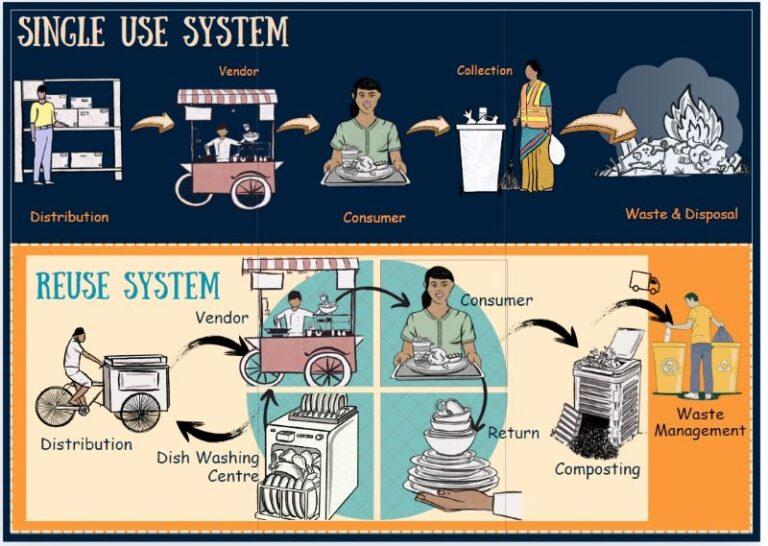
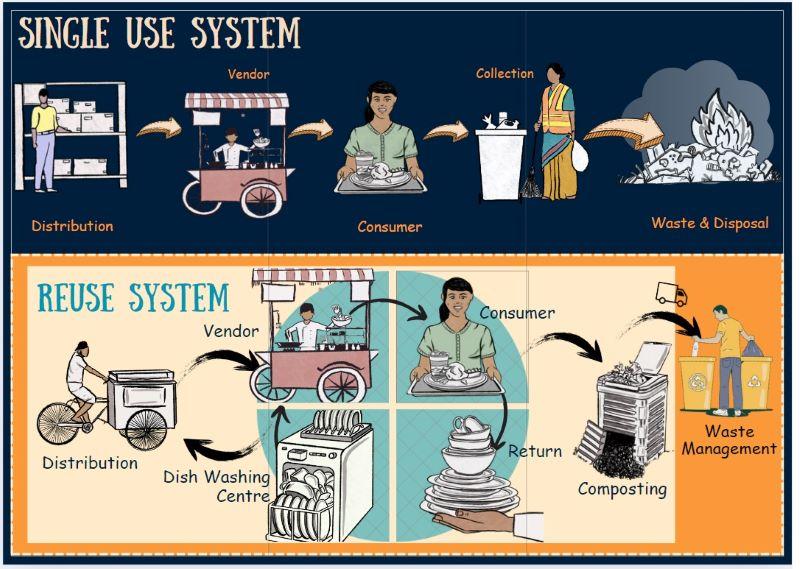
    While the SUP Ban 2022 provides the right impetus to street food vendors to transition away from certain SUPs, a more comprehensive policy is needed to curb all the other SUPs. Public policy should compel the industry to transition away from SUPs, targeting production rather than usage of SUPs. Reusable bags and containers for fruits and vegetables, grains and condiments, and dairy and meat are traditional practices. These need an impetus through a combination of policy, enforcement, consumer awareness, and most importantly, mandates to the FMCG and e-commerce companies. For street food, however, the solution needed to respond to the main conditions – food that would be freshly cooked and consumed on the street (footpath), quick turn-around time, and affordable. It should be hygienic, easy to use, and convenient for the vendor as well as the consumer.

    The #PlateAgain programme advocates for major street food hubs to have a Dish Washing Centre (DWC), each with a commercial dishwashing machine, and adequate reusable utensils to service anywhere between 50 to 250 street food vendors. Commercial dishwashing machines can clean 300-700 plates per hour. The DWC would also have an option to manually clean larger cooking utensils, and delivery carts. Clean plates, bowls, cups, glasses, and cutlery would be delivered to each street vendor at the start of their business hours, and collected back at the end of the day. Street vendor collectives could determine the user fees, manage the DWC staff, and ensure that the vendors maintain an SUP-free vending zone. They could also expand their washing services to caterers, bartan banks, or small eateries for a fee.

    Direct Benefit to Consumers

    The #PlateAgain programme will yield several benefits to the city, such as reduced waste and litter, waste management infrastructure and costs, reduced traffic and emissions (from trucks and tempos carrying waste), and improved public health, water and air. A direct benefit to consumers is the elimination of toxicity and chemicals associated with SUPs. For street vendors, the expected benefits of the public-public partnerships are licences, and an assurance that they will not be evicted, thus allowing them to make the monetary and emotional investment in setting up this new system.

    Promote Reuse Systems

    In the final round of the Global Plastics Treaty negotiations, scientists and activists are calling on governments to design a comprehensive instrument to address the plastics crisis. Such an instrument would drastically reduce petrochemicals, and phase out polymers and chemicals of concern. It would promote reuse systems with standards and targets that would encourage manufacturers and retailers to adopt reusables, and redesign their products, packaging and delivery models. Finally, it would establish a financial mechanism to ensure that dedicated funding is available for developing countries from developed ones.

    Foundation of Scientific Evidence

    Bans and restrictions on SUPs must be strengthened with other existing and new instruments: i) producer liability for negative impacts of plastics, ii) producer responsibility for post-consumer waste, iii) mandatory redesign targets, iv) standardisation framework for product circularity, v) controls on planned obsolescence. Policies can be supported by financial instruments, such as taxes and subsidies, that incentivise reuse and disincentivise SUPs. For instance, GST on stainless steel plates is 18 per cent, as it was on polystyrene plates (till they were banned in 2022); such a high tax rate serves as a deterrent as it substantially increases the initial investment needed for the transition to reusables. Similarly, we should revert to the Indian flag being made only of khadi, and subsidies to khadi enterprises, while banning polyester flags and plastic sticks, and removing subsidies on the production and manufacture of polyester.

    India’s position in Multilateral Environmental Agreements (MEAs), or Conference of Parties as they are also known, should be determined by science. There is an established foundation of scientific evidence of the impacts of plastics, chemicals, and fossil fuels on health, environment, and climate. There also exists centuries of indigenous knowledge and traditional practices on reuse. Involving street vendors in the process to determine the appropriate enabling conditions would not only help the design of the policy, but can also support the emergence of simple and innovative solutions.

    Satyarupa and Om Prakash are public policy advocates grounded in systems change and social justice principles. Their interests include the climate crisis, plastics and petrochemicals, and environmental justice.

    Zero Case: India’s Polio Eradication Saga – A Triumph of Hope, Health, and Humanity

    As India celebrates a decade of being polio-free, the nation’s journey remains a beacon of hope. The fight against polio was not just about defeating a disease but about empowering a generation with the promise of a healthier, brighter future.

    For years, India was regarded as the most formidable battleground in the global fight against polio. Critics called it the “last country” to ever eradicate the disease, a feat deemed near impossible. Yet, what unfolded was a testament to human resilience, strategic innovation, and the power of global partnerships. By 2014, India achieved what once seemed unthinkable: the eradication of polio.

    The Early Challenge: Polio’s Grip on India

    In 1988, when the Global Polio Eradication Initiative (GPEI) was launched, an estimated 350,000 children worldwide were paralyzed or killed by poliovirus annually. Of these, over 200,000 cases were in India. Polio’s reach was exacerbated by the country’s vast population, inadequate sanitation, and the sheer density of urban areas, creating fertile grounds for the virus to thrive.

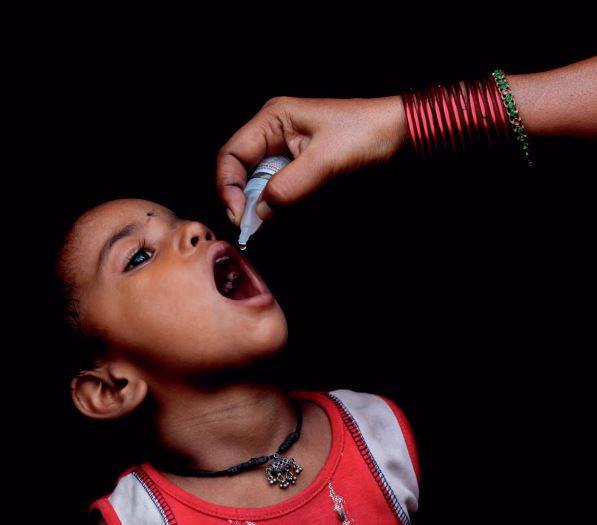
    India’s first significant step in combating polio came in 1995 with the launch of the Pulse Polio Immunization Programme. Using the oral polio vaccine (OPV), the campaign aimed to reach every child under five years old. The program’s slogan, “Do Boond Zindagi Ki” (Two drops of life), became synonymous with the fight against the disease.

    A Herculean Effort: Reaching Every Child

    The scale of India’s immunization campaigns was unprecedented. Twice a year, National Immunization Days (NIDs) targeted over 170 million children in a span of just five days. Supplementary Sub-National Immunization Days (SNIDs) covered high-risk areas, reaching nearly 75 million children up to eight times annually.

    To ensure no child was missed, health workers meticulously mapped every dwelling, from urban slums to nomadic settlements. Mobile teams vaccinated children at train stations, bus stops, and even on moving trains. Special strategies targeted underserved populations, including migrant workers and those living near international borders.

    Innovation in Action

    • Microplanning: Localized plans tracked every household, including pregnant women and newborns, ensuring timely vaccinations.
    • Surveillance Systems: Acute Flaccid Paralysis (AFP) monitoring and environmental surveillance of sewage provided critical data to detect poliovirus hotspots.
    • Community Engagement: Religious leaders, volunteers, and local influencers helped build trust in communities skeptical of vaccinations.

    The Turning Point: The Case of Rukhsar

    On January 13, 2011, in a small village in West Bengal, a two-year-old girl named Rukhsar became paralyzed by poliovirus. This marked the last reported case of wild poliovirus in India. Despite never leaving her village, the virus had traveled 1,500 kilometers from Delhi, underscoring polio’s tenacity.

    India’s response was swift and decisive. Within five days, an emergency immunization campaign blanketed neighboring villages, effectively cutting off the virus’s transmission route. This level of rapid mobilization demonstrated the program’s strength and adaptability.

    Behind the Success: Partnerships and Policies

    India’s polio eradication success was a collaborative effort led by the Government of India and supported by international partners, including the World Health Organization (WHO), UNICEF, Rotary International, the Centers for Disease Control and Prevention (CDC), and the Bill & Melinda Gates Foundation. These partnerships brought technical expertise, funding, and innovation.

    The government’s political will played a critical role, ensuring consistent support and resources. The Universal Immunization Programme (UIP), launched in 1985, provided the backbone for routine immunization, targeting over 2.67 crore newborns and 2.9 crore pregnant women annually. Over time, the UIP expanded to include new vaccines, strengthening the country’s overall immunization infrastructure.

    Key Innovations in India’s Polio Campaign

    • Cold Chain Management: Efficient vaccine storage and distribution ensured quality despite the country’s vast geography. Tools like the Electronic Vaccine Intelligence Network (eVIN) modernized logistics.
    • Introduction of IPV: In 2015, India adopted the Inactivated Polio Vaccine (IPV) as part of the global strategy to address type 2 poliovirus.
    • Mission Indradhanush: Launched in 2014, this initiative aimed to improve immunization coverage for hard-to-reach populations, reinforcing India’s broader public health goals.

    Certification and Vigilance

    In 2014, the WHO certified India as polio-free after three years without a single case of wild poliovirus. This was a moment of triumph, celebrated globally as a landmark achievement in public health. However, the victory was not the end of the journey.

    To safeguard against re-importation, India maintained robust surveillance systems and continued annual immunization campaigns. Vaccination at international borders and monitoring sewage for poliovirus ensured continued vigilance.

    Lessons and Legacy

    India’s polio eradication saga is a story of determination and innovation. It showcased how targeted, community-centric interventions can overcome seemingly insurmountable challenges. The campaign’s success offered valuable lessons for global health initiatives, proving that even in the most challenging environments, diseases can be eradicated with the right strategies and commitment.

    As India celebrates a decade of being polio-free, the nation’s journey remains a beacon of hope. The fight against polio was not just about defeating a disease but about empowering a generation with the promise of a healthier, brighter future. With continued vigilance, India is not just polio-free – it is a symbol of what humanity can achieve when it works together.

    Image: UNICEF

    India Urges Global Leadership and Equity in Climate Action at CoP29 in Azerbaijan

    While calling on developed nations to shoulder their historical responsibilities, India continues to lead by example through innovative solutions, international collaborations, and domestic initiatives that inspire global climate action.

    Delivering India’s National Statement at the High-Level Segment of the 29th Conference of Parties (CoP29) to the United Nations Framework Convention on Climate Change (UNFCCC) in Baku, Azerbaijan, Union Minister of State for Environment, Forest and Climate Change Kirti Vardhan Singh emphasized the urgency for collective global efforts to tackle climate change. Calling the conference “historic,” Singh reiterated the need for decisions grounded in the principles of equity, climate justice, and common but differentiated responsibilities and respective capabilities (CBDR-RC).

    Singh pointed out that the Global South continues to bear a disproportionate burden of climate action costs, even though it has contributed minimally to the problem. “Despite not contributing significantly to global emissions, we in the Global South are burdened by the twin challenges of financing mitigation efforts and addressing loss and damage caused by climate change,” Singh noted. He added that these challenges severely constrain the developmental aspirations of countries like India.

    India’s Leadership in Climate Action

    The minister highlighted India’s significant strides in addressing climate change, surpassing its 2015 Nationally Determined Contributions (NDC) targets well ahead of the 2030 deadline. India has notably reduced its emission intensity and increased its non-fossil-based installed electricity generation capacity. Singh shared that India’s renewable energy capacity has nearly tripled since 2014, setting the nation on course to achieve its ambitious target of 500 GW of renewable energy by 2030.

    In addition, Singh spoke about India’s global initiative, Mission LiFE (Lifestyle for Environment), which promotes sustainable living practices. “Mission LiFE inspires individuals, communities, and societies to adopt mindful resource utilization and pro-planet behavior,” he said.

    Another initiative lauded by the Minister was the ‘Ek Ped Maa ke Naam’ campaign launched by Prime Minister Narendra Modi on World Environment Day 2024. Through this initiative, over a billion saplings have been planted under the ‘Plant4Mother’ movement, which urges individuals to plant a tree in honor of their mothers and Mother Earth. Singh emphasized the campaign’s emotional and cultural resonance, fostering widespread public engagement.

    International Alliances and Global Cooperation

    India’s climate leadership extends beyond its borders through initiatives like the International Solar Alliance, Coalition for Disaster Resilience Infrastructure (CDRI), and the recently launched Global Biofuel Alliance. Singh underscored that these efforts reflect India’s commitment to advancing global climate action through partnerships.

    However, he expressed concern over unilateral measures by some developed nations that complicate climate efforts for developing countries. He stressed that scaling up climate ambitions must be supported by the free flow of green technologies, their production at scale, and financial support for deployment in the Global South.

    Singh remarked, “Breaking barriers to the flow of technology, finances, and capacity-building for the Global South is imperative. The theme of this CoP, ‘enabling actions and enhanced ambition,’ highlights the urgent need for equitable and effective climate solutions.”

    Call for Climate Finance and Justice

    Referring to the New Collective Quantified Goals (NCQG) on Climate Finance, Singh called CoP29 the “CoP for Climate Finance.” He emphasized the need for ambitious and unambiguous decisions that address the evolving priorities of developing nations. “The principle of climate justice must guide our discussions. The NCQG must acknowledge the massive costs imposed on developing countries like India for implementing climate actions,” Singh said.

    Singh reminded participants that the forthcoming decade is critical, with an imminent breach of the remaining global carbon budget unless urgent action is taken. He reiterated India’s position that developed countries must lead mitigation efforts, not only by advancing their net-zero targets but also by ensuring sufficient carbon space for developing nations to meet their development goals.

    A Collective Responsibility

    In closing, Singh urged all nations to work with determination toward meaningful outcomes at CoP29, describing the conference as pivotal for shaping future climate action. “What we decide here will determine the course of history. Let us ensure that CoP29 becomes a milestone in our collective fight against climate change. India remains committed to cooperating fully for a successful and impactful CoP,” Singh concluded.

    Singh said that India’s proactive stance at CoP29 underscores its dual commitment to ambitious climate action and sustainable development. He said, while calling on developed nations to shoulder their historical responsibilities, India continues to lead by example through innovative solutions, international collaborations, and domestic initiatives that inspire global climate action.

    Dispatch from COP29

    To me, one answer to the question of “who and what is next” is obvious: Young people! They’re the ones who will inherit the planet. They will inherit the fallout of rising emissions, worsening natural disasters, resource shortages, and the cascading crises that climate change causes.

    By Danielle J. Nierenberg

    Yesterday was a rest day here in Baku, but today, the United Nations Climate Change Conference gets back underway in full force.

    And, as UN Environment Programme Executive Director Inger Andersen said, “it is climate crunch time.” The negotiations and decisions on the table this week are life-or-death questions for the future of the planet.

    Many of us here at COP29 are reflecting on what comes next – both during the second week of the conference and also more big-picture. How do we ramp up climate action in our own communities? What will our countries’ climate action plans post-COP, or Nationally Determined Contributions (NDCs), commit to? What will the future of the planet actually look like?

    Young People

    To me, one answer to the question of “who and what is next” is obvious: Young people! They’re the ones who will inherit the planet. They will inherit the fallout of rising emissions, worsening natural disasters, resource shortages, and the cascading crises that climate change causes.

    “If world leaders say we are the leaders of today – not just tomorrow – then why aren’t we at the table now, shaping the ambitions for our future?” says Bodh Maathura, a 24-year-old UNICEF Sri Lanka Youth Advocate. “Young people must be recognized as partners in creating, implementing, and monitoring the NDCs.”

    Young people aren’t fooled by empty promises and talk with no action. Youth activists at COP have been clear-eyed in pointing out that a failure to meaningfully address the climate crisis doesn’t mean solutions don’t exist – but simply that high-level leaders are unwilling to prioritize them. They can see through the BS and are demanding better – something all of us should be inspired to do, too.

    “There is a lot of money. There is enough money all around, but we also know it is going to militarism, wars and genocides. There is simply no political will,” says youth advocate Alab Mirasol Ayroso. “This is why we refuse to be sidelined and silenced. We want the world to listen, hear us and our demands.”

    Credit where it’s due goes to countries like Pakistan, which committed at COP29 to fully enshrining the rights and interests of young people in their upcoming NDC plans.

    “We must ensure our children and young people are prepared for the future they are growing into,” Honourable Murad Ali Shah, Chief Minister of Sindh Province in Pakistan, told UNICEF.

    …. And, G20

    Between COP29 here in Baku and the G20 Summit, a meeting of major heads of state that’s taking place in Brazil today and tomorrow, there’s plenty of opportunity to make real change. At the G20, for example, I hope countries will ratify the Global Alliance Against Hunger and Poverty, a large-scale treaty to accelerate public policy and technological solutions around the world.

    The next few days are so important, and we must keep our eyes open. Let’s follow the lead of our youth advocates in demanding that world leaders prioritize the climate, prioritize the food system, and prioritize a nourished and just future for all people and the planet!

    Danielle J. Nierenberg is an American activist, author and journalist. In 2013, Nierenberg co-founded Food Tank: The Think Tank For Food and currently serves as its president.

    Food Tank’s Dispatch from the U.N. Climate Change Conference is a special newsletter series running daily during COP29. 

    Delhi Air Pollution Crisis Deepens as AQI Breaches ‘Severe Plus’ Threshold

    The Supreme Court mandated that restrictions under GRAP-IV remain in place even if the AQI drops below 450. Additionally, states in NCR were ordered to establish mechanisms for reporting and addressing violations of anti-pollution measures.

    The national capital, Delhi, and its surrounding areas are reeling under hazardous air quality, with the Air Quality Index (AQI) crossing the “severe plus” threshold. On Monday morning, Delhi recorded an average AQI of 481, with Dwarka peaking at 499, according to official data. Independent monitors like Swiss-based IQAir reported even higher numbers, with levels 17 times the acceptable standard and some areas touching 1,743. This marks the sixth consecutive day of hazardous air, plunging visibility to just 150 meters.

    The pollution crisis has far-reaching consequences beyond health. Real estate developers warn that the construction ban under GRAP-IV will delay housing projects, exacerbating costs for both developers and buyers. Public life is also severely disrupted, with restricted mobility, reduced office capacity, and halted commercial activities.

    As Delhi grapples with one of its worst pollution crises, experts emphasize the need for stricter enforcement of anti-pollution measures and collaborative efforts between states. Long-term solutions, such as transitioning to cleaner fuels, mechanizing stubble removal, and expanding green cover, are essential to prevent such crises in the future.

    For now, Delhi’s residents can only hope for winds of change—literally and figuratively—to clear the toxic air.

    Supreme Court Intervenes

    The Supreme Court has taken a stern stance, criticizing the delay in enforcing GRAP-IV restrictions. “Some sense of urgency needs to be there,” the court remarked, pulling up the Commission for Air Quality Management (CAQM) for waiting for weather improvements instead of acting proactively. The bench also directed the Centre to procure real-time stubble-burning data using satellite technology to enable prompt action.

    The court mandated that restrictions under GRAP-IV remain in place even if the AQI drops below 450. Additionally, states in NCR were ordered to establish mechanisms for reporting and addressing violations of anti-pollution measures.

    Blame Game Over Pollution

    The deteriorating air quality has reignited political blame games. Delhi’s Environment Minister Gopal Rai accused the BJP-led central government of inaction on stubble burning in states like Uttar Pradesh, where incidents have reportedly increased from 1,500 to 2,500 in two years. Rai contrasted this with Punjab, governed by his Aam Aadmi Party, where cases of stubble burning dropped from 47,000 to 7,500 in the same period.

    On the other hand, BJP leaders blamed the AAP-led Delhi government for poor dust control measures and lax governance. BJP Delhi president Virendra Sachdeva criticized the AAP’s handling of pollution control, while distributing masks to residents struggling with the toxic air.

    Delhi Chief Minister Atishi called for a united, apolitical approach to address the crisis, stating, “The entire north India is in a medical emergency. We must prioritize solutions over rhetoric.”

    Health Emergency

    Health experts have termed the situation a public health emergency. Prolonged exposure to such hazardous air can lead to respiratory illnesses, cardiovascular issues, and long-term complications. Hospitals are witnessing a surge in patients with respiratory distress, and many residents are relying on air purifiers and masks to cope.

    Impact on Transportation

    The dense smog has disrupted air travel and rail services. As many as 14 flights, including five on Monday morning, were diverted to Jaipur and Dehradun due to near-zero visibility at the Indira Gandhi International Airport. Over 370 flights were delayed, and 11 were cancelled, adding to the chaos. Railway services were also affected, with trains like the Puri-New Delhi Purushottam Express and Shramjeevi Express delayed by up to three hours.

    Schools Shift Online

    Amid the choking conditions, schools across Delhi and the National Capital Region (NCR) have shifted to online classes. Following Supreme Court directives, all physical classes for students up to Class 12 have been suspended. The court emphasized the health hazards posed by the current air quality, urging authorities to prioritize student well-being.

    Restrictions Under GRAP-IV

    The government has implemented Stage-IV of the Graded Response Action Plan (GRAP), which includes stringent restrictions to curb pollution. Measures include:

    • A ban on the entry of trucks, except those carrying essential goods or running on clean fuels (CNG/LNG/BS-VI diesel).
    • Suspension of construction and demolition activities across public and private sectors, impacting major infrastructure projects like hospitals, underpasses, and the Barapula Elevated Corridor.
    • Governments and private offices are urged to operate at 50% capacity, and vehicle rationing schemes like odd-even are under consideration.

    Despite these steps, critics argue that enforcement has been slow and inadequate.

    Weather and Visibility Outlook

    The India Meteorological Department (IMD) predicts clear skies but low wind speeds for the coming days, conditions unfavourable for the dispersion of pollutants. Dense to very dense fog is expected during evenings and nights, further aggravating visibility issues.

    Image: Wikimedia

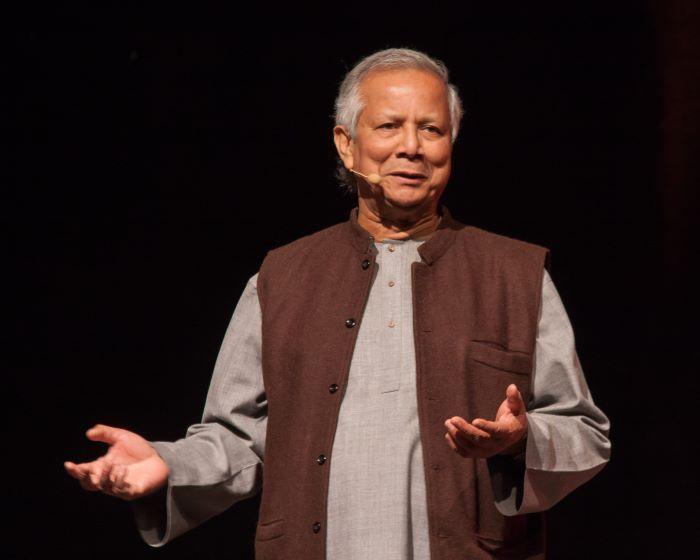
    Yunus Discusses Trump’s Presidency, Bangladesh’s Political Climate in Al Jazeera Interview

    The Al Jazeera interview marked one of Yunus’s most comprehensive discussions since assuming the role of chief adviser. In the interview, Yunus addressed Trump’s recent remarks condemning alleged violence against religious minorities in Bangladesh.

    Chief Adviser of Bangladesh’s interim government, Muhammad Yunus, expressed confidence in the stability of US foreign policy, regardless of the presidential transition, as Donald Trump prepares to take office as the 47th President of the United States. Speaking to Al Jazeera, Yunus dismissed concerns about any sudden negative shifts under Trump’s leadership, emphasizing his belief in the continuity of US policy despite changes in administration.

    “I think foreign policy of the United States is not something that switches back and forth depending on who is the President,” he said, noting that he holds no personal grievances against Trump or the Republican Party. Yunus clarified that he has friends in both major U.S. political parties but no prior personal interaction with Trump.

    Donald Trump, who previously served as president from 2017 to 2021, is set to return to the White House following his inauguration on January 20, 2025, succeeding President Joe Biden.

    Responds to Trump’s Bangladesh Comments

    In the interview, Yunus addressed Trump’s recent remarks condemning alleged violence against religious minorities in Bangladesh. Trump had previously claimed on social media that such violence was ignored under the Biden administration, declaring, “It would have never happened on my watch.”

    Yunus dismissed these comments as “totally baseless propaganda,” attributing them to misinformation originating from India. “The violence during the revolutionary period was not targeted at Hindus or other religious groups but was largely political,” Yunus explained, adding that many affected individuals happened to be supporters of the Awami League.

    He acknowledged isolated incidents of violence against minorities but stated they were “completely exaggerated” and rooted in political conflicts rather than religious tensions. Yunus reiterated that his interim government has worked to restore stability and protect all communities in Bangladesh.

    Interim Government Reforms and Tenure

    The chief adviser also shed light on the interim government’s plans, highlighting its primary objective of preparing for elections. Yunus expressed his intention to hold elections as soon as possible while refraining from contesting them.

    “The duration of the interim government will be less than four years,” he noted, though he emphasized that the timeline depends on public and political consensus. Yunus reaffirmed his commitment to state reforms, stating, “It’s all a question of what people want, what the political parties want.”

    On the matter of ousted Prime Minister Sheikh Hasina, Yunus said that her extradition would depend on the outcome of ongoing legal proceedings.

    The interview marked one of Yunus’s most comprehensive discussions since assuming the role of chief adviser. His tenure has drawn both praise and scrutiny, particularly for his efforts to balance political reforms with maintaining stability in a deeply polarized nation.

    Image: Wikimedia

    Childhood and Climate Change: Born and Growing up in a Gas Chamber

    Alarmingly, carbon deposits have been found in the lungs of children as young as four undergoing unrelated surgeries. This condition, known as anthracosis or “black lungs,” is usually observed in adults exposed to heavy smoke and dust.

    By Rashmi Sinha

    This opinion piece was scheduled to be published on Children’s Day.

    Protecting our children from pollution has never been more urgent. While we grew up breathing relatively cleaner air and eating less adulterated food, yet feel miserable and stressed due to high AQI and chemically laden food. What will happen to today’s children who are starting their lives facing significant degradation in both?

    In India, with a birth of 25 million children each year, a child is born almost every 30 seconds, and as you read it, one of those newborns is taking her first breath in an air thick with pollution—a gas chamber of our own making. Her embryonic lungs and organs are too vulnerable to bear the weight of the dust-filled, toxic air she inhales. This pollution takes a toll with every breath, harming her delicate body. How can we expect her to grow up strong to reach her full potential? Will she ever have the chance to compete, like an Olympic athlete, against those who grow up in healthier conditions?

    As poet Gabriela Mistral said, “We are guilty of many faults, but our worst crime is abandoning the children… A child cannot wait.” These words are especially true today. If we fail to protect children from environmental harm, we risk abandoning an entire generation to a life of illness and diminished potential.

    Pollution and climate change are not just altering the planet; it is reshaping the very childhood and impacting health. The 2021 Children’s Climate Risk Index by UNICEF shows us that, by 2021 one billion children globally are at extreme risk due to climate change, with 13.4 million in India suffering from severe water scarcity. This crisis impacts children the most. Their lungs, immune systems, and other organs are still maturing, making them especially vulnerable to pollution, extreme heat, and contaminated water.

    Children at risk

    Dr. Shalini Misra, pediatrician at Rajiv Gandhi Cancer Institute Delhi, explains, “Hazardous air pollution affects their developing lungs, leading to symptoms similar to asthma, cases of bronchiolitis, and a heightened vulnerability to pneumonia. Children under the age of eight are especially at risk, as their lungs are still growing, and their higher breathing rates make them more susceptible to the harmful effects of air pollution.

    Alarmingly, carbon deposits have been found in the lungs of children as young as four undergoing unrelated surgeries. This condition, known as anthracosis or “black lungs,” is usually observed in adults exposed to heavy smoke and dust, such as coal miners and smokers. The presence of carbon in children’s lungs at such an early age can disrupt lung development, setting the stage for respiratory diseases in later life”.

    She further informs, “Research has shown that pregnant women exposed to high levels of air pollution are more likely to experience preterm labour and deliver low birth weight babies, contributing to increased infant mortality rates. Infants and toddlers cannot wear masks, leaving them defenceless against smog”.

    “As a mother of a child with wheezing issues, I have personally experienced the distress of this situation. It is disheartening to realize that we have failed our future generations, making it impossible to truly wish them a Happy Children’s Day.”

    Dr. Renu Srivastava, Strategy Director Newborn Child Health – UPTSU-IHAT, quotes the World Bank Report of 2019, ‘the death rate in India due to ambient Particulate Matter (PM) 2.5 the most harmful pollutant – was highest for newborns less than 7 days old. In India, the Haryana-Delhi-UP-Bihar-WB corridor has the highest levels of particulate matter (PM 2.5) in the air in the world.

    Pathways to a Healthier Future

    These are small particulates with a diameter of less than 2.5 microns, and are about one-thirtieth the width of a human hair. India’s climate challenges loom large. According to the Council on Energy, Environment, and Water (CEEW), over 75% of Indian districts, home to more than 638 million people, have become hotspots of extreme climate events—cyclones, floods, droughts, and heatwaves. The intensity and unpredictability of these events have surged in recent decades, taking lives, disrupting essential services, and forcing families to relocate. Entire communities bear the brunt of climate impacts, with women and children often suffering the most.

    The toll of extreme heat extends beyond physical health, disrupting access to food, water, and education. Displacement due to extreme weather has become common, and this, too, affects children’s development and security. Water scarcity adds yet another burden, especially for girls, who often miss school to walk long distances to fetch water for domestic use.

    Floods pose yet another deadly risk, bringing threats of drowning, contamination, and disease. Floodwaters overwhelm communities, destroying homes, contaminating drinking water, and exposing children to waterborne diseases and malnutrition. Stunting and undernutrition are lasting impacts that no child should endure, yet these are the realities in many flood-prone areas of India.

    Amid these grim realities, however, there are pathways to a healthier, more sustainable future. Tackling climate change requires a multifaceted approach, including transitioning to renewable energy sources like wind and solar to reduce greenhouse gas emissions.

    Additionally, fostering sustainable agriculture, conserving forests, and promoting reforestation efforts can help absorb carbon dioxide and restore natural ecosystems. Lastly, governments, businesses, and individuals must collaborate to adopt policies, technologies, and behaviours that support climate resilience, environmental protection, and a low-carbon economy.

    Mitigate Climate Change

    Stubble-burning in Punjab and surrounding areas is a key cause of Delhi pollution, and can be tackled through crop diversification. By moving away from reliance on single crops, we can build agricultural systems more resilient to climate extremes as well as control farm residuals and dependence on groundwater. The urban population can work on conserving water and be more discreet in the use of private transportation.

    National and international governments and agencies with scientists, engineers, experts, designers, recycling experts, and farmers need to come to a Round Table to explore the most effective ways to mitigate climate change. The efforts must go beyond awareness; they must lead to concrete action. Our children’s futures depend on decisive steps to curb emissions, enforce air quality standards, and invest in sustainable waste management.

    By supporting innovations like drought-resistant crop varieties, establishing market linkages, stubble, and farm residual management, and leveraging technology to support farmers, the manufacturing industry, and transportation, we can shape a future where our children have clean air to breathe, nutritious food to eat, and safe environments to grow in.

    Climate action isn’t just about building resilient agriculture or regulating industrial waste; it’s about honouring our duty to protect the lives, dreams, and potential of our youngest and most vulnerable. Climate change may be vast in scope, but our responsibility is urgent and unmistakable.

    Let us keep the essence and spirit of Gabriela Mistral close as a powerful reminder of what is truly at stake, ‘many of the things we need can wait. The child cannot. Right now, her bones are being formed; her blood is being made. To her, we cannot answer ‘Tomorrow.’ Her name is Today.’

    Rashmi Sinha is Co-Founder VillageNama and a former UNW India Consultant and Former State Project Director Mahila Samakhya Uttar Pradesh.