More

    Railway Protection Force Rescues 84,119 Children Under ‘Operation Nanhe Farishtey’ Over Seven Years

    The operation’s success is bolstered by the ‘Track Child Portal’, providing comprehensive details to track and support aggrieved children. Additionally, Indian Railways has established child helpdesks at over 135 railway stations to facilitate immediate assistance.

    In a commendable effort spanning seven years, the Railway Protection Force (RPF) has rescued a staggering 84,119 children under ‘Operation Nanhe Farishtey’, safeguarding vulnerable minors across various Indian Railway Zones.

    Since its inception in 2018, ‘Operation Nanhe Farishtey’ has been instrumental in rescuing children at risk within railway stations and trains, preventing them from falling prey to potential dangers. The operation, more than just a rescue mission, serves as a lifeline for thousands of children in precarious situations.

    According to data released by the RPF covering the period from 2018 to May 2024, the initiative has shown consistent dedication and adaptability in addressing the plight of runaway and missing children. The numbers reveal a story of resilience and unwavering commitment by the RPF to protect the most vulnerable members of society.

    Year-wise Breakdown of Rescues:

    2018: The initiative began with a robust start, rescuing 17,112 children. Among them, 13,187 were identified as runaway children, highlighting the urgent need for such interventions.

    2019: Efforts continued with 15,932 children rescued, emphasizing the persistent issue of children needing protection due to various reasons such as running away or being left behind.

    2020: Despite challenges posed by the COVID-19 pandemic, 5,011 children were rescued, showcasing the RPF’s resilience during difficult times.

    2021: The numbers saw a resurgence with 11,907 children rescued, marking a notable increase in efforts to locate and protect vulnerable children.

    2022: Witnessed the highest rescue numbers at 17,756 children, underscoring intensified efforts and increased awareness across railway zones.

    2023: Maintaining momentum, 11,794 children were rescued, continuing the mission’s crucial role in child protection.

    2024 (Jan-May): In the first five months alone, 4,607 children were rescued, reflecting ongoing dedication to the operation.

    Track Child Portal

    The operation’s success is bolstered by the ‘Track Child Portal’, providing comprehensive details to track and support aggrieved children. Additionally, Indian Railways has established child helpdesks at over 135 railway stations to facilitate immediate assistance.

    Upon rescue, children are handed over to the District Child Welfare Committee, which takes necessary steps to reunite them with their families, ensuring their safety and well-being.

    ‘Operation Nanhe Farishtey’ continues to evolve, adapting to new challenges, and remains a critical initiative in creating a safer environment for children across India’s expansive railway network.

    The Railway Protection Force’s ongoing efforts under ‘Operation Nanhe Farishtey’ underscore a proactive approach to child protection, exemplifying a commitment to safeguarding the future of India’s youth amidst challenging circumstances. This initiative not only rescues children but also raises awareness about their plight, garnering support from stakeholders to ensure a more secure environment for all minors traveling across the Indian Railways.

    Image: Railway Children
    A Fair Start is What Every Child Needs, Says Joint UNESCO-UNICEF Report

    Pre-primary education gives children a solid foundation upon which all learning depends, making every stage of education that follows more efficient and productive, says a joint report of the UNESCO and UNICEF.

    By Gursimran Kaur

    The world is not on track to achieve Sustainable Development Goal (SDG) 4 and ensure inclusive and quality education and lifelong learning opportunities for all, says a joint report from UNESCO and UNICEF.

    In the report with titled ‘Global report on early childhood care and education: the right to a strong foundation’, the two UN bodies says that “education, starting with early childhood education, is facing twin crises of equity and relevance.”

    Saying that inequalities start early, particularly affecting development outcomes for the most disadvantaged children, the report says, “children growing up in the poorest households and in rural areas are further behind. Only 55 per cent of children aged 36 to 59 months growing up in the poorest households are developmentally on track, compared to 78 per cent of children in the richest households.”

    It says that “supporting readiness for foundational learning must be an essential part of the response to the learning crisis.” Alluding to the changing of gears due to the COVID-19 pandemic that aggravated the global learning crisis, the reports says that an estimated 37 per cent of the world’s children (more than 300 million) will not reach minimum proficiency levels in reading by 2030.

    “Access to quality early learning and care is a key way to help children develop the skills needed for foundational learning and to ensure that all girls and boys have access to quality early childhood development, care and pre-primary education by 2030,” says the UNESCO-UNICEF report.

    “Real progress on supporting equitable access to quality early childhood care and education (ECCE) remains elusive,” it says, adding that “commitments have not translated into action and at the current rate of progress, achieving SDG Target 4.2 by 2030 is off track,” it says.

    The report by the two UN bodies says that extending the right to education to include the right to early childhood care and education could accelerate progress on SDG Target 4.2. However, it says, there is not yet an international legal framework that explicitly guarantees children’s right to early childhood care and education. Extending the right to education to include the right to ECCE could be an important policy lever to accelerate progress SDG Target 4.2

    Leveraging key actors

    Looking through the lens of the child at the core and adopting a whole-of-child developmental approach, the report explores how children learn and develop and how the key actors in children’s early environments – parents, families, educators and the community at large – can be leveraged through public policies and programmes to improve children’s learning and wellbeing. The report advocates for and gives evidence of the importance of ECCE to address the twin crisis of equity and relevance and support foundational learning.

    Saying that early literacy activities promote school readiness and higher reading achievement, the report speaks of new analysis that reveal that children who engage more frequently in early literacy activities at home tend to be equipped with better literacy skills. These children were also better prepared for primary school, and more likely to show higher reading achievement at age 10.

    Another new analysis showed that participation in organised learning one year before the official age of entry to primary school positively affected reading achievement in the second or third grades. It emphasises that the early years are important for building foundational numeracy skills and caregivers can influence children’s attitudes to maths learning.

    “Maths learning arises from complex interactions between emerging cognitive skills and the social-cultural context,” it says, adding, “caregivers and educators can help build positive attitudes and improve children’s learning by creating a supportive environment that encourages numeracy activities and diminishes anxiety around maths.”

    ADB Approves $240.5 Million to Boost Rooftop Solar Expansion in India

    The integration of rooftop solar infrastructure not only supports the broader national agenda of reducing carbon emissions but also enhances the resilience of India’s energy grid.

    The Asian Development Bank (ADB) has greenlit a substantial $240.5 million in loans aimed at accelerating the adoption of rooftop solar systems across India. This initiative, part of the Multitranche Financing Facility (MFF) Solar Rooftop Investment Program, marks a pivotal step towards enhancing energy accessibility through renewable sources in the region.

    Initially sanctioned in 2016, the program underwent restructuring in 2023 to prioritize the deployment of residential solar rooftop solutions. ADB’s financing, split into tranches 2 and 3 of the MFF, aligns with India’s ambitious target to derive 50% of its total electricity capacity from non-fossil fuel sources by 2030, underscoring the nation’s commitment to global carbon reduction goals.

    According to ADB Principal Energy Specialist Kaoru Ogino, ADB’s financing supports these goals and will contribute to the Prime Minister Surya Ghar program, which encourages people to install rooftop solar systems across the country.

    “India aims to achieve about 50 per cent of cumulative electric power installed capacity from non-fossil fuel energy sources by 2030 in line with its global commitments to reduce carbon emissions,” says Kaoru Ogino. “ADB’s financing supports these goals and will contribute to the Prime Minister Surya Ghar program, which encourages people to install rooftop solar systems across the country.”

    The funds will be channelled through key financial institutions including the State Bank of India (SBI) and the National Bank for Agriculture and Rural Development (NABARD). SBI will receive $90.5 million from ADB’s Clean Technology Fund (CTF), while NABARD will be allocated $150 million—comprising $80 million from ADB’s ordinary capital resources and $70 million from CTF. These loans will facilitate developers and end-users throughout India in installing rooftop solar systems.

    The integration of rooftop solar infrastructure not only supports the broader national agenda of reducing carbon emissions but also enhances the resilience of India’s energy grid. By generating electricity closer to consumption points, these systems mitigate the strain on long-distance power supply networks and reduce associated energy losses, thereby promoting a more efficient power distribution framework.

    An official said that this latest financial commitment underscores ADB’s stance in promoting renewable energy solutions that are crucial for India’s energy security and its transition towards a low-carbon future.

    Delays to cost B’desh $13 Billion

    In the meanwhile, the ADBis set to conduct a comprehensive review of its substantial portfolio of projects in Bangladesh, totalling nearly US$13 billion, amid significant implementation challenges and delays. Officials announced the upcoming scrutiny during a press briefing on Tuesday.

    Scheduled from July 22 to 24 in Dhaka, the review will bring together ADB representatives, Bangladesh’s Economic Relations Division (ERD), and key project implementers. According to senior ERD officials, the tripartite meeting aims to assess the progress and address hurdles faced by ongoing ADB-funded initiatives across the country.

    “We are convening to closely examine the status of all ongoing ADB-funded projects,” stated a senior ERD official. “The meeting is crucial as it provides an opportunity to resolve any existing issues hindering project implementation.”

    Bangladesh currently hosts 79 public sector projects financed by the ADB, making the lender the country’s second-largest multilateral development partner. However, delays in project execution have been attributed to various factors, including under-performance by implementing agencies and complex procurement processes.

    “Some ADB-funded projects are encountering delays due to implementation issues,” acknowledged an ERD official. “Our objective for the upcoming tripartite review is to collaboratively address these challenges.”

    Established in 1966, ADB remains steadfast in its commitment to fostering inclusive and sustainable development across Asia and the Pacific region. With ownership spanning 68 member countries, ADB continues to play a pivotal role in eradicating extreme poverty while advancing economic prosperity and environmental sustainability.

    Image: Wikimedia

    Global Growth Faces Threat from Inflation, IMF Reports

    The IMF revised its growth forecasts upwards for emerging market and developing economies, driven primarily by robust economic activity in Asia, particularly in China and India. India, in particular, is expected to see growth surge to 7.0 percent in the current year.

    In a recent update to its World Economic Outlook, the International Monetary Fund (IMF) on Tuesday raised concerns over the impact of elevated inflation on global growth prospects. The IMF, while maintaining its projections for 2024 at 3.2 per cent growth, has slightly revised upwards its forecast for 2025 to 3.3 per cent, citing persistent inflationary pressures.

    The World Economic Outlook is a survey by the IMF staff usually published twice a year. It presents IMF staff economists’ analyses of global economic developments during the near and medium term.

    According to the IMF’s July update, the heightened risk of inflation has necessitated longer periods of higher interest rates. This stance, aimed at curbing inflation, also brings with it increased external, fiscal, and financial risks. The IMF warned that failure to balance these with fiscal improvements amid lower potential growth could destabilize financial markets and raise borrowing costs globally.

    “The risk of elevated inflation has raised the prospects of higher-for-even-longer interest rates, which in turn increases external, fiscal, and financial risks,” the IMF said in a July update to its World Economic Output report.

    “Persistently high interest rates could raise borrowing costs further and affect financial stability if fiscal improvements do not offset higher real rates amid lower potential growth.

    The current inflationary trend has been attributed to expansive monetary policies adopted by major economies such as the US, UK, and European nations during the COVID-19 pandemic. These policies involved substantial money printing and increased government spending, which, while initially aimed at stabilizing economies, have contributed to rising inflation levels unseen since the early 1980s.

    In response to mounting inflationary pressures, central banks in advanced economies have been cautious about reducing interest rates. The US Federal Reserve, for instance, delayed rate hikes, attributing inflation spikes to temporary “supply shocks” exacerbated by global economic conditions, including geopolitical tensions.

    The IMF emphasized that while inflationary pressures are expected to ease by the end of 2025, particularly due to anticipated declines in energy prices and cooling labour markets, emerging market and developing economies are likely to experience a slower decline in inflation rates compared to advanced economies.

    Furthermore, the IMF highlighted risks associated with exchange rate fluctuations, particularly concerning emerging markets with significant foreign currency-denominated debt. These economies, while benefiting from robust growth in recent projections, remain vulnerable to capital outflows and currency depreciation if interest rate differentials with the US widen further.

    The IMF’s policy recommendations included advocating for prudent use of foreign reserves to mitigate potential financial shocks and advocating for macroprudential policies to manage risks from excessive foreign-currency-denominated debt.

    Looking ahead, the IMF revised its growth forecasts upwards for emerging market and developing economies, driven primarily by robust economic activity in Asia, particularly in China and India. India, in particular, is expected to see growth surge to 7.0 per cent in the current year, bolstered by improved prospects in private consumption, especially in rural areas.

    While global growth projections have been adjusted upwards, the IMF remains cautious about the potential long-term impacts of current inflationary trends and advises policymakers worldwide to tread carefully with monetary policies to ensure sustainable and balanced economic growth.

    UN Secretary-General Urges Urgent Action on Sustainable Development Goals Amidst Global Challenges

    Addressing the critical issue of finance, Guterres acknowledged the widening SDG financing gap and destabilizing financial conditions in many developing countries.

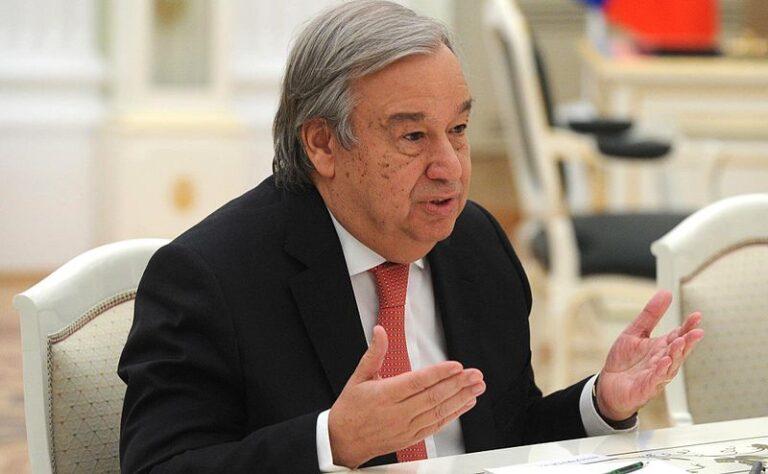
    At Monday’s ministerial segment of the High-Level Political Forum, convened under the auspices of the Economic and Social Council, UN Secretary-General António Guterres delivered a powerful call to action, urging member states to accelerate efforts towards achieving the Sustainable Development Goals (SDGs) amidst a backdrop of deepening global crises.

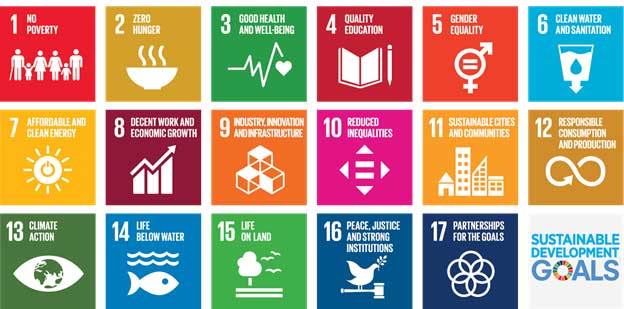
    In the message delivered by Deputy Secretary-General Amina Mohammed, Guterres highlighted the stark reality facing the SDGs nine years after their inception. Despite being born as a beacon of hope for millions worldwide, only 17 per cent of the SDG targets are currently on track, signaling a critical shortfall in progress towards a sustainable future.

    Guterres identified several key barriers hindering SDG achievement, including inadequate financing, geopolitical tensions, ongoing conflicts, the climate emergency, and a pervasive debt crisis gripping many developing nations. He underscored the urgent need for immediate and decisive action across four crucial areas.

    Firstly, Guterres emphasized the imperative for peace, calling for an end to conflicts in regions such as Gaza, Sudan, Ukraine, and beyond. He stressed that redirecting resources from warfare towards sustainable development and climate resilience is paramount.

    Secondly, the Secretary-General urged nations to expedite the green and digital transitions. This includes accelerating the energy transition, transforming food systems, and enhancing digital connectivity globally. He called for ambitious climate action plans aligned with the 1.5°C limit and emphasized the importance of inclusive growth throughout these transitions.

    Addressing the critical issue of finance, Guterres acknowledged the widening SDG financing gap and destabilizing financial conditions in many developing countries. “The SDG financing gap is growing, and financial conditions in many developing countries are destabilizing,” he said.

    He welcomed initial efforts by multilateral development banks and member states but emphasized the need for deeper reforms and increased financial support to vulnerable nations.

    Finally, Guterres reiterated the central promise of the SDGs: leaving no one behind. He called for a renewed commitment to prioritize marginalized groups, including persons with disabilities and women facing systemic discrimination and violence. He emphasized the need for inclusive institutions and policies that protect minority rights and promote social cohesion.

    In his address, Guterres framed the SDGs as a unifying force in today’s divided world, capable of restoring trust between governments and their citizens through tangible progress on poverty eradication, environmental protection, and shared prosperity.

    Looking ahead, Guterres urged member states to seize the upcoming international conferences as opportunities to drive substantive change. He called for ambitious negotiations on global financial reforms and SDG acceleration, emphasizing the UN’s commitment to supporting these efforts through its global network and coordination mechanisms.

    In conclusion, Guterres called upon world leaders to uphold the promises made nine years ago and to leverage intergenerational partnerships for accelerated progress towards the SDGs. He reiterated the UN’s unwavering commitment to serving as a catalyst for change, advocating for inclusive development, and safeguarding the future of both people and planet.

    As the High-Level Political Forum continues its deliberations, the international community faces a critical juncture in its collective pursuit of sustainable development, with the Secretary-General’s message resonating as a clarion call for urgent and concerted action.

    Union Minister Inaugurates Asia’s First Health Research Pre-clinical Network Facility

    The inauguration ceremony, held at the Translational Health Science and Technology Institute, witnessed the unveiling of the Genetically Defined Human Associated Microbial Culture Collection Facility.

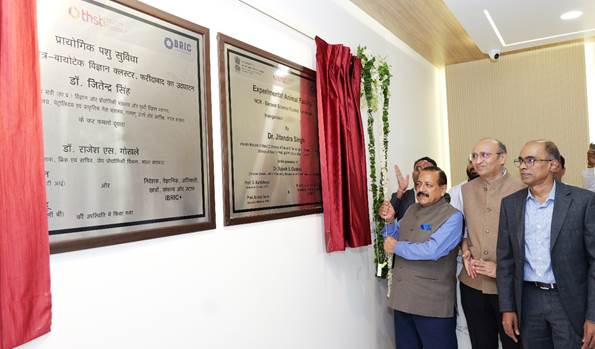
    In a significant stride towards advancing health research capabilities in Asia, Union Minister Dr. Jitendra Singh inaugurated the continent’s first “Pre-clinical Network Facility” today. The facility, established under the Coalition of Epidemic Preparedness Innovations (CEPI) at the Regional Centre of Biotechnology in Faridabad, marks a pivotal development in bolstering India’s research infrastructure.

    The inauguration ceremony, held at the Translational Health Science and Technology Institute (THSTI), witnessed the unveiling of the Genetically Defined Human Associated Microbial Culture Collection (Ge-HuMic) Facility. This state-of-the-art repository aims to provide essential microbial cultures to various research institutions, universities, and industries engaged in research and development.

    Dr. Jitendra Singh, who oversees the Ministry of Science and Technology, emphasized the strategic importance of these initiatives in fostering collaborations both domestically and internationally. The facility, equipped with cutting-edge capabilities including handling BSL3 pathogens, positions India as a key player in global health research efforts.

    Underlining the broader impact of such advancements, Dr. Singh highlighted the signing of over a dozen agreements and Memoranda of Understanding (MoUs) with the private sector. These collaborations, facilitated by the Department of Biotechnology, are geared towards accelerating vaccine development for critical diseases such as Nipah virus, influenza, and other respiratory ailments.

    COVID-19 pandemic

    Speaking at the fourteenth foundation day of THSTI, Dr. Jitendra Singh commended the institute’s rapid growth since its inception, attributing its success to visionary leadership and pivotal research contributions. Reflecting on the institute’s critical role during the COVID-19 pandemic, he underscored its efforts in developing emergency-approved vaccines and treatments, reaffirming India’s stature in preventive healthcare.

    Dr. Rajesh Gokhale, Secretary of the Department of Biotechnology, reiterated the department’s commitment to supporting innovative research initiatives despite resource constraints. He highlighted the institute’s breakthroughs in developing monoclonal antibodies for diseases like Nipah virus, underscoring their impact on global health outcomes.

    The event also featured notable healthcare professionals including Dr. K. Srinath Reddy, former President of the Public Health Foundation of India, and Dr. Kathikeyan, Director of THSTI. Their presence underscored the collaborative efforts between academia, industry, and government in driving forward groundbreaking research.

    The inauguration marks a milestone in India’s scientific journey, showcasing its capacity to lead advancements in health research and innovation. As the nation continues to navigate contemporary health challenges, such initiatives are poised to strengthen India’s position as a frontrunner in global healthcare innovation.

    Pakistan Joins Silk Road Agricultural Innovation Alliance, Boosting Agri-Tech Cooperation

    Pakistani universities received wheat and vegetable varieties last year, such as cabbage, carrot, and tomatoes, for further research at their demonstration parks. Plans are also underway for the exchange of new linseed varieties later this month.

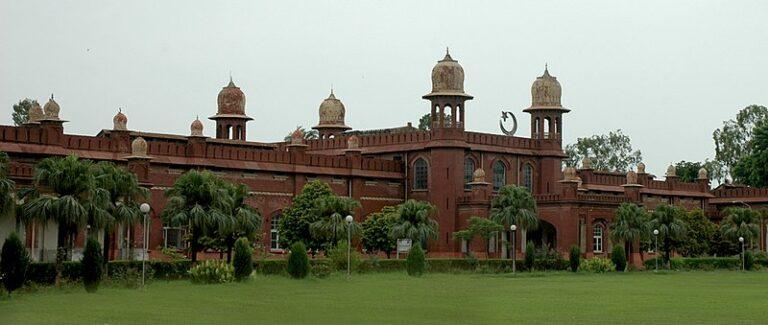
    In a landmark development aimed at advancing agricultural technology through international collaboration, four Pakistani universities have joined the Silk Road Agricultural Education and Research Innovation Alliance. This momentous decision was announced at the Ninth Silk Road Agricultural Education and Research Cooperation Forum held in Tashkent, Uzbekistan from July 9-12.

    The universities – Quaid-i-Azam University, Pir Mehr Ali Shah Arid Agriculture University, Sindh Agriculture University, and Ayub Agricultural Research Institute – are set to collaborate with leading institutions from China and other Silk Road countries. This alliance aims to facilitate the exchange and joint development of new food crops, vegetable varieties, and medicinal plants.

    Abdul Ghaffar Shar, a Post-doctoral Research Fellow at Northwest A&F University in China, highlighted the alliance’s recent initiatives. Notably, Pakistani universities received wheat and vegetable varieties last year, such as cabbage, carrot, and tomatoes, for further research at their demonstration parks. Plans are also underway for the exchange of new linseed varieties later this month.

    Significant strides have already been made in agricultural innovation, with researchers identifying 19 stress-resistant wheat strains and a new wheat variety tailored for broader cultivation in Pakistan. This breakthrough variety promises to enhance wheat production by 27 per cent, reduce costs by 13 per cent, and increase farmers’ income by approximately 25 per cent.

    Moreover, the alliance has introduced cutting-edge technologies like nanobiochar, new nutrient solutions, and bio-organic fertilizers, all of which are poised to improve crop quality and output significantly.

    “This year, the establishment of model farms for sesame contract farming across Pakistan is expanding rapidly, thereby boosting the country’s export potential,” noted Abdul Ghaffar Shar.

    Since its inception in 2016, the Silk Road Agricultural Education and Research Innovation Alliance has expanded its membership significantly. At this year’s forum, 14 new members from China, Nepal, Pakistan, and Uzbekistan were admitted, bringing the total number of participating institutions to over 120 from 19 countries.

    This collaboration marks a crucial step forward for Pakistani universities and research institutions, opening doors to global partnerships and paving the way for transformative advancements in agriculture

    Image: Wikimedia

    Sri Lanka Moves to Create Village Communities for Plantation Residents

    The issue of land ownership and living conditions has been a longstanding concern, exacerbated by historical policies that deprived many of citizenship rights after Sri Lanka gained independence.

    In a significant move aimed at improving living conditions for plantation residents, Sri Lanka’s cabinet has greenlit the drafting of legislation to establish village communities in these areas. The initiative targets regions predominantly inhabited by descendants of former plantation workers.

    According to a statement released post-cabinet meeting, President Ranil Wickremesinghe proposed the creation of integrated villages by amalgamating existing estate houses and line rooms. Jeevan Thondaman, Minister of Water Supply and Estate Infrastructure Development, anticipates that approximately 176,000 families will each receive 10 perch blocks of land under the new plan.

    The initiative aims to allocate 4,777 hectares of land from the plantations’ total area of 205,000 hectares to provide suitable housing for residents. The proposed villages will encompass areas currently occupied by residents, including temples, schools, and communal spaces.

    Historically, the plantation communities, largely descendants of Indian subcontinent migrants brought during the British colonial period, have faced challenges including inadequate housing conditions and land shortages. Despite efforts post-privatization to address housing needs through initiatives like the Plantations Housing Development Trust, many non-workers still reside in cramped line rooms.

    The issue of land ownership and living conditions has been a longstanding concern, exacerbated by historical policies that deprived many of citizenship rights after Sri Lanka gained independence. This latest legislative effort marks a renewed attempt to rectify these disparities and improve overall quality of life in plantation areas.

    The move comes amid tensions between the ruling class and plantation companies over wage mandates and land ownership, reflecting broader economic and social challenges facing Sri Lanka.

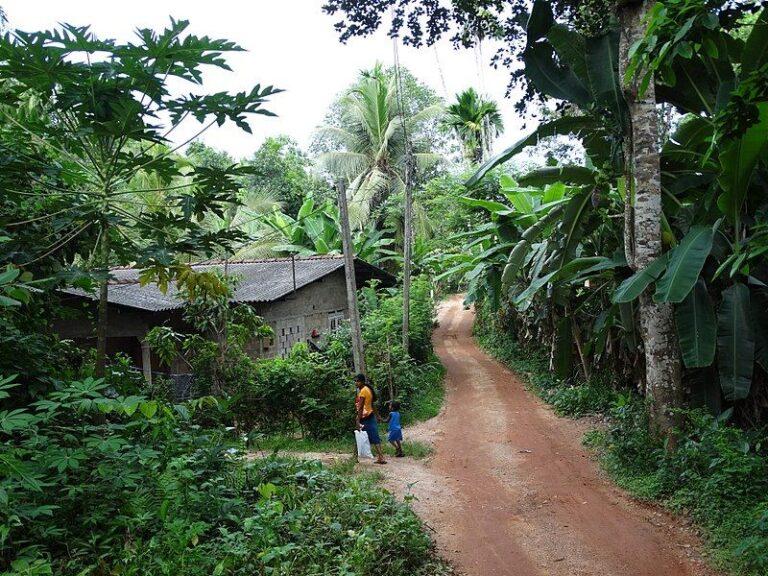
    Image: Wikimedia / Telwatta, Sri Lanka, by Adam Jones from Kelowna, BC, Canada

    Harnessing Tizu Zunki River: A Path to Economic Growth and Connectivity for Nagaland

    Sonowal announced plans to establish community jetties and explore the feasibility of Ro Pax ferries. These measures are expected to not only enhance local tourism offerings but also contribute to the socio-economic development of the region.

    In a significant move aimed at bolstering Nagaland’s economic prospects and enhancing regional connectivity, Union Minister Sarbananda Sonowal announced ambitious plans to harness the water resources of the state. Speaking at a Stakeholders’ Conference in Dimapur, Nagaland, Sonowal outlined key initiatives focusing on the development of Tizu Zunki River (National Waterways 101) and the tourism potential of Doyang River Lake.

    The conference, organized by the Inland Waterways Authority of India (IWAI), witnessed the unveiling of plans to conduct a detailed feasibility study for the development of Tizu Zunki River. This initiative, a collaboration between IWAI and the Government of Nagaland’s Department of Transportation, aims to transform the river into a navigable waterway suitable for cargo and passenger transport. The project includes the provision of technical assistance from IWAI to facilitate navigation infrastructure development along National Waterway 101.

    Highlighting the tourism potential of Doyang River Lake, Sonowal announced plans to establish community jetties and explore the feasibility of Ro Pax ferries. These measures are expected to not only enhance local tourism offerings but also contribute to the socio-economic development of the region.

    Addressing the gathering, Sonowal emphasized the economic and environmental benefits of inland waterways, citing them as cost-effective and sustainable modes of transportation crucial for regional development. “Under the leadership of Prime Minister Narendra Modi, our government is committed to leveraging India’s rich water resources to propel the nation towards becoming the fifth-largest economy globally,” he stated.

    Neiphiu Rio, Chief Minister of Nagaland, echoed these sentiments, urging the youth to consider maritime skills training at the Maritime Skill Development Centre to capitalize on emerging employment opportunities in the marine sector.

    The development of Tizu Zunki River holds strategic significance as it flows into Myanmar, connecting to the Chindwin River and eventually the Irrawaddy River. This linkage presents opportunities for enhancing cargo movement from Northeast India to international trade routes via the Irrawaddy Delta.

    The Ministry of Ports, Shipping and Waterways (MoPSW) through IWAI has been actively pursuing various projects to unlock the potential of Northeast India’s waterways. Projects such as the Kaladan Multimodal Transit Transport Project and the development of fairways on the Indo-Bangladesh Protocol Route underscore the government’s commitment to integrating the region into broader economic corridors.

    In conclusion, the initiatives announced mark a pivotal step towards harnessing the natural resources of Nagaland for sustainable economic growth and fostering greater connectivity within the Northeast region. The collaborative efforts between the central government, state authorities, and stakeholders aim to transform the vision of leveraging waterways into a tangible reality that benefits both local communities and broader regional interests.

    HLPF 2024: Protecting Civic Space Critical for SDGs Success

    Where civic space isn’t open, communities have significantly restricted and limited agency to pursue progress – the kind the SDGs envisage. People who expose corruption, advocate for accountability and stand up for the rights of excluded groups are attacked.

    By Jesselina Rana

    Each year the international community comes together at the UN’s headquarters in New York to take stock of progress on sustainable development. This year’s High-Level Political Forum (HLPF) is being held between 8 and 18 July. Representatives from 36 countries, as per the UN HLPF website, will showcase their achievements on commitments outlined in the 2030 Agenda for Sustainable Development, presenting their Voluntary National Reviews (VNRs).

    This year’s HLPF convenes amid sobering times, underscored by findings from the recent UN Sustainable Development Goals (SDGs) 2024 report. The report highlights growing inequalities, an escalating climate crisis, accelerating biodiversity loss and disappointing progress towards gender equality. These challenges are compounded by conflicts in Gaza, Sudan, Ukraine and beyond, resulting in close to 120 million people being forcibly displaced worldwide. Alarmingly, only 17 per cent of SDG targets are on track, with around half making minimal or moderate progress, and progress on over a third having stalled or regressed.

    Among the SDGs being reviewed this year is SDG 16, which includes commitments on responsive, inclusive, participatory and representative decision making, access to information and fundamental freedoms. These hard-won commitments recognise the importance of transparency, accountability and participation in achieving the SDGs. They were agreed only after persistent advocacy by civil society activists. For civil society, it’s crucial that these commitments are realised if the transformative promise of the SDGs is to be achieved, in particular because they enable civil society to work with governments to help deliver the goals.

    One major reason for uneven progress on the SDGs is the restriction of civic space in many countries around the world. According to the CIVICUS Monitor – a participatory research collaboration – globally only two per cent of people live in open civic space conditions, where civil society is free to exist and act. Of the 36 countries slated to present VNRs this year, only three – Austria, Palau, and Samoa – have open civic space.

    Civic space encompasses the right of people to organise, mobilise and speak out to shape the political, social, and economic structures that impact their lives. Where civic space isn’t open, communities have significantly restricted and limited agency to pursue progress – the kind the SDGs envisage. People who expose corruption, advocate for accountability and stand up for the rights of excluded groups are attacked.

    In many countries around the world, civil society organisations and activists are being threatened. One-way states are doing this is by misusing anti-terror laws, cybersecurity laws and health emergency laws against them. States such as Cambodia, Egypt, India, Israel, Russia and Venezuela, among others, are subjecting civil society organisations to a complex maze of regressive laws and practices to deny them raising funds from domestic and international sources. This undermines civil society’s ability to push for innovative policies, deliver services to the people who need them most and act as a watchdog over the use of public resources.

    Meaningful civil society participation at all levels is crucial for realising the SDGs. However, even within UN platforms like the HLPF, there remains no official way of integrating civil society voices into VNR processes, leading civil society organisations to produce parallel ‘shadow reports’ on the forum’s margins. This current format undermines the potential for meaningful engagement from civil society, leads to duplication of efforts, mismatches data and hinders accountability of states.

    If the SDGs are to be achieved, it’s paramount to create a conducive environment where civil society can thrive and participate meaningfully in decision-making and accountability processes, without fear of reprisals. That’s why many civil society organisations have banded together under the Unmute Civil Society initiative to advocate for practical solutions to overcome the challenge of international-level participation. The UN must demonstrate leadership by making more space for civil society at the HLPF.

    Jesselina Rana is CIVICUS UN Advisor at UN Hub in New York City.

    This piece has been sourced from Inter Press Service.