More

    Innovation ‘Imperative’ for Securing Rice Production

    Genetic innovations and AI-driven tech can help mitigate climate risks for rice, says the International Rice Research Institute’s incoming chief.

    By Neena Bhandari

    Innovations in rice production and eco-friendly practises must be made viable for small-scale farmers in the global South in the face of climate threats, says Yvonne Pinto, incoming head of the International Rice Research Institute (IRRI).

    Relied upon by more than half of the world’s population for nearly 80 per cent of their dietary needs, rice is pivotal to ensuring global food security, with consumption increasing even as the climate crisis jeopardises production and the livelihoods of millions of people.

    About 520.4 million metric tonnes were consumed worldwide in the 2022-23 crop year, up by almost a quarter from 437.2 million metric tonnes in the crop year 2008-2009, according to the data platform Statista. The Food and Agriculture Organization says developing countries produce and consume about 95 per cent of the global rice output.

    However, large rice-producing countries of Asia, such as India, Vietnam and Thailand, and regions with significant increase in rice consumption, notably in Africa, are facing increased drought risks, requiring adaptive strategies to sustain this staple crop.

    “There is an imperative to replace conventional practices, such as, burning straw and chemical usage in rice production, and think about agriculture as an integral part of the One Health System,” said Pinto, referring to the unified approach to optimising the health of people, animals and the environment.

    “Agriculture is about feeding the world, but it’s also about judiciously conserving our resources and ensuring that we are able to farm in holistic ways that are not going to destroy the planet,” she emphasised.

    The alternatives to burning the straw, include harvesting it and repurposing it for animal feed or compost.

    “It is vital to make these alternatives financially viable for farmers along with demonstrating their global effectiveness in reducing air pollution and associated health risks,” said Pinto, who will take over as director general of IRRI on 22 April – the first woman in the top job.

    She recommended incentivising the adoption of new technologies among farmers in order to bring about a change in production practices.

    Farmers in Vietnam and Myanmar, for example, are exploring microbial mixes for the bio-degradation of the rice straw.

    IRRI has also developed wet and dry rice systems, direct seeded rice (grown directly in rice fields rather than first growing seedlings in nurseries), and new varieties which reduce methane emissions from rice fields. About half the rice varieties grown in South Asia have been derived from IRRI.

    Pinto, who started her career as a research scientist at IRRI in 1985, says she will lead the organisation to further adopt, develop and scale climate-resilient, nutritious and productive rice varieties that enable sustainable livelihoods for farmers.

    “Ensuring that farmers have access to technology, they understand its proper use and they can monitor its benefits, is essential for building resilience,” she said.

    “We also need to engage with engineering faculties to explore ways to use rice stubble for biofuels, given that more than 3 billion tonnes of agricultural biomass as feedstock would be required by 2050 to ensure sustainable biofuels production.”

    Pinto emphasised the need for equitable partnership collaborations with ecosystem actors including governments, the private sector, non-governmental organisations, philanthropic organisations and individual farmers.

    Power of AI

    She sees the potential of artificial intelligence (AI)-driven technologies and innovations in augmenting more sustainable farming solutions for rice and other crops.

    However, she cautions: “We need to build our confidence slowly and carefully so that we generate trust around the insights that artificial intelligence creates.”

    “Agri-tech offers the opportunity to understand how we triangulate weather, rainfall, soil conditions; when and what to plant; how to monitor the performance and yield; and how and where to sell the produce,” said Pinto.

    “At the other end of the technology continuum, we need to carefully understand what we have at the genetic-end of the scale – the kinds of genes that are available to us, so we know how to harness them best.”

    Pinto is hopeful about the role AI-driven technologies and genetic innovations can play in addressing undernourishment and malnourishment and personalising nutrition.

    She said: “There are opportunities to look at the impact of varieties, such as low glycemic index rice in the human microbiome, to understand how that enhances human health by reducing incidence of diabetes and obesity. We can use machine learning models to understand that at a more accelerated pace than we currently do.”

    United Nations chief Antonio Guterres, speaking at the UN Security Council last week (13 February), slammed the shrinking budget for climate action, warning that climate chaos and food crises are threats to global peace and security.

    With funding in agricultural research becoming more challenging, CGIAR, the world’s largest publicly-funded agricultural research partnership, has challenged governments and donors to double funding to end hunger and halt climate change by 2030. Pinto, who will also serve as the CGIAR regional director for south-east Asia and the Pacific and country representative for The Philippines, said: “We have a tremendous opportunity for diversifying funding sources and directing the funds to where they are most needed, because the need to feed the population is not going away.”

    This piece has been sourced from SciDev.Net

    Image: IRRI
    Snowless Winter and a Climate Crisis: Kashmir’s ‘Unprecedented’ Weather

    Kashmir, as per estimates, reported a 79 percent precipitation deficit through December of last year. Indian meteorologists claim that unusual weather is linked to global warming and El Niño, the sporadic climate phenomenon that can create warm, dry conditions in the Indian subcontinent and other parts of Asia.

    By Umar Manzoor Shah

    Abdul Gani Malik, a 75-year-old goldsmith living in Kashmir’s capital, Srinagar, has witnessed eras of tranquility and turbulence in the Himalayan region. What he has not seen, however, is a snowless Kashmir during the winter.

    Malik still works at his shop, located in one of the jam-packed markets of the old city area of Kashmir’s capital, intricately lacing colorful emeralds on dazzling gold necklaces. While conversing with IPS, he mentions that the winter in Kashmir has never been so terrible and terrifying as it has been this year.

    He recalls how, during the 40-day harshest winter period from December 21 to January 30, snow would accumulate to about six or seven feet, freezing and making pathways treacherous even for city dwellers. In the mountainous region, according to Malik, the snow would last for several months, regulating temperatures during the summer and providing water and food.

    “Now is a different tale. The mountains appear dry and dead. The rivers are carrying no water, and our woods are bereft of life. This is an absolute apocalypse,” Malik said.

    The region of Kashmir is located in the north-western complex of the Himalayan ranges, with marked relief variation, snow-capped summits, antecedent drainage, complex geological structure, and rich temperate vegetation and fauna.

    Kashmir’s winter is traditionally divided into three parts: Chilay Kalan (old man winter), Chilay Khuarud (young winter), and Chilay Bacha (kiddy winter). The coldest part, called Chilay Kalan, starts on December 21 and ends at the end of January. It is during this period that snowfall is expected.

    “The temperatures during this period plummet to even minus 8 to 10 degrees Celsius, and when it snows, it accumulates in glaciers. The snowfall in the later period is of no use,” says Abdul Ghani Malik.

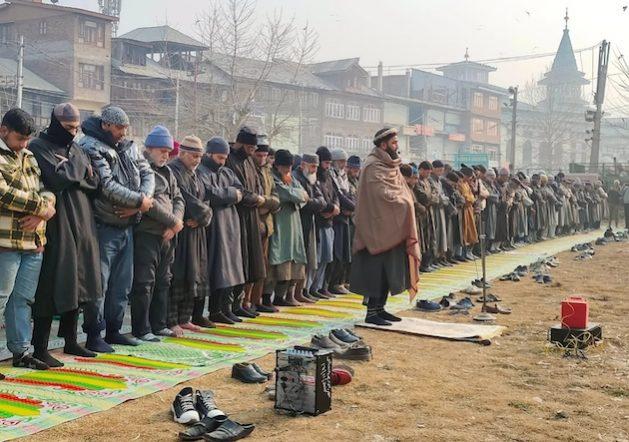
    He was part of the congregational prayers held across Kashmir for snowfall. Local Muslims, who constitute more than 90 percent of the local population, decided in January to hold special prayers for snowfall in all major mosques. “We prayed, and we hope God listens to our plight.”

    According to Abid Ali, a student of environmental sciences from Kashmir, Kashmir’s livelihood depends on snowfall, and if it doesn’t snow, things are going to take a terrible shape.

    “The region’s electricity system, agriculture, and tourism are all dependent on snowfall. The dry winter will prove catastrophic for the local populace,” Abid said.

    Kashmir, as per estimates, reported a 79 percent precipitation deficit through December of last year. Indian meteorologists claim that unusual weather is linked to global warming and El Niño, the sporadic climate phenomenon that can create warm, dry conditions in the Indian subcontinent and other parts of Asia.

    Threat to Agriculture

    In Kashmir, 60 percent of the state’s revenue comes from agriculture and horticulture, and about 80 percent of the population lives in rural areas.

    However, over the years, the valley has experienced irregular patterns of precipitation. In the first five months of 2022, Kashmir saw a 38 percent rain shortage, according to data provided by the Meteorological Department (MeT) in Srinagar.

    The data reveals that the Kashmir Valley has experienced a significant lack of pre-monsoon precipitation over the years. From March 1 to May 31, 2022, the region got 99.5 mm of rain, 70 percent lower than average.

    Comparatively, between March and May of each of the following years—2017, 2018, 2019, 2020, and 2021—there was a deficit of 16, 28, 35, and 26 percent, respectively. The dry winter this year is already throwing life out of gear for the farmers.

    Abdul Karim Ganaie, a farmer hailing from south Kashmir’s Pulwama, says the threats are menacingly looming large, and people cannot do anything other than watch helplessly as the crisis unfolds.

    When IPS contacted Choudhary Mohammad Iqbal, the director of agriculture in Kashmir, he stated that the department was closely monitoring the situation and would be issuing a warning to the farmers in the coming months.

    “We accept that the situation is going to prove worrisome for Kashmir’s farming community, but we have to adopt a strategy to ensure minimal losses. We are working on that front,” Choudhary said.

    Tourism under Cloud

    The famous tourist destinations in Kashmir are also witnessing a dip in tourist arrivals, putting the people associated with this business in dire straits. In January, the famous tourist resorts recorded the lowest arrival of foreign and domestic tourists, with only 30 percent occupancy in hotels.

    It snows at last but too little, too late!

    Finally, in the first week of February, when the harshest 40-day-long spell was already over, it snowed in most of the areas of Kashmir. However, according to experts, the snow would yield the fewest results as it is not possible to accumulate for an extended period.

    What is important, says Mehraj Ahmad, a research scholar working on climate change in Kashmir, is that the snow must accumulate in the higher reaches for as long as possible until the arrival of summers. “The snowfall of February or March carries the least significance when compared with the snowfall of January. Therefore, we really are keeping our fingers crossed and praying for the safeguard of our lives against the dark, dreadful effects of climate change,” Ahmad said.

    This piece has been sourced from Inter Press Service — IPS

    Image: Local Muslims held special prayer ceremonies in January for snowfall. Credit: Umar Manzoor Shah/IPS

    Forced Migration Grows, Justice Withers, Say Activists at World Social Forum

    Research found that 51 per cent of households migrated after being hit by cyclones, floods, salt water intrusion in their fields, erratic rainfall and other climate disasters.

    By Marty Logan

    As involuntary migration rises around the world, partly in response to the impacts of climate change, justice for those leaving their homes and families to earn a living is largely missing, said activists meeting at the World Social Forum (WSF) in Kathmandu on Sunday.

    In various sessions, participants from Europe, northern Africa and Latin America detailed governments squeezing doors shut on migrants trying to enter their countries. Disturbing stories from Asia focused on individuals falling victim to employers and traffickers as their governments looked the other way while profiting from migrants’ income remitted home.

    The WSF ended in Nepal’s capital Kathmandu on Monday. During the annual event global activists gather to discuss issues ranging from education to debt relief, legalization of sex work, and poor farmers’ lack of control over their land and resources.

    “One of the women we talked to told us that she had to sleep with six to seven men daily for six months. The saddest part is the employer’s wife regularly gave her a pill so she wouldn’t get pregnant,” said a researcher with the Bangladeshi organization OKUP. “Another worker was diagnosed with colon cancer: his employer sent him home without paying a single bit of his salary.”

    OKUP hosted the session, Climate Change, Migration and Modern Slavery, to share its report documenting the treatment given to migrant workers from coastal regions in Bangladesh who were forced to leave after the impacts of climate change destroyed their farms and other livelihoods.

    Climate change

    Research found that 51 per cent of households migrated after being hit by cyclones, floods, salt water intrusion in their fields, erratic rainfall and other climate disasters. “There is no sustainable adaptation opportunities for them. In most cases people receive assistance from the government after disasters, but there is no sustainable assistance. That’s why people rely on loans to rebuild their houses or restart their farming activities,” said OKUP Chairperson Shakirul Islam.

    “Before they can repay the money they experience the next cycle of climate emergency,” he added, making them desperate to go earn money elsewhere in the country or abroad.

    Eighty-six percent of those displaced migrate within the country; 14 per cent internationally. En route 90 per cent face excessive fees, 81 per cent do not get a promised work permit and 78 per cent have their salaries held back. “I strongly believe that the same situation is present in other countries in South Asia,” said Islam.

    Malaysian activist Sumitha Shaanthinni Kishna cautioned the group to not blame climate change for the migrants’ problems. “The fear I have is governments using climate change to justify migration. They will say ‘that’s why we have to send our migrants out’. They have done this to justify migration due to poverty.

    “The discussion has to be that climate change is real and how the government’s policies are contributing to climate change,” added Kishna, from the organization Our Journey, which provides legal support to migrants and refugees.

    In another discussion in another classroom just minutes later and only metres away, activists from India were learning about a hotline created after COVID-19 to help migrant workers in distress. In less than one year, the Migrant Assistance and Information Network has responded to 800-plus calls, said its director, Dr Martin Puthussery.

    Increasing hostility

    The cases include 40 deaths (19 accidents, 15 accidents, 6 suicides), 20 instances of forced labour and 16 cases of legal aid or mediation, involving wage theft, delayed payments illegal confinements and imprisonments.

    During the question-answer session a participant from northern Bihar state noted that migration is a must because “everything is closed down. Where do the people of Bihar go to earn their livelihood?”

    “Can we ourselves create small industries?” she asked. “We can’t depend on the government.”

    Governments are not motivated to fix migrants’ issues because the money they send home keeps their economies running, said Arie Kurniawaty from Solidaritas Perempuan in Indonesia at one of the day’s last sessions, Call for Migration Coordination within the WSF in Kathmandu.

    “The basic problem is the perspectives of our governments, which think that migrant workers are a commodity… They will try to send many migrant workers abroad without considering if their situation will be good or bad,” added Kurniawaty.

    Other speakers in the session, which covered France, Africa, Palestine and Latin America as well as Asia, noted rising numbers of migrants but increasing hostility to them, led by governments.

    In Latin America, governments’ actions are linked to rising racism and xenophobia, said Patricia Gainza from the World Social Forum on Migrations. “This is nothing new but in this case we’ve had some very bad decisions by governments, like Peru, who invite people to come but later, for political reasons, pushed them out.”

    In Europe, the New Pact on Migration and Asylum, of December 2023, “encourages informal and confidential agreements between European countries and migrant-sending countries that are not legally binding, so that the European Parliament will not have to ratify them,” said Glauber Sezerino of the Paris-based Centre de Recherche et d’Information pour le Développement. “The pact tries to encourage more and more of this kind of agreement, so you can expect more violation of human rights” of migrant workers, he added.

    In North Africa, governments are increasingly dominating debate on migration policies, “leaving little room for civil society,” said Sami Adouani of FTDES Tunisia. In February 2023, a xenophobic speech by Tunisian President Kais Saied targeted migrants from sub-Saharan Africa. That triggered an exodus but also “exposed those remaining migrants to more institutional violence,” he added.

    This piece has been sourced from Inter Press Service – IPS

    Drastic Erosion of Women’s Rights in Taliban Ruled Afghanistan Continues

    Afghan women fear arrest, harassment and further punishment whenever a new Taliban decree is announced, according to a new multi-agency UN report issued on Friday based on an extensive survey of women across the country.

    Police enforcement has increased harassment in public spaces and further limited women’s ability to leave their homes, according to testimony from 745 Afghan women participating in the latest survey by UN Women, International Organization for Migration (IOM) and the UN’s Assistance Mission in Afghanistan (UNAMA).

    The insights follow recent reports of the arbitrary and severe enforcement of the hijab decree, particularly in Kabul, the agencies said – which began publishing quarterly consultations with diverse Afghan women a year after the Taliban took power in August 2021.

    Since then, the Taliban authorities have introduced more than 50 decrees that directly curtail the rights and dignity of women, Friday’s report states.

    Consultations took place between 27 January and 8 February, with UN Women, IOM and UNAMA gathering views online and in-person – where it was safe to do so – and via group sessions and individual telesurveys. The agencies were able to reach women across all of Afghanistan’s 34 provinces.

    Participants were asked to give views on the period from October to December 2023.

    Fears mount

    The results show that women fear arrest and the long-lasting stigma and shame associated with being taken into police custody, the report stated.

    In addition, over half of women – 57 per cent – felt unsafe leaving the house without a mahram, a male guardian. Risks to their security and their anxiety levels increased whenever a new decree was announced specifically targeting them.

    Only one per cent of women indicated that they had “good” or “full” influence on decision making at the community level, a major decrease from 17 per cent in January 2023.

    Lack of agency

    A lack of any safe public space for women to gather and share views and experiences, build communities and engage on issues they considered important left them “without a pathway to participate in or influence decision making”, the report said.

    Women’s self-reported “good” or “full” influence over household decisions has drastically decreased from 90 per cent in January 2023 to just 32 per cent this January.

    They continued to link their lack of rights, educational prospects and jobs, to declining influence at home, the report found.

    Gender roles and subordination

    The women also outlined the intergenerational and gendered impact of the Taliban authorities’ restrictions and the accompanying conservative shifts in social attitudes towards children.

    Some respondents said boys appeared to be internalizing the social and political subordination of their mothers and sisters, reinforcing a belief that they should remain in the home in a position of servitude. 

    Meanwhile, girls’ perceptions of their prospects were changing their values and understanding of their future and potential, the findings showed.

    International action

    Thirty-two per cent of respondents stated that international recognition of the Taliban authorities should happen only after reversing all restrictions, while 25 per cent of them said it should follow the reversal of some specific bans and 28 per cent said that recognition should not happen at all, under any circumstances.

    In July 2023, a similar question found that 96 per cent of women maintained that recognition should only occur after improvements in women’s rights or that it should not occur at all.

    Best way forward

    Some respondents expressed deep disappointment with some UN Member States who in their efforts to engage the Taliban, were overlooking the severity of what is an unprecedented women’s rights crisis and the associated violations of international law, based on treaties ratified by previous Afghan governments. Some respondents argued that one way for the international community to improve their situation would be to link international aid to better conditions for women and to provide opportunities for women to talk directly with the Taliban.

    Ejecting the Military from Pakistan’s Politics

    Given Pakistan’s ripe economic instability — characterised by high inflation, structural imbalances, and weak growth — the future remains uncertain, with doubts lingering over the military’s acceptance of its political setback and the ongoing challenge of reform of an unsustainable economic and political status quo.

    In the wake of Prabowo Subianto’s landslide victory in Indonesia’s presidential election on 14 February, many are waiting with trepidation to see whether Prabowo’s background as a hardline army general in Suharto’s New Order dictatorship means he can be trusted to leave Indonesia’s democratic institutions undisturbed.

    They are right to worry. But it is noteworthy that Prabowo’s long-awaited victory came only after he moderated the tough-guy persona and embrace of militarist symbolism that marked his earlier political career. One of the great achievements of Indonesia’s democratisation was pushing its massive army ‘back to the barracks’, and the anathematisation of a hands-on political role for it among a new political establishment based in political parties. 

    On 14 February, the Indonesians who voted for Prabowo out of nostalgia for an army-dominated law-and-order politics were vastly outnumbered by those who were drawn in by Prabowo’s recent makeover as an anodyne developmentalist in the mould of outgoing President Joko Widodo. 

    The political domestication of the military in Indonesia, famously the largest Muslim-majority democracy, only serves to emphasise what is missing in the second-largest. In Pakistan, less than a week before Indonesians went to the polls, a stunning parliamentary election result threw up a challenge to the military’s latest reassertion of its political role.  

    Pakistan’s military has always supervised governments, rather than the other way around: either directly, under military rule, or indirectly, by supporting one of the major political parties. It has arrogated to itself wide latitude of action in several policy domains, particularly in defence and foreign affairs, and has influence over the main ministries.

    Political scientists call these kinds of arrangements tutelary regimes. Nominal authority rests in the hands of a government, elected or otherwise, but considerable influence is held by other actors, typically the military (such as in Myanmar under its 2008 constitution, or contemporary Thailand), but also religious authorities (in Iran) or monarchies (in Thailand, too, and, in the assessment of some, increasingly in Malaysia). 

    It might be assumed that the mix of democratic and authoritarian elements is inherently volatile, but often such arrangements manage to survive for decades, as they have in Pakistan. 

    Sometimes, however, tensions within these regimes become umanageable. In Pakistan, it seems possible that such a point has been reached, as voters no longer seem content to allow the military to designate its own preferred electoral outcome unchallenged. Independent candidates aligned with former prime minister Imran Khan’s banned Tehreek-e-Insaf party collectively won a resounding victory in the 8 February parliamentary elections, crushing both of the traditional parties of government, the Muslim League and the People’s Party. 

    Humiliation for military

    It was an utter humiliation for the military, which has traditionally put its heavy thumb on the scale in elections to secure its preferred outcome — as it did in 2018 for Khan.

    As Imtiaz Gul pointedly observes in this week’s lead article, ‘[t]here appears no end to instability in Pakistan’. As Gul argues, it is still not clear whether the military establishment will be able to accept the scale of its rejection and withdraw, even partially, from the dominant role it has played in Pakistan’s politics. It is also possible that the two traditional parties of government will find a way to cobble together a coalition to block Khan’s return to the prime ministership, and in that event the military could probably be assured of preserving its influence.

    Now is not a good time for a political crisis. Pakistan’s economy is in an abysmal state. 2023 was marked by high inflation, structural problems in the balance of payments, and a recession, all of which contributed to the need for substantial financial assistance from the IMF. As Sajjad Ashraf argued recently, Pakistan has become, economically speaking, the ‘sick man’ of South Asia.

    Around 15 years ago India overtook Pakistan in per capita GDP terms, as did Bangladesh around 2018. The gap has only widened since then and weak growth in Pakistan has exacerbated its macroeconomic difficulties. Structurally, the economy remains weighed down by overregulation and impediments to Pakistan pursuing its comparative advantage in labour-intensive manufactured exports.

    No developmental vision

    Pakistan’s political and economic frailties reinforce each other. Weak rule of law and patchy democratic accountability have meant impunity for elite rent-seeking. The military has for many decades been a significant economic actor as well as a political one, with extensive involvement in business. Both sides of politics have tried to buy support from the military by offering economic rewards. 

    With no developmental vision for Pakistan, the military’s role in the economy is a predatory one. It still absorbs a relatively large fraction of national income — around 2 to 3 per cent of GDP. Though well down from the figures of the 1980s, this is more than double what Bangladesh spends on its army as a fraction of its income. This is money that could better be spent on productive investments in education and infrastructure. 

    Historically, Pakistan’s elite has resisted reforms to an unsustainable economic and political status quo out of confidence that the country — nuclear armed, with a huge population — was ‘too big to fail’ as far as its diplomatic and financial patrons, especially the United States, were concerned.

    With the Afghanistan war over and Washington deepening ties with India, such complacency (or hubris) is probably past its use-by date. Nevertheless, as Gul notes, at least for now there are ‘no visible signs’ that the military will give in to international demands for an investigation into allegations of vote-rigging, a dismaying sign that it does not accept the verdict of voters that they want a change from the old way of doing politics in Pakistan.

    This piece has been sourced from the East Asia Forum of the Australian National University.

    Nepal Farmers Face Another Year of ‘Agricultural Drought’, Threatening Food Security

    Farmers in the mid-hills mainly depend on rainfall for irrigation, but in recent years, they have been experiencing a change in the rainfall pattern in the monsoon and drought in the winter.

    Najboon Khatun looks up at the sky every day, searching for the possibility of rain. Clouds come and go without a drop of water. “Winter crops like wheat and vegetables need water, but like last year, there has been no rainfall yet,” says 65-year-old Khatun, expressing her anguish.

    In her village in Dhanusha, one of the agricultural hubs in the southern plains of Nepal, farmers mostly depend on rain as a source of irrigation. However, they are facing yet another year of drought, affecting winter crops, including wheat, mustard, lentils, and vegetables.

    They are currently facing another year of a protracted winter drought, particularly in the Terai region, where a lengthy drought during the monsoon season severely affected the production of the main food crop, rice. Khatun was waiting for rain in the third week of July to plant a paddy. “We are suffering from drought,” she said at that time while pointing to her dry agricultural field. Farmers like her are facing the consequences of prolonged drought in both the monsoon and winter.

    The winter drought is harsh not only in Terai but also for farmers in the mid-hills and mountainous areas.  Kul Bahadur Pulami Magar (68) from Jwalamukhi-1, Dhading, is not able to grow wheat because of the drought.

    “It’s the second year in a row that we are not able to grow wheat and other winter crops.”

    Farmers in the mid-hills like Dhading mainly depend on rainfall for irrigation, but in recent years, they have been experiencing a change in the rainfall pattern in the monsoon and drought in the winter.

    According to the Department of Meteorology and Hydrology (DHM), in 11 of the last 17 winters (December to February), there has been less than the minimum rainfall, and seven winters experienced drought affecting agricultural activities. Even though seasonal forecasts said otherwise, this year’s winter rainfall didn’t happen when farmers needed it the most. According to the DHM data from December onwards, there is nearly no rainfall; only 7.5 millimeters of rainfall were received (until February 11), while the average for the winter season is 60.1 millimeters.

    “A prolonged winter drought will definitely have an impact on crops, ultimately altering food security,” said Bibhuti Pokhrel, head of the Climate Change Department at the DHM. “The last few winters are becoming drier, and we can see climate change factors too.”

    Agricultural Drought

    Frustration is growing among farmers like Khatun and Pulami Magar due to changes in rainfall patterns and their impact on crop yield, a concern shared by experts. Dr. Hemu Kafle says, “Farmers are trapped in situations where they don’t get enough rain when they need it.”

    In recent years, there has been a trend of prolonged winters without precipitation, impacting production.

    Kafle, whose research focuses on drought and desertification, notes that farmers are experiencing “Agricultural Drought” more frequently, especially in winter. She explains, “There is historically low snowfall in the high mountains, and rainfall is not near happening in the mid-hills and Terai, directly affecting the socio-economic aspect of our society.”

    Usually, March to May is the dry season in Nepal, making winter precipitation important to maintain moisture. “Because there is no rain for a long time in winter, it is going to make our soil drier, and the vulnerability of farmers will increase.”

    According to the International Center for Integrated Mountain Development (ICIMOD), mountain peaks in the Hindu Kush Himalaya (HKH) region, which includes 8 countries, including Nepal, are experiencing a very unusual winter with little or no snowfall throughout the region. In a recent statement, ICIMOD mentions, “Farmers are understandably concerned, as low snowfall has a direct and severe impact on agriculture. This is particularly acute for the HKH region, which is heavily dependent on agriculture.”

    Researchers like Kafle fear it could be an indication of a “famine” down the line, stating, “We are observing a dry spell for a long time during farming, which is causing agricultural drought and may alter our food cycle.”

    Low-Water-Intensive Crops

    Data from the Ministry of Agriculture and Livestock also suggests that the productivity of wheat is lower in drought years.

    Dr. Tika Bahadur Karki, Senior Scientist at the Nepal Agriculture Research Council (NARC), says it is evident that the winter rainfall pattern is not in favor of farmers.

    “It is becoming routine that farmers are more likely to not get enough precipitation when their crops need it,” crop scientist Dr. Karki said.

    “Winter rainfall is pushed towards the end of the season, all at once. But farmers need at least three rainfalls in winter.”

    At NARC, a team of scientists is trying to determine crop planting times that will coincide with changing rain patterns and develop low-water-intensive crop varieties.

    “In our experimental farming, where we don’t dig soil that much, yield is high because we are able to keep soil moisture,” Karki explained. “If this system is extended to the farmers, production may not be affected much even in drought.”

    But the problem is not having a dedicated strategy to channel weather and scientific knowledge to the farmers. “We are trying to analyze recent years’ weather patterns and what it means for agriculture,” Sabnam Shiwakoti Aryal, Joint Secretary and Spokesperson at the Ministry, said. “We also recognize that scientific knowledge needs to be accessible to farmers.”

    NITI Aayog Releases Position Paper– Senior Care Reforms in India: Reimagining the Senior Care Paradigm

    The Position Paper strives to push the frontiers of senior care by recognizing the evolving medical and non-medical needs of seniors, thus envisioning a multi-pronged strategy for designing an effective and synergized senior care policy.

    India’s NITI Aayog has released a Position Paper titled “Senior Care Reforms in India: Reimagining the Senior Care Paradigm”.

    Speaking at the release of the paper, NITI Aayog Vice Chairman Suman Bery said, “The release of this report is one of the stepping stones toward India’s commitment to achieve the goal of Viksit Bharat @2047. It is important to extensively prioritize the application of technology and Artificial Intelligence for senior care. It is time to start thinking about the special dimensions of senior care in addition to the medical and social dimensions.”.

    “This is the time when serious discussions should emerge on making ageing dignity driven, safe, and productive. We need to ensure the social security of the elderly and add more emphasis to wellbeing and care,” mentioned Member (Health) NITI Aayog Dr. V.K. Paul in his address.

    “Role of family and family values is crucial in developing an ecosystem for healthy ageing. The report has brought forth appropriate policy directives for healthy ageing in India,” stated CEO, NITI Aayog B.V.R. Subrahmanyam.

    Secretary, Department of Social Justice and Empowerment, Saurabh Garg said, “The report is a call for action on what needs to be done to bring a greater focus on senior care.”. He added that the broad focus of DoSJE is on ageing with dignity, ageing at home, and productive ageing, which will encompass social, economic, and health aspects.”. The recommendations in this position paper categorize the specific interventions needed in terms of empowerment, service delivery, and their inclusions under four core areas: Health, Social, Economic/ Financial, and Digital. It strives to push the frontiers of senior care by recognizing the evolving medical and non-medical needs of seniors, thus envisioning a multi-pronged strategy for designing an effective and synergized senior care policy.

    Pakistan’s Majority Defies its Military Establishment

    In Pakistan’s general elections on 8 February 2024, millions voted against the country’s military establishment, electing the Pakistan Tehreek-e-Insaf (PTI) party and the former prime minister Imran Khan, who polled nearly 33 million votes, despite his convictions for corruption. Regardless of the strict repression of political activities, including the criminalisation of association with PTI, systemic obstructions faced by PTI candidates and attempts to marginalise the party, it secured 101 seats in the 266-member national legislature and more than 85 per cent of seats in the Khyber Pakhtunkhwa province, signalling a clear mandate against military involvement in politics.

    On 8 February 2024, millions of Pakistanis emphatically responded through the vote in the general elections to months of repression and the systematic persecution of former prime minister Imran Khan and his party Pakistan Tehreek-e-Insaf (PTI), turning out to vote against the country’s powerful military establishment.

    The majority of Pakistan’s nearly 60 million voters delivered a stinging rebuke to the parties of the status quo led by ex-premier Nawaz Sharif and Bilawal Bhutto Zardari, the son of former prime minister Benazir Bhutto.

    Initial estimates suggest that, collectively, PTI’s winning and losing candidates polled nearly 33 million votes, far more than its main rivals — Sharif’s Pakistan Muslim League (PML-N) and Bhutto’s Pakistan People’s Party — put together.

    According to the Election Commission, they ended up claiming 101 seats in the 266-member national legislature, followed by the Pakistan Muslim League-Nawaz (PML-N) with 74 seats and the Pakistan People’s Party of former foreign minister Bilawal Bhutto Zardari with 54 seats.

    After the arrest of Imran Khan on 9 May 2023, association with PTI was brazenly criminalised — numerous, mostly phony, criminal cases against Khan and his cadres initiated, homes and businesses raided, and thousands arrested to deter followers from street protests.

    Dozens of PTI leaders went underground to evade arrest. Scores succumbed to pressures and publicly dissociated themselves from the party. No street corner meetings were allowed, nor did the mainstream media give any substantial coverage to PTI activities. PTI candidates faced systemic obstructions, with many fighting for bail and appeals against adverse court decisions. Khan himself was convicted on three counts of corruption days before the polls.

    The wobbly Election Commission topped the political repression by denying the PTI its iconic electoral symbol — the cricket bat — during campaigning. Protests went in vain, and the candidates had to contest seats as independents.

    Khan’s party had been emasculated after he fell out of favour with the country’s military establishment and was ousted in April 2022. Both the PML-N and Pakistan People’s Party apparently acquiesced in the military-led plan to get rid of Khan for his outspoken views on the United States.

    The party’s roller-coaster ride and persecution translated into a stunning electoral victory, despite all odds.

    ‘On one side was the deep state, absurd verdicts from the courts, relentless police brutality, the re-laundered class of politicians that came to power in the phony elections under Muhammad Zia-ul-Haq in 1985, and their boomer cheerleaders in the press. On the other was some kid voting for baingan (an eggplant that a PTI candidate in Islamabad secured as an electoral symbol)’, wrote Asad Rahim, a columnist for the influential daily newspaper, Dawn.

    Ironically, two factions carved out of PTI to marginalise it literally bit the dust. The Istehkam Pakistan Party, launched with big fanfare by an ex Khan associate — Jehangir Tarin only won two of the 266 lower house seats. Tarin himself lost on the two seats that he contested.

    Outraged voters in the northwest Khyber Pakhtunkhwa Province, where PTI served two terms between 2013–2023 in government literally decimated the other faction — PTI-Patriots — which secured just one of the 112 provincial assembly seats. Ex-chief minister Pervez Khattak, who had promised to wipe out Khan’s PTI in the province, was humiliated, losing all seven seats that he and his family contested.

    Khyber Pakhtunkhwa province turned out to be the Waterloo for PTI’s rivals, including the military establishment. The party virtually swept the election there with over 85 per cent of its seats despite all the administrative and legal roadblocks it faced. PTI affiliated candidates also put up a strong contest against the PML-N in Punjab, the largest province in central Pakistan, securing the second largest number of seats in the provincial legislature.

    As the jockeying to form the next government heats up, analysts are calling the election a mandate against the military.

    The question now is whether military high command, undeniably a decisive factor in politics since the birth of the country in 1947, can digest the import of the PTI gains and move on.

    Two days after polling day, General Asim Munir, the chief of army staff, issued a statement that has subsequently become the subject of speculation. ‘Elections and democracy are means to serve [the] people of Pakistan and not ends in themselves. Elections are not a zero-sum competition of winning and losing but an exercise to determine the mandate of the people’, he said. Munir spoke of the need for ‘stable hands and a healing touch to move on from the politics of anarchy and polarisation which does not suit a progressive country of 250 million people’.

    His advice accords with a slew of criticism of developments before, during and after the elections, including from two dozen US congressmen and UK Foreign Secretary David Cameron, as well as the Australian government.

    Michael McCaul, the chairman of the US House Foreign Affairs Committee, said that ‘Any allegations of corruption or fraud must be fully investigated, and those responsible must be held accountable. The United States supports the right of the Pakistani people to a democratically elected government that respects the rule of law and human rights’.

    Losing candidates are still knocking at the doors of courts and the Election Commission of Pakistan for justice against rigging. International media as well as foreign legislators, the UN Secretary General and governments are demanding investigations into the allegations of vote manipulation. But will the military high command be receptive to these demands? At least for now there are no visible signs it will.

    Imtiaz Gul is Executive Director, Centre for Research and Security Studies, Islamabad.

    This Tiny, Tamper-proof ID Tag Can Authenticate Almost Anything

    MIT engineers developed a tag that can reveal with near-perfect accuracy whether an item is real or fake. The key is in the glue on the back of the tag.

    Adam Zewe | MIT News

    A few years ago, MIT researchers invented a cryptographic ID tag that is several times smaller and significantly cheaper than the traditional radio frequency tags (RFIDs) that are often affixed to products to verify their authenticity.

    This tiny tag, which offers improved security over RFIDs, utilizes terahertz waves, which are smaller and travel much faster than radio waves. But this terahertz tag shared a major security vulnerability with traditional RFIDs: A counterfeiter could peel the tag off a genuine item and reattach it to a fake, and the authentication system would be none the wiser.

    The researchers have now surmounted this security vulnerability by leveraging terahertz waves to develop an antitampering ID tag that still offers the benefits of being tiny, cheap, and secure.

    They mix microscopic metal particles into the glue that sticks the tag to an object, and then use terahertz waves to detect the unique pattern those particles form on the item’s surface. Akin to a fingerprint, this random glue pattern is used to authenticate the item, explains Eunseok Lee, an electrical engineering and computer science (EECS) graduate student and lead author of a paper on the antitampering tag.

    “These metal particles are essentially like mirrors for terahertz waves. If I spread a bunch of mirror pieces onto a surface and then shine light on that, depending on the orientation, size, and location of those mirrors, I would get a different reflected pattern. But if you peel the chip off and reattach it, you destroy that pattern,” adds Ruonan Han, an associate professor in EECS, who leads the Terahertz Integrated Electronics Group in the Research Laboratory of Electronics.

    The researchers produced a light-powered antitampering tag that is about 4 square millimeters in size. They also demonstrated a machine-learning model that helps detect tampering by identifying similar glue pattern fingerprints with more than 99 percent accuracy.

    Because the terahertz tag is so cheap to produce, it could be implemented throughout a massive supply chain. And its tiny size enables the tag to attach to items too small for traditional RFIDs, such as certain medical devices.

    The paper, which will be presented at the IEEE Solid State Circuits Conference, is a collaboration between Han’s group and the Energy-Efficient Circuits and Systems Group of Anantha P. Chandrakasan, MIT’s chief innovation and strategy officer, dean of the MIT School of Engineering, and the Vannevar Bush Professor of EECS. Co-authors include EECS graduate students Xibi Chen, Maitryi Ashok, and Jaeyeon Won.

    Preventing tampering

    This research project was partly inspired by Han’s favorite car wash. The business stuck an RFID tag onto his windshield to authenticate his car wash membership. For added security, the tag was made from fragile paper so it would be destroyed if a less-than-honest customer tried to peel it off and stick it on a different windshield.

    But that is not a terribly reliable way to prevent tampering. For instance, someone could use a solution to dissolve the glue and safely remove the fragile tag.

    Rather than authenticating the tag, a better security solution is to authenticate the item itself, Han says. To achieve this, the researchers targeted the glue at the interface between the tag and the item’s surface.

    Their antitampering tag contains a series of miniscule slots that enable terahertz waves to pass through the tag and strike microscopic metal particles that have been mixed into the glue.

    Terahertz waves are small enough to detect the particles, whereas larger radio waves would not have enough sensitivity to see them. Also, using terahertz waves with a 1-millimeter wavelength allowed the researchers to make a chip that does not need a larger, off-chip antenna.

    After passing through the tag and striking the object’s surface, terahertz waves are reflected, or backscattered, to a receiver for authentication. How those waves are backscattered depends on the distribution of metal particles that reflect them.

    The researchers put multiple slots onto the chip so waves can strike different points on the object’s surface, capturing more information on the random distribution of particles.

    “These responses are impossible to duplicate, as long as the glue interface is destroyed by a counterfeiter,” Han says.

    A vendor would take an initial reading of the antitampering tag once it was stuck onto an item, and then store those data in the cloud, using them later for verification.

    AI for authentication

    But when it came time to test the antitampering tag, Lee ran into a problem: It was very difficult and time-consuming to take precise enough measurements to determine whether two glue patterns are a match.

    He reached out to a friend in the MIT Computer Science and Artificial Intelligence Laboratory (CSAIL) and together they tackled the problem using AI. They trained a machine-learning model that could compare glue patterns and calculate their similarity with more than 99 percent accuracy.

    “One drawback is that we had a limited data sample for this demonstration, but we could improve the neural network in the future if a large number of these tags were deployed in a supply chain, giving us a lot more data samples,” Lee says.

    The authentication system is also limited by the fact that terahertz waves suffer from high levels of loss during transmission, so the sensor can only be about 4 centimeters from the tag to get an accurate reading. This distance wouldn’t be an issue for an application like barcode scanning, but it would be too short for some potential uses, such as in an automated highway toll booth. Also, the angle between the sensor and tag needs to be less than 10 degrees or the terahertz signal will degrade too much.

    They plan to address these limitations in future work, and hope to inspire other researchers to be more optimistic about what can be accomplished with terahertz waves, despite the many technical challenges, says Han.

    “One thing we really want to show here is that the application of the terahertz spectrum can go well beyond broadband wireless. In this case, you can use terahertz for ID, security, and authentication. There are a lot of possibilities out there,” he adds.

    This work is supported, in part, by the U.S. National Science Foundation and the Korea Foundation for Advanced Studies.

    Reprinted with permission of MIT News 

    UN’s Financial Troubles Jeopardize Critical Human Rights Work

    The US isn’t the only member country that has been slow to pay – 50 others hadn’t paid as of the end of 2023. China, the second biggest contributor, didn’t pay its dues until November, which exacerbated the UN’s liquidity problems.

    By Louis Charbonneau and Widad Franco

    A cash crunch and hiring freeze at the United Nations threaten to hinder UN human rights investigations in places like Sudan, Ukraine, and Syria.

    UN Secretary-General Antonio Guterres warned UN member countries on January 25 that if those with outstanding dues do not pay up soon, the UN will be broke by August.

    In the meantime, the UN would take various cost-cutting measures, including reducing the number of meetings and lowering energy expenses at UN headquarters. The UN’s regular budget for 2024, which doesn’t include peacekeeping and some other UN activities, is US$3.6 billion.

    The United States owes the most but continues to make partial payments. According to UN sources, the US owes $1.1 billion to the UN’s regular budget for 2023 and 2024 plus additional arrears. The Biden administration wants to pay, but Congress has not passed a budget that would allow it to do so.

    “The Biden administration is committed to working with Congress to ensure that the US fully pays its dues to the UN,” said Chris Lu, US ambassador for UN management and reform.

    The US isn’t the only member country that has been slow to pay – 50 others hadn’t paid as of the end of 2023. China, the second biggest contributor, didn’t pay its dues until November, which exacerbated the UN’s liquidity problems.

    UN management was forced to impose a hiring freeze last year. All UN departments are affected, including the handful of human rights investigations, most of which have relatively small staffs and budgets.

    For example, the UN Independent International Fact-Finding Mission for the Sudan, established four months ago has a one-year mandate to investigate widespread atrocities, but still lacks investigators to carry out the mission.

    And while the freeze is supposed to allow exceptions for hiring essential staff, UN officials and diplomats told Human Rights Watch there was confusion about how to get those exceptions.

    Delegations from China, Russia, Cuba, and others have been trying for years to defund UN human rights work in the General Assembly’s Fifth Committee, which oversees the budget.

    Their attempts in December to block funding for investigations into grave human rights abuses in Sudan, Syria, Ukraine, Russia, Nicaragua and elsewhere failed.

    The UN leadership and member countries should ensure that the UN’s human rights teams have funding and staff to fulfill their mandates. And governments that haven’t paid their assessed contributions should pay up.

    Louis Charbonneau is United Nations Director, Human Rights Watch (HRW) and Widad Franco is UN Advocacy Officer, HRW.