More

    European Union to Provide Pakistan an Additional €100 Million to Enhance Post-Flood Resilience

    The package extends its impact by fortifying Pakistan’s long-term resilience through targeted investments in human rights, gender equality, and civil society.

    The European Union (EU) will provide an additional EUR 100 million to reinforce Pakistan’s resilience in the aftermath of the devastating 2022 floods that severely impacted the nation.

    According to press statement issued by Economic Affairs Division on Monday, EU Ambassador to Pakistan, Ms. Riina Kionka and Secretary of the Ministry of Economic Affairs, Dr. Kazim Niaz signed five new EU grant agreements in this regard.

    “These agreements, under Team Europe’s response to the 2022 post-flood Resilient Recovery, Rehabilitation, and Reconstruction Framework, signify a substantial commitment of nearly EUR 100 million (equivalent to over PKR 30 billion),” the statement added.

    The new EU support package aims to fortify Pakistan’s resilience in the aftermath of the floods, bringing the total Team Europe response to the 2022 floods to over EUR 930 million. The specific focus areas include revitalising the rural economy in Khyber Pakhtunkhwa and restoring the disrupted livestock value chains in flood-affected Balochistan. Notably, these activities align with the expansive EU Global Gateway initiative, the largest EU investment programme designed to propel the global green transition.

    Moreover, the package extends its impact by fortifying Pakistan’s long-term resilience through targeted investments in human rights, gender equality, and civil society.

    On the occasion, Dr. Kazim Niaz thanked the EU for their support and further emphasised that there were unmet needs in the flood affected areas that require assistance of development partners. Speaking on the occasion, EU Ambassador, Dr. Riina Kionka said Pakistan was not alone in overcoming its challenging phase of economic crisis and flood recovery.

    “The EU and Team Europe partners are committed to building back better, sustainably improving lives in the most affected communities in KP and Balochistan,” she added. The EU’s commitment to Pakistan encompasses a vision of a stable, democratic, and pluralistic country that respects human rights and maximizes its economic potential.

    The EU annually provides approximately EUR 90 million in grants for development and cooperation, supporting Pakistan’s initiatives to combat poverty, enhance education, promote good governance, human rights, rule of law and ensure sustainable natural resource management. The EU’s cooperation spans across all of Pakistan, with a special focus on Khyber Pakhtunkhwa, Gilgit Baltistan, Balochistan, and Sindh.

    Nepal’s Snow Leopard Comes to Town – Is it Climate Change or is it the Smugglers….

    A week after its rescue, officials are still searching for the reason – did the snow leopard stray into the warm plains of the Terrai or did it escape trafficking or was it abandoned.

    By Rabin Bhattarai

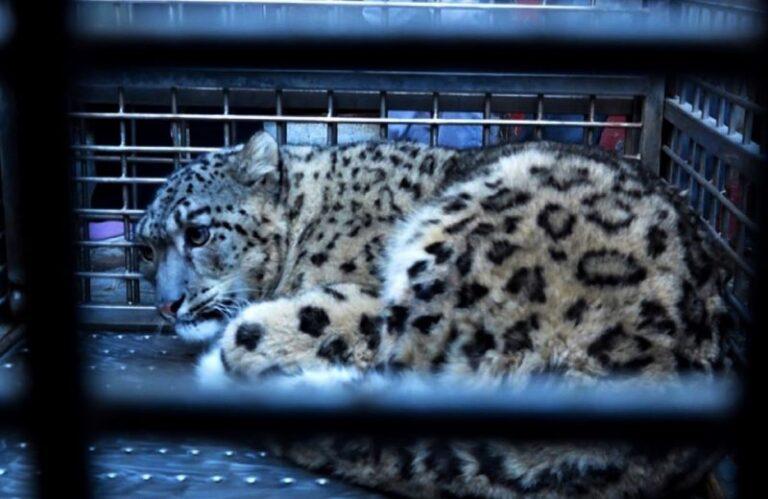
    On the afternoon of 23 January 2024, an adult male snow leopard was found in Morang district in the Terrai plains of Nepal. The area is 146 meters above sea level.

    While the first line of investigations is the veterinary staff at the Kathmandu zoo, an investigation into how the snow leopard that roamed the mountains arrived in the plains has experts divided. The government is preparing to conduct study/research by forming a study task force with experts who are submitting arguments based on their own studies and assumptions. The snow leopard, which hunts on prey for food at an altitude of 2,000 to 6,000 meters above sea level is now in the suffocating cold of an air conditioned room in the zoo, surviving on chicken.

    Experts left guessing

    Snow leopards fall under the sensitive category of IUCN and are included in Schedule-1 of the sites and figure in the protected list of Nepal’s fauna. Its numbers are constantly decreasing. It is difficult to spot it in its Himalayan habitat. Even the experts are surprised when it was suddenly found in the middle of the plain at a time when the government is investing crores in its research by connecting cameras and GPS.

    The snow leopard, which was brought to the zoo room after being found injured in a bamboo grove in Morang as an adult, is raising questions and experts are divided. Karan Shah, a wildlife expert who has researched for a long time in the Kanchenjunga conservation area of Taplejung, the main area where snow leopards are found in Nepal, says, “Snow leopards may know the real answer.” Guessing is the problem. Such an incident has never happened in Nepal before, he says.

    Expert Shah speculates that it may have escaped while being smuggled somewhere. “This is an unnatural incident. I do not agree that it can come by itself. Because I am knowledgeable about that geographical situation,” he said. Morang to Taplejung, the closest habitat of the snow leopard is long distance. Shah does not see any possibility of coming to the Terai by itself. He says, “It lives only two thousand meters above. It takes five days to reach the Taplejung headquarters area even if you go down the road. Even after that, one has to cross the hilly districts of Panchthar, Ilam, Tehrathum or Dhankuta and big rivers, forests and villages.”

    Shah feels that the animal cannot reach Morang naturally and he feels that the possibility of smuggling of such animals is high in Nepal. Not very long ago, chimpanzees were found in Bagbazar located in Kathmandu, the capital of Nepal. Wildlife trafficking is prevalent in the region and this is an important lense to see this through, experts say.

    According to expert Shah, the snow leopard stays with its mother until the age of two and then wanders off to find food on its own. Even if he walks alone like this, he feels that there is no possibility of reaching this low.

    Another reason, he says is that it may have been kept from somewhere closer to the plains since its childhood and when it grew up, it may have left or ran away when it started showing its aggressive nature.

    To strengthen the argument, he says, “An adult snow leopard’s tail is long (as long as its own body). While walking, the tail crawls on the ground and the tip turns towards the sky – however, in this case, the captive snow leopard’s tail is short,” he says, adding, “The development of hair is also not according to age and weight. That’s why it might have been reared.”

    He says that since he is still doing serious research on snow leopards, he says that this incident shows a different picture than what he has seen, read and experienced before.

    Other opinions

    Madhu Kshetri, a zoologist from Nepal, speculates that this snow leopard may have reached here by crossing the road after being separated from its mother. He says, “Its teeth are yet to be seen. Although it is an adult in terms of weight and age, it does not look very mature. It may have walked overnight to get here. Because the vertical direction from Himal to Terai is only 50-60 km. I also looked at the mapping. This is a species that can walk a hundred kilometers in one night.”

    He says that the possibility of snow leopard coming here naturally cannot be ruled out. He claims that this possibility will remain when he talks to the world’s scientists. “At first he was walking with his mother. When it is separated from its mother, it may have wandered down to see a new place.” He presents an example of walking for a thousand kilometers without returning.

    Crucial evidence lost

    The snow leopard was found in the forest on the afternoon of 23 January. On the same evening, he was rescued and brought to the zoo after traveling about 600 kilometers by car overnight. It was not provided any food until that time.

    A test of its feces could reveal if it came directly from that mountain to the Terai, was brought up in the Terai from a young age or was smuggled.

    Zoologist Chhetri expresses concern about the loss of the pollen as it can be investigated based on what it has eaten by examining the snow leopard’s faeces. Now they have brought water and chicken to the zoo. Even if some evidence is found while examining the feces, the probability is very low. Earlier, his feces should have been collected and investigated,” he said.

    Is it climate change?

    In recent times, every phenomenon of disruption and change in nature is viewed in connection with the effects of climate change. As this snow leopard is now found in the Terai, some are linking this phenomenon with the effect of climate change. Didn’t the snow leopard also come to the lower areas after the extreme cold in the cold season? Some have questions and arguments. Secretary of the Ministry of Forestry and Environment of the Government of Nepal Dr. Deepak Kumar Kharal also says that this possibility should not be ruled out.

    The discovery of snow leopards living in Morang, the hot spot, can be the first ‘indicator’ of the effects of climate change in Nepal. Kharat says. He also said that the need to go up in the calculation of the habitat should be made a subject of study because the snow leopard has fallen from the mountains to the Terai.

    On the other hand, experts like Madhu Chhetri and Karan Shah are of the opinion that the argument that the snow leopard came to the lowlands due to climate change cannot make sense. The effect of climate change is an increase in temperature. It does not like hot places. “Due to the effects of climate change, he will have to climb even higher. This argument does not fit in this case at all,” said expert Chhetri.

    Expert Shah also adds to Chhetri’s argument and says, “Recently everything has started to be seen as the effect of climate change.” There is a lack of study, he says, because when the snow leopard is cold, the sun doesn’t come down to warm it. Instead, he climbs mountains looking for snow. It hunts there. In the absence of prey, some will descend to the lower settlements.”

    This piece has been sourced from Nature Khabbar.

    Image: After the rescue, the snow leopard kept in a cage at Sadar Zoo in Lalitpur, Kathmandu. Credit: Rabin Bhattarai

    Is Bangladesh Sleep Walking to Dictatorship?

    Prior to the election, the USA and several western countries indicated that failure to hold fair and free election will have consequences. As a result, Bangladesh’s policy analysts are concerned and discussing the likely implications of the election on the economy and in particular the garment industry.

    By Saifullah Syed

    The parliamentary elections held in Bangladesh on 7 January, 2024, has created much controversy in the country, terming it an “election of the Awami League (AL) government, for the AL government and by the AL government”, by many. Internationally, China and India have congratulated the government for victory and organization of a fair election. But, several western countries have termed it as unsatisfactory. However, irrespective of the diverse views, everyone agrees that it was not participatory elections. Voter turn out was significantly low and it was boycotted by the main opposition Bangladesh National Party (BNP).

    Prior to the election, the USA and several western countries indicated that failure to hold fair and free election will have consequences. As a result, Bangladesh’s policy analysts are concerned and discussing the likely implications of the election on the economy and in particular the garment industry.

    While international push back are legitimate concerns, what is more worrisome is that Bangladesh may be unwittingly sleep walking to dictatorship under one party rule. Several commentators are suggesting that Sheikh Hasina is becoming an authoritarian ruler from being a champion of democracy and the AL is projecting itself as the sole guarantor of independence, sovereignty and secularism. Everyone else is out there to turn it into a hot bed of Islamic extremism. Such rationales alluding to moral right to rule are perfect ingredients for sleepwalking into dictatorship.

    The one-party dictatorships are generally more stable and perverse and the elections legitimizes one party dictatorship by presenting an image of democracy.

    History teaches us that one party rule or dictatorship goes against the basic foundation of Bengali values. However, successful moves to stop it can only be launched by understanding why and how it is emerging.

    Democracy in Bangladesh

    Bangladesh initiated non-party caretaker government (CGT) system for running elections as per demand of the AL in 1991. By all accounts the 1991 election was fair and the CGT worked satisfactorily to hold general elections also in 1996 and 2001. Interestingly, in 1991 the BNP won and in 1996 the AL won and in 2001 the BNP won again.

    What went wrong thereafter ? The system ran into difficulties in 2006 due to BNP’s refusal to follow the rules governing the CTG . This led to political crisis of 2006-2008 and brought the military into power. However, a fair election was finally held in 2008 and the AL achieved overwhelming victory. Since then, the AL started getting emboldened and in 2011 it abolished the CTG system. Consequently, BNP launched movement to restore the CTG and started refusing to participate in elections unless it is done. The AL is adamantly refusing to reintroduce CTG, saying it is unconstitutional.

    Therefore, it would seem that the core challenge facing our democratic system is two-fold: how to convince AL to introduce the CTG? or how to convince BNP to participate in elections under the ruling government? These challenges may appear easily resolvable through dialogue. Unfortunately, the two parties are mired in deep animosity. For AL, the founder of BNP is linked to the cruel murder of the founder of Bangladesh and his family and the current leader of BNP is accused of master minding the grenade attack on a AL rally on 21 August 2004, killing 24 people and injuring about 200. For the BNP, it has zero trust in AL and considers ditching of the current party leader, Begum Khaleda Zia – with the name Zia, as its existential threat.

    Can the civil society or the international community mediate a solution ? Unfortunately, civil society is fragmented along party lines and partly lost its neutrality during the 2006-2008 crisis, when some components stepped into politics. The international community is also divided between the East and the West and a vast majority in the country believes that their call for democracy is motivated by geo-political interests.

    Who will blink first?

    Judging from the past, neither is likely to give in under the present leadership. Hence, to save democracy in Bangladesh, everyone concerned needs to come out of hybernation and build a national consensus. BNP leadership must answer for the accusations and face the consequences. Its stalwart leaders should ensure that, instead of slavish subordination. The civil society should shade political color and influence of the ‘funders’, and the international community should accept local dynamics and realities. If all concerned fail to put the country first it will not bode well for democracy in Bangladesh.

    The Bengali people will surely rise against one party rule. Success of rebellion will be shaped by the leadership it fosters. Any leadership tainted by criminal accusations and historical misdeeds will fail to obtain broad-based support. People may give the ‘benefit of doubt’ to civil crimes, but may not for criminal crimes, even if portrayed as ‘politically motivated’. Partisan support alone cannot bring down a one party dictatorship. A broad-based national movement is essential. It cannot happen under leadership tainted by criminal accusations. For a democratic Bangladesh, the country needs an opposition led by people who are not and cannot be tainted by criminal accusations and offer AL the moral high ground by default.

    The author is a former UN official who was Chief of Policy Assistance Branch for Asia and the Pacific of the United Nations Food and Agriculture Organization of the United Nations (FAO).

    This piece has been sourced from Inter Press Service — IPS

    New Model Predicts How Shoe Properties Affect a Runner’s Performance

    Developed by MIT engineers, the model could be a tool for designers looking to innovate in sneaker design.

    Jennifer Chu | MIT News Office

    A good shoe can make a huge difference for runners, from career marathoners to couch-to-5K first-timers. But every runner is unique, and a shoe that works for one might trip up another. Outside of trying on a rack of different designs, there’s no quick and easy way to know which shoe best suits a person’s particular running style.

    MIT engineers are hoping to change that with a new model that predicts how certain shoe properties will affect a runner’s performance.

    The simple model incorporates a person’s height, weight, and other general dimensions, along with shoe properties such as stiffness and springiness along the midsole. With this input, the model then simulates a person’s running gait, or how they would run, in a particular shoe.

    Using the model, the researchers can simulate how a runner’s gait changes with different shoe types. They can then pick out the shoe that produces the best performance, which they define as the degree to which a runner’s expended energy is minimized.

    While the model can accurately simulate changes in a runner’s gait when comparing two very different shoe types, it is less discerning when comparing relatively similar designs, including most commercially available running shoes. For this reason, the researchers envision the current model would be best used as a tool for shoe designers looking to push the boundaries of sneaker design.

    “Shoe designers are starting to 3D print shoes, meaning they can now make them with a much wider range of properties than with just a regular slab of foam,” says Sarah Fay, a postdoc in MIT’s Sports Lab and the Institute for Data, Systems, and Society (IDSS). “Our model could help them design really novel shoes that are also high-performing.”

    The team is planning to improve the model, in hopes that consumers can one day use a similar version to pick shoes that fit their personal running style.

    “We’ve allowed for enough flexibility in the model that it can be used to design custom shoes and understand different individual behaviors,” Fay says. “Way down the road, we imagine that if you send us a video of yourself running, we could 3D print the shoe that’s right for you. That would be the moonshot.”

    The new model is reported in a study appearing this month in the Journal of Biomechanical Engineering. The study is authored by Fay and Anette “Peko” Hosoi, professor of mechanical engineering at MIT.

    Running, revamped

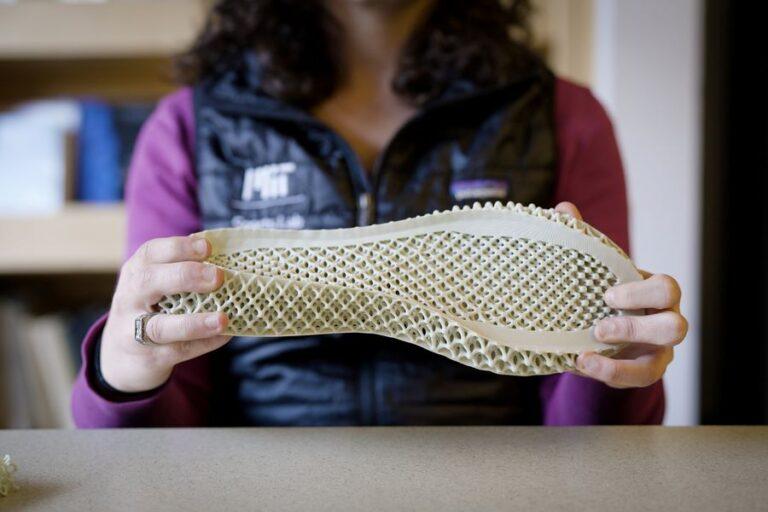
    The team’s new model grew out of talks with collaborators in the sneaker industry, where designers have started to 3D print shoes at commercial scale. These designs incorporate 3D-printed midsoles that resemble intricate scaffolds, the geometry of which can be tailored to give a certain bounce or stiffness in specific locations across the sole.

    “With 3D printing, designers can tune everything about the material response locally,” Hosoi says. “And they came to us and essentially said, ‘We can do all these things. What should we do?’”

    “Part of the design problem is to predict what a runner will do when you put an entirely new shoe on them,” Fay adds. “You have to couple the dynamics of the runner with the properties of the shoe.”

    Fay and Hosoi looked first to represent a runner’s dynamics using a simple model. They drew inspiration from Thomas McMahon, a leader in the study of biomechanics at Harvard University, who in the 1970s used a very simple “spring and damper” model to model a runner’s essential gait mechanics. Using this gait model, he predicted how fast a person could run on various track types, from traditional concrete surfaces to more rubbery material. The model showed that runners should run faster on softer, bouncier tracks that supported a runner’s natural gait.

    Though this may be unsurprising today, the insight was a revelation at the time, prompting Harvard to revamp its indoor track — a move that quickly accumulated track records, as runners found they could run much faster on the softier, springier surface.

    “McMahon’s work showed that, even if we don’t model every single limb and muscle and component of the human body, we’re still able to create meaningful insights in terms of how we design for athletic performance,” Fay says.

    Gait cost

    Following McMahon’s lead, Fay and Hosoi developed a similar, simplified model of a runner’s dynamics. The model represents a runner as a center of mass, with a hip that can rotate and a leg that can stretch. The leg is connected to a box-like shoe, with springiness and shock absorption that can be tuned, both vertically and horizontally.

    They reasoned that they should be able to input into the model a person’s basic dimensions, such as their height, weight, and leg length, along with a shoe’s material properties, such as the stiffness of the front and back midsole, and use the model to simulate what a person’s gait is likely to be when running in that shoe.

    But they also realized that a person’s gait can depend on a less definable property, which they call the “biological cost function” — a quality that a runner might not consciously be aware of but nevertheless may try to minimize whenever they run. The team reasoned that if they can identify a biological cost function that is general to most runners, then they might predict not only a person’s gait for a given shoe but also which shoe produces the gait corresponding to the best running performance.

    With this in mind, the team looked to a previous treadmill study, which recorded detailed measurements of runners, such as the force of their impacts, the angle and motion of their joints, the spring in their steps, and the work of their muscles as they ran, each in the same type of running shoe.

    Fay and Hosoi hypothesized that each runner’s actual gait arose not only from their personal dimensions and shoe properties, but also a subconscious goal to minimize one or more biological measures, yet unknown. To reveal these measures, the team used their model to simulate each runner’s gait multiple times. Each time, they programmed the model to assume the runner minimized a different biological cost, such as the degree to which they swing their leg or the impact that they make with the treadmill. They then compared the modeled gait with the runner’s actual gait to see which modeled gait — and assumed cost — matched the actual gait.

    In the end, the team found that most runners tend to minimize two costs: the impact their feet make with the treadmill and the amount of energy their legs expend.

    “If we tell our model, ‘Optimize your gait on these two things,’ it gives us really realistic-looking gaits that best match the data we have,” Fay explains. “This gives us confidence that the model can predict how people will actually run, even if we change their shoe.”

    As a final step, the researchers simulated a wide range of shoe styles and used the model to predict a runner’s gait and how efficient each gait would be for a given type of shoe.

    “In some ways, this gives you a quantitative way to design a shoe for a 10K versus a marathon shoe,” Hosoi says. “Designers have an intuitive sense for that. But now we have a mathematical understanding that we hope designers can use as a tool to kickstart new ideas.”

    This research is supported, in part, by adidas.

    Image:  Melanie Gonick, MIT

    Reprinted with permission of MIT News 

    PPPs’ Private Gain at Public Expense

    PPPs are often not on official government books or accountable to legislatures. PPPs thus often avoid transparency and accountability, invoking the excuse of private commercial confidentiality.

    At high cost and with dubious efficiency, public-private partnerships (PPPs) have increased private profits at the public expense. PPPs have proved costly in financing public projects.

    PPPs’ high costs

    Eurodad has shown high PPP costs mainly due to private partners’ high-profit expectations. Complex PPP contracts typically involve high transaction costs. Worse, contracts are often renegotiated to favour the private partners.

    They also take advantage of lower government borrowing costs compared to private borrowers. Most PPP debt costs are ultimately borne by host governments but are often obscured by the secrecy of contracts.

    PPPs are often not on official government books or accountable to legislatures. PPPs thus often avoid transparency and accountability, invoking the excuse of private commercial confidentiality.

    Such ‘off-budget’ government-guaranteed liabilities often make a mockery of supposed government debt limits. Investors generally expect much higher returns from developing countries than developed economies, supposedly due to the greater risks involved.

    These ‘fiscal illusions’ obscure transparency and undermine government accountability, generating huge, but little-known public liabilities. High and rising interest rates threaten new government debt crises as economic stagnation spreads.

    High fiscal risks

    The high costs and fiscal risks of PPPs drain government resources, resulting in public spending and fiscal resource cuts. With growing demands for fiscal austerity, from the IMF and markets, PPPs’ high costs threaten government spending, especially for social services.

    A 2018 IMF Staff Note warned PPPs reduce fiscal policy space: “while spending on traditional public investments can be scaled back if needed, spending on PPPs cannot. PPPs thus make it harder for governments to absorb fiscal shocks, in much the same way that government debt does.”

    But such warnings have not deterred the Fund and World Bank from promoting PPPs. Worse, austerity measures rarely significantly increase budgetary resources, forcing governments to rely even more on PPP financing.

    PPPs the problem, not solution

    Growing reliance on PPP financing to address climate change is new, but no less problematic. This purported PPP solution has worsened financial vulnerabilities in developing countries, also undermining sustainable development and climate justice.

    The 27th UN climate Conference of Parties’ outcome statement urged multilateral development banks to “define a new vision and commensurate operational model, channels and instruments that are fit for the purpose of adequately addressing the global climate emergency”.

    But historical experience and recent trends show PPPs cannot be the solution. Advocates claim PPPs deliver better “value for money”, but evidence of efficiency gains is inconclusive at best.

    An African Forum and Network on Debt and Development (Afrodad) study found Ghana’s Sankofa gas project failing. Much touted efficiency gains were all very context-specific, relying on project design, scale, regulation and governance.

    Efficiency gains were typically very costly, mainly due to insufficient private investments and other such cost savings. Profits were also increased by cutting jobs and hiring cheaper, insufficiently trained and qualified staff.

    Human costs

    The public should be wary and sceptical of growing reliance on PPPs to provide infrastructure and public services. Unsurprisingly, such PPPs prioritise commercial profitability, not the public interest.

    Corporations are accountable to shareholders, not citizens. Worse, regulating and monitoring private partners are difficult for fiscally constrained governments with modest capacities, vulnerable to political and corporate capture.

    Unsurprisingly, PPPs have typically imposed higher costs on citizens. Public services provided by PPPs usually charge user fees, or payments for services. This means access to services and infrastructure depends on capacity to pay.

    Thus, PPPs maximise private profits, not the public interest, undermining public welfare and the UN Sustainable Development Goals (SDGs), worsening inequalities. PPPs’ high fiscal costs worsen fiscal austerity measures, reducing other public services, often needed by the most vulnerable.

    Inevitably, PPPs prioritise more profitable services and those easier-to-serve. Public healthcare is especially vulnerable as profit and insurance imperatives compromise service delivery. There is no evidence PPPs can better address the health challenges most developing countries face.

    Health PPPs worsen public access to essential services, subverting progress towards ‘health for all’ and ‘universal health care’. Private provisioning, including PPPs, has never ensured equitable access to decent healthcare for everyone. Pretending or insisting otherwise is simply wishful thinking.

    During the COVID-19 pandemic, countries relying more on private healthcare provision generally fared worse. Those without means cannot afford private charges, especially by providers who face few constraints to raising their charges.

    U-Turn?

    After a critical report by its Independent Evaluation Group, the World Bank – long a leading promoter of private financing of education – had to change its earlier approach to financing public education.

    The International Finance Corporation, the Bank’s private sector lending arm, has also worsened educational access, quality and equity. It had to stop investing in pre-tertiary (kindergarten to grade 12) private schools from mid-2022.

    Despite overwhelming evidence that the Bank should stop abusing public funds to promote PPPs, the new Bank leadership has still not abandoned this financing strategy thus far. Instead, the SDGs and the urgent need for more effective climate action have been invoked to give it a new lease of life.

    This piece has been sourced from Inter Press Service — IPS

    Two Mothers Killed Each Hour in Gaza Conflict: UN Women

    Women and children account for roughly 70 per cent of people killed in the war in Gaza, with two mothers killed every hour since hostilities erupted more than 100 days ago, according to a UN Women report published on Friday.

    The report, ‘Gender Alert: The Gendered Impact of the Crisis in Gaza’ examines the gendered impact of the conflict, which has left more than 23,000 Palestinians dead, according to Gazan health authorities, about 16,000 of whom are women or children.

    “We have seen evidenced once more that women and children are the first victims of conflict and that our duty to seek peace is a duty to them. We are failing them,” UN Women Executive Director Sima Bahous said in a statement issued alongside the report.

    “That failure, and the generational trauma inflicted on the Palestinian people over these 100 days and counting, will haunt all of us for generations to come,” she warned.

    UN Women also reiterated deep concern over the accounts of unconscionable sexual violence and other gender-based violence during the Hamas-led attacks against Israel on 7 October that sparked the conflict.

    The agency called for accountability, justice and support for all those affected and for the immediate and unconditional release of all hostages.

    ‘Impossible decisions’

    UN Women said the Gaza conflict “is fundamentally a protection crisis for women” at a time when nowhere in the enclave is safe.

    Of the 1.9 million people now displaced, close to a million are women and girls, and the “impossible decisions” they have to make regarding whether to evacuate – when and how as well as where to go – “are entrenched with gender differentiated fears and experiences”, given risks of attacks and harassment while on the move.

    UN Women further estimated that at least 3,000 women may have become widows and heads of households, and at least 10,000 children may now be fatherless. As a result, more women fear families will resort to desperate coping mechanisms such as early marriage.

    Meanwhile, women’s rights organizations continue to operate amidst the crisis. In November, UN Women conducted a rapid survey of 12 women-led organizations and one youth-led group which found that most – 83 per cent – were at least partially operating, focused mainly on the emergency response.

    However, less than one per cent of funding under the 2023 Flash Appeal for Gaza has directly gone to women’s groups.

    Staying the course

    The report is part of UN Women’s six-month response plan for Gaza, which includes providing emergency food assistance to over 14,000 female-headed households and supporting the distribution of items requested by women on the ground such as clothing, sanitary products and baby formula.

    The agency is also partnering with women-led organizations to deliver gender responsive services for gender-based violence, establishing women-led protection and response committees in shelters and convening regular consultations with women’s organizations to discuss the challenges they face.

    In Gaza, the loss of life and severe humanitarian needs are at unprecedented levels, in a context where needs were already dire prior to the current escalation. In January 2023, it was estimated that approximately 2.1 million Palestinians across the Occupied Palestinian Territory required some form of humanitarian assistance, of whom 49.2 per cent were women.

    Gendered displacement

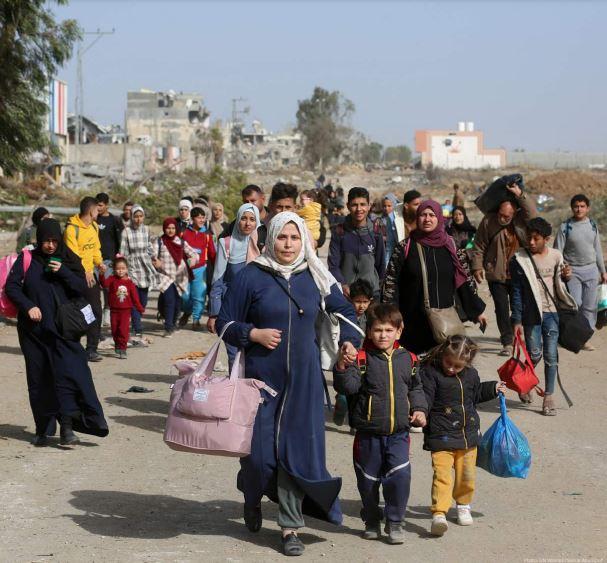
    According to the report, as of early 2024, the majority of the population of Gaza has been forcibly displaced on foot multiple times. Displacement exacerbates people’s vulnerability, erodes their coping mechanisms, and impacts them differently based on gender. Since the ground operation started in Gaza, it has been reported that men faced arbitrary detention and enforced disappearance.

    The report quotes media reports, according to which, while on the displacement journey, women also faced risks of arbitrary detention and harassment. For families with elderly relatives or family members with disabilities who simply cannot move, it is women who disproportionately stay behind as caregivers.

    In severely overcrowded shelters, in the streets amid the rubble, women and girls are seeking safety from airstrikes under unspeakable conditions. Yet, nowhere and no one is safe in Gaza. Once displaced, families take shelter where they can, including at facilities designated by the United Nations Relief and Works Agency for Palestine Refugees in the Near East (UNRWA) or with host families, who also face security risks themselves.

    The report says that as the war continues, people in Gaza are experiencing an almost complete erosion of individual and collective coping mechanisms. Tensions within families and communities are increasing, which in turn increases the risks of gender-related protection concerns, including gender-based violence.

    “The crisis also impacts power dynamics and gender relations, which must be taken into account in the delivery of humanitarian aid,” the report says. “Loss of families in full or in part, loss of parents or a breadwinner, and loss of home and community lead to changes in family formation including from predominantly nuclear and extended families to super-extended families, which impact gender relations, roles, and dynamics.”

    The report says that women increasingly fear that, in light of food shortages, school closures, and loss of educational opportunities, families will resort to desperate coping mechanisms including early marriage, especially given the high number of young girls who have lost one or both parents.

    Image: UN Women

    Investment Forum for Advancing Climate Resilient Agrifood Systems in India Launched

    A joint initiative of NITI Aayog, Ministry of Agriculture & Farmers’ Welfare and FAO, the initiative aims to develop an investment and partnership strategy to advance climate resilient agrifood systems.

    NITI Aayog, Ministry of Agriculture and Farmers’ Welfare (MoA&FW), Government of India, and Food and Agriculture Organization (FAO) of the United Nations have jointly launched the ‘Investment Forum for Advancing Climate Resilient Agrifood Systems in India’ in New Delhi. This initiative aims to develop an investment and partnership strategy to advance climate resilient agrifood systems among the government, private sectors, and farmers’ organizations and financial institutions in India.

    Delivering the keynote address at the inauguration, Prof Ramesh Chand, Member, NITI Aayog emphasized the need for awareness on how agriculture contributes to climate change, citing a contribution of a little more than 13 per cent of total greenhouse gas emissions in the country. He observed that agriculture could play a role in carbon sequestration through tree plantation on farmland. Prof Chand also called for a new direction in economic analysis of agriculture production, considering impact on natural resources, climate change and future generations. He proposed incorporating metrics beyond financial prices to evaluate the economic impact of agricultural activities. Prof Chand also stressed the importance of aligning efforts with the larger UN approach for dealing with contemporary and long-term challenges.

    Manoj Ahuja, Secretary, ministry of agriculture and farmers welfare highlighted the significance of a multi-stakeholder approach in addressing climate challenges in India. He stressed the importance of considering the perspective of small and marginal farmers, who constitute 85 per cent of the farming population in India. He also discussed the spatial and temporal distribution of climate patterns affecting farming activities and called upon the need for localized responses. Mr Ahuja also highlighted the need to focus on investment structures to increase incentives for farmers in the country.

    Shombi Sharp, UN Resident Coordinator in India emphasized that without an answer to financial crisis there can be no answer to the food crisis. He observed that with food demand predicted to grow by at least 50 per cent by 2050, there is an urgent need to scale up investments in climate resilience in agriculture to ensure future generations have the resources needed to grow enough food. He reiterated UN’s support for climate initiatives in India, such as the Year of Millets and expressed the commitment to being a partner of choice for India.

    The FAO Representative in India, Mr. Takayuki Hagiwara, applauded Indian Government’s strong leadership in building climate resilient agrifood systems through prioritized actions in mitigation and adaptation domains. He also highlighted the importance of de-risking. This includes considering the flow of working capital, labor availability, sustainability and impact on the environment, the role of women in agrifood systems, and other factors.

    Profound implications

    The two-day meet paved the way for discussions and deliberations among key stakeholders, and their perspectives on national priorities, investment opportunities, partnership, technical support and cooperation. The Forum facilitated discussions and deliberations on six key areas namely, (i) Climate resilient agriculture (experiences and pathways) (ii) Digital infrastructure and solutions (iii) Financing climate resilient agrifood systems (domestic and global) (iv) Climate resilient value chains(v) Production practices and inputs for climate resilience and (vi) Gender mainstreaming and social inclusion for climate resilience. The meet witnessed almost 200 attendees with senior representatives from the government, National Bank for Agriculture and Rural Development (NABARD), Indian Council of Agricultural Research (ICAR), International Crops Research Institute for the Semi-Arid Tropics (ICRISAT), National Institute of Agriculture Extension Management (MANAGE), World Bank, International Food Policy Research Institute (IFPRI), delegation of the European Union, International Finance Cooperation, and UN agencies.

    Climate change has profound implications for India, particularly affecting its economically vulnerable rural population which is largely dependent on climate sensitive agricultural livelihoods. Indian agriculture is susceptible to extreme temperatures, droughts, floods, cyclones, and soil salinity. Climate mainstreaming into agrifood systems requires much larger investments from global climate finance, domestic budgets, and the private sector. This forum facilitated the identification of national priorities and policy platforms for financing climate resilient agrifood systems. It facilitated key stakeholders to provide insights on several opportunities that can be leveraged through regional collaboration on climate-smart food system initiatives and suggest probable arrangements to maximize resource consolidation, route catalytic findings and support large-scale climate advocacy campaigns.

    Restrictions on Afghan Women Continue Unabated: UN report

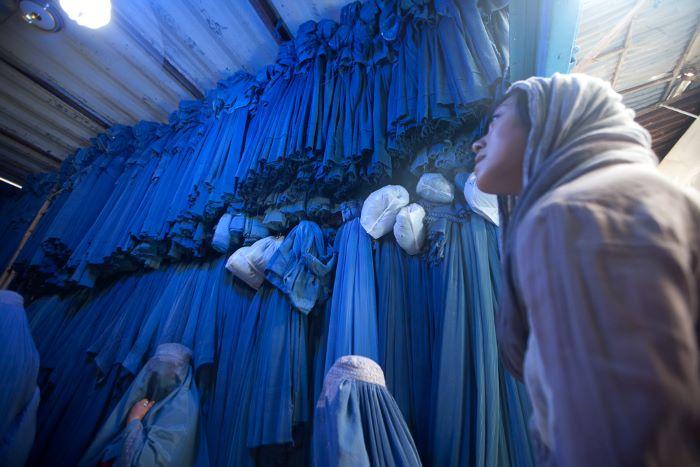
    Hundreds of Afghan women were forced to quit their jobs or have been arrested and denied access to essential services in the last quarter of 2023, a UN report revealed on Monday, as Taliban officials continue undermining their basic human rights.

    Among those whose working lives have been upended, the ruling Taliban authorities “banned” approximately 400 women workers at a pine nut processing from the workplace and dismissed another 200 at a power plant, the UN Assistance Mission in Afghanistan (UNAMA) said in a report on the human rights situation.

    UNAMA’s report, Human rights situation in Afghanistan (October – December 2023 update), also noted that women were arrested for purchasing contraceptives and that unmarried female staff at a healthcare facility were “advised” to get married by officials from the Department for the Propagation of Virtue and Prevention of Vice, or risk losing their jobs.

    The officials reportedly stated that “it was inappropriate for an unmarried woman to work.”

    Many women were also not allowed to board buses or go to work because they were unmarried or because they did not have a mahram – a male chaperone – to accompany them in public.

    Enforcement of ‘hijab’ decree

    The report also noted that several women were arbitrarily arrested in Kabul and other locations for “not wearing proper hijab”.

    Most were released after their mahrams signed a guarantee that they will adhere to the hijab decree in the future.

    “The measures taken by the de facto (ruling Taliban) authorities contradicts the hijab decree itself,” UNAMA said.

    “For a first violation of the decree, a warning is to be issued to individual’s mahram (at the place of residence), for a second violation, the individual’s mahram is to be summoned, for a third violation, the individual’s mahram may be imprisoned for up to three days and for a fourth violation, the individual’s mahram is to be brought before the de facto court for further action.”

    Freedom of expression

    UNAMA further noted that the ruling Taliban authorities continued to infringe the right to freedom of expression by limiting the opportunity to seek, receive and impart information and ideas.

    On 14 December, the Taliban Ministry of Higher Education issued a letter instructing all universities and private education institutions to remove books which are considered against the laws of Hanafi jurisprudence.

    This includes books relating to Shi’a belief, political parties and materials authored by individuals associated with the elected Government the Taliban deposed, the report stated.

    In further examples, four women’s rights activists and three staff of a radio station were arrested between September and December simply for doing their jobs.

    On 7 October, in Daikundi province, ruling Taliban General Directorate of Intelligence arrested three media workers of Radio Nasim accused of producing a report concerning the Taliban Provincial Governor of Daikundi’s involvement in the diversion humanitarian aid. On 17 October, two of the three detained were released without charge. On 11 December, the Taliban Primary Court in Daikundi sentenced the radio station’s Director to one years’ imprisonment on charges of engaging in activities against the ruling Taliban authorities.

    Image: Oxfam

    Climate Change Is Taking a Major Toll on Agriculture. Here’s How to Support Farmers

    Smallholder farmers produce one-third of the world’s food, and agriculture makes up every second livelihood in Bangladesh. But the country’s agricultural sector has been badly hit by the climate crisis, with flooding and salinity intrusion posing challenges.

    By Asif Saleh, Executive Director, BRAC

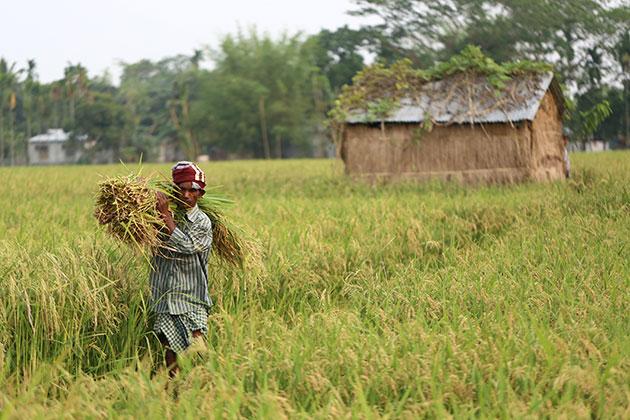
    Half the world eats rice. In Bangladesh, everyone eats it. The small, densely-populated nation is the third-highest rice-producing country in the world.

    For a nation of 170 million people which has suffered through some of the world’s worst famines, this ranking holds special significance. While Bangladesh is mostly self-sufficient in food now, its farmers face a new threat ¬– the climate crisis.

    The impact of a changing climate on food security is a catastrophe shared by many countries in the Global South, from the Philippines, where biodiversity based rice farming is facing extinction, to Peru, where drought has devastated food systems.

    Smallholder farmers produce one-third of the world’s food. In Bangladesh, agriculture makes up every second livelihood. The country has a population predicted to swell to 200 million people by 2050, and salinity intrusion is affecting an area larger than Lebanon.

    In 2022 alone, flooding destroyed crops that would have been enough to feed 10 million people for a month. The impacts of Cyclone Sidr, which struck Bangladesh’s coast 16 years ago, are still felt today, with salt residue rendering thousands of hectares of land non-arable for much of every year.

    Bangladesh is small – its land size is just a little more than the US state of Mississippi – but surprisingly diverse in terms of topography and ecosystems, and the climate crisis is a cruel reminder of that diversity.

    North-eastern Bangladesh floods regularly, central regions suffer longer dry spells, coastal areas are under attack by rising salinity, and farming communities along Bangladesh’s 600-plus rivers are constantly threatened by erosion.

    A whole-of-society approach

    Climate impacts are attacking smallholder farmers on every front. To support them on every front, we can’t tinker around the edges; we need holistic solutions at scale.

    Bangladesh is an example that these approaches work – it has used holistic, large-scale approaches to take poverty rates from 80 per cent to 18.7per cent, increase life expectancy by one and a half times and triple rice production – all in the last 50 years.

    The starting point for such an approach must be the most fundamental – seeds, which Bangladesh has invested in for decades. One of the key reasons the country was able to become self-sufficient in food was because of widespread uptake of high yield varieties.

    It turns out, however, that high yield crops are particularly vulnerable to climate impacts. There is also a lack of diversity – while hundreds of climate-resilient varieties are available in Bangladesh, 70 per cent of the country’s Boro rice fields are cultivated with just two varieties.

    The work needed going forward is not only in the development of climate resilient seeds, but also in working with farmers to encourage them to use them, as well as to try different crops altogether.

    Rice, for example, the mainstay of the Bangladeshi diet, which covers 80 per cent of cultivable land in the country, needs 3,000-5,000 litres of water to produce 1kg. Maize requires 30 per cent less, and millets require 70 per cent less. Methane from rice also contributes around 1.5 per cent of total global greenhouse gas emissions. With many smallholder farmers living harvest to harvest though, getting them to change varieties is not easy.

    Non-government organizations can help address this issue, because they work closely with communities and are trusted by them. BRAC works with a network of 7,000 smallholder farmers to produce seeds which are distributed to a community of 1.3 million farmers – and networks and communities like this exist across the Global South.

    Access to finance is vital

    To experiment with seeds though, farmers need access to finance. Most Bangladeshi subsistence farmers earn less than $2 per day, making it a constant struggle to eke out a living, let alone to invest in their livelihood.

    Farmers typically don’t need a lot of money – but they often need it all at once, at the start of the season. Customized microfinance loans for farmers are key in this. BRAC provides finance to approximately 10 million people, many of whom are farmers – and increasingly in the form of one-off loans to be repaid at harvest time. The default rate is less than 2 per cent.

    Crop insurance is also crucial, to support farmers to absorb increasing climate shocks. More than half the world’s countries have government agriculture insurance programmes, and most of those subsidize premiums.

    Only four countries in Africa, however, have them. At BRAC, we recently piloted crop insurance, partnered with agri-advisories and localized weather predictions via SMS with 80,000 farmers. Even without subsidizing, more than half the farmers opted to continue the insurance after the pilot.

    Importance of up-to-date knowledge for farmers

    Farmers also need information at their fingertips, in a way they can understand. Government agricultural extension services provide this, and non-state actors can ensure it gets to particularly vulnerable communities.

    One initiative being piloted in Bangladesh is adaptation clinics – one-stop service centres in climate hotspots run by agricultural graduates and farmers in those communities, offering other farmers access to a range of resources, from weather forecasts and market information to training, technology and produce storage facilities.

    They also need to know they can sell their new produce. Sunflowers are a good example. Sunflower oil is used extensively in cooking in Bangladesh, and the country relies on imports to meet 90 per cent of its demand for edible oil.

    Sunflowers are also a naturally salt-tolerant crop. Even though the government put effort into promoting sunflowers for years, the crop was never taken up because of a lack of buyers.

    Now with industrial oil producers showing interest and that market gap being addressed, there is a bloom of sunflower farming on the coast – and farmers are fetching up to five times as much as they would make from the crops they would previously have grown.

    Challenges facing farmers only intensifying

    Seeds, finance, information, and market linkage are just the start. With climate impacts anticipated to wipe out 30 per cent of food production by 2050, the challenges farmers are facing are only going to intensify.

    They need support which is equally comprehensive, that combines the technical strengths of state and private actors, with the confidence and localized direction on the ground from non-state actors to transition away from generations of tradition.

    With a global population that is only getting hungrier – 43 countries currently have alarming or serious levels of hunger – the stakes have never been higher.

    This article was originally published in World Economic Forum Agenda blog which can be accessed through this link.

    This Year’s Subhash Chandra Bose Aapda Prabandhan Puraskar-2024 for 60 Parachute Field Hospital

    A PIB press release said that the country has significantly improved the disaster management practices, preparedness, mitigation and response mechanisms resulting in significant reduction in casualties during natural calamities.

    60 Parachute Field Hospital, Uttar Pradesh, in the Institutional category, has been selected for the Subhash Chandra Bose Aapda Prabandhan Puraskar-2024 for its excellent work in Disaster Management for the year 2024.

    The Government of India has instituted the Subhash Chandra Bose Aapda Prabandhan Puraskar annual award to recognize and honour the invaluable contribution and selfless service rendered by individuals and organizations in India in the field of disaster management. The award is announced every year on 23 January, the birth anniversary of Netaji Subhash Chandra Bose. The award carries a cash prize of Rs. 51 lakh and a certificate in case of an institution and Rs. 5 lakh and a certificate in case of an individual.

    A PIB press release said that the country has significantly improved the disaster management practices, preparedness, mitigation and response mechanisms resulting in significant reduction in casualties during natural calamities. The press release spoke of the Union Home Minister continuously reviewing disaster preparedness and stressing upon training of community and adopting best practices by the stakeholders to minimize loss of life and property.

    For the award of year-2024, online nominations were solicited from 1 July, 2023 onwards. The award scheme for the year 2024 was given wide publicity through print, electronic and social media. In response to the award scheme, 245 valid nominations were received from institutions and individuals.

    Following is a summary of the outstanding work of the winner of 2024 Award in the field of Disaster Management:

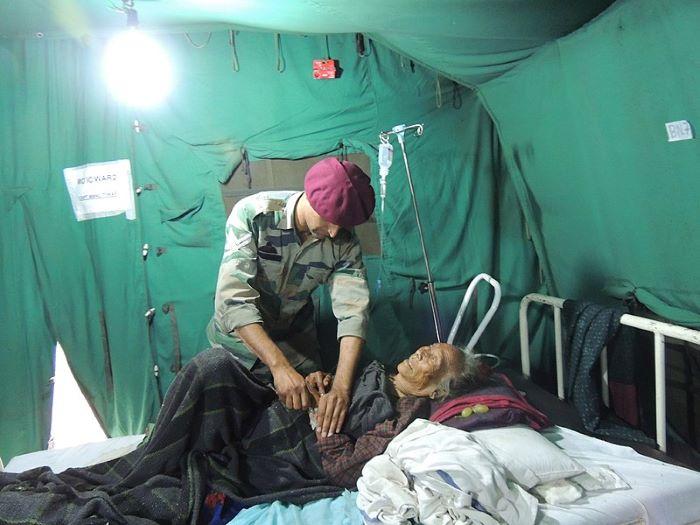
    60 Parachute Field Hospital, Uttar Pradesh, was established in 1942. It is the sole airborne medical establishment of the Indian Armed Forces, recognized for its exceptional service in various global crisis. The primary mission includes Humanitarian Assistance and Disaster Relief (HADR) operations during natural calamities, nationally and internationally, both in time of peace and war. It had provided medical assistance during the Uttarakhand floods (2013), Nepal Earthquake under the operation name ‘Maitri’ (2015) and Indonesian Tsunami as part of operation Samudra Maitri (2018). Recently, in response to the 7.8 magnitude earthquake in Turkey and Syria in February 2023, the unit rapidly assembled a 99-member team and established India’s pioneering level-2 medical facility in Turkey overcoming resource constraints and language barrier to set up a 30 bed hospital in Hatay province’s school building. The unit provided a wide range of medical services, including rescue, triage, surgery, dental treatment, X Ray and lab facilities and offered care to 3600 patients during a 12 day period as a part of ‘Operation Dost’.

    Image: Wikimedia commons