More

    Nepal Passes Law to Regulate Sale of Acid

    There are about 40 cases of acid attacks every year in Nepal and three-quarters of the victims are women. So far, the law provided for attackers getting imprisoned, besides a fine or a financial compensation to the victim – but justice is rarely done.

    By Laxmi Khanal

    Lawmakers in Nepal’s National Assembly on Tuesday passed the ‘Acid and other Hazardous Chemical Substances (Regulation) Bill’.

    Responding to queries raised while discussing the bill, Minister Balkrishna Khand explained that the law has been brought to regulate acid and hazardous chemical substances as the problem has surfaced due to its misuse though acid and other hazardous chemical substances are necessary for industrial and health sector.

    He opined that the passage of the bill will put to an end the misuse of acid and other hazardous chemical substances because the sale of acid would be controlled and necessary action would be taken against those misusing it.

    According to US-based NGO, Donor Direct Action, Nepal witnesses about 40 cases of burns from acid attacks every year.

    There are about 40 reported cases of burns and acid attacks every year in Nepal and nearly three-quarters of the victims are women, according to New York-based charity Donor Direct Action.

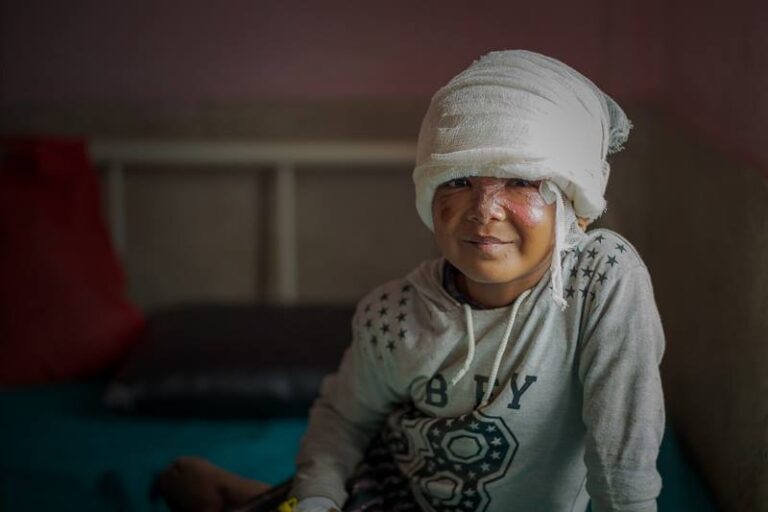
    Among the survivors are also young children, their pictures displayed on the website of Burns Violence Survivors Nepal, a Nepali NGO helping acid-burn victims and advocating for a change in the existing law.

    So far, the law has provided for attackers getting imprisoned, besides a fine or a financial compensation to the victim. But in reality, the imprisonment or a fine is a rarity.

    Heroic women

    Much of the credit for the new law goes to young women like Sangita Magar and Muskan Khatun.

    Sangita was 16 years-old when a neighbour threw acid on her and a friend. She has since become a campaigner for changing the laws on acid attacks and has often questioned the easy availability and access to the hazardous chemical.

    Sangita has been campaigning against the unregulated sale of acid and for life sentence to people carrying out such attacks and an enhanced, expedited compensation.

    As a result of her efforts, Nepal’s hospitals now provide free treatment to acid burn victims.

    Muskan was a 15 years-old girl on her way to school when a boy, whose advances she had earlier rebuffed, attacked he with acid. Her campaign, like Sangita’s, for a strong legislation has been recognised because of the laws she has advocated and lobbied for, including an International Women of Courage Award in 2021.

    The work of human rights defenders like Muskan and Sangita has made it difficult today for people in the business to provide acid to vengeful men.

    Prevention is the most important part of the law, as it stands today. While selling acid is not banned because of the industrial use the chemical has, sellers are now required to maintain a record of buyers along with their identifications. In any case, sale of small, bottled, volumes are prohibited with a provision of punishment.

    Image: Burns Violence Survivors Nepal

    Narrow Valuation of Nature is Widening Biodiversity Loss

    The Assessment Report on the Diverse Values and Valuation of Nature brought out by the Intergovernmental Science-Policy Platform on Biodiversity and Ecosystem Services argues that a poor evaluation of nature is driving biodiversity loss. There is a need to appreciate and factor in the values individuals and communities hold about nature, it says.

    By Busani Bafana

    Nature has diverse values for different people, but it is poorly evaluated, and this is driving the global biodiversity crisis, top scientists say in a new report.

    The Assessment Report on the Diverse Values and Valuation of Nature found that the way nature is valued in political and economic decisions is a key driver of the global biodiversity crisis and, simultaneously, a vital opportunity to address this loss. Nature is valued for its contribution to food, medicines, energy, and cultural significance, among other benefits. Representatives of the 139-member states of the Intergovernmental Science-Policy Platform on Biodiversity and Ecosystem Services (IPBES) approved the report on Saturday, July 9, 2022.

    IPBES is a global science-policy body tasked with providing scientific evidence to decision-makers for people and nature.

    Widening the values of nature

    Conducted over four years, the Values Assessment by 82 top scientists and experts highlights a dominant global focus on short-term profits and economic growth, and nature’s often multiple values are ignored in policy decisions. The Values Assessment sought to improve the value of nature, the quality of life, and justice.

    “Biodiversity is being lost, and nature’s contributions to people are being degraded faster now than at any other point in human history,” said IPBES Chair, Ana María Hernández Salgar. “This is largely because our current approach to political and economic decisions does not sufficiently account for the diversity of nature’s values.”

    The authors note that the release of the IPBES Values Assessment was strategic ahead of the expected agreement in December 2022 by the Parties to the Convention on Biological Diversity (CBD) on a new global biodiversity framework for the next decade. The Values Assessment is also expected to contribute to achieving the 2050 Vision for Biodiversity, the 2030 Agenda for Sustainable Development, and the future post-2020 global biodiversity framework, towards just and sustainable futures.

    “Effective policy decisions about nature must be informed by the wide range of values and valuation methods, which makes the IPBES Values Assessment a vital scientific resource for policy and action for nature and human well-being,” Salgar said.

    The Values Assessment flagged unsustainable use of nature, including persistent inequalities, as a key driver of the global decline of biodiversity. This resulted from predominant political and economic decisions based on a narrow set of values, such as prioritizing nature’s values as traded in markets and macroeconomic indicators like Gross Domestic Product (GDP). The specific values of nature include nature as instrumental, intrinsic, and relational. The valuation was applied to habitats, mainly forests, cultivated areas, inland water bodies, and coastal areas.

    Embedding values of nature into policymaking

    The report notes that nature’s values and valuation approaches can be leveraged in policymaking, which presents opportunities to tackle the global biodiversity crisis.

    The authors identified four values-centered ‘leverage points’ that can help create the conditions for the transformative change necessary for more sustainable development. These include recognizing the diverse values of nature, embedding valuation into decision-making, reforming policies and regulations to internalize nature’s values, and shifting underlying societal norms and goals to align with global sustainability and justice objectives.

    Baptiste said values are behind our daily decisions and business opportunities and that assessment is helping locate the relations between those values and actions that the different actors in society can develop.

    The report said that economic and political decisions have predominantly prioritized certain values of nature, particularly market-based instrumental values of nature, such as those associated with intensive food production.

    “With more than 50 valuation methods and approaches, there is no shortage of ways and tools to make visible the values of nature,” said Professor Unai Pascual, Assessment Co-chair. For instance, only two percent of the more than 1,000 studies reviewed consulted stakeholders on valuation findings, and only one percent involved stakeholders in every step of the process of valuing nature.

    “What is in short supply is the use of valuation methods to tackle power asymmetries among stakeholders and to transparently embed the diverse values of nature into policymaking,” Pascual urged.

    The Value Assessment, which drew on more than 13,000 references – including scientific papers and information sources from indigenous and local knowledge – builds on the 2019 IPBES Global Assessment, which identified economic growth as a key driver of nature loss. More than 1 million plants and animals are at risk of extinction.

    The report finds that the number of studies that value nature has increased on average by more than 10 percent per year over the last four decades, with the recent valuation studies focusing largely on improving the condition of nature and on improving people’s quality of life.

    Co-chair Patricia Balvanera said the Values Assessment provides decision-makers with tools and methods to understand the values individuals and communities hold about nature.

    The quality of valuation can be enhanced by considering the relevance, robustness, and resource requirements of different valuation methods. For example, a development project can yield economic benefits and jobs, for which instrumental values of nature can be assessed. However, the same project can also lead to the loss of species associated with intrinsic values of nature, and the destruction of heritage sites important for cultural identity, thus affecting relational values of nature.

    Raising the quality of valuing nature

    Another Co-chair of the Value Assessment, Mike Christi, said the valuation of nature is intentional. As a result, the type and quality of information that valuation studies can produce largely depends on how, why, and by whom valuation is designed and applied.

    “Recognizing and respecting the worldviews, values, and traditional knowledge of indigenous peoples and local communities allows policies to be more inclusive, which also translates into better outcomes for people and nature,” said Brigitte Baptiste, Co-chair.

    “Also, recognizing the role of women in the stewardship of nature and overcoming power asymmetries frequently related to gender status can advance the inclusion of the diversity of values in decisions about nature.”

    The report finds that a number of deeply held values can be aligned with sustainability, emphasizing principles like unity, responsibility, stewardship, and justice, both towards other people and towards nature.

    “Shifting decision-making towards the multiple values of nature is a really important part of the system-wide transformative change needed to address the current global biodiversity crisis,” said Balvanera. “This entails redefining ‘development’ and ‘good quality of life’ and recognizing the multiple ways people relate to each other and to the natural world.”

    The analysis shows that various pathways can contribute to just and sustainable futures through a green economy, degrowth, earth stewardship, and nature protection.

    Commending the IPBES Assessment Report on the Values and Valuation of Nature, Elizabeth Maruma Mrema, Convention on Biological Diversity, Executive Secretary, noted that implementing the goals and targets in the Global Biodiversity Framework, which will complement the 2030 Sustainable Development Agenda, underpins the knowledge in different types of values of nature as demonstrated by the Values Assessment.

    Inger Andersen, Executive Director, UN Environment Programme (UNEP), described the Values Assessment report as crucial because valuing nature was central to the successful post-2020 Global Biodiversity Framework currently under negotiation.

    “Nature, in all its diversity, is the greatest asset that humanity could ever ask for,” said Andersen. “Yet, its true value is often left out of decision making. Nature’s life support system has become an externality that doesn’t even make it onto the ledger sheet.”


    This piece has been sourced from Inter Press Service

    Image: Hippopx – Licenced to use under Creative Commons Zero – CC0

    Letter From Pakistan: Ninety years of a full life [Part – I]

    Rashad moved to Pakistan and lived in Karachi working as a glass vendor and frame maker. He got himself involved in progressive politics that was already under tremendous pressure. Most of the left leadership was underground as the Communist Party of Pakistan was banned in 1954.

    By Naazir Mahmood

    The ninth of July is a significant date for our family. My father Muhammad Rashad Mahmood completes his 90 years; he was born in Bombay (now Mumbai) on this date in 1932. He has lived a full life: from penury to relative prosperity, and from having to leave school at age 12 to having read hundreds, if not thousands, of books.

    His life is full of lessons that we as a family cherish; some of these we can share with others. Anybody who lives to be 90 without any medical condition, with all vital organs functioning, and with memory intact, can serve as a role model to those who want to live a healthy and long life – both mentally and physically.

    Here I share some of the snapshots of his life for my readers who may be interested in knowing about an old comrade who spent most of his life as a progressive activist and thinker.

    My father was the third son of a Gujarati-speaking trader from Surat. My grandmother was born in Bursa, Turkey from where her family migrated to Hyderabad Deccan after the abolition of the Khilafat. Mir Usman Ali, the ruler of Hyderabad state, had offered refuge to many of those who wanted to move out of Ataturk’s Turkey. So my father has Turkish and Gujarati blood in his veins.

    Beginning of penury

    His earliest memory is of 1938 when his school in Bombay closed for a day when Allama Iqbal died in April. The same happened in November 1938 too, when the school observed a day off to mourn the death of Kamal Ataturk. The memories of the Khilafat Movement were still fresh, but, by then the Muslims of India had reconciled with the new Turkey that emerged under Ataturk. My father recalls the days of the Second World War when there were blackouts at night in Bombay for fear of Japanese attacks that were already targeting Calcutta (now Kolkata). He remembers how his family converged to listen to radio news about German and Japanese advancements.

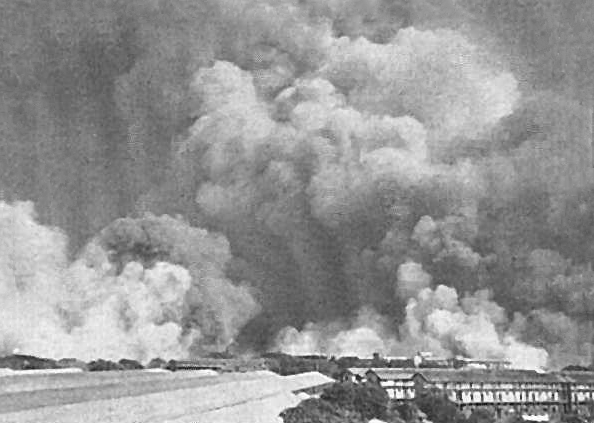
    My father was 12 years old when the Bombay-Docks Explosions occurred in April 1944. He narrated to us this story exactly 44 years later in April 1988 when Rawalpindi became a victim of a similar tragedy after an army warehouse in Ojhri camp exploded. He recalled how a British ship – carrying thousands of tons of explosives – was destroyed in two giant blasts that frightened him to near death. The debris from the blast scattered across Bombay sank ships in the Victoria Dock, spread fire and killed hundreds. The real number was not disclosed but my father says it must have been in the thousands. Over a hundred thousand people were declared homeless.

    The same year his father died leaving six children and a young widow. That was the beginning of penury as the family shop closed and they were rendered homeless, living in single-room rented dwellings and moving from place to place. That was the time when a 12-year-old boy had to quit formal education and sell balloons and newspapers on streets of Bombay, never having enough to eat.

    Books – a source of joy

    Working at shops and hired by businessmen to work at small industries, how desperately he wanted to read. That was also when, at age 14, he became an eyewitness to the Royal-Indian-Navy revolt in February 1946 in Bombay. Indian shipmen rebelled and killed their British masters. Soon the revolt spread from ships to docks and throughout Bombay Englishmen became targets of the rebels. Both Congress and the Muslim League were reluctant to support the revolt. The Communist Party of India (CPI) considered it a popular uprising and wholeheartedly came out in its support.

    That’s when my father bought a newspaper that the CPI published and sold on the streets. As a teenager, he was encouraged to join the young communists working as volunteers for the party. Soon he was selling the CPI’s English, Hindi, and Urdu newspapers on buses and trams of Bombay and its suburban stations such as Andheri, Bandra, and Dadar. Bombay was already a cosmopolitan city teeming with millions of labourers and workers. The Progressive Writers’ Association (PWA) held regular meetings discussing literary and political matters and young Rashad was a keen listener and observer.

    Giants such as Kaifi Azmi, Khwaja Ahmed Abbas, Krishan Chandar, Niaz Haider, Devendra Satyarthi, Balwant Gargi, and even Josh Malihabadi frequented the PWA meetings. From 1947 onwards, our young teenager was an active worker of the CPI and the PWA. There was also the Indian People’s Theatre Association that he visited and watched plays by Balraj Sahni, Habib Tanveer, Ismat Chughtai and many more. The rest of his life was taking shape then and there. He questioned both religion and the sectarian politics that his Muslim friends were following. Senior PWA comrades gave him books to read and he devoured them with joy.

    An activist in Bombay

    In a couple of years, he had read most of the leading writers of his age. The PWA was a blessing for him as it had functioning libraries in Bombay from where he could borrow books that made him an avid reader. He was a volunteer at the PWA conference held in 1948 at Bhimri near Bombay. He travelled to Delhi with his senior comrades attending conferences and meetings that enlightened him in political and social issues. The second party congress of the CPI held in Calcutta in February 1948 elected BT Ranadive as party secretary in place of PC Joshi.

    Ranadive was general secretary of the CPI just for a couple of years but had a devastating impact of left politics in India. Ranadive supported the Telangana armed struggle and other revolutionary uprising, and became a Left adventurist. My father was observing all this and his mother was not entirely keen on his son’s hobnobbing with ‘infidels’, but he carried on. Poverty was all over and living conditions were pathetic; his mother contracted tuberculosis and died in 1950. He was just 18 and turned a whole-timer for the party. The policy of the CPI leadership under B T Ranadive was following a radical tack. The party elected a new leadership and ditched the path of armed struggle in India.

    National Awami Party

    The next five years Rashad spent as an activist in Bombay before migrating to Pakistan to live in Karachi where he worked as a glass vendor and frame maker. He got himself involved in progressive politics that was already under tremendous pressure. Most of the left leadership was underground as the Communist Party of Pakistan was banned in 1954 and even the PWA was not allowed to function.

    At age 23, he married and named his first son Nasir. In Egypt its leader Jamal Nasser had nationalized the Suez Canal and had emerged as a revolutionary leader, giving hope to other nations. In 1957, my father joined the newly formed National Awami Party after attending the inaugural session of the NAP at Haider Manzil – the residence of GM Syed in Karachi. Then he moved to Lahore and spent five years there working at various glass shops and attending literary gatherings as politics was an anathema to the new dictator, General Ayub Khan.

    To be continued

    Image: Wikipedia: Bombay Dock Explosions of April 1944

    The writer holds a PhD from the University of Birmingham, UK. He tweets @NaazirMahmood and can be reached at: [email protected]


    Governments Recommended Unsafe EdTech Products During Pandemic

    Online learning or EdTech products endorsed by many governments across the world enabled surveillance of children. The products monitored or had the capacity to monitor children, in most cases secretly and without consent, in many cases harvesting data, says Human Rights Watch.

    A surveillance sweep gathered data from children – and on children – using digital tools during the COVID-19 pandemic, exposing their digital footprints, an analysis by the rights group, Human Rights Watch reveals.

    HRW’s report says that the overwhelming majority of education technology (EdTech) products endorsed by 49 governments of the world’s most populous countries and analyzed by Human Rights Watch appear to have surveilled or had the capacity to surveil children in ways that risked or infringed on their rights.

    HRW released technical evidence and easy-to-view privacy profiles for 163 EdTech products recommended for children’s learning during the pandemic on Tuesday.

    HRW says that the evidence underpins an earlier report by the organisation titled, “‘How Dare They Peep into My Private Life?’: Children’s Rights Violations by Governments that Endorsed Online Learning during the Covid-19 Pandemic.”

    The analysis showed that of the 163 products reviewed, 145 (89 per cent) surveilled or had the capacity to surveil children, outside school hours, and deep into their private lives.

    Harvesting data

    These EdTech products “appeared to engage in data practices that put children’s rights at risk, contributed to undermining them, or actively infringed on these rights,” the report says.

    Many products were found to harvest information about children such as who they are, where they are, what they do in the classroom, who their family and friends are, and what kind of device their families could afford for them to use for online learning.

    “These products monitored or had the capacity to monitor children, in most cases secretly and without the consent of children or their parents, in many cases harvesting data on who they are, where they are, what they do in the classroom, who their family and friends are, and what kind of device their families could afford for them to use.”

    Few governments checked whether the EdTech products they rapidly endorsed during the COVID-19 pandemic were safe for children to use. Many governments put at risk or violated children’s rights directly. Of the 42 governments that provided online education to children by building and offering their own EdTech products for use, 39 governments made products that handled children’s personal data in ways that risked or infringed on their rights.

    Kept in the dark

    Human Rights Watch found that the data surveillance took place in educational settings where children could not reasonably object to such surveillance. Most companies did not allow students to decline to be tracked, and most of this monitoring happened secretly, without the child or their family’s knowledge or consent. In most instances, it was impossible for children to opt out of such surveillance without giving up on their formal education during the pandemic.

    “Children, parents, and teachers were largely kept in the dark about the data surveillance practices we uncovered in children’s online classrooms,” said Hye Jung Han, children’s rights and technology researcher and advocate at HRW. “By understanding how these online learning tools handled their child’s privacy, people can more effectively demand protection for children online.”

    Algorithmic bias

    One explanation for such conduct is the lack of knowledge on children’s rights, accruing from lack of sensitisation or training, says an analytical piece appearing in The Conversation. The article highlights Responsible Data for Children initiative (RD4C), an initiative by The GovLab and UNICEF to help avoid unintended negative consequences on data subjects and beneficiaries.

    Developers do not design for or implement the additional protections required for children and their data. “The danger posed by algorithmic bias is especially pronounced for children and other vulnerable populations,” the report in The Conversation says. “These groups often lack the awareness or resources necessary to respond to instances of bias or to rectify any misconceptions or inaccuracies in their data.”


    Image: UNICEF

    Culture of Energy Evaluation ‘Missing’ in India

    The Indian government is committed to electrifying 40 million homes in 2022, but experts say the country needs to develop a culture of energy evaluation to bring about a just energy transition. Evaluation agencies are not independent and so, ‘lack credibility’.

    By Ranjit Devraj

    India is committed to electrifying 40 million homes this year to attain the goal of delivering electric power to all of its 1.3 billion people. It also has plans to install 75 gigawatts of renewable energy as part of commitments made under the Paris Agreements.

    But there’s a missing link to these ambitious pledges that could help bring about a just energy transition. India, like many other developing countries in the Asia Pacific region, lacks an effective energy evaluation programme, say experts.

    At a recent webinar organised by Energy Evaluation Asia Pacific (EEAP) experts identified challenges to mainstreaming energy evaluation in this vast and diverse country and offered suggestions on how to overcome them.

    Vibhuti Garg, India lead at the Institute for Energy Economics and Financial Analysis, pointed to how India’s much-vaunted plan to provide clean cooking fuels to households went awry due to poor targeting. Relatively richer sections of the population cornered the subsidies with the intended beneficiaries burning biomass along with cleaner fuels, according to studies, she said.

    India is not devoid of agencies that carry out energy evaluation and these include the Comptroller and Auditor General’s office, which audits government receipts and expenditure, said Aditya Chunekar, fellow at Prayas, the Pune-based energy group that promotes public awareness around energy projects. Customers and consumers need to understand how programmes and projects are doing and how different socioeconomic groups are impacted by them, he said.

    Independence

    In 2001, India set up a Bureau of Energy Efficiency which was mandated to develop energy efficiency policies and strategies. But the Bureau has been criticised for being ineffective in such areas as remedying massive losses of electricity at the supply end, attributed to powerful players in the system.

    Chunkekar pointed to the practice of projects being evaluated by consultants on terms of reference which worked to limit their independence. Evaluations made are often filed away with no attempts made to refer to them when it comes to new projects, he said, adding that there were often no provisions for mid-term corrections.

    “For evaluation to be seen as credible, evaluators need to be independent of the agency implementing the energy programmes and policies,” said the webinar’s moderator Edward Vine, energy efficiency scientist and affiliate at the Lawrence Berkeley National Laboratory, US.

    Similarly, said Vine, evaluators need to be involved in discussions with stakeholders — such as states, unions and industries — as part of a feedback loop to gain their trust and to inform “influencers” at the community level about the impacts of programmes and policies at different levels.

    According to Vine, EEAP could play a critical role in the evaluation of energy policies and programmes in India, including through webinars to help develop and promote a culture of evaluation. “EEAP could compile and distribute best practices on evaluation and help disseminate this information to all stakeholders,” he told SciDev.Net.

    “In summary, evaluators in India will need to work with government at all levels to accept evaluation outcomes and the lessons learned so that better programmes and policies can be adopted.”


    This piece has been sourced from SciDev.Net.

    Image:  Abbie Trayler-Smith / Panos Pictures

    What Future for a World of 8 Billion?

    In countries where deaths outnumber births, the population is increasing very little, if at all. In some cases, it has already started to decline or will do so soon. In some of these countries, immigration helps to counter the population loss due to an excess of deaths over births. Yet, in other countries, emigration is exacerbating the loss of population linked to a low birth rate.

    By John Wilmoth

    What does a young girl from Juba, in South Sudan, an 8-year-old boy living in the slums of Mumbai, in India, a young mother from the south of Lima, in Peru, and an 83-year-old man enjoying retirement in the suburbs of Stockholm, in Sweden, have in common?

    Many things, perhaps, but here is one of the most important: they are all members of the human population, whose size will surpass 8 billion people in mid-November 2022. They are part of a common humanity that aspires to live peacefully and in dignity, that desires access to quality education, adequate living conditions and decent work, and that hopes to enjoy a long, healthy and fulfilling life.

    Even though all of them are part of the same humanity, the challenges and opportunities that they face in their daily lives are drastically different.

    In 2015, Member States of the United Nations adopted the 2030 Agenda for Sustainable Development. At the core of this agenda are 17 Sustainable Development Goals (SDGs), which constitute an ambitious call-for-action to end poverty and hunger, protect the planet and improve the current lives and future prospects of all people everywhere.

    Reducing social and economic inequalities is at the heart of the 2030 Agenda. Yet many inequalities persist and are deepening, both within and across countries and regions. Today, the probability of living a long, healthy and fulfilling life, and the challenges and opportunities that people encounter every day, differ vastly around the world.

    Alleviating poverty

    In countries where deaths outnumber births, the population is increasing very little, if at all. In some cases, it has already started to decline or will do so soon. In some of these countries, immigration helps to counter the population loss due to an excess of deaths over births.

    In other countries, emigration is exacerbating the loss of population linked to a low birth rate. As the proportion of the population above age 65 continues to grow, the shifting population places additional fiscal pressure on social security, public pension and health-care systems.

    In low-income countries, where economic growth may struggle to keep up with population growth, alleviating poverty and countering high levels of inequality is a major challenge. Lack of access to resources deprives individuals of opportunities and choices.

    Inadequate access to family planning services perpetuates high levels of childbearing, often starting early in life, and contributes to rapid population growth. Such growth generates ever-larger cohorts of children and young adults, whose experiences early in life will shape their prospects for success.

    Do also read: UN Predicts 68 Percent of World’s Population will be Living in Urban Areas by 2050

    Demographic dividend

    A sustained drop in the fertility level can stabilize the number of children and youth in a population, facilitating increased investments per child in health care and education. With such changes, along with measures to ensure access to decent work, a large and youthful population presents an opportunity for accelerated social and economic development — a phenomenon known as demographic dividend.

    Today, less than 16 per cent of the global population lives in high-income countries, a percentage that is expected to fall to 13 per cent by 2050. By contrast, low-income and lower-middle-income countries are home to more than half of the world’s population (9 and 43 per cent, respectively).

    The proportion of the global population living in these two groups of countries is projected to grow to more than 60 per cent by 2050. Indeed, the future growth of world population will take place mostly in low-income and lower-middle-income countries.

    The higher rate of population growth in low-income and lower-middle-income countries is fuelled by declining mortality, with fertility remaining at comparatively high levels. If the population of these countries continues to grow at the current rate, their combined size will double in about 26 years.

    Unequal outcomes

    Today, in low-income countries, a woman gives birth to 4.5 children on average over a lifetime. This figure is projected to drop just below 3 births per woman in 2050. By comparison, women in high-income countries currently bear, on average, 1.6 children.

    Between 1990 and 2022, improvements in health-care services in low-income countries tripled the survival prospects for children under the age of 5. Nevertheless, a baby born today in a low-income country can expect to live almost 18 years less than a baby born in a high-income country.

    Despite a slight convergence that is anticipated over the coming decades, these vast differences are expected to remain largely intact.

    Unequal outcomes for people across the globe call for renewed action and investment. Countries and the international community need to redouble their efforts to advance the achievement of the Sustainable Development Goals and to ensure that no one is left behind. Whether a girl in Juba or a boy in Mumbai will enjoy a long, healthy and fulfilling life depends on the world’s commitment to ensuring that all 8 billion inhabitants of the planet will have genuine opportunities to find success.


    John Wilmoth is Director, Population Division of the United Nations, Department of Economic and Social Affairs.

    This piece has been sourced from Inter Press Service.

    Exodus of Sikhs from Pakistan’s Khyber Pakhtunkhwa Following May Killings

    Fear prevails among the Sikhs of North-west Pakistan after two Sikhs businessmen were shot dead on May 15 in Peshawar. Sikhs feel that the police are not doing enough; nor, for that matter, are lawmakers doing anything to ensure their safety, they say.

    Members of the Sikh community in Pakistan’s Khyber Pakhtunkhwa are living in fear and are slowly moving out of the province after two Sikh traders were shot dead during business hours in Peshawar on 15 May. The Islamic State-Khurassan chapter claimed responsibility for the murders.

    The killing of two Sikh traders, Kanwaljeet Singh and Ranjeet Singh is giving the Sikh population sleepless nights and Peshawar’s Sikh businessmen have begun leaving Peshawar.

    Two of the slain men’s brothers have already shifted to Lahore in Pakistan’s Punjab province after the killing while many other of the community are planning to leave Khyber Pakhtunkhwa for good.

    Narendra Singh, Kanwaljeet’s brother, said his father the remaining family to immediately leave Khyber Pakhtunkhwa and shift to Punjab. Narendra explained that his father was shocked by the murder and feared for the lives of the rest of the family. “He says he won’t be able to bear another loss.”

    There are about a dozen shops owned by the Sikh traders in Peshawar’s Batatal Bazaar. They downed their shutter for a week after the killings, partly in protest and partly due to fear.

    The Sikh families originally belonged to the Tirah area of Khyber tribal district and shifted to Peshawar about 15 years ago where they opened a spice shop.

    “We used to live with our Muslim brethren in both the Tirah Valley and Peshawar and we have never done anyone harm,” he said.

    Sikhs of Khyber Pakhtunkhwa 

    Narendra Singh is still at loss to understand why Ranjeet and Kanwaljeet were murdered. “Ranjeet was so much in love with Muslims that he always used to give discount to them in Ramzan,” Narendra said.

    Khyber Pakhtunkhwa’s 1100 Sikhs families who live in close proximity to the district’s only Gurudwara, were not counted separately in the 2017 Census. Gurpal Singh, a Sikh resident of Peshawar claimed in the recent past, many Sikhs families have shifted to Peshawar fearing the security situation.

    The first incident of targeted killing of a member of Sikh community of Khyber Pakhtunkhwa took place in January 2014, when unidentified attackers shot dead Bhagwan Singh at his pharmaceutical store.

    Radesh Singh Tony, Chairman of the Minority Rights Forum Pakistan said that 24 Sikhs have been killed in Khyber Pakhtunkhwa since 2014. Tony said that there has been no progress even a single murder case involving Sikhs.

    He said that as Sikhs were easily identifiable among minorities due to their distinctive headgear, thus falling prey to the targeted killings. This is why they have been apprehensive about their security in Khyber Pakhtunkhwa and are shifting to Punjab, Tony said, adding that even police have put the recent killings in the cold storage after the IS-K claimed responsibility for the killings. “There has been no progress in this case,” he said.

    The only police action following the killings was to secure the bodies from crime scene and handing them over to the relatives after post-mortem.

    Supreme Court Ruling

    Earlier in 2014, Chief Justice of the Supreme Court of Pakistan, Tassaduq Hussain Jillani, had directed the authorities to take immediate action after attacks on the minority community. But nothing has come out of it, Tony said. The Supreme Court had also directed for setting up a special force for the protection of minorities. Nothing of the sort has happened over the past eight years.

    Ashwani Kumar, the Balochistan National Party’s provincial finance secretary said that some of the youth from the minority communities like the Hindus and the Sikhs have been hired by the police force to protect their places of worship. However, he said, this does not resolve the issue as the attacks on the minorities have spiked over past two years.

    Sikh Politicians

    Kumar said that families of almost all Sikhs who were killed in targeted killings had left their homes in merged districts for the safety of other provinces in Pakistan. The police have not been able to reassure the Sikhs, he said.

    Neither has the police tried to enquire into the killings, often waiting to for a terrorist group to claim the assassinations.

    While the police and other law enforcement agencies failed to protect the minorities, politicians too must take the blame for failing to stand with the attacked minorities, Ashwani Kumar said.

    He said that the minorities after being attacked desired the chief minister, governor and other politicians to share their grief. This has rarely happened. Even after the latest killings in the month of May, a single politician, Samar Haroon Bilour of the ANP visited the grieving families.

    Worse, Kumar said, elected minorities representatives do not fight for the minorities, often saying that the minorities never voted for them, a ruse for following the party line.

    But Ranjeet Singh, a MPA from the minority community in the Khyber Pakhtunkhwa Assembly vehemently denied these assertions. The MPA said that he always raised his voice for the minorities on the assembly platforms. “Whatever I say at the floor of KP assembly are not personal views or demands, rather, it reflected the views of the community,” he said.

    In addition to this, the MPA said that he has also raised his voice for the crematorium for minorities and graveyards for Sikhs. I recently raised the issue reserving quota for minorities in education card scheme, in my budget speech at the floor of provincial assembly, he said.

    He said that even after recent targeted killings, he raised his voice for minorities particularly about Sikh community.

    Pakistan Floods: Dams Burst in Balochistan and Floods Across Sindh

    Dams have burst in Balochistan, leading to about 60 deaths as monsoon floods create havoc in Pakistan. Simultaneously, boats are being used on the flooded roads of Karachi. Power outages have affected hospitals and traffic jams stretched to over six hours as people stepped out of homes on the occasion of Eidul Azha.

    By Imran Ali Baloch

    Monsoon rain has caused flooding in major cities across the Pakistan provinces of Sindh and Balochistan. 57 people have died due to the floods in Baluchistan. In most cases they were swept away by flood waters from burst dams. 48 have been injured. Many people arrived at hospitals with injuries due to buildings crashing down.

    Much of Balochistan, including its capital city Quetta has been without electricity for five days. Prolonged power outages have also affected the functioning of hospitals where people arrived with serious injuries.

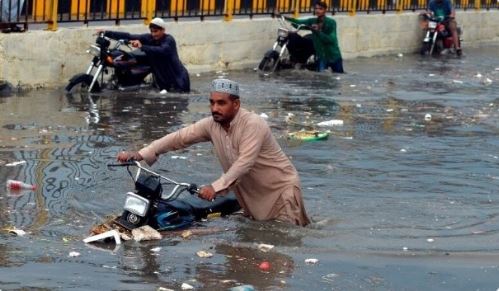
    Many roads in Karachi’s low-lying areas resembled rivers as the Pakistan navy brought out boats to help stranded people. In the city’s north, homes were inundated with flood water from the Malir river. One city official said that the flooding was aggravated because of a clogged drainage system.

    In both provinces, people have been held in traffic jams for over six hours in some places in Karachi.

    The Pakistan Meteorological Department has forecast more rain and also warned of cloudbursts in the next two days. Karachi has already recorded more than 300 mm of rain in 72 hours so far.

    Karachi Administrator Murtaza Wahab tweeted that a high water levels were delaying pumping water out of the the city’s MA Jinnah Road, a major thoroughfare in central Karachi.

    Sherry Rehman, Pakistan’s minister for climate change has said that “The appalling condition of the city’s multiple roads following torrential rains forced calling in of Pakistan Army for draining out accumulated water,”, explaining that the two provinces are going through high levels of rainfall on a 30-year average.

    Officials of the Pakistan Disaster Management Authority have confirmed that the rains have affected 12 dams across the province, of which three burst due immense water pressure leading to flash flooding. People have been swept away by the dam water.

    Image: Via Twitter.


    India’s Bangladeshi Bogeyman

    During the 2019 election campaign, then BJP president and now Home Minister, Amit Shah, described Bengali-speaking Muslims in border states as ‘termites’—invoking the same dehumanising language used by Radio Rwanda in the early 1990s.

    By Rudabeh Shahid / Atlantic Council’s South Asia Centre

    Bangladesh continues to struggle with the forced migration of Rohingyas from Myanmar. The wages of daily wage labourers have dropped, organised crime activity has risen and the clearing of 2500 hectares of protected forests to house refugees has degraded the environment.

    Similar dynamics to those which led to the Rohingya refugee crisis are now brewing in India — and both cases reflect systematic state violence, citizenship deprivation and the threat of statelessness against an imagined ‘foreign’ population.

    In May 2022, Bangladeshi Foreign Minister AK Abdul Momen said that Rohingya migrants were using brokers to cross into Bangladesh from India. The porous 4,000 kilometre border has been a source of contention for decades, but both governments have worked to resolve the issue through exchanging border enclaves and controlling north-eastern cross-border militant groups. Still, anti-Bangladeshi rhetoric continues to dominate Indian domestic politics, with the political establishment claiming there are 20 million undocumented Bangladeshi migrants living in India.

    According to Momen, some of the Rohingyas who migrated to India to escape persecution in Myanmar are coming to Bangladesh because of the ‘good facilities provided in Cox’s Bazar’, a coastal region in south-eastern Bangladesh. Yet India has adopted a draconian policy under which many Rohingyas have been forcefully deported to Myanmar where they face genocide. This fear of deportation is causing Rohingyas in India to seek safety in Bangladesh.

    Growing hostility

    This development is part of a growing hostility in India towards those deemed ‘illegal’ and unworthy of citizenry. The contentious cross-border movement between Bangladesh and India pushed the Indian national imagination towards the proposal of two changes to citizenship laws in 2019. These proposals led to the creation of a national registry of citizenship, known as the National Register of Citizens (NRC) and the Citizenship Amendment Act (CAA) — a law allowing non-Muslim foreigners to become Indian citizens.

    The NRC’s roots can be traced to Assam, a state in north-eastern India in which the search for racial purity has taken on dangerous forms. Assam’s NRC dates back to the Assam movement of the 1980s when it served as a tool for categorising ‘illegal immigrants’ for deportation. Substantial progress on the registry was made following the win in the state election in Assam in 2016 by the Bharatiya Janata Party (BJP) as part of a larger anti-minority agenda. The BJP introduced the CAA in 2019 to protect people who were deemed more ‘worthy’ and ‘valuable’ to their conception of the Indian nation.

    Observers note that the CAA and NRC bear disturbing similarities to Myanmar’s 1982 Citizenship Law which stripped the Rohingya of their citizenship. Myanmar’s then junta government decided that anyone without ancestors from the ‘135 indigenous groups’ of pre-colonial Burma were illegal immigrants. This law shapes Myanmar’s public imagination of Rohingyas as undocumented migrants from Bangladesh — just as the NRC and CAA may shape India’s public imagination towards Bengali Muslims.

    Termites?

    During the 2014 national election campaign, then prime ministerial candidate Narendra Modi made the deportation of ‘Bangladeshis’ — a term which often refers to Bengali-speaking Muslims in border states — an electoral promise. During the 2019 election campaign, then BJP president and now Home Minister, Amit Shah, described the group as ‘termites’ — invoking the same dehumanising language used by Radio Rwanda in the early 1990s. Members of the ruling BJP defended this statement across international media platforms.

    State violence toward Bengali-speaking Muslims continues despite the domestic and international advocacy efforts of civil society groups. In September 2021, local Bengali Muslim residents of Assam resisted forced eviction and removal by the police, tragically ending in the brutal police killing of Moinul Haque. Violence against Muslims in border states is now emerging in Tripura — a state with no history of post-partition religious violence.

    Bengali Muslims in Mumbai were persecuted in the 1990s, but the violence was mostly limited to border states or Indian citizens. In April 2022, many shacks and businesses in Delhi’s Jahangirpuri area belonging to Bengali Muslims (from West Bengal who later settled in Delhi) were reportedly demolished by the North Delhi Municipal Corporation. Over the past year, police raids in Bengaluru have intensified in a bid to track down ‘illegal Bangladeshi migrants’, who are subjected to harassment and even lockups.

    Bangladeshi transit visa holders in India have become a target of harassment by a local right-wing television reporter whose broadcast was shared on a Delhi-based politician’s Twitter account. The tweet branded them as undocumented Bangladeshi migrants and Rohingyas.

    Hate speech

    Increasingly common hate speeches against Muslims by extremist groups at religious events in India threaten the bilateral relations between India and Bangladesh. While Dhaka and New Delhi experience a bonhomie, Bangladesh has witnessed outbursts of anti-Indian government sentiment and grievances have been expressed about Indian government policy by sections of Bangladesh’s intellectual and foreign policy elite in closed-door meetings.

    Bangladesh hosts many Indian businessmen, students and professionals. It was the fourth largest remittance source for Indians in 2017 — and the informal figure is estimated to be much higher. But hostility against Bangladeshis in India may jeopardise the safety and livelihood of Indian expats in Bangladesh.

    While Dhaka remains silent on these issues, the denaturalisation and vilification of Bengali Muslims in India may encourage the mainstreaming of anti-India sentiment in Bangladesh, adversely affecting bilateral relations.


    Rudabeh Shahid is Nonresident Senior Fellow at the Atlantic Council’s South Asia Centre.

    This piece has been sourced from the East Asia Forum of the Australian National University.

    Image: Sabrang India – 426 Muslim families were evicted from their houses in Chotia assembly constituency, Bishwanath district, Assam.

    UN Predicts 68 Percent of World’s Population will be Living in Urban Areas by 2050

    Securing stronger and more resilient cities, able to withstand the more frequent shocks and hazards, will require a new social compact, a re-distribution of powers between local governments in charge of urban spaces and the citizenry, especially those left behind.

    By Simone Galimberti

    When we think of urbanization we often end up referring to the increasing number of megalopolises that are sprawling around the world.

    Yet less thoughts are given on the fact that the future patterns of urbanization will be centred on secondary cities or semi urban spaces, now becoming extensions of these gigantic cities.

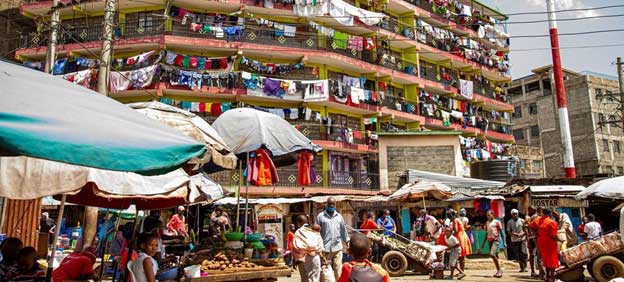
    It means that the world will continue to urbanize even though the world share of population living in this new urban continuum is forecasted to slow down, reaching 58 per cent in the next fifty years according to data from UN Habitat.

    Yet, especially in the developing world, such reduction will still bring in a whopping increase of 76 per cent of the number of cities in low income nations that in practically terms will mean a rise of 2.2 billion residents mostly in Africa and Asia.

    These are some of the key findings of the World Cities Report 2022, the flagship publication of UN Habitat that was recently launched in occasion of the 11th World Urban Forum, the biannual event that was held last week in Poland, bringing together top policy makers, experts and activists working in the area of urbanization.

    The insights and discussions enabled by these publications and events are indispensable to activate the so called New Urban Agenda, a strategically important though overlooked agenda to rethink sustainability from the perspectives of those living in the cities.

    Future of millions

    Unfortunately there is still so much to be done here and unsurprisingly there are huge constraints in terms of funding to implement this vision even though more recently, several financial commitments have been done, including a massive boost in resilient infrastructures during the recently held G7.

    The international community should be indeed worried and not only in terms of bridging the resource gap for a sustainable urbanization.

    Global leaders need to seize the opportunity and reconsider the ways cities are governed.

    While it remains paramount to think in terms of the future of the millions of people living in big cities, the trends and patterns are pointing to the urgency of systematically thinking about governing urban spaces in terms of multilevel governance.

    It means we need to work on a future system of policy making and decision making that is able to function and deliver beyond a single administrative jurisdiction.

    Such a model must be capable to address the needs of the people living within and in the peripheries from three key dimension, spatial, social and economic.

    The opportunity here is not only about re-thinking the existing boundaries, merging existing administrative units, creating bigger and more extended centres of power with the tools and resources of governing entire metropolitan regions.

    This, in itself, would be a mammoth task because it will eat away power to different, often overlapping and certainly inadequate local bodies of governance now in existence.

    The real chance we need to seize is to re-think, holistically, the way local governance works and take action on the general ineffectiveness of local bodies in terms of social inclusion.

    New social compact

    Securing stronger and more resilient cities, able to withstand the more frequent shocks and hazards, will require a new social compact, a re-distribution of powers between local governments in charge of urban spaces and the citizenry, especially those left behind.

    This latter group is at the core of the recommendations World Cities Report 2022, highlighting how vulnerable citizens must shift from being “passive victims” of current patterns of urbanization to “active urban change agents”.

    Such pivot towards the downtrodden can be successful if we go beyond the traditional recipe made only by stronger social policies.

    This is a formula that tends to largely be centred around, on the one hand, more sophisticated and generous social protection schemes like universal basic income and, on the other, around health coverage and housing.

    These three social areas of interventions, together with quality and affordable education, are extremely important but we need to imagine a new social contract in terms of participation and engagement.

    Indeed, according to the so called Urban Resilience Principles, the guiding pillars for a different vision for the future of cities, it is essential to ensure a meaningful participation of the people, especially those disadvantaged, in the planning and governance of any future urban governance system.

    “With ever larger cities, the distance between governments and their citizens has increased” explains the World Cities Report 2022 report.

    “Effective communication, meaningful participation opportunities and accountability structures built into integrated governance relationships are all necessary responses for addressing the trust equation”.

    Not just aspirational documents

    The document goes even further, calling for new forms of collaborative governance that involve different stakeholders joining the decision making process.

    That’s why deliberative democracy, often at the fringes of the political science studies, is now being rediscovered as a possible remedy to the distance between traditional decision makers and citizens.

    Obviously there is one particular group that, not only has huge stakes in the future of urban spaces but also can play a vital role to re-animate the debate about more bottom up, participatory forms of democratic decision making: the youths.

    Some attempts are being made in this direction.

    Over the UN General Assembly High Level Meeting held on the 27th of April to review the progress taken so far in implementing the New Urban Agenda, the Youth 2030 Cities initiative brought together youths from Ecuador, Colombia and Ghana to discuss about their role and their contributions for a better urban future.

    The event was a culmination of trainings and discussions in six different countries around the world, an exercise that led to the preparation of “DeclarACTIONS”, roadmaps and at the same time real blueprints for youths driven changes around sustainable urbanization.

    These are not just aspirational documents but they contain concrete and practical proposals, result of a long raging series of interventions supported by UN Habitat and the Foundation Botnar.

    Empowered, not just consulted

    The Youth 2030 Cities program is an example of how it is possible to enable youth to convene and discuss.

    Potentially, it can be seen, as a bold attempt at expanding the decision making process at local level.

    The challenge will be on how to shift from pilot mode to an approach that systematically includes all citizens, including the youth, in the policy and decision making processes.

    An institution like UN-Habitat has a very important mandate to mainstream participatory processes across the developing and emerging world, enabling new transformative ways for people to be involved and engaged.

    System ways partnerships, starting from within the UN System, can harness the potential shown when youths are allowed to discuss and debate.

    The dynamics facilitated by Youth 2030 Cities, can truly bring transformative changes but with them, we need bold and farsighted vision from the world leaders.

    Let’s not forget that, real change will happen when people, especially the youths, are empowered, not just to be consulted and be able to express their opinion, but when are enabled to take binding decisions.

    The fact that also the World Urban Forum 11 saw the same Youth 2030 Cities youth to gather for a global “DeclarAction”, is promising but the road ahead is still indeed very steep.


    Simone Galimberti is co-Founder of ENGAGE, a not-for-profit NGO in Nepal. He writes on volunteerism, social inclusion, youth development and regional integration as an engine to improve people’s lives.

    This piece has been sourced from Inter Press Service.

    Image: Kirsten Milhahn / UN-Habitat: A residential building in Nairobi-Kenya.