More

    Bangladesh’s Indigenous Forest Dwellers Fear Losing Ancestral Land as Officials Grapple with Land Grabs

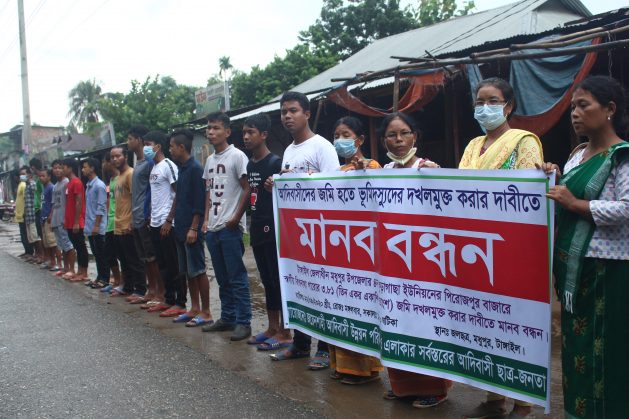
    Many indigenous families were evicted from the Madhupur Forest during the 2007 to 2008 period when a caretaker government was in office.

    By Rafiqul Islam / IPS

    When the Bangladesh Forest Department felled Basanti Rema’s banana orchard, Rema, a Garo indigenous forest-dweller of Madhupur Forest, felt she was living a nightmare.

    Rema, from Pegmari village in Madhupur, Tangail district, had cultivated the banana plants on half an acre in the Madhupur Forest. But the Forest Department claimed that the land on which the bananas were cultivated belonged to the department.

    Rema’s story is not an unusual one as in the past the Garo and other indigenous minorities have been evicted from their ancestral land because of a lack of land rights.

    “Land dispute is the main problem as the government declared 9,145 acres of land of Madhupur Forest as ‘absolute reserved forest’, putting our living in our ancestral land at risk,” Jonajetra, a member of the Garo community living inside the forest, told IPS.

    He said the Forest Department often filed false cases against the indigenous people for allegedly felling trees. Even children as young as seven and eight years old were being sued

    In a gazette notification from Feb.15, 2016, the Ministry of Environment and Forests declared the land of Madhupur Forest as a forest reserve under Section 20 of the Forest Act-1927.

    “The Garo people have been facing various problems in the forest. The Forest Department frequently files false cases against us,” Eugin Nokrek, president of Joyenshahi Adivasi Unnayan Parishad, an indigenous peoples’ organisation, told IPS.

    “If we want to build a new house and dismantle our old one, the department obstructs our works. If we want to plant banana or pineapple orchards on our fallow land, we get objections from the Forest Department,” Nokrek said.

    Fear of eviction

    Despite living in the Madhupur Forest for generations, the indigenous Garo and other minorities have no right to the forest land. And drives by the Forest Department to recover land that has been lost to agriculture and land grabbing, has instilled a fear among indigenous community of losing their ancestral land.

    “We are on the verge of eviction from our ancestral land as the government has declared the Madhupur Forest as an ‘absolute reserved one’. We can be evicted from the forest anytime,” said Nokrek, who is also a member of the indigenous Garo minority.

    Decades ago, Madhupur Garh, in Tangail district, used to have 122,876 acres of traditional shal forest. It was broken down as follows:

    45,565 acres in Madhupur,
    47,220 acres in Sakhipur,
    21,855 acres in Ghatail,
    7,576 acres in Mirzapur and,
    669 acres in Kalihati upazila.
    Of these, 55,476 acres were reserved forests.

    According to officials at the Tangail Forest Department, about 80,000 acres of the forest have already disappeared because of indiscriminate tree felling and forest grabbing. The process of land grabbing continues, officials said.

    Tangail Divisional Forest Officer Dr. Mohammad Jahirul Haque said the department would continue its drives to recover forest land from grabbers. However, he assured IPS that there was no plan to evict the indigenous people from the forest and they would remain on their ancestral land.

    According to Sanjeeb Drong, General Secretary of the Bangladesh Indigenous Peoples’ Forum, legally the Madhupur Forest is under the jurisdiction of the Forest Department but the indigenous people claim it as their ancestral land and had evidence to this effect.

    Drong said the Madhupur Forest was home to the Garo, Barman and Koch ethnic minorities and they had been living there for generations.

    Keeping a promise

    While the country’s current government is considered friendly to the rights of the indigenous population — the 2008 election manifesto of ruling Awami League announced that once elected it would form an independent commission to resolve the land disputes of indigenous minorities — a fear of the actions of past governments still haunt the indigenous community here.

    Nokrek said many indigenous families were evicted from the Madhupur Forest during the 2007 to 2008 period when a caretaker government was in office. Nokrek was concerned if there was a change in power, a new, controversial government could evict them.

    “We are the forest dwellers and we demand legal rights to our land where we have been living for generations. We want legal recognition of our ancestral land so that nobody can evict us,” Nokrek said.

    “If we have legal recognition, we will get compensation once the government want to acquire our ancestral land for greater interest,” he added.

    Land owners are compensated when their land is acquired for government projects. But, the Garo and other indigenous minorities cannot receive compensation as they have no legal proof of ownership of the land.

    “The long-dispute over the land right of ethnic minorities is yet to be resolved… the government has not formed the commission yet. The policymakers should take decisions on how to give the ethnic people’s rights to their ancestral land,” Drong said.

    In 1956, the then Pakistan government declared the forest a national park and evicted indigenous people to acquire the forest land. And, upon Bangladesh’s independence in 1971, the Madhupur Forest was declared a national forest or reserved forest.

    “Although Garo people had long been living in the forest, the land lords did not give land rights to them after the East Bengal State Acquisition and Tenancy Act was passed in 1950. That is why they lost their rights to their ancestral land,” Drong told IPS.

    Shrinking Shal Forest thanks to Land Grabs

    “The majority portion of the Madhupur Forest has already been grabbed by influential people and local encroachers,” Drong pointed out.

    Nokrek said the Forest Department was planting Acacia saplings, instead of traditional shal trees, under the social afforestation programme. “If any such project is implemented, the Forest Department, politicians and influential people find business there,” he said.

    Noting that due to the pressure of an increasing population, the forest area was dwindling day by day, the indigenous leader said in recent years, factories and industries were established on forest land through the falsification of documents.

    Divisional Forest Officer Haque said there was a total of 122,000 acres of traditional shal forest in Madhupur Garh, of which a vast area was occupied by local grabbers and influential people.

    The Forest Department has so far recovered about 19,000 acres of grabbed forest land, he said.

    As the forest is shrinking fast in Madhupur Garh, the forest official said, the government has taken a bigger initiative to restore the traditional shal forest and the fallow forest land will be brought under green coverage with the planting of new shal saplings.


    This piece has been sourced from Inter Press Service

    Public health emergencies are our past, our present, and we will face them again

    Never before has the need for a localised approach to crises been so evident.

    Jagan Chapagain

    As we end this year, I would like to pay tribute to the brave and invaluable contributions of frontline responders. For the past two years, they have helped to detect and slow the spread of COVID-19, to treat and support those most affected, and dispel myths and rumours about the virus, vaccines and the wider response. They continue to support our communities worldwide. While some literally gave their lives to keep others safe, governments struggled, and are still struggling, to pull together a global coordinated and inclusive response.

    Never before has the need for a localized approach to crises been so evident, but it cannot fall on the shoulders of local responders alone. The international community can, and must, do better by them. Unique opportunities to put communities at the centre of the response are laid before us in 2022, from the upcoming White House COVID-19 summit and the launch of Global Vax to the reconvening of Member States to agree on an international instrument to strengthen preparedness and response to pandemics. We urge decision-makers to strengthen recognition of, and support to, community engagement and feedback mechanisms, community health systems and community surveillance and preparedness programs.

    Public health emergencies are our past, our present, and we will face them again. Based on the IFRC’s years of experience in responding to health crises around the world, and on our network’s mandate to assist Governments with legal preparedness for disasters and public health emergencies, we stand ready to continue to support communities and respond to their needs.

    Jagan Chapagain is the Secretary General of the International Federation of Red Cross

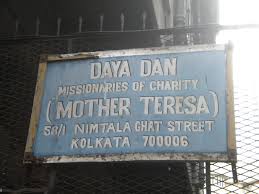
    Missionaries of Charity bank account frozen, tweets Mamta Banerjee

    Bank accounts of the Missionaries of Charity in India have been frozen, according to West Bengal Chief Minister Mamta Banerjee.

    Bank accounts of the Missionaries of Charity in India have been frozen, according to a tweet sent out by West Bengal Chief Minister Mamta Banerjee.

    The organisation’s 22,000 patients and employees are left without food or medicine, a source told OWSA.

    However, a press note issued by the Press Information Bureau (PIB) on the subject later in the evening says that Missionaries of Charity had themselves requested SBI to freeze its accounts.

    According to the PIB release, the renewal application under Foreign Contribution Regulation Act (FCRA) for the renewal of FCRA registration of Missionaries of Charity (MoC) was refused on 25 Dec 2021 for not meeting the eligibility conditions under FCRA 2010 and Foreign Contribution Regulation Rules (FCRR) 2011.

    Mamata Banerjee tweet

    West Bengal Chief Minister Mamta Banerjee reacted to the news with the tweet:

    “Shocked to hear that on Christmas, Union Ministry froze all bank accounts of Mother Teresa’s Missionaries of Charity in India! Their 22,000 patients & employees have been left without food & medicines.” she said in her statement. “While the law is paramount, humanitarian efforts must not be compromised.”

    Earlier, a case was lodged against the organisation at the Makarpura police station in Gujarat on Sunday December 12 under the Gujarat Freedom of Religion Act, 2003. The complainant, Mayank Trivedi, had alleged that the Missionaries of Charity were “hurting Hindu religious sentiments” and luring young girls to convert to Christianity.

    Missionaries of Charity has rejected the charge.

    Earlier, in July 2018, police in the state of Jharkhand had sought to freeze the bank accounts of the group in the state. The state police chief had then said that the freeze would facilitate an investigation into possible violations of foreign funding regulations.

    Pharmaceutical waste contaminates India’s main rivers

    By Papiya Bhattacharya

    Major Indian rivers, including the Ganga, the Yamuna and the Cauvery are contaminated with various pharmaceutical products and researchers blame poor monitoring by regulatory bodies.

    India’s major rivers are thick with heavy metals, dyes, toxic chemicals and pharmaceutical products, a study shows.

    The study, published December in the journal Science of the Total Environment, found high concentrations of pharmaceutical waste as well as toxic metals such as arsenic, zinc, chromium, lead and nickel in the Cauvery, a major river in southern India.

    Ligy Philip, an author of the study and member of the research team from the Indian Institute of Technology (IIT) Madras, Chennai, says: “Our observations are alarming. The team’s environmental risk assessment has shown that pharmaceutical contaminants pose medium to high risk to selected aquatic lifeforms of the riverine system.”

    Pharmaceutical products found in the river included anti-inflammatories like ibuprofen and diclofenac, anti-hypertensives such as atenolol and isoprenaline, enzyme inhibitors like perindopril, stimulants like caffeine, antidepressants such as carbamazepine, and antibiotics such as ciprofloxacin.

    Inadequate monitoring

    India is among the world’s biggest producers of pharmaceutical drugs. Although there are regulations governing effluents from manufacturing units, there is very little real monitoring by regulators such as the state pollution control boards. For instance, the Karnataka State Pollution Control Board takes samples only once in every three months and only during the day whereas illegal dumping of effluents is often done at night.

    The IIT Madras study showed up the consequences of inadequate monitoring of tributaries into which effluents are discharged and eventually reach the Cauvery river.

    “Clearly there is a need to ensure that wastewater treatment systems are working optimally to reduce the level of contaminants reaching the rivers,” the researchers said. “Our study was intended to encourage further research to assess long-term impacts on human health and the environment.”

    “We collected samples from 22 locations points along the Cauvery and set up 11 monitoring stations near discharge points and another 11 near intake points of water supply systems,” Philip said. The monitoring process took two years to cover seasonal variations in contaminant levels, especially pharmaceutical compounds.”

    Philip’s team found there was an increased level of contaminants including pharmaceutical contaminants during the post-monsoon period because of reduced water flows.

    Lack of will

    The Cauvery is not the only major river in India to be polluted with effluents from pharmaceutical and other industries. Early November, the river Yamuna that flows past the national capital, was found covered with thick white foam as a result of reactions among the high levels of industrial effluents and sewage being pumped in.

    The Ganges river, considered among the most sacred water bodies in the world, has since 2014 been the subject of a multi-billion dollar clean-up programme which has had limited success.

    Priyanka Jamwal, fellow at the Centre for Environment and Development of the Ashoka Trust for Research in Ecology and the Environment says that the projects to clean up the Ganga can work only with decentralised treatment plants supported with incentives. “Treating industrial wastewater and sewage water before release into the Ganga river can be expensive.”

    Jamwal and her group monitored a drain near the Peenya industrial area of Bangalore to find heavy concentrations of metals. The colour of the water changed constantly because of dyes being clandestinely released into the drain by various industries. In another study near Kanakapura in Bangalore, Priyanka and her group found heavy metals in irrigation water.

    “There’s a lack of will by pollution control agencies to implement strict guidelines as well as lack of citizen awareness or commitment,” says Nagesh Kumar, professor in the department of civil engineering at the Indian Institute of Science, Bangalore.

    This piece has been sourced from SciDev.Net

    Measles progress in reverse as 22 million miss vaccines

    The World Health Organisation says that the fight against measles has been ‘set back a decade’ as vaccinations and disease surveillance have been heavily disrupted by COVID-19. Experts urge for reinstating the measles vaccine campaigns.

    By Dann Okoth / SciDev.Net

    Progress in the fight against measles has been set back more than a decade after 22 million babies missed their measles vaccinations last year, leading health bodies have warned.

    Measles is one of the world’s most contagious human viruses, killing more than 60,000 people in 2020, but is almost entirely preventable.

    Although cases of the disease fell more than in previous years, the risk of outbreaks is mounting as COVID-19 disrupts global healthcare, says a report by the WHO and US Centers for Disease Control and Prevention (CDC).

    Missed vaccinations, combined with declines in measles surveillance and reporting, have created “dangerous conditions for outbreaks to occur”, the health institutions said in a joint report.

    Natasha Crowcroft, WHO senior technical advisor for measles and rubella, who co-authored the report, said: “The world has now been set back at least a decade in progress towards measles elimination.

    “We are very worried by what 2022 may bring with increasing malnutrition and increasing risk of measles creating a perfect storm for large outbreaks with severe and tragic consequences for children.”

    She warned that countries must “act now” to strengthen disease surveillance systems and close immunity gaps, before travel and trade return to pre-pandemic levels.

    Disruptions due to COVID-19

    In the last 20 years, the measles vaccine is estimated to have averted more than 30 million deaths globally.

    Estimated deaths from measles dropped from over a million in 2000 to 60,700 in 2020.

    The COVID-19 pandemic caused significant disruptions to immunisation services and changes in health-seeking behaviours in many parts of the world, even though measures to mitigate the pandemic, like hand washing, mask-wearing and social distancing, also reduced the spread of measles virus, according to the report.

    More than 22 million infants worldwide missed their first dose of measles vaccine in 2020 — 3 million more than in 2019 — making it the largest increase in two decades, the report said. Only 70 per cent of children received their second dose, well below the 95 per cent coverage needed to prevent the virus from spreading, it added.

    While there was a decrease in reported measles cases of more than 80 per cent, it was likely linked to a deterioration in surveillance, with the lowest number of specimens sent to laboratories in over a decade, the report suggests.

    “There is no point in creating a problem to solve another,” Crowcroft said in reference to prioritising COVID-19 over other disease emergencies.

    “We have to maintain a focus on measles at the same time as COVID-19. For measles, there is no standing still. Either you’re moving forward or you’re falling backwards. Any pause and it will resurge.”

    Find and vaccinate children

    Major measles outbreaks occurred in 26 countries last year with low- and middle-income countries continuing to bear the biggest burden. Sub-Saharan Africa accounted for 18 of the 26 most affected countries, according to the report.

    At the same time, measles vaccination campaigns in 23 countries, originally planned for 2020, were postponed because of the COVID-19 pandemic, it found.

    Kevin Cain, CDC’s global immunisation director, said the combination of vaccine gaps, measles outbreaks, and declines in detection and diagnostics, increases the likelihood of measles-related deaths and serious complications in children.

    “Countries and global health partners must prioritise finding and vaccinating children against measles to reduce the risk of explosive outbreaks and preventable deaths from this disease,” he urged.

    Peter Ofware, Kenya country director at health and human rights organisation HealthRight International, said countries in Sub-Saharan Africa which are disproportionately affected by the disease must adopt a multi-sectoral approach to get vaccination campaigns back on track.

    “Countries may have to get into partnerships with development partners and even review their budgets to re-direct resources towards vaccination campaigns,” Ofware said.

    Kate O’Brien, director of the WHO’s department of immunisation, vaccines and biologicals, acknowledged it was critical for countries to vaccinate as quickly as possible against COVID-19. “But this requires new resources so that it does not come at the cost of essential immunisation programmes,” she added.

    “Routine immunisation must be protected and strengthened, otherwise we risk trading one deadly disease for another.”

    This piece has been sourced from SciDev.Net

    Huawei launches its CSR flagship programme In Nepal

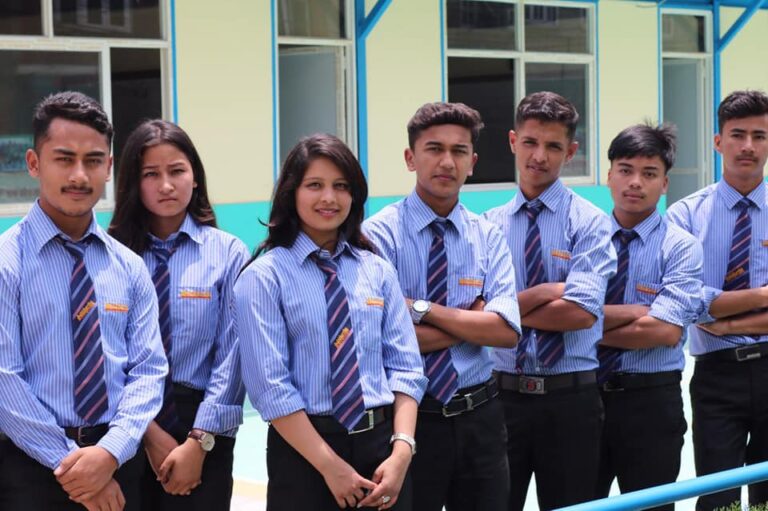
    Huawei announced the launch of its ‘Seeds for the Future’ CSR programme in Nepal. The programme aims at developing skills of students interested in a career in Information and Communications Technologies.

    Chinese telecommunications giant, Huawei has launched ‘Seeds for the Future’, its global flagship CSR programme in Nepal. The programme is aimed at improving skills of graduating Nepali students desirous of pursuing a career in Information and Communications Technologies (ICT).

    Over 9,000 students from 130 countries have so far participated in the ‘Seeds for the Future’ programme that was launched in Thailand in 2008. But the company has ambitious plans of developing up to 10,000 ICT professionals in the next five years.

    The response on the programmes’s portal has been encouraging, according to Huawei Nepal. Over 130 undergraduate students have applied for the programme from across Nepal. There were few women applicants.

    “After a competitive selection process, the Seeds for the Future Selection Committee composed of distinguished ICT professors has selected 20 undergraduate students, including 4 from outside the Kathmandu valley, who will take part in the 8-day online training, visit a Huawei-built 4G base station in Ghandruk and attend classes from industry experts,” Huawei Nepal said in a statement.

    The students will also get a chance to participate in the Tech4Good global competition, the company said in a press release. The competition is a platform for young people to pitch ideas on leveraging ICTs for good. Winning students can win cash prizes up to 20,000 USD from the company, according to Huawei Nepal.

    At the launch of the programme, Huawei Nepal’s CEO, William Zhang, said that the Chinese transnational plans to develop 10,000 ICT talents in the coming five years in the country. Zhang, of course, hoped more young women would participate in the programme’s next edition.

    An infuriating, man-made catastrophe points toward massive suffering for Afghan families

    Children are in need of emergency aid. They are hungry. The anguish on the parents’ faces cannot hide their desperation. Such is the situation in Afghanistan. Children suffering from acute malnutrition, pneumonia and dehydration. 

    Dominik Stillhart

    I am livid. Pictures viewed from afar of bone-thin children rightly elicit gasps of horror. When you’re standing in the pediatric ward in Kandahar’s largest hospital, looking into the empty eyes of hungry children and the anguished faces of desperate parents, the situation is absolutely infuriating.

    It’s so infuriating because this suffering is man-made. Economic sanctions meant to punish those in power in Kabul are instead freezing millions of people across Afghanistan out of the basics they need to survive. The international community is turning its back as the country teeters on the precipice of man-made catastrophe.

    Sanctions on banking services are sending the economy into free-fall and holding up bilateral aid. Municipal workers, teachers, and health staff haven’t been paid in five months. They walk up to two hours to work instead of taking public transportation. They have no money to buy food; their children go hungry, get dangerously thin, and then die.

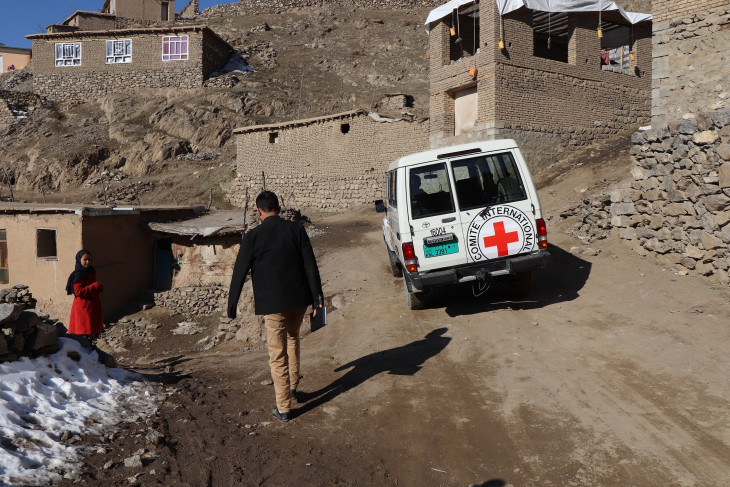
    At the paediatric intensive care unit the International Committee of the Red Cross (ICRC) supports at Mirwais Regional Hospital in Kandahar, the number of children suffering from malnutrition, pneumonia and dehydration more than doubled from mid-August to September.

    More broadly, severe and moderate global acute malnutrition is up 31% around Kandahar compared to the same period in 2020. Region by region the severity of child malnutrition can be up to three times the emergency rating. This is a serious food crisis even before the worst of winter sets in.

    New support for hospitals

    Amid a sea of heartache is one small silver lining: The ICRC on Monday began supporting 18 regional and provincial hospitals and the 5,100 staff who work in them to help prevent total collapse of the public health system in Afghanistan.

    This support, slated to last six months, includes funding for running costs and medical supplies, and will ensure the continuity of nearly half a million medical consultations per month.

    But it’s not enough.

    Drought, failed harvests, and the economic collapse are all driving the increase in malnutrition. Rising food costs are pushing proteins and other staples out of reach. As the harsh winter sets with temperatures below freezing, the suffering will be immense as people lack the cash to heat their homes.

    What can be done?

    First, states must engage with Afghanistan. This is the only way to prevent a total collapse of essential services like health care and education. Political considerations should not interfere with humanitarian action. A political solution must be found to avoid irreparable humanitarian consequences.

    And this is technical but important. Foreign assistance to Afghanistan is currently put in question as donors ask themselves how they can comply with their legal obligations stemming from relevant U.N. Security Council resolutions. Simply put, some donors feel they can either comply with the resolutions and their own law — thereby denying life-saving assistance — or provide such assistance through organizations such as the ICRC and others.

    Suppliers and banking services will have similar impediments. The ICRC is calling for a clear carve-out for impartial humanitarian organizations engaged in exclusively humanitarian activities, and for its translation into domestic legislation. It is in everyone’s interest to see humanitarian activities operating smoothly in Afghanistan.

    Amid what we know will be a tragic winter, the ICRC will step up its response to the most urgent humanitarian needs, but humanitarian assistance is only part of the solution. The existing and projected needs are beyond any humanitarian organization’s capacity to deal with or solve.

    More than 22 million Afghans will face crisis or emergency levels of acute hunger between November and March 2022, according to the latest IPC report. The desperation can be seen in the huge crowds lining up in front of banks at 5 a.m. in the hope that they can withdraw a little bit of cash.

    The empty eyes of hungry children are not something one soon forgets. It makes my plea to the international community even more urgent: that it rapidly finds creative solutions to save millions of Afghans from deprivation and despair. Ultimately, this is in everybody’s interest as it will help prevent Afghanistan from slipping back into conflict and violence, and help give Afghans more means to remain in their country.


    Dominik Stillhart is the director of operations for the International Committee of the Red Cross.

    Six dead, dozens missing in Myanmar jade mining disaster

    Rescue personnel have called off operations after locating the bodies of six persons from among the dead and the dozens who have gone missing following a massive landslide in Myanmar’s northern state of Kachin on December 22.

    At least six persons have died and dozens have gone missing following a massive landslide struck the Hpakant township in Myanmar’s northern state of Kachin on December 22, according to reports trickling into the country’s capital city Naypyidaw. Fire service officials have called off operations.

    Information is scarce since the ruling junta’s State Administration Council (SAC) imposed an internet blackout on the township since August 2021.

    The miners were mining for jade.

    A government official visiting Hpakant described the mine as an old, abandoned mine, an aid worker said. The official described the dead and missing people as independent miners, the aid worker who wishes to remain unidentified told OWSA. He said that this is the second such disaster in a week.

    Vested interests

    A licensing suspension had been imposed by the ousted National League for Democracy (NLD) government that was toppled following the Myanmar military’s coup of February this year. The suspension of the license has been extended by the State Administration Council (SAC). The law makes all jade mining in the region illegal.

    But independent sources say that there are vested interests and that military battalions, militias and ethnic armed groups, including the Kachin Independence Organisation, continue to oversee mining activities.

    The licensing suspension followed a disaster in the same township on 2 July 2020. The Myanmar fire services department had then reported that 174 had died in the disaster that also left 54 injured. The landslide was caused by heavy rain, according to the fire service. The rain set off a fatal wave of mud and torrents of water onto the mine where dozens of informal jade ore miners were working in the mine pit, burying many of them under the thick layer of mud. Many miners were daily-waged migrants from different parts of the country.

    A law was passed by the government in 2018 to regulate and ensure safer and sustainable gemstone mining. But this has not been effectively implemented because the government lacks the machinery required to implement the law. Only a handful number of inspectors were authorised to stop illegal mining.

    Myanmar’s annual jade trade is said to be worth over UDS 30 billion, and campaigners accuse the military, insurgent groups and business interests connected to the military rulers of not allowing for the law’s implementation.

    Junta leaders profiting from mining

    “Today’s disaster is a haunting reminder that lives too often come second to profit in the jade mines of Hpakant, where a toxic combination of lawlessness, conflict and corruption has set the stage for yet another preventable tragedy,” says Hanna Hindstrom, Senior Campaigner at UK-based non-profit, Global Witness.

    The organisation accuses the military – including the family of junta leader Min Aung Hlaing – of profiting from the sector. Last week, the organisation says, Min Aung Hlaing made an appearance in Nay Pyi Taw at a five-day jade emporium, staged in an apparent bid to secure international currency for his regime.

    Hindstrom warns, “The military must not be allowed to use the deadly jade sector as a financial artery for its unlawful regime. People in Kachin and across the country will pay with their lives.”

    Extraordinary Lives of Indian Muslim Women Documented

    Farah Usmani, a director at the UNFPA headquarters in New York, set about changing the stereotype of Indian Muslim Women. As a result of her efforts a book, Rising Beyond the Ceiling, documents the lives of successful Indian Muslim women.

    By Mehru Jaffer / Inter Press Service

    It’s time the achievements of Indian Muslim women were documented to make their contribution to society visible, says international health and gender expert Dr Farah Usmani.

    “The idea is to drive a new narrative about the inspiring life some of them lead today.”
    Usmani was speaking to IPS in an exclusive interview in Uttar Pradesh (UP) – the largest state in India with a population of about 240 million, of which 44 million are Muslims. Half of the Muslim population in the state are women.

    Usmani, a director at the UNFPA headquarters in New York, originates from UP. She wonders how such a large number of people have remained invisible in this day and age of technology.

    She said that a chance remark made by a journalist in New York led her to start the Rising Beyond the Ceiling (RBTC) initiative in UP, her place of birth.

    The male journalist told her that she was the first Indian Muslim woman he had spoken to in his life.

    Long after her meeting with the journalist, Usmani could not stop thinking of how millions of Indian Muslims remain unknown despite their creative contributions to society.

    Research, text, images and the the will to challenge

    Colourful and inspiring images of countless Muslim women she knows flashed across her mind. She decided to share her troubling thoughts with other female friends and family members.

    Usmani has over 25 years of experience in policy and programming leadership, focusing on women and girls and their reproductive health and rights. She reached out to like-minded women in UP, and within days a team of six professional Muslim women was formed.

    The RBTC initiative is referred to as the team’s ‘COVID’ baby because it was initiated in early 2020 at the peak of the second wave of the deadly pandemic in India.

    Building an alternative narrative

    “Our brief was to work online and to scout and profile 100 Muslim women in UP. The purpose was to document the inspiring lives led by some Indian Muslim women,” Sabiha Ahmad, team coordinator and social activist, told IPS.

    The idea of documenting the extraordinary lives of Indian Muslim women was born out of the urgent need to change the stereotypical narrative about women by women.

    The team liked the idea of getting women to build an alternative narrative of each other by curating real-life stories of successful Muslim women in all their diversity.

    The goal was to make these lives visible and drive a new narrative around Indian Muslim women. The result was a 173-page book. It documents the women from the state who drones and aeroplanes, weave carpets, serve in the police and army, write books and poetry, paint and bag trophies in tennis and snooker competitions.

    There are profiles of politicians, trendsetters, doctors, entrepreneurs, and corporate professionals who met in Lucknow recently to celebrate the RBTC book and meet each other in person.

    Paths our grannies left untrodden

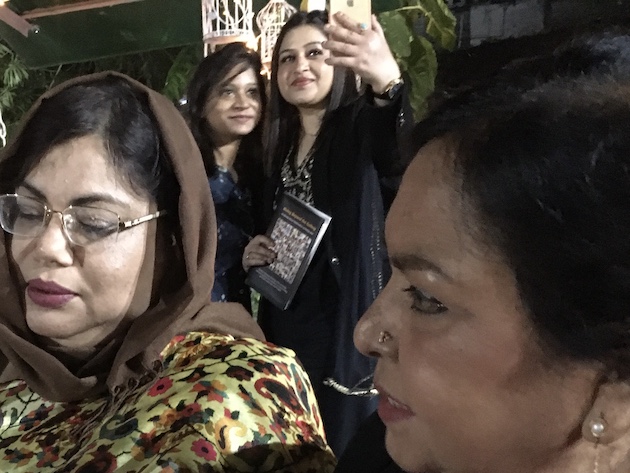
    Usmani used her latest visit to Lucknow to release Rising Beyond The Ceiling formally. The directory details the lives of 100 Indian Muslim women whose inspiring stories shatter the stereotypical narrative a group perceived as primitive, veiled and suffering.

    Faiza Abbasi, 47, contributor and co-editor, says the RBTC directory dares to write a different story. It is a step by women to celebrate each other.

    “We come forward to highlight each other’s achievements and to take the road our grannies left untrodden,” smiles Abbasi.

    Abbasi is an educationist, environmentalist, and outstanding public speaker with a popular YouTube channel. She recalls how her father celebrated her birth by distributing sweetmeats to family and friends. However, an elderly aunt questioned the festivities. The aunt asked why the energy and resources were being wasted, and a fuss made over the birth of a girl?

    Not used to the relatively progressive environment of today, many women still hesitate to celebrate their achievements.

    “We at RBTC want to celebrate and to learn to appreciate each other,” assures Abbasi.

    The RBTC promises to branch out its research analysis and documentation to other Indian states to document the successes of Muslim women.

    The work of RBTC is vital at a time when the majority of Muslim women in India are the most disadvantaged. Statistical and micro studies on Muslim women show that they are economically impoverished and politically marginalised.


    This piece has been sourced from Inter Press Service
    Open Letter to the Secretary General, Heads of UN Agencies & International Donor Community

    Former UN Women staff members Rebecca Reichmann Tavares, Roberta Clarke and Meryem Aslan, together with women leaders and advocates from civil society organisations write to alert the international community to the urgency of preventing a human catastrophe in Afghanistan.

    By Rebecca Reichmann Tavares, Roberta Clarke and Meryem Aslan

    We are former UN officials with decades of combined experience supporting international civil society and governments to advance the rights of women and girls.

    We came together to alert the United Nations and the international community to the urgency of preventing a human catastrophe in Afghanistan. Afghan women and men must not be condemned to yet another decade of regionalism/ sectarianism/tribalism and proxy wars.

    The UN needs to step up its game, offer to facilitate a platform for inclusive leadership in the country that can bring Afghans together, and work together with them to prevent reemergence of proxy wars, building a road towards international consensus for peace and security.

    The international community must ensure that Afghans, especially Afghan women and girls, participate on equal terms in the making of their country, re-establishing human rights monitoring mechanisms and, as a matter of urgency, accessing and monitoring distribution of humanitarian aid in Afghanistan.

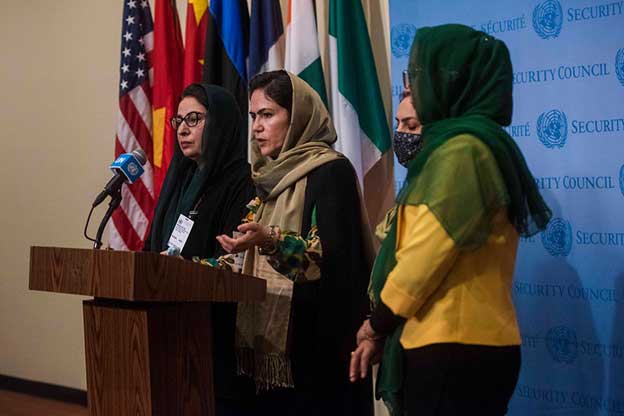
    As Naheed Farid, a Parliamentarian and House Chair of the Women’s Committee in Afghanistan said: “Action needs to be taken to ensure that the de facto authorities in Kabul develop an inclusive and fully representative governance body that represents the diversity of Afghan society.”

    We encourage negotiations that create space for Afghan people, including women and girls, to take their destiny into their own hands. We also endorse the call for Afghan women’s centrality in decision-making on global aid made by Margot Wallstrom and Susana Malcorra on 4 November in PassBlue.

    Life for Afghans, especially Afghan women and girls, has been insecure, dangerous, and constrained for decades. Armed conflict and militarism have stalled all prospects of development and peace for Afghanistan. Women and girls have been and remain the target of violent discrimination.

    The 2020 Human Development Index for Afghanistan indicates that gender inequalities in health, education and control over economic resources remains high, ranking Afghanistan 157th among 162 countries in the gender inequality index.

    The seizure of state power by the Taliban, the partial collapse of state services compounded by the recent measures to limit education for girls and remove women from the workforce, the increased retreat of women into their homes portends serious deterioration of women’s rights in Afghanistan and further widening of gender inequality in the country.

    While Taliban are working to transform themselves from a radical movement into a legitimate state structure and try to govern the country, ethnic, communal and regional factions are starting to vie for power.

    For example, on 8 October, the Islamic State Khorasan bombing in a Shiite Mosque in Kunduz province killed close to 70 people and injured 140 worshippers from a Hazara community. This was the second attack on a Shiite Mosque in one week. Earlier, the same group attacked a military hospital in Kabul, killing 20 people and injuring 16.

    Testing the limits of Taliban governance, food and water shortages plague isolated communities and urban centers alike. A thirty year-drought, widespread displacement, lack of jobs and scarce cash have spun the economy into free fall as another brutal winter sets in. No information is available on the real costs of the Covid-19 pandemic. Recognizing Afghanistan’s rapidly deteriorating conditions, UN Secretary-General, António Guterres, noted that the international community is in a “race against time” to prevent an impending humanitarian catastrophe.

    Conditionality imposed by the international community for releasing aid may have already deepened the scale of human suffering. In addition, delivery of aid seems to becoming an important issue. Despite the promises of Taliban to allow humanitarian agencies to operate, USAID reports that at least two-thirds of aid organizations in Afghanistan have faced severe bottlenecks in aid delivery since the fall of Kabul.

    Access to aid by to those who need it most may be the first casualty of a collapsing state. Food and supplies trickling into the country have been diverted to the black market by local power brokers. Almost no information is available on household distribution of aid or the amount and quality of aid reaching the Afghan people.

    This situation leaves women and girls increasingly vulnerable to abuse and violence. As in many humanitarian emergencies, civil society monitors report that food aid is appropriated to exchange for sexual favors or child “marriages,” as desperate families bargain for survival. Single mothers are not recognized as heads-of-household by local authorities and therefore are likely to face barriers in accessing humanitarian assistance.

    Exhaustive global research over decades has documented that aid delivered to women by women most effectively reduces “leakage,” ensuring that assistance reaches the most vulnerable groups. Afghan women are best placed to ensure that food and other humanitarian assistance reach children, the disabled and elderly, and especially female-headed households.

    However, in addition to restrictions on women’s access to education and employment, the backsliding and regression on women’s and girls’ right can most strikingly be observed in their participation in decision-making mechanisms.

    The Taliban’s formation of an all-male interim administration have eliminated women’s hard-won if still limited leadership roles in the executive and judiciary at all levels of government. Women’s equal participation in political and public life is not only a prerequisite for realizing a life free of violence and discrimination, but also for increasing the quality of development and aid and ensuring equal access to the benefits of aid.

    We recognize that efforts of the last twenty years resulted in limited advances for most Afghan women and girls. The bulk of resources in the country went to the military investment and much aid was siphoned off by excessive corruption. . Yet good progress was made in opening up educational opportunities for girls and livelihood options for women.

    Even more lasting is the dynamic network of women’s civil society organizations, sports, scientific, media and cultural groups that were built over the past twenty years. Resilient women and girls have fought against biases, even faced down stone-throwing crowds, to build their bicycle racing teams, their robotics organizations and women’s radio stations.

    They run shelters for women expelled from their homes and promote females’ participation at all levels of government. Now, a generation of women and girls that entered public life as teachers, lawyers, journalists and politicians are feeling at a loss and in danger; they are afraid of losing the future.

    We cannot be silent as this progress is walked back. Women’s and girls’ futures must not become casualties of the withdrawal of US and NATO forces from Afghanistan. The safety of hundreds of women’s human rights defenders, judges, politicians, physicians, professors, journalists and artists who are still in Afghanistan must be prioritized and they must be at the table in aid and political negotiations, putting aid distribution systems in place, monitoring delivery and building inclusive governance systems.

    Humanitarian aid to stabilize the population will only be effective if women civil society leaders are positioned to monitor secure and timely distribution, and the inclusion of women must be top priority of aid and governance negotiations with the Taliban. The United Nations and the international donor community are morally obligated to ensure Afghan women’s access to humanitarian assistance, and time is running out.
    Signed By: Rebecca Reichmann Tavares, Roberta Clarke, Meryem Aslan, Moni Pizani Orsini, Madhu Bala Nath, Joanne Sandler, Roshmi Goswami, Socorro Reyes, Anne Stenhammer, Yamini Mishra, Lucia Salamea-Palacios, Roxanna Carillo, Susana Fried, Dina Deligiorgis, Bharati Silawal-Giri, Amarsanaa Darisuren, Sushma Kapoor, Chandni Joshi, Suneeta Dhar, Stephanie Urdang, Aster Zaoude, Achola Pala, Celia Aguilar Setien, Anne Marie Goetz, Elizabeth Cox, Nalini Burn, Ana Falu, Ilana Landsberg Lewis, Branca Moreira Alves, Memory Zonde-Kachambwa, Sangeeta Rana Thapa, Shawna Wakefield, Flora Macula, Guadalupe Espinosa, Ooyuna Oidov, Jean da Cunha

    Rebecca Reichmann Tavares, Roberta Clarke and Meryem Aslan are former UN Women staff members

    This piece has been sourced from Inter Press Service