More

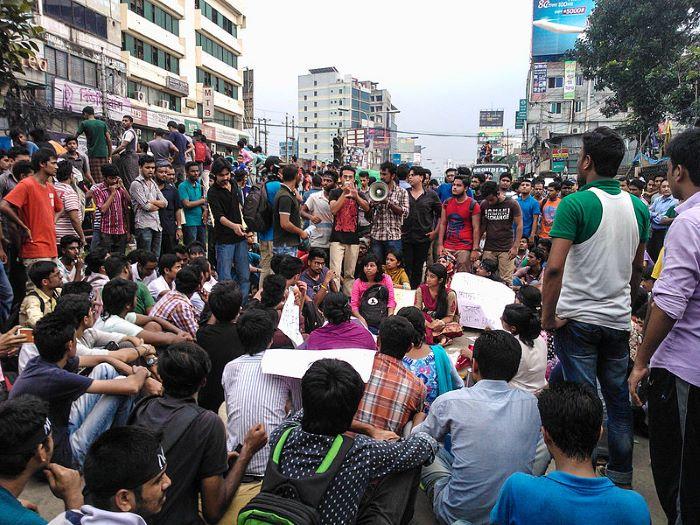
    Student Protests Escalate in Bangladesh Amid Political Tensions and Human Rights Concerns

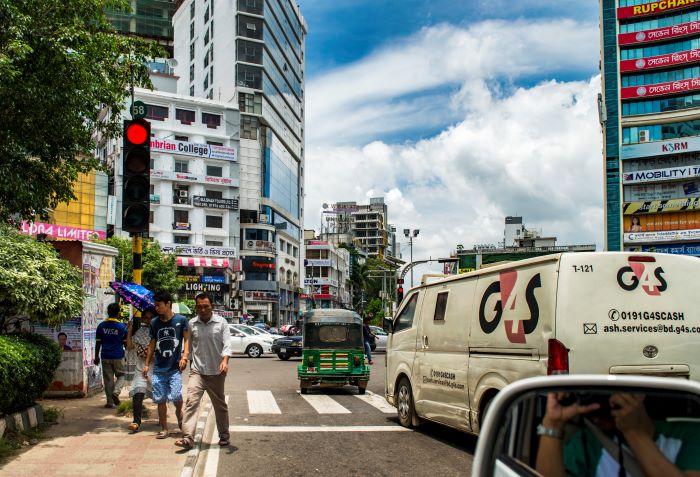
    On Monday, the government announced a national day of mourning to honour those who lost their lives in recent protests over quota reforms in government jobs, urging people to wear black badges in tribute.

    In recent weeks, Bangladesh has witnessed a surge in student protests, which have been marked by escalating violence and political tensions. The unrest has been fuelled by the decision of the country’s supreme court upholding job quotas for children for the country’s freedom fighters.

    The government however amended the quota in government jobs, which was the original demand of the protesting students, but as more than 200 people were killed in a few days of violence, the students have remained adamant about their other new demands and vowed to continue the protest.

    Bangladesh Home Minister Asaduzzaman Khan confirmed on Sunday that at least 147 people have died in the recent violence sparked by student protests over government job quotas. The casualties include students, police, activists, and professionals. Further investigations are ongoing to confirm the full extent of the toll, with independent estimates suggesting over 200 deaths.

    On the same day, the government restored mobile internet services after a 10-day blackout. Junior Minister Zunaid Ahmed Palak announced that services resumed at 3 p.m. local time, with users receiving a 5 GB data bonus for three days due to the interruption. However, social media platforms like WhatsApp, Facebook, TikTok, and YouTube remain restricted.

    The internet shutdown began on July 17, followed by the suspension of broadband services on July 18 amid escalating protests. Schools and educational institutions are still closed as the situation stabilizes.

    Ban on Jamaat-e-Islami

    The Bangladeshi government, led by Prime Minister Sheikh Hasina, has now announced its intention to ban the Jamaat-e-Islami party, the leading opposition group. Law Minister Anisul Huq confirmed that the government is taking steps to dissolve the party, citing its alleged involvement in violence and extremism. The decision comes amidst heightened political tensions and is seen as part of a broader crackdown on opposition voices in the country.

    The move to ban Jamaat-e-Islami has sparked controversy and has been met with criticism from various quarters. The party, which has a significant support base, has condemned the decision as politically motivated and an attempt to stifle dissent. This development has further fuelled the ongoing student protests.

    National Mourning

    In response to the violence that has erupted during the student protests, Bangladesh has observed a day of national mourning on Tuesday. The government declared the day to honour the victims of the recent clashes between students and security forces. The mourning period underscores the severity of the situation and reflects the deep public concern over the violent crackdown on student demonstrators.

    On Monday, the government announced a national day of mourning to honour those who lost their lives in recent protests over quota reforms in government jobs, urging people to wear black badges in tribute.

    However, student protesters, who view the government’s mourning declaration as insincere without addressing their demands that included a public apology from Prime Minister Sheikh Hasina and resignation of Home Minister Asaduzzmaan Khan, have called for people to wear “red” instead of “black” as a form of protest.

    The protests have escalated into a broader movement against perceived government repression and corruption. Students from various universities across the country have taken to the streets, demanding greater freedoms, improved educational conditions, and an end to alleged police brutality.

    Human Rights Concerns

    The situation has drawn international attention, particularly regarding the conduct of Bangladeshi security forces during the protests. Reports have emerged alleging that security forces have engaged in excessive use of force against student demonstrators. These reports have prompted concern from global human rights organizations and the United Nations.

    Despite these concerns, the UN has expressed limited alarm over the situation. The international body has called for a thorough investigation into the alleged human rights violations but has also noted the challenges of navigating the complex political landscape in Bangladesh. Experts say that the UN’s measured response highlights the difficulty in addressing human rights abuses in politically charged environments where government actions are often justified as necessary for maintaining order.

    Government Response

    The student movement in Bangladesh has gained considerable momentum, with protesters demanding accountability and justice for those affected by the violence. The demonstrators have criticized the government’s handling of the situation, accusing authorities of using the ban on Jamaat-e-Islami as a pretext to suppress opposition and dissent.

    In response to the escalating protests, the government has implemented measures to restore order, including deploying additional security forces to protest hotspots and imposing curfews in some areas. However, these actions have only intensified the tensions between the students and the authorities. The government’s efforts to address the students’ concerns have been overshadowed by the broader political implications of the proposed party ban and the crackdown on dissent.

    International Reactions

    The international community’s reaction to the crisis has been one of cautious concern. While there is acknowledgment of the need for a thorough investigation into the human rights abuses, there is also a recognition of the complex political dynamics at play in Bangladesh. The international community has called for restraint from both the government and protesters, urging a peaceful resolution to the crisis.

    As the situation continues to evolve, the future of student protests in Bangladesh remains uncertain. The government’s stance on the Jamaat-e-Islami party and its handling of the protests will likely play a crucial role in determining the trajectory of the ongoing unrest. The broader implications of the student movement, coupled with the international community’s scrutiny, could influence political developments in Bangladesh in the coming months.

    As one political leader belonging to the ruling Awami League party said, “Bangladesh is grappling with a volatile combination of student unrest, political repression, and human rights concerns.” According to this ruling party politician who wanted to remain anonymous, the resolution of this crisis will require a delicate balance between addressing legitimate grievances and maintaining social order.

    The proposed ban on the Jamaat-e-Islami party, coupled with the government’s response to the student protests, has created a highly charged environment that demands careful attention from both national and international observers.
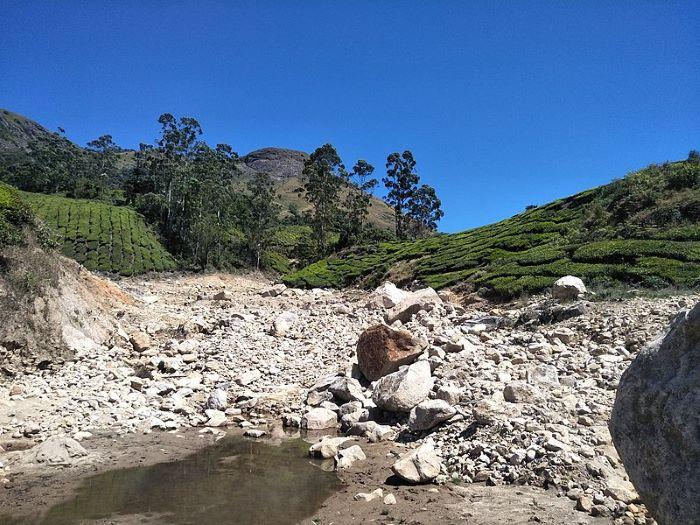

    93 Die in Kerala Landslides. Deadliest Disaster Since 2018 Floods

    As the situation continues to evolve, rescue teams and emergency services are working tirelessly to provide aid and restore normalcy in the affected regions.

    Ninety-three people have been confirmed dead and hundreds more are feared trapped following a series of devastating landslides that struck Wayanad district in Kerala early Tuesday morning. The landslides, which occurred between 2 AM and 4 AM, have wreaked havoc on the hilly areas near Meppadi, particularly impacting the regions of Mundakkai, Chooralmala, Attamala, and Noolpuzha.

    The Kerala State Disaster Management Authority has mobilized a substantial response to the crisis, with teams from the National Disaster Response Force (NDRF), Fire and Rescue, and Civil Defence actively engaged in rescue operations.

    The challenging terrain and blocked roads are complicating efforts, especially in the severely affected Mundakkai area where several houses, shops, and vehicles have been buried under debris. A crucial bridge has been washed away, further hampering access.

    As of now, approximately 116 people have been injured and are receiving treatment at hospitals across the district. Rescue teams have managed to retrieve three bodies from Munderi Utkurkuthikadav in Malappuram and seven more from the Pothungal area near the Chaliyar river.

    Today’s landslides are the worst disaster the state has seen since 2018 when heavy floods killed almost 400 people.

    Rescue efforts in Mundakai are being hindered by blocked roads and unstable terrain, according to a situation report released by the civil societies’ risk reduction coordination group, Sphere India.

    Sphere India said that a total of 250 personnel from Fire and Rescue, Civil Defence, NDRF, and local teams are engaged in rescue operations in Chooralmala. And, in Mundakkai, several houses, shops, and vehicles are buried under debris, Sphere India’s situation report said, adding that a bridge providing access to the affected area has been washed away, further complicating rescue efforts.

    Situation continues to evolve

    Prime Minister Narendra Modi has spoken with Kerala Chief Minister Pinarayi Vijayan and assured full support from the central government.

    Prime Minister Narendra Modi has also asked BJP chief JP Nadda to mobilise BJP workers to assist in rescue work. He has also spoken to Union Minister Suresh Gopi in this connection.

    Congress leader Rahul Gandhi has expressed deep anguish over the calamity, extending condolences to the victims’ families and urging for swift action to rescue those still trapped. Gandhi has been in contact with state officials to ensure effective coordination and resource allocation for the ongoing relief efforts.

    “The devastation unfolding in Wayanad is heartbreaking,” he said in a message on X, formerly Twitter. “I have urged the union government to extend all possible support.”

    Kerala Health Minister Veena George reported that many areas, including Attamala, remain isolated due to the collapse of bridges and roads. Helicopters will be deployed to aid in rescue operations, though adverse weather conditions are posing additional challenges.

    The Kerala Health Department has set up a control room for emergency assistance, with helpline numbers 9656938689 and 8086010833 available for those in need.

    In the meanwhile, the Indian Meteorological Department has issued a red alert for eight districts, including Wayanad, forecasting further heavy rain and thunderstorms. Four additional districts are under orange alert.

    In the wake of the disaster, the Kerala government sought assistance from the army to construct temporary bridges and facilitate evacuations.

    As the situation continues to evolve, rescue teams and emergency services are working tirelessly to provide aid and restore normalcy in the affected regions.

    Image: Wikimedia

    Mass Tourism Brings Dollars But With All The Baggage

    Post-pandemic Asia is trying to revive its tourism revenues. But overtourism is taking a toll on the environment and local life. Sustainable tourism needs support from sending countries.

    By Ranjit Devraj

    Last August, the picturesque Himalayan kingdom of Bhutan halved to US$100 per night a charge levied on international tourists.

    The fee recognised the “important role of the tourism sector in generating employment, earning foreign exchange and boosting overall economic growth”.

    A daily charge of US$200 had been introduced in September 2022 as a “Sustainable Development Fee” to raise money for offsetting carbon generated by tourism.

    However, arrivals to Bhutan did not revive as expected after COVID-19 restrictions were lifted.

    Bhutan’s predicament is no different from that of most countries in the Asia Pacific region. They are torn between overtourism that brings with it environmental degradation and undertourism that deprives developing countries of the dollars needed to revive economies battered by COVID-19 lockdowns and natural disasters.

    According to the UN World Tourism Organization (UNWTO), the global tourist industry was among the hardest hit by the COVID-19 pandemic, with arrivals dropping 72 per cent in 2020.

    Well before the pandemic struck, Asia’s top tourist destinations were already beginning to restrict or regulate the number of visitors flocking in. In 2018, Thailand shut down Maya Bay on Phi Phi Leh Island — popularised by the movie, ‘The Beach’ — to give its delicate marine ecosystem a chance to recover from extensive degradation and coral loss.

    Similarly, the Philippines’ famous Boracay island was ordered closed for six months in 2018 to address environmental concerns. Restrictions designed to protect nature and local sensibilities have also been introduced in  Bali in Indonesia and Kathmandu’s Thamel district in Nepal, popular with backpackers.

    But being heavily reliant on tourism revenue, these countries can ill afford to impose drastic restrictions and are in search of compromise solutions. Asia’s diversity in terms of infrastructure, income and political means that the problems engendered by mass tourism and their solutions must be tailor-made.

    Affluent Japan or Singapore must follow a different path from that of Indonesia or the Philippines. Each country could begin by assessing what percentage of GDP can safely come from tourism and what are the risks of having an open door to foreign visitors as many currently do.

    Bhutan’s “high-value, low-volume” tourism model, designed to plough earnings into conservation of carbon-storing forests and sustainable development through clean energy projects, helped it become South Asia’s only carbon-negative country. But Bhutan has a population density of just 20 people per square kilometre.

    Compared to that, neighbouring Bangladesh houses 1,329 people per square kilometre. Both countries are vulnerable to climate change but in very different ways. Where Bhutan worries about shrinking glaciers, Bangladesh is deltaic with coasts highly vulnerable to sea-level rise.

    Communities under threat

    Climate change and extreme weather events threaten coastal communities across the Asia Pacific region and often directly destroy tourism infrastructure as demonstrated by the 2014 Asian Tsunami which devasted a swathe stretching from Thailand to Indonesia and Sri Lanka.

    Apart from COVID-19, South-East Asia has had to cope with health emergencies such as SARS and MERS that have strained health delivery systems and forced travel bans and border closures. In turn, businesses have shut down causing job losses and economic downturns with implications that are not factored in by the global tourism industry.

    COVID-19 brought home for the first time the interconnectedness of global tourism and the need for internationally-coordinated responses to health crises.

    While it is not easy to quantify the number of visitors that enter or stay in a particular area, it is common experience that rents and property prices become unaffordable for local people.

    Longer queues, noise, damage to historical sites, desecration of religious places, import of disease-causing microbes and agricultural pests are among the negative impacts of mass tourism. It also puts strain on resources, especially impacting food prices and availability.

    Carbon emissions

    Tourism accounts for roughly eight per cent of the world’s carbon emissions, linked to lodging, flights and local transport. Visitors from high-income countries are responsible for most of those emissions and as travel grows so will tourism’s environmental footprint.

    A 2019 report by the UNWTO and the International Transport Forum predicts that transport-related emissions from international tourism will increase by 25 per cent by 2030 compared to 2016 levels while that of domestic tourism by 21 per cent for the same period.

    Overtourism can also negatively affect the reputation of a place as a tourist destination. Few visitors relish the prospect of waiting in line to visit a monument or paying hiked-up prices for hotel rooms or homestays and paying exorbitant amounts on food.

    Murmuration, which uses satellite data to monitor the environmental impact of tourism, estimates that 80 per cent of travellers flock to just ten per cent of the world’s tourism destinations. Countries need to distribute the load by developing alternate sites for tourism rather than concentrating on a few.

    UNWTO forecasts say that the number of worldwide tourists, which peaked at 1.5 billion in 2019, will reach 1.8 billion by 2030 likely leading to greater pressure on already popular spots.

    One way forward would be to have mutual consultations among sending and receiving countries on friendly visa regimes, vandalism prevention, ways to avoid friction between local residents and visitors, and providing support in terms of funding and know-how for conservation of nature and monuments.

    New and alternative sites could be jointly developed through investments in building essential infrastructure like roads, hotels and facilities that help relieve congestion on overworked tourist spots.

    There can be no one-size-fits-all solution. Instead, a range of measures can be developed, taking into account the interests of all stakeholders. In the end, tourism has many benefits that go way beyond earning dollars.

    This piece has been sourced from SciDev.Net

    Image Copyright: Courtesy of Tourism Council of Bhutan 

    NCWL Report Highlights Failures in Protecting Tribal Women and Children from Sexual Abuse

    National Council of Women Leaders (NCWL) Reveals Alarming Gaps in Legal Protections and Reporting. Says sexual violence against Tribal and Adivasi women and children remains both widespread and largely unaddressed.

    By Gursimran Kaur

    The implementation of crucial legislative measures aimed at protecting Tribal women and children in India — namely the Scheduled Caste and Scheduled Tribe (Prevention of Atrocities) Act (SC&ST PoA Act) of 1989, its 2015 amendments, and the Protection of Children from Sexual Offences Act 2012 (POCSO) — has fallen short in preventing sexual abuse, according to a recent report by the National Council of Women Leaders (NCWL).

    The NCWL’s comprehensive research underscores a troubling trend: sexual violence against Tribal and Adivasi women and children remains both widespread and largely unaddressed. Despite their pivotal role as custodians of natural resources and their significant presence in India—constituting 8.6 percent of the population according to the 2011 Census—these communities face ongoing and severe challenges.

    The NCWL, which represents 21 states across India, has conducted a rapid survey and other research in 10 states — Chhattisgarh, Jharkhand, Maharashtra, Madhya Pradesh, Gujarat, Odisha, Manipur, Assam, West Bengal, and Bihar — revealing 33 cases of sexual violence and abuse from 2019 to 2024. The findings highlight a systemic failure in protecting these vulnerable groups.

    Key issues identified include a pervasive disbelief in the legal rights of Adivasi/Tribal women and inadequate action from law enforcement agencies. In some cases, where police or paramilitary forces were implicated in the abuse, there was a notable tendency to shield perpetrators rather than prioritize the safety and justice for the victims.

    Particularly concerning are reports from Gujarat, where young girls have been targeted due to severe poverty and lack of local support systems. This economic deprivation, coupled with inadequate education and employment opportunities, forces many tribal people to migrate, increasing their vulnerability to abuse.

    Systemic issues

    The report also points out significant delays in filing First Information Reports (FIRs) — with some cases only being registered nearly a year after the incidents. Activists and civil society groups often had to exert pressure on police to ensure that complaints were officially recorded and acted upon. Of the 25 cases where the SC&ST (POA) Act was applicable, only seven were filed under the Act, with the remaining cases failing to receive appropriate legal recognition.

    Furthermore, despite the POCSO Act’s mandate for victim support services, including counselling and legal assistance, these provisions were largely unmet, with only one case in Gujarat receiving such support.

    The report criticizes the continued use of the “two-finger test” for medical examinations — an invasive procedure banned by the Supreme Court — highlighting its persistence in 15 out of 33 cases.

    In light of these findings, the NCWL is calling for urgent reforms to enhance the safety and justice for Adivasi/Tribal women. Recommendations include establishing State and District Vigilance Monitoring Committees, holding regular meetings to ensure effective implementation of the SC&ST (POA) Act, and pursuing nationwide police reforms to improve accountability and sensitivity in handling cases of sexual violence.

    The NCWL emphasizes that decisive and immediate action is necessary to address these systemic issues and ensure the dignity and protection of Tribal women and children across India.

    Image: PICRYL

    Now an AI Tool for Coastal Risk Assessment

    The introduction of this AI tool also underscores the growing role of technology in addressing the challenges posed by climate change. As extreme weather events become more common, tools like this one are poised to play a critical role in helping communities adapt and build resilience.

    A groundbreaking AI tool has been developed to improve coastal risk assessments, offering new hope for communities on the frontline of climate change. This comes in the face of increasing frequency and intensity of extreme weather events.

    The innovative tool, introduced by a team of researchers from the National Oceanic and Atmospheric Administration (NOAA) and several leading universities, utilizes advanced machine learning algorithms to predict coastal risks with unprecedented accuracy. This AI system is designed to analyze a vast array of data, including historical weather patterns, sea level rise projections, and real-time meteorological information.

    As climate change continues to exacerbate the severity of storms and flooding, traditional risk assessment methods have struggled to keep pace. The new AI tool addresses these challenges by integrating diverse datasets and applying sophisticated predictive modeling techniques. This allows for more precise forecasting of potential impacts, including storm surge, erosion, and flooding.

    “Our AI tool represents a major leap forward in coastal risk assessment,” said Emily Rivera, lead researcher on the project, highlighting the significance of the technological advancement. “By leveraging the power of machine learning, we can provide more accurate and timely information, enabling communities to better prepare for and mitigate the effects of extreme weather events.”

    The tool’s development comes at a crucial time. Recent data indicates that coastal areas are increasingly vulnerable to the effects of climate change. Rising sea levels and more frequent severe storms have placed significant strain on infrastructure, ecosystems, and local economies. The AI tool aims to enhance resilience by providing detailed risk assessments that can inform decision-making and emergency planning.

    Growing role of technology

    In pilot tests conducted along the Gulf Coast and East Coast of the United States, the AI tool demonstrated a remarkable ability to predict and map potential damage with high precision. Local officials have already begun to integrate the tool’s insights into their disaster preparedness strategies, with promising results.

    “We’re excited about the potential of this AI tool to transform how we approach coastal risk management,” said Jennifer Brooks, a coastal planner in Florida. “The ability to anticipate and plan for extreme weather events will be invaluable in protecting our communities and minimizing economic losses.”

    The introduction of this AI tool also underscores the growing role of technology in addressing the challenges posed by climate change. As extreme weather events become more common, tools like this one are poised to play a critical role in helping communities adapt and build resilience.

    Looking ahead, the team behind the AI tool plans to refine and expand its capabilities, incorporating additional data sources and improving its predictive accuracy. The goal is to make this tool widely accessible to coastal communities around the world, enhancing their ability to navigate the complex and evolving landscape of climate-related risks.

    As the effects of climate change continue to unfold, innovations like this AI tool represent a beacon of hope for more effective and proactive risk management in the face of unprecedented weather challenges.

    Image: Wikimedia

    UN Report Reveals India Has Highest Number of Undernourished People Globally

    According to the report, India is home to the largest number of undernourished individuals in the world. The alarming data underscores the severe nutritional deficiencies impacting millions across the country.

    194.6 million people in India are undernourished, according to this year’s ‘State of Food Security and Nutrition in the World’ (SOFI) report released by the UN last week.

    The report, published by five UN agencies and led by the FAO, described a ‘healthy diet’ as comprising four key aspects: diversity, adequacy, moderation and balance.

    According to the report, India is home to the largest number of undernourished individuals in the world. The alarming data underscores the severe nutritional deficiencies impacting millions across the country.

    The UN’s latest annual assessment highlights that these people face chronic undernourishment. The Indian numbers represent a significant portion of the global total. The report points to inadequate food availability, poor dietary diversity, and persistent poverty as primary factors contributing to this crisis.

    The proportion has seen a continuous decline (except in 2020, the COVID-19 pandemic year). In South Asia, India only lags behind Pakistan (58.7 per cent) in 2022.

    The low figures stare in the face of various government initiatives aimed at alleviating hunger, including food subsidy programs and nutritional schemes.

    The report also indicates that child malnutrition rates in India are among the highest globally, with a substantial percentage of children suffering from stunted growth and wasted conditions. It says that more than half of India’s total population (55.6 per cent) is unable to afford a healthy diet. These figures not only reflect immediate health concerns but also long-term implications for the country’s development and economic productivity.

    Experts urge that a more robust and multifaceted approach is necessary to tackle the issue effectively. This includes enhancing food security measures, improving agricultural productivity, and ensuring better health and nutrition education.

    Global hunger

    Progress fighting global hunger has been set back 15 years, leaving around 733 million people going hungry in 2023, equivalent to one in 11 people globally and one in five in Africa, according to the report.

    “The bottom line is that we are still far off-track towards the goal of ridding the world of hunger, food insecurity and malnutrition by 2030,” said Maximo Torero, Chief Economist at the UN Food and Agriculture Organization (FAO), in reference to the Sustainable Development Goals (SDGs) and specifically SDG 2: Zero Hunger.

    Torero noted that if current trends persist, around 582 million people will still face hunger in 2030, half of them in Africa.

    Despite progress in combating stunting and in promoting breastfeeding, global hunger levels have remained stubbornly static for three consecutive years. 

    Between 713 million and 757 million people were undernourished in 2023, around 152 million more than in 2019, according to the report, a joint publication by FAO, the International Fund for Agricultural Development (IFAD), the UN Children’s Fund (UNICEF), the UN World Food Programme (WFP), and the UN World Health Organization (WHO).

    Africa, Asia, Latin America in focus

    Regional trends show a stark contrast with hunger continuing to rise in Africa, affecting 20.4 per cent of the population, while remaining stable in Asia at 8.1 per cent. This is a significant concern given that the region houses more than half of those facing hunger worldwide. Latin America has shown some progress with 6.2 per cent of its population facing hunger. However, from 2022 to 2023, hunger increased in Western Asia, the Caribbean, and most African subregions.

    FAO’s Torero highlighted that Africa faces a unique challenge as it is the only region where hunger has risen owing to all three major drivers: conflict, climate extremes and economic downturns. 

    Of them all, he emphasized that war remains “a major driver” of hunger, exacerbating the food crisis across countries.

    Food out of reach

    The report’s other key findings include that access to adequate food remains out of reach for billions. In 2023, approximately 2.33 billion people globally were moderately or severely food insecure, almost the same number as during the COVID pandemic. 

    Over 864 million people experienced severe food insecurity, meaning having to go for periods without food. While Latin America has seen some improvement in food security, in Africa, a full 58 per cent of the continent’s people are moderately or severely food insecure.

    The economic reasons for global remain a major issue, too: the report found 2.8 billion people couldn’t afford a healthy diet in 2022. The contrast between high-income and low-income countries is stark, with just 6.3 per cent of people in the former unable to afford a healthy diet, compared to 71.5 per cent in poorer nations. And although Asia, North America and Europe saw improvements, the situation worsened in Africa.

    Image: Wikimedia

    UN Human Rights Chief Urges Bangladesh to Disclose Details of Crackdown and Ensure Compliance with Human Rights Standards

    As Bangladesh faces mounting international pressure, the government’s response will be closely watched by the global community. The UN’s latest appeal adds to the growing list of international demands for human rights improvements in the country.

    The United Nations High Commissioner for Human Rights, Volker Türk, has called on the Bangladesh government to urgently disclose comprehensive details about last week’s violent crackdown on protests, following troubling reports of extensive violence and human rights abuses. The crackdown, which erupted in response to student and youth protests against government policies, has resulted in over 170 deaths, more than a thousand injuries, and numerous disappearances. Reports indicate that some injured individuals were denied medical care, and at least two journalists were killed with many others injured.

    In a statement issued today, Türk criticized the actions of the government and law enforcement, stating, “We understand that many people were subjected to violent attacks by groups reportedly affiliated with the Government, and no effort was made to protect them.” He emphasized the need for law enforcement operations to adhere strictly to international human rights norms, particularly in managing protests and the use of force.

    Türk also urged the Bangladeshi authorities to restore full Internet access to allow for unrestricted communication among the public, journalists, and media outlets. “Blunt measures such as a blanket deliberate Internet shutdown for a prolonged period contravene international law, affecting States’ obligations to respect freedom of expression and the right to peaceful assembly,” he said. He warned that such shutdowns not only infringe on various rights but also hinder public scrutiny and accountability, potentially increasing impunity for abuses by law enforcement.

    The UN High Commissioner further called for an impartial, independent, and transparent investigation into all alleged human rights violations and offered the support of his Office in this regard. He stressed the need for assurances from the authorities to prevent further reprisals against protestors and emphasized the importance of comprehensive security sector reform to protect fundamental rights and prevent future abuses.

    Increased international scrutiny

    Türk also expressed hope that recent legal changes, such as the Supreme Court’s decision to narrow the quota system for government jobs—a key issue that sparked last week’s protests—could lead to confidence-building and pave the way for meaningful dialogue. He appealed to all political actors to avoid incitements to violence or further crackdowns on dissent.

    The UN’s appeal underscores the international community’s growing concern over Bangladesh’s human rights record. The UN has repeatedly stressed the importance of adhering to international human rights conventions, with a spokesperson commenting, “The principles enshrined in international human rights laws are not merely guidelines but essential frameworks that safeguard the dignity and rights of every individual.” The spokesperson highlighted that Bangladesh’s compliance with these standards is crucial for fostering an environment where citizens can express their views and engage in political processes without fear of repression.

    The international call for respect for human rights comes as various human rights organizations have raised alarms over the treatment of dissenters, journalists, and activists in Bangladesh. The UN’s intervention has received both support and scepticism, with advocates welcoming it as a step toward accountability and reform, while critics argue that more concrete actions are needed to address the underlying issues.

    As Bangladesh faces increased international scrutiny, the government’s response to these demands will be closely observed by the global community. The UN’s latest appeal adds to the mounting pressure on Bangladesh to improve its human rights practices and adhere to international standards.

    Image: Wikimedia

    MoEFCC Proposes Revamping Pollution Permits to Curb Environmental Impact

    As the ministry prepares to finalize the reforms in the coming months, all eyes are on the potential transformation in India’s industrial landscape towards a more sustainable future.

    In a bold move aimed at tackling environmental degradation, the Ministry of Environment and Forests and Climate Change has proposed a comprehensive overhaul of industry pollution permits across the nation. This proposal, unveiled on Wednesday, marks a significant shift in regulatory policy, targeting industries’ environmental footprint more aggressively.

    Under the current framework, industries are granted permits that outline the limits within which they can release pollutants into the environment. However, concerns have arisen over the adequacy of these limits in safeguarding environmental health amidst rising industrial activity.

    The proposed overhaul seeks to address these concerns by introducing stricter regulations on permissible pollutant levels. Key aspects of the proposal include:

    1. Stricter Emission Standards: Industries will be required to adhere to enhanced emission standards for various pollutants such as particulate matter, sulfur dioxide, nitrogen oxides, and volatile organic compounds. These standards aim to reduce air pollution levels significantly.
    2. Comprehensive Monitoring Systems: A robust monitoring mechanism will be implemented to ensure real-time tracking of pollutant emissions from industrial units. This move is expected to enhance transparency and accountability in compliance with environmental norms.
    3. Penalties for Non-Compliance: Stringent penalties will be imposed on industries failing to meet the revised pollution standards. These penalties are designed to serve as a deterrent against irresponsible environmental practices.
    4. Stakeholder Consultations: The ministry has emphasized the importance of stakeholder consultations in finalizing the proposed reforms. Inputs from industry representatives, environmental experts, and civil society organizations will be considered to strike a balance between economic growth and environmental sustainability.

    For a sustainable future

    Commenting on the proposed reforms, Environment Minister Rajesh Kumar stated, “This overhaul is a crucial step towards ensuring that industrial growth is sustainable and does not come at the cost of our environment. We are committed to striking a balance between economic development and environmental protection.”

    Ministry officials said the initiative is a progressive step towards addressing long-standing concerns over industrial pollution. They say that this is in response to demands from civil society groups for swift implementation of the reforms to mitigate the adverse impact of industrial activities on air, water, and soil quality.

    The proposed overhaul of industry pollution permits comes at a critical juncture as India grapples with escalating environmental challenges exacerbated by rapid industrialisation. As the ministry prepares to finalize the reforms in the coming months, all eyes are on the potential transformation in India’s industrial landscape towards a more sustainable future.

    High-Level Committee Approves Disaster Mitigation and Capacity Building Projects for States

    A government press release said that a number of steps have been taken to prevent any extensive loss to life and property during disasters by strengthening the disaster risk reduction system in the country.

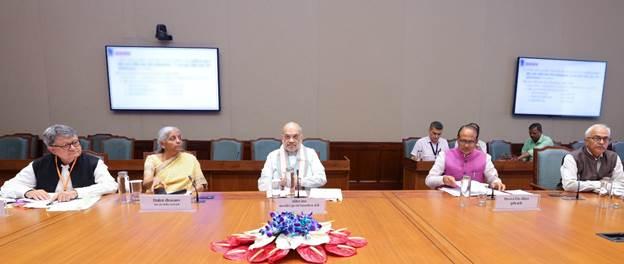
    Union home minister Amit Shah, chaired a meeting of the high-level committee (HLC) on Thursday in New Delhi, approving a comprehensive array of disaster mitigation and capacity building projects aimed at enhancing India’s resilience against natural calamities.

    The committee, which includes the finance minister, agriculture minister, and vice chairman of NITI Aayog, deliberated on nine proposals from the National Disaster Mitigation Fund (NDMF) and National Disaster Response Fund (NDRF) to combat urban flooding in six cities; to mitigate glacial lake outburst flood (GLOF) in four hill states and to strengthen fire services in three states. The committee also considered a proposal to implement Yuva Aapda Mitra Scheme in all 28 states of the country. 

    A government press release said that a number of steps have been taken to prevent any extensive loss to life and property during disasters by strengthening India’s disaster risk reduction system.

    In today’s meeting, the high-level committee approved six project proposals in the states of Telangana, Gujarat, Karnataka, West Bengal and Maharashtra at a total cost of Rs. 2,514.36 crores for urban flood management in six metro cities – namely Mumbai, Kolkata, Bengaluru, Hyderabad, Ahmedabad and Pune.  Earlier, in November 2023, the HLC had approved the project proposal for integrated solutions for flood management for the state of Tamil Nadu in Chennai city at a cost of Rs. 561.29 crores.

    GLOF risk mitigation

    The HLC also approved three project proposals under the scheme for “Expansion and Modernization of Fire Services in the states” for the Assam, Karnataka and Tamil Nadu of a total outlay of Rs. 810.64 crores. The union government has allocated a total amount of Rs. 5,000 crores under the National Disaster Response Fund (NDRF) for this scheme, and had already approved the proposals of 11 states at a total outlay of Rs. 1691.43 crores.

    In addition, the HLC also approved a project proposal for GLOF risk mitigation for the states of Himachal Pradesh, Uttarakhand, Sikkim and Arunachal Pradesh at a total outlay of Rs. 150 crore. The GLOF Risk Mitigation Project will provide necessary impetus to these four states in taking necessary mitigation measures to address GLOF risks.

    The HLC also approved a proposal of Yuva Aapda Mitra Scheme at an outlay of Rs. 470.50 crores from NDRF, which will be implemented in 315 most disaster-prone districts of the country for training of 1,300 trained Aapda Mitra volunteers as master trainers and 2.37 lakh volunteers exclusively from NCC, NSS, NYKS and the Bharat Scouts and Guides in disaster preparedness and response.

    The ministry’s press release said that this was in line with the Prime Minister’s vision of preparing the community as first responders during any disaster. Earlier, the “Aapda Mitra”, scheme has resulted in the training of around one lakh community volunteers. These volunteers have been trained for disaster response in 350 most disaster-prone districts of the country. These skilled and trained ‘Apda Mitras’ and ‘Apda Sakhis’ are playing an important role in assisting the local administration in responding to any disaster, the ministry said in its press release.

    During the current financial year, union government has released Rs 6348 crores to 14 states under State Disaster Response Fund (SDRF) and Rs. 672 crores to six states under the State Disaster Mitigation Fund (SDMF). In addition, an amount of Rs. 4,265 crores has been released to 10 states under National Disaster Response Fund.

    Government Frames Action Plan to Combat Child Labour, Informs Rajya Sabha

    The initiatives outlined by minister Shobha Karandlaje reflect the government’s proactive stance towards eliminating child labour and ensuring a secure and nurturing environment for children across the country.

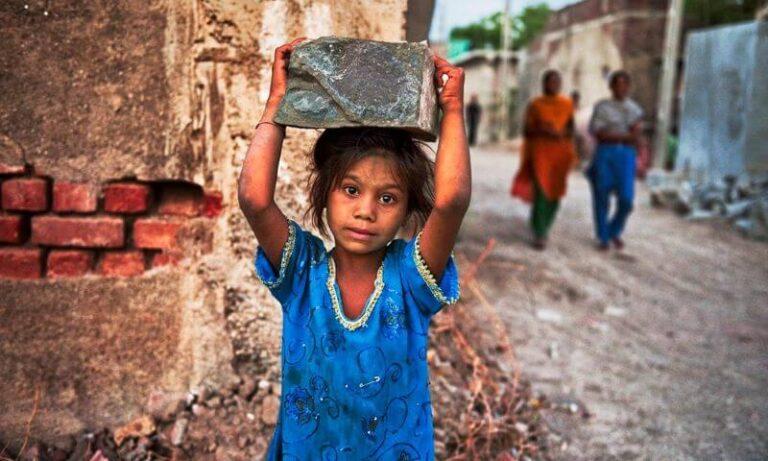
    The ministry of labour and employment has developed a comprehensive state action plan aimed at eradicating child labour, union minister of state for labour and employment, Shobha Karandlaje, informed the Rajya Sabha on Thursday.

    In response to queries during the questions and answers session of the house, the minister of state for labour and employment highlighted key initiatives undertaken by the government to tackle the issue. She mentioned the formulation of a model state action plan outlining specific action points for state governments. Additionally, the ministry has devised a standard operating procedure to guide trainers, practitioners, and enforcement agencies in their efforts.

    “Child labour persists as a consequence of various socio-economic challenges such as poverty, economic disparity, lack of access to essential services, and illiteracy,” the minister underscored.

    To combat this issue, the government has adopted a multi-pronged strategy, minister Shobha Karandlaje explained. This strategy includes legislative measures such as the Child and Adolescent Labour (Prohibition and Regulation) Act, 1986, which prohibits the employment of children under 14 years in any occupation and adolescents aged 14 to 18 years in hazardous occupations. The Act also mandates stricter penalties for offenders, treating violations as cognizable offenses.

    She further elaborated on the framework provided by the Child and Adolescent Labour (Prohibition and Regulation) Rules, 1988, which establish District Nodal Officers and Task Forces chaired by District Magistrates to ensure effective implementation of the Act at the grassroots level.

    Moreover, the government has implemented the National Child Labour Project (NCLP) Scheme to rehabilitate child labourers, which has now been integrated into the Samagra Shiksha Abhiyan (SSA) Scheme since April 1, 2021.

    Minister Karandlaje assured the Rajya Sabha that the government remains committed to addressing child labour through these concerted efforts, aiming not only to enforce laws but also to provide avenues for education and socio-economic development.

    The initiatives outlined by the minister reflect the government’s proactive stance towards eliminating child labour and ensuring a secure and nurturing environment for children across the country.

    Image: Kailash Satyarthi Children’s Foundation