More

    India’s Bangladeshi Bogeyman

    During the 2019 election campaign, then BJP president and now Home Minister, Amit Shah, described Bengali-speaking Muslims in border states as ‘termites’—invoking the same dehumanising language used by Radio Rwanda in the early 1990s.

    By Rudabeh Shahid / Atlantic Council’s South Asia Centre

    Bangladesh continues to struggle with the forced migration of Rohingyas from Myanmar. The wages of daily wage labourers have dropped, organised crime activity has risen and the clearing of 2500 hectares of protected forests to house refugees has degraded the environment.

    Similar dynamics to those which led to the Rohingya refugee crisis are now brewing in India — and both cases reflect systematic state violence, citizenship deprivation and the threat of statelessness against an imagined ‘foreign’ population.

    In May 2022, Bangladeshi Foreign Minister AK Abdul Momen said that Rohingya migrants were using brokers to cross into Bangladesh from India. The porous 4,000 kilometre border has been a source of contention for decades, but both governments have worked to resolve the issue through exchanging border enclaves and controlling north-eastern cross-border militant groups. Still, anti-Bangladeshi rhetoric continues to dominate Indian domestic politics, with the political establishment claiming there are 20 million undocumented Bangladeshi migrants living in India.

    According to Momen, some of the Rohingyas who migrated to India to escape persecution in Myanmar are coming to Bangladesh because of the ‘good facilities provided in Cox’s Bazar’, a coastal region in south-eastern Bangladesh. Yet India has adopted a draconian policy under which many Rohingyas have been forcefully deported to Myanmar where they face genocide. This fear of deportation is causing Rohingyas in India to seek safety in Bangladesh.

    Growing hostility

    This development is part of a growing hostility in India towards those deemed ‘illegal’ and unworthy of citizenry. The contentious cross-border movement between Bangladesh and India pushed the Indian national imagination towards the proposal of two changes to citizenship laws in 2019. These proposals led to the creation of a national registry of citizenship, known as the National Register of Citizens (NRC) and the Citizenship Amendment Act (CAA) — a law allowing non-Muslim foreigners to become Indian citizens.

    The NRC’s roots can be traced to Assam, a state in north-eastern India in which the search for racial purity has taken on dangerous forms. Assam’s NRC dates back to the Assam movement of the 1980s when it served as a tool for categorising ‘illegal immigrants’ for deportation. Substantial progress on the registry was made following the win in the state election in Assam in 2016 by the Bharatiya Janata Party (BJP) as part of a larger anti-minority agenda. The BJP introduced the CAA in 2019 to protect people who were deemed more ‘worthy’ and ‘valuable’ to their conception of the Indian nation.

    Observers note that the CAA and NRC bear disturbing similarities to Myanmar’s 1982 Citizenship Law which stripped the Rohingya of their citizenship. Myanmar’s then junta government decided that anyone without ancestors from the ‘135 indigenous groups’ of pre-colonial Burma were illegal immigrants. This law shapes Myanmar’s public imagination of Rohingyas as undocumented migrants from Bangladesh — just as the NRC and CAA may shape India’s public imagination towards Bengali Muslims.

    Termites?

    During the 2014 national election campaign, then prime ministerial candidate Narendra Modi made the deportation of ‘Bangladeshis’ — a term which often refers to Bengali-speaking Muslims in border states — an electoral promise. During the 2019 election campaign, then BJP president and now Home Minister, Amit Shah, described the group as ‘termites’ — invoking the same dehumanising language used by Radio Rwanda in the early 1990s. Members of the ruling BJP defended this statement across international media platforms.

    State violence toward Bengali-speaking Muslims continues despite the domestic and international advocacy efforts of civil society groups. In September 2021, local Bengali Muslim residents of Assam resisted forced eviction and removal by the police, tragically ending in the brutal police killing of Moinul Haque. Violence against Muslims in border states is now emerging in Tripura — a state with no history of post-partition religious violence.

    Bengali Muslims in Mumbai were persecuted in the 1990s, but the violence was mostly limited to border states or Indian citizens. In April 2022, many shacks and businesses in Delhi’s Jahangirpuri area belonging to Bengali Muslims (from West Bengal who later settled in Delhi) were reportedly demolished by the North Delhi Municipal Corporation. Over the past year, police raids in Bengaluru have intensified in a bid to track down ‘illegal Bangladeshi migrants’, who are subjected to harassment and even lockups.

    Bangladeshi transit visa holders in India have become a target of harassment by a local right-wing television reporter whose broadcast was shared on a Delhi-based politician’s Twitter account. The tweet branded them as undocumented Bangladeshi migrants and Rohingyas.

    Hate speech

    Increasingly common hate speeches against Muslims by extremist groups at religious events in India threaten the bilateral relations between India and Bangladesh. While Dhaka and New Delhi experience a bonhomie, Bangladesh has witnessed outbursts of anti-Indian government sentiment and grievances have been expressed about Indian government policy by sections of Bangladesh’s intellectual and foreign policy elite in closed-door meetings.

    Bangladesh hosts many Indian businessmen, students and professionals. It was the fourth largest remittance source for Indians in 2017 — and the informal figure is estimated to be much higher. But hostility against Bangladeshis in India may jeopardise the safety and livelihood of Indian expats in Bangladesh.

    While Dhaka remains silent on these issues, the denaturalisation and vilification of Bengali Muslims in India may encourage the mainstreaming of anti-India sentiment in Bangladesh, adversely affecting bilateral relations.


    Rudabeh Shahid is Nonresident Senior Fellow at the Atlantic Council’s South Asia Centre.

    This piece has been sourced from the East Asia Forum of the Australian National University.

    Image: Sabrang India – 426 Muslim families were evicted from their houses in Chotia assembly constituency, Bishwanath district, Assam.
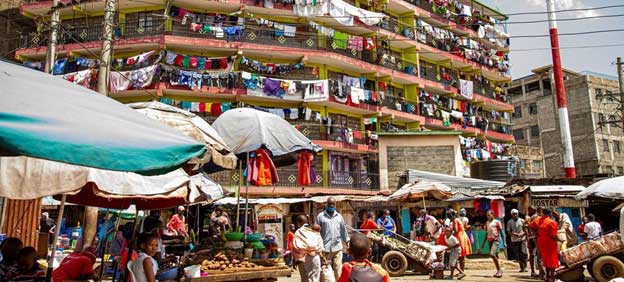
    UN Predicts 68 Percent of World’s Population will be Living in Urban Areas by 2050

    Securing stronger and more resilient cities, able to withstand the more frequent shocks and hazards, will require a new social compact, a re-distribution of powers between local governments in charge of urban spaces and the citizenry, especially those left behind.

    By Simone Galimberti

    When we think of urbanization we often end up referring to the increasing number of megalopolises that are sprawling around the world.

    Yet less thoughts are given on the fact that the future patterns of urbanization will be centred on secondary cities or semi urban spaces, now becoming extensions of these gigantic cities.

    It means that the world will continue to urbanize even though the world share of population living in this new urban continuum is forecasted to slow down, reaching 58 per cent in the next fifty years according to data from UN Habitat.

    Yet, especially in the developing world, such reduction will still bring in a whopping increase of 76 per cent of the number of cities in low income nations that in practically terms will mean a rise of 2.2 billion residents mostly in Africa and Asia.

    These are some of the key findings of the World Cities Report 2022, the flagship publication of UN Habitat that was recently launched in occasion of the 11th World Urban Forum, the biannual event that was held last week in Poland, bringing together top policy makers, experts and activists working in the area of urbanization.

    The insights and discussions enabled by these publications and events are indispensable to activate the so called New Urban Agenda, a strategically important though overlooked agenda to rethink sustainability from the perspectives of those living in the cities.

    Future of millions

    Unfortunately there is still so much to be done here and unsurprisingly there are huge constraints in terms of funding to implement this vision even though more recently, several financial commitments have been done, including a massive boost in resilient infrastructures during the recently held G7.

    The international community should be indeed worried and not only in terms of bridging the resource gap for a sustainable urbanization.

    Global leaders need to seize the opportunity and reconsider the ways cities are governed.

    While it remains paramount to think in terms of the future of the millions of people living in big cities, the trends and patterns are pointing to the urgency of systematically thinking about governing urban spaces in terms of multilevel governance.

    It means we need to work on a future system of policy making and decision making that is able to function and deliver beyond a single administrative jurisdiction.

    Such a model must be capable to address the needs of the people living within and in the peripheries from three key dimension, spatial, social and economic.

    The opportunity here is not only about re-thinking the existing boundaries, merging existing administrative units, creating bigger and more extended centres of power with the tools and resources of governing entire metropolitan regions.

    This, in itself, would be a mammoth task because it will eat away power to different, often overlapping and certainly inadequate local bodies of governance now in existence.

    The real chance we need to seize is to re-think, holistically, the way local governance works and take action on the general ineffectiveness of local bodies in terms of social inclusion.

    New social compact

    Securing stronger and more resilient cities, able to withstand the more frequent shocks and hazards, will require a new social compact, a re-distribution of powers between local governments in charge of urban spaces and the citizenry, especially those left behind.

    This latter group is at the core of the recommendations World Cities Report 2022, highlighting how vulnerable citizens must shift from being “passive victims” of current patterns of urbanization to “active urban change agents”.

    Such pivot towards the downtrodden can be successful if we go beyond the traditional recipe made only by stronger social policies.

    This is a formula that tends to largely be centred around, on the one hand, more sophisticated and generous social protection schemes like universal basic income and, on the other, around health coverage and housing.

    These three social areas of interventions, together with quality and affordable education, are extremely important but we need to imagine a new social contract in terms of participation and engagement.

    Indeed, according to the so called Urban Resilience Principles, the guiding pillars for a different vision for the future of cities, it is essential to ensure a meaningful participation of the people, especially those disadvantaged, in the planning and governance of any future urban governance system.

    “With ever larger cities, the distance between governments and their citizens has increased” explains the World Cities Report 2022 report.

    “Effective communication, meaningful participation opportunities and accountability structures built into integrated governance relationships are all necessary responses for addressing the trust equation”.

    Not just aspirational documents

    The document goes even further, calling for new forms of collaborative governance that involve different stakeholders joining the decision making process.

    That’s why deliberative democracy, often at the fringes of the political science studies, is now being rediscovered as a possible remedy to the distance between traditional decision makers and citizens.

    Obviously there is one particular group that, not only has huge stakes in the future of urban spaces but also can play a vital role to re-animate the debate about more bottom up, participatory forms of democratic decision making: the youths.

    Some attempts are being made in this direction.

    Over the UN General Assembly High Level Meeting held on the 27th of April to review the progress taken so far in implementing the New Urban Agenda, the Youth 2030 Cities initiative brought together youths from Ecuador, Colombia and Ghana to discuss about their role and their contributions for a better urban future.

    The event was a culmination of trainings and discussions in six different countries around the world, an exercise that led to the preparation of “DeclarACTIONS”, roadmaps and at the same time real blueprints for youths driven changes around sustainable urbanization.

    These are not just aspirational documents but they contain concrete and practical proposals, result of a long raging series of interventions supported by UN Habitat and the Foundation Botnar.

    Empowered, not just consulted

    The Youth 2030 Cities program is an example of how it is possible to enable youth to convene and discuss.

    Potentially, it can be seen, as a bold attempt at expanding the decision making process at local level.

    The challenge will be on how to shift from pilot mode to an approach that systematically includes all citizens, including the youth, in the policy and decision making processes.

    An institution like UN-Habitat has a very important mandate to mainstream participatory processes across the developing and emerging world, enabling new transformative ways for people to be involved and engaged.

    System ways partnerships, starting from within the UN System, can harness the potential shown when youths are allowed to discuss and debate.

    The dynamics facilitated by Youth 2030 Cities, can truly bring transformative changes but with them, we need bold and farsighted vision from the world leaders.

    Let’s not forget that, real change will happen when people, especially the youths, are empowered, not just to be consulted and be able to express their opinion, but when are enabled to take binding decisions.

    The fact that also the World Urban Forum 11 saw the same Youth 2030 Cities youth to gather for a global “DeclarAction”, is promising but the road ahead is still indeed very steep.


    Simone Galimberti is co-Founder of ENGAGE, a not-for-profit NGO in Nepal. He writes on volunteerism, social inclusion, youth development and regional integration as an engine to improve people’s lives.

    This piece has been sourced from Inter Press Service.

    Image: Kirsten Milhahn / UN-Habitat: A residential building in Nairobi-Kenya.

    Myanmar’s Junta Isn’t Even Sparing Children, Says UN Rights Expert 

    The Human Rights Council-appointed investigator said that Myanmar’s military junta’s violence against children caught up in the bloody aftermath of last February’s coup is shocking – at least 382 children have been killed or maimed; more than 1,400 children have been arbitrarily detained and 142 children tortured.

    The international community’s approach to Myanmar “is not working”, Thomas Andrews, Special Rapporteur on the situation of human rights in Myanmar, told the UN Security Council this week, urging it to take stronger action.

    “The people of Myanmar continue to wait for the Security Council to even consider a resolution about Myanmar,” he said. “Some Members have failed to impose sanctions on the junta, even when they have done so in response to other crises. Member States who have adopted sanctions have too often failed to strategically coordinate these sanctions. Many have failed to target the junta’s largest sources of revenue and their ability to move funds. ASEAN’s Five-Point Consensus has failed to generate any tangible outcomes.”

    The top independent Human Rights Council-appointed investigator said that Myanmar’s military junta is responsible for shocking violence against children caught up in the bloody aftermath of last February’s coup. He said that he had met youngsters who’d fled the country after suffering “irreparable harm”.

    Empty seat 

    Myanmar – whose seat was empty in the Council – “passed several grim milestones since March”, he continued: “more than 2,500 civilians have now been killed in the junta’s bloody campaign against its opponents; over one million people are now internally displaced.”

    The number of arbitrarily detained political prisoners now exceeds 11,000, Mr. Andrews said, before warning that the junta “has announced that executions will soon begin of political prisoners who have been put on death row”.

    Amid widespread public opposition to Myanmar’s de facto rulers, the independent rights expert described how the military had “trained its guns on growing numbers of villagers and other non-combatants” and “accelerated a brutal campaign of arson and murder in the northwest.

    Children killed and maimed 

    The task of reporting on such abuses has been complicated by internet shutdowns which “which, of course is the intention, the very intention, of the military”, Mr. Andrews said, before describing in detail the abuse meted out to youngsters suspected of having links to opposition fighters.

    “At least 382 children have been killed or maimed; more than 1,400 children have been arbitrarily detained…142 children have been tortured since the coup.”

    He added: “These children have been beaten, cut and stabbed; they have been burned with cigarettes; they have had their fingernails and teeth pulled out; they have been forced to hold stress positions; they have been subjected to mock executions; they have been sexually assaulted.”

    War crimes charge 

    Such crimes and “repeated attacks on civilians” constituted war crimes and crimes against humanity, insisted the Special Rapporteur, who is an independent and unpaid rights expert, appointed by the Human Rights Council for three years, in line with special procedures mandates.

    Failure to take action soon risks an even worse humanitarian crisis in Myanmar, where relief work has been seriously hampered because the UN’s 2022 Humanitarian Response Plan for Myanmar is only 10.5 per cent funded. “This has meant that lifesaving programs have had to be suspended,” Mr. Andrews explained.

    Neglected 

    Some “33,000 children could die of preventable deaths this year alone, merely because they have missed routine immunizations,” the Special Rapporteur added. “Five million children require urgent humanitarian assistance. Experts warn of a looming food crisis and the possibility of a dramatic increase in rates of childhood malnutrition and stunting.

    “Physical and sexual abuse, the trafficking of children and child labour are all on the rise. Girls are particularly vulnerable to forced marriage and sexual exploitation.”


    Image: Tom Cheatham / World Bank

    Swara Kills, Says Young Pakistani Bride

    Swara, also known as Vani and Budla-i-sulh, is dispute resolution method where women and girls are given in marriage or servitude to an aggrieved family as compensation for reconciliation in case of rivalry, murder, or abduction in order to settle the dispute.

    Sana Gul’s brother killed a neighbour for trespassing on their property. It was a petty dispute – Sana’s brother tried to stop the boy on a number of instances, and then one day, in a fit of rage, he knifed him to death.

    A hue and cry followed and a Jirga was called. It decreed that to settle the case and put an end to the enmity between the families, Sana must be given in marriage to the slain boy’s brother.

    The tribal elders called it Swara.

    “I pray to God that whatever happened to me after I had been given in Swara….. no woman should go through that”, she said, tears welling up in her eyes.

    Swara is a price girls pay for the crimes committed by the men of their families. Such decisions by jirgas and village council elders have cost the lives of thousands of women.

    Swara, also known as Vani and Budla-i-sulh, is a customary form of dispute resolution that involves giving in marriage or servitude women and girls belonging to an offender’s family to the aggrieved persons as compensation for reconciliation in case of rivalry, murder, or abduction in order to settle the dispute. It often comes in the form of an arranged or forced child marriage on the orders of tribal elders – the Jirga.

    Sana was married to the brother the slain boy, as Swara in the Hoti region of Mardan, Khyber Pakhtunkhwa in the first week of May.

    Medieval practice

    Journalist and researcher, Jibran Mehboob Buneri says that there are a number of hypotheses on the history of Swara that is said to have started about 500 years ago to bring peace to Pashtun area.

    Later, Swara was practiced only in exceptional cases. Often, a part of the harvest was the barter. But, a serious crime, like a murder ended up with a Swara as a rapprochement – when a girl from the assaulter’s family would be offered in marriage to a man from the victim’s family with the aim of burying the hatchet and helping foster peace between the two sides.

    In a medieval society, patriarchal as it was, it was though giving away a daughter in marriage was a sure way to peace, especially with the connotations of honour that came with their gender – giving a daughter or sister in Swara would dissolve enmity.

    But then the ritual took a turn for the worse, and is now endemic in the Pashtun homeland where kangaroo courts sit in judgement on everything – from petty disputes to heinous crimes.

    Does the new law work?

    Pakistan’s Federal Shariah Court considers the ritual illegal, but that’s about all.

    Natasha Khan, a lawyer practicing in the Peshawar High Court says that an amendment to the Code of Criminal Procedures and the Pakistan Penal Code introduced in 2004 to end Swara makes it a punishable offense to marry a woman or a girl for the sake of peace – with prison terms going up to seven years and a penalty of Rs. 500,000.

    Rubab Mehdi, the regional commissioner of the Ombudsman Office in Peshawar says, her department had net yet received any case of Swara. But she agrees that the practice exists and even has, in her own personal capacity, solved about three cases of Swara.

    Mehdi says Swara is the worst form of harassment of a woman because an entire family harasses the Swara bride. It can’t get worse, she says, explaining the life of a girl leading the remainder of her life in an enemy’s house in a tribal setting. “So the girl becomes a psychiatric patient,” she says.

    Nobody’s happy; but none complains

    Swara cases are also rarely reported. For instance, Sana Gul’s case has come to light only after two months of her marriage. This is an exception. Says journalist Jamal Safi who brought the story to light.

    Rida Tahir, a human rights lawyer and academic teaching for the University of London and University of Hertfordshire law programmes in Pakistan says, “Pakistan should adopt additional policies to ensure that cases of Swara are reported.”

    She says that a mass awareness campaigns and gender sensitivity training will help put an end to the patriarchal values that are the root cause of the marginalisation faced by women and girls in the rural areas.

    Ranil Wickremesinghe’s House Burnt Down By Sri Lankan Protesters

    Sri Lankan Prime Minister Ranil Wickremsinghe’s private residence in Central Colombo has been set on fire by protesters demanding his government.

    Angry protesters have set ablaze the private residence of Sri Lanka Prime Minister Ranil Wickremesinghe on the 5th Lane in Central Colombo. Mobile video footage of the burning building is being gleefully shared on social media.

    The footage also showed protesters damaging vehicles in the residential premises.

    The Prime Minister’s office confirmed that protesters had broken into Wickremsinghe’s private residence and set it on fire.

    Surely, Sri Lankans will not forget July 9th Protests in a hurry.

    After presidential palace

    Wickremesinghe’s house became a target after protesters breached security and forcibly entered the official residence of President Gotabaya Rajapaksa hours earlier in the day. There has been no official news of the president’s whereabouts.

    The protesters have been demanding Rajapaksa’s resignation for three months now and a protest under the banner of GotaGoGama at Colombo’s Galle Face have touched a new peak since Rajapaksa replaced his brother Mahenda Rajapaksa and appointed Ranil Wickremesinghe the country’s prime minister in his place.

    Over the day today, Wickremesinghe has changed his stance a number of times – he announced that he would resign and then reverted only to again say that he was willing to resign. Later, after President Gotabaya Rajapaksa was found missing in action, he said that somebody had to be in office – and it would be him.

    Do also read: Lanka President Gotabaya Rajapaksa Flees

    Resignation

    Wickremesinghe eventually resigned in the evening, setting in motion efforts to establish an all-party government after a meeting with lawmakers and ministers.

    He tweeted: “To ensure the continuation of the Government including the safety of all citizens I accept the best recommendation of the Party Leaders today, to make way for an All-Party Government. To facilitate this I will resign as Prime Minister.”

    Result of chauvinism

    There is confusion and turmoil in Colombo, a source once close to Rajapaksa’s Sri Lanka Podujana Peramuna party, or The Sri Lanka People’s Front said from the country’s cultural capital, Kandy.

    He said that given the loss of credibility, no government or global financial institution was willing to come to Sri Lanka’s aid and all that the country has benefitted of has been the donation of aid agencies.

    “This has hit the pride of Sri Lankans,” he said, adding that the loss of face means much to the ordinary person on the street.

    “We Sri Lankans are very proud people and at times our pride borders on chauvinism – that got exaggerated during a bloody civil war and politics, particularly my party’s politics, revolved around stirring nationalistic feelings and that has got us into this situation,” he said, not wanting to be named.

    “I am very worried,” he said.

    Lanka President Gotabaya Rajapaksa Flees

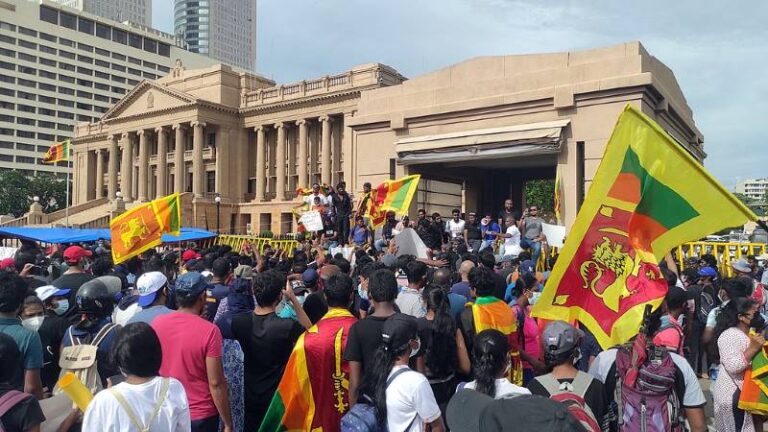
    Tens of thousands of protestors arriving from the site of the GotaGoGama agitation broke the security fences outside the president’s residence and took over the premises. Colombo’s air has been rife with rumours throughout the day and clear news has been hard to come by.

    Things are changing rapidly in Sri Lanka and this is a developing story.

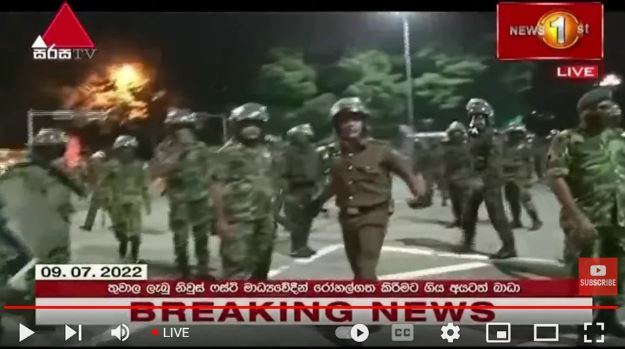
    Tens of thousands of protestors arriving from the site of the GotaGoGama agitation broke the security fences outside the president’s residence and took over the premises – some posing for selfies in the presidential office, others in the swimming pool, and yet others seated on the comfortable sofas of the palace. But most were on the lookout for the president, who they announced is now fugitive.

    Protestors were met with water-canon and teargas and dozens were injured, but the sound of gunshots reverberating through the air angered people further and their eventual taking over the premises of the presidential palace and the police began withdrawing.

    Rajapaksa has not been seen thus far and there are various accounts of where he is hiding. Colombo’s air has been rife with rumours throughout the day and clear news has been hard to come by.

    Some accounts suggest that he is inside the army headquarters. Videos are also circulating of military convoys being blocked by people on the highway. Some sources say that he is in a safe ship sailing towards the southern city of Hambantota, close to his ancestral home. A video of suitcases being loaded on a cruise ship are also circulating.

    It is already being called the ‘July 9th Protests’.

    Sri Lanka protests GotaGoGama Rajapaksa flees Colombo

    48 decisive hours

    Rajapaksa should have seen it coming when, on Thursday, the influential Buddhist monks from various chapters of Sri Lankan Buddhist clergy began a hunger strike or starve-to-death protest in Colombo. They demanded the Rajapaksa step down –  for the first time in the past three turbulent months.

    The monks have been his foremost supporters, but they eventually gauged the palpable anger among Sri Lankans over the monks’ support for Rajapaksa, whose Sinhala majoritarian politics had a special space among the Buddhist clergy. Together, the monks and the Rajapaksas have fanned hate politics against non-Sinhalas, mainly Muslims and Tamils in the island nation. The Bodu Bala Sena, an extreme nationalist Sinhalese Buddhist group known for its violence against Muslims in recent years has had Rajapaksa’s support.

    A court order to stop the monks from protesting helped them retrieve some of their lost moral authority as a senior monk announced that it was their duty to protect their country.

    “So do not bring these court orders and try to stop us,” the elder told court officials handing him the orders before news cameras.

    Clearly, a staggering 57.4 per cent inflation rate and steeply increasing food prices have hit home.

    Ranil holds cards close to his chest

    Things started falling in place for the protestors since rumblings among a handful of lawmakers supporting the president became public and Prime Minister Ranil Wickremesinghe began discussions with several party leaders about stepping down. But Wickremesinghe soon changed track and spoke of a leadership vacuum if he did so as word of the President fleeing caught up – Sri Lanka’s Constitution provides for the prime minister taking over in the event of the president’s resignation.

    But many law makers insist that the prime minister must resign and say that the Speaker of the country’s parliament to take charge.

    Even railway employees who brought the railway system to a standstill saying, en masse, that they did not have fuel to arrive at their duty stations have suddenly come out and started the train services to ferry people from the countryside to Colombo.

    This came together with a social media campaign asking the country’s defence forces to support the protests.


    Image: Wikimedia / AntanO


    Do also read: WFP Paints a Gloomy Picture as Sri Lankans Skip Meals

    50,000 Wild Species Feed Billions Worldwide

    One in five people across the planet rely on wild species for income and food. More than 10,000 wild species are harvested for human food consumption and 2.4 billion people or one in every three people on planet depend on fuel wood for cooking.

    Billions of people, in developed and developing nations, benefit daily from the use of wild species for food, energy, materials, medicine, recreation, inspiration and many other vital contributions to human well-being. The accelerating global biodiversity crisis, with a million species of plants and animals facing extinction, threatens these contributions to people.

    A new report by the Intergovernmental Science-Policy Platform on Biodiversity and Ecosystem Services (IPBES) offers insights, analysis and tools to establish more sustainable use of wild species of plants, animals, fungi and algae around the world. Sustainable use is when biodiversity and ecosystem functioning are maintained while contributing to human well-being.

    The IPBES Assessment report on the Sustainable Use of Wild Species is the result of four years of work by 85 leading experts from the natural and social sciences, and holders of indigenous and local knowledge, as well as 200 contributing authors, drawing on more than 6,200 sources. The summary of the report was approved this week by representatives of the 139 member States of IPBES in Bonn, Germany.

    Source of food and income

    “With about 50,000 wild species used through different practices, including more than 10,000 wild species harvested directly for human food, rural people in developing countries are most at risk from unsustainable use, with lack of complementary alternatives often forcing them to further exploit wild species already at risk,” said Dr. Jean-Marc Fromentin of France who co-chaired the Assessment with Dr. Marla R. Emery of the USA/Norway and Prof. John Donaldson of South Africa.

    “70 per cent of the world’s poor are directly dependent on wild species. One in five people rely on wild plants, algae and fungi for their food and income; 2.4 billion rely on fuel wood for cooking and about 90 per cent of the 120 million people working in capture fisheries are supported by small-scale fishing,” said Dr. Emery.

    “But the regular use of wild species is extremely important not only in the Global South. From the fish that we eat, to medicines, cosmetics, decoration and recreation, wild species’ use is much more prevalent than most people realise.”

    The use of wild species is an important source of income for millions of people worldwide. Wild tree species account for two thirds of global industrial roundwood; trade in wild plants, algae and fungi is a billion-dollar industry; and even non-extractive uses of wild species are big business. Tourism, based on observing wild species, is one of the main reasons that, prior to the COVID-19 pandemic, protected areas globally received 8 billion visitors and generated US$600 billion every year.

    Overfishing

    The report identifies five broad categories of ‘practices’ in the use of wild species: fishing; gathering; logging; terrestrial animal harvesting (including hunting); and non-extractive practices, such as observing. For each practice, it then examines specific ‘uses’ such as for food and feed; materials; medicine, energy; recreation; ceremony; learning and decoration – providing a detailed analysis of the trends in each, over the past 20 years.

    In most cases, use of wild species, or uncultivated foods, has increased, but sustainability of use has varied, such as in gathering for medicine and logging for materials and energy.

    Speaking specifically about fishing as an example, Dr. Fromentin said: “Recent global estimates confirm that about 34 per cent of marine wild fish stocks are overfished and 66 per cent are fished within biologically sustainable levels – but within this global picture there are significant local and contextual variations.

    Countries with robust fisheries management have seen stocks increasing in abundance. The Atlantic bluefin tuna population, for instance, has been rebuilt and is now fished within sustainable levels. For countries and regions with low intensity fisheries management measures, however, the status of stocks is often poorly known, but generally believed to be below the abundance that would maximise sustainable food production,” he said.

    “Many small-scale fisheries are unsustainable or only partially sustainable, especially in Africa for both inland and marine fisheries, and in Asia, Latin America and Europe for coastal fisheries.”

    Wild tree species threatened

    “Overexploitation is one of the main threats to the survival of many land-based and aquatic species in the wild”, said Prof. Donaldson. “Addressing the causes of unsustainable use and, wherever possible reversing these trends, will result in better outcomes for wild species and the people who depend on them.”

    The survival of an estimated 12 per cent of wild tree species is threatened by unsustainable logging; unsustainable gathering is one of the main threats for several plant groups, notably cacti, cycads and orchids, and unsustainable hunting has been identified as a threat for 1,341 wild mammal species – with declines in large-bodied species that have low natural rates of increase also linked to hunting pressure.

    Illegal trade in timber and fish

    The report identifies drivers such as land- and seascape changes; climate change; pollution and invasive alien species that impact the abundance and distribution of wild species, and can increase stress and challenges among the human communities that use them. Global trade in wild species has expanded substantially in volume, value and trade networks over the past four decades.

    While trade in wild species provides important income for exporting countries, offers higher incomes for harvesters, and can diversify sources of supply to allow pressure to be redirected from species being unsustainably used, it also decouples the consumption of wild species from their places of origin. The report finds that without effective regulation across supply chains – from local to global – global trade of wild species generally increases pressures on wild species, leading to unsustainable use and sometimes to wild population collapses (e.g., shark fin trade).

    Illegal use and illegal trade in wild species are also addressed in the report – as this occurs across all of the practices and often leads to unsustainable use. The authors find that illegal trade in wild species represents the third largest class of all illegal trade – with estimated annual values of up to US$199 billion. Timber and fish make up the largest volumes and value of illegal trade in wild species.

    Robust institutions

    The use of wild species by indigenous peoples and local communities, as well as their extensive knowledge, practices and beliefs about such uses, are also explored in the report. Indigenous peoples manage fishing, gathering, terrestrial animal harvesting and other uses of wild species on more than 38 million km2 of land, equivalent to about 40% of terrestrial conserved areas, in 87 countries. The report finds that policies supporting secure tenure rights and equitable access to land, fisheries and forests, as well as poverty alleviation, create enabling conditions for  sustainable use of wild species.

    “Indigenous stewardship of biodiversity is often embedded in local knowledge, practices and spirituality,” said Dr. Emery. “The sustainable use of wild species is central to the identity and existence of many indigenous peoples and local communities. These practices and cultures are diverse, but there are common values including the obligation to engage nature with respect, reciprocate for what is taken, avoid waste, manage harvests and ensure the fair and equitable distribution of benefits from wild species for community well-being. Globally, deforestation is generally lower on indigenous territories, in particular where there is security of land tenure, continuity of knowledge and languages, and alternative livelihoods. Bringing scientists and indigenous peoples together to learn from each other will strengthen the sustainable use of wild species. This is especially important because most national frameworks and international agreements largely continue to emphasize ecological and some social considerations, including economic and governance issues – while cultural contexts receive little attention.”

    Constant negotiation, adaptive management

    The report concludes by examining a range of possible future scenarios for the use of wild species, confirming that climate change, increasing demand and technological advances -making many extractive practices more efficient – are likely to present significant challenges to sustainable use in the future. Actions are identified for each practice that would help to address these challenges. In fishing, this would include fixing current inefficiencies; reducing illegal, unreported and unregulated fishing; suppressing harmful financial subsidies; supporting small-scale fisheries; adapting to changes in oceanic productivity due to climate change; and proactively creating effective transboundary institutions. In logging this would entail management and certification of forests for multiple uses; technological innovations to reduce waste in manufacturing of wood products; and economic and political initiatives that recognize the rights of indigenous peoples and local communities, including land tenure.

    In most future scenarios that enable the sustainable use of wild species, the authors find that transformative changes share common characteristics – such as integration of plural value systems; equitable distribution of costs and benefits; changes in social values, cultural norms and preferences; and effective institutions and governance systems. Ambitious goals are found to be necessary but not sufficient to drive transformative change. The report also notes that the world is dynamic, and that sustainable use of wild species requires constant negotiation and adaptive management. It also requires a common vision of sustainable use and transformative change in human-nature relationships.

    CITES to inform decisions

    Speaking about the importance of the report, Dr. Anne Larigauderie, Executive Secretary of IPBES said: “This Assessment was specifically requested by, among others, the Convention on International Trade in Endangered Species of Wild Fauna and Flora (CITES) and will inform decisions about trade in wild species at the 19th World Wildlife Conference in Panama in November. It also has immediate relevance to the work of the Convention on Biological Diversity to forge a new global biodiversity framework for the next decade – not least because of the findings about the untapped potential of the sustainable use of wild species to contribute even more to many of the Sustainable Development Goals, including those on poverty, hunger, good health and well-being, education, gender equity, clean water and sanitation, affordable energy, as well as industry and innovation. We thank and congratulate all the authors and experts for their tireless work – especially throughout the COVID pandemic. The sustainable use of wild species is vital for all people, in all communities – and this report will help decision-makers around the world choose policies and actions that better support people and nature.”

    Health Minister Reviews Flood Preparedness; Exhorts States to Ensure Inter-Sectoral Coordination

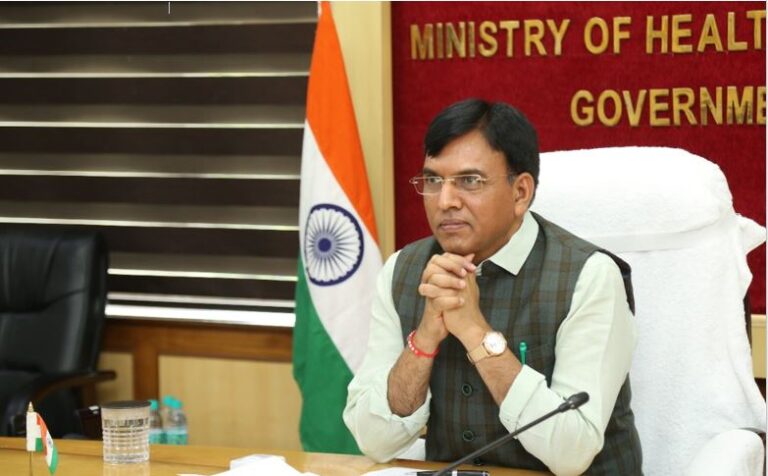
    In the face of floods in Assam and the possibility of floods in more states as the monsoon rains advance, Health Minister Mansukh Mandaviya on Friday reviewed the levels of preparedness for prevention and control of vector borne diseases with 13 high burden states.

    After weeks of floods hitting Assam and ahead of the monsoon season, Health Minister Mansukh Mandaviya on Friday reviewed the preparedness for the prevention and control of vector borne diseases with 13 high burden states through video conference.

    State governments participating in the video conference included the state governments of Uttar Pradesh, Bihar, West Bengal, Jharkhand, Maharashtra, Punjab, Rajasthan, Tripura, Delhi, Gujarat, Madhya Pradesh, Odisha and Tamil Nadu.

    The health minister’s review meeting also came within hours of the meteorological department issuing a yellow alert for rain at Dehradun, Bageshwar and Nainital districts of Uttarakhand from Friday till July 10. The meteorologists’ alert also cautioned of the possibility of heavy rain at isolated places in Pauri and Nainital districts on Saturday.

    Mandaviya exhorted the state governments to ensure inter-sectoral coordination and work closely with other related departments such as Urban Development, Rural Development and water and sanitation.

    The minister urged states to launch a jan abhiyaan to engage citizens and communities to ensure that their homes, premises and neighbourhoods are free of mosquitoes. The states were also advised to involve Ayushman Bharat – Health and Wellness Centres for notification of cases, case management and ensuring community engagement.

    New Internet Laws Threaten Free Expression, Privacy Even Beyond India’s Borders, Say Civil Society Groups

    Amendments to the Intermediary Guidelines and Digital Media Ethics Code Rules 2021 proposed by the Ministry of Electronics and Information Technology set up a risky scenario according to the Indian law and international human rights standards, civil society groups say.

    Eighteen civil society groups from South and South-East Asia, America and Africa, United States and UK have written to India’s ministry of electronics and information technology, urging it to withdraw the proposed amendments to the information technology rules and to commence a process of consultation on the proposed amendments.

    The amendments to these rules currently proposed pose a direct threat to the rights to freedom of expression and privacy, as well as other related human rights protected under the Indian Constitution and international law, they have said in their representation to the government.

    “We face a situation where it is a real possibility that other states might start implementing similar laws,” they say, explaining the larger ramifications of the proposed amendments.

    The authors of the representation have asked the government to “conduct a sustained, meaningful and participatory consultation with the relevant stakeholders and public at large,” for bringing in a law that will ensure “an open, safe and trusted and accountable internet” for all Indian internet users and to create “a new sense of accountability amongst Intermediaries to their users especially within Big Tech platforms.”

    Among the signatory organisations are two Indian entities, the Digital Empowerment Foundation and the Internet Freedom Foundation, both based in New Delhi.

    Problematic fix

    “The Indian IT Rules and proposed amendments threaten fundamental rights of Indians, including right to expression, assembly and association, information and privacy. However, these Rules should concern not just Indians but others in the region and across the world,” expressed Pavitra Ramanujam, Asia Digital Rights Lead at the Association for Progressive Communications (APC).

    “As we have seen with ICT legislations in the past, there is a real possibility that other States might start implementing similar laws, with Bangladesh already following suit with a copycat regulation earlier this year,” she adds.

    The new provisions are problematic on many levels, the letter points out, especially since the provisions can promote overzealous content moderation practices and incentivize the use of automated content controls, besides referring to broad categories of information that are vague and open to abuse.

    It says that the proposed due diligence obligations are overly burdensome, impractical and virtually impossible to comply with and has a negative impact on free speech.

    Worse, it says that a government-led and appointed grievance appellate committee proposed by the new law goes beyond judicial assessment and will only worsen the existing issue of non-judicial oversight, with extensive powers to the executive to control online speech.

    Beyond Indian shores

    The threat would not only come from the Indian State – and potentially worldwide – but also from the tech private sector, the representatives of the organisations feel.

    Ramanujam warns, “The rules will also have a ripple effect on the way tech companies function everywhere – if tech companies agree to comply with the rules in full, it would lead to an increase in the use of automated tools and proactive monitoring, and undermine end-to-end encryption, leaving everyone vulnerable to censorship and breach of privacy.”

    The fix could create more problems – and not just for India, the representation by the group of 18 says.

    The letter says that as per international human rights standards, any restriction to the right to freedom of expression has to go through a strict test of legality, necessity and proportionality, and legitimacy. Some of the provisions set up by the proposed rules fail to pass all parts of this test.

    The representation alludes to the 2018 report of the former UN Special Rapporteur on freedom of expression and opinion in his report on content moderation. Quoting from the report, it says, “States should refrain from adopting models of regulation where government agencies, rather than judicial authorities, become the arbiters of lawful expression.”


    Image: Gerd Altmann used under Pixabay License (https://pixabay.com/images/id-1187198/)

    Shifting Climate Boundaries

    For decades, studies have shown that a warming climate is pushing the treeline to shift upwards across the world — including in the Everest region. But what exactly does this phenomenon mean? 

    Marissa Taylor

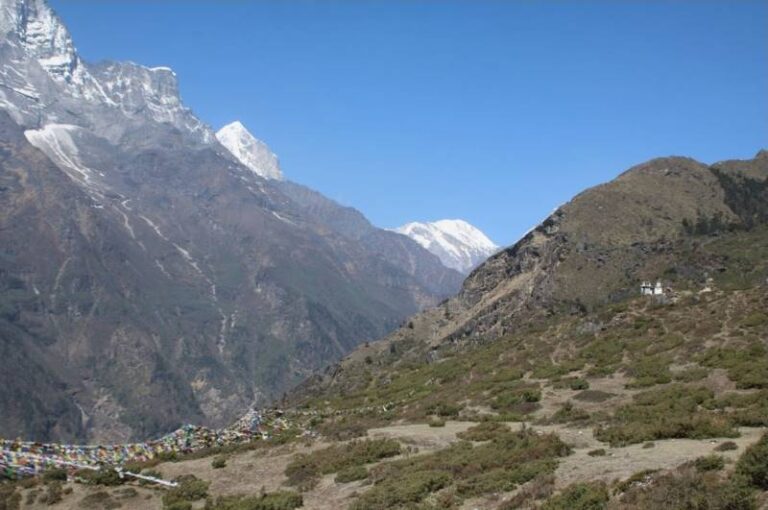
    It is a clear April afternoon in Khumjung village in the Sagarmatha National Park. The sun is high up on the head and there’s a cool breeze going. Stone houses and fields are tidily lined up on either side of stone pavements and there’s an uninterrupted view of some of the world’s most beautiful mountains — the Lhotse, Ama Dablam and Thamserku. There’s a pleasant quietness to the village.

    Khumjung doesn’t necessarily fall on popular trails like the Everest Base Camp trail and the trek to Gokyo Ri and thus doesn’t have many trekkers coming its way. With few trekkers, business for lodge owners is limited here, so the men mostly work as porters and guides and the women stay back to take care of the house and work in the fields.

    But there is not much to do in the fields during these months either. The potatoes, which are what grow mostly at this altitude of 3,700 meters above sea level, have already been planted. They’ll be harvested come September. But with rainfall patterns unreliable the harvest will be remains to be seen. For now, the women spend their days cutting grass and collecting leaves in the nearby forests to feed the cattle.

    “My granddaughter goes to the forest almost every day and brings the grass to feed our cattle. Without it, we have nothing to feed our cattle,” says Pema Sherpa, 66, a resident of Khumjung, who runs a small souvenir shop.

    Shifting treeline

    The forests near the village are some of the last ones in the Everest region. If you move a few hundred meters higher up, there are no trees in sight. This is because above this area — at approximately 4,000 meters above sea level — trees are incapable of growing owing to harsh climatic conditions. This edge of any habitat beyond which trees can’t grow is called a treeline.

    But erratic rainfall patterns and a globally warming climate are affecting these crucial zones, causing the treeline in many parts of the world, including the Everest region, to shift upwards.

    “The sprouting and growing of trees are directly controlled by temperature and precipitation. A warmer climate means an expansion of the area in which trees are capable of growing, which means trees are slowly growing higher up. There is a direct relation between global warming and this shift in alpine treelines,” said Dinesh Raj Bhuju, an environment researcher who has been studying treelines since 2007.

    According to his 2017 study, aimed to assess treeline dynamics and to understand the response of treeline to environmental change, which was conducted in the Everest region, two tree species, the Abies spectabilis (East Himalayan fir) and Betula utilis (Himalayan birch), were found to have moved by about 0.42 m/yr to 0.93 m/yr in the last 200 years.

    Such changes have been witnessed not just in the Everest region but also in other areas in the Himalaya in Nepal. “We studied the treeline shifting in the Manaslu area as well in 2012. We looked at the maximum treeline limit from 1851 to 2012 and found that in 161 years, the treeline shifted 215 meters. In 1851, the treeline was approximately 3,800 meters approximately and in 2012 it was 3,984 meters,” said Bhuju.

    Nepal climate change treeline biodiversity

    Reduction in diversity

    A more recent 2021 study that reviewed 142 treeline related publications from across the world, including 477 study locations, revealed that at least 66 percent of these treeline sites had shifted in elevational or latitudinal extent.

    Numerous researchers have been witnessing this phenomenon for decades now, but what does this treeline shift exactly mean for the mountains and for people? “Alpine treeline shift can have profound effects on ecosystem structure and function,” said Bhuju. This holds true especially for the Himalayan region, as it is more sensitive and vulnerable to climate change because the rate of change is more pronounced here and its vulnerability too more exacerbated by a fragile geology.

    “The advancement of the treeline can have negative consequences for adjacent high alpine vegetation,” said Narayan Prasad Gaire, head of the environment science department at Patan Multiple Campus, who has also co-authored several research papers on treelines. “This could eventually lead to species loss and a reduction in diversity. Beyond the treeline, only shrubs and grasses grow. If a tree starts growing in their midst, then the shrubs will have to compete with the trees to survive. They could make it or they could die out,” he added.

    Changes owing to treeline shifting have already been witnessed across the world. For instance, forest expansion owing to a warming climate in the Ural Mountains, in Russia, has already reduced the area of alpine grassland and heath by around 10 percent-30 percent. In Glacier National Park, Arizona, in the US, forest encroachment has led to a reduction in diversity: areas where trees have not shifted have four to five times higher diversity than areas with high tree cover.

    Socio-economic effects

    Treeline shifting can also cause the fragmentation of habitat and can bring significant changes to the carbon sequestration and storage dynamics of these high altitude ecosystems, according to a 2014 research paper.

    In addition, as a result of treelines shifting, alpine plant extinctions have been predicted. In New Zealand, substantial loss of species is expected if the global temperature rises more than 3 degrees Celsius, with an associated 500 m rise in treeline. And because the fragmented alpine habitat will be disturbed by treeline advance, 93 percent of alpine habitat islands will likely be lost.

    Beyond the environmental repercussions, treeline shift also has socio-economic effects, especially on poor, mountainous people that live in the region, like Pema’s family in Khumjung.

    “The high altitude areas are crucial areas for many mountain communities who live off the land, grazing cattle. These areas also produce a lot of medicinal herbs which are used and sold by shepherding communities,” said Gaire.

    Nepal Everest climate change treeline biodiversity

    Lack of access

    However, it is important to take into account that the research that is there states that the warming climate is not solely responsible for such changes. “We also have to take into account that the landscape of the area has been in continuous modification because of human beings for centuries. Especially in an area like the Everest, where rapidly increasing tourism activities have increased anthropogenic pressure,” said Gaire. “Furthermore, the land above the treeline are summer grazing lands and the existence of many settlements above the treeline makes it difficult to assess and predict the impacts of climate change in the region separately from the anthropogenic influence.”

    And while treeline shift has been studied extensively across the world, little attention has been devoted to gaining an understanding of the impacts treeline shift is likely to have in ecosystems and biodiversity in the Himalaya in Nepal.

    There are various reasons as to why that is. One of the major ones is lack of access. “Our country’s topography makes it extremely difficult to conduct studies. Most treeline limits are often inaccessible because of their remoteness. The closest treeline area in Nepal is in Langtang, and even that takes at least three days on foot to reach. In the Everest region, it takes five days at least,” said Bhuju.

    Dearth of funds

    The second problem is that there are few scientists and science journalists in Nepal who want to work on environmental issues and write and report about it. “In recent years, more people have been interested in the environment and environmental science but there is a major gap in communicating information to the public and to policy makers,” said Gaire.

    The third and the biggest problem is lack of financial assistance and support by the government. “Very rarely does the government fund any kind of scientific research in our country. The research work we have done over the years has mostly been funded through grant assistance from various organizations,” said Bhuju.

    But with the earth warming more rapidly, especially in the Himalaya, it is likely we will continue to see forests expand. And studying and understanding the changes that are unfolding is the only way we can adapt to a warmer earth.

    “Nature is so intricate, and there is so much we don’t know. Whatever we know till date is just the tip of the iceberg. We can only guess how interactions — among the plant, the soil, the microbes — occur and watch how things will unfold,” said Bhuju.


    This story has been sourced from The Record. It was written as a part of the 2022 edition of the Himalayan Climate Boot Camp, funded by the Spark Grant Initiative of the World Federation of Science Journalists.