More

    Rs 2,516 Crore to Computerise Last Point Farm Cooperative Credit System

    Presently, PACS account for 41 per cent or over 3 crore farmers of the kisan credit card loans given by all entities in the country. 95 per cent of these loans to 2.95 crore farmers through PACS are given to the small and marginal farmers.

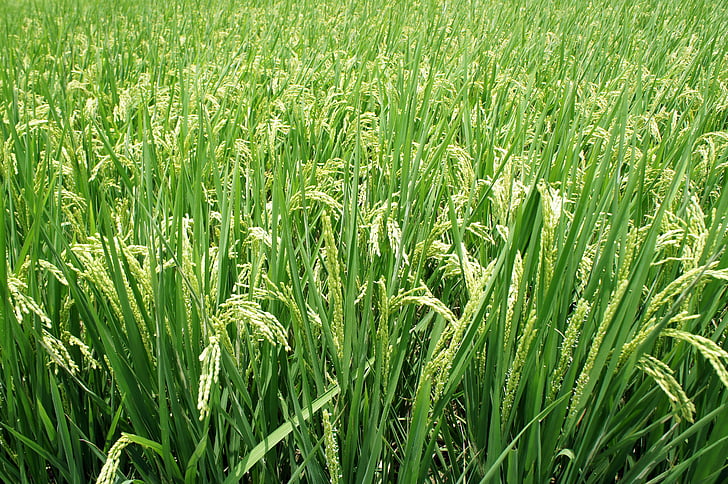
    The Cabinet Committee on Economic Affairs on Wednesday approved computerisation of Primary Agricultural Credit Societies (PACS). Mooted by the ministry of cooperation, this computerisation aims to increase the efficiency of PACS while simultaneously making their operations more transparent.

    PACS constitute the lowest, village level tier of the short-term cooperative credit system and have the 63,000 functional PACS’ have a collective membership of about 13 crore farmers. The other two tiers – the state cooperative banks and the district central cooperative banks have been computerised with NABARD funding and networked using the common banking software.

    Presently, PACS account for 41 per cent or over 3 crore farmers of the kisan credit card loans given by all entities in the country. 95 per cent of these loans to 2.95 crore farmers through PACS are given to the small and marginal farmers.

    This computerisation of the thus-far manual functions of the PACS over the coming five years will cost Rs 2,516 crore and will entail a cloud-based common software and data storage facilities.

    As a last and nodal point for engagement with village communities, PACS will also deliver services like interest subvention for farm loans, agriculture insurance, direct benefit transfers and the provision of agricultural inputs. In the immediate future, the computerisation will help speedier sanction and disbursal of credits.

    The government plans are targeted at crores of small and marginal farmers while also facilitating the PACS’ to diversify their business and undertake multiple activities and services. It is envisaged that this will enable PACS to provide their members with ancillary services.

    Besides improving digitalisation in rural areas, the project will help improve the outreach of the PACS as outlets for banking as well as non-banking activities.

    Human Rights Defenders Write to Guterres; Say Next OHCHR Must be a Rights Champion

    The post of High Commissioner should be filled by someone of high moral standing and personal integrity, and who is independent and impartial and possesses competency and expertise in the field of human rights. It requires a human rights champion who is courageous and principled.

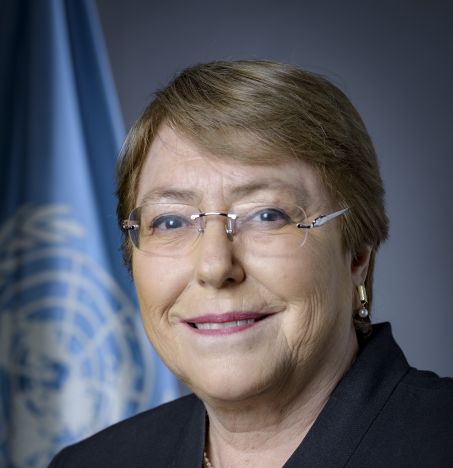
    A joint open letter to UN Secretary General Antonio Guterres from 63 individuals and organizations has urged Guterres to choose a candidate with commitment and track-record for appointment to the office of the UN High Commissioner for Human Rights, following Michelle Bachelet’s departure. Bachelet’s mandate is due to end on 31 August 2022.

    The signatories say that the role of the UN High Commissioner for Human Rights is key for the implementation of the Call to Action for Human Rights and Our Common Agenda, particularly at this point of time, when human rights standards and mechanisms face enormous pressure from powerful governments.

    “The post of High Commissioner for Human Rights is critical to the promotion and protection of human rights globally, particularly at a time when human rights standards and mechanisms face enormous pressure from powerful governments,” the letter reads.

    The organisations and individuals who represent and work closely with human rights defenders, victims of violations and affected communities, as well as with the UN say that the position should be filled by someone of “high moral standing and personal integrity, and who is independent and impartial and possesses competency and expertise in the field of human rights.”

    “It requires a human rights champion who is courageous and principled. Your nominee should have a proven record of effective public advocacy, as well as demonstrated experience working with defenders and victims of violations.”

    Open, transparent selection process

    The letter from the human rights champions says that the post if UN High Commissioner for Human Rights requires a strong commitment to addressing discrimination, inequality, oppression and injustice in all its forms, “as well as combating impunity and pursuing redress and accountability for all human rights violations and abuses, including those committed by the most powerful governments.”

    “The High Commissioner’s role is to be the world’s leading human rights advocate, as distinct from the role of a diplomat or political envoy,” their letter says, adding, “Demonstrating solidarity with victims and publicly calling out abuses should take precedence over friendly dialogue with governments.”

    Stressing that the process of nominating the next High Commissioner is critical to identifying the most qualified candidate and ensuring the credibility of their appointment, the letter says, “This process should be open, transparent and merit-based. It should involve wide and meaningful consultation with independent human rights organisations and human rights defenders.”

    “Human rights are primary values, legal obligations, and indispensable for peace, security and sustainable development,” the letter argues. “It is vital that the next High Commissioner be a compelling leader for human rights within the UN system and throughout the world.”

    The authors of the letter have urged Guterres to defend the independence of the Office of the High Commissioner, including through adequate resourcing.

    Washington’s Rohingya Genocide Declaration Is Symbolic But Meaningful

    Since the United States typically only cooperates with the International Criminal Court when conditions suits it, the genocide declaration gives those within the administration who are pushing for more cooperation, a stronger hand to play.

    By David Simon  /  Yale University

    Earlier this year, US Secretary of State Antony Blinken announced the Biden administration’s recognition of Rohingya persecution in Myanmar — which dates back to at least 2016 — as a genocide. While the implications of the declaration are not yet immediately clear, history provides some guidance as to what they may be.

    The idea of a ’genocide declaration’ is itself a product of governments’ failure to recognise the unfolding of genocides Rwanda and Bosnia in the 1990s, in a manner consistent with the United Nations’ Genocide Convention’s definition of genocide. Both cases were highly ineffective, given US officials’ dithering responses to whether the term could be applied. Samantha Power’s award-winning critique of US policy toward genocide, A Problem from Hell, called for a greater willingness to recognise genocides as they unfold. To do so, she reasoned, was a prerequisite for a more robust response.

    The Bush administration’s 2004 declaration of genocide in Darfur, perpetrated by the Sudanese government and its domestic allies, can be seen as a response to his predecessor’s polices. But its impact was mixed — Congress passed a humanitarian aid measure to support displaced people, while US diplomats lobbied counterparts to join an effort to isolate Sudan’s Bashir regime. This culminated in the dispatch of peacekeeping forces, though they lacked the manpower, equipment and clarity of mandate to do more than simply protect displaced Darfuris. These shortcomings became particularly acute after the government’s brutal 2015 offensive, with the architects of the genocide maintaining power until 2019.

    Symbols do matter

    The context and impact of the Darfur genocide declaration has some parallels with the Rohingya situation. There is little likelihood of a protective force being mobilised, either by international organisations or the United States. As an ally of Myanmar, China’s presence on the Security Council and its shadow over ASEAN renders any multilateral or bilateral protection plan — beyond cross-border support for refugee camps — unlikely. The United States, meanwhile, does not possess the type of diplomatic leverage that could affect regime change in Myanmar.

    Seen in this light, it might be easy to dismiss the State Department’s Rohingya genocide declaration as a symbolic gesture of little consequence. Indeed, some commentators have reacted with scepticism, pointing out that Blinken’s declaration will not directly lead to any further protection of the Rohingya in Myanmar, nor greater support to those languishing in camps in Bangladesh. Though the United States imposed new sanctions on the junta now serving as the Myanmar government in the days following the declaration, they were not contingent upon the genocide determination.

    In a sense, it might be fair to pronounce the Rohingya genocide declaration to be strictly symbolic. Even so, that does not make it meaningless. Symbols, after all, do matter.

    The new US stance affirms the reality which the Rohingya people have been desperately trying to convince others of — that the campaign against them intends to eliminate the Rohingya identity from the face of the earth. Acknowledgment of this fact matters. If genocide is an attempt to destroy a group, denial of that group’s destruction signals complicity.

    Influence diplomatic efforts

    The genocide determination also serves as the basis of historical record. Survivors can point to the US acknowledgment of genocide as evidence of their own vulnerability and, should future episodes of endangerment occur, to call for a quicker protective response. More concretely, the declaration supports the concerted effort to collect evidence of the current genocide for use in foreign, international and domestic courts. Since the United States typically only cooperates with the International Criminal Court when conditions suits it, the genocide declaration gives those within the administration who are pushing for more cooperation, a stronger hand to play.

    A similar logic applies to non-state actors. Meta’s Facebook platform is alleged to have served as an instrument in the incitement of the Rohingya’s genocidal persecution. With investigations ongoing in both international courts, the company should be more cooperative than it has been previously, as doing otherwise could now be perceived as covering for the perpetrators of a recognised genocide.

    The United States’ genocide declaration will also influence its diplomatic efforts, which could impact coalition-building endeavours aiming to isolate the military regime in Yangon. More importantly, it emphasises the argument that durable solutions for Rohingya refugees need to be Rohingya-centred — including the assurance of a safe return to their homes in a context where they possess full rights as citizens, without having to sacrifice their identity.

    Finally, the declaration also matters more broadly to the concept of international human rights. The political gain for the United States from its determination of genocide in Myanmar is, frankly, minimal. But it offers the promise that an increasingly well-articulated set of standards can be consistently applied to an available set of facts — and not merely as a policy of convenience — preventing genocide politics from being trapped in the domain of the cynical.


    This piece has been sourced from the East Asia Forum of the Australian National University.

    David Simon is Director of the Genocide Studies Program at Yale University.


    Image: UNHCR

    Human Rights Council Hears of Situation of Nepal Dalits

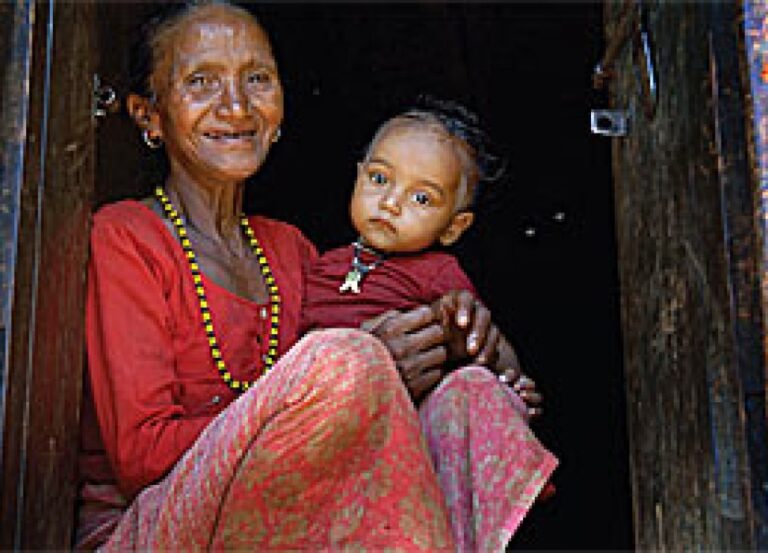
    The UN Expert on Extreme Poverty on Wednesday told the Human Rights Council that the persistence of social discrimination faced by Dalits in Nepal is the overarching factor explaining the high incidence of poverty among them.

    The UN Special Rapporteur on Extreme Poverty, Olivier de Schutter, presented to the Human Rights Council his visit report to Nepal in November-December 2021. Presenting his report during the HRC’s interactive dialogue on Wednesday, he highlighted his concerns about Dalits and their susceptibility to poverty.

    During the interactive dialogue at the Human Rights Council, de Schutter said that “Discrimination is the single most important factor in explaining why Dalit people are disproportionately affected by poverty.” He pointed out that around 42 per cent of Nepal’s Dalit people live below the poverty line. 43.6 per cent of hill Dalits and 38.2 per cent of Terai Dalits live below the poverty line – far above the national poverty rate of 25.2 per cent.

    He said that while the immediate causes of this gap are limited employment opportunities owing to occupation specialisation preventing Dalits from accessing well-paid jobs, as well as lack of access to quality education and land that perpetuates poverty from one generation of Dalit to the next, “the persistence of social discrimination is the overarching factor explaining this situation,” the UN Special Rapporteur said.

    During his visit, de Schutter interacted with Dalit people and community groups, government officials and advocacy groups, including the International Dalit Solidarity Network and its national partners Feminist Dalit Organisation (FEDO) and Dalit NGO Federation (DNF), whose staff met the Rapporteur in country and showed him the situation of Dalits on the ground.

    Activist speak up

    The Human Rights Council’s interactive dialogue was followed by the participation of Dalit activists and IDSN international members. Forum Asia and FEDO delivered an oral statement noting the Rapporteur’s concerns on the continuing practice of debt bondage and bonded labour, which forms part of discriminatory and exclusionary attitudes of the government towards Dalit and indigenous communities.

    The statement also highlighted the fact that the authorities had so far failed to enforce the existing law on bondage, the Bonded Labour (Prohibition) Act 2002. The majority of bonded labourers in Nepal come from the country’s Dalit communities. Moreover, lack of access to essential services and denial of basic safeguards against rights violations make it impossible for Dalit people and people from other minority communities to break from intergenerational cycles of poverty and exclusion, they explained.

    IDSN, together with its partner ,the International Movement Against All Forms of Discrimination and Racism (IMADR) also delivered an oral statement focusing on the rights of Dalit women and girls who are marginalized and made invisible in Nepalese society.

    The two partners’ joint statement highlighted that Nepal, despite having one of the most progressive constitutions in the world on inclusivity, still faces enormous challenges with inclusion of its Dalit communities, especially Dalit women and girls who have long faced many problems including poverty, illiteracy, poor health, malnutrition, early marriage and violence.

    The statement presented a survey conducted by the Nepal Women’s Rehabilitation Center in 2020, demonstrating that Dalit women are most subjected to violence, with 18 per cent of a total of 1,673 cases of violence against women and children.


    Image: The Office of the High Commissioner for Human Rights.

    MoEF, Local Bodies, Discuss Elimination of Single Use Plastics

    Municipal commissioners were informed about the upcoming ban on single use plastics will come into effect from 1 July 2022. A notification to this effect was published on 12 August last year.

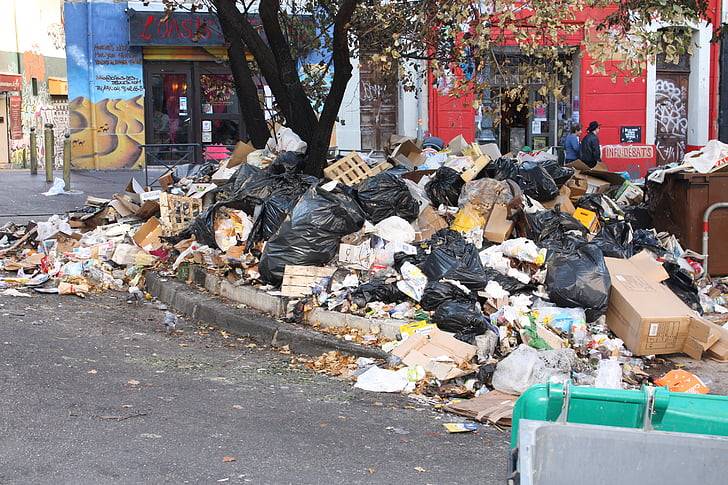
    The Ministry of Environment, Forests and Climate Change on Wednesday organised a meeting with 42 million plus cities and urban agglomerations on the government’s quest to eliminate single use plastic (SUPs) items as well as air quality management.

    The meeting was attended by municipal commissioners and senior state government officials representing the environment ministry, urban development and local self-government Departments and the state pollution control boards.

    The municipal commissioners were informed about the upcoming ban on identified SUP items during the meeting. The ban will come into effect from 1 July 2022. A notification to this effect was published on 12 August last year.

    Municipal commissioners were asked to lead their teams with regard to efforts for enforcement within their jurisdiction. They were requested to help all stakeholders including traders, distributors, retailers as well as consumers to switch over to alternatives of the banned SUP items.

    It was highlighted that the success of the ban will be possible with effective engagement and concerted actions by all the stakeholders.

    The municipal commissioners assured effective enforcement and taking up of constructive engagement with the stakeholders to ensure the effective implementation of the ban and switch over to alternatives to the banned SUP items.


    Image: Hippopx, licensed to use under Creative Commons Zero – CC0

    NITI, RMI Report Says Green Hydrogen Critical to India’s Net-Zero Ambitions

    With emerging global momentum on hydrogen, India can situate this decarbonisation opportunity not just within the context of a low-carbon economy but also as an enabler of energy security and economic development for the nation.

    A report released by NITI Aayog on Wednesday highlights that green hydrogen can substantially spur industrial decarbonisation and economic growth for India in the coming decades.

    The report, Harnessing Green Hydrogen: Opportunities for Deep Decarbonisation in India, launched by NITI Aayog vice chairman Suman Bery and its CEO, Amitabh Kant provides a pathway to accelerate the emergence of a green hydrogen economy, critical for India to achieve its net-zero ambitions by 2070.

    The report, co-authored by NITI Aayog and the clean energy non-profit group, RMI, underscores that green hydrogen — produced by renewable energy through electrolysis of water — will be crucial for achieving decarbonisation of harder-to-abate sectors such as, fertilisers, refining, methanol, maritime shipping, iron and steel and transport.

    Green hydrogen can help abate 3.6 gigatons of cumulative CO2 emissions by 2050, the report says.

    It further states that with emerging global momentum on hydrogen, India can situate this decarbonisation opportunity not just within the context of a low-carbon economy but also as an enabler of energy security and economic development for the nation.

    Do also read: Green Hydrogen: Need To Plan Ahead For An Energy Secure SouthAsia 

    Low cost

    Speaking at the release of the report, NITI Vice Chairman Suman Bery said, “An important message of the report was that green hydrogen can potentially provide a replacement of fossil fuels in industrial processes.” He added, “The next steps at the policy level could involve arriving at the correct mix between mandates/regulations and price instruments.”

    Making a presentation on the report, Amitabh Kant said that the report was an outcome of a detailed study spread over a year. He highlighted the importance of green hydrogen from the point of view of energy security and the need to achieve size and scale to push down costs of green hydrogen. He remarked that, given the right policies, India can emerge as the least cost producer and bring down the price of green hydrogen to US$ 1 per kg by 2030.

    While hydrogen can be produced from multiple sources, India’s distinct advantage in low-cost renewable electricity means that green hydrogen will emerge as the most cost-effective form, NITI Aayog says. The report concludes that hydrogen demand in India could grow more than fourfold by 2050, representing almost 10 per cent of global demand. Given that the majority of this demand could be met with green hydrogen in the long term, the cumulative value of the green hydrogen market in India could reach US $8 billion by 2030.

    Pathways

    Highlighting the opportunity, RMI Managing Director Clay Stranger, said that there is significant global interest in green hydrogen and countries are in the first stages of formulating a strategy and this will ultimately decide the winners and losers of the hydrogen economy. The report can become a reference for policy making in India, he said.

    The report describes pathways that can capture the benefits of green hydrogen. For one, near-term policy measures can bring down the current costs of green hydrogen to make it competitive with the existing grey hydrogen (hydrogen produced by natural gas) prices. Medium-term price targets should be set to guide the industry towards making green hydrogen the most competitive form of hydrogen.

    A second pathway the report suggest is that the government can encourage near term market development by identifying industrial clusters and enacting associated viability gap funding, mandates and targets.

    Besides, opportunities around research and development and manufacturing of components like electrolysers need to be identified and appropriately encouraged with adequate financial mechanisms such as production-linked incentive (PLI) schemes to enable 25 GW of manufacturing capacity of electrolysers by 2028.

    A globally competitive green hydrogen industry can lead to exports in green hydrogen and hydrogen-embedded low-carbon products like green ammonia and green steel that can unlock 95 GW of electrolysis capacity in the nation by 2030.


    Image: IRENA

    Marginalized Since Birth

    Despite legal provisions, the births of many Dalit children in the Madhes are not registered, mostly due to a lack of documentation on the part of the parents.

    By Rajendra Senchurey and Smriti Kafle

    The Government of Nepal has been carrying out vital registrations for the last 45 years but it still hasn’t been able to fully register the births of all children born within the territory of Nepal. Article 39 (1) of the Constitution has enshrined the right of every child to a birth certificate, as has Clause 4 (1) of the Act Relating to Children. Under Nepal’s international obligations, several conventions, including the UN Convention on the Rights of the Child, Universal Declaration of Human Rights, and International Covenant on Civil and Political Rights, have also ensured the right to registration and recognition before the law.

    Despite these national and international commitments, Dalit children from the Madhes, the country’s southern plains, have very low levels of birth registration — almost 50 percent of children are not registered. Consequently, these children become vulnerable to child labour, child marriage, child trafficking, and child prostitution along with denial of access to services like a citizenship certificate when they attain the age of majority. They are also at risk of being treated as adults in judicial proceedings or being separated from families in emergencies.

    Citizenship

    Birth registration unlocks every other right provided to a child by the state but Dalit children, who are already subjected to marginalization, are deprived for these rights. The National Child Policy, in Section 8.1, has mandated the need for a birth registration certificate to join formal schooling. This provision did not in any way bar children without birth certificates from entering schools but it was largely misunderstood and as a result, many children couldn’t get admission as they lacked birth certificates. The Social Security Act, which provides vulnerable children with a nutrition allowance under Section 9, also requires the submission of a birth certificate.

    During our field observation in Dhanusha, we found that Dalits face these problems to a great extent. For a community that has been suppressed, oppressed, and marginalized, such misleading policies and practices further push them towards exclusion, illiteracy, and poverty. Without birth registration, these children go unrecognized as persons in the eyes of the law.

    There are several reasons behind the lack of birth registration, including early marriage, lack of citizenship and/or marriage registration of parents, legal loopholes, and discriminatory interpretations of current legal provisions. People who marry at an early age cannot register their marriage as the law prohibits such marriages. Dalits in the Madhes have also expressed problems relating to a denial of citizenship certificate as they have no proof of domiciling in Nepal due to landlessness, along with no basis to claim citizenship by descent as this lack has been a generational issue. So even in cases where the couple has married legally, the birth registration of their children still encounters obstacles.

    Civil code

    However, even if the state can refuse marriage certificates for whatsoever reason, no such restrictions can be levied on the birth of a child. This argument has been supported by the most recent amendment to the Births, Deaths and Other Personal Events (Registration) Act where the newly added Section 6 (a) (3) provides that nothing will prejudice the birth registration of a child born even from a void marriage. This shows that birth registration is not legally restricted in any form.

    However, the present legal loopholes suggest otherwise. Section 4 of the Births, Deaths and Other Personal Events (Registration) Act suggests that the head of the family, or in their absence an adult member, can be an informant to register a birth. But in practice, elected representatives at the ward level hesitate to register a birth when the informant is other than the father. In fact, when a child is born, it is their duty to register the birth, regardless of the status of the parents, whether the birth is from a voidable marriage, polygamy, out-of-wedlock, live-in relationship, rape, or incest, as mentioned in Section 75 of the National Civil Code. Even children born to foreign citizens have the right to receive a birth certificate.

    Penalty

    In terms of substantive law, neither the constitution nor the acts or regulations related to civil registration and vital statistics are barriers. It is procedural law, including the circular and the annex (forms), that hinders effective birth registration. The form under Schedule 2 of the Births, Deaths and Other Personal Events (Registration) Rules provides a column to mention the citizenship number and marriage registration number of both parents. But, in the case of voidable marriages (including child marriage), there are no marriage registration numbers. And registrars at the local level refuse birth registration for this very reason.

    Furthermore, the Right to Safe Motherhood and Reproductive Health Act entitles children to a birth certificate even when a mother does not disclose the identity of the father. Any hospital or health post that denies the child a birth certificate will face a fine of Rs. 50,000 and up to six months in jail. But still, the situation shows few signs of improvement.

    Birthright

    Raising awareness among the authorities responsible is therefore key, as recommended by the UN Committee on the Rights of the Child in 2016. Existing provisions for birth registration also need to be respected by concerned officials and an amicable environment created. One option for this can be to include the marriage and citizenship numbers as an optional requirement on birth registration forms. The forms themselves should have clear instructions about the necessity to proceed even without the full details of the parents. This change alone can bring about a lot of reformation.

    One mantra that needs to be unquestionably accepted in this regard is, ‘when a child is born, it is their birthright to be registered’. Embedding the importance of birth registration in the formal and informal education system could be largely helpful. Similarly, changing the mindsets of people in government is also important. Policymakers have not realized that data-keeping is more important for them than for the people. Their supply-driven mentality needs to change.

    Denying birth certificates due to a lack of paperwork not only violates the fundamental right of a child but also questions the credibility and commitment of authorities towards the national laws that protect such rights and towards the international commitments that Nepal has agreed to.


    This piece has been sourced from The Record.

    NIUA C-Cube, WRI India launch the India Forum for Nature-Based Solutions

    Ecosystem-based services and Nature-Based Solutions (NbS) are fast emerging as cost-effective and sustainable ways to address climate change induced challenges such as heat, urban flooding, air and water pollution and storm surges. 

    National Institute of Urban Affairs (NIUA) and World Resources Institute India (WRI India) on Wednesday launched a national coalition platform for urban nature-based solution to mainstream ecosystem-based services and nature-based solutions to build urban climate resilience.

    The coalition platform was launched at the Eleventh World Urban Forum in Poland.

    Ecosystem-based services and Nature-Based Solutions (NbS) are fast emerging as cost-effective and sustainable ways to address climate change induced challenges such as heat, urban flooding, air and water pollution and storm surges. Along with mitigating the impact of climate change, NbS also helps in providing multiple ecosystem benefits along with addressing various societal challenges including building resilience of the underserved and vulnerable urban communities who are most affected by climate change induced catastrophes.

    The India Forum for Nature-based Solutions aims to create a collective of NbS entrepreneurs, government entities and like-minded organisations, to help scale urban nature-based solutions by defining a shared language and by communicating benefits that inform actions at the local level including scaling up of existing NbS interventions.

    The effort to scale up urban NbSs will also benefit from driving investment and strengthening delivery mechanisms through multi-stakeholder coordination, besides mainstreaming urban ecosystem-based services and nature-based solutions in India through informing policy, plans and project interventions

    Scaling up urban NbSs

    At the platform launch event, Hitesh Vaidya, Director, NIUA said, “It is important that we have a low-cost and sustainable approach when we work on climate action and increasing our green cover. It is here that nature-based solutions (NbS) should be prioritized as part of India’s resilience and adaptation strategy.”

    The event saw representatives, from core partner organisations such as GiZ India, India Climate Collaborative, The Nature Conservancy, WWF India and Wetlands International, pledge their efforts towards collaboratively achieving the Forum’s objectives.

    Speaking about the Forum, WRI India CEO, Dr O P Agarwal noted, “Combining the strengths and resources of the Forum’s core partners can tackle key capacity challenges faced by the entire ecosystem. This will enable a more focused approach in mainstreaming and scaling urban NbS, while also helping amplify individual organizational efforts.”

    ‘India Forum for Nature-based Solutions’ is led by the National Institute of Urban Affairs’ Climate Centre for Cities (NIUA C-Cube) and anchored by World Resources Institute India (WRI India) under the Cities4Forests initiative. It is supported by Caterpillar Foundation, and UK’s Department of Environment, Food and Rural Affairs (DEFRA) and Norway’s International Climate and Forest Initiative (NICFI).

    As Crises and Obstacles Stack Up, What Next for Funding?

    Opportunity International UK is testing the water with impact investing, having launched a $100m partnership with Oikocredit, a social impact investor, to invest in low-cost private schools and increase access to them through affordable school fee loans.

    By Matt Wenham

    I’ve been a fundraiser for 25 years, and I think it’s fair to say that the last five have been some of the most challenging.

    I remember with pride the national display of unity behind the 2005 Make Poverty History campaign, and I am saddened that now fewer than one in five people in the UK give to such causes. I celebrate the huge strides that we have made as a sector as part of a global effort to reduce extreme poverty. But COVID-19 has reversed many of those gains, and conflict and climate change threaten to do more damage. The loss of the Department for International Development (DFID) and the cuts to the UK aid budget have had a significant impact on INGOs and the communities that we support.

    At Opportunity International UK we have a standing item on our agenda to discuss the health of our funding pipeline, and it is sadly looking thinner than it did a few years ago. In late 2020, a new strategy was developed and there was optimism that the organisation could make a step-change in fundraising, while having a greater impact. Two years on, it is obvious that some of our underlying assumptions were being tested even then.

    What are our options for our funding?

    Do we double down on what we know and do best? A high-touch, high-reward focus on high-net-worth individuals? Or do we put all our efforts into working with large international technical foundations to replace Foreign, Commonwealth and Development Office (FCDO) funding?

    We will continue to do both – but the reality is that there is less funding for international causes coming from donations from the UK public, and every charity is trying hard to engage with the larger foundations for the same reasons we are. The common experience seems to be that large foundations are not seeking new partners, and instead are focusing on those they are working with currently. Or they are developing a new strategy and aren’t looking to fund anything right now.

    If we can’t rely on traditional fundraising, what other funding sources are there?

    As an investor in retail banks, Opportunity International has a chance to influence practice and direct services towards vulnerable, marginalised and traditionally un-banked population groups – refugees, rural farmers, young people and people living with a disability. We can reinvest our dividends in programmes in the countries in which the banks operate.

    But should we use some of our reserves to invest in more banks in this way? Or would it make more sense to create an impact investment product built around our expertise here and attract investment from beyond our network? If we do that, how do we fund the exploration process?

    Bearing those questions in mind, we are testing the water with impact investing, having launched a $100m (£82million) partnership with Oikocredit, a social impact investor, to invest in low-cost private schools and increase access to them through affordable school fee loans. Our aim is for 1.6million more children to access and complete a quality education.

    We would like to test a similar impact investment partnership for our global agriculture programme, getting funds to the many rural small-holding farmers who need investment to improve their land, grow suitable crops, increasing yields and build resilience for families and communities to cope with extreme climate events.

    One of the key challenges for us internally is that Boards are naturally cautious of their fundraisers, spending time on activities that might not bear fruit in the short term. However, we are in the impact business, and we seek sustainability in our programme design, so why don’t we seek sustainability in our funding too?

    What does this mean going forwards?

    We’re still having these discussions internally, and it will be interesting to see how we evolve in response to the new funding paradigm we are all adjusting to. It takes courage to step out in a new direction.

    It looks like we won’t make poverty history any time soon – and maybe we are paying the price for our own naïve hubris all those years ago – so let’s not pretend that we’re in the business of putting ourselves out of business.

    Endowments, patient investment capital and legacy fundraising are all areas that we should be exploring if we are serious about being there for those we serve long into the future. There are many questions still to be answered – and while we might not have all the answers at Opportunity International, together the UK INGO sector can find a new way forward.


    This piece first appeared on the site of Bond UK.

    Matt Wenham is director of philanthropy with Opportunity International. He has 25 years fundraising and communications experience at organisations including Action for Children, Practical Action, the University of Oxford, World Vision UK and most recently at Opportunity International UK.

    Image: Charities Aid Foundation

    Nuclear-Armed Powers Squander $156.000 Every Minute on Their ‘MAD’ Policy

    The US spent a whopping $44.2 billion on nuclear weapons. China was the only other country crossing the ten billion mark, spending 11.7 billion US dollars in 2021. India, Israel and Pakistan also each spent over a billion on their arsenals.

    By Baher Kamal

    They call it MAD: Mutual Assured Destruction. It is about the nuclear-armed powers’ doctrine of military strategy and national security policy. And they spent on their MAD policy more than 156.000 US dollars, every single minute, in just one year–2021.

    According to their MAD doctrine a full-scale use of nuclear weapons by an attacker on a nuclear-armed defender, with second-strike capabilities, would cause the complete annihilation of both the attacker and the defender.

    Nine countries are classified as nuclear-armed powers, with the United States, Russia, China, the United Kingdom and France ranking at the top of the list. Others: India, Israel, Pakistan, and North Korea.

    In its report “Squandered: 2021 Global Nuclear Weapons Spending,” the International Campaign to Abolish Nuclear Weapons (ICAN) reveals that in 2021 – the year before the Russian invasion of Ukraine – nine nuclear-armed states spent 82.4 billion US dollars on these weapons of mass destruction, that’s more than 156,000 US dollars… per minute.

    Specifically, the United States spent three times more than the next in line- a whopping 44.2 billion US dollars, reports ICAN. China was the only other country crossing the ten billion mark, spending 11.7 billion US dollars.

    Russia had the third-highest spending at 8.6 billion US dollars, though the United Kingdom’s 6.8 billion US dollars, and the French 5.9 billion, weren’t so far behind. ICAN adds that India, Israel and Pakistan also each spent over a billion on their arsenals, while North Korea spent 642 million US dollars, according to the 2017 Nobel Peace laureate: ICAN.

    Arsenals expected to grow

    Another prestigious global peace research body, the Stockholm International Peace Research Institute (SIPRI) on 13 June 2022 launched the findings of its Yearbook 2022, which assesses the current state of armaments, disarmament and international security.

    One key finding is that despite a marginal decrease in the number of nuclear warheads in 2021, nuclear arsenals are expected to grow over the coming decade.

    The nine nuclear-armed states — the United States, Russia, the United Kingdom, France, China, India, Pakistan, Israel and North Korea — continue to modernise their nuclear arsenals and although the total number of nuclear weapons declined slightly between January 2021 and January 2022, the number will probably increase in the next decade, SIPRI reports.

    90 per cent of all nukes, in the hands of Russia and USA

    Russia and the USA together possess over 90 per cent of all nuclear weapons.

    Of the total inventory of an estimated 12.705 warheads at the start of 2022, about 9.440 were in military stockpiles for potential use.

    Of those, an estimated 3.732 warheads were deployed with missiles and aircraft, and around 2000—nearly all of which belonged to Russia or the USA—were kept in a state of “high operational alert,” according to SIPRI’s 2022 Yearbook Global nuclear arsenals are expected to grow as states continue to modernise.

    Technology adds greater risks

    The study Emerging technologies and nuclear weapon risks explains that the specific risks posed by advancements in cyber operations and artificial intelligence are still being discovered, but some risks include:

    Cyber attacks could manipulate the information decision-makers get to launch nuclear weapons, and interfere with the operation of nuclear weapons themselves;

    The increased application of advanced machine learning in defence systems can speed up warfare – giving decision-makers even less time to consider whether or not to launch nuclear weapons;

    Countries may be eager to apply new artificial intelligence technologies before they understand the full implications of these technologies;

    It is impossible to eliminate the risk of core nuclear weapons systems being hacked or compromised without eliminating nuclear weapons.

    ‘Eliminate nuclear weapons before they eliminate us’

    “These [nuclear] weapons offer false promises of security and deterrence – while guaranteeing only destruction, death, and endless brinkmanship,” UN Secretary-General António Guterres said on 20 June 2022 in a video message to the First Meeting of States Parties to the UN Treaty on the Prohibition of Nuclear Weapons, in Vienna, Austria.

    “Let’s eliminate these weapons before they eliminate us.”

    The Treaty on the Prohibition of Nuclear Weapons prohibits a full range of nuclear-weapon-related activities, such as undertaking to develop, test, produce, manufacture, acquire, or stockpile nuclear weapons, or other nuclear explosive devices.

    It was adopted in July 2017 and entered into force in January 2021.

    ‘Recipe for annihilation’

    The UN chief also said that the “terrifying lessons” of Hiroshima and Nagasaki are fading from memory, referring to the atomic bombing of these two major Japanese cities during the Second World War.

    However, with more than 13,000 nuclear weapons still held across the globe, “the once unthinkable prospect of nuclear conflict is now back within the realm of possibility.”

    “In a world rife with geopolitical tensions and mistrust, this is a recipe for annihilation. We cannot allow the nuclear weapons wielded by a handful of States to jeopardise all life on our planet. We must stop knocking at Doomsday’s door.”

    The world at Doom’s doorstep

    ICAN has been repeatedly warning that nuclear weapons are the most destructive, inhumane and indiscriminate instruments of mass murder ever created.

    The term “catastrophic humanitarian consequences” describes their unique and horrifying effects on people, including lethal harm to those who are not part of the conflicts in which they are used.

    While the past year offered glimmers of hope that humankind might reverse its march toward global catastrophe, the Doomsday Clock was set at just 100 seconds to midnight, on 20 January 2022 warned the Bulletin of the Atomic Scientists.

    The time is based on continuing and dangerous threats posed by nuclear weapons, climate change, disruptive technologies, and COVID-19.

    “All of these factors were exacerbated by “a corrupted information ecosphere that undermines rational decision making.”

    “US relations with Russia and China remain tense, with all three countries engaged in an array of nuclear modernization and expansion efforts—including China’s apparent large-scale program to increase its deployment of silo-based long-range nuclear missiles; the push by Russia, China, and the United States to develop hypersonic missiles; and the continued testing of anti-satellite weapons by many nations.”

    Founded in 1945 by Albert Einstein and University of Chicago scientists who helped develop the first atomic weapons in the Manhattan Project, the Bulletin of the Atomic Scientists created the Doomsday Clock two years later, using the imagery of apocalypse (midnight) and the contemporary idiom of nuclear explosion (countdown to zero) to convey threats to humanity and the planet.


    This piece has been sourced from Inter Press Service.

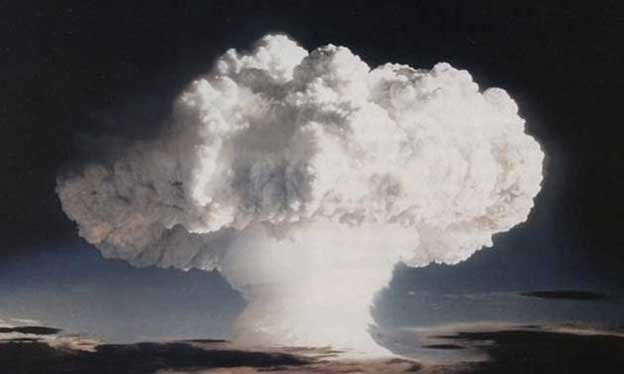
    Image source: US Government.