More

    Ukraine Refugee Rape Survivors Struggle to Access Abortions in Conservative Poland

    As well as complying with the stringent laws on abortions, refugees must also battle widespread stigmatisation fuelled by a vocally anti-abortion government. The right-wing, conservative government pushed through legislation that tightened already stringent abortion laws last year.

    By Ed Holt

    An ultraconservative group in Poland has begun checking with hospitals to find out if Ukrainian refugees are being offered terminations in line with the country’s strict abortion laws amid warnings refugee victims of rape are struggling to access local help and clinical services.

    Increasing evidence of sexual violence by Russian troops in Ukraine has emerged in recent weeks, and in neighbouring states, including Poland, local organisations have reported refugees contacting them about terminations.

    But Poland, which has taken in 3.5 million of the 6.4 million refugees who have fled Ukraine since the Russian invasion, has some of the world’s strictest abortion laws. Terminations are only permitted where the pregnancy threatens the mother’s life or health or if it results from a criminal act, such as rape or incest.

    In the latter instance, confirmation of the crime must be given by prosecutors, and the Catholic fundamentalist organisation Ordo Iuris has admitted it has been checking with hospitals about this.

    Meaningless exceptions

    In a letter seen by Polish media, the group asked a Warsaw hospital to provide information on what terminations due to a criminal act it provided between February 1 and May 11. It also asked whether they had been provided to Polish women or foreigners and if, where necessary, official confirmation of rape had been provided by prosecutors.

    The group admitted it had asked other hospitals for similar information and said it believes pro-choice groups could be using the rape exception to Poland’s almost total ban on abortions to help Ukrainian women skirt round legislation and get what would essentially be “abortion on demand”.

    Katarzyna Gesiak, director of Ordo Iuris’ centre for medical law and bioethics, told Polish news site Wirtualna Polska: “We are aware of what the pro-abortion groups are currently doing. They place a strong emphasis on special treatment of Ukrainian women when it comes to the rape premise [for abortion].

    “[But] Polish law is what it is. It doesn’t matter what country a person comes from. Without [requiring] a prosecutor’s opinion, it would be abortion on demand, without verifying if the woman is telling the truth that she was raped… Some people will always want to take advantage of a given situation.”

    The claim has been dismissed by activists working with victims of gender-based and sexual violence. They say it is so difficult that the exception is meaningless.

    “Getting proof from a public prosecutor that you were raped – think about how long that would take! It would just take so much time. It makes it not worth bothering with,” Mara Clarke of the UK-based Abortion Support Network, which has a Polish-based helpline, told IPS.

    She said that Ordo Iuris’ actions highlighted the challenges women face accessing abortion in Poland.

    Greeted with warnings

    As well as complying with the stringent laws on terminations, they must also battle widespread stigmatisation fuelled by a vocally anti-abortion government with a close relationship to a Catholic Church widely seen as having a great influence on its policies.

    Only last year, the right-wing, conservative government pushed through legislation that tightened already stringent abortion laws.

    Meanwhile, leaders in the Catholic Church, which, although viewed negatively by increasing numbers of Poles, still holds a central position in society – in a survey last year, 92% of the population identified as Catholic – fervently promote their support of strict legislation on terminations.

    Anti-abortion campaigners have been promoting their message among refugees fleeing the war in Ukraine.

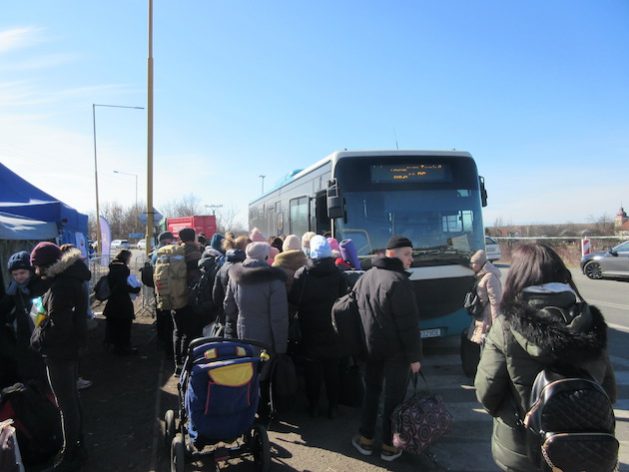
    As they come over border crossings into the country, refugees are greeted with posters and flyers carrying warnings about jail terms for breaking local abortion laws, images of miscarried foetuses, and a quote from Mother Theresa saying: “Abortion is the greatest threat to peace”.

    Rights activists say this can add to the trauma of those arriving from a country with more liberal laws. In Ukraine, terminations upon request are legal for up to 12 weeks and under certain circumstances to 28 weeks. The government also provides emergency contraception without prescription – for those who have suffered sexual violence or who, for other reasons, may want to terminate their pregnancy.

    “It can be quite a shock when a woman from Ukraine arrives in Poland, having previously planned to terminate her pregnancy in Ukraine, or having found herself with another pregnancy that she doesn’t want to continue. There’s a high level of distress finding out that access to services is basically impossible within Poland,” Julie Taft, humanitarian director at the International Planned Parenthood Federation (IPPF), told international media.

    Lack of clarity

    The situation has already come to the attention of the United Nations High Commissioner for Refugees (UNHCR), which has demanded refugees coming to Poland must have access to reproductive rights that meet international standards, including abortions.

    UNHCR communication officer in Poland, Olga Sarrado Mur, said: “We are engaging with government structures and have established co-operation with local civil society groups to ensure victims of gender-based violence, including rape victims, can access the support they need, including legal, psychological, and clinical services, in a timely manner and in a way that does not stigmatise those victims or put them off trying to access them.”

    “Reports suggest that barriers may put some women off trying to access them. This needs to be addressed,” she added.

    However, it is unclear what the UNHCR could do to ensure Ukrainian refugees who are victims of sexual violence can get abortions under Polish law, given the strictness of local legislation. The time it would take for prosecutors to confirm any rape, notwithstanding the difficulties Polish law enforcement would face investigating a crime which would likely have taken place hundreds of miles away in a war zone.


    This piece has been sourced from Inter Press Service.
    Disaster Prevention, Risk Reduction, Critical to Sustainable Future: UN Deputy Chief

    The World Meteorological Organization has been charged with the task of preparing and presenting an action plan aimed at ensuring that every person on earth is covered by early warning systems within five years.

    The world will experience 1.5 medium to large-scale disasters every day through the end of the decade, unless countries ramp up action on prevention and risk reduction, UN Deputy Secretary-General Amina Mohammed said in Bali, Indonesia, on Wednesday.

    Amina Mohammed was speaking at the opening of the Seventh Global Platform for Disaster Risk Reduction – the first international forum on the issue since the start of the COVID-19 pandemic – bringing together governments, the UN and key stakeholders.

    During the three-day meeting, participants will take stock of implementation of a 2015 agreement known as the Sendai Framework, which aims to protect development gains from the risk of disaster.

    The UN deputy chief told participants that the world is looking to the forum for leadership, wisdom, and expertise.

    “The decisions you take can play a significant part in preventing another calamity like the COVID-19 pandemic,” she said.  “We can – and we must – put our efforts firmly behind prevention and risk reduction, and build a safe, sustainable, resilient and equitable future for all.”

    Disasters are already hampering global efforts to achieve the Sustainable Development Goals (SDGs).

    Lessons from COVID-19

    Stressing the need for urgency, Mohammed outlined four areas for action, starting with learning from the pandemic.

    “We must secure better coherence and implementation of the humanitarian development nexus.  That means improving risk governance. Because despite our efforts, risk creation is outpacing risk reduction,” she said.

    Mohammed noted that currently, there are no governance frameworks in place to manage risks and to mitigate their impact. She said the UN’s 2022 Global Assessment Report, published last month, outlines ways in which governance systems can evolve to better address systemic risks.

    The report “makes clear that in a world of uncertainty, understanding and reducing risk, is fundamental to achieving sustainable development”, she added.

    Invest in data

    For her second point, Mohammed emphasized the importance of investing in stronger data capabilities.

    She pointed to “new multilateral instruments” in this area, such as the UN’s Complex Risk Analytics Fund, which supports “data ecosystems” that can better anticipate, prevent, and respond to complex threats, before they turn into full-blown disasters

    “This includes jointly developing risk analysis, and investing in coordination and data infrastructure that enables knowledge-sharing and joint anticipatory action. Such investments will us help us navigate complex risks earlier, faster, and in a more targeted and efficient manner,” she said.

    Support vulnerable countries

    As the world’s Least Developed Countries and Small Island Developing States suffer disproportionately during disasters, her third point centred on giving greater focus to them.

    Disasters in these countries can wipe out decades of development progress and economic growth, she said, with very serious long-term economic and social consequences.

    “We urgently need to step up international cooperation for prevention and disaster risk reduction in the most vulnerable countries and for the most vulnerable communities, including women and girls, people with disabilities, the poor, marginalized and isolated,” she said.

    Early warning saves lives

    Mohammed listed the provision of Early Warning Systems as one example of an effective measure that provides a considerable return on investment.

    She said the UN Secretary-General has asked the World Meteorological Organization (WMO) to present an action plan at the next UN Climate Conference (COP27), to be held in Egypt in November, aimed at ensuring that every person on earth is covered by Early Warning Systems within five years.

    For her final point, Mohammed called for the public and financial sectors to be “risk proofed”, stating that “we need to ‘think resilience’, account for the real cost of disasters and incentivize risk reduction, to stop the spiral of disaster losses.”

    Governments also need to factor disaster risk reduction into financial frameworks, while “alternative measurements, beyond Gross Domestic Product, should take account of disaster risk and resilience.”

    Resilience the mantra

    The President of the UN General Assembly, Abdulla Shahid, said that one overriding lesson of COVID and the climate crisis, was that those who are furthest behind, and who suffer the most are “far to often, wiped away by whatever crisis comes their way.”

    “Our recovery from the pandemic must reflect this knowledge. Resilience, must be our mantra”, he said.

    “Every new building, every new social programme, every budget and every initiative must be designed and executed in a way that reduces risk. It must be embedded into everything we do, from the very beginning, and cross-checked at each step of the way.

    “And the importance, no, the necessity, of this will only increase.”

    Shahid said the requirement now, was for a “transformative recovery” that makes up for gaps in economic, social, and environmental policies, and over production and consumption.

    “Everything about the way we live on this planet, must now be seen through a precautionary lens, ever mindful of the volatility that exists, and laser focused on covering gaps and strengthening defences.

    Such a recovery, he said, “requires more than policy, it requires whole-of-society ownership.”

    Seize the moment

    The Seventh Global Platform for Disaster Risk Reduction was organized by the UN Office for Disaster Risk Reduction (UNDRR) and is being hosted by the Government of Indonesia.

    President Joko Widodo said his country is highly prone to disasters.

    “In 2022, as of May 23, 1,300 disasters have taken place, and in a month, on average, 500 earthquakes happened,” he said.

    “Therefore, at the Global Platform for Disaster Risk Reduction, today, the government of Indonesia offers to the world the concept of resilience as a solution to mitigate all forms of disasters, including pandemics.”

    President Widodo also called on all nations to “commit and be serious” in implementing the Sendai Framework.


    Image: Climate Visuals Countdown / Debsuddha Banerjee

    New Medicines May Help End AIDS – But High Prices and Monopolies Could Keep the Poor Locked Out

    On the current trajectory, most people who need them will not be able to get them any time soon, because high prices and monopolies will keep people in low- and middle-income countries locked out.

    By Matthew Kavanagh and Eamonn Murphy

    Here’s the good news: there are a new set of breakthrough medicines to prevent and treat HIV, known as “long actings” because they can be taken every few months instead of every day, and they are coming on-stream. If, as they are rolled out, they are made available at scale, they could help save many lives and help end the AIDS pandemic.

    But here’s the bad news: on the current trajectory, most people who need them will not be able to get them any time soon, because high prices and monopolies will keep people in low- and middle-income countries locked out. That’s where we are heading – again.

    UNAIDS has been convening some of the world’s leading scientists and researchers. They have emphasised to us that long-acting drugs for prevention are available now – an injection every few months that very effectively protects against HIV transmission. It has been approved in the U.S. and the World Health Organization (WHO) is reviewing it now.

    And in the near term, there are in addition exciting medicines in development for long-acting treatment – which could make it far easier for people to stay on life-long HIV treatment, even when their lives make getting pills every day difficult.

    New HIV prevention tools like long-acting pre-exposure prophylactic (PrEP) are particularly needed to fight the ongoing pandemic. In 2020, a year for which the world had set a collective goal of reducing new infections below 500,000, there were, in fact, 1.5 million; and in too many communities new HIV infections are rising.

    Critical prevention needs

    Long-acting injectable PrEP could help fill critical HIV prevention needs for those facing the worlds’ highest HIV risks – particularly those whose lives, logistics, and legal contexts make accessing and taking oral prep challenging.

    This includes people facing discrimination, including gay men, transgender people, sex workers, and people who use drugs in Africa, Asia, Latin America and the Caribbean, and Eastern Europe. Young African women, facing far higher risks than young men of their age, also need new HIV prevention options.

    Studies have shown many people want a long-acting option, and indeed an estimated 74 million people around the world use long-acting injections to prevent pregnancy. Carefully done studies presented at the Conference on Retroviruses and Opportunistic Infections (CROI) showed long-acting PrEP can prevent more new infections than taking a pill every day.

    If and when WHO endorses its use, the world should move fast to make it available at scale. The best way to ensure this breakthrough science translates into a global game-changer it is to make it available free to all who choose it.

    UN member states agreed a new Political Declaration on HIV/AIDS last year that sets an ambitious goal of getting access to PrEP for 11 million people by 2025. For this to be possible, the governments and institutions who will need to make large scale purchases will need to be able to do so at a price that they can afford.

    Right now, in the US long-acting PrEP costs tens of thousands of dollars. But members of UNAIDS’s Scientific and Technical Advisory Committee (STAC) assess that long-acting prep can be manufactured affordably – tens of dollars instead of tens of thousands. It would be possible for prices to come down whilst ensuring continued profitability for producers.

    Exclusionary, deadly approach

    For treatment, the science is also moving rapidly and promising technologies on the way could be transformative. As of last year, 28.2 million people were on HIV treatment – that’s over 10 billion times every year people living with HIV take a pill.

    But 10 million more people still need access to HIV treatment. If people could choose a pill that lasted a week or an injection that lasted months it would make it easier for many to start and sustain treatment – saving lives and stopping HIV transmission.

    One key structural barrier that jeopardizes widespread access is the fact that production of these medicines is so far monopolized by a tiny number of companies based in a tiny number of countries, keeping prices high and limiting (and concentrating) supply. We know from experience (on the first ARVs, on the second generation of ARVs, and with COVID-19 vaccines and medicines) that this barrier can only be overcome through intervention.

    When treatment for HIV first became available in the late 1990s, ARV monopolies meant the price was over $10,000 per person per year, a price far out of reach for the millions of people living with HIV.

    As a consequence,12 million Africans died. Mass use of antiretrovirals to stop AIDS came only when low- and middle-income countries defied pressure and triggered generic competition, and when global civil society pressured Western governments and companies to stop working to block them.

    That experience led the world to say never again to allowing people in developing countries to be locked out access to life-saving medical technology. But the same exclusionary and deadly approach has denied Africa access to sufficient vaccines in the COVID-19 crisis.

    Sharing, not monopolising knowledge

    And on the current trajectory we are on course to repeat the story with new HIV medicines. It could be years before new drugs becoming available in New York or London ever reach those who need them most in Manila, Freetown, Maputo, Sao Paolo and Port-au-Prince.

    An alternative approach is available, that ensures the translation of science into impact. Manufacturers of HIV drugs can set prices at affordable levels for low- and middle-income countries. To secure this for the long term, generic production in low- and middle-income countries is essential.

    To do that we have to overcome monopolies. Pooling patents and pro-actively transferring technology can make it possible for a wider set of manufacturers in Africa, Asia, and Latin America to make long-acting ARVs at low costs. This must be standard practice – and the sharing of information can start even before regulatory approval for use.

    Of course, price and local production are not the only barriers to ensuring effective use. Some public health systems may require global solidarity and support to purchase commodities, with logistics and storage, training for effective provision, and engaging communities to ensure demand and treatment literacy for retention. The joint United Nations Programme on HIV/AIDS, and our partners, are providing support on all of these.

    Building from emergency action on COVID-19, we need to end inequalities in access right across health technologies, by spurring the best science and getting it to everyone, investing in all health innovations as global public goods.

    To stop today’s pandemics and to prevent future pandemics, it is vital to move from monopolizing knowledge about lifesaving health technologies to sharing it worldwide. We need to reform rules on the protection of intellectual property that have failed us in these pandemics, so that access to life-saving science is no longer dependent on the passport you hold or the money in your pocket.

    Not on track

    We need governments to use their powers to compel sharing of pandemic science and technology and ways to compel companies and countries to use WHO-led mechanisms. We need to separate incentives for innovation from monopolies on manufacturing. Monopolies constrain supply, perpetuate unaffordable prices, widen inequalities, and have proven an unreliable driver of innovation, especially for those health issues that disproportionately impact people living in poverty.

    We need to invest now in building health production capacity all over the world. We need to prioritise investment in universities and other public research institutions to enhance our technical capacity to develop medical technologies for all.

    We can end the AIDS pandemic. And the COVID-19 pandemic. And stop the pandemics of the future. But we are not on track – in part because biomedical breakthroughs are not getting to those who need them most. If we act on long-acting ARVs, many people who would otherwise have acquired HIV will not. People living with HIV who would otherwise have died of AIDS will not. And the well-being and dignity of people at risk of or living with HIV can be enhanced.

    Equitable global access to pandemic-fighting technologies cannot be achieved through the default operation of the market alone. It is policy and practice dependent. Work on those policies cannot wait until all those technologies have been rolled out at scale in rich countries, but needs to be accelerated now.

    Leaders from civil society networks, especially those led by people living with HIV and by key populations, are calling for us to act now to ensure global access to new HIV technologies. We can and we should.

    Shared science will save lives and stop pandemics.


    This piece has been sourced from Inter Press Service

    The writers are Deputy Executive Directors of the United Nations Joint Programme on HIV/AIDS (UNAIDS)

    Reclaiming Our Future

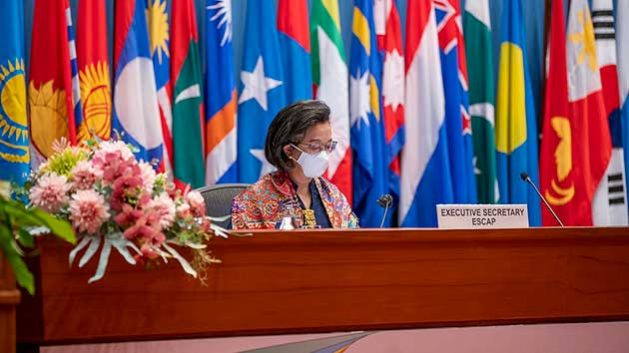
    As ESCAP celebrates its 75th anniversary this year, we find ourselves facing our biggest shared test on the back of cascading and overlapping impacts from the COVID-19 pandemic, raging conflicts and the climate crisis.

    By Armida Salsiah Alisjahbana /  Executive Secretary, UNESCAP

    The Asia-Pacific region is at a crossroads today – to further breakdown or breakthrough to a greener, better, safer future.

    Since the Economic and Social Commission for Asia and the Pacific (ESCAP) was established in 1947, the region has made extraordinary progress, emerging as a pacesetter of global economic growth that has lifted millions out of poverty.
    Yet, as ESCAP celebrates its 75th anniversary this year, we find ourselves facing our biggest shared test on the back of cascading and overlapping impacts from the COVID-19 pandemic, raging conflicts and the climate crisis.

    Few have escaped the effects of the pandemic, with 85 million people pushed back into extreme poverty, millions more losing their jobs or livelihoods, and a generation of children and young people missing precious time for education and training.

    As the pandemic surges and ebbs across countries, the world continues to face the grim implications of failing to keep the temperature increase below 1.5°C – and of continuing to degrade the natural environment. Throughout 2021 and 2022, countries across Asia and the Pacific were again battered by a relentless sequence of natural disasters, with climate change increasing their frequency and intensity.

    More recently, the rapidly evolving crisis in Ukraine will have wide-ranging socioeconomic impacts, with higher prices for fuel and food increasing food insecurity and hunger across the region.

    Rapid economic growth in Asia and the Pacific has come at a heavy price, and the convergence of these three crises have exposed the fault lines in a very short time. Unfortunately, those hardest hit are those with the fewest resources to endure the hardship. This disproportionate pressure on the poor and most vulnerable is deepening and widening inequalities in both income and opportunities.

    The situation is critical. Many communities are close to tipping points beyond which it will be impossible to recover. But it is not too late.

    Dynamic and adaptable

    In this richer yet riskier world, we need more crisis-prepared policies to protect our most vulnerable populations and shift the Asia-Pacific region back on course to achieve the Sustainable Development Goals as the target year of 2030 comes closer — our analysis shows that we are already 35 years behind and will only attain the Goals in 2065.

    To do so, we must protect people and the planet, exploit digital opportunities, trade and invest together, raise financial resources and manage our debt.

    The first task for governments must be to defend the most vulnerable groups – by strengthening health and universal social protection systems. At the same time, governments, civil society and the private sector should be acting to conserve our precious planet and mitigate and adapt to climate change while defending people from the devastation of natural disasters.

    For many measures, governments can exploit technological innovations. Human activities are steadily becoming “digital by default.” To turn the digital divide into a digital dividend, governments should encourage more robust and extensive digital infrastructure and improve access along with the necessary education and training to enhance knowledge-intensive internet use.

    Much of the investment for services will rely on sustainable economic growth, fueled by equitable international trade and foreign direct investment (FDI). The region is now the largest source and recipient of global FDI flows, which is especially important in a pandemic recovery environment of fiscal tightness.

    Intergenerational solidarity

    While trade links have evolved into a complex noodle bowl of bilateral and regional agreements, there is ample scope to further lower trade and investment transaction costs through simplified procedures, digitalization and climate-smart strategies. Such changes are proving to be profitable business strategies. For example, full digital facilitation could cut average trade costs by more than 13 per cent.

    Governments can create sufficient fiscal space to allow for greater investment in sustainable development. Additional financial resources can be raised through progressive tax reforms, innovative financing instruments and more effective debt management. Instruments such as green bonds or sustainability bonds, and arranging debt swaps for development, could have the highest impacts on inclusivity and sustainability.

    Significant efforts need to be made to anticipate what lies ahead. In everything we do, we must listen to and work with both young and old, fostering intergenerational solidarity. And women must be at the centre of crisis-prepared policy action.

    This week the Commission is expected to agree on a common agenda for sustainable development in Asia and the Pacific, pinning the aspirations of the region on moving forward together by learning from and working with each other.

    In the past seven-and-a-half decades, ESCAP has been a vital source of know-how and support for the governments and peoples of Asia and the Pacific. We remain ready to serve in the implementation of this common agenda.

    To quote United Nations Secretary-General Antonio Guterres, “the choices we make, or fail to make today, will shape our future. We will not have this chance again.”


    Armida Salsiah Alisjahbana is the United Nations Under-Secretary-General and Executive Secretary of the Economic and Social Commission for Asia and the Pacific.


    This piece has been sourced from the Inter Press Service

    Climate Change-Made Early Heat Waves in India, Pakistan 30 Times More Likely

    A full health and economic fallout, and cascading effects from the current heat wave will take months to determine, including excess deaths, hospitalisations, lost wages, missed school days, and labour productivity.

    Since the beginning of March, India, Pakistan and large parts of South Asia experienced prolonged heat. But, scientists warn of a repeat of the worst March-April summer ever experienced. They say that the same event would have been about 1C cooler in a pre-industrial climate.

    The scientists are part of the World Weather Attribution group that has analysed historical weather data from India and Pakistan. According to their analysis, March was the hottest in India since records were first documented 122 years ago. Pakistan recorded the highest worldwide positive temperature anomaly during March. Many individual weather stations recorded monthly all-time highs through March.

    The group suggested that early, long heat waves over the huge SouthAsian landmass are rare, once-a-century events.

    “March was extremely dry, with 62 per cent less than normal rainfall reported over Pakistan and 71 per cent below normal over India, making the conditions favourable for local heating from the land surface,” the group said in its report published Monday.

    “The heatwave continued over the month of April and reached its preliminary peak towards the end of the month. 70 per cent of India was affected by the heatwave by 29 April.”

    Scientists from India, Pakistan, the Netherlands, France, Switzerland, New Zealand, Denmark, United States of America and the United Kingdom, collaborated to assess to what extent human-induced climate change altered the likelihood and intensity of the heatwave.

    While heatwaves are not uncommon in the season preceding the monsoon, the very high temperatures so early in the year coupled with much less than average rain have led to extreme heat conditions with devastating consequences for public health and agriculture, their report says.

    Ominous signs

    A complete health and economic fallout, and cascading effects from the current heat wave will however take months to determine, including the number of excess deaths, hospitalisations, lost wages, missed school days, and diminished working hours. Early reports indicate 90 deaths in India and Pakistan, and an estimated 10-35 percent reduced crop yields in Haryana, Uttar Pradesh, and Punjab due to the heatwave.

    The early and prolonged heat particularly affected India’s North West South Pakistan, the so-called bread basket of the subcontinent. Towards the end of April and in May the heatwave also reached more coastal areas and the Eastern parts of India. It was however the early, prolonged and dry heat that made this event stand out as distinct from heatwaves occurring earlier this century.

    Using published peer-reviewed methods, the group analysed how human-induced climate change affected the heat in the early affected region that also experienced a lot less rain than usual. To capture the duration of the event we chose the March-April average of daily maximum temperatures.

    With future global warming, heatwaves like this will become even more common and hotter, their report says. “At the global mean temperature scenario of +2C such a heatwave would become an additional factor of 2-20 more likely and 0.5-1.5C hotter compared to 2022.”

    “We note here that our results are likely conservative; the relatively short lengths of observed data rendered it difficult to consider statistical fits that are more ideal for extremes. In large model ensembles more accurate fits indicate a larger increase in likelihood.”

    It is important to note that this early heatwave was accompanied by much below average rainfall and humidity and thus constituted a dry heatwave, rendering humidity much less important for health impacts than heatwaves occurring late in the season and in coastal areas.

    30-times more likely

    The 2022 heatwave triggered an extreme Glacial Lake Outburst Flood in northern Pakistan and forest fires in India. The report also refers to the shortage of coal in India that led to power outages that, in turn, limited access to cooling, compounding health impacts and forcing millions of people to use coping mechanisms such as limiting activity to the early morning and evening.

    The SouthAsian heatwave also left behind a geopolitical and global trade impact as it led to a reduction of India’s wheat crop yields and led the government to reverse an earlier plan to supplement the global wheat supply impacted by the war in Ukraine.

    The group’s report says, “we estimate the return period to be around 100 years in today’s climate of 1.2C global warming. We thus use 1 in 100 years, as the event definition for the attribution study.”

    “Because of climate change, the probability of an event such as that in 2022 has increased by a factor of about 30,” the report warns.

    In Pakistan and India, extreme heat hits hardest for people who must go outside to earn a daily wage (e.g. street vendors, construction and farm workers, traffic police), and consequently lack access to consistent electricity and cooling at home, limiting their options to cope with prolonged heat stress.

    Rising temperatures from more intense and frequent heat waves will render coping mechanisms inadequate as conditions in some regions meet and exceed limits to human survivability. Mitigating further warming is essential to avoid loss of life and livelihood.


    Image: Hippopx Image, licensed to use under Creative Commons Zero – CC0

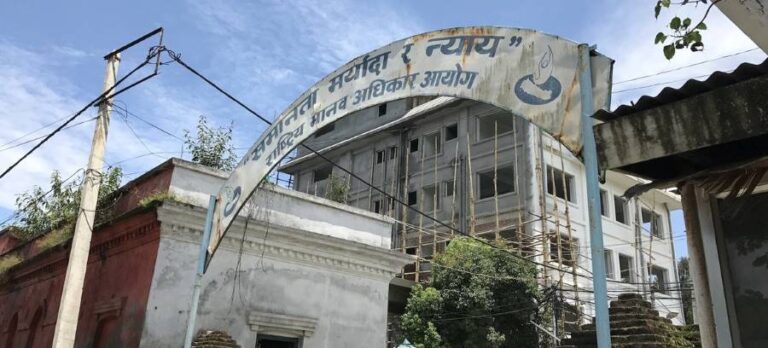
    Nepal Responsible for Torture, Rape and Killing of Teenage Girl: UN Rights Committee

    Nepal’s Truth and Reconciliation Commission Act specifically says that those responsible for sexual violence are not eligible for amnesty. But the authorities are yet to ensure meaningful investigations and prosecutions of perpetrators or an effective reparations program for the victims.

    Authorities in Nepal must thoroughly investigate the February 2004 torture, rape and execution of a 16-year-old girl by security forces during the country’s civil war, the UN Human Rights Committee said in a ruling on Monday.

    The finding follows a complaint submitted to the UN body by the girl’s parents, who said they had exhausted all possible avenues for securing justice and accountability at home.

    Underscores impunity 

    “The gravity of this case has not faded with time even though 18 years have passed, said Committee member Hélène Tigroudja.

    “This is a particularly severe case in which a child was summarily executed. It also underscores the pattern of abuse and rape of girls during the civil war, the lack of investigation and de facto impunity,” she added.

    Nepal’s civil war began in February 1996 and lasted more than a decade. Some 15,000 people were killed in fighting between government forces and the Communist Party of Nepal, known locally as the Maoist rebel group.

    Many women came forward after a comprehensive peace accord was signed between the Nepal government and Maoists in 2006. In most cases, the victims came from isolated villages where there is often no government presence. Many Nepali journalists reported of the women being in fear that further impeded their ability to report or receive redress.

    Accusation and denial 

    In February 2004, the victim, identified only as R.R., was living with her family in the village of Pokhari Chauri in Kavre District, an area where many Maoists had gathered to celebrate the eighth anniversary of the start of the war.

    On the night of 13 February, some 20 uniformed armed soldiers stormed into her home, accusing the secondary school student of being a Maoist, which she denied.

    R.R. had attended the compulsory Maoist Student Union at school but was not involved in any other Maoist activity, according to the UN Committee.

    Interrogation, abuse, death 

    The teenager was taken outside, interrogated, hit with a rifle butt, thrown against a wall, and taken to a cornfield. A soldier was heard telling another soldier to kill her, and three gunshots were then fired.

    R.R.’s parents found her body the next morning.  She had been shot in the eye, head, and chest.  Her salwar, or trousers, was pulled down to mid-thigh, and her blouse was lifted up to her neck.  There were scratches on her breasts.

    The army also killed two other villagers that night.

    Following complaints by her family, the National Human Rights Commission in 2005 found that R.R. was killed by security forces.

    Although Nepal’s Supreme Court endorsed the Commission’s findings in 2009 and ordered a prompt investigation, no one has been held criminally accountable. The main suspect was acquitted four years later due to lack of evidence.

    Appeal for justice 

    R.R.’s parents brought the case to the UN Human Rights Committee which found that Nepal was responsible for her killing and rape, and for subjecting her to physical and mental torture.

    The Committee also criticized the lack of an effective remedy for her parents.

    “Nepal has failed to demonstrate how a 16-year-old unarmed girl posed any threat to a squad of twenty fully armed soldiers, much less justify how her rape and summary execution could serve any legitimate security aim,” said Ms. Tigroudja.

    “Such egregious crimes shall in all instances be timely and thoroughly investigated and their perpetrators, whoever they are, brought to justice and punished”, she added.

    The Human Rights Committee monitors countries’ adherence to the International Covenant on Civil and Political Rights.

    It is made up of 18 members who are independent human rights experts from across the world, who serve in their personal capacity and not as representatives of any States that are party to the treaty.

    Committee members are neither UN staff, nor are they paid by the Organization.

    The government’s Truth and Reconciliation Commission Act specifically says that those responsible for sexual violence are not eligible for amnesty. But the authorities are yet to ensure meaningful investigations and prosecutions of perpetrators or an effective reparations program for the victims.

    “If the government is serious about addressing conflict-era sexual violence and its fallout, it needs to include survivors of sexual violence as part of its compensation package,” Ganguly said. “The complete silence on providing interim relief, combined with the rampant culture of impunity, drives these victims further into invisibility.”

    In addition, Nepal’s 35-day statute of limitations on reporting sexual violence is an unacceptable and illogical additional hurdle to reporting rape. Several victims said they were told that they could not lodge complaints with the police as they were barred by the statute of limitations. The Nepali government should ensure that the Truth and Reconciliation Commission or any other independent commission has a mandate to investigate allegations of conflict-related rape and other forms of sexual violence.

    Abuse documented

    The rights group, Human Rights Watch (HRW) quoted some of the victims of rape and sexual assault in a detailed report it released in 2014.

    One women, going by the pseudonym Madhavi told HRW researchers, “They kicked me as if I was a football from here to there. When the first person raped me, I was conscious. But there were four or five people inside the shed, and I don’t know how many others raped me.”

    Madhavi said she was raped by soldiers in 2004 because her husband supported the Maoists.

    Another woman, whose husband was a Maoist combatant spoke of security forces raping in 2001. The report quoted her with the adopted name Nandita: “I had long hair and they grabbed me and dragged me around. Then they threw me on the ground and kicked me. I saw that my earring was stuck on the boot of one of the men when he kicked me in the head…. They started tearing off my clothes, even my inner garments.”

    A man who nursed his woman after she was raped by the security forces, according to the HRW report said, “It was during the Emergency. There was so much fear. We did not dare say anything to anyone, police, doctors, no one. I just took care of her. She was in a terrible state, sometimes angry, sometimes weeping. For two months, I looked after her. Her body was full of bruises. She was very weak. I took her to hospital, and they gave her three bottles of glucose. But we did not say anything about the rape.”

    HRW documented complaints of rape by Maoist guerrillas too. One such woman went by the name Meena. She said that she was abducted and raped by Maoists in 2004 for refusing to join their programmes.

    “I don’t know if any of these men were ever punished. There was no commander as such of the group of Maoists who held me captive…. It’s hard to describe how helpless I felt. No amount of crying or screaming or begging helped. Everything they did was against my will,” she said.

    Human Rights Must Be At Heart Of Solution To Sri Lanka Crisis

    The severe economic crisis in Sri Lanka shows no signs of ending any time soon, with the country’s newly installed Prime Minister, Ranil Wickremesinghe, warning of more difficult days ahead. Amid violent protests and the imposition of a state of emergency, any solution must involve a robust democracy and respect for human rights.

    Hanaa Singer-Hamdy  / Sri Lanka Resident Coordinator

    Since the start of the crisis, the UN has tracked over 1000 protests. Initially these were peaceful, driven by citizen participation, and characterized by calls for a change of the government: they were joined by political parties, trade unions, student unions, clergy and other interest groups.

    But as the shortage of gas and fuel became more prominent, we started witnessing violent clashes. Some 60 houses were torched, around eight people killed, and several more injured.

    The UN High Commissioner for Human Rights has called on the authorities to independently, thoroughly, and transparently investigate all the attacks that have occurred especially on the peaceful protesters.

    There needs to be a meaningful and inclusive dialogue with all parts of societies, to address the socio-economic challenges faced by the people. Political stability is critical to create an environment for the negotiations with the International Monetary Fund (IMF), which can then set up the way forward for economic recovery.

    We hope that Sri Lanka will find a peaceful solution to the current crisis soon, to alleviate the people’s suffering, strengthen democracy and human rights, and prevent further violence.

    Consistent UN support

    The UN has been working consistently, for many months, to help Sri Lanka to cope. We have tried to support and reduce the impact on the most vulnerable groups, and we are working very closely with the international financial institutes like the World Bank and IMF, to help ensure their support in a coordinated way.

    It’s imperative that we prevent a humanitarian crisis, so we need to be making interventions now.

    The UN has focused its intervention on four critical areas: health, food security, social protection, and economic policy advice.

    On health, we are supporting the ministry of health to closely monitor the available medical supply, and in coordinating the procurement of urgently needed medicine and medical supplies from development partners, including donations to bridge the immediate gaps: because of a lack of foreign currency, the country cannot purchase medicine.

    On food security, we are helping farmers to adopt good agricultural practices, and providing cash transfers, whilst, with regards to social protection, we are advising the government to prioritise certain measures, and how to make the best of the system that is already in place.

    The fourth theme is macro-economic policy advice. The UN has provided a policy memo with key measures to support macro-economic stabilisation and debt sustainability, to support the government in its discussions with the IMF, and other international financial institutions.

    The technical part of the government is still functioning, and my colleagues from all the UN agencies continue to work with their counterparts in the ministries. We are discussing sources of innovative financing, which will help Sri Lanka to recover.

    I hope that there will soon be a government cabinet in place, and that our work will continue, but on the technical level, I think we are all still working quite closely.

    Ensuring an inclusive, sustainable future

    Our work is not only about addressing the immediate needs of the population but also about preventing deep crises. So, we must help to avoid Sri Lanka going backward in areas such as access to health and education.

    Despite what is currently happening, the country is a model in South Asia, so we need to protect whatever gains have been there: this crisis is not only affecting the traditionally vulnerable groups, but also the middle class and lower middle class, which is sliding into the vulnerable category as well.

    We all know the history of Sri Lanka, so we have to maintain a vision of how to ensure social cohesion and resilience at a community level, and we are supporting dedicated policy and research within the Ministry of Finance, focussing on medium-term policy measures.

    Finally, we also recognize that are some broader political and systematic root causes that have perpetrated discrimination, and undermined human rights and these need to be addressed continuously. To that end, we are finalizing the next United Nations Sustainable Development Framework for Sri Lanka, which covers the years from 2023 to 2027, and includes a number of strategies and programmes to help the country to build a more sustainable and inclusive economy that benefits the people and the planet.

    By Deliberately Ignoring Risk, the World Is Bankrolling Its Own Destruction

    The scale and intensity of disasters are increasing, with more people killed or affected by disasters in the last five years than in the previous five years. The number of disaster events too is projected to reach 560 a year – or 1.5 disasters a day – by 2030.

    By Baher Kamal

    It is often said that a pessimistic person is an optimistic but well-informed person. Here, a good number of people may believe that human wit and inventiveness are capable of facing both the current and the looming disasters, like the impact of climate change, for instance.

    Others, instead, may think that such human ingenuity will once more address the symptoms rather than the causes provoking them. Thus, they would be right to want to be informed and aware of the root causes of such disasters in order to push for eradicating them.

    Anyway, and regardless of people’s level of optimism or informed-optimism, the big problem may fall on the shoulders of ruling politicians, those who are so heavily influenced by big business that they act as mere decision-announcers rather than makers.

    Likewise, the other international specialised bodies and the world’s scientific communities, the UN Office for Disaster Risk Reduction (UNDRR) reminds that human activity and behaviour is contributing to an increasing number of disasters across the world, putting millions of lives and every social and economic gain in danger.

    Risks of optimism

    Its Global Assessment Report specifically blames these disasters on “a broken perception of risk based on optimism, underestimation and invincibility,” which leads to policy, finance and development decisions that exacerbate existing vulnerabilities and put people in danger.

    “The world needs to do more to incorporate disaster risk in how we live, build and invest, which is setting humanity on a spiral of self-destruction,” said Amina J. Mohammed, United Nations Deputy Secretary General, who presented the report Global Assessment Report on Disaster Risk Reduction 2022.

    “Disasters can be prevented, but only if countries invest the time and resources to understand and reduce their risks,” said Mami Mizutori, Special Representative of the UN Secretary-General for Disaster Risk Reduction and Head of UNDRR.

    “By deliberately ignoring risk and failing to integrate it in decision making, the world is effectively bankrolling its own destruction. Critical sectors, from government to development and financial services, must urgently rethink how they perceive and address disaster risk.”

    Meanwhile, the scale and intensity of disasters are increasing, with more people killed or affected by disasters in the last five years than in the previous five, and the number of disaster events is projected to reach 560 a year – or 1.5 disasters a day – by 2030.

    Adding to the long term impacts of disasters is the lack of insurance to aid in recovery efforts to build back better. Since 1980, just 40% of disaster-related losses were insured while insurance coverage rates in developing countries were often below 10%, and sometimes close to zero, the report said.

    Deaf ears to reforms

    A growing area of risk is around more extreme weather events as a result of climate change, recalls the group of experts from around the world who drafted the report as a reflection of the various areas of expertise required to understand and reduce complex risks.

    In it, they called for reforming national budget planning to consider risk and uncertainty, while also reconfiguring legal and financial systems to incentivise risk reduction.

    “The good news is that human decisions are the largest contributors to disaster risk, so we have the power to substantially reduce the threats posed to humanity, and especially the most vulnerable among us.”

    Such reiterated calls for reframing countries’ national budgets to address the priority areas, including disaster prevention and risk reduction, have been shockingly falling in deaf ears.

    How else to explain that in 2021, the world military expenditure passed 2 trillion US dollars for the first time, according to the Stockholm International Peace Research Institute (SIPRI), which has also informed that global nuclear arsenals grow as states continue to modernise, thus sharply increasing the dangers of an unimaginable number of victims of the most devastating death machinery?.

    Funding destruction

    Also, how to passively hear that a number of European countries have just doubled their military budgets amidst a looming economic and social crisis impacting their citizens?

    And how else to explain that the world’s politicians continue to subsidise fossil fuel with six trillion dollars in just one year, being fully aware that such fuels harvest the lives of millions of humans?

    “Humanity is waging war on nature. This is senseless and suicidal. The consequences of our recklessness are already apparent in human suffering, towering economic losses and the accelerating erosion of life on Earth,” said António Guterres, the UN Secretary General, in his forward to the recent report “Making Peace with Nature: A scientific blueprint to tackle the climate, biodiversity and pollution emergencies.”

    Meanwhile, none of the agreed global goals for the protection of life on Earth and for halting the degradation of land and oceans has been fully met.

    For instance, by deliberately ignoring the growing risks, three-quarters of the land and two thirds of the oceans are now impacted by human activities.

    And one million of the world’s estimated 8 million species of plants and animals are threatened with extinction, while many of the ecosystem services essential for human well-being are eroding.

    Also, how do you understand that nearly 1 billion people worldwide live in extreme poverty and are disproportionately affected by stoppable and preventable land degradation, which threatens their shelter, food, water and income?


    This piece has been sourced from Inter Press Service.
    COVID-19 Could Derail SDGs for Next Five Years, Says Report

    The progress of SDGs was already lagging before the pandemic. Scientists have warned that COVID-19 will remain uncontrolled in many countries unless coordinated action is taken. Addressing inequities in all sectors is important to avoid a worst-case scenario.

    By Dann Okoth

    The COVID-19 pandemic will further derail the UN’s Sustainable Development Goals (SDGs) in the next five years without concerted action, warn international scientists.

    The SDGs were adopted by the United Nations in September 2015, and call for governments and organisations to achieve goals such as ending poverty, eradicating hunger and ensuring everyone has access to clean, affordable energy by 2030.

    However, the economic fallout on the SDGs from COVID-19 was clear in 2020 when at least 255 million full-time jobs were lost, triggering a hunger crisis, especially in the global South, according to the report Unprecedented and Unfinished: COVID-19 and Implications for National and Global Policy published by the International Science Council (ISC).

    “As society, we are not going to respond to COVID-19 if we don’t understand that the pandemic has an impact on every aspect of our lives,” said Mathieu Denis, acting chief executive and science director at ISC, and co-author of the report.

    The SDGs were already well off track before the pandemic struck, according to the UN’s 2019 SDG scorecard report, the Global Sustainable Development Report, the last one published.

    US$17 trillion

    The report singles out lost education as one of the worst consequences of the pandemic, warning that its effects could be felt until the end of the century.

    Disruptions to schools and universities caused by COVID-19 lockdowns could lead to a lifetime loss of income for an entire generation costing US$17 trillion, the report warns.

    Widespread lockdowns also led to an increase in gender-based violence, while maternal mortality has increased due to overburdening of health facilities, according to the analysis.

    It says COVID-19 could remain largely uncontrolled, with “severe recurrences” in some parts of the world, under a worst-case scenario.

    Low-income countries will also face growing food insecurity and mental health, according to the analysis, compiled by a panel of 20 experts in fields including public health, virology, economics, behavioural science, ethics, and sociology.

    It also highlights the lack of vaccine access in Africa, where only about 16 per cent of the population is fully vaccinated, according to the Africa Centres for Disease Control and Prevention.

    However, Peter Ofware, Kenya country director for the global health and human rights organisation HealthRight International, says the consequences of COVID-19 for some African countries could be even worse than the report predicts.

    “Most economies in Sub-Saharan Africa are in shambles due to COVID-19, it will take these countries decades to recover, if at all,” Ofware told SciDev.Net.

    “Already critical sectors like health continue to suffer as resources are diverted elsewhere to try to rebuild the economies of these countries with devastating consequences for health, including maternal and child health.”

    He says a resurgence of the pandemic and return to the containment measures, including lockdowns, could irreversibly harm low- and middle-income economies.

    “As health stakeholders, we advocate for global vaccine equity and access to affordable antiretrovirals as the [way] forward in containing COVID-19,” he added.

    Single body

    To avoid the worst impacts of the pandemic over the next five years, the report authors call for coordinated, long-term strategies.

    “If we’re going to respond to a pandemic we can’t have a patchwork of differing responses, some good some not so good,” Salim Abdool Karim, ISC vice-chairman and a co-author of the report told SciDev.Net.

    “The UN should form a single body of scientists that advises the UN, and that brings together skills from health, labour, agriculture, and education sectors to provide global guidance of what we need to do so we have cohesion.”


    This piece has been sourced from SciDev.Net

    Vaccination Linked to a Decrease in Long COVID Symptoms

    Vaccination after infection with SARS-CoV-2, the virus responsible for COVID-19, is associated with a decrease in the likelihood of long COVID symptoms, finds a large study of UK adults.

    Vaccination after infection with SARS-CoV-2, the virus responsible for COVID-19, is associated with a decrease in the likelihood of long COVID symptoms, finds a large study of UK adults published by The BMJ on Thursday.

    The study team stress that causality cannot be inferred from this observational evidence, but say vaccination “may contribute to a reduction in the population health burden of long COVID, at least in the first few months after vaccination.”

    Vaccines against COVID-19 are effective at reducing rates of coronavirus infection, transmission, hospital admission, and death. Evidence also suggests that long COVID is reduced in those who are infected after vaccination, but the effectiveness of vaccination on pre-existing long COVID is less clear.

    The latest survey by the UK’s Office for National Statistics (ONS) shows that 44% of people who report long COVID have had symptoms for at least one year, two thirds of whom report symptoms severe enough to limit their day-to-day activities.

    So a team of researchers set out to estimate associations between COVID-19 vaccination and long COVID symptoms in adults with SARS-CoV-2 infection before vaccination.

    They drew on ONS data for 28,356 adults aged 18-69 years (average age 46; 56% women; 89% white) who received at least one COVID-19 vaccine dose after testing positive for SARS-CoV-2 infection.

    They then tracked the presence of long COVID symptoms over a seven month follow-up period (February to September 2021).

    Long COVID symptoms of any severity were reported by 6,729 participants (24%) at least once during follow-up.

    Benefits

    Before vaccination, the odds of experiencing long COVID changed little over time.

    A first vaccine dose was associated with an initial 13% decrease in the odds of long COVID, but it is unclear from the data whether this improvement was sustained over the following 12 weeks, until a second vaccine dose was given.

    Receiving a second vaccine dose was associated with a further 9% decrease in the odds of long COVID, and this improvement was sustained at least over an average follow-up of nine weeks.

    Similar results were also found when the focus was on long COVID severe enough to result in limitation of day-to-day activities.

    Due to the study’s observational design, causality cannot be inferred, nor can the researchers rule out the possibility that other unmeasured factors, such as those related to take-up of a second vaccine dose, may have affected their results.

    However, results were consistent after taking account of sociodemographic characteristics, health related factors, vaccine type, or duration from infection to vaccination, suggesting that they withstand scrutiny.

    As such, the researchers say: “Our results suggest that vaccination of people previously infected may be associated with a reduction in the burden of long COVID on population health, at least in the first few months after vaccination.”

    Many unknowns

    They call for further research into the long term relationship between vaccination and long COVID, and studies “to understand the biological mechanisms underpinning any improvements in symptoms after vaccination, which may contribute to the development of therapeutics for long COVID.”

    Are vaccines a potential treatment for long COVID, ask researchers in a linked editorial?

    They acknowledge that benefits are possible in some individuals not all, and say the mechanisms underpinning changes in long COVID symptoms after vaccination are still not fully understood.

    Until a clear explanation is found, they say vaccination to reduce risk of reinfection remains important for people with long COVID, and evidence so far suggests that benefits are likely to outweigh any harms.

    “Unfortunately, many unknowns remain about the long term prognosis of long COVID, including the effect of booster vaccines or recurrent COVID-19,” they write, and they call for more research “before we can hope to predict the effects of vaccination on individuals.”