More

    In Sri Lanka, Rajapaksas on the Ropes

    With the economy in freefall and basics such as food and fuel in dangerously short supply, there is mounting public anger against a failing and desperate government in Sri Lanka. There were widespread protests over the weekend as hundreds of demonstrators demanded the resignation of the family-run Rajapaksa government.

    By Neville de Silva

    ‘O tempora, O mores,’ said the Roman orator Cicero in a plaintive cry, denouncing the political and social norms of Rome in 70 BC.

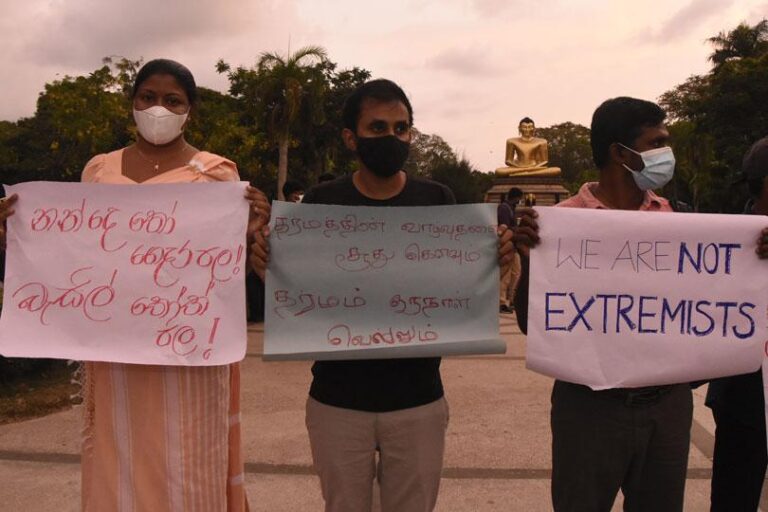
    Unlike the Romans, the people of Sri Lanka have not left it to politicians or orators to berate what they perceive as their rudderless rulers. They have taken on the task themselves, going into the streets to decry their government in words more telling and malignant than any Cicero might have employed.

    They watch as their once ‘Resplendent Isle’ hurtles downhill while confused rulers try desperately to halt its economic and social collapse.

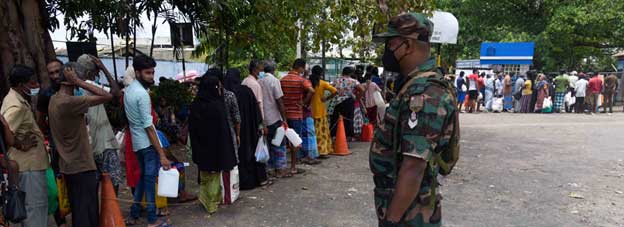
    Never in the history of modern Sri Lanka have its citizens queued up for hours to purchase one or two cylinders of cooking gas or a few litres of petrol or kerosene, while a wide range of other shortages continue to plague the country.

    If in Ukraine civilians are dying because of the indiscriminate and inconsiderate shelling and bombing by Russian forces, in Sri Lanka they are dying on their feet, some having waited for pre-dawn hours for gas or kerosene to cook what little food they could muster to feed hungry families.

    Politically untested

    As I write this in late March, reports are pouring in of four people from different parts of the country dying within 48 hours. That is not surprising at a time when the COVID-19 pandemic still persists.

    But these four died while waiting in gas or petrol queues, three of then possibly of exhaustion after standing for many hours, and the fourth of stab wounds during an altercation at a filling station.

    Today, history is being made. But it is not in the manner the country’s rulers – the powerful Rajapaksa family from Sri Lanka’s south, whose political antecedents go back to the 1930s – ever expected.

    It was over a decade ago that two of the Rajapaksa brothers, Mahinda and Gotabaya, were hailed as national heroes for their roles in defeating the dreaded Tamil Tiger separatists in May 2009, after a war that lasted nearly three decades.

    Mahinda was then Sri Lanka’s president and Gotabaya his defence secretary.

    In April 2019, a couple of days after jihadist terrorists suicide-bombed three churches and three luxury hotels on Easter Sunday, killing some 270 locals and foreigners and wounding another 500, Gotabaya Rajapaksa announced his presidential ambitions.

    Politically untested, the former military officer promised enhanced national security, peace, political stability, economic recovery and preservation of Sri Lanka’s 2500-year Buddhist heritage.

    In November that year he won the presidential election with 6.9 million votes and in August 2020 Mahinda Rajapaksa led the Sri Lanka People’s Party (SLPP) to victory at the parliamentary election with a near two-thirds majority.

    But today, the wheel of political fortune has inexorably turned. Last month in a Gallup-style opinion poll conducted by a local think tank, Veritḗ Research found that only 10 per cent of those queried said they approved of the current government.

    Rudderless Rulers

    Such is public antipathy that long queues of people spending hours to buy a packet or two of powdered milk booed the president as he passed by.

    Some days later busloads of women, led by a former MP whose politician father was shot dead by a rival, who was convicted of murder, sentenced to death but then pardoned by President Gotabaya last year and given a state job, demonstrated outside the president’s private residence.

    Teachers, health workers and other trade union-led employees have gone on strike at various times. Farmers have taken to the streets, protesting against the overnight ban last May of chemical fertiliser that saw some rice fields and other agricultural land abandoned and export-earning tea and rubber plantations affected.

    Over the past months effigies of the Agriculture Minister have been burnt and posters of the Rajapaksas (four of the brothers are cabinet ministers and so is Mahinda’s eldest son) have been torn or otherwise defaced in blatant displays of public anger and lack of faith in a government that has failed to provide uninterrupted supplies of basics such as electricity, gas, petrol and kerosene, and essential foods and medicines.

    It has been said that even the dead have no peace. Some crematoriums have stopped functioning unless they can be certain of continuous electricity.

    Outages lasting several hours have often brought factories to a halt. Thermal power stations and other power providers cannot operate continuously for lack of fuel and coal.

    Fast depleting foreign reserves have forced the government to slash imports of food, fuel, diesel and gas, compelling many restaurants, bakeries and wayside eateries, as well as other enterprises, to close or restrict their business.

    Perilous reserves

    Meanwhile, prices of food and domestic essentials and transport costs have skyrocketed, driving many families, particularly daily wage earners, into penury and starvation.

    With foreign reserves at the end of February down to a perilous US$ 2.3 billion and some $7 billion in sovereign debt and loan repayments due this year – including a $1 billion repayment in July – the Rajapaksas turned from their traditional friend and ally China, which that has extended financial help over the years, to neighbouring nations.

    A currency swap was arranged with Bangladesh, and last month Finance Minister Basil Rajapaksa flew to New Delhi for meetings with Prime Minister Narendra Modi, External Affairs Minister S. Jaishankar and Finance Minister Nirmala Sitharaman, urging help to rescue Colombo from its foreign exchange crisis.

    Never in the history of modern Sri Lanka have its citizens queued for hours to buy fuel.

    New Delhi extended a $1 billion credit facility to enable the purchase of food, medicines and other essentials. This brought Indian assistance this year to $1.4 billion, which included a $400 million currency swap, besides another half a billion-dollar line of credit for essential fuel imports, and the deferring of a $500 million loan and.

    Meanwhile China is considering another $2.5 billion in fresh assistance, China’s ambassador to Sri Lanka stated while turning down the deferment of a loan.

    Even as Sri Lanka turns to Asia’s two leading powers, both vying for larger footprints in Sri Lanka, with its strategic location in the Indian Ocean, Colombo has finally turned to the IMF for belated assistance due to internal dissension in the ruling coalition.

    Political waffling

    President Rajapaksa recently sacked two ministers from minor coalition partners for criticising government policy and attacking Finance Minister Basil Rajapaksa, who has dual Sri Lankan-US citizenship, for bending backwards to satisfy American interests.

    Some other state ministers have resigned or been removed as internal squabbles begin to take a toll on stability in the 11-party coalition.

    With the economy in tatters and mounting public wrath against President Gotabaya Rajapaksa, with calls of ‘Gota Go Home’, he summoned an all-party conference late last month in the hope of showing a friendly face and seeking solutions to the country’s economic catastrophe.

    While some minority Tamil parties which had long sought a meeting with the president and some other parties attended, two of the leading opposition parties, which recently launched anti-government demonstrations, boycotted the conference.

    It started on a sour note, with many-time prime minister Ranil Wickremesinghe putting the Governor of the Central Bank Nivard Cabraal in his place for unwanted political remarks, for which President Rajapaksa apologised to Mr Wickremesinghe.

    To the average Sri Lankan who has witnessed such conferences over the years, including ones to bring racial peace to a divided country, they are an exercise in political waffling and time-wasting.

    With Sri Lanka’s biggest national celebration, the Sinhala and Tamil New Year, in mid-April, the working and middle-class families now struggling to survive wonder whether there will be anything to celebrate. Even if families can get together for the traditional meals, will they be able to cook them for lack of gas and kerosene?

    Will this April be the cruellest month?


    Source: Asian Affairs, London, courtesy Inter Press Service

    Neville de Silva is a veteran Sri Lankan journalist.

    Image:  Sunday Times, Sri Lanka via Inter Press Service
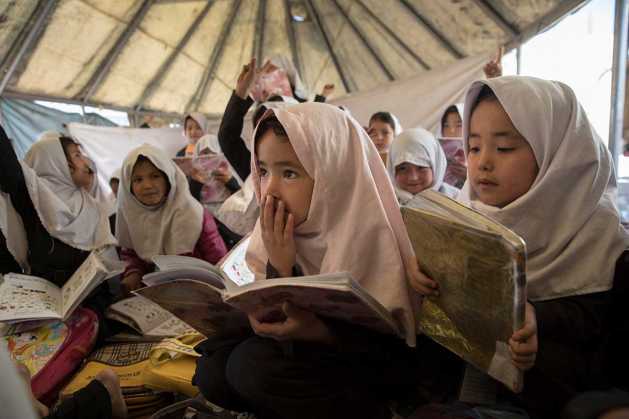
    Islamic Religious leaders Urge Taliban to Reopen all Girls’ Schools

    The conference was organised by the Mutahida Shariat Mahaz, a network of religious leaders and scholars from all Islamic sects from across the country on Saturday.

    Religious leaders from across Afghanistan, including Afghan clerics on Saturday called upon the Afghan Taliban government to open girls’ secondary schools in the war-torn country.

    The call was made in a Religious Leaders’ Conference organized in Peshawar by the Mutahida Shariat Mahaz, a network of religious leader from all Muslim sects.

    Speakers emphasized on the role of motivated and committed religious and community leaders as key to promote girls’ education and transformative change. These leaders could work individually and collectively to convert their commitments into meaningful actions, they concurred. For girls’ education, this social transformation needs to tackle entrenched stereotypical norms and structures that create resistance to change, the leaders said.

    The religious leaders called upon the Taliban leadership to reconsider the decision of keeping the girls secondary schools closed and to reopen all girls’ secondary schools so that all children without any discrimination can continue their education.

    While addressing the conference, Maulana Tayyab Qureshi Chief Khateeb of Khyber Pakhtunkhwa said: “for sustainable change towards girls’ education across the Muslim countries, religious leaders must play their due role at the community level.”

    “We must work in collaboration with other civil society actors in implementing innovative approaches and cultural transformation on girls’ and women’s education and empowerment, in particular to increase the completion rates of girls at all levels of the education across Muslim countries.” He added.

    Declaration

    The speakers also demanded Taliban government to allocate all required resources and facilities to support and promote girls’ access to secondary education and to ensure that girls can access education without any fear and intimidation and can play their role in social, political and economic development of the country.

    While expressing concern over the closure of secondary schools in Afghanistan, Allama Syed Hashim Musavi, religious leader from the minority Hazara community said that “Closure of secondary schools is a deprivation of very basic right to education of girls and women in Afghanistan.”

    He added, “We must facilitate women and girls to avail opportunities for economic growth, for which we call upon the Muslim Governments to invest in improving girls’ education so they have the knowledge, education, skills, and self-confidence to participate in economic spheres.”

    The conference concluded with the declaration endorsed by religious leaders on girls’ secondary education and women empowerment, announcing girls access to all levels of education a fundamental right and calling Muslim Government across the world to redouble efforts and work together to ensure that all children, especially girls, have access to 12 years of safe and quality education.


    Image: Paula Bronstein  /  Human Rights Watch

    Diplomats Voice Concern as Sri Lanka Imposes Emergency to Scuttle Protests

    Given the disturbing human rights track record of the Sri Lankan government, especially under the Rajapaksa family, there is concern among those watching the human rights situation in the island nation.

    Sarah Hulton, the British High Commissioner to Colombo, yesterday voiced her concern over reports of the use of force against journalists and protesters, and the emergency laws imposed in Sri Lanka as protestors filled the streets.

    “A citizen’s right to protest peacefully is an essential part of democracy,” she said.

    The United Stated Ambassador for Colombo, Julie Chung, too spoke up, saying that Sri Lankans have a right to protest peacefully. That right is essential for democratic expression, she said.

    “I am watching the situation closely, and hope the coming days bring restraint from all sides, as well as much needed economic stability and relief for those suffering,” she said after the Rajapaksa government declared emergency late on Friday.

    The American voice is important also because President Gotabaya Rajapaksa’s citizenship has been a political hot potato ever since he contested the elections to the country’s highest office in November 2019. His opponents point to his American citizenship. His family still holds US citizenship. His brother and Finance Minister Basil Rajapaksa and his family are also US citizens.

    Sri Lankans have been protesting against an economic crisis triggered by accelerated printing of money over two years to enforce low interest rates.

    But the emergency and the 36-hour curfew imposed late Friday after people thronged the roads leading to the presidential palace has brought the country under the lens. The emergency and a ban on gatherings have been announced ahead of a planned nation-wide protests.

    Holger Seubert, the German Ambassador to Sri Lanka too supported the demonstrators and questioned the state of emergency.

    “It’s the emergency that brings them to the streets,” he tweeted.

    Hanaa Singer-Hamdy, the UN Resident Coordinator in Sri Lanka spoke of the developments being monitored and that the world body was “concerned by reports of violence in Sri Lanka”.

    Human Rights

    Given the disturbing human rights track record of the Sri Lankan government, especially under the Rajapaksa family, there is concern among those watching the human rights situation in the island nation.

    The European Union delegation in Colombo too raised its concern about the state of emergency.

    “EU strongly urges Sri Lankan authorities to safeguard democratic rights of all citizens, including right to free assembly and dissent, which has to be peaceful,” a tweet from the EU delegation’s official twitter handle read.

    The outspokenness of the diplomatic corps follows a year-long litany by the United Nations Human Rights Council (OHCHR) that has been pressing Colombo to repeal its tough, decades-old anti-terrorism laws, the Prevention of Terrorism Act (PTA).

    It has been argued that the government has used the anti-terrorism laws to quell criticism, suppress dissent and stifle minorities.

    The UN rights chief has already started evidence gathering on the past rights abuses.

    The demands have led to some actions to water down the laws, especially because the EU had tied this with further cooperation – which Sri Lanka needs in big measure ever since the country’s economy has been in the doldrums. For instance, repealing the PTA has been a condition the EU has put forth to renew its annually over US$ 500 million worth trade concession.

    Human Rights defenders too are concerned over the use of undue force by Sri Lankan authorities. Its SouthAsia Regional Director, Yamini Mishra, said, “The Sri Lankan authorities must not use unnecessary or excessive force to disperse protesters who are suffering the consequences of an economic crisis that is spiraling out of control.  Even in instances where protests turn violent, law enforcement officers must only use force where absolutely necessary and it must be strictly proportionate to the situation.

    In the meanwhile, people have staged isolated protests in some area despite the ban on gatherings despite the curfew and over 600 arrested for breaching curfew laws. Many have come out on the roads to demand food or cooking gas, especially as shops are shut due to curfew.

    Some people put up black flags at their houses and street to express their displeasure to the government.

    India Supports UN’s Rights Council ‘Fake News’ Resolution; States Urged to Tackle Hate Speech

    Officially sponsored by Ukraine, Japan, Latvia, Lithuania, Poland, the UK and US, the draft resolution presented to the Geneva forum emphasised the primary role that governments have, in countering false narratives.

    India, on Friday, supported a  UN Human Rights Council plan of action to tackle disinformation. India noted that social media companies had an important role to play in combating fake news, as its impact on society was increasing.

    France insisted that disinformation was increasingly being used to attack human rights activists and journalists and urged more coordination and efforts among States to tackle it.

    For its part, Indonesia said that countering disinformation was a top priority, before insisting that policies were best designed by national authorities, to take into account cultural differences.

    And although China said that disinformation was a common enemy of the international community, it disassociated itself from adopting the draft resolution. China’s representative said there was too little emphasis on the root causes of fake news, and the role of human rights mechanisms.

    Venezuela too declined to approve the text, citing bias and alleging that some of the sponsors of the draft resolution were behind disinformation campaigns.

    A plan of action to tackle disinformation, at the request of Ukraine and with widespread – but not universal – support was eventually adopted by members States at the UN Human Rights Council on Friday.

    The draft resolution presented to the Geneva forum emphasised the primary role that governments have, in countering false narratives. The plan was officially sponsored by Ukraine, Japan, Latvia, Lithuania, Poland, the UK and US.

    It notes “the increasing and far-reaching negative impact on the enjoyment and realization of human rights of the deliberate creation and dissemination of false or manipulated information intended to deceive and mislead audiences, either to cause harm or for personal, political or financial gain”.

    Digital boom

    Although disinformation is not new, modern-day digital tools and social media platforms have allowed maliciously incorrect information to spread widely, before false facts can be challenged and removed.

    At a global level, the dissemination of fake news came to the fore in the early months of the COVID-19 pandemic, with unscientific remedies and anti-vaxxers gaining a massive online following among communities who were taken in by a proliferation of fake news and rumours.

    In Colombia, the UN office there highlighted how several Latin America countries were targeted by enticing WhatsApp messages that said: “Stay home, the UN will bring you food,” in exchange for sharing personal data.

    “It was false, of course. Yet, it led some people to go to the UN office, hoping to be given something to eat,” said Hélène Papper, head of UNIC Colombia.

    Eroding trust in Ukraine

    The problem has also surfaced in the Ukrainian crisis and affected the International Committee of the Red Cross (ICRC), which has said that its lifesaving work there has been undermined by a “deliberate and targeted campaign of misinformation” aimed at destroying the relationship of trust that humanitarians need, to operate independently in war zones.

    “False narratives around humanitarian work are dangerous,” ICRC spokesperson Ewan Watson told journalists in Geneva on Friday, adding that although the misinformation campaign was ongoing, “I’m relieved that it hasn’t translated into an inability to work”.

    The Council’s decisions are not legally binding but carry the weight of the world’s pre-eminent body dedicated to promoting and protecting human rights.


    Image: Jean-Marc Ferré / UN

    A Battle Between a UN Chief & US Envoy Ends in a Decisive Blow with an American Veto

    The independence of the Secretary-General is a longstanding myth perpetuated mostly outside the UN. But as an international civil servant, he is expected to shed his political loyalties at the UN’s revolving door.

    By Thalif Deen / Inter Press Service

    When Madeleine Albright was nominated to be the first female US Secretary of State back in 1997, some apparently questioned whether “a woman could go toe-to-toe with world leaders”.

    “Madeleine quickly quashed those misguided doubts,” says Secretary of State Antony Blinken in a tribute to Albright, who passed away last week at the age of 84. “There was simply no doubt that, in any room, she was as tough as anyone and often tougher. That said, it wasn’t always easy.”

    Blinken says she reportedly walked into her first meeting of the UN Security Council, as the new U.S. ambassador, and quipped: “15 seats and 14 men, all looking at me.”

    But when she saw the plaque at her seat that read THE UNITED STATES OF AMERICA, her nerves vanished: “I thought, if I do not speak today, the voice of the United States will not be heard. When I finally did speak, it was the first time that I represented the country of my naturalization, the place where I belonged.”

    Albright, known for her courageous stand on international diplomacy, was also a feminist and a strong advocate of gender empowerment. When she campaigned for Hillary Clinton, who was running for the US presidency in 2016, Albright famously told a gathering of potential women voters: “There is a special place in hell for women who don’t help other women”.

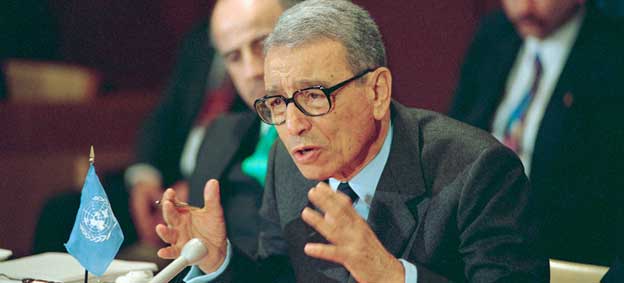
    But when she was the US envoy to the United Nations (1993-1997), Albright had a rousing, long running battle with UN Secretary-General (UNSG) Boutros Boutros-Ghali, a former deputy prime minister of Egypt.

    Manipulated by US

    The independence of the Secretary-General is a longstanding myth perpetuated mostly outside the United Nations. But as an international civil servant, he is expected to shed his political loyalties at the UN’s revolving door at the entrance to the Secretariat building, when he takes office, and more importantly, never seek or receive instructions from any governments.

    But virtually every single Secretary-General—nine at last count– has played ball with the world’s major powers in violation of Article 100 of the UN charter.

    Boutros-Ghali, the only Secretary-General to be denied a second term because of a negative US veto, and who passed away in February 2016, unveiled the insidious political maneuvering that goes inside the glass house by the East River.

    That single negative vote was cast by Albright.

    The US, which preaches the concept of majority rule to the outside world, exercised its veto even though Boutros-Ghali had 14 of the 15 votes in the Security Council, including the votes of the other four permanent members of the Council, namely the UK, France, Russia and China.

    Boutros-Ghali, who held the post of UNSG from 1992-1996, continued a strong contentious relationship with Albright.

    In its tribute to Albright, the New York Times wrote last week that she was largely unknown until Bill Clinton took office as president in 1993 and named her chief delegate to the United Nations.

    Over a four-year period, the Times said, she became a tough advocate for the global interests of the United States. But she and Clinton “clashed repeatedly with Boutros-Ghali over peacekeeping operations in Somalia, Rwanda and the Bosnian civil war.”

    In his 368-page book titled “Unvanquished: A US-UN Saga” (Random House, 1999), Boutros-Ghali provided an insider’s view of how the United Nations and its Secretary-General were manipulated by the Organization’s most powerful member: the United States.

    Diplomacy and deception

    In late 1996, Albright, on instructions from the US State Department, was fixated on a single issue that had dominated her life for months: the “elimination” of Boutros-Ghali, according to the book.

    UN Under-Secretary-General Joseph Verner Reed, an American, is quoted as saying that he had heard Albright say: “I will make Boutros think I am his friend; then I will break his legs.” After meticulously observing her, Boutros-Ghali concluded that Albright had accomplished her diplomatic mission with skill.

    “She had carried out her campaign with determination, letting pass no opportunity to demolish my authority and tarnish my image, all the while showing a serene face, wearing a friendly smile, and repeating expressions of friendship and admiration,” he writes.

    “I recalled what a Hindu scholar once said to me: there is no difference between diplomacy and deception,” wrote Boutros-Ghali, in his book.

    During his tenure, Boutros-Ghali pointed out that although he was accused by Washington of being “too independent” of the US, he eventually did everything in his power to please the Americans. But still the US was the only country to say “no” to a second five-year term for Boutros-Ghali.

    The former UN chief recalls a meeting in which he tells the then US Secretary of State Warren Christopher that many Americans had been appointed to UN jobs “at Washington’s request over the objections of other UN member states.”

    “I had done so, I said, because I wanted American support to succeed in my job (as Secretary-General”), Boutros-Ghali says. But Christopher refused to respond.

    UNICEF appointment

    Boutros-Ghali also recounted how Christopher had tried to convince him to publicly declare that he will not run for a second term as secretary-General. But he refused.

    “Surely, you cannot dismiss the Secretary-General of the United Nations by a unilateral diktat of the United States. What about the rights of the other (14) Security Council members”? he asked Christopher. But Christopher “mumbled something inaudible and hung up, deeply displeased”.

    One of his “heated disputes” with Albright was over the appointment of a new executive director for UNICEF back in 1995. It was a dispute “that seemed to irritate Albright more than any previous issue between us”.

    President Bill Clinton wanted William Foege, a former head of the U.S. Centres for Disease Control, to be appointed UNICEF chief to succeed James Grant.

    “I recalled,” says Boutros-Ghali, “that President Clinton had pressed me to appoint him (Foege) when we had met in the Oval Office in May 1994.”

    “I replied to her (Albright) as I had then to President Clinton: that while Dr. Foege was without doubt a distinguished person, unfortunately, I could not comply,” writes Boutros-Ghali.

    He also told Clinton that he was personally and publicly committed to increasing the number of women in the top ranks of the United Nations, and UNICEF would particularly benefit from a woman’s leadership.

    Since Belgium and Finland had already put forward “outstanding” women candidates – and since the United States had refused to pay its U.N. dues and was also making “disparaging” remarks about the world body – “there was no longer automatic acceptance by other nations that the director of UNICEF must inevitably be an American man or woman.”

    “The U.S. should select a woman candidate,” he told Albright, “and then I will see what I can do,” since the appointment involved consultation with the 36-member UNICEF Executive Board.

    “Albright rolled her eyes and made a face, repeating what had become her standard expression of frustration with me,” he wrote.

    When the Clinton administration kept pressing Foege’s candidature, Boutros-Ghali says that “many countries on the UNICEF Board were angry and (told) me to tell the United States to go to hell.”

    The U.S. administration eventually submitted an alternate woman candidate: Carol Bellamy, a former director of the Peace Corps.

    Although Elizabeth Rehn of Finland received 15 votes to Bellamy’s 12 in a straw poll, Boutros-Ghali said he appealed to the Board president to convince the members to achieve consensus on Bellamy so that the United States could continue a monopoly it held since UNICEF was created in 1947.

    And so, Boutros-Ghali ensured that the post of UNICEF executive director will remain the intellectual birthright of the Americans for the last 75 years—and even to this date.


    This piece has been sourced from Inter Press Service.

    Researchers Document Profound Effect of COVID-19 Pandemic on Women and Girls in Asia-Pacific

    A research by the Joint Asian Population and Development Association (APDA) and the United Nations Population Fund (UNFPA) has documented the impact of the COVID-19 pandemic on women and girls. The research also found promising practices emerged during the pandemic.

    Inter Press Service

    Women and girls in the Asia-Pacific region were adversely impacted due to COVID-19 pandemic responses – with marginalized women and girls’ access to sexual and reproductive health rights (SRHR) and gender-based violence (GBV) services profoundly affected.

    These were the findings of a study by the Asian Population and Development Association (APDA) and the United Nations Population Fund (UNFPA). The research conducted from 2020 to 2021 reviewed SRHR and GBV laws, policies, and implementation practices during the pandemic response in six countries in the Asia-Pacific region, namely Bangladesh, Fiji, India, Indonesia, Nepal, and the Philippines.

    On the upside, UNFPA and APDA research also identified promising practices that emerged during the pandemic. The report makes extensive recommendations to governments to mitigate the impact of emergencies like the pandemic.

    “The failure to classify appropriate sexual and reproductive health rights and gender-based violence services as essential, in line with international human rights law, compounded challenges to accessing such services during the pandemic,” the report states. The Asia-Pacific region’s findings mirrored the global trend which, according to the Special Rapporteur on the right to health, non-COVID-19 related healthcare services had been less available during the pandemic, including sexual and reproductive healthcare services.

    Maternal Health

    “Reduced access to ante- and postnatal care and skilled birth attendance during the pandemic has led to increased maternal mortality,” the study found. For example, in July 2021, Nepal reported a considerable increase in maternal deaths, with 258 women dying due to pregnancy or childbirth between March 2020 and June 2021 – 22 of whom had COVID-19. In the year before March 2020, Nepal recorded 51 maternal deaths.

    The barriers women met included not being able to access ante- and postnatal care and safe delivery health services. Women feared getting COVID-19 at hospitals or health centers. There was a lack of transport, and financial and human resources were diverted from SRHR services to manage the COVID-19 outbreak.

    “Midwives and birth center workers reported an increase in the number of pregnant women considering delivery options outside hospital settings owing to a fear of infection, overcrowding, supply shortages, and visitor restriction,” according to the findings. This resulted in unsafe and unskilled birthing practices, which could lead to maternal and infant deaths.

    This trend was especially problematic for women and girls in disadvantaged and hard-to-reach areas.

    There were several promising practices.

    Bangladesh developed guidelines for essential maternal health services and provided virtual training for healthcare professionals. It also implemented midwifery mentoring to establish and monitor safe maternity services for women.

    There was public interest litigation to establish access to maternal health rights for pregnant women in India and Nepal.

    Indonesia improved and expanded midwifery care.

    The Philippines implemented cash voucher assistance and established obstetric triage tents for pregnant women.

    The report suggests that governments regard antenatal care, skilled birth attendance, and postnatal care as essential services.

    Sexual and Reproductive Health Services

    The report recommends that workers in the SRH and maternal, newborn, child, and adolescent care shouldn’t be re-deployed to other areas. Surveillance systems should alert health ministries of increases in deaths so emergency preventive measures can be put in place and information systems updated to capture declining or missed antenatal and postnatal care appointments. These efforts would prevent maternal and neonatal mortality and morbidity.

    The research found an “unmet need for family planning and contraception because health facilities are closing or limiting services, and women are refraining from visiting health facilities due to fear of COVID-19 exposure or because of travel restrictions.”

    Vital supplies for SRH, including modern contraceptives, were less readily available given the closure of production sites and global and local supply chains disruption.

    In Fiji, India, Indonesia, Nepal, and the Philippines, advocacy prompted governments to develop guidelines on contraceptive availability and continuity of family planning services during the pandemic.

    The Philippines also set up virtual family planning and delivered contraceptives.

    Nepal created community-based family planning services in remote quarantine centers.

    Indonesia developed a model policy to include women and girls with disabilities in the COVID-19 response, and Bangladesh set up mobile phone messaging known as m-health for family planning.

    Apart from declaring family planning an essential service, the researchers recommended that governments move services from clinical settings to communities, such as community-based family planning services.

    Gender-Based Violence

    HIV and other STI prevention also suffered setbacks during the pandemic. Testing and treatment stalled due to travel and transport restrictions, the prohibitive cost of courier services for delivering antiretroviral drugs, and inadequate stock due to global supply chain disruptions.

    “Restrictions in place to limit the spread of COVID-19 not only increase the risks of gender-based violence but also limit the ability of survivors to distance themselves from their abusers and access GBV response services,” the research found.

    There were a range of problems, including accessing help if women were locked down with their abusers, while support services struggled to meet demand.

    “Judicial, police, and health services, which are the first responders for women, are overwhelmed, have shifted their priorities, or are otherwise unable to help. Civil society groups are affected by lockdowns and the reallocation of resources. Some domestic violence shelters are full; others have had to close or have been repurposed as health centers,” the research found.

    Despite the dire consequences of lockdown on gender-based violence, numerous examples of innovative solutions included revising GBV referral pathways.

    Fiji created one-stop service centers, and the Philippines made the clinical management of rape an essential service.

    Bangladesh created one-stop service centers in their hospitals and multiple free 24-hour psychosocial counseling hotlines.

    In Jammu and Kashmir, India, empty hotels and education institutions were designated safe spaces for violence survivors.

    The researchers recommend that information on operational multisectoral gender-based violence response services and referral mechanisms is available and adapted to the COVID-19 context.

    They also recommend that the clinical management of rape is classified as an essential service.

    Trained counselors should also operate multiple free 24-hour psychosocial counseling hotlines.

    Finally, the report noted that it was necessary to “ensure that no one is left behind, for example, people with disabilities; indigenous people; ethnic minorities; lesbian, gay, bisexual, transgender, queer and intersex people; internally displaced people and refugees; people in humanitarian settings; and people facing multiple intersecting forms of discrimination, by ensuring that vulnerable groups have the information they need to respond to GBV and have access to essential life-saving services.”


    This piece has been sourced from Inter Press Service.

    Image: UNFPA

    Sri Lanka Government Clamps Curfew in Colombo to Curb Protests

    People spilled on to the streets overnight, blaming the government for the economic mess and demanding the President’s resignation. The lifting of the blackout coincided live broadcasts of the protests television across living rooms, in turn bringing out more people on the streets.

    With over US$ 50 billion in foreign debts, much to be serviced in the months to come, Sri Lanka’s foreign exchange shortage has led people to come out on the streets. The situation has worsened as armed police used force and fired into crowds of protestors.

    Protests erupted overnight near the presidential palace where protestors were heard calling for President Gotabay Rajapaksa to resign.

    Police, in turn, used water cannon and tear gassed crowds gathered near the president’s house in Mirihana, a suburb of Colombo.

    Protestors shouted slogans demanding the President’s resignation and called to urgently tackle the economic crisis.

    The foreign exchange crisis has resulted in skyrocketing inflation emerging from two years of money printed to keep interest rates down. The once developed SouthAsian economy has now come to a sad pass, evident from the empty shelves in shops, people going hungry and a shortage of fuel and electricity.

    The effort to create a ‘production economy’ by printing money over the past two years only led to inflation – hitting a high of 18.7 per cent this March. The Colombo Consumer Price Index indicated that food prices had risen 30 per cent rise over the past 12 months.

    Blackouts

    The economic crisis has impacted Sri Lankans in ways they never imagined: Hunger, Power cuts, paucity of fuel and even a shortage of paper impacting children’s education, to name a few. But the fun-loving islanders never imagined they would be at each other throats for purchasing fuel.

    Worse, the tourism industry has been worst hit due to the COVID-19 pandemic, throwing many out of jobs and, in turn, chocking a major source of foreign exchange.

    Over the past month, people have been engaged in quarrels and even fist-fights while in queues for fuel under the intense Sri Lankan summer sun.

    Also read: Murder, deaths, runaway inflation – the litany of the common Sri Lankan

    Families have been braving blackouts as the Ceylon Electricity Board has curtailed electricity production due to the shortage of fuel. The dams do not have enough water to generate electricity. Sri Lanka had much stopped coal-fired generation of electricity and those power plants are now unserviceable.

    Sadly for the government, the resumption of power coincided live broadcasts of the protests television across living rooms, in turn bringing out more residents of the capital on to the streets.

    The protests have now led to several parts of Sri Lanka’s capital city, Colombo, being placed under indefinite curfew and police patrolling. The curfew was lifted early morning hours.


    Image: Hippopx, Licensed for use under Creative Commons Zero – CC0

    Solving the Challenges of Robotic Pizza Making

    A new technique could enable a robot to manipulate squishy objects like pizza dough or soft materials like clothing.

    Adam Zewe  |  MIT News Office

    Imagine a pizza maker working with a ball of dough. She might use a spatula to lift the dough onto a cutting board then use a rolling pin to flatten it into a circle. Easy, right? Not if this pizza maker is a robot.

    For a robot, working with a deformable object like dough is tricky because the shape of dough can change in many ways, which are difficult to represent with an equation. Plus, creating a new shape out of that dough requires multiple steps and the use of different tools. It is especially difficult for a robot to learn a manipulation task with a long sequence of steps — where there are many possible choices — since learning often occurs through trial and error.

    Researchers at MIT, Carnegie Mellon University, and the University of California at San Diego, have come up with a better way. They created a framework for a robotic manipulation system that uses a two-stage learning process, which could enable a robot to perform complex dough-manipulation tasks over a long timeframe. A “teacher” algorithm solves each step the robot must take to complete the task. Then, it trains a “student” machine-learning model that learns abstract ideas about when and how to execute each skill it needs during the task, like using a rolling pin. With this knowledge, the system reasons about how to execute the skills to complete the entire task.

    The researchers show that this method, which they call DiffSkill, can perform complex manipulation tasks in simulations, like cutting and spreading dough, or gathering pieces of dough from around a cutting board, while outperforming other machine-learning methods.

    Beyond pizza-making, this method could be applied in other settings where a robot needs to manipulate deformable objects, such as a caregiving robot that feeds, bathes, or dresses someone elderly or with motor impairments.

    “This method is closer to how we as humans plan our actions. When a human does a long-horizon task, we are not writing down all the details. We have a higher-level planner that roughly tells us what the stages are and some of the intermediate goals we need to achieve along the way, and then we execute them,” says Yunzhu Li, a graduate student in the Computer Science and Artificial Intelligence Laboratory (CSAIL), and author of a paper presenting DiffSkill.

    Student and teacher

    The “teacher” in the DiffSkill framework is a trajectory optimization algorithm that can solve short-horizon tasks, where an object’s initial state and target location are close together. The trajectory optimizer works in a simulator that models the physics of the real world (known as a differentiable physics simulator, which puts the “Diff” in “DiffSkill”). The “teacher” algorithm uses the information in the simulator to learn how the dough must move at each stage, one at a time, and then outputs those trajectories.

    Then the “student” neural network learns to imitate the actions of the teacher. As inputs, it uses two camera images, one showing the dough in its current state and another showing the dough at the end of the task. The neural network generates a high-level plan to determine how to link different skills to reach the goal. It then generates specific, short-horizon trajectories for each skill and sends commands directly to the tools.

    The researchers used this technique to experiment with three different simulated dough-manipulation tasks. In one task, the robot uses a spatula to lift dough onto a cutting board then uses a rolling pin to flatten it. In another, the robot uses a gripper to gather dough from all over the counter, places it on a spatula, and transfers it to a cutting board. In the third task, the robot cuts a pile of dough in half using a knife and then uses a gripper to transport each piece to different locations.

    A cut above the rest

    DiffSkill was able to outperform popular techniques that rely on reinforcement learning, where a robot learns a task through trial and error. In fact, DiffSkill was the only method that was able to successfully complete all three dough manipulation tasks. Interestingly, the researchers found that the “student” neural network was even able to outperform the “teacher” algorithm, Lin says.

    “Our framework provides a novel way for robots to acquire new skills. These skills can then be chained to solve more complex tasks which are beyond the capability of previous robot systems,” says Lin.

    Because their method focuses on controlling the tools (spatula, knife, rolling pin, etc.) it could be applied to different robots, but only if they use the specific tools the researchers defined. In the future, they plan to integrate the shape of a tool into the reasoning of the “student” network so it could be applied to other equipment.

    The researchers intend to improve the performance of DiffSkill by using 3D data as inputs, instead of images that can be difficult to transfer from simulation to the real world. They also want to make the neural network planning process more efficient and collect more diverse training data to enhance DiffSkill’s ability to generalize to new situations. In the long run, they hope to apply DiffSkill to more diverse tasks, including cloth manipulation.

    Li’s co-authors include lead author Xingyu Lin, a graduate student at Carnegie Mellon University (CMU); Zhiao Huang, a graduate student at the University of California at San Diego; Joshua B. Tenenbaum, the Paul E. Newton Career Development Professor of Cognitive Science and Computation in the Department of Brain and Cognitive Sciences at MIT and a member of CSAIL; David Held, an assistant professor at CMU; and senior author Chuang Gan, a research scientist at the MIT-IBM Watson AI Lab. The research will be presented at the International Conference on Learning Representations.

    This work is supported, in part, by the National Science Foundation, LG Electronics, the MIT-IBM Watson AI Lab, the Office of Naval Research, and the Defense Advanced Research Projects Agency Machine Common Sense program.


    Reprinted with permission of MIT News 

    Image: Hippopx image licenced to use under Creative Commons Zero – CC0

    Inset image: Courtesy MIT


    War in Ukraine Morally Unacceptable, Politically Indefensible, Militarily Nonsensical

    The Office of the UN High Commissioner for Human Rights has received credible allegations that Russian armed forces have used cluster munitions in populated areas at least 24 times. We are also investigating allegations that Ukrainian armed forces have used such weapons.

    By Michelle Bachelet

    For more than one month now, the entire population of Ukraine has been enduring a living nightmare. The lives of millions of people are in upheaval as they are forced to flee their homes or hide in basements and bomb shelters as their cities are pummelled and destroyed.

    I echo the Secretary-General’s words that “continuing the war in Ukraine is morally unacceptable, politically indefensible and militarily nonsensical.”

    The hostilities must stop, without delay. Today, I call on the Russian Federation to heed the clear and strong calls of the General Assembly and of this Council, and immediately act to withdraw its troops from Ukrainian territory.

    In the five weeks since the conflict began, the UN Human Rights Monitoring Mission in Ukraine has recorded at least 1,189 deaths of civilian men, women and children and at least 1,901 injuries. We know the actual figures are likely far higher. In many places of intensive hostilities, such as Mariupol and Volnovakha, it is very challenging to obtain a comprehensive picture.

    Immeasurable suffering

    The persistent use of explosive weapons with wide area effects in populated areas is of immense concern. These weapons include missiles, heavy artillery shells and rockets, and airstrikes, causing massive destruction of and damage to civilian objects.

    In addition, my Office has received credible allegations that Russian armed forces have used cluster munitions in populated areas at least 24 times. We are also investigating allegations that Ukrainian armed forces have used such weapons.

    Homes and administrative buildings, hospitals and schools, water stations and electricity systems have not been spared. To date we have verified 77 incidents in which medical facilities were damaged to various degrees, including 50 hospitals, 7 psycho-neurological facilities and 20 other medical facilities.

    Overall, 55 medical establishments were damaged, 10 destroyed, and two were looted. Actual numbers are again likely to be considerably higher, and reports of additional incidents are being corroborated by the Human Rights Monitoring Mission.

    Indiscriminate attacks are prohibited under international humanitarian law and may amount to war crimes. The massive destruction of civilian objects and the high number of civilian casualties strongly indicate that the fundamental principles of distinction, proportionality and precaution have not been sufficiently adhered to.

    Civilians are enduring immeasurable suffering, and the humanitarian crisis is critical. In many areas across the country, people urgently need medical supplies, food, water, shelter and basic household items.

    Above all, they need the bombs to cease, and the weapons to fall silent.

    Sheer terror

    In several besieged cities, my Office has noted a significant increase in mortality rates among civilians that can be attributed to disrupted medical care coupled with conflict-related deprivation and stress.

    As one woman from Kyiv told my colleagues: “I cannot imagine the situation of people with diabetes, or those undergoing cancer treatment, for whom it is critical to regularly take medications.”

    People with disabilities and older people face a particularly appalling humanitarian situation. Long-term care facilities are suffering a lack of food, heating, electricity, water and medication. Many residents who have chronic health conditions rely on others for care and are struggling to access bomb shelters or safe areas.

    At least one facility for bedridden patients and other people with disabilities, mostly older people, came under fire while its residents were inside, with dozens of alleged casualties. My colleagues in Ukraine are working to establish the fate and whereabouts of survivors. Moreover, displaced people with disabilities, now staying at poorly equipped temporary facilities, often lack access to health care and rehabilitation services.

    Since the beginning of the invasion, Russian armed forces have carried out attacks and military strikes on and near large cities, including Chernihiv, Kharkiv, Kherson, Mykolaiv, Sievierodonetsk, Sumy, and Mariupol, and the capital, Kyiv.

    In the besieged city of Mariupol, people are living in sheer terror. The situation is worsening by the day, with constant shelling, fighting in the streets and people struggling to survive with the bare minimum of life’s necessities including food, water and medical supplies.

    We are looking into allegations that some Mariupol residents have been forcibly evacuated, either to territory controlled by Russian-affiliated armed groups or to the Russian Federation.

    Forced to flee

    Across Ukraine, the rights to life, liberty and security are under attack. Detention of civilians who are vocal about their pro-Ukrainian views in territories under control of Russian forces has become widespread. My Office has also received allegations of killings of two civilians considered to be affiliated with Russian armed forces or supporting pro-Russian views.

    There are reports of up to 350 conflict-related detentions by Ukrainian law enforcement officers including four cases where the individuals’ relatives received no information regarding their formal arrest, place of detention or their fate.

    Furthermore, I am very concerned by the abundance of videos available through open sources depicting interrogations of prisoners of war that have been taken by both Ukrainian and Russian forces.

    We have also received some allegations of conflict-related sexual violence, including rape, and have been working to corroborate them.

    Additionally, freedom of expression is under threat. Every day, many journalists are courageously fighting a crucial battle against mounting misinformation and propaganda, often putting their own lives at great risk.

    Seven journalists and media workers have been killed since hostilities began, and another 15 have come under armed attack, nine of whom were injured. We have also documented the arbitrary detention and the possible enforced disappearance of 22 journalists and civil society activists who have been vocal against the invasion in Kyiv, Kherson, Luhansk, and Zaporizhzhia regions.

    I underscore that independent, objective reporting of the facts on the ground is absolutely vital to counter the harmful spread of misinformation and propaganda.

    The devastating consequences of this war are being felt far outside Ukraine’s borders. Nearly a quarter of Ukraine’s population have been forced to flee – over 4 million people have fled the country since the attack began, and an estimated 6.5 million are internally displaced.

    Rise in Russophobia

    It is encouraging to see the outpouring of support offered to refugees by Ukraine’s neighbours and other countries around the world. I reiterate that it is essential to extend such welcome to all who have fled, without discrimination.

    I also urge destination countries to provide particular protection to women and children, many of whom face risks of human trafficking, including sexual and labour exploitation.

    Additionally, a rise in Russophobia has been observed in a number of countries. My Office continues to monitor this closely.

    As the war approaches its sixth week, I reiterate my calls for States to respect and uphold international humanitarian and human rights law. I urge humanitarian assistance to be delivered safely and effectively.

    All civilians must be protected and those who wish to leave must be provided safe passage in the direction they choose. And prisoners of war must be treated with dignity and full respect for their rights.

    The UN Human Rights Monitoring Mission in Ukraine will continue its vital monitoring role. Despite the very difficult security context, staff in various parts of the country continue to document civilian casualties, the impact of hostilities and violations of human rights. I take this opportunity to thank all who are working to assist the people of Ukraine.

    Every day, my colleagues are listening to the heart-breaking stories of Ukrainians whose lives have been shattered by these brutal attacks. Just last week, they asked a simple question to a displaced man from a town in eastern Ukraine – “where are you from?” His reply: “I am from Izium, a city that no longer exists.”

    The terror and agony of the Ukrainian people is palpable and is being felt around the world. They want the war to stop, and to return to peace, safety and human dignity.

    It is long past time to heed their call.


    Michelle Bachelet is the UN High Commissioner for Human Rights.

    Image: Chris Melzer  /  UNHCR

    Pakistan’s Fractured Politics Threatens Stability

    After months of intense politicking, Pakistan’s opposition parties — Pakistan Muslim League-Nawaz, Pakistan Peoples Party and Jamiat Ulema-e-Islam — lodged a motion of ‘no confidence’ in the government of Prime Minister Imran Khan on 8 March 2022.

    By Sajjad Ashraf

    The speaker is obliged to call the National Assembly session no more than 14 days after the requisition. According to the rules of procedure, voting on the motion must take place between 26–30 March 2022. The opposition needs the support of 172 members of the house for the motion to succeed.

    This time, the bruised opposition leadership has come back with a vengeance. They have faced a verbal onslaught that labelled them ‘thieves, thugs and looters’ since Khan entered the political sphere in 2011. Over the last few months, the opposition has become confident that it has mustered enough votes to topple the government.

    The limited impact of Khan’s anti-corruption rhetoric and his inept handling of the economy has provided easy ammunition for the opposition. The perception that the military has withdrawn its support of Khan has boosted the opposition’s morale and encouraged them to push ahead.

    Despite the opposition’s resolute campaign, it is the cracks within the ruling Pakistan Tehreek-e-Insaf (PTI) that have caused concern within the ruling party. Businessman turned politician Jahangir Khan Tareen constitutes the most significant roadblock, threatening Khan’s hold on power. Jahangir Khan Tareen was arguably the most important person in the party after Khan, providing finance, resources and a certain charisma in cobbling together the PTI led coalitions at the federal and Punjab level.

    Incompetence. Inconsistency

    The courts barred Jahangir Khan Tareen from holding any public or party office, yet he remained the driving force of PTI’s agenda during its first year in power. The two became estranged due to alleged intrigues within the administration who did not take well to Khan’s heavy reliance on Jahangir Khan Tareen. He is Pakistan’s largest sugar producer and is one of the biggest taxpayers in this tax-starved country.

    With a bigger population than all other parts of the country combined, the province of Punjab holds the key to the formation of government at the federal level in Pakistan.

    Khan chose one of the most lacklustre individuals, Usman Buzdar — an unknown Punjab politician, who joined the PTI a month or so before the 2018 elections as chief minister of the province. Incompetence and inconsistency are hallmarks of his administration. Though Khan continues to keep faith in Buzdar, he may be the one to go if Khan is to survive the ‘confidence’ vote. If the Khan insists that Buzdar stay, the internal party revolt will not subside. In such a state, the allied parties may jump ship too.

    Jahangir Khan Tareen’s group has publicly demanded Buzdar’s removal before any talks can be initiated with the PTI leadership. This includes several sitting ministers and parliamentarians in Buzdar’s government. In another jolt to the PTI, a party bigwig and former senior minister in Punjab — Aleem Khan, considered a close friend of Imran Khan, who also invested a lot of cash in the party — announced his support for Jahangir Khan Tareen.

    Deadlier opponent

    The widening cracks within the PTI may mark the end of the road. A significant chunk of Punjab PTI parliamentarians openly coming out against the Buzdar threatens the government.

    During this fast-paced political theatre, smaller parties and many independents are still non-committal as to which way they will side. Chaudhry Pervaiz Elahi — member of the Pakistan Muslim League (Quaid e Azam Group), speaker of the Punjab assembly and alliance partner of the PTI — is seeking the chief minister’s post of Punjab in return for providing support to either side. But with only 10 seats in a house of 341, this is a heavy demand. Yet, this could be conceded by the opposition if a revolt within the PTI does not materialise.

    The current political brawl will not end with the ‘no confidence’ motion. The economy is so fractured that the short-term populist measures the opposition parties adopted during their terms in office cannot sustain the state structure. They have actually caused the current predicament. Being an import economy, most prices are tied to dollar appreciation.

    Khan was a deadlier foe in opposition than he has proved to be in the government — largely due to the inept governance and corruption within the system rather than his intent. Even most of his detractors admit that he is well-meaning. If he is toppled now, with his proven tenacity and energy, his chances of returning to power will remain high.


    Sajjad Ashraf is a former Pakistani diplomat.

    This piece has been sourced from East Asia Forum of the Australian National University

    Image: @PTIofficial