More

    ADB to Continue Support for Pakistan’s Post-Pandemic Recovery

    Officials reiterated the development bank’s earlier commitment following five days of hectic parleys in Islamabad, led by the ADB’s Vice President.

    As the Asian Development Bank (ADB) Vice President Shixin Chen concluded his five-day long visit to Islamabad, he reiterated the bank’s commitment to support Pakistan’s economic recovery following the COVID-19 pandemic.

    The visiting ADB delegation met with Prime Minister Imran Khan to discuss the bank’s ongoing and emerging areas of support. Member of his cabinet of ministers also attended the meetings.

    The meetings were complemented by a demonstration visit to the National Power Control Centre in Islamabad where the delegation was briefed about the country’s power load management system. ADB is expected to finance the expansion plan of this complex.

    This comes in the middle of political turmoil in the country that threatens the stability of Prime Minister Imran Khan’s government. Interestingly, this also comes ahead of the two-day 48th session of the OIC Council of Foreign Ministers scheduled to begin on Tuesday.

    An obsession with PPP?

    ADB has committed over $36 billion in loans, grants, and other financing instruments to Pakistan since its establishment in 1966. The finances were mainly directed towards food security, social services, infrastructure development, energy generation and transmission and strengthening of the country’s transport network.

    “As one of Pakistan’s largest development partners, ADB has taken swift actions to support Pakistan’s vaccination and social protection efforts, and external financing requirements,” Vice President Shixin Chen said in the backdrop of the COVID-19 pandemic.

    He added, “We will continue to work with the government, private sector, and other partners to further develop green, resilient, and quality infrastructure; enact reforms; and strengthen key sectors vital to the country’s growth.”

    A statement issued by the bank highlighted ADB’s assistance to the country, helping it to improve macroeconomic management and resilience, and infrastructure and urban sector investments that supported rural connectivity and urban services.

    “The bank’s support for public–private partnerships and improved access to finance has boosted competitiveness and private sector development,” it added. ADB is a proponent of the public–private partnerships or PPP model of service provisions, though there are not many successful examples of PPP arrangements in the SouthAsian region.

    “Going forward, ADB will support an enabling environment for digital transformation through policy improvements and strengthening public institutions and relevant infrastructure,” the statement read.


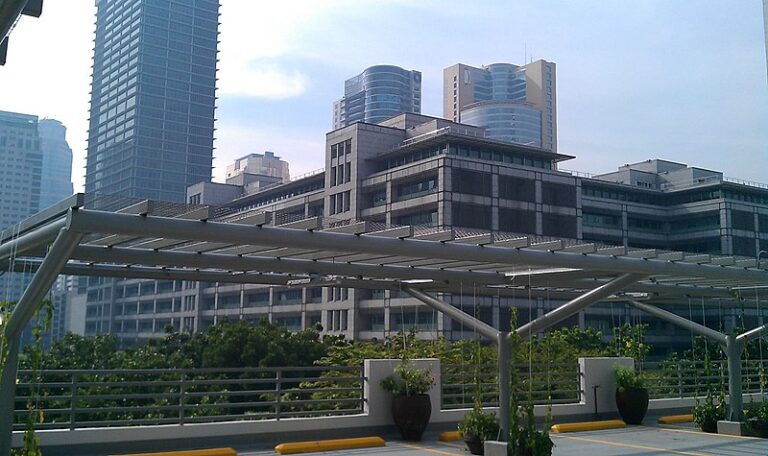
    Image: Wikimedia — Asian Development Bank, Mandaluyong, Philippines

    A fabric that “hears” the heart’s sounds; also speaks

    Inspired by the human ear, a new acoustic fabric developed by engineers as MIT and collaborators at Rohde Island School of Design converts audible sounds into electrical signals.

    By Jennifer Chu    |    MIT News Office

    Having trouble hearing? Just turn up your shirt. That’s the idea behind a new “acoustic fabric” developed by engineers at MIT and collaborators at Rhode Island School of Design.

    The team has designed a fabric that works like a microphone, converting sound first into mechanical vibrations, then into electrical signals, similarly to how our ears hear.

    All fabrics vibrate in response to audible sounds, though these vibrations are on the scale of nanometers — far too small to ordinarily be sensed. To capture these imperceptible signals, the researchers created a flexible fibre that, when woven into a fabric, bends with the fabric like seaweed on the ocean’s surface.

    The fibre is designed from a “piezoelectric” material that produces an electrical signal when bent or mechanically deformed, providing a means for the fabric to convert sound vibrations into electrical signals.

    The fabric can capture sounds ranging in decibel from a quiet library to heavy road traffic, and determine the precise direction of sudden sounds like handclaps. When woven into a shirt’s lining, the fabric can detect a wearer’s subtle heartbeat features. The fibres can also be made to generate sound, such as a recording of spoken words, that another fabric can detect.

    Monitor heart, respiratory condition

    A study detailing the team’s design appears in Nature. Lead author Wei Yan, who helped develop the fibre as an MIT postdoc, sees many uses for fabrics that hear.

    “Wearing an acoustic garment, you might talk through it to answer phone calls and communicate with others,” says Yan, who is now an assistant professor at the Nanyang Technological University in Singapore. “In addition, this fabric can imperceptibly interface with the human skin, enabling wearers to monitor their heart and respiratory condition in a comfortable, continuous, real-time, and long-term manner.”

    Yan’s co-authors include Grace Noel, Gabriel Loke, Tural Khudiyev, Juliette Marion, Juliana Cherston, Atharva Sahasrabudhe, Joao Wilbert, Irmandy Wicaksono, and professors John Joannopoulos and Yoel Fink at MIT, along with Anais Missakian and Elizabeth Meiklejohn at Rhode Island School of Design (RISD), Lei Zhu from Case Western Reserve University, Chu Ma from the University of Wisconsin at Madison, and Reed Hoyt of the U.S. Army Research Institute of Environmental Medicine.

    Sound layering

    Fabrics are traditionally used to dampen or reduce sound; examples include soundproofing in concert halls and carpeting in our living spaces. But Fink and his team have worked for years to refashion fabric’s conventional roles. They focus on extending properties in materials to make fabrics more functional. In looking for ways to make sound-sensing fabrics, the team took inspiration from the human ear.

    Audible sound travels through air as slight pressure waves. When these waves reach our ear, an exquisitely sensitive and complex three-dimensional organ, the tympanic membrane, or eardrum, uses a circular layer of fibres to translate the pressure waves into mechanical vibrations. These vibrations travel through small bones into the inner ear, where the cochlea converts the waves into electrical signals that are sensed and processed by the brain.

    Inspired by the human auditory system, the team sought to create a fabric “ear” that would be soft, durable, comfortable, and able to detect sound. Their research led to two important discoveries: Such a fabric would have to incorporate stiff, or “high-modulus,” fibres to effectively convert sound waves into vibrations. And, the team would have to design a fibre that could bend with the fabric and produce an electrical output in the process.

    With these guidelines in mind, the team developed a layered block of materials called a preform, made from a piezoelectric layer as well as ingredients to enhance the material’s vibrations in response to sound waves. The resulting preform, about the size of a thick marker, was then heated and pulled like taffy into thin, 40-meter-long fibres.

    Lightweight listening

    The researchers tested the fibre’s sensitivity to sound by attaching it to a suspended sheet of mylar. They used a laser to measure the vibration of the sheet — and by extension, the fibre — in response to sound played through a nearby speaker. The sound varied in decibel between a quiet library and heavy road traffic. In response, the fibre vibrated and generated an electric current proportional to the sound played.

    “This shows that the performance of the fibre on the membrane is comparable to a handheld microphone,” Noel says.

    Next, the team wove the fibre with conventional yarns to produce panels of drapable, machine-washable fabric.

    “It feels almost like a lightweight jacket — lighter than denim, but heavier than a dress shirt,” says Meiklejohn, who wove the fabric using a standard loom.

    She sewed one panel to the back of a shirt, and the team tested the fabric’s sensitivity to directional sound by clapping their hands while standing at various angles to the shirt.

    “The fabric was able to detect the angle of the sound to within 1 degree at a distance of 3 meters away,” Noel notes.

    The researchers envision that a directional sound-sensing fabric could help those with hearing loss to tune in to a speaker amid noisy surroundings.

    The team also stitched a single fibre to a shirt’s inner lining, just over the chest region, and found it accurately detected the heartbeat of a healthy volunteer, along with subtle variations in the heart’s S1 and S2, or “lub-dub” features. In addition to monitoring one’s own heartbeat, Fink sees possibilities for incorporating the acoustic fabric into maternity wear to help monitor a baby’s fetal heartbeat.

    Also as a speaker

    Finally, the researchers reversed the fibre’s function to serve not as a sound-detector but as a speaker. They recorded a string of spoken words and fed the recording to the fibre in the form of an applied voltage. The fibre converted the electrical signals to audible vibrations, which a second fibre was able to detect.

    In addition to wearable hearing aids, clothes that communicate, and garments that track vital signs, the team sees applications beyond clothing.

    “It can be integrated with spacecraft skin to listen to (accumulating) space dust, or embedded into buildings to detect cracks or strains,” Yan proposes. “It can even be woven into a smart net to monitor fish in the ocean. The fibre is opening widespread opportunities.”

    “The learnings of this research offers quite literally a new way for fabrics to listen to our body and to the surrounding environment,” Fink says. “The dedication of our students, postdocs and staff to advancing research which has always marveled me is especially relevant to this work, which was carried out during the pandemic.”

    This research was supported in part by the US Army Research Office through the Institute for Soldier Nanotechnologies, National Science Foundation, Sea Grant NOAA.


    Reprinted with permission of MIT News 

    Image: Courtesy MIT

    New HIV Injection a Gamechanger

    People at risk of HIV in Brazil and South Africa will be among the first to benefit from a highly effective, long-acting injectable HIV preventive treatment through two large-scale operational projects funded by global health agency Unitaid.

    The first injection to offer long-lasting protection against HIV is being rolled out in South Africa and Brazil. This will be an alternative to daily medication, says the WHO-affiliate, UNITAID.

    Hosted by the World Health Organization (WHO), UNITAID announced the groundbreaking development on Friday, which it is hoped will boost HIV prevention worldwide.

    Long-acting cabotegravir is a new HIV prevention method that provides eight weeks of continuous protection against HIV infection through a single intramuscular injection.

    This provides an alternative to oral pre-exposure prophylaxis (PrEP), which can reduce the risk of HIV infection by 99 per cent, but only when taken as prescribed: either once a day, or before and after sex for cisgender men.

    Developed by ViiV Healthcare and approved by the US health authority, the injection, whose active ingredient is cabotegravir, offers two months of protection against HIV.

    “But we need urgent action to ensure people everywhere can benefit,” said UNITAID Executive Director Philippe Duneton.

    More viable option 

    Like other HIV treatments, the anti-retroviral medication works by stopping the virus from replicating in the body, effectively reducing the viral load.

    Although existing oral medication – known as “oral pre-exposure prophylaxis,” or oral PrEP – can prevent HIV in 99 per cent of cases, uptake has been slow and targets to reduce new infections have been missed.

    This is often because people with HIV fear stigma, discrimination or intimate partner violence if they take the pill every day, said UNITAID spokesperson Herve Verhoosel.

    “Long-acting PrEP could have a game-changing impact, improving choice and making HIV prevention a more viable option for more people,” he said.

    However, cautioned Mr. Verhoosel, the high cost of the injection – believed to be around US $20,000 a year for wealthy nations – would be prohibitive elsewhere, so “adequate and affordable supply must be ensured so people everywhere can benefit without delay.”

    Lack of Money to Import Paper Leads to Postponement of School Examination

    The past week has seen public protests outside the presidential office and a social media campaign trending as “Gota Go Home” that calls on the President to resign.

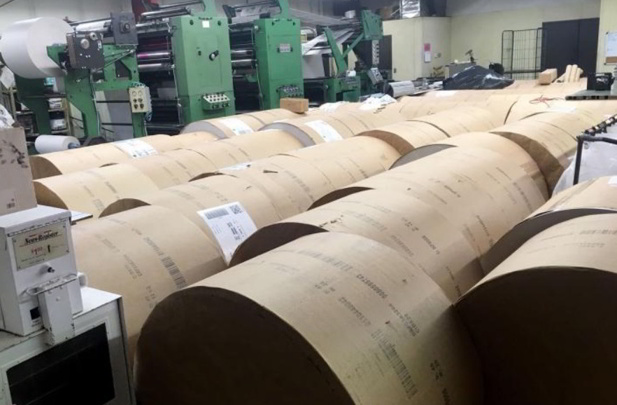
    Sri Lanka has run out of money to buy paper. As a result, the country’s Western province school education authorities have announced postponement of high school examinations.

    The lack of paper is the latest manifestation of the economic crisis in the island nation.

    Provincial Director of Education, Priyantha Srilal Nonis, has written to zonal directors of education saying that printers are finding it difficult to print school examination papers due to shortages and price increases in paper and other materials.

    So, Nonis’ letter said, examinations for grades 9, 10 and 11 would need to be postponed to the next school term.

    Sri Lanka is experiencing an economic crisis with severe dollar shortfalls impacting imports, including import of paper.

    The decision has been roundly criticised. Joseph Stalin, the general secretary of the Ceylon Teachers’ Union described the decision to postpone the examination as a price young people were paying for the government’s mismanagement of the economy.

    “There are no text books either. The books should’ve been printed before January. They haven’t done their job,” he said.

    Inflation, foreign exchange

    Earlier, on Wednesday, Sri Lankan President Gotabaya Rajapaksa had addressed the nation over television, asking citizens to trust him in the face of galloping inflation and social turmoil engulfing the island nation as it faces a shortage of foreign exchange.

    People are having to spend hours, and at times days, queuing up for gas, fuel and milk powder. Many have lost their jobs.

    This came in response to public protests outside the presidential office since the beginning of the week and a social media campaign trending as “Gota Go Home” that calls on him to resign.

    Rajapaksa said that he was fully aware of the plight of the people and sought to deflect blame for the crisis.

    “This crisis was not created by me,” he said. “When those who contributed to the creation of this crisis are criticizing the government in front of the people today, I am attempting to immediately resolve this crisis and provide relief to the people.”

    He added, “In a crisis situation like this, it is the responsibility of the politicians and intellectuals of a country to collectively find solutions to the issues.”

    The government’s decision to seek help from the International Monetary Fund (IMF) has stirred a debate in the country.

    News agency AsiaNews quoted Sumanasiri Liyanage, a senior Sri Lankan economist as saying, “A ration system for those with the lowest income would have been a sensible step.” Instead, “he put the whole weight of the situation on the shoulders of the people.

    “He is responsible for not looking at the issues over the past two years, not prioritising them in time, and not taking the right precautions,” Liyanage told the news agency.

    The Russia-Ukraine Crisis will Hurt SouthAsia

    The direct impact on SouthAsia will mainly occur through trade linkages, particularly through rising commodity prices as the region is a net importer of commodities. Even before the invasion, inflation in South Asian economies was rising relative to competitors in global markets.

    By Nandalal Weerasinghe and Ganeshan Wignaraja

    In late February 2022, the crisis between Russia and Ukraine escalated. The global economy was just beginning to recover from COVID-19 after recording the worst economic performance since the great recession. The 2022 outlook for the global economy now seems bleak and South Asia will also be affected.

    Rising inflation has outpaced the recovery in the real economy. Advanced economies have started to withdraw the monetary stimulus provided during the pandemic, taper off quantitative easing and raise central bank interest rates, which signals monetary policy tightening.

    Disruptions in supply chains and rising petroleum prices before Russia’s invasion of Ukraine caused challenges in managing global inflation and growth. Russia and Ukraine combined have a significant share of global supplies of oil, gas and other commodities, so the invasion has increased commodity prices. Volatility in global financial markets has increased due to concerns on the timing and extent of major central banks tightening monetary policy tightening.

    The direct impact on SouthAsia will mainly occur through trade linkages, particularly through rising commodity prices as the region is a net importer of commodities. Even before the invasion, inflation in SouthAsian economies was rising relative to competitors in global markets. The additional shock in commodity prices will further widen the gap — increasing the relative cost of production in the region — and erode the competitiveness of cheap labour and energy-intensive industries. Dependence on fossil fuels for energy generation is higher in SouthAsia than elsewhere in Asia.

    More lasting. More drastic

    Lower global demand for goods and services from the region and increased volatility and uncertainty in financial markets leading to capital flight to safety will indirectly impact the region.

    The direct impact will immediately translate to higher relative inflation while the indirect impact will result in lower economic growth leading to stagflation in the second round. The extent of the economic hit on SouthAsia will depend on the duration of the conflict, the severity of Western sanctions on Russia and Russia’s policy response. The blow to individual South Asian countries will vary depending on their economic linkages with Russia and Ukraine, and the growth and financial market linkages to the rest of the world.

    Stronger Western sanctions against Russia for a longer period will cause a persistent rise in commodity prices and global inflation. This would have adverse implications on global growth leading to lower external demand for South Asian exports. Inflation in South Asia rose in the aftermath of the pandemic, increasing income inequalities and pushing more people into poverty. A full invasion scenario is likely to further increase the region’s inflation which will hamper growth and widen income inequalities.

    A sustained conflict could have a more lasting and more drastic effect on SouthAsia. The worst-case scenario is a full-scale war in Europe. The situation may deteriorate further with the use of nuclear weapons as Russia is playing a ‘chess game’ with the West including putting its nuclear forces on high alert. The economic fallout for South Asia from the worst-case scenario would be more adverse than the total economic impact of the COVID-19 pandemic. It could tip the global economy into its second recession in three years with possible differential effects across SouthAsia.

    Opportunities and challenges

    Due to its bigger domestic market, India may be able to sustain positive (but lower) growth for some period. Bangladesh is heavily dependent on exports and remittances, so it will also be affected by lower external demand through the growth channel.

    Smaller economies, which are more vulnerable to external shocks — Bhutan, Nepal, Maldives and Sri Lanka — could see larger shorter-term growth contractions than India and Bangladesh. Pakistan’s economy, suffering from multiple vulnerabilities, is also likely to contract. Tourism and trade linkages will take a hit in smaller countries like Sri Lanka and the Maldives. Russia and Ukraine are important tourism markets for these countries — for example, Russia imports about 20 per cent of Sri Lankan tea.

    As financial flows are low with Russia and Ukraine, SouthAsia’s financial markets are likely to be insulated from the conflict in the short term. But global financial flows to South Asia could be indirectly affected due to volatility in global financial markets.

    Sanctions on Russia can create opportunities for countries in Asia to benefit as Russia is likely to look for more trade with friendly or neutral countries like China and India to circumvent sanctions by the West. Similar trade diversion was observed when the United States imposed sanctions against Iran. Iran shifted to trading with some European and Middle Eastern countries, while India and China conducted barter trade with Iran, exchanging crude oil for food. But such benefits may not be sufficient to offset the cost of higher commodity prices and lower external demand for South Asian countries.

    Economic management in South Asia during heightened global uncertainties from the Russia–Ukraine conflict will be challenging. India can minimise the growth impact through domestic demand management policies using available monetary and fiscal policy. Other South Asian countries will be forced to absorb the impacts of lower external demand and volatile financial market conditions through economic contraction, leading more people to fall below the poverty line.


    Nandalal Weerasinghe is an independent consultant and a former Senior Deputy Governor of the Central Bank of Sri Lanka.

    Ganeshan Wignaraja is a Non-Resident Senior Fellow at the Institute of South Asian Studies of the National University of Singapore.

    This piece has been sourced from East Asia Forum of the Australian National University

    Image: Pixabay.com

    Nusantara Capital Plans to Carve out Jokowi’s legacy

    Indonesian President, Joko ‘Jokowi’ Widodo needs more time and funding. Plans for the new capital development may not fully materialise by the end of his term in 2024, as implementation delays plus the hike in global oil prices further balloon state subsidies for fuel.

    By Jefferson Ng

    Having obtained the support of most of Indonesia’s political parties, President Joko ‘Jokowi’ Widodo is ready to proceed with preparations for shifting the nation’s capital from Jakarta to Nusantara in East Kalimantan. But the US$32 billion (Rp 466 trillion) megaproject stands on far shakier political and fiscal grounds than when it was first announced in 2019.

    From a political standpoint, the project has become unpopular among the Indonesian public — a petition opposing the shift, created in February 2022 by 45 public figures, has since gathered some 34,000 signatures.

    The government’s fiscal position is also much shakier compared to before the COVID-19 pandemic. As a result of debt-driven infrastructural spending, Indonesia already owes about US$17 billion in hidden debt to China through loans issued to its state-owned enterprises.

    Indonesia’s announced plans to purchase fighter jets could amount to US$22 billion — a proposal that is likely part of a larger US$120 billion 25-year defence masterplan. This will need to be financed by government debt and long-term interest payments. The incoming reimposition of the debt ceiling will permit a maximum budget deficit of 3 per cent of GDP starting from 2023, further reducing the government’s spending flexibility.

    About US$8.46 billion (Rp 127 trillion) is slated to be spent between now and 2024 for the new capital’s construction. This will add to Indonesia’s sizeable debt, which is projected to hit around US$550 billion (Rp 8 quadrillion) by the end of 2022, constituting about 45 per cent of its GDP.

    Expensive, time-consuming

    Nusantara is widely seen as a legacy-building project for Jokowi and is closely associated with his desire to lay out a bold vision of Indonesia that is modern, smart and sustainable. But the president’s close association with the project is also a significant threat to its long-term sustainability.

    The new capital’s remoteness from the daily concerns of Indonesians will affect the extent to which 2024 presidential candidates can sell the project to voters. Given the project’s unpopularity, potential candidates are likely to campaign on platforms that can materially benefit the lives of Indonesian voters.

    The construction of the new capital is an expensive and time-consuming process requiring long-term planning and the political will to see it through. The planned project will span the terms of at least two future presidents until 2045, meaning that future presidents will have to believe in and continue those ambitious plans.

    The successful shifting of the new capital to Nusantara hinges on the extent to which Jokowi can present it as set in stone while he is not encumbered by electoral considerations. For example, he has declared his plans to hold Independence Day celebrations for 2024 in Nusantara. Plans to move civil servants, armed forces personnel and police personnel to the new capital by early 2024 will also hasten the establishment of Nusantara as the new administrative capital.

    To ensure that the capital’s development is insulated from political vagaries while he is in office, Jokowi is likely to pick a technocratic, competent and non-political candidate to lead the Capital City Authority. He has done so with the appointment of Bambang Susantono, a former Transport Minister with a PhD in Infrastructure Planning from Berkeley, who will provide a steady and firm hand for the building and shifting of the new capital.

    Delaying presidential elections?

    Jokowi will also be looking over the next two years to ensure that the funding for his capital project cannot be vetoed by his successor. A long-term loan to fund the construction of the remaining parts of the core government region — that will only be partially complete by 2024 — looks like a distinct possibility.

    Currently, only the presidential palace and the key ministries of defence, home affairs and foreign affairs will be part of the first wave of government officials moving to Nusantara. Additional state funding will be needed post-2024 for the construction of the parliament complex, supreme and constitutional courts, the remaining government ministries and supporting infrastructure.

    Jokowi needs more time and funding. Plans for the new capital development may not fully materialise by the end of his term in 2024, as implementation delays plus the hike in global oil prices further balloon state subsidies for fuel.

    The possibility of delaying presidential elections for one to two years was mooted recently by the chairmen of three political parties supporting the government coalition. Jokowi’s less than forceful rebuttal of that narrative indicates his unease about leaving the continuity of his pet project to his successor.

    In the uncertain post-2024 landscape, the success of the state capital project depends on Jokowi’s ability to insulate it from vagaries in the configuration of political power, the preferences of Indonesia’s political leadership and the executive-legislative relationship.


    Jefferson Ng is Senior Analyst in the Indonesia Programme at the S Rajaratnam School of International Studies, Nanyang Technological University, Singapore.

    Taliban Resurrect Gender Segregation in Public Places

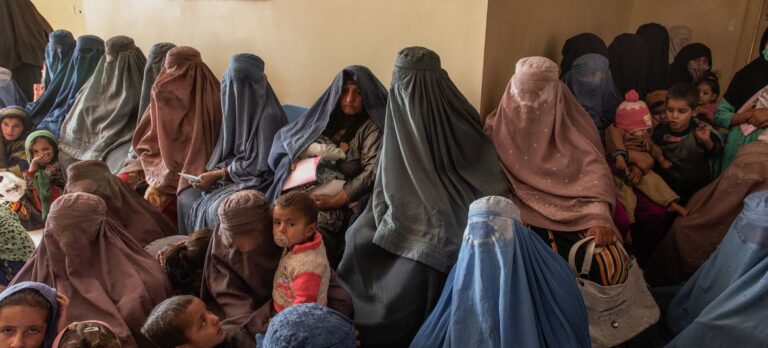
    Immediately upon taking power, the Taliban ordered that women need not to return to work. They have enforced strict segregation in universities, government offices and also on public transportation.

    By Arezo

    Seven months after gauging public response to their decision to segregate young man and women in schools and colleges, the Taliban have completed their gender segregation project. They have enforced strict segregation in universities, government offices and also on public transportation.

    Such discrimination harks back to the 1990s, when the Taliban had barred unrelated men and women from mixing in public places. The hardliners envision an emirate where women are not equal to men.

    Rights groups have voiced their fear of girls and women being excluded from public life. In January an independent team of around three dozen Human Rights Council-appointed experts highlighted a “wave of measures” by the regime that were institutionalizing large scale and systematic gender-based discrimination and violence against women and girls.

    “Women heads of households are especially hard hit, with their suffering compounded by the devastating consequences of the humanitarian crisis in the country,” the committee of experts had explained in their report, that has since been taken off the website of the Office of the UN High Commissioner for Human Rights (OHCHR).

    These policies have also affected the ability of women to work and to make a living, pushing them further into poverty.

    “Taken together, these policies constitute a collective punishment of women and girls, grounded on gender-based bias and harmful practices,” the experts had said.

    Women, health, education

    Immediately upon taking power, the Taliban ordered that women need not to return to work. But with COVID-19 spreading across the country and following the outcry their order created, it called women health professionals to resume work.

    The Taliban’s Ministry for the Promotion of Virtue and Prevention of Vice sent a communique early March ordering the Health Ministry to segregate male and female employees.

    “The offices for men and women should be separate,” the letter read.

    Separately, the Ministry for the Promotion of Virtue and Prevention of Vice issued another fiat to deny health care to women who did not observe the hijab. The ministry enforces the Taliban’s radical interpretation of Islamic law.

    Women and men who staffed the health system worked hard to handle the health crisis due to the COVID-19 pandemic. A person working with a humanitarian agency in Kabul said, “the Taliban had been waiting for the pandemic to subside so that they could announce the order”.

    A month after they ousted the government of Ashraf Ghani, the Taliban imposed gender segregation in the country’s private universities and colleges.

    The Taliban’s Education Ministry issued a decree that classes must be segregated by gender – or, divided by a curtain in places with restricted resources. The order said the only women could teach female students and in cases where women were hard to locate for teaching jobs, “elderly men” of good character could fill in.

    Female students have also been told that some courses will no longer be available to them.

    Travel restrictions

    The process of rolling back of the rights Afghan women had acquired since the Taliban were ousted from power in 2001, despite a ravaging war across the country. Recent months have seen the closure of schools and the banning of women from most forms of employment.

    Women did come out to protest the restrictions, but that was soon clamped down, with many of them getting arrested and some disappearing.

    Segregating women travellers has imposed unforeseen hardships. Radio Azadi quoted

    Sanga Lemar, a Kabul University lecturer, spoke to Radio Azadi of the difficulties stemming from the restrictions in her daily commute to work.

    “Women are banned from sitting in the front seats [of buses],” she said, adding that this forced them to wait an hour or more to find an appropriate car or bus.

    Lemar accused Taliban fighters of violating their own gender segregation rules. She recalled how a male Taliban fighter went through her purse when she was stopped at a security checkpoint.

    “It is strange that they want to keep unrelated men and women separate yet allow a stranger to go through a woman’s purse,” she told Radio Azadi.


    Arezo is based in Kabul and prefers using her only first name for her writings for OWSA.

    Image: Alessio Romenzi / UNICEF

    Ukraine war costs now exceeding US $100 billion in infrastructure damage

    If the war deepens and protracts further, up to 90 per cent of the population of Ukraine could be facing poverty and vulnerability to poverty.

    War in Ukraine risks seeing 90 per cent of the country “freefall into poverty” and extreme vulnerability, nearly three weeks since Russia invaded its neighbour, a report by UNDP.

    “Government of Ukraine estimates suggest that at least $100 billion worth of infrastructure, buildings, roads, bridges, hospitals, schools, and other physical assets have been destroyed,” says a UNDP report, The Development Impact Of The War In Ukraine – Initial Projections.

    The war has caused 50 per cent of Ukrainian businesses to shut down completely, while the other half is forced to operate well below its capacity. If the war deepens and protracts further, up to 90 per cent of the population of Ukraine could be facing poverty and vulnerability to poverty, the report warns.

    This estimation translates into a loss of 18 years of socio-economic achievements in Ukraine and a return to poverty levels last observed in 2004.

    UNDP warned that if the conflict could wreck almost two decades of economic progress. In addition to dire development setbacks, the UN agency explained that the environment is expected to suffer, while societal inequalities are likely increase.
    Daily help

    Initial estimates are that US$ 250 million per month in funding will be needed to cover partial income losses for 2.6 million people who are expected to fall into poverty.

    Providing the most vulnerable with a basic income of $5.50 per day would cost $430 million a month, UNDP said.

    Ukraine’s neighbours who have struggled to cope with the more than three million refugees created also need help, the UN agency said.

    To that end, UNDP is already working with the UN refugee agency, UNHCR, on resilience and development measures for those displaced by the violence, focusing on support to refugees and host communities through income generation and employment.

    Businesses shuttered

    One in two Ukrainian businesses have shut down completely, while the other half has been forced to operate well below capacity, UNDP reported.

    As one of the largest UN agencies on the ground in Ukraine, priorities include immediate crisis response and maintaining core government functions to ensure that public services can be maintained.

    In a statement, UNDP noted that staff have remained operational throughout the conflict and that their presence has been bolstered with “targeted” deployments in key areas, such as debris management, damage assessment and emergency livelihood support, including cash-based assistance.


    Image: Oleksandr Ratushniak / UNICEF

    Pandemic Pushes SDGs Further out of Reach of Asia and the Pacific

    The 2030 Agenda for Sustainable Development is becoming increasingly distant. The region must use the 17 Sustainable Development Goals as a roadmap to a fairer recovery.

    Armida Salsiah Alisjahbana

    2022 marks the second anniversary of the COVID-19 pandemic, and while an end to the pandemic is in sight, it is far from over and the consequences will be felt for decades to come. At the same time, the 2030 Agenda for Sustainable Development is becoming increasingly distant. The region must use the 17 Sustainable Development Goals as a roadmap to a fairer recovery.

    This year’s edition of the Asia and the Pacific SDG Progress Report published by ESCAP reveals three alarming trends. First, the region is losing ground in its 2030 ambitions. In addition to our slowed progress, human-made crises and natural disasters have also hampered our ability to achieve the Goals. We are seeing the gaps grow wider with each passing year: at its current pace, Asia and the Pacific is now only expected to achieve the 17 Sustainable Development Goals by 2065 – three-and-a-half decades behind the original goalpost. The region must seize every opportunity to arrest this downward trend and accelerate progress.

    Second, while headway on some of the Goals has been made in scattered pockets around the region, we are moving in a reverse direction for some of them at a disturbing rate. Although the climate crisis has become more acute, there has been regression on responsible consumption and production (Goal 12) and climate action (Goal 13). And the news is marginally better for targets dealing with industry, innovation, and infrastructure (Goal 9) and affordable and clean energy (Goal 7) as they fall short of the pace required to meet the 2030 Agenda.

    Lastly, the need to reach those who are furthest behind has never been greater. The region is experiencing widening disparities and increased vulnerabilities. The most vulnerable and disadvantaged groups — including women, children, people with disabilities, migrants and refugees, rural populations and poorer households — are the victims of our unsustainable and non-inclusive development trends.

    Some groups with distinct demographic or socioeconomic characteristics are disproportionately excluded from progress in Asia and the Pacific. Understanding the intersection of key development challenges with population characteristics such as age, gender, race, ethnicity, health, location, migratory status and income is critical to achieving a more equitable recovery. We must work together as a region to ensure that no one or no country falls behind.

    Although these trends are extremely worrying, there is some good news that helps our understanding of them: The number of indicators with data available have doubled since 2017. Collaboration between national and international custodian agencies for the indicators of the Sustainable Development Goals has significantly contributed to enhancing the availability of data. We must, however, continue to strengthen this cooperation to close the remaining gaps, as 57 of the 169 SDG targets still cannot be measured.

    The sole focus on economic recovery post-pandemic is likely to hinder progress towards the Sustainable Development Goals, which was already lagging to begin with. As the region strives to build back better and recover, the 2030 Agenda can serve as a guiding mechanism for both economic and social development. We – the governments, stakeholders and United Nations organizations that support them – must maintain our collective commitment towards a more prosperous and greener world.


    Armida Salsiah Alisjahbana is Under-Secretary-General of the United Nations and Executive Secretary of the Economic and Social Commission for Asia and the Pacific (ESCAP).

    India examines medical school costs amid Ukraine exodus

    The Indian government recently announced that half of the seats in private medical colleges will have the same charges as their government counterparts. Private medical education unaffordable for many aspiring medicos in India. The recent evacuation of some 18,000 Indian students from war-torn Ukraine has highlighted the lack of affordable seats in India’s medical schools.

    By Ranjit Devraj

    A move by India to make medical education more affordable comes as thousands of Indian medical students trapped in war-torn Ukraine are evacuated facing an uncertain future.

    Of the 20,000 students who fled the eastern European country since the military invasion by Russia began on 24 February, 18,000 were studying medicine. Most have crossed the border into neighbouring countries like Poland and Hungary to board special flights home.

    Their plight has highlighted the large numbers of young Indians enrolling in medical schools in Russia, the former Soviet Republics and China to beat an acute shortage of seats in the heavily subsidised public sector and the high costs of private medical education in India.

    The government ordered last month that half of the 43,815 medical places available in private sector colleges be thrown open at costs comparable to that charged by government medical schools from the academic year beginning 16 May.

    A note issued by the National Medical Commission, the regulatory body for medical education and the profession, says that private medical institutions must follow the “not-for-profit” principle. It says that while expenses for running a medical college can be recovered from fees charged to students, “no excessive expense and exorbitant profit component should be allowed to be added to the fees”.

    Low health budgets

    Prime Minister Narendra Modi’s office said in a tweet on 7 March said that his government had decided that “half the seats in private medical colleges will be charged at par with government medical colleges”.  The decision, the tweet said, would “benefit poor and middle-class children”.

    However, the decision is considered far from adequate to meet the demand for medical education in India or the requirements of public health services in the country of 1.4 billion people.

    Mira Shiva, founder-member of the People’s Health Movement, tells SciDev.Net that it is little more than a band-aid applied to serious issues around medical education.

    “For a start the government should increase rather than progressively reduce the budgetary outlay on both health and education and change a policy that leaves these critical social sectors to the mercy of private enterprise,” she said.

    India’s current health expenditure as a percentage of GDP stands at 3.01 according to the World Bank and shows a declining trend. Similarly, the current expenditure on education as a percentage of GDP is 3.5.  Both figures are considered grossly inadequate.

    Shiva said it would have been more meaningful for the government to consider subsidising medical education in both public and private sectors while making information on the medical education sector readily available to the public.

    In 2021, 1.6 million candidates registered for the National Eligibility cum Entrance Test to compete for 88,370 Bachelor of Medicine, Bachelor of Surgery (MBBS) seats, about half of which are in the heavily subsidised, state-run medical colleges, while the other half are in privately-run institutions.

    High in cost, lacking in quality

    Those who make it to the state colleges benefit from heavy subsidies. For instance, the annual fee in two of Delhi’s top medical colleges, the Lady Hardinge Medical College and the Maulana Azad Medical College, is less than US$30. But those who manage to get a seat in one of the 218 private medical colleges must pay fees that are typically two or three times more expensive than what a student may have to pay in a country like Ukraine.

    According to Shiva, apart from the high costs, the quality of education in most of the privately-run medical colleges is lacking because of the low pay offered to teaching staff. “Faculty are known to resort to private clinical practice to supplement their incomes and this tells on the overall academic atmosphere,” she said.

    Reghunath Kumaran, an Indian psychiatrist currently working in Canada, says it is unfair to tar all private medical colleges with the same brush. “Maybe I did not have the smarts to attend a government medical college but I have consistently outperformed those from the state-run institutions in various examinations since qualifying. I think the selection process is at fault,” he said.

    Suma Balan, professor at the Amrita Institute of Medical Sciences, Kochi, said: “It would be more correct to say that there are some private colleges that are better than many government colleges while some are not. Of course, the cost-benefit ratio cannot be compared but that’s only because the government colleges are subsidised by the government.”

    Glorified career

    According to Balan, the competition for seats in medical colleges is stiff because a career in medicine is highly glorified at school, home and in society with little consideration given to aptitude. “The Indian system of MBBS selection does not look at the real aptitude, the sole criterion being the ability to answer a multiple-choice questions exam well and, in the case of private institutions, the ability to pay the fees,” she added.

    “Many politicians have significant stakes in the building up of a large number of private medical colleges — one reason why the fees have spun out of control with some colleges asking the equivalent of US$30,000 as annual fees.” That is more than the cost of the entire six-year medical course in Ukraine.

    However, many Indian medical graduates coming in from Ukraine or other countries must sit for a stiff qualifying exam in order to get a license to practice. About 80 per cent of them fail in the first attempt while many never pass subsequent attempts and are forced to settle for allied careers like hospital management.

    Others move abroad in order to acquire postgraduate or higher qualifications. Often, they settle down in countries where the demand for qualified doctors is high, just to be able to provide for their families and be assured of decent career progression.

    India topped a list of foreign-born (94,862) and foreign-trained (70,539) doctors working in the OECD countries, according to a 2017/2018 survey.


    Image: Pixabay Picture of Orion Hospital