More

    “No Signal, No Help, No Hope”: UNAMA on Taliban’s Internet Blackout

    Healthcare systems bore the brunt of the outage. Hospitals couldn’t request supplies, coordinate transfers, or transmit medical scans. Ambulance services collapsed, forcing healthcare workers to dispatch motorcycle messengers to nearby cities.

    A nationwide telecommunications shutdown in Afghanistan from September 29 to October 1, 2025, left millions isolated, emergency services crippled, and essential sectors in chaos, according to a damning new report by the United Nations Assistance Mission in Afghanistan (UNAMA).

    Titled “Out of Reach: The Impact of Telecommunications Shutdowns on the Afghan People,” the document paints a harrowing picture of a country already reeling from instability, where the abrupt loss of mobile and internet services turned everyday life into a nightmare of “no signal, no help, no hope.”

    The blackout, affecting all 34 provinces, followed weeks of regional disruptions starting in Balkh province on September 15. UNAMA’s findings, drawn from over 100 interviews across the nation, highlight cascading failures in healthcare, banking, humanitarian aid, education, and media. No official explanation has been forthcoming from Taliban authorities, who initially cited vague aims like “preventing vice” in Balkh, while later denying infrastructure repairs as the cause.

    Healthcare Systems Bore the Brunt

    At the heart of the crisis were personal tragedies that underscored Afghanistan’s fragile reliance on digital connectivity. In eastern Afghanistan, a woman in labour on the night of September 29 had no way to contact her husband, who was away at work. Accompanied only by her elderly mother-in-law, she walked to a hospital in Jalalabad. She gave birth alone, terrified and surrounded by strangers, while her husband frantically searched hospitals, unaware of her whereabouts or condition.

    Healthcare systems bore the brunt of the outage. Hospitals couldn’t request supplies, coordinate transfers, or transmit medical scans. In Laghman province, a pregnant woman lost her unborn child after her clinic failed to summon an ambulance or restock medicines. In Badghis, five malnourished children died because doctors couldn’t be reached for urgent care. Ambulance services collapsed, forcing healthcare workers to dispatch motorcycle messengers to nearby cities – a desperate, time-consuming workaround that left them feeling “helpless.”

    “Patients faced delays in diagnosis and treatment,” the report states, noting that electronic coordination between facilities ground to a halt. This was particularly acute in a nation where Taliban restrictions already limit women’s mobility and access to services.

    Banking Services Hit

    The banking sector fared no better. ATMs ceased functioning, online transfers froze, and remittances from abroad – a lifeline for many families – were inaccessible. Afghans couldn’t pay for food, medicine, or essentials, while small businesses reliant on digital sales suffered crippling losses. “The entire country – from its health systems to its banking sector and small businesses – is substantially reliant on telecommunications,” UNAMA emphasised.

    Humanitarian Operations Paralyzed

    Humanitarian operations were paralyzed, exacerbating ongoing crises. Aid for earthquake victims in the east was disrupted, and assistance to thousands of refugees deported from Pakistan stalled. Cash distributions, beneficiary registrations, and field team coordination stopped entirely, leaving vulnerable populations in limbo.

    Return to the Stone Age

    Women and girls, already under severe Taliban-imposed restrictions, were disproportionately impacted. Female healthcare workers reported families growing more reluctant to allow them outside the home without communication lines. One nurse told UNAMA that her inability to contact relatives during the blackout led her husband to demand she quit her job over safety fears. Online education, a rare avenue for female students amid bans on in-person schooling, vanished. “It was a return to the stone age,” one student said, describing the loss of their only educational access.

    Women running online businesses – often a critical income source since employment bans – saw revenues evaporate. Internet-based commerce, a workaround for gender barriers, came to a standstill.

    Rumours Spread Unchecked

    The shutdown also triggered a media and information vacuum. Most outlets couldn’t broadcast or report, fuelling panic and misinformation. Rumours of foreign interventions, coups, or government collapse spread unchecked. One journalist described it as “a form of censorship,” blocking coverage of abuses or emergencies.

    UNAMA documented widespread societal ripple effects. Education halted as online classes and administrative systems failed. Small entrepreneurs lost customers, and families couldn’t locate loved ones. In a country battling economic collapse, malnutrition, and natural disasters, the blackout amplified existing vulnerabilities.

    Taliban spokespeople offered conflicting justifications. In Balkh, officials claimed the initial shutdown targeted “vice,” but Kabul later dismissed repair claims. No comprehensive rationale has emerged, leaving speculation about security concerns or control measures.

    UNAMA has urged the Taliban to recognize telecommunications as essential for human rights, humanitarian relief, healthcare, education, and the economy. “Afghans, already facing significant challenges, should not be subjected to imposed cuts,” the mission stated, calling for uninterrupted access.

    The report comes amid broader concerns over Taliban governance since their 2021 takeover. Regional shutdowns preceded the national one, signalling a pattern that could recur. Experts warn such actions violate international norms on access to information and emergency services.

    As Afghanistan grapples with this silent crisis, the UNAMA findings serve as a stark reminder: in a digital age, cutting connections can be as devastating as physical barriers. For the woman in Jalalabad and countless others, the blackout wasn’t just inconvenient – it was life-altering.

    Sri Lanka’s Flagship Welfare Scheme hit by Data Flaws, World Bank Says

    At the heart of the problem is the need for a unified and continuously maintained “social registry” – a database that records household information, monitors changes, and updates beneficiary status.

    Sri Lanka’s major social assistance scheme for low-income households, Aswesuma, is facing critical scrutiny from the World Bank, which has flagged outdated and incomplete beneficiary data as a major hurdle to targeting the genuinely needy.

    The Aswesuma scheme, introduced in 2023, aims to replace a decades-old programme with a new model that ostensibly uses multidimensional deprivation scores rather than just income thresholds. But at a meeting held on Monday with Parliament’s finance and social welfare committees, World Bank officials stressed that the mere entry of households into the national database does not guarantee benefit eligibility – accurate verification and regular updating are essential.

    Flawed Data Threatens Fair Targeting

    Despite a fresh start, the Aswesuma scheme’s data systems remain under-strength. Officials have noted that the transition from the old welfare model has not eliminated errors of inclusion (non-poor households receiving aid) or exclusion (poor households left out).

    At the heart of the problem is the need for a unified and continuously maintained “social registry” – a database that records household information, monitors changes, and updates beneficiary status. According to the appraised World Bank project documents, eligibility is meant to be determined by a “Multi-Deprivation Score” (MDS) calculated from 22 indicators per household. However, critics say that implementation has lagged, especially in estate and remote sectors where the drop-in coverage has been sharpest.

    World Bank representatives made clear: an inclusive list alone does not mean households qualify for Aswesuma. “Inclusion in the database must be followed by verification and analysis,” one senior economist said during the October session.

    Technical Support on the Table

    To remedy these gaps, the World Bank has offered Sri Lanka technical assistance for strengthening data collection, verification and monitoring systems. This assistance is aligned with a broader project – the Social Protection Project – that aims to enhance targeting, transparency and effectiveness of cash-transfer programmes in the country.

    The key elements of the support envisaged include:

    • Roll-out of a unified social registry accessible across divisional secretariats.
    • Electronic payments tied to verified bank accounts for beneficiaries.
    • A grievance redress mechanism to capture and act on selection or exclusion issues.

    Sri Lanka’s officials told the meeting that training of divisional secretariat staff, improved outreach, and heightened coordination across levels of government were among the urgent tasks.

    Why it Matters for Sri Lanka

    For Sri Lanka, the stakes are high. The country’s poverty rate nearly doubled in recent years amid economic contraction, so getting welfare targeting right is critical.

    For neighbouring India, the Sri Lanka case offers a cautionary tale: even well-intentioned social assistance schemes can falter if beneficiary data systems are weak. Transparent criteria, regular data updates, and digital registries are key to ensuring that benefits reach the truly vulnerable.

    In the South Asia region, where multiple cash-transfer and food-security programmes operate, the message is clear: robust data governance matters almost as much as the quantum of funds allocated.

    For Sri Lanka, the next six to twelve months will be crucial, say officials from the World Ban. The success of the new scheme hinges on whether the updated registry becomes fully operational, and whether verification catches up with ambition. With the World Bank watching and offering support, the government has the tools – but the real test will be in implementation.

    Global Uncertainty and GST Reforms Cool India’s Business Sentiment: NCAER

    India’s business confidence dipped in the second quarter of the current financial year after three quarters of growth, as per NCAER’s Business Expectations Survey, due to global uncertainties and new GST reforms.

    India’s business confidence eased in the second quarter of 2025–26 after showing steady improvement for three consecutive quarters, according to the latest Business Expectations Survey (BES) released by the National Council of Applied Economic Research (NCAER). The survey attributes the decline largely to heightened global uncertainties and domestic policy transitions, including new Goods and Services Tax (GST) reforms that took effect in late September.

    The Business Confidence Index (BCI) fell to 142.6 in the July–September quarter, down from 149.4 in the first quarter. However, confidence levels remain higher than the same period a year earlier, when the index stood at 134.3, indicating that business optimism, though tempered, remains resilient. The 134th round of the BES covered 484 companies across six major cities, and was conducted in September 2025 – just days after the United States announced new tariffs on Indian exports.

    The NCAER study noted that the quarter was marked by a series of policy developments. In addition to the US tariffs, Washington also increased H1-B visa fees and imposed duties on branded and patented pharmaceuticals, further rattling Indian exporters. On the domestic front, the GST Council reduced the number of tax slabs from four to three and rationalised rates, reforms expected to show positive effects in the coming quarters.

    “Overall, the share of positive responses remained above 50 per cent in all four components of the index, signalling a relatively slower growth momentum,” said project leader Professor Bornali Bhandari. “The macro indicators were more negatively affected than the firm-level sentiments.”

    Large Firms Hit Harder by Global Shocks

    The survey reveals that the impact of global headwinds has been uneven across firm sizes. The BCI for micro, small and medium enterprises (MSMEs) rose slightly from 137.1 in the first quarter to 138.2 in the second, suggesting steady confidence levels despite the external uncertainty. In contrast, large firms – those with annual turnovers exceeding ₹100 crore – saw their BCI plunge from 171.6 to 149.9. The data suggest that larger firms, being more export-oriented, are more exposed to international risks. Only 32 per cent of MSMEs surveyed were exporters, compared to 62 per cent of large firms.

    Sectoral and regional variations were also evident. The services sector reported improved sentiment, rising from 132.8 to 137.8, while the manufacturing sectors – including consumer durables, non-durables, and capital goods – experienced declines. Regionally, business confidence strengthened in the North and East, with their BCIs climbing to 163.7 and 161.9 respectively, while it deteriorated sharply in the South and West, falling to 134.8 and 110.2.

    Despite the moderation, production expectations remain upbeat. About 82 per cent of firms expect production to rise in the next six months, up from 79 per cent in the previous quarter. Yet nearly half of them – 44 per cent – believe the increase will be modest, limited to between zero and five per cent. Similarly, 73 per cent of firms foresee an increase in exports of final products, compared with 67 per cent in the first quarter, though almost half expect only marginal growth.

    Domestic demand also shows cautious optimism. The share of firms anticipating higher domestic sales rose from 79 to 83 per cent, while those expecting new orders fell from 71 to 67 per cent, indicating a patchy recovery. Expectations about pre-tax profits weakened, with the proportion of firms forecasting profit growth slipping to 54 per cent from 61 per cent in the previous quarter. Around 10 per cent of respondents were uncertain about their profit outlook.

    Cost pressures, too, are on the minds of Indian businesses. Nearly 49 per cent of respondents expect input costs for raw materials to rise, with the majority projecting modest increases of up to five per cent. About 47 per cent anticipate higher labour costs, and one-third foresee rising electricity costs, though two-thirds expect power rates to remain stable. This combination of muted demand and steady cost increases could squeeze margins in the short term.

    Hiring Slows but Wages Show Signs of Recovery

    The NCAER survey points to stagnation in India’s labour markets, reflecting the cautious stance of employers amid policy and trade uncertainty. Over 70 per cent of firms expect no change in their hiring plans for the next six months. Only 20 per cent anticipate increasing their intake of permanent workers, while 29 per cent foresee hiring more casual or temporary staff, suggesting that firms prefer flexible labour arrangements during uncertain times.

    For managerial and skilled positions, 25 per cent of firms expect to add workers, while 72 per cent expect no change. Among unskilled labour, hiring intentions remain subdued, with 22 per cent of firms planning to expand their workforce.

    Yet there is a silver lining. Sentiments about wages are relatively upbeat. Nearly half of all firms expect wages to rise for both skilled and unskilled workers in the coming six months. Analysts say this points to a “soft labour market but improved wage outlook”—companies are cautious about expanding their workforce but are willing to pay more to retain or motivate existing employees.

    The BES also indicates that despite the moderation in optimism, firms remain broadly positive about India’s economic trajectory. A majority – 66.5 per cent – expect overall economic conditions to improve in the next six months, though this is down from 73 per cent in the previous quarter. The share of firms that consider the investment climate positive has also declined to 55 per cent, from 60 per cent earlier.

    The survey concludes that while the second quarter’s moderation reflects temporary global turbulence and domestic adjustments, India’s underlying business sentiment continues to be resilient. With GST simplification now in effect and global supply chains gradually realigning, NCAER expects confidence to stabilise in the latter half of the fiscal year.

    Image: Hippopx

    Nepal’s Provinces Cry Foul Over Federal Snub: Interim Government’s Budget Freeze Sparks Tensions Ahead of Polls

    Nepal’s federal finance ministry defends temporary budget freeze for NPR 500 billion audit, promises November dialogues. Gen Z threatens protests; Maoists eye provincial alliances. Time’s tight.

    In a stark reminder of the fragile federal experiment, provincial leaders in Nepal have accused the interim government of Prime Minister Sushila Karki of sidelining them with a “unilateral” budget freeze, crippling preparations for crucial March elections. The row, erupting just weeks after deadly youth-led protests toppled the previous regime, underscores deepening rifts in Nepal’s devolved power structure – a model that mirrors India’s federal dynamics but is proving even more volatile in the Himalayan nation’s turbulent politics.

    The complaints, voiced by ministers across Nepal’s seven provinces, highlight a perceived snub by Kathmandu’s technocratic administration. Lumbini Province Chief Minister Chet Narayan Acharya led the charge on Saturday, lamenting that the federal freeze on provincial allocations has stalled vital development projects, from road repairs to irrigation schemes. “This isn’t just about money; it’s about respect for federalism,” Acharya told reporters in Butwal. “Our hands are tied while we scramble to rebuild from the Gen Z arson attacks. How can we prepare for elections without federal dialogue?”

    The unrest traces back to September’s cataclysmic “Gen Z protests,” a youth-driven anti-corruption uprising that claimed some 72 lives and forced the resignation of veteran Prime Minister KP Sharma Oli. Sparked by allegations of graft in federal contracts and youth unemployment soaring above 30 per cent, the demonstrations saw protesters torch government buildings across provinces, including provincial assemblies in Lumbini and Gandaki.

    On September 12, President Ram Chandra Paudel, acting on Karki’s advice, dissolved the House of Representatives and called snap polls for March 5, 2026, thrusting the retired Chief Justice into the premiership as a neutral interim figure.

    ¯Criticism for Inaction

    Karki’s government, formed per the agitators’ demands for a non-partisan cleanup crew, was meant to stabilize Nepal until the polls. Yet, six weeks in, it is facing a barrage of criticism for inaction on the protest fallout and now this fiscal clampdown. Provincial officials argue the budget freeze – imposed to audit federal spending amid corruption probes – has disproportionately hit subnational governments, which rely on Kathmandu for 70 per cent of their revenues under Nepal’s 2015 Constitution.

    In Bagmati Province, Finance Minister Rajendra Shrestha echoed the frustration: “We’ve lost millions in stalled contracts. The federal team hasn’t even convened a single coordination meeting on election logistics, like voter rolls or security deployments.” Shrestha pointed to damaged infrastructure in Hetauda, where protesters razed the provincial secretariat, leaving repair bills in the crores of Nepali rupees (NPR). “Federalism in Nepal is built on cooperation, coordination, and coexistence,” he added, quoting constitutional principles that Nepali drafters borrowed from India’s playbook. “Ignoring provinces risks the entire system’s collapse.”

    The grievances extend beyond finances. Provincial governments, led by a patchwork of parties – from Oli’s Communist Party of Nepal-Unified Marxist Leninist (CPN-UML) in Lumbini to the Nepali Congress in Karnali – have continued functioning despite the federal upheaval, as the protests targeted Kathmandu’s elite. But with elections looming, leaders warn of logistical nightmares. Madhesh Province’s Land Minister Sarita Giri highlighted delays in procuring electronic voting machines and training poll officials, blaming the “top-down” approach. “Our border districts with India – Saptari, Siraha – need federal support for cross-border security during voting. Silence from Karki’s office is deafening,” Giri said, a nod to the 1,800-km open frontier that facilitates everything from trade to seasonal migration for millions of Nepalis.

    Litmus Test

    Nepal’s provinces, carved out post-2008 monarchy abolition to empower ethnic Madhesis, Tharus, and hill communities, were envisioned as engines of inclusive growth. Yet, chronic underfunding – provinces get just 15-20 per cent of the national budget – has bred resentment.

    Karki, 68, a stoic jurist credited with landmark rulings on women’s rights, has vowed reforms. In a September address, she pledged to “fix the failures” that ignited the Gen Z fury, including youth job quotas and anti-graft laws. Her cabinet, expanded for the third time this week amid backlash, now includes technocrats from the private sector. But critics, including UML youth wing leaders, decry the moves as power grabs. “She’s apolitical on paper, but her delays smell of stalling the polls,” said protester-turned-activist Priya Tamang, 22, from Kathmandu’s streets.

    Analysts see the provincial pushback as a litmus test for Nepal’s federalism. “If Karki doesn’t bridge this gap, March elections could see low turnout or violence in provinces,” warned Kathmandu-based political scientist Bhaskar Karki (no relation).

    The federal finance ministry, tight-lipped, insists the freeze is temporary, tied to a forensic audit of NPR 500 billion in suspicious expenditures. A spokesperson promised “inter-tier dialogues” by November. Yet, with Gen Z groups threatening fresh marches and opposition parties like the Maoists eyeing provincial alliances, time is short.

    Image: Wikimedia

    15 ha Land Reclaimed in Maldives’ Olhuvelifushi Island, Stage Set for Major Infra Projects

    For India, which has vast experience in island infrastructure, the Maldivian example bears watching: how quickly reclamation is executed, how well the new infrastructure is maintained, and how it contributes to resilience against climate threats.

    In a major push for infrastructure and community development, the government of the Olhuvelifushi island in Lhaviyani Atoll, Maldives, has announced reclamation of 15 hectares of land along with several new construction projects “to enhance living standards and resilience.”

    During his visit to the atoll on 27 October 2025, the Maldivian President Dr Mohamed Muizzu presided over a meeting with island residents, where an agreement was signed for the land reclamation, coastal protection and vessel-hauling facilities.

    Big Plans, Broad Scope

    At the event, the President officially flagged off a range of development works, including:

    • A harbour development project.
    • Construction of a branch of the ­Quran Centre.
    • The foundation stone for a new Fitness and Recreation Centre.
    • The foundation stone for a new police station.
    • Signing of an agreement to build a football stadium.
    • Laying a foundation for a council building.
    • Allocation of funding for a volleyball court.
    • Announcement of a road-construction project planned for the next year.

    Onsite, the President emphasised the need to upgrade the island’s electricity network and addressed long-standing concerns about the sewerage system, assuring residents the work will be completed within the year. He also expressed that until the sewerage service is fixed, certain services cannot be delivered.

    Land Reclamation: Resilience and Growth

    The 15 hectare reclamation is the standout for many: by creating additional land, the project aims not only to expand space for housing and public amenities, but also to strengthen coastal defences in a country highly vulnerable to sea-level rise and extreme weather. The land-reclamation component was signed in the same ceremony.

    For India, the significance is two-fold. First, Maldives being a neighbour, any major infrastructure effort there has regional implications for maritime connectivity and tourism growth. Second, land-reclamation in low-lying island nations is a key adaptation strategy in the climate-change era, something India too is increasingly focusing on for its coastal zones.

    Addressing Service Delivery Gaps

    President Muizzu acknowledged that some developments had stalled, notably in the education sector, and gave a commitment to get things back on track. He specifically referred to a school project where installation of air-conditioning units, required for classrooms, had not yet been completed. He pledged to engage the contractor to finish the work ahead of the next academic year.

    In a broader sense, the President’s remarks highlight the persistent challenge of converting signed agreements into operational services, an issue familiar to many development contexts in South Asia, including India. The emphasis here on electricity, sewerage and amenities reflects a push not just for new assets, but for delivering functioning systems.

    Quality of Life and Future-Proofing

    The President reassured islanders that “all signed and inaugurated projects will proceed without delay”. He said the new developments would bring significant improvements to the island’s infrastructure and quality of life. For residents of Olhuvelifushi, the improved harbour, expanded land, recreation/social infrastructure and upgraded public services represent concrete positives.

    For India, which has vast experience in island infrastructure (for example, the Andaman & Nicobar Islands, Lakshadweep, and coastal states), the Maldivian example bears watching: how quickly reclamation is executed, how well the new infrastructure is maintained, and how it contributes to resilience against climate threats.

    Regional Context and Take-Aways

    Maldives sits in a strategic maritime zone and has strong ties with India. As islands around the Indian Ocean face mounting pressure from climate change – rising seas, storms, coastal erosion – projects such as Olhuvelifushi’s become more than local: they are templates for resilient island development. India’s own coastal policy frameworks may draw lessons from such efforts, especially in combining reclamation with public-amenity builds and service upgrade pathways.

    While the announcements are ambitious, execution remains key. The step from signing to delivery is often where delays set in. Indian readers may recall similar patterns in large projects where tendering, site conditions and maintenance become bottlenecks. So the success of the Olhuvelifushi initiative will depend on sustained follow-up, funding flow, and local management.

    Moreover, observers might question how the environmental offsets of a 15-hectare reclamation are being managed – ecological impact on marine life, long-term shore-line behaviour, and climate-resilience of the reclaimed land itself.

    If the Maldivian government delivers as pledged, Olhuvelifushi could become a model island for infrastructure upgrade, climate adaptation and community uplift in the Indian Ocean region. For India, it is an example worth monitoring – not simply as a neighbour’s development story, but as one that resonates deeply with India’s own coastal and island ambitions.

    Istanbul Talks End Without Breakthrough as Afghanistan Resists Pakistan’s Security Demands

    Afghan negotiators countered that Pakistan must first address its own internal divisions and review its decades-long policy of using militant groups for strategic depth.

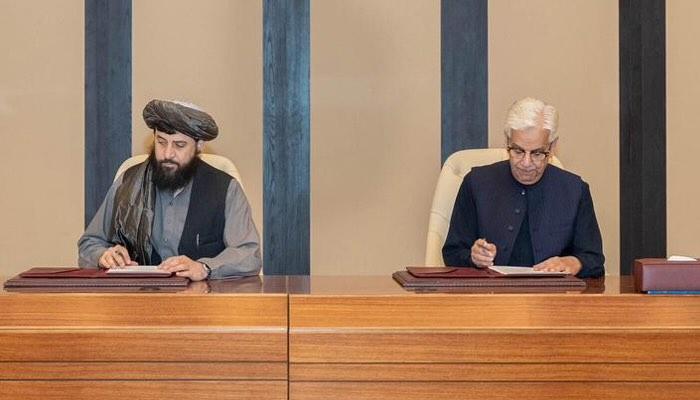
    The latest round of talks between Afghanistan’s Taliban-led government and Pakistan concluded in Istanbul over the weekend without a breakthrough, as Kabul pushed back against Islamabad’s insistence on tougher counterterrorism measures and border controls that Afghan officials described as infringements on their sovereignty.

    The two-day dialogue, hosted by Turkey and facilitated by Qatar, followed a period of heightened tension along the Durand Line – the disputed border separating the two neighbours. The talks were intended to transform a fragile ceasefire into a broader security understanding after weeks of deadly skirmishes.

    But according to officials familiar with the discussions, the meeting ended without agreement on the anti-terror action plan Pakistan brought to the table – a plan that the Afghan delegation viewed as one-sided and dismissive of Afghanistan’s security concerns.

    Post the talks, on Monday, Taliban chief spokesman Zabihullah Mujahid expressed optimism about resolving disputes through dialogue but issued a stern warning on state-run television: “We will respond if any country attacks Afghanistan.”

    His comments followed a report by Pakistan’s Geo News, which stated that talks between the Taliban and Islamabad had stalled. Sources told the outlet that on Sunday, Pakistan demanded the Taliban take “concrete and verifiable steps” to dismantle militant groups, particularly Tehrik-e-Taliban Pakistan (TTP), operating from Afghanistan, as TTP has been linked to increasing attacks in Pakistan.

    Afghanistan Pushes Back on Pakistan’s “Dictated Plan”

    Afghan officials said Islamabad’s proposal, presented as a “comprehensive anti-terror roadmap,” effectively sought to shift blame for Pakistan’s domestic insurgency onto Kabul. “Afghanistan is not responsible for Pakistan’s internal instability,” a Taliban spokesperson was quoted as saying after the Istanbul talks. “We are committed to regional peace but will not accept dictates that undermine our sovereignty.”

    Pakistan’s delegation, led by senior military and intelligence officials, urged Afghanistan to act decisively against the Tehrik-e-Taliban Pakistan (TTP), which Islamabad accuses of using Afghan territory to launch cross-border attacks. However, Afghan negotiators countered that Pakistan must first address its own internal divisions and review its decades-long policy of using militant groups for strategic depth.

    “The Taliban leadership reminded Pakistan that the same groups now threatening it were once part of its own regional calculus,” said a Kabul-based analyst quoted in Afghan media. “Islamabad cannot expect cooperation without acknowledging that history.”

    Border Tension and Mistrust Overshadow Dialogue

    The Istanbul round took place against the backdrop of one of the bloodiest border flare-ups since the Taliban’s return to power in 2021. Exchanges of artillery fire and airstrikes along the Torkham and Chaman crossings left scores dead and disrupted trade routes vital to both economies.

    While Pakistan insists the strikes were “defensive operations” targeting militant hideouts, Afghan authorities accused Islamabad of violating the ceasefire agreed in the earlier Doha talks. The Taliban’s Defence Ministry warned that “continued aggression will be met with proportionate force.”

    Kabul’s representatives also pressed for reopening of border crossings and resumption of trade convoys stranded for days, which have severely impacted Afghan traders. “Pakistan uses border closures as a political weapon,” an Afghan commerce official said. “It punishes ordinary Afghans under the pretext of security.”

    No Consensus on Verification or Monitoring

    Despite mediation by Turkish and Qatari officials, the two sides failed to reach consensus on establishing a joint verification mechanism to monitor cross-border incidents and militant activity. Pakistan demanded a “verifiable monitoring system” with international observers, while Afghanistan insisted such oversight would amount to foreign interference.

    Afghan delegates reportedly proposed instead a bilateral commission under Islamic principles of dispute resolution – a model Pakistan declined to endorse. “There was a fundamental difference in approach,” a diplomatic source in Ankara said. “Pakistan sought control; Afghanistan sought equality.”

    Durand Line Dispute Resurfaces

    The Durand Line, the 2,600-kilometre border drawn by the British in 1893, remains at the heart of the discord. Successive Afghan governments, including the Taliban, have refused to recognise it as an international boundary. Kabul argues that Pakistan’s recent border fencing and cross-border strikes are attempts to impose a political boundary by force.

    “The talks in Istanbul once again showed that Pakistan views the Durand Line as a security line, not a people’s line,” said Kabul University political scientist Shafiullah Noori. “For Afghans, it remains a question of national dignity and historical injustice.”

    The breakdown of talks could have far-reaching implications. A renewed spiral of violence between Pakistan and Afghanistan risks destabilising the entire Af-Pak belt, potentially enabling transnational militant networks to regroup.

    Uncertain Road Ahead

    With no joint statement issued, the Istanbul talks appear to have deepened rather than resolved the mistrust between the two neighbours. Pakistani Defence Minister Khawaja Asif’s warning of “open war” if negotiations fail drew sharp criticism in Kabul, where officials called it “irresponsible and inflammatory.”

    As both sides return home, border areas remain volatile, and trade remains disrupted. For ordinary Afghans, who continue to bear the brunt of economic hardship, the deadlock is another reminder that diplomacy, like the border, remains divided.

    Sri Lanka: Climate Finance Strategy Launched to Accelerate Resilience and Net-Zero Transition

    The strategy outlines 12 financial tools to mobilize resources and engage private sector participation, including disaster risk insurance, green bonds, PPPs, green loans, natural capital accounting, and sustainable tourism fees.

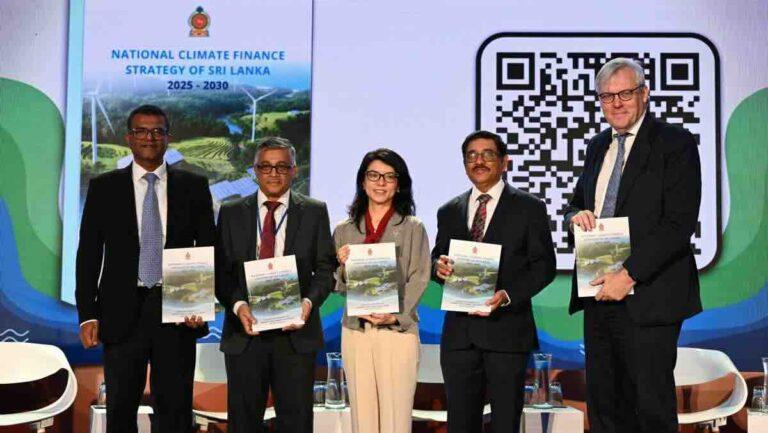
    In a landmark move to bolster climate action and finance mobilisation, the Sri Lanka government formally launched its National Climate Finance Strategy (2025-2030) on Friday, aiming to stitch together domestic and international investments to support adaptation, mitigation and a just transition to net-zero emissions.

    The strategy — developed by the Ministry of Finance’s External Resources Department in coordination with the United Nations Development Programme (UNDP) and backed by the United Kingdom Government through its Climate Finance Network — sets out a roadmap for channeling climate funds into key sectors such as agriculture, tourism, energy, water and nature-based solutions.

    Why Now? Rising Climate Losses and Fiscal Pressure

    Sri Lanka is highly vulnerable to climate-related hazards. The UNDP notes that climate-related damages in the country exceed LKR 50 billion annually. Analysts estimate that annual investment needs for climate-resilient infrastructure alone could be around US$ 500 million (roughly 0.5 % of GDP), a scale that exceeds what the government budget can sustain.

    Treasury Secretary Dr Harshana Suriyapperuma described the strategy as “a critical enabler for Sri Lanka’s climate ambitions… providing the financial architecture needed to operationalise climate policies and plans.”

    What the Strategy Covers: 12 Key Financial Instruments

    The strategy identifies a menu of 12 financial tools to mobilise resources and crowd in private sector participation. These instruments include: disaster risk insurance, green/blue/sustainability-linked bonds, public-private partnerships (PPPs) for climate action, green loans, natural capital accounting, a green revolving fund, carbon markets, ESG swaps, increased official development assistance and sustainable tourism entrance fees.

    High Commissioner of the UK to Sri Lanka, Andrew Patrick, emphasised that “without a climate finance strategy of this kind, it is much harder for the government to access those funds.” He also pointed to Sri Lanka’s untapped offshore wind potential and stressed the risks to biodiversity and agriculture.

    Mobilising Over US$ 10 Billion

    According to EconomyNext, the strategy aims to support a financing envelope in excess of US$ 10 billion, by tapping both official donors as well as private sector funds. This matches earlier estimates of Sri Lanka’s climate commitments under its Nationally Determined Contributions (NDCs) for 2021-30, previously estimated at US$ 10.85 billion.

    Strategic Significance: Aligning Development with Climate Goals
    UNDP Resident Representative in Sri Lanka, Azusa Kubota, said that “financing climate action is not just about managing risks – it’s about unlocking opportunities. This strategy will help Sri Lanka attract smart investments, foster innovation and build a climate-resilient economy that benefits all.”

    Dr. Suriyapperuma highlighted that Sri Lanka’s economy remains heavily tied to agriculture, fisheries and tourism — sectors especially exposed to climate shocks. “The cost of climate inaction is unimaginable,” he said. The strategy therefore seeks to integrate climate-risk management with development planning.

    Implementation and Oversight

    The first formal review of the strategy is scheduled for 2027. The Cabinet of Ministers has approved the document, and the treasury has invited investors to participate under the planned governance framework.

    Challenges Ahead: Financing Capacity, Institutional Readiness

    While the strategy lays out an ambitious blueprint, experts flag what comes next as the tougher task: mobilising funds at scale, building institutional capacity to absorb and deploy them, and ensuring private-sector engagement. Sri Lanka’s tight fiscal space and legacy of climate-vulnerable infrastructure raise questions about how quickly the roadmap can be translated into action.

    Moreover, community-level vulnerability remains high: many rural and coastal populations, reliant on climate-sensitive livelihoods, face limited adaptive capacity. The strategy will need to ensure that finance flows not only to big-ticket infrastructure but also to ground-level adaptation and equitable transitions.

    Why This Matters Beyond Sri Lanka

    As donor countries under the COP 28 framework pledged to mobilise US$ 300 billion annually for developing countries by 2035, having a clear national finance strategy becomes a prerequisite for access. UNDP emphasises that countries without such frameworks risk missing out. For Sri Lanka, the move signals readiness to step into the global climate finance arena and align its development trajectory with the Paris Agreement and the Sustainable Development Goals.

    The National Climate Finance Strategy (2025-2030) puts Sri Lanka on a more structured footing to bridge development, adaptation and mitigation finance. If successfully executed, it could unlock investment flows and build a more resilient, low-carbon future. However, the scale of ambition presents as much challenge as opportunity — the coming years will test the country’s ability to turn the strategy into concrete action and climate-proof its economy and communities.

    Pakistan’s Top General Meets Yunus in Dhaka, Seeks Stronger Ties on Trade and Defence

    The new push is not without obstacles. The legacy of the 1971 Liberation War continues to cast a shadow over relations – Bangladesh has repeatedly raised claims relating to atrocities committed by Pakistani forces, and a formal apology remains elusive.

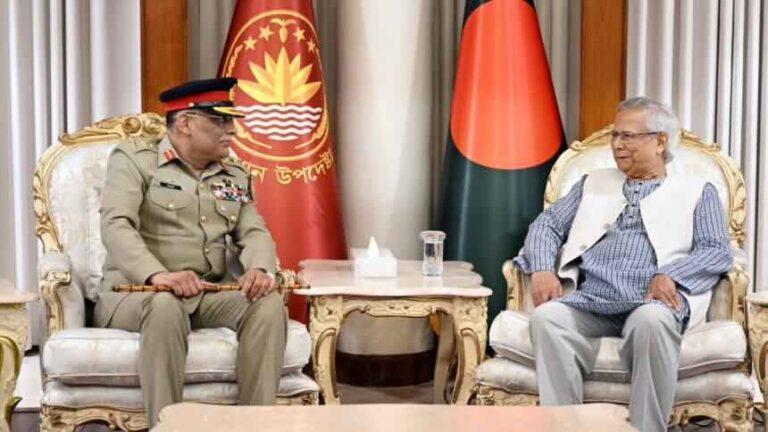
    A significant diplomatic engagement took place on Saturday as General Sahir Shamshad Mirza, chairman of the Joint Chiefs of Staff Committee (Pakistan) (CJSC) of Pakistan’s armed forces, paid a courtesy call on Professor Muhammad Yunus, chief adviser of Bangladesh, at the State Guest House Jamuna in Dhaka.

    The meeting came amid a broader push by both countries to reinvigorate bilateral ties – spanning trade, defence cooperation and connectivity – in what Karachi and Dhaka describe as a “reset” in relations.

    During the discussions, Mirza emphasised Pakistan’s desire to boost cooperation across multiple sectors and highlighted the “vast potential” for expanded trade, connectivity and investment between Bangladesh and Pakistan. He also referenced concrete steps already underway: a two-way shipping route between Karachi and Chittagong is reportedly operational, and a Dhaka-Karachi air route is expected to be launched within months.

    Chief Adviser Yunus, for his part, pointed to the importance of shared historical, cultural and people-to-people ties between the two nations as a basis for the fresh engagement. He also raised concerns about misinformation and the misuse of social media, describing “fake news and disinformation” as a global menace threatening peace and stability.

    The meeting brought together senior officials from both sides, including Bangladesh’s National Security Adviser Dr Khalilur Rahman, Senior Secretary and SDG Coordinator Lamiya Morshed and Pakistan’s High Commissioner to Bangladesh Imran Haider.

    Wider Context, Implications

    The encounter is part of a broader revitalisation of Bangladesh-Pakistan relations after a long period of largely subdued diplomatic interaction. Earlier this year, both nations flagged a commitment to “revive old connections,” focusing on trade and youth linkages as well as connectivity.

    From the Pakistan side, the outreach underscores Islamabad’s intent to diversify its regional ties and move beyond longstanding alignment patterns. For Dhaka, the Yunus-led interim government appears to be recalibrating its foreign-policy posture, tilting toward greater engagement with Pakistan even as its relationship with India remains fraught.

    For Bangladesh, the possible benefits cited include improved maritime connectivity (via the Karachi–Chittagong sea link), new air links, increased direct investment and expanded export markets. From Pakistan’s perspective, the incentive lies in tapping Bangladesh’s growing economy and strategic geographic position.

    Challenges Ahead

    The new push, however, is not without obstacles. The legacy of the 1971 Liberation War continues to cast a shadow over relations – Bangladesh has repeatedly raised claims relating to atrocities committed by Pakistani forces, and a formal apology remains elusive. Analysts point out that while economic and connectivity incentives may drive engagement, underlying strategic and historical fault-lines remain unresolved.

    Moreover, some Bangladeshi commentators question what Pakistan can realistically offer in terms of technology, investment or defence cooperation, given Pakistan’s own economic challenges. The security dimension also raises eyebrows in the region, given India’s historical role and present vantage in Bangladeshi affairs; any deepening of military-tie talk with Pakistan is likely to draw scrutiny.

    Looking Ahead

    Key outcomes to watch include whether the air-route Mirza referenced is formally established, the expansion of Pakistan-Bangladesh trade volumes, formal defence cooperation agreements, and whether the two sides agree to institutional mechanisms (such as joint working groups) to deepen the relationship. Should all this materialise, it would mark a structural shift in South Asian geopolitics – one in which Bangladesh positions itself less squarely in the India-aligned camp and more as a pivot between regional powers.

    On Saturday’s meeting, the message was clear: Pakistan’s military leadership is signalling willingness to engage – and Bangladesh’s interim government is opening the door. Whether the exchange leads to tangible outcomes will depend on follow-through, trust-building, and how both countries balance this new engagement amid regional powerplays.

    Record Surge in CO₂ Deepens Climate Crisis, Warns UN Weather Agency

    For developing nations, which often host vulnerable ecosystems and communities yet bear the least historic responsibility for emissions, the risks are particularly acute. The decreasing reliability of carbon sinks may mean fewer “buffers” against ongoing climate change.

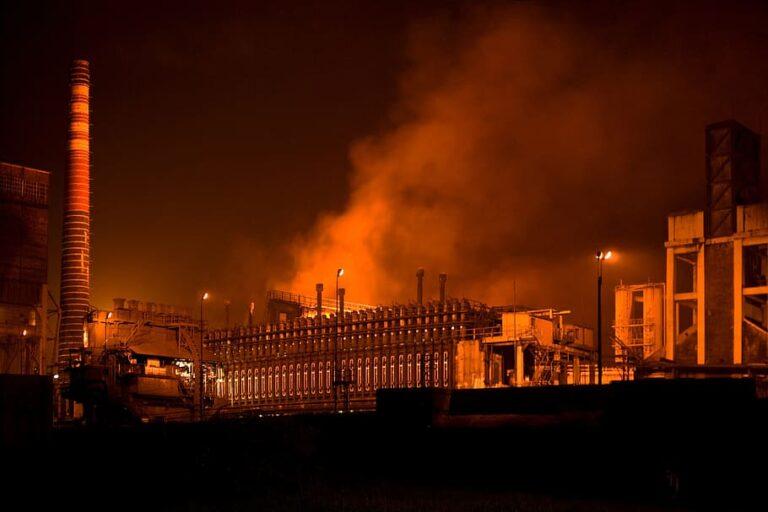
    A dramatic leap in atmospheric carbon dioxide (CO₂) levels in 2024 has signalled a possible intensification of the global climate crisis, according to a new report from the World Meteorological Organization (WMO). The annual rise of 3.5 parts per million (ppm) in CO₂ – the largest single-year jump since systematic measurements began in 1957 – has triggered concerns of a “vicious climate cycle” in which the Earth’s natural carbon-absorbing systems begin to falter.

    The findings, published in the WMO’s latest editions of its Greenhouse Gas Bulletin, lay bare how continued fossil fuel emissions and wildfire events have combined with a weakening of carbon sinks – the planet’s forests, soils and oceans – to drive the unprecedented CO₂ spike.

    A Record-Breaking Rise

    From 2023 to 2024, global average CO₂ concentrations rose by approximately 3.5 ppm – up from a decade average of ~2.4 ppm per year during 2011–2020. In absolute terms, CO₂ levels reached around 423.9 ppm in 2024, placing the planet well above pre-industrial concentrations of ~280 ppm.

    “This rapid increase not only locks in further long-term temperature rise, but also signals that natural systems are under extreme stress,” said Ko Barrett, Deputy Secretary-General of the WMO. “The heat trapped by CO₂ and other greenhouse gases is turbo-charging our climate and leading to more extreme weather.”

    Why the Surge?

    The WMO points to three key factors:

    1. Continued human emissions from fossil fuels, cement and land use changes remain high.
    2. Wildfire emissions – particularly in regions affected by drought and heat – have surged, releasing large quantities of carbon into the atmosphere.
    3. Reduced effectiveness of carbon sinks. Warmer oceans absorb less CO₂ and stressed ecosystems (e.g., drought-hit forests) are absorbing less than before.

    WMO senior scientific officer Oksana Tarasova warned: “There is concern that terrestrial and ocean CO₂ sinks are becoming less effective, which will increase the amount of CO₂ that stays in the atmosphere, thereby accelerating global warming.”

    The report describes this interplay of emissions and weaker sinks as a potential “vicious climate cycle”. As the planet warms, ecosystems that once removed CO₂ become less efficient – causing more CO₂ to accumulate, which in turn accelerates warming further.

    The WMO flagged that about half of human-emitted CO₂ each year is normally absorbed by land and ocean sinks; but the decline in their uptake threatens to shift more of that carbon into the atmosphere.

    Broader Greenhouse Gas Context

    CO₂ is not the only concern. The WMO’s bulletin indicates that levels of methane (CH₄) and nitrous oxide (N₂O) have also reached record highs – adding to the overall greenhouse-gas burden and warming potential.

    Methane, for example, contributes significantly to radiative forcing – the trapped heat energy driving global temperature rise – while nitrous oxide is linked to agriculture and industrial processes. The combined effect strengthens the impetus for urgent action.

    The scale of the rise severely hampers hopes of meeting the 1.5 °C target set under the Paris Agreement. Scientists say that once atmospheric concentrations push beyond certain thresholds and sinks degrade further, the margin for limiting global warming shrinks dramatically.

    The WMO report arrives just weeks before the COP 30 climate summit in Belém, Brazil, underscoring the urgency of deep emission cuts, strengthened monitoring and robust finance for mitigation and adaptation.

    What’s at Stake?

    A surge at this level can translate into more frequent and intense weather events – heatwaves, wildfires, droughts, storms – as well as long-term shifts in ecosystems, agriculture and sea-level trends. The WMO warns that CO₂ emitted today will affect the climate for hundreds of years.

    For developing nations, which often host vulnerable ecosystems and communities yet bear the least historic responsibility for emissions, the risks are particularly acute. The decreasing reliability of carbon sinks may mean fewer “buffers” against ongoing climate change.

    The WMO emphasizes several key responses:

    • Rapid and deep reductions in CO₂ and other greenhouse-gas emissions, especially from fossil fuels and land-use change.
    • Restoration and protection of natural carbon sinks – forests, wetlands, soils – and improved understanding of how they are changing.
    • Strengthened global monitoring systems, to track greenhouse-gas concentrations, sinks and feedback loops more precisely.
    • Scaled climate finance, so that vulnerable countries can adapt and transition to low-carbon pathways.

    High Costs and Uncertainty Stall Global Climate Action, Despite Consumer Willingness

    According to the survey, 64 per cent of respondents say they worry about climate change and 45 per cent say they feel personally affected. Among young adults aged 18-24, the worry is even higher at 67 per cent in this category.

    While consumer concern about climate change and inequality remains high, a new global survey shows that financial constraints and lack of clarity are holding back meaningful action – raising urgent questions for business and government alike.

    The worldwide study conducted by Ingka Group (which owns and operates most of the IKEA retail business) in partnership with GlobeScan surveyed 30,701 adults across 30 countries between March and April 2025. The findings, released under the banner “People & Planet Consumer Insights & Trends 2025”, offer a snapshot of how people feel about climate change, inequality, and sustainability – and what they believe business and government should do.

    The findings flag a core issue: although “over eight in ten people are taking some climate action,” many feel unable to do more because of high costs and uncertainty about whether their efforts will make a difference.

    Concern is High – but Action is Constrained

    According to the survey, 64 per cent of respondents say they worry about climate change and 45 per cent say they feel personally affected. Among young adults aged 18-24, the worry is even higher at 67 per cent in this category. On the inequality front, 61 per cent of respondents said they worry about social inequality, and 69 per cent are taking some action to address it.

    When it comes to climate-related behaviour, the report shows that 83 per cent of people say they are taking some climate action, and 81 per cent say they would be willing to do more. And among younger respondents (under 30), 36 per cent say they take climate action “most or all of the time”.

    Yet these high engagement rates do not translate into deeper impact. The key barriers: cost and uncertainty. 41 per cent of respondents say that high price prevents them from doing more. Paradoxically, saving money comes out as the top motivator (54 per cent) for taking climate action. Meanwhile, 44 per cent say they don’t know which actions will have the most impact.

    Business and Government Seen as Critical

    Consumers are looking beyond themselves. The survey finds that at least six in ten people expect both government and business sectors to play “significant” roles in reducing climate change and tackling inequality. On the corporate side, 82 per cent agree that companies need to pay living wages, and 70 per cent demand better communications from businesses about the environmental and social impact of their products and services.

    The Ingka/GlobeScan report frames this expectation in a prescriptive sense: companies can engage consumers more effectively by offering affordable, easy-to-understand solutions; sign-posting the most impactful actions; communicating both rational and emotional benefits; and collaborating for systemic change.

    Implications: Why the Gap Matters

    The significance of the disconnect between willingness and action cannot be understated. A related report from the United Nations Educational, Scientific and Cultural Organization (UNESCO) estimates 239 million people could be living in extreme poverty by 2050 and some 2.5 billion severely impacted by climate changes. It also highlights how climate‐driven displacement is growing: around 80 million displaced people currently live in areas exposed to climate hazards, with 65 per cent of that group also confronting conflict‐related risks.

    These are warnings that unless it becomes easier and more accessible for individuals and communities to participate meaningfully in climate action, the gap between intention and result may widen – with serious social, economic and environmental fallout.

    What Needs to Change

    The survey’s findings point to three major areas where intervention could accelerate climate and social action:

    Reduce cost barriers – If nearly half the population says cost is a deterrent, then public subsidies, lower-cost sustainable alternatives, or business models that align financial savings with climate action (e.g., energy efficiency, circular consumption) must be scaled up.

    Clarify impact and priorities – With 44 per cent uncertain about which actions will matter most, there is a strong need for better guidance. Simple, credible frameworks – communicated by governments, NGOs and businesses – could help. For example, more visibility around circular design, plant-rich diets (only 15 per cent report eating vegetarian/vegan “most or all of the time” despite its identified high impact).

    Business and government step-up – People expect systemic change, not just individual behaviour shifts. The survey emphasises that companies must do more: communicate clearer, support sustainable living, make responsible choices visible, and partner for the longer term. Meanwhile governments should deliver the enabling policy frameworks, affordability support, and public infrastructure needed.

    A Moment of Opportunity – and Risk

    The fact that strong consumer concern co-exists with meaningful but partial action is both hopeful and cautionary. On one hand, the foundational willingness is there: high levels of worry, engagement and readiness to act. On the other, the structural impediments – cost, uncertainty, and weak institutional support – are real and growing. If left unaddressed, the gulf between intention and deep action may widen, undermining global sustainability goals.

    As the Ingka-GlobeScan research summary puts it: “People care. They want to act. But no one can do it alone.” The message is clear – going it alone is not enough. Sustainable living must become easier, clearer and more embedded in how businesses operate and how communities are supported.

    For policymakers, corporate leaders, and civil-society organisations alike, the findings offer both a blunt reminder and a strategic roadmap. Provide the right conditions – financially and informationally – and individuals are ready to play their part. Ignore the barriers – or worst, misread the signals – and the climate action imperative may drift further out of reach.