More

    India Eyes Global Food Basket Status with ‘Team Agriculture’ Push and Soil Health Drive

    Union Agriculture Minister Shivraj Singh Chouhan unveils coordinated Centre-state strategy, sanctions over ₹1,200 crore for 10 states, and launches awareness on free trade deals to boost farmer incomes and exports.

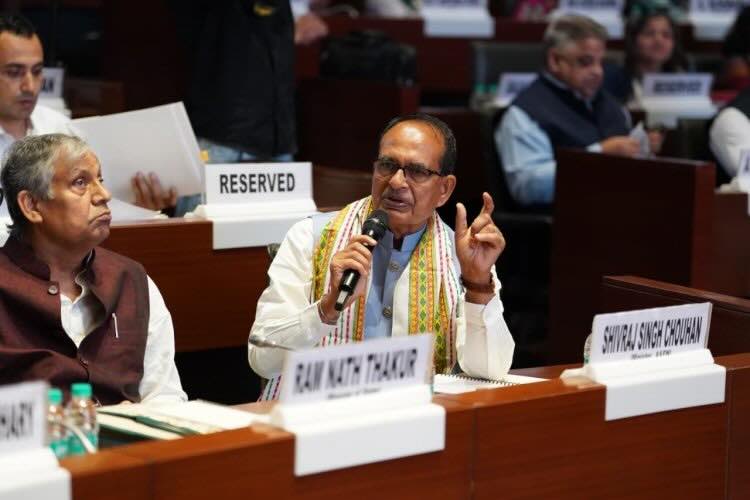
    India’s agriculture sector is set for a coordinated national push aimed at transforming the country into a major global food supplier while safeguarding soil health and raising farmer incomes. Union Agriculture and Farmers’ Welfare Minister Shivraj Singh Chouhan outlined the plan at the National Agriculture Conference – Rabi Campaign 2026, calling for a politics-free “Team Agriculture” approach involving the Centre, states, scientists and farmers.

    Chouhan stressed that governments and political parties may change, but the nation and its farmers remain constant. He urged state agriculture ministers and officials to prioritise practical solutions over partisan considerations. The two-day conference in the national capital brought together Union Ministers of State for Agriculture Ram Nath Thakur and Bhagirath Choudhary, Agriculture Secretary Atish Chandra, Indian Council of Agricultural Research (ICAR) Director General M.L. Jat, state officials, scientists and institutional representatives.

    Funding Boost for State Farm Schemes

    At the conference, Chouhan handed over sanction letters exceeding ₹1,200 crore under the Pradhan Mantri Rashtriya Krishi Vikas Yojana (PM-RKVY) to 10 states. Allocations included ₹290 crore for West Bengal, ₹198 crore for Haryana, ₹181 crore for Chhattisgarh, ₹154 crore for Arunachal Pradesh, ₹114 crore for Bihar, ₹104 crore for Karnataka, ₹75 crore for Mizoram, ₹64 crore for Himachal Pradesh, ₹58 crore for Jharkhand and ₹43 crore for Punjab.

    The minister emphasised that the Centre is moving beyond policy formulation to ensure timely resource flow so that schemes reach farmers without delay. This funding forms part of broader efforts to strengthen implementation at state and district levels.

    Agriculture Growth and Production Gains

    Chouhan highlighted measurable progress in the sector. India’s agricultural growth rate has risen from 3 per cent in 2015 to 4.5 per cent. The average annual increase in foodgrain production has more than doubled, from around 4 million tonnes earlier to 8.4 million tonnes a year. Rabi (winter crop) foodgrain production rose by 20.5 million tonnes between 2023-24 and 2025-26, attributed to the combined efforts of farmers, state departments, scientists and agricultural institutions.

    These gains support India’s ambition to move beyond domestic food security toward becoming a reliable supplier for global markets, particularly as international demand for diverse, high-quality produce grows.

    Coordinated Review Mechanisms Across Levels

    To improve cooperative federalism and scheme delivery, the Centre will introduce monthly virtual review meetings with states. At the state level, a “State Agriculture Team” will include the agriculture minister, secretary, state agricultural universities, ICAR institutions, Krishi Vigyan Kendras (farm science centres), ATMA (Agricultural Technology Management Agency), Farmer Producer Organisations, progressive farmers, processors, exporters and Union government nodal officers.

    District-level monthly meetings will involve collectors, deputy directors of agriculture, ATMA, KVKs, ICAR scientists, bankers and farmers. An annual calendar has been fixed for pre-season interface meetings: district-level sessions on 10 May and state-level on 17 May for the kharif (monsoon) campaign; and 10 September and 17 September respectively for the rabi campaign. A one-day national meeting of ministers, officials and scientists will also be held on a common date each year.

    Khet Bachao Abhiyan to Protect Soil and Promote Sustainability

    A nationwide “Khet Bachao Abhiyan” (Save the Farm Campaign) will run from 22 October to 30 November 2026, focusing on soil health and environmental sustainability. The drive will promote balanced fertiliser use based on Soil Health Cards, protect soil fertility and beneficial insects, and involve scientists and other stakeholders.

    Chouhan also called for expanded cultivation of pulses in rice-fallow areas of eastern India, particularly Jharkhand, Bihar, Odisha and West Bengal, after the paddy harvest. For the current rabi season, states were directed to base crop and improved seed recommendations on soil moisture and water availability, strengthen pest and disease protection, ensure full coverage of eligible farmers under Kisan Credit Cards, and conduct transparent Crop Cutting Experiments under the crop insurance scheme. State ministers were urged to personally review departmental schemes regularly.

    Strict legal action was ordered against spurious seeds, fake fertilisers and sub-standard pesticides, along with elimination of forced tagging of agricultural inputs. Natural farming, integrated farming systems and crop diversification are to be promoted in “mission mode” to make agriculture more sustainable and remunerative. Related efforts on land records modernisation and drought management in southern states continue to feature in national agricultural discourse, as covered in ongoing reports on digital land frameworks and monsoon-related challenges.

    Tapping Free Trade Agreements for Export Opportunities

    The government is pursuing a multi-pronged strategy to secure better prices for farmers through strengthened post-harvest management, scientific warehousing and marketing systems. Full assured procurement of tur (pigeon pea), urad (black gram) and masoor (lentil) at Minimum Support Price will be undertaken, with payments to farmers within 48 hours, Chouhan said.

    A key element is leveraging Free Trade Agreements (FTAs). Since 2014, India has signed nine FTAs, including one with New Zealand in April 2026. Several international markets now offer zero import duty access for Indian produce. However, farmers need clear information on demand patterns, quality standards and suitable crops, fruits and vegetables for export.

    The Centre will launch an awareness campaign covering global market opportunities, FTA-covered products, export-quality requirements and recommended cultivation for overseas markets. States will also be briefed on region-specific benefits. Production of millets, fruits, vegetables and grains will be promoted to international standards so farmers can capitalize on these openings. This awareness component will be integrated into the Khet Bachao Abhiyan.

    Chouhan said expanding market access in this way can deliver better returns to farmers while advancing India’s goal of emerging as a major global food basket. The strategy aligns with longer-term efforts to enhance self-reliance in pulses and oilseeds, improve value addition and connect research more closely to on-ground farmer needs.

    Editors Guild Report Lays Bare Credibility Crisis in Mainstream Indian Television

    A new Editors Guild study of CJP protest coverage finds mainstream TV treated as adversary by youth while print and independent digital platforms amplified student voices and sustained public trust.

    The Editors Guild of India’s latest State of Media Report has delivered a stark assessment of the Indian news landscape, concluding that coverage of the Cockroach Janta Party (CJP) protests in the national capital exposed a deep “crisis of credibility” in mainstream television news. While major Hindi news channels struggled to retain public trust, independent digital platforms and print outlets emerged as the primary spaces where student voices were heard and the movement’s demands gained legitimacy.

    The report, released in late September 2026, examined media handling of the June-July agitation that began over alleged irregularities in the NEET examination and broader anger over the education system. The protests, centred at Jantar Mantar and culminating in the “Chalo Sansad” march, ultimately forced the resignation of Union Education Minister Dharmendra Pradhan on 25 July. Researchers analysed output from Aaj Tak, ABP News, TV9 Bharatvarsh and India TV alongside independent digital creators, international outlets, and newspapers including The Indian Express, The Hindu, The Times of India, Hindustan and Dainik Bhaskar.

    Youth Turn on “Godi Media”

    Protesters, many of them young, openly treated mainstream television crews as adversaries. Chants of “godi media” (lapdog media) became a regular feature at the protest site. The Guild noted that this hostility was not spontaneous but rooted in perceptions of biased framing. Television coverage, according to the study, first under-reported the early phase of the movement and later leaned into hostile or conspiratorial narratives. Protesters were frequently described as “goondas,” “anti-nationals,” “paid,” or “political pawns.”

    In contrast, independent YouTubers and digital platforms amplified unfiltered student testimonies, live footage of police action, and discussions on education policy failures. Print media, the report found, performed a legitimising role through sustained ground reporting, characterising the CJP as a “youth pressure group” and a “GenZ phenomenon.” This divergence, the Guild argued, illustrated how framing choices directly shaped protest dynamics and public perception.

    Print and Digital Fill the Trust Gap

    The study highlighted a clear credibility gap. While television struggled, independent digital voices and traditional print journalism became the arenas where the movement’s core concerns – examination integrity, youth unemployment and accountability in the education system – were validated. International outlets similarly focused on structural failures rather than conspiratorial angles.

    This pattern aligns with broader trends documented in recent years. Trust surveys, including those from the Reuters Institute, have shown declining confidence in certain commercial broadcasters even as legacy print brands and public service outlets retain relatively higher scores. The CJP episode appears to have accelerated a shift already under way: younger audiences increasingly turn to digital-first and independent sources when mainstream television is perceived as aligned with power.

    Attacks on Journalists and the Limits of Protest

    The Guild has been careful to separate criticism of reporting from violence against reporters. In a July 2026 statement issued during the height of the protests, it condemned physical attacks on television journalists at Jantar Mantar while simultaneously noting that “flawed and biased reporting” weakens the media’s standing as a democratic pillar. The body stressed that no amount of perceived bias can justify assault, warning of “disastrous implications for our tenuous society.” At the same time, it criticised heavy-handed police tactics against peaceful demonstrators, including caning and the use of electric prods.

    These dual concerns reflect a recurring tension. Across South Asia, journalists face both physical threats from crowds and institutional pressures that can distort coverage. Parallel developments in neighbouring countries, including targeted violence against media houses in Bangladesh and legal pressures under cybercrime laws in Pakistan, underscore how fragile the space for independent reporting has become in the region.

    For related coverage, see OWSA’s reporting on media under siege in Balochistan and UN warnings on impunity in attacks on Bangladeshi journalists.

    Structural Pressures Behind the Credibility Slide

    The report does not exist in isolation. Over the past decade, Indian media has contended with concentrated ownership, commercial pressures, and a charged political environment. Corporate groups with diversified interests have acquired major news brands, raising questions about editorial independence. Legal instruments, from sedition provisions reintroduced in new criminal codes to intermediary rules governing digital platforms, have added layers of caution in newsrooms.

    Editors Guild President Sanjay Kapoor has previously described the present moment as one of the most difficult phases for Indian journalism in decades, pointing to technology-driven misinformation and the challenge of retaining autonomy inside large media houses. The Guild’s updated Ethics Code, released in 2025, explicitly warned against sensationalism and intentional misstatement of facts, arguing that short-term audience gains from exaggerated framing ultimately erode public confidence.

    Implications for Democratic Accountability

    The CJP protests demonstrated that when mainstream television loses credibility, alternative channels of information do not disappear – they multiply. Independent digital creators, often operating with limited resources, filled the vacuum with real-time reporting and direct engagement. Print titles that invested in ground-level coverage retained relevance. The result was a more fragmented but, in the Guild’s assessment, more plural information ecosystem for this particular movement.

    Yet the episode also raises longer-term questions: A democracy requires trusted institutions that can hold power to account across the political spectrum. When large sections of the audience treat the most widely watched news medium as an adversary, the risk is not merely reputational damage to individual channels but a broader erosion of the shared factual ground on which public debate depends, the Guild says. India’s ranking in the World Press Freedom Index, which has hovered in the lower half of global tables, reflects these accumulated stresses.

    Path Forward for the Fourth Estate

    The Editors Guild has positioned itself as a moral and ethical anchor for the industry, repeatedly calling for accuracy, balance and resistance to external pressures. Its fact-finding missions, ethics codes and public statements form part of a continuing effort to defend journalistic standards even as the technological and commercial environment shifts rapidly.

    For the media industry, the message of the State of Media Report is unambiguous. Credibility is not an abstract virtue; it is the currency that determines whether citizens treat news organisations as legitimate intermediaries or as partisan actors. The CJP coverage, in the Guild’s view, showed both the cost of losing that currency and the resilience of those platforms – print and independent digital – that still prioritised sustained, on-the-ground reporting.

    Image: Grok

    Sri Lanka: Signature Campaign Seeks Fresh Presidential Pardon for Controversial Godman

    A special drive launched at Mihintale aims to gather five million signatures urging President Anura Kumara Dissanayake to grant a new presidential pardon to the Bodu Bala Sena leader after the Supreme Court voided his earlier clemency.

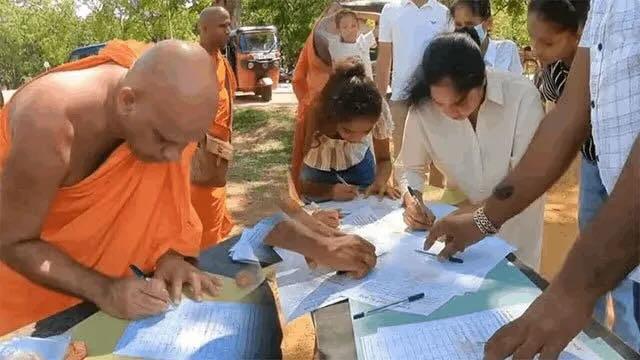
    A campaign to collect five million signatures seeking a presidential pardon for Venerable Galagoda Aththe Gnanasara Thero commenced on 26 September 2026 at the sacred premises of Mihintale in Sri Lanka’s North Central Province. The initiative, supported by senior members of the Maha Sangha, comes in the wake of a landmark Supreme Court ruling that invalidated a previous pardon granted to the controversial Buddhist monk.

    The Chief Incumbent of Mihintale Rajamaha Viharaya, Venerable Walawahengunawewe Dhammaratana Thero, along with other members of the Maha Sangha, participated in the initial signing of the petition. The chief incumbent appealed directly to President Anura Kumara Dissanayake to consider granting a fresh presidential pardon, invoking Mihintale’s historical association with the concept of sanctuary. Signatures collected through the campaign are expected to be presented first to the Chief Prelates before being submitted to the President.

    Supreme Court Ruling Nullifies Earlier Pardon

    Gnanasara Thero, General Secretary of the Bodu Bala Sena (BBS), a Sinhalese Buddhist nationalist organisation, was sentenced to six years in prison for contempt of court. The conviction stemmed from his conduct at the Homagama Magistrate’s Court in January 2016, where he disrupted proceedings related to the disappearance of political cartoonist and journalist Prageeth Eknaligoda and intimidated the journalist’s wife, Sandya Eknaligoda. The Court of Appeal convicted him in 2018, and the Supreme Court upheld the verdict later that year. He had served less than a year when then-President Maithripala Sirisena granted him a presidential pardon in May 2019.

    On 10 September 2026, a three-judge Supreme Court bench led by Justice Janak de Silva ruled that the 2019 pardon was “arbitrary and invalid,” violating the public trust and the principles of natural justice. The court held that while Article 34 of the Constitution grants the President discretionary power to issue pardons, this power is held in trust for the people and remains subject to judicial review. 

    The bench found that Sirisena had effectively approved a recommendation without independently considering the relevant material. The ruling reinstated the original sentence and ordered Gnanasara Thero’s return to prison. Fundamental rights petitions challenging the pardon had been filed by the Centre for Policy Alternatives and Sandya Eknaligoda.

    Background of a Divisive Figure

    Gnanasara Thero rose to prominence after co-founding the Bodu Bala Sena in 2012. The organisation quickly became known for its ultranationalist rhetoric and campaigns that critics say fuelled anti-Muslim sentiment in the years following the end of Sri Lanka’s civil war in 2009. He has faced multiple legal challenges over the years, including convictions and sentences related to statements deemed insulting to Islam and disruptive of communal harmony. In one case, the Colombo High Court upheld a nine-month prison sentence and fine for remarks made at a 2016 press conference. In another, he received a four-year rigorous imprisonment term in 2024 over anti-Islamic comments, though he was later granted bail pending appeals.

    The monk has maintained close ties with the Rajapaksa political family in the past. During Gotabaya Rajapaksa’s presidency, he was appointed to a presidential task force on legal reforms, a move that drew criticism from rights groups. Supporters view him as a defender of Buddhism and national identity; detractors accuse him of promoting division and undermining inter-religious harmony.

    Recent Developments and Appeals for Clemency

    Following the Supreme Court ruling, Gnanasara Thero has not returned to custody. He appeared publicly at the launch of his book Navayay Paha Vikurthiya in Colombo on 20 September 2026, where he appealed for a fresh pardon from President Dissanayake. He questioned why he should bear the consequences of alleged procedural errors in the earlier pardon process and urged senior Buddhist monks to intercede on his behalf. “If officials made a mistake in the procedure, why am I being punished?” he asked. He expressed readiness to respect the law while seeking the opportunity to continue religious activities.

    On 24 September, he missed a hearing at the Colombo Chief Magistrate’s Court on medical grounds. His counsel informed the court that the monk had felt faint while travelling to the hearing after visiting a hospital and was referred for treatment. The case in question involves the 2016 statements on Islam, with an appeal scheduled for February 2027.

    Political and Social Context

    The signature campaign unfolds against the backdrop of Sri Lanka’s evolving political landscape under President Anura Kumara Dissanayake’s administration, which came to power promising accountability and an end to preferential treatment for the powerful. The Supreme Court judgment itself left open the possibility of a future lawful pardon, provided it follows proper procedure and independent consideration of all relevant factors. Any new clemency would need to avoid the procedural flaws that invalidated the 2019 decision.

    Rights advocates and civil society groups have long argued that selective use of presidential pardons risks eroding the rule of law and public trust in institutions. At the same time, sections of the Buddhist clergy and nationalist supporters frame the current effort as a matter of religious solidarity and correction of what they see as an overreach. The campaign’s organisers hope the scale of signatures – targeting five million – will demonstrate broad public support and place moral pressure on the executive.

    Broader Implications for Rule of Law

    The case highlights ongoing tensions in Sri Lanka between majoritarian sentiments, minority rights, and judicial independence. Gnanasara Thero’s history of provocative statements and the BBS’s association with episodes of communal tension, including violence in Aluthgama in 2014, continue to polarise opinion. The disappearance of Prageeth Eknaligoda remains unresolved more than a decade and a half later, underscoring persistent accountability gaps in cases involving state actors.

    As the signature drive gathers momentum from Mihintale – a site of profound historical and religious significance – the petition will test the new government’s approach to high-profile clemency requests. Whether the campaign succeeds in influencing presidential action remains to be seen, but it has already reignited national debate on the limits of executive power, the role of the Sangha in public life, and the delicate balance between justice and reconciliation in post-war Sri Lanka.

    The coming weeks will reveal how the collected signatures are received by the Chief Prelates and, ultimately, by the President’s office. For now, the initiative stands as an organised expression of support for one of the country’s most polarising religious figures at a moment when the courts have reasserted the principle that even presidential pardons must adhere to constitutional bounds.

    Focus keyphrase:

    Nepal Monsoon Rains Kill 27 as Landslides and Floods Strike Still-Recovering Nation

    Heavy downpours from a Bay of Bengal low-pressure system trigger 542 disasters in four days, destroying homes and bridges while authorities evacuate thousands and warn of cascading risks in a country still reeling from August’s catastrophic glacier-fed floods.

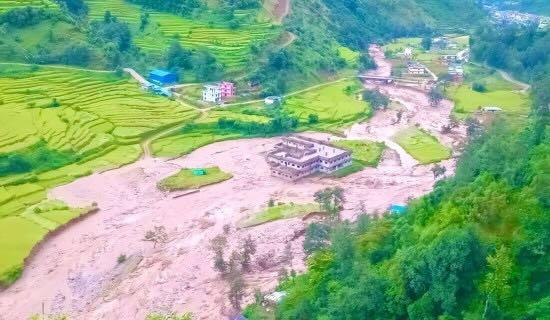
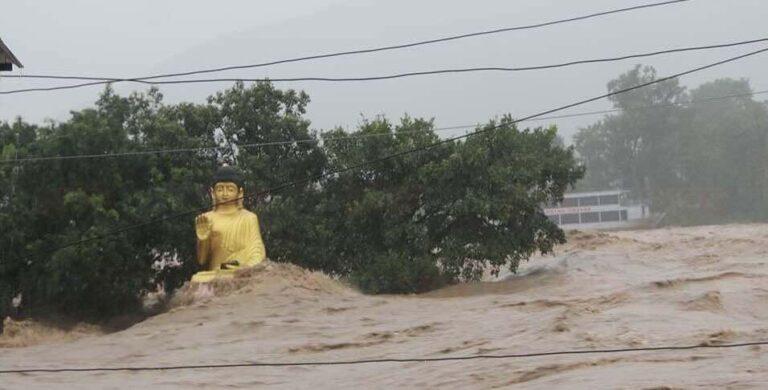
    At least 27 people have died and four remain missing after four days of relentless monsoon rains unleashed floods and landslides across Nepal between 24 and 27 September, the National Disaster Risk Reduction and Management Authority (NDRRMA) reported. The disasters injured eight people, affected 1,082 families and killed 114 livestock, underscoring the Himalayan nation’s continuing vulnerability even as it struggles to recover from the far deadlier August glacier-collapse floods that claimed more than 1,400 lives.

    Of the 542 recorded incidents, landslides dominated with 304 cases that killed 20 people and left four missing. Floods accounted for 87 incidents and four deaths, while other rain-related events caused three further fatalities. Property damage was extensive: 227 houses were completely destroyed and 142 partially damaged. Thirty-one bridges were also hit, disrupting transport in multiple districts.

    Intense Rainfall Linked to Bay of Bengal System

    Meteorological stations recorded more than 100 millimetres of rain at 186 locations during the period. The heaviest falls were in Dedhgaun of Nawalparasi East (544.2 mm), Panchase in Kaski (500.2 mm) and Atraulitaar in Tanahun (472 mm). NDRRMA attributed the extreme precipitation to a low-pressure system that developed over the Bay of Bengal, a classic late-monsoon pattern that can dump intense rain on Nepal’s steep slopes and fragile soils.

    The timing is particularly cruel. Just one month earlier, a massive ice-rock avalanche near Langtang Lirung on the Nepal-Tibet border had sent a wall of water, mud and debris racing down the Bhotekoshi and Trishuli river systems. That catastrophe, one of the deadliest in Nepal’s recent history, destroyed hydropower plants, bridges and entire settlements, left thousands missing and inflicted economic losses measured in billions of dollars. Many communities in Rasuwa, Nuwakot, Dhading and downstream districts remain displaced or only partially rebuilt.

    Early Warnings Reach Nearly One Million People

    Authorities had intensified preparedness before the latest rains arrived. NDRRMA’s situation room monitored weather and disaster risks continuously for 76 hours and coordinated with multiple agencies. Flood-warning SMS alerts were sent to more than 980,000 people through telecom networks. More than 5,000 responders and around 9,000 tourists also received updates. Flood forecasting for major rivers was extended from three days to five days, and flash-flood forecasting for smaller streams from 24 hours to 48 hours.

    NDRRMA spokesperson Shanti Mahat said approximately 2,000 people living in high-risk areas were relocated to safer locations. Helicopter rescues extracted stranded residents in remote districts including Jajarkot, Myagdi and Baglung. On 27 September alone, 78 people from Pauddhar in Annapurna Rural Municipality-5 of Myagdi were airlifted to safety. Four others stranded on an island in the Bheri River in Jajarkot were also rescued by helicopter. Nepal Police, the Armed Police Force and the Nepali Army were mobilised for search, rescue and relief operations.

    Landslides Temporarily Block Major Rivers

    The heavy rain also triggered landslides that temporarily obstructed river systems, raising the spectre of sudden downstream flooding. In Manang, a landslide on 27 September disrupted the flow of the Marsyangdi River. Another blocked the Kaligandaki River in Thasang Rural Municipality-3 of Mustang. NDRRMA immediately alerted local governments and security agencies in downstream areas to remain on high alert and evacuate vulnerable settlements.

    By 28 September, water levels in major rivers, including the Narayani, had begun to recede, signalling that the immediate flood danger was easing. Authorities continue to monitor conditions closely.

    Broader Context of a Changing Himalayan Climate

    Nepal’s latest ordeal fits a wider pattern of increasing hydro-meteorological risk across the Hindu Kush Himalaya. Scientists have warned that even in years of below-normal overall monsoon rainfall, short bursts of intense precipitation, rising temperatures and water stress can heighten the danger of flash floods and landslides. A June 2026 outlook from the International Centre for Integrated Mountain Development highlighted precisely this combination of drier averages and more hazardous extremes for Nepal and neighbouring countries.

    The August Bhotekoshi disaster had already demonstrated how rapidly cryosphere changes can cascade into downstream catastrophe. Recovery from that event alone is projected to cost between $4 billion and $5 billion, with Nepal seeking grants and climate finance while bracing for the need for soft loans. Reconstruction challenges and the search for international support remain high on the national agenda.

    The successive disasters illustrate both the acute exposure of mountain communities and the limits of national capacity. Nepal’s early-warning systems and rapid helicopter deployments saved lives in September, yet the scale of housing destruction, bridge damage and livelihood disruption continues to strain resources already stretched thin by the earlier catastrophe.

    Ongoing Risks and the Path Ahead

    As the monsoon season draws toward its close, residual risks persist. Unstable slopes, damaged infrastructure and the presence of temporary river blockages mean further landslides or sudden releases of water cannot be ruled out. Security forces and local administrations remain on heightened alert while relief continues to reach affected families.

    The human cost is measured not only in the 27 confirmed deaths and four missing, but also in the 1,082 families whose homes or livelihoods have been disrupted at a moment when many were still recovering from August’s far larger trauma. For a country whose economy and energy security depend heavily on hydropower and tourism, each successive disaster compounds the long-term challenge of building resilience in one of the world’s most rapidly changing mountain environments.

    Bangladesh Signals Reset with India: Forward-Looking Ties Top Agenda in Dhaka Talks

    Indian High Commissioner Dinesh Trivedi and Bangladesh’s State Minister for Foreign Affairs Humaiun Kobir reaffirm commitment to respectful, people-centric engagement as bilateral relations seek a constructive new chapter.

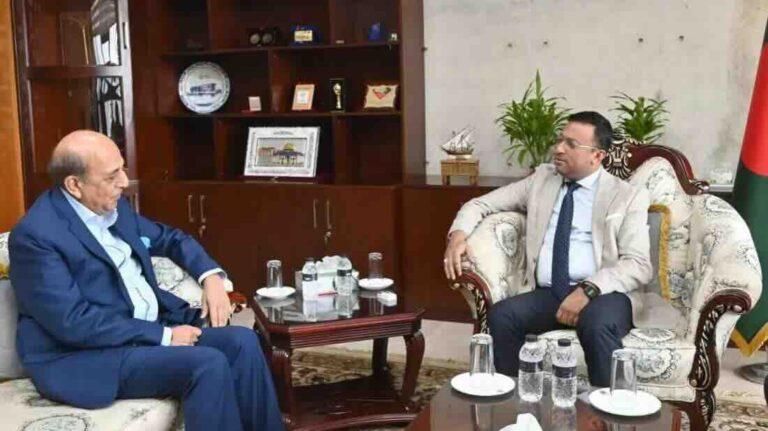
    In a significant diplomatic outreach on Tuesday, Bangladesh’s State Minister for Foreign Affairs Humaiun Kobir underscored Dhaka’s commitment to a “forward-looking and mutually respectful” partnership with India. The remarks came during a courtesy call by Indian High Commissioner to Bangladesh Dinesh Trivedi at the Ministry of Foreign Affairs in Dhaka. The meeting, which covered bilateral, regional and international issues including the recently concluded 81st United Nations General Assembly, signals a measured effort by both sides to rebuild ties on pragmatic foundations after a period of strain following the political transition in Bangladesh.

    Trivedi congratulated Kobir on his appointment and later described overall relations as “absolutely positive.”

    A Courtesy Call with Broader Significance

    The meeting was not framed around any single contentious issue. According to official accounts from both sides, the discussions remained broad, focusing on issues of mutual interest and ways to advance cooperation. Kobir reaffirmed Bangladesh’s readiness to work with India in a manner that benefits ordinary citizens on both sides of the border. 

    Trivedi, speaking to journalists afterwards, emphasised that the invitation for Bangladesh Prime Minister Tarique Rahman to visit India remains open and that the visit would take place at a mutually convenient time. “There is no need to rush,” he said, adding that political realities on both sides must be taken into account while overall momentum stays positive.

    This calibrated approach reflects the careful diplomacy currently underway. India has extended invitations for a state visit and other high-level engagements, while Dhaka has signalled that domestic priorities and the creation of a conducive environment will guide the timing.

    People-to-People Ties at the Core

    Both sides have repeatedly highlighted the importance of moving beyond government-to-government or individual-centric frameworks. Kobir and earlier statements from Bangladesh’s leadership have stressed that the new phase of relations should rest on people-to-people connections, economic complementarities and practical cooperation rather than past political alignments. Trivedi has echoed this view on multiple occasions, describing people-to-people links as the “true beating heart” of the India-Bangladesh relationship.

    For India, this emphasis aligns with long-standing priorities of connectivity, trade facilitation and cultural exchanges. The two countries share a long border, deep historical ties and significant economic interdependence. Strengthening visa regimes, medical and business travel, educational exchanges and cross-border trade can deliver tangible benefits to communities in West Bengal, Assam, Tripura and beyond, as well as to Bangladesh’s citizens.

    Navigating Challenges with Dialogue

    Relations between New Delhi and Dhaka experienced turbulence after the August 2024 political changes in Bangladesh. Issues such as the presence of former Prime Minister Sheikh Hasina in India, border management, trade measures and water sharing have required careful handling. Yet both governments have kept channels of communication open. Earlier visits by Bangladesh’s Foreign Minister and other officials, along with Trivedi’s outreach since assuming charge, have helped maintain dialogue.

    Kobir has previously stated that Bangladesh seeks cooperation based on mutual respect and that challenges can be addressed through sustained engagement rather than confrontation. Indian officials have similarly expressed readiness to work constructively with the government and people of Bangladesh in a positive and forward-looking manner. The latest meeting reinforces this shared preference for diplomacy over rhetoric.

    Economic and Connectivity Opportunities Ahead

    Beyond political optics, the practical agenda remains substantial. India and Bangladesh continue to explore cooperation in energy, trade, connectivity projects and development partnerships. The combined population of the two countries represents a large market with potential for expanded economic activity if logistical and regulatory barriers are eased. High Commissioner Trivedi has previously spoken of the transformative possibilities if the two neighbours pool their strengths.

    Pending matters such as the renewal of the Ganges Water Sharing Treaty, which is approaching its 2026 deadline, will require focused technical and political attention. Timely progress on such issues can build confidence and demonstrate that the relationship delivers concrete outcomes.

    Regional Context and UN Engagement

    The inclusion of the 81st UN General Assembly in the talks underlines that India-Bangladesh engagement is not limited to bilateral matters. Both countries participate in regional and multilateral forums where coordination on issues ranging from climate change to regional stability can yield mutual gains. Recent interactions at various levels, including parliamentary and ministerial contacts, suggest a gradual expansion of the diplomatic canvas.

    Trivedi’s assessment that public sentiment in Bangladesh remains positive toward the relationship provides an important undercurrent. Sustained people-centric initiatives – ranging from cultural programmes to skill development and healthcare cooperation – can further strengthen this foundation.

    Looking Ahead: Patience and Pragmatism

    The Indian High Commissioner’s message that the Prime Minister’s visit will occur when both sides find it convenient captures the current mood: patient, pragmatic and oriented toward results rather than haste. For New Delhi, the priority is a stable, cooperative neighbourhood that supports connectivity initiatives, border security and economic integration. For Dhaka, the emphasis is on a relationship that respects its political realities and delivers balanced benefits.

    The Tuesday meeting between Humaiun Kobir and Dinesh Trivedi does not resolve every outstanding issue. It does, however, reaffirm that both capitals prefer engagement over distance. As the two neighbours navigate the post-transition landscape, the focus on forward-looking, mutually respectful cooperation offers a constructive path – one that Indian observers will watch closely for its implications for regional stability and shared prosperity.

    In the months ahead, progress on trade facilitation, connectivity projects, water-sharing discussions and high-level visits will test the durability of this positive framing. The tone set in Dhaka this week suggests that both sides recognise the value of keeping the door open and the conversation constructive.

    Afghanistan: Kunar Quake Survivors Still in Tents a Year On as Winter Nears

    A year after the 6.0-magnitude earthquake that killed more than 2,200 people in eastern Afghanistan, families in Kunar’s Chawkay district remain in flimsy tents with little aid, food or income as colder weather approaches.

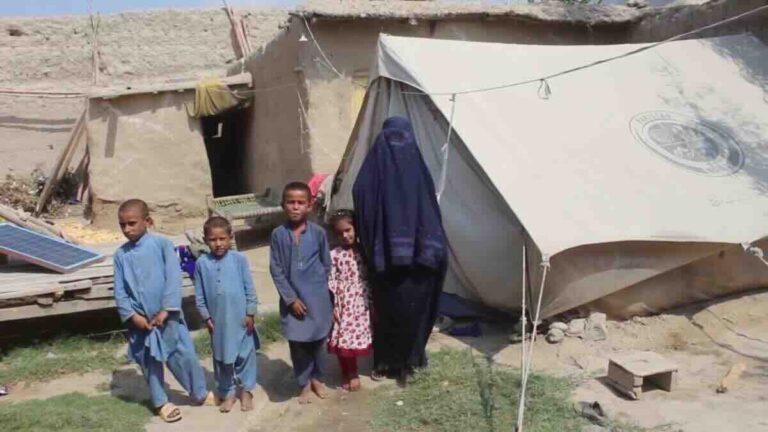
    In the remote valleys of eastern Afghanistan’s Kunar province, the scars of last year’s earthquake remain raw and visible. On a late August night in 2025, a magnitude 6.0 tremor, centred in Nurgal district at a shallow depth of about eight kilometres, tore through the mountainous terrain near the Pakistan border. It killed at least 2,217 people according to Taliban authorities, injured more than 4,000, and destroyed or damaged over 8,000 homes across Kunar, Nangarhar, Laghman and Nuristan provinces. Nearly half the dead were children. Entire villages were reduced to rubble. A year later, in places such as Masooda in Chawkay district, survivors are still living under canvas, their lives suspended between loss and the approaching winter.

    Marwa stands outside the thin tent that has been home to her and her four children since the disaster. The family lost nearly everything when the ground shook and hillsides collapsed. Her children were injured. Rain now seeps through the fabric, soaking the few remaining belongings. “My children were injured. Now when it rains, the water comes into the tent,” she told Amu TV. “The rain has come inside and damaged our belongings. This is the tent, as you can see.” With no source of income and no regular assistance, Marwa faces the colder months with mounting fear.

    Survivors Describe Vanishing Support and Daily Hardship

    Three families in Chawkay district painted a consistent picture of abandonment after the initial emergency phase. In the first weeks after the quake, some help arrived. Then it largely stopped. Residents say they registered repeatedly for aid but received little or nothing beyond sporadic market purchases by the men of the household.

    Amira, another survivor in Masooda, said her family needs cash and flour. “We have received no assistance,” she explained. “They register our names, but no one gives us anything. The men of the household bring whatever they can from the market, and we eat that.” 

    Askar Khan recalled the moment the hillside gave way: “Everything was shaking. God saved us and the children, but our belongings, bedding, wheat and corn were destroyed when the hillside collapsed.” Food stocks that families had relied on for months were buried or ruined, leaving many without a buffer against hunger.

    The earthquake struck at 23:47 local time on 31 August 2025. Aftershocks, including a strong 5.6-magnitude event days later, compounded the destruction. Landslides blocked roads. Remote communities remained cut off for days. Rescue teams, including Afghan forces using helicopters, struggled through rugged terrain. International organisations and neighbouring countries sent tents, food and medical supplies in the early response. Yet long-term recovery has lagged.

    Broader Humanitarian Crisis Deepens the Impact

    Afghanistan was already facing overlapping emergencies when the quake hit. Economic collapse, restricted international assistance, large-scale returns of Afghans from Pakistan and Iran, and successive climate shocks had left millions dependent on aid. A UN expert warning on Afghan children highlighted irreversible harm from these crises combined with Taliban restrictions on women’s and girls’ education and mobility. Malnutrition rates remain high. In some assessments, three-quarters of the population struggle to meet basic needs.

    Six months after the disaster, the Red Cross reported that more than 221,000 people in the eastern provinces still required urgent assistance. Save the Children noted that around 25,000 children were living in tents in Kunar, with many schools damaged or destroyed. A joint recovery needs assessment of estimated damages and losses in the region at tens of millions of dollars, with recovery costs higher still. Permanent shelter, livelihood restoration and winterisation have progressed slowly in the hardest-hit districts.

    Fears Mount as Temperatures Drop

    Now, a year later, as autumn turns toward winter, families in tents face new threats. Rain already invades their shelters. Colder nights will bring greater risks of illness, especially for children still recovering from injuries and living with limited food. Marwa has no income. Amira’s household depends on whatever can be scraped together from the market. Askar Khan lost the grain stores that once provided a measure of security.

    Humanitarian partners have distributed emergency shelters, non-food items, cash assistance and health services in the months since the quake. Mobile teams have conducted medical consultations and psychosocial support. Yet survivors in Chawkay say the support that reached them in the early weeks largely dried up. Access challenges, funding shortfalls and the sheer scale of needs across Afghanistan have constrained sustained help. Reports of clinic closures and reduced international funding in the period leading up to and following the disaster underscored how stretched the response capacity already was.

    Calls for Sustained Recovery Beyond Emergency Relief

    The human cost of the 2025 Kunar earthquake extended beyond the immediate death toll. Livelihoods based on farming and livestock were disrupted. Schools and health facilities were damaged. Women and children, already facing severe restrictions and high rates of food insecurity, bore a heavy share of the suffering. UNICEF estimated that children accounted for roughly half of those killed. Thousands of families remain displaced or living in inadequate conditions a full year later.

    Recovery efforts have included debris clearance, temporary shelter provision and some livelihood support. Organisations such as the Afghan Red Crescent Society, IOM and UN agencies have reached significant numbers of people. Yet the gap between emergency response and durable solutions remains wide. Permanent housing, reliable food assistance, income opportunities and protection from the elements are still out of reach for many in Chawkay and neighbouring districts.

    In Masooda, the tents stand as daily reminders of unfinished recovery. Marwa watches over her four children inside a shelter that cannot keep out the rain. Amira waits for assistance that has not materialised despite repeated registrations. Askar Khan remembers the hillside that swallowed the family’s grain and bedding. With winter approaching, their message is simple and urgent: they need shelter that lasts, food that sustains, and support that does not disappear after the cameras leave.

    Focus keyphrase:

    Tags: Afghanistan, Kunar earthquake, Chawkay district, earthquake survivors, humanitarian crisis, displacement, winter shelter, aid shortfall, Afghan children, natural disaster recovery,

    India Assigns 14-Digit Bhu-Aadhaar to Every Land Parcel Under New Digital Framework

    The Centre has launched DILRMP 3.0 guidelines, giving every land parcel a unique 14-digit Bhu-Aadhaar while integrating maps, ownership records and registrations into a GIS-enabled national Land Stack.

    The Ministry of Rural Development has rolled out the operational guidelines for the third phase of the Digital India Land Records Modernisation Programme, or DILRMP 3.0. The initiative marks a decisive shift from isolated digitisation of land records to a fully integrated digital public infrastructure for land administration across India.

    Union Minister for Rural Development Shivraj Singh Chouhan formally launched the guidelines at a hybrid event in New Delhi on 10 September 2026. State Revenue and Registration Ministers, Principal Secretaries and senior officials from across the country joined the proceedings virtually. The Central Sector Scheme carries an outlay of ₹565.50 crore for the period 2026–2031 and will be implemented in all States and Union Territories with 100 per cent central funding through a phased, performance-linked mechanism.

    Chouhan underlined that land in India is more than a commodity. “Land is not merely property; it represents the pride of farmers and our generational heritage,” he said. He noted that earlier phases of DILRMP had already digitised 99.90 per cent of Records of Rights and 97 per cent of cadastral maps, while computerising 99 per cent of Sub-Registrar Offices. DILRMP 3.0 now aims to move beyond these achievements towards seamless system integration that will make institutional credit easier for farmers and reduce repeated visits to government offices for ordinary citizens.

    GIS-Enabled Land Stack Takes Shape

    At the heart of the new framework lies the GIS-enabled Land Stack. This integrated digital architecture will layer georeferenced cadastral maps, Records of Rights, property registration data and relevant court matters into a single, interoperable system. Each State will develop its own Land Stack by connecting existing land-related datasets through application programming interfaces. These State-level stacks will then serve as the building blocks of a federated National Land Stack. Data ownership and control will remain with the concerned State authorities, while seamless exchange of information becomes possible across jurisdictions.

    Narendra Bhooshan, Secretary in the Department of Land Resources, described DILRMP 3.0 as a transition towards building a true Digital Public Infrastructure for land. The approach mirrors successful digital platforms already operating in payments and identity, creating a foundational layer that other government and private services can build upon.

    Universal Bhu-Aadhaar for Every Parcel

    A central pillar of the programme is the Universal Bhu-Aadhaar, officially known as the Unique Land Parcel Identification Number or ULPIN. Every land parcel in the country will receive a unique 14-digit identification number generated from its geo-referenced boundary coordinates. The number follows international standards set by the Electronic Commerce Code Management Association and the Open Geospatial Consortium.

    Because the identifier is derived from the precise latitude and longitude of a parcel’s vertices, it remains permanently linked to the physical location of the land. Even if ownership changes, the parcel is subdivided or the land is transferred, the Bhu-Aadhaar stays constant. Officials say this unambiguous digital identity will sharply reduce fraudulent transactions, eliminate duplicate records and make ownership verification far simpler for buyers, banks and government departments.

    ULPIN has already been rolled out in 29 States and Union Territories, with more than 40 crore land parcels assigned unique numbers. Full georeferencing of cadastral maps under DILRMP 3.0 will complete the national coverage and lock the spatial-textual linkage between maps and ownership records.

    Modernising Registration Offices and Archiving Legacy Records

    Seventy-five high-footfall Sub-Registrar Offices will be upgraded into citizen-friendly Registration Seva Kendras modelled on Passport Seva Kendras. These centres will feature digital queue management and improved amenities, transforming the experience of property registration. A secure digital Registration Repository will store registered deeds and encumbrance information, enabling quick ownership verification, transaction-history checks and property due diligence.

    The programme also provides for systematic scanning and digital archiving of historical land and property registration records. Preserving these inheritance-related documents is expected to reduce long-running disputes over ancestral property that currently clog revenue courts and civil courts alike.

    Paperless Revenue Courts and Faster Mutations

    An upgraded Revenue Court Case Management System will be linked directly with land records. The integration aims to cut case pendency and accelerate mutation settlements after sales, inheritances or partitions. By bringing court matters into the same digital ecosystem as ownership and registration data, the government hopes to create a continuous digital trail for every parcel.

    Urban Focus Through NAKSHA

    Alongside rural land records, DILRMP 3.0 will accelerate the NAKSHA pilot project for urban land mapping. The initiative seeks accurate GIS-based urban land records and the eventual issuance of Urban Property Cards, or UrPro Cards. Progress across both rural and urban components will be monitored in real time through an upgraded DILRMP Management Information System dashboard under the Project Sanctioning and Monitoring Committee.

    The emphasis on conclusive, geo-referenced titles is expected to strengthen the creditworthiness of rural landholdings. Farmers who currently struggle to obtain institutional loans because of incomplete or disputed records should find the process smoother once Bhu-Aadhaar and the Land Stack are fully operational. Banks and financial institutions will be able to verify ownership and encumbrances online, reducing both risk and transaction costs. Similar gains are anticipated for infrastructure projects, industrial land acquisition and urban planning, where clear titles and accurate maps remain critical bottlenecks.

    For ordinary citizens the most immediate benefit will be fewer trips to tehsil offices and sub-registrar offices. Once the Land Stack is live, ownership status, mutation history and pending litigation can be checked digitally. The same infrastructure can later support property tax assessment, utility connections and disaster-relief targeting, creating a single source of truth for land-related services.

    The programme continues India’s broader push to build digital public infrastructure that serves the last mile. Just as Aadhaar transformed identity verification and UPI revolutionised payments, the Land Stack and Bhu-Aadhaar seek to bring the same clarity and efficiency to one of the most contested and emotionally charged assets in the country—land. With 100 per cent central funding, performance-linked releases and real-time monitoring, the government has set a clear timeline for States to deliver. The coming five years will determine how completely India’s land records move from paper files and fragmented databases into a unified, geo-referenced digital framework that works for farmers, homeowners and the economy at large.

    Relentless Rains Trigger Floods and Landslides Across Nepal

    Heavy monsoon rains since Thursday have unleashed deadly landslides and widespread flooding, killing six people, leaving five missing and disrupting highways, homes and hydropower across multiple districts.

    Continuous heavy rainfall battering Nepal since Thursday has triggered floods and landslides that have claimed at least six lives, left five people missing and paralysed road networks in several provinces. Security forces have evacuated hundreds of families from riverside settlements while major rivers such as the Narayani and Tinau surged past danger levels, according to official reports on Sunday.

    Landslides Block Key Highways and Isolate Communities

    Landslides and mudslides have severely disrupted road connectivity nationwide. Sections of the Prithvi Highway and the Narayangadh-Muglin road, important transport routes in the Himalayan nation, were obstructed at multiple points. Traffic between Narayanghat and Pokhara faced prolonged delays as crews worked to clear debris. In western Nepal, the Karnali Corridor and Karnali Highway were blocked in Humla, Kalikot and Surkhet. The Mid-Hill Highway faced obstructions in Rukum West, while the Rapti Highway and roads linking Surkhet, Salyan, Jajarkot, Jumla and Mugu were also affected.

    In Baglung, sections of the Kaligandaki Corridor and Mid-Hill Highway suffered damage. A landslide at Jharikhola in Mugu blocked the Nagna-Gamgadhi road, and a mudslide at Gagne Khola in Kalikot halted traffic on the Karnali Highway. Authorities warned travellers to exercise extreme caution as rain continued.

    Rivers Surge Past Danger Marks, Forcing Mass Evacuations

    Major rivers have risen sharply. The Narayani River reached between 9.23 metres and over 10 metres early Sunday, well above its 9-metre danger level and 7.3-metre warning mark. The Riu stream, flowing along the boundary of Madi and Chitwan National Park, also crossed its danger level of 3.8 metres. The National Disaster Risk Reduction and Management Authority (NDRRMA) issued urgent notices urging residents in riverside areas of Chitwan, Nawalparasi East and Nawalparasi West to move to safer locations, warning that levels could climb further towards 13 metres.

    In Rupandehi, floodwaters from the Tinau River swept away six houses – two cemented and four mud-and-stone – along the riverbank in Topmajhuwa of Butwal Metropolitan City-11 on Saturday night. Around 200 houses remained at risk. Security personnel evacuated approximately 1,000 people overnight, initially relocating about 500 residents from the high-risk Majhuwa area to temporary shelters including schools and a temple before shifting them to safer locations. The district administration urged people living near rivers and streams to stay alert.

    Hundreds of Homes Inundated in Tarai Districts

    Flooding from the Narayani and Saptakoshi rivers has inundated hundreds of houses in the Tarai. In Nawalparasi West’s Susta Rural Municipality, 172 families were relocated after the Narayani entered settlements. Water reached up to three feet inside some homes, and 271 houses and animal sheds were affected in one ward alone. The settlement, bordered by the river and India, left many residents with limited escape routes except by boat. An Armed Police Force border security barracks was also inundated.

    In Saptari, floodwaters from the Saptakoshi affected around 500 houses and more than 2,000 people in Hanumannagar Kankalini Municipality and Tilathi Koiladi Rural Municipality. Some 217 homes were inundated, with families moved to the western embankment of the Koshi. Local authorities provided food and temporary shelter under tarpaulins. Similar inundation damaged homes and prompted relocations in Bardiya.

    Bridges Washed Away and Hydropower Disrupted

    Infrastructure has suffered significant damage. In Myagdi, the swollen Kaligandaki River swept away a motorable bridge connecting Pokharebagar in Annapurna Rural Municipality with Naulibagar, disrupting access towards Mustang. Another bridge linking Mirmi in Syangja with Harmichaur in Gulmi was washed away. Four government offices in Beni, the district headquarters – including the veterinary hospital, Forest Division Office, Beni Municipality office and Soil and Watershed Management Office – were flooded, along with a settlement of landless families. Electricity was disrupted and transport came to a near standstill.

    Authorities opened all gates of the Kaligandaki A Hydropower Project due to heavy inflows, temporarily halting electricity generation. In Parbat’s Jaljala Rural Municipality, five houses in Farse and Lasti Bazaar were swept away, and Seti Beni market at the junction of Syangja, Parbat and Gulmi was inundated.

    Authorities Issue Nationwide Alerts Amid Continuing Rain

    The Department of Hydrology and Meteorology and security agencies have urged residents living near rivers, streams and landslide-prone slopes to remain vigilant and move to safer ground if conditions worsen. Officials cautioned that continued rainfall could escalate risks of further flooding, erosion and transportation disruptions. River levels in parts of Karnali, including the Thuli Bheri in Dolpa and stretches of the Karnali in Humla and Mugu, were rising.

    These latest monsoon disasters come against the backdrop of Nepal’s acute vulnerability to climate-driven extreme weather, a pattern highlighted in recent analyses of the country’s repeated flood crises. Communities recovering from earlier events face renewed hardship as the rains persist.

    Rescue and relief operations involving police, Armed Police Force and local administrations continue across affected districts. Authorities are prioritising the clearance of blocked highways and the provision of temporary shelter and food to displaced families while monitoring river levels closely.

    India, Sri Lanka Hold Fifth DG-Level Narcotics Talks in Colombo

    Officials from both nations review maritime trafficking trends, share intelligence and pledge stronger institutional coordination against illicit drugs in the Indian Ocean region.

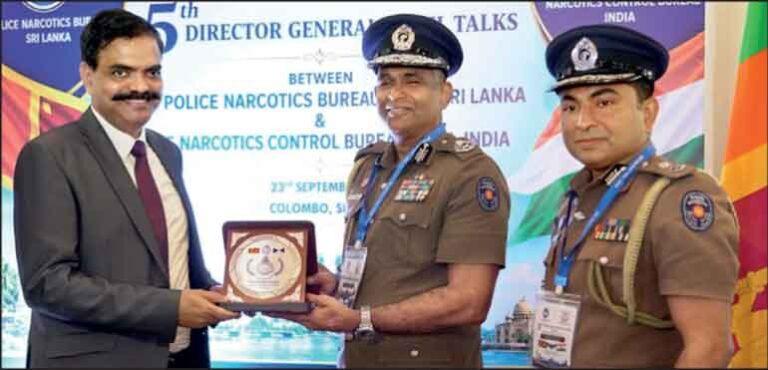
    Narcotics control agencies of India and Sri Lanka held their fifth Director General-level talks in Colombo on 23 September 2026, reinforcing bilateral efforts to combat illicit drug trafficking across the Indian Ocean.

    The meeting builds directly on the renewed emphasis on security cooperation during Indian Prime Minister Narendra Modi’s state visit to Sri Lanka in April 2025. It gained added urgency after Sri Lankan President Anura Kumara Dissanayake sought India’s “fullest support” in tackling the regional drug menace during talks with Indian Defence Minister Rajnath Singh in Colombo on 9 September 2026.

    High-Level Delegations Review Emerging Threats

    The Indian side was led by R. Sudhakar, Deputy Director General of the Narcotics Control Bureau (NCB). The Sri Lankan delegation was headed by K.D.G.L. Ashoka Dharmasena, Deputy Inspector General of the Police Narcotics Bureau (PNB).

    India’s team included officials from the Tamil Nadu Police, Indian Coast Guard and Ministry of External Affairs, alongside NCB personnel. Sri Lanka fielded representatives from the Attorney General’s Department, Sri Lanka Customs, Sri Lanka Coast Guard, Government Analyst’s Department, Special Task Force, Sri Lanka Navy, National Dangerous Drugs Control Board (NDDCB), Financial Intelligence Unit and other PNB officers.

    Both sides examined emerging trends in drug trafficking, with particular focus on maritime routes. They discussed tracing organised criminal networks, coordinating operational intelligence and investigations into organised crime. Actionable intelligence on drug trafficking operatives, routes and mechanisms was shared during the talks.

    Maritime Routes Remain Primary Concern

    Maritime pathways through the Indian Ocean have become a critical vulnerability for both countries. Southern Sri Lankan waters and the Palk Strait corridor linking Tamil Nadu and Sri Lanka serve as key transit points for heroin, methamphetamine and other substances often originating from the Golden Crescent region.

    Recent years have seen significant seizures. Sri Lankan authorities reported large hauls of heroin and crystal meth (“ice”), while Indian agencies, including the NCB, Coast Guard and Navy, have intercepted multi-hundred-kilogram consignments in joint operations. Routes from Nepal via India into Sri Lanka have also drawn renewed scrutiny for hashish oil and charas smuggling.

    The proximity of Tamil Nadu makes state-level police involvement essential. Analysts note that a joint mechanism involving Tamil Nadu authorities, the central government and Sri Lankan agencies could improve real-time information sharing on trafficking networks, maritime surveillance and proceeds of crime.

    Political Momentum Strengthens Cooperation

    President Dissanayake’s recent appeal for Indian support followed the launch of Sri Lanka’s island-wide anti-drug programme. During Defence Minister Singh’s visit – the first by an Indian Defence Minister in nearly four decades – three defence-related MoUs were also signed, covering equipment upgrades, academic exchanges and cadet corps cooperation.

    India has prioritised narcotics control as part of its broader regional security architecture. The NCB coordinates with multilateral forums including SAARC, BIMSTEC, the Colombo Security Conclave (CSC) and the United Nations Office on Drugs and Crime. In May 2026, the NCB hosted a CSC workshop in New Delhi on transnational drug smuggling by sea, attended by officers from Bangladesh, Maldives, Mauritius, Seychelles and Sri Lanka.

    India has signed bilateral agreements or MoUs with more than 40 countries to curb drug trafficking and regularly holds DG-level talks with neighbours including Sri Lanka, Myanmar, Bangladesh and others.

    Institutional Ties Set for Further Strengthening

    At the conclusion of the Colombo meeting, both sides agreed to deepen institutional cooperation and coordination between their drug law-enforcement agencies. The focus remains on addressing evolving challenges posed by illicit narcotics trafficking, including synthetic drugs and precursor chemicals.

    This aligns with India’s domestic push. In June 2026, Home Minister Amit Shah launched the Vision Document on Narcotics Control (2026-2029), aiming for measurable progress toward a drug-free India by 2047. The document prioritises enforcement, intelligence, precursor control, demand reduction and capacity building through the four-tier Narco-Coordination Centre (NCORD) mechanism.

    For Sri Lanka, the talks support ongoing naval and coast guard efforts against drug trafficking and illegal fishing in its maritime domain. Partnerships with India have already facilitated intelligence-driven interdictions of dhows and trawlers carrying large narcotics consignments.

    Regional Security Implications

    The drug trade is increasingly linked to organised crime, money laundering and potential terror financing, elevating it beyond a pure law-enforcement issue. Profits from maritime smuggling fund broader criminal networks operating across South Asia and the Indian Ocean region.

    Experts argue that effective responses require harmonised legal procedures, controlled delivery operations, and shared best practices on investigation and prosecution. Capacity-building workshops, joint patrols and real-time intelligence exchange between the Indian Coast Guard, Sri Lanka Navy and specialised narcotics bureaus form the operational backbone of current cooperation.

    The fifth DG-level meeting signals continuity rather than a one-off event. Previous rounds have focused on heroin, psychotropic substances, precursors and transnational syndicates. Sustained dialogue helps both countries adapt to shifting routes and new synthetic threats.

    Political Will

    As the Indian Ocean remains a major transit zone, closer India-Sri Lanka coordination will be central to regional stability. The involvement of Tamil Nadu Police in the latest talks underscores the importance of sub-national engagement alongside national agencies.

    Both governments have demonstrated political will. Continued sharing of actionable intelligence, joint operations and institutional mechanisms will determine how effectively the two neighbours can disrupt trafficking networks that threaten public health, security and economic stability on both sides of the Palk Strait.

    Focus keyphrase:

    Tags: India-Sri Lanka relations, narcotics control, drug trafficking, maritime security, NCB, Police Narcotics Bureau, Indian Ocean, bilateral cooperation, Colombo Security Conclave, organised crime,

    Bangladesh: Police Raid Minor Political Party Office, Detain Scores Over Suspected Awami League Links

    Dhaka Metropolitan Police stormed the Jatiya Samajtantrik Dal headquarters on Saturday, detaining dozens amid claims of a secret banned party meeting and counter-allegations of a BNP attack on a legitimate delegates’ gathering.

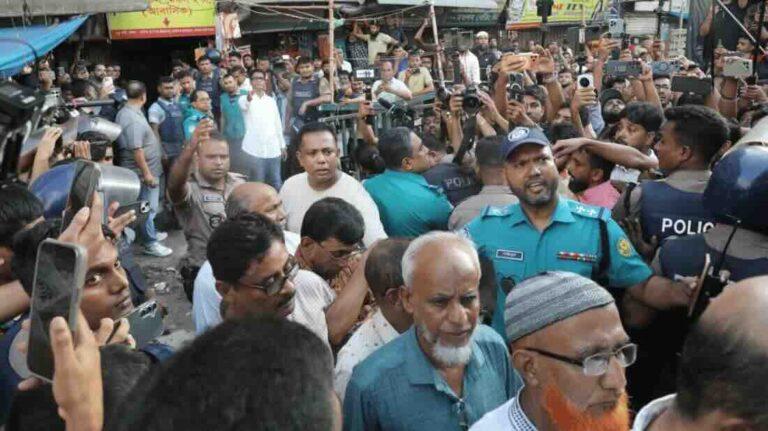
    Dhaka’s political temperature spiked on Saturday afternoon when Dhaka Metropolitan Police (DMP) launched a major operation at the central headquarters of the Jatiya Samajtantrik Dal (JASAD, also referred to as JSD or JaSaD) in the city’s upscale Gulistan area. Officers surrounded the building, moved to the third floor and detained scores of people present inside. Estimates of those taken into custody range from more than 50 to over 100, with police stating they were verifying identities for possible links to the banned Awami League.

    The raid began around 2:30 pm. Sub-Inspector Nazmul Hossain, present at the scene, reported nearly 400 individuals inside the office at the time. DMP Media and Public Relations Division Deputy Commissioner Md Aktar Hossain confirmed a joint operation by crime and detective units. He cited reports of “Joy Bangla” slogans being raised and the presence of many outsiders during a meeting as the trigger for the action. Detainees were taken to Paltan Model Police Station for questioning, with Officer-in-Charge Arifur Islam stating that identities and links were under verification and legal steps would follow accordingly.

    Conflicting Accounts of the Gathering

    JASAD’s version of events differs sharply. Office Secretary Sajjad Hossain said the party had convened a central representative or delegates’ meeting attended by roughly 350 leaders and activists from across the country. According to him, the gathering was disrupted around 2:30 pm when activists linked to the Bangladesh Nationalist Party (BNP) and its youth wing, Jubo Dal, forcibly entered the premises and mounted an attack. Party members found themselves trapped as tension escalated in the surrounding area. Hossain firmly rejected claims that Awami League figures were involved, describing the accusations as a pretext for an unprovoked assault on a peaceful intra-party conference.

    BNP and Juba Dal figures offered a contrasting narrative. Robiul Islam Nayan, Member Secretary of Dhaka South Juba Dal, was reported to have entered the facility and claimed that members of the banned Awami League were holding a secret meeting under the cover of the JASAD gathering. Police appear to have acted on intelligence consistent with this suspicion.

    Context of the Ban and Political Climate

    The Awami League was barred from political activity following the August 2024 uprising that ended Sheikh Hasina’s long tenure. Subsequent administrations, including the interim government under Muhammad Yunus and later political transitions, have maintained restrictions, with authorities conducting repeated operations against suspected residual networks. Human rights organisations have raised concerns over prolonged detentions of Awami League-linked individuals without charge in some cases, highlighting tensions between security measures and due process.

    JASAD itself occupies a complex position in Bangladesh’s left-leaning political spectrum. Founded in 1972 after a split from the Awami League’s student wing, the party has experienced multiple factional divisions. One major faction under Hasanul Haq Inu had historical ties to the Grand Alliance; another, Bangladesh Jatiya Samajtantrik Dal led by Sharif Nurul Ambia, registered separately and at times engaged with broader left democratic platforms. In recent years, JASAD units have faced attacks on offices and have chosen to boycott certain electoral processes they described as one-sided.

    Police Operation Details and Ongoing Verification

    Law enforcement described the action as intelligence-driven. Officers secured the building and began systematic questioning. By late afternoon, between 30 and 40 individuals had been confirmed at Paltan Police Station in some reports, while others indicated higher numbers still under process. Police have not released a final tally of formal arrests or specific charges at the time of reporting, emphasising that verification of identities and organisational links continues. No detailed inventory of seized materials or further operational outcomes has been publicly detailed beyond the detentions themselves.

    The incident occurred against a broader backdrop of elevated political friction in Dhaka and elsewhere. Reports of clashes, office attacks and competitive street presence among rival party youth wings have been recurrent in the post-2024 landscape. Authorities have repeatedly cited the need to prevent banned organisational activity and maintain public order, while opposition and smaller parties have accused security forces of selective enforcement or allowing partisan disruption.

    Reactions and Immediate Aftermath

    JASAD leaders portrayed the raid as an interruption of legitimate party business and an example of vulnerability for smaller left parties. They insisted the meeting was internal and that outside forces exploited the occasion. Police maintained that the combination of slogans associated with the banned party, the presence of large numbers of outsiders, and prior intelligence justified the intervention.

    As questioning continued into the evening, the office remained under police presence. Further formal decisions on charges, releases or continued detention were expected once identity checks and intelligence analysis concluded. Local traffic and commercial activity in the area experienced temporary disruption during the cordon.

    Broader Implications for Political Space

    The episode illustrates the fragile space available for smaller registered parties amid ongoing efforts to suppress residual networks of the banned Awami League. It also underscores persistent mutual distrust between major political camps and the challenges facing law enforcement in distinguishing legitimate political assembly from prohibited activity. Independent observers have noted that such incidents risk deepening polarisation and complicating the restoration of a stable, inclusive political environment.

    For JASAD, the raid adds to a history of office-related pressures. Party statements in previous months had already highlighted vandalism of district offices and a decision to stay outside certain electoral processes. Saturday’s events may reinforce internal debates about organisational security and political strategy in a highly charged atmosphere.

    Police have indicated that the operation remains under review and that subsequent legal steps will rest on the findings from questioning and verification. No immediate statements from higher political leadership of either BNP or the government were available at the time of this report. The situation in Gulistan quietened after the initial detentions, but the political reverberations are likely to continue as more details on the identities of those held emerge.