More

    Pakistan to Launch Rs 52 Billion Green Sukuk Bonds for Clean Energy Projects

    Pakistan plans to raise Rs. 52 billion through the issuance of the country’s first sustainable investment Sukuk bonds. This innovative debt instrument will help fund three critical clean energy projects currently under construction.

    The Government of Pakistan is set to make a landmark entry into sustainable finance by issuing its first-ever Green Sukuk bonds, aiming to raise Rs 52 billion from the domestic capital market. This initiative, under the newly approved Sustainable Investment Sukuk Framework, seeks to bolster the country’s renewable energy infrastructure and meet its climate adaptation goals.

    The inaugural Sukuk issuance, expected to be worth around Rs 30 billion, will finance three energy-related infrastructure projects already in progress: the Garuk storage dam in Balochistan, the Nai Gaj dam in Sindh, and the Shagarthang hydropower project in Skardu. These projects face significant funding shortfalls, and the green Sukuk is expected to close the financial gap and accelerate their completion.

    “This is a critical step forward in aligning Pakistan’s development financing with environmental and social objectives,” a senior finance ministry official said. “The asset-backed nature of these Islamic bonds allows for direct investment in tangible, measurable Sustainable Development Goals (SDGs) and Environmental, Social, and Governance (ESG) outcomes.”

    Climate-Conscious Investment Strategy

    The Garuk Dam project, located in Balochistan’s Kharan district, has witnessed a sharp escalation in costs, now estimated at Rs 28 billion due to construction delays and expanded scope. The government is seeking an additional Rs 5 billion to complete it. Similarly, the Nai Gaj Dam in Khairpur Nathan Shah, which has been under construction since its 2005 inauguration, requires Rs 22 billion to wrap up pending work.

    The Shagarthang hydropower plant, a newly approved initiative, is designed to generate 26 megawatts of electricity—enough to meet the energy needs of Skardu city and surrounding areas. It requires Rs 25 billion in funding.

    The issuance of these Sukuk bonds will mark Pakistan’s first government-backed foray into green Islamic finance. Previously, in 2021, the Water and Power Development Authority (WAPDA) had issued a Rs 6.4 billion Sukuk for the Tarbela Dam extension. However, this is the first time the federal government will directly tap capital markets through a sustainable finance mechanism.

    Framework for Sustainability and Accountability

    Approved earlier this month by the federal cabinet, the Sustainable Investment Sukuk Framework lays out a clear path for identifying, evaluating, and financing projects that contribute to environmental and social goals. The Planning Commission will propose potential green, social, and sustainable projects. These will be evaluated by a cross-ministerial committee including representatives from the Ministries of Finance, Planning, Climate Change, and Economic Affairs, along with the State Bank of Pakistan.

    According to the framework, eligible projects must demonstrate alignment with Pakistan’s National Climate Change Policy, the National Adaptation Plan, Nationally Determined Contributions under the Paris Agreement, and the National Climate Finance Strategy.

    Eligible categories include renewable energy (solar, wind, hydro, and biomass), sustainable transportation, water and air quality improvement, low-emission infrastructure, and low-cost housing. Green Sukuk can also support electric vehicles, hybrid public transport, and development of schools and roads in underserved areas.

    “The flexibility of this framework allows the government to either finance new projects or refinance existing ones by repaying earlier debt from other internal or external sources,” explained a finance ministry official.

    Mobilising Capital for Climate-Resilient Growth

    The government sees these Sukuk bonds as a means of mobilising both domestic and international investment in critical infrastructure while adhering to Islamic finance principles. Green Sukuk, Social Sukuk, and Sustainability Sukuk will serve as diverse instruments under the broader umbrella of sustainable finance, each tailored to different categories of developmental priorities.

    By focusing on asset-backed financing, the government aims to reduce reliance on traditional donor-driven models and enhance project ownership and transparency. Moreover, the Sukuk will help meet Pakistan’s commitments under global climate frameworks while addressing acute infrastructure needs in energy-deprived and climate-vulnerable regions.

    Finance ministry officials expressed optimism that these instruments could significantly expand Pakistan’s green financing ecosystem, paving the way for future investments in climate adaptation, renewable energy, and social welfare infrastructure.

    “This is more than just a financial product. It is a strategic shift toward responsible, forward-looking development,” said a senior official. “We hope to create a replicable model that other developing countries with similar economic and environmental challenges can follow.”

    The green Sukuk is expected to be floated in the coming months, once final project evaluations are completed. If successful, the government plans to roll out additional tranches under the sustainable investment framework, setting the stage for a more resilient, equitable, and environmentally conscious Pakistan.
    “Engines of Opportunity, Centres of Vulnerability” – UN Forum Calls for Urgent Action to Tackle Growing Challenges in Asian and Pacific Cities 

    While cities have long been drivers of economic growth, the region’s rapid urbanization is intensifying social and environmental pressures. One in three urban residents still lack access to basic services.

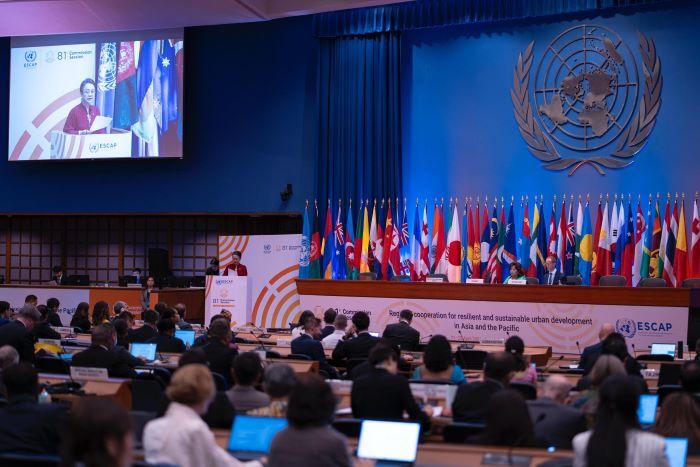
    As Asia and the Pacific faces an unprecedented urban transformation, with cities preparing to absorb 1.2 billion more people by 2050 – roughly twice the population of ASEAN – government leaders, city planners and development experts opened the 81st session of the United Nations Economic and Social Commission for Asia and the Pacific (ESCAP) today, calling for stronger regional cooperation to shape resilient and sustainable urban futures. 

    United Nations Under-Secretary-General and Executive Secretary of ESCAP Armida Salsiah Alisjahbana underscored the urgency of rethinking how cities grow and function. “Urbanization is more than just managing growth – it’s about transforming cities into hubs of innovation, resilience and equity,” she said. 

    While cities have long been drivers of economic growth, the region’s rapid urbanization is intensifying social and environmental pressures. One in three urban residents still lack access to basic services. Climate change is raising temperatures, while rising sea levels and extreme floods threaten coastal megacities. A significant share of the urban population remains locked in poverty, with many living in slums or informal settlements.

    “This is the paradox we face,” added Alisjahbana. “Our cities are engines of opportunity but also centres of vulnerability. But there is hope.”

    “With over 2.2 billion urban residents and seven of the world’s largest megacities, [the Asia-Pacific] region stands at the forefront of global urban solutions. By working together, we can close inequalities, mitigate climate impacts and empower women while driving investments that propel multiple SDGs forward,” said United Nations Deputy Secretary-General Amina J. Mohamed. 

    “Urban areas across the region continue to experience the impacts of social, economic and climate vulnerabilities in vastly different ways. This prevents the benefits of economic growth from reaching all urban dwellers equally,” shared Philemon Yang, President of the United Nations General Assembly. 

    Well-planned Urban Development

    The Prime Minister of Thailand, the Chief Advisor of Bangladesh, as well as several ministers from across the region made remarks on the first day of the session. They highlighted priorities for governments to focus on such as harmonizing national and local policies in areas such as housing and transport, improving subnational data collection to drive evidence-based urban policy, strengthening urban planning to meet the needs of ageing populations and growing migrant communities and diversifying urban financing through stronger municipal revenue systems. 

    “We must have well-planned urban development to ensure that we achieve resilient and sustainable urban development. We must invest in cities that are inclusive, green and resilient, strengthening urban network and city-to-city cooperation, plan proactively for demographic transition and mobilize diversified financing,” said Arzu Rana Deuba, Minister of Foreign Affairs of Nepal, who was elected as Chair of the 81st session. 

    Deliberations at the session are informed by findings of a new ESCAP study Urban Transformation in Asia and the Pacific: From Growth to Resilience which offers policy solutions and showcases cities in the region that are already pioneering change. The report highlights the transformative role of green infrastructure, smart technologies and inclusive urban planning in building cities that work for everyone. It also calls for coordinated action at all levels, warning that the Sustainable Development Goals (SDGs) cannot be achieved without cities at the forefront. 

    “Local and regional authorities are crucial for developing and implementing sustainable solutions to these urban challenges. In fact, two-thirds of SDG targets depend on action at the local level,” stressed Bob Rae, President of the Economic and Social Council (ECOSOC). 

    The 81st ESCAP session is expected to culminate on Friday with the endorsement of regional resolutions covering, among others, strengthening cooperation on the water and climate change nexus, sustainable urban development and advancing the sustainable development of middle-income countries.

    Shaken and Strained: Myanmar’s Earthquake Adding to the Misery of Four Years of Conflict

    One key tenets of Buddhism is the understanding that life is connected to suffering. But how much more can the people of Myanmar suffer? The 7.7 magnitude earthquake, which struck central Myanmar, has created an even deeper crisis for a country and a people who were already suffering from conflict and displacement.

    By Titon Mitra

    Titon Mitra is Resident Representative, UNDP Myanmar

    As I walked through the streets of Sagaing and Mandalay, the scenes unfolding in the wake of the 7.7 earthquake were hard to comprehend.

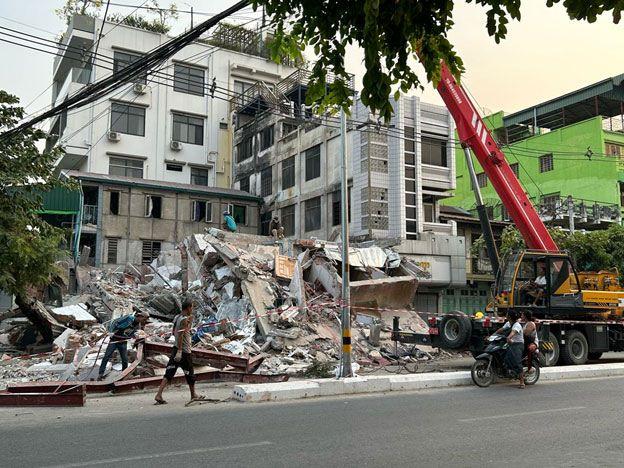
    Tall buildings and hundreds of homes are now lying in rubble. Of those that are still standing, many are lurching at dangerous angles, defying gravity for now, but could collapse at any moment.

    In Sagaing, 80 percent of buildings have been destroyed and entire sections of one of the main bridges over the Irrawaddy River have snapped off and sunk into the water, like a child’s broken toy. Roads have deep fissures that could swallow cars.

    Everywhere you look, families are living on the streets in temperatures that can reach 40°C. Even if their homes are still standing, they are fearful to enter them.

    Disease always follows disaster, and in Sagaing and Mandalay, many people are forced to defecate in open spaces and clean water is scarce. Reports of cholera, hepatitis, and typhoid are surfacing, even among aid workers.

    Hospitals, already understaffed due to ongoing civil unrest, are overwhelmed and urgently need critical medical supplies like trauma kits and antiseptics. Buildings are unsafe and patients are now housed in carparks.

    Local markets are mostly closed and transport links relying on useable roads and bridges are severely affected. If there is food available, it’s extremely expensive, and jobs and incomes have been disrupted so many people can’t even buy food.

    No Further to Fall

    The human toll is heart breaking and will likely get worse. One week on, the focus is now grimly shifting from rescue to recovery, as the chances of finding survivors fast dwindles. It’s expected that the death toll, now at around 3,000, will increase significantly.

    This is an absolutely devastating and ever deeper crisis for a country and a people who were already suffering from conflict and displacement. Myanmar’s devastated economy, still reeling from the shocks of COVID-19, last year’s typhoons, and years of conflict, has produced hyperinflation, high unemployment, and crushing levels of poverty, particularly amongst children.

    The poor and vulnerable simply have no further to fall.

    A UNDP report has found that 75 percent of the population or over 40 million people are living near to, or well below, subsistence levels. Myanmar’s middle class has shrunk by an astounding 50 percent in recent years. Even life’s basics are unattainable luxuries for most.

    And more than 1.3 million people are internally displaced in Sagaing alone, fleeing the conflict, with little to sustain them, and never entirely safe in their refuge.

    The sheer scale of the disaster, compounding the pre-existing deep vulnerability, requires a massive and sustained international response.

    As in all emergencies, over the first few weeks or month, urgent needs in health, water and sanitation, food, and shelter must be met. But this is a crisis where many of those affected are in urban areas or where farming was taking place, even if at a very basic level.

    Areas where it is important to quickly transition from emergency relief to economic and social service support and reconstruction. So, provision of medicines and medical supplies should be quickly followed by making hospitals and health clinics functional.

    Temporary Shelters

    Distributing water must quickly shift to rehabilitating water supply infrastructure. General food distributions need to transition to targeted supplementary feeding and creation of jobs, incomes, and functioning of markets.

    Temporary shelter should be replaced with repair of housing. Most of all, dignity and agency must be preserved – a helping hand up is so much better than perpetual handouts.

    UNDP’s focus is twofold—to provide for immediate essential needs while also looking to the future. Despite extensive damage to infrastructure, UNDP teams are distributing shelter materials, clean water, and solar kits to some 500,000 people.

    We are providing cash for work to the poor and working with the private sector to remove debris safely and recycle what they can. We are providing equipment and expertise to workers handling hazardous materials like asbestos without proper protection.

    We are providing temporary shelters, assessing damaged homes and working with local tradespeople to effect repairs.

    But we are also laying the groundwork for the longer term—restarting small businesses, repairing vital public service infrastructure and training young people so that they can get jobs in the huge amount of reconstruction that will be required.

    The other thing I noticed walking around Sagaing and Mandalay were the huge, gilded ancient pagodas and statues of Buddha now also in rubble. Not so long ago, they stood grand and seemingly removed from the chaos engulfing the country. They stood as symbols of detachment and compassion.

    Suffering

    One of the key tenets of Buddhism is the understanding that life is connected to suffering (dukkha). But how much more can the people of Myanmar suffer? And how much more can those who are suffering depend on the compassion of the ordinary people and first responders who are trying their best to ease the suffering?

    Just like the pagodas and statues, resilience of the people of Myanmar cannot be assumed or a given. They desperately need the help of the international community to cope with the compounding crises. The cameras that are now focused on Myanmar will soon turn away. But one hopes that Myanmar will not continue to be the neglected crisis it is.

    The international community must come together and meet the resolve and courage of Myanmar and its people, and to imagine a better future. We can at least try to make sure that when disaster strikes again, its blow will not cut so deep.

    The long road to recovery will require a concerted effort to rebuild infrastructure, restore livelihoods, and address the many existing needs of the vulnerable. The world’s attention, and sustained commitment, will be crucial in helping the people of Myanmar navigate this devastating chapter.

    Source: UN Development Programme (UNDP)

    Bangladesh Decentralisation Drive: District-Level Government Departments to Come Under Elected Councils

    One of the commission’s most consequential recommendations is the placement of all 30 district-level government departments under the authority of the elected district council. The commission argues that this system has already been successfully implemented in the hill districts.

    In a landmark step towards decentralisation and democratic local governance, the Local Government Reform Commission has proposed that all district-level government departments be placed under elected district councils. The commission also recommended synchronising all local government elections under a unified schedule to streamline costs and resources.

    The commission, led by its chairman Dr Tofail Ahmed, submitted its final report to Chief Adviser of the interim government, Professor Muhammad Yunus on Sunday. The report outlines 51 far-reaching recommendations aimed at restructuring Bangladesh’s outdated local government system, which Dr Ahmed described as a colonial-era structure designed to control people rather than serve them.

    “This is a big step forward towards devolution of powers,” said Dr Tofail Ahmed, addressing a press briefing after the handover. “For local governments to function effectively and democratically, they must be empowered with resources, autonomy, and authority.”

    One of the commission’s most consequential recommendations is the placement of all 30 district-level government departments under the authority of the elected district council. The commission argues that this system has already been successfully implemented in the hill districts, and should now be replicated across the country to ensure better coordination, efficiency, and accountability.

    Severe Underfunding

    In a bold push for electoral efficiency, the commission also proposes holding elections for all five tiers of local government – union parishads, upazila parishads, municipalities, city corporations, and district councils – under a single schedule and in a staggered manner. Dr Ahmed noted that in one fiscal year, 225 days and Tk 2,300 crore were spent conducting separate local government elections. Under the proposed unified schedule, elections could be held within a short time frame at a significantly reduced cost of approximately Tk 700 crore.

    “This will save not just money but also administrative energy and public patience,” said Dr Ahmed. “However, we believe that unless fundamental reforms are made first, no election can deliver the outcomes people expect.”

    The commission also highlighted the severe underfunding of local government bodies. Currently, they receive only 0.5 per cent of the national budget. The report calls for this to be substantially increased, recommending that one-third of the government’s VAT revenue be allocated to local governments. Additionally, it suggests that all funds allocated to a district’s development should be managed through its respective district council.

    “Local government bodies cannot function on peanuts,” Dr Ahmed asserted. “We need to strengthen both local revenue mobilisation and central funding to enable these bodies to undertake meaningful development.”

    Fragmented Legal Framework

    To support judicial and administrative functions at the grassroots, the commission also proposes establishing full courts in every upazila under a senior assistant judge to handle both civil and criminal cases. This move, according to Dr Ahmed, is constitutional and necessary to ensure justice delivery at the local level.

    Other key proposals in the report include:

    • Creation of city governments for Dhaka and Chattagram to better manage urban governance.
    • Formation of a public engineering cadre by merging the Local Government Engineering Department (LGED) and the Public Health Engineering Department.
    • Division of each union into three wards for upazila elections, and each upazila into three wards for district council elections.
    • Fulfilment of all vacant health posts at union and upazila levels.
    • Formulation of a combined and expanded budget for all local government institutions.

    Significantly, the report also calls for unifying the various legal frameworks governing different local bodies into one comprehensive law, aiming to remove overlaps and legal inconsistencies.

    “The current legal framework is fragmented and often contradictory,” said Dr Ahmed. “A unified law will not only simplify the system but also provide clarity and consistency in governance.”

    While the commission refrained from making direct suggestions on whether local or national elections should be held first, Dr Ahmed emphasized that the sequencing should be decided by the government and political parties. However, he underscored that no election, local or national, can yield meaningful results without comprehensive structural reforms.

    The report is now under review by the interim government, and its implementation could mark a transformative shift in how governance and public service delivery are structured at the grassroots level in Bangladesh.

    If adopted, these reforms may signal the beginning of a more empowered, efficient, and democratic local government system, bringing decision-making closer to the people it affects most.

    Pakistan: Federal and Sindh Governments Move Toward Dialogue Over Contentious Canals Dispute

    Political observers say that there seems to be little the PPP can actually do apart from repeatedly threatening that it will withdraw its support for the ruling coalition if plans to build new canals on the Indus are not dropped.

    In a significant breakthrough, the Pakistan Federal and the provincial government of Sindh have agreed to resolve the escalating dispute over a controversial canals project through dialogue, following weeks of mounting political tensions and public protests.

    The development came after a telephone conversation between Adviser to the Prime Minister Rana Sanaullah and Sindh Senior Minister Sharjeel Memon, during which both leaders committed to pursuing a negotiated resolution to the conflict. According to a statement from Memon’s spokesperson on Sunday, the two sides emphasised that cooperation, not confrontation, must guide the way forward.

    “We are ready for negotiations with Sindh,” said Sanaullah, who also serves as President of the Pakistan Muslim League-Nawaz (PML-N) in Punjab. “Prime Minister Shehbaz Sharif and Nawaz Sharif have directed that Sindh’s reservations be removed.”

    The canals project, primarily the TP Link Canal initiative in the Cholistan region of Punjab, has been the subject of intense criticism from the Sindh government, opposition parties, and civil society. Launched on February 15 by Punjab Chief Minister Maryam Nawaz and Chief of Army Staff Gen Asim Munir, the project aims to bring irrigation to the arid lands of South Punjab. However, it has triggered fears in Sindh of further marginalisation in the allocation of water resources from the Indus River.

    Sharjeel Memon reiterated Sindh’s long-standing position, saying that the province and the Pakistan Peoples Party (PPP) have “serious reservations” about the canal initiative. “The PPP wants fair distribution of water for the people of Sindh under the 1991 Water Accord,” he said, adding that the party remains open to dialogue with Islamabad.

    Legislative Climax

    The dispute has deepened in recent months, marked by nationwide demonstrations and fiery political rhetoric. On 18 April, PPP Chairman Bilawal Bhutto-Zardari issued a stern warning to the ruling PML-N at a large rally in Hyderabad, cautioning that his party would withdraw its support for the federal government if the project was not shelved.

    “We will not be part of a government that ignores the legitimate concerns of Sindh,” Bilawal declared to a roaring crowd at Hatri Bypass Ground. “If our objections are acknowledged but the project still continues, then that’s not dialogue – it’s deception,” he said to the massive crowd.

    The tension reached a legislative climax in March, when the Sindh Assembly passed a unanimous resolution condemning the project. The province has consistently argued that increasing water diversion to Punjab via the TP Link Canal violates both the spirit and the letter of the 1991 agreement.

    Responding to these grievances, Minister of State for Religious Affairs Kesoo Mal Kheal Das on Sunday attempted to ease concerns, pledging that the federal government would take no unilateral action on the matter. Speaking to the media in Hyderabad, he said, “No such action would be taken that would upset any province. The centre will not proceed without addressing Sindh’s concerns.”

    He also stressed that the canal project had not received formal approval from the Executive Committee of the National Economic Council (ECNEC), nor had it been discussed in the Council of Common Interests (CCI), the constitutional forum tasked with resolving inter-provincial disputes.

    Kheal Das emphasised that future decisions would be made only through consensus. “This step cannot be taken forward until the reservations of Sindh’s people are allayed,” he said, adding that he had personally discussed the issue with Prime Minister Shehbaz Sharif.

    Dialogue, not Discord

    Amid rising tensions, Kheal Das’s vehicle was reportedly targeted by protesters in Thatta last week. He downplayed the incident, stating that the perpetrators had been identified and that some arrests had been made. “I do not believe the PPP was behind this. I consider them a democratic party, and they have never endorsed such acts,” he said.

    He also acknowledged Bilawal’s role in representing Sindh, calling him a “national leader” who had the right to raise his province’s concerns. “Protests and rallies are part of a democracy,” Kheal Das said, “but there should be no incitement. The solution lies in dialogue, not discord.”

    The disagreement over the TP Link Canal is not merely a technical dispute but has grown into a symbol of broader anxieties about inter-provincial equity and federal fairness. At its core, the issue touches on the complex politics of water sharing in a country already facing acute shortages and climate-related challenges.

    Though the Indus River System Authority (IRSA) has maintained that its decisions on water allocation have been in accordance with legal guidelines, critics argue that recent moves have disproportionately favored Punjab, exacerbating historical grievances.

    Political analysts view the latest shift toward dialogue as a positive step, though they caution that real progress will depend on transparency and a willingness to compromise on all sides.

    “This is a national issue and requires a national solution,” said one senior political observer. “If handled poorly, it could deepen provincial rifts. But if handled wisely, it could set a new precedent for cooperative federalism.”

    As both the PPP and PML-N prepare for negotiations, the spotlight now turns to Islamabad, where the fate of the canals project – and the cohesion of Pakistan’s fragile federal structure – may soon be decided at the negotiating table rather than on the streets.

    Empty Threats?

    The PPP appears to have realised that it must distance itself from the canal projects if it wishes to keep public sentiment in its favour because the backlash has been severe in Sindh. The party has suffered a hit to its political capital because it is perceived as being tightly tethered to the current regime.

    But, according to political observers, there seems to be little the PPP can actually do apart from repeatedly threatening that it will withdraw its support for the ruling coalition if plans to build new canals on the Indus are not dropped. Insiders say that Prime Minister Sharif has other plans up his sleeve to cling on to power in case the PPP ever withdraws support. A patch-up with Imran Khan’s PTI is also a possibility.

    Doubts persist over the PPP’s claim of being blindsided on the canals project. While the party denies that President Zardari approved it, public anger in Sindh has intensified amid fears over dwindling Indus water levels. Early protests by nationalists and farmers were ignored until the Sindh government intervened. Tied to the Green Pakistan Initiative, the canals were presented as a national priority. Initially hesitant, the PPP only took a firm stance as public outrage grew. Punjab’s actions, including opening the Taunsa-Panjnad link canal, further alienated Sindh. Decisions made without consulting the province have once again sparked deep unrest and resentment.

    As an editorial in the Dawn newspaper says, “The country can ill-afford a dispute of this nature at this juncture. With KP and Balochistan already reeling from unrest and violent upheaval, a Sindh-Punjab water dispute will greatly complicate the task of attaining social stability. The CCI (Council of Common Interests) must be convened at the earliest, and public representatives should be given a fair chance to voice their constituents’ concerns. The state should be putting out fires, not lighting new ones.”

    Herding Hope 2025: National Goat Summit Charts a Smart and Inclusive Future for India’s Goat Economy

    Government, private sector, and farmer groups unite to strengthen climate-resilient, women-led goat value chains.

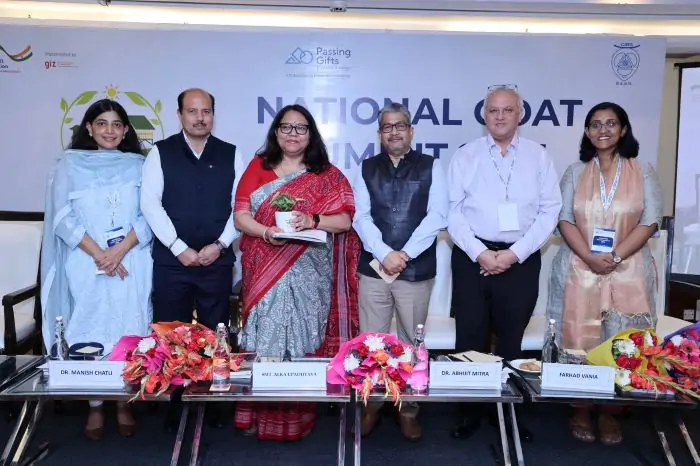
    India’s goat economy took centre stage at the Herding Hope: National Goat Summit 2025, where over 100 stakeholders convened to co-create a roadmap for a smarter, inclusive, and climate-resilient goat value chain. The summit was hosted by Passing Gifts – A Subsidiary of Heifer International, with ICAR-Central Institute for Research on Goats (CIRG) and GIZ India as knowledge partners. The summit brought together leaders from government, private sector, development institutions, financial bodies, farmer producer organizations, and grassroots entrepreneurs.

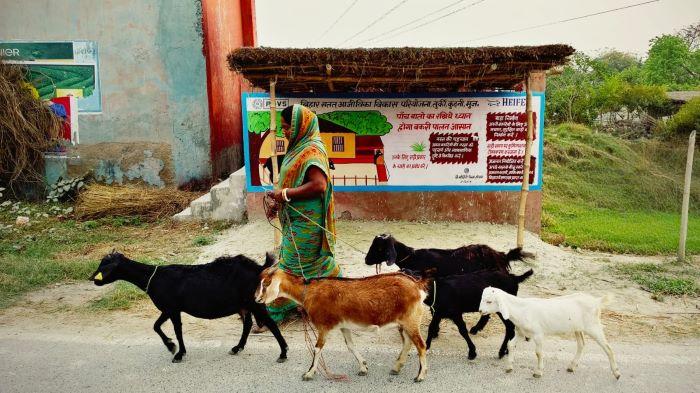
    India is home to over 148 million goats and 33 million rural households that depend on goat rearing for their livelihoods. Despite this scale, the sector continues to grapple with systemic challenges such as inadequate veterinary care, poor access to quality feed, low productivity, and limited market linkages.

    Delivering the keynote address, Alka Upadhyaya, Secretary, Department of Animal Husbandry & Dairying, emphasized the vast yet underutilized potential of the goat sector in driving rural transformation. She called for a National Resource Organization to coordinate knowledge, partnerships, and breed improvement efforts. Citing the success of Black Bengal goat clusters in West Bengal, she advocated for a data-driven, cluster-based approach to enhance vaccination, artificial insemination, and market access. Benchmarking sectoral data, she noted, will spur private investment and enable more targeted, high-impact interventions.

    In his address, Dr. Manish Kumar Chatli, Director of ICAR- Central Institute for Research on Goats (CIRG), unveiled the ‘Viksit Bharat Roadmap for the Goat Sector’—a visionary strategy aimed at boosting productivity, strengthening resilience, and advancing value chain integration through science-driven, climate-smart innovations.

    GIZ India, through Indo-German development cooperation projects like ERADA and AVCERR, emphasised community centric approaches and convergence of rural development programmes to scale successful livelihood models across states and nationally. Goat, moringa, aquaculture, and mango value chains linking programmes like Mahatma Gandhi NREGA and NRLM among others are a few examples.

    Innovative Approaches

    Expert panels discussed innovative approaches to financing smallholder goat farmers, scaling veterinary and extension services to the last mile, and building resilient value chains through robust partnerships with farmer-producer organizations, the private sector, and traceability solutions. These conversations reinforced the need for convergence between public policy, private capital, and grassroots innovation.

    Rina Soni, Executive Director Passing Gifts, a subsidiary of Heifer International reiterated the organization’s commitment to placing smallholder farmers—particularly women and youth—at the center of this transformation. “Our goal is to elevate goat-based livelihoods through integrated models that put women and smallholders at the centre of growth and policy,” she said.

    Meekha Hannah Paul, Senior Advisor at GIZ India, thanked Passing Gifts, ICAR-CIRG, and all partners for their collaborative efforts in the goat sector. She highlighted the Herding Hope: National Goat Conclave as a significant step in uniting stakeholders. Farhad Vania, Portfolio Management Advisor, GIZ India emphasized GIZ’s commitment to agroforestry, agriculture, and goat-related projects in India through Indo-German partnerships.

    The summit drew participation from key industry stakeholders including Zappfresh, Licious, Chevon, NABARD, Indian Federation of Animal Health Companies (INFAH), ICAR-National Research Centre on Meat (NRCM), and the Gates Foundation, alongside experienced goat entrepreneurs and technical experts. The diverse attendance reflected a growing consensus on the importance of multi-sector engagement in building resilient livestock economies.

    The event concluded with a strong call for a national framework that facilitates the convergence of policy, finance, innovation, and community-led action—laying the foundation for scalable, climate-smart, and women-led goat value chains. The framework should also promote Public-Private Partnership (PPP) models, leverage blended finance, and implement de-risking mechanisms to attract investments and ensure the sustainability and resilience of goat enterprises—paving the way for the transformation of rural India’s economic future.

    World Economy Teeters on Recessionary Edge amid Rising Trade Tensions and Financial Uncertainty, UNCTAD Warns

    UNCTAD estimates that India will grow by 6.5 per cent in 2025 on the back of continued robust public spending and ongoing monetary easing.

    The global economy is entering a recessionary phase marked by slowing growth, rising trade tensions, and mounting financial instability, the United Nations Conference on Trade and Development (UNCTAD) has warned in its latest report, Trade and Development Foresights 2025 – Under Pressure: Uncertainty Reshapes Global Economic Prospects.

    According to the report, released on April 16, global growth is expected to slow to 2.3 per cent in 2025, placing the world on a recessionary trajectory. This slowdown, UNCTAD says, is being driven by escalating protectionism, unprecedented trade policy uncertainty, and deteriorating financial conditions. The authors of the report call for immediate international policy coordination and strengthened regional trade mechanisms to mitigate what it describes as “a perfect storm” for many vulnerable economies.

    The report stresses that as the world stares down the possibility of a widespread recession, the urgency for cohesive, multilateral solutions has never been greater.

    In another report, also released last week, UNCTAD urged the United States to avoid dragging the world’s most vulnerable economies into its escalating trade war with China, warning that steep new tariffs would do disproportionate harm to the Least Developed Countries (LDCs) and Small Island Developing States (SIDS) – while providing negligible economic benefit to the US.

    South Asia: Caught in the Crossfire

    UNCTAD’s report paints a bleak picture of the global economic landscape. “Concerns over economic policy shifts have reached the highest level this century,” it states, highlighting that trade policy shocks, financial market volatility, and a global surge in uncertainty are delaying investment decisions and reducing job creation.

    “Trade policy uncertainty is at a historical highs,” the report emphasises, noting that disruptions to global supply chains and the unpredictability of tariffs and sanctions are having a chilling effect on cross-border trade and investment. These developments are already translating into delayed investment decisions and reduced hiring, the report warns.

    The report says, “….elevated policy uncertainty and subsequent delays in investment and hiring decisions will have a dampening effect on both employment and household incomes.”

    The economic strain is being acutely felt in South Asia, where countries like Sri Lanka, Pakistan, Bangladesh, Nepal, and the Maldives are grappling with debt distress, volatile food prices, and reduced access to international finance.

    “Many low-income countries face a perfect storm of worsening external financial conditions, unsustainable debt, and weakening domestic growth,” the report notes. In particular, Sri Lanka’s debt-laden economy took a further hit earlier this month when US President Donald Trump imposed a 44 per cent tariff on its exports – Sri Lanka’s largest market – before announcing a 90-day suspension of the measure.

    With annual exports to the US worth approximately $2.9 billion, the impact of such trade restrictions could be devastating. Bangladesh and Pakistan are also on alert, with financial vulnerabilities making them increasingly susceptible to global market shocks and policy changes in developed economies.

    South-South Trade Offers a Ray of Hope

    The recessionary trajectory is expected to affect all nations, but the impact will be disproportionately severe for developing economies. UNCTAD identifies these nations as particularly vulnerable due to their dependency on external financing and commodity exports, which are often subject to dramatic price fluctuations.

    For many low- and middle-income countries, the prospect of debt default is rising as capital flows reverse and borrowing costs escalate in a tightening global financial environment.

    UNCTAD projects that the South Asia region will expand by 5.6 per cent in 2025, as declining inflation opens the way for monetary loosening across most of the region. “Nevertheless, food price volatility will remain a risk and complex debt dynamics will continue to burden economies such as Bangladesh, Pakistan and Sri Lanka,” it says.

    UNCTAD estimates that India will grow by 6.5 per cent in 2025 on the back of continued robust public spending and ongoing monetary easing. The decision of the central bank to cut the interest rate by 25 basis points for the first time in five years in early February will support household consumption as well as provide a boost to private investment plans.

    Despite the grim outlook, the report identifies emerging opportunities in the form of growing South-South trade and deeper regional economic integration. Trade between developing countries now constitutes nearly one-third of global trade—a significant buffer in a world increasingly fractured by geopolitical and economic rivalries.

    “The potential of South-South economic integration offers opportunities for many developing countries,” UNCTAD notes. Regional frameworks such as the African Continental Free Trade Area (AfCFTA), ASEAN Economic Community, and the South Asian Free Trade Area (SAFTA) are poised to play a greater role in insulating economies from external shocks.

    According to the report, these initiatives can facilitate intra-regional investment, enhance supply chain resilience, and promote inclusive growth, provided they are supported by stable macroeconomic policies and multilateral cooperation.

    Recession Risks

    As global trade becomes more fragmented, UNCTAD is urging governments to adopt a more coordinated and cooperative approach. The organisation calls for international dialogue and negotiation to defuse rising tensions and ensure that development progress in the Global South is not undone.

    “Coordinated action will be essential to restore confidence and keep development on track,” the report states, calling for renewed commitment to multilateralism and regional collaboration. Without decisive action, the world risks a deeper and more prolonged recession, with long-term consequences for poverty reduction, investment, and global stability.

    The report underscores that while recession is not yet universal, the convergence of trade wars, debt crises, and financial volatility is creating a synchronized global slowdown. Delayed investment, reduced hiring, and strained public budgets are not only economic risks—they also pose social and political dangers, particularly in fragile states.

    With advanced economies like the United States, European Union, and China embroiled in trade disputes and pursuing divergent monetary policies, the risk of global economic fragmentation is rising. For developing nations, particularly in South Asia and sub-Saharan Africa, the way forward lies in leveraging regional strengths, diversifying trade partnerships, and investing in sustainable infrastructure and digital connectivity.

    UNCTAD concludes its report with a cautionary note: “The global economy is under pressure, and the path ahead requires a shared vision and collective resolve to avoid the pitfalls of isolationism and economic nationalism.”

    Bangladesh: Commission Pushes Sweeping Legal Reforms to Eliminate Gender Disparities

    To curb adolescent pregnancies, the commission recommended setting the minimum legal age of marriage at 18 and called for enforcement of the 2023 High Court directive to regulate unnecessary Caesarean deliveries.

    In a bold move to dismantle entrenched legal and systemic gender inequalities, the Women’s Affairs Reform Commission has proposed 433 sweeping reforms, urging comprehensive changes across laws, institutions, and policies to ensure full equality for women in Bangladesh.

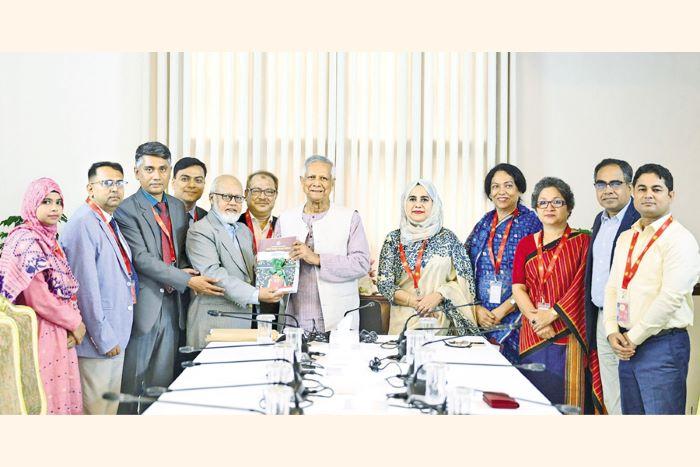
    The 10-member commission submitted its report to Chief Adviser Professor Muhammad Yunus yesterday, outlining reforms categorised into three implementation phases — those actionable by the current government, those for the next elected administration, and a visionary set of long-term aspirations.

    “This is not just a women’s issue; it’s a matter of national importance,” Yunus said during a handover event at the State Guest House Jamuna. “Let the recommendations that can be implemented quickly be carried out through us. Let us set an example for the world.”

    The report was presented at a press conference at the Foreign Service Academy by Shireen Huq, commission chair and co-founder of Naripokkho. She stressed that the proposed reforms aim to eradicate legal and institutional discrimination against women in all forms.

    Among the most ambitious recommendations is the introduction of a uniform family code to ensure equal rights in marriage, divorce, maintenance, and inheritance — across all religions. The commission also seeks to strike down discriminatory clauses in the Constitution and statutory laws.

    Strengthening Protection and Equality

    To address violence against women, the commission called for stronger enforcement of the Prevention of Domestic Violence Act-2010, including increased penalties and timely resolution of divorce cases within three years. Additionally, it urged amendments to the Guardians and Wards Act-1890 to ensure equal guardianship and custody rights for mothers.

    The report recommends that Bangladesh withdraw its reservations to critical clauses of the Convention on the Elimination of All Forms of Discrimination Against Women (CEDAW) and ratify ILO Conventions C189 and C190, which address domestic workers’ rights and workplace harassment.

    A dedicated anti-sexual harassment law, built on the 2009 High Court guidelines, and reforms in rape legislation to ensure gender-neutral justice systems with victim-friendly trials and accountability mechanisms were also proposed.

    The commission further called for changes to the citizenship law to allow Bangladeshi women to confer nationality on foreign spouses — a right currently reserved for men — and recommended that sex work be decriminalised, with sex workers included under national labour protections.

    Rights, Not Welfare

    A major headline from the commission’s proposals is a transformative plan to double the number of parliamentary seats from 300 to 600 — reserving half for women through direct elections. This radical move, Huq acknowledged, is likely to raise eyebrows, but she argued it is crucial to bridge the existing gender gap in national representation.

    “If an upper house of parliament is formed,” the report said, “50 percent of seats should follow a ‘zipper system’ — alternating male and female party nominees — to ensure gender parity. The rest should include non-partisan voices, particularly from women’s rights movements.”

    To ensure more inclusive political participation, the commission called for enforcement of the existing rule mandating 33 percent women’s representation in political parties under the Representation of the People Order. It also proposed institutional reforms within parties to address corruption and create enabling environments for women.

    At the local government level, each ward would elect one male and one female representative for the next three election cycles as a temporary affirmative measure.

    In the realm of work, the commission urged the replacement of “maternity welfare” with “maternity rights” in labour laws. It recommended 24 weeks of paid maternity leave and two weeks of paid paternity leave across all sectors, along with protections from dismissal during pregnancy.

    The commission advocated for formal recognition of domestic and sex workers as labourers, with legal protections and social security. Women’s contributions in the informal economy should also be formally recognised, the report noted.

    To support female migrant workers, reforms in migration laws and bilateral agreements with host countries were proposed, along with retraining and reintegration support for returnees. The commission also suggested setting equal minimum wages for men and women in all sectors, and annual revisions to ensure alignment with global living wage standards.

    Gender-Based Violence

    A key structural recommendation is the establishment of a permanent and independent Women’s Commission, tasked with nationwide oversight of women’s rights. The commission also called for a restructuring of the Ministry of Women and Children’s Affairs and the creation of Gender Equality Units in every ministry, with mechanisms for accountability, gender-sensitive planning, and monitoring of gender budgets.

    To tackle gender-based violence on public transport, specific legal provisions were suggested to ensure safety and accountability. The commission emphasised decentralisation, arguing that empowering local communities would amplify the voices of grassroots women and enable policymakers to respond to their needs more effectively.

    The commission also proposed comprehensive sex education, modern curricula for girls aligned with labour market demands, and re-entry pathways into education for child marriage survivors and school dropouts.

    To curb adolescent pregnancies, the commission recommended setting the minimum legal age of marriage at 18 and called for enforcement of the 2023 High Court directive to regulate unnecessary Caesarean deliveries.

    It also urged revisions to the National Policy on Older Persons (2013) to prioritise elderly women’s health, the establishment of a maternal and neonatal death tracking system, and the inclusion of children with special needs in mainstream education.

    Formed in November 2024, the commission comprises a cross-section of legal experts, rights activists, academics, and labour leaders. Alongside Huq, members include Maheen Sultan of Brac Institute, Advocate Kamrun Nahar, labour rights leader Kalpona Akter, Supreme Court lawyer Fawzia Karim Firoze, and student representative Nishita Zaman.

    The commission’s report, soon to be printed as a public document, is unprecedented in scope. “The women of the world are watching,” Yunus said. “This report cannot just gather dust. It must live, breathe, and inspire.”

    UN Trade Body Urges US to Exempt Vulnerable Economies from Tariff Hikes amid Rising Trade Tensions

    The new tariffs, which are currently paused for 90 days, were designed to balance merchandise trade deficits between the US and 57 partner countries. Yet, according to UNCTAD, such a blanket approach could backfire.

    The United Nations’ trade and development agency (UNCTAD) has urged the United States to avoid dragging the world’s most vulnerable economies into its escalating trade war with China, warning that steep new tariffs would do disproportionate harm to the Least Developed Countries (LDCs) and Small Island Developing States (SIDS) – while providing negligible economic benefit to the US.

    UNCTAD Secretary-General Rebecca Grynspan issued the appeal following the release of a new report, “Escalating Tariffs: The Impact on Small and Vulnerable Economies,” on earlier this week. The report warns that reciprocal tariffs being considered by the US would damage dozens of developing countries that play a minimal role in America’s trade deficit.

    “When the two main global economies impose tariffs, it affects everyone – not just the economies at the heart of the dispute,” Grynspan said. “Our emphasis has been to highlight what could happen to more vulnerable countries.”

    The report found that 28 of the 57 countries potentially subject to reciprocal US tariffs each account for less than 0.1 per cent of the US trade deficit. Despite their marginal impact, many of these countries could face tariff rates as high as 50 per cent, such as Lesotho, while Cameroon could face 11 per cent.

    “These countries really are making no contribution to the US trade deficit,” Grynspan emphasized. “Most of their exports to the US are raw commodities that are often essential to production processes, not in competition with US goods. Many of them are even exempt under current trade rules.”

    Collateral Damage in a Superpower Dispute

    The new tariffs, which are currently paused for 90 days, were designed to balance merchandise trade deficits between the US and 57 partner countries. Yet, according to UNCTAD, such a blanket approach could backfire. For most of these countries – many already struggling with debt, low growth, and fragile economies – higher tariffs could tip the scales into crisis.

    “Higher tariffs would only exacerbate the existing debt problems of vulnerable nations,” Grynspan said. “They’re not a national security threat, they don’t contribute meaningfully to the deficit, and they offer little in terms of new revenue for the US.”

    Indeed, for 36 of the targeted countries, projected revenues from reciprocal tariffs would amount to less than 1 per cent of the US’s existing tariff income. Conversely, the economic consequences for those countries could be severe: rising unemployment, disrupted markets, and capital flight from industries penalized by tariffs.

    “These unequal tariff rates stimulate competition between weaker economies for better treatment,” Grynspan noted. “This uncertainty may trigger economic instability and further disadvantage already vulnerable nations.”

    Protecting Vulnerable Partners, Stabilising Global Trade

    The international trading system has historically been underpinned by a rules-based framework designed to encourage openness, stability, and predictability. This system, UNCTAD notes, has helped steadily reduce tariffs and fuel global trade. In 2023, two-thirds of international trade occurred without tariffs.

    But the resurgence of protectionist policies by major economies threatens to unravel that progress.

    “Tariffs from developing countries are often aimed at protecting foreign reserves and supporting domestic industry,” Grynspan explained. “But when rich economies impose sudden and steep tariffs, they disrupt the fragile balance that smaller nations depend on.”

    The UNCTAD report also warns of the broader global consequences. Grynspan said the world has already entered a “new normal” characterized by slow growth and high debt. The threat of renewed tariff wars between superpowers could further dampen investment and trade.

    “If we at least knew the final rules, we could adjust,” she said. “But right now, uncertainty is paralyzing investment. CEOs are holding back, waiting to see where things land. And this stagnation means global investment won’t return at the scale we need.”

    Small Countries, Big Consequences

    The fallout from increased tariffs wouldn’t just be felt abroad. Many of the goods the US imports from these countries  –  such as vanilla from Madagascar or cocoa from Ghana and Côte d’Ivoire  –  have few domestic substitutes. Hitting them with tariffs could raise prices for American consumers without significantly bolstering US revenues.

    In 2024 alone, the US imported nearly $800 million worth of cocoa from Côte d’Ivoire, $200 million from Ghana, and $150 million in vanilla from Madagascar. These are essential imports with limited alternatives – and taxing them would hit both pocketbooks and production chains.

    In response to these risks, Grynspan encouraged vulnerable nations to deepen their engagement in regional trade blocs, such as ASEAN in Southeast Asia, which can offer more equitable negotiating platforms.

    “These partnerships could be very important, particularly at this precise moment,” she said. “Strengthening regional trade and diversifying markets are key strategies for economic resilience.”

    She also called for greater South-South trade – commerce between developing nations – as a way to reduce dependency on volatile trade relations with richer economies.

    UNCTAD’s appeal comes as trade relations between Washington and Beijing continue to sour, with tariff threats now pulling more countries into the geopolitical tug-of-war. Grynspan’s message to Washington was clear: vulnerable countries should not be collateral damage in a broader trade confrontation.

    “Maybe we can avoid starting new bilateral agreements and negotiations that impose these costs,” she said. “Let’s spare them the pain of tariffs – not only because it’s the right thing to do, but because these actions won’t solve the problems the tariffs are supposedly addressing.”

    As the pause on reciprocal tariffs ticks down, the world’s smallest economies may soon find themselves on the frontlines of a battle they neither started nor can afford to fight.

    Countries Finalise Historic Pandemic Agreement After Three Years of Negotiations

    The draft also proposes a new pathogen access and benefit-sharing system, increased support for technology and knowledge transfer as well as capacity-building, and outlines a skilled, trained and multidisciplinary national and global health emergency workforce.

    By Vibhu Mishra

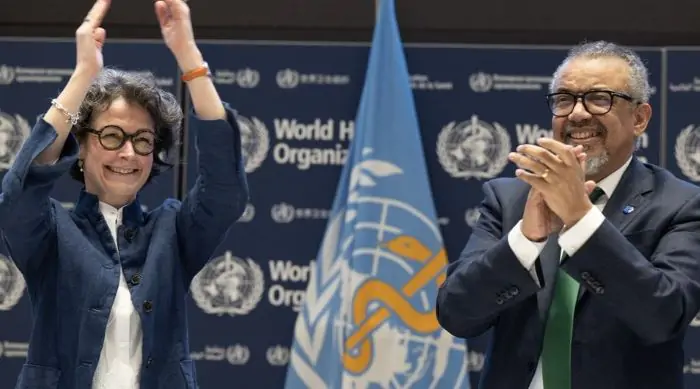
    In the early hours of Wednesday morning in Geneva, countries finalized a draft global agreement aimed at improving how the world prepares for and responds to pandemics, marking a historic step that will be submitted to the World Health Assembly in May for adoption.

    Developed after over three years of negotiations under the auspices of the World Health Organization (WHO), the draft outlines a framework for strengthening international collaboration, equity and resilience in the face of future global health threats.

    “The nations of the world made history in Geneva today,” said WHO Director-General Tedros Adhanom Ghebreyesus.

    “In reaching consensus on the Pandemic Agreement, not only did they put in place a generational accord to make the world safer. They have also demonstrated that multilateralism is alive and well and that in our divided world – nations can still work together to find common ground and a shared response to shared threats.”

    ‘One health’ approach

    Negotiations began in December 2021 at the height of the COVID-19 pandemic, when WHO member States agreed on the urgent need for a legally binding international instrument and established the Intergovernmental Negotiating Body (INB).

    The process involved 13 formal rounds of negotiations, many of which were extended into the early hours, culminating in Wednesday’s consensus after a final overnight session.

    Key elements of the proposed agreement include a commitment to a “One Health” approach to pandemic prevention, stronger national health systems, setting up a coordinating financial mechanism, and creating a globally coordinated supply chain and logistics network for health emergencies.

    The draft also proposes a new pathogen access and benefit-sharing system, increased support for technology and knowledge transfer as well as capacity-building, and outlines a skilled, trained and multidisciplinary national and global health emergency workforce.

    National sovereignty upheld

    The text further affirms national sovereignty in public health decisions. It states explicitly that nothing in the agreement gives WHO the authority to mandate health measures such as lockdowns, vaccination campaigns, or border closures.

    The draft will now be submitted for consideration to the 78th World Health Assembly – UN’s highest forum for global health – set to begin on 19 May. If adopted, it will be subject to ratification by individual nations.

    According to media reports, the United States did not participate in the final round of negotiations, following its January announcement to withdraw from the global health body, and would not be bound by the pact.

    A breakthrough for health equity

    Speaking at the conclusion of the meeting, WHO Director-General Tedros praised the negotiating teams and the INB leadership for their perseverance and shared purpose.

    “This achievement is not just a diplomatic success,” he said. “It reflects your resilience, unity and unwavering commitment to the health and wellbeing of people everywhere.”

    INB Co-Chair Precious Matsoso of South Africa called the outcome a breakthrough for health equity.

    “The negotiations, at times, have been difficult and protracted. But this monumental effort has been sustained by the shared understanding that viruses do not respect borders – that no one is safe from pandemics until everyone is safe,” she said.

    Fellow Co-Chair Anne-Claire Amprou of France added that the agreement lays the foundation for a stronger, more equitable global health security architecture.

    “This is a historic agreement for health security, equity and international solidarity,” she said.

    Learning from COVID-19, looking to the future

    The agreement emerges in the aftermath of the COVID-19 pandemic, which exposed critical vulnerabilities in global health systems and stark inequalities in access to diagnostics, treatments, and vaccines. The virus claimed nearly seven million lives worldwide, severely disrupted economies, and overwhelmed healthcare services across the globe.

    At the same time, the pandemic triggered the largest vaccination campaign in history, with over 13.3 billion doses administered globally by April 2023.

    Looking ahead, Tedros emphasised the agreement’s long-term significance.

    “The importance of this agreement goes beyond our current challenges,” he said.

    “It is vital for future generations – for our children and grandchildren. By building a strong framework for pandemic preparedness and response, we ensure they inherit a safer and healthier world.”