More

    India Committed to Protecting Global Health, Says Health Minister Mansukh Mandaviya

    The health minister highlighted the need to acknowledge existing fault lines in the Global Health Architecture and the importance of building an inclusive, agile and responsive framework for health emergency management.

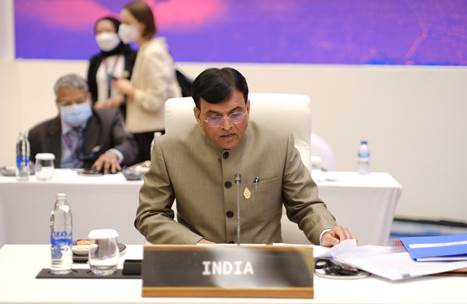
    Union Minister for Health and Family Welfare Dr Mansukh Mandaviya has said that the government of India attached the topmost importance to the health sector. He stressed that India is committed to protecting global health and making sure to leave behind for the coming generations a better and healthier planet.

    Dr Mandaviya said this while addressing the second G20 Health Ministers Meeting in Bali, Indonesia on Thursday. The meeting was called to discuss the progress and way forward on priorities in the healthcare sector.

    Speaking on the occasion, Dr Mandaviya stated that India is committed to contributing to creating a future-ready and resilient global healthcare ecosystem. He also elaborated on building global health resilience wherein the proposal of a Financial Intermediary Fund was discussed.

    The health minister highlighted the need to acknowledge existing fault lines in the Global Health Architecture and the importance of building an inclusive, agile and responsive framework for health emergency management.

    Earlier in June this year, Mandaviya had, in a virtual address at the G20 Health Ministers Meeting, highlighted the fault lines in the global health governance, calling for the strengthening of “Global Health Architecture”.

    In the light of the multiple challenges thrown up by the COVID-19 pandemic to health systems across the globe, he had then said, “the pandemic highlighted the fault lines in the global health governance and has brought to the fore the importance of strengthening Global Health Architecture.”

    He had then argued that the “pandemic has reinforced the need to assess health ecosystems, health financing and their linkages in light of the experience in managing the current pandemic.”

    Dr Mandaviya encouraged all G20 members to contribute their public keys to the proposed Global Federated Public Trust Directory for ensuring seamless worldwide mobility of people and goods.

    Introduced by Indonesia at the G20 in September, the Federated Public Trust Directory is a global framework that unifies digital infrastructure to verify authentic documents across a trusted global network.

    So far, G20 countries are still using different systems according to each country’s policy. Thus, in the event of a pandemic, the movement of people and goods around the world was disrupted.

    Farmers in Bhutan Turn to Asparagus and Strawberries to Boost Incomes

    Hand-in-Hand Initiative is an evidence-based, country-owned and led initiative to accelerate agricultural transformation, with the goal of eradicating poverty, ending hunger and malnutrition, and reducing inequalities.

    By Chhimi Dema

    Zam, 57, sits at her kitchen table looking out the window at her orchard of four dozen apple trees. In the past eight years she has sold only two crates (100 kilogrammes) of the fruit because of poor harvests. She turned her attention to vegetables instead but the production was low because of a water shortage.

    Zam (who uses one name only) lives in the village of Jukha in Paro district, near Bhutan’s international airport. She is now pinning her hopes on growing strawberries. “It’s my only hope for better earnings, although it is a niche product,” she tells IPS.

    The farmer is optimistic after seeing her neighbours grow the fruit, and increase their income. “I am inspired by that, and hope that I earn better from strawberries. I would like to save money for emergencies and spend on maintenance of my house.”

    The two-storey, mud home is perched alone atop a hill, looking onto a small valley bisected by a river. Other similar houses dot the landscape. But part of the roof of Zam’s house was blown away in high winds last winter.

    She is among the country’s farmers who have registered with the Ministry of Agriculture and Forests to grow a selection of crops identified for their potential to improve nutrition, withstand impacts of climate change and improve export earnings: strawberry, quinoa, black pepper and asparagus.

    The agriculture ministry will support these farmers through the Hand-in-Hand Initiative of the United Nations Food and Agriculture Organization.

    Hand-in-Hand Initiative is an evidence-based, country-owned and led initiative to accelerate agricultural transformation, with the goal of eradicating poverty, ending hunger and malnutrition, and reducing inequalities. The initiative was supporting 52 countries in Africa, Asia, Europe, Latin America, and the Middle East as of May 2022.

    Bhutan joined the Hand-in-Hand Initiative in June 2021. Through it, the agriculture ministry has since carried out baseline studies on food security and nutrition and agri-food systems. Results from the food security study showed “production gaps and nutrition gaps in current food systems,” according to the ministry’s records. The agri-food systems study identified entry points for diversifying and improving food systems.

    Bhutan agriculture horticulture Hand-in-Hand Initiative

    The value addition of strawberries is another opportunity that some farmers are waiting to explore. According to the finance ministry, a total of 2,477 kg of strawberries in preserved, fresh or canned form, were imported from 2019 to 2021. No records of exports were noted in those years.

    Thinley Yangzom and her family run a homestay on their farm in Paro, just west of the capital Thimphu. Established in 2002, it was among the first homestays in Bhutan and grows all the food needed for the family and their guests.

    The 37-year-old says that she is aiming to make strawberry jams, juice and smoothies for guests, and to sell any surplus in the market. “Growing strawberries on our farm will save us the cost of buying imported food. We hope to be able to export after some years,” adds Yangzom.

    Bhutan agriculture horticulture Hand-in-Hand InitiativeSome farmers are already successfully growing the Hand-in-Hand Initiative -identified crops.

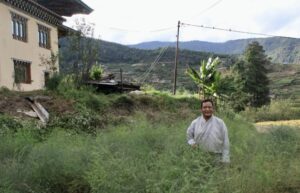
    Kinley Tshering has been raising asparagus for more than one decade. Nestled between two ridges and among a vast paddy field, he has cultivated an acre of asparagus. “I was growing potatoes before but what I earn from asparagus farming is more profitable,” says Tshering, 51, who supplies the vegetable to hotels and restaurants in the district.

    The farmer earns US$2,500 to $3,000 a year from selling the crop. “My hard work on growing asparagus is rewarded with the earnings,” he says.

    In 2021, 177.7 metric tonnes of asparagus were produced in the country, according to the MoAF. That compares to 126.6 MT in 2020, and 79.1 MT in 2019.

    Many farmers throughout the country were hard hit by the COVID-19 pandemic. The shock became a lesson for them to diversify their sources of income.

    Tenzin Choden, 27, from Jangsa-Jooka in Paro, was supporting her family by rearing mules to carry the belongings of tourists trekking from her village. But in the past two years her income dropped 60 to 70 percent, leaving them with barely $200 a month.

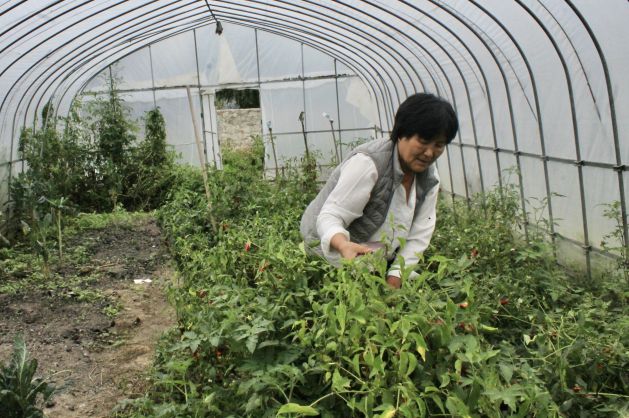
    In the kitchen garden at the back of her two-storey house is a small greenhouse where Choden grows chillies, but with little demand she sells only small amounts.

    The farmer explains that Bhutan’s high altitude in the Himalayas does not allow the family to successfully grow other vegetables and that human-wildlife conflict is a major threat to their crops and livestock. Wild boars dig up their potatoes and bears break the apple trees.

    But having heard about asparagus, Choden borrowed a few seedlings from a neighbour and they grew well, in part because wild animals ignored the crop. “The trial was a success and this encouraged me to seek further support from the ministry,” she says. “We are hoping that asparagus will improve our earnings.”

    There is some concern that if farmers succeed in growing the Hand-in-Hand Initiative crops, they will lack access to a large enough market. According to Bhutan Alpine Seeds’ chief executive officer, Jambay Dorji, himself a farmer, while the local market for vegetables such as asparagus is growing, “if we are going on a commercial scale then we will need a market to countries such as Thailand, India and others.”

    A private company, Bhutan Alpine Seeds supplies seeds to government agencies and the private sector.

    “If the export route is fixed, then production within the country isn’t an issue,” adds Dorji. “People will make the effort to grow the vegetable because they can earn well from it.”


    This piece has been sourced from Inter Press Service.

    Image: Chhimi Dema

    China’s Young ‘Lie Flat’ Under Social Challenges

    The ‘lying flat’ or tang ping movement is a phenomenon that emerged in China in 2021. It describes the generations born in the late 1990s and 2000s who, disappointed by their lack of social mobility and economic stagnation, have decided not to ‘not strive for their futures’. They do not want to follow the values of hard work, home ownership, marriage or living standards sought after by past generations.

    By Yao-Yuan Yeh  / University of St Thomas

    Ever since the ‘lying flat’ movement resonated with younger netizens, the Chinese government has sought to put the fire out by restoring the ‘good old values’ of past generations. The question is why the movement has spread among Chinese youth despite forty years of economic prosperity. The reality is that Chinese GDP growth has steadily declined since 2010.

    GDP growth had already dropped from 10.6 per cent to 6 per cent before the COVID-19 pandemic. Now an economic downturn — due to worldwide inflation from the pandemic, the Ukraine war and economic sanctions — threatens to end the golden period of Chinese prosperity. Increasing tensions between the United States and China, numerous lockdowns due to China’s ‘zero COVID’ policy, a looming property crisis and declining employment for unskilled workers have cast further doubts on the future of China.

    Demographic grounds

    Active internet censorship and other measures restricting freedom of speech mean that tang ping is a silent revolution representing the powerlessness of young people who know they will never achieve the same living standards as their parents or grandparents. Though it is just a silent revolution, the Chinese Communist Party (CCP) is cautious about its potential impact on society. State-own media, such as Xinhua and other platforms, have been utilised by the CCP to condemn the movement.

    The CCP also has demographic grounds on which to be concerned. China moved from the one-child policy to a ‘two-children policy’ in 2015, encouraging people to have as many babies as they can, although the official policy is three, to maintain the health of the pension system and labour force. Those ‘lying flat’ instead of having babies increase official worries about the five years-long fall in China’s birth rate.

    The ‘lying flat’ movement could also scare off foreign investors and lower labour productivity. Economic development is vital for the CCP to justify its strict authoritarian rule, so a significant depreciation in human capital is unlikely to be tolerated. Perhaps most importantly, the notion of ‘lying flat’ signifies to the Chinese people, the CCP and the world that China is declining under President Xi Jinping’s rule. It implies that Xi is incapable of motivating younger people to ‘strive’ for the nation.

    Authoritarian rule

    Officials could attribute the ‘lying flat’ phenomenon to economic changes, such as rising house prices and disruptions to global supply chains, but Xi’s third-term ambitions make him unlikely to tolerate voices of dissent. That could explain why the CCP wants to stop the phenomenon from spreading.

    But the ‘lying flat’ movement is unlikely to challenge the CCP’s rule — especially in the short run. The lack of desire among those ‘lying flat’ to officially organise themselves and change the status quo renders the movement a passive force that helps young people accept the harsh realities of life.

    Those ‘lying flat’ are similar to the generation of NEETS (Not in Education, Employment or Training) who emerged in Japan in the early 2000s. They are young Japanese people who stay at home, rely on their parents for basic needs and do not want to join the labour force. The ‘lying flat’ and ‘NEET’ movements both reflect the increasing challenges that younger people face in Japan and China.

    China depends on economic development to justify its authoritarian rule, but it remains unclear how the CCP and Xi will confront the ‘lying flat’ movement. Unless they believe suppression is the only option, one way for the Party and its President to maintain political legitimacy would be to provide new social and economic opportunities for younger generations.


    Yao-Yuan Yeh is Fayez Sarofim – Cullen Trust for Higher Education Endowed Chair in International Studies, Department Chair of International Studies & Modern Languages, and Department Chair of Political Science at the University of St. Thomas, Houston.

    This piece has been sourced from the East Asia Forum of the Australian National University

    Image: PxHere

    Balochistan Floods: From Nightmare to Rehabilitation

    Islamic relief is one of many organizations working in the flood affected areas of Balochistan to provide shelters to homeless flood-ravaged families.

    Abdul Shakoor Khan

    As the sole breadwinner of 12 kids and one wife, Dil Murad, 48, would earn Rs 200 to Rs 400 daily collecting rags from trash cans and public dumps as means of livelihood.

    Life was hard and became worse for the resident of Kili Kamalo in Quetta’s outskirt when, all of a sudden the flood left his family homeless, forcing the family to a temporary shelter until the water receded and he could begin reconstructing his damaged house

    “Last spell of continued downpours and flash floods demolished my home.

    “This monsoon was a nightmare for me, my family and others like us who lived a hand to mouth existence,” Dil Murad said, sitting on the remains of his collapsed home.

    “I had no idea where to take my family as it was raining,” Dil Murad said recalling his ordeal. “My already cracked mud-house could not endure the unabated rainfall and gushing floodwater.”

    Dil Murad was lucky to have got shelter for his family in a nearby mosque. But he felt helpless seeing his home collapse in the heavy downpour from dark clouds in the sky above.

    Life must move on

    After suffering for some days, a ray of hope appeared as the donor group, Islamic Relief, with support from the government, initiated a “one-room shelter” program for the homeless flood-hit families.

    “I have started re-building my demolished home after receiving basic construction materials and cash from the Islamic Relief,” he says. “Thanks to all who helped me construct one room shelter – I am happy to rebuild my home and start a new life.”

    “It is hard for flood victims to forget nature’s furious battering and those sleepless nights. But life eventually has to return to normalcy despite all odds,” Dil Murad said, adding, “life must move on,” to conclude his tale of miseries, placing a brick on the upcoming wall of an under-construction room.

    Islamic relief is one of many organizations working in the flood affected areas of Balochistan to provide shelters to homeless flood-ravaged families.

    “We have devised a strategy with the support of the government and administration to execute relief and rehabilitation efforts in flood affected areas,” says Muhammad Esa, Area Program Manager Islamic Relief.

    “In the first phase, we are providing construction material and cash to 4,610 families in Quetta, Qila Abdullah and Pishin districts for the reconstruction of their damaged houses,” he said.

    Aid for farming

    Outlining his organization’s plan for the second phase, he said, Islamic Relief will support the government in rehabilitation of water supply schemes in Sohbat Pur, Jaffarbad and Bolan districts.

    The recent monsoon and floods that wreaked havoc in all districts of Balochistan claimed 336 lives and injured 187 people. Flood waters brought down 225,000 houses. The floods destroyed 2221.98 km of road, killed 500,000 livestock and damaged 900,000 acre of agricultural land.

    “Calamity caused Rs 200 billion losses to the province. But, we are using all available resources for rehabilitation of flood-stricken people,” Chief Minister Balochistan Abdul Qudus Bizenjo informed.

    “The Balochistan government has also started implementing a Rs. 16 billion subsidy program for affected farmers,” he said. “After relief operation, we are all set to initiate rehabilitation work with support of the federal government and humanitarian organizations in the areas where flood water recedes.”

    As agriculture is a mainstay for Balochistan’s people, the government’s compensation policy provides tractor and bulldozers services to farmers, he added.

    Yet, some areas of the region have yet to be cleared of flood waters. “Water remains in Jaffarabad and its surroundings as thousands of families have been displaced, who need clean water, treatment of malnutrition, diarrhoea and other diseases,” said Scott Whoolery, UNICEF Field Operation Chief.

    Whoolery said the UNICEF is providing supplies and services to treat malnutrition. “We have set up learning and support psychosocial well-being centres. We feel the situation may take quite some time to return to normalcy.”


    Government Indifference Deprives the Trafficked of Compensation

    The common thread that connects all victims of trafficking is poverty and lack of awareness. Poverty and unemployment drive people to migrate in search of work. Traffickers’ agents cash in on the plight of these individuals and whisk them away to be exploited for sex or cheap labour.

    By Rina Mukherji

    Fourteen-year-old Priti Pyne was returning from school in Basra village in South 24 Parganas, West Bengal, when she and a friend came across a cold-drink seller selling an attractive-looking drink. The moment the girls sipped it, however, they felt dizzy. When they woke up, it was on a Delhi-bound train at Sealdah station in Kolkata. With the help of other passengers, the girls managed to get off the train.

    “We had been briefed in school about how people traffic youngsters, and so we got in touch with the stationmaster and rang up the non-governmental organisation (NGO) – Goran Bose Gram Vikas Kendra – working in our village. The NGO office-bearers immediately came over and arranged for our return home.” However, her father, who works as a labourer in a bag factory, and her homemaker mother did not want to lodge an FIR (case), and she has not been able to access the compensation as a survivor of trafficking.

    “I was a minor then; my parents took all decisions on my behalf. Now that I am an adult, it is too late to pursue it,” she laments.

    Shelly Shome and Molina Guin from Bagda, both from North 24 Parganas, got entrapped by love affairs and ended up trafficked. Shelly’s trafficker took her to Malda and locked her up in an “intermediate” lodging for a week on the way to a brothel, where police rescued her.

    Molina escaped on her own from a brothel in Nagpur (Maharashtra), where she had been sold, but she had spent six months there.

    “Since I did not know any Hindi, it was difficult. Ultimately, some Bengali boys who lived nearby helped me return home.” Although FIRs were lodged in both cases, neither Shelly nor Molina could access the compensation due to them. Worse, the traffickers are yet to be caught.

    Sunil Lahiri’s family were unable to repay a loan. So, his parents, uncle and siblings, who originally lived in Champa, had to seek employment in a brick kiln at Rohtak in Haryana. They were roped in by a labour contractor with big promises of good accommodation, pay and food. But once there, the family realised they had been trafficked, along with 20 other desperate neighbours in a similar situation. An adolescent then, Sunil had to work 12-14 hours a day and survive on meagre rations. No accommodation was provided, and they lived in a thatched hovel for shelter. Any attempt to escape was met with relentless torture and assault. After a couple of months, Sunil and his uncle made good their escape under cover of darkness to the nearest police station, from where they made their way home. However, in the absence of an appropriate FIR, he has not been able to claim the victim’s compensation.

    Lalita lives in Erode in Tamil Nadu and found herself trafficked for labour to a garment factory in Coimbatore, in the same state, when she was around 15. But once there, she found herself trapped in a hostile environment with many others and had to labour for 14-16 hours a day without a break. Housed in dirty dormitories, the girls were administered tablets to stop their periods lest they demand time off, resulting in many medical problems. She ultimately excused herself one day and sneaked home by claiming the death of a relative. Since she lodged no FIR, Janaki has been deprived of compensation too.

    Human Trafficking

    Trafficking in India is generally for sexual exploitation and cheap labour.

    The common thread that connects all victims of trafficking is poverty and lack of awareness. Poverty and unemployment drive people to migrate in search of work. Traffickers’ agents cash in on the plight of these individuals and whisk them away to be exploited for sex or cheap labour. This is often done across inter-state borders so escaping back home is difficult.

    Victims of both kinds of trafficking are entitled to compensation, but different laws deal with individual crimes. While victims trafficked for sexual exploitation are primarily dealt with under the Immoral Trafficking (Prevention) Act of 1956, different laws deal with those trafficked for labour since they may be subject to bonded labour. In India, bonded labour had long been prohibited by the Constitution, but laws specific to it, such as the Bonded Labour System (Abolition) Act, 1976, the Contract Labour (Regulation and Abolition) Act, 1970, and the Migrant Workmen (Regulation of Employment and Conditions of Service) Act, 1979 are comparatively recent.

    Victim Compensation Laws

    In India, compensation was initially meant only for victims of motor accidents. It was only in 2008 that the Supreme Court modified Section 357 A of the Criminal Procedure Code (CrPC) to compensate victims of criminal offences.

    While Sec 357A (1) provides for compensation to be given to either the victim or their legal heirs, Sec 357A (2) and 357 A (3) deal with the granting of compensation and its quantum by the District legal services authority (DLSA), and the District or Trial courts’ and Sec 357A (4) deals with the right to compensation for damages suffered by the victim before identification of the culprit and the starting of court proceedings.

    Following these directions of the Supreme Court, all Indian states came up with schemes to compensate victims of crimes such as acid attacks, rape, and the like.

    In 2010, as per the recommendations of the United Nations Office for Drugs and Crime (UNODC), the government provided for the setting up of Anti-Human Trafficking Units (AHTUs) in all states of the country to investigate and address trafficking. In 2013, in a related development, Section 370 of the Indian Penal Code (IPC) was amended by widening its scope to include all sexual and physical exploitation forms.

    Why Victims Are Denied Compensation

    Despite all these measures, victims seldom get access to compensation. This is because claiming compensation depends on filing FIRs, as advocate Kaushik Gupta points out. Lack of sensitisation and training often prevents the police from filing FIRs that clearly state whether a victim is trafficked or not. This limits avenues for compensation.

    Another reason is that victims are ignorant of the law or fear stigma, preventing them from pursuing compensation. Worse, the paperwork involved may be overwhelming, getting victims and their guardians to step away.

    Although a victim or their legal guardian, as per law, can file an FIR anywhere, that is, either where they are rescued or once the victim reaches home, filing the FIR later can pose a problem. Activist Baitali Ganguly, who heads the NGO Jabala Action Research Organisation, points out, “If the FIR is filed on reaching home, it is difficult to prove that a person is a victim/survivor of trafficking. Proof of having been trafficked is an important factor when claiming victim compensation.”

    When a trafficked person is not rescued but escapes surreptitiously, filing the FIR may be scary since an organised mafia is involved. Moreover, with the rate of conviction being as low as 16 percent in 2021 (as per statistics furnished by the National Crime Records Bureau), victims remain in mortal fear for their lives and fear registering FIRs.

    The Anti-Human Trafficking Units (AHTUs) have failed to deliver in most cases. A study conducted by the NGO, Sanjog as part of its Tafteesh Project found that Anti-Human Trafficking Units (AHTUs) were non-operational in many districts in India. In several states, the composition of AHTUs did not follow the mandatory mix of legal professionals, doctors, and police officials. Even when functional, cases of trafficking were not handed over to them for investigation.

    The problem, activists opine, “is that victim compensation is lowest in terms of priority for the authorities. Moreover, with no dedicated fund to compensate victims of trafficking, money often falls short.” At times “the money is sanctioned but does not reach the victim’s bank account for months on end,” Suresh Kumar, who heads the NGO Centre Direct, points out.

    The Long Road to Rehabilitation

    Getting compensated, though, is not enough. Baitali Ganguly tells me, “We helped some survivors claim compensation. But they were in no mental state to embark on entrepreneurial ventures. Psycho-social help is what they largely need to begin life anew. Hence, we have been imparting their skills and helping them get employed as security guards, housekeepers and the like.”

    Psychologist and researcher Pompi Banerjee also stresses the need for counselling and medical assistance for survivors for thorough rehabilitation.

    Taking all these aspects into account, the National Legal Services Authority (NALSA) drew a draft bill for a comprehensive law to check human trafficking. With necessary amendments as of today, the Trafficking of Persons (Prevention, Care and Rehabilitation) Bill, 2021, is the first attempt at victim-oriented legislation, and makes provision for forfeiture, confiscation, and attachment of property of traffickers, witness protection and guaranteed compensation for victims out of the property of traffickers.

    It also provides interim relief to survivors, for stringent punishment to traffickers extending up to life imprisonment, and in the case of repeat offences, even death. The Bill also provides a dedicated rehabilitation fund for survivors of trafficking.

    However, survivors of trafficking who have grouped themselves under the Indian Leadership Forum Against Trafficking (ILFAT) are unhappy about rehabilitating victims through “protection homes”, which they see as nothing better than prisons.

    Instead, they feel “community-based rehabilitation wherein job-oriented skills are imparted” is needed. Survivor Sunil Lahiri, who is now studying, and conducting awareness sessions in schools for Tafteesh/Sanjog, stresses the need to register and regulate placement agencies. “People in our villages have to migrate without employment opportunities. The authorities must ensure that they do not get exploited.”

    Survivors also feel the need for fast-track courts to handle cases of trafficking so that justice is swift.

    Although passed by the Lower House of India’s Parliament, the Trafficking of Persons (Prevention, Care & Rehabilitation) Bill 2021 awaits the nod of the Upper House to become an Act. One hopes that further improvements will be incorporated before the Bill is passed into law. A well-drafted law can well prove the first step in wiping out human trafficking altogether in India.

    This piece has been sourced from Inter Press Service.

    PM Hasina’s Disaster Resilient Housing Project Stands Out, Even as Cyclone Sitrang Leaves 25 Dead

    There has been no information about any damage so far to any house constructed as part of the Ashrayan project, as the houses were built to be disaster resilient.

    Life limped back to normalcy in Bangladesh and the country made a valiant attempt to emerge from the impact of a cyclone, reopening ports and airports, even though the cyclone left behind a trail of destruction and deaths.

    At least 25 people died in the aftermath of the cyclone. The deaths were reported from nine districts across the country as Cyclone Sitrang made landfall and crossed the Barishal-Chittagong coast early hours Monday.

    Workers were lost after a sand-lifting dredger sank in the Bay of Bengal. Most other deaths were caused by fallen trees, and the fallen foliage also obstructed relief work. Bangladesh experienced moderate to heavy rains throughout the day.

    More than 10,000 houses, 6,000 hectares of cropland, and 1,000 fishing enclosures were damaged when Cyclone Sitrang hit Bangladesh on Monday night and early morning on Tuesday, State Minister for Disaster Management and Relief Md. Enamur Rahman told mediapersons. Power supply was disrupted affecting over 80 lakh people.

    The government evacuated close to 1 million people from the 15 coastal districts over two days in preparation for the advancing cyclone. Most people returned to their homes by Tuesday evening.

    Housing for risk reduction

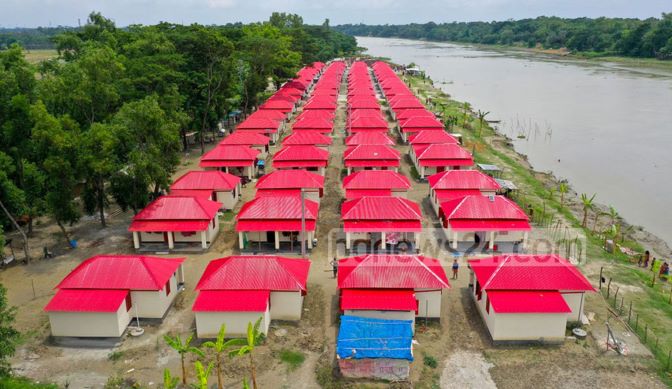
    Interestingly, Prime Minister Sheikh Hasina’s flagship housing programme – the provision of disaster-resilient housing to the poor as part the Ashrayan project – saved nearly four lakh people of the 19 coastal districts as cyclone ‘Sitrang’ hit on Monday.

    There has been no information about any damage so far to any house constructed as part of the Ashrayan project, as the houses were built to be disaster resilient.

    The four lakh people did not have to go to cyclone shelters as they stayed safely in their homes. A total of 61,378 landless-homeless families were given disaster-resilient houses in 19 coastal districts in the last two years.

    Officials spoke of the considerably reduced disaster risk of the beneficiaries of the housing project and also the safety of livestock during the calamity.

    About 220,000 people and over 45,000 cattle have taken shelter in shelter centres in 19 coastal districts to escape the ravages of cyclone Sitrang. A total of 7,490 shelter centres have a capacity of 42,74,000.

    The cyclone has also vindicated the stand of planners who were advocating for more durable housing under the Ashrayan project with additional RCC pillars, grade vim and linkers.

    Project Ashrayan goes back to 1997, when the government under Sheikh Hasina undertook the project to rehabilitate landless, homeless and people who were displaced due to cyclones, floods and river erosion.

    Between 1997 and March 2022, a total of 507,244 identified families have received the housing. Beneficiaries include small ethnic minorities, transgenders or hijras, and other socially backward groups.

    Image: PMO Bangladesh

    Sri Lanka’s Vulnerable Forced to Risk “A Pathway To Destitution”, Says Red Cross Assessment

    The deepening economic crisis is forcing people to make heartbreaking choices between going hungry, buying life-saving medicine, or finding the money to send children to school.

    A needs assessment conducted by the International Federation of Red Cross and Red Crescent Societies in 11 of the country’s 25 districts has found that 96 per cent of the more than 2,900 households surveyed have been affected by the current crisis in some way — with food insecurity, health, livelihoods, and nutrition among the top concerns. Deteriorating physical safety and security, as well as violence against women and children, stood out.

    The report uncovered worryingly high problems of access to food, either because of high cost, income stress or lack of availability. Runaway inflation and loss of livelihoods have doubly impacted people’s ability to cope with the record cost of living. Income loss is causing significant food insecurity, while inflation is driving up the cost of medicine and fuel costs are preventing access to essential healthcare.

    “The report provides first-hand evidence of how the most vulnerable people, who are already under the poverty line, are being driven further towards despair,” said a Red Cross official. “As a result, people are resorting to borrowing heavily, eating less food and fewer times per day, pawning valuables and assets, and using other survival strategies just to scrape by.”

    Without immediate humanitarian interventions, the impact on communities is likely to be long-lasting and cumulative, the report warns.

    As Director General of the Sri Lanka Red Cross Society, Dr Mahesh Gunasekara, said, “We work on the ground and at the heart of communities. We hear the most heart-wrenching stories of loss of hope and gripping fear for the future.”

    “Life for them is like losing the battle for survival; for single women with children, people living with disabilities, the elderly, casual labourers, and fishermen,” he said, adding, “The most vulnerable need our help now so they can get through the worst of the economic crisis. We need to act to ensure lives are saved and restored.”


    Image: Sri Lanka Red Cross

    Tidal Waves on St. Martin’s Islands and 90 Km and Hour Winds Define Cyclone Sitrang

    Cyclone Sitrang started crossing the coast of Bangladesh between Chittagong and Barishal, with wind speeds of up to 90 km per hour by evening.

    Towering waves, caused by tidal surges, crashed on to the coast of St. Martin’s Island as Cyclone Sitrang swept by just before noon on Monday. 13 fishing trawlers were damaged., though no casualties have been reported.

    According to Union Parishad chairman of St Martin’s Island, Md Mujibur Rahman, towering waves caused by tidal surges hit the island’s southeast coast around 11 am on Monday.

    “The sea is turbulent due to Cyclone Sitrang. Seven of the damaged vessels were ripped apart while six were partially damaged. Many trees were uprooted by the stormy winds,” the chairman told the news media, bdnews24.com.

    “No boats, trawlers or ships are operational due to the cyclonic storm,” said Jahangir Alam, general secretary of St. Martin’s Island’s service trawlers owners’ association. “The fishing boats and trawlers have returned to the coasts from the sea. More than 300 boats, trawlers, and speedboats are anchored in the pier.”

    By evening, Cyclone Sitrang started crossing the coast of Bangladesh between Chittagong and Barishal, with wind speeds of up to 90 km per hour.

    The cyclonic storm is very likely to further intensify into a more severe one today with wind speed reaching 90 to 100 km per hour and gusting to 110 km per hour, according to the The India Meteorological Department.

    Cyclone shelters ready

    Over 219,990 people from 15 coastal districts were moved to the safety of cyclone shelters centres until 5:00 pm on Monday and more people were expected to take makeshift refuge in safe shelters.

    “At least 219,990 people have been taken to cyclone centres in 15 coastal districts by 5:00 pm on Monday,” a disaster management and relief ministry spokesperson said Monday evening.

    Officials said that 7,030 storm shelters along coastal regions will give refuge to 2.5 million people.

    M Moniruzzaman, a joint secretary with the ministry, added that evacuation of people living in the expected path of the cyclonic storm was underway. 6,925 cyclone centres are kept ready for the people yet to at the shelters, he said.

    Md Erfanul Haque Chowdhury, assistant commissioner at the Teknaf UNO, said that instructions have been passed to keep cyclone shelters and multi-storey buildings open to local residents for refuge.

    He said all necessary arrangements, including dry food and water, were in place for the locals.

    Educational institutions in three divisions have been closed for Tuesday as authorities expect that over 200,000 people might need to take shelter in these places.

    Moderate storm

    In the meanwhile, fallen trees have blocked the Dhaka-Chittagong highway. The fallen trees have also affected telecommunication and power distribution in some areas, while safety measures enforced outages in others. The country’s central regions as far as Dhaka were experiencing incessant rains.

    Fallen trees have also led to deaths of four in Dhaka, Bhola and Narail during the battering by Cyclone Sitrang. The fire service and civil defence have opened a monitoring cell.

    The airports at Cox’s Bazar, Chattogram and Barishal have been closed and ferry launch service across Bangladesh have been suspended.

    Yet, disaster management officials and humanitarians say that millions remain in the cyclone’s pathway.

    The country’s meteorological department on Monday evening advised managements of the ports at Mongla and Payra to hoist a seventh-level as it is feared that coastal districts will experience storm tides and heavy rain, though experts describe Sitrang as a “moderate” storm with a diameter of 400-500 km.

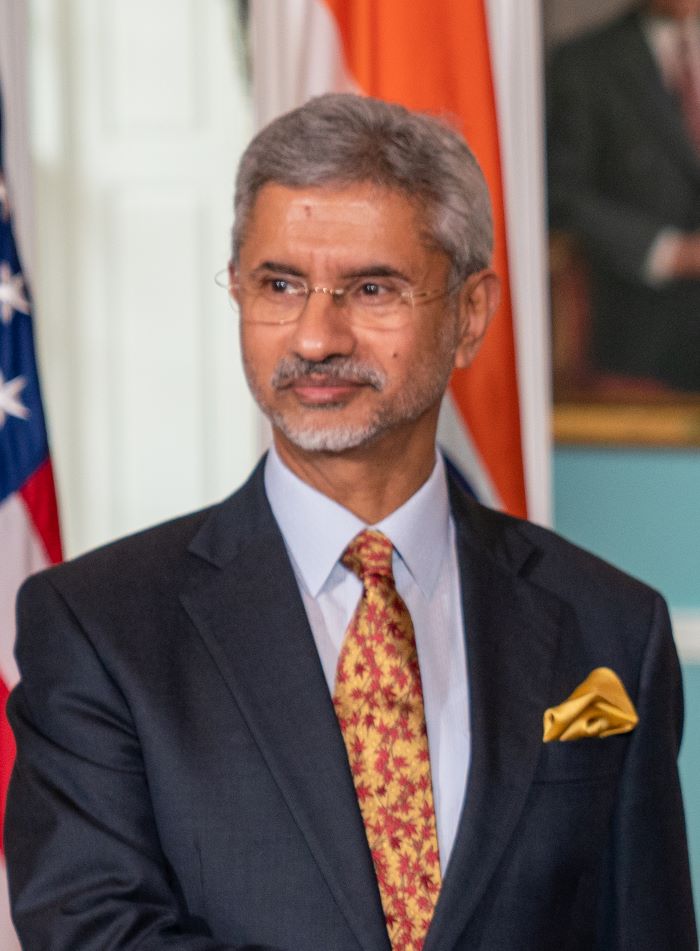
    S Jaishankar’s UN Day Message Reiterates India’s Support for Global South

    UN Secretary General António Guterres described the UN as “the product of hope” because it embodies the hope and resolve to move beyond global conflict, to a new era of global cooperation.

    External Affairs Minister Dr S Jaishankar on Tuesday said India will always stand with the Global South. He said this on the occasion of United Nations Day, while iterating India’s role to strengthen the United Nation’s effectiveness.

    To illustrate India’s role on the multilateral stage, Dr Jaishankar said that India’s ongoing tenure as a member of the UNSC has reflected the country’s principled approach to promoting dialogue and diplomacy to meet contemporary challenges. He said that India’s focus on reformed multilateralism, rule of law, and a fair and equitable international system is aimed at ensuring the UN’s continued relevance.

    “India’s ongoing tenure as the member of the UNSC has reflected our principled approach of promoting dialogue and diplomacy to meet contemporary challenges,” he tweeted, and added, “India will always stand with the Global South and seek to strengthen the UN’s effectiveness.”

    He said, as United Nations’ founding member, India remains committed to its purposes and principles. The Minister said, India’s contributions to implementing the goals of the UN Charter are a reflection of this commitment.

    “Our focus on reformed multilateralism, rule of law, and a fair and equitable international system is aimed at ensuring UN’s continued relevance,” he said.

    The UN was born from the ashes of the Second World War and the day marks the anniversary of the entry into force in 1945 of the UN Charter, its founding document.

    UN Secretary General António Guterres described the UN as “the product of hope” because it embodies the hope and resolve to move beyond global conflict, to a new era of global cooperation. He called for renewed hope and conviction in global solidarity in his message for United Nations Day.

    “As we mark UN Day, let us renew our hope and conviction in what humanity can achieve when we work as one, in global solidarity,” he said in a message.


    Image: Wikimedia

    Indian Village Unlocks Treasure of Organic, Indigenous Farming

    The village, with more than 250 households, identified six veteran and experienced farmers who were tasked with producing their indigenous seeds and saplings. These farmers were trained in seed preservation, seed bed making, organic manure preparation, and pest control.

    By Umar Manzoor Shah

    At Jhargram, a far-flung village in India’s West Bengal state, a group of farmers sit together in one of the open fields. They debate, deliberate, and confabulate about the marketing strategy they should use when selling their harvest on the open market.

    Two years ago, the scenario in the village was completely different. The farmers were perturbed by sudden market inflation — a price hike on seeds, fertilisers, and saplings. On top of that, they were worried about climate change and the damage that occurs with the changes in weather patterns — late monsoons, unseasonal rains, and extreme heat waves.

    The state of West Bengal is located in the eastern region of India along the Bay of Bengal. It was in this Indian state that Britain’s East India Company started doing business before it went on to rule almost the entire South Asia.

    West Bengal is primarily an agricultural state. Despite covering only 2.7 per cent of India’s geographical territory, it is home to approximately 8 per cent of its 1.3 billion population. There are 7,1 million farming families, with 96 per cent being small and marginal farmers in West Bengal. The average land holding is only 0.77 hectares. The state has a broad set of natural resources and agro-climatic conditions that allow for the production of a wide range of crops.

    However, over the past few years, farmers here have been reeling in distress.  According to recent research conducted to determine the intensity of the agrarian crisis in the region, agricultural produce returns for farmers were meagre.

    The main reasons for low agricultural returns were a flawed marketing system; low agricultural product prices; price fluctuations of farm products; and crop loss due to disease, flooding, and heavy rains.

    Price rise

    Jayanta Sahu, a farmer from Jhargram village, recalls how the drastic price rise of seeds and saplings put farmers like him in dire straits.

    “We belong to the village, which is far away from the city. It takes hours of bus rides to reach the markets. Hardly a bus drones through this place. This was why we used to rely mostly on the middleman to supply seeds, fertilisers, and related entities required for farming. They used to take their commission from the supplies, and we were left with extremely high-priced material,” Sahu told IPS.

    He adds that several issues have afflicted the farming sector in the past, including loss of agricultural land, a shortage of local seeds and seedlings, irrigation, and a lack of agricultural infrastructure, manures, fertiliser, and biocides.

    But above all, said Sahu, the plummeting income from farming left them feeling “wretched” in more ways than one.

    “We couldn’t even cover the basic expenses of our family through the meagre income from agriculture. Our finances were strained by inflation and climate change. We were really helpless before such a tumultuous situation,” Sahu said.

    Another farmer, namely Mongal Dash, recalls how he was about to bid adieu to farming forever and instead do menial jobs like working as a daily wage labourer in the main town. “We were fighting a battle on multiple fronts — the low yields of our crops, the high cost of fertilisers and seeds, and climate change. The middlemen who used to supply us with the seeds raised the basic cost four to five times. We had no option left but to buy from them. The degraded quality of these seeds would result in low yields and, ultimately, low incomes,” Dash told IPS.

    Six veteran farmers

    Witnessing insurmountable predicaments coming from all sides, the farmers last year sat together to decide a future course of action. It was like either they would perish or prosper. After hours of deliberations, they identified the key issues concerning them and how they should address them as a priority. One of the major hurdles was the involvement of middlemen or commission agents in procuring seeds. Another hurdle was the long distance to the city, which made it difficult to procure seeds and fertilisers for themselves.

    At this time, they deliberated over a strategy to produce their own seeds and saplings that they could grow and make profitable yields.

    The village, with more than 250 households, identified six veteran and experienced farmers who were tasked with producing their indigenous seeds and saplings. These farmers were trained in seed preservation, seed bed making, organic manure preparation, and pest control.

    About an acre of land was identified. Seedbeds for Tamara, cabbage, cauliflower, and chilli, with an estimated 9,000 saplings, were prepared there. The farmers resolved that no chemical fertilisers or pesticides would be used on seedlings or seed beds — everything was grown organically.

    The saplings were distributed at a low cost to the farmers in the village based on their needs.

    Self-reliant village

    Now, when more than a year has passed, the endeavour these otherwise crisis-stricken farmers have made is beginning to yield the desired results.

    “We are no longer dependent on the outside market for seed procurement. We do not use chemical fertilisers, nor are we importing any degraded saplings from outside. Our village is becoming self-reliant in this regard, and we are very proud of this,” says a local farmer Shyam Bisui.

    The farmers, who otherwise had to invest about one-third of their yearly earnings on purchasing inorganic seeds and chemical fertilisers, now save most of their money because organic manures are used. Seeds are prepared in the village.

    “The yields are subtly growing, and so are our hopes of good living. We are sure our earnest efforts will bring us prosperity, and we will never perish,” the farmer said.

    This piece has been sourced from Inter Press Service