More

    Rural Development: Data Use for Recreation Limits Potential of Digital Technology

    Rural consumers account for roughly 45 per cent of the data usage in the country. During the near total lockdown due to the COVID-19 pandemic, rural data usage soared by 400 per cent. However, this spike in data usage is not reflected in terms of generation of economic activities in the villages.

    By Dr Hansa Jain

    In the last five to seven years, digital access has improved remarkably in India. This is evident in the dramatic increase in rural digital subscribers from 92 million in 2015 to 332 million in 2022 (TRAI). Most of the credit goes to the government’s flagship programme Digital India, initiated to connect all the villages with broadband networks. Successive advancements in technology, network strength, decrease in the prices of smartphones and data enabling also helped this digital revolution.

    Currently, with over 800 million internet users, India has the world’s second-largest online user base after China (World Development Indicators). Since smartphones allow access to information from any place and time, developmental practitioners and policy makers view it as a tool for bridging the rural-urban divide and socio-economic differences. Over time, several mobile-based apps have been introduced to help rural people reduce their vulnerabilities. Now India is moving from 4G networks to 5G technology that offers better connectivity, 200 times faster download speeds and higher processing rates.

    Rural consumers account for roughly 45 per cent of the data usage in the country. During the near total lockdown due to the COVID-19 pandemic, rural data usage soared by 400 per cent. The majority of workers, both skilled and unskilled, returned to their villages during this time. However, this spike in data usage is not reflected in terms of generation of economic activities in the villages.

    The unlocking process resulted in a return to the pre-COVID-19 migration patterns which saw workers going back to cities, either to rejoin work or looking for new occupations. This indicates that technology helped displaced people find jobs through contacts in cities rather than staying put in villages and joining the rural job market. Technology also allows people to work remotely. However, the ongoing migratory trend raises a key question — how people in rural areas use digital technology.

    Consumptive digital usage

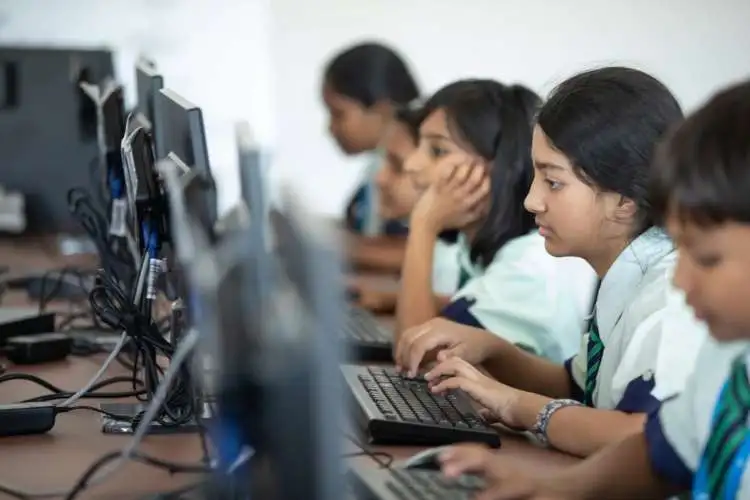
    A survey was conducted in selected villages of Gujarat and Rajasthan during the pre-pandemic time (2018-19). Taking into account the lagged effects of technology, the results of this study gave proper insights in this direction. The study, sponsored by the Indian Council of Social Science Research, studied the influence of socio-economic factors on the digital profile of people. Due to gender-focused socially prescribed roles, males have more free time than females to spend online. However, their digital usage is largely consumptive, i.e., for recreational purposes such as gaming, watching movies and videos, and listening to music.

    Women use technology for less time, but their usage is mostly for sharing information and ideas, maintaining relations, promotion of products, and development of new skills. These findings negate the notion that poor digital skills intensify the use of recreational technology in rural areas. Taking into account the notion of learning by doing after attaining the threshold level of digital skills, digital abilities improve with usage. This indicates that digital users are less motivated to use the technology in productive ways.

    In Rajasthan, the study finds that low literacy rate, less remunerative jobs, poor economic status and social backwardness demotivate people from productive digital engagement, particularly for information search and knowledge expansion. These factors decrease the confidence to develop new contacts and to engage in digital transactions. This confines technology usage to close contact and peer groups.

    Used for passing time

    On the contrary, in Gujarat, two different situations are observed. In some villages, foreign remittances decrease the need to use technology for learning and raising income. In villages where opportunities are available due to highly developed businesses, industries, service sector, and high agricultural productivity, technology is used more productively. It was visualized even among people belonging the socially backward groups.

    Despite all limiting factors, digital technology is found to have a positive relationship with income and opportunities in non-farm sector, learning opportunities, as well as maintenance of social relations. Since agriculture is a seasonal occupation, during the off-farming months, the technology is increasingly used for passing the time. This suggests that the positive effects of technology are negated by its excessive use for leisure activities.

    In order to leverage the benefits of digital access in rural development, the study recommends increasing income generation activities in villages. This should include development of business activities and integration of rural markets with a larger supply chains. Young people’s migration will consequently decline, resulting in more technological support in remote areas which will, in turn, increase the level of confidence for other digital activities. Since the rural people are resource poor, policy initiatives are required in this area.

    Freeing up resources from free transfers and diverting them for creating opportunities will encourage productive digital engagement by individuals which should have positive implications for rural development. Improving secondary and senior secondary education facilities will also enhance the impact of digital access in rural areas. The study concludes that excessive data use for recreation offsets the benefits of digital technology in rural areas.

    Dr Hansa Jain works at Sardar Patel Institute of Economic and Social Research, Ahmedabad. This study is part of a project sponsored by ICSSR, New Delhi.


    This piece has been sourced from Policy Circle — policycircle.org
    New Process Could Enable More Efficient Plastics Recycling

    Cobalt-based catalysts could be used to turn mixed plastic waste into fuel, new plastics, and other products, according to new research from MIT and elsewhere.

    David L. Chandler  |  MIT News Office

    The accumulation of plastic waste in the oceans, soil, and even in our bodies is one of the major pollution issues of modern times, with over 5 billion tons disposed of so far. Despite major efforts to recycle plastic products, actually making use of that motley mix of materials has remained a challenging issue.

    A key problem is that plastics come in so many different varieties, and chemical processes for breaking them down into a form that can be reused in some way tend to be very specific to each type of plastic. Sorting the hodgepodge of waste material, from soda bottles to detergent jugs to plastic toys, is impractical at large scale. Today, much of the plastic material gathered through recycling programs ends up in landfills anyway. Surely there’s a better way.

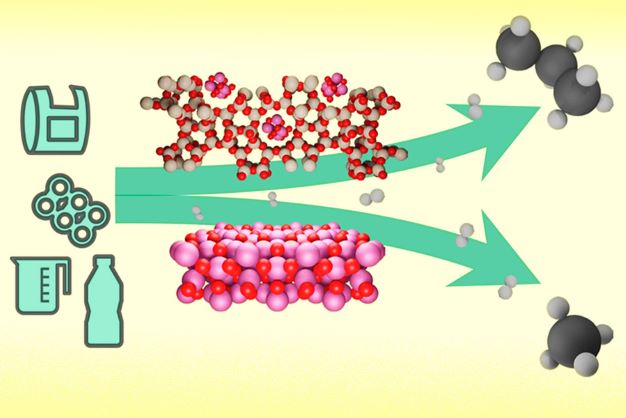
    According to new research from MIT and elsewhere, it appears there may indeed be a much better way. A chemical process using a catalyst based on cobalt has been found to be very effective at breaking down a variety of plastics, such as polyethylene (PET) and polypropylene (PP), the two most widely produced forms of plastic, into a single product, propane. Propane can then be used as a fuel for stoves, heaters, and vehicles, or as a feedstock for the production of a wide variety of products — including new plastics, thus potentially providing at least a partial closed-loop recycling system.

    The finding is described today in the open access journal JACS Au, in a paper by MIT professor of chemical engineering Yuriy Román-Leshkov, postdoc Guido Zichitella, and seven others at MIT, the SLAC National Accelerator Laboratory, and the National Renewable Energy Laboratory.

    Zeolite, cobalt to the rescue

    Recycling plastics has been a thorny problem, Román-Leshkov explains, because the long-chain molecules in plastics are held together by carbon bonds, which are “very stable and difficult to break apart.” Existing techniques for breaking these bonds tend to produce a random mix of different molecules, which would then require complex refining methods to separate out into usable specific compounds. “The problem is,” he says, “there’s no way to control where in the carbon chain you break the molecule.”

    But to the surprise of the researchers, a catalyst made of a microporous material called a zeolite that contains cobalt nanoparticles can selectively break down various plastic polymer molecules and turn more than 80 per cent of them into propane.

    Although zeolites are riddled with tiny pores less than a nanometer wide (corresponding to the width of the polymer chains), a logical assumption had been that there would be little interaction at all between the zeolite and the polymers. Surprisingly, however, the opposite turned out to be the case: Not only do the polymer chains enter the pores, but the synergistic work between cobalt and the acid sites in the zeolite can break the chain at the same point. That cleavage site turned out to correspond to chopping off exactly one propane molecule without generating unwanted methane, leaving the rest of the longer hydrocarbons ready to undergo the process, again and again.

    “Once you have this one compound, propane, you lessen the burden on downstream separations,” Román-Leshkov says. “That’s the essence of why we think this is quite important. We’re not only breaking the bonds, but we’re generating mainly a single product” that can be used for many different products and processes.

    Tests still under way

    The materials needed for the process, zeolites and cobalt, “are both quite cheap” and widely available, he says, although today most cobalt comes from troubled areas in the Democratic Republic of Congo. Some new production is being developed in Canada, Cuba, and other places. The other material needed for the process is hydrogen, which today is mostly produced from fossil fuels but can easily be made other ways, including electrolysis of water using carbon-free electricity such as solar or wind power.

    The researchers tested their system on a real example of mixed recycled plastic, producing promising results. But more testing will be needed on a greater variety of mixed waste streams to determine how much fouling takes place from various contaminants in the material — such as inks, glues, and labels attached to the plastic containers, or other nonplastic materials that get mixed in with the waste — and how that affects the long-term stability of the process.

    Together with collaborators at NREL, the MIT team is also continuing to study the economics of the system, and analyzing how it can fit into today’s systems for handling plastic and mixed waste streams. “We don’t have all the answers yet,” Román-Leshkov says, but preliminary analysis looks promising.

    Reprinted with permission of MIT News 

    Image: MIT

    India Among 42 Nations Censured by UN for Retaliating Against Human Rights Activists, Journalists

    The United Nations has singled out 42 countries for condemnation for retaliating against human rights activists and journalists. SouthAsian countries figuring among the 42 nations include Afghanistan, Bangladesh, India, Maldives, Sri Lanka. The list does not mention Pakistan, Nepal or Bhutan.

    By Thalif Deen

    The United Nations has singled out 42 countries (out of 193 member states) for condemnation – virtually blacklisting them – for retaliating against human rights activists and journalists.

    If you cooperate with the United Nations and complain about human rights abuses in your home country, chances are you will find yourself either jailed, persecuted, tortured or under government surveillance.

    The 42 countries include some of the world’s worst authoritarian regimes with a notoriety for extensive human rights abuses.

    Highlighting a number of “disturbing trends” over the past year, the annual report by UN Secretary-General Antonio Guterres details how people — mainly victims of human rights violations, human rights defenders and journalists – suffered reprisals and intimidation by States and non-State actors.

    This included people being detained, targeted by restrictive legislation and surveilled both online and offline. People who tried to cooperate with the UN, or were perceived as doing so, were also affected.

    In a third of the countries named in the report, individuals and groups, including civil society organizations (CSOs), either refrained from cooperating or only agreed to report their cases anonymously out of fear of reprisals.

    “Despite positive developments, including pledges and shared commitments by Member States against reprisals, this report shows the extent to which people are pursued and persecuted for raising human rights concerns with the UN”.

    “And we know that, shocking though this number is, many cases of reprisals are not even reported,” says Assistant Secretary-General for Human Rights Ilze Brands Kehris.

    The report, entitled ‘Cooperation with the United Nations, its representatives and mechanisms in the field of human rights’, includes extensive annexes detailing cases country by country.

    For solidarity

    The 42 States referred to in the report (which covers the period from 1 May 2021 to 30 April 2022) include Afghanistan, Andorra, Bahrain, Bangladesh, Belarus, Brazil, Burundi, Cameroon, China, Cuba, Cyprus, Democratic Republic of the Congo, Djibouti, Egypt, Guatemala, India, Indonesia, the Islamic Republic of Iran, Israel, Kazakhstan, Laos People’s Democratic Republic, Libya, Maldives, Mali, Mexico, Morocco, Myanmar, Nicaragua, Philippines, Russian Federation, Rwanda, Saudi Arabia, South Sudan, Sri Lanka, Sudan, State of Palestine, Thailand, Turkmenistan, United Arab Emirates, the Bolivarian Republic of Venezuela, Viet Nam, and Yemen.

    Dr. Simon Adams, President and CEO of the Center for Victims of Torture, the largest international organization that treats survivors and advocates for an end to torture worldwide, told IPS the UN is an impartial humanitarian organization dedicated to the advancement of humanity.

    “When some states or armed groups perceive civil society activists or journalists speaking to the United Nations as constituting a threat to their interests, they are violating the ‘faith in fundamental human rights’ that the UN Charter proudly encapsulates,” he said.

    ‘We the peoples,’ where ever we may be in the world, have a right to speak directly to UN representatives without some malevolent authority leaning over our shoulders, tapping our phone, or threatening us with detention or disappearance,” he said.

    Human rights defenders in the countries mentioned in the UN Secretary-General’s report not only deserve our respect and solidarity, they need protection, declared Dr Adams.

    Narrowing civic space

    When Secretary-General Antonio Guterres last week congratulated Ales Bialiatski and the organizations Memorial and the Centre for Civil Liberties on being awarded the 2022 Nobel Peace Prize, he said this year’s recognition shines a spotlight on the power of civil society in advance of peace.

    “Civil society groups (CSOs) are the oxygen of democracy, and catalysts for peace, social progress and economic growth. They help keep governments accountable and carry the voices of the vulnerable into the halls of power”.

    Yet today, civic space is narrowing across the world, the Secretary-General warned.

    “Human rights defenders, women’s rights advocates, environmental activists, journalists and others face arbitrary arrest, harsh prison sentences, smear campaigns, crippling fines and violent attacks,” he declared.

    “As we congratulate this year’s winners, let us pledge to defend the brave defenders of universal values of peace, hope and dignity,” Guterres said.

    Russia under scrutiny

    Meanwhile, responding to a decision by the UN Human Rights Council’s (UNHRC), to establish an independent monitoring mechanism on the human rights situation in Russia, Agnès Callamard, Amnesty International’s Secretary General, said her organization welcomes the decision to finally bring Russia’s human rights record under scrutiny.

    Under Vladimir Putin’s leadership, she pointed out, “the country has seen its political opposition crushed, grassroots NGOs and activists outlawed, independent media shuttered, and civil society as a whole scorched to the ground”.

    “Russia’s unlawful aggression in Ukraine could not be a clearer demonstration of Vladimir Putin’s longstanding disregard for life and human rights.”

    Callamard said the establishment of this important mechanism will be a long overdue lifeline to civil society in Russia, independent media and many others standing up to repression.

    “We call on all states to support the swift establishment of this monitoring and reporting mandate, and to fully support victims of human rights and humanitarian law violations committed by the national authorities”.

    “We call on the Russian authorities to heed the clear message that the Human Rights Council sends with the establishment of this mechanism, and to fundamentally change course to cease its violations at home and abroad,” she declared.

    Restrictive legislations

    Providing an update on the military regime in Myanmar, UN Spokesperson Stephane Dujarric told reporters October 6, that according to UNESCO (United Nations Educational, Scientific and Cultural Organization), at least 170 journalists have been arrested since the military takeover in Myanmar in February last year.

    Nearly 70 journalists, including 12 women, remain under detention. UNESCO has also recorded over 200 incidents of media repression, including killings, arrests, detention, criminal cases, imprisonments, and raids of editorial offices.

    Forty-four journalists, which include seven women, have been sentenced for criminal offences by local courts, he said. Also, media workers report that they experience digital surveillance of mobile phones and social media platforms. UNESCO remains committed to protecting and defending their press freedom.

    Meanwhile, the UN report said the surveillance of individuals and groups who cooperate with the UN continued to be reported in all regions with growing evidence of online surveillance and cyberattacks. The massive digital shift accelerated by the COVID-19 pandemic also increased challenges relating to cyber-security, privacy, and access to online spaces.

    Another concerning global trend is the use and impact of restrictive legislation that prevents and punishes cooperation with the UN, resulting in some cases of people being sentenced to long prison terms or placed under house arrest. There were recurring and similar allegations of intimidation reported in a number of countries, which could indicate a pattern.

    Intimidation and reprisals

    Another global trend is self-censorship, choosing not to cooperate with the UN or doing so anonymously amid concerns for their safety. Increased surveillance and monitoring, as well as the fear of criminal liability, have created what the report terms a “chilling effect” of silence, stopping people from cooperating further with the UN and deterring others from doing so, according to the report.

    As in previous years, the report shows that intimidation and reprisals disproportionally affect certain populations and groups, including representatives of indigenous peoples, minorities or those who work on environment and climate change issues, as well as people who may suffer discrimination based on age, sexual orientation and gender.

    “The risks affecting women victims, as well as women human rights defenders and peace builders, who share testimony and cooperate with the UN remain daunting. We will continue to work to ensure that all can safely engage with the UN,” Brands Kehris stressed, as she presented the report to the Human Rights Council in Geneva.

    This piece has been sourced from Inter Press Service

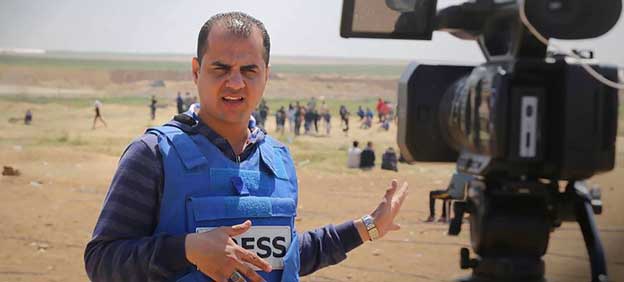
    Image: UNESCO – Palestinian journalist, Mohammad Awad, reporting from the field.

    Development Banks Should Reform Their Lending Practices

    The International Monetary Fund (IMF) and the World Bank share a common goal of raising living standards in their member countries. This week, the two international institutions will convene in Washington DC (through October 16) for their annual meeting. The strength of the US dollar will be a key talking point. By adjusting their lending practices, these institutions have a unique opportunity to relieve suffering in the world’s poorest countries.

    By Alexander Kozul-Wright and Ruurd Brouwer

    In the last week of September, emerging market (EM) bond fund outflows hit $4.2 billion, according to JP Morgan, bringing this year’s total to a record $70 billion. The exodus, set off by a rising U.S. dollar, is heaping pressure on low-income countries.

    The greenback’s rise has been fuelled by interest-rate hikes by the Federal Reserve. Since March, the Fed has raised rates by three percentage points, prompting global investors to move their funds into U.S. financial assets and away from (riskier) EM investments.

    While economists continue to wrangle over their U.S. growth forecasts, this ‘flight to quality’ has sent financial shockwaves across the developing world, already straining under elevated costs for food and fuel – typically priced in U.S. dollars. Moreover, attempts by EM policy makers to stem the dollar’s rise have largely failed.

    Over the course of this year, central banks around the world have drained their U.S. dollar reserves at the fastest rate since 2008. To stem currency depreciations, they have also raised interest rates aggressively. In Argentina, for instance, policy makers raised rates to 75 per cent last month. To little avail.

    The MSCI Emerging Market Currency Index, which measures the total return of 25 emerging market currencies against the U.S. Dollar, is down nearly 9 percent from January 1st. The Egyptian pound has depreciated by 20 per cent over the same period, according to Bloomberg data. In Ghana, the Cedi has fallen by 41 per cent.

    On top of higher imports costs, a plunging currency makes the servicing of dollar- denominated debt more expensive. This concern may seem abstract to people in advanced economies. In developing nations, however, the effects are painfully real.

    Austerity over bankruptcy

    As the dollar appreciates relative to other currencies, more domestic currency (in the form of tax revenues) has to be generated to service existing dollar debts. For low-income governments, budget cuts have to be implemented in the hope of avoiding sovereign default.

    Currency depreciations have the power to strongarm authorities into reducing health and education spending, just to stay current on their debts. This leaves officials with a grim choice: either risk unleashing a full-blown debt crisis, or confiscate essential public services.

    Given the painful costs of insolvency, governments tend to prioritize austerity over bankruptcy. Together with the oft-publicized effects of lost access to foreign investment, subdued growth and high unemployment, sovereign default also imposes severe social tolls.

    In August, the World Bank published a paper measuring the decline in country living standards – looking at access to food, energy and healthcare – after state bankruptcies. The paper showed that ten years after default, countries experience 13 per cent more infant deaths per year, on average, compared to the synthetic control (counterfactual) group.

    Admittedly, more developed emerging markets like Brazil and India can issue bonds in their own currency to limit budget cutbacks. In most of the world’s poor countries, however, financial markets are too shallow to support domestic lending.

    With no recourse to borrow from private creditors, public bodies like multi-lateral development banks (MDBs) usually step in to fill the gap. Indeed, almost 90 per cent of low-income countries’ (LICs) funding takes the form of concessional, or non-commercial, loans from official lenders.

    Ease global poverty

    Even accounting for these favourable terms, financial pressures are beginning to build outside of well-known hot spots like Lebanon, Sri Lanka and Pakistan. As it stands, LICs have outstanding debts to MDBs and other official creditors to the tune of $153 billion (mostly denominated in USD).

    Given the exogenous trigger for capital outflows from developing countries this year, multi-lateral lenders need to be more innovative. Where possible, they should use their robust credit ratings to assume greater risk by lending to poor countries in domestic currencies.

    Failing that, they could lend in synthetic local currencies. These instruments index dollar debts to local exchange rates, allowing borrowers to service liabilities in their own currency while ensuring that creditors receive payments (both interest and principal) in dollars.

    Synthetic currencies can improve debtor credit profiles by limiting foreign capital outflows and, by extension, improve debt management capacity. In particular, they boost economic resiliency by making government finances less a function of international currency volatility.

    Multilateral financial institutions have been tasked with designing a stable international monetary system to try and ease global poverty. But the loans provided by these groups undermine their own mission, as dollar debts force currency risk onto the countries least able to handle it.

    This week, the World Bank and the IMF will convene in Washington (October 10-16) for their annual meeting. The strength of the USD will be a key talking point. By adjusting their lending practices, these institutions have a unique opportunity to relieve suffering in the world’s poorest countries.

    Alexander Kozul-Wright is a researcher at Third World Network and Ruurd Brouwer is Chief Executive Officer at TCX, a currency hedging firm (https://www.tcxfund.com).

    This piece has been source from Inter Press Service.

    Global Growth to Slow to 3.2 per cent in 2022, Says IMF’s World Economic Outlook

    The report forecasts global growth to slow from 6.0 per cent in 2021 to 3.2 per cent in 2022 and 2.7 per cent in 2023. This is the weakest growth profile since 2001 except for the global financial crisis and the acute phase of the COVID-19 pandemic.

    The latest edition of International Monetary Fund’s World Economic Outlook released on Tuesday raises the curtains for a contraction of the world economy by next year. Citing that the global economy is experiencing a number of turbulent challenges, the Fund cut its global growth forecast for 2023 citing the ongoing war in Ukraine, the lingering COVID-19 pandemic and inflation, particularly the rising prices of food and energy.

    Helmed on ‘Inflation and uncertainty’, IMF’s World Economic Outlook report released on Tuesday themed on ‘Countering the Cost-of-Living Crisis’

    It says that global economic activity is experiencing a broad-based and sharper-than-expected slowdown, with inflation higher than seen in several decades.

    “The cost-of-living crisis, tightening financial conditions in most regions, Russia’s invasion of Ukraine, and the lingering COVID-19 pandemic all weigh heavily on the outlook.”

    IMF World Economic Outlook growth Inflation COVID-19 China dollar
    Global inflation is forecast to rise from 4.7 per cent in 2021 to 8.8 percent in 2022
    Rising inflation

    According to IMF the global growth is forecast to slow from 6.0 per cent in 2021 to 3.2 per cent in 2022 and 2.7 per cent in 2023. “This is the weakest growth profile since 2001 except for the global financial crisis and the acute phase of the COVID-19 pandemic and reflects significant slowdowns for the largest economies: a US GDP contraction in the first half of 2022, a euro area contraction in the second half of 2022, and prolonged COVID-19 outbreaks and lockdowns in China with a growing property sector crisis.”

    About a third of the world economy faces two consecutive quarters of negative growth, according to the Fund. Global inflation is forecast to rise from 4.7 per cent in 2021 to 8.8 percent in 2022; but to decline to 6.5 per cent in 2023 and to 4.1 per cent by 2024.

    Risks to the outlook remain unusually large and to the downside, the report says. Monetary policy could miscalculate the right stance to reduce inflation. It sees a further appreciation of the US dollar. On COVID-19, it fears a resurgence of the pandemic or new global health scares might further stunt growth.

    Protect vulnerable groups

    A worsening of China’s property sector crisis could spill over to the domestic banking sector and weigh heavily on the country’s growth, with negative cross-border effects, it says, adding that geopolitical fragmentation could impede trade and capital flows, further hindering climate policy cooperation. “The balance of risks is tilted firmly to the downside, with about a 25 per cent chance of one-year-ahead global growth falling below 2.0 per cent — in the 10th percentile of global growth outturns since 1970.”

    The report says that “front-loaded and aggressive monetary tightening is critical to avoid inflation de-anchoring as a result of households and businesses basing their wage and price expectations on their recent inflation experience.”

    Fiscal policy’s priority is the protection of vulnerable groups through targeted near-term support to alleviate the burden of the cost of-living crisis felt across the globe, the Fund says.

    Uttarakhand’s Green Warrior

    Despite a debilitating impairment to his hip that has aged him beyond his years, Malara has kept his passion alive and grows fodder leaves, fruit plants and multi-use medicinal plants in his nursery in Mandelsera village. He provides these plants for free to promote green cover.

    By Nitin Jugran Bahuguna

    A four-year-old village boy was accompanying his mother to the temple. On the way, they crossed a dense forest with tall trees where he heard birds chirping. The melodious sound stopped the child in his tracks and he begged his mother to catch the birds to take them home. His mother explained to him that the birds lived in the trees and would not be able to survive at home as their village did not have a dense forest.

    Upon returning home, the boy planted bhima  (Grewia Optiva) and timul (Ficus Auriculata Lour) plants in the field near their house hoping that it would attract the birds and he could hear their song again.

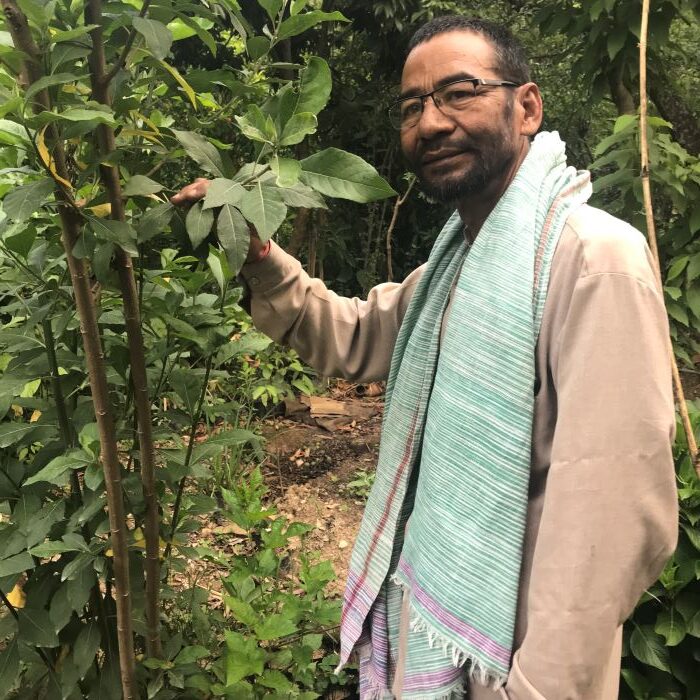
    This was the start of a deep love for the environment for 54-years old Kishen Singh Malara that would lead to the creation of ten shanti vans (peace forests) in the land of all Panchayats of Bageshwar district and parks in schools, colleges and temples across many states of India and abroad and his own nursery on his ancestral property where he is growing a diverse variety of plants.

    “So far, I have planted 800,000 saplings and my goal is to plant one crore useful multi-purpose saplings,” says the frail-looking trooper who has changed the green face of Kumaon in the hill state of Uttarakhand.

    Despite a debilitating impairment to his hip (ostrolysis) that has aged him beyond his years, Malara has kept his passion alive and grows fodder leaves, fruit plants and multi-use medicinal plants in his nursery in Mandelsera village. He provides these plants for free to promote green cover.

    He started producing traditional seeds from the age of 18 and due to his persistent efforts more than 3.25 lakh saplings have been distributed free of cost and planted till date.

    “In 1990, I established Devki Laghu Vatika on two bighas of land in the memory of my mother. For twelve years I grew different plants for medicinal purposes and fruit trees in three nurseries on my land,” he says. That was the beginning of an afforestation drive in the hills of Uttarakhand.

    Today, his nursery has a diverse range of plants he has cultivated. Committed to the conservation of endangered tree species, he has planted saplings of 160 endangered species which are flourishing on his land. “I have 200 species in my garden, most of which are medicinal. Along with local herbs, I am also growing plants from other states such as Chandan (sandalwood), Ajneer and Rudraksh,” he reveals.

    The states which have invited him to create forests include

    States like Haryana, Delhi, Jharkhand, Assam and Maharashtra and the administration of Chandigarh have invited him to create forests. Visiting teams from universities in Japan, Lithuania and Russia have taken tulsi and Rudraskh plants from his nursery. “I also presented tulsi plants to researchers from Yale University,” he adds.

    By planting trees, he rejuvenated two parched water sources in his village. In 2015, Malara received a grant of Rs five Lakh from the state Forest Corporation to develop the Vatika due to which two peace forests were created.

    In 2011-12, the Vatika was selected for a unique project – creation of a coral silk garden. “Hundreds of families were presented with coral silk saplings for planting and 175 farmers from Uttarakhand were trained in the Vatika by the Coral Silk Board between 2012 and 2015,” Malara informs. “In May this year, Coral Burmese was brought from Assam to be added to our coral resham garden. Those who got the crop prepared 10,000 cocoons and after 15 days the butterfly was ready.”

    Explaining what coral silk is, he says all types of silk are of white colour except for coral silk which is golden-coloured.  Four to five crops are obtained from this plant within 40-50 days and there is low risk of infection. “There is high demand for this silk in foreign countries and after Assam, our vatika is the second place in the country that is successfully cultivating coral silk,” he claims.

    According to Malara, coral silk production is environmentally the best form of sericulture as it can be produced on the tree itself. In traditional silk production, twigs have to be cut from other trees and this can cause infection to the plant. “If even 25 per cent of farmers take up coral silk production, it is possible to solve the problems of employment migration and environmental degradation in our state,” he avers. “But for this, we will need government cooperation.”

    Malara’s vision for a permanent solution to the issues of migration and employment is to produce and preserve more local fruit, fodder leaves and multi-purpose plants. Plantation of fruit and medicinal plants along with availability of fodder leaves around each village will provide ease of work and employment at the local level for the new generation as farming and animal husbandry are the two main sources of employment in the hill areas, he stresses.

    Nitin Jugran Bahuguna is a freelance journalist and author with over 35 years’ work experience in human development issues

    Undersea survey reveals a cafeteria for Sharks, Tuna

    The survey team came across a natural mesh made of fossilised carbonate reefs that traps micro-nekton on their way to bottom of the sea, turning them into fodder for large pelagic predators like tuna and shark fish that arrive here for food.

    A first-ever underwater survey of the Indian Ocean waters in the economic zone of the Maldives has revealed an “oasis of oceanic live” in the depths surrounding the atolls of the island nation. It has also shed new light on the behaviour of the Vertical Migration – the largest nightly migration on the planet.

    The scientific team conducting the survey have found a series of vertical cliffs 500 metres below the surface of the ocean. The vertical cliffs have a mesh of shelving terraces that trap swarms of micro-nekton – small swimming creatures that undertake a vertical migratory journey after sunset.

    The scientists call this natural trapping mesh ‘the trapping zone’.

    The trapping zone is made of fossilised carbonate reefs does not allow the micro-nekton to return to their way-down-at-the-ocean-bed-homes from where they arrive – turning them into fodder for large pelagic predators, including schools of tuna and sharks, along with other well-known, large deep-water. The natural trap in which they get stuck is a feeding cafeteria for the larger animals.

    As small as 2 cm and no larger than 20 cm, the micro-nekton feed on zooplankton and are part of the food chain of bigger predators like the tuna, sharks, and similar marine life as well as seabirds.

    “Engaging in the vertical migration is an essential for the micro-nektons, swimming upwards to the sea surface from the deep sea at night and diving back into the deep at dawn,” said Mohamed Shimal of the Maldives Marine Research Institute.

    Science to policy

    While scientists have found sharks in shallow waters in the Maldives, this is the first time they were able to document “an immense diversity of sharks in the deep sea.

    “We’ve observed sharks in shallower waters quite extensively in the Maldives before, but for the first time we’ve have been able to document an immense diversity of sharks in the deep sea”, explained Shafiya Naeem, Director General of the Maldives Marine Research Institute, which has partnered with Nekton on the expedition. Tiger sharks, six gill sharks, sand tiger sharks, dog fish, gulper sharks, scalloped hammerhead sharks, silky sharks and the very rare bramble shark have all been documented.

    Emphasising how the scientific study is essential to draw up a policy on deep-sea fishing, the scientists from the Maldives Marine Research Institute said that this study will inform future planning on the scale of exploitation of marine food resources.

    “The discovery of ‘The Trapping Zone’ and the oasis of life in the depths surrounding the Maldives provides us with critical new knowledge that further supports our conservation commitments and sustainable ocean management, and almost certainly support fisheries and tourism,” said the country’s president Ibrahim Mohamed Solih, hailing the discovery.

    The Maldives Marine Research Institute has completed the underwater survey of the Maldivian oceans in partnership with Nekton Maldives. The survey has provided information on the oceanic life in the Maldivian seas. The 300 square kilometres of underwater area mapped during the project is larger than the land mass of the entire Maldives.

    It also included the famous “Satho Rahaa” deep sea mountain in Huvadhoo sea – with a perimeter of 15 nautical miles and a depth of 1,500 meters.

    The findings of the study will inform formulation of policies on marine conservation and climate change in the Maldives.

    Image: Representative image from Wikimedia

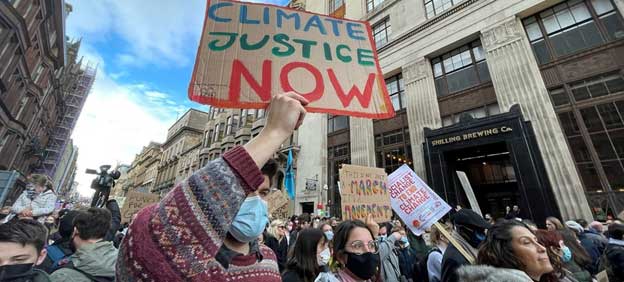
    Egypt Urged to Ensure Civil Society’s Full Participation in COP27 Climate Summit

    Civil society activists are concerned about a lack of information and transparent accreditation criteria for Egyptian NGOs, a coordinated increase in hotel tariffs, undue restrictions to peaceful assembly outside the conference venue and unjustified delays in the provision of visas.

    Authorities in Egypt must ensure civil society can safely and fully participate in the COP27 UN climate change conference taking place at the Sharm el-Sheikh International Convention Centre next month, a group of UN independent human rights experts said on Friday, expressing alarm over restrictions ahead of the summit.

    This new wave of reprisals follows years of persistent crackdowns on civil society and human rights defenders, using security as a pretext to undermine their legitimate right to participate in public affairs, they said in a statement.

    “Arrests and detention, NGO asset freezes and dissolutions and travel restrictions against human rights defenders have created a climate of fear for Egyptian civil society organisations to engage visibly at the COP27,” the experts said.

    Egyptian NGOs have previously suffered harassment, intimidation and reprisals for cooperating with the UN, they added.

    The five experts who issued the statement are all Special Rapporteurs, appointed by the Geneva-based UN Human Rights Council.

    They said the main concerns of civil society activists were lack of information and transparent accreditation criteria for Egyptian NGOs, a coordinated increase in hotel room rates, undue restrictions to freedom of peaceful assembly outside the conference venue, and unjustified delays in the provision of visas to those travelling from abroad.

    A crucial role

    They underscored the essential role civil society plays in advancing climate action and urged Egypt to ensure safe and meaningful participation at the conference, including for independent groups.

    “Instead of further limiting their rights, civil society actors and human rights defenders, including those working on climate rights, must be given an opportunity to raise awareness about their views and protection needs,” the experts said.

    “We strongly believe that COP27, organised by the United Nations, should uphold the public’s right to participate in the conduct of public affairs, as recognised by Egypt.”

    The experts have also backed calls by civil society for the UN climate body that oversees the conference, UNFCCC, to develop human rights criteria that countries hosting future COPs must commit to meeting as part of the host agreement.

    Image: Laura Quiñones / UN News

    Bangladesh Plans $230 Billion Climate Change Plan Spread Over 27 Years

    Months ahead of the UN Climate Change Conference, COP27 in Egypt, Bangladesh is set to unveil a massive National Adaptation Plan that it will showcase to the international community at Sharm el-Sheikh to highlight the country’s vulnerability and argue for a compensation from a climate justice platform.

    A National Adaptation plan, formulated by the ministry of environment, forest and climate change entails to save the vastly delta country from hydrological disasters, mainly floods and cyclones. It seeks a budget of US$230 billion to be spent over the coming 27 years between 2023 and 2050. It is presently pending an approval from the cabinet.

    Bangladesh has drawn up a strategy to seek compensation for the damage caused to the country by climate change at COP27 at Sharm el-Sheikh, Egypt, in December. The Centre for Environmental and Geographic Information Services, a climate change research institute, is tasked to source information on climate-related losses on behalf of the government.

    CEGIS estimates that Bangladesh loses 1.3 per cent of its GDP every year due to climate change. The country’s GDP stood at $465 billion in the 2021-22 fiscal year and it lost $4.65 billion. It is estimated that this loss will escalate in the years to come and could well exceed 2 per cent of GDP by 2030 and 9 per cent of the GDP by 2050 under the present state of affairs.

    Bangladesh’s expenses to deal with such damage to its infrastructure and farmlands and the impact on communities could be as high as US$8.5 billion annually.

    With this plan at hand, Bangladesh is strategizing to highlight the country’s vulnerability and argue for a compensation from a climate justice platform.

    Preparing for COP27

    According to Malik Fida A Khan, acting executive director of CEGIS, “To protect the country from environmental disasters, this huge monetary amount will not only be drawn from the government’s Annual Development Programme but a significant portion of the expenditure will be provided by the developed world, the United Nations and donor agencies.”

    “Whenever we participate in climate conferences or COPs, we are asked about the extent of damage caused by climate change. So far, we have been unable to provide numbers.”

    “Now, we have prepared a long-term planning document detailing how much we lose from the effects of climate change and how we can be compensated for the loss.”

    “Donors want to see our documents during talks. So, the government has devised this new plan. We will take this plan to the climate conference or COP. We will present it to the climate fund, the developed world, donors and UN agencies.”

    Khan says that this will serve as one of the most important documents for Bangladesh in terms of collecting money from development partners during international negotiations.

    “Now, we can discuss how much money the donors will provide. They may want to know about the high-priority sectors in the plan. Then they might talk about collaborations.”

    “Afterwards, we will fix how much money we have to provide. Then we will decide how much we can actually provide.”

    As many as 23 adaptation strategies have been identified to meet these six goals, the proper implementation of which will play an important role in achieving the 28 identified results at the national level and reducing the risks caused by climate change.

    20 million face displacement 

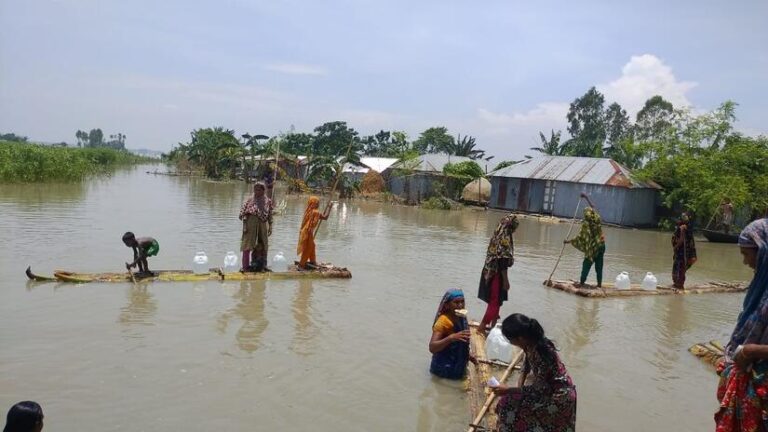
    Climate change related disasters are not new to Bangladesh. The Plain of Bengal or the Lower Gangetic Plain covers roughly 80 per cent of the country and large parts of the country stand at less than 10 metres above sea level. Inundation is common, especially because numerous rivers criss-cross these low-lying plains. About 10,000 square kilometres of Bangladesh’s total area is perennially covered with water, while the remainder is prone to annual floods during the monsoons.

    The country is dependent on water resources, agriculture, fisheries and livestock, and the dangers and risks to these sectors are increasing due to the impacts of climate change.

    Climate-related disasters such as severe cyclones and floods, untimely heavy rains, frequent monsoon and flash floods, urban floods and long-term waterlogging, extreme heatwaves, droughts, rising sea levels and salinity intrusion, sea surface warming and increased acidity have detrimental effects on people’s lives and socio-economic conditions as well as disrupting overall development and progress.

    At the COP21 climate conference, the Paris Agreement called for each country at risk to adopt a National Adaptation Plan. The environment ministry initiated the formulation of the plan to contribute to global efforts for adaptation by taking risk and vulnerability into account. This plan will help to continue the trend of sustainable and climate-resilient development in Bangladesh by formulating and implementing medium and long-term adaptation strategies to mitigate the future risks of climate change.

    The draft plan also states that the views and suggestions of all national and local stakeholders in the country have been prioritised to ensure a participatory process and to determine adaptation strategies to address the risks of climate change.

    More than 35 consultative workshops, over 100 group discussions and personal interviews have been organised across the country involving thousands of people from various walks of life.

    The adaptation plan identified 14 climate change-related disasters and 11 areas prone to climate disasters in Bangladesh.

    Most of these areas are vulnerable to more than one climate change-induced disaster. The disasters are likely to become more severe and frequent in the future.

    As a result, overall infrastructure, livelihoods and ecosystems will be disproportionately affected, and potentially about 20 million people can end up as climate refugees.

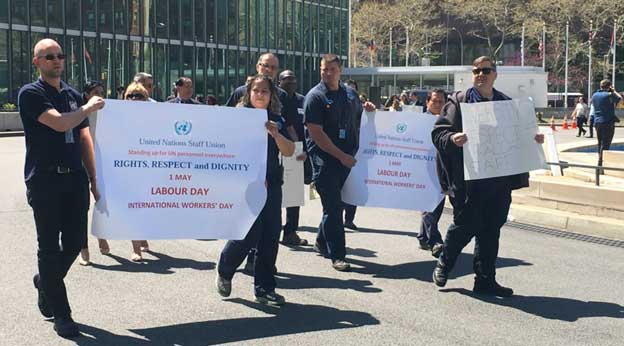
    UN Plans a New Mobility Scheme Where Staffers will be Forced to Work Overseas

    According to UN estimates last year, the total strength of its staff worldwide is more than 315,000 with over 56 UN agencies, and approximately 9,300 in the Secretariat in New York,and offices in virtually every one of the 193 member states.

    By Thalif Deen

    The United Nations is planning to introduce a new “mobility policy” under which staffers based in New York and other Western capitals will be mandated to serve in overseas missions and field services in Asia, Africa, the Middle East and Latin America, including the UN’s 12 peacekeeping operations.

    According to the proposed plan, the new policy will run in parallel with the staff selection system (vacancy management), which will continue to be the only way to progress to a higher level.

    It covers all P (professional), D (Director) and FS (Field Service) staff in all functions. Only Assistant-Secretaries Generals and Under Secretaries-General (ASGs/USGs), plus staff in the Secretary-General’s office, staff on temporary appointments and a small percentage of posts designated as non-rotational, are exempted.

    Currently, 93 per cent of all posts are classified as rotational. The remaining seven percent includes project posts and those that are highly specialized and cannot be found in other duty stations.

    All staff subject to the Mobility policy will be required to move laterally to another duty station every 2 to 5 years (depending on the duty station’s hardship level). Staff not required to move in a given year may also join the annual exercise voluntarily.

    The Mobility exercises will be annual. Staff who have reached their time limit at a duty station (2 to 5 years) will be placed in one of two compendia (one for P staff and another for FS), along with those who join the exercise voluntarily.

    They must express interest in up to ten posts in their compendium at other duty stations. If they are not selected for any of the posts they requested, they may be matched to other positions.

    Continuous learning

    A special constraints panel will be set up to consider appeals from staff members who cannot take part in the exercise or have reasons not to move to a proposed position or location.

    There is no credit for past geographic moves. The first mobility exercise is expected to begin shortly, according to the plan.

    Aitor Arauz, President of the UN Staff Union (UNSU) and General Secretary, UN International Civil Servants Federation (UNISERV), told IPS the Staff Union in New York is fully committed to a fair, viable and sustainable Mobility scheme that contributes to UN staff’s career development, rotation through hardship duty stations and better awareness of the organization’s range of operations and challenges on a global scale.

    “However, precisely due to UN Secretariat’s diversity of roles and specializations, we are not convinced that all UN staff can simply be moved around at regular intervals without risking a loss of expertise and programme continuity”.

    The cost-benefit analysis of such a huge disruption to people’s life and family plans just doesn’t add up at this time, he pointed out.

    A fully rotational workforce needs to be supported by continuous learning (with dedicated resources for internal and external studies); robust knowledge-sharing platforms free of digital divides; genuine results-based management; and an atmosphere of trust and collaboration where colleagues on all levels are willing to share information and support each other’s learning and success, he argued.

    Hazard pay

    Though efforts are being made, these conditions are far from being met across the board. Furthermore, meaningful rotation out of hardship locations will only be achieved by removing artificial barriers between the GS, F and P categories, he noted.

    “We are working with the Administration to ensure the rollout of a Mobility scheme that remains voluntary for now, so we can get people moving while we iron out the issues that will inevitably arise and continue to build a conducive environment of genuine trust, collaboration and knowledge sharing across the Secretariat,” declared Arauz, who presides over a 7,500-strong Staff Union, including 6,000 constituents in New York and 1,500 more in other offices around the globe.

    According to UN estimates last year, the total strength of its staff worldwide is more than 315,000 with over 56 UN agencies, and approximately 9,300 in the Secretariat in New York,and offices in virtually every one of the 193 member states.

    A former UN staffer who served in New York and later in Africa, told IPS: “If you are designated an “international civil servant” – as all UN staffers are – you cannot work all your professional life only in New York, Geneva, Rome or Vienna, which are not considered “hardship” stations.”

    All staffers are also entitled to “hazard pay” – over and above their regular salaries —for working in “dangerous peacekeeping locations”.

    $6 Billion liability

    Those who serve in the field – outside Europe and North America – get hardship pay, mobility incentive (depending on how many moves they have done in the past), and non- family allowance – if it is a location that you can’t bring your family to

    Ian Richards, former President of the Coordinating Committee of International Staff Unions and Associations, and an economist at the Geneva-based UN Conference on Trade and Development (UNCTAD), told IPS “To be clear, we support mobility. Staff join the UN to work in different parts of the world. But we should distinguish mobility from hyper-mobility.”

    The Secretary-General, he pointed out, wants to force staff to another country every two to five years, which is more frequent than many diplomatic services.

    “He twice asked our member states at the General Assembly to approve this package but they did not. He says he will go ahead with it anyway”.

    “We are told this is to help staff in peacekeeping missions. But it will apply to all staff. I don’t understand how moving translators and their families back and forth across the Atlantic between New York, Geneva and Vienna will address the situation of colleagues in Mali. Nor if it is wise to completely change the staff of the regional economic commissions every five years”.

    Richards said each move of a staff member and their family can cost the organization $75,000. With this policy in place, you could be looking at an extra $300,000 per staff member over their career.

    With 20,000 international staff, member states are facing a liability of $6 billion just in moving costs. I’m not sure if they’re ready to pay for this right now.

    “We have put forward sensible and cost-effective alternatives which we hope he will consider,” he declared.

    Not a new idea

    The total UN budget for 2021-2022 is $4.8 billion compared with $4.4 billion in 2018-2019.

    Dr Palitha Kohona, a former Chief of the UN Treaty Section who also served as a member of the Secretary-General’s Results-based Budgeting Group, told IPS: “This is a great idea of the Secretary-General – but not new”.

    He pointed out that former Secretary-General Kofi Anan initiated the mobility program and implemented it in a modified form. Experience in the field was going to be made a requirement for promotion.

    “I myself was nearly assigned to Baghdad with Sergio, but due to the bombing this movement did not happen”. (In August 2003, the top UN envoy in Iraq, Sergio Vieira de Mello, was killed when terrorists blew up the UN headquarters in Baghdad, also killing at least 14 others)

    Two or three of my staff voluntarily went to Bosnia and performed well, said Kohona, a former Permanent Representative of Sri Lanka to the United Nations.

    He said most national diplomatic staff get rotated every two to three years and acquire excellent experience and skills. No one is irreplaceable.

    “You shouldn’t become an international civil servant so as to secure the privilege of living in New York and Geneva, acquiring real estate and sending your children to expensive schools at the expense of the taxpayer,” he declared.

    Fat cats in HQ

    A former senior staffer at the UN children’s fund told IPS: “UNICEF had a mobility program, which specified that NY was a five-year duty station and staff could be moved after 5 years. The exceptions were specialized positions which were New York-based, but even in these specialized posts incumbents could be asked to rotate’.

    “I don’t know the UN policies, but if I recall, we work within UN regulations which calls us to work where needed. It’s time for New York staff to work in duty stations that require assistance,” he added.

    Roderic Grigson, who worked at the UN Secretariat in the ‘70s and ‘80s as a technology innovations officer and later served in peacekeeping forces in the Middle East, told IPS: “Yes, my overseas assignment was voluntary. I arrived in 1974 and left for the Middle East in 1978, less than 5-years later, so that I would have met the program’s criteria.”

    “I think it’s a good thing to do, although I can see why the Staff Union will protest. All the ‘fat cats’ in HQ who have never been in a humanitarian or conflict zone should experience what it is like living in those conditions. I do not doubt they will be the better for it.”

    “I clearly remember when I came back a couple of years later to New York after serving in the Middle East, I was amazed at the lack of knowledge or sympathy my colleagues had for those of us working in the field.”

    Attract better calibre

    “They held themselves almost superior to those who often put their lives on the line and had to live in conditions worse than what you find in the worst slums in a big city,” said Grigson, a published author of three books, now working on a fourth.

    “Frankly, it pains me to say this, but many segments of the world’s first-world population consider the UN almost irrelevant. If the UN wants to stay at the forefront of peace-keeping and humanitarian relief efforts, it must begin reforming itself from within and show the world that it can play an essential role in the future,’ he pointed out.

    “What I am saying, in effect, is that they have to do a much better role in marketing themselves to their global constituents and change the way people view the organization as a whole. We are moving inexorably towards major big-power conflicts in Europe and Asia, which could shape the world in ways no one would have anticipated a few years ago”.

    “I support the SG in trying to do something even as small as this, which would allow people to see the UN in a better light”.

    “It might also attract a better calibre of people without political connections to take on essential jobs in the field where they are needed,” said Grigson, currently a retired corporate executive based in Melbourne, who works with local community organizations teaching refugees and new migrants how to use computers and employability courses.

    This piece has been sourced from Inter Press Service.