More

    WFP Paints a Gloomy Picture as Sri Lankans Skip Meals

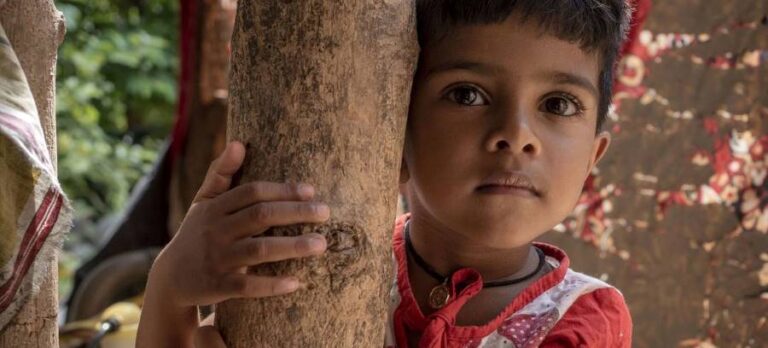
    Three of every 10 Sri Lankan households are unsure where their next meal will come from, the latest Food Insecurity Assessment brought out by WFP says.

    Hunger stares at Sri Lankans as food shortages matched by record inflation and skyrocketing fuel costs makes 6.26 million people in the island “food insecure” – 65,600 of them “severely” so.

    Record inflation, especially skyrocketing food prices, are crippling Sri Lanka as it faces the worst economic crisis since gaining independence in 1948.

    The food crisis emerging on the heels of an economic mess threatens to undo years of development progress and severely undermines the country’s ability to achieve the Sustainable Development Goals (SDGs), said the World Food Programme (WFP).

    Three of every 10 Sri Lankan households are unsure where their next meal will come from, the latest  ‘Food Insecurity Assessment’ report brought out by the UN’s World Food Programme says.

    Hunger stares at Sri Lankans as food shortages matched by record inflation and skyrocketing fuel costs makes 6.26 million people in the island nation are bracketed by the UN body “food insecure” – 65,600 of them “severely” so.

    Inflation at 57.4 per cent

    The population continues to feel the brunt of the economic and food crises as food inflation went “alarmingly high” at 57.4 per cent in June 2022, the report says, adding, “Steeply increasing food prices have crippled the population’s ability to put sufficient and nutritious food on the table.”

    61 per cent of the households assessed are regularly employing food-based coping strategies – they are eating less and opt for less nutritious food as that is all they can afford. Many are reducing their intake of food to be able to save for others in the household or for the coming day. “Two in five households are not consuming adequate diets,” the report says.

    Alarming situation

    But that seems to be the beginning of a tragedy that, the organisation predicts, with a deepening crisis and with dwindling opportunities to earn in the medium to long-term, about 200,000 more families will turn to such coping strategies.

    “These days, we don’t have a proper meal but eat only rice and gravy,” one woman told WFP surveyors.

    The situation is alarming, especially for expectant mothers who are putting both, their own and their children’s health at risk.

    “Pregnant mothers need to eat nutritious meals every day, but the poorest find it harder and harder to afford the basics,” WFP Deputy Regional Director for Asia and the Pacific Anthea Webb told a local television, stressing that by skipping meals, pregnant women were putting themselves and their children’s health at risk in a way that “carries throughout your life”.

    The food security situation is worst among people working in the farming estates sector – such as large tea plantations – where more than half of households are food insecure, according to the WFP report.

    In all measures of food insecurity and coping strategies, these households have consistently poorer outcomes than urban and rural populations.

    While urban households are depleting savings to cope for now, families on rural estates are already turning to credit, in order to buy food and other necessities.

    “Poor families in cities and those who work on estates have seen their incomes plummet while market prices have soared,” the WFP official said.

    A gloomy picture 

    A current oil supply shortage has forced schools and government offices to close until further notice.

    Reduced domestic agricultural production, a lack of foreign exchange reserves, and local currency depreciation, have fuelled the shortages.

    WFP says that the economic crisis will push families into hunger and poverty – some for the first time – adding to the half a million people who the World Bank estimates have fallen below the poverty line because of the pandemic.


    Image: Josh Estey / WFP

    ‘Middle East Cooperation Needed’ to Combat Dust Storms

    After storms swept through Iraq, Iran, Syria, Kuwait in recent weeks, countries are banding together to tackle surge in dust storms. Iran, Iraq and Syria have signed a memorandum of understanding to try to address the extreme weather events. Regional cooperation is now urged on solutions such as afforestation, water reform.

    By Rehab Abd Elmohsen

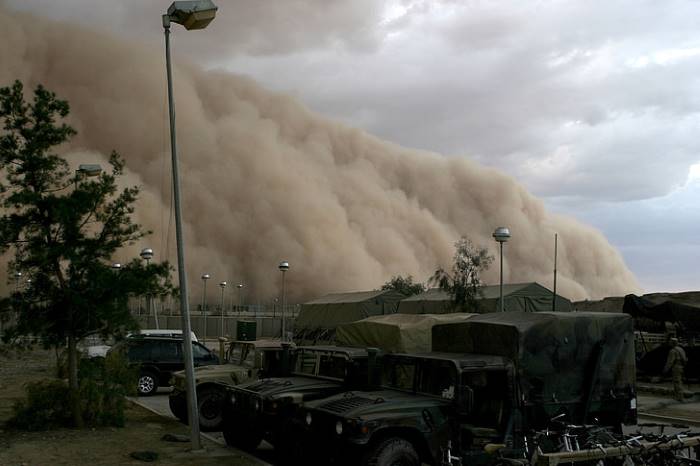
    International cooperation is needed to tackle the immense dust storms that have been engulfing Middle Eastern countries, fuelled by climate change, say environmental leaders.

    In the last two months, dust storms have killed 10 people and left thousands more gasping for breath in Syria, swept through 170 villages in South-eastern Iran, and left many people hospitalised in Iraq and Kuwait, according to regional media reports.

    The storms have caused chaos on the roads and grounded air traffic in some countries.

    A memorandum of understanding was signed in early June between Iran, Iraq and Syria to try to address the extreme weather events which occur when heavy winds blow sand, dirt and other fine particles from deserts and semi-arid landscapes into urban areas.

    The influx of dust impairs visibility and can lead to serious respiratory problems if inhaled.

    Afforestation

    Ali Salajegheh, Iran’s vice-president and head of the Iranian Environmental Protection Organization, pointed to Iraq as one of the main sources of the dust storms affecting his country. Speaking at the signing of the memorandum, he said regional cooperation was needed to adapt to the consequences of climate change.

    Kuwait and Iraq have also banded together to find solutions, but the initiative is expected to take four years to implement, according to Ali Al-Dousari, a researcher at the Environment and Life Sciences Research Center of the Kuwait Institute for Scientific Research.

    Al- Dousari told SciDev.Net: “We have drawn detailed maps of the dust paths and we have noticed that their source is two areas in southern Iraq, and the soil in them can be fixed through cultivation, which is what we intend to do with the support of the Kuwait Fund for Arab Economic Development in cooperation with the Institute and the Iraqi Ministry of Agriculture.”

    Planting trees in arid areas can help control dust storms but water scarcity often hinders afforestation campaigns in the Middle East.

    Al-Dousari believes that the focus must be on cultivating native, drought-resistant plants, suitable for the region. He cited as an example the tamarix plant known as Torfa in Arabic, a herbal medicine traditionally used to treat conditions such as abdominal pain, hair loss, coughs, and asthma.

    ‘Buried alive’

    Haider Najim, a journalist who lives in Baghdad, was driving home when he got caught in one of Iraq’s latest dust storms. He said it was like the sky was raining sand. “I felt as if I was getting buried alive,” he told SciDev.Net, adding that if the situation went on he would try to leave the country to avoid health repercussions.

    Hatem Hamid, director-general of the National Center for Water Resources Management in Iraq, says that although dust storms are exported to other countries from the Iraqi desert, Iraq has also been the recipient of storms from Africa, Jordan, eastern Saudi Arabia and eastern Syria.

    Explaining the increasing frequency and intensity of such storms, Hamid told SciDev.Net: “The lack of rain and the country’s exposure to major droughts have led to the decline of vegetation cover.

    “The decrease in water revenues in the Tigris and Euphrates rivers led to a 50 per cent reduction of agricultural plains, which increased the dust storms.”

    A report published in 2020 by the International Committee of the Red Cross (ICRC) entitled “When rain turns to dust” points to the role of the Iraq war in the deterioration of the environmental situation and agricultural system.

    The report states that the deliberate drying of marshlands in the 1990s contributed to high temperatures, drought, desertification and rising soil salinity, as well as an increase in dust storms. The duration of storms increased from less than 25 days a year between 1951 and 1990 to about 300 days in 2013, it says.

    Cross-border cooperation

    The ICRC urged reform of Iraq’s water sector to support the agricultural sector as well as cross-border cooperation both within and outside the region.

    Hamid stressed the need for international measures that require countries to stabilise the soil in areas where dust storms originate, by planting forests if sufficient water is available or using chemical solutions if not. “To reduce dust storms, everyone must cooperate,” he added.

    A 2019 World Bank report put the cost of dust storms in the Middle East and North Africa at about US$150 billion.   Itadvised governments to invest in early warning systems and provide fast, high-quality storm forecasts.

    Amer Al-Jabri, media director of the Iraqi Meteorological Authority, told SciDev.Net: “We rely on two methods to predict storms: the first is satellite imagery, which gives a real-time report on the current status of dust storms, and the second is based on global digital forecast models available to everyone, which allows us to issue a report about 48 hours before the storm occurs.

    “We do not have a prediction model of our own, but are working on obtaining a model from a French company, which is vital … to increase the accuracy of the forecast and improve its quality.”

    Al-Jabri believes that the most effective way to deal with sandstorms is to increase afforestation and expand vegetation cover, as happened in Saudi Arabia in February, when the country launched a project to plant green bands to serve as buffers around the cities and purify the air entering them.


    This piece has been sourced from SciDev.Net

    Image: Hippopx – licensed to use under Creative Commons Zero – CC0

    Drug-Resistant Typhoid ‘Spreading Out of South Asia’

    SouthAsia now generates extensively drug-resistant typhoid strains that are spreading to other parts of the world. The study involved whole-genome sequencing of 3,489 S. Typhi samples obtained between 2014 and 2019 from people living in Bangladesh, India, Nepal and Pakistan.

    By Sanjeet Bagcchi

    Antibiotic-resistant strains of Salmonella Typhi, the typhoid bacteria, have spread from SouthAsia to other countries nearly 200 times since 1990, new research suggests.

    Every year, an estimated 11 to 20 million people suffer from typhoid and 128,000 to 161,000 victims die from the disease, says the World Health Organization (WHO). Typhoid spreads through water contaminated by an infected person’s faeces. Its symptoms include prolonged fever, nausea, rashes, headache and diarrhoea or constipation.

    “S. Typhi can only infect humans, and by studying how closely related bacteria found in different places are, we discovered that typhoid had spread from South Asia, the home of typhoid, to many parts of the world many times,” says Gagandeep Kang, co-author of the study and professor at the Wellcome Trust Research Laboratory in the Division of Gastrointestinal Sciences at the Christian Medical College, Vellore, India.

    The international team of researchers, funded by the Bill & Melinda Gates Foundation, say their findings highlight the need to treat drug-resistant typhoid as a global problem.

    Kang tells SciDev.Net that the study analysed the largest collection of sequenced data from S. Typhi. “By analysing the genetic makeup of the bacteria, collected in different places and at different times, it was possible to build a story of what the bacteria have been doing over several decades,” she says.

    Spreading elsewhere

    Published in The Lancet Microbe, the study involved whole-genome sequencing (an extensive method for investigating entire genomes) of 3,489 S. Typhi samples obtained between 2014 and 2019 from people living in Bangladesh, India, Nepal and Pakistan. Sequencing was also carried out on 4,169 S. Typhi samples taken from over 70 countries between 1905 and 2018. In all, 7,500 genomes were sequenced and resistance-conferring genes identified.

    The researchers say that although resistance to multiple, front-line antibiotics has generally decreased in South Asia since 2000, strains with resistance against major antibiotics such as macrolides and quinolones have increased and are being transmitted frequently to other countries. Globally, 70 per cent of the disease burden for typhoid fever is attributed to South Asia, which is followed by the sub-Saharan Africa and South-East Asia regions.

    Resistant S. Typhi strains have spread between countries at least 197 times since 1990, the study said. Mostly originating in SouthAsia, these strains have spread to South-East Asia, East and Southern Africa and have been reported in Canada the UK and the US. The study said that since 2000, multi-drug resistant S. Typhi has declined steadily in Bangladesh and India and remained low in Nepal.

    In Pakistan, however, the declining trend of multidrug-resistant typhoid in South Asia has been reversed by the emergence in 2016 of extensively drug-resistant (XDR) S. Typhi, which then rapidly replaced less-resistant strains.

    Urbanisation and climate change

    According to a report by the US Centres for Disease Control and Prevention, between 2006 and 2015, 79 per cent of US isolates of typhoid fever patients who travelled to Pakistan were resistant to fluoroquinolone. From 2016 to 2018, typhoid fever was diagnosed in 29 US patients who had travelled to Pakistan and five of them were infected with XDR S. Typhi.

    Fluoroquinolones, the mainstay against multidrug-resistant S. Typhi in the 1990s, became ineffective by the 2010s and in 2016 Pakistan saw an outbreak of S. Typhi that was resistant to third generation fluoroquinolones and cephalosporins, the study said. In 2021 resistance to azithromycin was found to have arisen in several S. Typhi strains, threatening the efficacy of all oral antimicrobials for typhoid treatment.

    There are possibilities of the international burden of typhoid fever increasing owing to urbanisation and climate change. “In addition, increasing resistance to antibiotic treatment is making it easier for typhoid to spread through overcrowded populations in cities and inadequate and/or flooded water and sanitation systems,” says the WHO.

    Dangerous strains

    “Typhoid-resistant genes are present in multiple countries and will pose challenges in crafting effective antimicrobial regimens,” Amesh Adalja, senior scholar at the US-based Johns Hopkins Center for Health Security, tells SciDev.Net.

    “Although there have been improvements in water and sanitation in South Asia, antibiotic resistant S. Typhi strains are dangerous and we should try to control them by reducing irrational use of antibiotics, improving the availability of diagnostics and introducing the very effective typhoid conjugate vaccines,” says Kang.


    This piece has been sourced from SciDev.Net

    Sri Lankan Beggar’s Opera

    It is the need for clean government that causes concerns with President Rajapaksa reneging on promises he made to introduce constitutional amendments that will substantially prune the plethora of powers he grabbed on coming to power.

    By Neville de Silva

    When Ceylon – now Sri Lanka – gained independence from Britain in 1948 after almost 450 years of colonial rule under three western powers, it was one Asia’s most stable and prosperous democracies.

    Today, after years of misrule, rampant corruption by the ruling class and a politicised administration, the country is bankrupt, its economy on the verge of collapse, and society in disarray while a discredited president still clings to power and manipulating the political system, determined to serve the rest of his term.

    While the original 18th century Beggar’s Opera was a satire on the injustice in London society of the day and Prime Minister Robert Walpole’s corrupt government, Sri Lanka has not turned to opera but to begging and possibly borrowing if any international lending institution is willing to lend to a country that has recently defaulted on debt repayment for the first time in its post-independence history.

    That speaks volumes for the fiscal and monetary policies of President Gotabaya Rajapaksa’s government, and its unthinking and ill- considered actions in the last two and a half years, that has “collapsed” the country’s economy— as the prime minister told parliament the other day.

    Dipping foreign reserves

    Under the 10-year rule of elder brother Mahinda Rajapaksa (2005-2015), the government borrowed heavily from China for massive infrastructure projects. That included a huge international airport at Mattala in nearby Rajapaksa territory in the deep south. Some of them continue to be white elephants.

    A joke at the time and resonating now and then was that even herds of roaming wild elephants in the area spurn the airport because of the colour bar!

    Since Gotabaya Rajapaksa came to power in November 2019 and a year later brother Mahinda led their Sri Lanka People’s Party (SLPP) to a parliamentary victory, the Rajapaksas, now at the helm of power, strengthened their already close relationship with Beijing at the expense of ties with the West and international lending institutions and alienating UN bodies such as the UN Human Rights Council.

    But in the last few months it has been a begging-bowl ‘opera’ as Sri Lanka scoured the world for loans after its foreign reserves started dipping drastically and leading international rating agencies took to downgrading the country’s sovereign rating.

    Eventually the Rajapaksa government reneged on its debt repayments, humiliating Sri Lanka which had never defaulted in its 74-year history.

    Trapped by a plunging economy Sri Lanka turned to Bangladesh to save it from emerging bankruptcy. Nothing could be more ironic. In its early years Bangladesh was perceived as a recipient of financial support, not a lender.

    At that time Sri Lanka’s economy seemed stable enough despite its near 30 years of war against Tamil Tiger separatists.

    Sri Lanka economy shortage of essentials

    Shortage of essentials

    In early, June Bangladesh agreed in principle to another currency swap of US$ 200 million. This is in addition to last year’s currency swap of $200 million whose repayment date of three months was extended to one year at Sri Lanka’s request last August.

    Today, the country’s 22 million people are almost without petrol, cooking gas, kerosene, food, medicines, powdered milk, and other essentials as the government has no foreign currency to import them.

    A common scenario in many parts of Sri Lanka are queues of people-men, women and even children- spending many hours and even days to buy the essentials that are scarce and a food shortage is predicted in the coming months.

    As I sat down to write this, news reports said the 12th man died seated in his vehicle at a queue for fuel. A few days later the Sunday Times Political Editor upped the death toll to 16.

    Meanwhile physical clashes are becoming common at filling station where thugs have muscled in. The other day a soldier was caught on video assaulting a policeman.

    Such is the tension building up in society that the Sunday Times Political Editor reported of concerns among local intelligence services about national security.

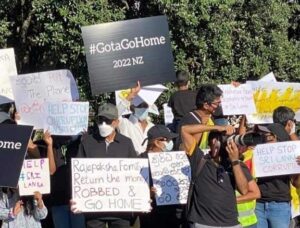
    Sri Lanka protests Gota Go Home, economy, China, India
    Gota Go Home

    While the long-drawn out COVID-19 pandemic did cripple the tourism industry, a major foreign currency earner, much of the blame rests on President Gotabaya Rajapaksa’s short-sighted policies as well as those of some of his ministers and close advisers whose arrogance and ignorance brushed aside warnings sounded a year or two ahead by reputed economists, former Central Bank professionals, academics and trade chambers.

    Rajapaksa having denied any culpability for these errors of judgement ultimately conceded his responsibility but only when mass protests erupted in Colombo and elsewhere in the country with even the peasantry – a vital support base of the Rajapaksas- took to the streets castigating him and his government for creating shortages of essential fertilizers for agriculture.

    After almost two months, thousands of anti-government protestors who set up camp on the seaside promenade opposite the presidential secretariat in the heart of Colombo, are still there raising their clarion call which has now spread across the country- “Gota Go Home” – demanding that the president return to whence he came.

    Deserted by China?

    While Sri Lanka struggles to survive and the Rajapaksas gradually reappear into public view, there has been a perceptible change in the government’s world view. Though Chinese leaders have often declared that Beijing is Colombo’s “all weather friend” it has been slow to come to Sri Lanka’s aid at a time of real crisis.

    An appeal to China by the Rajapaksa government to restructure its loans as one of its biggest lenders had not produced the expected reaction from Beijing. Nor had there been a positive response at the time for another credit line of US$ 1.5 billion when Colombo’s foreign reserves were fast drying out.

    Even President Xi Jinping’s birthday greeting to President Rajapaksa last month made no mention of any concrete assistance except references to the long-standing Sri Lanka-China relations.

    Observers claimed that China was coaxing – if not actually pressuring – Sri Lanka to distance itself from India, its competitor for political positioning and an expanding stake in the strategically- located island.

    While the immediate target was India, Beijing was also pointing its finger at Sri Lanka’s growing ties with the US and international institutions such as the IMF.

    India’s ‘Neighbourhood First’ policy

    The fact that since January India has provided assistance to Sri Lanka with currency swaps, credit lines, loan deferments and humanitarian assistance to meet the mounting crisis and supported Colombo’s call for IMF aid, appeared unwelcome news to China which has been trying to persuade Sri Lanka to enter into a trade agreement with it.

    In late June, a high-powered Indian delegation led by Foreign Secretary Vinay Kwatra made a quick few-hour visit to Colombo to meet President Rajapaksa and Prime Minister Ranil Wickremesinghe and discuss further strengthening of Indo-Lanka ties and bilateral investment partnerships including infrastructure and renewal energy.

    New Delhi pointed out that this unprecedented recent economic, financial and humanitarian assistance including medicines and food valued at over US$ 3.5 b was guided by Prime Minister Narendra Modi’s “Neighbourhood First” policy.

    Had it not been for the Indian central government and the Tamil Nadu state government responding fast with generous assistance Sri Lanka would have been struggling to find scarce food, fuel and medicines.

    Need for clean government

    Meanwhile a nine-member team of senior IMF officials spent 10 days in Sri Lanka in late June to assess whether it could come up with a reform package to restore macroeconomic stability and debt sustainability.

    Since Colombo approached the IMF for a bailout programme early this year the international lending institution has been monitoring the country’s economic and political situation, neither of which presented much confidence.

    It is not only sustainable economic reforms that the IMF is after. It seeks substantial efforts to improve governance and a stable corruption-free government that the IMF and other lending institutions such as the World Bank and Asian Development Bank and donor nations could have confidence in.

    The current government of bits and pieces could hardly provide evidence that it is fighting corruption when one of its stalwarts who was convicted the other day on extortion and sentenced to two years rigorous imprisonment but suspended for five years was reappointed to the cabinet by President Rajapaksa and made chief government whip in addition.

    It is the need for clean government that causes concerns with President Rajapaksa reneging on promises he made to introduce constitutional amendments that will substantially prune the plethora of powers he grabbed on coming to power.

    This is hardly likely as the world will see when the new 21st constitutional amendment is gazetted in a few days.


    Neville de Silva is a veteran Sri Lankan journalist. More recently he was Sri Lanka’s Deputy High Commissioner in London.


    This piece has been sourced from Inter Press Service.

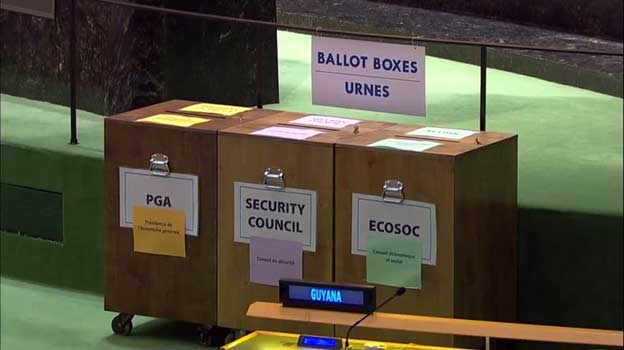
    When Will The UN Get Its First Woman Secretary-General?

    Permanent representatives to the UN are nominated by their respective governments — and each member state takes it turn, in geographical rotation, to field a candidate to the Presidency. Yet, only on four occasions have women occupied the Presidency of the General Assembly.

    By Thalif Deen

    A 2.0 version of an ancient Biblical saying reads: It is easier for a camel to pass through the eye of a needle than for a woman to become the Secretary-General of the United Nations.

    The male/female ratio for the Secretary-General stands at 9 vs zero. And the Presidency of the General Assembly (PGA), the highest policy-making body at the UN, is not far behind either.

    “Out of its 193 Member States, only four women were elected as the Assembly President,” Ambassador Anwarul K. Chowdhury, a former Permanent Representative of Bangladesh to the UN, told IPS.

    The score stands at 73 men and 4 women as PGAs– even as the General Assembly elected another male candidate, as its 77th President last month, and who will serve his one-year term beginning September 2022.

    Since 1945, the only four women elected as presidents were: Vijaya Lakshmi Pandit of India (1953), Angie Brooks of Liberia (1969), Sheikha Haya Rashed Al-Khalifa of Bahrain (2006) and Maria Fernando Espinosa Garces of Ecuador (2018).

    The General Assembly last month adopted a resolution—by consensus– to commemorate every June 24 as “International Day of Women in Diplomacy” (IDWD).

    But how significant is this resolution? And will it help usher in the UN’s first woman SG or trigger more women PGAs? Or is this resolution another exercise in political futility?

    Introducing the resolution, the Maldives Ambassador Thilmeeza Hussain stressed that “women’s participation in decision making is absolutely vital”.

    She also added that yet, far too often, as women climb the diplomatic ranks, they are outnumbered by their male peers, including at United Nations Headquarters, where they represent only one fifth of the Permanent Representatives.


    Unfortunate reality

    Currently, there are only 44 women Permanent Representatives compared to 149 men holding that post.

    All permanent representatives are nominated by their respective governments — and each member state takes it turn, in geographical rotation, to field a candidate, mostly permanent representatives and occasionally foreign ministers.

    A former UN diplomat told IPS that PGAs are some of the strongest advocates of gender empowerment — while in office.

    But none of them, he pointed out, were politically generous enough to decline their nominations and convince their respective governments to nominate a woman for the post.

    Meanwhile, in a letter to President of the International Association of Permanent Representatives (IAPR), Ambassador Anwarul Chowdhury said: “I recall proudly that in September 2012, I and the IMPACT Leadership 21, issued a joint “Call to Action” to world leaders gathering at the UN asking for urgent action in four areas:

    1. Appointment of a Woman as the Next UN Secretary-General. In its 77 years of existence, the world body has failed miserably to elect a woman to that post. It is truly an embarrassment.
    2. Nominations of Women as Future Presidents of the General Assembly. Out of its 193 Member States, only four women were elected as the Assembly President.
    3. Election of More Women as Heads of Various UN Governing Bodies, and,
    4. Appointment by Member States of More Women as Ambassadors to the UN in New York and Geneva.

    On the first International Day of Women in Diplomacy, he said last month, “let us commit to achieving these objectives to make the observance of the IDWD truly meaningful and worthwhile.”

    “Reflecting the unfortunate reality, not much attention has been given to those so far,” said Ambassador Chowdhury, a former Senior Special Adviser to the President of the UN General Assembly (2011-2012).


    Women under-represented

    Purnima Mane, a former UN Assistant Secretary-General (ASG) and Deputy Executive Director of the UN Population Fund (UNFPA)., told IPS a UN General Assembly (UNGA) resolution which acknowledges the contribution of women globally in any sector is always a major milestone and to be applauded especially when it is unanimously passed by consensus by the UNGA.

    That the Maldives which proposed the resolution had 191 co-sponsors is laudable and is apparently a record for the current session of the UNGA, she pointed out.

    “While this acknowledgement of women in diplomacy is more than welcome, many will wonder at the timing of this acknowledgement especially because the UN is grappling with a multiplicity of crises on the global scene.”

    Clearly the world will have to unpack what exactly this celebration of women in diplomacy means and what the aspirational goals are in the current scenario of the many challenges the UN is facing and in the context of UN reform, said Mane, an internationally respected expert on sexual and reproductive health who also served as the President and CEO of Pathfinder International.

    She said the language used to explain this celebration states that it is to celebrate women at all levels of decision making who work for the achievement of sustainable development, peace, and democracy.

    “Women are currently under-represented at most levels among national delegations and in the UN diplomatic corps but especially so in the senior levels,’ she said.

    While the representation of women ambassadors is said to have gone up from 16 to 22 percent since 2018, the numbers are appallingly low to begin with and women continue to be grossly under-represented in diplomatic positions in most countries.

    Canada and Sweden, she pointed out, have achieved equality of representation in the diplomatic corps and as per available records, UK, Norway and South Africa are not far behind but there is extensive catching up to do for most countries.


    International Day of Women in Diplomacy

    To that extent, this commemoration might wake up countries to take the matter of representation of women in diplomatic roles more seriously and also focus on providing them an enabling environment in which to work, a matter in which significant lacunae are known to exist, she declared.

    Ambassador Chowdhury said the burst of applause that followed the adoption of the resolution proclaiming the annual observance of this very meaningful day in the UN’s calendar was very energizing in view of the priority accorded to the global objective of ensuring “active participation of women, on equal terms with men, at all levels of decision-making…”.

    Given its energy and relevance as well as the high-level support of the UN’s top echelons, he said, it was very disappointing to accept in any case, the inclusion of a sentence in the same resolution stressing that the cost of all activities by the UN that may arise from the observance of the Day “should be met from voluntary contributions”.

    For the paltry sum of resources needed for the observance, the relevant department of the UN is always in a position to accommodate the expenses from its existing budgets.

    “Also, I believe that the regular budget of the Department of Global Communication should always include the observance of the international days as proclaimed by the General Assembly,” said Ambassador Chowdhury, a former UN High Representative.

    Referring to the new GA resolution declaring June 24 as the International Day of Women in Diplomacy (IDWD), Mane said “this brings us back to the question why women in diplomacy was seen as a relevant priority at this point of time in the UN’s history”.


    No Woman Secretary General

    Is the major motivator of this resolution the push to alter the reality that one of the highest positions in the UN, that of the Secretary General, has never been occupied by a woman and that only four women have held the position of the President of the General Assembly as compared to 73 men?, Mane asked.

    “Or does it come from a desire to acknowledge the vast and significant contributions of women in all diplomatic processes and an aspiration to push all parts of the UN and governments to do more?”.

    Hopefully the inspiration comes from both these motivators and will lead to visible change and greater accountability within governments and the UN to pay even more serious attention to the representation and role of women in diplomacy, she declared.

    Meanwhile, at a news briefing in March last year, US ambassador to the UN Linda Thomas-Greenfield was asked by a reporter about American support for a future woman candidate for Secretary-General.

    “You represent an administration which is pledging a need for diversity and change and gender rights and a whole panoply of different things. You have arrived in time for the selection of a Secretary-General, whether it will be a renewal or a new candidate”.

    “Speaking in your national capacity and speaking as a woman, don’t you think after 76 years it’s time for more than half the population in the world to be represented at the United Nations by a woman as Secretary-General?,” the reporter asked.

    Ambassador Thomas-Greenfield: That’s a loaded question, and I will take it as a loaded question (Laughter). We will support the most qualified candidate for the job, but we absolutely believe in and support diversity”.

    “We want to support gender balance, and we will look at the candidates who are presented to us and review them accordingly,” she declared.


    This piece has been sourced from Inter Press Service

    Bangladesh Violates Rights of the Workers Who Fuel Its Galloping Economic Growth, Says Report

    Workers have been exposed to mass dismissals and criminal prosecution for exercising their right to peaceful protest, the report says. It points out how Bangladesh has frustrated establishment of unions with an extremely burdensome registration process.

    For the sixth consecutive year since 2017, Bangladesh has been ranked among the world’s top 10 worst countries for workers, where labour rights. are not guaranteed, according to a global survey.

    The Global Rights Index-2022, launched by the International Trade Union Confederation (ITUC) has pointed to regressive laws and obstacles to forming association and unions, a right guaranteed by the country’s Constitution.

    The report also says that police violence has worsened the situation of working people in the country.

    “[The year] 2022 was marked by the use of extreme police brutality to repress strike actions, notably in Bangladesh and India, where striking workers were killed,” reads the survey.

    Bangladesh’s peers, according to the Index are Belarus, Brazil, Colombia, Egypt, Eswatini, Guatemala, Myanmar, the Philippines and Turkey.

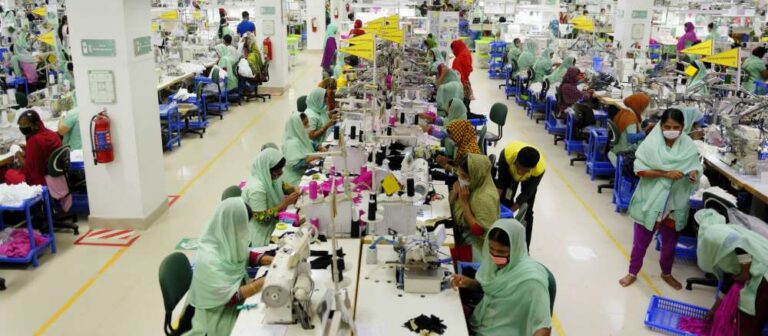
    The study cites the example of Bangladesh’s garment industry where forming unions were relentlessly obstructed.

    Strikes by garment industry workers have been met with extreme brutality by police, who often charge workers with batons and tear gas to disperse them, it says. There have also been instance of police firing live rounds of ammunition, the report says.

    The garment industry employs more than 4.5 million workers and has been the engine of the country’s economic progress.

    Workers have been exposed to mass dismissals and criminal prosecution for exercising their right to peaceful protest, the report says. It points out how Bangladesh has frustrated establishment of unions with an extremely burdensome registration process.

    Conspiracy, say Businesses

    When asked, Bangladesh Knitwear Manufacturers and Exporters Association executive president Mohammad Hatem terms the report ‘bull****’, saying there are records of vandalism and mid-level management beaten by workers.

    Hatem says that the report is the result of a conspiracy by local groups who survive on foreign fund. He objected to these groups informing their foreign counterparts of incident in the country’s garment industry before raising the issue with the managements or local government authorities.

    Hatem, however, does not hide his contempt for trade unions. He says, “I don’t believe that rights will be ensured through allowing trade unions only – there is evidence of ensuring rights and other benefits without unions.”

    But he went on to say that factory owners have no objection against responsible trade union, adding, “But in Bangladesh context, responsible trade union activities are absent.”

    Unfair labour practices

    The ninth edition of the index ranks countries against a number of internationally recognised indicators that give a clue to how well protected worker rights are in law and in practice in the 148 countries analysed for the report.

    Three out of four countries denied workers the right to establish and join a trade union. 113 countries excluded workers from their right to establish or join a trade union. An overwhelming number of countries hampered the registration of unions while a third exposed workers to physical violence. 128 countries violated the right to strike while four in five countries blocked collective bargaining.

    Bangladesh has been identified by ITUC as a country that does not guarantee workers’ rights.

    “While the legislation may spell out certain rights, workers have effectively no access to these rights and are, therefore, exposed to autocratic regimes and unfair labour practices,” the report’s authors say.

    ITUC general secretary Sharan Burrow says, “…workers are on the front line of multiple and extraordinary crises: historic levels of inequality, climate emergency, a pandemic destroying lives and livelihoods, and conflicts with devastating domestic and global impacts.”

    Speaking of “governments and employers attacking workers’ rights,” she says there is a need to “make governments realise they have to rebuild with a new social contract: jobs, wages, rights, social protection, equality and inclusion.”


    Image: BetterWork

    Two Pakistani Journalists Assassinated in Two Days

    Two Pakistani journalists were murdered by unidentified assailants on 1 and 2 July. The International Federation of Journalists (IFJ) and its Pakistan affiliate, the Pakistan Federal Union of Journalists (PFUJ) have urged the Pakistani government to arrest the perpetrators without delay.

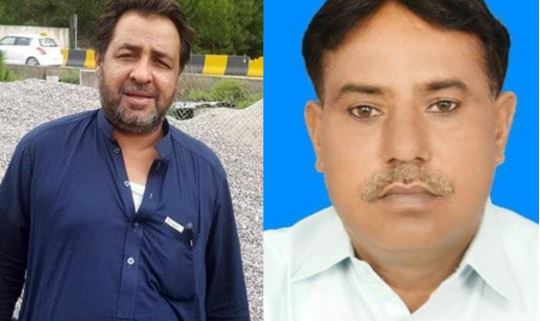
    Two Pakistani journalists were assassinated in the space of two days last week. Iftikhar Ahmed and Ishtiaq Sodharo were killed in broad daylight on 1 and 2 July.

    According to eyewitnesses, Iftikhar Ahmed, a reporter for the Daily Express, was travelling to his workplace in Shakir Market, Charsadda, on 2 July after leaving a mosque when unidentified gunmen opened fire, killing him on the spot.

    Ahmed’s body was sent to the Tehsil Headquarters Hospital Shabqadar before being handed over to his family. Bullet shells were also seized from the scene and transferred to Peshawar for forensic analysis.

    The journalist’s brother, Hazrat Bilal, filed an FIR, at Shabqadar Police Station under Section 302 of the Pakistan Penal Code against the unknown assailants. Police said they are investigating the motive behind the journalist’s death, including personal hostility.

    On cop’s order?

    In a separate incident on 1 July, gunmen killed local journalist Ishtiaq Sodharo, associated with the Sindhi weekly Chinag and a member of the Ranipur Press Club, in the Kumb region of Khairpur, Sindh province, Pakistan. Sodharo was rushed to hospital but died as a result of his injuries. Sodhoro’s wife said her husband was murdered on the orders of Imamuddin, a police officer at Ranipur police station, by the officer’s accomplices.

    Police filed an FIR the same day at Kunb Police Station, under multiple sections of the Pakistan Penal Code. According to the FIR and Sodhoro’s wife, the perpetrators attacked Sodharo husband outside his home while he was performing maintenance work. Pir Bux, Saen Bux, Nabi Bux, Nazeer Hussain, and Zahid Hussain, allegedly attacked Sodhoro following an argument, with three of those identified arrested.

    Sodhoro’s relatives and friends maintained that the primary offender, Imamuddin, was still at large and had not been taken into custody, mounting a demonstration in the city demanding that the assailants be apprehended immediately. The reason for the murder is still unknown.
    Condemnation pours in

    Pakistan Federal Union of Journalists (PUFJ) President GM Jamali and Secretary General Rana Muhammad Azeem condemned the two killings and demanded that law enforcement agencies arrest the culprits swiftly. PFUJ also reiterated the necessity of providing increased security for working journalists.

    According to the International Federation of Journalists’ (IFJ) South Asia Press Freedom Report 2021-22, Pakistani journalists and media workers have faced a continuing spate of physical attacks, resulting in the murder of five journalists from May 2021 to April 2022, including a citizen journalist. The report found that incidents of assault, arrest, abduction, legal harassment and intimidation against the media have also been growing in Pakistan.

    The IFJ said: “Pakistan’s government must take appropriate measures to ensure journalists’ safety and security, as required by law, and act to reduce assaults on journalists so that they may carry out their work without fear. The IFJ condemns the murders of Iftikhar Ahmed and Ishtiaq Sodharo and calls on the Pakistani authorities to fulfil their international obligations under Pakistan’s constitution to safeguard press freedom.”

    Both IFJ and PUFJ have urged the government to implement to ensure the safety of journalists in Pakistan by strengthening security measures.


    Image: Twitter

    Farmers Protest in Netherlands

    In scenes reminiscent of the farmers’ protests in India, the Dutch farmers too brought their loaded tractors on to city streets. The farmer leaders have also called for “the entire country to be paralysed”. There have been stray incidents of the protests going violent.

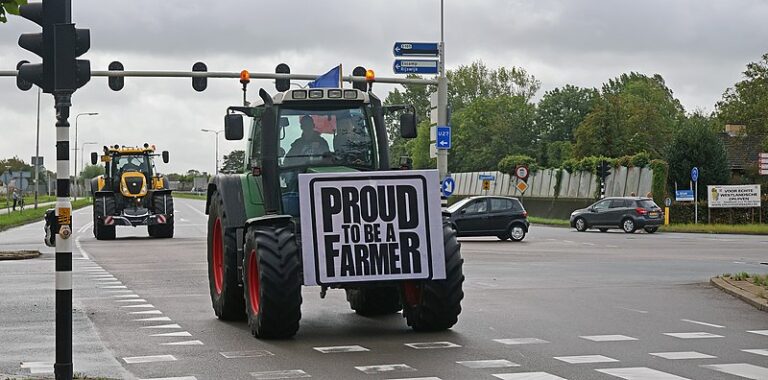
    A week after they brought their cows to the country’s Parliament in The Hague, Dutch farmers today took to the streets to protest the nitrogen reduction targets the Netherlands government has set.

    The farmers have been angered by government plans that may require them to use less fertilizer and reduce livestock. Farmers argue that the move targets them unfairly and that the government is insensitive towards them.

    Netherlands aims to halve nitrogen output by 2030. The burden of meeting the targets will fall on Dutch dairy farmers.

    On Monday, farmers travelled to Amsterdam and The Hague from across the country by tractor and blockaded supermarket distribution centres, insisting that the new environmental rules on nitrogen emissions would harm their livelihoods.

    They were joined by fishers who, in a show of solidarity, put the brakes on ports operations, interrupting ferries from sailing and delaying shipping and port logistics.

    In scenes reminiscent of the farmers’ protests in India, the Dutch farmers too brought their loaded tractors on to city streets. A first lot of tractors blocked entrances to supermarket distribution centres, disrupting food trade.

    Again, reminiscent of the Indian farm movement, the farmer leaders have called for “the entire country to be paralysed”, threatening to block further traffic moving to the air and sea ports.

    There have been stray incidents of the protests going violent.

    Images shared over social media handles showed what appeared to be military vehicles towing the farmers’ tractors away.

    Nitrogen cuts

    Last Tuesday, each farmer had brought along two cows to suggest that they would have to return home with one if the government insisted on its plans to cut down nitrogen emissions by half – suggesting that the other cow would go to the slaughterhouse and affect their livelihoods irreversibly.

    In some locations, the cuts on nitrogen emissions are planned to exceed 70 per cent. Experts estimates that this will impact three out of 10 livestock farms.

    The government, on the other hand, says that the target is necessary to meet the European Union rules on reducing nitrogen pollution that mainly emanate from cattle and fertilizers.

    The government also argues that it is bound to follow a 2019 ruling by the country’s highest court to implement the measures.


    Image: Wikimedia / kees torn

    Odisha Tops, as First ‘State Ranking Index for NFSA’ is Announced; UP and Andhra Pradesh Follow

    The “State ranking Index for NFSA” attempts to document the status and progress of implementation of NFSA and various reform initiatives across the country, post consultation with states. The NFSA Index in no way reflects the extent of hunger, or malnutrition.

    Odisha, Uttar Pradesh and Andhra Pradesh emerged as top three states among general category states in the first ‘State Ranking Index for NFSA’. The hills states of Tripura, Himachal Pradesh and Sikkim take top three positions in the special category states.

    Further, Dadra and Nagar Haveli & Daman and Diu ranks first among the union territories where Direct Benefit Transfer (DBT) is operational.

    The NFSA Index denotes the efficiency of Targeted Public Distribution System (TPDS) and focuses on NFSA and TPDS reforms.

    As per the ranking, Odisha has a score of 0.836, followed by Uttar Pradesh (0.797) and Andhra Pradesh (0.794). Gujarat is at the fourth place.

    The Index focuses on NFSA and TPDS reforms, which can be standardised across the states and union territories. It rests upon three pillars that consider various facets of food security and nutrition. Each pillar has parameters and sub-parameters that support this evaluation.

    The first pillar measures coverage of NFSA, rightful targeting, and implementation of all provisions under NFSA. The second pillar analyses the delivery platform, while considering the allocation of foodgrains, their movement, and last-mile delivery to Fair Price Shops (FPS). The final pillar focuses on nutrition initiatives of the department.

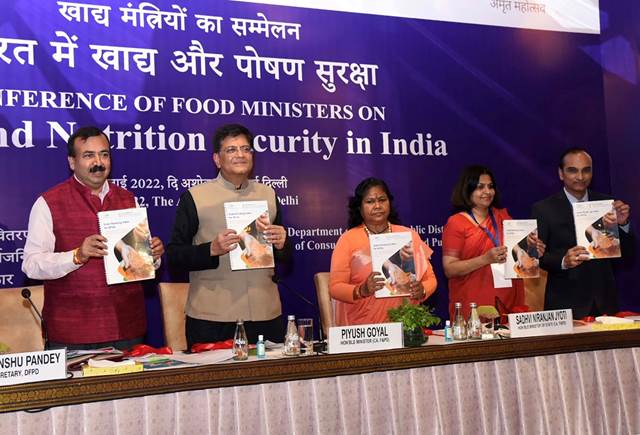
    The first edition of the ‘State Ranking Index for NFSA’ was released by Piyush Goyal, the Union Minister for Consumer Affairs, Food and Public Distribution during the conference of food ministers of states union territories on ‘Food Nutrition and Security in India’ organized in Delhi today.

    Not an index of hunger

    The National Food Security Act (NFSA) was enacted on July 5, 2013 and in order to celebrate the day, the conference was organized to deliberate and discuss nutritional security, food security, best practices followed in Public Distribution System, crop diversification, reforms in PDS and storage sector.

    The “State ranking Index for NFSA” attempts to document the status and progress of implementation of NFSA and various reform initiatives across the country, post consultation with states. It highlights the reforms undertaken by states and union territories and creates a cross-learning environment and scale-up reform measures by all states and union territories.

    The NFSA Index in no way reflects the extent of hunger, or malnutrition (or both).

    The present Index is largely focused on NFSA Distribution and will include procurement, PMGKAY Distribution in future.

    State government dues

    Piyush Goyal said that India is now 100 per cent connected under One Nation One Ration Card (ONORC). He said that 45 crore transitions have taken so far providing the beneficiaries the freedom to collect ration from any State or union territory in the country. He said that ONORC supported migrants during the COVID-19 pandemic.

    Goyal said that going forward, the system of digitized, Aadhaar linked Public Distribution to be used to issue Ayushman Bharat Card. He gave the example of Uttar Pradesh that is using the system to issue Ayushman Bharat card and urged other states to consider this system to provide nutritional security as well as health security. He said that immunization of migrant kids can also be linked with the system to ensure medical facility to them.

    Talking about the food subsidy to states, Goyal announced that the deadline to submit claims of pending dues till the year 2019-20 is August 15, 2022 and stressed that no dues will be entertained after the deadline. He also said that the pending bills of the States and union territories will be cleared within 60 days, that is, by 15 October 2022.

    The payments will be cleared by 31 January 2023 in the case of states or union territories providing details in following three months, he said.

    He further said that the subsidy claims are pending not because the funds are not available with the centre, but because the states or union territories have not provided relevant data.

    The ministers of many states raised concern over delay in CAG audit. The union minister directed officials to expedite the matter of the audits with the CAG.

    Diversity, Inclusion and the Young

    The youth policies the governments in Pakistan and other countries of SouthAsia develop are normally full of cliches that regurgitate the same banal statements. Education policies are also an example of this verbiage that makes tall claims and fails on most fronts.

    By Naazir Mahmood

    The Pakistan Institute of Peace Studies (PIPS) gathered some of Islamabad’s finest minds for its recent consultation titled ‘Promoting narratives of diversity, inclusion, and peace among youth’. Among the speakers were A H Nayyar, Ishtiaque Ahmed, Khalid Masud, Khursheed Nadeem, Pervez Hoodbhoy, Qibla Ayaz, Romana Bashir and others.

    PIPS has been working for the promotion of diversity and inclusion in Pakistani society and the event provided an opportunity for the participants to express their views. Amir Rana, encouraged the audience to speak their minds without reservation. Dr A H Nayyar focused more on the educational aspect of the official Pakistani narrative which has been inherently anti-diversity. He cited the example of the Single National Curriculum (SNC) the PTI government tried to foist on the country (and succeeded to an extent). Dr Nayyar has been a strong critic of the SNC and has been writing about it.

    Dr Khalid Masud, a judge of the Shariah Appellate Bench in the Supreme Court of Pakistan talked about the disconnect between qualitative and quantitative research in Pakistan. Most universities in the country, he said, have been conducting quantitative research at the cost of quality – they survey, compile data and produce reports that do not necessarily reflect the qualitative changes taking place in society. Dr Masud suggested that a discussion on democracy and the Constitution requires a qualitative understanding of these concepts. He said that the same applies to citizenship education that Pakistan’s educational institutions need to prioritise.

    Ban on students’ unions

    Khursheed Nadeem pointed out that in Pakistan people, somehow, lack an understanding on how to distinguish between various aspects of religion. Now, Khursheed Nadeem is a renowned scholar of Islam, though he very modestly introduces himself as a student of Islamic history and ideology. He is a prolific writer with a wide readership in Urdu.

    Dr Pervez Hoodbhoy lamented the continuous ban on student unions in Pakistan’s colleges and universities. In his view, students’ involvement in associations and unions trains them as constructive interlocutors in the political dialogue. Successive governments in Pakistan – especially military dictatorships – have stemmed the flow of ideas in nearly all institutions, resulting in a stagnant intellectual atmosphere in which no creativity survives. A majority of faculty members lack fundamental understanding of the basic concepts even in their own fields of specialisations. That is one reason university graduates have degrees but no skills in applied and social sciences.

    Dr Muhammad Ali from Quaid-i-Azam University talked of the education system’s failure to follow a student-centric approach to learning and teaching. Most faculty members possess degrees in their own fields but do not have any training in teaching methods. He suggested nobody should be entrusted with teaching without first acquiring some practical skills and a theoretical knowledge of classroom interaction and the ethics of pedagogy. The system of promotion that requires 10 years’ experience and 15 published papers is faulty and needs reconsideration as it has goaded teachers to indulge in a rat race to publish substandard papers.

    Harmony

    Dr Qibla Ayaz, chairman of the Council of Islamic Ideology is a clear-headed thinker who stressed on the need for de-radicalization on campuses. He suggested that a stagnant approach to education in terms of religion should give way to a more dynamic understanding of beliefs, rather than targeting other faiths. Without this dynamism, he said, society itself becomes intolerant. A wider understanding of religion where constructive discussions take place is a better option than rote learning and memorisation. Religious radicalism is a clear and present danger that needs serious considerations.

    Romana Bashir, a human rights and minority rights activist who has devoted at least 25 years to promoting harmony and peace in Pakistan shared experiences that students from various religious groups go through in Pakistan. She highlighted the importance of mutual respect in education so that students grow up as tolerant and friendly citizens rather than as an intolerant lot that targets students of other faiths. She suggested that teachers need special training in fostering harmonious relations among students practising different belief systems. She also held political parties responsible for not doing enough for promoting harmony in society.

    Impunity

    Participants at the event also received a research report titled ‘Making sense of Pakistani youth’. PIPS does analysis of independent and innovative studies, since it is essentially a research and advocacy institution. Recognising that the radicalization of young people is threatening social stability in Pakistan, the study sought to understand incidents of religiously motivated violence at educational campuses. Growing radicalization among educated young people is resulting in youth-led vigilante crimes that are becoming increasingly common in countries such as India and Pakistan – both victims of their own radicalism. The study by PIPS (available online) aimed to unpack this ugly phenomenon.

    Of course, there is a perilous combination of factors with an unmanaged youth bulge being one of the foremost. Coupled with it is the declining rule of law that reflects itself in law enforcement being unable or unwilling to intervene – or coming too late after the crimes have claimed lives and properties. The Gujarat massacre in India and recent violence is a case in point. In Pakistan there have been numerous attacks on non-Muslim settlements and places of worship. Even Muslims with a slightly different bend of mind are not spared by other young people who take it upon themselves to ‘punish the culprits’ even if they have done nothing wrong.

    Doctrinal, exclusivist education

    Youth policies that governments in Pakistan and other SouthAsian countries develop are normally full of cliches that regurgitate the same banal statements. Education policies are also an example of this verbiage that makes tall claims and fails on most fronts. These policies create more ambiguity than providing clarity of thought and state functionaries thrive on these ambiguities. The more opaque a policy is, the harder is it to hold anyone accountable for its failure. In India and Pakistan, the States themselves have become promoters of extremism, while masquerading as tolerant.

    The state of Pakistan has nearly always had a doctrinal and exclusivist education, whereas India is catching up fast under BJP rule. In some ways, the BJP-RSS nexus has managed to outdo Pakistan in this destructive race. In Pakistan, state-approved education allows only peculiar interpretations of history. Education in India was more inclusive under Congress rule. But now, the BJP appears to be following in Pakistan’s footsteps to teach only a BJP-approved versions of history. This approach has stunted cognitive growth in Pakistani youth. The same is now happening in India.

    Promoting democratic norms

    An educational discourse that instills suspicion for multiculturalism is bound to add to religious radicalization, and that is exactly what happened in Pakistan and the same is now taking place in India. So, what is the solution? At the PIPS discussion, there was near consensus about promoting democratic norms in society and promoting respect for basic human freedoms through education and the media. Sadly, both education and the media are controlled and regulated by the State and even seemingly private educational institutions are unable to hold free debate, as such discussions are strictly monitored under the lens of national security.

    There has to be a swift move away from an illiberal education and propaganda to a more liberal interpretation of history and society – at least in its social dimensions.


    The writer holds a PhD from the University of Birmingham, UK. He tweets @NaazirMahmood and can be reached at  [email protected]