More

    Government may withdraw PM Garib Kalyan Anna Yojana

    The Centre has allocated Rs 2.07 lakh crore for food subsidies this year. Extending the scheme further is likely to cost the government another Rs 80,000 crore and in turn lead to the food subsidy bill swell to Rs 3.7 lakh crore in 2022-23.

    Prachi Gupta

    The government may discontinue its populist free food scheme — Pradhan Mantri Garib Kalyan Anna Yojana (PMGKAY) — as its coffers continue to deplete. While the department of expenditure at the finance ministry was expected to extend the scheme beyond September, the government’s precarious fiscal position may force a rethink. In March, the government had extended the scheme till September.

    The Centre has allocated Rs 2.07 lakh crore for food subsidies in the current financial year. However, extending the scheme further is likely to cost another Rs 80,000 crore to the government. This means that the food subsidy bill will swell to Rs 3.7 lakh crore in 2022-23.

    What is PMGKAY scheme

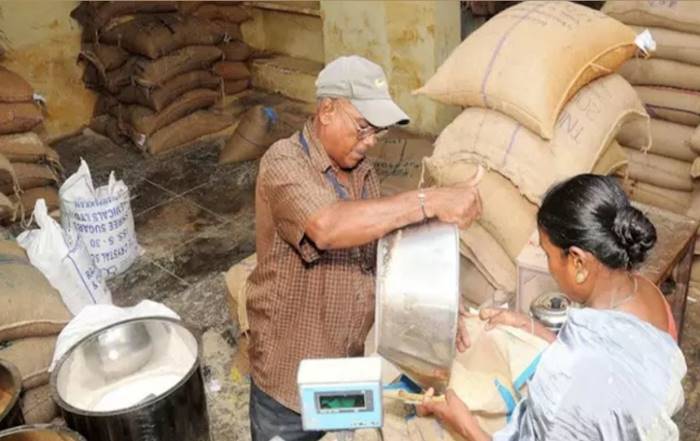
    The Bharatiya Janata party-led government rolled out the free food ration in March 2020 amid the Covid-19 lockdown to help the poorest citizens of the country. The scheme was aimed at covering 80 crore Indians or nearly two thirds of the country’s low-income population. The government provided free 1 kg of pulses per family plus 5 kgs of wheat or rice per head in a family for three months to prevent disruptions in availability of the food grain. This was in addition to the subsidised ration provided under the National Food Security Act.

    Implementation of both PMGKAY and subsidised ration meant eligible people received 5 kgs of free wheat or rice per month which adds up to 25 kgs of foodgrain for a family of five every month plus the subsidised ration. The scheme not only served to protect the poorest of the country but also served political dividends for the ruling party in assembly elections. The PMGKAY was reintroduced in May 2021 amid the second wave of the pandemic.

    Does India need free or subsidised food?

    India ranks 101 in a list of 116 countries on the Global Hunger Index 2021 should be alarming enough and is enough evidence that despite government efforts, a significant number of the country’s population still suffers from hunger. One of the chief reasons behind non-availability of food grain for all is climate change, and the Covid-19 pandemic and its consequences are all driving hunger and aggravating existing inequalities and cracks in the food system.

    India is also the highest child wasting ranked country worldwide. In simple terms, child wasting means a malnourished child who is too thin for his or her height and is the result of recent rapid weight loss or the failure to gain weight. This makes a child more vulnerable to the risk of death.

    Under Right to Food Act or National Food Security Act, 2013, various food security programs are covered including Midday Meal Scheme and Public Distribution System. The midday meal scheme is universal while PDS reaches about two-thirds of the Indian population. Major commodities under PDS include staple food grain such as wheat, rice, sugar and fuel such as kerosene.

    Why is the government taking down the free food scheme?

    More tax cuts or food subsidy extensions are likely to adversely hit the fiscal math according to government officials cited in media reports. Extending PMGKAY beyond its present period is unviable both on the grounds of food security and on fiscal grounds. The government is already spending on free ration, fertilizer subsidy, and cooking gas subsidy. Recent excise duty cuts on petrol, diesel and customs duty on edible oils have also led to a jump in financial burdens.

    The same was done to limit rising inflation in the country. For FY23, the fiscal deficit of 6.4 per cent of GDP is expected, while Fitch Ratings expect it to be 6.8 per cent due to higher subsidies and revenue loss due to duty cuts. The government is also staring at extra expenditure of Rs 1 trillion on fertilizer subsidy in FY23 which has resulted due to the ongoing war between Russia and Ukraine. The government cannot afford to pass on the increased cost of imported fertilizers to farmers. However, according to analysts, the government will have to find resources to fund this scheme to tackle India’s hunger crisis.

    Ensuring food security in India

    While the government provides food security via the Public Distribution System (PDS), further steps are needed to strengthen the same and cover more people under its ambit. For instance, migrant workers were unable to secure subsidized ration during the coronavirus lockdown as people are entitled to ration only from their designated fair price shop as per their ration card. The government has already started to take steps in the direction with the goal to implement One Nation, One Ration Card scheme.

    With the BJP facing elections in key states such as Gujarat and Himachal Pradesh by the year end, it may not be a wise decision for the government to scrap free food scheme as of now. The inflation is also high and people are yet to recover from the coronavirus woes making the decision to scrap the scheme precarious.


    This piece has been sourced from Policy Circle – policycircle.org 

    The World Is Melting Down and the Cause is Corruption – The G20 Needs to Take Action

    Despite the earnest anti-corruption commitments made by G20 countries annually, follow-up and delivery on these commitments is a challenge. The group needs to strengthen regulatory authorities across its membership and expand sanctions for violating Anti-Money Laundering requirements.

    By Blair Glencorse and Sanjeeta Pant

    The G20 is meeting again next week in Indonesia for the second time this year- at a moment when the world is facing the most difficult economic, political and social challenges for decades.

    At their core, these problems are driven by corruption- from the “weaponization” of graft by Russia in Ukraine to the lack of regulation of the enablers of corruption in G20 countries such as the UK. This malfeasance costs lives and livelihoods- and is directly responsible for everything from energy black-outs to food and fuel shortages.

    Critical decisions are being made by the G20 about the ways that governments can collectively manage what is now considered a significant transnational threat to peace and prosperity. But despite the earnest anti-corruption commitments made by G20 countries annually, follow-up and delivery on these commitments is a challenge.

    Civil society has to make its voice heard on these issues now, before it is too late. The Civil-20 (C20)– which we Co-Chair- engages the G20 on behalf of civil society. Over the past several months we have collectively gathered ideas from civil society around the world related to five central corruption challenges on which the G20 must take action immediately: Anti-Money Laundering (AML) and asset recovery; beneficial ownership transparency; countering corruption in the energy transition; open contracting; and the transparency and integrity of corporations.

    This is what the C20 members are telling the G20 it needs to do now. First, effective anti-money laundering efforts are key to detecting illicit financial flows from corrupt activities in countries like Russia.

    What can be done

    The G20 needs to strengthen regulatory authorities across its membership and expand sanctions for violating AML requirements, in particular for large financial institutions and what are called Designated Non-Financial Businesses and Professions (DNFBPs) that facilitate illicit financial flows (such as lawyers or accountants).

    Similarly, when assets are returned they need to be aligned to GFAR principles, including through the engagement of civil society and community groups to support the transparency of this process.

    Second, the G20 has committed to lead by example on beneficial ownership transparency (the real ownership of companies) and has the opportunity to strengthen this commitment by strengthening G20 High-Level Principles on Beneficial Ownership Transparency in line with improved global standards, including those recommended by the Financial Action Task Force (FATF).

    One challenge is integrating data and G20 member countries should also implement the Beneficial Ownership Data Standard to share and analyze data more easily- which would dramatically improve the ability of citizens to understand who owns companies that might be involved in corruption.

    Third, there is massive amounts of corruption as the world transitions to clean energy, but corruption risks in the renewables sector are not unique- they follow many of the same patterns we have seen in infrastructure and the extractives industries, for example. As more and more countries transition towards renewable energy, it is important to prioritize resource governance in ways that align with existing agreed-upon high-level principles and best practices.

    The G20 must regulate lobbying activities around clean energy- including through lobbying registries; enforce a strong and credible sanctions regime, including public databases of companies banned from tenders; and support independent civil society monitoring of large-scale energy projects through integrity pacts and other similar vehicles that help to ensure transparent procurement.

    Fourth, government contracting is rife with collusion, nepotism and graft. The G20 must open up contracting processes and strengthen open data infrastructure by sharing information across the whole cycle of procurement for projects- from planning to contracting to awards and implementation.

    Outlaw bribes immediately

    Governments must also publish high-quality open data that is readily machine-readable so it can be used across multiple systems. This does not mean starting from scratch- there are standards for this, like the Open Contracting Data Standard (OCDS) and the Open Contracting for Infrastructure Data Standard (OC4IDS). It is a question of commitment.

    Finally, not all G20 member countries are party to the OECD Anti-Bribery Convention and private sector bribery is not criminalized in every G20 member country as per the UNCAC provisions. This means companies can legally offer bribes to win contracts, and this has to be outlawed immediately.

    The EU Directive for Corporate Responsibility Due Diligence includes requirements that the G20 should adopt immediately- for instance to identify the actual or potential adverse human rights impacts of corruption; to prevent or mitigate the potential impacts of bribery; and improve public communication around due diligence processes.

    G20 members should also regulate the “revolving doors” through which government and business people can engage in favouritism; and invest in better partnerships between entities working on these issues such as regulators, law enforcement agencies and civil society.

    This might all seem quite technical – but the negative impacts of corruption are not felt in government meeting rooms, but in the everyday lives of citizens. The G20 has for too long made excuses for the lack of action on this topic, and we are now seeing the devastating effects. Unless action is taken now, it will be too late.


    These ideas were gathered through a consultative process as part of the C20 Anti-Corruption Working Group (ACWG), and represent the inputs of many civil society organizations.

    Blair Glencorse is Executive Director of Accountability Lab and is Co-Chair of the C20 ACWG.

    Sanjeeta Pant is the Global Programs and Learning Manager at the Lab. Follow the Lab on Twitter @accountlab.

    Climate Change: Annual Wildfire Weather Season Has Increased by 14 Days

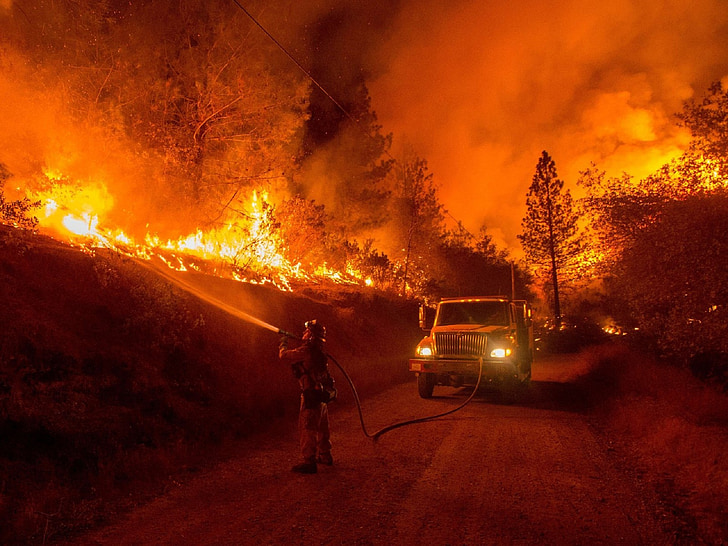
    In a new study highlight how the risk of wildfire is rising globally due to climate change. The average length of the annual fire weather season has increased by 14 days per year between 1979 and 2019. The researchers say that virtually all world regions will experience unprecedented fire weather.

    Fire weather – the hot dry conditions conducive to wildfires – is increasing with climate change, raising the risk of large wildfires by making landscapes more susceptible to burn more often and more severely. The impacts of climate change on fire risk are predicted to escalate in future, with each added degree bringing enhanced wildfire risk.

    The study, conducted by an international team of researchers across institutions and led by the University of East Anglia in the UK, shows that anthropogenic climate change is a ‘push’ factor that enhances the risk of wildfires globally.

    Climate models suggest that in some world regions, for example the Mediterranean and Amazonia, the frequency of fire weather conditions in the modern period is unprecedented compared with the recent historic climate, due to human induced global warming of around 1.1°C.

    More importantly, this will be the case in virtually all world regions if global temperatures reach 2-3°C of warming as per the current trajectory.

    Climate models have also shown that the likelihood of some of the most recent and catastrophic wildfires in the western US, Australia and Canada has been significantly greater due to historical climate change.

    The article, published on Thursday in the journal Reviews of Geophysics, involved scientists from UEA, Swansea University, the University of Exeter and Met Office in the UK, CSIRO Climate Science Centre in Australia, together with colleagues from the US, Germany, Spain and the Netherlands.

    Escalating fire risks

    The study explores the relationship between fire trends – past, present and future – and a range of controls on fire activity, including climate but also human activity, land use and changing vegetation productivity, which have with important impacts on the ignition of wildfires and their spread across landscapes.

    Lead author Dr Matthew Jones, of the Tyndall Centre for Climate Change Research at UEA, said: “Wildfires can have massive detrimental impacts on society, the economy, human health and livelihoods, biodiversity and carbon storage. These impacts are generally magnified in the case of forest wildfires.

    “Clarifying the link between forest wildfire trends and climate change is critical to understanding wildfire threats in future climates. Societies can either push with or pull against the rising risks of fire under of climate change, and regional actions and policies can certainly be important for preventing wildfires or reducing their severity.

    “Ultimately, though, we will be fighting the tide of escalating fire risks as the world warms further. Doubling down on efforts to cut greenhouse gas emissions and limiting warming to below 2°C is the most effective thing we can do to avoid the worst risks of wildfire on the global scale.”

    The authors highlight that humans have important regional effects on wildfire activity in a warming world. For example, they have increased fire ignitions and reduced the natural resilience of some ecosystems to fire, most notably in major tropical deforestation zones of Amazonia and Indonesia.

    Policies can help

    In contrast, humans have also reduced the spread of wildfire through naturally fire-prone landscapes by converting land to agriculture and fragmenting the natural vegetation, as seen in savannah grasslands in Africa, Brazil and Northern Australia during recent decades.

    They can also reduce unwanted ignitions or use firefighting to suppress wildfires, as historically done in forests of the US, Australia and Mediterranean Europe. However, the authors say this can have unintended consequences in regions where fire is a natural component of the functioning of ecosystems.

    For example, policies that aggressively excluded fire from the western US landscape during the 20th Century resulted in forests that are now overburdened with vegetation fuels, contributing to more severe wildfires during recent droughts. The use of low-intensity fires at times with safe weather conditions is increasingly viewed as an important tool for keeping fuels in check while also facilitating natural ecosystem functions.

    Key findings

    The length of the annual fire weather season has increased by 14 days per year (27%) during 1979-2019 on average globally and the frequency of days with extreme fire weather has increased by 10 days per year (54%) during 1979-2019 on average globally.

    Fire weather has also risen significantly in most world regions since the 1980s. Increases have been particularly pronounced in western North America, Amazonia and the Mediterranean. Fire weather has already emerged beyond its natural variability in the Mediterranean and Amazonia due to historical warming.

    At 2°C this will also be the case in the boreal forests of Siberia, Canada and Alaska and the temperate forests of the western US. At 3°C, virtually all world regions will experience unprecedented fire weather.

    Globally, the area burned by fires has decreased by around one-quarter – or 1.1 million square km –during 2001-2019. Much of the decrease – 590,000 km2 – has been in African savannahs, where 60-70% of the area burned by fire occurs annually. Local/regional human impacts have reduced the area burned by fire in tropical savannahs, in combination with lower grassland productivity during (increasingly drier) wet seasons.

    Large increases in burned area have been observed elsewhere, and especially in temperate and boreal forests. For example, the area burned by fire has increased by 21,400 km2 (93%) in east Siberian forests and by 3,400 km2 (54%) in the forests of western North America (Pacific Canada and US combined).

    Human factor

    Co-author Dr Cristina Santín, from Swansea University and the Spanish National Research Council, added: “Despite the fact that weather conditions promoting wildfire have already increased in nearly in every region the globe and will continue to do so, human factors still mediate or override the climatic ones in many regions.

    “We hope this research helps to resolve the entrenched and conflicting views on climate change versus land management being the root cause of these catastrophic fires.”

    The study assessed 500 previous research papers and carries out a re-analysis of state-of-the-art datasets from satellite observations and models. It includes analyses of trends in fire weather and burned area for world regions covering all countries, continental-scale macroregions, and key regional ecosystems for fire activity or impact.

    For these same regions, future changes in fire weather are examined at policy-relevant warming increments of 1.5°C, 2°C, 3°C and 4°C, providing insight into how the success or failure of climate policies correspond to the risks of wildfire we will need to live with in future.

    “Overall, climate change is exerting a pervasive upwards pressure on fire globally by increasing the frequency and intensity of fire weather, and this upwards pressure will escalate with each increment of global warming,” the researchers say in their paper. “Improvements to fire models and a better understanding of the interactions between climate, climate extremes, humans and fire are required to predict future fire activity and to mitigate against its consequences.”

    Suicides by Afghan Women on a Daily Basis

    Troubling news of women committing suicide racked the Human Rights Council as it heard of the desperate situation of women in the strife-torn country.

    Afghanistan’s women are committing suicide at the rate of one or two daily, the UN’s Human Rights Council was informed on Friday.

    The situation for Afghan women is desperate, Fawzia Koofi, the former deputy speaker of the Afghan Parliament told the council.

    “Every day, there is at least one or two women who commit suicide for the lack of opportunity for the mental health, the pressure they receive,” she told the council.

    The discussion came up as the top UN rights forum agreed to Member States’ request for a rare Urgent Debate on the issue this Friday.

    Addressing the Council, Fawzia Koofi said that a lack of opportunity and ailing mental health, was taking a terrible toll on women in the country.

    “The fact that girls as young as nine years old are being sold, not only because of economic pressure, but because of the fact that there is no hope for them, for their family, it is not normal,” Koofi said, calling for action at an urgent debate at the Human Rights Council in Geneva.

    “Let’s not think that the women of Afghanistan deserve this situation,” she concluded.

    Sharia law

    Hundreds of miles away from Geneva, where Fawzia Koofi was addressing the Human Rights Council, the Afghan Taliban’s supreme leader Hibatullah Akhundzada was busy castigating the global community for interfering in the affairs of his country before an assembly of Islamic clerics and scholars – all men.

    Akhundzada is a former judge of the sharia court and is known for his orthodox, even radical, views on the participation of women in social, economic or even public life.

    He said that the world should stop telling the Taliban how to run the government and emphasised that sharia law is good and the only model for a successful Islamic state.

    He was addressing the clerics and scholars who have gathered in Kabul for a three-day men-only meeting.

    Promises broken

    Despite public assurances from the Taliban to respect women and girls’ rights, they are reinstituting step by step the discrimination against women and girls.

    Said Fawzia Koofi, a former member of the peace negotiation team with the Taliban said that the fundamentalists “obviously have not kept their promises of what they were telling us during the negotiations, in terms of their respect for Islamic rights for women”.

    Koofi added that “in fact, what they do is in contradiction to Islam. Our beautiful religion starts with reading. But today, Taliban under the name of the same religion, deprive 55 per cent of the society from going to school”.

    The situation of women and girls in Afghanistan are very unique and dire, she said, adding that

    She said: “[From] 28 per cent of the women who were in Parliament, representing the diversity and beauty of their country [it has come] to zero per cent participation. From 30 per cent or more of women in civil service of their country to zero per cent. From four million girl children in school, now to only 1.5 million.”

    Progressive exclusion

    Voicing concern for ordinary Afghans, UN human rights chief Michelle Bachelet condemned the massive unemployment of women, the restrictions placed on the way they dress, and their access on basic services.

    She said that women-owned and operated businesses have been shut down and 1.2 million girls no longer have access to secondary education, in line with a decision by the de facto authorities who took power in August 2021.

    “The de facto authorities I met with during my visit in March this year, said they would honour their human rights obligations as far as [being] in line with Sharia law.

    “Yet despite these assurances, we are witnessing the progressive exclusion of women and girls from the public sphere and their institutionalised, systematic oppression”.

    Bachelet encouraged the re-establishment of an independent mechanism to receive complaints from the public and protect victims of gender-based violence.

    “Beyond being right, it is also a matter of practical necessity”, said the High Commissioner. “Amid the economic crisis, women’s contribution to economic activity is indispensable, which itself requires access to education, and freedom of movement and from violence”.

    Afghan women becoming invisible

    Women made ‘invisible’

    Also speaking at the Human Rights Council, its Special Rapporteur for Human Rights in Afghanistan, Richard Bennett, described a chilling attempt by the Taliban to make women “invisible, by excluding them almost entirely from society”.

    As an example of the de facto authorities’ intentions to impose “absolute gender discrimination”, the independent rights expert also noted that women are now represented by men at Kabul’s Loya Jirga, or grand assembly of religious scholars and elders.

    Such measures contravene Afghanistan’s obligations under numerous human rights treaties to which it is a State party, Bennett insisted before adding that the situation for women “massively diminish(ed) women’s lives, deliberately attack women and girls’ autonomy, freedom and dignity, and create a culture of impunity for domestic violence, child marriage and sale and trafficking of girls, to name but a few of the consequences”.

    Afghanistan’s response

    Nasir Andisha, Ambassador and Permanent Representative of Afghanistan to the UN in Geneva seemed to agree. “The situation of women and girls in Afghanistan demands nothing less than a robust monitoring mechanism to collect, consolidate, and analyse evidence of violations, to document and verify information, to identify those responsible to promote accountability and remedies for victims, and to make recommendations for effective prevention for future violations”.

    A draft resolution on the situation of women and girls in Afghanistan is being negotiated at the Human Rights Council and will be considered on 7 July.

    But Nasir Andisha’s words do not reflect the thoughts of the government in Kabul because he does not represent the Taliban.

    Shooting the messenger

    In the meanwhile, as Koofi said, “We are fighting for the right to be visible and not to be erased from public life,” the Afghan Human Rights Foundation that describes itself as an independent, non- governmental, non-partisan and non- profit organisation working to promote human rights and democracy in the country has said that Fawzia Koofi does not represent Afghans.

    “She is not representing any of our Afghan sisters. She is from the family of drug lords & drug traffickers & made herself, her sister and brother millionaire. Her brother was caught with heroine but was released with her help. So please don’t portray this corrupt lady as hero,” the organisation said in a message on Twitter in the hours following Koofi’s address to the Human Rights Council.

    The organisation is based in Glasgo, Scotland, according to it twitter account.


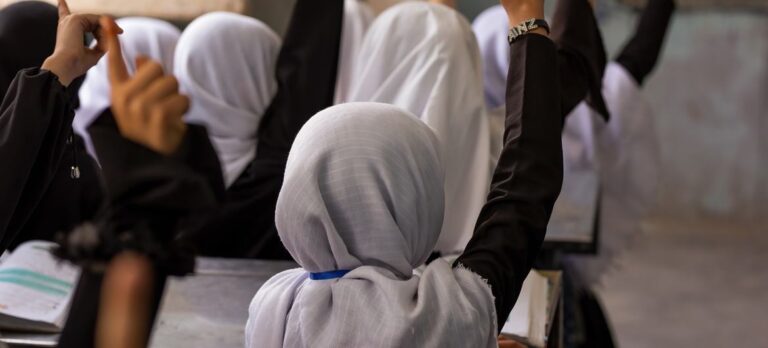
    Image: UNICEF / Sayed Bidel – Girls at school in Herat, Afghanistan.

    Inset image: Oxfam

    Communities Hit Hard as Local Newspapers Wind Up

    Voter participation declines and corruption increases in communities without a strong print or digital news organization, contributing to spread of misinformation, political polarization and reduced trust in media.

    The United States continues to lose newspapers at a rate of two a week, further dividing the nation into wealthier, faster growing communities with access to local news, and struggling areas without, according to a report on the state of local news from the Medill School of Journalism, Media, Integrated Marketing Communications at Northwestern University.

    More than 360 newspapers closed between the pre-pandemic months of late 2019 and the end of May 2022, the report by Medill’s Local News Initiative found. Since 2005, the country has lost more than a fourth of its newspapers and is on track to lose a third by 2025.

    Most communities that have lost newspapers do not get a print or digital replacement, leaving 70 million residents – or a fifth of the country’s population – either living in an area with no local news organizations, or one at risk, with only one local news outlet and very limited access to critical news and information that can inform their everyday decisions and sustain grassroots democracy. About 7 per cent of the nation’s counties, or 211, now have no local newspaper.

    “This is a crisis for our democracy and our society,” said Penelope Muse Abernathy, visiting professor at Medill and the principal author of the report. “Invariably, the economically struggling, traditionally underserved communities that need local journalism the most are the very places where it is most difficult to sustain print or digital news organizations.”

    Recent research shows that voter participation declines and corruption increases in communities without a strong print or digital news organization, Abernathy said, contributing to the spread of misinformation, political polarization and reduced trust in media.

    Financial pressure

    The Medill report on “The State of Local News in 2022” focused on researching and analyzing the health of local newspapers and local digital outlets. While newspapers declined over the past two years, an increase in corporate and philanthropic funding contributed to the establishment of 64 new digital sites focused on covering either state or local news. Most digital sites are located in digitally connected urban areas with diverse sources of funding.

    “It is critical to understand what is working and where there are still gaps in the flow of reliable, comprehensive and timely news and information,” said Tim Franklin, senior associate dean, John M. Mutz Chair in Local News and director of the Medill Local News Initiative. “That way we can build solutions to sustain local journalism in communities that have, so far, been overlooked by entrepreneurs and potential funders.”

    Surviving newspapers, especially dailies, have cut staff and circulation significantly under financial pressure, reducing their ability to fill the gap when communities lose their local papers. More and more dailies are also dropping seven-day-a-week delivery, as they pursue digital subscribers. Forty of the largest 100 daily newspapers now deliver a print edition six or fewer times a week; 11 deliver two times a week or less.

    The largest news chains — Gannett, Lee Enterprises and Alden Global Capital — control many of the country’s surviving newspapers and continue to close or divest underperformers. The most active buyers in recent years have been privately held regional digital chains, such as Paxton Media Group and CherryRoad Media, which bought its first paper in 2020 and now owns 63 papers in 10 midwestern states.

    Signs of hope

    The report found that some for-profit news organizations are prospering, especially those in affluent or growing communities, and nonprofit and hybrid business models are being pioneered in cities from coast to coast.

    “There are signs of hope,” said Franklin. “New nonprofit digital local news startups have launched or been announced in places like Baltimore, Chicago, Cleveland and Houston. Some legacy news outlets are deftly transforming from print to digital. There are unheralded local news leaders who are adapting and experimenting with new models. And local news is increasingly being delivered through newsletters and other digital platforms. But the need to innovate is urgent.”

    Among the tools Northwestern uses to assist local news organizations is the Medill Local News Initiative, a research and development project and website devoted to bolstering new business models. The Medill Subscriber Engagement Index helps newsrooms track their digital subscribers, boost retention and attract new readers. The Medill Metro Media Lab works with Chicago news organizations on consumer research, audience strategy and financial management.

    “Medill’s local news audience research and strategy work is providing tangible, actionable insights for local news organizations at a critical time for the industry. And we expect to expand our commitment to this effort in the coming months,” said Franklin.


    Image: Hippopx, licensed to use Creative Commons Zero – CC0

    ILO Adopts New Guidelines On Biological Hazards In The World Of Work

    Groundbreaking new guidelines on handling biological hazards in the workplace have been agreed by experts representing governments and employers’ and workers’ organizations at a meeting of the International Labour Organization in Geneva.

    Experts from governments and employers’ and workers’ organizations meeting at the International Labour Organization  (ILO) have adopted guidelines for handling biological hazards in the working environment.

    The adopted tripartite guidelines are the first for this type of risk. They provide specific advice, aligned with international labour standards, on preventing and controlling work-related injuries, diseases, and deaths related to exposure to biological hazards in the working environment. This includes questions related to the responsibilities and rights of competent authorities, employers, occupational health services and workers, workplace risk management, workers’ health surveillance, and preparedness and response to emergencies.

    The experts discussed the implications of exposure to biological hazards in workplaces and how best to formulate national and workplace policies and measures to prevent and mitigate related health issues.

    The guidelines define a biological hazard as any micro-organism, cell or other organic material that may be of plant, animal, or human origin, including any which have been genetically modified, and which can cause harm to human health. This may include, but is not limited to, bacteria, viruses, parasites, fungi, prions, DNA materials, bodily fluids, and other microorganisms and their associated allergens and toxins.

    COVID-19

    Both infectious and non-infectious biological hazards can be a significant health threat in numerous sectors and workplaces worldwide. For example, communicable diseases alone are estimated to have caused  310,000 work-related deaths worldwide in 2021, 120,000 of which were due to COVID-19.

    The creation of the guidelines follows a decision at the 331st Governing Body session , in 2017, acting on a suggestion of the Standards Review Mechanism Tripartite Working Group . The decision to hold the experts’ meeting was made at the 343rd Governing Body session , in May 2022.

    The 112th and 113th sessions of the International Labour Conference, in 2024 and 2025, are expected to discuss a new standard covering biological hazards, as part of the review of the ILO’s occupational safety and health normative framework.

    The inadequacies in India’s implementation of the Bio-Medical Waste 2016 standards have been pointed out by a number of government and non-government organisations, including the Central Pollution Control Board (CPCB). Bio-medical waste treatment provisions in India, always considered insufficient, were aggravated with the emergence of COVID-19. Managing medical waste and the safe disposal of a huge volume of hazardous medical waste has now become a priority.


    Image: Wikimedia / Stephen Witherden

    Ocean Heat, Deoxygenation and Acidification are “Alarming”, Says WMO

    Global mean sea level reached a new record high in 2021, after increasing at an average 4.5 mm per year over the period 2013 -2021. This is more than double the rate of between 1993 and 2002 and is mainly due to the accelerated loss of ice mass from the ice sheets.

    Climate change is inflicting a devastating toll on the world’s ocean, which are increasingly “hot, sour and breathless.” Record ocean heat, acidification and de-oxygenation have major implications for marine life, ecosystems, food security and socio-economic development, the 2022 UN Ocean Conference heard today.

    “There is no way to deal with the climate problem without the ocean, and no way to deal with the ocean problem without the climate,” said US Special Presidential Envoy for Climate, John Kerry.

    Speaking at an interactive dialogue on ocean acidification, deoxygenation and ocean warming, John Kerry said that the rate of change was “alarming even the most neutral scientists.”

    “These consequences will affect every single human being on the planet,” he said.

    Jamaican minister Matthew Samuda said small island developing states faced an existential threat.

    The theme of the conference in Lisbon is “Scaling up ocean action based on science and innovation for the implementation of Goal 14: stocktaking, partnerships and solutions.” This is in line with the UN Decade of Ocean Science for Sustainable Development, stresses the critical need for scientific knowledge and marine technology to build ocean resilience.

    The ocean absorbs more than 90 per cent of excess heat trapped by greenhouse gases; absorbs 23 per cent of carbon dioxide emissions; and is the source of more than half of the oxygen we breathe.

    Lowest ocean pH in 26,000 years

    According to the World Meteorological Organization’s State of the Global Climate in 2021 report, sea level rise, ocean heat, ocean acidification and greenhouse gas concentrations set new records in 2021.

    Ocean warming rates show a particularly strong increase in the past two decades. The upper 2000m of the ocean continued to warm in 2021 and it is expected that it will continue to warm in the future – a change which is irreversible on centennial to millennial time scales. The warmth is penetrating to ever deeper levels. Much of the ocean experienced at least one ‘strong’ marine heatwave at some point in 2021, which affects marine life, and ecosystems, WMO Director of Services Dr Johan Stander told the panel session.

    Ocean heat sea level rise

    Global mean sea level reached a new record high in 2021, after increasing at an average 4.5 mm per year over the period 2013 -2021. This is more than double the rate of between 1993 and 2002 and is mainly due to the accelerated loss of ice mass from the ice sheets. This has major implications for hundreds of millions of coastal dwellers and increases vulnerability to tropical cyclones, he said.

    Ocean acidification, which threatens organisms and ecosystem services, and hence food security, tourism and coastal protection. As the pH of the ocean decreases, its capacity to absorb CO2 from the atmosphere also declines.

    The Intergovernmental Panel on Climate Change recent report concluded that “there is very high confidence that open ocean surface pH is now the lowest it has been for at least 26,000 years and current rates of pH change are unprecedented since at least that time.”

    Improved observations

    Dr Stander stressed the urgent need for enhancing and sustaining ocean observations. There are significant global coverage gaps in the observing network, with many under-sampled areas.

    “We need more data. WMO is working hardly on improving the availability and accessibility of data that are needed to improve our understanding of the complex processes. We cannot take action if we do not understand the problem. We cannot understand what we cannot measure,” said Stander.

    WMO Executive Council has just approved a proposal for WMO to further develop the concept for an integrated operational global greenhouse gas monitoring infrastructure. This will enable improved estimation of the relevant carbon fluxes between atmosphere, land, and oceans – including the role of the ocean as a carbon sink.

    Whilst the capacity to monitor ocean heat content and warming has developed considerably in the last two decades, in particular through the revolutionary Argo array of profiling robots, the capacity to observe ocean acidification and deoxygenation remains marginal.

    Of more than 10 000 in situ observing elements operating in the ocean, less than 5 percent have the capacity to measure pH or dissolved oxygen. The global ocean observing system delivers critical services for society but is facing many challenges.

    “How can we rigorously estimate, forecast or develop any digital twin with such a fragile system?” said Matthieu Belbeoch of the joint WMO-IOC UNESCO OceanOPS centre.

    “Please do not take the observing system for granted. Invest seriously in ship time, data buoys and profiling floats, sensors to enable a truly global, robust and multidisciplinary infrastructure dimensioned to the challenges we are facing,” he told the plenary session.

    Polar science and services

    A WMO side event ‘Polar Regions in a changing climate: ocean solutions through science to services’, emphasised the concern regarding rapid changes in these fragile regions, where warming ocean temperatures are having pronounced impacts on ice cover.

    Panelists from Argentina, Canada, Finland, and USA, discussed the vulnerabilities of these regions, and how science, research and indigenous knowledge are all key to improving modelling of changes at multiple timescales, from days to seasons to years.

    Anthony Rea, WMO Director of Infrastructure, called for collaboration and coordination for increased observations, which will provide the critical data, for improved forecasts and early warnings to protect people, ecosystems and property along the coast and at sea.


    Image: Hippox, licensed to use Creative Commons Zero – CC0

    First Batch of Village Engineers Ready, Says Rajeev Chandrasekhar

    Training was provided in five fields – electrical and solar energy, agricultural mechanization, e-governance, plumbing and masonry and two wheeler repair and maintenance. The trainees will be able to start their own business and thus generate more employment opportunities for other young people.

    The first batch of 140 trainees under Rural Tribal Technical Training were handed Skill Certificates at the Raj Bhawan in Bhopal in the presence of the Madhya Pradesh Governor Mangubhai Patel.

    Rajeev Chandrasekhar, Minister of State for Skill Development and Entrepreneurship, Electronics and IT who joined the ceremony virtually congratulated the trainees on successfully completing the skill training and for attaining skills which he termed as “Passport to Prosperity”.

    The pilot project, under the Sansadiya Sankul Pariyojana, was launched on 13 May 2022 for training about 250 beneficiaries of 17 clusters of 17 districts selected from six states of India – Madhya Pradesh, Chhattisgarh, Gujarat, Rajasthan, Maharashtra and Odisha. It was launched in the presence of Madhya Pradesh Chief Minister Shivraj Singh Chouhan and Rajeev Chandrasekhar.

    Expressing his satisfaction on the pilot project, the minister Rajeev Chandrasekhar affirmed that the pilot programme offers a launch pad for replicating its success to other districts across the country. He said that It will empower the tribal youth by making opportunities available locally, thereby reducing the pull and push for migration. The concept of multi-skilling and turning unemployed youth into village engineers is the first of its kind.

    Atmanirbhar Bharat

    The minister added that replicating the programme across the country will also trigger economic activities at local level in the districts, in consonance with the government’s economic outlook laying emphasis on self-reliance or AtmaNirbharta. He said that the Road to Atmanirbhar Bharat travels through Atmanirbhar villages.

    Training was provided to the beneficiaries in five fields – electrical and solar energy, agricultural mechanization, e-governance, plumbing and masonry and two wheeler repair and maintenance. The training will enable the trainees to start their own business, thus generating more employment opportunities for other young people as well.

    Alluding to the disruption in the traditional supply chains as a fallout of the COVID-19 pandemic, the minister said that training will offer huge opportunities as the world is looking for a trusted partner and now looks towards India. This offers an opportunity to create skilled young people so that India can emerge as Global Skills Hub.

    A part of this push is creating district skilling plans for each of the 700 districts as skilling rural youth will also strengthen local village economies, the minister said. He informed that the union government has appointed a Mahatma Gandhi National Fellow for each district, who will work with the local district collector as the district’s public representative in shaping skills according to local requirements – spanning across the farm economy and non-farm economies.

    Rs 2,516 Crore to Computerise Last Point Farm Cooperative Credit System

    Presently, PACS account for 41 per cent or over 3 crore farmers of the kisan credit card loans given by all entities in the country. 95 per cent of these loans to 2.95 crore farmers through PACS are given to the small and marginal farmers.

    The Cabinet Committee on Economic Affairs on Wednesday approved computerisation of Primary Agricultural Credit Societies (PACS). Mooted by the ministry of cooperation, this computerisation aims to increase the efficiency of PACS while simultaneously making their operations more transparent.

    PACS constitute the lowest, village level tier of the short-term cooperative credit system and have the 63,000 functional PACS’ have a collective membership of about 13 crore farmers. The other two tiers – the state cooperative banks and the district central cooperative banks have been computerised with NABARD funding and networked using the common banking software.

    Presently, PACS account for 41 per cent or over 3 crore farmers of the kisan credit card loans given by all entities in the country. 95 per cent of these loans to 2.95 crore farmers through PACS are given to the small and marginal farmers.

    This computerisation of the thus-far manual functions of the PACS over the coming five years will cost Rs 2,516 crore and will entail a cloud-based common software and data storage facilities.

    As a last and nodal point for engagement with village communities, PACS will also deliver services like interest subvention for farm loans, agriculture insurance, direct benefit transfers and the provision of agricultural inputs. In the immediate future, the computerisation will help speedier sanction and disbursal of credits.

    The government plans are targeted at crores of small and marginal farmers while also facilitating the PACS’ to diversify their business and undertake multiple activities and services. It is envisaged that this will enable PACS to provide their members with ancillary services.

    Besides improving digitalisation in rural areas, the project will help improve the outreach of the PACS as outlets for banking as well as non-banking activities.

    Human Rights Defenders Write to Guterres; Say Next OHCHR Must be a Rights Champion

    The post of High Commissioner should be filled by someone of high moral standing and personal integrity, and who is independent and impartial and possesses competency and expertise in the field of human rights. It requires a human rights champion who is courageous and principled.

    A joint open letter to UN Secretary General Antonio Guterres from 63 individuals and organizations has urged Guterres to choose a candidate with commitment and track-record for appointment to the office of the UN High Commissioner for Human Rights, following Michelle Bachelet’s departure. Bachelet’s mandate is due to end on 31 August 2022.

    The signatories say that the role of the UN High Commissioner for Human Rights is key for the implementation of the Call to Action for Human Rights and Our Common Agenda, particularly at this point of time, when human rights standards and mechanisms face enormous pressure from powerful governments.

    “The post of High Commissioner for Human Rights is critical to the promotion and protection of human rights globally, particularly at a time when human rights standards and mechanisms face enormous pressure from powerful governments,” the letter reads.

    The organisations and individuals who represent and work closely with human rights defenders, victims of violations and affected communities, as well as with the UN say that the position should be filled by someone of “high moral standing and personal integrity, and who is independent and impartial and possesses competency and expertise in the field of human rights.”

    “It requires a human rights champion who is courageous and principled. Your nominee should have a proven record of effective public advocacy, as well as demonstrated experience working with defenders and victims of violations.”

    Open, transparent selection process

    The letter from the human rights champions says that the post if UN High Commissioner for Human Rights requires a strong commitment to addressing discrimination, inequality, oppression and injustice in all its forms, “as well as combating impunity and pursuing redress and accountability for all human rights violations and abuses, including those committed by the most powerful governments.”

    “The High Commissioner’s role is to be the world’s leading human rights advocate, as distinct from the role of a diplomat or political envoy,” their letter says, adding, “Demonstrating solidarity with victims and publicly calling out abuses should take precedence over friendly dialogue with governments.”

    Stressing that the process of nominating the next High Commissioner is critical to identifying the most qualified candidate and ensuring the credibility of their appointment, the letter says, “This process should be open, transparent and merit-based. It should involve wide and meaningful consultation with independent human rights organisations and human rights defenders.”

    “Human rights are primary values, legal obligations, and indispensable for peace, security and sustainable development,” the letter argues. “It is vital that the next High Commissioner be a compelling leader for human rights within the UN system and throughout the world.”

    The authors of the letter have urged Guterres to defend the independence of the Office of the High Commissioner, including through adequate resourcing.