More

    Tree Loss In Tropics Casts Doubt Over Climate Goals

    Tropics lost 11.1 million hectares of forest cover in 2021, with the Amazon, Democratic Republic of Congo seeing the greatest losses. The need for a ‘consistent annual decline’ to put COP26 deforestation goals on track.

    By Dann Okoth

    Tropical regions of the world lost 11.1 million hectares of forest cover in 2021, new data shows, calling into question global pledges to end deforestation by 2030.

    Taking in the Amazon and the Congo Basin, the tree loss included 3.75 million hectares of “critically important” primary rainforests, according to the World Resource’s Institute’s Global Forest Watch.

    This resulted in 2.5 gigatonnes of carbon dioxide released into the atmosphere, equivalent to the annual fossil fuel emissions of India, the forests monitor said.

    Global Forest Watch deputy director Mikaela Weisse told a virtual press conference: “The team specifically focused on the loss in humid tropical primary forests, which are areas of pristine rainforest that are important for carbon storage and biodiversity.

    “We also focused on tropical forests because that is where modern-day deforestation — more than 96 per cent — takes place.”

    The report described the rate of primary forest loss in the tropics in recent years as “stubbornly consistent”. The loss in 2021 was 11 per cent less than in 2020 but followed a 12 per cent increase in 2019, mostly attributed to fires, it said.

    At the UN climate summit, COP26 in Glasgow last November, leaders from 141 countries signed a declaration on forests and land use, pledging to “halt and reverse forest loss by 2030”.

    Amazon Congo tropical forest tree cover loss COP26 SDGs

    Amazon losing resilience

    Realising these goals requires “a consistent decline in forest loss every year for the rest of the decade”, according to the report based on data from the University of Maryland in the US. So far this is only happening in a few countries in the tropics, such as Indonesia and Malaysia, where primary forest cover loss has declined in recent years.

    “This new data underscore just how much effort is needed to achieve the deforestation goals,” said Weisse.

    Brazil accounted for more than 40 per cent of the world’s tropical primary forest loss in 2021, amounting to 1.5 million hectares. The vast majority of this occurred in the Amazon, said Rod Taylor, global director of the forests programme at the World Resource Institute.

    “Forest cover loss in Brazil, especially in the Amazon has been persistent over the years,” said Taylor, adding that loss due to fire fluctuated depending on the conditions. The analysis, for the first time, took into account tree cover loss due to wildfires, intentionally set fires and fires from agricultural activities.

    Between 2020 and 2021, non-fire losses in Brazil — usually linked to agricultural expansion — increased nine per cent, according to the report. It said clear-cut deforestation was the highest it had been since 2006, when a number of measures were introduced to reduce deforestation.

    Key states in the western Brazilian Amazon saw a 25 per cent increase in non-fire loss of primary forest loss, with new “hot spots” springing up where large-scale clearings had been made alongside existing roads, probably for cattle grazing, the report suggests.

    “New research shows that the Amazon is losing resilience much faster than we thought, even reaching a tipping point where vast areas transform from rainforest to Savannah, resulting in massive emissions,” said Weisse.

    Amazon tropical forests loss climate goals COP26 SDGs

    New development pathways

    The Democratic Republic of Congo (DRC) had the second largest forest loss in 2021, losing nearly half a million hectares of forest cover. This was driven by small-scale agriculture and harvesting of trees for charcoal production, according to the analysis.

    “DRC’s vast forest is a big global carbon sink and big changes are needed to curb this forest loss,” warned Elizabeth Goldman, senior geographic information system research manager at Global Forest Watch.

    “These should include pursuing of new development pathways and improving agricultural yields so that expansion of agriculture does not continue unchecked into primary forests, and access to clean energy,” she suggested.

    On the positive side, Indonesia saw a 25 per cent reduction in primary forest loss compared to 2020, the country’s fifth year in a row in decline. Malaysia also experienced a fifth year in decline.

    Hidayah Hamzah, forest and peat monitoring senior manager at World Resources Institute, Indonesia attributes Indonesia’s progress to corporate and government actions that “are clearly working” as the country “heads in the right direction to meeting its climate commitments”.

    She said the Indonesian government had increased fire monitoring, expanded forest restoration, and revoked licenses for logging, palm oil plantations and mining in forests.

    But Hamza is worried that palm oil prices in the country are at a 40-year high. “This might increase the appetite to expand palm oil plantation in forest areas,” she warned.

    These exceptions aside, Benson Ochieng’, executive director at the Institute for Law and Environmental Governance in Nairobi, says the global forest loss trends are indicative of unwillingness to follow through on climate commitments.

    “Commitments such as zero-deforestation are beautiful. But they are as good as the people who implement them. Otherwise they would not be worth the paper they are written on,” Ochieng’ said.

    He challenged leaders and corporations to put pledges into action, citing the example of the AFR100 initiative where African countries will begin restoring 100 million hectares of degraded land by 2030.

    “Unlike other pledges and commitments, the AFR100 initiative has a budget, funders and timelines,” he said.


    This piece has been sourced from SciDev.Net.


    Banner image:  Planet Labs, Inc., (CC BY-SA 4.0).

    Inset images: Hippopx Images.
    UN Secretary-General Must be Non-Risk Averse, Play a More Pivotal and Active Role

    In the context of current world affairs and international relations, it is imperative that the Secretary-General plays a more pivotal and far-greater active role to uphold the primary mandate of the United Nations and ensure the maintenance of Global Peace and Security.

    By Purnaka L. de Silva

    Vladimir Putin’s illegal War of Aggression in Ukraine, launched on February 24, 2022, brought into stark relief the fractured state of Global Peace and Security. Militarized conflicts, civilian deaths and forced migration in the tens of millions have been ongoing for decades, with little or no relief to the beleaguered victims.

    The war in Ukraine appears to have displaced other ongoing major wars in Yemen, Ethiopia, and Myanmar in the global public imagination thanks to the 24/7 news cycle. The primary mandate of the United Nations is to ensure the maintenance of Global Peace and Security, sadly we seem to have neither, apart from a lot of talk by eminent personages with little or no action to redress the dystopian realities and carnage on the ground.

    The Latin motto res, non verba comes to mind – meaning “deeds, and not words” – as quite an appropriate model for the United Nations to adopt rather than sticking to ‘business as usual’ – which is quite lame and pathetic to say the least in these trying times.

    Secretary-General António Guterres must not leave diplomacy, mediation, and negotiation to half-baked UN diplomats out in the field and even within his own Executive Office – UN-EOSG.

    In the context of current world affairs and international relations, it is imperative that the Secretary-General plays a more pivotal and far-greater active role to uphold the primary mandate of the United Nations and ensure the maintenance of Global Peace and Security.

    More active and visible role

    The time for protecting the image and status of the UN Secretary-General is over, as well as being held hostage by the P-5 Permanent Member States of the UN Security Council who have run roughshod over all current and previous UN Secretaries-General.

    Rather than being risk averse, Secretary-General Guterres must play a much more active and visible role on the global stage and behind-the-scenes – traveling incessantly to war-torn UN member states to meet the protagonists regularly and personally mediating, using his high office and moral standing to good effect – to boost UN mediation efforts.

    Reminiscent of the active and energetic interventions of one of his predecessors, the late Secretary-General Dag Hammarskjold, who sadly paid the ultimate price along with 15 other UN advisors, bodyguards, and aircrew when their plane was shot down on September 18, 1961, in Northern Rhodesia, now Zimbabwe.

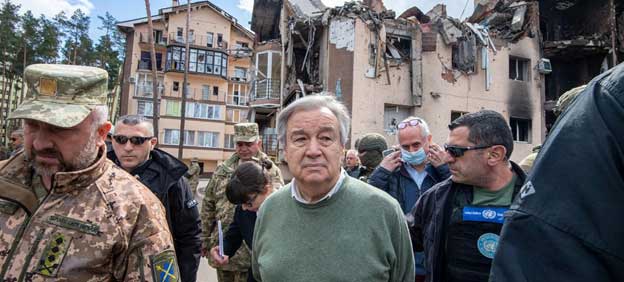
    In today’s geopolitical environment, Secretary-General Guterres cannot be seen as one of the last of a long line of diplomats and politicians to visit a war-torn region, as was the case of his recent visit in late April 2022 to Moscow and Kyiv – to put it bluntly this is bad optics.

    Secretary-General Guterres must use his Executive Office to better effect and the global public needs to be aware and supportive. Given the very high stakes involved he must be much more proactive regarding Ukraine, and all ongoing wars and armed conflicts in evenhanded fashion – without fear nor favor.

    On the plus side Secretary-General Guterres did call the war in Ukraine “evil and unacceptable” and called for justice. However, Guterres’ call fell on deaf ears in Moscow, demonstrated by the fact that Russia launched five missiles striking central Kyiv less than one hour after he held a news conference with Ukrainian President Vlodymyr Zelenskyy.

    Independence from Western powers

    So, what is to be done when a P-5 Permanent Member State of the UN Security Council goes “rogue” – i.e., beyond the bounds of civilized, rules-based behaviour of a nation-state in the 21st Century adhering to tenets of Global Peace and Security enshrined in the UN Charter, the Laws of War, the Geneva Conventions, and the Rome Statute of the International Criminal Court – as in the case of Putin and his government?

    Notwithstanding the fact that Secretary-General Guterres is a former Prime Minister of Portugal, he must demonstrate his independence from the Western powers, and immediately follow-up on his Moscow and Kyiv visit by visiting Beijing to enlist President Xi Jingping’s not-so-inconsequential support to put pressure on Moscow to end the aggression in Ukraine and call off the dogs of war.

    And while he is negotiating in Beijing, he must also secure the support of China to pressure the Tatmadaw Kyi military junta to standdown and restore democracy without delay in Myanmar to provide relief to its beleaguered peoples. Non-confrontational diplomacy is the key to success in Beijing something that Secretary-General Guterres is adept at doing, which he should use to good effect considering that the Chinese are not belligerents.

    Beijing is more inclined towards global trade and commerce and promoting their ambitious “Belt and Road Initiative” global megaproject, which is undoubtedly being hampered by war in Ukraine.

    After two bloody world wars where tens of millions of human beings died, nobody wants another largescale inter-European war, which has potential ramifications for militaries and civilians well beyond Europe.

    Without fear nor favour

    In fact, Putin’s War of Aggression in Ukraine is already deepening world hunger given that global wheat production, storage and supply is severely hampered by fighting. The power of the United Nations is a reflected power – i.e., that of its leading member states adhering to a rules-based system of global governance – and that power is what all UN Secretaries-General must harness for the greater good through the arts of diplomacy, mediation, and negotiation to maintain Global Peace and Security.

    Secretary-General Guterres is urgently called upon to demonstrate his leadership and political acumen in these dystopian and troubled times, using his moral courage as a beacon to rally global publics to support the mandate and mission of the United Nations. The UN Secretary-General cannot and must not be relegated to the role of bystander while belligerents run amok, he/she must lead, irrespective of the personal cost, without fear nor favour.

    As for Secretary-General Guterres a devout Catholic (close to His Holiness Pope Francis an outspoken critic of war), he cannot accomplish this mammoth task alone – to enhance his moral authority he needs to harness the power and voice of civil society together with that of the world’s multiple religions – all working together at manifold levels to maintain Global Peace and Security.


    Dr Purnaka L. de Silva is Professor UN Studies at the School of Diplomacy and International Relations, Seton Hall University, and Director, Institute of Strategic Studies and Democracy (ISSD) Malta.


    This piece has been sourced from Inter Press Service.

    Image: UN

    WMO Says 1.5 °C Rise Above Pre-Industrial Level Temperature Is Round The Corner

    The 1.5°C figure is not some random statistic. It is rather an indicator of the point at which climate impacts will become increasingly harmful for people and indeed the entire planet. For as long as we continue to emit greenhouse gases, temperatures will continue to rise.

    There is a 50:50 chance of the annual average global temperature temporarily reaching 1.5 °C above the pre-industrial level for at least one of the next five years – and the likelihood is increasing with time, according to a new climate update issued by the World Meteorological Organization (WMO).

    There is a 93 per cent likelihood of at least one year between 2022-2026 becoming the warmest on record and dislodging 2016 from the top ranking. The chance of the five-year average for 2022-2026 being higher than the last five years (2017-2021) is also 93 per cent, according to the Global Annual to Decadal Climate Update, produced by the United Kingdom’s Met Office, the WMO lead centre for such predictions.

    The annual update harnesses the expertise of internationally acclaimed climate scientists and the best prediction systems from leading climate centres around the world to produce actionable information for decision-makers.

    Paris Agreement goals

    The chance of temporarily exceeding 1.5°C has risen steadily since 2015, when it was close to zero.  For the years between 2017 and 2021, there was a 10 per cent chance of exceedance. That probability has increased to nearly 50% for the 2022-2026 period.

    “This study shows – with a high level of scientific skill – that we are getting measurably closer to temporarily reaching the lower target of the Paris Agreement on Climate Change. The 1.5°C figure is not some random statistic. It is rather an indicator of the point at which climate impacts will become increasingly harmful for people and indeed the entire planet,” said WMO Secretary-General Prof. Petteri Taalas.

    “For as long as we continue to emit greenhouse gases, temperatures will continue to rise. And alongside that, our oceans will continue to become warmer and more acidic, sea ice and glaciers will continue to melt, sea level will continue to rise and our weather will become more extreme. Arctic warming is disproportionately high and what happens in the Arctic affects all of us,” said Prof. Taalas.

    The Paris Agreement sets long-term goals to guide all nations to substantially reduce global greenhouse gas emissions to limit the global temperature increase in this century to 2 °C while pursuing efforts to limit the increase even further to 1.5 °C.

    The Intergovernmental Panel on Climate Change says that climate-related risks for natural and human systems are higher for global warming of 1.5 °C than at present, but lower than at 2 °C.

    An El Niño can fuel temperatures

    Dr Leon Hermanson, of the Met Office led the report. He said: “Our latest climate predictions show that continued global temperature rise will continue, with an even chance that one of the years between 2022 and 2026 will exceed 1.5 °C above pre-industrial levels. A single year of exceedance above 1.5 °C does not mean we have breached the iconic threshold of the Paris Agreement, but it does reveal that we are edging ever closer to a situation where 1.5 °C could be exceeded for an extended period.”

    In 2021, the global average temperature was 1.1 °C above the pre-industrial baseline, according to the provisional WMO report on the State of the Global Climate. The final State of the Global Climate report for 2021 will be released on 18 May.

    Back-to-back La Niña events at the start and end of 2021 had a cooling effect on global temperatures, but this is only temporary and does not reverse the long-term global warming trend. Any development of an El Niño event would immediately fuel temperatures, as it did in 2016, which is until now the warmest year on record.

    Edging closer

    According to the findings, the annual mean global near-surface temperature for each year between 2022 and 2026 is predicted to be between 1.1 °C and 1.7 °C higher than preindustrial levels (the average over the years 1850-1900).

    The chance of global near-surface temperature exceeding 1.5 °C above preindustrial levels at least one year between 2022 and 2026 is about as likely as not (48 per cent). There is only a small chance (10 per cent) of the five-year mean exceeding this threshold.

    The chance of at least one year between 2022 and 2026 exceeding the warmest year on record, 2016, is 93 per cent. The chance of the five-year mean for 2022-2026 being higher than the last five years (2017-2021) is also 93 per cent.

    The Arctic temperature anomaly, compared to the 1991-2020 average, is predicted to be more than three times as large as the global mean anomaly when averaged over the next five northern hemisphere extended winters.

    Soil Microbes Derived Products Could Be an Alternative to Expensive Agricultural Fertilizers

    Derived from naturally occurring microorganisms, microbial inoculants offer the same benefits as chemical fertilizers while reducing agricultural systems environmental footprint. Due to their popularity, microbial inoculants are currently valued at $12.9 billion. Complementing their popularity is the proliferation in the number of start-ups and companies developing and commercializing microbial products.

    By Esther Ngumbi

    Around the world, commercial fertilizer prices are soaring, pushing farmers and countries into a frenzy. In addition, soaring fertilizer prices are sparking fears of inflation, food supply shortages and food insecurity. There are several reasons that have contributed to the rising fertilizer prices including the Russian-Ukrainian war and the global pandemic.

    To avert the ongoing fertilizer crisis, farmers in developed and developing countries alike, could turn into other alternative products such as microbial inoculants. Derived from naturally occurring microorganisms, including the billions of beneficial bacteria that teem in the soil near plant roots, microbial inoculants offer the same benefits as chemical fertilizers while reducing agricultural systems environmental footprint.

    Moreover, scientific evidence, generated over the years including through both long-term studies and short-term studies have shown that these microbes when applied directly to seeds can improve the crop growth, nutrition, and productivity. As an example, a 10-year long-term field study carried in Germany showed that beneficial microbes increase maize plant growth and the availability of phosphorous – and essential plant nutrient – in the soil. In Italy, beneficial soil microbes improved tomato yields. In the US,

    Need to invest in science

    Due to their popularity, microbial inoculants are currently valued at $12.9 billion. Complementing their popularity is the proliferation in the number of start-ups and companies developing and commercializing microbial products. These include AgBiome, Indigo, Novozymes, Corteva, BASF, and Bayer.

    What’s more is that these microbes can provide other benefits to plants including helping them to tolerate drought and hot temperatures that have increasingly become common with climate change. Further, they can increase plant defenses against crop damaging insects. These products also offer environmentally sustainable integrated crop management.

    Cost wise, in the US, for example,  microbial inoculants are relatively priced, from $30 – $100 per gallon.

    Of course, there remains a few challenges including the often-cited inconsistent results and  concerns that these products could eventually become invasive.

    As fertilizer prices keep escalating, the world must invest in understanding and harnessing these naturally occurring microbes to improve crop productivity.

    Just like the world is investing in producing fertilizers, there is need to invest in science that is aimed at understanding beneficial soil microbes and the mechanisms that underpin microbe facilitated crop growth improvement.

    Microbial inoculants could be the next sustainable tools for breaking the dependence on fertilizers.


    Dr. Esther Ngumbi is an Assistant Professor at the University of Illinois at Urbana Champaign, and a Senior Food Security Fellow with the Aspen Institute, New Voices.

    This piece has been sourced from Inter Press Service.

    Image:  Jorge Luis Baños  /  IPS

    Future Super Cyclones Will Expose Vastly More People To Extreme Flooding in SouthAsia, Say Researchers

    Research shows that future super cyclones would expose greater numbers of people in most vulnerable parts of the world to extreme flooding. The study says that if the release of greenhouse gases into the atmosphere continues at the same scale, over two-and-a-half times the population in India would experience flooding of greater than 1 metre, compared to the event in 2020.

    A new study from the University of Bristol has revealed super cyclones, the most intense form of tropical storm, are likely to have a much more devastating impact on people in SouthAsia in future years.

    The international research, led by the University of Bristol, looked at the 2020 Super Cyclone Amphan – the costliest cyclone to make landfall in South Asia – and projected its consequences in different scenarios of sea level rise due to global warming.

    Its findings, published on Monday in the Royal Meteorological Society journal Climate Resilience and Sustainability, showed if the release of greenhouse gases into the atmosphere continues at the same scale, more than two and a half times (250 per cent) the population in India would experience flooding of greater than 1 metre, compared to the event in 2020.

    Super cyclones India Bangladesh South Asia greenhouse gas emissions climate change vulnerable

    Ramp down greenhouse gas emissions

    Lead author Dann Mitchell, Professor of Climate Science at the university’s Cabot Institute for the Environment, said: “South Asia is one of the most climate-sensitive regions in the world, with super cyclones causing tens to hundreds of thousands of deaths in historical cases. Comparatively, very little climate impact research has been done in SouthAsia, despite the Intergovernmental Panel on Climate Change (IPCC) highlighting it as such a critical region.

    “This study, in collaboration with local scientists, provides much-needed climate impact information in one of the most vulnerable regions in the world. It presents a critical piece of evidence in support of ramping down our greenhouse gas emissions to achieve the Paris Agreement climate goals, where other lines of evidence all too often focus on high income countries where impacts are lower, and adaptation is more easily achievable.”

    The researchers, which included scientists from Bangladesh, used sophisticated climate model projections to anticipate the scale of those affected by cyclones in the rest of this century.

    Although the increasing numbers of people at risk is anticipated to be more modest in Bangladesh, estimated to rise by 60 per cent to 70 per cent, this factors in declining coastal populations in future.

    Encouragingly, the research team went on to show if the Paris Agreement climate goals of 2 degrees Celsius warming above pre-industrial levels are adhered to, population exposures to flooding dropped close to zero there.

    But even in this climate warming scenario, the exposures in India still showed an alarming increase in the number of people (ranging between 50 per cent to 80 per cent) expected to experience flooding in future.

    Reduce losses and damages

    The main objective of the Paris Agreement, a global framework to tackle climate change, is to hold the global average temperature increase to well below 2°C above pre-industrial levels and endeavour to limit the temperature increase to 1.5°C.

    Saiful Islam, Professor of Hydrology at the Bangladesh University of Engineering and Technology (BUET), and contributing author of the study, said: “The latest IPCC report has mentioned with high confidence that tropical cyclones with higher intense categories will be more frequent in the future. This study shows that population exposure in Bangladesh and India will be increased up to 200 per cent in the future for extreme storm surge flooding (greater than 3 metres) from intense cyclones under high emission scenarios. Hence, a strong, rapid and sustained greenhouse gas reduction is essential to achieve goals of the Paris Agreement and to reduce losses and damages of highly vulnerable countries like Bangladesh.”

    Study: Immigrants in the US Are More Likely to Start Firms, Create Jobs

    Compared to native-born citizens, immigrants are more frequently involved in founding companies at all scales.

    Peter Dizikes   |   MIT News Office

    Immigrants to the US are more likely to start businesses than native-born Americans are, according to a study that takes a wide-ranging look at registered businesses across the country.

    Co-authored by an MIT economist, the study finds that, per capita, immigrants are about 80 per cent more likely to found a firm, compared to US-born citizens. Those firms also have about 1 per cent more employees than those founded by US natives, on average.

    “Immigrants, relative to natives and relative to their share of the population, found more firms of every size,” says Pierre Azoulay, an economist at the MIT Sloan School of Management and co-author of a published paper detailing the study’s results.

    Taking firm creation into account, the results indicate that immigration to the U.S. is associated with a net gain in job availability, contrary to the common perception that immigrants fill jobs that US-born workers would otherwise have.

    “The findings suggest that immigrants act more as ‘job creators’ than ‘job takers’ and that non-US born founders play outsized roles in US high-growth entrepreneurship,” the authors write in the paper.

    The paper, “Immigration and Entrepreneurship in the United States,” appears in the spring issue of American Economic Review: Insights. The authors are Azoulay, who is the International Programs Professor of Management at MIT Sloan; Benjamin Jones, the Gordon and Llura Gund Professor of Entrepreneurship and a professor of strategy at Northwestern University’s Kellogg School of Management; J. Daniel Kim PhD ’20, an assistant professor of management at the University of Pennsylvania’s Wharton School; and Javier Miranda, a principal economist at the US Census Bureau.

    Three scales of firms

    To conduct the study, the scholars examined three types of data sources. To begin with, the researchers used U.S. Census Bureau data and tax records for all new firms founded in the US from 2005 through 2010, a total of 1.02 million businesses. This allowed them to study firm creation and job growth in those companies over a five-year period.

    Of course, many US firms were founded earlier than 2005. To analyze those firms and their founders, the research team examined the US Census Bureau’s Survey of Business Owners from 2012, a periodic survey with data covering 200,000 businesses and including data about the owners. This allowed the scholars to expand the study’s time period and include many larger firms.

    However, many of the largest companies in the US do not respond to the Survey of Business Owners. For this reason, the research team also analyzed the 2017 Fortune 500, identifying the citizenship and immigration status of founders of 449 of those companies.

    Ultimately, the study showed that 0.83 percent of immigrants to the US founded a firm from 2005 to 2010, while 0.46 per cent of native-born US citizens founded a firm in that time. That disparity — the 80 per cent higher rate of firm founding — also held up among firms founded before 2005.

    “Immigrants found more firms in every bucket,” Azoulay says. “They create more firms, they create more small firms, they create more medium-size firms, they create more large firms.” He adds: “It’s not the case that [immigrants] only create growth-oriented startups. It’s not the case they just create subsistence businesses. They create all kinds of businesses, and they create a lot of them.”

    Azoulay emphasizes that the study, focused on the empirical facts about business creation, does not explain why immigrants tend to found firms more often. It may be that some immigrants, finding it hard to access the US workforce as employees, may start service-type businesses instead.

    Alternately, some immigrants to the US arrive as students, stay in the country, and found high-growth, high-tech startup firms. The breadth of the overall trend suggests there are likely multiple such scenarios in play at once.

    “There can’t be just one explanation,” Azoulay says. “There is probably a different story for the firms that eventually grow to be large, and for the firms that start small and stay small.”

    Facts for a larger discussion

    As the researchers note, defining whether a firm’s founders are immigrants is not always a straightforward matter. Some firms have multiple founders, representing a mix of immigrants and native-born people.

    To address this issue, the scholars tested multiple ways of classifying firm data. In one iteration of the analysis, they allocated credit for firm founding proportionately among founders. In another iteration, they only credited a firm as being founded by an immigrant if the “lead” founder was an immigrant. Still another round of analysis defined a firm as being immigrant-founded if any member of the founding team was an immigrant. All these methodologies yielded the same large-scale trend.

    Indeed, as the authors write in the paper, “Immigrants appear to play a relatively strong role in expanding labor demand relative to labour supply, compared to the native-born population.”

    Azoulay notes that debates over immigration policy may have many dimensions and are not always going to revolve around the economics. Still, when it comes to that economic impact, and specifically to the issue of job creation and availability, Azoulay hopes the study will provide some baseline data points for public consumption.

    “Any discussion needs to start from a common set of facts,” Azoulay says.

    Reprinted with permission of MIT News 

    Image: Courtesy MIT

    Revealed: The Shocking Extent of Exploitative Baby Formula Milk Marketing

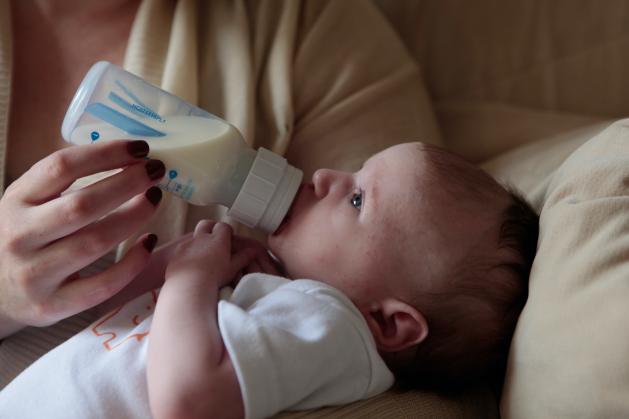
    The global formula milk industry, valued at some 55 billion US dollars, is targeting new mothers with personalised social media content that is often not recognisable as advertising.

    By Baher Kamal

    The world’s leading health and children specialised organisations have once again sounded the alarm bell about what they classify as “shocking, insidious, exploitative, aggressive, misleading and pervasive” marketing tricks used by the baby formula milk business with the sole aim of increasing, even more, their already high profits.

    On this, the World Health Organization (WHO) at the end of April this year explained that formula milk companies are paying social media platforms and influencers to gain direct access to pregnant women and mothers at some of the most vulnerable moments in their lives.

    The global formula milk industry, valued at some 55 billion US dollars, is targeting new mothers with personalised social media content that is often not recognisable as advertising.

    The new WHO report titled Scope and impact of digital marketing strategies for promoting breast-milk substitutes has outlined the digital marketing techniques designed to influence the decisions new families make on how to feed their babies.

    Business buys, collects personal information

    “Through tools like apps, virtual support groups or ‘baby-clubs’, paid social media influencers, promotions and competitions and advice forums or services, formula milk companies can buy or collect personal information and send personalised promotions to new pregnant women and mothers.”

    The report summarises findings of new research that sampled and analysed 4 million social media posts about infant feeding published between January and June 2021 using a commercial social listening platform.

    These posts reached 2.47 billion people and generated more than 12 million likes, shares or comments.

    Three times as much

    Formula milk companies post content on their social media accounts around 90 times per day, reaching 229 million users; representing three times as many people as are reached by informational posts about breastfeeding from non-commercial accounts.

    This pervasive marketing is increasing purchases of breast-milk substitutes and therefore dissuading mothers from breastfeeding exclusively as recommended by WHO.

    “The promotion of commercial milk formulas should have been terminated decades ago,” said Dr Francesco Branca, Director of the WHO Nutrition and Food Safety department.

    More and more powerful marketing techniques

    “The fact that formula milk companies are now employing even more powerful and insidious marketing techniques to drive up their sales is inexcusable and must be stopped.”

    The report compiled evidence from social listening research on public online communications and individual country reports of research that monitors breast-milk substitute promotions, as well as drawing on a recent multi-country study of mothers’ and health professionals’ experiences of formula milk marketing.

    The studies show how misleading marketing reinforces myths about breastfeeding and breast milk and undermines women’s confidence in their ability to breastfeed successfully.

    Blatant breaches of law

    The proliferation of global digital marketing of formula milk blatantly breaches the International Code of Marketing of Breast-milk Substitutes (the Code), which was adopted by the 1981 World Health Assembly.

    The Code is a landmark public health agreement designed to protect the general public and mothers from aggressive marketing practices by the baby food industry that negatively impact breastfeeding practices.

    “Despite clear evidence that exclusive and continued breastfeeding are key determinants of improved lifelong health for children, women and communities, far too few children are breastfed as recommended. If current formula milk marketing strategies continue, that proportion could fall still further, boosting companies’ profits.”

    Industry to stop, governments to act

    WHO has called on the baby food industry to end exploitative formula milk marketing, and on governments to protect new children and families by enacting, monitoring and enforcing laws to end all advertising or other promotion of formula milk products.

    This is the first time WHO has used a social media intelligence platform to generate insight into the marketing practices of multi-national formula milk manufacturers and distributors.

    Social media intelligence platforms monitor social media for mentions of defined key words or phrases, which they gather, organise and analyse.

    This industry standard approach “listens” to the billions of daily exchanges and conversations that take place amongst social media users around the world and on other digital platforms, such as websites and forums.

    This investigation captured digital interactions that occurred between 1 January and 30 June 2021, referenced infant feeding across 11 languages and 17 countries, which together account for 61% of the global population and span all six WHO regions.

    Pregnant women, exposed to aggressive marketing

    Parents and pregnant women globally are exposed to aggressive marketing for baby formula milk, according to a report launched jointly by two UN agencies last February.

    How marketing of formula milk influences our decisions on infant feeding, the first report in a series by the World Health Organization (WHO) and the UN Children’s Fund (UNICEF), draws on interviews with parents, pregnant women, and health workers in eight countries.

    More than half of those surveyed acknowledged that they had been targeted by formula milk companies.

    Unethical

    UNICEF and WHO maintain that the formula milk industry uses systematic and unethical marketing strategies to influence parents’ infant feeding decisions and exploitative practices that compromise child nutrition and violate international commitments.

    “This report shows very clearly that formula milk marketing remains unacceptably pervasive, misleading and aggressive,” said WHO Director-General Tedros Adhanom Ghebreyesus, calling for regulations on exploitative marketing to be “urgently adopted and enforced to protect children’s health.”

    The report found not only that industry marketing techniques include unregulated and invasive online targeting, but also sponsored advice networks and helplines; offered promotions and free gifts; and influenced health workers’ training and recommendations.

    Surprised? Well, nobody should really be, now that the voracious push for making more profits and accumulating more money has already supplanted Nature and whatever is natural.


    Image: Lucy Wolski / Unsplash

    This piece has been sourced from Inter Press Service.

    Fake Polio Vaccine Markings in Pakistan

    Pakistan reported two polio cases from North Waziristan earlier in April, after a gap of 15 months. Now, health authorities say, polio vaccination teams in North Waziristan, under pressure to tick the boxes, were engaged in fake markings.

    By Abdul Sattar

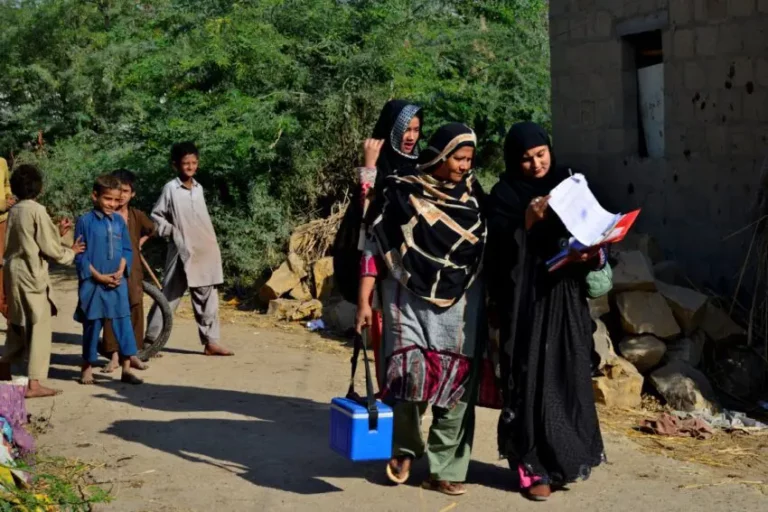
    In the face of a barrage of questions over the re-emergence of polio, health authorities in North Waziristan say that vaccination teams were pressured by parents and villagers to falsely mark vaccinations.

    The reporting of two cases of children with polio in North Waziristan in the month of April is a major setback, especially since no new cases were reported during the preceding 15 months. The World Health Organisation says that polio remains endemic in Pakistan and war-torn Afghanistan.

    Now, the North Waziristan Additional District Health Officer, Dr Shams has put the blame squarely on the vaccination teams. He said that local polio vaccination teams were marking children as immunized without bothering to administer them vaccine.

    Dr Shams told TNN that both the cases in the district were first since 2019. “The first case was reported from the Essuri area on 22 April while second case was reported from Mir Ali Shah Khadri area on 30 April,” he told journalists.

    Dr Shams said that two years old girl was crippled by the virus in the second case.

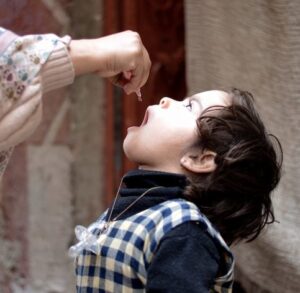
    He said that an emergency polio campaign has been undertaken in the district following the detection of the cases and children have been given injections, besides being administered polio drops.

    However, he added both the children were left out in past polio campaigns.

    He said that health authorities also held meetings with parents and area elders before the polio campaign. Besides, he added that another campaign will be launched later this month in the same area.

    Pakistan Polio Vaccination

    Parents refuse

    Parents have misgivings about the polio vaccine and are refusing to cooperate with polio vaccination teams to administer the vaccine, the official said.

    He cited the instance of a village named Khadri, with a population of hundreds of children, where parents were not allowing their children to be inoculated or vaccinated.

    “During polio campaigns, these parents forced the polio vaccinators to mark their children as vaccinated,” he said. Besides, he added that the locals used to coerce the parents into fake markings.

    On the other hand, he added, monitoring teams rarely ventured into the area for security reasons. However, he added that the recent immunization drive achieved complete vaccination with the cooperation of the law enforcement agencies.

    Dr Shams said that type WPV was present in Bannu and its environs for past many years and its presence was also detected in environmental samples collected from the area.

    He said the district had reported nine cases earlier in April 2009 while two more cases were reported last month.

    Khyber Pakhtunkhwa reported 22 polio cases in 2020 and no case was reported earlier last year.

    Fake markings

    Dr Ayub Rose, Khyber Pakhtunkhwa’s former Director General Health too said that the affected children had neither received polio nor other vaccines.

    He said that with no polio cases reported for over 15 months had given hope of Pakistan being declared polio free after three years. However, he regretted that people were falling for propaganda and were not inoculating their children.

    Dr Rose said that emergence of polio cases in Pakistan and particularly in Pashtun belt was a worrying sign and that the fake marking remained a major issue in polio campaigns.

    He said that to overcome this issue, health authorities have introduced a tracking system in six districts of southern Khyber Pakhtunkhwa and this has been giving good results.


    Abdul Sattar is a journalist based in Khyber Pakhtunkhwa, North-West Pakistan.

    Image: UNICEF

    Can AI-Designed Super Enzyme End Plastic Pollution Crisis?

    The latest developments in plastics research offer hope. Researchers at the University of Texas have developed a super enzyme termed as hydrolase that can break down plastic in 24 hours, offering an effective way to tackle plastic pollution.

    By Tara Nair

    Last month, scientists at the Vrije Universiteit Amsterdam made a startling discovery – microplastics were detected in the blood samples of 80 per cent of the people tested for research. While plastic particles have earlier been detected in fish and other sea organisms, this was the first time that they were detected in human blood. The study showed that these particles may move freely around the body and lodge themselves in any of the organs. While its impact on health is yet to be ascertained, researchers are worried these particles could result in millions of early deaths every year.

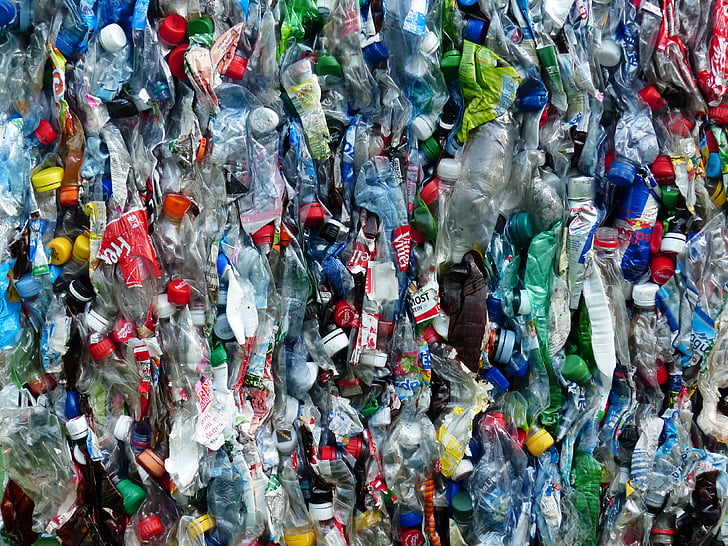
    The latest developments in plastics research offer hope. Researchers at the University of Texas at Austin have developed an enzyme that can break down plastic in 24 hours, offering a way to tackle the plastic waste crisis, say media reports. The scientists used artificial intelligence to produce an enzyme named hydrolase which can break down polyethylene terephthalate or PET, a common kind of plastic which comprises more than 12 per cent of the solid waste in the world.

    Plastic microplastic pollution solid waste

    A solution

    Apart from problem of tackling the waste, this enzyme could also help companies recycle their products, helping create a circular plastics economy, according to a paper titled ‘Machine learning-aided engineering of hydrolases for PET depolymerization’, published last week in peer-reviewed journal Nature.

    The earlier efforts to break down plastics using enzymes were not as successful because such chemicals are vulnerable in certain pH ranges and temperatures. The new enzyme does not have this drawback. The researchers claim that the enzyme could clean up landfills and dumping sites when used in ample quantities.

    The world produces at least 400 million tonnes of plastic waste a year. Annual plastic production is expected to touch 1,100 million tonnes by 2050. More than a third of the global plastic output is used for packaging. Around 85 per cent of this ends up in landfills and a large quantity ends up in water bodies. More than 8 million tonnes of plastic waste enter the oceans every year. The waste breaks down into microplastic particles and enter living organisms through food, water and air.

    In a landmark development in March, 175 United Nations members agreed to sign a global agreement to tackle plastic pollution. The treaty is expected to tackle excess supply of plastics which are produced primarily by the hydrocarbon industry.


    This piece has been sourced from Policy Circle — policycircle.org

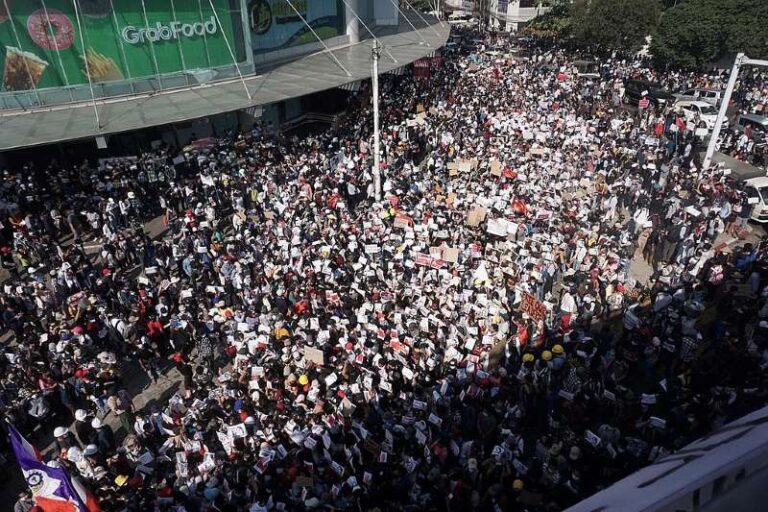
    Finding a Pathway Out of Genocide for Mynmar’s Rohingya

    On 21 March 2022, US Secretary of State Antony Blinken announced that the United States has determined that the acts committed against the Rohingya minority in 2017 constitute genocide and crimes against humanity. This determination draws attention to the systematic and large-scale atrocities committed under the Myanmar military (the Tatmadaw) and strengthens international pressure on the military regime that staged a coup in February 2021.

    By Cecilia Jacob

    In 2017, the Tatmadaw, air force, police force and armed civilians engaged in a systematic campaign of violence against the Rohingya. This included arbitrary arrest, torture, sexual violence, killing and forced displacement. Over 700,000 Rohingya were forced to flee and at least 362 villages were partially or completely destroyed.

    Genocide is a term given to the systematic and widespread targeting and killing of a population with the ‘intent to destroy, in whole or in part, a national, ethnic, racial, or religious group’. Since it acceded to the Genocide Convention in 1988, the US government has only recognised eight situations as genocide, including this most recent determination. US President Joe Biden has labelled Russian President Vladimir Putin a war criminal on multiple occasions. Recently, Biden accused Putin of committing genocide in Ukraine. Although not an official determination, the Myanmar case is of interest beyond Myanmar given the proactive stance of the current US administration in calling out states for mass atrocities.

    From a legal standpoint, the benchmark for determining genocide is higher than for crimes against humanity and war crimes, as proving intent as part of an organised policy of extermination requires demanding evidence. Yet the crime of genocide has a particular resonance given its association with exceptional cases of brutality such as the Holocaust and the Rwandan genocide.

    Responsibility to protect

    The determination that a mass atrocity situation constitutes genocide is rare and implies political and moral responsibility for the United States to act — a key reason for restraint in making this determination. But what these actions should entail is indeterminate.

    The United States will need to manage expectations that arise from its determination. Expectations are particularly strong from the population of Myanmar. Civilian protesters against the February 2021 military coup have invoked the Responsibility to Protect doctrine in calling for international assistance. The coup was led by the same general, Min Aung Hlaing, who was responsible for the 2017 Rohingya genocide — a link that will not go unnoticed by the active civilian opposition groups in Myanmar.

    The US position, a response to calls from civil society and experts and its own investigations, will encourage members of the international community to take a stronger stance in calling out the Myanmar regime’s abuses. The US response to date, as with its Western counterparts, has been limited to sanctions, arms embargoes, humanitarian assistance and pressing for accountability. Unlike the situations in Ukraine and Syria, Washington has not provided military support to the armed opposition that would likely escalate the conflict and destabilise the country.

    The genocide determination is unlikely to change that. But the United States followed its statement with a series of measures to pressure the military regime in Myanmar, including stepping up sanctions to cut arms supplies.

    It has committed nearly US$1 million in new funding for the UN Independent Investigative Mechanism for Myanmar, which has already concluded that crimes against humanity falling within its mandate have likely been committed in Myanmar. By boosting capacity to investigate international crimes committed by the Tatmadaw, the additional funding will help provide concrete evidence required for legal proceedings against Myanmar’s military leaders.

    Landmark moment

    Current proceedings underway to hold Myanmar’s top generals accountable include a case brought by The Gambia at the International Court of Justice charging Myanmar’s military leaders with genocide and ongoing investigations into allegations of war crimes at the International Criminal Court. Another case is underway in Argentina’s domestic courts under the principle of universal jurisdiction to try Myanmar’s military for genocide against the Rohingya.

    Despite the progress made through formal accountability mechanisms, the situation for civilians in Myanmar is dire. The civilian opposition-led National Unity Government has called for a ‘People’s Defensive War’, which has resulted in nationwide conflict between the military and armed civilian opposition groups, with some support from ethnic armed organisations. Navigating this terrain to find a ‘pathway out of genocide’ as Blinken advocates will not be straightforward.

    Rohingya testimonies of the brutality and terror they experienced at the hands of the Tatmadaw are conscious-shocking. Despite the lessons of 2017, the international response to the 2021 coup has been lukewarm, failing again to prevent ongoing human rights abuses.

    The US determination is a landmark moment. The United States has taken a clear moral stance by calling out the brutality committed by Myanmar’s military for what it is — genocide and crimes against humanity. Other countries should follow the example set by it and other states such as The Gambia and Argentina.

    The pathway out of genocide will require coordinated international measures to cut off the Myanmar military regime from funding, weapons, legitimacy and political support. Achieving this in a geopolitically divided international arena — when the world’s attention remains fixed on Russia and Ukraine — is a significant challenge.


    Cecilia Jacob is Associate Professor in the Department of International Relations at the Coral Bell School, The Australian National University. She edits the journal Global Responsibility to Protect.

    This piece has been sourced from the East Asia Forum of the Australian National University.

    Image: Wikimedia