More

    Red Cross Fund Document Takes Note of Civil Unrest in Sri Lanka

    The Red Cross aid document has called this a fund for civil unrest – though the grant document alludes to the unrest being a civil society protest. The document says that the social and economic context is highly volatile in Sri Lanka.

    The European Union (EU) will provide 200,000 Euros in humanitarian aid to Sri Lanka to support vulnerable families affected by the country’s ongoing economic crisis, the EU Delegation to Sri Lanka and Maldives said.

    The fund will give priority to pregnant women, children, people with disabilities, women-headed households and people who have become vulnerable due to the crisis, a statement from the EU Delegation said.

    “The current political and economic crisis has resulted in shortages of essential commodities, including of medicines, and has reduced the ability of thousands of families to cater for their basic needs,” the delegation said.

    “Many children have also seen their education disrupted due to power cuts and lack of stationery items.”

    Red Cross IFRC disaster relief emergency funds Sri Lanka

    Red Cross Fund

    The funding complements a Disaster Relief Emergency Fund (DREF) provided by the International Federation of Red Cross and Red Crescent Societies (IFRC).

    A DREF grant is a soft aid, not necessarily refundable, was released mid-April. The amount of CHF 691,002 released by IFRC works out to approximately 25 crore Sri Lankan Rupees (or 5.4 crore Indian Rupees) and will assist 400,000 people or about 80,000 families in all districts across Sri Lanka. 4,000 families will be provided with cash grants to the tune of CHF 65 to fulfil their basic needs within a month of providing the grant.

    The DREF grant also allocates CHF 10,000 for consultants from the total grant money. A small amount of CHF 4,555 has also been kept aside for meeting the needs of volunteers.

    The work to make this DREF grant operational on the ground will be carried out by the Sri Lana Red Cross Society (SLRCS).

    “In this scenario of an impending humanitarian catastrophe where the vulnerable are made more destitute and helpless, the Sri Lanka Red Cross Society intends to intervene to mitigate suffering,” SLRCS says.

    There is scope for DREF grants to be followed by an Appeal for aid in cash, kind and services. It is not clear, however, if an appeal will be launched because major donors are prioritising the crisis in Ukraine.

    IFRC Red Cross disaster relief emergency fund Sri Lanka protest civil unrest


    Civil unrest. Volatile

    The Red Cross DREF document has called this a fund for civil unrest – though the grant document alludes to the unrest being a civil society protest, a wording necessitated by the Red Cross’ apolitical nature.

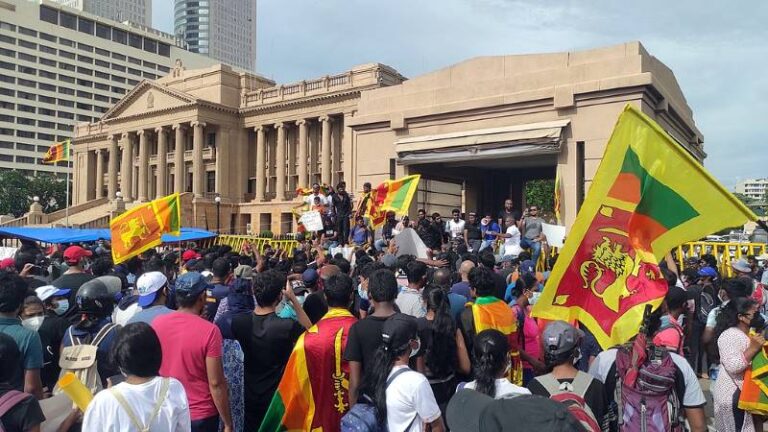
    “A major civil society protest was organized in Colombo in front of the Presidential Secretariat, demanding the President’s resignation,” the document says, adding that “The social and economic context is highly volatile within the country.”

    Sri Lanka is going through its worst economic crisis in its 74-year post-Independence history with commodity prices sky-rocketing.

    Pakistan Government Announces Inquiry Commission to Probe Imran’s Foreign Conspiracy “Drama”

    A series of media addresses by ministers of the Shehbaz Sharif government on Thursday reveal pincer-like moves to attack former Prime Minister Imran Khan.

    Thursday saw an all-out attack on Imran Khan by four ministers of Prime Minister Shehbaz Sharif’s government, revealing a method to the attacks on the former Pakistan cricket captain and former prime minister.

    The day began with Minister for Poverty Alleviation, Shazia Merri calling out Khan’s political agenda against the ruling Pakistan Muslim League-N, ridiculing him for the small gatherings at his campaign to grab power.

    Hours later, Khurram Dastigar Khan, the country’s energy minister told television reporters to say Imran Khan’s government was to blame for high inflation and a damaged economy.

    He said that the PTI has left behind massive current account deficit and many power plants were closed down due to weak policies.

    Then, as if on cue, senior minister and minister for Parliamentary Affairs, Murtaza Javed Abbasi called the press to describe the three-and-a-half years of Imran Khan’s government as the darkest period in the country’s history.

    He said that the previous government was led by an incompetent and corrupt gang of looters that destroyed every sector of government, setting “the record highest debt” and damaging the economy.

    Icing on the cake

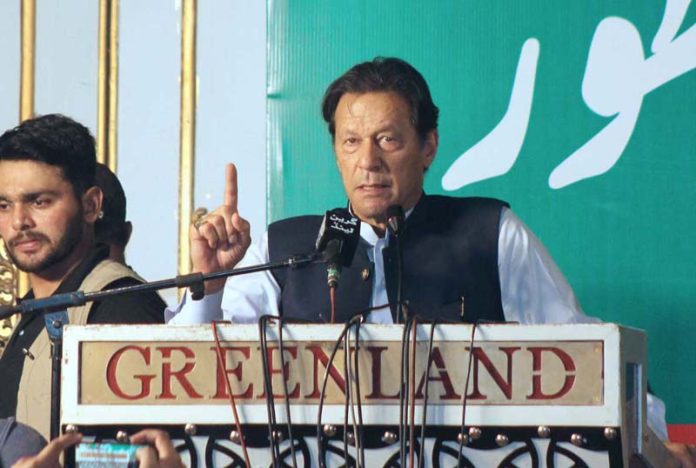
    The, late towards the evening, with an eye on the television debates, Information Minister Marriyum Aurangzeb went full blast, announcing that government had decided to constitute an inquiry commission to probe the foreign conspiracy drama orchestrated by Imran Khan.

    Marriyum told a news conference that the reason behind Khan’s campaign and his only concern was to protect his front person, Farah Gogi who indulged in corrupt practices during the “fascist, autocratic, corrupt and incompetent rule of Pakistan Tehreek-e-Insaf (PTI).”

    The information minister said that the terms of reference and the names of the people on the inquiry commission would be announced after the next cabinet meeting, going hammers and tongs on how Imran Khan weaved a conspiracy against the country to save his “benami”, Farah Gogi.

    She said there was plenty evidence of massive financial irregularities committed by Imran and his front persons while establishing the Al-Qadir University in the name of Riyasat-e-Medina.

    “It is high time for bringing the politics of allegation and lies to an end. The inquiry report will be put before the public and those who used to hurl allegations on others will be taken to the court,” she said while announcing action against the PTI leadership involved in harming the national interest.

    The minister alleged that over Rs 840 million were transferred in 44 bank accounts held by Farah Gogi, who also got prized land allotments in Punjab.

    The minister referred to the country’s poor ranking by international NGO, Transparency International. Pakistan ranked 140 in the organisation’s 2021 report, she said, pointing to the corruption-marred rule of Imran with Gogi as his front person.

    She termed the report an international certificate for the thieves who, she alleged, stole precious gifts from Tosha Khana and looted the national treasury.

    General Strike In Sri Lanka Today Demanding President Rajapaksa to Step Down

    A general strike, or hartal is underway across Sri Lanka since this morning. Shops have not opened since the morning and black flags have been put up in marketplaces in protest. In villages and smaller towns too, Sri Lankans have taken to the streets. The forms of protests vary, including cooking on streets.

    A country-wide daylong general strike or hartal has been called by about 2,000 trade unions and market associations in tandem with opposition lawmakers in Sri Lanka today. The striking unions have joined the opposition to demand that President Gotabaya Rajapaksa and his government step down.

    One person has been shot at by the police and roads leading to the Parliament, the President’s residence and other strategic spots have been cordoned off by the police, putting these places out of bound for the general public and the strikers.

    Shops have not opened since the morning and black flags have been put up in marketplaces in protest. In villages and smaller towns too, Sri Lankans have taken to the streets. The forms of protests vary, including cooking on streets.

    Today’s hartal comes with significant political connotations. It echoes a similar island-wide ‘hartal’ 69 years ago in Sri Lanka in 1953 and coincides with Gotabaya Rajapaksa’s 69 million votes in the presidential election.

    Strikers say that if the President and his government do not step down, all work in the country will be suspended indefinitely beginning May 11 with the commencement of an island-wide hartal.

    Services come to standstill

    Almost every service sector, including shops, transport, banking, health, power and education are observing the 24-hour hartal.

    Ravi Kumudesh, convenor of the union alliance and Sri Lankan representative of the international trade union IndustriAll told reporters that the strikers would also be joined by the railway union alliance, teachers and principals union as well as the Ceylon Bank Employees’ Union.

    “We have decided to support the hartal tomorrow by going on a one-day strike. We have more than 18 state and private banks and also unions of the central bank with us. They have confirmed their participation and as a result all banks and their branches will be closed tomorrow,” a spokesperson for the Ceylon Bank Employees’ Union said.

    The health workers joining the strike include nurses. The Sri Lankan Nurses Association and also the country’s Public Health Officers Union has announced their support for the hartal. A spokesperson for the two unions requested the general public not to come to health centres, except in case of emergencies.

    Ravi Kumudesh also claimed that even fishers would not go out to sea on the day, joining the hartal.


    Image: Wikimedia / AntanO

    14.9 Million Excess Deaths Due To COVID-19 Pandemic in 2020 and 2021: WHO Study

    The methods were developed by the Technical Advisory Group for COVID-19 Mortality Assessment and rely on a statistical model derived using information from countries with adequate data; the model is used to generate estimates for countries with little or no data available.

    New estimates from the World Health Organization (WHO) show that the full death toll associated directly or indirectly with the COVID-19 pandemic between 1 January 2020 and 31 December 2021 was approximately 14.9 million (or almost 1.5 crore people).

    According to WHO, the numbers of people who died due to COVID-19 in 2020 and 2021 hover anywhere between 13.3 and 16.6 million. In short, this is almost thrice the number of deaths attributed to the disease so far.

    The full death toll associated directly or indirectly with the COVID-19 pandemic is defined as an excess mortality, experts explain, reasoning that many deaths attributable to the pandemic were not counted as COVID-19 deaths.

    Excess mortality is calculated as the difference between the number of deaths that have occurred and the number that would be expected in the absence of the pandemic based on data from earlier years. Excess mortality includes deaths associated with COVID-19 directly (due to the disease) or indirectly (due to the pandemic’s impact on health systems and society).

    “These sobering data not only point to the impact of the pandemic but also to the need for all countries to invest in more resilient health systems that can sustain essential health services during crises, including stronger health information systems,” said Dr Tedros Adhanom Ghebreyesus, WHO Director-General.

    Deaths linked indirectly to COVID-19 are attributable to other health conditions for which people were unable to access prevention and treatment because health systems were overburdened by the pandemic. The estimated number of excess deaths can be influenced also by deaths averted during the pandemic due to lower risks of certain events, like motor-vehicle accidents or occupational injuries, the global health body said in its statement.

    Includes India

    Most of the excess deaths (84 per cent) are concentrated in South-East Asia, Europe (in WHO administrative parlance, a region including India), and the Americas. Some 68 per cent of excess deaths are concentrated in just 10 countries globally.

    Middle-income countries account for 81 per cent of the 14.9 million excess deaths (53 per cent in lower-middle-income countries and 28 per cent in upper-middle-income countries) over the 24-month period, with high-income and low-income countries each accounting for 15 per cent and 4 per cent, respectively.

    The estimates for a 24-month period (2020 and 2021) include a breakdown of excess mortality by age and sex. They confirm that the global death toll was higher for men than for women (57 per cent male, 43 per cent female) and higher among older adults. The absolute count of the excess deaths is affected by the population size.

    The number of excess deaths per 100,000 gives a more objective picture of the pandemic than reported COVID-19 mortality data.

    “Death is of course an important health outcome, and measurement of excess mortality is an essential component to understand the impact of the pandemic. Shifts in mortality trends provide decision-makers information to guide policies to reduce mortality and effectively prevent future crises. Because of limited investments in data systems in many countries, the true extent of excess mortality often remains hidden,” said Dr Samira Asma, Assistant Director-General for Data, Analytics and Delivery at WHO.

    “These new estimates use the best available data and have been produced using a robust methodology and a completely transparent approach.”

    Based on data

    The production of these estimates is a result of a global collaboration supported by the work of the Technical Advisory Group for COVID-19 Mortality Assessment and country consultations. The group, convened jointly by the WHO and the United Nations Department of Economic and Social Affairs (UN DESA), consists of many of the world’s leading experts, who developed an innovative methodology to generate comparable mortality estimates even where data are incomplete or unavailable.

    “Data is the foundation of our work every day to promote health, keep the world safe, and serve the vulnerable. We know where the data gaps are, and we must collectively intensify our support to countries, so that every country has the capability to track outbreaks in real-time, ensure delivery of essential health services, and safeguard population health,” said Dr Ibrahima Socé Fall, Assistant Director-General for Emergency Response.

    This methodology has been invaluable as many countries still lack capacity for reliable mortality surveillance and therefore do not collect and generate the data needed to calculate excess mortality. Using the publicly available methodology, countries can use their own data to generate or update their own estimates.

    Stefan Schweinfest, Director of the Statistics Division of UN DESA, added: “Data deficiencies make it difficult to assess the true scope of a crisis, with serious consequences for people’s lives. The pandemic has been a stark reminder of the need for better coordination of data systems within countries and for increased international support for building better systems, including for the registration of deaths and other vital events.”

    In Sri Lanka, Things Fall Apart

    Although the protesters are now demanding that the whole Rajapaksa family pack their bags and quit, the main target quite rightly is President Gotabaya. It was his military arrogance – having played a role in the defeat of the separatist LTTE in 2009, under the leadership of his president brother Mahinda – and his ignorance of politics and governance, and over-reliance on incompetent advisers that started the economic rot.

    By Neville de Silva

    When I ended last month’s column hoping that April would not prove to be hapless Sri Lanka’s ‘cruellest month’ (in the words TS Eliot), I hardly anticipated the current turn of events.

    In April, the country was to celebrate several ethno-religious festivals. The biggest among them was the Sinhala and Tamil New Year, celebrated by Sri Lanka’s majority community and its main minority. It was also the Muslim month of Ramadan and Easter, commemorated by the Christians.

    For over one-and-a-half years Sri Lanka had been grappling with a fast-failing economy. The dwindling of foreign reserves and the consequent shortages of food, medicines, fuel, gas and kerosene for cooking were more recently compounded by power cuts, at times as long as 12 hours per day, bringing manufacturing industries to a standstill and forcing businesses to close down early.

    With the country struggling to avert bankruptcy and an unprecedented rise in inflation and spiralling commodity prices, many working-class families, daily wage earners and farmers were facing penury and starvation.

    Against this dire background Sri Lanka’s 22 million people were anxiously preparing for the April festivities, wondering whether there would be anything to celebrate.

    Then it happened

    On March 31 the residents of Mirihana, a middle- class town on the outskirts of Colombo, held a candle-light protest to highlight the daily power cuts that disrupted their family activities. The protest, initially by women, attracted passers-by and huge crowds from neighbourhood towns and residential areas as President Gotabaya Rajapaksa lived in Mirihana in his private residence.

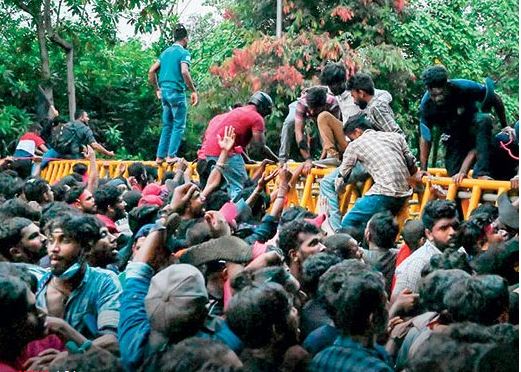
    Swelling crowds shouting slogans later clashed with police firing tear gas and water cannons to break up the demonstration, but many of the protestors held their ground till the next day.

    The Mirihana protest has sparked the island-wide conflagration that now has the once all-powerful Rajapaksa family-run government teetering on the wall like Humpty Dumpty awaiting a splintering fall. It will remain an important landmark in this uprising, which some have called, rather erroneously, Sri Lanka’s ‘Arab Spring’.

    Mirihana began the assault against the Rajapaksa fiefdom that once seemed impregnable. Gotabaya Rajapaksa is president. Brother Mahinda, who served two terms as president, is currently prime minister. Another brother, Basil, a dual citizen with US citizenship and a home in Los Angeles, was until last month finance minister, and the eldest brother Chamal holds the post of irrigation minister and state minister of security. Mahinda’s eldest son Namal, whom his father sees as heir apparent, was sports and youth affairs minister, among other portfolios.

    It appears that the prime minister suspects he is going to be sacrificed on the altar of expediency

    Together, the family reportedly controlled 72 per cent of government resources, free to use as they deemed fit, even to farm off to their acolytes and business friends in the way of government contracts and import monopolies, even during the COVID-19 pandemic.

    Today, however, that fortress of power and privilege appears as exposed as France’s Maginot Line, set to crumble against a German Blitzkrieg.

    All the Rajapaksas, except Prime Minister Mahinda, lost their positions last month when President Gotabaya suddenly dissolved the cabinet in a desperate attempt to quell the mounting outrage against him. It seemed a weak moral sidestep, for the protesters’ cry was not only against the president but against the entire Rajapaksa family, which they claimed had dipped their hands into the country’s assets for personal gain.

    Mirihana lit the fuse for the enormous protest that flared up at Colombo’s beach-front Galle Face Green, right opposite the Presidential Secretariat from where political power radiated. It was this that breached the Rajapaksa citadel.

    Gota Go Home

    At the time of writing, this protest – which shows signs of unifying the country’s multiracial, multi-religious society and has drawn crowds of all ages and a wide cross-section of the Sri Lankan community, including the professional classes – has entered its 17th continuous day, with hundreds of protesters camped there day and night despite the heat and rain.

    Yet it is no Arab Spring. It is an orderly, non-violent protest, mainly of youth of all shades, with an inventive genius to keep themselves and their cause alive.

    Never in Sri Lanka’s 74 years of post-independence history has the country seen anything like this, even though anti-government protests are nothing new to the country, which has seen Leftist political parties and associated trade unions functioning even under British colonial rule.

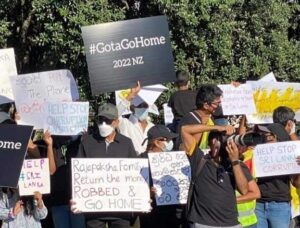
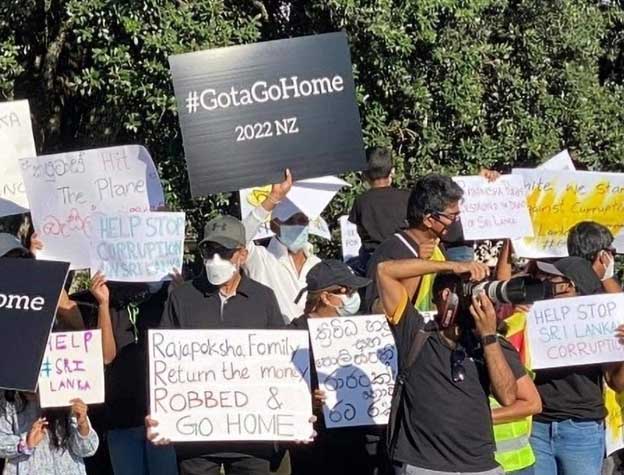
    The main rallying slogan is ‘Gota Go Home’, telling Gotabaya to return to his home – also in Los Angeles – though he relinquished his US citizenship to be eligible to contest the presidential election in November 2019.

    Built round that slogan are a myriad other satirical comments in song, verse, caricatures, cartoons and videos, the creative work of the protesters deriding the Rajapaksas, some demanding they return the country’s supposedly stolen assets and otherwise accumulated wealth in tax havens.

    Although the protesters are now demanding that the whole Rajapaksa family pack their bags and quit, the main target quite rightly is President Gotabaya. It was his military arrogance – having played a role in the defeat of the separatist Liberation Tigers of Tamil Eelam (LTTE) in 2009, under the leadership of his president brother Mahinda – and his ignorance of politics and governance, and over-reliance on incompetent advisers that started the economic rot.

    Economists urged for IMF assistance

    With a group of retired and serving military men appointed to key civilian positions and a coterie of so-called intellectuals and businessmen as advisers, he plunged head-first into economic policy decisions.

    Within a few days of assuming office, he had slashed VAT from 15 per cent to 8per cent and abolished some other taxes that cost the state a whopping 28 per cent in revenue. It led the Central Bank to print money feverishly to meet budgetary commitments, causing inflation.

    Also disastrous was the overnight decision to ban chemical fertilisers that drove farmers to burn effigies of ministers and demonstrate on the streets, demanding restitution of their fertiliser needs or face food insecurity in the months ahead, forcing a once adamant president to retract.

    While economists had foreseen the impending danger in depleting foreign reserves and international debt repayments this year, and hence urged the government seek IMF assistance, the president clung steadfastly to the advice of the Central Bank Governor and the Treasury Secretary, among others, who dismissed the idea for more than one year even ignoring cabinet support for IMF help.

    In a belated gesture, President Gotabaya sacked the two officials immediately after replacing his cabinet with younger, untested MPs. He sent his new finance minister to Washington to plead with the IMF for immediate relief.

    Rift in the family

    The president is hoping for political concessions he has agreed to – including returning to parliament and the prime minister powers that he usurped on coming to office through the 20th constitutional amendment. He has now agreed to form an interim All Party government.

    But one sees a growing rift in the once close-knit family. Names proposed by Prime Minister Mahinda for the new cabinet were ignored by his brother, causing the prime minister to boycott the swearing-in of the new ministers.

    If the president opts for an interim government, it means he has decided to stay put but call for the prime minister’s resignation. It would appear that the prime minister suspects he is going to be sacrificed on the altar of expediency.

    In an interview the other day, Prime Minister Mahinda Rajapaksa insisted that he will not resign and any reconstituted government must be under his leadership. In the meantime, he has been trying to whip up support against his ouster by canvassing MPs to muster the required 113 votes.

    How the protesting public will react to all these political manipulations will depend on what is on offer. Right now, they are determined to continue until President Gotabaya surrenders, which seems unlikely.


    Source: Asian Affairs, London, courtesy Inter Press Service

    Neville de Silva is a veteran Sri Lankan journalist.

    Image:   Inter Press Service

    India’s Own Home-grown ONDC Looks to Break Amazon-Flipkart Duopoly in E-Commerce

    The upcoming desi e-commerce platform, ONDC, aims to bring on board 10 million merchants and 30 million sellers in 100 cities by August.

    By Prachi Gupta

    The Indian government is all set to launch an open network for digital commerce to take on the Indian arms of Amazon and Walmart that dominate the $73 billion domestic e-commerce market. The ONDC platform will allow buyers and sellers to transact with each other online irrespective of the applications used by them.

    The platform will launch its operations in five cities initially and will later expand to 100 cities by August, bringing on board 10 million merchants and 30 million sellers. Venture capital firms and top banks have committed to pump in funds to develop the platform. And leading the effort is Nandan Nilekani, co-founder of Infosys and chairman of the Unique Identification Authority of India, which developed Aadhar, the world’s largest biometric identification system.

    India’s retail market is worth at least $1 trillion, but it is highly fragmented. E-commerce is just a small fraction of this fast-growing market. Amazon and Flipkart together have invested $24 billion to capture the market. The multinational players that together control half of India’s e-commerce trade are accused of using their duopoly position to squeeze supplier margins and of giving preferential treatment to some sellers. The e-commerce market is expected to touch $188 billion by 2025.

    Challenging Amazon, Flipkart

    ONDC will look to create a level playing field for millions of merchants and small retailers who are losing ground to Amazon and Flipkart. The dominant players Amazon and Flipkart are accused of using predatory pricing to put small traders out of business. The Competition Commission of India, India’s antitrust watchdog had conducted a series of raids on the premises of sellers of Amazon and Flipkart amid charges of breaches of the competition laws of the country.

    The ONDC network is being developed by the commerce ministry and will support segments such as grocery, food delivery, hotel booking and air travel. The platform will back micro, small and medium enterprises as well as small traders.

    The government looks to repeat the success of UPI that brought the country’s lenders on a unified platform and created a system for person-to-merchant payments. However, developing technology to bring a wide range of players from Kirana stores and FMCG manufacturers to local restaurants is a huge challenge. The quality of the network is key to weaning away consumers from world-class platforms to the ONDC platform.

    Apart from Nilekani, the advisory council of ONDC has RS Sharma, Adil Zainulbhai, Anjali Bansal, Arvind Gupta, Dilip Asbe, Suresh Sethi, Praveen Khandelwal, and Kumar Rajagopalan as members.


    Prachi Gupta is an Assistant Editor with Policy Circle.

    This piece has been sourced from Policy Circle — policycircle.org

    Unravelling the Controversies of Chinese Foreign Aid

    Chinese policy has aimed for the expansion of common standards for global economic and social development. In Chinese theory and practice, this is achieved through connectivity between countries and multi-layered global governance.

    By Jing Gu  /  Institute of Development Studies

    China’s growing role as a provider of development assistance, and the broader impact of its international economic engagement, has been the subject of considerable interest both within and outside China. The question of whether Chinese development policy is about cooperation or competition has fascinated the world. Whether their intentions are benevolent or power driven often dominates discussions. China’s new aid and security pact with the Solomon Islands is the latest case to raise the question of whether Chinese aid is developmental or a political.

    Over the past decade, the concepts and policies of China’s development strategy have evolved dramatically. Since 2013, the volume and geographical coverage of Chinese foreign aid has increased steadily, marking a new era in development cooperation. From 2013 to 2018, China provided more than 27 billion RMB (US$ 4 billion) to other developing countries. Since the beginning of the COVID-19 pandemic, China has provided humanitarian aid, in the form of personal protective equipment, vaccines and medical teams, to 53 African countries and the African Union.

    China began providing assistance to developing countries in the 1950s. But aid is only a small part of China’s development cooperation, which also entails trade, loans and capital investments. Beijing’s 2021 White Paper lists technical cooperation, debt relief and projects as major forms of Chinese aid. Of these foreign assistance projects, most of the money is spent on economic infrastructure, followed by industry, energy and resource development, agriculture and developmental peace collaboration including United Nations peacekeeping operations.

    Policy frameworks

    China’s approach to global development has been shaped by two important policy frameworks on development in recent years. The 14th Five Year Plan, adopted in March 2021, focussed on the concepts of high-quality, sustainable growth and green development.

    The second key policy framework is China’s ‘people-centred’ ‘new development philosophy’. The Global Development Initiative (GDI) and the Global Security Initiative (GSI) — intended to uphold the principle of ‘indivisible security’ — were proposed by Chinese President Xi Jinping on 21 September 2021 at the 76th United Nations General Assembly and the Boao Forum for Asia Annual Conference on 24 April 2022. Initially, the GDI was understood as an extension of previous projects such as the Belt and Road Initiative (BRI) announced in 2013.

    But both the GDI and the GSI are different in that they respond to emerging changes in the international sphere. They are designed to address significant challenges emerging from climate change, the COVID-19 pandemic, tensions between China and the West, and the United Nations 2030 Sustainable Development Goal.

    To reflect these changes, China established the Centre for International Knowledge on Development in August 2017. The purpose of the Centre is to research and communicate Chinese development knowledge. The Centre also researches the international competitiveness of other countries’ manufacturing capacity, financial stability, environmental sustainability and global public goods.

    These rapidly evolving activities present both internal and external challenges for China and the world. The way in which these challenges and knowledge gaps are addressed will not only determine China’s internal governance on development issues, but also its external activities and initiatives.

    Developmental peace

    Tension between the West and China has arisen over China’s approach to international development and Chinese multilateralism. These tensions are also evident in the case of development finance. But Chinese innovation in multilateralism and development is a complex picture. The Asian International Investment Bank clearly represents China’s wish to operate within the existing system of international development banking but, at the same time, achieve innovative changes.

    The Bank closely follows Western concepts of organisation and rules and has achieved a great deal of Western participation. Its success depends on its credibility in world financial markets. It does not provoke significant criticism despite its departure from the institutional model of the World Bank and other regional development banks.

    Developmental peace is another area of disagreement between China and the West. Disputes arise over whether economic rights have priority over political rights in the context of the Global South. While China does not formally prioritise economic rights, in practice they consider peace and stability in the Global South to be a key part of sound economic infrastructure and stable social development.

    China is militarily involved in United Nations peacekeeping, but it does not involve itself in the development of political institutions, as it considers this to be a matter of domestic concern. But the logic and language of security and capital have changed over the last three years. Increasingly, peace and security dominate China’s development policy discourse.

    Common standards

    China’s approach to international development and multilateralism is underscored by efforts to avoid the ‘Thucydides trap’, a situation in which war is likely to break out as one great power displaces another. China has attempted to steer away from this by promoting the philosophy of ‘a community with a shared future for mankind’.

    Chinese policy has aimed for the expansion of common standards for global economic and social development. In Chinese theory and practice, this is achieved through connectivity between countries and multi-layered global governance. But the terms and conditions of cooperation agreements are often very general, and depend upon continued collaboration between parties without independent adjudication.

    Clearly delineating the roles that the GDI, GSI and BRI can play in international development will provide clarity on China’s mission and help deliver its vision for the world.


    Jing Gu is a Senior Research Fellow, Director of the Centre for Rising Powers and Global Development and Director of the China Centre at the Institute of Development Studies.

    This piece has been sourced from the East Asia Review of the Australian National University.

    UN Continues Financial Ties with a Vilified Russia Isolated by the International Community

    Goods and services from Russia are primarily air transportation, mostly helicopters, including maintenance and servicing; information and communication technologies (ICT); and food catering, largely for the UN’s 12 peacekeeping missions.

    By Thalif Deen

    The Russian Federation, which invaded Ukraine last February killing scores of civilians and destroying entire cities, has been condemned, vilified and ostracized by the international community.

    UN Secretary-General Antonio Guterres was emphatic last month when he remarked: “The use of force by one country against another is the repudiation of the principles that every country has committed to uphold. This applies to the present military offensive. It is wrong. It is against the Charter. It is unacceptable”.

    And while the US and Western European nations have cut off all commercial and financial ties with Russia— treating Moscow as an international pariah– the UN Secretariat is continuing its multi-million-dollar contracts with a blacklisted Russia.

    Metaphorically speaking, it triggers the question: does the UN’s right hand know what its left foot is up to?

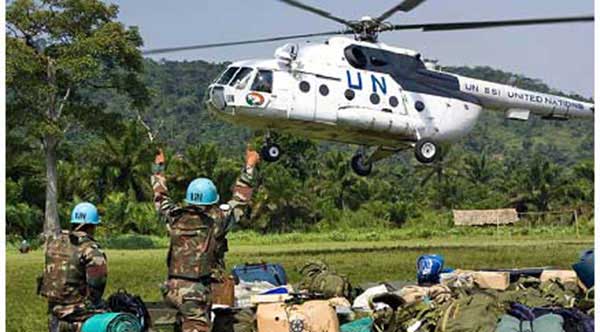
    The goods and services from Russia are primarily air transportation, mostly helicopters, including maintenance and servicing; information and communication technologies (ICT); and food catering, largely for the UN’s 12 peacekeeping missions.

    In accordance with mandate?

    Asked if the UN had received a letter from the Ukrainian Mission urging the Secretariat to end its procurements from Russia, UN Spokesperson Stephane Dujarric told reporters last month: “We did receive, earlier in March, a petition by the Permanent Mission of Ukraine to us, to quote, “immediately suspend all non essential procurement cooperation of the UN with the Russian Federation.”

    “We responded to the Permanent Mission of Ukraine a few days later that the procuring of goods and services and works by the UN Secretariat, is in accordance with the mandate given to us by the General Assembly and in [conformity] with the Financial Regulations of the UN, which requires such procurement actions to be done on the basis of best value for money, fairness, integrity and transparency, and effective international competition.”

    He also pointed out that “it’s no secret that a lot of our aviation procurement for peacekeeping and just logistics comes from the Russian Federation, with also quite a bit from Ukraine.”

    “The rules are set by the General Assembly, and we follow those rules. So, our position is set by the rules… the financial rules that we have… that we follow… The rules say procurement actions are done on the basis of best value for money, fairness, integrity and transparency, and effective international competition”.

    But the 193-member General Assembly, the UN’s highest policy-making body, is missing in action (MIA) — or perhaps planning to pass the buck to the UN’s Administrative and Budgetary Committee.

    Asked for a response to comments from the UN Spokesperson‘s office, Christian Saunders, Assistant Secretary General for Supply Chain Management at the Department of Operational Support, told IPS: “The information provided during the briefing by the UN spokesperson remains valid.”

    How will UN pay Russia?

    According to the latest available figures, the UN’s purchases from Russia amounted to about $115.6 million in 2021, with Moscow listed as the 5th largest supplier behind the US, United Arab Emirates (UAE), Kenya and Switzerland.

    The breakdown is as follows: US ($456.2 million), UAE ($329.3 million), Kenya ($192.4 million), Switzerland ($182.3 million) and Russia ($115.6 million).

    The UN also has trade links with Russia’s largest helicopter operator, UTair – Helicopter Services, described as a leading provider of aviation services to companies in the fuel and energy industries, plus the United Nations.

    Last year, the UN Procurement Division (UNPD) called for tenders for the following contracts in aviation procurement, where Russia has remained a front-runner.

    One Medium Fixed Wing Turboprop Passenger Aircraft Support of UNISFA for a period of one year Plus two optional extension periods of one year each.

    An Air Ambulance Aircraft Service with Guaranteed Availability based in Europe in support of UN Operations, for a period of three months, plus three optional extension periods of three months each.

    A second Air Ambulance Aircraft Service with Guaranteed Availability based in Accra, Ghana in support of UN Operations, for a period of three months plus three optional extension periods of three months each.

    Meanwhile, the approved budget for UN Peacekeeping operations for the fiscal year 1 July 2021 – 30 June 2022 is a staggering $6.38 billion. (A/C.5/75/25)—and payments to Russian contractors will flow largely from this budget.

    But one question cries out for an answer: how will the UN pay for these purchases and services when Russians have been barred from most of the international banking system?

    Right to procrastinate?

    Speaking of Russia’s isolation at the UN, US Ambassador Linda Thomas-Greenfield told reporters May 3: “We have been successful in isolating Russia in the Security Council, and that’s a significant success. We have been successful in unifying the voices condemning Russia in the General Assembly, but it came about because there was so much support for it in the Security Council. And getting 141 votes to support that effort was a significant success for all of us””.

    “And we have been successful in unifying the UN in suspending Russia from the Human Rights Council. Russia is isolated in the Security Council, and every time we have a discussion in the Security Council as it relates to Russia, they are on the defensive and we will continue to keep them on the defensive until they end their brutal attack on the Ukrainian people”.

    Last week Russia was suspended from the UN World Tourism Organization (UNETO), shortly after Moscow announced it had decided to quit in anticipation of the suspension.

    Ian Williams, President of the Foreign Press Association, told IPS it is difficult within the rule, but the UN can be notoriously slow in paying its bills which might be appropriate in this case.

    “But they do need an official body to bar contracts for Russian companies to protect staff involved and to ward off breach of contract. It is hard to leave it to the courage, or caprice, of UN bureaucrats”.

    The UN had no compunction in hiring a CIA founded company to run UN missions along the Iraq-Kuwait border despite Iraqi protests at the UN, said Williams, author of ‘Untold: The Real Story of the United Nations in Peace and War.’


    This piece has been sourced from Inter Press Service

    Image: UN

    Indonesian Palm Oil Export Ban Threatens Global Food Prices, Especially in India

    The ban on palm oil exports by Indonesia has upset global markets. India, the world’s biggest importer of palm oil, is set to be the hit worst following a ban on exports by Indonesia, the world’s biggest producer of palm oil.

    By Clara Rondonuwu  /  SciDev.Net

    Indonesia’s ban on the export of palm oil in a bid to bring down domestic cooking oil prices could prove counterproductive, warn analysts and industry representatives.

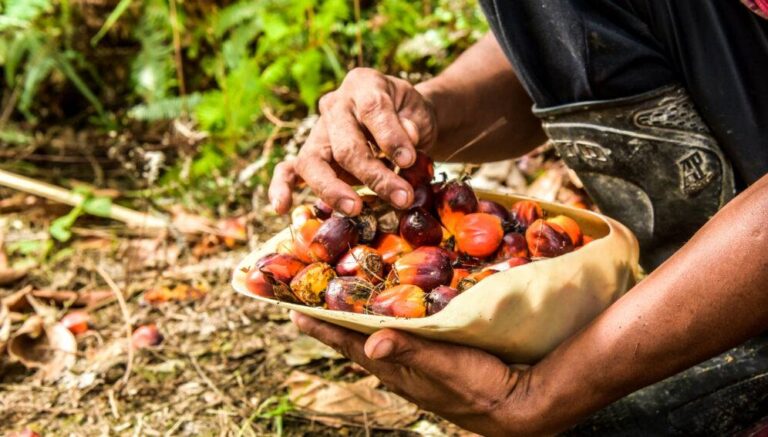
    Indonesia is the world’s biggest producer and exporter of palm oil. In 2021, it produced 46.2 million tonnes of the commodity accounting for over 60 per cent of the global supply. Malaysia ranks second accounting for 25 per cent. Mainly used as cooking oil, palm oil is also used as an ingredient in cosmetics and common household items such as soaps and detergents, and as biofuels.

    The Indonesian export ban on palm oil comes in as the world grapples with high cooking oil prices with the loss of sunflower oils following the conflict in Ukraine. The ban, effective from 28 April, aims to bring local cooking oil prices to 14,000 rupiahs (US$0.97) a litre. In Jakarta, bulk cooking oil is currently being sold at 19,000—20,000 rupiahs (US$1.31–1.38) per litre.

    Indonesian President Joko Widodo said in a statement that making cooking oil affordable (locally) was more important than dollar revenues. “Once domestic needs have been met, of course, I will lift the export ban because I know the country needs taxes… foreign exchange… a trade balance surplus, but meeting the people’s basic needs is a more important priority.”

    Immature policy

    However, the decision will hurt small farmers, says Rusli Abdullah, an economist with the Jakarta-based think tank Institute for Development of Economics and Finance. Already the prices of the fruit bunches have fallen by 50 per cent ahead of the Muslim festival of Eid al-Fitr.

    Rusli was critical of the “fickleness” of Indonesia’s export ban seen as an “immature policy” that “ignores existing data”.  On 26 April, Indonesia had announced that the ban would only cover refined, bleached and deodorised palmolein only to amend that the next day to cover other products as well.

    Previous attempts at taming domestic prices had also failed, Rusli emphasised. Early January, when local cooking oil prices soared, the government chose to subsidise packaged cooking oil, although most Indonesians prefer to buy cooking oil in bulk.

    It was only at the end of January that the subsidy switched to bulk cooking oil, though that too was temporary.

    Rusli opined that the government should ideally have regulated subsidies based on domestic bulk cooking oil consumption and the highest retail price set by producers and getting them to ensure that bulk cooking oil reaches the community at 14,000 rupiahs per litre. “This is similar to the scheme used by Malaysia and will ensure the availability of domestic cooking oil.”

    Rusli said Indonesia could be missing an opportunity to fill a global shortage of cooking oil caused by the war in Ukraine — a major producer of sunflower oil. Global commodity buyers have turned to palm oil as an alternative for the lost supply of sunflower oil. With the Indonesian export ban, other vegetable oil producing countries like Pakistan and Malaysia now stand to gain, he said.

    Devastating ban

    India, as the world’s biggest importer of palm oil, is naturally concerned at the development and the government has resorted to slashing import taxes on both crude palm oil as well as processed oil. According to the Independent Commodity Intelligence Services, India buys nearly nine million tonnes of palm oil annually, mainly sourcing the commodity from Indonesia.

    In February, the Indian government reduced import taxes on crude palm oil from 7.5 per cent to five per cent following up on a December 2021 order to reduce the import duty on processed palm oil to 12.5 per cent from 17.5 per cent.

    Global brands highly dependent on palm oils such as those in the food industry like Nestle, Unilever and most chocolate manufacturers, and cosmetics such as L’Oreal, are expected to be impacted by the ban and could see their cost rise, and possibly passed on to consumers if the ban continues.

    Meanwhile, the Indonesian palm oil association GAPKI said the industry was working with the government to ensure affordable cooking oil supplies, but urged authorities to avoid a lengthy and devastating ban on palm oil exports.

    “A total ban on the export of CPO and all its derivatives, if prolonged, will have a very negative impact on not only plantation, refinery and packaging companies, but also millions of smallholders,” GAPKI said in a statement.


    This piece has been sourced from SciDev.Net

    Image: Icaro Cooke Vieira / CIFOR (CC BY-NC-ND 2.0)


    Can Forests Undo Impact of COVID-19 Pandemic, Conflict?

    Trees can provide means for recovery and inclusive, resilient and sustainable economies, if action to unlock their potential is stepped up. For instance, the benefits of restoring degraded land through afforestation and reforestation could be similar to taking up to 325 million gasoline-powered passenger cars off the road each year.

    With the world facing multiple crises including, COVID-19, conflicts, climate crisis and biodiversity loss, our forests can help us recover from their impact, but only if we step up action to unlock their potential. In a key report launched today.

    The State of the World’s Forests Report 2022, launched on Monday by the Food and Agriculture Organization of the United Nations (FAO) has set out three pathways for unlocking the potential of the forests to recover from the multiple crises facing the world – halting deforestation; restoring degraded land while also expanding agroforestry and sustainably using forests and building green value chains.

    “The balanced, simultaneous pursuit of these pathways can help address the crises facing people and the planet while also generating sustainable economic benefits, especially in (often remote) rural communities,” FAO Director-General Qu Dongyu writes in the foreword to the report, subtitled “Forest Pathways for Green Recovery and Building Inclusive, Resilient and Sustainable Economies”.

    The pathways are put forward “on the understanding that solutions to interrelated planetary crises have immense economic, social and environmental implications that need to be addressed holistically,” Qu adds.

    The CO2 equation

    Halting deforestation and maintaining forests could avoid emitting around 3.6 gigatonnes of carbon dioxide equivalent (GtCO2e) per year between 2020 and 2050, including about 14 percent of what is needed up to 2030 to keep planetary warming below 1.5 °C, while safeguarding more than half the Earth’s terrestrial biodiversity, the report says.

    Likewise, 1.5 billion hectares of degraded land would benefit from restoration. Besides, increasing tree cover could boost agricultural productivity on another one billion hectares. Restoring degraded land through afforestation and reforestation could cost-effectively take up to 1.5 (GtCO2e) out of the atmosphere every year between 2020 and 2050, similar to taking up to 325 million gasoline-powered passenger cars off the road each year.

    Sustainably using forests and building green value chains would help meet future demand for materials – with global consumption of all natural resources expected to more than double from 92 billion tonnes 2017 to 190 billion tonnes in 2060 – and underpin sustainable economies with greater employment opportunities and more secure livelihoods.

    Ways forward along the pathways

    Societies could make better use of forests and trees to simultaneously conserve biodiversity, better provide for human well-being, and generate income, particularly for rural people, the report says, arguing that “there will be no healthy economy without a healthy planet.”

    But, current investment in forests falls way short of what’s required. According to one estimate, total financing for the forest pathways needs to increase threefold by 2030 and fourfold by 2050 for the world to meet climate, biodiversity and land degradation neutrality targets, with the estimated required finance for forest establishment and management alone amounting to $203 billion per year by 2050.

    The report says the ways for swiftly moving along the pathways may include directing funding for recovery towards long-term policies aimed at creating sustainable and green jobs and further mobilizing private-sector investment.

    The report also calls for empowering and incentivizing local actors, including women, youth and Indigenous communities to take a leading role in the forest pathways.


    Image: FAO, Sebastian Liste/NOOR