More

    Disproportionate military crackdowns in Myanmar

    The UN’s top rights official, Michelle Bachelet, said that Myanmar’s military forces are committing human rights violations with the impunity that they perpetrated four years ago during the violent persecution of Rohingya, and against other ethnic minorities in previous decades.

    United Nations High Commissioner for Human Rights Michelle Bachelet has for urgent action by the international community and for all parties to halt violence and respond to the Myanmar’s humanitarian needs.

    “Myanmar’s people demand that their voices be heard and that they have a say in their democratic future…It is time for us all to listen to them.”

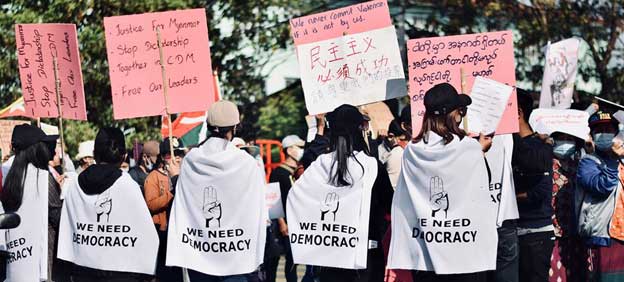
    Bachelet said this before the 49th session of Human Rights Council (HRC). There is concern about hundreds of newly formed, localized armed resistance groups triggering “widespread violence in areas that were previously stable”.

    The UN’s top human rights official said that on the country was on verge of collapse with shattered economic, education, health, and social protection systems and precious development gains destroyed,

    “I remain acutely concerned for the safety and rights of human rights defenders and other civil society actors,” she said.

    “There is virtually no civic space left across the country. Intense surveillance, including by digital means, amplifies the danger to activists in all military-controlled areas.”

    Dissent. Abuse.

    Since 1 February 2021, more than half a million people have been forced to flee their homes, with at least 15,000 reportedly fleeing the country – adding to the nearly 340,000 people internally displaced before the coup, and more than one million refugees, most of them mostly Muslim Rohingya.

    “The economy is on the brink of collapse. Over 14.4 million individuals are now assessed as being in humanitarian need”, said the OHCHR chief, predicting that “food scarcity will sharply increase over the coming months”.

    Meanwhile, the UN Development Programme (UNDP) has forecast that “the combined impact of the coup and the COVID-19 pandemic could force nearly half of Myanmar’s population into poverty this year.”

    Disproportionate military crackdowns in clear violation of international human rights and humanitarian law, have taken place in Sagaing and Magway Regions, as well as in Chin, Kachin, Kayah, Kayin, and Shan States.

    Although most protests have been expressed peacefully, including a ‘Silent Strike’ as well as other forms of protest and boycotts, the military has met all dissent with lethal force, mass arbitrary arrests, and the torture.

    “Credible sources have recorded the deaths of over 1,600 individuals, many engaged in peaceful protest. At least 350 of those killed died in military custody, over 21 per cent of the total deaths,” Bachelet said.

    Executions. Torture.

    Systematic brutality by security forces known as the Tatmadaw, has inflamed pre-existing armed conflicts in multiple ethnic states, the UN’s top human rights functionary said.

    “Tatmadaw have targeted both armed resistance groups and civilians with helicopter gunships, airstrikes, and the use of indiscriminate force,” she said, as a so-called “four-cuts” strategy continues to “punish local communities for their assumed support to armed elements.”

    “These attacks have occurred alongside mass arrests, summary executions and torture.”

    The World Health Organization has also recorded at least 286 attacks on healthcare facilities and personnel since February 2021.

    The military uses arrests and detentions as “a tool to target and intimidate people who oppose them,” she continued, citing credible sources in saying that security forces have detained over 12,500 individuals, of whom 9,500 remain in detention including at least 240 children.

    “Many of these individuals have been reportedly subjected to ill-treatment amounting to torture.”

    And the plight of the long persecuted Rohingya people remains dire, with no end in sight.

    Rohingyas in Myanmar “are denied freedom of movement and access to services”, she said, with “no durable solutions for internally displaced people, nor…conditions conducive to secure, sustainable, dignified and voluntary returns in Rakhine State”.


    Image: Pyae Sone Htun  /  Unsplash
    Taliban, Chinese Mining Conglomerate, to Discuss Copper Mining in Logar Province

    A deal signed in 2008 with the previous US-backed government, but it came to a standstill after a Taliban-led attack.

    By Maliha Safi

    A Chinese delegation will visit Afghanistan end-March to discuss resuming a disputed mining project that never got off to a start after a 2008 agreement.

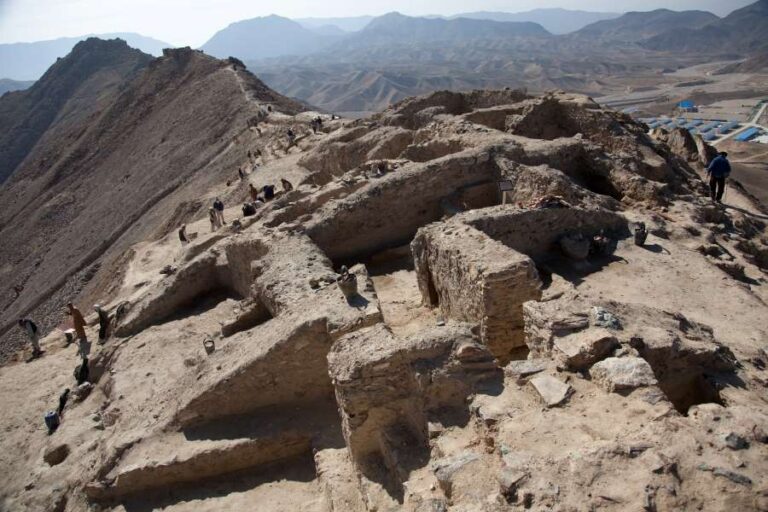
    The original project is based on a deal signed in 2008 with the previous government. The site includes an ancient Buddhist city that is in danger of being lost.

    The Taliban will resume discussions with the China Metallurgical Group Corp (MCC Group) on resuming copper mining in Mes Aynak, in Afghanistan’s Logar Province south-east of Kabul, it is learnt. (Mes Aynak is the Pashto for little source of copper.)

    The two sides will revisit an earlier agreement entered into by the then Western-backed Afghan government and the MCC Group in May 2008. The agreement bound the MCC Group to pay US$ 400 million every year for a 30-year mining concession, according to the agreement.

    The MCC Group claims to have invested more than US$ 2.5 billion in the first phase of the project. The project could not proceed after the Taliban carried out attacks in Logar.

    The mine is part of Afghanistan’s copper belt, some 30 km from the capital Kabul, and includes the ruins of a city dating back 2,000 years when Buddhism was the local religion. The major Buddhist archaeological site, an ancient Buddhist city, could get wiped out as it falls within the project area.

    It is not clear how the project will move out the centuries-old monasteries, stupas, cemeteries and wall paintings before undertaking the mining.

    The 2008 contract committed China to move the antiquities and contribute to the preservation of many bronze-age sites in the area.

    Untapped wealth

    The Taliban are more concerned about other offshoots that will come with the project the MCC Group had signed – a power plant to electrify Kabul and a railway line and train service to the country’s border with Pakistan.

    But there is disagreement on local downstream copper processing units. Besides, locals will need to be compensated if their land is to be acquired for the project.

    Afghanistan is rich in mineral resources. Surveys have come up with varying estimates of the country’s mineral wealth – between US$ 1 trillion and US 4.5 trillion.

    An agreement with the Taliban will open the gates for more Chinese mining corporations to explore the rare earth minerals in the Afghanistan mountains, solidifying Chinese control over global reserves of rare earths. Rare earth minerals are required for the electronic semiconductor industry

    Afghanistan also has big, unmined reserves of gold in the Zana Khan area of Ghazni province and lithium deposits in Herat, Ghazni, Nimroz and Farah provinces.

    Besides providing liquidity to a cash-strapped Taliban government, a renegotiated project will secure copper supplies for Chinese industry.

    The US has locked the Taliban out of any of the country’s financial assets since their return to power in August 2021. Aid made up over three quarters of Afghanistan’s welfare finances and the ensuing economic blockade and the diversion of donors to Ukraine threatens to put innumerable Afghans below the poverty line.


    Image: Jerome Starkey  /  Wikipedia

    World Happiness Index: Why Happiness and Wellbeing Count More Than Income

    India ranks 131st in HDI ranking, 139th in the Happiness Index, 129th in the World Inequality Index, 135th in the Global Peace Index, 142nd in the World Press Freedom Index, 85th in the Corruption Perception Index, 116th in the Human Capital index, 101st in the Global Hunger Index, 119th in the Human Freedom Index, 155th in the Environmental Performance Index, 145th in the Healthcare Access and Quality Index and 140th in the Global Gender Gap Report.

    VK Shrotryia and Shashank Vikram Pratap Singh

    Gross Domestic Product, arguably the most powerful statistical metric in history, is the most widely used measure of an economy’s size and level of development. Clarke, Kuznets, Stone, Keynes and Galbraith considered production, income and output as the determinants of economic progress. The metric has its roots in William Petty’s political arithmetic and Adam Smith’s notion of the invisible hand as described in the Theory of Moral Sentiments and The Wealth of Nations.

    Paul Samuelson regarded GDP as one of the great inventions of the twentieth century. None of these economists could have imagined that nations would become so obsessed with GDP that all of their policies and practices would revolve around GDP growth indicators, and that nations’ progress would be measured and compared using this measure.

    Empirical evidence, as discussed at length by economists and psychologists, shows that increases in GDP have not resulted in an enhancement of people’s life satisfaction. Though their physical standard of living has improved manifold, their contentment has not improved pari passu. Physical infrastructure has been transformed to provide the comforts of the so-called good life, but this has also added to community and social problems. Disparities have grown by leaps and bounds, value (human) erosion is rampant, and consumerism and materialism are influencing people’s actions and choices. Individuals are judged on the amount of money they have.

    New measures of progress

    Despite the fact that nations are becoming more economically developed and independent, issues such as inequality, work-life balance, discrimination, crime, depression, environmental imbalance, and social alienation are on the rise. In The Progress Paradox, Gregg Easterbrook establishes that while physical infrastructure and standard of living have improved over the last 50 years, it has not reflected in people’s life satisfaction or happiness.

    The construct of happiness as discussed across disciplines broadly revolves around the human’s state of being. The first two decades of the 21st century witnessed the outcome of political and intellectual battles in the form of voluminous literature on the different aspects of happiness and wellbeing. Literature across domains centres around subjective or objective indicators to measure the status of happiness using different coinages like Hedonism and Eudaimonism, feeling well vs being well, having well vs wellbeing, and outside in vs inside out phenomena.

    Though India is one of the largest and the fastest growing economies, the state of being of its people as indicated using various proxy indicators is not satisfactory. As per the latest available data, it ranks 131st in HDI ranking, 139th in the Happiness Index, 129th in the World Inequality Index, 135th in the Global Peace Index, 142nd in the World Press Freedom Index, 85th in the Corruption Perception Index, 116th in the Human Capital index, 101st in the Global Hunger Index, 119th in the Human Freedom Index, 155th in the Environmental Performance Index, 145th in the Healthcare Access and Quality Index and 140th in the Global Gender Gap Report.

    GDP as an indicator

    What do all these say about the Indian economy and society? Is it a mistake to equate people’s happiness with GDP per capita, considering its creator Simon Kuznets’ warning “the welfare of a nation can scarcely be inferred from a measure of national income”? How did thinkers begin to view everything through the lens of GDP, and how did it become the dominant gospel indicator in public policy?

    Stiglitz, Sen and Fitoussi addressed this enigma in their book ‘Mis-Measuring Our Lives: Why GDP Does Not Add Up’, saying “the theories we construct, the hypotheses we test and the beliefs we have are all shaped by our system of metrics”. What if the metric is riddled with flaws? What if the metric was designed to serve a specific purpose and is now being used to measure things it was never meant to measure? “It counts the labour used and wood produced when a tree cut down, but does not deduct the shade and beauty that are lost,” wrote Banerjee and Duflo in their latest book Good Economics for Hard Times. (p.153)

    The last decade of the twentieth century saw the rise and popularity of HDI as a tool for comparing the progress made by nations. It has been recognised as a better measure for public policy as outcomes need to be measured by examining people’s satisfaction with the initiatives as well as improvements in their subjective wellbeing. It was felt that the direction of policy should be one that focuses on the welfare of citizens by empowering them. Public policy should prioritise the development of better social infrastructure in order to address economic indicators rather than the other way around.

    Happiness as a measure

    Bhutan, which adopted a democratic constitution, has been practising a development philosophy known as Gross National Happiness (GNH), which is based on the premise of people’s wellbeing. This tiny country became the youngest member of the club of parliamentary democracies in the early months of 2008. Bhutan has been sharing its concern for people’s welfare through its focus on GNH for more than 40 years.

    There have been ongoing efforts to popularise the concept and advocate for the importance of happiness in policy framework. Wikipedia included this term and defines it as an attempt to define quality of life in more holistic and psychological terms than GDP. According to one of its national human development reports, the pursuit of GNH necessitates a multifaceted approach to development that seeks to maintain harmony and balance among economic forces, environmental preservation, cultural and spiritual values, and good governance. These four priorities are known as the four pillars of GNH.

    Former French president Nicholas Sarkozy established the Commission on the Measurement of Economic Performance and Social Progress in 2008 led by Stiglitz, Sen, and Fitoussi. The commission’s mandate was to identify the limits of GDP as an indicator of economic performance and social progress, including measurement issues, to consider what additional information might be needed for the production of more relevant indicators of social progress, to assess the feasibility of alternative measurement tools, and to discuss how to present the statistical data in an appropriate manner. The members conducted research on social capital, happiness, health and mental wellbeing.

    The committee’s report, known as the Sarkozy Report, made a compelling case for a change in our measurement system by shifting emphasis from economic output to people’s wellbeing. It was also suggested that wellbeing measures be placed in the context of sustainability. Apart from considering the wellbeing spectrum, the commission also made other recommendations such as measures of non-market activities.

    Happiness has an Edge

    In the era of dominance of market forces and enormous capital flows, focus on happiness and wellbeing in public policy can be viewed as a transformational initiative. This, however, does not imply that GDP is a redundant indicator. In terms of measuring economic progress, it is the most brilliant invention in economic history. It is an insufficient and inappropriate indicator for gauging the care of human life and happiness, but this does not preclude it from being considered for public policies.

    Since the mid-twentieth century, attempts have been made to investigate alternative approaches to GDP to measure progress and development so that future generations can view societies through newer perspectives and parameters. Indicators developed so far are divided into three categories: ones that replace GDP, ones that adjust GDP, and ones that supplement GDP.

    It is important to give happiness an edge over quantifiable measures. Despite the fact that this noble thought originated in a small country, it is capable of addressing major issues confronting powerful nations. Around the beginning of the current century, Polly Toynbee wrote in The Guardian, “When God died, GDP took over and economists became the new high priests.” This has been the story of the last century. The 21st century should go down in history as an era prioritising human wellbeing and happiness over economic development.


    VK Shrotryia is Professor, Department of Commerce, Delhi School of Economics.

    Shashank Vikram Pratap Singh is Assistant Professor, Shri Ram College of Commerce, University of Delhi.


    This piece has been sourced from Policy Circle — policycircle.org

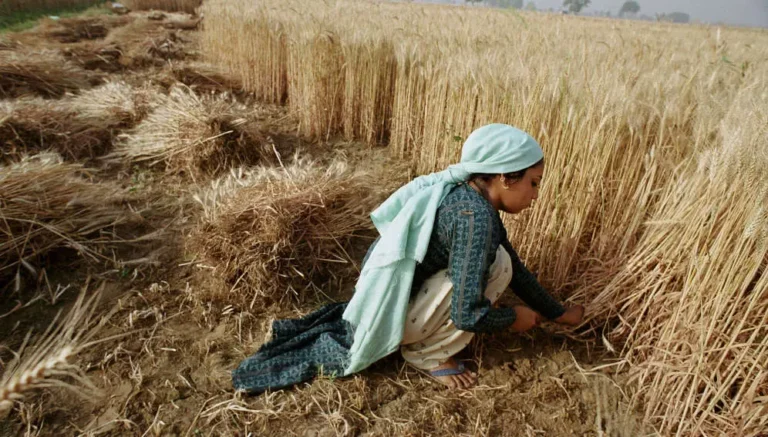
    Ukraine war poses growing threat to global food security

    The Ukraine crisis could lead to millions more people going hungry. Wheat prices have soared following the Russian invasion of the country and global food prices have reached record highs as world battles COVID-19.

    By Ruth Douglas

    The war in Ukraine has dealt a major blow to global food security through its impacts on wheat, oil and fertiliser exports, in a world already reeling from COVID-19 and climate change, experts told SciDev.Net.

    Friederike Greb, an economist with the World Food Programme, told a SciDev.Net readers’ conference call on Tuesday that the role of Russia and Ukraine in global grain and energy markets meant there would be “huge collateral damage on food security” from the conflict.

    Russia and Ukraine together account for about 30 per cent of global wheat exports, 20 per cent of maize, and almost 80 per cent of sunflower oil. The Food and Agriculture Organization (FAO) has warned that the crisis could lead to between eight and 13 million more people being undernourished next year.

    “While a lot of exports have already happened for the current marketing year, there’s still almost 40 million tonnes of wheat and 60 million tonnes of maize basically frozen in Russia and Ukraine,” said Greb at the monthly online event.

    Global wheat prices soared in the two weeks after the Russian military invasion on 24 February. It came as the FAO’s Food Price Index, a benchmark gauge for world food prices, reached an all-time high last month.

    “Of course, if I buy bread I don’t pay the global wheat price,” explained Greb. “It then has to trickle down to local consumer markets to actually have an effect on food security in poor countries.

    Fertiliser imports

    “That is expected to happen first in import-dependent countries and that’s when you get this food security effect, when people lose access to food because the price of the food that they buy in their local market goes up.”

    Greb said the prices rises were particularly concerning for the Middle East, a big importer of wheat from Ukraine. Lebanon imports more than 50 per cent of its wheat from the country, Yemen 22 per cent, and Tunisia 42 per cent, she said, adding that price rises would be felt by all wheat-importing countries, not only those buying directly from Ukraine.

    Aladdin Hamwieh, a biotechnologist and Egypt country manager for the International Center for Agricultural Research in the Dry Areas (ICARDA), said the Middle East was already seeing such price rises hitting consumers.

    “Two days ago, I went to buy bread and [the price increase] was 25 per cent,” he said.

    There are also concerns about the impact on imports of potassium chloride, used in fertilisers, from Ukraine and Russia, said Hamwieh, which could further derail food production.

    He said the region was already suffering from the effects of severe dry climates and other global shocks. “Our crops really suffered to survive this year in Morocco… The crisis of Ukraine and Russia came at a very hard time after COVID-19 and the new development of climate change,” Hamwieh said.

    There is great potential in research and development for climate resilient wheat varieties in order to reduce reliance on Ukraine and Russia, according to Hamwieh, but he says increased government investment is needed to support it.

    Fuel

    Fermin D. Adriano, undersecretary for policy and planning at the department of agriculture in the Philippines, said the crisis was also exacerbating problems in the Asia Pacific region, where more than 35 million people fell below the poverty line during the pandemic, according to the World Bank.

    “We already had a problem in terms of accessing food because of the logistical bottlenecks that came about because of COVID-19,” he explained.

    “This [conflict in Ukraine] compounds the problem because of the fact that the two countries are major producers of wheat and corn,” which are used in the region for human and animal consumption, said Adriano.

    Rising fuel prices as a result of the war are also driving up fertiliser prices as large amounts of natural gas are needed to produce ammonia, the key ingredient in nitrogen fertiliser.

    “In the Philippines fertiliser prices have actually tripled and that will have implications on the productivity of our farmers,” Adriano said, adding that a million metric tonnes of rice could be lost as a result.

    Greb believes the effects on food security will be felt most acutely in poor countries. “When you look at the most vulnerable, they spend a huge share of their income on food… Even if it’s a small increase in the local price, it can really have an effect on the affordability of food for the poor,” she said.

    The rise in the price of oil, which reached a 14-year high in the past week as a result of the conflict, will also affect the food crisis, according to Greb, as transportation and production costs rise and drive up inflation.

    She said the World Food Programme expected its own procurement costs for food commodities and fuel to go up by US$29 million a month at current price levels. “Those come on top of all the price increases that we’ve already seen in the past year-and-a-half or so,” she said, adding that many poor countries were still struggling to recover from the impacts of the two-year long COVID-19 pandemic.

    “It comes at a point when really the world is not in need of another crisis,” she added.


    This piece has been sourced from SciDev.Net

    Image: Scott Wallace / World Bank

    Don’t Risk our Multi-Billion Dollar Pension Fund in Wall Street, Warn UN Staffers

    United Nations staff do not think it is the right time for their pension funds waltzing with Wall Street, especially as the pension fund leadership has for years vaunted the advantages of safe, conservative in-house fund management.

    By Thalif Deen  /  Inter Press Service

    The United Nations Joint Staff Pension Fund (UNJSPF), which is expected to provide retirement, death, disability and related benefits for staff, upon cessation of their services– has a staggering portfolio amounting to over $81.5 billion ranking far, far ahead of the UN’s annual budget of $3.1 billion and its average peacekeeping budget of over $6.4 billion.

    The thousands of UN retirees and their beneficiaries, numbering over 71,000 at last count, who depend on their pensions for economic survival, are relentlessly protective of the Fund—while protesting all attempts at risky investments.

    The Coordinating Committee for International Staff Unions and Associations of the UN system (CCISUA), which represents over 60,000 staffers worldwide, is protesting a new proposed plan to “outsource a large part of the pension fund’s investments to Wall Street”.

    In a letter to Pedro Guazo, Representative of the Secretary-General for the investment of UNJSPF assets, Prisca Chaoui, the CCISUA President warned last week that the proposed outsourcing “ultimately calls into question the nature of our pension fund.”

    “Is it one that continues to be managed prudently by experts employed by the fund, who by being UN staff have a stake in its long-term health, a system that employs the fund’s economies of scale to keep down costs and that has by the fund’s own telling outperformed the private sector up to now?” she asked.

    “Or is it one that is outsourced to Wall Street to be the victim of a short-term get-rich-quick bonus culture with little regard to the welfare of beneficiaries around the world?”

    Stop the bleeding

    “Based on the information that has been shared with us”, says Chaoui, “we fail to understand the reasons behind the move to external management, given the unnecessary and costly duplication of internal capacity.”

    “We also believe that your intention to “stop the bleeding” has been addressed by the management changes you have implemented in response to issues highlighted by the UN’s Office of Internal Oversight Services (OIOS), and through a new Strategic Asset Allocation that significantly reduces our exposure to risky assets”.

    Given that the pension fund has access to the same financial instruments as Wall Street, and employs equally experienced investment officers, she argues, there should be no reason for a lower performance.

    “Indeed, the pension fund’s other portfolios have worked fine under internal management.”

    “We stand today at a fork in the road that will decide the future of our fund. We ask that you reverse the outsourcing strategy and keep the management of our assets safely in-house,” she declared.

    Meanwhile, a petition currently in circulation among retirees and UN staffers, says Secretary-General Antonio Guterres claims this is a temporary measure that will increase performance.

    “However, the plans authorize an increase in outsourcing over a period of three years. And over the long term, our conservative, internally-managed UN pension fund has performed better than many externally-managed final salary funds that have since been forced to close. Indeed, our fund is in actuarial balance,” says the petition seeking signatures.

    “Under the proposal, up to 75 percent of the fund’s fixed-income portfolio will be externally managed.”

    Attempted earlier

    The Secretary-General is proceeding with the outsourcing despite strong concerns expressed at the February meeting of the pension board, despite a letter of protest from CCISUA and despite the UN’s own Board of Auditors noting that the fund is not able to effectively evaluate its external managers.

    In 2007, one year before the global financial crisis and the collapse of many financial institutions, former Secretary-General Kofi Annan considered outsourcing to Wall Street. But he wisely changed course following staff protests and kept our fund safe, says the petition.

    “By handing our pension fund to Wall Street in these financially turbulent times, it risks becoming the victim of a short-term, greed-is-good bonus culture that has little regard for the welfare of our staff and retirees around the world and little regard for the ethical values of the UN”, says the petition titled “Secretary-General Antonio Guterres: Don’t hand our UN pension fund to Wall Street.”

    “By signing this petition, you call on the Secretary-General, to once again stop the outsourcing of our pension fund and keep its management in-house. Please share this with your colleagues across the UN and specialized agencies”.

    Official response

    Responding to the ongoing protests, Pedro Guazo, Representative of the Secretary-General for the investment of UNJSPF assets, said on 16 March the Fund is aware of additional concerns expressed on the temporary outsourcing of part of the fixed income portfolio.

    “As presented at the last Pension Board meeting on 24-25 February 2022 and in my message of 12 March 2022, the investments of the UN Pension Fund are doing very well overall, given the current economic and geopolitical context.”

    However, argued Guazo, the Fund can do better in the fixed income portfolio. For many years that portfolio has underperformed against its benchmark, as outlined on the Fund’s website.

    He pointed out that the Fixed Income Team of the Fund’s Office of Investment Management put a proposal to manage part of the portfolio internally (35 per cent) and, temporarily, using an external advisor under the supervision and control by the same internal team (65 per cent).

    This 65 per cent of the fixed income portfolio represents around 18 per cent of the total portfolio managed by the Office of Investment Management.

    “This proposal has been reviewed by the internal committee, by the Pension Board and the Fund’s Investments Committee, concurring this is a good temporary solution to raise the performance of the fixed income portfolio. The use of temporary external advisors is a best practice in the pension fund industry to address underperforming asset classes,” he noted.

    The immediate benefit for the UN Pension Fund, he said, will be additional USD 60 million a year in profits and this solution is only temporary. When the team is ready in some months the Office of Investment Management will again manage the portfolio internally.

    “I hope this clarifies the objective and the benefits of this operation, that will, again, be applied only for a limited time,” he added.

    Staff anxiety

    Meanwhile, Ian Richards, former President of the CCISUA, told IPS following the launch of the union petition, “I’ve been inundated with messages from staff.

    They are looking at what’s happening on the markets right now and just don’t think it’s the time for Wall Street to be taking things over.

    They’re asking why now when the pension fund leadership has for years, and as recently as last autumn at the General Assembly, vaunted the advantages of safe, conservative in-house management. A lot of questions, including ones I have raised on this, remain unanswered. ”


    Image: UN Joint Staff Pension Fund (UNJSPF)

    This piece has been sourced from Inter Press Service.


    Murder, deaths, runaway inflation – the litany of the common Sri Lankan

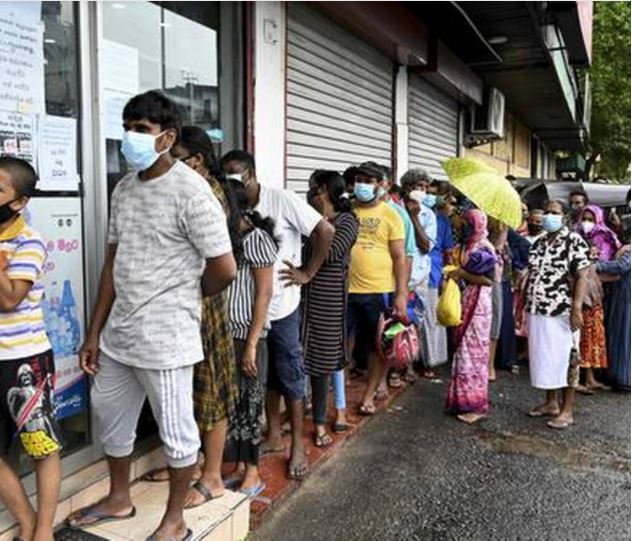
    Minor scuffles, fist-fights, people dying in queues, heat strokes and cases of knife-stabbing are increasingly becoming a feature of Sri Lankan life in 2021.

    Three people died in their struggle to get fuel for their vehicles over the weekend alone. In the latest incident, a 29-year-old Colombo resident was stabbed to death following a dispute at a fuel station.

    The government is downplaying the deaths. In one case, the government said that the person who fainted and died awaiting his turn to fuel his vehicle was very old, and had had a history of high blood sugar and medication for cardiac issues.

    Arguments, quarrels and fistfights are now a common feature and social media is abuzz with posts circulating about people fainting in the heat waiting for gas, diesel and other essentials. The Minister for Energy has advised a limit to the number of fuel cans per person to combat the ongoing shortage.

    Sri Lanka is currently facing a shortage of fuel and other essential commodities due to a forex crisis. This has been accompanied by high prices due to a sharp devaluation of the rupee following a decision to allow for the currency float.

    The resulting inflation is taking a huge toll as well. Food inflation spiked to 25.7 per cent in February – the highest in a decade. The shortages and spiking costs of essential items are being ascribed to the government enforcing import bans and raising fuel prices to shore up its currency reserves.

    Media reports quoted All Island Canteen Owners Association President saying that the price of a cup of tea was being increased taking into consideration rising prices of essential commodities including milk powder, sugar and fuel. This hike was provoked by an announcement by importers raising milk powder prices Saturday.

    Milk powder is widely consumed in Sri Lanka households, but the prevailing economic crisis had led to shortages in imported milk powder leading to long queues. Importers demanded the government to allow for a price hike in the face of the prevailing dollar shortage.

    China presses for FTA

    In the meanwhile, China is pushing Sri Lanka to complete a pending Free Trade Agreement (FTA). Talks on the FTA between China and Sri Lanka hit a hurdle in 2018 as Colombo demanded for a review of the agreement after 10 years.

    China is concerned about India wrapping up strategic energy deals in exchange for credit lines.

    Chinese Ambassador to Sri Lanka, Qi Zhenhong, discussed the ongoing FTA negotiations with Sri Lanka Foreign Minister G L Peiris, according to a statement released by the Sri Lankan foreign ministry on Sunday.

    China has invested billions of dollars in the construction of infrastructure like ports, airports, roads and power stations as part of its Belt and Road Initiative.

    But China’s concerns stem from India’s strategic investment and security interests as Sri Lanka faces a severe shortage of foreign currency and risk a sovereign debt default due to low interest rates enforced by money printing.

    India has agreed to extend a billion-dollar credit line to import food, medicines, and other essential items, a 500 million US dollar credit line to import fuel, a 400-million-dollar swap, and deferment of around 912 million US dollars until May.

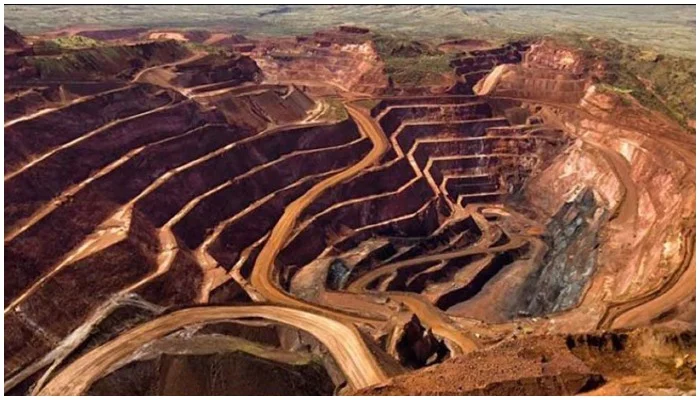
    Pakistan Chalks Agreement with Mining Giants; Avoids $ 11 Billion in Penalties

    The mineral reserves were discovered at the foot of an extinct volcano called the Reko Diq mines in the western province of Balochistan along Pakistan’s borders with Iran and Afghanistan. 

    The Pakistan government has announced the resolution of a 12 years old dispute on mining gold and copper in the country.

    The mineral reserves were discovered at the foot of an extinct volcano called the Reko Diq mines in the western province of Balochistan along Pakistan’s borders with Iran and Afghanistan. Reko Diq, meaning sandy peak in the Balochi language, is a small town in the Chagai district in Balochis­tan.

    The government had leased the mines in 2006 to the two companies with mining giants Antofagasta plc of Chile and the Canadian mining company, Barrick Gold Corporation.

    The agreement reached provides a framework for the reconstitution of the Reko Diq project that has been suspended since 2011.

    The renegotiated agreement reconstitutes the shareholding of the project by drawing a pathway for Antofagasta to exit the project. Antofagasta will receive US$ 900 million in settlement and will be replaced by the Pakistani parties.

    The agreement was suspended in 2011 due to a dispute over the legality of its licensing process. As a result, the International Court of Arbitration levelled US$ 6.4 billion award on the government of Pakistan while on the same time the London Court of Arbitration also imposed another US$ 4 billion fine on Pakistan.

    The arbitration penalties had stirred emotion in Pakistan. Balochistan Senator Sanaullah Baloch said, “Multinational companies, having all the patronage and resources, use international arbitration institutions to avail out-of-the-way benefits and challenge the very fundamentals of the sovereignty of institutionally weak nations.”

    The companies have now waived this penalty. In return, the Barrik Gold Corporation’s share in the project has been hiked to 50 per cent, up from 37.5 per cent earlier.

    Investments, jobs

    Addressing a hurriedly called press conference along with the Energy Minister Hammad Azhar and Chief Minister Balochistan Mir Abdul Quddus Bizenjo on Sunday, Pakistan’s Minister for Finance and Revenue Shaukat Tarin said that the Canadian corporation will invest some US $ 10 billion. This would create 8,000 new jobs for the local population.

    Reko Diq is part of a huge gold and copper reserve, while there are many similar reserves in the area.

    The reconstituted project will be held 50 per cent each by Barrick and Pakistani stakeholders.

    Barrick will be the operator of the project upon being granted a mining lease, exploration licence, surface rights and a mineral agreement stabilising the fiscal regime applicable to the project for a specified period.

    “The process to finalize and approve definitive agreements, including the stabilization of the fiscal regime pursuant to the mineral agreement, will be fully transparent and involve the federal and provincial governments, as well as the Supreme Court of Pakistan,” a press release from Barrick said.

    The issue of mining rights in Balochistan’s tribal region has caused much unrest in mineral-rich region.

    Earthworms Can Replace Use of Synthetic Fertilisers, New Research Suggests

    Earthworms could have the potential to replace some high-cost mineral or synthetic fertilisers, suggests a new study.

    By David Kearns  /  University College Dublin

    Researchers at University College Dublin have unearthed fresh insight into the soil dweller’s importance for crops taking up nutrients.

    The findings suggest a shortcut in the soil nitrogen cycle not previously recognised in which earthworms, when they are active, rapidly enrich soil and plants through nitrogen excreted in their mucus.

    The role of soil animals such as earthworms in nutrient cycling is traditionally seen as beneficial but indirect, slow and cumulative.

    However, this may not be the whole story, according to UCD Professor Olaf Schmidt, from the UCD School of Agriculture and Food Science.

    “The real novel insight [we found] is that nitrogen from worms is going into crops really fast. Up to now we assumed this involved slow decomposition processes and microbial cycling. But our experiments show that nitrogen (N) and carbon (C) movement from living soil animals to plants can be extremely rapid,” he said.

    Nitrogen directly to crops

    Earthworm presence in the soil is already known to increase crop yield in the long run, through their burrowing and feeding which creates good soil structure and releases nitrogen that is otherwise locked away in soil organic matter.

    Under laboratory and field conditions, a team of researchers from Ireland, Germany and China was able to track the nutrient transfer from earthworms into soil, wheat seedlings, and greenflies (aphids) using a method called stable isotope tracers.

    They found earthworm-derived nitrogen was acquired by greenflies after just two hours under laboratory conditions, and after 24 hours in the field. The researchers were astonished just how fast worm nitrogen moved through soil, to roots, into plants and into the insects feeding on plant sap.

    “This is very exciting because it suggests that earthworms probably supply nitrogen directly to crops, and they do it exactly when crops need it most because both earthworm activity and crop growth are sort of synchronised, by environmental factors, mostly temperature and moisture,” said Professor Schmidt.

    The newly discovered benefits could be particularly significant in farming systems trying to reduce the use of synthetic fertilisers.

    The agricultural sector should maximise the financial benefits of this nitrogen supplied by earthworms as a potential alternative to synthetic fertilisers, which are very costly as the world’s supply chains continue to recover from the COVID-19 pandemic and energy prices rise.

    Economical

    “This work could inform how farmers manage land, soil life and nitrogen supply,” said Professor Schmidt. “By adopting cropping practices that promote earthworms, these dynamic nitrogen benefits will also be maximised. We knew from previous research that good earthworm populations contribute agronomically significant amounts of nitrogen to the soil, but we did not know that they can supply crops with nitrogen in such a dynamic fashion.”

    “Farmers cannot always know in advance when to apply mineral/synthetic fertilisers because crops may not need nitrogen if it is too cold or too dry, and then the applied expensive nitrogen is lost to the environment, as nitrate leached down into groundwater or as nitrogen gases emitted into the atmosphere.

    “All forms of nitrogen supplied naturally, from the soil’s own stores, through decomposition and mineralisation, are economically and environmentally highly valuable and desirable, so we should maximise them,” he added.

    “I don’t think earthworms will replace all mineral and organic fertilizers, but their full use as a natural nutrient supply could offset the use and cost of mineral/synthetic fertilizers.

    “All in all, this is another new reason why we should work more with soil biology and encourage the use of soil organisms like earthworms, because our land use and farming methods will be more environmentally sustainable and also more economical because we can save synthetic fertilisers.”

    ADB to Continue Support for Pakistan’s Post-Pandemic Recovery

    Officials reiterated the development bank’s earlier commitment following five days of hectic parleys in Islamabad, led by the ADB’s Vice President.

    As the Asian Development Bank (ADB) Vice President Shixin Chen concluded his five-day long visit to Islamabad, he reiterated the bank’s commitment to support Pakistan’s economic recovery following the COVID-19 pandemic.

    The visiting ADB delegation met with Prime Minister Imran Khan to discuss the bank’s ongoing and emerging areas of support. Member of his cabinet of ministers also attended the meetings.

    The meetings were complemented by a demonstration visit to the National Power Control Centre in Islamabad where the delegation was briefed about the country’s power load management system. ADB is expected to finance the expansion plan of this complex.

    This comes in the middle of political turmoil in the country that threatens the stability of Prime Minister Imran Khan’s government. Interestingly, this also comes ahead of the two-day 48th session of the OIC Council of Foreign Ministers scheduled to begin on Tuesday.

    An obsession with PPP?

    ADB has committed over $36 billion in loans, grants, and other financing instruments to Pakistan since its establishment in 1966. The finances were mainly directed towards food security, social services, infrastructure development, energy generation and transmission and strengthening of the country’s transport network.

    “As one of Pakistan’s largest development partners, ADB has taken swift actions to support Pakistan’s vaccination and social protection efforts, and external financing requirements,” Vice President Shixin Chen said in the backdrop of the COVID-19 pandemic.

    He added, “We will continue to work with the government, private sector, and other partners to further develop green, resilient, and quality infrastructure; enact reforms; and strengthen key sectors vital to the country’s growth.”

    A statement issued by the bank highlighted ADB’s assistance to the country, helping it to improve macroeconomic management and resilience, and infrastructure and urban sector investments that supported rural connectivity and urban services.

    “The bank’s support for public–private partnerships and improved access to finance has boosted competitiveness and private sector development,” it added. ADB is a proponent of the public–private partnerships or PPP model of service provisions, though there are not many successful examples of PPP arrangements in the SouthAsian region.

    “Going forward, ADB will support an enabling environment for digital transformation through policy improvements and strengthening public institutions and relevant infrastructure,” the statement read.


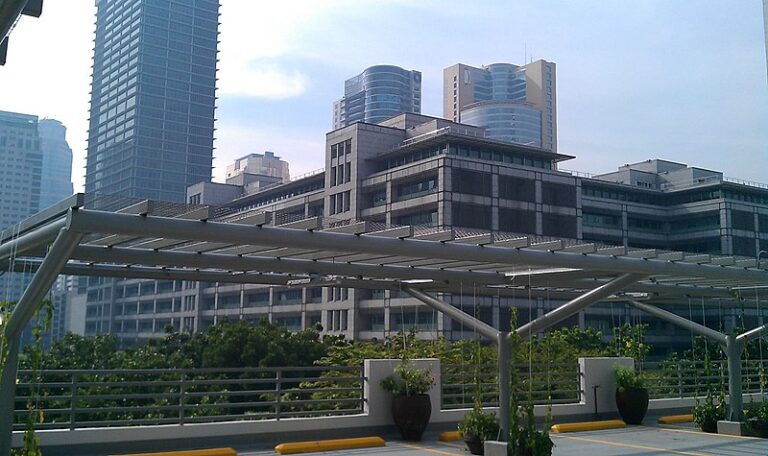
    Image: Wikimedia — Asian Development Bank, Mandaluyong, Philippines

    A fabric that “hears” the heart’s sounds; also speaks

    Inspired by the human ear, a new acoustic fabric developed by engineers as MIT and collaborators at Rohde Island School of Design converts audible sounds into electrical signals.

    By Jennifer Chu    |    MIT News Office

    Having trouble hearing? Just turn up your shirt. That’s the idea behind a new “acoustic fabric” developed by engineers at MIT and collaborators at Rhode Island School of Design.

    The team has designed a fabric that works like a microphone, converting sound first into mechanical vibrations, then into electrical signals, similarly to how our ears hear.

    All fabrics vibrate in response to audible sounds, though these vibrations are on the scale of nanometers — far too small to ordinarily be sensed. To capture these imperceptible signals, the researchers created a flexible fibre that, when woven into a fabric, bends with the fabric like seaweed on the ocean’s surface.

    The fibre is designed from a “piezoelectric” material that produces an electrical signal when bent or mechanically deformed, providing a means for the fabric to convert sound vibrations into electrical signals.

    The fabric can capture sounds ranging in decibel from a quiet library to heavy road traffic, and determine the precise direction of sudden sounds like handclaps. When woven into a shirt’s lining, the fabric can detect a wearer’s subtle heartbeat features. The fibres can also be made to generate sound, such as a recording of spoken words, that another fabric can detect.

    Monitor heart, respiratory condition

    A study detailing the team’s design appears in Nature. Lead author Wei Yan, who helped develop the fibre as an MIT postdoc, sees many uses for fabrics that hear.

    “Wearing an acoustic garment, you might talk through it to answer phone calls and communicate with others,” says Yan, who is now an assistant professor at the Nanyang Technological University in Singapore. “In addition, this fabric can imperceptibly interface with the human skin, enabling wearers to monitor their heart and respiratory condition in a comfortable, continuous, real-time, and long-term manner.”

    Yan’s co-authors include Grace Noel, Gabriel Loke, Tural Khudiyev, Juliette Marion, Juliana Cherston, Atharva Sahasrabudhe, Joao Wilbert, Irmandy Wicaksono, and professors John Joannopoulos and Yoel Fink at MIT, along with Anais Missakian and Elizabeth Meiklejohn at Rhode Island School of Design (RISD), Lei Zhu from Case Western Reserve University, Chu Ma from the University of Wisconsin at Madison, and Reed Hoyt of the U.S. Army Research Institute of Environmental Medicine.

    Sound layering

    Fabrics are traditionally used to dampen or reduce sound; examples include soundproofing in concert halls and carpeting in our living spaces. But Fink and his team have worked for years to refashion fabric’s conventional roles. They focus on extending properties in materials to make fabrics more functional. In looking for ways to make sound-sensing fabrics, the team took inspiration from the human ear.

    Audible sound travels through air as slight pressure waves. When these waves reach our ear, an exquisitely sensitive and complex three-dimensional organ, the tympanic membrane, or eardrum, uses a circular layer of fibres to translate the pressure waves into mechanical vibrations. These vibrations travel through small bones into the inner ear, where the cochlea converts the waves into electrical signals that are sensed and processed by the brain.

    Inspired by the human auditory system, the team sought to create a fabric “ear” that would be soft, durable, comfortable, and able to detect sound. Their research led to two important discoveries: Such a fabric would have to incorporate stiff, or “high-modulus,” fibres to effectively convert sound waves into vibrations. And, the team would have to design a fibre that could bend with the fabric and produce an electrical output in the process.

    With these guidelines in mind, the team developed a layered block of materials called a preform, made from a piezoelectric layer as well as ingredients to enhance the material’s vibrations in response to sound waves. The resulting preform, about the size of a thick marker, was then heated and pulled like taffy into thin, 40-meter-long fibres.

    Lightweight listening

    The researchers tested the fibre’s sensitivity to sound by attaching it to a suspended sheet of mylar. They used a laser to measure the vibration of the sheet — and by extension, the fibre — in response to sound played through a nearby speaker. The sound varied in decibel between a quiet library and heavy road traffic. In response, the fibre vibrated and generated an electric current proportional to the sound played.

    “This shows that the performance of the fibre on the membrane is comparable to a handheld microphone,” Noel says.

    Next, the team wove the fibre with conventional yarns to produce panels of drapable, machine-washable fabric.

    “It feels almost like a lightweight jacket — lighter than denim, but heavier than a dress shirt,” says Meiklejohn, who wove the fabric using a standard loom.

    She sewed one panel to the back of a shirt, and the team tested the fabric’s sensitivity to directional sound by clapping their hands while standing at various angles to the shirt.

    “The fabric was able to detect the angle of the sound to within 1 degree at a distance of 3 meters away,” Noel notes.

    The researchers envision that a directional sound-sensing fabric could help those with hearing loss to tune in to a speaker amid noisy surroundings.

    The team also stitched a single fibre to a shirt’s inner lining, just over the chest region, and found it accurately detected the heartbeat of a healthy volunteer, along with subtle variations in the heart’s S1 and S2, or “lub-dub” features. In addition to monitoring one’s own heartbeat, Fink sees possibilities for incorporating the acoustic fabric into maternity wear to help monitor a baby’s fetal heartbeat.

    Also as a speaker

    Finally, the researchers reversed the fibre’s function to serve not as a sound-detector but as a speaker. They recorded a string of spoken words and fed the recording to the fibre in the form of an applied voltage. The fibre converted the electrical signals to audible vibrations, which a second fibre was able to detect.

    In addition to wearable hearing aids, clothes that communicate, and garments that track vital signs, the team sees applications beyond clothing.

    “It can be integrated with spacecraft skin to listen to (accumulating) space dust, or embedded into buildings to detect cracks or strains,” Yan proposes. “It can even be woven into a smart net to monitor fish in the ocean. The fibre is opening widespread opportunities.”

    “The learnings of this research offers quite literally a new way for fabrics to listen to our body and to the surrounding environment,” Fink says. “The dedication of our students, postdocs and staff to advancing research which has always marveled me is especially relevant to this work, which was carried out during the pandemic.”

    This research was supported in part by the US Army Research Office through the Institute for Soldier Nanotechnologies, National Science Foundation, Sea Grant NOAA.


    Reprinted with permission of MIT News 

    Image: Courtesy MIT