More

    Sri Lanka Criminalising Same-sex Relationships, Breaching Rights, says UN women’s rights body

    Sri Lankan authorities had not taken any legal or other measures to respect and protect a rights defender’s right to a life free from gender-based violence, the UN body says.

    Sri Lanka violated the rights of a lesbian and leading LGBTI activist who was subjected to discrimination, threats and abuses due to the country’s Penal Code that criminalises same-sex sexual activity, the UN Committee on the Elimination of Discrimination against Women (CEDAW) has found.

    In its decision published Wednesday, CEDAW found that Sri Lanka has breached the rights of Rosanna Flamer-Caldera, the founder and Executive Director of Equal Ground, an organisation defending the rights of the lesbian, gay, bisexual, transgender and intersex community in Sri Lanka.

    The Committee on the Elimination of Discrimination against Women monitors States parties’ adherence to the Convention on the Elimination of All Forms of Discrimination against Women.

    Flamer-Caldera has been supporting lesbian and bisexual women in defending their rights after discovering in 1997 that the country’s Penal Code, which criminalises same-sex sexual activity, had been amended to include also sexual conduct between women. Since then, Flamer-Caldera has suffered high-profile attacks on her character, and she and her organisation have been subjected to discrimination, harassment, stigmatization and threats of violence by State officials and members of the public, including the press and social media.

    In 2012 and 2013, the Women and Children’s Bureau of the Sri Lanka Police used Flamer-Caldera’s photo and her position with Equal Ground in presentations to assert that the rise of child abuse was mainly due to the “growing homosexual culture”. They claimed that she and her organisation were responsible for “spreading” homosexuality, implying that they were also responsible for “spreading” paedophilia.

    Discrimination. Violence.

    Despite facing harassment and stigmatization, Flamer-Caldera did not complain to the police as she was worried she would be arrested. As a result of the amended Penal Code, she has been under constant risk of arrest, detention and investigation of her private life and has had to modify her behaviour.

    Flamer-Caldera brought her case to the Committee and claimed that the criminalisation of female same-sex sexual activity and the concomitant potential for arrest and prosecution amount to discrimination on the grounds of gender and sexual orientation, violating her right to non-discrimination.

    “Ms. Flamer-Caldera has been frequently threatened and harassed by the police, the media and the public, but she has been unable to report these abuses out of fear of being arrested,” said Committee member Hiroko Akizuki.

    “The criminalisation of same-sex sexual activity has meant that the discrimination, violence and harassment on the lesbian, gay, bisexual, transgender and intersex community in Sri Lanka will continue with impunity,” she added.

    CEDAW found that the Sri Lankan authorities have subjected Flamer-Caldera to gender-based discrimination and violence.

    It found that the Sri Lankan authorities had not taken any legal or other measures to respect and protect Flamer-Caldera’s right to a life free from gender-based violence or to eliminate the prejudices to which she has been exposed as a woman, lesbian and activist.

    It also found that the authorities have breached her right to access to justice to complain of the abuses and her right to non-discrimination concerning her family relations.

    The Committee requested that the State take immediate and effective action to stop the threats, harassment and abuse, which Flamer-Caldera has been subjected to, and to take criminal procedures to hold those responsible to account.

    The Committee is made up of 23 members who are independent human rights experts in women’s rights drawn from around the world, who serve in their personal capacity and not as representatives of States parties.


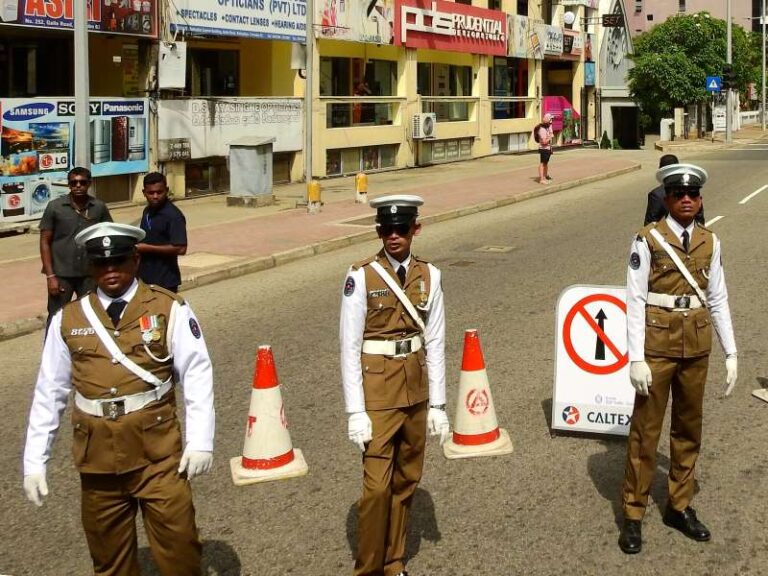
    Image: Wikipedia image of Sri Lanka police

    Bangladesh: ILO Puts Government On Notice To Improve Labour Conditions

    The ITUC has called on the Bangladesh government to set up a transparent and effective monitoring mechanism for the implementation of the ILO road map.

    The government of Bangladesh has been told to improve conditions for workers by November 2022 or face a Commission of Inquiry – the highest-level investigation that the International Labour Organization (ILO) can carry out into a country persistently failing to protect workers’ rights.

    Only 14 Commissions of Inquiry have been undertaken by the ILO since it was established in 1919. An investigation into Bangladesh would put the country alongside Belarus, Venezuela and Zimbabwe – countries that have been subject to the most recent investigations by the organisation.

    “Weekly reports are issued of deaths at work in Bangladesh, violent attacks against workers and harassment and intimidation of trade union members,” said said ITUC General Secretary Sharan Burrow.

    “The government continues to ignore these deaths and violent attacks on its own citizens as it fails to make any meaningful progress to improve labour laws,” Burrow said, adding, “The prescription has been given by the ILO to improve workers’ rights, but the government’s continued refusal to take the medicine that will save workers lives and ensure decent work is beyond understanding,”.

    The ITUC has called on the Bangladesh government to set up a transparent and effective monitoring mechanism for the implementation of the ILO road map and meaningfully consult with tripartite constituents on all the action points.

    Bureaucratic bottlenecks

    Labour rights advocates say that the government could have an immediate positive impact on working conditions if it undertook to consult with unions in a meaningful and non-discriminatory way and worked to make progress on the Bangladesh Labour Act, the EPZ Act and their accompanying rules. But, the activists say, is taking a long time, with bottlenecks all along the way.

    For instance, the process of registering a trade union in Bangladesh is a very tedious one. On the other hand, the State, almost by default, intimidates trade union officials. Union officials are not consulted on EPZ inspections or to promote an effective system for addressing issues concerned with occupational health and safety in the country. Living minimum wages need to be established and unfair labour practices need to be addressed, besides ending the backlog of cases and complaints;

    “There is no moral, political or economic reason for delay. Improving conditions for workers will save lives, increase productivity and strengthen workplace and national democracy in Bangladesh. The time to act is now,” said Sharan Burrow.

    Hitting out at authorities in the country, Burrow says that the ILO’s roadmap to improve working conditions in Bangladesh is now a checklist of broken promises delivered by the government with alarming consequences for working people.


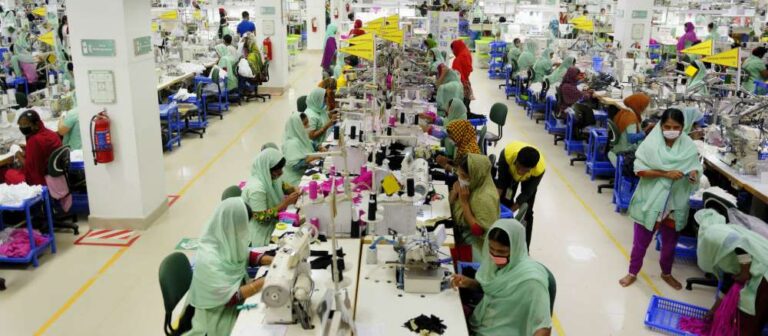
    Image: Betterwork Bangladesh

    Custodial deaths – 70 Falcons Die During the Course of a Protracted Trial in a Karachi Courts

    70 of 75 falcons seized by the customs department of Pakistan and retained in the State’s custody by an order of the court in Karachi have died.

    Ostensibly saved from smugglers, about 75 falcons and a houbara bustard were rescued by customs during a raid in Pakistan over two years ago, in October, 2020. Over the two years, 71 of the 76 birds succumbed to a lack of care, particularly Karachi’s hot, humid weather. The owners of the birds allege that officials of the customs department failed to provide a habitable environment during the long legal battle.

    Falconry is a recognised hobby, with traditional sanction. Trading of the birds is allowed with a special permission from the government. However, 76 falcons were seized in two subsequent raids in Karachi in 2020. The monetary value of the birds exceeded US$ 1 million.

    Upon confiscation of the birds, the custom court initially handling the case dismissed the case in favour of the owners. Since the raids weren’t executed on any entry or exit points of the country, the birds were not necessarily smuggled, it was felt. The court, however, justified the confiscation by acknowledging that the so-called owners violated the Provincial Wildlife Law, 2020 and ruled that the birds should remain in custody under the supervision of the customs department.

    Keen that they take birds back home, the birds owners, challenged this decision of the customs court.

    Red Tape

    The court’s prolonged process, or as SouthAsians allude to a Bollywood take, the tareekh pe tareekh process meant that the birds stayed with their custodians who did not have a clue of how to care for them.

    In the meanwhile, the falcons, natives of the high mountains, kept suffering the heat of Karachi even though the High Court ordered the trial court to expedite. The Conservator at the Sindh Wildlife Department submitted a report concerning the mortality of the birds in case of delay. The department wanted to ensure that the birds were immediately released but as the case stretched. So did their time in custody.

    The owners presented licences issued by the Chairman of Wildlife Management Board. But officialdom, almost compulsively, challenged the licence issued by a sister department of the government.

    It was contended that issuance of licences had been banned and old ones were terminated in February, 2019.

    More arguments were presented by the prosecution but even after eight months since the court ruled in favour of the bird owners, the high court had not heard the appeal filed by the customs and wildlife department and the birds continued to stay in custody.

    In March 2021, Kamran Khan Yousafzai, head of Pakistan Falconry Association wrote to the Pakistan ministry of climate change to move the birds to Gilgit-Baltistan where the weather would be conducive to the falcons.

    “The falcons cannot survive in temperatures exceeding 34°C,” Yousafzai wrote.

    The court took its own time.

    In the meanwhile, 70 of the magnificent birds could no longer survive the heat and humidity of Karachi – besides, of course, the tedious legal battle.

    Edited by Khushi Malhotra


    Image: Hippopx, licensed to use under Creative Commons Zero – CC0

    Hours after Reopening, Taliban Closes Afghan Girls’ Schools

    The Taliban has reneged on its pledge to allow secondary girls schools to reopen Wednesday, a day after Afghans ushered in Nowruz, of the traditional Afghan New Year.

    By Maliha Safi

    Barely hours after announcing that girl schools would reopen, the Taliban Wednesday ordered girls schools to continue being shut.

    It was announced that the schools would reopen once a plan was in place to reopen schools for girls in accordance with Islamic law.

    The Taliban Education Ministry had said last week that schools for all students, including girls, would open across the country on March 22 after months of restrictions on education for high-school girls.

    On his way to Oslo for aid negotiations mid-January, Zabihullah Mujahid, the Islamic Emirate’s spokesman, had said that the education department would reopen all girl schools on Nowruz, or the traditional Afghan New Year, 21 March.

    A ministry spokesman even released a video welcoming all students back to class on Tuesday, only to follow it up with another notice announcing the continuation of the break in education until a plan was drawn up in accordance with Islamic law and Afghan culture.

    “We inform all girls’ high schools and those schools that are having female students above class six that they are off until the next order,” read the notice, carried by the government news agency, Bakhtar News.

    Aid agencies react

    Jan Egeland, head of the Norwegian Refugee Council, said that the notice casts a dark shadow on the start of the school year in Afghanistan.

    “Our teams on the ground tell us that in places where we work, girls were excited to return to school after eight months of closure, but arrived this morning only to be then turned away,” he said in a statement carried on the organisation’s website.

    Regional Director for UNICEF South Asia George Laryea-Adjei conveyed his disappointment over the decision in a Twitter message, calling the reversal “a major setback.”

    “When I woke up this morning, I was hopeful that every girl and every boy in #Afghanistan would have the opportunity to go to school,” Laryea-Adjei wrote. “I am deeply worried that girls from Grade 7 to Grade 12 cannot return to school. This news is a major setback — for girls and their futures.”

    “We hope the deeply concerning announcement by the Ministry of Education will be reversed. We expect the Taliban government to allow all girls and boys across the whole country to resume their complete education cycle, in line with earlier public assurances they have given,” NRC’s Jan Egeland said.

    “Limiting girls’ schooling to primary education will devastate their future and the future of Afghanistan,” he added.

    Scepticism

    The move to defer the reopening the schools, however, did not shock rights groups that have observed the Taliban for a while. Human Rights Watch (HRW), for instance, had expressed scepticism on this score when the Taliban had initially announced its willingness to allow girls to go back to school.

    “The Taliban’s pledge to allow all girls’ secondary schools in Afghanistan to reopen on March 23, 2022, needs careful monitoring,” HRW had said on Tuesday.

    “Taliban statements are often very different from Taliban actions,” said HRW’s Heather Barr. “No one should believe that the Taliban has stopped blocking girls from secondary education until the evidence from the ground shows that to be the case.”

    Girls’ Secondary schools have been mostly closed in Afghanistan for the past eight months, except in 6 of 34 provinces. Though, this was largely limited to the main cities in the provinces that allowed for schools to remain open for girl students.

    UNICEF estimates that over 4 million children are out of school, of which 60 per cent are girls.

    Simultaneously, it has been estimated that about 8 million children in crisis in Afghanistan require emergency education in 2022 –  an increase of nearly threefold compared to needs at the start of 2021.

    The cost of addressing the urgent needs of 1.5 million children and youth in the 2022 Afghanistan Humanitarian Response Plan for Afghanistan has been pegged at US$162 million.

    Qualified female teachers are scarce in remote areas, largely due to a lack of girls’ enrolment past primary grades, which further limits access for girls, making the issue a cyclical one.


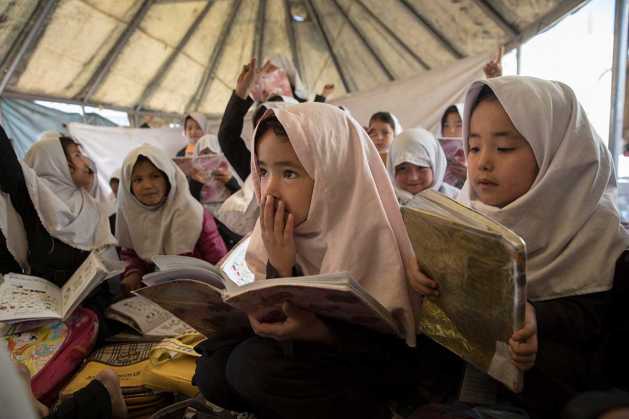
    Image: Paula Bronstein  /  Human Rights Watch

    Could We Make Cars Out Of Petroleum Residue?

    A new way to make carbon fibre could turn refinery by-products into high-value, ultralight structural materials for cars, aircraft, and spacecraft.

    David L. Chandler   |   MIT News Office

    As the world struggles to improve the efficiency of cars and other vehicles in order to curb greenhouse gas emissions and improve the range of electric vehicles, the search is on for ever-lighter materials that are strong enough to be used in the bodies of cars.

    Lightweight materials made from carbon fibre, similar to the material used for some tennis rackets and bicycles, combine exceptional strength with low weight, but these have been more expensive to produce than comparable structural elements made of steel or aluminium. Now, researchers at MIT and elsewhere have come up with a way of making these lightweight fibres out of an ultra-cheap feedstock: the heavy, gloppy waste material left over from the refining of petroleum, material that refineries today supply for low-value applications such as asphalt, or eventually treat as waste.

    Not only is the new carbon fibre cheap to make, but it offers advantages over the traditional carbon fibre materials because it can have compressional strength, meaning it could be used for load-bearing applications. The new process is described today in the journal Science Advances, in a paper by graduate student Asmita Jana, research scientist Nicola Ferralis, professor Jeffrey Grossman, and five others at MIT, Western Research Institute in Wyoming, and Oak Ridge National Laboratory in Tennessee.

    The research began about four years ago in response to a request from the Department of Energy (DOE), which was seeking ways to make cars more efficient and reduce fuel consumption by lowering their overall weight. “If you look at the same model car now, compared to 30 years ago, it’s significantly heavier,” Ferralis says. “The weight of cars has increased more than 15 per cent within the same category.”

    Bottom of the barrel

    A heavier car requires a bigger engine, stronger brakes, and so on, so the reducing the weight of the body or other components has a ripple effect that produces additional weight savings. The DOE is pushing for the development of lightweight structural materials that match the safety of today’s conventional steel panels but also can be made cheaply enough to potentially replace steel altogether in standard vehicles.

    Composites made from carbon fibres are not a new idea, but so far in the automotive world they have only been used in a few very expensive models. The new research aims to turn that around by providing a low-cost starting material and relatively simple processing methods.

    Carbon fibres of the quality needed for automotive use cost at least $10 to $12 per pound currently, Ferralis says, and “can be way more,” up to hundreds of dollars a pound for specialized application like spacecraft components. That compares to about 75 cents a pound for steel, or $2 for aluminum, though these prices fluctuate widely, and the materials often rely on foreign sources. At those prices, he says, making a pickup truck out of carbon fiber instead of steel would roughly double the cost.

    These fibres are typically made from polymers (such as polyacrilonitrile) derived from petroleum, but use a costly intermediate step of polymerizing the carbon compounds. The cost of the polymer can account for more than 60 per cent of the total cost of the final fibre, Ferralis says. Instead of using a refined and processed petroleum product to start with, the team’s new approach uses what is essentially the dregs left after the refining process, a material known as petroleum pitch. “It’s what we sometimes call the bottom of the barrel,” Ferralis says.

    Minimal process

    “Pitch is incredibly messy,” Ferralis says. It’s a hodgepodge of mixed heavy hydrocarbons, and “that’s actually what makes it beautiful in a way, because there’s so much chemistry that can be exploited. That makes it a fascinating material to start with.”

    It’s useless for combustion; although it can burn, it’s too dirty a fuel be practical, and this is especially true with tightening environmental regulations. “There’s so much of it,” he says, “the inherent value of these products is very low, so then it is often landfilled.” An alternative source of pitch, which the team also tested, is coal pitch, a similar material that is a by-product of coking coal, used for example for steel production. That process yields about 80 per cent coke and 20 per cent coal pitch, “which is basically a waste,” he says.

    Working in collaboration with researchers at Oak Ridge National Laboratory, who had the expertise in manufacturing carbon fibres under a variety of conditions, from lab scale all the way up to pilot-plant scale, the team set about finding ways to predict the performance in order to guide the choice of conditions for those fabrication experiments.

    “The process that you need to actually make a carbon fibre [from pitch] is actually extremely minimal, both in terms of energy requirements and in terms of actual processing that you need to do,” Ferralis says.

    Jana explains that pitch is “made of these heterogeneous set of molecules, where you would expect that if you change the shape or size you would expect the properties to change dramatically,” whereas an industrial material needs to have very consistent properties.

    Not just cost effect

    By carefully modelling the ways bonds form and crosslink between the constituent molecules, Jana was able to develop a way of predicting how a given set of processing conditions would affect the resulting fibre properties. “We were able to reproduce the results with such startling accuracy,” she says, “to the point where companies could take those graphs and be able to predict” characteristics such as density and elastic modulus of the fibres.

    The work produced results showing by adjusting the starting conditions, carbon fibres could be made that were not only strong in tension, as most such fibres are, but also strong in compression, meaning they could potentially be used in load-bearing applications. This opens up entirely new possibilities for the usefulness of these materials, they say.

    DOE’s call was for projects to bring the cost of lightweight materials down below US$5 a pound, but the MIT team estimates that their method can to do better than that, reaching something like $3 a pound, though they haven’t yet done a detailed economic analysis.

    “The new route we’re developing is not just a cost effect,” Ferralis says. “It might open up new applications, and it doesn’t have to be vehicles.” Part of the complication of making conventional fibre composites is that the fibres have to be made into a cloth and laid out in precise, detailed patterns. The reason for that, he says, “is to compensate for the lack of compressive strength.” It’s a matter of engineering to overcome the deficiencies of the material, he says, but with the new process all that extra complexity would not be needed.

    The research team included Taishan Zhu and Yanming Wang at MIT, Jeramie Adams at Western Reserve University, and Logan Kearney and Amit Naskar at Oak Ridge National Laboratory. The work was supported by the U.S. Department of Energy.


    Reprinted with permission of MIT News

    Myanmar, Women and Drugs – An Abusive Cocktail

    Punitive drug policies have disproportionate impacts on populations facing systemic marginalisation due to their ethnicity, gender, sexuality, migration status, and their socioeconomic conditions. Women typically bear the brunt of such dynamics.

    By Dania Putri and Ernestien Jensema

    Myanmar is among the top ten countries with the highest numbers of women and girls in penal institutions, alongside Brazil, China, Indonesia, Russia, Thailand, the United States and Vietnam. In 2020, the global number of women and girls in prisons was estimated at 740,000, a 17 per cent increase since 2010. Of the female prison population in Argentina, Brazil, and Costa Rica, 60 per cent are incarcerated for drug-related offences, mainly low-level offences committed by women from disadvantaged economic backgrounds. Globally, 35 per cent of incarcerated women are in prisons for drug-related offences, compared to 19 per cent of men.

    Human rights violations in prisons are rampant, amidst worsening problems of overcrowding and the lack or absence of gender-sensitive healthcare. The devastating impact of punitive drug policies hits women’s health and lives even harder when they are poor, when they engage in informal and criminalised sectors such as sex work, and/or when they live with HIV, hepatitis, tuberculosis, and other communicable diseases.

    Moreover, stigma related to drug use and other illegal activities tends to marginalise women even further, while cases of gender-based violence – by partners, police, or others – frequently target women who use drugs. Women using drugs are thus facing a double stigma – discrimination and even violence is intensified by the prevailing patriarchal systems.

    Being a woman

    A series of discussions conducted between 2018 and 2021 with women who use drugs, women who grow opium, as well as women engaging in sex work and/or involved in the drugs market has helped us draw the gendered dynamics of Myanmar’s drug policy. These women work to survive across age groups (between 19 and 72 years at the time of interviews) and ethnic backgrounds, living in different areas in Shan State, Kachin State and Mon State.

    As one woman working at a women-focused harm-reduction drop-in centre put it, ‘being a woman itself is something’. It is quite something too to be a woman who uses drugs and/or involved in the drugs market and other heavily stigmatised and criminalised sectors like sex work. With regard to drugs and related policies, women and their experiences are often rendered invisible, or presented merely as an afterthought – even though women often face harsher effects of punitive policies.

    There is a need to emphasises for a rights-based approach for these specific populations of women – women using drugs, women dealing drugs or couriering (sometimes to support personal use), and women engaging in the drugs market through opium cultivation.

    Social reproduction

    Despite their lack of visibility, women can also play a wide variety of active roles in the drugs market, and more importantly within their families and communities. Even when women are not directly engaged in the drugs market, they experience the direct impacts of the failed drugs policies and punitive laws, when their male family members – sons, husbands, nephews, brothers – are facing prison sentences for drugs-related offences and they have to support the family alone. But women are not only on the receiving end of repressive policies and practices. There is clearly a need to situate (drug) policy discussions within a broader look at women’s roles in leadership and decision-making processes, not simply spelling out the impacts of drug policy and drug markets on women in Myanmar.

    Finally, social reproduction at the household level encompasses an array of unremunerated activities and dynamics that are essential to people’s survival and collective well-being. The importance of women in relation to social reproduction activities and process can never be underestimated. It can range from (but is not limited to) bringing up children to spiritual gatherings, gathering fire wood, fetching water, making and washing clothes, foraging for edible herbs and plants, and preparing and cooking food.

    The issue of social reproduction is relevant here because it relates to the vital yet undervalued reproductive labour that falls almost exclusively to women and girls, often in combination with waged and/or ‘productive’ work. Sometimes these overlap, for example when opium is grown for both the market and for household needs. Using this lens, we emphasise the diverse, essential, and life-affirming roles that women play, which extend well beyond the ‘domestic’ tasks often associated with them.


    This opinion piece is based on a report by Ernestien Jensema and Dania Putri for the Transnational Institute. The full report is available here


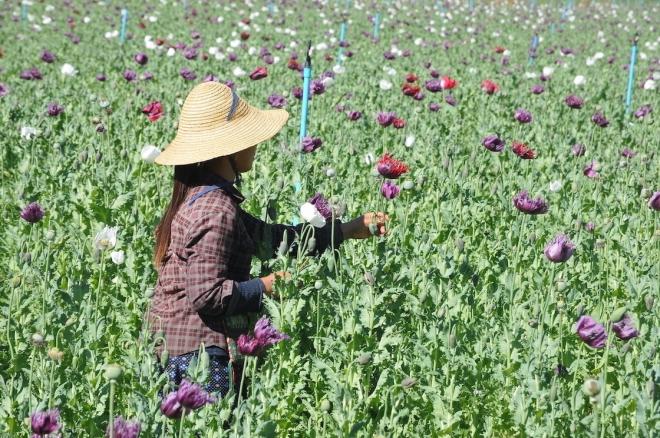
    Image: TNI – A woman working in the opium field in Pekhon Township, Southern Shan State

    The Lessons of the Economic War on Russia

    Counterintuitively — at least to defence hawks who see economic openness as a threat — the collective economic sanctions imposed after Russia’s brutal invasion of Ukraine demonstrate the deep security benefits of globalisation. The economic interdependence that many think a source of weakness is actually a significant strength.

    By Shiro Armstrong and Tom Westland / Australian National University

    The United States and its allies have inflicted massive economic damage on Russia without firing a single shot. Sanctions have struck the Kremlin and its oligarchs. The foreign exchange reserves Russia assiduously accumulated with tight fiscal policy for years are frozen, leaving the central bank incapable of mounting defence of the rouble. Much of the banking sector has been crippled after being cut out of the SWIFT payment system. Multinational corporations are rushing to exit.

    The fall of the rouble — down almost 40 per cent of its value against the US dollar — has ignited inflation. Supermarket shelves are emptying as trade embargoes bite. Faced with the prospect of capital flight, Russia’s central bank raised interest rates to levels that will bankrupt domestic firms. Dollar-denominated debt payments are now more expensive in terms of roubles and, without access to dollar reserves, Russia will likely enter technical default. Moscow’s reputation for stable macroeconomic management, hard-won but quickly shattered, will take decades to recover.

    Yet some are still determined to learn all the wrong lessons. They see the effectiveness of the sanctions as confirmation that an open market is by definition a vulnerable one. It is ludicrous to think that free trade stops wars, they argue: if it did, it would have stopped Russia. This idea is dangerous and false: it will only lead to more conflict in a world in which great powers are allowed to act with impunity.

    Steep price. Yet.

    Recent history furnishes many examples of countries that have tried using economic weapons to extract geopolitical concessions, only to discover those weapons backfire. The global economy is large and there are always alternative buyers or sellers, unless sanctions are a global effort. Chinese trade sanctions on Australia had a limited and temporary cost: alternative markets were found for Australian goods. They have exacted a more significant cost on China, with loss of trust, and encouraged elevation of the Quad and other measures.

    When a country with monopoly over a good leverages that market power it results in uncertainty and a race to find alternatives. Politicised Japanese export restrictions aimed at South Korea in 2019 led to loss of Japanese market share and Japanese companies shifting production to South Korea and elsewhere. Chinese restrictions of rare earth exports to Japan in 2010 resulted in China losing global market share: from 95 per cent of Japanese imports of the critical minerals to only 50 per cent in a couple of years. US restrictions on exporting semiconductors to Chinese firms encouraged Beijing to invest heavily in technological upgrading to reduce dependence on American supplies.

    Sanctions work when they are coordinated by most of the global community and target clear, unpardonable violations of international law, like wars of aggression. Economic war is justified in these dire circumstances. There’s still a steep price for those imposing the sanctions — the blockade of Russia is likely to lead to skyrocketing energy and possibly food prices — but the balance of costs and benefits is much more favourable when the response is truly global.

    China

    Many Chinese are warning against Beijing providing a lifeline to Russia — as India may — lest it’s caught up in the economic squeeze by the West. The ‘no-limits’ partnership between Beijing and Moscow appears to have very real limits — dictated by economic logic, not grandiose geostrategy.

    China has much more at stake than Russia in the global system. It holds US$3.5 trillion of foreign exchange reserves and is more integrated into global markets. Exorcising China from the existing economic order would come at a high price for both China and the world. That is not in the interest of the United States or its allies. Major powers have huge investments abroad that can be seized in the extreme, giving them a stake in the existing order. Economic interdependence is a powerful constraint on all sides and a powerful weapon for securing peace.

    Choosing policy strategies that effectively decouple economies from one another as a response to this tragic episode would be a major strategic blunder.

    Strengthening the existing economic order will ensure the United States and China remain locked into the global trading system. The long-awaited US Indo-Pacific Economic Framework should not exclude China. China’s dependence on US dollar reserves has increased as the dollar has appreciated. What would shake global confidence in the dollar as the global reserve currency is a continuation of Trump’s erratic and arbitrary economic diplomacy.

    Exit strategy

    Comprehensive sanctions on China would be more costly for the rest of the world than sanctions on Russia. But the calculus in an extreme scenario would be the same: a clear and massive breach of international law, global coordination and an alternative to traditional military intervention.

    Economic warfare, like any conflict, needs an exit strategy. The costs of the sanctions on Russia increase daily as the economic recovery task grows. The United States and Europe must define a clear, credible exit to sanctions that will rebuild both Ukraine and Russia. The world must not reward aggression, but for very practical reasons, generous support needs to be waiting for Russia to stave off nationalism and extremism, thus avoiding a tragic repeat of Versailles in 1919, when a defeated Germany was punished so severely that it turned to revenge, rather than rebuilding its connections with the world.


    Shiro Armstrong is Director, and Tom Westland Director of Research, at the Asian Bureau of Economic Research in the Crawford School of Public Policy at The Australian National University.


    This piece has been sourced from the East Asia Forum of the Australian National University.

    Image: Wikimedia. Representational image.


    UN’s Guterres Must be Visibly Proactive as Peacemaker in Ukraine

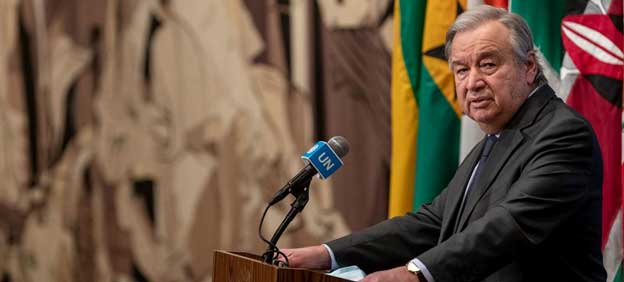
    Briefing reporters on Ukraine, UN Secretary-General António Guterres said that the latest developments in Ukraine are testing “the entire international system”. He added “we must pass this test.” “Our world is facing the biggest global peace and security crisis in recent years – certainly in my tenure as Secretary-General.”

    By Kul Chandra Gautam

    In an opinion piece published in PassBlue on 15 March 2022, historian Stephen Schlesinger asked, “Where is the UN’s Guterres?” as Vladimir Putin’s unprovoked war on Ukraine has been dominating the world’s headline news.

    Schlesinger is a good friend and close observer of the UN, and author of the award-winning book: “Act of Creation: The Founding of The United Nations”. Like Schlesinger, many of us who are strong supporters of the UN and who watch the deliberations at the world body closely, do know the answer to his rhetorical question about the whereabouts of the UN Secretary-General Antonio Guterres.

    He is currently between a rock and hard place faced with the blatant violation of the UN Charter by a powerful Permanent Member of the UN Security Council. Many of us consider Guterres as a highly qualified statesman and the world’s top diplomat with impeccable credentials and a sober leadership style.

    Understandably, he had to be extra cautious and could not take bold initiatives during his first five-year term, as he had to tread carefully in a world dominated by an erratic and dangerous Donald Trump in the White House, a devious Vladimir Putin in the Kremlin, a resurgent Xi Jinping in Beijing and several other populist demagogues and autocrats like Jair Bolsonaro, Recep Tayyip Erdogan and Boris Johnson with their antipathy towards multilateralism.

    Not sufficient

    Now in his second term, Guterres is freed from the fear of not being re-elected and can afford to be more courageous and visibly proactive when the stakes for the UN’s credibility and effectiveness are high, given the threat to international peace and security posed by Putin’s war of choice in Ukraine.

    To his credit, Guterres did not mince words in deploring the Russian invasion of Ukraine as a violation of the UN Charter both at the UN Security Council and the General Assembly. He even warned that the prospect of nuclear war was now back within the realm of possibility. And, he pleaded with Putin to stop the war and offered his good offices to help resolve the crisis peacefully.

    It is understood that Guterres has also been in close contact with leaders of China, France, Germany, India, Israel and Turkey, among others, on mediation efforts to bring an end to this horrific war. This is all commendable.

    But in an era of the 24/7 news cycle and the pervasive social media, the UN Chief’s remarks from his UN perch and his quiet diplomacy with influential member-states are necessary but not sufficient. The world’s general public – and especially the people of Ukraine and Russia – don’t see the UN leader being visibly proactive outside the glasshouse of UN headquarters in New York.

    Guterres has been outspoken in highlighting the catastrophic humanitarian crisis caused by the war in Ukraine and has taken a leadership role to mobilize international support for humanitarian assistance.

    In an opinion piece entitled “War on Ukraine also an Assault on World’s Most Vulnerable People and Countries” published by the IPS News on 15 March 2022, Guterres warned about the grave consequences and negative ripple effects of the war in Ukraine on the world economy, and in particular, the developing countries.

    Gravest challenge

    His plea to world leaders to resist the temptation of increasing military budgets at the expense of Official Development Assistance (ODA) and climate action, are also right on the mark.

    The UN’s humanitarian agencies like UNHCR, UNICEF, WFP, WHO, etc. are doing a heroic job to provide life-saving assistance both inside Ukraine and in its neighboring countries deluged with millions of refugees. These UN agencies and many non-governmental organizations (NGOs) have honed their skills to mobilize resources and implement humanitarian assistance quite effectively over the decades.

    Where the S-G’s leadership is needed most and is being tested publicly is not so much on humanitarian assistance, but in preventing and ending wars that are the root causes of the humanitarian crisis.

    The global public sees and judges the S-G’s effectiveness on what it considers as his job number #1, “to save succeeding generations from the scourge of war”. Guterres is no longer the UN High Commissioner for Refugees, but the world’s top diplomat and guardian of international peace and security.

    There have been many wars in the 76-year history of the UN, but the Russian invasion of Ukraine stands as the gravest challenge to the post-World War II international order as one of its guardians and a Permanent Member of the UN Security Council has struck at the heart of its architecture by threatening a nuclear conflagration and a potential World War III in the ramparts of the Second World War.

    The UN has played an important role in mediating peace processes, organizing humanitarian ceasefires, helping to maintain peace through peacekeeping and peacebuilding missions in many inter-country and regional wars and conflicts.

    Invisibility undermines credibility

    But it has so far appeared helpless when the vital interests of its most powerful veto-wielding superpowers like Russia and the US are involved.

    The Big Powers – the P-5 – often see the S-G as merely the “Chief Administrative Officer” of the UN, and as such subservient to world leaders, foreign ministers and ambassadors as the “governors” of the organization in the GA and SC.

    However, “We the peoples of the world” regard the S-G as a world leader and the world’s top diplomat in his/her own right. After all, according to Chapter XV of the UN Charter, the Secretariat led by the S-G is akin to the principal organs of the United Nations. And the Charter gives the S-G sufficient leeway to take initiatives.

    Apropos the old debate on whether the S-G is merely a “Secretary” or a “General”, the world’s Big Powers may see him as just a “Secretary” but “we the peoples of the world” wish to see him as an unarmed, Pacifist “General” and a world leader.

    In an era of shuttle diplomacy, when we see Macron, Scholz, Johnson, Erdogan, Naftali Bennet, Blinken, et. al. conferring in Moscow, Brussels, Berlin and Washington, why don’t we see Guterres there, or hear about him calling or writing to Putin, Biden, Xi Jinping and Zelensky?

    If the leaders of Poland, Czech Republic and Slovenia dare to risk visiting Kyiv in the midst of shelling to show their solidarity, surely Guterres, the world’s top peacemaker and coordinator of humanitarian assistance should be seen there too.

    Guterres’ invisibility seriously undermines his and the UN’s credibility at this time of the greatest international security crisis since the founding of the UN in 1945, and certainly during his tenure as S-G.

    Courage

    I am pretty sure that in similar circumstances some of his more courageous predecessors like Dag Hammarskjold, Kofi Annan and even the otherwise quiet U Thant and the voluble Boutros Boutros-Ghali would have been more visible and outspoken.

    We are all mindful of the limitations and constraints that the UN leader faces in dealing with crises involving strong vested interests of the world’s veto-wielding superpowers. The S-G can do nothing about changing the veto-power structure agreed and understandable in a different era, but which has now become an indelible birth defect of the UN Charter.

    However, in the case of the Ukraine crisis, the S-G can and ought to be bolder and visibly more proactive, taking strength from the fact that the aggressor power is completely isolated and has become a virtual pariah.

    Not even a single other member-state in the Security Council supported Putin’s justification for his attack on Ukraine. And in the “Uniting for Peace” resolution at the UN General Assembly, an overwhelming majority of 141 states denounced the Russian invasion and called for immediate end to the war, with the aggressor getting the support of only four notoriously autocratic pariah regimes.

    These UN resolutions, and the world’s public opinion, give valuable moral mandate for the S-G to play a proactive and visible role as the world’s premier peacemaker.

    I have no doubt about Guterres’ competence and commitment. But sometimes I worry about his (lack of) courage. Even if his efforts fail, he should dare to go down in history as someone who took the utmost risk for peace, rather than someone who was too timid to the point of making the UN appear like totally impotent or irrelevant.

    There is always a place for behind the scene, quiet diplomacy in international relations. But that is not good enough for the UN’s credibility in this day and age when the world’s eyes are on Ukraine and people all over the world are asking “Where is the UN?” when its very raison d’être is being rudely challenged by one of its major founding member-states.


    Kul Gautam is a former Assistant Secretary-General of the UN; Deputy Executive Director of UNICEF.

    This piece has been sourced from the Inter Press Service

    Image:  Mark Garten  /  UN Photo

     

    Four among 25 Sri Lankan university students say they have been sexually harassed, even raped, says study

    A report released Tuesday on ragging and sexual and gender based violence in Sri Lankan State universities highlights grave consequences young women face in pursuit of their educational goals.

    A new study on prevalence of ragging and Sexual and Gender Based Violence (SGBV) in Sri Lankan State universities has revealed the extent and the negative consequences of these harmful practices.

    This is the first study to have separate set of questionnaires on “Social Climate and Ragging” and “experience of SGBV” administered among students and another on “staff climate” administered among the academic and non-academic staff.

    Initiated by the Centre for Gender Equity and Equality of the University Grants Commission (UGC), in partnership with UNICEF, the study covered a cross section of universities: old and new universities, and those situated in previously conflict-affected areas.

    Ragging, a practice affecting in some form over half of students in state universities in Sri Lanka according to the study, continues to evolve in nature and consequences, often creating a toxic learning environment.  Ragging is both verbal and physical, including drug abuse, assault and sexual harassment.  It colludes with Sexual and Gender Based Violence (SGBV), another grave concern within the University System in Sri Lanka.

    Verbal harassment common

    “Sri Lankan State Universities have been producing globally renown individuals in all most all the professions. However, in the recent past there has been a growing concern on prevalence of ragging and Sexual and Gender Based Violence (SGBV) in State Universities in Sri Lanka”, said, Senior Professor Sampath Amaratunge, Chairman, University Grants Commission.

    “The launch of the report on “Prevalence of Ragging and Sexual and Gender Based Violence in Sri Lankan State Universities” today paves the way to develop interventions that can mitigate ragging and SGBV in State Universities and promote diversity and inclusion to ensure quality of education and well-being of all the members in State University communities in Sri Lanka”, he added

    The study says that over 51 per cent of the students surveyed had been subjected to verbal harassments, 34.3 per cent to psychological violence, 23.8 per cent to physical abuse and 16.6 per cent to sexual harassments, as a result of ragging.

    Both academic and non-academic staff indicated the presence of SGBV although almost all incidents were reported only from one university. The report reveals that 44 per cent of university staff had been subjected to verbal sexual violence, 22.3 per cent requested for sexual bribes and 19.9 per cent had experienced physical sexual violence.

    SGBV induces stress

    Among students in public sector universities, 21 per cent reported having been subjected to verbal sexual violence and 1.5 per cent forced into sex.

    Although ragging is often perceived as occurring only in the first year, the study indicates that the harassment does not end when students complete their first year “induction”.  In reality, ragging is simply laying the groundwork for a system of conformity and influence, in which seniors have authority over their juniors throughout their academic careers.

    UNICEF experts have opined that ragging and SGBV induces stress — an emotional and behavioural process that occurs when physical or psychological well-being is disturbed or threatened, and it produces severe anxiety. As a consequence, in the short term, students may not be able to concentrate on their studies and risk dropping out of university. As a form of violence, the long-term effects of ragging on the individual go beyond the student life, leading to timid, violent, and intolerant people whose behaviour eventually affects the entire society.

    Additional regulations

    “Ensuring that the learning environment remains conducive to help young people reach their full potential is important.  Universities should provide the space for equal opportunities for youth from different backgrounds to learn and become responsible citizens”, said Christian Skoog, Representative, UNICEF Sri Lanka.

    “UNICEF is pleased to have provided technical and financial support to this important study to inform the efforts of the universities and government in addressing the very serious issue of ragging and its consequences on learning as well as on the lives of youth”.

    Apart from the measures introduced in the past by the government, the University Grants Commission (UGC), which oversees all higher educational institutions in Sri Lanka, has recently put in place additional regulations aimed at preventing harassment of the students by their seniors.

    University authorities are now required to report such incidents to the police, and those found guilty of the offences are liable to lengthy imprisonment, expulsion from the institution of higher education and payment for damages suffered by the victim. An additional stipulation is that all students pledge in writing that they will not engage in harassment of the new entrants.

    However, concerted efforts are required to tackle the practice which impacts the quality of university education and those who come out of it.

    “UNICEF reiterates its commitment and availability to support the country in addressing ragging as well other harmful practices”, Skoog added.

    Former Afghan Judges Demand Taliban to Return Them Their Jobs, Salaries

    The judges, dismissed immediately after the Taliban overthrew the elected government, have filed a suit demanding that the Taliban return them to their positions and provide them with the salaries due to them.

    Former judges and magistrates, sacked by Afghanistan’s present Taliban government, have demanded the return of their jobs. Judges and magistrates from 34 provinces, numbering over 200, have filed a suit against the government, demanding that they be reinstated.

    The judges and magistrates had been sacked by the Taliban after the armed group overthrew the elected government in August 2021.

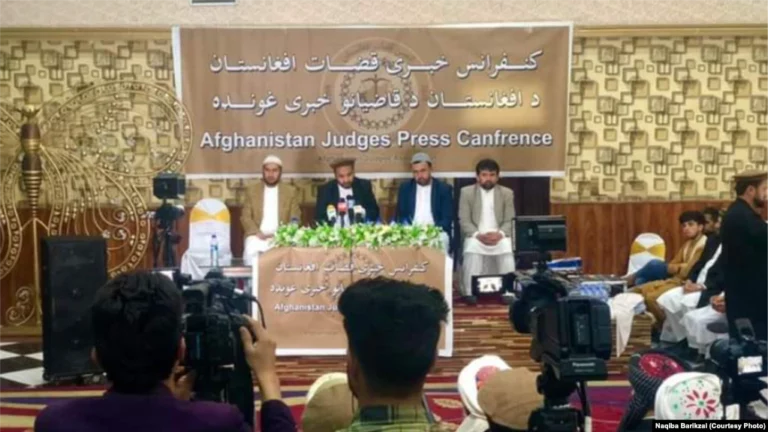
    They held a press conference after filing their case, demanding that the Taliban return them to their positions and provide them with the salaries due to them.

    Arafat Ghavam, one of the dismissed judges, was quoted by Radio Azadi as saying that the judges would leave the country if no decision is made within a month.

    The Taliban are working to reinstate the Sharia legal system.

    “We have set a time for them to review our demands for a month, because if our demands are not met, most judges will have to leave the country and become immigrants,” Radio Azadi quoted him as saying.

    “Should this happen, it will not be a good result for the governing system, for the nation, or for the people,” he said.

    Many women judges and magistrates and even prosecutors have gone into hiding in recent months as many of the people whom they had sentenced to prison terms were holding them responsible for their incarcerations and were threatening them.

    A prosecutor had earlier spoken of receiving calls from a drug peddler he helped get convicted for his illegal drug trade. The caller had demanded that he be compensated.

    Read: The fall guys of Afghanistan’s Sharia legal system

    According to Radio Azadi, Taliban government officials refused to respond to requests for comment on the latest protest and lawsuit by the judges and magistrates.

    Earlier, Radio Azadi had quoted Taliban spokesman Zabihullah Mujahid saying that some judges had been dismissed for their alleged involvement in injustices and corruption in the previous pro-Western government.

    Many of the former judges had sentenced Taliban and Islamic State extremist members, kidnappers, drug traffickers, and other criminals to prison over the past two decades.

    One of the first things the Taliban had done upon seizing power was to throw open the gates of the Kabul prison.


    Image: Courtesy Naqiba Barikzal