More

    Afghanistan, Neighbouring Countries Foreign Ministers to meet in China end-March

    The meeting will help build consensus among the neighbours on the issue of Afghanistan and discuss how to promote stability in the country and support its people.

    The third meeting of the foreign ministers of Afghanistan’s neighbouring countries will be held in Tunxi, Central China’s Anhui Province on March 30-31, Chinese Foreign Ministry Spokesperson announced on Monday.

    Chinese State Councilor and Foreign Minister Wang Yi will chair the meeting with the foreign ministers of Pakistan, Iran, Russia, Tajikistan, Turkmenistan and Uzbekistan or their representatives, Wang Wenbin said during his regular briefing held here.

    Responding to a question about expectation for the third meeting under the current circumstances, he said, the meeting will help build consensus among the neighbours on the issue of Afghanistan, discuss how to promote stability in the country and support its people.

    “As the situation is in a critical transition from chaos to order, the Afghan people still face multiple challenges from within and outside and need more support. By hosting the third meeting, China looks forward to putting consensus among neighbouring countries, discussing ways to achieve stability and support the Afghan people and also share our voice with the rest of the international community,” he added.

    The spokesperson informed that on the sidelines of the meeting, the Chinese foreign minister will also host a dialogue between the foreign ministers and the acting Foreign Minister Amir Khan Muttaqi of the Afghan interim government, with the foreign ministers of Indonesia and Qatar invited to participate.

    Fighting terrorism

    The dialogue is expected to promote the Afghan side to build an open and inclusive political structure, pursue a moderate and stable domestic and foreign policy, and effectively fight terrorism, he added.

    “At the same time, we also expect the international community to provide greater support to Afghanistan and call on the United States to effectively assume the primary responsibility for economic reconstruction in Afghanistan,” he said.

    Following his visit to India, China’s foreign minister, Wang Yi paid a visit to Afghanistan on 24 March, the first visit by the Chinese foreign minister since the change of government in Afghanistan in August 2021.

    Pakistan chaired the first meeting of the foreign ministers of Afghanistan’s neighbouring countries on September 8, 2021, one day after the Afghan Taliban announced the formation of an interim government in Kabul.

    The second meeting of the foreign ministers of the countries bordering Afghanistan took place in Tehran, the capital of Iran, on 27 October 2021.

    Humanitarian, economic crises

    In a related development, Pakistan Foreign Minister Shah Mahmood Qureshi on Monday said that Afghanistan must not be seen through a regional prism, but as a “shared and collective responsibility”.

    “Instability in Afghanistan will have negative consequences for the entire world,” he said.

    Referring to ongoing conflict between Russia and Ukraine, the foreign minister said the emergence of new conflicts did not mean that the world can afford to forget old ones. He opined that the wounds of 40 years of war and bloodshed in Afghanistan would take a long time to heal.

    “Failure is not an option. If the world community fails Afghanistan yet again, it will result in a fresh influx of refugees, enhanced space for terrorism, and a rise in drug trafficking,” he said.

    Foreign Minister Qureshi said that since 15 August, the interim Afghan government remained embattled with the humanitarian and economic crises, as well as a liquidity crunch, exacerbated by the lack of a functional banking system.

    He mentioned at the same time the positive aspects mainly internal stability, no civil war, the opening of girls’ schools, and the interim government’s commitment to addressing terrorism.

    He said Afghanistan currently stood at a critical crossroads as for the first time in over 40 years, there was a single unified dispensation over its entire territory.

    The foreign minister said over four decades of war and bloodshed were over and there had been a demonstrable decrease in corruption, leading to an increase in revenue.
    The Paradox of China–India Relations

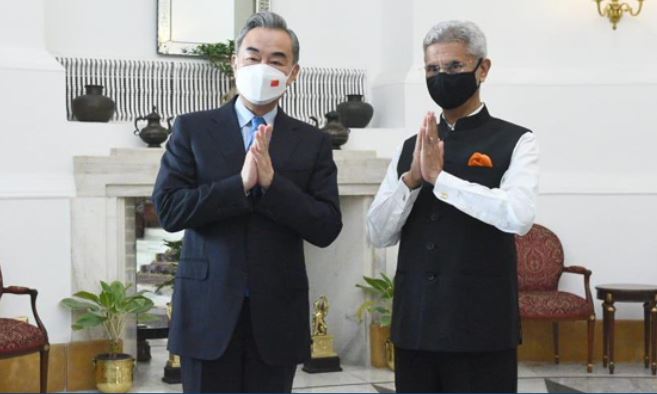
    Recent relations between China and India have been divided by both security tensions and opposite alliances. But on 25 March, the China–India relationship seems to have taken a major step forward with the unexpected visit by Chinese Foreign Minister Wang Yi to India.

    By Meghna Srivastava and Yves Tiberghien

    At the recent COP26 climate conference in Glasgow, China and India cooperated on the critical issues of coal reduction and climate justice. On the current Ukraine crisis, China and India both abstained at the UN Security Council and at the UN General Assembly due to their separate and longstanding relationships with Russia — a formal partnership in the case of China and military dependence and China-focused concern in the case of India.

    Two sets of parallel national narratives — one divergent, one convergent — explain this cognitive dissonance.

    The most salient feature of China–India relations emphasised in mainstream media is their history of post-colonial territorial conflicts, starting with their 1962 border war. True, the two countries managed to deescalate tensions between 1968 and 2017 (except for 1987), thanks to a joint border agreement. But vulnerability is always latent and can be triggered by minor road developments by either side and domestic political mobilisation episodes. The United States has also played an important but fluctuating mitigating role in the background.

    Most recently, China and India engaged in border skirmishes at the Line of Actual Control in May 2020 over minor road developments; and public opinion in India has since then been highly inflamed. The impact of the conflict has been deep. Indeed, India reacted by banning 59 Chinese mobile phone apps (bringing the number to 220 this year) and by strengthening its relationship with Quad partners.

    Booming trade

    But this is an incomplete story. At the COP26 in Glasgow in November 2021, India opposed the majority proposal on banning coal, advocating for the ‘phase down’ of coal instead of a complete ‘phase out’.

    What’s fascinating is that India’s best partner at the COP26 in support of its position was China. This alignment in Glasgow built on years of cooperation on the coal question. Interestingly, in the midst of the COVID-19 pandemic and global tensions, trade between China and India has been booming: two-way trade increased by 43 per cent in 2021, with Chinese exports up 46 per cent and Indian exports 34 per cent.

    Instances of conflict and concordance embedded in the China–India relationship highlight the complexities and nuances of global politics. Given the extremely high to the point of irrational costs of border conflicts, material interests and institutions alone cannot explain the relationship. Instead, states appear to embed dominant national narratives that serve as focal points shaping policy preferences and choice. They act as superordinate goals, which in turn generate parallel positions on key issue areas, despite very different policy processes.

    Several dominant narratives can coexist and lead to cognitive dissonance and seemingly incoherent policy choices.

    China and India share a tension between two foundational internal narratives — post-colonial state building, and the search for economic and social justice. Both China’s and India’s domestic and foreign policies are centred on these two organising ideas. The first leads to conflict and the second to cooperation.

    Lots in common

    The current Line of Actual Control roughly follows the McMahon line drawn by the British through the old Tibetan kingdom, the closing chapter of the colonial Great Game that dominated the 19th century. This line has become a symbol of post-war national identity in India and of colonial pains during the short Yuan Shikai period in China. They have thus both focussed on state building and are fixated on establishing full legitimacy as modern nation states. The divisions are further entrenched by China’s support for Pakistan.

    The second grand national narrative at the heart of modern China and India is a focus on economic development. China and India each represented roughly a quarter of the global economy till 1800 but both became peripheral during colonial times, shrinking from a combined 50 per cent of the world economy in 1820 to around 12 per cent at the time of independence.

    When this narrative dominates, it generates convergence of views and from time to time concordance or even cooperation. Both India and China advocate for the reform of global economic institutions. They are partners in the New Development Bank and share a common vision for a multipolar global order. BRICS ministers and working groups are still actively meeting in 2022 after the Ukraine invasion, including China and India.

    On global climate governance, both strongly support the principles of climate justice and common but differentiated responsibilities, and put great emphasis on the responsibility of developed countries to deliver on their promised Green Fund contribution. This was evident at COP26.

    This raises questions — will occasionally cooperative relations between China and India be sufficient to edge out the stalemate at the border?

    Or will the global international relations community need to accept that the India-China relations will remain an intricate balance between conflict and cooperation?


    The authors are attached to the University of British of Columbia.


    This piece has been sourced from the East Asia Forum of the Australian National University.

    UN Security Council Expresses ‘Deep Concern’ Over Restrictions in Afghanistan

    The members of the Security Council stressed the importance of efforts by the international community to support Afghanistan, including on education.

    In a statement released to the press, the United Nations Security Council said it is deeply concerned over the decision by Afghanistan’s Taliban-led government to deny girls above the sixth grade access to education in Afghanistan.

    The Security Council members reaffirmed the right to education for all Afghans, including girls, and called on the Taliban to respect the right to education and adhere to their commitments to reopen schools for all female students without further delay.

    Earlier, Taliban officials had indefinitely extended the school off days for girls studying beyond the sixth grade. The schools were closed since the Taliban had taken control over the country on 15 August last year.

    Subsequently, the US called off its meetings with the Taliban in Doha on March 25. That meeting was called to address key economic issues.

    The Security Council members requested the Special Representative of the Secretary-General to continue to engage with all relevant Afghan political actors and stakeholders, including relevant authorities, on this issue, according to the mandate of the United Nations Assistance Mission in Afghanistan (UNAMA), and keep the Security Council informed on progress.

    The members of the Security Council stressed the importance of efforts by the international community to support Afghanistan, including on education, and highlighted the coordinating role of UNAMA in this regard.

    Undeterred

    The members of the Security Council reaffirmed their support for the people of Afghanistan, as well as their strong commitment to the sovereignty, independence, territorial integrity and national unity of Afghanistan.

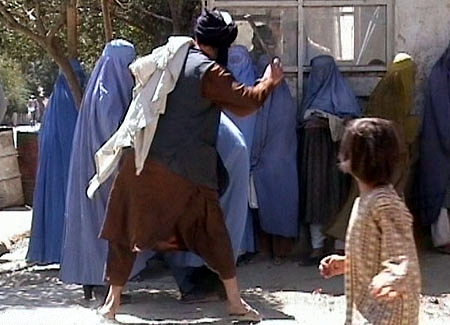
    But the Taliban have gone ahead with imposing their gender segregating rules. On Sunday, they announced a fresh set of restrictions on the use of public parks by women in the company of men. Visiting days for women keen to go to parks have been announced, restricting men’s access to the parks on the days meant for women.

    According to an order of the Taliban’s Ministry For the Promotion of Virtue and Prevention of Vice, all public spaces in the nation’s capital city, Kabul, would be opened to women and girls from Sundays, Mondays and Tuesdays. Men and boys could access the places Wednesdays through Saturdays.

    Earlier, the Taliban had mandated that women could only travel in women-designated transport vehicles. This inconvenienced many working women and it has been feared that it will impose economic hardships since the women find their movements curtailed. This is particularly worrisome for women headed households.

    Simultaneously, reports trickling out of Kabul have hinted that officials at the city’s airport have been told not to allow women and girls to fly unless they are accompanied by a man – and, for the purpose, the authorities must be sure that the man is a relative.

    India’s Farmers’ Movement Discussed as Pakistan Invites Chinese Agri Business Giant to do Business

    There was reference to the farmers’ movement in Indian and of the unrest among fishermen in Balochistan at the meeting between Pakistan’s ambassador to China and President of the Chinese agribusiness giant, COFCO.

    Pakistan ambassador to China, Moin ul Haque on Sunday met with Richeng Luan, President of China Oil and Foodstuffs Corporation (COFCO) to firm up plans for the Chinese agricultural commodities business house to set foot in Pakistan.

    The Pakistan foreign ministry said on Sunday that the two sides also exchanged views on possible collaboration between COFCO and Pakistan during the meeting. The foreign ministry added that this would benefit both the countries.

    Founded in 1949, COFCO is China’s leading agriculture, food and commodity enterprise. The company has been on the Fortune list of the world’s top 500 businesses for 27 years and is China’s principal importer of grain and other agricultural and dairy products.

    Ambassador Haque briefed the COFCO team of the second phase of the Free Trade Agreement (FTA) between China and Pakistan, giving duty free access to large number of Chinese agro products.

    Pakistan is a big producer of rice, wheat, sugarcane, cotton and potatoes, with huge surpluses, the ambassador said, adding that the country wants to export these to China. Besides, Pakistan is also looking at COFCO’s experience to market its premium basmati rice.

    COFCO is already in the process of investing in agri-product processing. It has a contract with Pakistan’s Matco Foods to produce and procure corn from a wet milling production facility in Pakistan. Matco is in a position to process and provide up to 200 metric tonne of milled corn to COFCO daily.

    Farmers’ movement

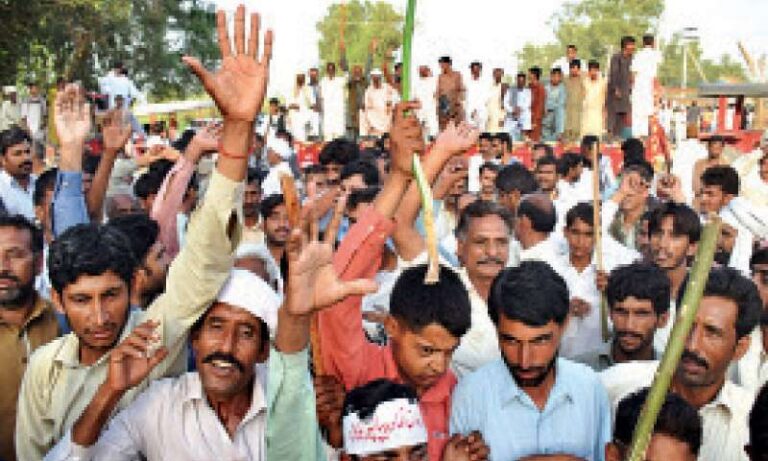
    But COFCO also has concerns of the Pakistan government having to buckle under pressure from farmers’ organisations. The meeting discussed the farmers’ movement in Pakistan throughout that began in 2021. Generally, the corporate house is conscious that there is a growing sentiment against the entry of big agro business in SouthAsia.

    Organised under the umbrella of Pakistan Kisan Ittehad, farmers have also been demanding an MSP for other farm produce, especially paddy, corn and cotton. The slogan for the farmers’ agitation early 2022 was “Bezuban Janwar aur Bebas Kisan March” (march for mute animals and helpless farmers).

    A well-placed source mentioned that there was reference to the farmers’ movement in India and of the unrest among farmers and fishermen in Pakistan.

    Farmers across Pakistan too are restive. In the past year, the country witnessed how sporadic protests for fertilisers got organised by the day, helping farmers find a voice. The farmers were protesting for affordable fertiliser and electricity.

    The Chinese are also aware of the demand by Pakistan’s farmers for a minimum support price (MSP) for their produce. Pakistan has a system of MSP for wheat alone, but that too is only on paper since the government has not procured wheat from farmers for over a decade.

    The MSP for wheat was initially agreed to assuage influential farmers from the Punjab province. But, rather than procure wheat from the farmers, the government has been spending huge amounts of money to import the commodity.

    Fishermen too

    Similarly, a movement in Pakistan’s western province of Balochistan has impacted Chinese fishing trawlers in the Arabian Sea. All information from the movement indicated that the movement in Pakistan was inspired by the farmers’ movement in India against the farm laws.

    Towards the end of 2021, a top Chinese diplomat had, in an interview with a Pakistani media, said that China had elaborate and long-term plans to enter the Pakistani fishing industry.

    The diplomat, Consul General Li Bijian had said that “Chinese investors are very much interested in investing in the fishing sector in Pakistan,” which has rich fishery resources.

    That statement stirred huge sentiments in Balochistan and also in the neighbouring province of Sindh. Fisher organisations say that over 700,000 fishing families are struggling to survive in the face of fast-depleting fish stocks.

    Time Running Out to Address Afghanistan’s Hunger Crisis; Without a Functioning Central Bank, Aid Not Enough

    The drought and a shortage of funds has fuelled an economic crisis – more than 70 percent of Afghanistan’s population live in rural areas and around 80 percent of livelihoods depend on agriculture which is the mainstay of the country’s economy.

    By Fereshta Abbasi

    “Children in the provinces – they are only skin on bones now – and I’m afraid this is only going to get worse,” the director of an international humanitarian organization in Afghanistan told me.

    According to a health ministry official, approximately one in 10 new-born Afghan babies born since January 2022 have died – over 13,000 total – an increase believed to be exacerbated by worsening malnutrition, hunger-related diseases, and the collapse of the country’s healthcare sector. 95 per cent of the population does not have enough to eat and 3.5 million children need nutritional support.

    “Half of those we admit for critical care are also malnourished,” a doctor with Médecins Sans Frontières reported. Almost 800 children in one hospital in Helmand province are there because of acute malnutrition.

    Difficult to access funds

    While many countries have pledged humanitarian aid, Afghanistan also urgently needs a functioning banking system to address the crisis. Most Afghan banks are barely operating now. In recent weeks, the United States and World Bank have unlocked billions of dollars in assistance, but restrictions on Afghanistan’s Central Bank are still making large transactions or withdrawals impossible.

    Aid groups delivering humanitarian assistance say they are unable to move funds into Afghanistan because international banks remain wary of pre-existing sanctions on the Taliban, and Afghan banks limit cash withdrawals due to currency shortages. Aid groups say that payments to Afghanistan are routinely blocked by banks wary of running afoul of sanctions.

    Instead, most groups use the informal hawala system to transfer funds, even though the service charges can range from 4 to 8 percent in cities or as much as 13 percent in remote areas. Before the Taliban takeover in August 2021, rates were at about two per cent.

    Donors have been understandably worried that efforts to restore Afghanistan’s Central Bank would bolster the Taliban’s rule. Since taking power, Taliban authorities have arbitrarily arrested activists and journalists, executed former government officials, and engaged in widespread violations of women’s and girls’ rights.

    But Afghans need all their rights protected, including the right to food. While humanitarian assistance programs can help mitigate the economic crisis, they are far from sufficient. The Taliban also need to address the crisis, including by letting women work, and donors should monitor bank transactions to ensure funds are being used for legitimate humanitarian and commercial purposes.

    Without that, it will be impossible to ease the crisis and help Afghanistan’s most vulnerable children.

    Hunger staring in the face

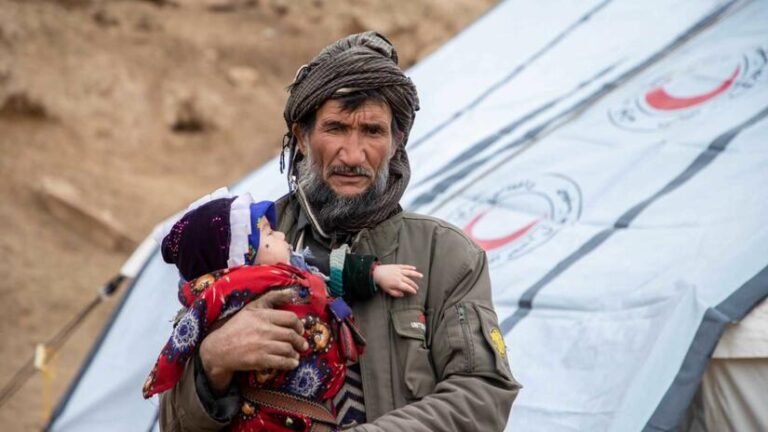
    In the meanwhile, the International Federation of Red Cross (IFRC) has voived fears for millions of Afghans and farming communities as fields remain bare of the annual spring crops.

    The ongoing drought means that the area planted with winter wheat is well below average. Field reports indicate that half the ground normally sown with wheat was fallow at the end of the planting window in December.

    The United Nations too says that hunger is worsening in Afghanistan, with 95 per cent of the population going without enough food to eat every day.

    The few crops which were planted are likely to face harsh conditions, with La Nina expected to bring drier than normal conditions in the coming months, extending the severe drought into a second year.

    Mawlawi Mutiul Haq Khales, who heads of the Afghan Red Crescent Society Acting President, feels helpless. He says, “Millions of families rely on farming, but they already lost last year’s crops to the severe drought, leaving them without grain to get through the harsh winter or seeds to sow in the fields.”

    “Without seeds in the ground, there will be no harvest in spring and summer, creating a real risk of famine across Afghanistan, where nearly 23 million people are already unable to feed themselves every day,” Mawlawi adds.

    The drought crisis has fuelled an economic crisis in a country where agriculture is critical for people’s livelihoods and the mainstay of the economy. More than 70 percent of Afghanistan’s population live in rural areas and around 80 percent of livelihoods depend on agriculture, according to the latest IPC Afghanistan food security data.


    Fereshta Abbasi is a researcher with Human Rights Watch. The additional reporting has been sourced from IFRC

    Image: IFRC

    Dangers Pakistani Pregnant Women Face in Extreme Summer Heat

    Rising summer temperatures are exacerbating existing inequities in maternal and newborn health in Pakistan. Sexual and reproductive health and rights are central to climate action.

    Erika Nguyen

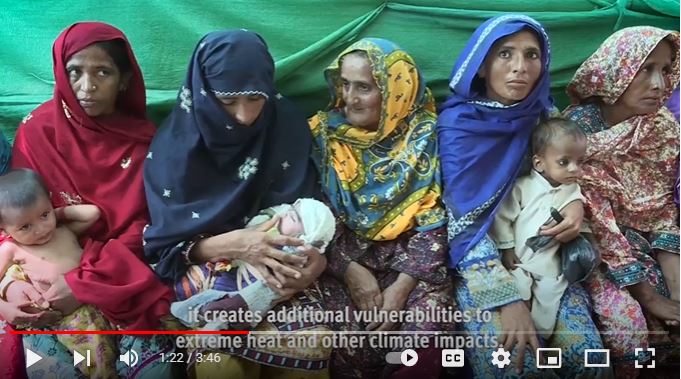
    A new video shows how rising temperatures are increasing health pressures on pregnant women, new mothers, and their families in Sindh and Punjab provinces in Pakistan. Rising heat is also exacerbating existing inequities in maternal and newborn health.

    Based on accounts from pregnant women and new mothers, the video, by the Research and Development Forum for Safe Motherhood Pakistan and the White Ribbon Alliance, provides a critical glimpse into one piece of the climate crisis’s impact on sexual and reproductive health and rights. Studies, including those cited in the most recent United Nations Intergovernmental Panel on Climate Change (IPCC) report, show that pregnant people are at high risk of heat-related illness. Exposure to high temperatures is linked to stillbirth, premature birth, and low birth rates, all of which are associated with infant mortality.

    The IPCC report also noted other, often compounding, climate impacts that negatively affect pregnancy and newborn health, including loss of food and water sources, poor water quality, increased exposure to vector-borne diseases, and loss of access to prenatal and other care following extreme weather events.

    Summer of poverty

    Extreme heat is experienced unevenly. Women in the video note how they have limited access to electricity due to outages and high electricity bills, compounding the challenges of coping with extreme heat. One says: “Rich people can afford solar panels but what can poor people like us do?”

    These women regularly experience extreme heat. Jacobobad, in Sindh province, is among the hottest cities in the world, regularly surpassing 50 degrees Celsius (122 degrees Fahrenheit) in the summer.

    Extreme heat is set to increase due to human-caused climate change, and the impacts will be felt most acutely by certain populations. Alongside pregnant people, these include older people, people with disabilities, babies and children, outdoor workers, and people living in social isolation or poverty.

    The United Nations’ annual “Commission on the Status of Women” meeting wraps up this week. The theme this year is “Achieving gender equality and the empowerment of all women and girls in the context of climate change, environmental and disaster risk reduction policies and programmes.” Governments should commit to recognizing that protecting sexual and reproductive health and rights, especially in the face of extreme heat and other climate impacts, is central to protecting human health and women’s rights.


    Erika Nguyen is Senior Coordinator, Women’s Rights Division of Human Rights Watch.


    Image: Screengrab from video produced by the White Ribbon Alliance

    A Thing (or Two) of Beauty…… in Asia’s Forests

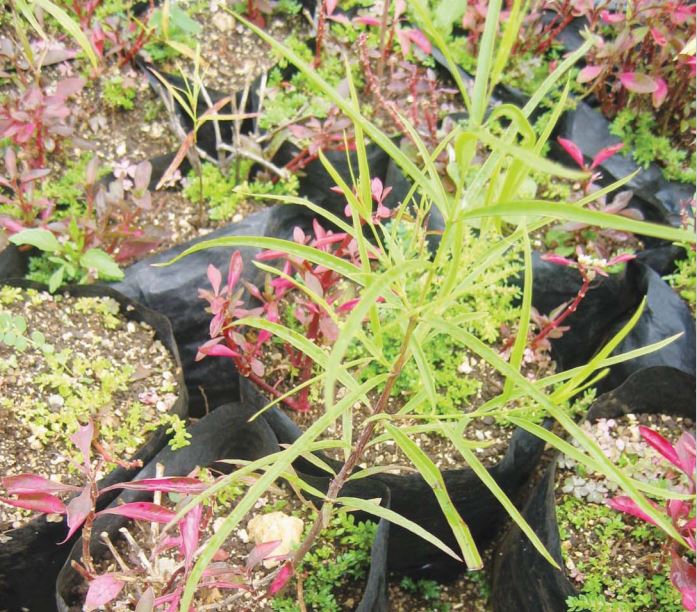
    A new publication has distilled evidence of how forests from Cambodia, India, Indonesia, Nepal and Vietnam are the source of ingredients for the global beauty and cosmetic industry.

    The use of natural ingredients by the cosmetics industry has increased over the past decade. But there is no comprehensive documentation on beauty products from forests.

    Natural cosmetic and beauty products are providing forest communities with livelihood opportunities as the Non-Timber Forest Products – Exchange Programme helps rural communities explore livelihood opportunities in the natural products market.

    But the arrangements for sourcing plants and resins for the cosmetics industry is anything by equitable. Natural cosmetic products often do not support local communities and deplete the forests’ natural resources.

    Now, there is growing consumer interest in the environmental and ethical credentials of cosmetics. This has spurred interest in sustainably- and ethically-sourced beauty products, which include many forest products, also known as non-wood forest products (NWFPs).

    Growth in natural cosmetics industries is at almost 10 percent per year. In order to tap into this market to raise the income of rural, forest communities worldwide, FAO and the Non-Timber Forest Products – Exchange Programme (NTFP-EP) network examined some of the different, forest-derived beauty products, which have been used since antiquity in traditional practices and trade in various Asian and Pacific countries.

    Now, a publication by the Non-Timber Forest Products Exchange Programme (NTFP-EP) draws attention to the role forests play in supplying beauty products. The study, Naturally Beautiful: Cosmetic and Beauty Products from Forests, shows how these products can provide livelihood options for forest communities.

    Four such constraint-heavy products and plants the study has identified include sandalwood oil, medicinal herbs, resins and oils from the forests of Cambodia, India, Indonesia, Nepal and Vietnam. The NTFP-EP publication also points to opportunities for growth, particularly for community-based enterprises.

    Sandalwood oil in Asia

    Sandalwood oil has been an extremely important source of income and trade in the Pacific for over 200 years. Sandalwood trees are found in various countries from India and Indonesia. Sandalwood oil is distilled from the tree’s roots, and owing to its coveted fragrance, it is added to commercial products such as soaps, candles, perfumes and incense.

    Due to the over-harvesting of these trees, stocks were decimated, and sandalwood trade became almost non-existent. However, its potential for generating income is now encouraging communities to establish new sandalwood plantations in Australia and create better trade management efforts in Vanuatu. FAO is encouraging global communities to better manage and conserve sandalwood trees in order to sustainably tap into this potential income source and preserve its cultural importance.

    Gurjum balsam resin in Cambodia

    In Cambodia, resin tapped from dipterocarp trees, commonly known as gurjum balsam, is used as a clouding agent in polishes and paints or to waterproof umbrellas and baskets. It can also be processed into an essential oil and is mainly used in the perfume industry. Many people from indigenous communities collect gurjum balsam resin as an important source of income.

    Since 2003, illegal logging and destructive harvesting has led to a production decline. The lack of supply and general lower demand has jeopardized the resin industry in the country. FAO has offered recommendations in protecting natural resources in the Cambodian forests and sustainably reviving this resin collection activity. This includes training people to collect resin more effectively, to learn filtering techniques that will add value to the products and to collect resin in new containers to reduce impurities and increase market value.

    Plant-based, medicinal baths in Vietnam

    In the Sapa District in northern Vietnam, the Red Dzao people in the Ta Phin commune have a traditional practice of a medicinal bath, referred to as “Dia dao xin”. As a part of their culture, the Red Dzao people bathe using herbal plants consisting of five to ten different varieties. They boil these plants and pour this water in barrels for people to soak in. It is believed that these medicinal baths help with fatigue and blood circulation. In addition, this treatment removes dead skin and open pores.

    The community offers these treatments for tourists in homestays in Ta Phin and sells packages of pre-mixed powdered ingredients to visitors and hotels. However, unsustainable harvesting of plants and exploitation by outsiders threaten their local business. A community joint stock company was established in 2006 to address these challenges. This company model has developed certified medicinal treatments and products, creating jobs and stable income for over 100 households which also helped to unify the community.

    Spikenard oil in Nepal

    Found in the Himalayan region, the spikenard plant, also known as jatamansi in Nepal, is used to make oil that is found in products such as perfumes, lotions, anti-ageing creams, deodorants and colour cosmetics in the international beauty industry. The collection and trade of spikenard plants provides employment for the poor in rural, high-altitude areas of Nepal.

    However, the spikenard plant is listed as “Critically Endangered” on the IUCN Red List. Increased demand and high economic value led to over- or improper- harvesting of immature plants. Infrastructure development and human settlement further added to the loss of the spikenard habitat. However, its socio-economic value has fostered efforts by the government and several organizations to improve resource management and regulate harvesting practices. FAO is encouraging local participation in the value chain to promote community businesses. The development of markets will also enhance economic potential for spikenard oil.


    Image: Non-Timber Forest Products – Exchange Programme (NTFP-EP)

    WHO, India Sign Deal to Establish Global Centre for Traditional Medicine

    Around 80 per cent of the world’s population is estimated to use traditional medicine, that is also increasingly prominent in the world of modern science. Some 40 per cent of approved pharmaceutical products in use today derive from natural substances.

    The World Health Organization (WHO) and the Government of India on Friday signed an agreement to establish the WHO Global Centre for Traditional Medicine. The onsite launch of the new centre in Jamnagar, Gujarat will take place on April 21, 2022.

    The centre will be a global knowledge centre for traditional medicine, supported by an investment of USD 250 million from the Indian government. It aims to harness the potential of traditional medicine from across the world through modern science and technology to improve the health of people and the planet.

    To date, 170 of the 194 WHO member States have reported the use of traditional medicine, and their governments have asked for WHO’s support in creating a body of reliable evidence and data on traditional medicine practices and products. Around 80 per cent of the world’s population is estimated to use traditional medicine, WHO says.

    “For many millions of people around the world, traditional medicine is the first port of call to treat many diseases,” said Dr Tedros Adhanom Ghebreyesus, WHO Director-General. “Ensuring all people have access to safe and effective treatment is an essential part of WHO’s mission, and this new center will help to harness the power of science to strengthen the evidence base for traditional medicine.”

    Plant origins

    The term traditional medicine describes the total sum of the knowledge, skills and practices indigenous and different cultures have used over time to maintain health and prevent, diagnose and treat physical and mental illness. Its reach encompasses ancient practices such as acupuncture, ayurvedic medicine and herbal mixtures as well as modern medicines.

    Yet, today’s national health systems and strategies do not yet fully integrate the millions of traditional medicine workers, accredited courses, health facilities, and health expenditures.

    Welcoming the signing of the host country agreement of the establishment of Global Centre for Traditional Medicine (GCTM) between Ministry of Ayush and the WHO, Prime Minister Narendra Modi said, “Through various initiatives, our government has been tireless in its endeavour to make preventive and curative healthcare, affordable and accessible to all. May the global centre at Jamnagar help in providing the best healthcare solutions to the world.”

    Traditional medicine is also increasingly prominent in the world of modern science. Some 40 per cent of approved pharmaceutical products in use today derive from natural substances, highlighting the vital importance of conserving biodiversity and sustainability. For example, the discovery of aspirin drew on traditional medicine formulations using the bark of the willow tree, the contraceptive pill was developed from the roots of wild yam plants and child cancer treatments have been based on the rosy periwinkle. Nobel-prize winning research on artemisinin for malaria control started with a review of ancient Chinese medicine texts.

    The new WHO centre will focus on four main strategic areas: evidence and learning; data and analytics; sustainability and equity; and innovation and technology to optimize the contribution of traditional medicine to global health and sustainable development.


    Image: Wikimedia

    Reviving History and the Environment in the City of Djinns and Saints

    Nizamuddin Basti, a treasure trove of a 700-year-old living cultural heritage, is being through a renewal project being implemented by the Aga Khan Trust for Culture. The project has won two UNESCO Awards for Cultural Heritage Conservation in 2021.

    By Archana Singh 

    Nizamuddin Basti, known for its Sufi saints and shrines, is one of the oldest inhabited areas of Delhi and is a different world altogether compared to its neighbourhood colonies such as Lodhi Colony and Khan Market. The Basti greets one with colour, culture and chaos where over seven hundred-year-old walls, crammed streets and winding lanes give history lessons. Beyond the built heritage, the Basti embodies living cultural heritage represented by traditions, cuisine, music, and handicrafts.

    Around three decades ago, Nizamuddin Basti’s image started degrading – from a cultural hub to a Muslim ghetto, discouraging visitors and encouraging criminals. And then came a project that turned things around. The Nizamuddin Basti Renewal project by the Aga Khan Trust for Culture (AKTC) revived the history and rebuilt lives, achieving 15 out of 17 UN Sustainable Development Goals. Conservation of over 20 historic monuments took place alongside the sustainable development of the area and communities.

    Through an innovative People-Public-Private Partnership model, the Nizamuddin Basti Renewal project, started in 2008 overcame significant socioeconomic challenges by working on three core areas: health, education, and environmental sanitation. In 2021, Delhi’s Nizamuddin Basti received two awards at the UNESCO Asia-Pacific Awards for Cultural Heritage Conservation – Award of Excellence and Special Recognition for Sustainable Development Award.

    Explaining how the project incorporated community development into heritage conservation, Ratish Nanda, the CEO of Aga-Khan Trust for Culture (AKTC) and Project Director of the Nizamuddin Urban Renewal Initiative told Mongabay-India, “We are trying to develop a historic city centre model where conservation and development that includes education, sanitation, employment, and urban development goes hand in hand. We are looking at heritage as an asset, not as a burden. And, we are demonstrating that through our projects.” According to Nanda, the Nizamuddin Basti Renewal initiative went beyond monuments restoration to the holistic, sustainable development of the community by working on five key pillars – livelihood generation, environment sanitisation, education, healthcare, and heritage appreciation.

    Reviving the environment

    Before AKTC stepped in, environment had taken a backseat in Nizamuddin Basti where people were concerned first about meeting their basic needs. The major environmental issues that the Basti faced were pollution in water bodies in and around the Basti, diminishing green cover and lack of environmental awareness among the locals. AKTC work to solve some of the issues and make the locals participate and take responsibility as stakeholders.

    The first big win came with the restoration of the 800-year-old Hazrat Nizamuddin Auliyas Baoli (stepwell). Delhi’s only Baoli, which is still fed with underground springs. In 2008, parts of the Baoli walls had collapsed due to sewage water seepage into the structure, and to make it worse, the residents were using it as a rubbish dump yard. The project team drained the pool and removed the garbage accumulated over the past 700 years. Although the water in the baoli is still not potable, locals can use it for cleaning and agriculture.

    Another big environmental win was the desilting of the Barapullah Nallah (stream) that flows along with the Nizamuddin Basti and improving the landscape around it to make it a green belt of the Basti. Once a rainwater tributary of the Yamuna, it had become a dirty drain with wastewater, solid waste and sewage. Over 1000 trucks of garbage were removed. And at AKTC’s request, Delhi Jal Board laid out a 300-meter long sewage line to collect toilet waste from the nallah facing houses and connected to the main sewage line.

    The Nizamuddin Renewal project also covers Sunder Nursery, where 18000 trees have been planted and the existing road network of 22000 sqm reduced to 8000 sqm. Today, the garden has become one of the most sought after green spaces of Delhi.

    Clean toilets

    Stressing on how important it is to involve the locals in the environmental issues, Ratish Nanda said, “We wanted to make the locals own the project and participate wholeheartedly. So instead of waiting for them to come to us, we went to their homes. It took us years of convincing before they joined. To win their trust, the team devised ingenious means to integrate a healthy environment into the built fabric of the basti. Environment education was introduced in the SDMC School, and the basti children who are a part of the Eco Club created environmental awareness through activities like terrace plays, roof-gardens, no-plastic zones etc.”

    When asked why environmental conservation is vital for healthy communities, Nanda replied, “many health issues spring from pollution and waste that is just thrown “away”. Improper waste management, water contaminated by waste, and untreated sewage lead to several diseases. So, while working on the project, it was important for us to make the Basti residents understand the importance of environmental conservation.”

    One of the biggest issues the basti faced until 2008 was the lack of clean and safe toilets. More than 25 per cent of households in the entire Basti had no toilets and therefore had to depend on the two public toilets, which were neither hygienic nor safe for women.

    Thirty-five-year-old Anisa recounts the unpleasant old days, “The walls of the toilets were very low. Boys would climb them and harass us. The toilets were not at all safe and were also very smelly.” AKTC formed Rehmat Nigrani Samooh (RNS) to improve and maintain the condition of the community toilet. It has become South Delhi’s model toilet with thirty toilet seats and a bathing and washing area – a stark difference from the dirty toilet it was. The locals are trained to take care of the public toilet and educate the visitors to maintain cleanliness.

    Besides the toilets, the Nizamuddin Basti Renewal initiative also undertook the landscaping and beautification of Barapullah Nalaah, Nizamuddin Baoli, local parks, streets and schools.

    Livelihood, education, heritage

    In 2008, Insha-e-Noor, a women’s self-help group, was formed by AKTC to train and create employment opportunities for the women of the Basti. Forty-eight-year old Zaida started learning tailoring here in 2008 and has become an essential part of the organisation since then. She told Mongabay-India joining Insha-e-Noor was one of the best decisions of her life. She has not only attained financial independence but has gained a lot of self-confidence and respect from others. With a twinkle in her eyes, she expressed how proud her children are of their mom, “Bacchae bhi dusro ko kahte hai ki Hamari Ammi yeh sab karti hai. (The children also tell others that our mother does all of this).”

    Other than livelihood generation, the project has revamped education and education infrastructure and brought in many developments in the healthcare sector. Heritage appreciation has also been a cornerstone of the project, providing employment to young men from Nizamuddin who regularly conducted heritage walks through the Hazrat Nizamuddin Area, including the World Heritage Site of Humayun’s Tomb and Rahim’s Tomb.


    This article was first published on Mongabay-India

    Image: Courtesy AKTC

    India’s Cautious Approach to the Military Coup in Myanmar

    Since the military coup in Myanmar on 1 February 2021, several Western states have imposed sanctions on the junta. Yet regional powers like India and China have taken a more reserved approach to the unfolding situation. Though condemning the violence, neither India nor China have explicitly criticised the military or reinforced the legitimacy of the 2020 Myanmar general election.

    By Myo Min  /  Yangon School of Political Science

    India’s cautious response to the military coup in Myanmar contrasts its previous policies. The primary motive behind India’s shift is to balance China’s influence and to contain insurgencies along the Indo-Myanmar border.

    India and Myanmar were initially close allies since the latter gained independence in 1948. But following the Myanmar military coup in 1962, the countries maintained a relationship characterised by stagnancy for the next two decades. The governments of Indira Gandhi and Rajiv Gandhi viewed military rule in Myanmar as a threat to global democratic values.

    In 1988, following a crackdown by the Myanmar Armed Forces (Tatmadaw), India aligned itself firmly with pro-democracy camps. It fiercely criticised the junta, provided material support to democracy activists in Yangon, set up refugee camps in regions with political activists, such as Manipur and Mizoram, and allowed them to express their views openly. Considering this, New Delhi’s current approach seems puzzling. New Delhi has expressed concern over the ‘political turmoil’ in Myanmar but it has neither commented on the coup itself nor publicly acknowledged the 2020 election results.

    Interests

    In the 1990s, India’s Look East Policy, now at times referred to as the Act East Policy, shifted India’s foreign policy from Nehruvian idealism to realism. Wanting to avoid isolation from the military regime that had taken hold of Myanmar, India’s foreign policy towards Myanmar switched from pro-democracy to pro-military, subsequently diminishing the support for the democracy movement.

    Although the Look East Policy aims to integrate East and Southeast Asian nations to boost India’s interests, Myanmar serves a marginal role. The policy enabled warmer relations between India and Myanmar’s military junta as New Delhi was willingness to engage with the Tatmadaw to counter China’s influence and to contain insurgent groups in north-eastern India. The Indian government, under the Bharatiya Janata Party-led National Democratic Alliance in the late 1990s, realised that the military would remain a significant power in Myanmar. The government shifted its approach to align with ‘whoever worked in India’s interests’.

    India openly made its stance clear in 2006 when the then External Affairs Minister Pranab Mukherjee explained that India could not spread democracy to neighbouring countries and that India had to deal with other governments as they exist. New Delhi placed security and political considerations ahead of democratic values, a practice that continues to this day.

    In the wake of the 2021 coup, and in contrast to 1988, New Delhi signalled that Myanmar nationals fleeing into India are not welcome. The country has sealed its borders to prevent refugees from entering despite the unfolding bloodshed in Myanmar. India was among eight countries that attended a military parade in Myanmar’s capital Naypyidaw on 27 March 2021 to mark Tatmadaw Day which came less than two months after the Myanmar military’s coup. Besides attending military parades, the Modi government has also sold military weapons to Myanmar since the coup.

    Security

    India, concerned over China’s influence, does not want to disturb its military ties with Naypyidaw and wants to contain the north-eastern rebel groups operating from Myanmar, a feat that is impossible without cooperation with the Tatmadaw.

    India believes that China’s growing influence in Myanmar threatens states in Northeast India. These states have been a serious concern for New Delhi since the late 1980s. India accuses China of helping with military training and providing arms to insurgents in Northeast India, whose bases are located in Myanmar’s jungles. Despite its intention to contain insurgent groups on the Indo-Myanmar border, the Myanmar government is unable to take major military action against a substantial number of tribal insurgents due to its limited capacity.

    There are roughly 2000 cadres of Indian insurgent groups with camps and training facilities active in Northeast India and Myanmar. A recent attack on Indian security forces that killed the family of a commanding officer as well as four other security personnel showed that Myanmar lacks the intent and the ability to counter these insurgents.

    India should re-examine whether its realist approach to Myanmar is likely to bear the desired fruits. India’s best approach is to support a stable, democratic and pluralistic society. Myanmar’s nationwide protesters need India, as a democratic regional power, to get Myanmar back on the path to democracy. In the long run, building a strong relationship might serve India well. The Tatmadaw’s inability and unwillingness to find a response to India’s concerns means that India would be losing relatively little by endorsing the democratically elected leaders of the country.


    Myo Min is a junior researcher at the Yangon School of Political Science.

    This piece has been sourced from the East Asia Forum of the Australian National University.

    Image: Hippopx image, licensed to use under the Creative Commons Zero – CC0