More

    A not just another I-told-you-so thesis

    OWSA reproduces a blog put up by distinguished food and agricultural policy specialist, author and writer, Devinder Sharma, who in turn, brought out a three-year-old paper wherein he had said that the “farmers’ patience is running out.”

    Sharma presented this paper titled ‘Addressing Agrarian Crisis: Agriculture Needs to be Reinvented’ at the third B V Rangarao Memorial Lecture at the Indian Social Science Congress in December 2018 – about two years before the farmers’ protests at the doorsteps of Delhi.

    OWSA is publishing the three-year old paper with Devinder Sharma’s permission.

    By Devinder Sharma

    Their patience is running out. The remarkable resilience that farmers have demonstrated over the years in the face of growing stress, adversity and trauma is now beginning to break down.

    For two decades now, farmer’s real income stands frozen. Yes, you heard it right, frozen. A Niti Aayog paper has worked out that the real income of a cultivator has increased barely by 0.44 per cent every year over a five-year period leading to 2015-16. In other words, farm incomes have stagnated. This was followed by the severe blow inflicted by demonetisation in 2016. The pressure to sell their produce at whatever price they are able to get resulted in an unprecedented crash in farm prices, forcing farmers to throw their produce onto the streets across the country. Tomato, potato and onions have been the worst hit. The impact is still lingering. For instance, an analysis published recently by Agrowon showed that by invariably buying at a distress price, Maharashtra farmers have been short changed to the tune of Rs 2,579-crore for pulses, and Rs 769-crore for oilseeds, this season.

    Cultivating losses

    A recent CRISIL report points to the denial of a rightful income as the major reason behind the agrarian crisis sweeping through the country. “While the average annual growth in Minimum Support Price (MSP) was 19.3 per cent between 2009 and 2013, it was only 3.6 per cent between 2014 and 2017,” the report states. A recent OECD report concludes that farm incomes have remained frozen for two decades. Which means, in order to keep food inflation under control, successive governments have denied farmers their rightful income. The entire burden of keeping food prices low has been conveniently passed on to farmers. In other words, it is the farmers who are bearing the entire cost of subsidising the consumers. Farmers are being deliberately paid less, kept impoverished. Still, what farmers don’t realise is that every time they take to cultivation, they actually cultivate losses.

    Even in Punjab, the frontline agricultural state, there is hardly a day when reports of farmers committing suicide do not appear in newspapers. Punjab, the country’s food bowl, is no exception; the serial death dance across the country shows no signs of abating. At a time when it is generally believed that expanding irrigation and raising crop productivity is the way to enhance farmers’ income, Punjab shows that the time has come to look beyond. If irrigation and high productivity alone could raise farmers’ income I see no reason why Punjab, the food bowl of the country, has lately turned into a suicide hotspot. Punjab, with 98 per cent cultivable area under assured irrigation and the crop productivity, matches the best in the world. With 45 quintals per hectare productivity of wheat and 60 quintals per hectare for rice, Punjab tops the global chart. And yet, Punjab is witness to a spate of suicides every week.

    14 protests a day

    The tragedy that struck these farming families symbolises the agony that the entire farming community is living with. There is hardly a day when farm suicides are not reported from one part of the country or other. In the past 21 years, more than 3.20-lakh farmers have committed suicide; every 41 minute a farmer ending his life somewhere in the country. Those who have refrained from taking the extreme step are no better. They continue to somehow survive, living in acute distress, and hoping against hope. Several studies have shown that almost 58 to 62 per cent farmers sleep empty stomach.

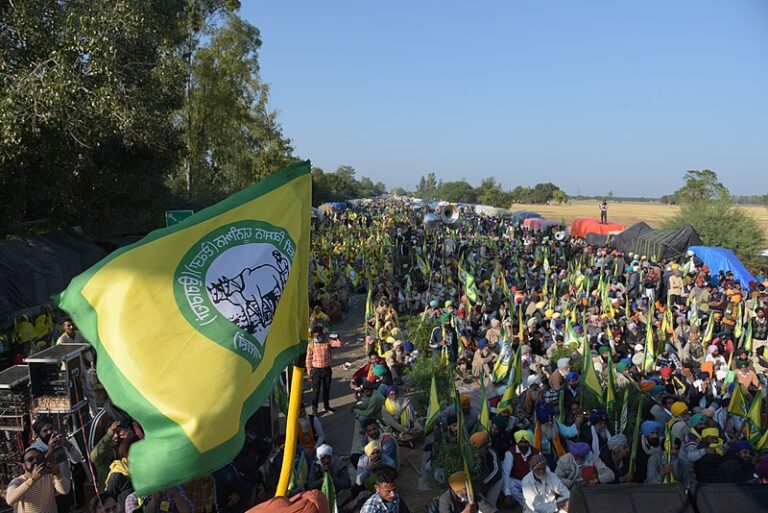
    Farmers are in reality the victims of an economic design. The terrible agrarian crisis that prevails has brought farmer’s anger to the fore. Over the year, farmers’ anger has spilled to the streets. Between 2014 and 2016, a period of two years, farmers’ protests across the country increased by a whopping 680 per cent. In 2016, the National Crime Record Bureau (NCRB) recorded 4,837 protests, roughly 14 protests a day. Since then the number and intensity of farmers’ protests have only multiplied. The heat is now being felt at the electoral hustling. The electoral turnaround in the Hindi heartland in the recent Assembly elections is being increasingly attributed to growing farmers’ anger.

    Pushing farmers out of agriculture

    It is generally believed that unless the ongoing agrarian crisis is able to sway the electoral outcomes the political leadership will never understand the severity of the socio-economic fallout. The latest round of elections will perhaps change that perception. The dominant economic thinking otherwise is that agriculture has to be sacrificed to achieve economic growth. Agriculture therefore is being deliberately kept impoverished to keep the reforms viable. Former RBI Governor Raghuram Rajan has time and again iterated that the biggest reform would be when a sizeable percentage of population in agriculture is moved to the cities which are in need of cheaper labour. The National Skill Development Council already has spelled out plans to bring down the population in farming from the existing 52 per cent to 38 percent by 2022. This is what the World Bank had directed way back in 1996, seeking 400 million people to be moved out of the rural areas in the next 20 years, by 2015. Successive governments have merely followed the economic design. Left, Right or Centre, the underlying economic thinking remains the same. Keeping agriculture starved of public sector investments, and turning farming into an uneconomical enterprise was (and is still) considered to be the best way to push farmers out of agriculture.

    In such depressing times, agriculture needs to be reinvented. It needs a booster dose. More so considering that employment in the cities has been shrinking over the years. Since 2004-04, despite the high GDP growth rate, against the requirement of 1.25- crore jobs a year, only 1.6-crore jobs in the labour intensive industry have been created. In other words, against the expectation of 17.5-crore jobs, only 1.6-crore new jobs have come.

    Debt and farming become synonymous

    Since the job market has dried up, common sense tells us that the challenge should be to make farming economically viable and ecologically sustainable. With 52 per cent population dependent on agriculture, almost 60-crore people, the emphasis should be on providing gainful employment in rural areas. This can only happen if the economic thinking shifts from creating an army of dehari mazdoor in the cities to rebuilding farming.

    Keeping agriculture starved deliberately on the other hand, with farm incomes remain almost frozen or bare enough to cover not even the cost of production, the economic disparity has only worsened over the years. Keeping food prices low is also in consonance with the dominant economic thinking aimed at drastically reducing the work force in agriculture.

    For all practical purposes, debt and farming have now become synonym. Seventy years after Independence, and 55 years after the Green Revolution was launched, economic freedom continues to elude farmers. Economic Survey 2016 made it abundantly clear. Accordingly, the average income of a farming family in 17 States of India does not exceed Rs 20,000 a year. In other words, farming families in roughly half the country are surviving on less than Rs 1,700 a month. Knowing that it is not possible to rear a cow in the same amount, I shudder to think how these families survive year after year.

    Assured monthly income

    It is a question of priorities. The seventh pay commission is expected to benefit 45 lakh central government employees and 50 lakh pensioners. Finance minister says it will cost an additional Rs. 1.02-lakh crore every year. But when implemented by state governments, PSUs and colleges across the country, Credit Suisse bank tells us that the additional burden will be around Rs 4.5-lakh crore. This will benefit an estimated 1 to 2 per cent of the population, the salaried class. Surprisingly, no economist has ever asked where the money will come from nor has anyone raised the question of widening fiscal deficit. In fact, the industry calls it a booster dose since the additional money into the hands of employees is expected to create more demand.

    Imagine the demand that will be created if agriculture is to receive an annual additional budgetary provision of Rs 4-lakh crore. Much of it should be in the form of direct income support and a higher MSP. This has to be accompanied by a mechanism of an assured monthly income package corresponding to the salary of the lowest government employee. Although economists will raise heckles of widening fiscal deficit and the elite is going to question the source of money, the fact remains that the huge demand created in the rural areas will propel the economy in a rocket dose. This is not only good politics, but also good economics.

    I am of the firm opinion that a tinkering here and there is not going to address the agrarian crisis. It needs a holistic approach, a paradigm shift in economic thinking. To begin with, the effort should be to make farming economically viable. After all, everything boils down to how much net income a farmer gets in his hand at the end.


    Image: Wikimedia     l     Photograph by Randeep Maddoke
    MIT team creates new plant-derived composite replacement for plastics

    A new woody composite, engineered by a team at MIT, is tough as bone and hard as aluminum, and it could pave the way for sustainable, naturally-derived plastics. 

    Jennifer Chu   |   MIT News Office

    The strongest part of a tree lies not in its trunk or its sprawling roots, but in the walls of its microscopic cells.

    A single wood cell wall is constructed from fibres of cellulose ­— nature’s most abundant polymer, and the main structural component of all plants and algae. Within each fibre are reinforcing cellulose nanocrystals, or CNCs, which are chains of organic polymers arranged in nearly perfect crystal patterns. At the nanoscale, CNCs are stronger and stiffer than Kevlar. If the crystals could be worked into materials in significant fractions, CNCs could be a route to stronger, more sustainable, naturally derived plastics.

    Now, an MIT team has engineered a composite made mostly from cellulose nanocrystals mixed with a bit of synthetic polymer. The organic crystals take up about 60 to 90 percent of the material — the highest fraction of CNCs achieved in a composite to date.

    The researchers found the cellulose-based composite is stronger and tougher than some types of bone, and harder than typical aluminium alloys. The material has a brick-and-mortar microstructure that resembles nacre, the hard inner shell lining of some molluscs.

    The team hit on a recipe for the CNC-based composite that they could fabricate using both 3D printing and conventional casting. They printed and cast the composite into penny-sized pieces of film that they used to test the material’s strength and hardness. They also machined the composite into the shape of a tooth to show that the material might one day be used to make cellulose-based dental implants — and for that matter, any plastic products — that are stronger, tougher, and more sustainable.

    “By creating composites with CNCs at high loading, we can give polymer-based materials mechanical properties they never had before,” says A. John Hart, professor of mechanical engineering. “If we can replace some petroleum-based plastic with naturally-derived cellulose, that’s arguably better for the planet as well.”

    Hart and his team, including Abhinav Rao, Thibaut Divoux, and Crystal Owens, have published their results  in the journal Cellulose.

    Gel bonds

    Each year, more than 10 billion tons of cellulose is synthesized from the bark, wood, or leaves of plants. Most of this cellulose is used to manufacture paper and textiles, while a portion of it is processed into powder for use in food thickeners and cosmetics.

    In recent years, scientists have explored uses for cellulose nanocrystals, which can be extracted from cellulose fibres via acid hydrolysis. The exceptionally strong crystals could be used as natural reinforcements in polymer-based materials. But researchers have only been able to incorporate low fractions of CNCs, as the crystals have tended to clump and only weakly bond with polymer molecules.

    Hart and his colleagues looked to develop a composite with a high fraction of CNCs, that they could shape into strong, durable forms. They started by mixing a solution of synthetic polymer with commercially available CNC powder. The team determined the ratio of CNC and polymer that would turn the solution into a gel, with a consistency that could either be fed through the nozzle of a 3-D printer or poured into a mould to be cast. They used an ultrasonic probe to break up any clumps of cellulose in the gel, making it more likely for the dispersed cellulose to form strong bonds with polymer molecules.

    They fed some of the gel through a 3-D printer and poured the rest into a mould to be cast. They then let the printed samples dry. In the process, the material shrank, leaving behind a solid composite composed mainly of cellulose nanocrystals.

    “We basically deconstructed wood, and reconstructed it,” Rao says. “We took the best components of wood, which is cellulose nanocrystals, and reconstructed them to achieve a new composite material.”

    Tough cracks

    Interestingly, when the team examined the composite’s structure under a microscope, they observed that grains of cellulose settled into a brick-and-mortar pattern, similar to the architecture of nacre. In nacre, this zig-zagging microstructure stops a crack from running straight through the material. The researchers found this to also be the case with their new cellulose composite.

    They tested the material’s resistance to cracks, using tools to initiate first nano- and then micro-scale cracks. They found that, across multiple scales, the composite’s arrangement of cellulose grains prevented the cracks from splitting the material. This resistance to plastic deformation gives the composite a hardness and stiffness at the boundary between conventional plastics and metals.

    Going forward, the team is looking for ways to minimize the shrinkage of gels as they dry. While shrinkage isn’t much of a problem when printing small objects, anything bigger could buckle or crack as the composite dries.

    “If you could avoid shrinkage, you could keep scaling up, maybe to the meter scale,” Rao says. “Then, if we were to dream big, we could replace a significant fraction of plastics, with cellulose composites.”


    Reprinted with permission of MIT News (http://news.mit.edu/)

    Image: Hippopx, licensed to use under Creative Commons Zero – CC0

    Demand for sea cucumbers turns India-Sri Lanka waters into trafficking hotspot

    Sea cucumber fishery is banned in India and restricted under a licensing system in Sri Lanka, but growing demand for the animals in East Asia has turned the waters between these South Asian countries into a hotspot for the illegal trade.

    By Malaka Rodrigo, Pragati Prava

    It was a calm October night over Sri Lanka’s northern seas, the silence broken only by the sound of a rapidly approaching motorboat from India. In Kalpitiya, a town further down the island’s western coast, it rendezvoused with a truck waiting on the beach.

    Also waiting there was a Navy patrol team, which seized the illegal consignment of 1,196 kilograms (2,637 pounds) of dried sea cucumbers; authorities also arrested two trafficking suspects.

    The previous month, on September 19, the Indian Coast Guard made a similar arrest in the waters off Mandapam in Tamil Nadu state. The individuals arrested in that incident were carrying 2 metric tons of sea cucumbers meant to be smuggled by sea into Sri Lanka.

    Seizures of illegally harvested sea cucumbers have become increasingly common in the waters between India and Sri Lanka. Between 2015 and 2020, the Sri Lankan Navy and the Indian Coast Guard made 502 arrests and seized nearly 65 metric tons of sea cucumbers worth a combined $2.84 million.

    Increase in smuggling

    According to data analysis of sea cucumber-related seizures and arrests reported in the media, 2019 and 2020 saw a sharp increase in cases, making the Gulf of Mannar/Palk Bay region between the two countries a global hotspot for sea cucumber smuggling.

    Despite their name, sea cucumbers aren’t vegetables; they’re echinoderms, from the same phylum of marine animals that includes starfish and sea urchins, and live on the sandy bottoms of oceans, where they perform the important ecological function of nutrient cycling.

    Sea cucumbers aren’t typically eaten in South Asia. Instead, their harvest here is for demand from East Asia, where they go by many names, most often bêche-de-mer, and are considered a delicacy, eaten both fresh or dried, and used in traditional Chinese medicine.

    Exports of bêche-de-mer from this region have historically been low, but the trade has grown significantly in recent years as the demand for sea cucumbers has increased.

    For the harvesters, the slow-moving sea cucumbers are easy pickings. But this has led to sea cucumber populations becoming overexploited across much of their historical ranges.

    In light of this, India banned the sea cucumber fishery in 2001, while Sri Lanka tried to restrict the trade through a system of permits issued for collection, processing, transporting and exporting.

    Risking legal loopholes 

    Given the current market trends, this disparity has allowed Indian fishers to exploit Sri Lanka’s legalized sea cucumber trade. They do this by smuggling their harvest to Sri Lanka to “launder” the Indian sea cucumbers with the legally permitted supplies for export. Sri Lankan fishers also often violate permit conditions by gathering more sea cucumbers than allowed, as a bigger catch means more profit.

    There’s also the problem of bottom trawling, which is banned in bothcountries. While 20% of the sea cucumber catch in India is deliberately targeted by fishers, the rest is incidental catch, mainly from bottom trawling. Even then, the incidental catch is hardly ever released back into the sea, said Deepak Bilgi, conservator of forests in Madurai, India.

    Indian link

    Satish Sundaram, a forest range officer from India’s Mandapam and Ramnathapuram wildlife ranges in the Gulf of Mannar Marine National Park, said that during his five-year tenure until November 2020, he had arrested more than 100 persons in connection with 70 cases of sea cucumber trafficking.

    In Sri Lanka, records show that the Navy seized 16,576 kilos of dried sea cucumbers and 11,840 kilos of wet sea cucumbers from 2015 to 2021.

    The biodiversity-rich Gulf of Mannar and Palk Bay areas, the main stretches of water between India and Sri Lanka, are the current hotspot for sea cucumber poaching. But over on the southwestern side of the Indian subcontinent, the Lakshadweep archipelago saw a significant spike in the number of reported smuggling and poaching incidents last year, showing that sea cucumber-related offenses are expanding and spreading to this remote island chain, said Teale Phelps Bondaroff, director of research at OceansAsia, an organization that investigates and marine environmental crimes.

    Bondaroff, who analysed data compiled by the authorities and the media, said there was a sharp increase in cases in 2019 and 2020. “The increase could mean two things: an increase of illegal activity and also the increase of patrolling,” he told Mongabay.

    In Sri Lanka, the Navy continues its regular sea patrols and has also strengthened its surveillance along coastal areas where seizures generally occur, according to a Navy spokesman.

    Most fishers and the fishing community along the northwestern coastal belt live below the poverty line, and the COVID-19 pandemic only worsened the problem, driving people to look for alternative sources of income.

    Fisher woes

    S. Chinnathambi, coordinator of Sri Lanka’s National Traditional Fishermen Federation, said fishers are constantly being exploited by unscrupulous traders into harvesting high-value threatened species.

    “Because sea cucumbers can be sold at a good price, fisherfolk try to harvest more. They will exploit any opportunity,” said Anthony Rajah, a diver from Mannar in the island’s north.

    Rajah, who has been harvesting sea cucumbers for decades, told Mongabay that fishers used to be able to collect the animals closer to shore, but now they have to dive deeper and wade into unexplored areas to find them.

    “It is not that easy, and we need to put more effort now to collect them compared to then, but still this gives us a better income and I continue to engage in sea cucumber fishery,” Rajah said.

    The license system in Sri Lanka has failed to effectively control the ongoing overexploitation of the country’s sea cucumber stocks, with reduced catch sizes reflecting the levels of depletion.

    A 2008 study listed 21 commercially viable species for fishing, but by 2015, this had dwindled to just nine. The latter survey also warned of the possible loss of more species, potentially leaving just five as feasible for fishing.

    A scientific base for issuing licenses should be adopted based on species and available stocks, said Chamari Dissanayake, also from the University of Sri Jayewardenepura. During her tenure at the National Aquatic Resources Research and Development Agency (NARA), Dissanayake conducted a sea cucumber stock assessment in 2008. That didn’t include the northern seas, given that this part of the country was under rebel control during Sri Lanka’s civil war, which only ended only in 2009.

    “So, it is time to have a countrywide stock assessment, before it becomes too late for the species,” Dissanayake told Mongabay.

    Promoting sea cucumber farming

    The government is now promoting sea cucumber farming, which is expected to ease the pressure on wild stocks. While experts have welcomed the move, they caution it must be accompanied by measures to prevent it from becoming yet another way to conceal the illegal trade and export of wild-caught sea cucumbers.

    While regulations pertaining to sea cucumber fishery should be reinforced, addressing the smuggling of stocks should be addressed as a bilateral issue with serious repercussions on the conservation of the species in both India and Sri Lanka, Bondaroff said.

    This is a high-value trade, so penalties should not be normalized, and immediate action should be taken to protect the region’s sea cucumber populations from over-exploitation, he added.


    This article was first published on Mongabay-India

    Image: Mongabay

    UN’s investigative arm launches survey to probe racism, discrimination

    Several interest groups who have bonded together to fight for their rights in the light of allegations and reports of widespread discrimination based either on race, religion, gender, sexual orientation or nationality in the UN system.

    By Thalif Deen / Inter Press Service

    The Joint Inspection Unit (JIU) – the UN’s only independent external oversight body mandated to conduct evaluations, inspections and investigations – is conducting a survey probing the widespread racism and discrimination in the world body.

    In a circular to staffers worldwide, the JIU says it is conducting “a system-wide review of measures and mechanisms for preventing and addressing racism and racial discrimination (RRD) in the institutions of the United Nations system.”

    The survey will examine the various forms of RRD at the individual, institutional, and structural levels and the measures and mechanisms in place, including cultural and contextual factors that facilitate or constrain efforts by organizations.

    According to Secretary-General Antonio Guterres’ latest annual report submitted to the UN’s Administrative and Budgetary Committee last month, the United Nations currently has more than 36,000 staffers in 463 duty stations world-wide and spread across 56 UN agencies and entities.

    The survey is expected to gather both staff and non-staff perceptions of the entire UN system, in the context of an ongoing JIU review on measures and mechanisms for preventing and addressing RRD in the institutions of the United Nations system.

    As widespread discrimination – based either on race, religion, gender, sexual orientation or nationality—continues throughout the UN system, there are several interest groups who have bonded together to fight for their legitimate rights.

    These groups include the United Nations People of African Descent (UNPAD), UN Globe for LGBTQ community, the UN Feminist Network, and most recently, the Asia Network for Diversity and Inclusion (UN-ANDI).

    Identifying root causes

    Shihana Mohamed, a founding member, and one of the coordinators of UN-ANDI, told IPS: “We, welcome the proposed reforms initiated by the Secretary-General and by other UN bodies, including the on-going JIU review, towards addressing racism and racial discrimination in UN system.

    She pointed out that the issue of racism in the UN system is deep-rooted with many forms and dimensions.

    “While addressing and preventing racism in the UN system will not be an easy task, I believe that these initiatives will assist us in identifying the root causes and other associated factors’” said Mohamed, a Sri Lankan national.

    “I strongly encourage the UN-ANDI members to participate in the current JIU survey and provide the pertinent information to identify forms, patterns and root causes of racism in the organizations of the UN system,” she declared.

    In its circular, the JIU says anonymity and confidentiality are assured in all phases. All analyses will be treated with strict confidentiality. There will be no direct attribution to the original source of the data collected.

    “In developing the survey, we have analyzed the similarities and differences of 7 separate UN system organization survey instruments on racism, racial discrimination and staff engagement”.

    “For a system-wide review, they provide potentially useful questions, many of which we have used in this survey based on their overlap with the criteria of interest and alignment with established items that are commonly employed in empirical research and that have proven to have strong psychometric properties, and also based on value from a system-wide perspective.”

    People of colour

    The development of the survey, JIU points out, was guided by an expert on diversity, inclusion and equity (DEI) and on racism and racial discrimination. It was supported by an ad hoc advisory group of experts on racism and racial discrimination from the private and public sectors, and from within the UN system. It also benefitted from several United Nations personnel, including senior staff.

    Last year, the UN Secretariat in New York, faltered ingloriously, as it abruptly withdrew its own online survey on racism, in which it asked staffers to identify themselves either as “black, brown, white., mixed/multi-racial, and any other”.

    But the most offensive of the categories listed in the UN survey was “yellow” – a widely condemned Western racist description of some Asians, including Japanese, Chinese and Koreans.

    The online survey came to an inglorious end— even before it began—without an apology towards those who were offended.

    According to the 2021 annual report of the International Civil Service Commission (ICSC A/76/30), the largest number of unrepresented (17) and underrepresented (8) countries in the UN system were in the Asia and the Pacific region (para. 148)—perhaps victims of discrimination.

    In 10 or more organizations with no formal guidelines for geographical distribution, staff were not represented from 64 countries and among them, 25 countries were from the Asia. Twelve countries did not have staff in 15 of the organizations, with seven of these countries from Asia and the Pacific (para. 155).

    Discrimination

    In an interview back in 2020, and citing his personal experiences in overseas peacekeeping operations, Roderic Grigson, a former Peace Keeping Officer and a twelve-year veteran of the UN, told IPS: “When I arrived in Ismailia, which was where the UN Emergency Force (UNEF II HQ) was located, the UN compound was a mixture of both civilian and military staff. The international civilians, like me who came from overseas, were treated very differently to the local Egyptian staff in many ways”.

    For example, he said, the locals who were disparagingly called ‘gyppos’ were not allowed into the international mess (club) in the compound unless they were cooks, waiters or barmen.

    “If I wanted to bring a local into the bar for a meal – even if it was someone who worked right next to me during the day – I would be refused entry”, said Grigson, author of the ‘Sacred Tears’ trilogy: a historical fiction set during the civil war in Sri Lanka.

    This attitude towards the locals, he noted, “extended across all the UN peacekeeping operations I visited during my time in the Middle East– whether in Egypt, Israel, Lebanon, or Cyprus, it did not matter.”

    “The International UN staff in all the UN missions treated the locals like lackeys. And they hated us for it. And I felt very uncomfortable working in this environment,” he said.

    “Even though I was considered an ‘international’ having been recruited in New York, I was from Sri Lanka and felt I was a ‘second class’ international given the European clique that was predominant at the time”.

    Unacceptable, says Guterres

    Meanwhile, UN Secretary-General Antonio Guterres last month announced plans to appoint a Special Adviser to investigate the growing discrimination based on racial, national or ethnic origins in the world body.

    “Racism and discrimination have no place in our world — least of all at the United Nations”, he warned, pointing out that the “diversity of our personnel is a source of profound richness. Yet I am fully aware and deeply concerned that colleagues have experienced the indignity, pain and consequences of workplace racism and racial discrimination.”

    “This is unacceptable”, said Guterres in a message to UN staffers January 25.

    He has also pledged to establish a Steering Group to oversee implementation of the Strategic Action Plan on racial discrimination —and report progress to the Executive and Management Committees.

    Robot ‘safely’ extracts scorpion venom

    An innovation patented Moroccan researchers takes the danger out of scorpion venom extraction as a robot uses a ‘harmless’ electric charge to extract scorpion venom.

    By Khaled Ait Nasser

    Moroccan researchers have patented a robot that extracts scorpion venom without human intervention, eliminating the danger of extracting it manually.

    Developers of the ‘VES4’ robot from Hassan II University, Casablanca, say the innovation enables the quick and safe extraction of the poison which scientists have harnessed for new medicines to fight diseases such as malaria and cancer.

    Thirty-five scorpions can be placed at one time inside the robot, which is programmed to apply an electric charge causing each of them to release one drop of the white venom, explained Omar Tannan, a member of the research team.

    He stressed that the small charge does not do them any harm.

    The venom drops are collected in a glass tube, said Tannan, adding: “The antenna and vibratory system operating the robot facilitates the recovery of venom beads collected in the pipes, ensuring a totally automated process.”

    The team developed the robot as part of a PhD dissertation by researcher Mo’az Mokammel five years ago. They wanted to come up with a lightweight device that could be used in or outside the laboratory and on all kinds of scorpions.

    Golden liquid

    As well as making the extraction process safer, they said it will make the process much more efficient. Extracting one gallon of venom using the traditional method would normally need about 2.64 million scorpions.

    Known as the golden liquid, scorpion venom is considered one of the most expensive venoms in the world, with one gram worth US$ 8,000. Its components have a number of therapeutic applications, such as the production of antitoxins and treatments for malaria and cancer.

    The team have also released a guide to scorpions in Morocco, which maps out where they can be found and classifies them by degree of toxicity.

    Anass Kettani, the dissertation supervisor, said: “Promoting this innovation will allow transferring research results to the production sector, opening doors for funding opportunities”.

    The patented robot can now be manufactured, he added, but will need some improvement and investment to take it from lab to market.

    Tannan stressed that the machine is only a prototype and will need adjustments at production stage.

    The research team have not crunched the numbers, but Abdelhaq Omani, intellectual property and valorisation director at the Moroccan Foundation for Advanced Science, Innovation and Research, said: “It wouldn’t need a high cost.”

    He points out that using the robot requires knowledge of how to deal with scorpions, as well as mastering the process of placing scorpions inside the robot, but otherwise the process is entirely automated.

    The robot is unique, says Omani, in the way it can adjust the amount of electric charge needed, without affecting the scorpion or leading to its death.


    This piece has been sourced from SciDev.Net


    Image: Hippopx licensed to use under Creative Commons Zero – CC0

    An international treaty on pandemic prevention?

    A narrow focus on a pandemic preparedness treaty would be a missed opportunity to truly revolutionize global health governance and with it, reset and transform the WHO.

    By Simone Galimberti

    The global consensus about an international treaty on pandemic prevention will certainly be a milestone towards the creation of a global health security framework.

    A new treaty is likely to bind the member states to higher standards of compliance, especially if a global accountability mechanism is also enforced.

    Consider the disregard towards the International Health Regulations (2005), IHRs, the only tool available to control what in jargon is referred as a Public Health Emergency of International Concern (PHEIC).

    Despite numerous review exercises, some of which taken more than a decade ago in the aftermath of the first SARS outbreak in Asia and again after EBOLA hit Western Africa, the vast majorities of these regulations were not enforced in the following years.

    The consequence is that we are still paying the price and very dearly.

    Though the negotiations on the treaty details, especially the complex aspects of its binding legality, won’t be a cakewalk, such tool can offer a strong bulwark against future lethal cross border infections.

    Yet a global treaty won’t be nearly enough alone to guarantee a pandemics free future.

    What is missing is the willpower to truly link preparedness and basic health care, something that is complex and very expensive at the same time.

    A real breakthrough in the global health system will be seen when a new willingness is found unprecedented levels of basic health financing around the world, especially in the developing nations.

    Too complex, too political

    We need massive investments in building national health systems able to provide what it is normally referred as universal health coverage, defined by the WHO as access to a broad range of services, which would include the services that contribute to preparedness to future pandemic.

    If new resources are essential, the capacity of managing them properly is equally important so that the weakest member nations of the United Nations can strengthen their health system.

    Unfortunately, for most of them, there is still a long way to go.

    The WHO has a huge responsibility and duty to support such processes, but so far it failed – and with it, the international community.

    A different organization, starting from its governance, might instead radically change the status quo and enable the creation of trust that essential if we want more money to build national public health system based on equity.

    In the case of the IHRs, it is true that primary responsibility of enforcing them lays with the member states, the WHO is the guardian and at the same time a key enabler in their implementation.

    A stronger WHO could have done more not only to compel governments towards the implantation of the IHRs but also to be more effective in partnering with developing countries in rebooting their national primary health care systems.

    Instead, the agency’s reputed failures since the first outbreak of SARS in early 2000s showed the inability of a too complex and too political organization without adequate means.

    That’s why we need to ensure that the WHO can play a much bigger role: not in replacing the ministries of health in the developing world but in supporting them in building equitable health systems.

    Need to re-found WHO

    For this to happen we do not need the WHO to be re-tooled and re-purposed but also re-founded.

    The focus on the new treaty should not prevent drastic changes in how public health services are delivered in the developing nations and a lifting any “red line” in re-thinking the WHO.

    Since 2017, Dr Tedros Ghebreyesus, its current Director General, embarked the organization into a process of key changes but these improvements, important as they are, do not go far enough.

    What we need is a radical turnaround.

    Following the COVID-19 pandemic, again new proposals have been made to strengthen the organization.

    A lot of emphasis has been laid on increasing the predictability and availability of unmarked resources, so called of “Assessed Contributions”, rather than having, as happens now, a WHO totally relying on voluntary contributions from donors that so far constitute the vast majority of the resources it manages.

    Such contributions are driven by interests and priorities of the donors rather than those of the agency.

    A balancing in the budget contributions of the organization might surely help but at the same time it might be worthy reflecting that some of the most results-oriented agencies within the UN System are entirely dependent on such voluntary contribution.

    This for example is the case of UNDP and UNICEF, the strongest and richest agencies within the UN System. Perhaps the real problem is not the lack of resources in itself but the politicization of an organization that is basically owned by its member states, the governments.

    The same could be said for UNESCO.

    It is not a coincidence that both agencies share low budgets and are among the weakest among their peers.

    Donors too narrow, selective

    At UNICEF, for example there is nothing akin to the role played by the World Health Assembly that effectively controls the WHO.

    The governance there is totally different and it is led by an Executive Board representing the member states that though, have considerable sway over the management of the agency (that’s why the Executive Director is always an American), it is less politicized and less controlling than an assembly of member states.

    Perhaps what we should have is a global fund for public health more similar in its governance and delivery to UNICEF.

    Such radical transformation, improbable at the moment, might be instrumental in truly rebuilding from scratch the WHO and instrumental in turning it into a much more effective agency with less competing centers of powers like is happening now with what are de-facto semi-independent regional offices.

    As consequence a new organization branded as the Global Fund for Public Health could attract the huge investments that developing countries need to build strong and resilient health system, insuring Universal Health Coverage for all their citizens.

    So far donors have been too narrow and selective when focusing on public health.

    For example, the focus has been on prenatal and postnatal care, reproductive health, all very important domains of public health.

    Yet such narrow focus on these areas through a silos approach prevented investing into creating, in partnership with the developing countries, reliable and equity-based health systems at disposal of the public.

    First line of defense

    Let’s not forget what the Secretary General said back in 2016 Seventieth session Agenda entitled “Strengthening the global health architecture” dedicated on strengthening of implementation of the recommendations of the High-level Panel on the Global Response to Health Crises Report, one of the several published so far to retrofit the health system to deal with global pandemics.

    “I believe that WHO needs to reposition itself as an operational organization, clarifying its reporting lines and adjusting its business processes so that it can perform its operational role most effectively during times of health crises”.

    Moreover, in 2016 the Commission on a Global Health Risk Framework for the Future argued that “public health is the foundation of the health system and its first line of defense”.

    For this to happen we need a new WHO and such a new organization could create the trust for an unprecedented mobilization of funding in public health, resources that World Bank and other regional banks and donor agencies should disburse.

    Both Indonesia and Germany, respectively guiding this year the G 20 and the G 7, expressed a strong commitment to reform the global health system.

    A narrow focus on a pandemic preparedness treaty would be a missed opportunity to truly revolutionize global health governance and with it, reset and transform the WHO.


    Simone Galimberti is the Co-Founder of ENGAGE, an NGO partnering with young people living with disabilities.

    Sri Lanka: From organic farming to power cuts and water shortage

    Sri Lanka is facing foreign exchange shortages that have made it difficult to buy and import fuel. The situation has worsened after a coal-run power plant broke down, leaving the country to rely heavily on hydro-electric power.

    Grappling with power cuts, Sri Lanka’s economic crisis due to reduced foreign exchange is now threatening further electricity load-shedding. The power-guzzling capital city, Colombo, could face the major brunt of power cuts in such an event, according to knowledgeable sources.

    The country’s largest utility company, the Ceylon Electricity Board, has proposed an hour-long power cut to conserve water February and March, usually drought months in the island nation. This has been necessitated following a breakdown at a coal-run electricity power plant. The breakdown has been compounded by fuel shortages, which, in turn have been ascribed to the present economic crisis.

    Sri Lanka is facing foreign exchange shortages which has made it difficult to suddenly import extra fuel. This has worsened the situation after the coal-run power plant broke down.

    The foreign exchange crisis, in turn has been blamed on an unplanned and hurried presidential fiat for all of the country’s farmers to discontinue the use of chemical fertilisers and instead, to switch to organic farming overnight.

    Sri Lanka’s energy minister Udaya Gammanpila has warned of multiple-hour-long power cuts, owing to ‘system imbalance’ caused by sufficient power to meet the regular requirement.

    He said that the Ceylon Electricity Board had no option but to switch off selected sections to avoid countrywide disruption of electricity. Whatever various interested parties say, power cuts were necessary and couldn’t be avoided, Minister Gammanpila said.

    The minister said that the CEB had no option but to switch off selected sections to avoid countrywide disruption of electricity.

    Minister Gammanpila’s, whose earlier proposal of a daily 90-minute power cut wasn’t acceded to by the government, said that the situation would continue to deteriorate until all stakeholders reach a consensus on the issue.

    Water crisis

    The Ceylon Electricity Board is charged with providing the capital city with water and also providing water for irrigation in the rural areas.

    Its officials say that avoiding power cuts is leading to further severe depletion of water storage in the dams and reservoirs. They add that it is no longer practical to continue to run down hydro reservoirs to avoid planned load shedding.

    The Ceylon Electricity Board provides water to Colombo from reserved storages in the Moussakelle and the Castlereigh reservoirs on the Kelani’s tributary rivers during the dry season. But the Moussakelle storage has already close to half its capacity and Castlereigh is close to a third.

    Based on the current usage to avoid power cuts at any cost, Castlerigh Reservoir is expected to run dry (minimum operating level) by the end of February. Moussakelle will reach minimum operating level by end March.

    With minimal rains, Kelani River water levels will fall to low levels without water from the two reservoirs. Besides, Laxapana and Canyon, the two other reservoirs have been reduced to bare ponds.

    The electricity board is also yet to renew its power purchase terms with the private petroleum-fuel power plants, ACE Matara and ACE Embilipitiya.

    As a result, Colombo city could also face drinking water shortages as the Ambatale water pumping station might not be able to pump water from the river Kelani to feed household taps in Colombo. It could get worse in the event of a delay in the April inter-monsoonal showers.

    The foreign exchange crisis could also impact agriculture and food production, unless water that is diverted to produce electricity is employed for irrigation, sources say.


    Image: Ceylon Electricity Board

    Environment ministry pursues ‘ease of business’, one office order at a time

    India’s environment ministry has introduced a series of changes in the regulations through office orders for speedy clearances, many of which have been brought about without public consultations. 

    By Mayank Aggarwal

    Over the past few months, India’s Ministry of Environment, Forest and Climate Change (MoEFCC) has proposed amendments to two key legislations – the Wild Life Protection Act 1972 and the Biological Diversity Act 2002. While environmentalists and conservationists focus on the changes proposed in the two laws, dubbing them as dilutions, there are some other office orders that the environment ministry has introduced over the past two months, which push for ease of business and could further weaken the country’s green regulations.

    Amendments to legislation are usually done in public consultation while office orders are communication from an authority to carry out/guide certain actions, which do not undergo a public consultation phase.

    Among the orders by the MoEFCC, one order paves the way for forest clearance to residential projects up to one hectare on forest lands in exceptional circumstances. Another order introduces a star rating system to incentivise state environment authorities recommending environment clearances in the least possible time. The ministry also sent out an order to announce revisions in the rates of the Net Present Value (NPV) that is levied for the diversion of forest lands.

    Changing environment policy through office orders

    On January 24, the forest conservation division of the MoEFCC sent a letter to all state governments clarifying the use of forest land for residential purposes under the Forest Conservation Act (FCA) 1980. According to this letter, “in exceptional circumstances, residential projects up to one hectare, can be considered for approval” under FCA 1980 by the MoEFCC on appropriate “justification and recommendation by the concerned state government” and the regional office of the ministry. The order specified that “the utilisation of a forest area for establishing industries, construction of residential colonies, institutes, disposal of fly ash, rehabilitation of displaced persons, etc. are non-site-specific activities and cannot be considered on forest land as a rule.”

    Star rating system

    However, according to some experts, this latest order fails to spell out the “exceptional circumstances”, leaving the interpretation to the expert bodies deciding on such cases. The decision regarding the office order was based on a recommendation of an expert forest panel, which was accepted by the ministry. The ministry officials, however, defend the move stating that the order removes an earlier misinterpretation that allowed people to exploit the forest areas.

    Another decision of the ministry that drew ire during the past month was the star rating system for states, introduced to enable the faster clearing of proposals seeking environment clearance, to promote ease of business. The order dated January 17 stated that the ministry has taken several measures to streamline the environmental clearance process and reduce the time taken for grant of clearances. The issue regarding a ranking system of states granting clearances came up during a meeting on November 13, 2021, chaired by the union cabinet secretary to discuss measures for “ease of doing business”.

    “It has been decided to incentivise the states through a star rating system based on the efficiency and timelines in grant of EC. This is intended as a mode of recognition and encouragement as well as for prompting improvements where needed,” the order said.

    The system to decide rating included yardsticks such as the average number of days for granting EC, percentage of disposal of cases seeking terms of reference or clearances, and complaints redressed by authorities.

    Ease of business

    On February 1, during the budget speech, India’s finance minister Nirmala Sitharaman announced a single form for faster approvals to proposals seeking green clearances.

    “A single window portal, PARIVESH, for all green clearances was launched in 2018. It has been instrumental in reducing the time required for approvals significantly. The scope of this portal will now be expanded, to provide information to the applicants. Based on location of units, information about specific approvals will be provided. It will enable application for all four approvals through a single form, and tracking of the process through Centralised Processing Centre-Green,” she declared.

    Environmental lawyer Rahul Choudhary told Mongabay-India that whether one looks at the series of changes that the government continues to bring or the recently presented budget, the intention is clear. “What the government wants is to simply ensure there is no opposition or checks against their policy of speedy clearances for businesses…even if it comes at the cost of the environment. For instance, what is considered a forest in India, changes with what the government requires at that particular time. It is nothing but regressive,” said Choudhary, who is the co-founder of Delhi-based Legal Initiative for Forests & Environment (LIFE), a law firm that recently won the 2021 Right Livelihood Award, widely considered the alternative Nobel Prize.

    Without consultation

    The system of bringing changes in India’s green regulations through a series of office orders, without public consultation, rather than presenting all of them together in an amendment to an environmental policy or law is not new. Experts in the sector say that this has been a regular feature of the country’s green regulation ecosystem for many years now.

    Over the past few year years, India witnessed a systematic dilution of the regulations governing the work in the coastal areas or the environmental clearance process. One example is that of the draft Environment Impact Assessment (EIA) notification 2020 to replace the EIA notification 2006. The proposal drew a lot of criticism among many experts pointing out that many changes proposed in the draft were already brought through office orders over the years.

    Debadityo Sinha, an ecologist and senior resident fellow with the Vidhi Centre for Legal Policy, said neither common people nor experts closely tracking the subject, find it is easy to track the changes brought out by the environment ministry.

    “Often, the Union environment ministry announces the big-ticket changes through proposing amendments in laws governing environment, forest, wildlife or biodiversity sector. But that is not the only way. Throughout the year, through a series of office orders and notifications, changes are brought in green rules and regulations. If all these changes are taken together and a larger canvas is created, then it becomes apparent that the government has already undertaken a larger shift/dilution in the rules via a series of small changes – and that too with zero public consultation. That is what happened at the time of EIA regulation or CRZ (Coastal Regulation Zone) notification and that is what is happening now,” Sinha explained to Mongabay-India.

    No safeguard for accountability

    “Is there any project that has been rejected by the clearance machinery in the government? There is no safeguard for accountability towards the protection of India’s environment,” he questioned.

    Sinha highlighted that even in the latest budget, the allocation was reduced for the air quality commission, National Biodiversity Authority and autonomous research institutes such as the Indian Council for Forest Research and Education (ICFRE), the Indian Institute of Forest Management (IIFM), Wildlife Institute of India (WII), G.B. Pant Institute, and the Salim Ali Center for Ornithology and Natural History (SACON).

    The latest in the line of the amendments that the MoEFCC is working on are the amendments to the Wild Life Protection Act (1972) and the Biological Diversity Act (2002). Following widespread criticism over the amendments, the government referred the Biological Diversity Act Amendment Bill (2021) to a Joint Parliamentary Committee (JPC) and the Wild Life (Protection) Amendment Bill, 2021 to a parliamentary standing committee.

    The committees have started the process of reaching out to stakeholders and listening to the concerns raised by them. For instance, the Nature Conservation Foundation (NCF), in a representation to the parliamentary standing committee raised concerns about the amendments rendering state boards for wildlife defunct, alignment with rights of local people and provisions of the Forest Rights Act 2006, allowing commercial trade in live elephants or lack of any provision for ensuring the protection of wildlife habitats among other things.


    This article was first published on Mongabay-India

    Image: Mongabay-India

    Will the hijab row undo India’s youth demographic dividend?

    Girls and women negotiate multiple challenges in making choices or pursuing their interests, even when it comes to education. Muslim girls have moved forward in their aspirations and capacities to access education. The hijab controversy has the potential to backtrack precious achievements.

    By Annie Namala

    The National Youth Policy, 2014 opens with the country’s recognition and commitment to its youth population: “India lies at the cusp of a demographic transition…  in order to capture this demographic dividend, it is essential that ….the youth have the appropriate education, skills, health awareness and other enablers to productively contribute to the economy”.

    Rightly, education figures as one of the eleven identified priority areas. The country has also invested its energies in conceptualizing and legislating to make education a fundamental right and special measures to promote education among the disadvantaged Dalit and tribal people and minorities, with a special focus on girls. While Muslim girls seem to have moved forward in their aspirations and capacities to access education beyond the matric, the controversy on the hijab has the potential to backtrack precious achievements.

    As per the census 2011, the literacy rate among Muslim was 59.1 per cent as against the national literacy rate 64.8 per cent. Literacy rate for Muslim women at 50.1 per cent far below the national literacy rate of 53.7 per cent for women. The census 2011 also reported Muslims having the highest illiteracy rates among all religious groups – 42.7 per cent of Muslims are illiterate against 36.9 per cent for all religious communities. The access to higher education continues to be low and Muslims constitute approx. 7 per cent of those who have studied to graduation and above even as their population is 14.2 per cent. Work participation among Muslims is low at 33 per cent while the nation-wide work participation was 40 per cent in 2011.

    Impressive advance

    Against this, an important trend seen during this period is that Muslims showed the highest increase in literacy rates at 9.4 percentage points from 59.1 per cent to 68.5 per cent in the decade between 2011 and 2021. This reflects the community’s interest and efforts in accessing education over the space of a decade. The literacy rates of Muslim women increased from 50.1 per cent in 2011 to 62.0 per cent in 2021 (as mentioned by minority affairs minister in Parliament in 2021), reducing the gender gap with Muslim men which increased from 67.6 per cent in 2011 to 68.5 per cent in 2021.

    Banning Muslim girls from entering colleges with their hijabs is a new controversy, given the wide prevalence of the practice for years. The practice varies across different Muslim communities and states and has not hitherto presented a hinderance to public interest, health and morality requiring a curb on the practice. Questions are raised whether the girls are choosing to wear the hijab on their own accord or are pressured by their families or their community, if they are old enough to make such choices on their own? The counter protest by hundreds of young people with saffron scarves and head-gears seem an organized action.

    Enable education without prohibition

    Girls and women negotiate multiple challenges in making choices or pursuing their interests, even when it comes to education. One cannot over-rule the possibility that the girls may be negotiating wearing the hijab to pursue their education. They may or may not be making a conscious choice to wear the hijab. In either case, it does not take away their right to access education and the country’s responsibility to respect, protect and promote their right to education.

    They may experience a sense of safety and protection in wearing a hijab. One would expect the government to fulfill the protection accorded to minority communities and facilitate their fledgling steps into the wider social canvas than allowing the majority community youth to counter, heckle and threaten them.

    The COVID-19 pandemic has already pushed back education in the country by a few years. Schools have been closed for close to two academic years. Various reports flag further disadvantages for girls and children from marginalized communities to access on-line education. A considerable proportion of children may not resume their schooling even as schools re-open. There is no comprehension of the learning- loss among children and the preparedness of educational institutions in helping them cope. The need of the hour is to build enabling support mechanisms for children to attend schools freely and fearlessly and not one of prohibition.

    Diversionary methods

    The hijab and similar controversies are sure ways of politically colonizing the young minds, pushing them away from critical concerns of their own growth and development. It is a sure way of diverting the public from questions around education policies, budgets, achievements and inequalities therein. Even as young minds from communities that are already educationally disadvantaged are engaged in such controversies, the educationally endowed youth continue their education in elite private institutions in and outside the country. Sadly, one does not see adequate efforts from the State in translating the stated objectives for the youth population dividend. A question that comes to mind is this: Will the youth population dividend be realized at the expense of minority and disadvantaged youth.


    Annie Namala is an education activist


    Image: Wikimedia commons – Muslim girls in Srinagar, Jammu & Kashmir by Adam Jones


    Ken, Betwa linking ready for implementation, says jal shakti minister. Environmentalists call it a poll gimmick

    The river linking projects are based on the idea of transferring water from water-surplus basins to water-deficit basins. But it is riddled with environmental concerns, say environmentalists.

    The rivers inter-linking project to link the Ken and Betwa rivers is ready for implementation, the minister of state for Jal Shakti, Bishweswar Tudu, in a written reply in Lok Sabha on Thursday.

    The project was approved by the government of India in December 2021 by the union cabinet which also approved the expenditure for the project at an estimated cost of Rs. 44605 crores at year 2020-21 price level. The project will receive a central support of Rs.39317 crores through a special purpose vehicle.

    The river linking projects are part of the national perspective plan (NPP) prepared by the ministry of jal shakti (the ministry of irrigation in its earlier avatar) in August 1980 for water resources development through inter basin transfer of water. The idea to transfer water from water-surplus basins to water-deficit basins has been hotly contested by environmentalists.

    The government has argued that the project will benefit the water starved Bundelkhand region spread across the states of Madhya Pradesh and Uttar Pradesh.

    The Ken-Betwa river interlinking project involves transfer of water from the Ken to the Betwa River through the construction of the Daudhan Dam and a canal linking the two rivers – the Lower Orr project, Kotha barrage and the Bina complex multipurpose project.

    Together, the project will irrigate 10.62 lakh hectares of agricultural land and supply drinking water to a population of about 62 lakh and will also generate 103 mega-watts of hydropower and 27 mega-watts of solar power. The project will take eight years to complete.

    Environmental concerns

    Environmentalists and activists say that the river interlinking projects, including Ken-Betwa, do not yet have the statutory clearances. They point out that the projects are sub judice and have hardly progressed in the last two decades. Therefore, the union cabinet’s allocation of money and its reflection in the union budget is unfair, they say.

    According to the South Asia Network on Dams, Rivers and People, “the allocation of the funds for the project in the Union Budget and inclusion of a statement about the project in the speech of the President of India before the Joint Session of Parliament on Jan 31, 2022 are inappropriate. They seem to be timed in view of the upcoming Uttar Pradesh elections.”

    A report by the Centre for Science and Environment (CSE) has claimed that the submergence of 6,017 hectares of forest land as part of this project would result in a total loss of 10,500 hectares of wildlife habitat, essentially by cutting off the core critical tiger habitat of the Panna tiger reserve from the rest of the national park.

    It said that the wildlife clearance was obtained without taking into account the entire flora and fauna and unique ecosystem of the region, ignoring the fact that the project is located within the core of the national park.

    This forest land is a unique ecosystem of morphological significance with a unique and rich biodiversity in the region which cannot be recreated, CSE had observed.

    Interlinking a government priority

    However, the minister for jal shakti, Bishweswar Tudu, said in his reply in Parliament that the government is pursuing the interlinking of rivers programme in a consultative manner and has accorded it top priority, the minister said in his reply.

    He said that the implementation of the river interlinking projects depends on consensus among concerned states.

    In this context, he said that the detailed project reports (DPRs) of Damanganga-Pinjal link and Par-Tapi-Narmada link have been completed and circulated to the states of Gujarat and Maharashtra.

    Likewise, the minister said, the DPRs of the interlinking project involving the Godavari and Cauvery rivers and consisting, further, of three links have also been completed and circulated to the concerned states and union territories for building consensus and agreement on water sharing between party states.

    The national water development agency, part of the NPP, has identified 30 links for preparation of feasibility reports. 16 of these river inter-linking projects fall under in the country’s peninsular region (peninsular component) and 14 of these rivers have their sources in the Himalayas (the Himalayan component).

    Five of the river linking projects concern rivers flowing from Nepal into India. These are project to link the Kosi and Ghaghra rivers; Gandak and Ganga rivers; the Ghaghra and Yamuna rivers; Sarda and Yamuna rivers; and the Kosi and the Mechi rivers.

    One interlinking of rivers projects involves four rivers – the Manas, Sankosh, Tista and Ganga rivers. Rivers Manas and Sankosh originate from Bhutan where is is called the Drangme Chhu.