More

    ASER-Pakistan report says crisis of equity exacerbated impact of COVID-19 pandemic on schooling

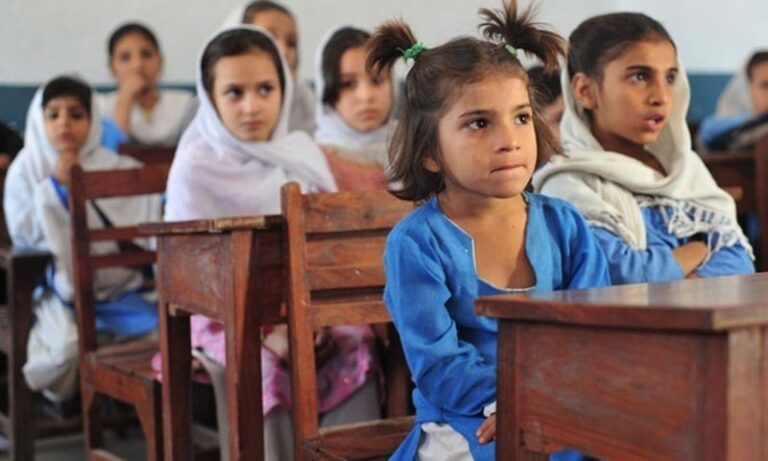
    ASER-Pakistan’s report on the education status and learning outcomes of children in the five to 16 years’ age bracket in rural districts of Pakistan says that school closures due to the COVID-19 pandemic have led to a learning crisis for primary-school children.

    The report of the Annual Status of Education Report (ASER) of Pakistan released today says that school closures due to the COVID-19 pandemic have led to a learning crisis for primary-school children.

    The report says that children attending government schools have shown a greater decline in learning than children from private schools during the period when the school were closed. These declines are particularly acute in lower classes, especially between grades 1 and 3.

    Importantly, the researchers have announced that the learning outcomes improve with maternal education and with household wealth.

    About 60 per cent of children currently enrolled in school spent less than an hour a day on their studies during school closures.

    The ASER-Pakistan report says that while 40 per cent of children with smartphones in the home used these for learning, younger children receive less time to access these than older children. 55 per cent of children do not feel confident to study on their own if school closures reoccur.

    About 32 per cent of children reported that they watched educational broadcasts through the country’s national broadcaster, PTV’s tele-school programs. But the researchers said that while PTV’s tele-school’s outreach is notable, its impact is unclear.

    The study also emphasises that girls experienced greater learning losses than boys during the COVID-19 school closures across nearly all competencies and classes. This served to halt or even reverse an existing increasing trend in learning outcomes for girls who had, in some cases, outdid boys.

    Crisis of equity

    The study found that the learning levels were highest in surveyed districts of Punjab, followed by Khyber Pakhtunkhwa and Sindh. Learning levels were found to be the lowest in Balochistan.

    On the contrary, learning losses were found to be the highest in surveyed districts of Balochistan, followed by Punjab, Sindh and Khyber Pakhtunkhwa.

    Younger children who have not yet built a foundation for learning, are more vulnerable to learning losses, the report says. The report emphases that Pakistan’s crisis of learning is rooted in a deeper crisis of equity, girls as well as children from lower wealth backgrounds and certain geographical regions suffer the greatest learning losses in the country.

    Said to be the country’s largest citizen-led household-based survey, ASER-Pakistan aims to provide regular, reliable estimates of education status and learning outcomes of children in the five to 16 years’ age bracket in rural districts of Pakistan.

    The ASER study in 2021 was adapted to measure the impacts of COVID-19 following the unprecedented school closures of 2020 and early 2021. The survey was conducted in 16 rural districts of Pakistan (four each in Balochistan, Khyber Pakhtunkhwa, Punjab and Sindh provinces) and surveyed 25,448 children from a total of 9,392 households.

    Researchers used ASER tools mapped to sustainable development goal 4.1.1.a, learning assessments for language (English and Urdu, Sindhi, Pashto) and arithmetic competencies.

    Based on the findings, the study has recommended that policies and programmes must be devised to support the learning of all children and focusing on young children and girls while simultaneously tackling factors leading to education inequities.

    The researchers note the need for a new social compact for learning to build connections between families, communities, and schools to collectively support children’s schooling.


    Image: Wikimedia
    Sri Lanka air force to help farmers harvest paddy

    The air force led community service project will undertake paddy harvesting of low income paddy farmers to help them save on labour costs they would have incurred for harvesting their crop.

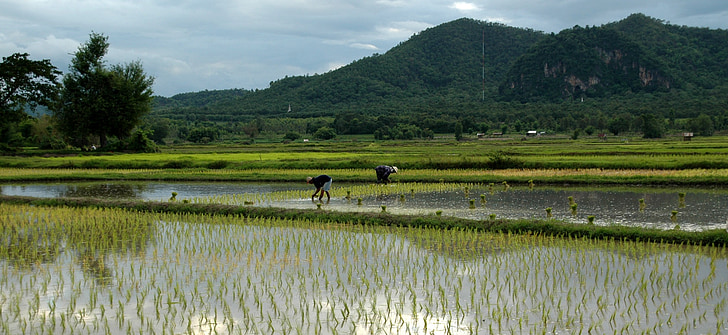
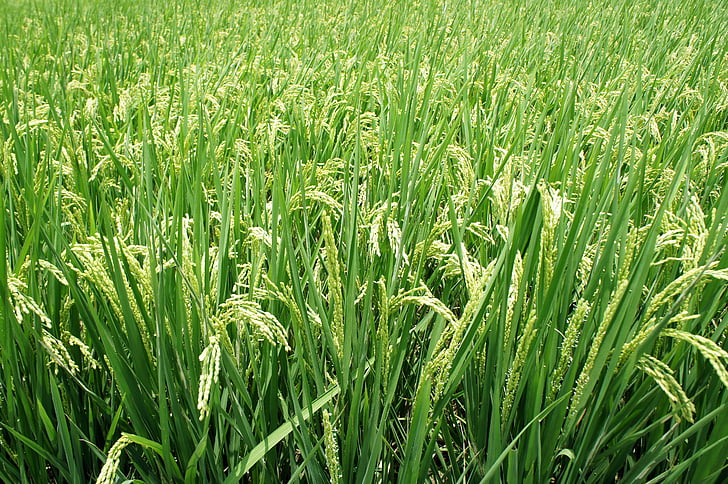
    The Sri Lanka Air Force (SLAF) has undertaken paddy harvesting to support small-land holding farmers in the Morawewa division of Trincomalee.

    Air Force spokesperson Dushantha Wijesinghe told mediapersons that air force personnel began a paddy harvesting project using newly acquired combine harvester machines on Saturday 12 February.

    The air force announcement came a day after the chief of staff Gen Shaendra Silva had said that the army will deploy a solider to each paddy and vegetable farm throughout the country in the coming Yala cultivation season.

    The beneficiary farmers include 31 paddy farming families who were recommended by the Morawewa divisional secretariat and the area’s paddy farming association.

    “It is intended to harvest 93 acres where three acres of each family will be harvested free of charge during this initial phase,” he said.

    The second and third phases will be conducted at the Knaugahawewa and Ampara areas respectively.

    “The objective of this community service responsibility project is to undertake paddy harvesting of low income paddy farmers to provide incentives to increase their earnings by cutting down harvesting cost.” Wijesinghe said.

    Related: Army soldiers to help out Sri Lankan farmers

    As has been reported, the Sri Lanka military had earlier helped farmers gather their harvest in the early days of the pandemic and also helped farmers dispose their crop.

    Bitter harvest

    Sri Lanka’s agriculture sector hit a crisis in the last cropping season due to a fertiliser and agri-chemical ban announced by the government on the advice of a legislator-monk, Athureliya Rathana.

    The government is aware that farmers are worried about the low harvest due to the shortage of fertilisers that arose due to the ban. It is estimated that the crop losses will be anywhere between a third and a fourth for most farming families.

    Besides getting defence personnel to harvest the crop, the government has also announced a 50 per cent hike in the procurement price for the paddy.

    Overall, the state-run paddy marketing board said yesterday that the harvest for the season has dropped by 30 percent to around 2.3 million metric tons from 3.2 million metric tons.

    The idea behind involving army men and air force men in the harvest is to reduce the labour costs that the farmers would have to pay for otherwise. However, this has also thrown up the issue of support for the landless labourers who would not only earn a living by getting engaged during the harvest, but also obtain a small part of the harvested paddy for their own consumption. This is an age-old custom in rural parts of the country.


    Image: Hippopx image licenced to use under Creative Commons Zero – CC0

    India-Bangladesh friendship dialogue begins Friday

    The tenth round of India-Bangladesh friendship dialogue will be an all-out BJP participation, say sources. Participants are miffed because they won’t have time to meet with ‘like-minded Indian leaders’ in New Delhi.

    Shimla will host the two-day ‘10th Round of India – Bangladesh Friendship Dialogue’ beginning February 18 to mark the 50th anniversary of relations between the two countries.

    Indian authorities have drawn up a chock-a-block itinerary for the visiting Bangladesh delegation, leaving little time or opportunity for the delegates to meet with ‘like-minded Indian leaders’ and representatives of other political parties while in New Delhi.

    Besides the minister of state for external affairs Rajkumar Ranjan Singh, India has lined up senior BJP leaders and BJP Members of Parliament and academics, besides office bearers of the India Foundation, Asian Confluence and the Vivekananda International Foundation. The Indian delegates also include the editor of the RSS weekly mouthpiece, The Organiser.

    The dialogue aims to review bilateral relations and further boost ties in various fields of cooperation between the two friendly countries, sources said.

    There is no Indian diplomat mentioned on the list of participants. However, the list spells out the Bangladesh’s present high commissioner to India, a former Bangladesh high commissioner to India and a former Bangladeshi foreign secretary as participants.

    Interestingly, the Bangladesh delegation too is swamped by members of the ruling Awami League and no representation from the country’s other parties, particularly the BNP.

    A source in the Bangladesh foreign ministry in Dhaka said that Bangladesh expects the dialogue to cover trade and investment, connectivity, technology, energy, regional security, extremism and sustainable development by increasing people to people contact.

    The 9th round of India Bangladesh Friendship dialogue was held in Cox’s Bazar, Bangladesh in November 2019.

    India opposes reference of workers’ law to Hague

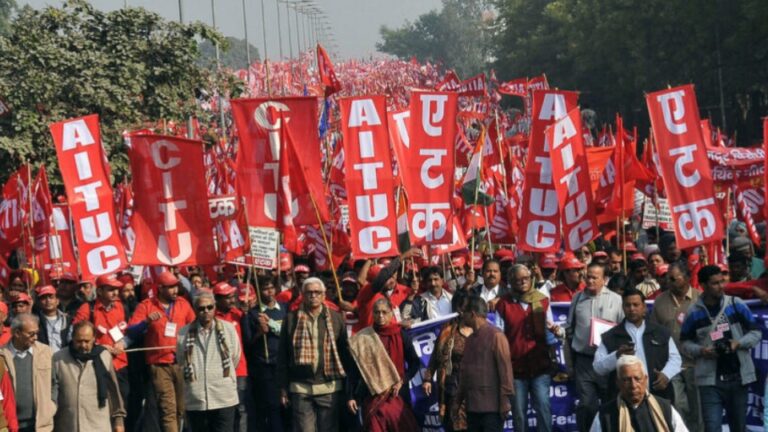
    India, China, Russia, US are among 14 countries opposing ILO convention 87 on workers right to association being referred to the International Court of Justice. Trade unions understand that the workers’ right to strike is integral to this convention.

    India has opposed referring a disputed understanding of convention 87 of the International Labour Organisation to the International Court of Justice.

    ILO’s Convention 87 concerns workers’ freedom of association and protection of their right to organise. It is one of the eight conventions that form the core of international labour laws, as interpreted by the declaration on fundamental principles and rights at work.

    India is among the 14 government members of the ILO who, along with employers’ groups are challenging the long-accepted belief that ILO Convention 87 on freedom of association up-holds the right to strike.

    A key ILO meeting on the right to strike is due to be held from 23-25 February.

    Other government members opposing the right to strike include Algeria, Angola, Cambodia, China, Korea, Ghana, Iran, Russia, Sudan, UAE, USA and Zimbabwe.

    The governing body of the ILO is composed of 28 governments, 14 employers and 14 workers who are its 56 titular members and 66 deputy members comprising of another 28 governments, 19 employers and 19 workers.

    India is among 10 permanent titular government members because of its “chief industrial importance”.

    14 of the 28 deputy government members too oppose referring the issue to the ICJ. Though these countries don’t have a vote, yet they do exercise influence. These countries include Bangladesh and Pakistan.

    Strikes a last resort

    The right to strike was never as contentious an issue. In 2015, the employers’ group at the ILO even recognised the right to strike following a crucial tripartite meeting.

    A joint statement from the employers’ and workers’ groups at that meeting affirmed that the right to industrial action was recognized by the ILO. It was then thought that the matter had been settled for good.

    According to trade union forum IndustriAll, “the fundamental right to strike is under attack from employers and governments at the ILO.”

    “Eliminating this human right would have serious repercussions on us all,” it says.

    The umbrella labour union organisation argues that striking is a last resort for workers, but sometimes the only tool for them to protect themselves. It helps them avoid being at the complete mercy of their employers.

    By disputing the long-standing interpretation of ILO’s Convention 87, IndustriAll says, government’s will have no inhibitions to “ban industrial action and punish people who dare to strike.” Knowing that most strikes are over pay and dignified working conditions, governments are blatantly siding with big business.

    The costs of invasive species

    The damage from invasive species costs ten times more than prevention, says a study. Losses, summing up to trillions of dollars, hit agriculture, forestry, fisheries, and health systems. Scientists point out that control, eradication measures often come too late.

    By Claudia Caruana / SciDev.Net

    The cost of damage caused by invasive species around the world, including to agriculture, fisheries, and forestry, is at least 10 times that of preventing or controlling them, an international study suggests.

    The research, published in Science of the Total Environment earlier this month, highlights the huge economic burden of invasive species and says their prevention could save trillions of US dollars.

    Invasive species are non-native species that often harm the new environment they populate. They are a threat to biodiversity, can cause degradation of ecosystems and, in some regions, threaten the lives and livelihoods of people affected.

    Lead researcher Ross Cuthbert, from the School of Biological Sciences at Queen’s University Belfast, in Northern Ireland, said: “Once invasive species have established and are spreading, it can be difficult to eradicate them. Delayed control measures often are not only costly, but frequently are unsuccessful in the long-term.”

    The research team, consisting of scientists from 17 institutions, constructed and used a global database compiling economic costs of invasive species, which enabled comparisons to be made across different scales and contexts.

    They found that since 1960 the global management of invasive species has cost at least US$95 billion worldwide, while damage costs have reached at least US$1,131 billion over the same period.

    Losses have hit the agriculture and forestry sectors in the form of production declines and infrastructural damage, as well as global healthcare systems through the spreading of diseases, the researchers said.

    Biological invasions

    The team quantified costs according to different management types at a global scale and developed and applied a model to predict the additional costs of management delay, using the available data.

    Only a fraction of the expenditure on invasive species management went on proactive prevention measures, the study found. Most (US$73 billion) was spent on control or eradication measures when damage is already underway.

    “By the time we see the impact that invasive species are having on the environment, it is often too late as they have already established and spread widely,” said Cuthbert.

    “It is difficult to convince decision-makers to invest in something that is not yet a problem, but our research clearly shows the value in taking a preventative approach.”

    Biological invasions are one of the largest threats to biodiversity, but there has been insufficient investment to reduce rates of invasion and their impacts on ecosystems and economies, he added.

    The researchers found that developing countries in particular are investing little in the management of biological invasions.

    According to CABI, the parent organisation of SciDev.Net which works to address environmental challenges such as invasive species, millions of the world’s most vulnerable people face problems with invasive weeds, insects, plant diseases and animals.

    “These alien species arrive in different ways, including ballast water and wood packing materials,” said Cuthbert, warning: “In the future, as trade, tourism, and material transport intensify to these regions alongside economic development, more invasive species will establish and cause adverse impact because invasions are closely linked to globalisation.”

    Effective prevention measures pre-invasion

    Cuthbert said Africa, Asia, and South America had incurred hundreds of billions of dollars in damage from invasions but had invested only a few million in pre-invasion management.

    “Without more effective prevention measures pre-invasion, these costs will continue to rise and hamper their sustainable development,” he added. “Developing countries must improve their capacity to respond to and manage biological invasions to avoid being disproportionately impacted in future.”

    Investments should focus on measures such as effective biosecurity to prevent invasive species from arriving in the first place, as well as research to record new invasions, develop management measures, and understand the economic and ecosystem impacts, the researcher suggested.

    Lee Hannah, a senior scientist at Conservation International’s Betty and Gordon Moore Centre for Science, in the US, told SciDev.Net: “The bottom line is that we are spending far too little to care for nature by preventing species invasions, and we are paying trillions of dollars in damages as a result.”

    Hannah cited South Africa as an example where the costs of managing invasions have exceeded the alternative costs of prevention. He said the country spends more than US$25 million each year removing aggressive invasive plants such as the black wattle (Acacia mearnsii) tree, which has a number of harmful environmental impacts.

    “This makes sense because replacing black wattle with native species increases water available from watersheds and the removal programme creates jobs,” said Hannah. “But a less expensive answer would have been to guard against black wattle spread from forestry plantations in the first place. A few million dollars invested in keeping black wattle from spreading could have avoided hundreds of millions in damages.”


    This piece has been sourced from SciDev.Net


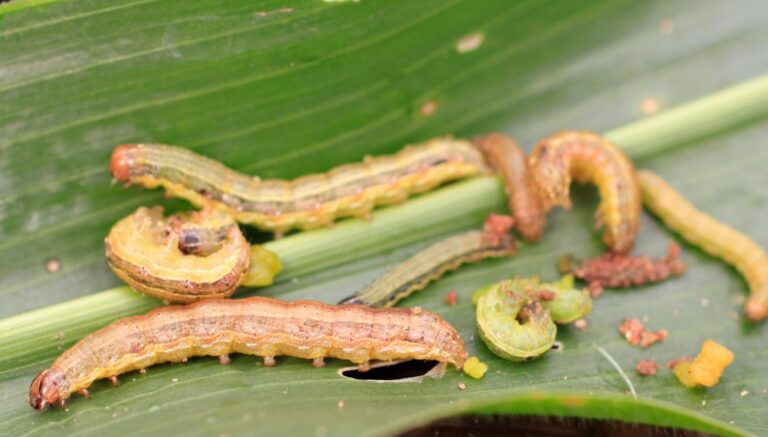
    Image: The army fall worm, an invasive species that causes degradation of ecosystems and threaten the lives and livelihoods of people — CABI

    Sharp rise in measles cases in Afghanistan, says WHO

    The number of cases of measles and deaths caused by measles among increased by 18 per cent in the week of January 24, and 40 per cent in the week of January 31.

    Measles is endemic in Afghanistan. Following periods of lower transmission in 2019 and 2020, measles cases have been increasing in all provinces since the end of July 2021, with the highest weekly toll observed so far occurring over the last four weeks. The number of cases and deaths increased by 18 per cent in the week of January 24, and 40 per cent in the week of January 31.

    35,319 suspected cases of measles and 156 deaths have been reported in Afghanistan from 1 January 2021 to 29 January 2022. Of these, 3,221 cases were laboratory confirmed. 91 per cent of these cases and 97 per cent of these deaths were in children under five years-old.

    Although the number of deaths is relatively low, the rapid rise in cases in January 2022 suggests that the number of deaths due to measles is likely to increase sharply in the coming weeks.

    Who stresses that measles-related deaths are not always reported or captured through surveillance systems.

    The WHO release says, “The rise in measles cases is especially concerning because of the extremely high levels of malnutrition in Afghanistan.” Malnutrition weakens immunity, making people more vulnerable to illness and death from diseases like measles – especially children.

    In addition, measles infection can cause immune system suppression and immunologic amnesia, which increases susceptibility to all pathogens, including those to which the individual was previously immune.

    WHO response

    In response, WHO and partners in Afghanistan are strengthening measles surveillance capacities and providing technical support for lab testing, case management, risk communication, vitamin A distribution, and outbreak response immunization campaigns.

    In December 2021, a measles outbreak response immunization campaign was carried out in some of the most affected provinces, reaching 1.5 million children.

    Providing children with vitamin A, especially in the context of widespread malnutrition, is also critical to help reduce sickness and death from measles. Vitamin A supplementation was provided to the 8.5 million children aged between 6 months and five years, who were reached through a nationwide polio campaign in the country in November 2021.

    WHO is now helping to plan for a larger measles outbreak response immunization campaign, which is likely start in May, aiming to reach more than 3 million children. Support from WHO includes helping with the process needed to secure additional vaccines and devices, and operational funds and support for planning the campaign.

    Measles is contagious and unvaccinated young children are at highest risk. Severe measles is more likely among poorly nourished young children, especially those with insufficient vitamin A, or whose immune systems have been weakened by other diseases. The most serious complications include blindness, encephalitis (an infection that causes brain swelling), severe diarrhoea and related dehydration, and severe respiratory infections such as pneumonia.


    Image: ICRC

    Sri Lanka health workers strike cripples health service

    A court order to suspend the strike did not make a difference. Neither, for that matter, has a presidential gazette helped end the strike. Power utility workers now threaten to go join the striking health workers.

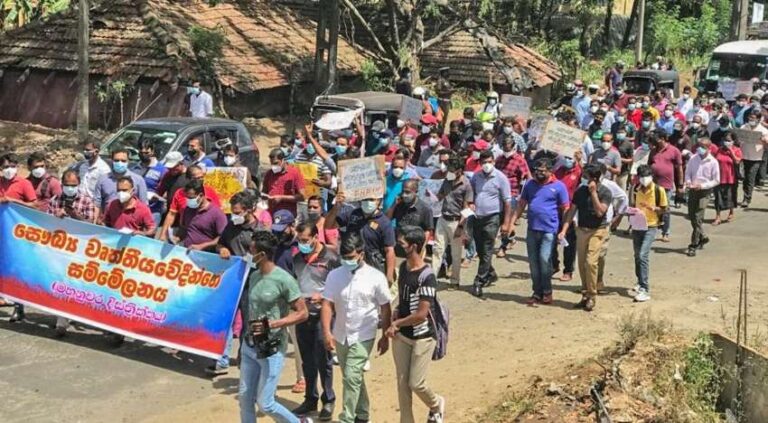
    Striking Sri Lankan health workers continued their protest for the seventh day running, today, defying a court order and a presidential gazette and disrupting routine work in government hospitals.

    Hundreds of protestors marched outside the president’s office in the heart of the commercial capital Colombo early on Monday carrying placards with slogans that demanded solutions to salary anomalies, an increase in the special duty allowance to 10,000 rupees and the establishment health administration services among seven demands.

    Sri Lankan president, Gotabaya Rajapaksa had on Friday declared the public health service and the supply of electricity as essential services after a series of power outages and protests inconvenienced the public.

    The extraordinary presidential gazette notification issued Friday night said the declaration was being made considering the services provided by any public institution that is engaged in electricity supply and the health services are “essential to the life of the community and (are) likely to be impeded or interrupted”.

    A day earlier, on Thursday, a Colombo district court had issued an order against Government Nursing Officers’ Association (GNOA) President Saman Rathnapriya, directing him to immediately “suspend” the union’s involvement in ongoing indefinite strike action by tens of thousands of health workers.

    The GNOA has about 20,000 members and is one of 18 unions involved in the Federation of Health Professionals’ national strike that entered its second week today. The strike by health workers includes all streams – nurses, paramedics, public health inspectors, medical laboratory technologists and pharmacists, are on strike.

    Other unions ready to join

    The request for a strike suspension order was made by the Sri Lankan Attorney General (AG). State lawyers appearing for the AG told the courts that “patient care has been gravely affected by the strike.”

    At a public rally last week, Rajapakse said that public servants were resorting to strikes under “the influence of various political forces,” adding, “public officials have a responsibility to serve the people and the country.”

    The presidential gazette was necessitated because health workers continued their strike despite the court order, exploiting a loophole of the court ruling.

    The striking employees are demanding rectification of salary anomalies, higher transport and on-call duty allowances — ranging from 3,000 Sri Lankan rupees ($US15) to 10,000 Sri Lankan rupees — increased overtime rates and improved promotion procedures.

    They are also being joined by workers of the Ceylon Electricity Board, the country’s power supply utility company.

    Last year strikes and struggles erupted across the island involving health, education, government administration, railway, electricity, ports, petroleum and plantations workers.

    Around 26,000 university non-academic workers also held a national one-day protest to demand a salary increase.

    The president has been at loggerheads with the health sector trade union workers ever since the appointment of Sri Lankan army officials to run the health services in the aftermath of the COVID-19 pandemic.

    In the meanwhile, the trade union have threatened to seek justice from an international court for what they claim is the suppression of the health sector through Rajapaksa’s gazette declaring it an essential service.

    “Colombo is desperate to suppress the industrial action by health employees, fearing it will encourage other sections of the working class to fight the government’s social attacks,” said Socialist trade union leader, K Ratnayake.


    Image: WSWS

    Army soldiers to help out Sri Lankan farmers

    Sri Lanka will deploy a soldier to every paddy and vegetable farm in the island during the next cultivation season.

    Sri Lank’s officiating chief of defence staff, General Shavendra Silva has been quoted by media as saying that soldiers will be deployed to support farmers across the island nation.

    A soldier will be deployed to every farm with the commencement of the Yala agriculture season in May, the general said. Yala and Maha are the two faming seasons in Sri Lanka, approximately corresponding to the Kharif and Rabi seasons in Bangladesh, India, Nepal and Pakistan.

    This is not necessarily the first time that the Sri Lankan military has been involved in civilian duties in Sri Lanka. In the recent past, Sri Lanka’s military was also helping farmers gather their harvest during the COVID-19 pandemic.

    In part, the move can be traced to Sri Lanka’s large military force raised to fight the war in the country’s North.

    Fertiliser ban

    An unprepared Sri Lanka agriculture sector was hit by a crisis in the Maha cropping season (between September and March) when the government imposed a hastily thought and unplanned move to ban on agri-chemicals, including fertilisers and pesticides. The overnight move was president Gotabaya Rajapaksa’s idea, prompted by an influential legislator-monk, Athureliya Rathana.

    The results were felt immediately as vegetable harvests were hit. The move also coincided with the worst marine disaster in the country’s history when a cargo ship sank of the island nation’s coast, polluting the sea and people were scared of buying catch from the sea. Further, the COVID-19 pandemic hit tourist arrivals and as a net result of all of these, a foreign exchange crisis ensued, crippling the country’s economy.

    The results of the ban on the use of chemicals in agriculture have also meant that farmers are now reporting reduced paddy harvests. The yield is reduced anywhere between a third and a half and the government has announced 50 per cent premium on paddy procurement, to assuage the unhappy farm sector.

    Following the ban, chemical fertilisers like urea was only available in the black market and at an exorbitant price.

    The government has lifted the ban, under pressure from paddy farmers, who insisted they needed chemical fertilisers. But farmers are upset because the government’s green policy has put an end to subsidy for chemical fertilisers.

    The deployment of soldiers at farms to help farmers is meant to please them. But, it is not clear what the government’s plans are for its landless labourers.

    Landless poor out?

    According to the UN’s International Fund for Agricultural Development (IFAD), 82 per cent of Sri Lanka’s population resides in rural areas, and agriculture remains the backbone of its economy. Four out of every five people living under the poverty line depend on the rural sector while almost half of the country’s rural poor are small-scale farmers.

    Agriculture employs 28 per cent of the country’s labour force, and small-scale farmers produce most of the agricultural output.

    This section of the population is under enormous financial stress.


    Image: Hippopx picture, licensed to use under Creative Commons Zero – CC0

    Bangladesh: Rights experts decry ‘appalling’ culture of impunity around killing of journalists

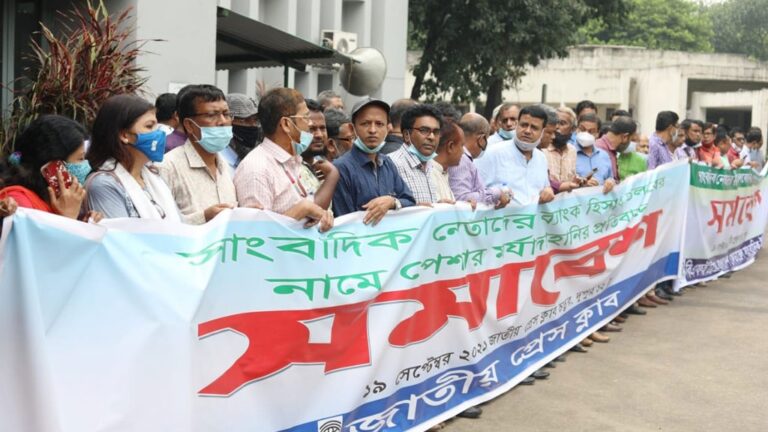
    UN human rights experts point out that the authorities in Bangladesh have yet to conduct an investigation into the murder of prominent journalists Sagar Sarowar and Meherun Runi 10 years after they were killed. 

    “A decade after the killing of the two journalists, there is still no justice as a result of an appalling and pervasive culture of impunity in Bangladesh,” the five UN Special Rapporteurs said in a statement.

    Sagar Sarowar and Meherun Runi, who were married, were stabbed to death in their home in the capital, Dhaka, in front of their five-year-old son on 12 February 2012.

    The experts said it is widely believed they were targeted because of their investigative reporting on corruption in Bangladesh’s energy sector which they were about to publish.

    Crimes go unpunished

    Bangladesh’s High Court tasked the Rapid Action Battalion (RAB), the country’s elite police unit, to investigate the case.

    Last November, the Court demanded for the 84th time that RAB should submit its findings, which still has not happened.

    “When crimes against journalists go unpunished, they embolden the perpetrators and encourage more attacks, threats and killings with the intention of intimidating the media into silence. We see those deeply worrying signs in Bangladesh,” the statement said.

    Bring perpetrators to justice

    At least 15 journalists have been killed in Bangladesh over the past decade, according to the UN experts.

    “We urge the government to conduct and complete prompt, thorough, independent and effective investigations and bring perpetrators to justice for the murder of Sagar Sarowar and Meherun Runi and other killings of journalists and human rights defenders in Bangladesh,” their statement said.

    The UN experts have received numerous reports of journalists, activists, and members of civil society groups being arbitrarily detained, attacked, abducted, threatened, and subjected to judicial harassment.

    These incidents appear to be rarely investigated or prosecuted, and in some cases local authorities are thought to be directly implicated in the attacks.

    Journalism under attack

    “Journalism should not carry the inherent risk of being attacked, intimidated or killed with impunity but unfortunately that is the current reality for many journalists, human rights defenders and other members of civil society in Bangladesh,” they said.

    The experts have brought allegations to the attention of the Government which often have gone unanswered.  Although they wrote to the authorities in 2012 following the murder of Sagar Sarowar and Meherun Runi, they never received a response.

    They further expressed concern over repeated delays surrounding the trial into the fatal shooting of journalist and human rights defender Abdul Hakim Shimul in February 2017, allegedly by the then mayor of Shahzadpur.  The case has been placed on a stay order by the High Court, with all the accused on bail.

    They also recalled the death in custody last February of dissident writer Mushtaq Ahmed, who spent nine months in pre-trial detention on charges under the Digital Security Act (DSA) for publishing an article that criticised the government’s pandemic response.

    They said the authorities failed to conduct an independent and impartial investigation into his death, despite his family’s concerns that Mr. Ahmed had been tortured while in police custody, and that there was a three-hour delay in admitting him to hospital once he fell sick.

    An internal committee established by the Home Ministry concluded Mr. Ahmed’s death was natural, without investigating his family’s claims.

    UN experts raised their concerns with the government when they raised their concerns about his death in custody.


    Image: Peoples Dispatch

    Number of internally displaced in Myanmar doubles, to 800,000

    The number of internally displaced people (IDPs) in Myanmar has doubled since February of last year, now crossing the 800,000 mark, the UN refugee agency, the UNHCR announced. 

    Speaking to journalists in Geneva, UNHCR spokesperson Matthew Saltmarsh said the agency was stepping up aid for the displaced as conflict intensifies.

    “Security is deteriorating rapidly across the country as fighting and armed conflict intensifies with no sign of abating”, Mr. Saltmarsh said.

    In total, some 440,000 people have been newly displaced since February 2021 -when a brutal military coup displaced the democratically elected government – adding to an existing 370,000 who had fled their homes previously.

    The agency believes the trend will accelerate, with more displacements in the coming weeks and months.

    Most affected regions

    In the country’s southeast, Kayin, Kayah, Mon and Shan (South) states as well as Bago (East) and Tanintharyi regions, account for more than half of the 440,000 newly displaced civilians.

    Kayin and Kayah states remain the most affected, as hostilities between various armed groups have triggered large-scale displacements.

    Another conflict-affected area with pressing humanitarian needs is the northwest, where about 190,000 people remain displaced in Chin State, Magway Region and Sagaing Region.

    According to the agency’s spokesperson, humanitarian access in many parts remains restricted due to insecurity, roadblocks and challenges in obtaining access approvals.

    As a result, host communities and local responders continue to play a leading role in the assistance, showing solidarity with each other by donating what they can, Mr. Saltmarsh explained.

    Quick response

    UNHCR has been working with UN agencies, local partners and communities to assist those affected. Last year, it reached some 170,000 individuals in nine states and regions.

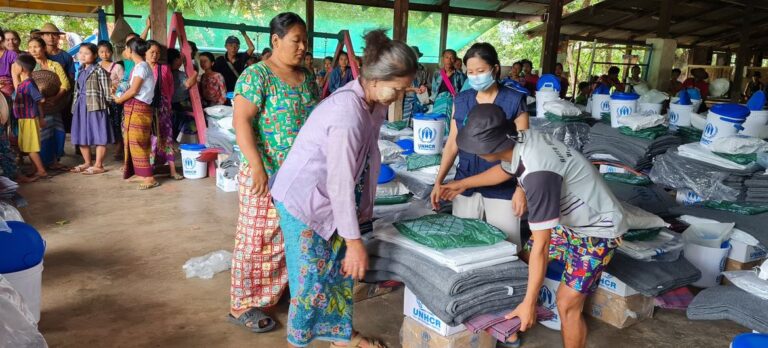
    In all locations, UNHCR and partners distributed relief items including tarpaulins, ropes, blankets, kitchen sets, mosquito nets, buckets, sleeping mats, sanitary kits, COVID-19 personal protective equipment, solar lamps, and winterization kits for adults and children.

    In Shan State, where a growing number of IDPs have arrived from conflict affected Kayah State since the start of 2022, the agency recently established a temporary base to coordinate distribution of emergency aid.

    Provision of relief items to Kayah in and around Taunggyi started in mid-January and quickly expanded to incorporate neighbouring townships.

    Within a month, UNHCR and partners were able to reach some 10,000 IDPs in Shan as well as 2,000 in Kayah.

    Humanitarian situation

    The humanitarian situation in Myanmar remains precarious, with rising commodity prices, job and income losses, disruptions to basic services and prolonged insecurity.

    Because of that, the majority of IDPs are consequently dependent on humanitarian support for survival.

    Some 600,000 stateless Rohingya in Rakhine state, including some 148,000 displaced in camps, villages and displacement sites, require humanitarian support.


    Image: UNHCR     l     Sa Nyein Chan