More

    How the COVID-19 pandemic impacted Asia’s indigenous women

    Lockdown measures and restrictive policies in the wake of COVID-19 have led to shrinkage of livelihood options for indigenous women and severely affected household food security. Restrictions have prevented Indigenous women in Asia from gathering traditional medicines and foods.

    By Pragyaa Rai, Richa Pradhan and Pradeep Baisakh

    There are approximately 410 million indigenous people in the world. They, together account for about 5 per cent of the global population. There are 260 million indigenous people in Asia, with 2,000 distinct civilizations and languages. The majority of indigenous peoples in Asia have experienced historical suppression, marginalization, socio-economic and political discrimination.

    In some cases, the indigenous people lack legal or constitutional recognition. Indigenous people are generally poor and constitute majority section of the informal work force. Existing policies limits their access to social protection benefits and deny them full and effective participation in society. Their rights as indigenous peoples are repeatedly violated and there is hardly any respect to their collectivism, self-governance, identities and culture. Incursions into their lands in most Asian nations in the name of ‘development’ have expelled them from their ancestral lands and territories and deprived them of their resources.

    COVID-19 exacerbates vulnerabilities

    The onset of COVID-19 has reinforced the existing inequalities and marginalisation of indigenous peoples, with most negative impacts felt by indigenous women and girls, persons with disabilities and older people.

    The vulnerability of indigenous communities to COVID-19 has been exacerbated by their limited access to health services and information regarding the virus and relief packages. It has been further aggravated by restrictions on mobility, lack of transportation and testing services and failure to provide information in their native languages. Indigenous women migrant workers have fared worst of all, losing their jobs. They also experienced violence and torture. Indigenous women and children in some Asian countries could not access social protection assistance and relief packages because they did not have the required legal documentation.

    Despite the spread of the virus, development projects and military operations have continued in the Philippines, Myanmar, India and Bangladesh, with severe negative consequences for indigenous communities including women.

    Land grabbing of indigenous territories by development projects continued during lockdown. Human rights of indigenous leaders and women were violated through vilification, illegal arrest, detention, killings and sexual assaults. Attacks by State forces on indigenous human right defenders, among whom there are many indigenous women, were reported during the lockdowns.

    Northeast Indian women in particular have experienced ethnicity-based discrimination and stigmatisation during COVID-19 because they have central Asian features. Indigenous women with disabilities also faced the additional risk of abuse and violence from their own family members and care takers during the lockdowns and shutdowns.

    Need to amend continued exclusion

    Official COVID-19 containment and humanitarian packages across Asia excluded indigenous people in general and had a particularly harsh impact on indigenous persons with disabilities.

    Lockdown measures and restrictive policies led to shrinkage of the livelihood options and severely affected food security of indigenous people and communities. Restrictions have prevented Indigenous women in Asia from gathering traditional medicines and foods. The deployment of military personnel in the indigenous territories has prevented them from harvesting food crops and, even when they have had something to sell, they have had to throw it away because there are no buyers for their produce.

    The governments and development partners need to focus on addressing these gaps by adopting inclusive recovery policies and programmes that prioritise the needs of the indigenous communities, including the women and person with disabilities.

    To begin with, gathering disaggregated data should be initiated and made publicly available to permit monitoring of access to basic health services and recovery packages. Indigenous women’s knowledge of herbal remedies and traditional foodstuffs should be valued and encouraged to create their livelihood opportunities. Special priority attention should be given to the health and needs of women and persons with disabilities, especially in conflict zones and militarised regions.


    The piece has been sourced from GCAP’s “Global Report on Leave No Woman Behind” published in 2021.

    Pragyaa Rai and Richa Pradhan work with Asia Indigenous People’s Pact (AIPP) and Network of Indigenous Women in Asia (NIWA) and Pradeep Baisakh is associated with Global Call to Action Against Poverty (GCAP). (Email id: [email protected] )


    Image: Living Farms, Rayagada, Odisha
    India, Central Asia to form working group on Afghanistan

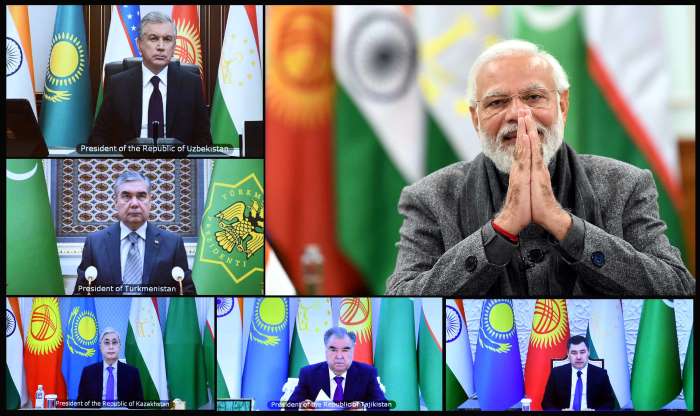
    The first India-Central Asia Summit coincided with the 30th anniversary of establishment of diplomatic relations between India and Central Asian countries.

    A virtual summit organised by India hosting Central Asian leaders discussed the evolving situation in Afghanistan with the Central Asian leaders. The leaders reiterated their strong support for a peaceful, secure and stable Afghanistan with a truly representative and inclusive government. Prime Minister conveyed India’s continued commitment to provide humanitarian assistance to the Afghan people.

    A comprehensive Joint Declaration was adopted by the leaders that enumerates their common vision for an enduring and comprehensive India-Central Asia partnership. During the Summit, Prime Minister Modi and the Central Asian Leaders discussed the next steps in taking India-Central Asia relations to new heights. They decided to hold such a summit every two years and also agreed on regular meetings between ministers of the two countries.

    Besides India’s Prime Minister Narendra Modi, the summit was also attended by Kazakhstan’s President Kassym-Jomart Tokayev, Uzbekistan’s President Shavkat Mirziyoyev, Tajikistan’s President Emomali Rahmon, Turkmenistan’s President Gurbanguly Berdimuhamedow and Kyrgyzstan’s President Sadyr Japarov.

    India sees this summit as a reflection of India’s growing engagement with the Central Asian countries, which are a part of India’s “Extended Neighborhood.” The participating countries have decided to establish a joint working group on Afghanistan, an official statement released on Thursday said.

    Delhi Declaration

    A Delhi Declaration issued soon after the virtual summit said spoke of a broad “regional consensus” on the issues related to Afghanistan. The declaration alluded to the need for the formation of a truly representative and inclusive government, combating terrorism and drug trafficking, the central role of the UN, providing immediate humanitarian assistance for the people of Afghanistan and preserving the rights of women, children and other national ethnic groups and minorities.

    The leaders also discussed the current situation in Afghanistan and its impact on the security and stability of the region. They reiterated their strong support for a peaceful, secure and stable Afghanistan while also referring to the current humanitarian situation and decided to continue to provide immediate humanitarian assistance to the people of Afghanistan.

    The leaders discussed far-reaching proposals to further cooperation in areas of trade and connectivity, development cooperation, defence and security and, in particular, on cultural and people to people contacts. These included a round-table on energy and connectivity; joint working groups at senior official level on Afghanistan and use of the Chabahar Port. There was also agreement on India showcasing Buddhist exhibitions in Central Asian countries and commissioning of an India-Central Asia dictionary of common words, joint counter-terrorism exercises, visit of 100-member youth delegation annually from Central Asian countries to India and special courses for Central Asian diplomats.

    The leaders decided to hold such a summit every two years. An “India – Central Asia Centre” will be established in New Delhi to act as the secretariat for future India-Central Asia summits.

    NACO has discontinued producing its annual reports since 2016

    NACO has not published an annual report since 2016. Annual reports since 2016-17 appear as part of the annual reports of the ministry of health and family welfare.

    Khushi Malhotra

    The National AIDS Control Organisation (NACO), India’s nodal organisation for implementation of programmes for prevention and control of HIV/AIDS in India has discontinued publication of its independent annual report since 2016.

    The last NACO annual report published in 2016 provided a comprehensive account of NACO’s annual proceedings.

    A consultant OWSA spoke to on the matter said that NACO’s affairs were covered in the annual report of the ministry of health and family welfare.

    However, reports from NACO were covered as part of the annual reports of the ministry of health and family welfare earlier as well.

    But while the annual reports of the ministry of health and family welfare since 2016 have devoted more pages to the affairs of NACO, there is hardly any mention of NACO’s accounts (the organisation’s funding for NACP-IV alone is to the tune of Rs. 13,415.05 crores). Moreover, there is a passing mention of the accounts and there are no audit reports.

    Interestingly, the finance section of the NACO website has a mention of the annual releases until the budget year 2016-2017. (The financial releases to the state AIDS prevention and control societies are not downloadable.)

    The NACO website also has statutory audit reports from states and union territories until the year 2018-19. But there is no comprehensive audit report that also accounts for the work of NACO’s headquarters.

    Civil society groups working on HIV/AIDS are concerned and they say that they have hardly any information on why the organisation has discontinued publishing it annual report.

    A representative of UNAIDS did not wish to speak on the matter. She said that the annual report was the government’s responsibility and not the responsibility of the UN agency.

    Five years’ accounts in five rows and three columns

    The chapter on NACO in the health ministry’s annual report for 2019-20 has only provided a table with three columns and five rows with expenditures over the past five years. The organisation’s incomes and the expenditures do not find any further mention in the ministry’s annual report.

    According to information provided on the organisation’s website, funds and expenditures earmarked to the organisation sum up to Rs. 2064.65 crores (it is not clearly mentioned if this is the latest budget earmarked for the organisation). Besides government funds, this money also includes funds received by NACO from the world bank, USAID, CIDA, UNDP, AusAID, DFID and the global fund to fight AIDS, tuberculosis and malaria (GFATM).

    Dr Rajesh Rana of PLAN India that has partnered with the health ministry on the GFATM projects agreed that the data on the NACO site was old data.

    Previous annual reports provided detailed accounts of the organisation’s finances. For instance, the annual report for the year 2015-16 devoted over three pages to its financial matters. The report had detailed the work of NACO’s financial division, including budgeting, accounting, auditing and internal financial advisory functions. It also dwelled on donor coordination. Besides, it also provided a year-wise tabulation of expenditures during for the years between 2013 and 2016 under the fourth phase of the National AIDS Control Programme.

    Though the 2015-16 annual report did not have an auditor’s statement on the accounts and expenditures incurred by the organisation, it did provide details of the budgetary support of Rs. 13,415.05 crores.

    The 2015-16 annual report also mentioned how financial systems were established to release sanctioned amount of money and how cash flow to peripheral units in states were being closely monitored to save the last users from facing a shortage of resources.

    In the absence of an annual report for 2016-17 or the year 2017-18, there is no clarity of how the fourth phase of the NACP fared (NACP-IV was phase out in 2017).

    Omicron dominates, says health ministry

    0

    Data indicates that India is now seeing a plateau in the number of COVID-19 cases. But there is concern that over three-fourths of the cases come from 10 states.

    Omicron is now the dominant variant of the COVID-19 virus in India, the health ministry has said. The statement is based on data that indicates that the country is now seeing a plateau in the number of COVID-19 cases, according to the health ministry.

    10 states alone contribute to over three-fourths of the total active cases in the country presently, according to the health ministry.

    It is the transmissibility of the virus that makes it a concern and has led to the Omicron variant dominating all COVID-19 cases.

    The transmissibility of a virus is measured in terms of doubling time. Omicron takes up to three days to double its numbers – this, according to community health specialists, makes Omicron highly transmissible.

    This has public health implications as it can overwhelm healthcare capacities. Apart from exposing those staffing the healthcare system, this can also strain the healthcare system by diverting resource and attention away from non-COVID functions.

    The transmissibility also shows that the Omicron variant of COVID-19 is more transmissible than Delta.

    Earlier in the day, today, the Delhi Disaster Management Authority decided to remove weekend curfew and odd-even rule for shops in the national capital while still keeping night curfews and closure of schools.

    This government announcements follow from the Indian SARS-CoV-2 Genomics Consortium (INSACOG) declaring on Sunday that Omicron has reached community transmission levels in the country.

    While most Omicron cases so far have been asymptomatic or mild, INSACOG said that global data shows that the majority of severe cases and deaths have been in unvaccinated people.


    Image: WIkipedia commons

    Pfizer, BioNTech initiate study to evaluate Omicron vaccine in adults

    0

    First participants enrolled in clinical trial received Omicron-based vaccine candidate as a two-dose primary series and as a booster dose.

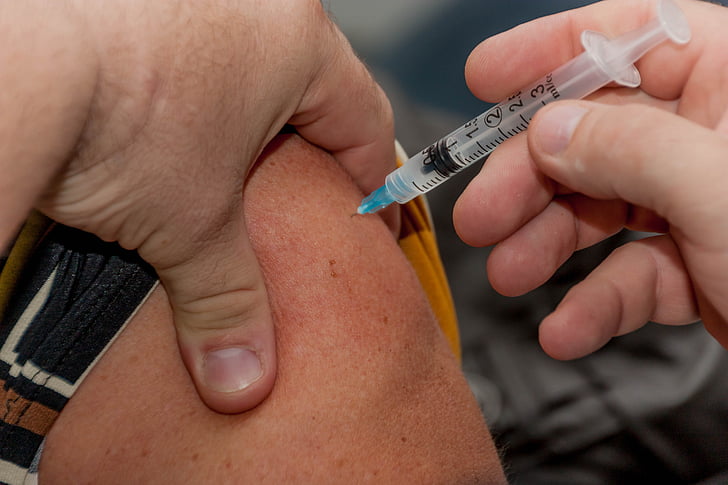
    Drugs and pharma giants Pfizer and BioNTech have announced initiation of a clinical study to evaluate the safety, tolerability and immunogenicity of an Omicron-based vaccine candidate in healthy adults aged between 18 and 55 years.

    The study will compare the original shot of the vaccine with a version tweaked to recognize the highly contagious Omicron strain.

    Participants of the study will come from the companies’ Phase 3 COVID-19 booster study. This study is part of the two companies’ ongoing efforts to address Omicron and determine the potential need for variant-based vaccines.

    “While current research and real-world data show that boosters continue to provide a high level of protection against severe disease and hospitalization with Omicron, we recognize the need to be prepared in the event this protection wanes over time and to potentially help address Omicron and new variants in the future,” said Kathrin U. Jansen, Pfizer’s senior vice president and head of vaccine research and development.

    “Vaccines continue to offer strong protection against severe disease caused by Omicron. Yet, emerging data indicate vaccine-induced protection against infection and mild to moderate disease wanes more rapidly than was observed with prior strains,” said Prof. Ugur Sahin, CEO and Co-founder of BioNTech.

    The study will evaluate up to 1,420 participants across the three cohorts and the trial will involve 1,420 people in the 18 to 55 year age group across the United States and South Africa. First participants enrolled in clinical trial received Omicron-based vaccine candidate as a two-dose primary series and as a booster dose.

    Spreading fast

    Vaccine manufacturers said new versions of their vaccines to target the highly infectious Omicron variant could be ready within 100 days, in the immediate days after the new strain of COVID-19 was detected. But there were doubts.

    Omicron has spread at neck-break speed. Andrew Pollard, who led the development of the Oxford-AZ vaccine said that it was “quite difficult to make and deploy an updated vaccine quickly enough” to make a difference.

    Clinical and real-world data continue to find people who are vaccinated, particularly those that have received a booster, maintain a high level of protection against Omicron, particularly against severe disease and hospitalization.


    Image: Hippox — licenses to use under Creative Commons Zero – CC0

    ICRC still clueless on data breach

    ICRC’s “deep data drive” into the hacking of its servers does not seem to have yielded much, except the knowledge that hackers had been inside these systems and had access to the data on them.

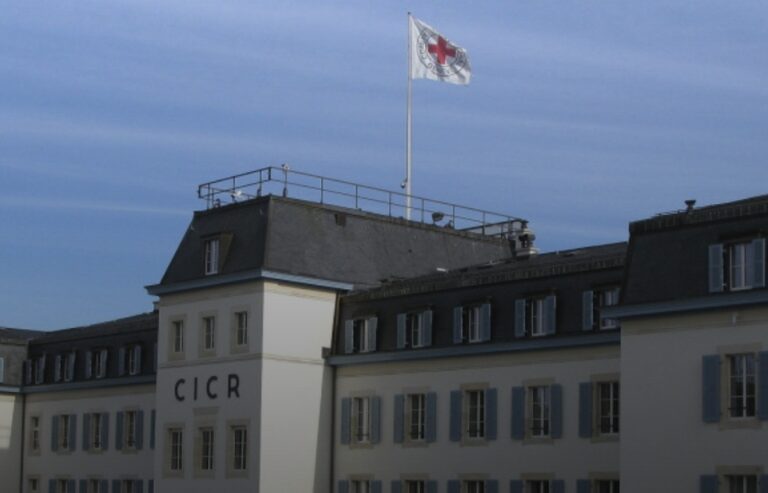
    The International Committee of Red Cross is still searching for answers, 10 days since it determined that servers hosting personal information of more than 500,000 people receiving Red Cross services were compromised in a cyber-security attack.

    An ICRC cyber partner detected an anomaly on the servers that contained information relating to the Red Cross’ restoring family links (RFL) services. RFL provides a unique service, reconnecting people separated by war, violence, migration and other causes. Every day, Red Cross societies all over the world, with help from ICRC, reunite 12 people with their families, ICRC claims.

    But ICRC’s “deep data drive” does not seem to have yielded much, except the knowledge that hackers had been inside these systems and had access to the data on them. For a start, there is no clarity on when the data breach first happened for how long it had been going on. Reports say that the breach was “determined” on 18 January.

    The breach included personal data such as names, locations, and contact information of more than 515,000 people from across the world. But so far, the ICRC only presumes that the data sets were copied and exported.

    “We must presume so. We know that the hackers were inside our systems and therefore had the capacity to copy and export it,” The organisation has said in a statement.

    No dark web clues; no ransom demands, yet

    As a global network, ICRC has access to various levels of hierarchies within entities that even the most powerful governments often fail to establish. Yet, its statement, now 10 days on since the attack happened, says, “We do not know who is behind this attack.”

    It says that the ICRC hasn’t so far had any contact with the hackers and that no ransom has been asked for. “In line with our standing practice to engage with any actor who can facilitate or impede our humanitarian work, we are willing to communicate directly and confidentially with whoever may be responsible for this operation to impress upon them the need to respect our humanitarian action,” the statement reads.

    On reports that the information had been put up for sale on the dark web, the statement says that the organisation has “a dedicated team who are following any reports we receive of data being available on the dark web.”

    ICRC says that it does not wish to speculate on any possible misuse of this data. ICRC says, “If misused or in the wrong hands, it could potentially be used by States, non-state groups, or individuals to contact or find people to cause harm.”

    Yet, going by the statement put out by the organisation’s headquarters in Geneva, the world’s largest humanitarian organisation could see this coming.

    As it says in its statement, “We have been long aware of the danger that our data could one day be the target of an attack.” It says that the organisation has “invested substantially in cyber security and work with trusted partners to maintain high standards of data protection and systems.”

    Strong brand

    People connected with the Red Cross in SouthAsia doubt that this event will have long-term impacts on ICRC’s work, especially because RFL is not ICRC’s most resource intensive work.

    “ICRC is a preferred organisation for humanitarian funding in situations of wars and conflicts by many governments,” says a senior official who has closely observed the working of the highly privileged Swiss private organisation. “It is a brand and this latest happening will not disturb its reputation very much,” he said.

    Micro-estimates of wealth data ‘can help tackle poverty’

    Around 97 million people were pushed into extreme poverty in 2021. Now, researchers at the University of California and the Data for Good programme say new wealth data set can help policymakers tackle poverty.

    By Neena Bhandari / SciDev.Net

    A data project charting poverty levels in detail across the global South could help policymakers better target social assistance and humanitarian aid, researchers say.

    The COVID-19 pandemic has deepened poverty globally, with an estimated 97 million more people, most of them in low and middle-income countries (LMICs), pushed into extreme poverty in 2021, according to the World Bank.

    But a dearth of reliable and up-to-date poverty data in low- and middle-income countries (LMICs) poses a major challenge for governments and civil society.

    To bridge this data gap, researchers at the University of California and the Data for Good programme, which collates data from Meta platforms such as Facebook and Instagram, have developed a public data set of Relative Wealth Index (RWI), which provides micro-estimates of wealth of all populated areas in the 135 LMICs. The study was published in PNAS on 18 January.

    Joshua Blumenstock, chancellor’s associate professor at the University of California School of Information and one of the lead authors of the study, said: “The estimates of absolute and relative wealth are very fine-grained, with one for every 2.4-kilometre square grid cell, which is small enough to satisfy the needs of most policymakers, but also large enough to respect the privacy of individual households.”

    “In essence, this makes it feasible for policymakers to determine the relative wealth of small villages and neighbourhoods. For example, Nigeria has used these micro-estimates to identify the poorest urban wards (a neighbourhood) in the country and then prioritise those wards to receive social assistance from the government,” he adds.

    Constructing estimates by combining data

    The estimates are constructed by combining data from nearly 1.5 million in-person Demographic and Health S with massive quantities of “big data” from satellites, mobile phone networks, and other sources, including aggregated and de-identified connectivity data — with personal information removed to protect privacy — from Facebook.

    “In rough terms, the algorithms use the big data to interpolate wealth estimates into areas where surveys have not been conducted,” said Blumenstock, who is also director of the Data-Intensive Development Lab, and co-director of the Center for Effective Global Action.

    To check the accuracy of these micro-estimates, the researchers worked with data gathered by several different independent organisations to compare estimates from their algorithm with objective estimates from third party .

    “For instance, we compared what our algorithm-generated estimates say about the wealth of people in village X to what an independent survey firm says about the wealth of people in village X. We found that — across four independent data sources from 18 different countries — our new micro-estimates provide remarkably accurate measurements of relative wealth and poverty in LMICs,” Blumenstock told SciDev.Net.

    Need more qualitative local data

    Hoa Thi Minh Nguyen, senior lecturer at the Australian National University’s Crawford School of Public Policy, who was not involved in the study, said its breadth across the global South made it a helpful resource for policymakers.

    “However, further information is needed in validating the accuracy of the estimates,” she told SciDev.Net. “The research uses the information on income and expenditure from about 4,000 microregions in total to validate their prediction for 19.1 million (presumably highly heterogeneous) microregions in the world. […] more qualitative local data is needed in targeting the poor, especially when resources are constrained.”

    This public data set of the RWI is available via the Humanitarian Data Exchange and can be explored using an interactive interface. Researchers are hopeful that it will facilitate targeted policy responses to the pandemic and help countries in achieving the UN Sustainable Development Goals.

    Deborah Hardoon, is poverty and inequality lead for Development Initiatives, an organisation which aims to use data to tackle poverty, told SciDev.Net: “The data used in these studies can make an important contribution to our understanding of poverty and inequality. However, it is important that these studies do not distract from, or purport to override, the more fundamental need to get the foundational data right in complex country settings, in a way that is locally owned and enables disaggregation (e.g. by gender or ethnicity) and an understanding of local context.”


    This piece has been sourced from SciDev.Net

    Image: Hippopx licensed to use under Creative Commons Zero – CC0

    India should spend its way out of post-COVID-19 economic crisis

    In view of the structural break in the global economy as well as the domestic economy, the government’s budget plans should be two-pronged — one to revive the domestic economy, and, second to gain a firm foothold in the global economy.

    By Charan Singh

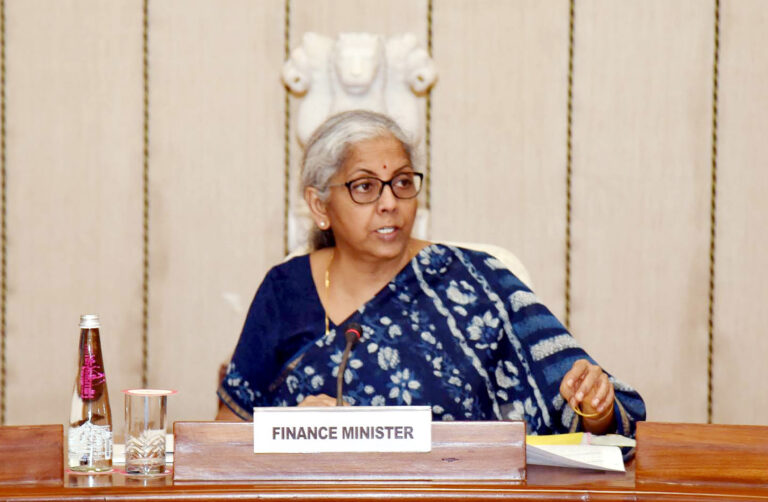
    The Union Budget is more of a policy statement than an accounting exercise. Therefore, the country expects finance minister Nirmala Sitharaman to come up with a vision for the Indian economy, which is still reeling under the impact of the COVID-19 pandemic. The world economy and Indian economy have already suffered from prolonged uncertainty. The world suffered losses in terms of jobs, education, and the health of the labour force. So, the Budget should ensure the stakeholders that the country has a well-thought-out plan for recovery.

    Labor and capital are the essential inputs for economic growth. The pandemic affected labour in India. Many migrant labourers went back home. Few returned but others are still struggling in villages. The private sector and commercial banks also suffered because of the slowdown. Hence, Budget 2022 has to devise a roadmap for labour and capital.

    Budget 2022 must cushion COVID-19 impact

    Budget 2022 will be unique as it is being prepared in the midst of the third wave of COVID-19 and uncertainty about the future of the global economy. Internationally, there are different winds blowing with the UK declaring that pandemic is over and the US is on the verge of reversing the interest rate cycle. In contrast, there is research pointing out that the global economy is still vulnerable and that growth prospects will improve only by 2023.

    In India also, the impact of the pandemic was varied across states. The absence of migrant labour is impacting agriculture and manufacturing, especially MSMEs, in many states. Therefore, the government has to support the economy and should not worry too much about fiscal deficit. This is not recommending fiscal profligacy, but one should not be tied down by the targets set by the Maastricht Treaty which itself are under review. The need of the hour is to lend support to all segments of the economy, ranging from consumption to production.

    Budget 2022 will have to serve two purposes — providing immediate support to different sectors of the economy and planning for the recovery phase from 2023 to 2025. In the immediate support to individuals, the government could consider raising the threshold of income tax which can provide impetus to consumption demand.

    New revenue sources

    The government could also consider recovering some amount of tax forgone by raising expenditure tax on goods and services purchased by higher income groups. This will also help reduce the widening income inequalities. The pandemic has hurt many household budgets which has reflected negatively in expenditure on children’s education. While some parents have shifted children from private schools to government schools, others have stopped sending children to school altogether. Consequently, many schools have closed down.

    The government could consider direct benefit transfer (DBT) to parents of school-going children. In any society during financial distress, the medical expenditure of the elderly suffers immediate neglect. The government could consider DBT to the elderly in terms of enhanced monthly pension for at least two years.

    The global crisis has demonstrated the ill-effects of the monopoly growth of China in global supply chains. To offer an alternative to the global economy, the government could consider infrastructure support in the Northeast to prepare the area for international investment. Tax incentives and tax holidays can induce domestic industry to move into the Northeast, creating economic activity in the region and providing the pull factor for global industry.

    No time for fiscal consolidation

    MSMEs are the largest employers after agriculture and have suffered the most during the crisis. The government has been providing some support through NBFCs, but the feedback from MSMEs has been that the support has not reached the grassroot level. In fact, MSMEs are a very heterogeneous group and most of them do not have deep pockets to survive the pandemic. The government would have to provide a liberal accommodation in terms of tax holidays to MSMEs to ensure the survival and employment generation of MSMEs.

    The medical industry in India, including pharma, has established its presence in terms of quality. To make India a destination of medical tourism, the government could consider incentives to promote indigenous medicines as well as set up hospitals with ultra-specialisation. These can be organized in special economic zones in different parts of India, so that the reputation built over the pandemic can be capitalised and translated into becoming a global medical hub for research and treatment.

    The pandemic has caused immense harm to migratory labour which needs to be productively engaged now. They need to be weaned from unproductive MGNREGA work. The need is to have special schemes for village and cottage industries through mudra loans. Each mudra loan dispersed has the potential to create a few jobs. To enhance the efficiency of expenditure, Panchayati Raj Institutions (PRI) would be helpful as they are the closest to the people.

    In this time of stressed finances, the government should continue to purse disinvestment, and privatisation. Further, given the stress in the economy, the government will have to continue supporting the banking system. It should pursue privatisation of banks too and may also consider placing a few banks under an asset monetisation programme.

    There has been a structural break in the global economy as well as in the domestic economy. The global and domestic economy will now begin to normalise after the third wave of COVID-19. The government’s plan should be two-pronged — one to revive the domestic economy and second to gain a firm foothold in the global economy.

    Budget 2022 should make an effort to provide a road-map on the following: a) role of banking sector including NBFCs; b) Role of MSMEs in industrialization; and c) enhancing the role of India in global economy. The government should capitalise on this rare opportunity when the world is attempting a reset, and ensure that India is able to improve its status in the global financial architecture.

    This piece has been sourced from Policy Circle — policycircle.org

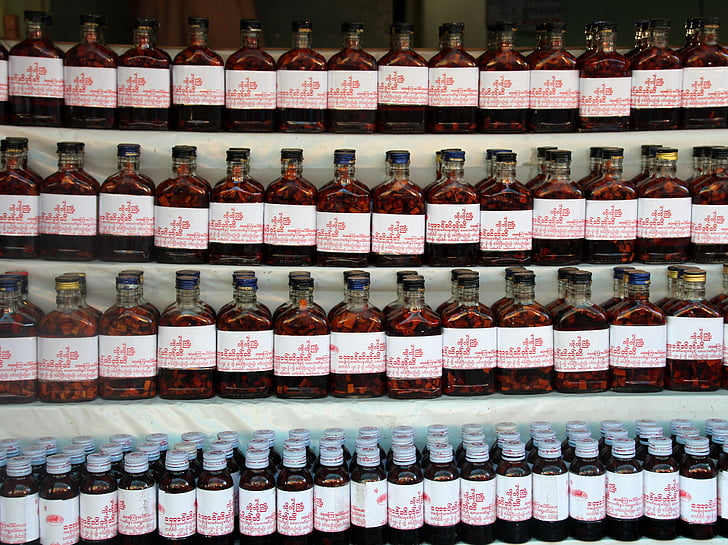
    Traditional Chinese medicine stirs a concoction in Asia, Africa and the Americas

    Animal rights groups are voicing concern as the China’s traditional medicine business is leading to the harvesting of animals, besides plants, thus threatening biodiversity.

    On 18 January, a Canada-based Chinese herbal medicine company pleaded guilty to charges of being in possession of 20,000 fins from a protected shark species. Hand Hing Medicine Ltd. was fined $75,000 by the Vancouver provincial court.

    On 20 January, officials of Assam’s Kaziranga national park reported finding an adult female rhinoceros’ carcass. Its horn was missing and park officials suspected this to be the work of poachers. Rhino horn occupies a place of pride in traditional Chinese medicine (TMC).

    A global Chinese medicine boom has sparked fears for endangered species from Asia, Africa and even the Americas. Rising exports of traditional Chinese medicine products, rising on the crest of the Belt and Road initiative, is accelerating the harvest of rare and endangered plant produce and animal body parts.

    Animal rights groups are alarmed and accuse Chinese medicine companies of plundering bio-diversity for short-term pecuniary interests.

    Recent years have seen the rise of chains of traditional Chinese medicine suppliers and clinics across Africa, according to a report from the Environmental Investigation Agency (EIA).

    “The aggressive expansion of traditional Chinese medicine in many African countries is posing a direct threat to the future of some endangered species,” the group said in a statement.

    While the majority of Chinese medicinal treatments are plant-based, there is also a distinct animal and wildlife component to the Chinese pharma practices. The profit motive has led many pharmaceutical companies to source ingredients from threatened animals, aggravating the pressure on the survival of these species, EIA explains.

    “Any utilization of threatened species in traditional Chinese medicine could potentially stimulate further demand, incentivise wildlife crime and ultimately lead to over-exploitation,” EIA campaigner Ceres Kam warned.

    Missing Indian donkeys

    On 21 December 2021, a senior official of the department of animal husbandry in New Delhi, wrote to the home ministry, voicing concern over the sharp drop in India’s population of donkeys following the last animal census. The donkeys and donkey hides, he said in his communication, were being smuggled to Nepal.

    The official based his letter on a research by Brooke India, a NGO working on equines that points to donkeys and donkey hide smuggled through the porous Indo-Nepal border to supply ejiao, a gelatinous compound obtained from donkey hide for Chinese medicinal use for virility and longevity.

    Brooke India communication officer Amit Kumar says that the insatiable Chinese demand for ejiao is an important factor in the ugly race leading donkeys in the region to extinction. He cites the example of neighbouring Pakistan where, he says, donkeys are on the verge of extinction.

    In November 2019, UK-based Donkey Sanctuary reported that 4.8 million donkey hides were required to satisfy the global demand for ejiao, resulting in steep declines of donkey populations around the world.

    “The ejiao industry has experienced significant growth over the past six years,” Amit Kumar says. “In the three years between 2013 and 2016, the annual production of ejiao increased from 3,200 to 5,600 tonnes, a growth of over 20 per cent.”

    EIA’s Kam is concerned that the dependence on animals will have the knock-on effect of drastically increasing demand for treatments containing wildlife and, in turn, cause more species to become threatened or extinct.

    She says, “Ultimately, the unfettered growth of traditional Chinese medicine poses a serious threat to the biodiversity found in many African countries, all in the name of short-term profit.

    “Any utilisation of threatened species could potentially stimulate further demand, incentivise wildlife crime and ultimately lead to over-exploitation.”


    Image: Hippopx Creative Commons Zero – CC0

    No takers for COVID-19 booster vials in Sri Lanka

    There is a rise in COVID-19 hospitalisations in Sri Lanka. Yet, people are reluctant to take the vaccine booster.

    Over 5000 cases of COVID-19 were reported from across Sri Lanka last week. 82 people had died. Almost 65 per cent of the people in the island nation have been fully vaccinated.

    But Sri Lanka has another, and a very different problem on its hands.

    There are no takers for the millions of unused booster doses of the COVID-19 vaccine in the country. Health authorities say they would hate to see the vaccines expire.

    State minister of pharmaceutical production Channa Jayasumana said the booster dose stock in store will expire by July 2022. The stock is around nine million.

    “We purchased around 14 million booster doses of the Pfizer-BioNTech vaccine and only close to five million have been distributed so far,” he said. “If the public refuses to take the booster dose now, it will expire by July 2022.”

    From urging people to contemplating legal action

    Health officials have been urging people to get the initial vaccines and if eligible to take the booster dose without delay.

    “Please take it, because data indicates that the number of patients are increasing,” said Deputy Director of the Colombo National Hospital Dr Chandana Gajanayaka.

    The lack of enthusiasm flies in the face of the island nation’s strong record of a highly functional immunisation programme.

    “Legal action against those responsible for the spread of communicable diseases can be taken under the Penal Code”, said Senal Fernando, secretary of the government medical officers association.

    Fernando said that “provisions of the quarantine ordinance can be used against persons who do not comply with directions given by the proper authorities under the quarantine ordinance.”

    Health officials on Monday started to administer the second dose for children between 16-19 years of age.

    Spate of hospitalisations and sick staff

    COVID-19 admissions to the hospital in the country have increased over the past week and public health inspectors union chairman Upul Rohana said, adding that the number of symptomatic cases and hospitalisations have increased throughout the country.

    He spoke of hospital staff too falling sick and said that there has been an increase in the number of COVID-19 patients requiring oxygen.

    Rohana’s warning was clear: the numbers will continue to rise and likely lead to a situation similar to the second wave of the pandemic.


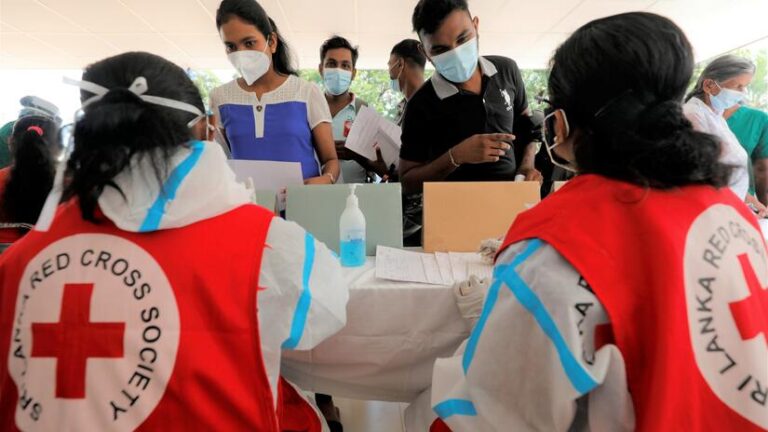
    Image courtesy: Sri Lanka Red Cross Society