More

    Thousands of Cyclone Ditwah Survivors in Sri Lanka Still Await Relief and Resettlement

    Nearly three months after Cyclone Ditwah devastated parts of Sri Lanka, thousands of displaced families continue to live in overcrowded shelters and temporary camps, highlighting gaps in relief distribution, housing policy, and disaster recovery efforts.

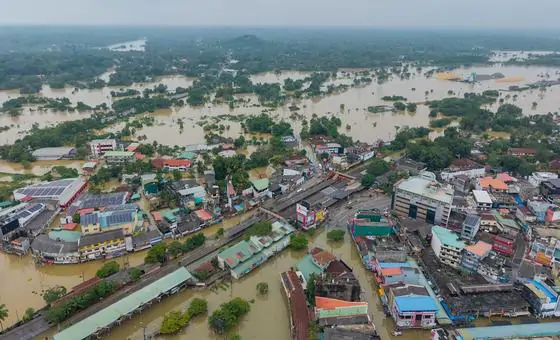
    Nearly three months after Cyclone Ditwah unleashed devastating floods and landslides across Sri Lanka, more than 3,000 people remain in safety centres while tens of thousands continue to live in temporary arrangements with relatives or in rented accommodation, underscoring the slow pace of long-term recovery.

    According to official data released in early March, 3,146 people from 1,075 families are still living in 32 active safety centres across the country. At the same time, an even larger number – 14,927 individuals from thousands of families – are staying outside formal shelters, relying on relatives, friends, or temporary housing while waiting for permanent resettlement solutions.

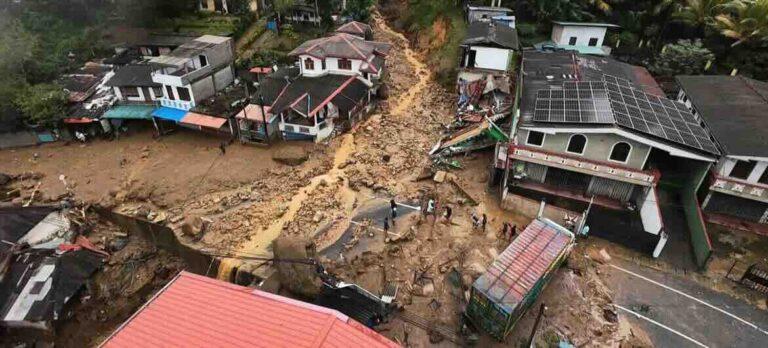
    Cyclone Ditwah triggered severe flooding and landslides that destroyed homes, displaced communities, and disrupted livelihoods across several districts. The disaster left 5,933 houses completely destroyed and more than 115,000 houses partially damaged, creating an enormous reconstruction challenge for the government.

    Among the worst affected districts are Nuwara Eliya, Badulla, and Kegalle, where many displaced people remain without permanent housing months after the disaster.

    Harsh Living Conditions in Temporary Shelters

    For many displaced families, life in temporary shelters remains extremely difficult. In the estate areas of Haggala and Rendapola in Nuwara Eliya, some families affected by landslides have been living in temporary tents for weeks without adequate access to electricity, sanitation, or drinking water.

    Residents say the shelters provide little protection from weather conditions and lack basic facilities needed for daily life. Parents report that children face severe disruptions to their education and routines because of the living conditions.

    Families must often carry drinking water themselves, cook in dimly lit spaces using mobile phone torches, and cope with cold nights and muddy surroundings during rainfall.

    The situation is particularly worrying as the region approaches a season of stronger winds. Displaced residents fear the tents and temporary structures may not withstand harsh weather conditions in the coming months.

    Relief Payments Distributed but Gaps Remain

    The Sri Lankan government has mobilised significant financial assistance to support post-disaster recovery, distributing more than Rs. 24.4 billion in total relief assistance by mid-February.

    This includes house cleaning grants of Rs. 25,000 for more than 426,000 families and house restoration grants of Rs. 50,000 for over 144,000 households affected by the disaster.

    Additional funding has also been allocated to support schoolchildren and small businesses impacted by the cyclone.

    However, the pace of relief distribution varies widely across districts. While some regions have achieved near-complete coverage of restoration grants, others lag significantly. For example, the district of Kalutara reportedly recorded 0 per cent completion in restoration grant distribution, while districts such as Trincomalee and Polonnaruwa remain far behind their targets.

    International assistance has also contributed to recovery efforts, providing more than Rs. 3 billion worth of aid, including vehicles, medical supplies, and emergency shelter materials.

    Despite these efforts, many displaced families say assistance has not reached them adequately or on time.

    Plantation Communities Face Deeper Vulnerabilities

    The prolonged displacement has hit plantation-sector communities particularly hard, especially the Malaiyaha Tamil population, which has historically faced socio-economic marginalisation.

    Many estate workers continue to live in extremely cramped temporary shelters, sometimes measuring only six feet by six feet, where entire families must eat, sleep, and live in a single confined space.

    Activists and researchers say the disaster has exposed longstanding inequalities in land allocation and housing policies affecting plantation workers.

    Critics argue that authorities frequently claim there is insufficient safe land available for resettlement in plantation districts. However, researchers note that large areas of plantation land have historically been diverted to other uses, suggesting that land scarcity may not be the real issue.

    Some analysts estimate that allocating small plots of land to displaced estate families would require only a fraction of the land already taken out of plantation use in past decades.

    There are also concerns about disparities in housing programmes. Homes built under certain housing schemes for plantation workers are reportedly valued significantly lower than houses provided to other disaster victims, raising questions about equality in recovery policies.

    Bureaucratic Hurdles Stall Compensation Distribution

    Recovery efforts have also been disrupted by bureaucratic challenges and labour disputes among officials involved in relief work.

    Disaster relief personnel and technical officers halted their involvement in cyclone-related relief distribution from 27 February, citing unresolved issues such as the lack of a proper operational framework and delays in promised allowances.

    As a result, compensation payments and other relief activities have reportedly been suspended for nearly two weeks, further delaying assistance to affected families.

    Union representatives say officials involved in relief operations have been carrying additional workloads without receiving promised compensation or clear policy guidance.

    Climate Change Intensifying Disasters

    Environmental researchers argue that Cyclone Ditwah illustrates the growing human cost of climate change in vulnerable countries like Sri Lanka.

    Scientific analysis indicates that global warming – currently estimated at about 1.3°C above pre-industrial levels – may have intensified the extreme rainfall associated with the cyclone by 28 per cent to 160 per cent.

    Despite contributing less than 0.1 per cent of global greenhouse gas emissions, Sri Lanka continues to face severe climate-related disasters, highlighting the disproportionate impact of climate change on developing nations.

    Women and children have been among the most affected groups in displacement camps. Assessments show that women and girls make up nearly half of the displaced population, while children account for more than a quarter, with many experiencing educational disruptions and psychological stress following the disaster.

    Aid agencies also report gaps in sanitation facilities, health services, and privacy in several safety centres.

    Slow Road to Resettlement

    Authorities say thousands of houses located in landslide-prone areas require relocation to safer land. The National Building Research Organisation has identified around 13,000 families that need to be resettled due to landslide risks.

    Officials say suitable land has been identified in most districts, although mountainous terrain in areas such as Badulla has complicated the search for safe resettlement sites.

    While approximately 90 per cent of the land identification process has been completed, displaced communities remain uncertain about when permanent housing will become available.

    For many survivors, the prolonged wait for safe housing continues to compound the trauma of the disaster.
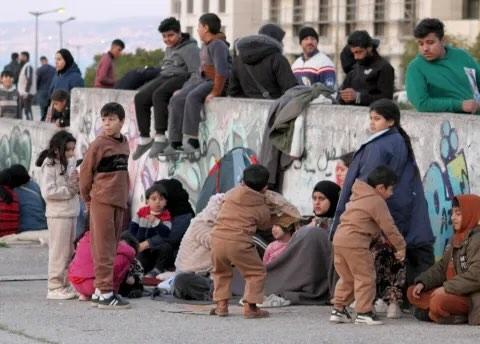
    Child Casualties Surge in Deepening Middle East Conflict as Schools Close and Families Flee Bombardment: UNICEF

    Over 1,100 children killed or injured in just ten days as US-Israel-Iran violence spreads, UNICEF warns of catastrophe for millions more.

    The United Nations children’s agency has issued a stark warning that the intensifying conflict in the Middle East is exacting a devastating toll on the region’s youngest and most vulnerable. In a statement released on 11 March 2026, UNICEF reported that since 28 February more than 1,100 children have been killed or injured across multiple countries. These figures mark only the beginning of what the agency describes as a rapidly worsening humanitarian disaster.

    The numbers are broken down by location, revealing the geographic spread of the violence. In Iran alone, 200 children have reportedly been killed. Lebanon has seen 91 child deaths, while four children have died in Israel and one in Kuwait. UNICEF stressed that these counts are likely to rise sharply as the fighting escalates and spreads further. The agency’s statement, echoed in international media coverage the following day, underscores that ten days into the conflict the situation has already become “catastrophic” for millions of children.

    Breakdown of Losses by Country

    The detailed casualty figures paint a grim picture of how the conflict – now being referred to in some reports as the “Iran war” – has crossed borders and affected civilian populations far from any front line. Iran has borne the heaviest reported child death toll with 200 fatalities, reflecting the intensity of strikes and counter-strikes in and around the country. Lebanon’s 91 child deaths highlight the spillover effects on neighbouring territories, while the smaller but still heartbreaking losses in Israel (four children) and Kuwait (one child) demonstrate that no nation in the region is untouched.

    UNICEF has noted that these are verified reports so far; the true scale may be far greater once access to affected areas improves and more data emerges. The agency has repeatedly emphasised that every child casualty represents not only an immediate tragedy but also a long-term scar on entire communities and future generations.

    Education Crisis Hits Millions

    Beyond the direct loss of life and limb, the conflict is ripping apart the fabric of daily childhood. Widespread disruption to education has left millions of children out of school across the Middle East. Classrooms have been forced to close, teachers displaced, and learning materials destroyed or abandoned as families flee for safety. For many children, the loss of schooling is not temporary; in conflict zones, interrupted education can stretch into years, robbing a generation of literacy, skills, and hope.

    UNICEF’s statement highlights that the bombardment has been unrelenting, turning what should be places of safety and growth into zones of fear. The agency pointed out that the region is home to approximately 200 million children in total, all of whom are now counting on the international community to act before the crisis deepens further.

    Displacement and Infrastructure Devastation

    Hundreds of thousands of children have already been forced from their homes by the bombardment. Families are on the move with little more than the clothes on their backs, seeking shelter in overcrowded camps or with distant relatives. This mass displacement brings its own dangers – lack of clean water, inadequate sanitation, and heightened risk of disease.

    Compounding the horror is the systematic damage to civilian infrastructure. Hospitals that once treated sick children now lie in ruins or are overwhelmed. Schools that provided both education and a sense of normalcy have been attacked or destroyed. Water and sanitation systems – essential for survival – have been crippled, leaving children vulnerable to dehydration and illness even if they escape the immediate violence. UNICEF declared unequivocally: “Nothing justifies the killing and maiming of children, or the destruction and disruption of essential services that children depend on.”

    The agency further warned that the use of explosive weapons in populated areas disproportionately affects children, whose smaller bodies and developing systems make them far more susceptible to blast injuries, shrapnel, and psychological trauma.

    Urges Immediate Diplomatic Action

    UNICEF has called on all parties to the conflict to end the fighting and return to diplomatic negotiations. The statement reiterates the UN Secretary-General’s appeal for an immediate ceasefire and reminds warring sides of their obligations under international humanitarian law and international human rights law. Grave violations against children in armed conflict, the agency noted, can constitute serious breaches of these laws, it says.

    UNICEF also urged combatants to take every possible precaution in their choice of weapons and tactics, specifically calling for an end to the use of explosive weapons in areas where children live and learn. “The region’s children – all 200 million of them – are counting on the world to act quickly,” the statement concluded.

    Nearly 66,000 Afghans Flee Homes as Deadly Border Clashes with Pakistan Rage On

    In northwest Pakistan, families have also fled villages under mortar barrages, though exact numbers are unclear. The International Organization for Migration warned that further intensification could trigger a cascade of returns.

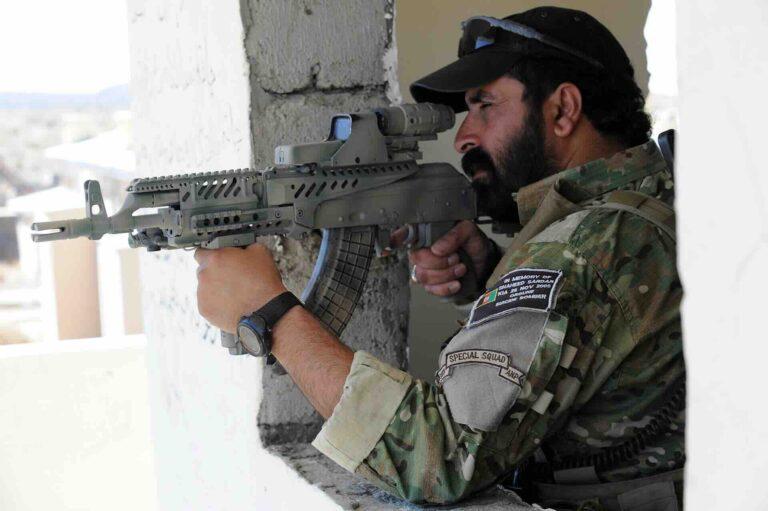
    Fierce cross-border fighting between Afghanistan and Pakistan has displaced nearly 66,000 people in eastern and southeastern Afghanistan, the United Nations warned on Wednesday, marking the seventh day of the worst violence in years along the disputed Durand Line. Heavy shelling, airstrikes, and artillery exchanges have claimed dozens of civilian lives, shattered homes, and crippled aid efforts, exacerbating one of the world’s most acute humanitarian crises.

    The clashes, which erupted last week in response to Pakistani airstrikes in late February, have drawn urgent pleas from UN agencies for an immediate halt to hostilities. As families flee mortar fire and seek refuge in makeshift camps, international organizations highlight the mounting toll on already vulnerable communities strained by years of conflict, economic collapse, and mass returns from Pakistan.

    Escalating Violence Claims Civilian Lives

    The violence has intensified along the 2,640-kilometer (1,640-mile) Durand Line, the colonial-era border long contested by both nations. Afghanistan’s Taliban-led Defence Ministry reported that Pakistani forces launched deadly airstrikes on Afghan soil in late February, targeting alleged militant training camps. In retaliation, Afghan forces initiated a cross-border operation, claiming to have shot down a Pakistani drone and captured seven border posts on Wednesday.

    Casualty figures paint a grim picture, though verification remains challenging amid the chaos. Afghanistan’s Defence Ministry stated that 110 civilians – including 65 women and children – have been killed and 123 wounded since the fighting began. The UN Assistance Mission in Afghanistan (UNAMA) corroborated a lower but still devastating toll, reporting at least 42 civilian deaths. Pakistan has not commented on Afghan civilian losses but claims more than 430 Afghan soldiers killed, while Kabul estimates around 150 Pakistani troop fatalities. Independent verification is elusive, with the UN’s Office for the Coordination of Humanitarian Affairs (OCHA) noting limited access to affected areas.

    Specific incidents underscore the human cost. In Nangarhar Province near the Torkham crossing – a vital trade artery – five civilians, including children, were injured by cross-border shelling, while two others were wounded in the Nazyan district. Further north in Kunar Province’s Sirkanay village, mortar fire has emptied entire communities. “Thousands of families have left the village,” said Asadullah, a 30-year-old labourer who remained to guard his home. “In some houses, only one person has stayed… The village has become empty.” Blasts echoed as far as Kabul, heightening fears of broader escalation.

    Schools and markets in several border districts remain shuttered, trapping residents in a cycle of fear and isolation. In northwest Pakistan, families have also fled villages under mortar barrages, though exact numbers are unclear. The International Organization for Migration (IOM) warned that further intensification could trigger a cascade of returns, noting over five million Afghans have fled back from Pakistan in the past two years, overwhelming fragile host communities.

    Humanitarian Crisis Deepens Amid Aid Disruptions

    The displacement crisis has engulfed more than 46 districts across eastern, southern, and western Afghanistan, where pre-existing food insecurity was already severe. The UN’s World Food Programme (WFP) reported that residents in these areas faced acute hunger even before the clashes, with the violence now suspending critical aid operations. Emergency food distributions, social protection programmes, school feeding initiatives, and livelihood support have been halted, impacting approximately 160,000 people.

    In Khyber Pakhtunkhwa Province, aid efforts in the north have been temporarily paused due to insecurity, though distributions continue in the south. OCHA emphasized that casualty figures “cannot yet be independently verified” because of restricted access, underscoring the dangers faced by humanitarian workers. “Civilians must be protected at all times, as well as civilian infrastructure,” UN Spokesperson Stéphane Dujarric stressed during a briefing in New York.

    The IOM’s assessment is stark: “The ongoing military confrontation along the Durand Line has reportedly resulted in civilian casualties, damage to critical infrastructure, and the displacement of nearly 66,000 people in eastern and southeastern Afghanistan,” the agency stated. “These developments risk further displacement, accelerating returns, and exacerbating vulnerabilities in communities that are already overstretched and under-resourced.” In Nangarhar’s Momand Dara district, displaced families huddle in schools turned shelters, sharing stories of homes reduced to rubble by airstrikes.

    This surge in returns compounds Afghanistan’s woes. Since the Taliban’s 2021 takeover, economic sanctions and drought have pushed millions toward the brink. The border clashes threaten to unravel fragile progress in repatriation programs, with IOM fearing a “returnee crisis” that could displace even more.

    UN Urges Ceasefire

    UNAMA reiterated its call on Tuesday for an immediate halt to the cross-border clashes, urging all parties to uphold international humanitarian law and prioritize civilian protection. “All parties must comply with their obligations under international law,” the mission stated, emphasizing the prohibition on targeting civilians or using disproportionate force.

    Pakistan’s political adviser to Prime Minister Shehbaz Sharif, Rana Sanaullah, defended the airstrikes as necessary to neutralize “training centres” allegedly harbouring anti-Pakistan militants. “Most training centres have been eliminated,” Sanaullah said, adding that Islamabad seeks “verifiable evidence” that Afghan territory will not be used for attacks. Afghan officials, meanwhile, accuse Pakistan of unprovoked aggression, with no immediate dialogue in sight despite Kabul’s openness to talks post-strikes.

    The UN’s broader appeal comes amid regional instability. Weeks of prior violence had already heightened tensions, with Pakistan linking the strikes to cross-border incursions by groups like the Tehrik-e-Taliban Pakistan (TTP). Analysts warn that without de-escalation, the fighting could spill into urban centres or draw in regional powers.

    Path to Peace Elusive as Communities Suffer

    As the sun sets over the rugged borderlands, the human stories emerge from the shadows. In Kunar, elders recount nights of unrelenting shelling, children too traumatized to speak. Aid agencies scramble to reroute supplies, but the scale defies easy solutions. WFP’s suspension of programmes leaves families scavenging for scraps, while IOM teams document the exodus – tents sprouting like weeds in Nangarhar’s dusty plains.

    International mediators, including the UN, push for backchannel talks, but mutual distrust lingers. For the displaced, survival is the only diplomacy they know. “We just want to go home,” one mother whispered in a Torkham shelter, clutching her infant amid the throng. As clashes ebb and flow, the Durand Line – a scar from a bygone empire – continues to bleed, testing the resilience of two nations bound by geography and haunted by history.

    Image: Wikimedia

    Sri Lanka Cabinet Endorses 14 Climate Resilience Measures After Cyclone Ditwah

    Sri Lanka’s Cabinet has endorsed a set of 14 climate-resilience measures aimed at strengthening disaster preparedness, rebuilding vulnerable sectors, and protecting livelihoods after the devastation caused by Cyclone Ditwah in late 2025.

    Sri Lanka’s cabinet of ministers has approved a package of 14 climate-resilience measures designed to strengthen the island nation’s preparedness for future climate disasters and accelerate recovery from the devastation caused by Cyclone Ditwah.

    The decision follows recommendations made by a special committee established in the aftermath of the cyclone, which struck Sri Lanka in late November 2025 and triggered severe flooding, landslides, and widespread damage across several provinces.

    According to cabinet spokesman and minister Nalinda Jayatissa, the measures aim to improve disaster preparedness, rebuild damaged agricultural sectors, and strengthen long-term climate resilience in vulnerable regions of the country.

    The policy initiatives are part of Sri Lanka’s broader effort to adapt to the growing threat of climate-induced disasters while supporting economic recovery following one of the worst natural calamities in recent years.

    Cyclone Ditwah Exposed Gaps in Disaster Preparedness

    Cyclone Ditwah made landfall in Sri Lanka in November 2025, bringing torrential rainfall and flooding that affected millions of people and caused widespread infrastructure damage.

    The storm resulted in hundreds of fatalities, destroyed thousands of homes, and severely disrupted agriculture and transport networks. It also affected critical infrastructure including roads, bridges, and health facilities across multiple districts.

    Experts say the cyclone exposed significant gaps in Sri Lanka’s disaster preparedness and climate adaptation systems, highlighting the need for stronger planning, improved infrastructure resilience, and better early warning mechanisms.

    In response, the government established a committee to study the disaster’s impact and recommend reforms aimed at strengthening resilience to future climate-related events. The committee’s 14 recommendations were subsequently presented to the cabinet and endorsed for implementation.

    Officials said the measures focus on strengthening disaster risk management, improving climate-resilient infrastructure, and ensuring that vulnerable communities and sectors receive adequate support.

    Strengthening Climate-Resilient Infrastructure

    A key component of the newly approved measures is improving infrastructure resilience to withstand extreme weather events.

    Sri Lanka’s transport networks, irrigation systems, and public utilities suffered extensive damage during the cyclone, disrupting livelihoods and economic activity in several regions. The new initiatives aim to ensure that reconstruction efforts incorporate climate-resilient design standards.

    Government planners say future infrastructure projects will integrate climate risk assessments and disaster-resilient construction practices to reduce vulnerability to floods, landslides, and severe storms.

    The measures also encourage improved coordination between national agencies, provincial authorities, and disaster-management institutions to ensure faster emergency response and recovery in the event of future disasters.

    Officials believe such coordinated planning will help minimize economic losses and protect critical infrastructure from climate-related risks.

    Supporting Farmers and Climate-Sensitive Sectors

    Agriculture was among the hardest-hit sectors during Cyclone Ditwah, with heavy rains destroying crops and farmland in several parts of the country.

    Sri Lanka’s export crops, including tea, rubber, and coconut plantations, suffered extensive damage as floods and landslides washed away soil and damaged plantation infrastructure.

    As part of the recovery strategy, the government has approved financial assistance schemes to support farmers in re-cultivating damaged lands and restoring agricultural productivity.

    Under these programmes, farmers whose export crops were damaged will receive financial relief depending on the scale of losses, allowing them to rehabilitate plantations and resume cultivation.

    The move is expected to provide critical support to rural communities whose livelihoods depend on plantation agriculture, while also protecting key export sectors that contribute significantly to Sri Lanka’s economy.

    Officials say the agricultural recovery initiatives are also intended to promote climate-resilient farming practices that reduce vulnerability to extreme weather.

    Enhancing Disaster Risk Management

    Another major focus of the cabinet-approved measures is strengthening Sri Lanka’s disaster risk management framework.

    Authorities plan to improve early warning systems, enhance coordination among disaster-management agencies, and develop stronger community-level preparedness programmes.

    Officials say that improving real-time weather monitoring and disaster communication systems will enable authorities to issue timely warnings and evacuate vulnerable communities more effectively.

    The government also aims to strengthen institutional capacity within disaster-management agencies to better coordinate emergency response, rescue operations, and post-disaster recovery.

    These reforms are expected to reduce loss of life and property during future climate-related disasters.

    Climate Adaptation and Economic Recovery

    Sri Lanka’s push for climate resilience comes at a time when the country is still recovering from a severe economic crisis and facing rising climate risks.

    Natural disasters such as cyclones and floods have increasingly strained the country’s finances, forcing the government to seek international assistance and climate financing for reconstruction efforts.

    Cyclone Ditwah alone caused widespread destruction and placed additional pressure on the government’s recovery plans as the country attempted to rebuild its economy.

    International institutions such as the World Bank and the International Monetary Fund have already pledged support for rebuilding infrastructure, restoring livelihoods, and strengthening climate resilience in affected areas.

    Sri Lankan officials say the cabinet-approved measures represent an important step toward integrating climate resilience into national development planning.

    By combining disaster preparedness, climate-resilient infrastructure, and economic recovery measures, policymakers hope to build a more sustainable and resilient economy capable of withstanding future climate shocks.

    A Long-Term Strategy for Climate Resilience

    Experts note that Sri Lanka’s vulnerability to extreme weather events has increased due to climate change, making long-term adaptation strategies essential.

    The island nation frequently faces floods, cyclones, and landslides during the monsoon season, placing millions of people at risk.

    Government officials say the newly endorsed measures will be implemented through coordinated efforts across ministries, provincial authorities, and disaster-management agencies.

    The aim is to create a comprehensive national framework that integrates climate risk reduction into infrastructure planning, agriculture policy, and disaster response systems.

    Officials say that the measures are aimed to help Sri Lanka reduce future disaster losses, safeguard livelihoods, and strengthen the country’s resilience to the growing impacts of climate change.

    Bangladesh’s Law and Order in Peril: Gang Wars and Crime Wave Persist Despite BNP’s Election Triumph

    The ledger of death is unrelenting. From December 2023 to February 2025, murders clocked in at more than 278 monthly, concentrated in gang hotspots like Dhaka, Chattogram, and Sylhet, per police data.

    Even as Bangladesh ushers in a new era under the landslide victory of the Bangladesh Nationalist Party (BNP) in February’s historic elections, the nation’s streets remain battlegrounds of fear and bloodshed. In the 15 months leading up to March 2025 – a tumultuous stretch bookended by the 2024 student uprising that toppled Sheikh Hasina’s regime and the dawn of interim rule – police records tallied over 4,177 murder cases nationwide. This harrowing statistic, intertwined with escalating inter-gang rivalries, rampant robberies, and audacious muggings, highlights a law and order crisis that the fledgling BNP government, led by Tarique Rahman, now inherits amid vows of sweeping reforms. As the party assumes power after securing a two-thirds parliamentary majority, analysts caution that entrenched criminal syndicates and lingering political scars could undermine the mandate for stability.

    The violence’s origins lie in the summer of 2024 chaos, when protests against Hasina’s iron-fisted rule exploded into lethal skirmishes, claiming over 1,000 lives and shattering faith in institutions. What followed was a cascade of factional bloodletting, with gangs loosely tethered to Awami League diehards, BNP splinter groups, or freelance thugs clashing over extortion rackets and street dominance. “This isn’t random thuggery; it’s a calculated power grab in the ruins of old regimes,” observes Dr Khandaker Farzana Rahman, a Dhaka University criminologist. “The election win offers a reset, but without dismantling these networks, neighbourhoods will stay as fortresses of fear.”

    Murders and Mob Fury Unabated

    The ledger of death is unrelenting. From December 2023 to February 2025, murders clocked in at more than 278 monthly, concentrated in gang hotspots like Dhaka, Chattogram, and Sylhet, per police data. This outpaces prior benchmarks; 2024 alone notched around 4,114 killings by mid-year, propelled by the upheaval. Into 2025, the count swelled to 3,786 cases – a 10 per cent rise from the previous year’s full tally.

    Mob rampages have compounded the slaughter. Between August 2024 and October 2025, 931 such episodes – rooted in political vendettas and gang skirmishes – snuffed out 237 lives, as detailed in a Centre for Policy Dialogue (CPD) analysis. The first nine months of 2025 witnessed 692 political flare-ups, felling 107 and wounding over 5,500, frequently ignited by BNP internal tussles over local committees and shakedown schemes. “Gangs draped in party colours have made bazaars and shanties execution grounds,” shares survivor advocate Fatima Begum, mourning her brother, hacked down in a Chattogram gang feud last year. Communal undercurrents add venom: 522 attacks on minorities in 2025 yielded 61 murders, which officials classify mostly as “opportunistic crimes” rather than hate-driven.

    Vivid testimonies from the ground evoke the dread. In Dhaka’s volatile Mirpur, locals recount dusk-to-dawn sieges by machete-wielding crews and improvised firearms. “The cries, the shots – it’s endless siege warfare,” laments shop owner Raju Ahmed, who bolted his store after a January 2025 extortion bid escalated to arson.

    Street Predation Escalates

    Murders are but one thread in a broader tapestry of predation. Robberies and muggings, orchestrated by the very gangs fuelling internecine wars, ballooned 39 per cent in 2025, logging 702 robberies and 1,935 snatchings. Thefts rose 12 per cent to 9,672 incidents, while kidnappings for ransom more than doubled to 1,101, often masterminded by syndicate cells. All told, these predations hit 13,410 cases in 2025 – up 16.5 per cent year-over-year.

    Urban epicentres bear the scars deepest. In Dhaka, snatch-and-grab assaults target women and wage workers on teeming transports or shadowed lanes. “Perpetrators thrive on police thinness; hit fast, fade quick,” says Jahangir Alam Chowdhury, former internal security adviser of the Interim government of Bangladesh. Chowdhury admits that post-uprising “strains” linger into the BNP era. Experts link the spike to streamlined reporting – boosting detections – yet also to a policing force bogged down by probes into past abuses and mass exits. Ex-political enforcers, repurposed as career crooks, fuse gang vendettas with daylight heists.

    Vulnerable groups suffer disproportionately. Crimes against women and children dominated 2025 dockets, with 181,737 filings – encompassing rapes and abductions – edging up 6 per cent from 2024. A February 2025 Narayanganj horror, where a teen girl was seized and violated by a BNP-affiliated gang, exposes how partisan grudges bleed into intimate atrocities.

    Gangs Exploit the Political Quagmire

    Bangladesh’s gang inferno ignited in the 2024 revolt’s afterglow, which toppled Hasina after 15 years and birthed Yunus’s caretaker stewardship until the February 2026 polls. From August 2024 to December 2025, over 600 violence bursts – many gang-infused political hits – killed 158, per Asia News Network tallies. With 1,785 crimes-against-humanity probes ongoing, including 837 uprising-linked murders, clogged courts foster a culture of getaways.

    Outlaws have burrowed deep, hijacking political facades. Transparency International Bangladesh pins 91.7 per cent of post-August 2024 aggressions on BNP-aligned outfits, with Awami League remnants at 20.7 per cent. Rohingya enclaves seethe with armed clashes between refugees and hosts, rippling nationwide. On the economic front, 40 per cent youth joblessness and galloping inflation – hitting 9.8 per cent in late 2025 – herd the idle into gang folds, lured by plunder’s promise.

    Human Rights Watch lambasts the “explosive mob vigilantism,” calling for safeguards against assaults on journalists (340 incidents in 2025) and minorities. “Elections alone won’t staunch this; constitutional revival is key,” echoed the International Association of Democratic Lawyers in late 2025, a plea resounding as BNP takes the helm.

    Image: Wikimedia

    Sri Lanka Welcomes the World’s Remote Workforce with New Digital Nomad Visa

    The true strategic question lies in what the country ultimately wishes to achieve. Rather than merely viewing the visa as a tool for tourism revenue, policymakers have an opportunity to attract innovative founders and tech entrepreneurs.

    Sri Lanka has officially stepped into the global remote work arena with the launch of its highly anticipated digital nomad visa. This initiative is designed to allow foreign remote workers to reside in the country while continuing to earn their income from overseas. The ceremonial launch of the visa took place at the Bandaranaike International Airport in Katunayake, marking a significant milestone in the country’s strategy to attract a new class of long-term visitors.

    Leading the launch event were key government figures, including deputy minister of digital economy Eranga Weeraratne, chief adviser to the president on the digital economy Dr. Hans Wijayasuriya, and department of immigration and emigration controller for visa, Nayana Senaratne. Symbolizing the commencement of the programme, the very first visas were officially handed over to Ukrainian nationals Daria Gordiienko and her husband Yaroslav Kovelchuk. The policy is now in full effect, with the online application portal officially open to professionals worldwide.

    Navigating Eligibility and Financial Requirements

    Authorities have laid out clear guidelines to ensure the programme benefits the local economy without disrupting the domestic labour market. The visa is strictly available to foreign nationals over the age of eighteen who work remotely for foreign-based employers or manage internationally registered businesses. Holders are prohibited from taking up local employment; their financial earnings must be entirely sourced from outside Sri Lanka.

    Financially, the principal applicant is required to remit a minimum of $2,000 per month in foreign currency directly into the country. If there are more than two dependants, an additional monthly remittance of $500 is required for each subsequent dependant. The visa itself carries an annual fee of $500 per person and remains valid for one year.

    Prospective nomads must provide police clearance certificates, medical reports, and proof of international health insurance, alongside a formal recommendation from the ministry of digital economy. Applications face a rigorous review by the ministry of defence and the department of immigration. Post-approval monitoring is also designed to be strict. Relevant authorities will monitor bank accounts to ensure tax compliance. Upon renewing the visa after the initial year, formal tax registration becomes mandatory. Furthermore, the visa allows children of the holders to enrol in international or private educational institutions across the Sri Lanka.

    The Appeal of the Island for Remote Workers

    Digital nomads differ significantly from traditional tourists. They rely on internet-based technology to perform their duties remotely, allowing them to traverse the globe. Instead of visiting for a brief holiday, digital nomads often stay for several months. They integrate deeply into the community by renting local accommodations, utilising local services, and injecting steady capital into the domestic economy rather than spending in short bursts.

    Industry analysts note that this demographic group presents a unique economic opportunity. They prefer consistent spending on housing, food, reliable transport, and leisure activities. Their sustained presence provides a significant boost to local businesses, particularly in smaller, less commercialised towns.

    Sri Lanka caters to these preferences perfectly, offering a diverse array of stunning destinations. Coastal and highland areas such as Arugam Bay, Ella, Tangalle, and Kalpitiya have already established themselves as favoured spots for long-stay visitors. For the Sri Lankan economy, this translates into a predictable flow of foreign exchange. A continuous influx of professionals remitting a minimum of $2,000 monthly can create a cumulative economic impact that significantly bolsters small-scale enterprises.

    Overcoming Infrastructure Hurdles

    Despite the undeniable appeal of the programme, domestic infrastructure remains a primary concern. The lifeblood of remote work is reliable, high-speed internet. Nomads depend entirely on stable connections for video conferencing and uninterrupted communication with international clients.

    Industry insiders have voiced concerns regarding the patchiness of internet connectivity, particularly in the idyllic remote areas attractive to these professionals. Coupled with this is the challenge of electricity reliability. While the majority of the island enjoys access to the national grid, occasional power outages remain a reality in cities, and more frequent disruptions can occur in outstation regions. For a remote worker, a sudden power failure can be disastrous.

    To mitigate these risks, experts suggest adopting a phased rollout strategy. Rather than an immediate nationwide promotion, the country could benefit from developing three or four dedicated digital hubs. These specialised zones would be equipped with guaranteed high-speed networks and automatic backup power generation.

    Building a Thriving Startup Ecosystem

    While technical challenges exist, other experts argue that connectivity shouldn’t overshadow the broader strategic potential. Cybersecurity analysts point out that alternative solutions, such as satellite internet services, are becoming affordable and can bridge connectivity gaps. Furthermore, with extensive 4G mobile coverage reaching a vast majority of the island, Sri Lanka is reasonably positioned.

    The true strategic question lies in what the country ultimately wishes to achieve. Rather than merely viewing the visa as a tool for tourism revenue, policymakers have an opportunity to attract innovative founders and tech entrepreneurs. By drawing in professionals who can contribute to the local startup ecosystem, Sri Lanka can emulate the success of hubs like Bali.

    Image: Wikimedia

    Women Bear Hidden Burden of Climate Crises, Says Sri Lankan Study

    Researchers warned the result is a cycle: climate stress increases unpaid work, which reduces income opportunities and deepens poverty.

    Sri Lanka’s worsening climate shocks are quietly reshaping family life – and women are paying the price in invisible labour, according to a new study highlighting how unpaid care work expands during disasters, pushing many households closer to poverty.

    The findings, launched by the Women and Media Collective (WMC), reveal that climate change is not only an environmental or economic challenge but also a gendered social crisis. As droughts, floods and extreme weather become more frequent, women increasingly stretch their time and energy to keep families functioning, often at the cost of employment, health and financial independence.

    Women as “Shock Absorbers” During Disasters

    The pilot study, conducted among 60 women in Colombo, Gampaha and Moneragala districts, found that 95 per cent of respondents reported their care responsibilities becoming significantly harder during extreme weather events.

    Participants included mothers, caregivers for persons with disabilities and women working in climate-sensitive sectors such as agriculture. Many also carried the dual burden of income generation and household care.

    Researchers described women as “shock absorbers” during crises – individuals who absorb the impact of disasters by increasing unpaid labour to sustain families and communities.

    In practical terms, this meant longer hours cooking and cleaning, caring for children and elderly relatives, and securing water and fuel. In drought-prone Moneragala, women reported spending large parts of the day collecting firewood and fetching water due to limited access to basic utilities.

    The burden was especially heavy for caregivers of persons with disabilities. Over 61 per cent of respondents cared for at least one disabled family member, while childcare responsibilities were highest in Gampaha and Moneragala districts.

    Limited childcare services and inadequate facilities worsened the situation. Many women said even when centres existed, they lacked capacity to support children with special needs.

    Researchers warned the result is a cycle: climate stress increases unpaid work, which reduces income opportunities and deepens poverty.

    Invisible Labour Outside the Economy

    Dr. Sepali Kottegoda, Director of Programmes on Gender and Political Economy at WMC, said the problem lies partly in how societies define “work”.

    She explained that unpaid care is rarely counted as labour in economic systems even though it sustains households and enables the broader economy to function.

    The study frames this within the concept of “social reproduction” – the unpaid activities required to maintain daily life, including childcare, cooking, cleaning and caregiving.

    “These roles are structurally indispensable yet systematically overlooked,” she noted, calling for recognition of their economic value.

    Climate change worsens this invisibility. Rising costs of water, fuel and transport increase the effort required to perform routine domestic tasks, meaning the same unpaid labour now requires more time and physical effort.

    In drought-affected areas without piped water, women must travel longer distances to fetch water, making caregiving more physically demanding and time-consuming.

    The study argues that ignoring this dynamic undermines climate recovery strategies because household resilience depends heavily on unpaid female labour.

    Policy Gaps and Declining Workforce Participation

    At the report’s launch, National People’s Power parliamentarian Lakmali Hemachandra said climate crises are now part of everyday life but rarely integrated into policymaking.

    She pointed to worrying trends: falling birth rates, rising mental-health issues among married women and female labour force participation dropping below 30 per cent over the past year.

    According to her, disproportionate care responsibilities may be pushing women out of formal employment and affecting family wellbeing.

    She argued that unpaid care work must be recognised in national planning, warning that many women juggle multiple crises – economic hardship, climate shocks and domestic responsibilities – without institutional support.

    The study also highlighted the lack of gender-sensitive disaster infrastructure. During rescue operations after Cyclone Ditwah, evacuation centres lacked adequate sanitation facilities, separate changing spaces and disability-friendly amenities, making conditions particularly difficult for women and children.

    Additionally, communication gaps prevented accurate identification of deaf and blind disaster victims, prompting calls for early warnings in sign language formats.

    Climate Justice Linked to Care Economy

    Sri Lanka is highly vulnerable to climate change impacts, with an estimated 19 million people expected to live in moderate or severe climate hotspots by 2050.

    Researchers say climate justice therefore cannot focus solely on infrastructure and emissions – it must also consider how societies organise care.

    They urge policymakers to integrate the “care-climate-recovery nexus” into economic planning. This includes expanding childcare and eldercare services, improving water access and recognising unpaid care in social protection policies.

    The report concludes that valuing unpaid care work socially and economically is essential to building resilience.

    Without such recognition, the study warns, climate adaptation efforts risk relying on invisible labour – mostly performed by women – that remains unsupported and unsustainable.

    Image: Wikimedia

    Global Food Prices Snap Five-Month Slide with February Uptick, FAO Data Shows

    This cereal-driven momentum is particularly concerning for net-importing developing countries. In sub-Saharan Africa and South Asia, where wheat constitutes up to 20 per cent of caloric intake, even marginal price hikes can strain household budgets.

    In a shift that could signal renewed volatility in international markets, the United Nations Food and Agriculture Organization (FAO) reported a modest rebound in global food prices for February 2026, halting a five-month downward trajectory. The FAO Food Price Index (FFPI), a key barometer of commodity costs, climbed 0.9 per cent to an average of 125.3 points from its revised January figure. While this upturn ends a welcome respite for consumers and importers worldwide, the index remains 1 per cent below February 2025 levels and a stark 22 per cent shy of the all-time high reached in March 2022 amid supply chain disruptions from the Russia-Ukraine conflict.

    The FFPI aggregates price movements for a basket of internationally traded foodstuffs – cereals, vegetable oils, dairy, meat, and sugar – weighted by their average export shares from 2014-2016. This month’s rise, though slight at 1.1 points, underscores persistent pressures from weather anomalies, geopolitical frictions, and shifting demand patterns. Economists caution that while the increase is not dramatic, it could exacerbate inflationary strains in low-income nations already grappling with aid dependencies.

    Surge in Staples Fuels the Rebound

    At the forefront of February’s price escalation were staple grains, with the Cereal Price Index advancing 1.1 per cent to 108.6 points. Wheat prices spearheaded the gains, buoyed by adverse weather reports and logistical hurdles. Frosts sweeping parts of Europe and the United States raised fears of yield shortfalls, while ongoing disruptions in the Russian Federation and the broader Black Sea region – remnants of protracted export controls and port congestions – tightened supply chains. “These factors have injected uncertainty into an otherwise stabilizing market,” noted an FAO analyst in the report.

    Coarse grains, including maize and barley, saw a more tempered uptick, reflecting steady export paces from major producers like Brazil and Ukraine. Rice prices, meanwhile, inched higher by 0.4 per cent, propelled by robust global appetite for premium varieties such as basmati and Japonica. Asian exporters, particularly in Thailand and Vietnam, reported sustained orders from Europe and the Middle East, where basmati demand has surged amid diversification from traditional suppliers.

    This cereal-driven momentum is particularly concerning for net-importing developing countries. In sub-Saharan Africa and South Asia, where wheat constitutes up to 20 per cent of caloric intake, even marginal price hikes can strain household budgets. The World Bank estimates that a 10 per cent rise in wheat costs could push an additional 5 million people into food insecurity globally, a threshold that February’s trends flirt with but do not yet breach.

    Vegetable Oils Soar on Demand and Supply Squeeze

    The sharpest spike came from vegetable oils, whose index rocketed 3.3 per cent to levels not seen since June 2022 – the highest in nearly four years. Palm oil, the dominant player in this category, bore the brunt of seasonally diminished outputs in Southeast Asia, where monsoon delays and aging plantations curbed Indonesian and Malaysian harvests. Global import demand, meanwhile, remained unyielding, with refiners in India and the European Union stocking up ahead of Ramadan and spring baking seasons.

    Soy oil prices benefited from anticipated US biofuel mandates, which could divert up to 15 per cent of domestic output toward ethanol blending, per USDA projections. Rapeseed oil rebounded on expectations of heightened Canadian exports to China, offsetting earlier droughts in the prairies. Only sunflower oil bucked the trend, dipping moderately as Argentine shipments ramped up post-harvest.

    These dynamics highlight the oilseed sector’s vulnerability to policy whims and climate variability. Vegetable oils underpin everything from cooking fats in low-wage economies to industrial lubricants, and their price volatility has ripple effects. In Indonesia, a top palm producer, smallholder farmers welcomed the upswing but warned of overreliance on monocrops amid deforestation scrutiny. For consumers in price-sensitive markets like Nigeria, where edible oils account for 30 per cent of food import bills, the 3.3 per cent jump translates to tangible wallet pain.

    Mixed Bag in Proteins: Meat Gains, Dairy Dips

    Animal products presented a bifurcated picture. The Meat Price Index edged up 0.8 per cent, with ovine (sheep) meats hitting an all-time high on robust Middle Eastern demand during festive periods. Bovine prices climbed on voracious imports from China and the US, where herd culls from prior droughts have thinned domestic supplies. Pork and poultry saw minor lifts, buoyed by festive consumption in Asia.

    Contrastingly, the Dairy Price Index slipped 1.2 per cent, dragged down by softening cheese quotations in Europe, where oversupply from winter milk flushes met tepid export interest. Butter prices notched their first monthly gain since June 2023’s peak, however, as seasonal shortages loomed. Skim and whole milk powders surged on buying sprees from North Africa, the Near East, and Southeast Asia – regions recovering from 2025’s arid spells.

    Sugar provided outright relief, plummeting 4.1 per cent to 86.2 points on forecasts of bumper global yields. Brazilian and Indian mills, unhindered by El Niño’s fade, project surpluses that could flood markets through mid-2026. This 27.3 per cent year-on-year drop offers a buffer against the broader uptrend, particularly for beverage and confectionery industries.

    Production Pressures and Aid Imperatives

    Looking ahead, FAO’s latest forecasts paint a nuanced canvas. Global wheat output for 2026 is tipped to contract 3 per cent to 810 million tonnes, as farmers in the EU, Russia, and the US scale back winter sowings amid subdued prices and high input costs. Yet, this remains above the five-year average, with bright spots in India (record incentives driving sowings) and positive vibes from Pakistan and China.

    Cereal production for 2025 was revised upward to a record 3,029 million tonnes – a 5.6 per cent leap – bolstered by favourable monsoons in South America and Africa. Ending stocks are projected at 940.5 million tonnes, yielding a comfortable 31.9 per cent stocks-to-use ratio, while trade volumes could swell 3.5 per cent to 501.7 million tonnes.

    Despite these buffers, the human toll lingers: 41 countries, predominantly in Africa, face acute food assistance needs from conflicts, insecurity, and erratic weather. “Price stability is fragile,” FAO Director-General QU Dongyu emphasised in a statement. “Targeted investments in resilient agriculture are non-negotiable to shield the vulnerable.”

    As markets digest February’s pivot, stakeholders from policymakers to pantry shoppers brace for what could be a choppy 2026. The FFPI’s whisper of recovery serves as a reminder: In the intricate web of global food systems, one month’s frost or policy tweak can upend the plate for millions.

    Global Warming Hits Fast-Forward: Potsdam Study Reveals Sharp Acceleration Since 2015

    An analysis from Germany’s Potsdam Institute for Climate Impact Research confirms with near-certainty that Earth’s temperature rise has surged, outpacing historical trends and heightening risks of breaching Paris Agreement limits by 2030.

    In a stark reminder of humanity’s precarious dance with the climate, scientists at the Potsdam Institute for Climate Impact Research (PIK) have unveiled compelling evidence that global warming has not just persisted but accelerated dramatically since 2015.

    The institute’s latest study, published this week, pegs the current warming rate at approximately 0.35 degrees Celsius per decade – nearly double the 0.2°C per decade average seen from 1970 to 2015. This surge, detected with over 98 per cent statistical certainty across multiple global datasets, marks the fastest pace since reliable records began in 1880, sounding an alarm for policymakers and the public alike.

    The findings, detailed in a peer-reviewed paper co-authored by PIK researcher Stefan Rahmstorf and US statistician Grant Foster, come at a pivotal moment. With 2023 and 2024 already etched as the hottest years on record – even after stripping out the amplifying effects of El Niño and solar cycles – the study underscores a troubling shift.

    “We can now demonstrate a strong and statistically significant acceleration of global warming since around 2015,” Foster stated, emphasizing how filtering out natural “noise” like volcanic eruptions reveals the unmasked human fingerprint.

    A Decade of Escalation

    Delving into the data, the PIK team scrutinized five major global temperature archives: NASA’s Goddard Institute, NOAA, the UK’s HadCRUT, Berkeley Earth, and the European Centre’s ERA5 reanalysis. By applying two robust statistical models, they pinpointed the inflection point around 2013 or 2014, when the warming trajectory bent upward.

    What emerged was unequivocal: the post-2015 decade’s 0.35°C per decade rate eclipses any prior 10-year window in the instrumental record. Pre-2015, the climb was steady but insidious; now, it’s a sprint. Rahmstorf warns of the domino effect: “If the warming rate of the past 10 years continues, it would lead to a long-term exceedance of the 1.5°C limit of the Paris Agreement before 2030.” At current speeds, the planet could cross that critical threshold within the next half-decade.

    The models account for natural variabilities, ensuring the acceleration stems from anthropogenic forcings, primarily fossil fuel emissions. Yet, the study stops short of causal deep-dives, noting that the trend aligns with climate models predicting steeper rises as greenhouse gases accumulate. For a world already grappling with record heatwaves, floods, and wildfires, this acceleration amplifies the urgency: every tenth of a degree compounds the toll on ecosystems and economies.

    Why ‘Safe’ Pathways Aren’t So Safe

    Compounding the acceleration are insidious feedback mechanisms that PIK’s research illuminates as potential game-changers. A March 2025 study from the institute projects that even low-to-moderate emission scenarios could unleash amplified heating over the next millennium. Carbon cycle feedbacks, such as thawing permafrost releasing methane or dying forests turning from sinks to sources, could push peak temperatures well beyond 2°C, shattering assumptions of “safe” trajectories.

    Christine Kaufhold, a PIK scientist and lead author, highlights the peril: “Our study demonstrates that even in emission scenarios typically considered ‘safe,’… climate and carbon cycle feedbacks… could lead to temperature increases substantially above this threshold.” Simulations spanning 1,000 years reveal that equilibrium climate sensitivity (ECS) – the long-term warming from doubled CO2 – if above the IPCC’s 3°C midpoint, demands emission cuts far swifter than today’s pace.

    “Small changes in emissions could lead to far greater warming than previously anticipated,” adds Matteo Willeit, underscoring how the earth system’s eroding resilience could spiral into self-reinforcing loops.

    PIK Director Johan Rockström frames it bluntly: “The window for limiting global warming to below 2°C is rapidly closing.” He says that pledges like the EU’s net-zero by 2050 or the U.S. Inflation Reduction Act, while laudable, may fall short without aggressive carbon removal tech and lifestyle shifts.

    IMF Sounds Alarm: Middle East War Risks Fueling Global Inflation Spike

    The International Monetary Fund warns that escalating conflict in the Middle East could prolong oil supply disruptions, pushing global inflation higher and testing economic resilience worldwide.

    As the flames of war lick across the Middle East, the International Monetary Fund (IMF) has delivered a stark message to the world: prepare for turbulence.

    In a speech delivered at a symposium hosted by Japan’s finance ministry, IMF Managing Director Kristalina Georgieva highlighted how the intensifying conflict – now involving Iran, the United States, and Israel – threatens to upend global energy markets and reignite inflationary pressures just as economies claw back from recent shocks.

    With oil prices already surging nearly 50 per cent since December, the ripple effects could cascade into higher consumer costs, slower growth, and strained fiscal budgets from Asia to Europe and beyond.

    The conflict has swiftly evolved into a broader geopolitical crisis. Key oil and gas facilities have been damaged, and shipping traffic through the Strait of Hormuz – a vital artery for one-fifth of the world’s oil supply – has plummeted. This chokepoint, which funnels nearly half of Asia’s oil imports and a quarter of its liquefied natural gas (LNG), is now a flashpoint for supply fears.

    “For much of Asia and the world, energy security has shot up the list of concerns,” Georgieva said. “If the new conflict proves prolonged, it has clear and obvious potential to affect market sentiment, growth, and inflation, placing new demands on policymakers.”

    Escalating Conflict Disrupts Key Energy Routes

    The war’s immediate fallout has been a dramatic constriction of energy flows. Major producers like Iraq, Kuwait, and the United Arab Emirates have slashed output in response to the chaos, while Iran’s involvement has introduced unprecedented uncertainty. The Strait of Hormuz, once a bustling conduit for 21 million barrels of oil daily, now sees vessels rerouting or idling amid threats of prolonged blockades.

    For Asia, the implications are acute. Countries like India, Thailand, and the Philippines – where net fossil fuel imports chew up 3 per cent or more of GDP – are bracing for costlier energy bills that could widen current account deficits and erode hard-won stability. The rupee weakened against the US dollar, and bond yields spiked, signalling investor jitters over import-driven inflation.

    “About a fifth of global oil supply and LNG trade normally transits through the Strait of Hormuz,” the IMF boss pointed out. “This includes almost half of Asia’s oil imports and about one-quarter of its LNG imports.”

    Emerging markets aren’t alone in their vulnerability. Europe’s gas prices have spiked alongside oil, reminiscent of the 2022 Ukraine crisis, while even hydrocarbon exporters like Angola and Nigeria stand to gain unevenly from price windfalls – offset by disruptions in non-oil sectors like tourism and remittances.

    IMF’s Dire Projections for Global Economy

    Enter the IMF’s quantitative alarm bells. Georgieva laid out a sobering calculus: a persistent 10 per cent hike in oil prices through most of the year could inflate global headline inflation by 40 basis points while shaving 0.1 to 0.2 percentage points off world output. That’s not abstract; it’s a recipe for stalled wage gains, squeezed corporate margins, and potential recessions in import-dependent economies. The IMF is scrambling to model these scenarios, with fuller insights promised in its upcoming World Economic Outlook.

    “We are seeing resilience tested again by the new conflict in the Middle East,” Georgieva said, evoking memories of past oil shocks like 1973 and 1979, which triggered stagflation. Beyond inflation, the war risks fragmenting supply chains for commodities like aluminium and fertilizers, potentially denting global food production and adding another layer to price pressures. For Gulf Cooperation Council states, weaker non-oil activity could curb remittances to Egypt and South Asia, where billions flow annually.

    Policymakers Urged to Brace for the Unthinkable

    In the face of this “fluid world,” Georgieva’s prescription is pragmatic yet urgent: “Think of the unthinkable and prepare for it.” She advocates bolstering institutions – independent central banks, fiscal rules – to weather disruptions like AI job shifts or demographics. Build financial buffers for countercyclical spending, then replenish them in boom times. Embrace agility: Asia could juice GDP by 1.8 per cent via deeper integration, slashing nontariff barriers.

    Central banks must stay “data-attentive” within mandates, while governments eye targeted subsidies to shield the vulnerable without ballooning deficits. For exporters like Brazil or Kazakhstan, windfalls offer fiscal relief, but prudence is key to avoid Dutch disease. As the IMF collects data from members, one truth emerges: in an era of shocks, adaptation isn’t optional – it’s survival.

    Oil Prices Skyrocket Amid Supply Fears

    The market’s verdict has been swift and unforgiving. Brent crude futures rocketed to $119.50 per barrel – the highest since mid-2022 – while West Texas Intermediate (WTI) hit $119.48, capping a blistering 25 per cent surge in days. Since December, prices have nearly doubled in some metrics, with LNG costs following suit and hammering importers from Pakistan to Ukraine, where deficits already hover at 15.4 per cent of GDP.

    Analysts point to a perfect storm: OPEC+ restraint, weather-related delays in US production, and the war’s direct hits on infrastructure. “The conflict has clear and obvious potential to affect market sentiment,” Georgieva noted, underscoring how energy security has vaulted to the top of global agendas. For consumers, this translates to pricier gasoline, heating, and transport – staples that feed into broader price indices.