More

    “Blue Davos” Emphasises Water-Related Issues Across WEF 2026 Agenda

    Warming has quadrupled since the 1980s, accelerating ice melt, sea-level rise, and acidification. Projections warn that by 2050, 31 per cent of global GDP could face high water stress.

    The World Economic Forum’s Annual Meeting in Davos, Switzerland, from January 19-23, 2026, has adopted a distinctive focus this year: “Blue Davos.” This thematic emphasis integrates water-related issues across the event’s agenda, marking 2026 as the “Year of Water.” As global leaders convene under the broader theme “A Spirit of Dialogue,” water ecosystems – from freshwater sources to oceans – are positioned as central to economic stability, climate resilience, food security, and global cooperation.

    The initiative builds momentum ahead of the third UN Water Conference in the UAE from December 2-4, 2026, a rare high-level gathering aimed at galvanizing political commitment to address the escalating water crisis.

    An Out-of-Balance Water Cycle Driving the Urgency

    The Earth’s water cycle is increasingly disrupted, resulting in extremes of too little water (droughts and scarcity), too much (floods), or polluted resources. These imbalances threaten societies, economies, and ecosystems worldwide.

    Key alarming statistics highlight the scale: approximately 2.1 billion people lack safely managed drinking water, while 3.4 billion lack adequate sanitation. Freshwater systems are in decline, with three-quarters of the global population in countries experiencing persistent freshwater losses over the past two decades. In 2024 alone, two-thirds of major river basins saw abnormal discharge levels – either excessive or deficient.

    Ocean challenges compound the issue. Warming has quadrupled since the 1980s, accelerating ice melt (around 450 billion tons of glacier ice lost annually), sea-level rise, and acidification. The land area affected by dry conditions has doubled since 1900. Projections warn that by 2050, 31 per cent of global GDP could face high water stress, with an estimated $7 trillion infrastructure investment needed to meet sustainable development goals.

    Water ecosystems provide immense value – valued at $58 trillion annually – yet private sector investment remains low, at only 2-3 per cent of total water funding. Blue economy venture capital has surged sevenfold in recent years, potentially reaching $3 billion in 2025, signalling growing interest in solutions.

    Blue Davos: Elevating Water to Centre Stage

    Blue Davos weaves a “blue thread” through the annual meeting, connecting sessions, announcements, and partnerships. It emphasizes integrated stewardship of the full water cycle, treating water as essential infrastructure for prosperity and resilience.

    The focus spans three core areas: protecting freshwater through targeted finance, basin-level collaborations, and innovation; advancing blue food security via sustainable aquatic resources like fish, shellfish, algae, and plants; and safeguarding oceans through regenerative practices and protection measures.

    Notable sessions include “Water in the Balance” (January 21) and “Velocity of the Blue Economy” (January 22), alongside launches tied to the Forum’s Food and Water Initiative.

    Major Initiatives and Partnerships Launched

    Several high-profile announcements underscore Blue Davos’s action-oriented approach. The Water Resilience Challenge named ten winners, granting non-dilutive funding, visibility, and support to innovators tackling resilience in infrastructure, industry, agriculture, and urban systems.

    A Blue Food Innovation Hub in Ghana aims to build skills, standards, traceability, and value-chain advancements, offering a model for African blue food pathways. A new white paper, “Investing in Blue Foods,” examines economic, nutritional, climate, and livelihood benefits, highlighting innovation and policy needs, particularly in Africa.

    Other efforts include the ACT for the Ocean initiative for industry-led transitions, a briefing on “The Ocean Economy Imperative” to unlock ocean potential, and a report addressing the €6.5 trillion global water infrastructure gap through equity, resilience, circularity, and innovation.

    Partnerships feature a letter of intent with Water.org for microfinance-driven resilience, an MOU with the UN CEO Water Mandate for basin-level business action, and collaboration with the UAE government for the upcoming UN Water Conference.

    Recent Milestones Bolstering Ocean Protection

    Blue Davos builds on positive developments. The High Seas Treaty, ratified in September 2025 and entering force in January 2026, establishes the first comprehensive legal framework for protecting marine life in two-thirds of the ocean beyond national jurisdictions.

    The IUCN World Conservation Congress in October 2025 adopted a motion to safeguard the mesopelagic zone (twilight zone, 200-1,000 meters deep), vital for climate regulation via carbon sequestration and supporting 600 million metric tons of biomass.

    These steps reflect growing recognition that water disruptions cascade across systems – impacting supply chains, energy, cities, and nutrition (with 3 billion people relying on blue foods for at least 20 per cent of intake, employing 800 million globally, and demand expected to double by 2050).

    With 2026 designated the Year of Water, Blue Davos seeks to shift perceptions – elevating water from a peripheral issue to a core developmental and economic priority. Leaders from governments, businesses, innovators (“aquapreneurs”), and communities are urged to collaborate on finance, innovation, and stewardship.

    As climate extremes intensify, the Forum stresses that no single entity can achieve water security alone. Collective action is essential to restore balance, avert trillions in losses, and harness water’s potential for sustainable growth.

    Image: Hippopx
    One in Three Rescued Bonded Workers Earns Less Than ₹200 Per Day

    The average unpaid wage per worker was around Rs 32,500, compared with an average debt of just Rs 5,300 – a clear indication that withholding wages is a primary tool of control, not debt itself.

    A sweeping survey of rescued bonded labourers has exposed systemic failures in India’s efforts to eradicate one of the most egregious forms of modern exploitation, revealing that marginalised communities disproportionately bear the brunt of debt bondage and that rehabilitation mechanisms routinely fall short of legal guarantees.

    The report, released by the National Campaign Committee for Eradication of Bonded Labour (NCCEBL), draws on detailed surveys of 950 rescued bonded workers and qualitative interviews with another 1,000 workers across 19 states, painting a stark picture of caste-based exclusion, economic coercion, and institutional indifference that keeps millions trapped in illegal work arrangements.

    Caste and Bondage: A Disturbing Overlap

    The survey shows that nearly two out of every three rescued bonded workers (63 per cent) belong to Scheduled Caste communities, with another 13 per cent from Scheduled Tribes and 24 per cent from Other Backward Classes. This heavy over-representation underscores the enduring link between caste hierarchies and labour exploitation.

    “Historically oppressed and denied access to land, education, and secure livelihoods, SC communities remain systematically pushed into the most exploitative and unprotected forms of labour,” the NCCEBL report states. Despite constitutional safeguards and anti-atrocity laws, caste-based discrimination often remains unchallenged.

    Migrant Workers Vulnerable to Exploitation

    More than 98 per cent of the workers surveyed were migrants, drawn from their home states by the promise of better work only to be ensnared in exploitative conditions. Experts say lack of formal documentation, unfamiliarity with legal protections, and absence of inter-state labour rights leave migrants especially vulnerable to coercive labour practices.

    In many cases, recruitment involves dubious advances and fabricated debts that workers cannot ever repay, obligating them to work for employers under conditions amounting to modern bondage.

    Wage Theft and Debt Coercion

    Central to the cycle of bondage is the prevalence of wage theft. More than half of the rescued workers reported that they were never paid their wages, despite employers demanding repayment of alleged debts. The average unpaid wage per worker was around Rs 32,500, compared with an average debt of just Rs 5,300 – a clear indication that withholding wages is a primary tool of control, not debt itself.

    This aspect – where unpaid wages dwarf any legitimate debt – challenges the traditional narrative that debt alone defines bonded labour and highlights how economic coercion is maintained through systemic violation of basic labour rights.

    Women’s Suffering and Child Labour

    The gendered dimensions of bonded labour emerge sharply in the report. While 54 per cent of the rescued workers were men and 46 per cent women, women faced additional abuses, including sexual harassment and denial of reproductive healthcare services. Access to maternal and child health support – such as services provided by ASHA and Anganwadi workers – was severely limited, leaving women particularly exposed.

    The survey also uncovered that 55 of the rescued workers were children, including a two-year-old from a brick kiln in Uttar Pradesh, illustrating how entire families, including children, are ensnared by economic desperation and lack of protective systems. More than half of these children had no access to formal education, a key factor that deepens inter-generational cycles of exploitation.

    Rehabilitation: Promise vs. Reality

    Under India’s Bonded Labour System (Abolition) Act, 1976, bonded labour is a criminal offence, and rescued workers are legally entitled to rehabilitation assistance, including cash benefits, land, housing, and livelihood support.

    However, the NCCEBL survey found that over 80 per cent of rescued workers did not have a First Information Report (FIR) registered, a prerequisite to hold exploiters legally accountable. Moreover, 63 per cent did not receive interim financial assistance, and many received only a fraction of the amount promised under the central sector scheme for rehabilitation of bonded labour (2021).

    For example:

    • 53 per cent of rescued children received no financial rehabilitation.
    • 25 per cent of women received no assistance, and 42 per cent received only Rs 20,000.
    • 27 per cent of men received nothing, and 41 per cent got only Rs 20,000.

    Barriers Beyond Cash: Access to Rights Denied

    Rehabilitation on paper includes access to food security and welfare schemes, but implementation falls short. A quarter of rescued workers lacked ration cards, essential to access subsidised food, and 75 per cent faced barriers redeeming them due to their migrant status. Additionally, 85 per cent of workers had no building and other construction workers (BOCW) welfare cards, locking them out of social security benefits.

    Employment support schemes such as the Mahatma Gandhi National Rural Employment Guarantee Act (MGNREGA) also failed to reach the majority, leaving newly rescued workers without viable alternatives and pushing many back into exploitative labour.

    Low Wages and Continued Vulnerability

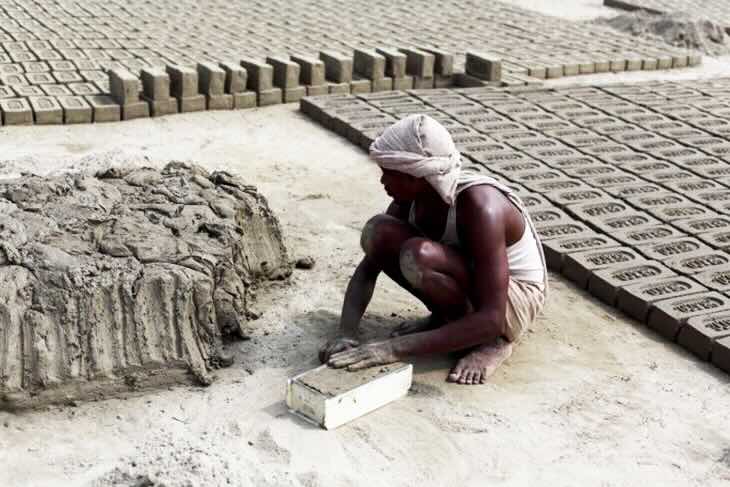
    Perhaps the most alarming finding is that one in three rescued workers currently earns less than ₹200 per day, well below statutory minimum wages. Nearly 94 per cent of those surveyed had been pulled from brick kilns, with others dispersed across agriculture and construction – sectors notorious for lax regulation and unsafe conditions.

    This chronic underpayment and lack of enforcement of labour laws point to deeper systemic issues: weak regulatory frameworks, insufficient state accountability, and a labour justice system that prioritises administrative metrics over workers’ lived realities.

    A Long Road to Actual Abolition

    Despite government promises – including symbolic gestures, such as inviting rescued bonded workers to India’s Independence Day celebrations – the ground reality remains grim. As this new evidence shows, eradicating bonded labour by the 2030 target requires not just rescue operations but robust, rights-based rehabilitation mechanisms, legal enforcement, and targeted social protection for the most marginalised.

    Without addressing caste-based exclusion, wage theft, and post-rescue reintegration, millions of workers will continue to slide back into exploitation, making India’s pledge to abolish bonded labour an aspiration yet to be realised.

    Image: ActionAid India

    Corruption, Crime, Illicit Economy Bangladesh’s Biggest Risks, Says WEF

    The report’s Global Risks Perception Survey (GRPS) also highlighted geoeconomic confrontation and persistent inflationary pressures as major threats that could disrupt trade, investment and household purchasing power.

    Crime, corruption and illicit economic activity now top the list of risks imperilling Bangladesh’s economic progress, according to the latest findings of the World Economic Forum (WEF) and longstanding global competitiveness data. Experts warn that unless the country tackles these deep-rooted issues, its economic resilience and investment climate will weaken further.

    In its Global Risks Report 2026, the Geneva-based WEF identified crime and the illicit economy as the most significant risks facing Bangladesh over the next two years. This is the first time in the report’s history that these two factors have topped the risk profile for the country in both economic and societal terms.

    The report’s Global Risks Perception Survey (GRPS) – which drew insights from more than 1,300 experts from government, business, academia and civil society between August and September 2025 – also highlighted geoeconomic confrontation and persistent inflationary pressures as major threats that could disrupt trade, investment and household purchasing power.

    Experts warn that slowing global growth and elevated price levels could combine in a scenario akin to stagflation, while debt vulnerabilities across public, corporate and household sectors could amplify financial instability. The WEF’s Executive Opinion Survey, which canvassed over 11,000 business leaders across 116 economies, fed into the Bangladesh risk profile.

    Corruption Remains Deeply Entrenched

    Bangladesh’s longstanding challenges with corruption further compound the risks flagged by the WEF. Historical data from the Global Competitiveness Index (GCI) 2017-18 – also compiled by the WEF – reveals that corruption regularly ranks as the top barrier to doing business in Bangladesh. In that survey, corruption was cited as the single most problematic factor for business operations, ahead of infrastructure gaps and bureaucratic inefficiencies.

    The GCI profile shows Bangladesh placed 99th out of 137 economies, with especially poor scores in irregular payments and bribes (ranked 126th) – a direct marker of corruption-related friction in the economy.

    Corruption’s effects are widespread. From everyday bureaucratic interactions to large-scale public contracts, bribery and irregular payments inflate business costs, deter investment, and undermine trust in public institutions. Entrepreneurs have frequently reported that securing permits and winning contracts often involves unofficial payments, while ethical standards among officials are perceived as weak.

    Transparency International’s Corruption Perceptions Index further underscores the depth of the problem: as of its most recent report, Bangladesh scored among the lowest globally, with a score well below the regional and global averages, indicating a pervasive perception of corruption across public institutions.

    Several high-profile scandals over the past decade – such as controversy surrounding major infrastructure projects – have kept corruption in the public spotlight, stoking public scepticism about transparency in governance and project management.

    Crime and the Illicit Economy: A Growing Drag on Growth

    While corruption tops business concerns, crime and illicit economic activity are now emerging as central risks to Bangladesh’s growth and stability. The WEF’s latest Global Risks Report identifies these issues – ranging from underground markets to organized criminal networks – as primary threats, potentially eroding investor confidence and social cohesion.

    Illicit activities, including money laundering, smuggling and underground trading, drain state resources and distort formal economic activity. They go hand-in-hand with corruption in creating environments where transparency and accountability are weakened, business costs rise and formal sector competitiveness suffers.

    Economists point out that the cost of crime isn’t confined to direct financial loss. When businesses perceive high risks of theft or extortion, they often invest less in formal security or compliance, deter expansion and may resort to informal arrangements that further weaken institutional oversight.

    Institutional Weaknesses and Governance Challenges

    The GCI data from 2017-18 also highlighted institutional weaknesses as key constraints to competitiveness. Poor judicial independence, favouritism in official decision-making and burdensome regulation all undermine the rule of law and fair competition, creating space for both corruption and criminal activity to flourish.

    The legal and regulatory framework was seen as inefficient in settling disputes and challenging arbitrary regulations – a critical concern for investors who rely on predictable and transparent systems.

    Experts argue that strengthening transparency, improving judicial effectiveness and cracking down on both petty and grand corruption would not just improve Bangladesh’s international rankings but also its economic fundamentals. Enhanced enforcement of anti-money-laundering laws, digitization of government services and robust protection for whistleblowers are among the policy tools being discussed, though progress has been uneven.

    The Stakes for Bangladesh’s Future

    Bangladesh’s economy has been lauded for robust growth over the past decade, underpinned by expanding exports, remittances and domestic consumption. However, the persistent risks of corruption, crime and economic informality erode the nation’s long-term potential.

    Analysts warn that as global competition intensifies, Bangladesh’s attractiveness as an investment destination may falter if it fails to improve institutional integrity and reduce the informal economy’s footprint. This includes strengthening legal frameworks, enhancing transparency in public procurement and enforcing anti-corruption measures consistently at all levels of government and commerce.

    As the WEF forecasts a turbulent global economic outlook – with heightened trade uncertainties and geopolitical strains – Bangladesh’s internal vulnerabilities could amplify external shocks, making structural reforms ever more critical.

    APEDA Organises Organic Conclave-cum-Buyer Seller Meet to Strengthen Agri-Exports from Assam

    Alongside the APEDA event, the union government has released ₹213.9 crores as XV Finance Commission Untied Grants for Rural Local Bodies in Assam. This amount represents the first instalment for the financial year 2025–26.

    In a bid to boost agricultural exports from the Northeast, the Agricultural and Processed Food Products Export Development Authority (APEDA) under the ministry of commerce and industry organised an organic conclave-cum-buyer seller meet in Guwahati on Tuesday. The event, held in collaboration with the government of Assam, aimed to strengthen export linkages, enhance market access and provide a platform for producers, exporters and international buyers to forge sustainable trade partnerships.

    Over 30 exporters, nine importers and around 50 Farmer Producer Companies (FPCs) from Assam participated in the conclave, reflecting growing interest in the region’s export potential. The structured buyer seller meet facilitated business-to-business interactions, enabling stakeholders to discuss opportunities, negotiate deals and explore long-term collaborations in both domestic and overseas markets.

    Assam, endowed with rich agro-climatic diversity, produces a wide array of commodities with strong export potential. Traditional and organically cultivated products such as Assam Joha rice and other speciality non-basmati rice varieties, bananas, pineapples, mandarin oranges and Assam lemons were among the produce showcased. Spices like organic ginger, turmeric and black pepper, as well as other horticultural goods, were highlighted as high-value items that could significantly expand the state’s footprint in global agricultural markets.

    A highlight of the event was a sensitisation session on the eighth edition of the national programme for organic production (NPOP), which outlined the regulatory framework, certification protocols, and labelling requirements crucial for compliance with international quality standards. The session aimed to boost awareness among FPCs, Farmer Producer Organisations (FPOs), exporters, and entrepreneurs, ensuring they are equipped to meet stringent export criteria and enhance product competitiveness abroad.

    Assam’s GI-Tagged and Organically Grown Products

    Speaking at the meet, Assam’s agriculture, horticulture and excise minister Atul Bora emphasised the Northeast’s rich basket of high-quality, organically grown agricultural products with strong global demand. He noted that products like Joha rice and indigenous spices are gaining traction internationally, and stressed the importance of improved aggregation, certification and infrastructure to support export growth.

    According to Bora, “With focused support in aggregation, certification, infrastructure and market access, Assam can transform its regional farm produce into globally competitive exports while ensuring sustainable livelihoods for farmers.”

    Aruna Rajoria, commissioner and secretary-cum-agriculture production commissioner of Assam, highlighted the state’s unique GI-tagged and organically grown products, and reiterated the need for stronger market linkages to help farmers and entrepreneurs tap into international demand. She said that collaborative efforts with APEDA would help local producers reach global markets in a commercially viable and sustainable manner.

    APEDA Chairman Abhishek Dev lauded the coordination between the Authority and the Assam government in promoting export-oriented activities. He underscored Assam’s immense potential in agricultural, horticultural and organic exports, bolstered by farmer-friendly provisions in the revised NPOP and expanded access through recently signed organic mutual recognition agreements with countries such as Australia and New Zealand. Free trade agreements concluded with the United Kingdom, Oman and the EFTA countries were also cited as key enablers that open new avenues for Assamese products, he said.

    The Guwahati conclave aims to unlock new opportunities for farmers and exporters, strengthen supply chains, and enhance the economic prospects of rural communities across the state.

    Union Government Releases ₹213.9 Crore to Strengthen Local Bodies in Assam

    In a parallel development aimed at bolstering grassroots governance and rural development, the union government has released ₹213.9 crores under the 15th finance commission grants to strengthen rural local bodies across Assam. This release, announced on Tuesday, represents the first instalment of untied grants for the financial year 2025-26 and covers all 2,192 eligible Gram Panchayats, 182 Block Panchayats and 27 Zilla Parishads in the state.

    These untied grants are designed to empower Panchayati Raj Institutions (PRIs) and rural local bodies (RLBs) to address location-specific needs across the 29 subjects listed in the eleventh schedule of the Constitution, excluding salaries and establishment costs. The funds can be used flexibly, enabling local authorities to prioritise and implement development activities that best reflect community requirements.

    In addition to untied allocations, the finance commission grants include tied components for basic services such as sanitation, maintenance of open defecation-free (ODF) status, household waste management, supply of drinking water, rainwater harvesting, and water recycling initiatives.

    By releasing these funds, the union government seeks to strengthen institutional capacities at the grassroots level, enabling rural bodies to play a proactive role in socio-economic development and service delivery across Assam’s hinterland.

    Together, initiatives like the Organic Conclave and the Finance Commission grants signal a concerted push by both central and state authorities to foster inclusive growth, enhance rural livelihoods, and accelerate Assam’s integration into global economic networks.

    Legislative Assembly elections are expected to be held in Assam in March–April 2026 to elect 126 members of the Assam Legislative Assembly.

    Image: From Atul Bora’s Twitter Account

    Why Australia’s Social Media Age-Restricted Access Misses the Mark

    Social media, despite its harmful effects, serves the purpose of essential communication, education, and economic activities that cannot be overlooked. Its impact on mental health is a result of its misuse rather than its existence itself.

    By Madeeha Jamal, Umme Amaan and Biraj Swain

    The Online Safety Amendment (Social Media Minimum Age) Act 2024, here in after referred to as ‘The Act’, was passed by the Australian Parliament, which essentially bans children under 16 from creating accounts on a list of social media platforms including, Tiktok, Facebook, Instagram, online streaming platforms like Twitch and Kick and even search engines like Google and Yahoo. To implement this, the government has proposed age verification as a requirement to hold an account, even for existing account holders. The Online Safety Act, 2025 of the United Kingdom, Kenya Information and Communications (Amendment) Bill, 2025 have also followed, further establishing the urgency of the matter.

    While the average individual is busy creating and consuming user-generated media, Big Tech has been constantly collecting data such as our location, pictures, search history, chats, purchase history, and so on to use to their own benefit, like providing customized advertisements. This harvesting of data has seen abrupt growth in recent years, with the Artificial Intelligence or AI revolution and the need felt by Big Tech to extensively train their AI models with our personal information. Now, because of this very personalized utopian experience, children, not being in possession of a developed prefrontal cortex (the part of the brain responsible for self-control, decision making, and dopamine processing), fall victim to social media and the capacity of addiction it creates unethically.

    Jonathan Haidt, in his book, ‘The Anxious Generation’, explains that children who grew up with social media simply did not acquire the set of social skills required to form or maintain meaningful personal relationships due to the loss of integral childhood experiences. A study cited by the Australian Parliament, while passing the Act, even established a bidirectional (but not causal) relationship between social media and maladaptive behaviour. Frequent social media use is also associated with lower self-esteem, depressive symptoms, and increased levels of anxiety, amongst other mental health issues in children.

    Why the Act is Problematic

    The Act has been heavily criticised for being not only overreaching in its scope but also inefficient in its application due to the multitude of loopholes that may be exploited by both the providers of age-restricted social media platforms and under-16 users. The banning of social media platforms has not yet been proven to be effective, as seen in the case of the social media ban in Nepal which proved to be a catalyst for the Nepali Gen Z protests, where the Nepali youth used platforms such as Tik tok and Discord (which were exceptions), as well as banned apps through Virtual Private Networks, to mobilize protests. The under-16s of Australia have been able to circumvent the ban in a similar manner. Platforms have also been using the method of self-declaration for verification of age, which is in contravention of the Act.

    In an interview with Neil Mitchell, the Australian Prime Minister was asked what he would do if he could be a dictator, to which he replied that he would ban social media because ‘anyone can anonymously say anything at all’. The Albanese government’s recent move to weaken the Freedom of Information laws to make it harder for the public to gain access to documents related to government deliberations by providing government agencies the power to refuse access (on the pretext of frivolous requests), as well as the reintroduction of application fees, in addition to the processing charges, raises questions about the government’s intentions. It also mandates applicants to disclose their full names with identity proof.

    The Albanese government’s stance on the protection of children is thus a hard pill to swallow, as its methods, combined with the necessity of biometric, facial recognition, or behavioural inferencing for age verification, suggests radical intentions. To make matters worse, this data is stored overseas with no scope of accountability of these platforms to any regional governments.

    There has recently been a wave of authoritarian governments using security concerns to get a foot into the citizens’ personal data and regulate their social media engagement.

    Talking about the circus in our own backyard, the Department of Telecommunications under the Modi Government recently released a directive mandating the preinstallation of the Sanchar Sathi app on all new mobile phones to strengthen cybersecurity and track lost/stolen phones through IMEI services. However, the DoTs move was heavily criticised for exceeding the boundaries set on the government by the three-fold test set in the Puttaswamy judgement. While such backlash has led to the DoT withdrawing the directive, it is left to be seen whether the government is truly interested in safeguarding the citizens’ right to privacy.

    Another example of the government pushing boundaries of control is a proposal by the U.S. Control and Protection, for all applicants under the visa waiver program, including the H1-B, who will be required to submit a long list of personal data, including social media and contact details of the entire immediate family. Such an extensive demand for personal data leaves the applicants incredibly susceptible to governmental overreach and indirectly violates free speech by taking away the anonymity of the applicant.

    Violation of Rights

    The implied freedom of political communication under the Australian Constitution restricts the executive and legislature from curtailing the freedom of communication of Australians. This freedom is subject to limitations as established by the Australian High Court in Lange  v. Australian Broadcasting Communication.

    Non-compliance with the age verification process would leave individuals logged out of their Google and social media accounts.  This mandatory association of an individual’s online persona with their real-life identity prevents citizens from free political communication for fear of legal repercussions. Two Australian teenagers have even moved to the Australian High Court to challenge the constitutional validity of this Act to the extent that it infringes upon their freedom of political communication.

    The Act is also in violation of the international rights of children. United Nations Children’s Fund (UNICEF) clearly gives the right to freedom of expression and hence the right to seek, receive and impart information of all kinds through any choice of media, the right of protection from any unlawful interference with privacy and recognizes the importance of mass media, therefore the right to access information of diverse origins under Article 13, Article 16, Article 17, respectively under the Convention on the Rights of the Child.

    Repercussions on Mental Health

    Despite the research presented by the Albanese government trying to conclude that social media is an absolute villain in the lives of children, that is not entirely true. Evidence, such as a study by UNICEF Australia, says that 81 per cent of social media users say that it has a positive influence on their lives. This result is also the norm in international research, where adolescents reported that social media helps them feel more accepted, that they have people who can support them through tough times, and they use it as a place to show their creative side.

    The American Psychological Association also made it clear that social media is not inherently beneficial or harmful to anyone, but each experience is affected by how one shapes their feed, who they choose to follow, etc. All this data clearly reveals the otherwise undermined positive side of social media and also compels us to question the decision of the government to entirely ban social media instead of making regulations to ensure that children use it safely and in moderation.

    Future Forward

    Social media, despite its harmful effects, serves the purpose of essential communication, education, and economic activities that cannot be overlooked. Its impact on mental health is a result of its misuse rather than its existence itself. Hence, we need more, not less, digital literacy and regulations to avoid dystopian social withdrawal and make physical human interactions more common again. Even more important still is the need to change the nature of social media, which is inherently addictive.

    With such problems at hand, there is a dire urgency for the government to regulate not the access of citizens to social media, but rather the access of Big Tech to citizens. Banning social media is not the answer.

    The most important question that needs to be asked is, does mandating the submission of identity proof by citizens to the very same social media platforms, which the government wishes to protect them from, showcase any real interest of the government in safeguarding the online space for its citizens? Or is it something else?

    Madeeha Jamal is a student of Psychology. Umme Amaan is a law student at Hidayatullah National Law University. Biraj Swain is the Chief Minister’s Chair Professor cum Director of the Centre for Child Rights at National Law University Odisha.

    Madeeha Jamal can be reached at [email protected]; Umme Amaan can be reached at [email protected]; Biraj Swain can be reached at [email protected]

    Disclaimer: Views expressed are personal.

    This article originally appeared in Judicial Quest on 19th January 2025 and on authors’ request and editorial consideration, OWSA is happy to republish it.

    Image:Freerange Stock

    Boatmen from Outside Prayagraj Face Troubled Waters in the Month of Magh

    This tradition spans generations: families arrive annually, relying on the Magh Mela as a vital source of income through boat services for pilgrims. Many carry licenses from previous years as proof of their long-standing participation.

    By Kaushiki Vaish

    The sacred banks of the Triveni Sangam in Prayagraj, where the Ganga and Yamuna converge alongside the mythical Saraswati, are bustling with spiritual fervour as the Magh Mela 2026 unfolds. The annual pilgrimage (from January 3 to February 15 this year) draws millions of devotees for holy dips, especially on key dates like Paush Purnima, Makar Sankranti, Mauni Amavasya (January 18), Basant Panchami, and Magh Purnima.

    Along the Arail ghat near the Sangam, hundreds of refurbished boats stand ready, freshly cleaned and operated by licensed navaks (boatmen) from Prayagraj. These local boatmen hold valid permits from the Jal Police (that polices the waterways), enabling them to ferry pilgrims eager for a sacred boat ride to the confluence point amid the mela’s vibrant atmosphere.

    However, a stark contrast emerges just beyond these organized ghats. Along the muddy shores of the Yamuna, dozens of boatmen from neighbouring districts – including Kaushambi, Chitrakoot, and Mirzapur – have moored their vessels since early January. They have set up modest plastic tents with limited rations, braving the biting winter cold in hopes of earning a livelihood during the mela season.

    This tradition spans generations: families arrive annually, relying on the Magh Mela as a vital source of income through boat services for pilgrims. Many carry licenses from previous years as proof of their long-standing participation. Yet this year, a bureaucratic hurdle has left them stranded.

    Mounting Concerns

    Waiting since January 1, these out-of-district boatmen remain without renewed licenses, even as the mela progresses and pilgrims flock to the ghats. They allege that officials have outright refused to process registrations under the UP96 code, specific to Chitrakoot vehicles. “Hum daily ja rahe hain license ke liye, form bhar rahe hain par reject kar diye ja rahe hain,” one boatman from Chitrakoot lamented, claiming forms are being rejected – even torn up.

    Oril, a veteran boatman (of some 35 years) from Chitrakoot who arrived with his family, expressed deep frustration: “Kaushambi, Chitrakoot zile ko na hi keh de rahe hain, aisa kabhi nahi hua. Poora bachpana guzar gaya yahan aate-aate” (The word is a ‘no’ for those of us from Kaushambi and Chitrakoot districts. This has never happened before – we’ve been coming here since childhood).

    Earlier protests near VIP ghats highlighted additional grievances, including allegations of officials demanding extra fees for licenses. Boatmen voiced distrust: “Paisa dene mein tab acha lagta hai jab hand-to-hand license mile. Yahan paisa bhi de denge aur kaam bhi nahi hoga toh hum kya khaayenge yahan baith ke?” (Paying is fine if the license is handed over immediately. Here, we fear we’ll pay and still get nothing – how will we feed ourselves sitting idle?)

    In response to mounting concerns, Anuj Nishad, a Prayagraj-based boatman, raised the issue during a meeting with mela officers near Kila Ghat. Authorities offered only vague assurances that the matter would be investigated, providing little immediate relief. With over two weeks already spent enduring the chill – since the mela’s start on January 3 – many boatmen have reluctantly departed. They sail homeward in the very boats intended for earning, their hopes dashed and families facing financial strain.

    Union Environment Minister Chairs Meeting of Standing Committee of the National Board for Wild Life

    Crucially, medium-scale irrigation proposals aimed at bolstering water access in Madhya Pradesh’s Bundelkhand region were discussed alongside measures designed to enhance water regimes for both human use and wildlife needs.

    India’s wildlife governance took centre stage as the 88th meeting of the standing committee of the national board for wild life (SC-NBWL) convened in the capital on Monday, chaired by union environment minister Bhupender Yadav. The meeting, held under the auspices of the ministry of environment, forest and climate change (MoEFCC), underscored the country’s ongoing effort to balance development and ecological sustainability amid growing infrastructural demands.

    The SC-NBWL, a statutory body established under the Wild Life (Protection) Act, 1972, reviewed 70 proposals relating to public utility services, defence infrastructure, and development projects situated within or near Protected Areas, Wildlife Sanctuaries, Tiger Reserves, and Eco-Sensitive Zones (ESZs). These included critical initiatives such as drinking water supply systems under the Jal Jeevan Mission, health centre upgrades, road widening, 4G mobile tower installations, and transmission line expansions.

    Crucially, medium-scale irrigation proposals aimed at bolstering water access in Madhya Pradesh’s Bundelkhand region were discussed alongside measures designed to enhance water regimes for both human use and wildlife needs, particularly for reptiles like gharial crocodiles.

    On the defence front, the committee considered 17 strategic proposals primarily affecting Ladakh and Sikkim, reflecting India’s ongoing efforts to strengthen border infrastructure while remaining mindful of environmental safeguards. Emphasis was placed on ensuring strict compliance with wildlife mitigation protocols and relevant statutory provisions.

    The SC-NBWL also evaluated the action taken report (ATR) on previous decisions, including outcomes related to policy formulation and process refinement, such as improvements to the PARIVESH environmental clearance portal. Participants agreed that further deliberations on wildlife protection programmes and conservation compliance would continue in future meetings.

    Apex Advisory Body on Wildlife Conservation and Management

    The National Board for Wild Life (NBWL) is India’s apex advisory body on wildlife conservation and management, established under Section 5A of the Wild Life (Protection) Act, 1972. It succeeded the earlier Indian Board for Wildlife, which was first formed in 1952 to address escalating threats to wildlife populations.

    Though advisory in nature, the NBWL plays a pivotal role in shaping national wildlife policy and approving activities that affect ecologically sensitive landscapes across the country. Its recommendations are widely respected and often decisive in reconciling development imperatives with conservation goals.

    The Board comprises 47 members, with the prime minister serving as its chairperson and the minister of environment, forest and climate change as vice-chairperson. Members include senior government officials, representatives from various ministries, conservation experts, eminent ecologists, and environmentalists nominated by the central government. The additional director general of forests (wildlife) and director of wildlife preservation act as the board’s member-secretary.

    Broad Mandate to Promote Conservation

    The NBWL has a broad mandate to promote the conservation and sustainable development of wildlife and forest ecosystems through policy guidance and advisory support to both the Central and State Governments. Its key functions include:

    • Policy advice and conservation strategy: The Board advises on national strategies to conserve biodiversity, combat poaching, and curb illegal wildlife trade.
    • Regulation of Protected Areas (PAs): It reviews proposals for the creation, expansion, or management changes of National Parks, Wildlife Sanctuaries, and other Protected Areas.
    • Clearances for development activities: No developmental project affecting PAs or eco-sensitive zones can proceed without NBWL approval, making it a gatekeeper for infrastructure projects near ecologically fragile areas.
    • Environmental impact assessments (EIA): The Board assesses the potential ecological repercussions of proposed activities before clearance decisions are made.
    • Monitoring and reporting: At least once every two years, the NBWL prepares and publishes a comprehensive status report on wildlife across the country, tracking trends and recommending improvements.
    • Review of conservation efforts: It periodically reviews national progress towards conservation targets and suggests policy adjustments where needed.

    Operational Clearinghouse for Project-Level Decisions

    While the NBWL sets broad policy direction, its standing committee (SC-NBWL) functions as the operational clearinghouse for project-level decisions, especially those involving land diversion and infrastructure within PAs and ESZs. Comprising up to 10 members, including the minister of environment, forest and climate change as chair, the standing committee streamlines decision-making while ensuring statutory compliance and due regard for ecological sensitivity.

    The standing committee’s role is particularly significant because it handles the bulk of project clearances and mitigatory conditions, acting on behalf of the broader board to balance development and conservation imperatives on the ground.

    Balancing Conservation and Development

    The 88th SC-NBWL meeting reflects India’s ongoing challenge of integrating environmental priorities with socioeconomic development needs. From essential public utilities to strategic defence infrastructure, the committee’s deliberations highlight a nuanced approach: advancing national interests while upholding ecological stewardship. As conservation pressures mount amid climate change, habitat loss, and biodiversity decline, the NBWL’s function as an apex advisory body remains indispensable — shaping policies that seek to preserve India’s rich wildlife heritage for generations to come.

    Nepal’s High-Altitude Gold: The Unseen Lives of Yarsagumba Collectors

    The fungus is identified by a tiny mushroom tip poking through the soil, and spotting one is a moment of shared joy.  Yarsagumba has for a long time been a highly prized ingredient in traditional Chinese medicine.

    By Bryony Morgan

    Each May, Pranisha Pun and Amrimaya Pun leave Maikot village in western Nepal for a two-day trek into the high-altitude pastures of the Dhorpatan Hunting Reserve. Their goal: to harvest Yarsagumba Ophiocordyceps sinensis, a rare caterpillar fungus known as “Himalayan gold,” which provides vital income for their families.

    At around 4,000 metres, harvesters set up temporary camps and begin daily climbs to even higher elevations. The hunt is gruelling; thin air, freezing temperatures, and steep terrain make each step a challenge. As they climb, they pause at stone shrines in Deurali to pray for luck. 

    The fungus is identified by a tiny mushroom tip poking through the soil, and spotting one is a moment of shared joy. Yarsagumba, or Cordyceps, has for a long time been a highly prized ingredient in traditional Chinese medicine and there is growing evidence that its valuable medicinal properties could help fight cancer, assist the immune system, and be beneficial for gut-health, as well as having antioxidant properties.

    The value of each find depends on its size and colour, with larger, golden-yellowish specimens fetching higher prices. But the search is unpredictable. “Sometimes you don’t find even one all day,” says Amrimaya. “Other times, you might find fifteen or sixteen.”  

    There is a lot at stake: the quantities of Yarsagumba gathered during these few weeks in the harsh mountaintop pastures determines outcomes for entire households for the rest of the year.  

    Yarsagumba is a major source of cash income in these remote highland communities, especially for women. The money earned goes primarily toward food, education, and religious donations, investments in human and social capital. Religious giving, part of a local “economy of merit,” boosts social status and community bonds. 

    Lack of Legal Awareness

    Despite the severe conditions, the resilience of these communities is striking. One staff member from the local wing of the Asia Network for Sustainable Agriculture and Bioresources (ANSAB Nepal), a TRAFFIC project partner working on the ground to promote sustainable harvesting, recalled seeing women in traditional Saree playing volleyball at 4,300 metres, a testament to their strength and spirit. 

    However, the challenges remain: due to lack of legal awareness, even experienced NTFP traders may be unaware of the restrictions surrounding protected areas, and can be caught and forced to abandon their life’s work. Another concern is the decline of invaluable traditional medicinal knowledge, with the younger generations increasingly migrating away from the highlands.  

    Local communities, for their part, have begun to address some of these issues: they are forming their own trader groups to facilitate legal trade and negotiate better prices.

    The Scaling Conservation of Himalayan Plants and Fungi project, led by TRAFFIC and partners including ANSAB Nepal, Federation of Community Forestry Users Nepal (FECOFUN), WWF India, University of Copenhagen (UCPH), University of Oxford, Tribhuvan University and FairWild Foundation is directly tackling the underlying pressures on both people and nature. The project’s strategy moves beyond local harvesting to drive change across the international supply chains in markets like China and Hong Kong that drive most of the demand for Yarsagumba. 

    Traceable, Equitable Supply Chains

    The core goal is to establish traceable and equitable supply chains for wild harvested NTFPs, thereby ensuring a greater, fairer return reaches the harvesters for livelihood improvement. This initiative strengthens the value chain from the mountains of Nepal through training local producer companies and harvesters on sustainable resource management, implementing pilot traceability systems to secure legal trade, facilitating adoption of sustainability standards such as FairWild certification, and organising matchmaking events to connect local producers with responsible international buyers.

    The harvest of Yarsagumba is a critical annual trek for Nepali communities, providing the main source of cash income from a rare fungus highly valued in traditional medicine. Despite the extreme conditions and unpredictable search, the income is vital for local survival.

    To combat challenges like illegal trade and low returns, TRAFFIC’s Scaling Conservation of Himalayan Plants and Fungi project focuses on establishing equitable and traceable supply chains to ensure harvesters receive a fairer financial benefit from their sustainable resource management.

    For now, the villagers continue their annual pilgrimage, balancing tradition with modern pressures. Each tiny fungus they find carries the hope of another year of survival—and the preservation of a way of life deeply rooted in the mountains. 

    Image: Sushil Mainali – ANSAB

    The author is Senior Programme Manager – Himalayan NTFPs with TRAFFIC

    Global Labour Markets Show Stability but Fail to Deliver Quality Work, ILO Warns in Flagship Report

    Disruptions in trade – from tariff shifts to supply chain uncertainties – risk suppressing wage growth and job quality, especially in regions like Southeast Asia, Southern Asia and Europe.

    Global unemployment is projected to remain broadly stable in 2026, but a major new report from the International Labour Organization (ILO) lays bare a stark reality: having a job no longer equates to a decent living or secure future for hundreds of millions of people worldwide. The Employment and Social Trends 2026 flagship report highlights deepening structural weaknesses in labour markets that threaten progress on sustainable development and social equity.

    According to the ILO’s analysis, the world’s unemployment rate is expected to stay at around 4.9 per cent this year – roughly equivalent to 186 million people without work. That stability, while superficially encouraging, masks persistent and widening deficits in job quality, social protection, and labour market inclusivity.

    Stability Conceals Deep-Seated Challenges

    The headline figures suggest the labour market has weathered recent economic shocks better than feared, particularly in the aftermath of global disruptions from trade tensions, geopolitical uncertainty and the lingering effects of the COVID-19 pandemic. Yet beneath this veneer of stability lies a more troubling picture: millions of workers remain trapped in low-paying or insecure jobs that offer few protections or pathways out of poverty.

    Nearly 300 million people continue to live in extreme poverty, surviving on less than US$3 a day despite being employed – a measure often used to assess “working poverty.” Meanwhile, an estimated 2.1 billion workers are expected to remain in informal employment in 2026, with limited access to social protection, labour rights, secure contracts, or benefits.

    This trend in job quality casts a long shadow over global development goals. Decent work – defined by fair wages, safe conditions and opportunities for meaningful livelihood – is central to Sustainable Development Goal 8, which seeks inclusive economic growth and productive employment for all by 2030. The ILO’s findings show the world remains far from meeting these commitments.

    Youth at Risk: A Generation Left Behind

    The report’s starkest warnings concern young people. Globally, unemployment among those aged 15 to 24 is significantly higher than the general rate, with projections suggesting around 12.4 per cent of young people will be jobless. Even more concerning, more than a quarter of youth in low-income countries – about 27.9 per cent – are neither in education, employment nor training (NEET), jeopardising both their economic prospects and the broader potential of emerging workforces.

    AI and automation, while offering opportunities for new types of employment, also pose risks. The ILO cautions that rapid technological adoption without adequate policy safeguards could make it harder for young, educated entrants to find high-skill jobs, particularly in wealthier economies. This underscores a need for policies that ensure technology complements rather than displaces human labour.

    Women’s Participation Stalls, Inequality Persists

    Gender equity in the labour market shows only incremental progress. Women still occupy just about two-fifths of all jobs globally, and social norms continue to limit their participation in many economies. According to the report, women are approximately 24 per cent less likely to be engaged in the workforce than men, and gains toward narrowing that gap have slowed.

    The ramifications extend beyond employment rates: lower labour participation among women contributes to ongoing inequalities in income, economic security and decision-making power within households and communities. As the world strives to meet broader equity and empowerment goals, these dynamics remain a significant barrier.

    Trade Uncertainty, Informality and Fragile Gains

    International trade continues to play a pivotal role in employment, with some 465 million jobs worldwide linked to export demand and global supply chains. Yet disruptions in trade – from tariff shifts to supply chain uncertainties – risk suppressing wage growth and job quality, especially in regions like Southeast Asia, Southern Asia and Europe.

    The ILO emphasises that informal work – often characterised by low wages, lack of benefits, and limited legal protections – disproportionately affects vulnerable populations and limits the ability of workers to cope with economic shocks. Reducing informality remains a crucial but elusive target.

    Policy Responses and the Road Ahead

    In response to these challenges, ILO Director-General Gilbert F. Houngbo has urged governments, employers and worker organisations to adopt coordinated strategies that strengthen labour rights, expand social protection, and enhance skills development. Such policies, he argues, are essential to unlocking decent work opportunities and narrowing structural inequalities.

    The report also points to demographic shifts – including ageing populations in high-income countries and rapid population growth in low-income regions – as factors reshaping labour supply and demand. To harness demographic dividends, countries must invest in education, workforce training, and inclusive job creation.

    Stability Is Not Enough

    The Employment and Social Trends 2026 report paints a world of labour markets that appear stable on the surface but remain fraught with fragility and inequity beneath. While headline unemployment figures might offer a sense of calm, the reality for workers – especially young people, women, and informal employees – is precarious at best.

    As policymakers around the globe contemplate strategies for sustainable development in the decade ahead, the central challenge will be ensuring that work is not just available, but also decent, rewarding and secure.

    UN Report Finds Widespread Sexual Violence in Sri Lanka’s Civil War

    The findings, based on survivors’ accounts of crimes committed against both women and men, underline the urgent need for the Sri Lankan government to provide relief and justice to survivors and to hold those responsible to account.

    A new United Nations report about sexual violence related to Sri Lanka’s civil war is another step forward in the struggle for accountability for crimes under international law that were committed in Sri Lanka, Human Rights Watch said today.

    The UN report, issued on January 13, finds that sexual violence was “part of a deliberate, widespread, and systemic pattern of violations” by state security forces, and “may amount to war crimes and crimes against humanity.”

    The findings, based on survivors’ accounts of crimes committed against both women and men, underline the urgent need for the Sri Lankan government to provide relief and justice to survivors and to hold those responsible to account. Foreign governments should assist efforts to promote accountability, including through targeted sanctions, criminal investigations, and prosecutions, Human Rights Watch said.

    “While the appalling rape and murder of Tamil women by Sri Lankan soldiers at the war’s end has long been known, the UN report shows that systematic sexual abuse was ignored, concealed, and even justified by Sri Lankan governments unwilling to punish those responsible,” said Meenakshi Ganguly, deputy Asia director at Human Rights Watch. “Sri Lanka’s international partners need to step up their efforts to promote accountability for war crimes in Sri Lanka.”

    The UN Human Rights Council set up the Sri Lanka Accountability Project in 2021 to collect evidence of crimes under international law committed in Sri Lanka. Successive Sri Lankan governments have failed to credibly investigate and prosecute international crimes related to the 26-year civil war between government forces and the separatist Liberation Tigers of Tamil Eelam (LTTE).

    Long-term Harm

    The current government of President Anura Kumara Dissanayake came to office in 2024 promising to “deliver justice” but has made no apparent progress, while victims and survivors continue to suffer long-term harm. Under international women’s rights standards, including the Convention on the Elimination of All Forms of Discrimination against Women and the UN Women, Peace and Security agenda, Sri Lanka’s failure to address conflict-related sexual violence heightens concerns about accountability and survivors’ rights.

    During the armed conflict, which ended on May 18, 2009, both sides committed numerous war crimes, particularly in the final months of the fighting. Photographs and mobile phone videos, seemingly made as keepsakes by government soldiers, show summary executions of prisoners and corpses of naked women fighters who were apparently raped and then murdered. Human Rights Watch has found that successive Sri Lankan governments had stalled investigations and denied justice.

    The UN researchers found that sexual violence was “institutionally enabled” by the state and “employed as a strategic tool to extract information, assert dominance, intimidate individuals and communities, and instill a pervasive climate of fear and humiliation” throughout the war. The victims and survivors were mostly from conflict-affected Tamil communities, and these violations occurred primarily in state-run detention facilities.

    Survivors recounted lasting medical problems and social stigma. However, the researchers said that there is “no currently visible path to justice or restoration” for survivors of conflict-related sexual violence in Sri Lanka.

    The UN researchers found that “men were as likely as women to have been victims” of sexual violence, but that the particular stigma affecting male survivors made engaging them during the research “especially challenging.”

    Post-conflict Sexual Violence

    Another legacy of these crimes is the prevalence of sexual violence in post-conflict Sri Lanka, the researchers found. Survivors described an enduring climate of intimidation and “ongoing surveillance, often by the very officers responsible for past abuse.”

    There are significant legal and institutional obstacles to justice, including a 20-year statute of limitations in sexual violence cases and the fact that Sri Lankan law does not recognize the rape of men. Some survivors who attempted to register complaints described humiliating or intimidating experiences with the police and court authorities. “Survivors cannot be expected to seek protection from the very entity they fear,” one respondent told the UN.

    In 2018, the Sri Lankan government established the Office for Reparations Act to compensate victims and survivors of the conflict, but according to the UN, the government “has not taken any concrete steps to provide them with interim or full reparations, and has not disaggregated statistics of its caseload by gender.” Under international law, survivors have a right to reparations, and the failure to provide them has left many without care, dignity, or justice.

    The Sri Lankan government and its international partners should urgently develop a program to deliver support, including medical treatment, and interim relief to survivors, Human Rights Watch said. Many survivors have placed their hope in foreign governments or international organizations to promote justice. Yet, the report says: “While international actors have expressed concern, meaningful steps toward facilitating credible accountability and access to justice for survivors have remained limited.”

    “Sri Lanka is obligated under international law to prosecute perpetrators of war crimes and crimes against humanity, and until it does, foreign governments need to do more to press for accountability,” Ganguly said. “That means providing support for legal processes, better vetting of military personnel for peacekeeping missions, and concerted efforts to bring criminal cases abroad under universal jurisdiction.”