More

    While India’s RAMSAR Sites Tally Rises, Wetlands Remain Endangered

    There has to be a focus on restoration ecology if the degraded wetlands are to be protected. This, he said, can be done by supporting the degraded ecosystems to recover, which needs to be supported by communities, scientists, and the government together.

    By Athar Parvaiz

    Late in February, India’s noted ornithologist and conservationist, Asad Rahmani, wrote a letter to a wildlife warden in north India expressing his satisfaction about the availability of water in four important wetlands in Kashmir, where migratory birds from central Asia and Europe arrive annually for wintering.

    This letter was in sharp contrast to Rahmani’s earlier concerns about the “deteriorating health” of wetlands in Kashmir and elsewhere in India. Conservationists, activists, and newspaper editorials in India have long been expressing concerns about the “decline” and “neglect” of wetland ecosystems across India. A recent editorial in a prominent English newspaper in India emphasized the importance of action-oriented measures by the federal and state governments for protecting wetlands.

    In its Living Planet Report 2024, the World Wildlife Fund (WWF) flagged the disappearing wetlands in the south Indian metropolitan city of Chennai (in the chapter “Tipping Point”) as a warning sign of rapid ecosystem destruction, which is not only resulting in acute water shortages but is also making Chennai more vulnerable to floods.

    Wildlife enthusiasts such as Rahmani look at wetlands from the perspective of wetlands as wildlife habitats, particularly for birds.  “I reiterate that if we guarantee sufficient and timely supply of water, Kashmir wetlands will again support lakhs (hundreds of thousands) of birds in each wetland. They also have great potential to attract tourists and birdwatchers,” Rahmani, who has also served as the Director of the Bombay Natural History Society (BNHS), wrote in the letter seen by IPS.

    “Hokarsar [wetland] is important for both resident and migratory waterfowl. As many as 64 species in and around the wetland have been reported during bird ringing studies. The [wetland] is particularly important as a wintering area for migratory ducks and geese and as a breeding area for herons, egrets, and rails,” Rahmani noted.

    In his earlier communications in the past few years, Rahmani has expressed serious concerns about the deteriorating health of wetlands and their shrinkage.

    Vanishing wetlands in India

    On the occasion of this year’s World Wetlands Day on February 2, India designated four new Ramsar sites in three different states, taking the tally of Ramsar sites wetlands to 89 in India.

    However, despite adding more Ramsar sites almost every year and celebrating these conservation efforts, many wetlands across India are unraveling and disappearing at an alarming rate — the country has already lost nearly one-third of its wetlands to urbanization since 1940, according to the available data.

    Quoting data from the written response of India’s environment ministry to a Right to Information (RTI) application, a report in one of India’s national newspapers on March 24 (this year) revealed that out of India’s estimated over 200,000 wetlands, only 102 have been notified and even these are concentrated in three states and one Union territory. When a wetland is notified by the government in India, it means the demarcation of the wetland’s boundary, its ecological importance, and the need for its conservation are officially recognized and are also made available for public knowledge.

    Wetlands are the lifelines that provide freshwater, food, and building materials; regulate floods; recharge groundwater; and even help combat climate change through carbon sequestration, experts say, adding that expanding agriculture, pollution, and unchecked water extraction are pushing these fragile ecosystems—and the species that depend on them—toward crisis.

    Rahmani told IPS that there are scores of laws and conservation policies introduced by the federal and state governments in India for the protection of wetlands across the country, but, he said, they “have failed” to ensure their protection.

    “We have the Wetland Authority of India and state wetland authorities that have identified wetlands for conservation. But there is hardly anything significant these so-called authorities have done so far for wetland protection. Sometimes the officials of these authorities have no basic idea of the functioning of a healthy wetland,” Rahmani observed.

    He said that the Government of India has started several good conservation schemes and projects, such as the Amrit Sarovar project, under which each district will protect 75 wetlands for which money was also given. “[But] this good scheme is mostly used to carry out unnecessary construction in wetlands, such as cemented works in the name of wetland management and tourism development,” he said.

    Protecting wetlands

    “No wetland should be ‘beautified.’ Nature is beautiful. Keeping local ecology and naturalness in mind, most wetlands can be revived very easily with little funds… no natural wetland lives in isolation… catchment area is extremely important for wetlands revival and conservation,” Rahmani said.

    According to Rahmani, small wetlands, important for biodiversity and local people, “are neglected,” and larger wetlands (some of them man-made lakes and reservoirs) “are under threat of hedonistic” tourism.

    Faiyaz Ahmad Khudsar, senior scientist, Biodiversity Parks Programme, University of Delhi, said that wetlands are unfortunately often seen as wastelands.

    “If there are any specific places for dumping of solid or liquid waste, they are wetlands and streams… similarly, near cities you have wetlands getting encroached upon for construction of houses and other infrastructure,” Khudsar said.

    He observed that there has to be a focus on restoration ecology if the degraded wetlands are to be protected. This, he said, can be done by supporting the degraded ecosystems to recover, which needs to be supported by communities, scientists, and the government together. “We have to understand how the restoration is carried out scientifically—looking at the ecological history of the site and reference ecosystems is very important to find out the reasons for degradation,” he said.

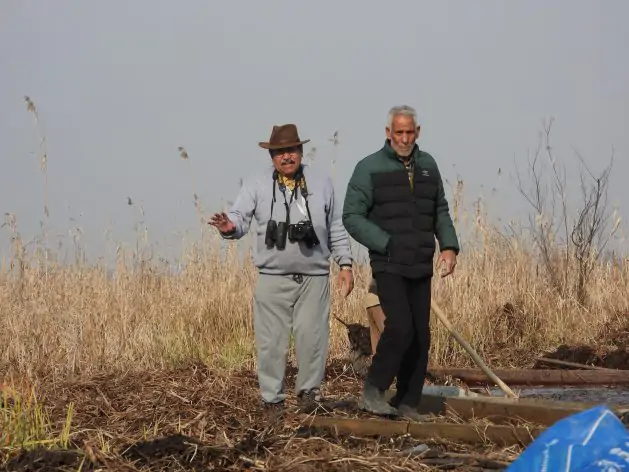
    Image: Conservationist Asad Rahmani alongside a wetland protection employee in Haigam wetland in north India.
    Credit: Athar Parvaiz/IPS

    This piece has been sourced from Inter Press Service.
    Bangladesh, Pakistan Resume High-Level Talks After 15 Years Amid Signs of Thaw in Ties

    Despite the momentum, analysts caution that normalising relations will require political will, patience, and mutual respect. While Islamabad has yet to issue a formal apology, both sides appear increasingly willing to compartmentalise historical grievances in favour of pragmatic cooperation.

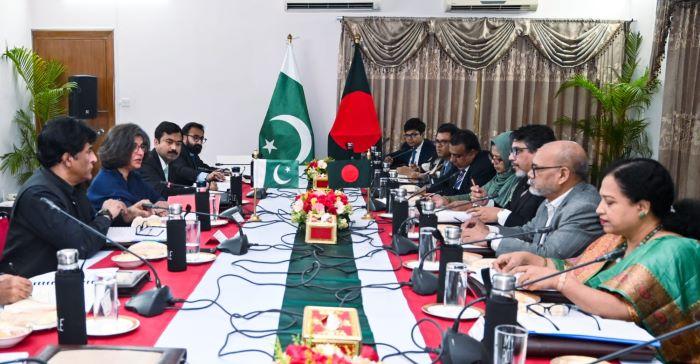
    Bangladesh and Pakistan are holding their first foreign secretary-level talks in nearly 15 years, signalling a notable thaw in relations long strained by the legacy of the 1971 Liberation War.

    The Foreign Office Consultations (FOC), hosted at the State Guest House Padma in Dhaka, marks the highest-level diplomatic engagement between the two South Asian nations since 2010. The meeting, which began Thursday morning, is being led by Bangladesh’s Foreign Secretary Md Jashim Uddin and his Pakistani counterpart Amna Baloch, who arrived in Dhaka on Wednesday.

    Officials from both countries have framed the discussions as a pivotal step toward rebuilding trust and expanding cooperation in trade, connectivity, and regional diplomacy, while also revisiting unresolved historical grievances that have shadowed bilateral ties for decades.

    The FOC comes ahead of an expected visit by Pakistan’s Deputy Prime Minister and Foreign Minister Ishaq Dar later this month, marking the first such trip by a Pakistani foreign minister since Hina Rabbani Khar’s 12-hour visit in 2012. Dar’s visit, expected around April 27–28, is being seen as a continuation of behind-the-scenes diplomatic outreach that has unfolded since the fall of the Awami League government in August 2024.

    “Pakistan sees this engagement as a meaningful step forward,” said Syed Ahmed Maroof, Pakistan’s High Commissioner to Dhaka. “We are looking at wide-ranging cooperation, from trade and transit to people-to-people exchanges.”

    As both sides prepare for Deputy Prime Minister Dar’s visit later this month, expectations are rising for further breakthroughs – not only in diplomatic symbolism but in real policy shifts that could redefine South Asia’s often turbulent regional dynamics.

    Economic and Transit Ambitions

    Economic issues featured prominently in the FOC agenda. Pakistan has expressed strong interest in boosting its exports to Bangladesh, especially in competitive sectors such as textiles, raw cotton, sugar, wheat, and rice. Bangladesh imported goods worth over USD 627 million from Pakistan in FY 2023–24, while exporting around USD 62 million. This highlights the scope for a more balanced trade relationship, members of the Bangladeshi side said.

    “Pakistan can offer Bangladesh a transit route for goods from Afghanistan and Iran, provided transportation costs remain feasible,” said Iqbal Hussain Khan, Bangladesh’s High Commissioner to Pakistan, currently in Dhaka for the talks.

    The two countries are also exploring prospects for direct air connectivity. Fly Jinnah, a Pakistani private airline, is awaiting fleet expansion before launching services to Dhaka, while Air Sial has already applied for regulatory clearance and could commence flights within two months.

    From Grievances to Engagement

    Despite the forward-looking tone, the legacy of the 1971 Liberation War continues to loom large. Bangladesh has long sought an unconditional apology from Pakistan for wartime atrocities, along with compensation, repatriation of stranded Pakistanis, and a fair share of pre-1971 assets.

    While Islamabad has yet to issue a formal apology, both sides appear increasingly willing to compartmentalise historical grievances in favour of pragmatic cooperation.

    “Historical issues are not uncommon in international diplomacy,” said High Commissioner Khan. “But they should not prevent us from pursuing mutually beneficial engagement.”

    Foreign policy analysts note that the new political context in Dhaka, with a caretaker administration under Chief Adviser Prof Muhammad Yunus, has opened the door for a reconfiguration of regional ties, particularly with Pakistan.

    Amna Baloch is also scheduled to pay courtesy calls on Foreign Affairs Adviser Md Touhid Hossain and Chief Adviser Muhammad Yunus during her stay, and will meet with think tanks and the Pakistani diaspora in the capital this evening.

    Despite the momentum, analysts caution that normalising relations will require political will, patience, and mutual respect.

    “The FOC is a good beginning,” said a senior Bangladeshi diplomat who requested anonymity. “But sustainable progress will depend on how candidly both countries can address core historical issues while building trust through tangible cooperation.”

    Signs of Warming Relations

    This week’s developments follow a series of quiet diplomatic overtures over the past year that hinted at a recalibration in Dhaka-Islamabad relations. In September 2024, Pakistan’s envoy met with officials in Bangladesh to discuss the “question of 1971” and future cooperation. A significant moment came in December when Bangladesh lifted its longstanding security clearance requirement for Pakistani visa applicants. This policy was introduced in 2019 during a particularly tense period in bilateral relations.

    That same month, a Pakistani cargo ship docked at Chittagong Port for the first time since 1971, a move hailed as symbolic of an emerging detente.

    Both nations have since engaged in a flurry of diplomatic interactions, including meetings between Pakistan’s Prime Minister Shehbaz Sharif and Bangladesh’s Chief Adviser on the sidelines of the UN General Assembly in New York in September and the D-8 Summit in Cairo in December.

    Earlier this year, Pakistan’s Additional Secretary for Asia Pacific, Imran Ahmed Siddiqui, met with Foreign Secretary Jashim Uddin in Dhaka to discuss the revival of the Joint Economic Commission, which last met in 2005.

    The ongoing consultations are not limited to economics and historical reconciliation. Officials also discussed tourism, cultural exchanges, people-to-people contact, and cooperation in international forums, including joint positions on the Rohingya refugee crisis.

    Recent diplomatic exchanges have also emphasized the need for trade-specific delegations and increased collaboration in media and education sectors.

    “Such engagements are crucial not only for bilateral understanding but also for broader regional peace,” said Ishrat Jahan, Director General of South Asia Wing at Bangladesh’s Ministry of Foreign Affairs.

    UN Forum Tackles Slavery Reparations for Africa, People of African Descent

    In 2025, delegates at a reparations summit in Ghana agreed to create a Global Reparations Fund, which would be based on the African continent. Few other details have yet been decided.

    The calls for reparatory justice can no longer be ignored, speakers at the fourth session of the United Nations Permanent Forum on African Descent in New York said on Tuesday. 

    They urged greater collaboration between governments, civil society and regional organizations to create a system that would compensate Africa and the African diaspora for the enduring legacies of colonialism, enslavement, apartheid and genocide between the 16th and 19th centuries.

    “Africa was under siege,” said Hilary Brown, speaking on behalf of the Caribbean Community (CARICOM) about the 300 years of enslavement and exploitation on the continent. “Her political, economic and social systems thrown into chaotic instability as Europe plundered the continent for her most valuable asset, her people.”

    Partnership and justice

    She highlighted the strengthened partnership between CARICOM and the African Union (AU) whose 2025 theme is “Justice for Africans and the People of African Descent through reparations.”

    “With a strengthened partnership with the AU, the global reparations movement is at a defining moment and inflection point marked by a united global Africa finally coming together to speak with one voice on seeking justice for Africans and people of African descent.”

    Ms. Brown called for a “clear, diplomatic and advocacy strategy to advance the agenda through joint action in the United Nations, the Commonwealth, and other intergovernmental bodies”, and a high-level forum on reparatory justice.

    She also highlighted the need “to negotiate with all the entities that benefitted from African enslavement:  the governments, the universities, the Church, the private sector.”

    Representing the African Union Commission on the panel, Angela Naa Afoley Odai, said the 55-member AU bloc wants “a collective approach towards seeking regress.”

    In 2025, delegates at a reparations summit in Ghana agreed to create a Global Reparations Fund, which would be based on the African continent. Few other details have yet been decided.

    Civil society critical

    Today’s conversation also shifted attention to the importance of civil society in the fight for reparations.

    Nkechi Taifa, director of the United States-based based Reparation Education Project, said it was “not governments but the unstoppable fire of the people that ignited the global movement for reparations.”

    Referencing civil society leaders such as the late “Queen Mother” Audely Moore and Marcus Garvey, Ms. Taifa spoke enthusiastically about the diaspora’s grassroots fights for justice, noting “Africa’s children – displaced, but never disconnected.”

    She noted that the fourth Permanent Forum on People of African Descent, which started on Monday and will continue through Thursday at UN Headquarters, “must and can continue to be a space where civil society and Government meet as equals helping to shape, not shadow, global reparations agendas.”

    United Nations support

    The discussion was moderated by Permanent Forum member June Soomer, who called reparatory justice a “critical and urgent global priority,” with a welcome from the current Chairman of the Permanent Forum, Martin Kimani.

    The United Nations has acknowledged that slavery and the transatlantic slave trade were crimes against humanity and has called for remedial action.

    In remarks prepared for him at the opening of the Permanent Forum, Secretary-General António Guterres said the international community must strive for “reparatory justice frameworks grounded in international human rights law, developed with the inclusive and meaningful participation of affected communities” that redress past wrongdoing and acknowledge not just past harms but ongoing injustices resulting from racism.

    “Remedial actions” is also mentioned in the Durban Declaration and Programme of Action which was adopted by Member States at the World Conference Against Racism, Racial Discrimination, Xenophobia and Related Intolerance (WCAR), held by the United Nations, in Durban, South Africa, in 2001.

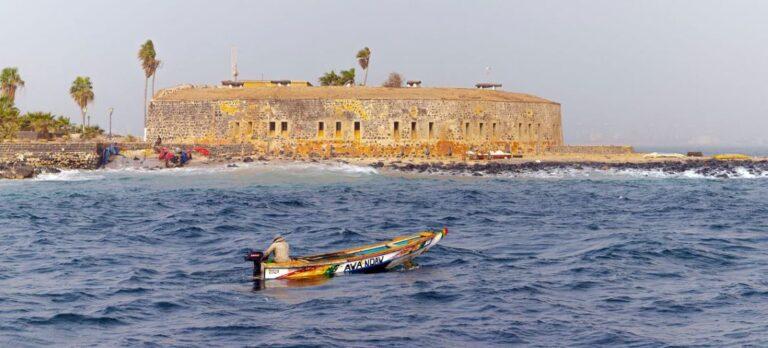
    Image: Fort of Goree Island, Senegal, was the site of one of the earliest European settlements in Western Africa (Unsplash)

    This piece has been sourced from UN News.

    Is it Time to Say RIP to the SDGs?

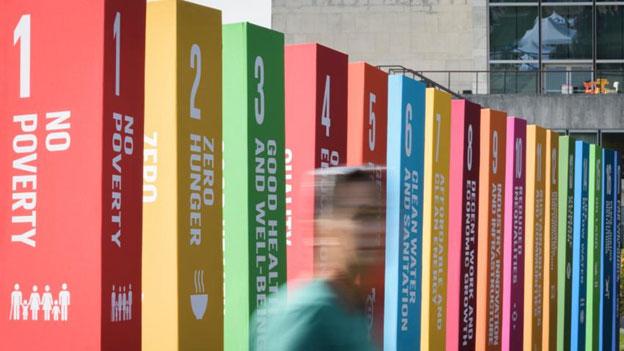
    Even before the dramatic changes of the past few months, the SDGs were on life support. A UN report issued in June 2024—five months before President Trump’s decisive election victory—found only 17 per cent of the SDGs were on track.

    By Felix Dodds and Chris Spence

    Is it only a decade since the Sustainable Development Goals (SDGs) and the Paris Agreement on climate change were agreed? The two deals were inked to a groundswell of hope.

    The world had come together and reached consensus on how to tackle some of the world’s biggest challenges. A collaborative spirit was in the air.

    Fast forward ten years and it feels like a century has passed and we’ve fallen over the abyss into
    an alternate reality.

    When he was elected for a second term, President Donald Trump promised extraordinary, history-making change. Whether you support his world view or not, no one can deny he has been true to his word. The previous multilateral consensus is shattered.

    With tit-for-tat tariff escalation, cuts in overseas aid, a rise in regionalism and the return of transactional, ‘might makes right’ geopolitics, everything has changed. The old, postwar international order is fading.

    Even before the dramatic changes of the past few months, the SDGs were on life support. A UN report issued in June 2024—five months before President Trump’s decisive election victory—found only 17 per cent of the SDGs were on track.

    About half showed minimal or modest progress, while one-third were actually going backwards. As we enter a new era set to be dominated by a handful of major powers and zero-sum game competition, is it time to declare the SDGs dead?

    Is there a doctor in the building?

    The SDGs may be ailing—their pulse faint and erratic—but in our opinion it’s not too late to save them. The goals still enjoy almost universal support among UN members. What’s more, most governments still believe in multilateralism.

    They recognize that humanity’s progress throughout history has happened when people work together to create mutually beneficial win-win scenarios, not when a ‘winner-takes-all’ mentality prevails. And institutions like the United Nations haven’t gone away; their capacities and convening power remain.

    Furthermore, the world is better placed today to take on many of the challenges targeted by the SDGs than it was ten years ago. For a start, new digital technologies and AI could improve access to real-time data and diagnostics, thus helping decision making. More broadly, breakthroughs in science and research—whether they relate to energy use or education, healthcare or agriculture—could prove transformative.

    What’s more, the world is far wealthier than it was a decade ago. In spite of the COVID-19 pandemic, global GDP jumped from around US$85 trillion in 2015 to more than $115 trillion today; an incredible change in such a short space of time.

    This means we have a greater financial capacity to fund change. In light of these transformations, international collaboration and innovation could undoubtedly help put more of the SDGs within reach.

    For those who believe in collaboration over competition, the upcoming UN High-Level Political Forum (HLPF) offers an opportunity to demonstrate their mindset and commitment. The HLPF, which is taking place at UN Headquarters in New York from July 14-23, will assess progress across five of the seventeen SDGs.

    This time around, it will look at health and wellbeing (SDG 3), gender equality and empowerment (SDG 5), sustainable economic growth and employment (8), oceans and marine resources (14), and the Global Partnership for Sustainable Development (17).

    Five Years to go

    The theme in 2025 could not be more appropriate: advancing science and evidence-based solutions.

    In recent years, there has been a backlash against experts and even a rejection of science in some quarters. The HLPF provides a timely opportunity for governments and other stakeholders to reaffirm their commitment to science and research-based decision making as the only logical, common-sense path to achieve the promise of the SDGs.

    At the HLPF, 37 countries will be asked to present their national reports on the SDGs. From Bangladesh to Bulgaria, India to Indonesia, South Africa to Saint Lucia, more than three dozen countries, large and small, will have the chance to make their views clear to the world.

    One of the countries that will be presenting is Germany, which will hold the Presidency of the General Assembly from September 2025 to September 2026. At such a critical time, it is reassuring that we will have leadership from a country that has been such a staunch supporter of multilateralism.

    With five years to go to the SDGs’ 2030 deadline, we believe it’s time to double down on the promise of the SDGs and commit to a pathway focused on science, technology, innovation and collaboration.

    Prof. Felix Dodds and Chris Spence have participated in UN environmental negotiations since the 1990s. They co-edited Heroes of Environmental Diplomacy: Profiles in Courage (Routledge, 2022). Their next book, Environmental Lobbying at the United Nations: A Guide to Protecting Our Planet, is scheduled for release in June 2025.

    This piece has been sourced from Inter Press Service

    Maldives Bans Israeli Visitors

    The President’s Office website states that ratification of this Act further demonstrates the stance of Maldives’ government in response to the atrocities and ongoing acts of genocide committed by Israel against the people of Palestine.

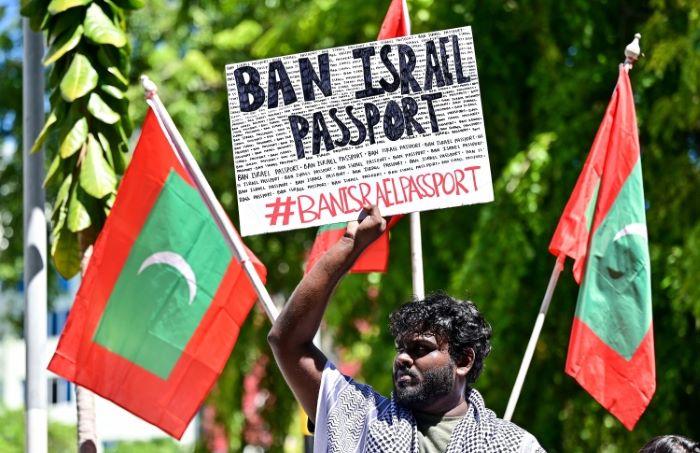
    Maldives President, Dr Mohamed Muizzu, on Tuesday ratified an amendment to the Immigration Act, which effectively bans entry to Maldives by holders of Israeli passports.

    The Bill was passed in Parliament earlier in the day with unanimous votes from all MPs across party lines.

    The President’s Office website states that ratification of this Act further demonstrates the stance of Maldives’ government in response to the atrocities and ongoing acts of genocide committed by Israel against the people of Palestine.

    He said that Maldives remains steadfast in advocating for accountability for violations of international law and in condemning Israel’s actions against Palestine.

    The motion to ban Israeli passport holders from entering Maldives was proposed by opposition Maldivian Democratic Party (MDP) MP for South Galolhu Meekail Ahmed Naseem on May 29 last year. The bill was reviewed and passed in the Committee on Security Services (241 Committee) yesterday after having been stalled for 308 days. It was then passed in parliament today.

    As per the newly ratified amendment to the Immigration Act, travellers coming to Maldives via Israeli passports will not be allowed entry. However, Israeli passport holders can also enter the country if they have dual citizenship, and travel through passports from another country.

    India’s Rooftop Solar Capacity Expected to Reach 25–30 GW by FY27, Says Report

    Among states, Gujarat remains a national leader through its ambitious Surya Gujarat programme, while Maharashtra is witnessing a surge in C&I adoption – particularly among micro, small, and medium enterprises and urban commercial centres.

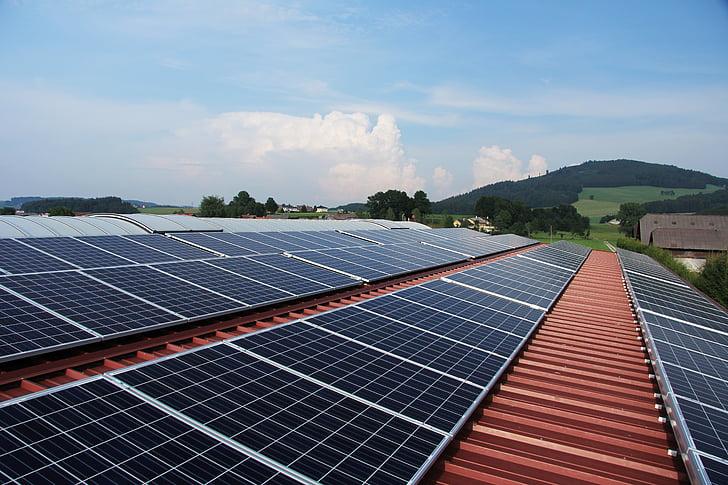
    India’s rooftop solar energy capacity is projected to grow significantly, rising from the current 17 GW to between 25 and 30 GW by FY27, according to a report released Tuesday by CareEdge Advisory & Research.

    The report estimates an average annual growth rate of 33 per cent in rooftop solar installations over the next two fiscal years – driven by a combination of rising energy demands, falling technology costs, and supportive policy frameworks. This rapid growth aligns with India’s broader clean energy ambitions, where solar power is emerging as a cornerstone of the country’s decarbonisation strategy.

    As of FY25, India’s total renewable energy capacity stood at 220 GW, with a national goal of reaching 300 GW of solar capacity by 2030. Rooftop solar, particularly within the Commercial and Industrial (C&I) segment, is poised to play a critical role in reaching that target.

    “Rooftop solar installations in India have gained momentum,” said Tanvi Shah, Director at CareEdge Advisory and Research. “With growing demand from the C&I sector and a supportive policy ecosystem, we expect the market to touch nearly 25–30 GW over the next two years.”

    According to the report, rooftop solar now accounts for approximately 20 per cent of India’s total solar capacity. The C&I segment dominates the rooftop space with a 66 per cent share, propelled by businesses increasingly seeking to cut operational costs and meet sustainability commitments. Sectors such as textiles, pharmaceuticals, retail, and data centres are among the key adopters, benefiting from payback periods of just 3–5 years and access to flexible financing models.

    Economic Viability

    Policy incentives are also fuelling the expansion. Net metering provisions, declining costs of solar modules, and government-backed initiatives like the Production Linked Incentive (PLI) scheme are creating a favourable environment for adoption.

    The residential rooftop segment is gaining traction as well, spurred by the central government’s PM Surya Ghar: Muft Bijli Yojana. The scheme aims to install rooftop solar systems in one crore households, offering subsidies of up to ₹78,000. Designed to ease electricity bills for low- and middle-income families, the programme also aims to generate nearly 17 lakh jobs, giving a significant boost to the domestic solar ecosystem.

    As of March 10, 2025, India’s residential rooftop solar initiative hit a milestone of 10 lakh installations, signalling growing public participation in the energy transition.

    Among states, Gujarat remains a national leader through its ambitious Surya Gujarat programme, while Maharashtra is witnessing a surge in C&I adoption – particularly among micro, small, and medium enterprises (MSMEs) and urban commercial centres.

    While utility-scale solar still constitutes the bulk of India’s solar power mix, the rooftop segment is gaining increasing importance due to its decentralised nature and ability to directly engage consumers.

    CareEdge analysts conclude that the combination of economic viability, regulatory support, and climate consciousness will continue to drive strong rooftop solar growth in the years ahead.

    Luxury Housing Surges in India: Delhi-NCR at the Helm of Real Estate Boom

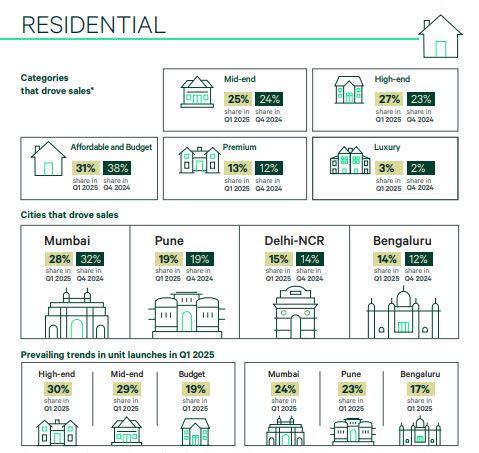
    In the first quarter of 2025, high-end housing made up 30 per cent of launches, while budget housing was just 19 per cent, highlighting widening disparities in housing access across income levels.

    India’s luxury housing sector has kicked off 2025 with a remarkable upswing, witnessing a 28 per cent year-on-year growth in sales during the January-March quarter. According to CBRE South Asia’s latest Market Monitor report, a total of 1,930 luxury homes – priced above ₹4 crore – were sold across the top seven Indian cities. Leading this surge is the Delhi-National Capital Region (NCR), which continues to cement its status as the country’s prime hotspot for high-end real estate.

    Delhi-NCR accounted for 950 of the luxury units sold in Q1 2025 – almost half of the national total. The region’s dominance stems from several factors, says the report, listing these as : robust infrastructure upgrades, improved connectivity via the newly launched Dwarka Expressway, and increasing buyer preference for upscale lifestyles. Submarkets such as Gurugram, particularly New Gurgaon, the Dwarka Expressway corridor, and the Southern Peripheral Road, have become magnets for luxury seekers, combining convenience with premium living.

    The region’s performance also reflects a deeper shift in buyer behaviour. As affluence grows, homebuyers are moving away from mere functionality to aspirations – seeking larger homes, better amenities, and strategic locations that offer both comfort and connectivity.

    Growing Appetite for Premium Housing

    The luxury trend isn’t confined to the capital region. Across India, the high-end and premium segments combined made up 40 per cent of total apartment sales in Q1 2025, with similar shares in new launches – underscoring how demand is now clearly tilting toward higher-value properties.

    In 2024, luxury homes priced ₹4 crore and above saw a 53 per cent jump in sales across seven major cities, rising from 12,895 units in 2023 to 19,700 units. Delhi-NCR led with 10,500 units sold, but other cities made strong contributions as well. Mumbai, for instance, recorded 3,820 luxury home sales in the first nine months of 2024 – an 18 per cent increase year-on-year.

    Hyderabad and Bengaluru are also fast catching up. In South India, Bengaluru recorded the steepest growth, jumping from just 20 luxury units in Q1 2024 to 190 in Q1 2025. This tenfold increase is attributed to expanding tech-driven wealth and changing lifestyle aspirations among the city’s professionals.

    Interestingly, a slide explaining the prevailing trends in unit launches in the first quarter of 2025 says that high-end housing accounted for 30 per cent of the share in this year’s first quarter. On the other hand, budget housing accounted for just 19 per cent of the share in the same quarter. This points to the growing inequality in servicing the housing needs in the country and also the yawning gap in the purchasing powers of the rich and the poor.

    Market Balance; Inventory Management

    India’s overall residential market demonstrated equilibrium in Q1 2025, with about 65,800 apartment units launched – nearly matching the 65,300 units sold. This parity indicates that developers are carefully aligning supply with demand, ensuring manageable levels of unsold inventory. This equilibrium reflects an improved understanding of buyer sentiment and demand patterns.

    Delhi-NCR, Mumbai, and Pune collectively accounted for 62 per cent of all residential sales in Q1 2025, with Mumbai alone contributing 19 per cent, followed by Pune at 23per cent.

    In terms of new launches, Mumbai, Pune, and Bengaluru collectively accounted for 64 per cent of activity. This concentration of both sales and new supply in key metros suggests a highly targeted approach by developers focusing on markets with the most vibrant demand.

    Why the Surge?

    Several structural and cyclical factors are converging to fuel this luxury housing upswing:

    • Affluence and Aspirations: Rising disposable incomes, particularly among the upper-middle class and young entrepreneurs, are translating into higher demand for larger, amenity-rich homes.
    • NRI Investments: Non-resident Indians (NRIs) are increasingly viewing Indian real estate as a lucrative, long-term investment. With global uncertainty and currency advantages, NRIs are turning to luxury properties in India for both capital appreciation and lifestyle use.
    • Infrastructure Developments: Improved infrastructure, including expressways, metro connectivity, and urban planning initiatives, is enhancing the appeal of previously underdeveloped areas.
    • Policy Support and Monetary Easing: The Reserve Bank of India’s recent repo rate cut is expected to make home loans more affordable, narrowing the gap between EMIs and rentals. This monetary easing is likely to encourage buyers who were on the fence.
    • Land Acquisitions and Developer Strategy: Large-scale land acquisitions in 2023–24 are translating into a surge in new project launches, especially in high-end and premium categories.

    The CBRE report offers a breakdown of market dynamics by price segment:

    • High-End Segment (₹1.5–3 crore): Represented 27 per cent of total sales.
    • Premium Segment (₹3–6 crore): Contributed around 23 per cent.
    • Luxury Segment (₹6–50 crore): Accounted for 12 per cent.
    • Ultra-Luxury (₹50 crore and above): Remains a niche but growing category.

    While affordable and budget segments still dominate the overall housing market, the growing share of higher-value homes signals a shift in urban housing preferences, especially in metro cities.

    Steady Outlook

    The residential real estate market is expected to maintain a stable trajectory throughout 2025. A combination of rising income levels, improving infrastructure, government support, and evolving lifestyle choices are all reinforcing demand. CBRE anticipates elevated new launches in the coming months, supported by ample land availability and strategic developer planning.

    The luxury segment, in particular, will continue to be a focal point, attracting not just end-users but also investors seeking quality assets in prime locations, CBRE suggests. As urban India becomes increasingly aspirational and globally connected, luxury housing is no longer a niche – it’s becoming a norm for a growing class of discerning buyers.

    Sri Lanka Gets $1.1 Million Boost to Combat Plastic Waste Under Regional UNDP–Coca-Cola Initiative

    Like many nations in Asia, Sri Lanka has seen a surge in single-use plastics and limited infrastructure to manage them. The consequences have become starkly evident: plastic waste clogs rivers, endangers marine ecosystems, and threatens human health.

    In a significant step toward tackling one of the planet’s most urgent environmental crises, Sri Lanka has secured a $1.1 million grant from the United Nations Development Programme (UNDP) and The Coca-Cola Foundation (TCCF) to establish a robust framework for plastic waste management across seven local authorities in the Colombo District. This effort is part of a larger $15 million multi-country initiative aimed at curbing plastic pollution in Asia and the Pacific.

    The initiative – formally known as the Management of Plastics Waste and Circular Interventions on Plastics in South, Southeast Asia, and the Pacific, or the TCCF Plastics Circularity Project – is a three-year programme designed to improve plastic waste handling, promote recycling, and reduce plastic leakage into the environment through community-driven, circular economy models.

    “Sri Lanka is one of nine countries selected for this regional project, and this funding will enable us to build on existing efforts and demonstrate more sustainable plastic waste practices at the local level,” said UNDP Sri Lanka Deputy Resident Representative Malin Herwig at the project’s inception workshop. “Plastic pollution is one of the most pressing environmental challenges of our time, and addressing it requires collaborative, scalable action.”

    Growing Environmental Concern

    The targeted local authorities – Moratuwa Municipal Council, Mount Lavinia–Dehiwala Municipal Council, Sri Jayawardenepura Kotte Municipal Council, Maharagama Urban Council, Panadura Urban Council, Kesbewa Urban Council, and Boralesgamuwa Urban Council – all direct their waste to the Karadiyana Waste Management Centre in the Western Province. The centre is set to become a model for environmentally sound and efficient waste processing under the new project.

    “The Karadiyana Centre has long served as a hub for waste management,” said Eng. Nishantha Pushapakumara, Director of the National Solid Waste Management Centre. “Now, it will showcase modern plastic waste solutions – turning plastic from a pollutant into a resource through innovation, collaboration, and inclusive local action.”

    Sri Lanka’s involvement in the regional initiative comes amid growing environmental concern about the country’s increasing plastic waste. Like many nations in Asia, Sri Lanka has seen a surge in single-use plastics and limited infrastructure to manage them. The consequences have become starkly evident: plastic waste clogs rivers, endangers marine ecosystems, and threatens human health.

    16 of World’s Top 20 Polluting Rivers

    Globally, Asia is responsible for a disproportionate share of ocean-bound plastic. Sixteen of the world’s top 20 polluting rivers run through the region and contribute over two-thirds of all plastic that enters the world’s oceans each year. The urgency to address this crisis is reflected in the multi-country approach adopted by UNDP and TCCF.

    The larger $15 million project spans Bangladesh, Bhutan, Cambodia, India, Maldives, Nepal, Philippines, Sri Lanka, and Vietnam. It aims to collect at least 55,610 metric tons of plastic and directly benefit 72,100 individuals, many of whom are informal waste workers. By promoting sustainable recycling models and improving working conditions, the programme also seeks to bolster livelihoods while addressing environmental degradation.

    “The circular economy model encourages us to view waste as a resource, not just a problem,” said Pushapakumara. “This project embeds that thinking into local systems – creating long-term value from plastic through responsible management and innovation.”

    Vital Lifeline

    Oversight for Sri Lanka’s component of the project will be handled by a National Advisory Committee, jointly chaired by the Secretary of the Ministry of Public Administration, Home Affairs, Provincial Councils and Local Government, and the UNDP Sri Lanka Resident Representative. The committee will guide the planning, implementation, and scaling of plastic waste interventions, ensuring alignment with national policy frameworks.

    At the project launch, local government officials and development partners convened to identify key roadblocks and explore policy innovations. Stakeholders discussed how existing infrastructure and regulations could be leveraged to support the project’s ambitious goals, including replicable waste segregation, improved collection systems, and strengthened community engagement.

    “We’re not starting from zero,” said Herwig. “Sri Lanka already has valuable experience in waste management. What we’re doing is connecting the dots – linking policy, technology, and people to create a system that works.”

    The partnership draws on international expertise and funding from the UN Peace and Development Fund (UNPDF), with additional contributions from the United Nations Department of Economic and Social Affairs (UN DESA) and the Government of the People’s Republic of China. At the heart of the initiative is a shared vision: a plastic-free ocean and healthier communities supported by sustainable waste management systems.

    Reimagining Waste as a Resource

    For local authorities like those in the Colombo District, the project provides a vital lifeline. Municipal councils and urban centers have long struggled with the logistics and costs of waste disposal, particularly plastic. Without effective waste segregation and recycling infrastructure, much of the country’s plastic ends up in open dumps or waterways, compounding public health and environmental risks.

    “We see this as more than a technical project,” said Herwig. “It’s an opportunity to empower local communities, build new green jobs, and foster a culture of environmental stewardship.”

    The initiative also underscores a growing recognition of the role that public-private partnerships must play in solving global sustainability challenges. Coca-Cola, one of the world’s largest producers of plastic beverage containers, has come under criticism in the past for its role in the plastic waste crisis. Through its foundation, the company is now funding programs that aim to reduce its environmental footprint and help countries manage waste more effectively.

    “Initiatives like the TCCF Plastics Circularity Project offer a chance to drive transformative change,” said Pushapakumara. “But success depends on collective action—from government, private sector, civil society, and most importantly, from the communities directly impacted by plastic pollution.”

    As the project moves from planning to implementation, Sri Lanka’s efforts could serve as a blueprint for other countries in the region. With the Karadiyana Waste Management Centre as a demonstration site, the government hopes to inspire broader reforms in waste policy and practice across the island.

    For now, the $1.1 million grant represents more than just funding – it’s a step toward reimagining waste as a resource, and a future where Sri Lanka’s coasts, rivers, and communities are no longer choked by plastic.

    In a Mere 11 Days, Afghanistan has Received 40,000 Afghans Deported by Pakistan

    Amnesty further noted that many deported individuals are at risk of severe repression under the Taliban regime, especially journalists, human rights defenders, women protestors, artists, and former officials.

    In a rapid escalation of its deportation drive, Pakistan has expelled approximately 40,000 Afghan nationals over the past eleven days alone, according to reports from Afghan media outlet TOLO News. The operation, widely seen as part of a broader crackdown on Afghan migrants, has affected both documented and undocumented families and drawn widespread criticism from human rights groups and international organizations.

    Officials in Afghanistan’s Nangarhar province described the deportations as “accelerated,” noting that thousands of Afghan families have been forced to return from cities such as Lahore, Rawalpindi, and Islamabad to temporary camps in Torkham township, near the Afghanistan-Pakistan border.

    TOLO News quoted Bakht Jamal Gowhar, a migration transfer officer in Torkham, as saying, “In the past eleven days, nearly 7,000 families have returned, totaling around 40,000 individuals. This includes deported individuals, documented returnees, and those forcibly expelled.”

    Many returnees arriving in Torkham have described harrowing ordeals during their forced journey back to Afghanistan. Numerous deportees allege abuse at the hands of Pakistani police, including harassment, extortion, and confiscation of their possessions. Some reported being arrested multiple times and forced to pay large bribes – ranging from 20,000 to 30,000 Pakistani rupees – just to secure their release or receive necessary documentation for deportation.

    Mohammad Eshan, a deportee who was arrested twice, recounted: “The first time I was taken, they demanded 20,000 rupees. Just days after being released, I was detained again while shopping, and had to pay another 20,000.”

    Local officials in Nangarhar province say Pakistan has accelerated the deportation of Afghan migrants in recent days. Meanwhile, officials from the caretaker government in Torkham township have facilitated services for these returnees and arranged their transportation to their original provinces.

    Sudden Influx

    Others shared similar accounts of mistreatment. Dad Mohammad, a 58-year-old who had lived in Pakistan for 45 years, said he and his family were abruptly forced out without warning. “The police raided our home, didn’t let us gather our belongings, and we left everything behind—our motorcycles, cargo vehicle, everything.”

    Kamran, another deportee, lamented: “We had shops and businesses. We left everything to preserve our dignity.” Sadaqat Khan, 25, who returned with his family, said their household possessions were seized and their livelihood destroyed. “All the wealth we had gathered over 25 years was left behind. Our homes are full of belongings we’ll likely never recover.”

    The Afghan caretaker government is working to assist the sudden influx of returnees. Local officials in Nangarhar and Kunar provinces have been coordinating transportation to help families return to their hometowns. Abdul Salam Hanafi, Deputy Administrative Chief of the Prime Minister’s Office, recently visited both provinces to oversee support efforts, including the distribution of land to displaced families.

    Azizullah Mustafa, deputy governor of Nangarhar, acknowledged the difficulties migrants are facing. “Many are separated from spouses still across the border. Their businesses and assets remain in Pakistan. We are working with the Ministry of Foreign Affairs to address these issues through diplomatic channels,” he said.

    Recently deported migrants report that Pakistani police treated them harshly, extorted money under various pretexts during the journey, and acted aggressively. Returning Afghans say Pakistani drivers exploited their vulnerability, charging excessive transportation fares.

    International Condemnation

    The deportation campaign has sparked strong international condemnation. Human rights watchdogs, including Amnesty International, have raised alarms over the lack of transparency and legality in Pakistan’s so-called “Illegal Foreigners Repatriation Plan.”

    “The Pakistani government’s unyielding and cruel deadline, which is less than a week away, to remove Afghan refugees and asylum seekers from major cities, shows little respect for international human rights law,” said Isabelle Lassée, Deputy Regional Director for South Asia at Amnesty International. “It is disingenuous to frame Afghan refugees as a menace. The government is scapegoating a vulnerable community fleeing persecution.”

    Amnesty further noted that many deported individuals are at risk of severe repression under the Taliban regime, especially journalists, human rights defenders, women protestors, artists, and former officials. Between September 2023 and February 2025, Pakistan forcibly deported at least 844,499 Afghan nationals – many of whom face immediate danger upon return.

    Legal contradictions within Pakistan’s own governance have also come to light. In January 2025, the federal government assured the Supreme Court that registered Afghan refugees would not be apprehended or deported. Moreover, the Islamabad High Court recently ordered authorities to stop harassing holders of Proof of Registration (PoR) cards, many of whom are still facing intimidation and forced removal.

    Despite these assurances, reports from Afghan media and international observers indicate that the deportation campaign continues with little regard for individual refugee status or legal protections.

    TOLO News also reported that many returnees cited increasing political and economic instability in Pakistan as a factor behind their expulsion. Regardless of the rationale, the humanitarian consequences are stark: families arriving with no money, no property, and no place to call home.

    As the number of returnees grows, the Afghan government is under mounting pressure to manage a deepening crisis. With limited resources and an economy already under strain, reintegrating tens of thousands of forcibly displaced citizens poses a critical challenge – one that will require sustained domestic coordination and urgent international support.

    The forced deportations, critics say, not only violate international refugee norms but also threaten to destabilize an already fragile Afghanistan – leaving thousands in a state of displacement, uncertainty, and despair.

    NLU’s Centre for Child Rights Launches Tenth Anniversary Edition of Flagship Journal

    Sharing insights from her judicial career, Justice Ratho spoke candidly about the gulf between legislative intent and implementation, particularly in the application of the Juvenile Justice Act and POCSO Act.

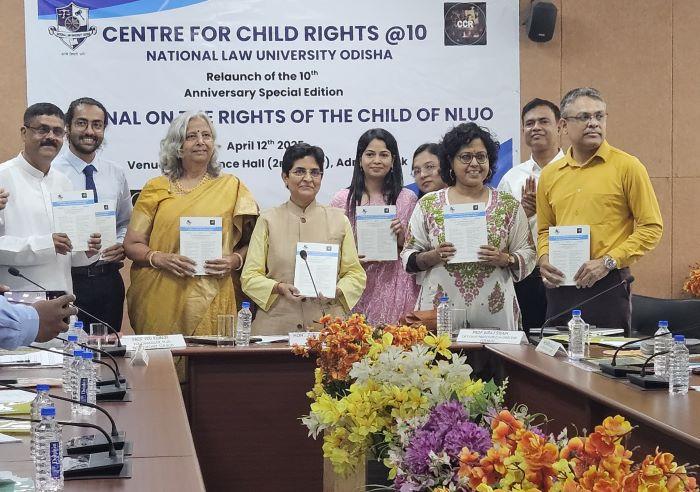
    The Journal on the Rights of the Child of NLUO, the flagship academic publication of the Centre for Child Rights (CCR) at the National Law University Odisha (NLUO), was re-launched on Saturday as the institution marked a decade of committed scholarship, public service, and systemic engagement on child rights. Justice Savitri Ratho, Judge of the Orissa High Court and Chair of its Juvenile Justice Committee opened the celebrations by reminding the audience that justice for children must be “felt in their lives – not just inscribed in our laws.”

    Reflecting on the Centre’s journey since its inauguration in 2015, Justice Ratho lauded CCR as a rare academic institution that offers thought and practice leadership in child rights. “The CCR is not just complementary to the judiciary’s work – it is constitutive of the child protection ecosystem,” she said. She credited Vice Chancellor, Prof Ved Kumari, for charting a new institutional path in child rights law. She noted that establishing the Chief Minister’s Chair Professorship in 2023 was a watershed moment that institutionalised child rights as a rigorous legal and interdisciplinary inquiry domain.

    Justice Ratho also drew attention to CCR’s pedagogical innovation, especially the high student demand for the elective courses “Child Rights and Determinant Sectors” and “Food and Nutrition Justice,” noting that “legal theory, when not rooted in lived experience, risks becoming sterile.” She praised the KUTUMB initiative as a standout example of praxis, where CCR supports children’s participation and agency in shaping their communities. “Children are not passive recipients of protection – they are active rights-holders and agents of change,” she affirmed, grounding her statement in Article 12 of the UN Convention on the Rights of the Child and India’s SDG commitments.

    Justice, Equity, and Dignity for every Child

    Sharing insights from her judicial career, Justice Ratho spoke candidly about the gulf between legislative intent and implementation, particularly in the application of the Juvenile Justice Act and POCSO Act. “Despite progressive laws, marginalized children – tribal, Dalit, migrant, differently abled – still face structural neglect and exclusion. The (COVID-19) pandemic only deepened these fissures,” she observed. She called for urgent reinforcement of child-sensitive procedures, trauma-informed counselling, and holistic policy frameworks that reflect the best interests of the child. She concluded with a powerful call: “Let us ensure that no child is invisible, voiceless, or without recourse.”

    The tenth anniversary edition of the Journal on the Rights of the Child of NLUO features 14 original contributions from across the country, including work on juvenile bail jurisprudence, adoption law, refugee children’s rights, influencer economy ethics, and childhood nutrition. It also includes an NCRB data re-analysis and an info-graphic fact sheet that distils evidence into actionable insight.

    Prof Biraj Swain, Chief Minister’s Chair Professor and Director of CCR, opened the programme by framing CCR’s mission in unapologetically bold terms: “We are here not just to mark a date, but to recommit to our mandate – justice, equity, and dignity for every child, everywhere.” She honoured the unwavering support of Vice Chancellor Prof Ved Kumari, whom she called “our Amazonian backbone,” and spotlighted the students whose research, outreach, and editorial work have kept the Centre vibrant and engaged.

    Justice for children cannot remain an idea

    Prof Ved Kumari, in her address, placed the focus on children in conflict with the law, reminding the audience that they are rights-bearing individuals, not societal outliers. She praised the growth of the Centre under Prof Swain’s leadership and celebrated the student community’s sustained engagement. In particular, she underscored the significance of KUTUMB in linking child rights with the broader terrain of family and community well-being. “Even after I demit office,” she said, “my interest in the Centre’s journey will remain steadfast.”

    Mr. Sourav Bhattacharjee, Nutrition Specialist, UNICEF, revisited CCR’s founding partnership with UNICEF in 2014. “What was missing then was not law but a space for knowledge, research, and capacity-building,” he said. “NLU Odisha filled that gap.” Outlining a bold vision for CCR’s next chapter, he projected it as a “centre of gravity for child protection knowledge and action” across Odisha and SouthAsia – one that provides technical expertise, trains a new cadre of professionals, and leads research on critical issues like migration, trafficking, climate change, and online safety.

    The event also saw a major institutional announcement: the formalisation of a long-term partnership between CCR and Child Rights and You (CRY). Mr. Subhendu Bhattacharjee, CRY’s Policy and Knowledge Exchange Director, announced CRY’s funding support for three grassroots-linked initiatives: student volunteerism, media legal training, and district-level legal aid centres. “This partnership is not about financials – it is about shared vision, praxis, and justice,” he said. “The cases these students take up today will become the case laws of tomorrow.”

    Members of the faculty acknowledged the unwavering diligence of student editor Madhulika Tripathy.

    As the event drew close, Prof Swain offered a resonant final thought: “Justice for children cannot remain an idea. It must become a delivered right. We are here to make that happen – not just in Odisha, not just in India, but anywhere and everywhere.”