More

    Taliban Carries Out Public Execution of Four Men in Afghanistan, Drawing Global Condemnation

    Despite international condemnation, the Taliban appear undeterred in their approach. With no formally recognized justice system and growing fears of judicial opacity, many Afghans are left to grapple with a legal framework that combines harsh punishments with minimal transparency.

    In a grim echo of its earlier rule, the Taliban publicly executed four men across three Afghan provinces on Friday, April 11 — the largest number of public executions in a single day since the militant group seized power again in 2021, according to a report from Radio Free Europe’s Radio Azadi. The executions, carried out in crowded sports stadiums before tens of thousands of spectators, have drawn sharp condemnation from global human rights organizations and the United Nations.

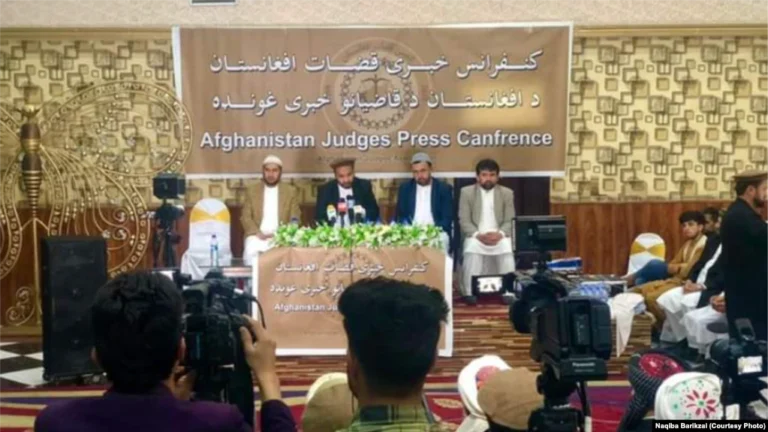
    According to a statement from Afghanistan’s Supreme Court, the four men were sentenced to death under “retaliatory punishment” laws – known as qisas, or retributive justice – for allegedly shooting and killing other men. The court claimed that the cases were “examined very precisely and repeatedly,” and that the victims’ families had declined to grant amnesty in exchange for blood money, paving the way for execution.

    Local reports confirmed that the executions took place in the western provinces of Farah, Nimroz, and Badghis. In line with Taliban practice, the punishment was carried out by family members of the murder victims, who shot the accused men in front of gathered crowds. Civil servants, military personnel, and ordinary citizens were invited to the events via official announcements widely circulated on Thursday.

    Eyewitnesses speaking to Radio Free Europe’s Radio Azadi described the executions as distressing. One resident of Nimroz, who requested anonymity, recounted to Radio Azadi: “The man was shot by the victim’s family. Watching this scene was unbearable. No one wants to witness a killing, even if it is declared a divine punishment.” Another witness said the crowd included women and children, and that “people don’t fully understand these issues – this kind of event leaves a serious psychological impact.”

    The four executions bring the total number of publicly executed individuals in Afghanistan since August 2021 to at least 10. The last known public execution took place in November 2024 in Gardez, Paktia province, where a convicted murderer was shot three times in the chest by a relative of the victim. That event, too, drew thousands of spectators, including senior Taliban officials.

    Public executions and corporal punishments – such as floggings for theft, adultery, and alcohol consumption – have become increasingly common since the Taliban’s return to power. All death sentences are approved by the group’s reclusive supreme leader, Hibatullah Akhundzada, who is believed to reside in Kandahar.

    Eye for an Eye

    The Taliban have justified their actions as faithful enforcement of Islamic law. In 2022, Akhundzada ordered judges to implement all aspects of sharia, including qisas, which allows for death as retribution in murder cases. Law and order – underpinned by a strict and literal interpretation of religious law – has long been a central pillar of the Taliban’s ideology, one that emerged from the chaos of Afghanistan’s post-Soviet civil war.

    But human rights organizations and international bodies have expressed outrage over the practice. In a statement posted to X (formerly Twitter), Amnesty International condemned the executions as “deplorable,” calling them “a gross affront to human dignity.”

    “Afghanistan: The deplorable public executions of four people in Nimroz, Farah and Badghis in Afghanistan today point to Taliban’s continued alarming abuse of human rights in the country,” the group said. “The international community must put pressure on the Taliban to stop this blatant human rights abuse and help ensure international guarantees are upheld in Afghanistan.”

    The United Nations Human Rights Office echoed these concerns, urging the Taliban to impose a moratorium on the death penalty. “We are appalled by executions of four men in the Badghis, Nimroz and Farah provinces this morning,” the UN rights office posted. “We urge the de facto authorities in Afghanistan to place a moratorium on the use of the death penalty.”

    Rights groups also say the trials that led to these executions likely fell short of international standards. Amnesty International, in its April report on global capital punishment, noted that Afghanistan was among the countries where “death sentences were known to have been imposed after proceedings that did not meet international fair trial standards.” The report placed Afghanistan alongside countries such as Iran, Iraq, and Saudi Arabia, which accounted for 91 percent of known executions in 2024.

    Despite international condemnation, the Taliban appear undeterred in their approach. With no formally recognized justice system and growing fears of judicial opacity, many Afghans – especially in rural and conservative regions – are left to grapple with a legal framework that combines harsh punishments with minimal transparency.

    Human rights advocates warn that these public spectacles of punishment risk not only violating legal norms, but also entrenching a cycle of trauma and fear in a nation already battered by decades of conflict.

    Top of Form

    Bottom of Form
    Bangladesh’s Vanishing Rivers: Climate Crisis Threatens the Lifeblood of a Nation

    The study paints a dire picture: once thriving river systems have now been reduced to narrow trickles or barren beds, incapable of supporting the communities and ecosystems that have depended on them for centuries.

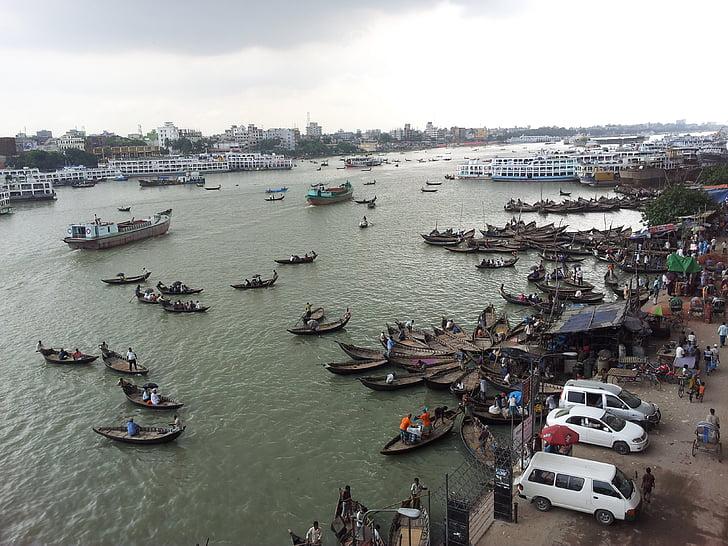
    In the water-rich nation of Bangladesh, rivers are more than just flowing bodies of water—they are the veins of the land, sustaining agriculture, biodiversity, culture, and commerce. But today, the country faces a sobering reality: its rivers are drying up, one by one.

    A new study from the River and Delta Research Centre (RDRC) has revealed that 81 rivers have either dried up or become critically silted during the dry season, posing what experts are calling an ecological emergency. The report, “Dried-up Rivers of Bangladesh,” warns that the nation’s sprawling river system — once a source of prosperity — is now under siege from climate change, pollution, and unplanned development.

    The crisis is unfolding across the country, but regions like Khulna, Satkhira, Rajshahi, and Kushtia are the hardest hit. In Khulna alone, 25 rivers are severely affected. Rajshahi and Rangpur follow closely behind with 20 and 15 rivers respectively facing similar fates.

    From iconic rivers like the Teesta, Atrai, and Chitra to lesser-known streams such as Kholpetua, Hishna, and Kakshiali, the list is long and distressing. The study paints a dire picture: once thriving river systems have now been reduced to narrow trickles or barren beds, incapable of supporting the communities and ecosystems that have depended on them for centuries.

    “This deterioration poses a serious threat to livelihoods, agriculture, and biodiversity,” the RDRC warned. “It underscores the vital role rivers play in sustaining both ecosystems and human communities.”

    Lives in the Balance

    Experts attribute the rapid disappearance of rivers to a toxic cocktail of factors—unchecked urban expansion, industrial pollution, sedimentation, and over-extraction of water. All of these are compounded by climate change, which has made rainfall more erratic, dried up groundwater tables, and increased temperatures.

    Perhaps most concerning is the stress on the Brahmaputra-Jamuna-Meghna (BGM) basin, the central artery of Bangladesh’s water system. Upstream dams and water diversions from neighboring countries are restricting flow, leaving millions who rely on these rivers for fishing, farming, and daily use in jeopardy.

    “As water levels become unpredictable, entire communities are struggling,” the study noted. “The impact goes beyond humans — it’s damaging wildlife, destroying habitats, and disrupting the natural balance.”

    For those who depend on the rivers, the consequences are already visible.

    In Rangpur, smallholder farmer Abdul Jalil recounts how the Bhulli River, once a dependable source of irrigation, has vanished in parts. “Now, we can’t grow rice the way we used to. We dig wells, but the water is salty or too deep. The river is gone, and with it, our crops,” he said.

    In places like Kushtia and Rajshahi, boatmen and fisherfolk face a similar plight. Without navigable waters, trade routes have dried up, fishing grounds have vanished, and the traditional livelihoods of entire communities are under threat.

    Wildlife has not been spared either. Wetland ecosystems are collapsing, with fish populations declining and migratory birds abandoning former habitats. “This is an ecological chain reaction,” said an RDRC researcher. “When rivers die, everything connected to them suffers.”

    A Push for Climate Resilience

    Acknowledging the magnitude of the crisis, high-level talks were held at Pani Bhaban in Dhaka last week between UN Resident Coordinator Gwyn Lewis and Bangladesh’s Environment Adviser Syeda Rizwana Hasan. The two leaders called for immediate climate action and a shift from planning to implementation.

    “While analysis is useful, we now need to prioritize climate action, even if it begins with just two or three catalytic projects,” Rizwana said. Her call for action centered around restoring river ecosystems, improving water governance, and promoting regional collaboration on transboundary river management.

    Key initiatives include divisional river restoration campaigns, canal rehabilitation efforts, and grassroots execution of Bangladesh’s Delta Plan — a long-term framework designed to ensure sustainable water and land management in the face of climate change.

    Bangladesh’s vast river network spans over 24,000 kilometers of rivers, canals, and streams. Yet in the dry season, only 3,800 kilometers remain navigable, a sharp drop from 6,000 kilometers during the monsoon.

    To reverse this trajectory, the RDRC recommends a combination of pollution control, erosion prevention, and aquatic ecosystem restoration. But as the study notes, domestic efforts are not enough. Many of the country’s rivers originate beyond its borders, meaning regional diplomacy is crucial to addressing upstream diversions and ensuring equitable water sharing.

    “Bangladesh must engage in regional cooperation with upstream countries,” the RDRC urged. “Only through joint efforts can we ensure these rivers continue to sustain people and nature for generations to come.”

    A River Runs Through It — For Now

    As Bangladesh faces the realities of climate change, its rivers stand as both a symbol and a casualty of the environmental crisis. Their disappearance is not just a loss of water — it is the loss of culture, history, and survival for millions.

    But there is still time to act.

    With coordinated governance, public participation, and international partnerships, Bangladesh can chart a path toward climate resilience and river revival, say an expert.

    “After all, in a country shaped and sustained by rivers, saving them may be the only way to save itself.”

    The Bulldozer Justice in the Matter of West Bengal teachers’ Appointments Case

    One only hopes the matter comes for review in the Supreme Court and the needful correction is done, if not for the unfortunate non-tainted meritorious candidates whose services has been terminated for no fault of theirs; but for its own self to be proudly reckoned as the highest court of justice in the largest democracy of the world.

    By Prof. Anuj Kumar Vaksha

    It is frightening as much as it is appalling to write this piece of note on the recent judgment of the Supreme Court dated 3 April terminating en-bloc appointments of around 25,735 school assistant teachers and non-teaching staff in Groups C and D appointed by the West Bengal Central School Service Commission (WBSSC) in its selection process initiated in 2016. Most of these appointees were such who had already joined their services and had rendered it for around seven years when this decision of the Supreme Court came in 2025.

    In its judgment the Supreme Court found that the entire selection process has been vitiated and tainted beyond resolution. It further found that manipulations and fraud on a large scale, coupled with the attempted cover-up, have dented the selection process beyond repair and partial redemption. The selection process conducted by the West Bengal Central School Service Commission was indeed vitiated and tainted with manipulations and frauds on a large scale; but this did not necessarily mean every single selection or appointment made there in was tainted.

    The High Court of Calcutta in its order dated 25.04.2024 has enlisted sixteen kinds of established irregularities in almost every stage of the selection process by the West Bengal Central School Service Commission. The High Court of Calcutta further found that the total beneficiaries of such illegalities were yet to be identified and rendered improbable and so, inter alia, set aside en-bloc appointments of all appointees irrespective of whether one’s appointment was actually tainted or not tainted.

    6,276 Appointments Illegal: WBSSC

    The Supreme Court has recorded the factual findings of the High Court, however, for the sake of clarity and objectivity, it independently examined the facts of the case. The Supreme Court inter alia, notes the report submitted by the Central Bureau of Investigation (CBI), wherein it is found that there was manipulation in 952 candidates of IX-X; 907 candidates of XI-XII; 3481 Group C candidates; and, 2823 Group D candidates. The Report of the CBI revealed that appointments of total 8,183 candidates were tainted by manipulation, fraud or other kinds of irregularities.

    Without contesting the factual findings of CBI, West Bengal Staff Selection Commission (WBSSC) acknowledged that as per its enquiry total 6,276 appointments were illegal and thus tainted by one or other kind of irregularities.

    It is matter of record that even if the selection process as conducted by WBSSC was vitiated with manipulations and frauds, there were at the most only 8183 candidates whose appointments were tainted and there were other appointees totalling around 17,552 against whom no taint of any kind was found in their appointment. This data of tainted and non-tainted appointees was available with the Division Bench of the Calcutta High Court, yet given the stand of the State of West Bengal and WBSSC and others, it was found that total beneficiaries of the illegalities were yet to be identified and rendered improbable.

    However, at the level of the Supreme Court this segregation of meritorious candidates from those illegally appointed was found adequately actionable and it did act on them, though partially. In its judgment of 3 April 2025, the Supreme Court treats these sets of tainted and non-tainted appointees separately and gives different set of directions for each of them. The services of the tainted candidates were directed to be terminated and further they were required to refund their salaries/ payments received during the course of their tainted employment.

    In respect of the candidates whose appointment was not specifically found to be tainted; though their appointments / services were also declared null and void – however, they were exempted from refunding the payments made to them.

    Punitive Recovery

    The cancellation of the appointments/ services of the tainted candidates is absolutely appreciable. Even recovery of salaries/ payments made to them for the period of their tainted employment may be appreciated as a punitive measure for the fraud and cheating assumingly perpetrated by them in their appointments; although imposition of such punitive measures at the level of the Supreme Court against the accused without trial is quite unusual. This direction for recovery further seems to have been done without due consideration to the principle of law laid down by the Supreme Court in the reported case of State of Punjab and Others Etc. v. Rafiq Masih Etc. [2014]13 S.C.R. 1343.

    Nonetheless, to maintain the honour and the grace of the Supreme Court, this punitive recovery and impermissible recovery of salaries / payments made to the tainted appointees may be said to be a harsh reaction to a disturbing level of fraud and irregularities in the selection process conducted by WBSSC. The harshness of the Supreme Court does not stop to recovery of salaries and payments made to tainted employees belonging to a class of subordinate staff from whom no recoveries can be made without undue hardship and inequity – the Hon’ble Supreme Court has also terminated the appointments of around 17,552 candidates against whom no material, evidence or record of their appointment being afflicted with one or other kind of irregularities or fraud was specifically found.

    Appointments of Non-Tainted Bulldozed

    This is truly egregious, akin to what is called the bulldozer justice. In anguish against the wrong done by a person, the justice doer bulldozes the complete building in which the alleged wrong doer is found, unmindful of other innocent souls innocuously living and breathing or even struggling for peaceful life in the same building.

    The young people put the best part of their lives and resources to get whatever bit of livelihood they could get on the basis of merit in the cut-throat competition that prevails in the society. The 17,552 candidates, against whom no taint of fraud or irregularities were found were also in the class of those youths who would have put the best part of life and resources to get a job on merit in the cut-throat competition. Alas, their appointments have been bulldozed, not for the wrong done by them but for the wrongs done by others.

    Still more strange is the reason stated by the Hon’ble Supreme Court for which the services of these 17,552 unfortunate candidates have been cancelled even when no material tainting their appointment have been specifically found either by the CBI or other enquiry agencies. The Hon’ble Supreme Court reiterates the observations of the Calcutta High Court that “the entire selection process has been rightly declared null and void due to the egregious violations and illegalities, which violated Articles 14 and 16 of the Constitution. As such, the appointments of these candidates are cancelled.”

    The Supreme Court fails to take note that when the High court was declaring the entire selection process as null and void, it did not have the actionable data of tainted and non-tainted candidates. From the facts as it was available before the High Court, it was evident that the entire selection process was vitiated by large scale irregularities and frauds and the total beneficiaries of such illegalities were yet to be identified and rendered improbable to be identified and so in the circumstances, the entire selection process was declared null and void.

    Complete Justice or Complete Injustice?

    However, when the matter was considered at the level of the Supreme Court, it had the actionable data and details of 8,183 candidates who were beneficiaries of the irregularities and hence their appointment was tainted and other 17,552 candidates against whom no irregularity or fraud was specifically found. Despite having such actionable data of tainted and non-tainted candidates, in which for every one tainted candidate there were two non-tainted meritorious candidates; it is bizarre that the Supreme Court bulldozed all the appointments, almost akin to the method of bulldozer justice.

    While cancelling the appointments of these 17,552 non-tainted candidates, the Hon’ble Supreme Court specifically notes that the selection process violated Articles 14 and 16 of the Constitution; however, nowhere in its forty-one pages judgment the Court explains how the appointment of these 17,552 non-tainted candidates violated either Article 14 or 16 of the Constitution.

    Violation of Articles 14 and 16 was established in the hiring of the data handling agency in the recruitment process; but this per se does not make appointments of 17,552 non-tainted candidates contrary to Articles 14 or 16, as it has been construed by the Supreme Court. This is strange, unusual and unheard in the entire jurisprudence of the Hon’ble Apex Court. Has it been done under Article 142 (1) of the Constitution?

    Please note: Article 142(1) of the Constitution empowers the Supreme Court to make such order as is necessary for doing complete justice. It is to do complete justice; not to do complete injustice. The Hon’ble Supreme Court of India should have used its power under Article 142(1) of the Constitution to salvage the appointments of these 17,552 non-tainted, meritorious candidates. Further, it should have exercised this power to bring to justice and punitive accountability all the culprits of the egregious violations and illegalities in the selection process in a time bound and emphatic manner.

    None of these has been done – and what has been done, at least in the case of 17,552 non tainted appointees is akin to bulldozer justice. One only hopes the matter comes for review in the Supreme Court and the needful correction is done, if not for the unfortunate non-tainted meritorious candidates whose services has been terminated for no fault of theirs; but for its own self to be proudly reckoned as the highest court of justice in the largest democracy of the world.

    The writer is a Professor of Law and the views are his personal.

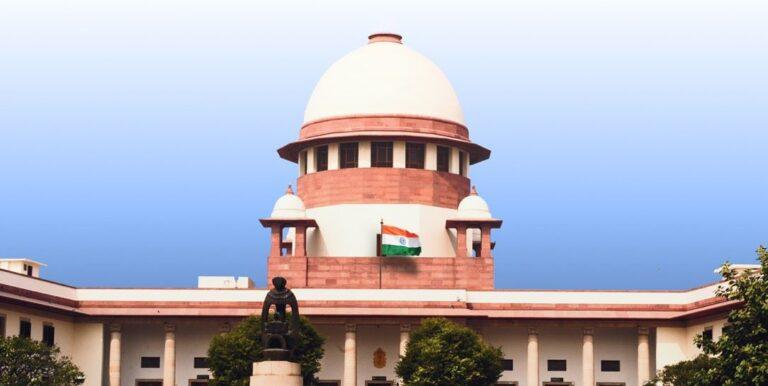
    Image: Supreme Court of India and Wikimedia

    Nepal’s Year of Ruin: Climate Induced Disasters Ravaged the Nation in 2024–25

    More than 240 millimeters of rain inundated the Kathmandu Valley in just 24 hours. The Bagmati and Nakkhu rivers surged two meters above safe levels, overflowing their banks and inundating large swathes of the capital. In Kathmandu alone, at least 37 people were killed.

    In a year that has tested Nepal’s resilience to the core, the 2024–25 Nepali calendar year became a grim reminder of how deeply vulnerable the country is to the mounting impacts of climate change. From devastating floods and landslides to glacial lake outbursts, nearly every corner of Nepal bore witness to extreme weather events that left hundreds dead, thousands displaced, and critical infrastructure in ruins.

    While Nepal is no stranger to seasonal monsoon rains and seismic threats, the scale, frequency, and ferocity of disasters this past year were unlike anything the country had experienced in decades. It marked a turning point—a year where climate-induced tragedies became not occasional interruptions, but an ever-present threat to life and livelihood.

    The national broadcaster, Radio Nepal, said on Wednesday that “In the year 2024 and the first few months of 2025, Nepal endured a string of catastrophic climate-related events that left the nation in mourning.”

    June Tragedy: Landslide Sweeps Buses Into Trishuli

    The deadliest event of early 2024 occurred in June, when a colossal landslide near Simtal along the Narayangadh-Muglin road swept away two passenger buses. Of the 62 passengers onboard, 59 lost their lives. The buses plunged into the turbulent Trishuli River, and while 24 bodies were recovered, 35 passengers remain unaccounted for. Only three people miraculously survived.

    The tragedy underscored how rainfall-induced landslides, amplified by deforestation and haphazard road construction, are turning highways into death traps. It also reflected the urgent need to reassess Nepal’s transport routes through geologically sensitive zones.

    “The Department of Hydrology and Meteorology attributed it to persistent rain and rising temperatures, calling for further research into glacial lake threats,” Radio Nepal said.

    August: Glacial Lakes Burst in Thame, Solukhumbu

    By mid-August, Nepal was grappling with another form of climate hazard—glacial lake outburst floods (GLOFs). On August 16, two glacial lakes above the village of Thame in Solukhumbu District burst due to rising temperatures and heavy rain, sending a torrent of ice-cold floodwater through the Khumbu Pasanglhamu Rural Municipality. The sudden deluge damaged homes, displaced 135 residents—including 40 children—and disrupted communication lines and roads.

    Initially believed to be caused by a blocked river, an aerial survey confirmed the breaches originated from melting glacial lakes. With the temperature soaring to 15°C that day—a sharp rise in the Everest region—the risk of more such disasters looms large.

    Quoting the EU’s disaster relief agency, ECHO, ReliefWeb reported: “A glacial lake outburst occurred in the Koshi province (the easternmost province of Nepal) on 16 August, causing flash floods and mudslides that resulted in displacement and damage. Media report, as of 19 August, 135 displaced people, 93 rescued people, 20 destroyed houses, one destroyed school and one destroyed health facility across the area of the Thame village”

    September: The Worst Floods Since 1970

    What followed in late September was a catastrophe of historic proportions. Between September 26 and 28, Nepal experienced its heaviest rainfall since 1970. A low-pressure system hovering over the Bay of Bengal and northern India triggered unrelenting downpours, particularly across eastern and southeastern Nepal.

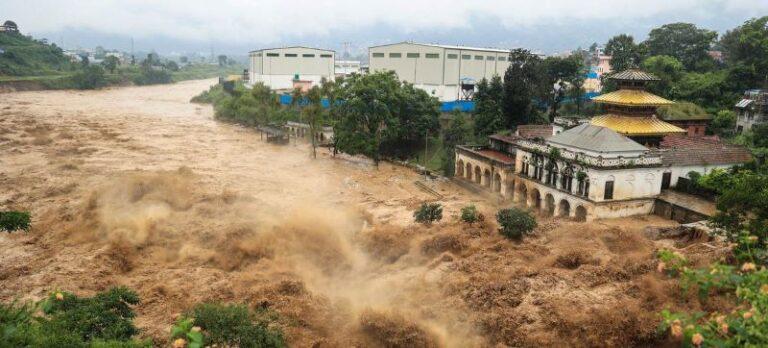
    More than 240 millimeters of rain inundated the Kathmandu Valley in just 24 hours. The Bagmati and Nakkhu rivers surged two meters above safe levels, overflowing their banks and inundating large swathes of the capital. In Kathmandu alone, at least 37 people were killed, with 56 total deaths reported in the wider valley.

    Nationwide, the storm killed at least 224 people, left 28 missing, and injured more than 150. Some 13,300 residents had to be rescued from submerged homes or rooftops. The government mobilized over 30,000 personnel from the military and police for rescue and cleanup efforts.

    The human toll was staggering, but so too was the economic cost: approximately US$340 million in losses, roughly 0.7 per cent of Nepal’s GDP. Critical infrastructure—including 54 bridges, 26 hydropower plants, and 1,678 water and sanitation systems—was heavily damaged. Prithvi and BP highways were rendered impassable by landslides, temporarily cutting Kathmandu off from much of the country.

    The UN website reported that UN Humanitarians said that, “more than 215 people, including 35 children, have been killed and dozens are missing after heavy rains triggered flash floods and landslides across Nepal.” UN humanitarians said on Tuesday.

    Kathmandu Brought to a Halt

    The capital city came to a virtual standstill. Schools and universities closed for three days. Flights from Tribhuvan International Airport were cancelled. Many neighborhoods plunged into darkness without electricity or internet, while broken waterpipes left thousands without clean drinking water.

    UNICEF expressed grave concern over the disaster’s impact on children, reporting 35 child fatalities and warning of heightened risks of violence and exploitation in temporary shelters. At least 12 schools were completely destroyed, further disrupting education.

    Vehicles traveling to and from Kathmandu were buried under landslides, with 35 bodies later recovered from the wreckage on Prithvi Highway. In another horrific incident, two buses en route to the capital were consumed by mudslides, killing all aboard.

    Faced with mounting disaster zones, the Government of Nepal declared 71 municipalities across 20 districts as disaster emergency areas. The National Disaster Risk Reduction and Management Authority (NDRRMA) took charge of assessing the damage and coordinating relief.

    According to the National Disaster Risk Reduction And Management Authority (NDRRMA), at least 41 road sections and 37 major highways were damaged or blocked. Telecommunications suffered severe setbacks, with 446 units destroyed. Eleven hydropower facilities went offline, raising concerns about energy shortages during the upcoming winter months.

    Earlier Monsoon Damage

    The deluge in September capped a monsoon season already riddled with damage. In early July and again in mid-August, floods and landslides—especially in Gandaki and Sudurpaschim Provinces—had already caused significant destruction. Gandaki, in particular, saw multiple road sections washed away, isolating communities and disrupting economic activity.

    In Sudurpaschim, rainfall exceeding 624 mm in a single day broke all previous records. The intensity and unpredictability of the rainfall overwhelmed existing drainage systems, leading climate experts to sound alarms about the need for long-term adaptation strategies.

    A Nation Ill-Prepared for a New Normal

    Dr. Maheshwor Dhakal from the Climate Change Division described 2024–25 as a “watershed year,” where the consequences of climate inaction became vividly clear. “We are witnessing the frontlines of the climate crisis. These disasters were not isolated events—they are interconnected, driven by the same root causes: rising global temperatures, glacial melt, and erratic weather patterns,” he noted.

    Climate researchers have long warned that Nepal—situated in the fragile Himalayan ecosystem—is among the most climate-vulnerable nations in the world. Yet, poor urban planning, unregulated construction, and inadequate disaster preparedness continue to compound the risks.

    In Kathmandu, many buildings are erected on floodplains without proper drainage or zoning regulations. The uncontrolled sprawl of settlements into vulnerable zones, combined with aging infrastructure, means that even moderate rainfall can now trigger major disasters.

    The Path Ahead: Urgent Calls for Adaptation

    The events of 2024–25 have left policymakers, scientists, and citizens calling for urgent reform. Experts are demanding better early warning systems, stricter enforcement of building codes, and climate-resilient infrastructure investments.

    “Adaptation is no longer a choice. It’s a necessity,” said Dr. Dhakal. “The costs of inaction will only rise, not just in monetary terms but in human lives.”

    There are signs of hope. Several international organizations have pledged support for Nepal’s climate resilience efforts. The government has initiated plans to map glacial lakes, strengthen embankments along major rivers, and build more weather-resilient infrastructure.

    But for thousands of families who lost their homes, loved ones, or livelihoods this past year, recovery remains a long and painful road.

    As the monsoon approaches again in 2025, Nepal stands at a crossroads—either to adapt and fortify itself against the future or to risk reliving the nightmares of the year that shook the Himalayas.

    Peshawar High Court Halts Deportation of Afghan PoR Card Holders Until June 2025

    Despite criticism from international human rights organisations and the United Nations, the Pakistani government defends the deportations as a matter of national security and economic necessity. Officials insist that only those residing in the country illegally are being targeted.

    In a landmark decision offering temporary relief to thousands of Afghan refugees, the Peshawar High Court (PHC) has ordered an immediate halt to the deportation, harassment, and detention of Afghan nationals holding Proof of Residence (PoR) cards until June 30, 2025.

    The ruling, delivered on April 7 by a division bench comprising Justice Wiqar Ahmad Khan and Justice Dr. Khurshid Iqbal, follows a writ petition filed by Afghan PoR card holders who alleged systemic violations of their constitutional rights during Pakistan’s ongoing crackdown on undocumented immigrants.

    The petition was lodged under Article 199 of the Constitution of Pakistan. It was filed by a group of Afghan nationals. They contended that despite possessing valid documentation authorising their stay in Pakistan, they were being targeted in the expulsion drive, detained without cause, and in some cases deported — a clear breach of fundamental rights enshrined in Articles 4, 9, and 10-A of the Constitution.

    “This is a victory not just for Afghan refugees, but for the rule of law in Pakistan,” said one of the petitioners’ lawyers. “Our clients are not illegal immigrants; they are documented refugees whose status was recognized by the Government of Pakistan itself.”

    No Orders Issued

    The court’s judgment emphasised that any unilateral action against PoR holders would be in direct violation of a federal notification issued on July 22, 2024, which explicitly allows PoR holders to remain in the country until June 30, 2025.

    During the hearings on April 4 and 7, the federal government – represented by Deputy Attorney General Rahat Ali Nahqi, officials from the Ministry of States and Frontier Regions (SAFRON), and the National Database and Registration Authority (NADRA) – clarified that no orders had been issued for the premature deportation of PoR card holders.

    “The current repatriation campaign only targets illegal foreigners and Afghan Citizen Card (ACC) holders,” Nahqi told the court. “PoR holders are not included in the deportation drive, and any confusion to the contrary may have stemmed from misinterpretation or inaccurate media reporting.”

    Panic Among Refugees

    NADRA’s legal officer, Shahid Imran Gigyani, further stated that conflating PoR holders with undocumented migrants had sown panic among the refugee population. He urged for clearer public communication to ensure the distinction was understood by both authorities and the public.

    The court directed that all federal and provincial law enforcement agencies immediately cease any action against PoR card holders until the June 2025 deadline. It also instructed the Deputy Attorney General and the Additional Advocate General to ensure that this order is promptly conveyed to all concerned authorities for implementation.

    Beyond halting deportations, the petition also sought redress for those who had already been unlawfully detained or deported. The petitioners requested that detained PoR card holders be released and that deported individuals be allowed to return. They also called on the court to permit lawyers and human rights activists to monitor detention centres to ensure humane treatment.

    While the court’s three-page judgment did not explicitly mandate such oversight, it left the door open for judicial review if future government policies were found to infringe upon refugees’ rights. The federal government retains the discretion to extend or amend the PoR policy after June 2025, but any such changes would be subject to court scrutiny.

    The ruling impacts around 1.3 million Afghan PoR card holders in Pakistan — many of whom have lived in the country for decades after fleeing war and persecution in Afghanistan. While advocacy groups applauded the decision, they also warned of the uncertainty that looms beyond the June 2025 deadline.

    “This ruling affirms the legal status of PoR holders, but it is a temporary solution,” said a spokesperson for the refugees’ legal team. “Pakistan must take this opportunity to devise a long-term refugee strategy that respects human dignity and aligns with international norms.”

    Ongoing Repatriations of Other Groups Continue

    While PoR holders have secured a judicial reprieve, the broader repatriation of Afghan nationals classified as illegal immigrants or ACC holders is ongoing. According to official figures, 2,547 Afghan citizen card holders and 3,130 undocumented immigrants were deported on April 8 alone through the Torkham border.

    Since April 1, 2025, at least 8,115 ACC holders have been returned to Afghanistan via Torkham. In total, more than 491,000 undocumented Afghan nationals have been repatriated from Khyber Pakhtunkhwa since the government’s expulsion drive began in September 2023. The repatriation numbers from other provinces include 4,931 from Punjab, 160 from Islamabad, 44 from Sindh, 38 from Azad Kashmir, and one from Gilgit-Baltistan.

    In Peshawar, a group of 105 Afghan migrants – including 61 children – who had been apprehended in Sialkot and Rawalpindi were being processed at a transit center before their scheduled deportation.

    Despite criticism from international human rights organisations and the United Nations, the Pakistani government defends the deportations as a matter of national security and economic necessity. Officials insist that only those residing in the country illegally are being targeted.

    However, allegations of wrongful detention and forced repatriation of documented refugees have persisted. The Peshawar High Court’s ruling has been seen as a crucial check on the actions of local enforcement agencies and a reaffirmation of judicial oversight in the protection of vulnerable populations.

    As the June 2025 deadline approaches, the fate of Afghanistan’s long-standing refugee population in Pakistan hangs in the balance – with legal, political, and humanitarian implications yet to unfold.

    Trillions in Mineral Wealth Could End IMF Dependence, Says PM Shehbaz at Investment Forum

    Adding weight to the government’s pitch was the announcement by National Resources Limited of a significant copper-gold discovery in Balochistan’s Chagai district. The find was revealed by NRL Chairman Muhammad Ali Tabba, who is also the CEO of Lucky Cement.

    Pakistan prime minister Shehbaz Sharif on Tuesday declared that Pakistan’s vast, untapped mineral resources – valued in the trillions of dollars – have the potential to lift the country out of its debt cycle and end its reliance on international financial institutions like the International Monetary Fund (IMF).

    Speaking at the opening of the two-day Pakistan Minerals Investment Forum 2025 (PMIF25) at the Jinnah Convention Centre in Islamabad, PM Shehbaz said it was time to transform the country’s mineral wealth into economic independence. “If we are able to harvest these great assets,” he said, “Pakistan would say goodbye to institutions like the IMF. It will be able to get rid of the mountain of loans and borrowed sums of money costing us a fortune.”

    The forum, which drew more than 2,000 participants – including 300 international delegates from countries such as the United States, China, Saudi Arabia, the United Kingdom, Finland, Denmark, and Kenya – is aimed at showcasing investment opportunities in Pakistan’s mineral-rich provinces and regions, including Azad Jammu & Kashmir and Gilgit-Baltistan.

    Shehbaz emphasised that future mining agreements would be based on value addition within Pakistan, preventing the direct export of raw minerals. “From today onwards, there has to be an integrated policy where you [investors] mine raw material, have downstream industry, convert them into finished goods and then export it out,” he said. “This will be the cardinal principle of our partnership.”

    He stressed that investors must not only bring in capital but also transfer technology and support local capacity-building over time. “There has to be a partnership which brings benefits to both partners,” the prime minister said, urging collaboration between federal and provincial governments, institutions, and the military to make Pakistan a global player in mineral exports.

    The forum comes as Pakistan’s economy struggles with mounting external debt, high inflation, and repeated IMF bailouts. The government hopes that tapping into the country’s largely unexplored mineral sector, which contributes just over three per cent to GDP, can provide a path to long-term stability.

    A New Era of Mining Policy

    Deputy Prime Minister Ishaq Dar, in his opening remarks, said Pakistan is “strategically positioned to emerge as a global mining powerhouse,” thanks to its vast and diverse mineral reserves. These include large deposits like Reko Diq, rare earth elements, industrial minerals, and precious gemstones such as peridot and emerald.

    Dar also formally launched the National Minerals Harmonisation Framework 2025, an ambitious reform package aimed at streamlining policy, harmonising federal and provincial regulations, and encouraging transparent investment procedures.

    “The mineral sector can redefine our economy, supply chains, and export profile,” Dar said. “We are laying the foundation of a robust ecosystem for stakeholders, including local and foreign partners.”

    The presence of Chief of Army Staff General Asim Munir alongside the Prime Minister at the event underscored the state’s unified backing for the initiative, which is seen as crucial to overcoming both governance and security challenges – especially in mineral-rich but conflict-prone areas like Balochistan.

    Significant Discovery in Chagai District

    Adding weight to the government’s pitch was the announcement by National Resources Limited (NRL) of a significant copper-gold discovery in Balochistan’s Chagai district. The find was revealed by NRL Chairman Muhammad Ali Tabba, who is also the CEO of Lucky Cement.

    NRL, a fully Pakistani-owned consortium of Fatima Fertilizer, Liberty Mills, and Lucky Cement, had acquired an exploration lease in October 2023 over a 500-square-kilometre area. Over 15 months, the firm identified 18 mineral prospects, including the promising Tang Kaur site, now entering advanced drilling.

    According to Tabba, “All 13 completed diamond drill holes intersected significant porphyry-style alteration, quartz vein sets, and sulfide mineralisation.” Further drilling is set for May 2025, and a technical report by international consultants is expected by year’s end. Full feasibility studies are to follow within three to four years.

    War of the Words: Inside the Media Battle Shaking Bhutan’s Fourth Estate

    In an embarrassing twist, Kuensel was forced to publish two corrigenda in as many days – an uncommon move for Bhutanese media – correcting factual inaccuracies in the original article.

    By Bijoy Patro

    A quiet storm has been brewing in Bhutan’s otherwise tranquil media landscape. What began as a routine article in Kuensel, the country’s oldest and largest newspaper, has escalated into a full-blown journalistic war. On one side is Kuensel, the state-majority-owned paper that has long held institutional sway. On the other, The Bhutanese, a sharp, independent weekly known for its investigative edge and unflinching critiques.

    The trigger? A Kuensel article published on March 29 titled “State of Private Newspapers: Cash Strapped, Dependent on Government Support” – an ostensibly analytical piece that questioned the sustainability of private newspapers and raised eyebrows about their dependence on a government-backed subsidy called the Media Enterprise Development Budget (MEDB).

    For The Bhutanese, the article was more than just a poorly researched report – it was a direct hit. The newspaper responded not just with a fiery rebuttal, but with its facts, financial records, and a searing critique of Kuensel’s journalistic ethics. “When Coke writes something negative about Pepsi, the conflict of interest is clear,” The Bhutanese wrote in its own publication days later, “The same applies to competing newspapers. Credibility demands evidence, not insinuation.”

    The Fault Lines of Media Funding

    At the heart of the dispute lies the Media Enterprise Development Budget – a government-funded subsidy program aimed at supporting Bhutan’s fragile private media. Originally introduced as a printing subsidy in 2018-2019, it evolved into the MEDB from 2021 onwards. Unlike direct cash handouts, the funds are funnelled through the Department of Media, Creative Industry and Intellectual Property (DoMCIIP) to the Bhutan Media Foundation (BMF), which monitors and administers the programme.

    In its March 29 article and a subsequent April 1 editorial, Kuensel portrayed the programme as opaque, unaudited, and vulnerable to misuse. But the allegations were quickly dismantled. The Bhutanese pointed out that not only is the MEDB regularly audited – including by external auditors appointed by the Royal Audit Authority (RAA – but that it has passed every financial scrutiny since its inception. Receipts, account statements, and implementation reviews are thoroughly vetted before a single ngultrum is disbursed.

    In an embarrassing twist, Kuensel was forced to publish two corrigenda in as many days – an uncommon move for Bhutanese media – correcting factual inaccuracies in the original article. From misstating the shareholders of rival newspapers to wrongly accusing the private press of excluding radio stations from funding, the errors undercut the credibility of Kuensel’s claims.

    Who’s Subsidising Whom?

    The war of narratives also unmasked deeper contradictions within Kuensel’s own house. While the paper lambasted the MEDB as a lifeline for struggling private outlets, it failed to mention that Kuensel itself enjoys indirect government support in several forms: priority in government printing contracts, advertisement placement, and infrastructural assistance – much of it stemming from its 51 per cent government ownership.

    As The Bhutanese pointed out, Kuensel’s private shareholders include some of Bhutan’s wealthiest and most influential individuals and families – from the Tashi Group’s Tobgyal and Wangchuk Dorji to prominent figures like Aum Phub Zam and Ashi Kesang Wangchuck. Yet, Kuensel has never rejected state-favoured printing jobs or advertising deals that have helped sustain its operations.

    “Why should it be acceptable for Kuensel, with its affluent stakeholders, to benefit from State support,” asked The Bhutanese, “while criticising the MEDB that ensures media plurality?”

    The Narrative of Meritocracy – or Red Tape?

    One of Kuensel’s central arguments was that the MEDB lacked merit-based allocation. It claimed that the DoMCIIP had proposed a system of performance-based funding that was rejected by private outlets.

    But according to multiple private editors, including from The Bhutanese, this version omits critical context. The proposed system, they argue, was bureaucratically overburdened, requiring manpower and regulatory compliance that even larger outfits like Kuensel and Bhutan Broadcasting Service (BBS) would struggle to meet. “We weren’t against merit-based funding,” said a senior editor. “We were against a flawed system that would collapse under its own paperwork.”

    Ironically, when the printing subsidy programme first began, Kuensel itself received cheques from the BMF without protest. “If Kuensel had such serious concerns about the programme’s ethics or structure, they should have rejected the funds then,” The Bhutanese jabbed.

    Double Standards in Media Discourse

    Perhaps the most inflammatory part of Kuensel’s editorial was its swipe at the so-called “wealthy owners” of private newspapers, suggesting they should reinvest their own money rather than rely on state aid. This claim, too, was met with sharp rebuttal.

    In fact, most private media owners have already invested heavily – some reportedly selling off prime property in Thimphu and Paro or taking on large loans to keep their operations afloat. The suggestion that they are profiting from government money not only ignores this reality, but also reveals a flawed understanding of corporate law. “The concept of limited liability seems to have escaped Kuensel’s editorial board,” quipped The Bhutanese.

    Moreover, while Kuensel mentioned state support for Gyalchi Sharshog, it failed to mention that Kuensel Dzongkha also receives government subscriptions through the Department of Dzongkha and Culture.

    The Bigger Picture: Media Survival

    This clash has not only revealed tensions between media houses but also raised a fundamental question: what should be the future of Bhutanese journalism in an era of economic strain and digital transformation?

    Kuensel’s article, while flawed in execution, did raise one valid point – the media industry is in crisis. But The Bhutanese and other private players argue that the solution lies not in cutting lifelines like the MEDB, but in systemic reforms – ones already envisioned in the 2015 Private Newspaper Sustainability Report, commissioned by the then Department of Information and Media.

    That report proposed a Media Advertising Placement Board (APB) to ensure equitable distribution of government ads based on media reach, audience, and content quality. It acknowledged the state’s dominance as the largest advertiser and urged for a balanced ecosystem. Ironically, Kuensel has never endorsed this report – perhaps due to the uncomfortable truth that it stands to lose market share under a fairer model.

    The Road Ahead

    As the media world watches this drama unfold, there’s one message that emerges loud and clear: Bhutan’s media ecosystem is too small, too vital, and too fragile for such infighting. Constructive policy engagement, not self-serving rhetoric, is the need of the hour.

    If Kuensel truly believes in media reform, it must first confront its own privileges. And if the government wants to ensure a thriving fourth estate, it must empower all outlets – state and private alike – with fairness and transparency.

    Until then, the headlines will not only be about news—they’ll be about who gets to write it.

    PS: Kunsel is  the Bhutanese word for Clarity.

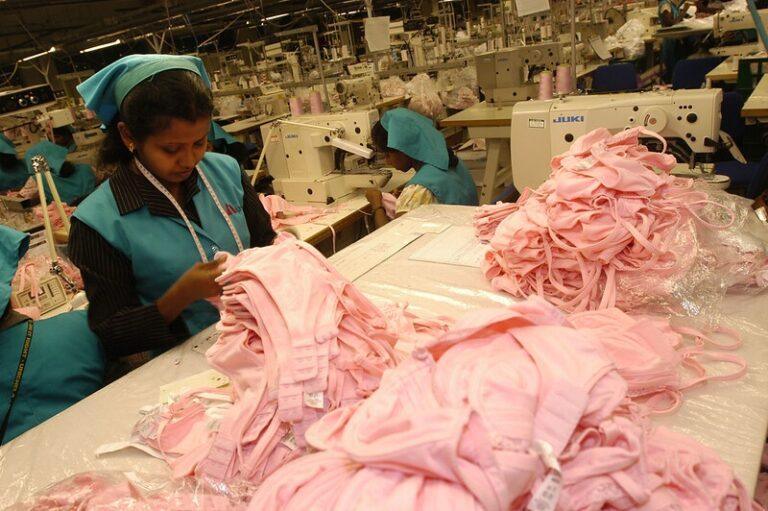
    Sri Lanka Urged to Reform Tariffs, Expand Trade Links with India Amid US Tariff Shock

    Advocata says that with the global trade landscape evolving rapidly, Sri Lanka stands at a critical crossroads. The country must choose between continued stagnation or re-engaging with the world on more competitive, transparent, and strategic terms.

    In the wake of sweeping new US trade tariffs that threaten to hit Sri Lanka’s key export sectors, the Advocata Institute, a Colombo-based economic policy think tank, has issued a strong call for urgent trade reforms in the country that is still emerging from a disastrous economic meltdown. The institute recommends eliminating complex para-tariffs, simplifying Sri Lanka’s tariff structure, and expanding regional integration – particularly with India – to enhance trade competitiveness and resilience.

    The renewed push for reform comes as former US President Donald Trump’s administration reimposes protectionist tariffs, including a 44 per cent levy specifically targeting Sri Lanka, effective April 9. The new US trade measures include a blanket 10 per cent universal duty on all imports and higher “reciprocal tariffs” for countries with significant trade surpluses with the United States. With the US accounting for nearly a quarter of Sri Lanka’s exports – 70 per cent of which are apparel – the tariff escalation could deal a heavy blow to the island nation’s struggling economy.

    Advocata sees this moment as a “wake-up call” that exposes longstanding vulnerabilities in Sri Lanka’s trade policies. “This should not merely be seen as a diplomatic setback, but as a strategic opportunity to reform our outdated and inefficient trade regime,” Advocata Institute said in its statement.

    Protectionism Comes at a Cost

    Over the past two decades, Sri Lanka has implemented increasingly protectionist policies. Para-tariffs such as the CESS and Ports and Airports Levy (PAL), combined with non-tariff barriers, import quotas, and ad hoc policy changes, have discouraged trade, increased corruption, and insulated domestic industries from global competition.

    “Protectionism has come at the cost of competitiveness,” Advocata stated. “Our exporters are struggling to meet global standards, and our economy remains heavily reliant on a narrow band of exports and markets. This makes us extremely vulnerable to shocks such as the current US tariffs.”

    According to the US Trade Representative’s findings, Sri Lanka’s high tariff rates – among the world’s highest by certain metrics – along with unpredictable customs procedures and non-transparent policy shifts, have contributed to strained trade relations. Many of these trade barriers fall outside of the World Trade Organization (WTO) norms, increasing the risk of Sri Lanka being marginalised in the global trading system.

    Time for Structural Reform

    In response, Advocata has outlined a set of urgent reforms:

    • Eliminate para-tariffs like CESS and PAL to reduce costs for businesses and signal Sri Lanka’s openness to trade.
    • Negotiate with the US on tariff relief and fairer access to its markets, especially for sensitive sectors like apparel.
    • Simplify and unify tariff structures to facilitate trade, reduce rent-seeking and corruption, and provide predictability to importers and exporters.

    The think tank emphasized that tariff rationalisation alone is not sufficient. Deeper structural reforms are needed to align Sri Lanka’s trade and industrial policies with modern global standards. These include addressing “behind-the-border” issues such as regulatory incoherence, lack of digital trade infrastructure, and limited supply chain integration.

    The India Opportunity

    Advocata also highlights the urgent need to deepen regional integration, especially with India. Although the Indo-Sri Lanka Free Trade Agreement (ISFTA), in force since 2000, provides preferential access to over 60 per cent of Sri Lankan exports, its benefits remain underutilised due to non-tariff barriers and complex rules of origin.

    “The time has come to revive and finalise the Comprehensive Economic Partnership Agreement (CEPA) with India,” the statement said, referring to a broader trade and investment framework that was negotiated over 13 rounds before stalling in 2008. CEPA would go beyond goods, encompassing services, investment, and regulatory alignment – potentially unlocking major gains for sectors like logistics, IT, and education, the think-tank said.

    With India projected to become the world’s third-largest economy by 2030 and Sri Lanka still recovering from a severe economic crisis, both countries stand to benefit from deeper economic ties. Sri Lanka could tap into India’s burgeoning middle class – expected to reach 700 million by the end of the decade – and attract investment in ports, energy, and hospitality.

    “Sri Lankan firms should not aim to compete with Indian giants, but rather participate in intra-industry trade and niche supply chains. Indian investment in Sri Lanka could enable re-export to India, while transferring skills and technology locally,” Advocata said.

    A Regional and Global Shift

    Globally, trade alliances are undergoing rapid transformation. The European Union is forging new pacts with ASEAN and Mercosur. Canada is expanding its trade footprint across Asia. And Asia-Pacific blocs like the Comprehensive and Progressive Agreement for Trans-Pacific Partnership (CPTPP) and the Regional Comprehensive Economic Partnership (RCEP) are reshaping regional commerce.

    “If Sri Lanka remains on the sidelines, it risks being left behind,” Advocata warned. “Our failure to integrate into global value chains is now being punished through punitive tariffs and declining investor confidence.”

    The Trump administration’s tariff strategy is partly motivated by domestic political considerations and US-China rivalry. However, Advocata criticised the logic behind these tariffs as “flawed,” drawing parallels with Sri Lanka’s own inward-looking policies. “The idea that trade must be balanced bilaterally is as illogical as expecting a supermarket to buy from its customers in equal measure.”

    Sri Lanka’s own import substitution policies, marketed as industrial strategy, have led to corruption, inefficiency, and misallocation of capital. “We are now paying the price for those decisions,” the institute stated.

    The Cost of Inaction

    The consequences of inaction are stark, Advocata says. Reduced export competitiveness, loss of investment, and job losses in key sectors such as apparel could deepen Sri Lanka’s economic woes. Other South and South East Asian nations – Vietnam, Bangladesh, Cambodia, and Myanmar – are also vulnerable to the ripple effects of US tariffs, but many of them have diversified export portfolios and better integration into global supply chains.

    Sri Lanka, by contrast, remains dependent on a few sectors and markets. “This narrow strategy has run its course,” Advocata concluded.

    The think tank called on the government to act decisively: “Push for CEPA with India, eliminate distortionary tariffs, and invest in trade facilitation. Only then can Sri Lanka transform this crisis into an opportunity for inclusive, export-led growth.”

    Advocata says that with the global trade landscape evolving rapidly, Sri Lanka stands at a critical crossroads. The country must choose between continued stagnation or re-engaging with the world on more competitive, transparent, and strategic terms.

    Myanmar Quake Relief Slowed by Info Blackout, Red Tape

    The Myanmar earthquake has left more than 3,000 dead and many thousands injured, yet, the humanitarian aid effort is being hampered by an information blackout. Humanitarians say that medical supplies for blood transfusions are among urgent needs.

    By Joel Adriano

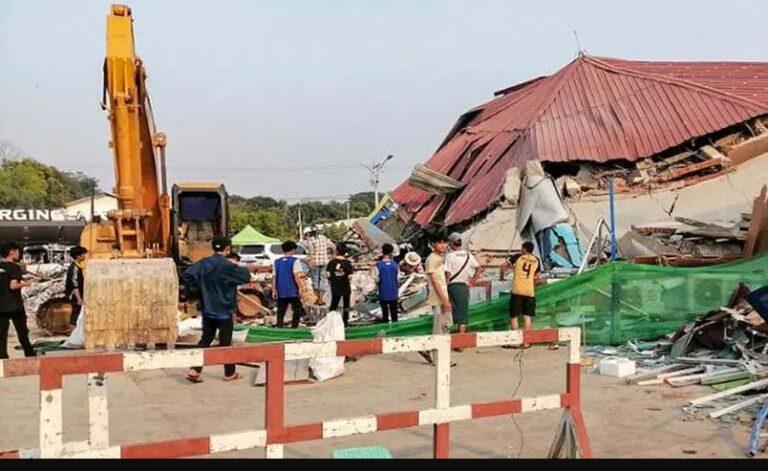
    Almost one week after a massive earthquake in Myanmar, global humanitarian aid is only slowly trickling in, hampered by violence, communication blackouts and bureaucracy, relief organisations say.

    The window for finding survivors is rapidly closing following the 7.7 magnitude quake that struck central Myanmar on Friday (28 March), reducing whole communities in the war-torn country to rubble and leaving thousands in need of medical care and vital supplies.

    On Thursday (3 April), Myanmar’s military junta confirmed over 3,000 dead and more than 4,700 injured, plus several hundred more missing as search and rescue operations continue.

    The impact was also felt hundreds of miles away in neighbouring Thailand, where an unfinished high-rise building collapsed in Bangkok.

    The epicentre was in Sagaing region, close to Myanmar’s second-largest city, Mandalay, and the capital, Naypyidaw. But the damage spans multiple states and regions, according to UN agencies.

    “The devastation is really alarming,” said Melissa Hein, head of communications for the World Food Programme in Myanmar, in an online press briefing.

    “Colleagues are reporting buildings turning to rubble, homes destroyed, significant damage to roads, bridges and other infrastructure.

    “Electricity supplies are still down. In many places communication is patchy at best. And add to this is the destruction of hospitals and the lack of clean water.”

    Communications blackout

    The true picture of the devastation remains sketchy, given the severe restrictions on media coverage and communications blackouts.

    On Sunday (30 March), the regime’s spokesman, Zaw Min Tun, said in an audio statement that foreign media would not be allowed to report on the earthquake from inside the country. At the same time, the junta also imposed restrictions on local media.

    Myanmar’s military seized power in 2021 from Aung San Suu Kyi, sparking what has turned into a civil war and a humanitarian crisis. Even before the earthquake, almost 20 million people were in need of humanitarian assistance, according to the UN.

    Since the quake, rebel groups announced a ceasefire to support relief efforts. The military had refused to do the same, but on Wednesday (2 April) announced a temporary ceasefire until 22 April.

    However, NGOs say communication blackouts and other challenges are complicating rescue efforts.

    Etienne L’Hermitte, strategic communications advisor for the medical humanitarian organisation Doctors Without Borders (Médecins Sans Frontières/MSF), said many affected areas remain hard to reach.

    “Some international and usually local responders are present, but the ability to scale up aid efforts based on the needs will depend on the facilitation of humanitarian access and the movement of essential supplies and personnel,” he told SciDev.Net.

    “Myanmar is a bureaucratic environment, and administrative procedures have to be carried out at multiple levels, adding a certain complexity to the process.”

    Three-year response

    Richard Gordon, chair of the Philippine Red Cross, described the disaster as “humongous and catastrophic”. He believes humanitarian efforts on the ground could take at least three years.

    Gordon told SciDev.Net that Myanmar had formally requested aid from members of the Association of Southeast Asian Nations (ASEAN) of which it is a member. He said they will be sending a team of doctors and nurses.

    NGOs are still awaiting an assessment to determine the damage and identify where help is needed, he said, adding that a lack of information on the ground is a major challenge.

    “There is language problem, lack of information on the terrain, area, etc.,” he said, pointing to a need for greater collaboration with countries such as Canada and the UK.

    According to another source, because of the volatility within the country, Red Cross and other humanitarian groups are getting their assessments of the situation from AI tech companies.

    The World Health Organization says hospitals are overwhelmed with the number of injured coming in. It says there is a growing shortage of food, water and medical supplies, including for blood transfusions.

    MSF is particularly concerned about those with trauma injuries, as lifesaving assistance is urgent in the initial 72 hours after a disaster.

    Paul Brockmann, MSF operations manager for Myanmar, Bangladesh and Malaysia, said: “The ability to deploy assessment teams and, ideally, surgical capacity, are critical in the first hours and days after any earthquake if we hope to respond with life and limb-saving surgical care for people injured.”

    People who rely on daily treatment to manage chronic conditions such as HIV, tuberculosis, diabetes and hypertension have become even more vulnerable due to a lack of access to shelter, health care, and medicines, says MSF.

    Julia Rees, deputy representative for UNICEF, says children are particularly at risk, with families sleeping in the open, their homes destroyed.

    “The psychological trauma of this is obviously immense,” she said.

    “For children who are already living through conflict and displacement, this disaster has added yet another layer of fear and loss.”

    Bangladesh Poised to Become World’s Top Cotton Importer Amid Geopolitical Shifts, Urged to Secure Supply Chains

    With US President Donald Trump’s tariff regime, renewed protectionist trade policies and tariff barriers are bound to return to the fore. To hedge against this possibility, Bangladesh is considering increasing its cotton imports from the United States.

    Bangladesh is set to overtake China as the world’s largest cotton importer this fiscal year, driven by rising global demand for garments and its strategic positioning in the global supply chain. While this marks a significant milestone for the South Asian nation, experts warn that Bangladesh’s deep reliance on imported cotton also exposes the country’s crucial export sector to geopolitical and economic risks.

    According to the latest forecast from the United States Department of Agriculture (USDA), Bangladesh is expected to import 7.8 million bales of raw cotton in the current fiscal year, up from 7.5 million bales the previous year. This surge places it just behind China, which is projected to import 8 million bales. However, many in the industry believe Bangladesh could surpass China this fiscal year due to its increasing demand and lower domestic production.

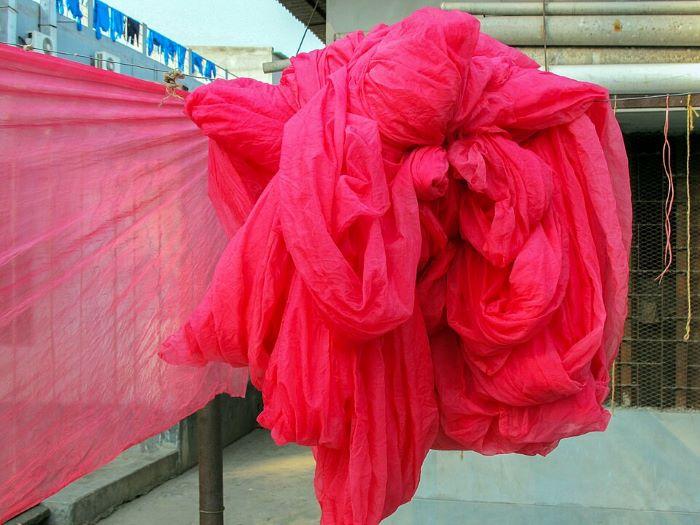
    Bangladesh’s meteoric rise as a cotton importer reflects its growing dominance in the global textile and apparel market. The country’s ready-made garment (RMG) sector – the second-largest in the world after China – accounts for over 86 per cent of national export earnings and forms the backbone of its economy. Cotton is the primary raw material in this sector, comprising 71 per cent of all fibre used in textile production, according to data from the Bangladesh Textile Mills Association (BTMA).

    Reliance on Imports to Meet Growing Demand

    Despite the scale of the sector, Bangladesh’s domestic cotton production is negligible compared to its consumption. In 2025, the Cotton Development Board projects domestic output to reach only 228,000 bales, harvested from 46,000 hectares of land. This is a modest increase from last year’s 210,000 bales.

    By contrast, national demand stands at approximately 8.5 million bales annually, leaving a staggering shortfall of around 8.3 million bales that can be met through imports alone. The financial burden is immense: Bangladesh spends an estimated Tk35,000 crore every year on cotton imports.

    “Our spinning mills depend almost entirely on foreign cotton,” said Dr Md Fakhre Alam Ibne Tabib, Executive Director of the Cotton Development Board. “Without reliable international sources, the entire textile industry could face major disruptions.”

    Risks from Geopolitics and Supply Chain Shocks

    With about 50 per cent of its cotton currently sourced from African countries, Bangladesh’s supply chain is vulnerable to the increasing instability across parts of Africa due to conflicts and political crises.

    Muhammad Ayub, General Secretary of the Bangladesh Cotton Association, warned that “war and other crises are increasing in African countries, which could severely impact our ability to import cotton on time.” He stressed the need to diversify sourcing and pursue high-yield domestic cotton production to reduce dependency.

    Another risk is the evolving global trade environment. With US President Donald Trump’s tariff regime, renewed protectionist trade policies and tariff barriers are bound to return to the fore. To hedge against this possibility, Bangladesh is considering increasing its cotton imports from the United States.

    Foreign Affairs Adviser Md Touhid Hossain highlighted this potential pivot, saying, “We are considering importing cotton from the US, to minimise the trade gap with the country and encourage the US agriculture production.” He added that higher cotton imports from the US would strengthen bilateral trade ties and potentially shield Bangladesh from tariff threats under a Trump administration.

    “The US government will hesitate to impose tariffs on goods made in Bangladesh while we import more cotton from them,” he noted during a recent discussion.

    Push for Strategic Adjustments

    Recognising the strategic importance of maintaining an uninterrupted cotton supply, policymakers and industry stakeholders are calling for concrete actions.

    Showkat Aziz Russell, President of the BTMA, said, “Our factories are still facing production issues due to the ongoing gas crisis, but we’re working to reduce dependence on imported yarn by promoting domestic yarn production.” Russell also welcomed the recent decision to suspend Indian yarn imports through land ports, citing the need to protect local mills from low-quality competition.

    “Bangladeshi textiles are producing world-class yarn, which is best for good quality fabrics,” he said. “Stopping low-quality yarn through land ports was a threat to domestic textiles and our global competitiveness.”

    Russell argued that as Bangladesh leads in cotton-based manufacturing, becoming the world’s top cotton importer is a natural outcome. However, he cautioned that such a title also requires a stable and diversified sourcing strategy to prevent supply chain bottlenecks.

    Trends in Cotton Consumption and Export Performance

    The USDA’s Foreign Agricultural Service also highlighted other factors contributing to increased cotton demand. Notably, the country’s RMG exports surged 13.2 percent year-on-year in the first two months of 2024, reaching $9.47 billion. With the global economy recovering, Bangladesh’s apparel industry is projecting a 7–10 percent rise in exports for the entire year.

    This robust performance is encouraging many garment manufacturers to rely more on their own spinning mills, reducing yarn and fabric imports and increasing raw cotton use instead. Additionally, some firms are using their export earnings – usually in US dollars – to finance direct cotton imports, helping bypass forex constraints and avoid expensive intermediary purchases.

    According to the USDA, Bangladesh imported 4.1 million bales of cotton in the first seven months of the ongoing marketing year (MY2024), and full-year imports are expected to hit 7.5 to 8 million bales. Domestic consumption is estimated at 7.8 million bales, and further increases are likely if global demand holds strong.

    Looking Ahead: Building a Resilient Cotton Ecosystem

    Experts agree that while becoming the world’s top cotton importer reflects the strength of Bangladesh’s textile sector, it also underscores the urgent need to secure the supply chain through strategic planning and policy support.

    “We must diversify sources, invest in domestic cotton research, and look to reliable partners like the US,” said Ayub. “Only then can we shield ourselves from the shocks of war, trade restrictions, or price volatility.”

    Meanwhile, Dr Tabib of the Cotton Development Board advocates for high-yield cotton varieties and expanded cultivation, saying, “Even a modest increase in domestic production would reduce our import burden and add resilience.”

    The stakes are high. With over US$22 billion invested in the textile and clothing industry and its significant 13 percent contribution to GDP, any disruption to the cotton supply chain could have ripple effects across the economy.

    As Ayub said, “For Bangladesh, the challenge now is not just importing more cotton—but importing smarter, diversifying sources, and gradually reducing dependency through sustainable domestic initiatives.”Image: Wikimedia