More

    South Asia’s Resilient Economic Outlook Amid Global Uncertainty

    India remains the key growth engine, with an anticipated GDP growth of 6.6 per cent in 2025. The country’s robust services sector, resilient private consumption, and ongoing infrastructure investments are expected to sustain its upward trajectory.

    Global economic growth is projected to remain at 2.8 per cent in 2025, unchanged from the previous year, according to the United Nations’ flagship report, World Economic Situation and Prospects (WESP) 2025, released last week. While global growth lags behind pre-pandemic levels, the report highlights South Asia as a standout region with robust economic prospects despite lingering global uncertainties.

    The report, released by the UN Department of Economic and Social Affairs (DESA), projects South Asia’s regional GDP growth at 5.7 per cent in 2025, slightly lower than the 5.9 per cent forecasted for 2024. This performance is driven by strong economic activity in India, alongside recoveries in Pakistan, Bhutan, Nepal, and Sri Lanka.

    “South Asia’s economic outlook remains robust, with regional GDP anticipated to grow by 5.7 per cent in 2025, compared to 5.9 per cent in 2024, supported by strong performance in India and recovery in Pakistan, Bhutan, Nepal and Sri Lanka,” the report produced by DESA said.

    However, it warned that risks to the outlook are tilted to the downside owing to deceleration in external demand, ongoing debt challenges, and social un-rests.

    India remains the key growth engine, with an anticipated GDP growth of 6.6 per cent in 2025. The country’s robust services sector, resilient private consumption, and ongoing infrastructure investments are expected to sustain its upward trajectory. Meanwhile, Pakistan and Sri Lanka, both of which have faced significant economic and debt challenges, are poised for moderate recovery once their financial crises are resolved. Bhutan and Nepal also show signs of economic stabilization, supported by improvements in trade and tourism.

    Hamid Rashid, Chief of the Global Economic Monitoring Branch at DESA, underscored the importance of addressing debt issues in Pakistan and Sri Lanka. “Once these challenges are resolved, their economies have significant potential for growth,” he stated.

    Challenges and Risks

    Despite its robust outlook, South Asia faces several downside risks. The report highlights deceleration in external demand, geopolitical tensions, and trade disputes as potential threats to growth. Additionally, climate change poses severe risks, with the potential to exacerbate inflationary pressures and threaten food security across the region.

    Persistent food inflation remains a critical concern, affecting nearly half of developing countries globally. For South Asia, this issue is compounded by extreme weather events and vulnerabilities in agricultural supply chains. The report warns that sustained food inflation could push millions further into poverty, undermining progress towards achieving Sustainable Development Goals (SDGs).

    “Looming risks ahead East and South Asia face mounting downside risks that could dampen economic prospects. Key risks and challenges include escalating geopolitical tensions, trade disputes, and the impact of climate change, which could reignite inflationary pressures and pose severe risks to food security.”

    Global Economic Context

    The global economic landscape continues to grapple with stagnation, with growth remaining below the pre-pandemic average of 3.2 per cent. Weak investment, sluggish productivity, and high debt levels have constrained recovery, while geopolitical conflicts and trade tensions exacerbate uncertainties.

    Despite these challenges, the report projects a modest boost to global activity in 2025 due to easing inflation and monetary policy adjustments in major economies. Inflation is expected to decline to 3.4 per cent globally, providing some relief to businesses and households. However, many developing nations, including those in South Asia, will continue to face double-digit inflation rates and high debt-servicing burdens, limiting their fiscal space for development investments.

    Trade and Services: A Bright Spot

    Global trade is forecast to expand by 3.2 per cent in 2025, driven by strong exports from Asia and a rebound in services trade. South Asia’s export performance, particularly in services and select manufactured goods, is expected to bolster regional growth. The report emphasizes the importance of maintaining competitive export industries to sustain economic momentum.

    Critical Minerals: Opportunities and Risks

    The report’s thematic focus on critical minerals highlights the dual opportunities and challenges for developing countries. Minerals such as lithium, cobalt, and rare earth elements are crucial for the global energy transition, offering significant potential for resource-rich countries to generate revenue, create jobs, and accelerate sustainable development.

    For South Asia, the exploitation of critical minerals could provide an avenue for economic diversification. However, the report warns of associated risks, including poor governance, environmental degradation, and unsafe labor practices. DESA Chief Li Junhua emphasized the need for comprehensive policies to ensure sustainable extraction and equitable benefit-sharing.

    “Critical minerals have immense potential to accelerate sustainable development, but only if managed responsibly,” Li stated. Governments are urged to adopt forward-looking strategies that prioritize environmental sustainability and socio-economic equity.

    Policy Recommendations for Sustainable Growth

    To sustain growth and address underlying vulnerabilities, the report calls for bold multilateral action and prudent policymaking. Key recommendations include:

    1. Debt Resolution: For countries like Pakistan and Sri Lanka, resolving debt crises is paramount to unlocking growth potential. International financial institutions must play a proactive role in restructuring debt and providing concessional financing.
    2. Investment in Clean Energy and Infrastructure: Governments should leverage fiscal space created by monetary easing to prioritize investments in renewable energy, infrastructure, and critical social sectors such as health and education.
    3. Climate Resilience: With climate change posing significant risks to food security and livelihoods, the report underscores the need for adaptive measures. Strengthening agricultural supply chains, promoting sustainable farming practices, and investing in disaster-resilient infrastructure are crucial for mitigating climate-related challenges.
    4. Strengthening Regional Cooperation: Enhanced cooperation among South Asian nations can help address shared challenges such as trade barriers, energy security, and climate resilience. Regional trade agreements and collaborative infrastructure projects can foster economic integration and shared prosperity.
    5. Harnessing Critical Minerals Responsibly: Policymakers must establish robust regulatory frameworks to manage the extraction and trade of critical minerals. This includes implementing sustainability standards, ensuring fair labour practices, and promoting value addition within domestic economies.

    Global Call to Action

    UN Secretary-General Antonio Guterres, in his foreword to the report, emphasized the interconnected nature of global challenges and the need for collective action. “In our interconnected economy, shocks on one side of the world push up prices on the other. Every country is affected and must be part of the solution,” he stated.

    Guterres called for decisive measures to tackle debt, inequality, and climate change, urging countries to build on progress made and deliver sustainable solutions. “Together, let’s make 2025 the year we put the world on track for a prosperous, sustainable future for all,” he added.

    South Asia’s economic resilience offers a beacon of hope in an otherwise subdued global environment. With prudent policies and enhanced regional cooperation, the region can navigate its challenges and capitalize on emerging opportunities.

    However, addressing underlying vulnerabilities, from debt crises to climate risks, remains critical to ensuring inclusive and sustainable growth. The WESP 2025 report serves as a clarion call for governments and international stakeholders to adopt bold and coordinated actions to tackle pressing global and regional challenges.

    As South Asia strides forward, its success will hinge on balancing economic dynamism with sustainable development imperatives, offering lessons and inspiration for the broader global community.
    Erratic Sales and Government Apathy Hurt Telangana Weavers

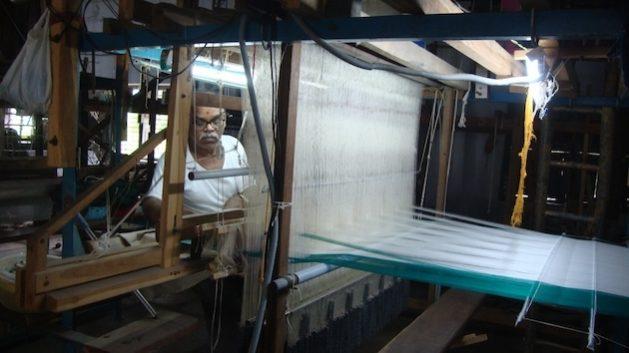
    The Telangana government does not subsidise electricity; this has resulted in the Siddipet weavers continuing to use handlooms instead of switching to powerlooms, making their work even more tedious and hard.

    By Rina Mukherji

    The southern Indian state of Telangana has always been home to exquisite cotton and silk weaves. But in recent years, lack of market access, expensive inputs, and government apathy have taken their toll on the weaving community. As a result, the younger generation is refraining from pursuing this traditional occupation and opting for more lucrative pursuits.

    This is evident when one visits the weaving towns of the state. Take Siddipet, which is about 100 km from the metropolitan city of Hyderabad. Siddipet has always been known for its exquisite cotton saris and stoles. But today, only about a hundred wizened individuals, spread over seven handloom cooperatives, still weave.

    Srivikailasam is a renowned middle-aged weaver who was honoured by the Chief Minister with the Konda Laxman Bapuji Award. His saris, dupattas and stoles are prized items in the export market. Yet none of his children—a son and two daughters—want to inherit his craft.

    Another weaver, known as Ilaiyah, has been weaving for the past 60 years, since he turned 15. Yet his children have turned their backs to weaving.

    Yadagiri has also been weaving for the past 60 years, like his fellow weavers. But neither his son nor daughter are interested in learning to weave.

    Master weaver Mallikarjun Siddi, who also owns a marketing outlet in Siddipet, followed his father, renowned weaver Buchaiah Siddi, into the profession. But his children have opted out of this traditional occupation.

    Low Returns

    However, Siddi defends the youngsters.

    “Why would youngsters want to adopt a profession that pays so little? A weaver earns Rs 1000 (USD 11.82) a day here, and it takes three full days to weave a sari. A job in the IT hub of HiTech City in Hyderabad fetches a lot more.”

    Worse, the Telangana government does not subsidise electricity; this has resulted in the Siddipet weavers continuing to use handlooms instead of switching to powerlooms, making their work even more tedious and hard. Electricity is Rs 10 (USD 0.12) a unit. If subsidized, the cost comes down to Rs 1 (US$ 0.012) per unit. Power loom machinery is expensive, ranging from Rs 1.5 lakh to 6 lakh (USD 1773.5 to USD 7101). With electricity subsidy, a weaver can bear the burden. Otherwise, it is not possible. Hence, even today, you see only handlooms here,” explains Siddi.

    Marketing the product is also tough. The government buys the product at higher rates but does so lackadaisically. “Their representatives come only once a year, and although the payment is higher, it is not immediate. Private parties come regularly, and often, pay immediately,” say weavers.

    The story is hardly any different in Pochampally, world-renowned for its ikat silk weaves. Ikat here can be either single ikat or double ikat, with the second being even more expensive. The yarn has to be initially soaked and then dyed before weaving. Since ikat weaves require every thread of the yarn to be dyed separately, a power loom can never be used. Thus, ikat weaves, whether cotton or silk, must be woven on a handloom, as master weaver Laxman Tadaka points out. The silk yarn comes from Bengaluru and is priced at Rs 4500 (USD 53.20) per kilogram. A weaver needs an average of 6 kg of yarn to weave seven saris a month. To bear the cost of inputs and the effort, a weaver must make enough sales. “The 15 per cent subsidy extended by the government can hardly suffice,” Tadaka points out.

    Dependent on Subsidies

    Rudra Anjanelu, manager of the Pochampally Handloom Weavers Cooperative Society, says they are dependent on subsidies.

    “Our silk saris are expensive. But we cannot afford to give discounts unless the government supports us. A major problem is the 5 percent Goods and Services Tax (GST) that has now been imposed by the central government. It makes saris and other silk products even more expensive.”

    In the past, the state government used to render marketing support through its outlets, offering the products to customers at discounted prices, especially during the festive season, while subsidizing weavers. This is not forthcoming anymore, making it tough for weavers.

    Most weavers have to rely on the Telangana State Handloom Weavers Cooperative Society Limited (TSCO), their apex cooperative, to sell their product.

    “We had suggested a method to jack up our sales. The Telangana government has a Kalyanalakshmi scheme, wherein parents of girls are given Rs 1 lakh (USD 1182.32) for their daughter’s wedding. Along with the money, the government could easily provide a sari worth Rs 10,000 (USD 118.23) for the bride. This will help us weavers too, while helping the parents with the bridal trousseau,” Anjanelu says.

    Besides, most weavers are not happy with the quality of the subsidised yarn provided by the government through the National Handloom Development Corporation.

    Muralikrishnan, a weaver from Koyalaguddem, a village renowned for its cotton ikat, laments, “The yarn provided by the government is of inferior quality and this, in turn, can affect the quality of our end product. It is unlike what we get from private traders.”

    Moreover, as Anjanelu points out, “Yarn has to be paid for. When sales are down, how can weavers buy any yarn?”

    Printed Duplicates

    A big challenge for handloom weavers remains the flooding of markets by printed duplicates, which sell at a fraction of the price of handloom fabric.

    On hindsight, though, it is not as if nothing was done for weavers by the Telangana government. However, if weavers have not experienced long-term benefits, could this be attributed to the outcome of the ballot?

    The previous Chandrashekhar Reddy (state) government, for instance, introduced a 36-month savings-cum-insurance scheme for weavers termed the Thrift Scheme, wherein the government contributed an amount matching the investment made by an individual.

    In Pochampally, land was also sanctioned for a handloom institute, and a handloom park was set up on the outskirts of the town. However, with a new Chief Minister getting elected, the plans came to naught. The Handloom Park too suffered from bad planning. Weavers who had set up shop at the park now have to market their products from their homes.

    It is ironical that the weavers of Pochampally, Koyalaguddem and Siddipet find it tough to sell their exquisite weaves, despite being located in the vicinity of metropolitan Hyderabad, which boasts of an upwardly mobile population with high disposable income.

    Notwithstanding the problems faced, there are a few who have found a solution. Dudyala Shankar and Muralikrishnan of Koyalaguddem have diversified their range of products to include ikat fabric and bedsheets, alongside traditional saris, dupattas, and stoles. Muralikrishnan has been accessing markets all over India through the internet, from his dusty little village.

    “It is the only way out,” he tells me.

    Indeed, the World Wide Web can certainly fill in where humans cannot. Product diversification and market access translating into sales may ultimately wean back the younger generation to keep the weaving tradition alive in Telangana and prevent it from dying out.

    Private Forces Pose Public Risks for China–Myanmar Stability

    The establishment of a China–Myanmar joint security company highlights China’s focus on protecting investments amid Myanmar’s instability. Despite anti-junta resistance, Chinese projects face risks, including attacks by junta-backed groups.

    The formation of a joint venture security company has generated significant debate concerning the expanding role of Chinese security entities in Myanmar. Myanmar’s military junta agreed to establish a committee to facilitate the company’s establishment on 22 October 2024, comprising senior officials from various ministries. This initiative highlights China’s strategic focus on securing its investments in Myanmar amid growing instability.

    The committee’s mandate includes oversight of imported items such as weapons, equipment and communication devices. This move coincides with China’s broader strategy to manage its proxy armies and align their operations with the goal of stabilising relations with the Myanmar junta, potentially curbing their activities against the junta. It also reflects century-long practices of ‘frontier governance’ since imperial China.

    Chinese investments in Myanmar face heightened risk due to the ongoing civil conflict. Since the initiation of ‘Operation 1027’ in October 2023 and as at 24 December 2024, 23 out of 34 Chinese projects — particularly in Rakhine, northern Shan State and the central lowlands — have fallen under the control of anti-junta forces. Despite these challenges, the Three Brotherhood Alliance and even the National Unity Government of Myanmar-affiliated People’s Defence Force have not directly targeted Chinese projects. But the junta-backed militia, Pyusawhti, allegedly attacked the Chinese Consulate in junta-controlled Mandalay on 18 October 2024 — the second such incident in 70 years of diplomatic relations.

    Senior Chinese diplomatic officials have consistently pressured Myanmar’s leadership to ensure the safety of Chinese investments and citizens. But the newly proposed joint venture security company has the potential to shift the status quo by incorporating armed personnel into existing, unarmed private security arrangements — a development that could provoke both diplomatic and local tensions.

    Non-State Security Actors

    The establishment of this company may also be linked to recent visits by influential figures, including China’s envoys to Than Shwe — junta chief Min Aung Hlaing’s mentor — and former president Thein Sein’s visit to China in June 2024. These interactions suggest a recalibration of Myanmar’s approach to Chinese involvement, despite Min Aung Hlaing’s known anti-China stance.

    China’s strategy in Myanmar is adapting to current conditions by broadening its network of engagements with non-state security actors. While the establishment of this joint venture reflects efforts to secure relations with the junta, it is likely just one element of a broader strategy to broker arrangements with a wider array of actors ranging from ethnic armed organisations to private militias.

    The deployment of armed Chinese security forces in Myanmar presents significant legal and political challenges. Myanmar’s 2008 constitution explicitly prohibits the stationing of foreign troops on its soil, reflecting its ‘non-aligned’ foreign policy and the military’s self-declared role as the guardian of ‘national sovereignty’. To navigate this restriction, junta leader Min Aung Hlaing appears to be planning for such personnel to be classified as a private security firm, enabling their operations while avoiding constitutional violations. These forces are ostensibly tasked with protecting Chinese interests, effectively operating as proxies for the People’s Liberation Army.

    Should disputes arise, this framework allows the Chinese government to maintain plausible deniability regarding direct involvement in Myanmar’s internal affairs. By presenting the forces as independent entities, China minimises perceptions of governmental influence, mitigating potential backlash.

    The 771-kilometer Myanmar–China oil and gas pipelines and other strategic engineering projects epitomise the stakes involved in this evolving security landscape. Chinese security forces stationed along the pipeline’s route could encounter resistance from revolutionary forces, further complicating operational dynamics.

    Delicate Balancing Act

    China’s security footprint in Myanmar also carries broader regional implications. The proximity of Chinese security personnel to India’s delayed Kaladan Multi-Modal Transit Transport Project is likely to amplify strategic concerns in New Delhi. Similarly, neighbouring nations such as Bangladesh and Thailand may view China’s expanded presence as a potential threat to their own security interests.

    These anxieties are further mirrored in the discourse surrounding China’s Global Security Initiative, which Myanmar’s junta has endorsed. A 2023 survey indicated that 74 per cent of Myanmar’s policy community was unaware of the Index, and 67 per cent believed that it disproportionately benefits the junta. Ethnic armed groups and civil society actors remain sceptical of the initiative’s broader implications.

    The introduction of Chinese private security forces into Myanmar further risks entangling Beijing more deeply in the country’s protracted civil conflict. Comparisons to security challenges along the China–Pakistan Economic Corridor exemplify the vulnerability of Chinese personnel to becoming targets in retaliation, potentially triggering diplomatic crises and undermining China’s broader regional ambitions.

    As revolutionary groups maintain control over numerous Chinese project sites, the efficacy of private security forces remains uncertain. Persuading revolutionary groups to permit the resumption of Chinese projects without resistance poses a formidable challenge. The potential for increased collaboration between Chinese and Myanmar armed forces under the Global Security Initiative framework also raises concerns about the militarisation of economic corridors, with implications for regional stability.

    China’s strategic calculus in Myanmar reflects a delicate balancing act. While safeguarding investments aligns with Beijing’s Belt and Road Initiative objectives, overreach risks fuelling resentment and triggering regional pushback. The possibility of escalating violence involving Chinese nationals underscores the precarious nature of this joint venture security project, necessitating careful evaluation of its long-term consequences.

    Sike Chan is a Research Consultant at the New Rehmonnya Federated Force. He has expertise in international development and political science, and his work focuses on China–Myanmar relations, conflict and security.

    This piece has been sourced from East Asia Forum.

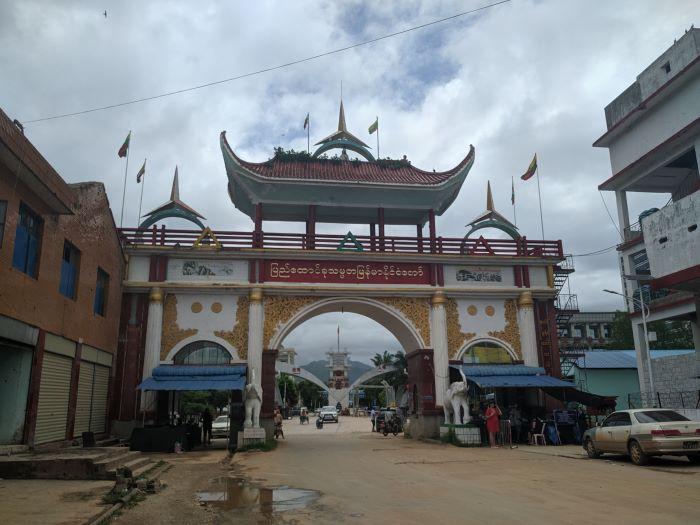
    Image from Wikimedia: Myanmar-China Border Yanlonkyine Gate, near Laukkaing

    India: Protests Erupt Over Hazardous Waste Disposal of Bhopal Gas Tragedy

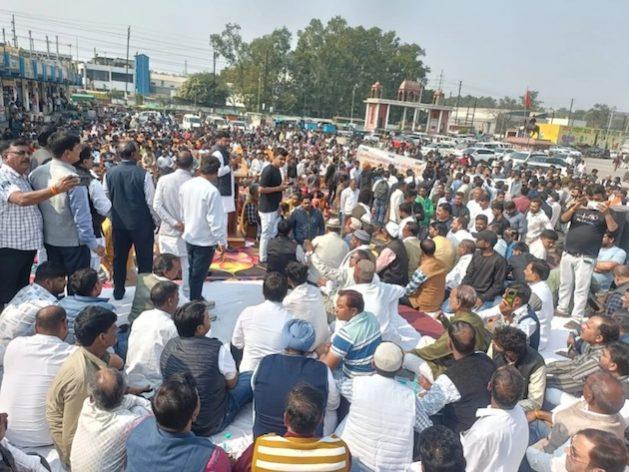
    The protests have erupted over the hazardous waste disposal from the area where the Bhopal gas tragedy took place. The local community of Pithampur says the incineration of Bhopal gas tragedy waste is unsafe for their health and environment.

    By Shuriah Niazi

    An eerie calm prevails over Pithampur, a town 250 km (155 miles) away from Bhopal, the capital of the central Indian state of Madhya Pradesh. This town witnessed widespread protests for three days last week following the transportation of large quantities of toxic waste from the site of one of the world’s worst industrial disasters in Bhopal.

    On Wednesday, December 1, about 337 metric tonnes of toxic waste were transported to Pithampur in 12 containers amid tight security from Bhopal. This hazardous waste originated from the now-defunct Union Carbide Factory in Bhopal, where it had been stored for the past 40 years. The site is infamous for the tragic gas leak that occurred on the night of December 2-3, 1984, which resulted in the instant deaths of 3,500 people and thousands of others over the years.

    The toxic waste from Bhopal was intended to be incinerated at Ramky Enviro Industries; however, protests escalated last week and two people even attempted self-immolation. Both are currently hospitalized. In response, the government halted the incineration process.

    On Monday, the Madhya Pradesh High Court gave a six-month deadline to the government to dispose of the waste. The government told the court that it would first work to gain the trust of the residents of Pithampur and the surrounding areas before proceeding with the incineration.

    In 2015, the Supreme Court had ordered a trial for the disposal of 10 metric tonnes of waste. Following this, incineration was carried out at Ramky Enviro Engineers. However, residents in the vicinity have reported concerns about negative impacts on their health and the local environment.

    Crop Yield Declines

    A resident from Silotiya village, situated near the factory, complained about the impact on farming.

    “Earlier, this area used to produce excellent crops, but after the trial was conducted here 10 years ago and the waste was spread, our farming has suffered greatly,” Nageshwar Chaudhary told IPS. “The water in the entire region has become contaminated, and people are experiencing poor crop yields. This is why the community protested when the decision to incinerate the waste was made and the toxic waste reached here to be burnt.”

    Chaudhary further said that the administration had assured locals before the trial runs in 2015 that there would be no adverse effects.

    “But now the lands have become so infertile that even if we wish to sell them, no one is ready to buy,” Chaudhary claimed.

    Atma Raghuvanshi from Bagdari, another village close to the Ramky Enviro Industries, said that the factory’s waste has led to the contamination of water and it is a major problem.

    “People are selling their land and moving away. We’re not receiving fair prices for our land due to the pollution. The pollution has worsened because of the poisonous waste,” said Raghuvanshi.

    Officials Attempt to Allay People’s Apprehension

    On the other hand, the officials maintain that the incineration of toxic waste will not cause any harm.

    “The disposal of this waste will not harm anyone. In 2015, we conducted a trial run where 10 tonnes of waste were incinerated, and the results were positive. Therefore, it would be wrong to claim that it will cause harm,” Swatantra Kumar Singh, Director of the Bhopal Gas Tragedy Relief and Rehabilitation Department, said.

    Singh also emphasized that the waste will continue to be disposed of in an environmentally safe manner.

    The administration has said that special precautions were taken during the transportation of toxic waste from Bhopal and the contaminated soil from the storage area has also been brought to Pithampur.

    Over 50 workers equipped with personal protective equipment (PPE) were assigned to load the waste into the containers, with teams rotating every 30 minutes.

    Based on a trial run conducted in 2015, it was determined that 90 kg of waste can be incinerated per hour. At that rate, the incineration of 337 tonnes of waste could take more than five months.

    “The waste from Union Carbide was transported to Pithampur following the highest safety protocols in the movement and transport of industrial waste in the country,” Singh remarked.

    Various Organisations ‘Involved’ in Disposal Process

    Regarding the removal of toxic waste, Madhya Pradesh Chief Minister Mohan Yadav informed reporters that various Government of India organizations are involved in the disposal process.

    “For the past 40 years, the people of Bhopal have been living with this waste. The transportation of this toxic waste has not impacted the environment in any way. The entire process was carried out safely. We also aim to ensure that this issue remains free from political controversy,” added Yadav.

    The Supreme Court had mandated the removal of toxic waste in 2014, and recently, in December last year, the Madhya Pradesh High Court directed the state government to complete the removal within four weeks. Now it has issued a six-month deadline to dispose of the waste.

    In August 2004, Alok Pratap Singh, a Bhopal resident, filed a petition in the Madhya Pradesh High Court requesting the removal of toxic waste from the Union Carbide premises. He also sought compensation for the environmental damage caused. Alok Pratap Singh has since passed away.

    Only a Symbolic Gesture: Activist

    Rachna Dhingra, from the International Campaign for Justice in Bhopal, has expressed concerns that the waste transported to Pithampur represents only a small fraction of the total 1.1 million metric tonnes of toxic waste.

    Dhingra slammed the government’s action as a mere “symbolic gesture” rather than a meaningful step toward addressing the larger issue.

    In 2010, under the directive of the High Court, the Madhya Pradesh government commissioned the National Environmental Engineering Institute (NEERI) from Nagpur and the National Geophysical Research Institute (NGRI) from Hyderabad to study the issue of toxic waste and its associated pollution.

    The NEERI report revealed the presence of hazardous chemicals such as aldicarb, carbaryl, A-naphthol, dichlorobenzene, and mercury in the soil of the affected area. It also indicated that approximately 1.1 million metric tonnes of contaminated soil remained, which has adversely affected the health of people living around the closed Union Carbide factory in Bhopal and damaged the environment over the years.

    “The quantity of waste that the government has moved from Bhopal to Pithampur constitutes less than one percent of the total hazardous waste,” Dhingra said.

    According to her, the NEERI report said there are numerous dumping and landfill sites surrounding the Union Carbide factory where waste was irresponsibly disposed of.

    Dhingra emphasized that hazardous substances from these chemical waste ponds have infiltrated the ground, contaminating local water sources and soil. She urged the government to address this ongoing issue, warning that neglecting it will perpetuate suffering among the community.

    This piece has been sourced from Inter Press Service

    Yesterday’s Garbage Dumps in Prayagraj are Lush Forests Today

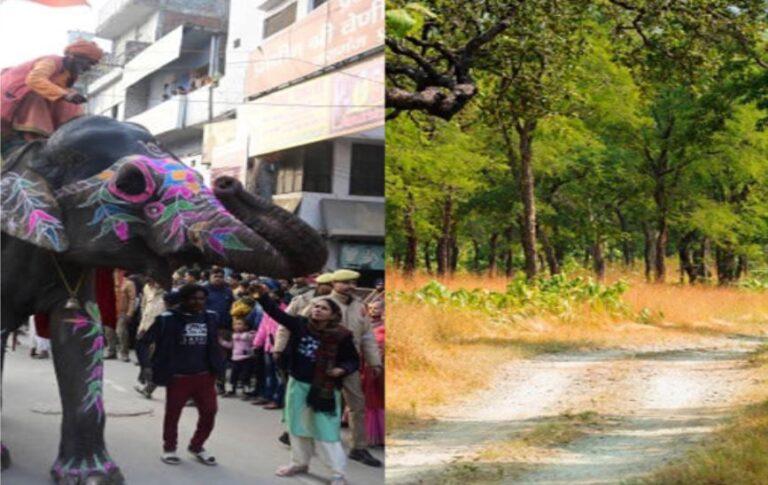
    Around 56,000 sq. meters of dense forests have been created in Prayagraj in the last two years using the Miyawaki technique. The area was a garbage dump. It has been transformed into a lush green forests, aiding environmental conservation.

    In an ambitious initiative to enhance environmental conservation and prepare for the grand Mahakumbh 2025, Prayagraj has turned approximately 56,000 square meters of barren and polluted land into dense forests. Employing the Japanese Miyawaki technique, the Prayagraj Municipal Corporation has established lush green oxygen banks across the city, significantly improving air quality and biodiversity.

    The Commissioner of the Prayagraj Municipal Corporation, Chandra Mohan Garg, highlighted the success of the project, stating that dense forests have been created at over 10 locations in the city over the past two years. “The largest plantation, encompassing around 1.2 lakh trees from 63 species, has been established in the Naini industrial area. Additionally, 27,000 trees from 27 species were planted in Baswar, reclaiming the city’s largest garbage dumping yard,” he said. This transformation has not only addressed issues of industrial waste but has also helped reduce dust, dirt, and foul odours, making the environment cleaner and healthier.

    The Miyawaki forests bring numerous benefits, including reducing air and water pollution, preventing soil erosion, and fostering biodiversity. According to Dr. N.B. Singh, former Botany professor at Allahabad Central University, these dense forests grow rapidly and offer significant environmental advantages. “They can reduce the temperature difference between day and night during summers and lower overall temperatures by 4 to 7 degrees Celsius. Additionally, these forests improve soil fertility, create habitats for various species, and serve as crucial biodiversity hotspots,” Dr. Singh explained.

    Diverse Plantation for Sustainable Growth

    The project has incorporated a wide variety of tree species to ensure long-term ecological benefits. Key species include fruit-bearing trees like mango, tamarind, and amla, along with medicinal plants such as tulsi and brahmi. Ornamental species like gulmohar, hibiscus, and bougainvillea add aesthetic value, while sturdy trees like neem, teak, mahogany, and arjuna contribute to structural diversity. Other species planted include peepal, bamboo, kadamba, lemon, and drumstick (sahjan), ensuring a rich mix of native flora.

    The use of native species under the Miyawaki technique accelerates forest growth, with trees growing ten times faster than in conventional methods. This approach mimics natural forest ecosystems by planting saplings densely and allowing them to grow interdependently. The result is a self-sustaining forest that absorbs more carbon and supports a thriving ecosystem.

    Revitalising Urban Spaces

    One of the most remarkable achievements of the project is the transformation of Baswar’s garbage dumping yard into a green haven. The site, once notorious for its industrial waste and overpowering stench, is now home to thriving forests. This effort has also mitigated the environmental hazards associated with the dumping yard, improving air and soil quality while curbing pollution.

    The Miyawaki technique has proven to be a game-changer for urban areas like Prayagraj, where land is scarce, and pollution levels are high. By converting degraded lands into green spaces, the city has taken a significant step towards achieving environmental sustainability and ecological balance.

    Understanding the Miyawaki Technique

    Pioneered by Japanese botanist Akira Miyawaki in the 1970s, this technique involves planting a mix of native trees and shrubs close to one another. The dense plantation accelerates growth, with trees maturing 10 times faster than traditional methods. The technique also improves soil quality and biodiversity, making it ideal for urban afforestation projects.

    The Miyawaki method has been used worldwide to restore degraded ecosystems, combat industrial pollution, and create green belts in urban areas. By fostering rapid growth, these forests become self-sustaining within a few years, offering long-term ecological benefits. In Prayagraj, this innovative approach has not only addressed the pressing issue of pollution but also set a precedent for urban afforestation projects in other cities.

    Towards a Greener Mahakumbh 2025

    As the city prepares to host millions of devotees for Mahakumbh 2025, the development of these dense forests ensures cleaner air and a healthier environment. The project aligns with the broader goals of environmental restoration and urban sustainability, making Prayagraj a model for ecological innovation.

    By transforming garbage dumps into green sanctuaries, Prayagraj has shown how urban spaces can embrace nature to tackle pressing environmental challenges. The Miyawaki forests stand as a testament to the city’s commitment to a greener and more sustainable future.

    In Landmark Dubai Meeting, India Pledges Support for Afghan Refugees

    For Afghanistan, India’s support represents a vital lifeline as it navigates complex domestic and regional challenges. The agreement to promote trade, enhance humanitarian aid, and address shared security concerns lays the groundwork for a more cooperative relationship.

    In a significant diplomatic development, India has pledged to provide “material support” for the rehabilitation of returning Afghan refugees. The announcement came during a high-level meeting in Dubai on Wednesday, marking the first formal engagement between India and the Taliban-led interim government since the latter’s return to power in August 2021.

    Indian Foreign Secretary Vikram Misri met with Afghanistan’s acting Foreign Minister Mawlawi Amir Khan Muttaqi to discuss bilateral ties, humanitarian aid, and regional cooperation. The meeting underscores India’s renewed commitment to addressing Afghanistan’s pressing challenges amidst ongoing geopolitical complexities.

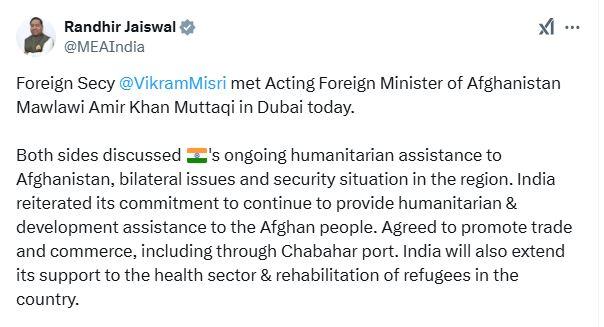
    Randhir Jaiswal, spokesperson of the Indian ministry of external affairs tweeted:

    Foreign Secy @VikramMisri met Acting Foreign Minister of Afghanistan Mawlawi Amir Khan Muttaqi in Dubai today. Both sides discussed India’s ongoing humanitarian assistance to Afghanistan, bilateral issues and security situation in the region. India reiterated its commitment to continue to provide humanitarian & development assistance to the Afghan people. Agreed to promote trade and commerce, including through Chabahar port. India will also extend its support to the health sector and rehabilitation of refugees in the country.

    Addressing Refugee Rehabilitation

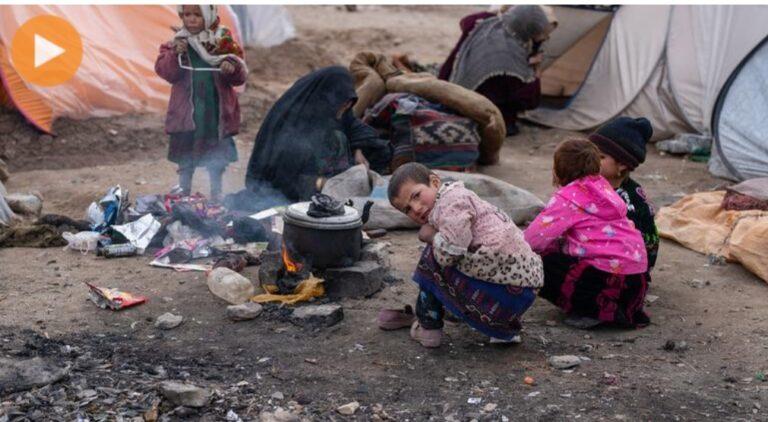
    A key outcome of the meeting was India’s decision to extend assistance for the rehabilitation of Afghan refugees. Since late 2023, approximately one million refugees have been repatriated to Afghanistan from Pakistan and Iran. To support this effort, the Taliban-led administration has started distributing land to returning families. India’s material aid will prioritise the health sector and broader rehabilitation initiatives.

    The Indian Ministry of External Affairs stated: “In response to the request from the Afghan side, India will provide further material support in the first instance to the health sector and for the rehabilitation of refugees.”

    India’s ongoing humanitarian assistance to Afghanistan has been extensive. Over the past few years, New Delhi has dispatched 50,000 metric tons of wheat, 300 tons of medicines, 27 tons of earthquake relief aid, 40,000 litres of pesticides, 100 million polio vaccine doses, 1.5 million doses of the COVID-19 vaccine, 11,000 hygiene kits for drug de-addiction programs, 500 winter clothing units, and 1.2 tons of stationery kits.

    At the Dubai meeting, the two sides reviewed these efforts and discussed expanding India’s role in Afghanistan’s development. The Indian government signalled its willingness to engage in infrastructure and development projects in the near future.

    Chabahar Port: A Gateway for Regional Trade

    Another critical topic of discussion was the promotion of trade through Chabahar Port, located in southern Iran. Developed by India, the port serves as a strategic supply route for goods destined for Afghanistan, bypassing traditional trade routes that pass through Pakistan. Both sides agreed to enhance the use of Chabahar for commercial activities and humanitarian aid delivery.

    India’s Foreign Secretary highlighted the port’s importance, stating, “Chabahar Port is a critical asset for strengthening trade ties and ensuring uninterrupted supply chains to Afghanistan.” Afghan officials also acknowledged India’s concerns over regional security and assured full cooperation.

    Cultural and Sporting Ties

    Beyond aid and trade, the meeting touched upon the cultural and sporting ties between the two nations. Cricket, a beloved sport in both countries, emerged as a potential avenue for deepening people-to-people connections. Discussions included plans to enhance sporting collaborations, particularly in cricket, which has gained immense popularity among Afghanistan’s youth.

    Addressing Regional Security

    Security concerns also featured prominently in the talks. The Afghan delegation reiterated its commitment to addressing India’s regional security sensitivities. The meeting occurred days after India condemned Pakistani airstrikes in Afghanistan’s Paktika province, which killed 46 civilians, including women and children. India’s Foreign Ministry strongly criticised the attacks, calling them a continuation of Islamabad’s “old practice” of blaming neighbours for internal failures.

    A Historic Relationship Rekindled

    Foreign Secretary Misri emphasised India’s historic friendship with Afghanistan and its cultural and civilizational ties. He noted, “India remains committed to supporting the Afghan people during these challenging times. Our shared history and strong people-to-people connections underscore the importance of our bilateral relationship.”

    This meeting follows an earlier engagement in November 2024, when an Indian delegation visited Kabul to meet Afghanistan’s acting Defense Minister, Mullah Mohammad Yaqoob. These interactions highlight a cautious yet significant recalibration of India’s approach to engaging with the Taliban-led government.

    India’s renewed commitment to Afghanistan’s stability and development comes at a crucial time for the war-torn nation. As international recognition of the Taliban-led administration remains limited, India’s engagement signals its readiness to address humanitarian needs while safeguarding its strategic interests.

    For Afghanistan, India’s support represents a vital lifeline as it navigates complex domestic and regional challenges. The agreement to promote trade, enhance humanitarian aid, and address shared security concerns lays the groundwork for a more cooperative relationship.

    Dubai — where India and Pakistan settle scores on the cricket field and India and Afghanistan settle ties off it. Dubai is now the venue for both, boundaries and diplomacy!

    First Person: Gaza, Where Starving People are Trapped in a Land Reduced to Rubble

    Driving to Gaza City in our armoured vehicle, along the militarised Netzarim corridor dividing the enclave’s north and south, we saw dead bodies scattered to the left and right, decomposing in the sun.

    By Jonathan Dumont

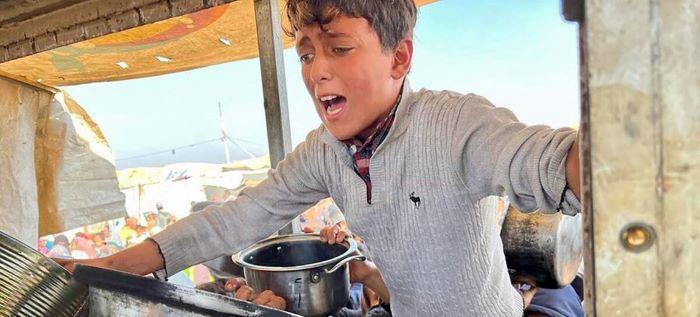
    “I need food, man,” Abdul Rahmen told me. We were in the southwestern Gazan city of Khan Younis, where men ladled out steaming rice into bowls thrust out by a desperate crowd. One boy was crying, afraid the food, supplied by the World Food Programme (WFP), would run out before his turn.

    “I was ambitious. I had dreams,” Rahmen said, describing expectations as shattered as the buildings around us. “But I need food. I can’t buy bread”.

    I had arrived in Gaza the day before, making a 10-hour journey from Amman on a bus packed with humanitarian workers. Some of that time was spent waiting at Israel’s Kerem Shalom border crossing into the strip – one of the few available avenues to deliver life-saving humanitarian aid. The 10-day visit, in early December 2024, was my first since before the war broke out nearly 15 months ago.

    A massive backlog of urgently needed supplies – including boxes of medicine, food and other aid – awaited clearance there, and for the few available trucks and authorised drivers able to navigate destroyed roads, desperate crowds and armed gangs to deliver them.

    The size of the US city of Detroit, Gaza today is a mountain of rubble. I’ve gone to many conflict zones this past year – gang-ravaged Haiti, eastern Democratic Republic of the Congo, Sudan’s war-torn capital Khartoum – but Gaza is on a different scale. On one side, waves stroke a Mediterranean beachfront, an illusion of serenity. On the other lies endless destruction, black smoke rising from smouldering buildings.

    There’s another difference from many war zones: there’s no way for Gazans to escape the conflict. They are trapped.

    ‘People are hungry and angry’

    Hunger is skyrocketing. More than 90 per cent of the population faces “crisis” or worse levels of food insecurity, according to the latest expert findings. More than 300,000 people are likely experiencing catastrophic hunger – the highest level of food insecurity.

    The WFP food allowed to enter the strip can only meet one-third of what we need to reach the hungriest people. Over the months, we’ve been forced to cut rations, and then cut again. In December, we planned to reach 1.1 million people with just 10 days’ worth of food, which includes canned goods, tomato paste, oil and wheat flour.

    Besieged North Gaza is the hungriest place. Over the past two months, barely any supplies have been allowed to trickle in.

    ‘Bread is the most important food for people nowadays, because it’s so cheap,’ baker Ghattas Hakoura told me at a WFP-supported commercial bakery in Gaza City, in the northern part of the strip. Men and women were picking up loaves of pita, costing three shekels, or less than US$1 per packet, in separate, tightly controlled lines.

    ‘People are hungry and they’re angry,’ Hakoura added. ‘They’ve lost their homes, their jobs, their families. There is no meat, no vegetables – and if we do have vegetables, they are very expensive’.

    A 25-kg bag of wheat flour can sell for US$150. In an enclave where farmers once harvested citrus, vegetables and strawberries, I saw small peppers selling at a Gaza City market for US$195 a kilo. Nobody was buying. Nobody could afford them.

    Ibrahim al-Balawi, cradling his small daughter, told me she’d never drunk a glass of milk in her life. She’d known nothing but war.

    That’s a worry for so many parents in Gaza, a place where you hear the sound of drones and explosions 24/7, coming from the air, land and sea.

    ‘I want my kids’ future to be similar to any other kid living in any Arab country,’ Hind Hassouna, a mother of four, told me in Khan Younis, after our food distribution there. ‘To live a decent life, wear decent clothes, eat decent food and have a good life. The most important thing is to be free from fear – just like any kid in any Arab country’.

    Dead bodies decomposing in the sun

    Hassouna’s children walk 1.5 km each way to fetch water. As she spoke in her tent home – which could easily be toppled by wind or flooded by winter rains – they spooned up their small portions of WFP rice. It was possibly their only meal of the day. One little boy slowly cleaned his plate of every last grain, a small smile on his face.

    Children are experiencing the worst of the war. As we drove to the food distribution at Khan Younis, I spotted a dead horse amid the rubble. Nearby, a little girl picked through the trash, looking for food.

    Later, driving to Gaza City in our armoured vehicle, along the militarised Netzarim corridor dividing the enclave’s north and south, we saw dead bodies scattered to the left and right, decomposing in the sun. A few hundred metres later, a small group of women and children headed in that direction, carrying their belongings. They looked hot and tired.

    How will such experiences affect Gaza’s children when they grow up? What will happen to their generation?

    Amid the devastation, Gazans are embracing any semblance of life they can create. In Khan Younis, Abu Bilal dug out his destroyed home and used the rubble to rebuild the walls. Cement slabs from what had been a multistorey apartment building formed a tenuous lean-to. He showed me around his place, complete with a basic toilet and makeshift plastic sink.

    ‘Dangerous’, he said of his shelter, which could easily collapse during a storm or airstrike.

    In what had been a densely populated neighbourhood, Nabil Azab also showed me around the remains of his home. A former taxi driver, he pointed out the twisted carcass of the vehicle that once earned him his livelihood. Like many Gazan families, his has been displaced multiple times, moving from one tent settlement to another.

    When an airstrike hit his tent in the southern city of Rafah – injuring him and other family members – that was enough. They, too, cleared out the debris from their partially destroyed home in Khan Younis and moved back in. Their four-storey building, among the few still standing in the area, leans precariously atop a sandy ridge. In the ground below, the family grows lettuce and other greens to help survive. But it’s not enough.

    ‘I look at my little daughter as she cries asking for food and I feel helpless,’ Azab told me. ‘There’s nothing that I can do for her. Nothing at all.’”

    By Jonathan Dumont is head of Television Communications with the World Food Programme’s

    NITI’s Women Entrepreneurship Platform and New Shop Launch ‘EmpowHER Biz’

    Under its Award to Reward initiative, WEP collaborates with over 30 public and private sector partners to develop scalable programs that empower women. EmpowHER Biz marks its largest Award to Reward initiative, reflecting WEP’s commitment to fostering impactful collaborations.

    In a significant move to promote women entrepreneurship, the Women Entrepreneurship Platform (WEP) of NITI Aayog has partnered with New Shop, India’s largest 24/7 convenience retail chain, to launch EmpowHER Biz – Sapno Ki Udaan. This initiative aims to equip aspiring women entrepreneurs with essential skills and resources to excel in the organised retail sector.

    The programme, launched under WEP’s Award to Reward (ATR) initiative, focuses on addressing critical barriers faced by women in business. These include access to financing, credible networks, mentorship, and comprehensive training. Through EmpowHER Biz, WEP and New Shop aim to create a robust ecosystem that fosters women-led businesses and accelerates growth in the retail sector.

    A Comprehensive Empowerment Program

    EmpowHER Biz offers a tailored mentorship and training program, covering areas such as retail management, digital tools, financial literacy, and business development. It will identify and train 50 women participants aged 18–35, selected through an online application process. These participants will come from Delhi NCR, Punjab, Rajasthan, Uttar Pradesh, Haryana, Madhya Pradesh, and Gujarat.

    The top 20 candidates will receive a full waiver on New Shop franchise fees, significantly lowering the entry barrier for women to own and operate retail businesses. This model empowers women to build sustainable businesses while benefiting from the extensive support provided by the New Shop franchising ecosystem.

    Bridging the Gender Gap in Retail

    Speaking about the initiative, Ms. Anna Roy, Principal Economic Adviser, NITI Aayog, and Mission Director of WEP, emphasised the importance of overcoming societal and systemic challenges faced by women entrepreneurs.

    “EmpowHER Biz is our largest Award to Reward (ATR) collaboration to date. Aspiring women entrepreneurs often face multiple challenges, including societal biases and limited access to financing and mentorship. Through this partnership with New Shop, we aim to help women overcome these obstacles and build a strong foundation for their entrepreneurial journey,” Ms. Roy stated.

    Echoing this sentiment, Aastha Almast, Co-founder of New Shop, highlighted the company’s commitment to empowering entrepreneurs. “New Shop is committed to empowering young and first-time entrepreneurs in the retail sector. Through this collaboration with WEP, we aim to democratise retail ownership and create a lasting impact on the entrepreneurial journeys of these women,” she said.

    Scaling Impact: WEP and New Shop’s Vision

    Since its inception in 2018, WEP has been instrumental in promoting women entrepreneurship by acting as an aggregator platform. Transitioning to a public-private partnership in 2022, WEP provides a continuum of support across key areas such as access to finance, market linkages, training, mentoring, compliance assistance, and business development.

    Under its Award to Reward initiative, WEP collaborates with over 30 public and private sector partners to develop scalable programs that empower women. EmpowHER Biz marks its largest ATR initiative, reflecting WEP’s commitment to fostering impactful collaborations.

    New Shop, which operates over 200 convenience retail stores across 35 cities in 18 states, is equally ambitious. The company aims to empower 10,000 entrepreneurs by 2030 through its expanding franchising model. With a presence in high-density neighbourhoods, highways, gas stations, and plans to expand to transit hubs such as airports and railway stations, New Shop’s ecosystem offers a solid platform for budding entrepreneurs.

    Empowering the Future

    EmpowHER Biz represents a transformative opportunity for women entrepreneurs in retail. By providing training, mentorship, and financial support, the initiative bridges gaps that have traditionally hindered women’s participation in organised retail.

    As India moves towards a more inclusive entrepreneurial ecosystem, collaborations like EmpowHER Biz highlight the potential of public-private partnerships in driving sustainable and inclusive economic growth. Empowering women to own and operate businesses is not just a step forward for gender equality but also a boost to India’s growing retail sector.

    This initiative marks a promising step toward democratising retail ownership and creating a future where women entrepreneurs play a pivotal role in shaping the industry.

    Female Mosquito Targeted With Venom to Curb Disease

    Scientists have developed a genetic biocontrol method to reduce the lifespan of the female Aedes aegypti mosquito that spread disease by engineering male insects to transfer venom to females when mating, in turn, reducing the female mosquito’s lifespan.

    By Dann Okoth

    A genetic biocontrol method which reduces the lifespan of female insects could work as fast as pesticides to reduce populations of disease-spreading mosquitoes and destructive crop pests, according to researchers.

    Insect pests pose a huge threat to global health and agriculture, causing hundreds of thousands of deaths, millions of infections, and costing billions in healthcare and crop damage each year.

    Biocontrol is increasingly seen as a viable alternative to pesticides, which can harm non-target species and ecosystems and are losing efficacy as resistance to them grows.

    A new approach called Toxic Male Technique (TMT), developed by researchers at the ARC Centre of Excellence in Synthetic Biology at Macquarie University, Australia, involves genetically engineering male insects to reduce the lifespan of the females they mate with.

    Researchers say it can be used to respond rapidly to outbreaks of agricultural pests as well as to fight mosquito-borne diseases such as malaria, dengue and Zika.

    “We hold that our technology has the potential of working as fast as pesticides without the attendant risks of harming other species and the environment,” says Samuel Beach a researcher in applied biosciences at Macquarie University and lead author of the study, published on Tuesday in the journal Nature Communications.

    According to Beach, the approach is more efficient than existing methods such as the Sterile Insect Technique or the release of insects carrying lethal genes, which work by releasing masses of sterilised or genetically modified males to mate with wild females.

    With these techniques, the mated females produce no offspring or only male offspring, but they continue to blood-feed and spread disease until they die naturally — meaning populations of biting females only decrease when the next generation emerges.

    “TMT is cheaper because you need fewer males to get much faster reduction in insect population or spread of diseases,” Beach explains.

    Venom proteins

    The new technique works by genetically engineering male insects to produce insect-specific venom proteins in their semen. When these males mate with females, the proteins are transferred, significantly reducing the females’ lifespan and their ability to spread disease.

    The researchers found that mating females with the genetically engineered males reduced their lifespan by 60 per cent.

    “Ideally, we’re looking at 100 per cent reduction in lifespan—that’s the females die as soon as they mate with the male,” Beach told SciDev.Net. “But that’s what we want to achieve long term, that’s going to take some time.”

    Even the 60 per cent reduction could go a long way towards reducing the impact of mosquito-borne diseases, he adds.

    Diseases such as malaria, dengue, Zika, chikungunya and yellow fever are spread by the females of the Aedes aegypti and Anopheles gambiae species of mosquito.

    Beach explains that when female mosquito blood feeds, contracting the virus from a host, she is not infectious for a couple of days. For a period of five to ten days, she cannot spread the disease to another person.

    “That means we don’t need to achieve 100 per cent mortality, we just need to reduce her lifespan within this period of time where she can’t spread that disease to a second person, which we estimate to be about 60 to 80 per cent reduction in lifespan,” says Beach.

    The technology could work even better for farmers, according to the researchers, since crop pests have longer lifespans than mosquitos—up to a year or two, compared to three to four weeks.

    “Because the generational term is so long, if we can kill the female sooner that’s going to have a much bigger benefit for agricultural pests,” adds Beach.

    Operational costs

    Tonny Owalla, a researcher at Med Biotech Laboratories Kampala, Uganda, who was not involved in the study, believes engineering male mosquitoes to reduce the population of female malaria carriers could be a useful approach.

    However, he cautions that the costs of deploying it may make the technology impractical for routine use in malaria endemic countries.

    “Take for instance, how many male mosquitoes one would deploy in the Democratic Republic of the Congo, which is the leading malaria endemic country in Africa, how many rounds of release per year, infrastructure, source of mosquito supply…” says Owalla.

    Beach says the technology must go through rigorous safety tests before being adopted, while regulatory frameworks to guide its use and infrastructure to breed mosquitoes are also needed.

    “In a few a few years, though, we are certain our technology will provide millions of people across the world with a sustainable solution for disease and crop pest control,” he adds.

    This piece has been sourced from SciDev.Net

    Dhaka’s Mass Transport Crisis Drives Surge in Personalized and Non-Motorized Transport

    Dhaka’s transport crisis reflects a complex interplay of population growth, policy neglect, and unplanned urban development. The shift towards NMTs and personalised transport is both a symptom and a contributor to the city’s worsening mobility challenges.

    A recent survey paints a grim picture of Dhaka’s transportation system, revealing a drastic shift from public buses to personalised and non-motorised transport (NMT). The findings highlight growing commuter dissatisfaction, unplanned urbanization, and a lack of implementation of crucial transport strategies. These issues threaten to exacerbate congestion, pollution, and inefficiencies in one of the world’s most densely populated cities.

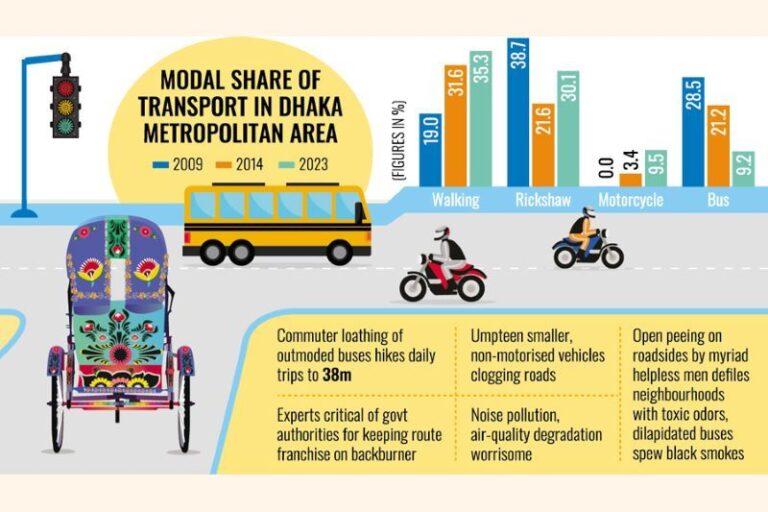
    According to data from the Dhaka Transport Coordination Authority (DTCA), the number of daily commuter trips in Dhaka has surged by 38 per cent over the last nine years, reaching over 38 million in 2023 from 27.7 million in 2014. This increase in mobility reflects the capital’s growing population and economic activity but also underscores a troubling transition away from public buses, traditionally the backbone of urban transport.

    The share of buses in total trips has plummeted, dropping from 28.5 per cent in 2009 to just 21 per cent in 2014, and further down to 8.9 per cent in 2023. In contrast, NMT, including walking, rickshaws, and bicycles, now dominate the transport landscape. Walking alone has seen a remarkable increase, accounting for 36 per cent of total trips in 2023, up from 31 per cent in 2014 and 19 per cent in 2009. The survey found 14.33 million walking trips daily in 2023, a significant rise from 11.68 million in 2014.

    Boom in Personalised and Non-Motorised Transport

    Experts attribute the decline of buses to their deteriorating quality and reliability. This vacuum has been filled by smaller, often unregulated modes of transport such as motorcycles, three-wheelers, and rickshaws. Motorcycle usage has surged, with its share rising from 3.4 per cent in 2014 to 9.5 per cent in 2023 in Dhaka Metropolitan Area. Similarly, three-wheelers have grown from 5.1 per cent to 11.5 per cent during the same period.

    The resurgence of rickshaw trips is particularly noteworthy. While their share dropped from 38.7 per cent in 2009 to 22 per cent in 2014, it rebounded to 30 per cent in 2023. Project director for the Updated Revised Strategic Transport Plan (URSTP), Mohammad Rabiul Alam, warns that if current trends persist, rickshaws could account for 30 per cent of all trips by 2045, with NMTs making up 28 per cent.

    Unfulfilled Promises, Policy Failures

    The decline of public buses is symptomatic of broader governance and policy failures. Multiple strategic plans, including the Strategic Transport Plan (STP) of 2005 and the Revised Strategic Transport Plan (RSTP), proposed measures like bus-route rationalisation, franchise systems, and the introduction of Bus Rapid Transit (BRT). However, these recommendations have largely remained unimplemented.

    Similarly, efforts to regulate NMTs have fallen short. Despite recommendations to establish NMT-free routes and withdraw paddle-driven rickshaws, rickshaws have proliferated, including battery-operated variants. Urban planners have also failed to create adequate walking facilities or discourage the use of personal vehicles, further compounding the transport crisis.

    Consequences of Neglect

    Transport expert Professor Mohammad Shamsul Hoque of Bangladesh University of Engineering and Technology (BUET) likens Dhaka’s transport system to a dying patient in the ICU. “The city’s per-kilometer per-hour speed has been declining continuously, reflecting the worsening traffic conditions,” he said.

    The unchecked growth of smaller vehicles and the reliance on outdated buses contribute to severe air and noise pollution. Furthermore, a lack of public amenities, such as roadside urinals for drivers, creates additional challenges for urban residents. The rise of NMTs and personalised vehicles may offer short-term relief but risks further entrenching congestion and inefficiency.

    Looking Ahead

    Despite these challenges, there is still hope for a turnaround. The URSTP, supported by the Asian Development Bank, is expected to present its final draft recommendations soon. The study, which collected data from 52,000 households and interviewed 250,000 people in October 2023, aims to propose actionable solutions for Dhaka’s transport woes.

    Experts emphasize the need for a holistic approach. Immediate priorities include improving pedestrian infrastructure, implementing bus-route rationalisation, and promoting sustainable modes of transport like bicycles. In the medium to long term, investments in modern public transport systems such as metro rail and BRT must be complemented by policies to regulate land use and curb the growth of private vehicles.

    Professor Hoque stressed the importance of integrating policy with project-based interventions. “Focusing solely on high-cost projects like metro rail without addressing foundational issues will not revive the city’s transport lifeline,” he said.

    Dhaka’s transport crisis reflects a complex interplay of population growth, policy neglect, and unplanned urban development. The shift towards NMTs and personalised transport is both a symptom and a contributor to the city’s worsening mobility challenges. Without decisive action to revamp public transport and address structural inefficiencies, the situation is poised to deteriorate further, jeopardising the city’s economic and environmental sustainability.