More

    Twenty Years On: Indonesia ‘Better Prepared’ Following Tsunami

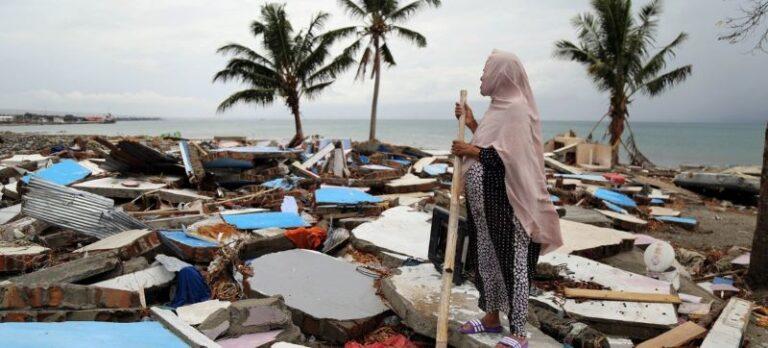
    Despite being the closest inhabited island to the epicentre of the earthquake in December 2004 that caused the largest tsunami so far in this century, only six inhabitants died on this island of 100,000, a lower rate than in any other affected area.

    When Ahmadi, a local storyteller on the Indonesian island of Simeulue, sings a lullaby to his one-year-old grandson, the song is not one about fairies and angels but rather about the precautions to take in a potential tsunami.

    The lyrics include references to an earthquake, a massive wave, land submerged under water and locating to higher ground.

    “When there is an earthquake and a tsunami, you are in panic, you cannot be expected to think. This is why the emergency drill must be ingrained and be second nature. This has to start from an early age,” Ahmadi said.

    Despite being the closest inhabited island to the epicentre of the earthquake in December 2004 that caused the largest tsunami so far in this century, only six inhabitants died on this island of 100,000, a lower rate than in any other affected area.

    “This was due to the local wisdom passed on from generation to generation in the form of a smong (means “tsunami” in the local Devayan Language),” said local leader Teuku Reza Fahlevi, referring to indigenous knowledge related to a tsunami.

    This oral tradition has enabled their population to better adapt to natural disasters. In 2004, for instance, they knew to run for higher ground when the sea recedes, saving many lives.

    “In many other coastal areas of the country, people rushed into the seabed to pick up fish and were crushed by the gushing sea water as waves of up to 30 metres wreaked havoc and brought devastation,” he said.

    Better Prepared for When Disaster Strikes

    Twenty years on, the province of Aceh in far western Indonesia is much more prepared. The smong is now part of the curriculum of every primary and junior high school on Simeulue as well as in some other regencies.

    “For full preparedness, we cannot rely on grandparents only, we must make sure every child is prepared,” Ahmadi said.

    The association of storytellers in the province is working with the Simeulue Board of Education to lobby the remaining regencies to do the same.

    Ahmadi himself was living in the provincial capital of Banda Aceh when the 2004 tsunami struck and immediately fled to higher ground. He tried to convince many of his neighbours to do the same, but most would not listen.

    “When I returned, I saw corpses all around,” he said. “Today, the loss of life would be far smaller – we are much better prepared.”

    Over 167,000 people died in Indonesia during the event on 26 December, and a further at least 60,000 in other countries on the Indian Ocean.

    The United Nations, at the request of the Indonesian government, provided major relief support to the survivors.

    Ten UN agencies were involved in the work, from the International Organization for Migration (IOM) helping the internally displaced, to the United Nations Children’s Fund (UNICEF) providing emergency supplies for children and the UN Development Programme aiding reconstruction efforts.

    The UN’s Office for Coordination of Humanitarian Affairs (OCHA) facilitated the emergency response phase in 2004 and, together with partners, advocated for the importance of building community resilience through disaster education since 2006 based on international best practices.

    OCHA, along with other UN agencies, the Red Cross Society, universities, the private sector and NGOs, has remained involved long after the tsunami to support Indonesia and the Province of Aceh in improving disaster risk preparedness.

    Structured Disaster Management

    The tsunami has ushered in a new era of a more systematized and structured disaster management across the country, based on international best practices.

    Regulations have been put in place to establish and streamline processes in providing health care and food in case of disasters and also to establish local agencies to coordinate humanitarian efforts on the ground.

    The National Agency for Disaster Management (BNBP) has strengthened engagement with stakeholders across emergency response, recovery and development to implement global policies.

    “We believe that disaster risk reduction, sustainable development and climate change must be addressed holistically,” said Raditya Jayi, Deputy Minister at the National Agency for Disaster Management (BNBP). “Sustainable resilience ensures that we protect our development gains by investing in resilience building.”

    The country has mainstreamed the post-2015 frameworks on Sustainable Development (SDGs), the UNFCCC Paris Agreement and the Sendai Framework for Disaster Risk Reduction 2015-2030, an international agreement adopted by UN member states at the Third UN World Conference on Disaster Risk Reduction in 2015.

    “There have been major strides by the national and provincial governments, supported by multi-stakeholder partners, including community and faith-based organisations, on increased preparedness,” said Thandie Mwape, Head of OCHA Indonesia.

    The focal areas include education, and regular tsunami preparedness drills have been mandatory in all the schools in the province since 2010, she said. The implementation of a disaster-safe school programme was followed nationwide in 2012 leading to further increased preparedness.

    A siren system has been installed in some provinces and the population educated on what to do in case the alarms go off.

    By now, thanks to the progress on disaster management in the country, the Humanitarian Country Team, which is made up of the UN, development partners and local NGOs, is focusing its support to the government on strengthening disaster preparedness capacity and enhancing anticipatory action, as well as the haring of best practices from Indonesia to countries in the region and worldwide.

    “Indonesia is a knowledge hub and there is much that the world can learn from here, learnings that will lead to saving lives,” Ms Mwape said.


    How Extreme Weather is Fuelling Violence Against Women

    Extreme weather causes a rise in violence against women by their partners, say researchers and activists as economic impacts of climate-related disasters can fuel violence as much as two years later. They say that climate actions plans must focus more on gender to address such problems.

    By Dann Okoth

    Extreme weather events linked to climate change are fuelling violence against women long after they occur, say researchers, prompting calls for more gender-focused climate action.

    One in three women in the world experience physical or sexual violence at the hands of an intimate partner, according to UN figures, and women in poorer countries are the worst affected.

    New analysis by University College London (UCL) shows that the rate is even higher in countries that have recently faced climate shocks.

    Economic insecurity that stems from such shocks could be driving the increase, as long as two years after the event has happened, the researchers suggest.

    “Storms, landslides and floods appear to be linked to higher rates of intimate partner violence two years later at a national level,” says Jenevieve Mannell of UCL, who led the study published 2 October in the open-access journal PLOS Climate.

    Mannell and her colleagues analysed nationwide surveys from more than 150 countries covering a 26-year period to estimate the prevalence of intimate partner violence, defined as physical or sexual violence against a woman by her partner in the last year.

    The highest rates of violence were found in the Democratic Republic of Congo, followed by Ethiopia and Papua New Guinea.

    They compared this data with climate shock data on earthquakes, volcanoes, landslides, extreme temperatures, droughts, floods, storms and wildfires. And they found that not all types of weather events affected violence rates to the same extent.

    Heatwaves were linked to immediate physiological effects leading to aggression and violence.

    Storms or floods, on the other hand, take time to impact on mental health and food security in ways that drive violent behaviour, according to the researchers.

    “Different climate-related shocks take different lengths of time to impact on rates of violence,” said Mannell, a professor of social science and global health.

    The researchers noticed that climate shocks had as much of an effect on violence as economic performance indicators. They think the two factors could be linked.

    Wealthier countries were generally associated with fewer instances of partner violence, according to the study.

    “Extreme weather events bring economic and security dynamics that disadvantage women and girls when it comes to their sexual and reproductive rights,” said Gladys Kiio, executive director at the African Gender and Media Initiative Trust in Kenya, a women-led research organisation that promotes gender equality.

    She said the floods in Kenya earlier this year exposed the sexual vulnerability of women and girls to such climate shocks.

    She recalled how a mother and her disabled daughter were repeatedly raped in a slum in Nairobi after they were left homeless by the floods.

    In some pastoral communities, where livestock are highly valued, young girls are essentially sold off into marriage by their parents to replace livestock lost during droughts, added Kiio.

    Gender-climate roadmap

    The researchers hope their findings will shape environmental policies designed to mitigate the social and health impacts of climate change.

    It comes only a few weeks before the COP29 climate summit in Baku, Azerbaijan, where countries are expected to present their updated climate action plans.

    While Kenya has a national climate action plan, Kiio believes it fails to address gender issues in relation to climate change.

    She says gender-focused organisations are working on a national gender and climate action plan that aims to make gender issues part of the climate change conversation.

    “The plan gives us a roadmap on how climate change is affecting gender and how men and women interact with climate,” she told SciDev.Net.

    “It will define programmes and actions that mainstream gender into climate responses.”

    Countries have two mechanisms for addressing this issue as part of their climate adaptation and mitigation strategies, says Mannell. One is the Nationally Determined Contributions (NDCs) – countries’ commitments under the Paris agreement to reduce greenhouse gas emissions and measures to adapt to climate change. The other is the Climate Change Gender Action Plans, which are being developed in some countries.

    Countries have until February to update their NDCs, but some countries are expected to announce their updates early at COP29 in November.

    “We also need clear strategies for addressing climate change in existing programmes to reduce violence against women globally,” added Kiio.

    “For the moment, there is a lot of talk, but very little concrete action.”

    This piece has been sourced from SciDev.Net

    Pakistan’s Digital Censorship—The Real Cost of Internet Disruptions

    As Pakistan navigates this digital crisis, the government must confront difficult questions about the future of the internet in the country. Will it continue to be a battleground for political control, or will it become a space for freedom and innovation?

    By Annam Lodhi

    Over the past few months, Pakistan has been grappling with a persistent and disruptive internet slowdown, leaving millions of citizens frustrated.

    The disruptions are said to continue until the end of October, what began as intermittent disruptions has turned into a widespread, prolonged issue, significantly affecting freelancers, students, businesses, and everyday life.

    The internet, once a tool for empowerment, now mirrors Pakistan’s deeper socio-political challenges, becoming a battleground for control and censorship. The slowdowns have disrupted the digital economy, highlighting the government’s increasing control over internet access and turning a space of connectivity into one of political manipulation and restriction.

    When Did the Internet Start to Slow Down?

    Internet censorship and shutdowns are not new to Pakistan, especially during politically sensitive periods. In 2023 alone, internet shutdowns cost Pakistan over Rs65 billion, affecting 83 million people and lasting 259 hours, according to Statista. Pakistan ranked 7th globally in economic losses from internet disruptions, with a total loss of USD 237.6 million.

    The first major slowdown in mid-2024 was initially blamed on undersea cable repairs, a frequent issue in the past. However, as weeks passed and disruptions persisted, it became evident that the problem was far more deliberate and widespread. The government’s vague justifications citing “national security” concerns only fueled public frustration and deepened suspicions about its true motives.

    Opposition leaders brought the issue to the National Assembly, but the government’s inconsistent responses did little to alleviate concerns. Many began to speculate that the slowdowns were part of a broader effort to control public discourse and limit the reach of specific content on platforms like X (formerly Twitter) and Facebook. “Internet shutdowns have become a tool for suppressing dissent,” explains Fariha Aziz, co-founder of digital rights organization Bolo Bhi. “The government’s lack of transparency and contradictory statements about what’s happening makes it clear that there is more at play than just technical difficulties.”

    Direct removal of content from social media platforms remains impossible for the government; these disruptions seem to be aimed at slowing the flow of information and limiting the reach of critical posts. “The WhatsApp disruption was an eye opener,” Aziz notes. “It showed us that the government has tested, tried, or put in place something more sophisticated than just throttling speeds.”

    Internet slowdowns and shutdowns have severely impacted the economy, with the country heavily reliant on digital infrastructure. Pakistan joins other countries like India, Russia, and Ethiopia, where internet blackouts have caused significant financial damage. Globally, Russia experienced the largest monetary loss, with over USD 4 billion in damages due to internet shutdowns in 2023. Neighboring countries like Bangladesh and India, where similar tactics have been employed to control dissent. In Myanmar, the situation has been even more extreme, with the junta using total internet blackouts to prevent communication and stifle opposition. The growing comparisons between Pakistan and Myanmar are alarming, raising concerns about the future of internet freedom in the country.

    A History of Internet Censorship

    Amnesty International has expressed growing concern over the increasing use of surveillance technologies and internet disruptions to monitor online activities, especially during times of unrest. The lack of transparency and justification for these actions undermines citizens’ right to freedom of expression.

    “Internet shutdowns rarely meet the legal requirements of necessity and proportionality, making them unlawful under international human rights law,” says Hajira Maryam, Media Manager at Amnesty Tech.

    For activists, journalists, and researchers, staying safe during internet shutdowns has become increasingly critical. Hajira Maryam emphasizes the importance of digital security measures, stating, “Before a shutdown, individuals should secure their devices by enabling encryption, updating software, and using strong passcodes. Using a Virtual Private Network (VPN) can help bypass some blocks, but it is essential to understand the risks, as VPNs are often criminalized in certain contexts.”

    Amnesty International has called on Pakistani authorities to be transparent about the reasons behind internet disruptions and to avoid deploying unnecessary and disproportionate monitoring and surveillance systems that violate international human rights laws. Internet disruptions not only limit access to information and expression but also create anxiety within communities, including the Pakistani diaspora, who are often cut off from communication with their loved ones.

    In line with international legal frameworks, Amnesty urges that any restrictions on internet access must be legal, necessary, proportionate, and time-bound. The United Nations Human Rights Council and Special Rapporteurs have condemned the use of internet shutdowns as unlawful restrictions on freedom of assembly and expression, stressing that such measures must not hinder peaceful gatherings or public expression, especially during times of political unrest.

    Freelancers on the Frontline

    One of the most severely impacted groups is Pakistan’s growing freelance workforce. Pakistan is ranked among the top five countries for freelancers globally, with thousands relying on platforms like Fiverr and Upwork to earn their livelihood. However, the internet slowdown has shattered their ability to deliver services reliably.

    Umair Liaquat, a freelancer from Lahore who offers services related to advertisement management, began freelancing in 2020 after losing his job due to the COVID-19 pandemic. For two years, he successfully grew a top-rated Fiverr account, earning around USD 20,000 to USD 25,000. However, things took a downturn in 2024 when Pakistan’s internet slowdown became worse.

    “In March 2024, Fiverr downgraded Pakistani sellers, warning clients that due to internet issues, delivery might be delayed. My contacts started declining immediately. To get around this, I began using a VPN and changed my location to the USA, which helped temporarily,” Umair explained.

    Unfortunately, Fiverr disabled his account after detecting location inconsistency. After creating a new account, his business never regained the same traction due to firewall restrictions and frequent internet issues. This has left many freelancers, like Umair, scrambling to find alternative platforms and workarounds just to stay afloat.

    Ali Raza, a business owner based in Karachi who works in the marketplace and recruitment space, echoed similar concerns. “In just a few months, I’ve lost over $20,000 in revenue because of slow internet. International clients can’t communicate with us properly, which delays projects and results in lost contracts. In a highly competitive market, this is devastating.”

    The economic impact on freelancers is compounded by the fact that platforms like Fiverr and Upwork now rank Pakistan lower due to the country’s unreliable internet infrastructure. This further discourages international clients from working with Pakistani freelancers.

    Impact on Education

    Pakistan’s ongoing internet slowdown has severely impacted students across the country, exacerbating an already fragile education system that shifted online during the COVID-19 pandemic. With stable internet access crucial for millions of students, especially in rural areas, the disruptions have caused an educational crisis. Many students struggle to access lectures, participate in discussions, or submit assignments on time, significantly hindering their academic progress.

    Wardah Noor, CEO of XWave, an online learning platform, shared her organization’s challenges: “In August, we had 1,500 registrations for a 10-day IT boot camp, but due to internet disruptions, only 300 participants attended. This delay set us back by two months and raised operational costs significantly.”

    The impact is most pronounced in rural areas, where online education was the only viable option to bridge the educational divide. Now, the gap between urban and rural students has widened further, leaving those in remote areas with few alternatives. The global reach of education has also been compromised. Students enrolled in international programs have struggled to keep up with global timelines due to Pakistan’s slow internet.

    “The global market moves on, leaving our students behind,” Wardah added.

    Wardah also called for urgent government intervention to address the crisis. “Tech education without the internet is impossible. These disruptions have pushed us further from the dream of a ‘Digital Pakistan.’ The government must prioritize improving internet accessibility, especially in rural areas.”

    Government’s Role and Digital Control

    As the internet crisis continues, the role of the government has come under increasing scrutiny. the PTA has now admitted to “tinkering” with the internet as part of an effort to upgrade a controversial web monitoring system. Many speculate that these measures are part of a broader strategy to control the flow of information, especially during times of political unrest.

    During periods of political tension, the internet has been deliberately slowed down or shut off to curb protests and control public opinion. In 2023, for instance, following the arrest of a former Prime Minister, the government admitted to throttling the internet to suppress protests. Similar tactics are being deployed in 2024, with digital rights activists and opposition leaders calling out the government for using the internet as a tool of repression.

    The internet slowdown has extended beyond professional and educational circles, affecting daily life in ways that were previously unimaginable. Simple tasks, such as banking, accessing healthcare services via telemedicine, and even staying in touch with loved ones abroad, have become more challenging.

    What Lies Ahead for Pakistan’s Internet?

    The internet slowdown in Pakistan has exposed critical vulnerabilities in the country’s digital infrastructure. With the growing reliance on digital platforms for economic growth, education, and daily services, a stable internet connection is no longer a luxury—it is a necessity. Some efforts are being made to address these issues.

    Companies like Meta have announced plans to invest in new undersea cables to improve internet speeds in Pakistan, but this raises concerns about the role of private companies in managing the country’s internet infrastructure and its potential impact on digital sovereignty.

    At the same time, civil society organizations, international watchdogs, and opposition leaders continue to press for accountability. Clear regulations and transparency are essential to ensure that internet disruptions are not used as tools of political control. The government must prioritize improving internet infrastructure and ensuring that citizens can access a reliable and stable internet, free from unnecessary censorship.

    As Pakistan navigates this digital crisis, the government must confront difficult questions about the future of the internet in the country. Will it continue to be a battleground for political control, or will it become a space for freedom and innovation? The answers to these questions will shape the future of Pakistan’s economy, education, and society for generations to come.

    This piece has been sourced from Inter Press Service.

    Image: Hippopx

    End ‘Collective Amnesia’ Over COVID-19, Says WHO

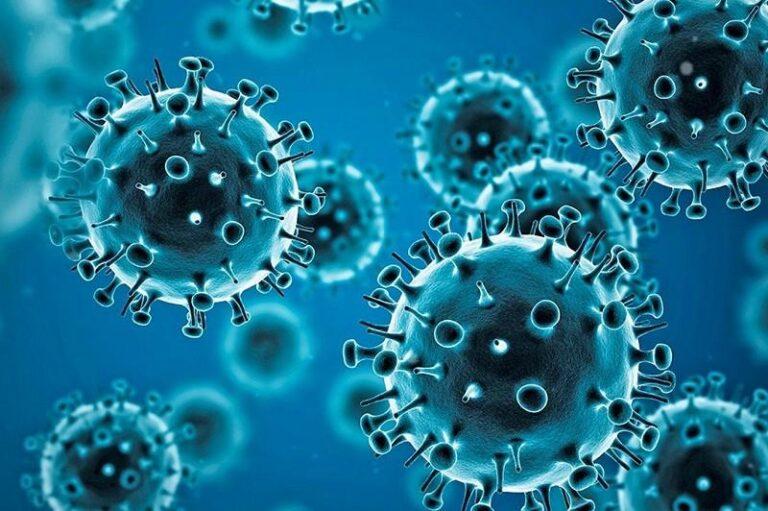
    Coronaviruses like COVID, influenza and respiratory syncytial virus (RSV) “must be taken seriously” as they are particularly dangerous for at-risk groups including the elderly, pregnant women and people suffering from existing or chronic illness, said a WHO statement.

    Our “collective amnesia” about how bad the COVID-19 pandemic was should not prevent us from protecting ourselves and our loved ones from the ongoing spread of respiratory diseases as the northern hemisphere prepares for winter, the UN World Health Organization (WHO) said on Wednesday.

    Coronaviruses like COVID, influenza and respiratory syncytial virus (RSV) “must be taken seriously” as they are particularly dangerous for at-risk groups including the elderly, pregnant women and people suffering from existing or chronic illness, WHO Europe insisted, as it launched a region-wide protection campaign.

    “Collective amnesia on COVID-19 has set in and this is concerning,” said WHO Regional Director for Europe, Dr Hans Kluge. “Individuals, communities, and countries understandably want to move on from the trauma of the pandemic years. Yet COVID-19 is still very much with us, co-circulating with other respiratory viruses.”

    European spotlight

    The WHO official noted that 53 countries across Europe and Central Asia still experience up to 72,000 deaths from seasonal influenza, accounting for approximately 20 per cent of the global burden. “The vast majority of these deaths can be prevented,” he said, adding that the most vulnerable “must be protected” by vaccine immunization, which is proven to prevent illness and severe outcomes.

    In the 28 days to 22 September, health authorities in WHO’s European region reported just over 278,000 COVID-19 cases and 748 deaths, from Cyprus to Moldova and from Ireland to Russia. Those numbers are higher than any other WHO region and are likely underestimates, the UN health agency said.

    According to WHO data, COVID-19 has killed more than seven million people since the outbreak began in late 2019, with most deaths reported in the United States (1.2 million), Brazil (702,000), India (534,000) and Russia (403,000).

    Unpredictable pathogens

    “COVID-19 devastated every corner of the planet,” Dr Kluge said. “Mpox clade II emerged unexpectedly in Europe in 2022 and continues to circulate in the region, even as mpox clade I in Central-East Africa has triggered a Public Health Emergency of International Concern. And RSV and influenza will continue to co-circulate with heightened intensity in the coming months, especially with more people gathering indoors due to colder weather.” 

    National health authorities should fulfil their role of protecting vulnerable populations, the WHO senior official continued, as he urged greater investment in public healthcare to protect overburdened healthworkers.

    New and existing viruses can “wreak havoc on health systems, economies, and society,” Dr Kluge warned, in a call for regular and consistent surveillance and monitoring to “ensure we are ready for the next major health emergency, whenever and wherever it comes”.

    As part of a WHO Europe public health campaign to prevent the spread of influenza and other respiratory diseases, the UN agency noted that key protective measures include staying at home when sick, practising hand and cough hygiene, and ensuring proper ventilation.

    Vulnerable populations who also include those with weakened immune systems and anyone who believes they may have caught a respiratory virus should wear a close-fitting mask in crowded or enclosed spaces, WHO added.

    “Protecting against respiratory viruses is the shared responsibility of governments and all of society,” WHO’s Dr Kluge said. “Everyone should play their part in fostering a culture of care and solidarity with the vulnerable.” 

    Strengthening Rural Economy: Insights from NABARD’s NAFIS 2021-22

    The NAFIS data revealed a notable increase in financial savings among rural households, with annual average savings rising to ₹13,209 in 2021-22 from ₹9,104 in 2016-17. Overall, 66 per cent of households reported saving money.

    The National Bank for Agriculture and Rural Development (NABARD) has released the findings from its second All India Rural Financial Inclusion Survey (NAFIS) for 2021-22, highlighting significant progress in rural economic indicators since the inaugural survey in 2016-17.

    The latest survey, based on data from 100,000 rural households across all 28 states and the Union Territories of Jammu and Kashmir and Ladakh, sheds light on the evolving landscape of rural financial inclusion in the post-COVID era.

    Rise in Average Monthly Income

    One of the most striking outcomes from the NAFIS 2021-22 is the substantial increase in the average monthly income of rural households, which surged by 57.6 per cent, from ₹8,059 in 2016-17 to ₹12,698 in 2021-22. This reflects a compound annual growth rate (CAGR) of 9.5 per cent. Agricultural households earned slightly more, averaging ₹13,661 compared to ₹11,438 for non-agricultural households. Notably, salaried employment, whether in the government or private sector, accounted for approximately 37 per cent of total household income. For agricultural households, cultivation remained the primary income source, comprising about one-third of their earnings.

    Increased Expenditure Patterns

    Accompanying the rise in income was a significant increase in monthly expenditure, which grew from ₹6,646 in 2016-17 to ₹11,262 in 2021-22. Agricultural households reported higher consumption expenditures (₹11,710) than their non-agricultural counterparts (₹10,675). Regions like Goa and Jammu & Kashmir witnessed average household expenditures exceeding ₹17,000, reflecting the diverse economic activities in these areas.

    Growth in Financial Savings

    The NAFIS data revealed a notable increase in financial savings among rural households, with annual average savings rising to ₹13,209 in 2021-22 from ₹9,104 in 2016-17. Overall, 66 per cent of households reported saving money, a substantial increase from 50.6 per cent in the previous survey. Agricultural households excelled in this regard, with 71 per cent reporting savings compared to 58 per cent of non-agricultural households. States like Uttarakhand, Uttar Pradesh, and Jharkhand led in savings rates, while Goa and Kerala lagged behind.

    Kisan Credit Card (KCC) Penetration

    The Kisan Credit Card (KCC) has proven to be a vital instrument for enhancing financial inclusion within the agricultural sector. The survey found that 44 per cent of agricultural households possessed a valid KCC, with the percentage rising to 77 per cent among those with landholdings greater than 0.4 hectares or who had availed agricultural loans in the past year.

    Insurance Coverage Expansion

    The proportion of households with at least one insured member increased dramatically from 25.5 per cent in 2016-17 to 80.3 per cent in 2021-22. This indicates a growing recognition of the importance of insurance in financial planning. Among various types of insurance, vehicle insurance was the most common, covering 55 per cent of households, while life insurance extended to 24 per cent, with agricultural households showing slightly higher coverage.

    Enhanced Pension Coverage

    Pensions have also seen a positive shift, with the percentage of households receiving any form of pension rising from 18.9 per cent to 23.5 per cent over the five years. This increase underscores the importance of pension schemes in supporting the elderly and enhancing their quality of life.

    Improved Financial Literacy

    Financial literacy among rural respondents showed significant improvement, with those demonstrating good financial understanding rising from 33.9 per cent to 51.3 per cent. Additionally, individuals exhibiting sound financial behaviour, such as effective money management and timely bill payments, increased from 56.4 per cent to 72.8 per cent.

    Implications and Future Prospects

    The findings from NAFIS 2021-22 reflect notable strides in rural financial inclusion and economic empowerment. Government initiatives such as the Pradhan Mantri Kisan Samman Nidhi, Mahatma Gandhi National Rural Employment Guarantee Scheme, and various rural livelihood missions have played a crucial role in these developments.

    As access to financial services expands, the outlook for India’s rural population appears increasingly optimistic. The survey emphasizes the importance of continued support and investment in rural development, which will be vital for fostering a more prosperous and financially secure future for these communities.

    In summary, NABARD’s NAFIS 2021-22 reveals not only the resilience of rural households in adapting to economic challenges but also the transformative impact of financial inclusion initiatives in enhancing their livelihoods and well-being.

    India’s Renewable Energy Revolution a Beacon of Hope in Global Energy Transition, Says IEA Report

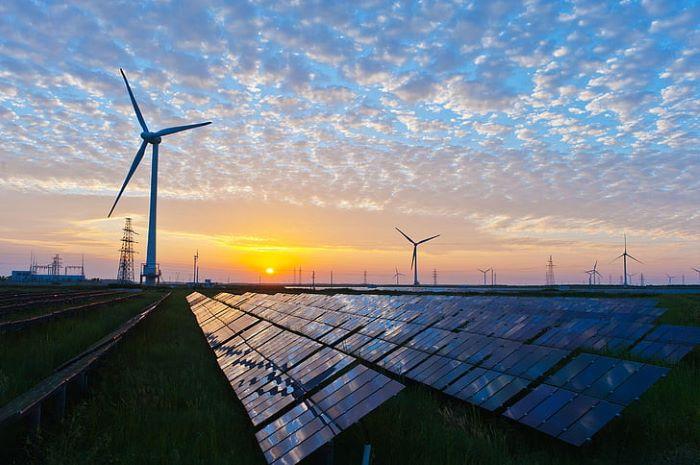
    By 2024, solar power is projected to account for nearly 60 per cent of India’s renewable energy capacity, significantly contributing to the national grid and reducing reliance on coal.

    In a groundbreaking report released by the International Energy Agency (IEA), India has emerged as a leader in the global transition to renewable energy, showcasing impressive growth and commitment to sustainable practices. The “Renewables 2024” report highlights India’s significant strides in expanding its renewable energy capacity, positioning the nation as a critical player in the fight against climate change.

    The report indicates that the world is on course to add over 5,500 gigawatts (GW) of renewable energy capacity between 2024 and 2030, bringing global renewable electricity generation to nearly half of total demand.

    Dave Jones, Ember’s director of global insights said, “The renewables growth we’ve seen so far is just the start. Policymakers are embracing solar and wind like never before, but they are still two steps behind the reality on the ground.”

    Tim Buckley, a leading energy analyst and director of Climate Energy Finance, added that despite a strong increase in investments in renewable energy since the December 2023 COP28 pledge to triple installed capacity by 2030, countries are not yet on track to meet this goal, with global capacity expected to grow by 2.7 times by the end of the decade.

    “This reflects a 25 per cent lift in collective ambition compared to last year, driven by decreasing costs for solar and battery technologies. Increased support from developed nations is crucial for facilitating the energy transition in developing countries, helping to rapidly decarbonize in line with climate science,” Buckley said.

    China alone is set to account for an astonishing 60 per cent of the global renewable capacity growth, making it a dominant player in the renewable energy landscape.

    Nations like India are leading the charge with rapid renewable expansion, securing over half of the Asia Pacific region’s renewable growth from 2024 to 2030.

    Renewable Fuels

    According to the report, India is set to add approximately 40 gigawatts (GW) of renewable energy capacity in 2024 alone, primarily driven by solar and wind projects. This expansion aligns with the Indian government’s ambitious goal of achieving 500 GW of non-fossil fuel capacity by 2030, a target that reflects the country’s determination to reduce carbon emissions and enhance energy security.

    “India is not only increasing its renewable energy capacity but is also demonstrating a sustainable approach that other nations can emulate,” said Fatih Birol, the IEA’s Executive Director. “The country’s policies and investments are paving the way for a greener future, both regionally and globally.”

    The report emphasizes that India’s solar sector, bolstered by initiatives such as the Solar Park Scheme and production-linked incentives, has experienced remarkable growth. By 2024, solar power is projected to account for nearly 60 per cent of the country’s renewable energy capacity, significantly contributing to the national grid and reducing reliance on coal.

    Wind energy is also making significant gains, with new projects set to enhance capacity in both onshore and offshore wind farms. The government’s focus on enhancing infrastructure and encouraging private investment has created a favorable environment for renewable energy developments.

    This edition of the IEA Renewable Market Report series has dedicated a specific chapter to renewable fuels, including solid biomass (excluding for traditional uses), liquid biofuels, biogases (biogas and bio-methane), electrolytic hydrogen made from renewable electricity (renewable hydrogen) and e-fuels (fuels made from renewable hydrogen, including e-kerosene, ammonia and methanol) used in transport, industry and buildings.

    Challenges Remain

    Moreover, the IEA points out the importance of international collaborations in India’s renewable energy journey. Partnerships with countries like the United States, Japan, and those in the European Union are facilitating technology transfer and investments, further accelerating progress.

    Fuel demand declines globally owing to a combination of electric vehicle adoption and vehicle efficiency improvements, the report says, adding that while governments continue to enforce biofuel mandates, incentives and greenhouse gas intensity standards over the forecast period, overall global road transport fuel demand is expected to peak in 2028, with earlier peaks in the United States and Europe, thereby limiting growth. “Even in fast-growing markets such as India, Indonesia and Brazil, total transport fuel demand growth slows considerably by 2030 (to 3 per cent from 10 per cent expected in 2024),” the report says.

    Despite these advancements, the report cautions that challenges remain. Issues such as land acquisition, financing, and the need for grid improvements must be addressed to sustain momentum. However, the Indian government is actively working to overcome these hurdles through policy reforms and streamlined processes.

    As the world faces escalating climate challenges, India’s renewable energy revolution serves as a testament to the potential of ambitious policy frameworks and public-private partnerships. The report says that with continued commitment, India is poised to not only meet its own energy needs but also contribute significantly to global sustainability efforts.

    The IEA’s “Renewables 2024” report underscores India’s pivotal role in the renewable energy landscape, offering a model for other nations striving for a sustainable future.

    Global Forest Declaration Assessment Highlights Urgent Action to Combat Deforestation

    The Forest Declaration Assessment report serves as both a critical reminder and a call to action for governments, businesses, and civil society to renew their commitment to forest conservation in the face of escalating environmental challenges.

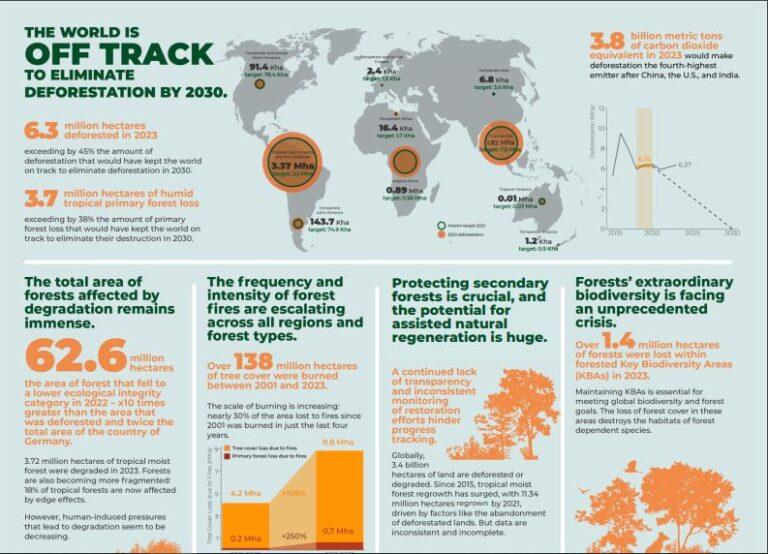
    In 2023, 6.37 million hectares of forest were destroyed, according to a report by the Forest Declaration Assessment. The authors of the report point out that to stay on track for eliminating deforestation by 2030, this figure should not exceed 4.4 million hectares.

    The new report from the Forest Declaration Assessment reveals a concerning stagnation in global efforts to halt deforestation, despite ambitious commitments made by world leaders. The report, released on Tuesday, underscores the critical state of the planet’s forests and calls for immediate action to reverse trends threatening biodiversity and climate stability.

    This global loss of forests equals about a fiftieth of the size of India’s landmass. The reasons for the loss in forests extends from the destruction of trees for agriculture, road construction, mining and commercial logging, the report said. Much of the forests was also lost to forest fires

    From 2001-23, more than 138 million hectares of tree cover were lost globally due to forest fires, the study says, adding, for detail, how nearly one third of the area lost to forest fires since 2001 was burned from 2019-23. “In those four years, nearly 13 billion metric tons of carbon dioxide equivalent was released into the atmosphere due to forest fires.” For perspective, that’s nearly double the emissions of the Indian energy sector over the same period.

    A Wake-Up Call for Policymakers

    The report highlights that, while some countries have made progress in forest conservation, overall global deforestation rates remain alarmingly high. Key findings indicate that land use change, driven primarily by agriculture, continues to be a major driver of forest loss. In particular, tropical regions are experiencing the most significant declines, with local communities and indigenous peoples often bearing the brunt of environmental degradation.

    “Despite commitments made in the Forest Declaration, we are not seeing the transformative changes needed,” said Dr. Emily Carter, lead author of the report. “This assessment serves as a wake-up call for policymakers to prioritize forest protection and restoration as integral components of their climate strategies.”

    The report also outlines a series of recommendations, urging governments to strengthen policies that protect forests, enhance accountability, and promote sustainable land-use practices. It emphasizes the importance of financing initiatives that support both conservation and the livelihoods of those who depend on forest ecosystems.

    A Call to Action

    In light of the findings, the assessment calls for renewed international cooperation, with an emphasis on collaborative efforts to tackle deforestation at the source. As the world grapples with the impacts of climate change, the report argues that safeguarding forests is not just an environmental issue, but a vital part of ensuring global food security and promoting economic resilience.

    “Restoring and protecting forests must be at the forefront of our global response to the climate crisis,” Dr. Carter added. “The time for action is now; we must not let this opportunity slip away.”

    Deforestation continues to be a major contributor of greenhouse gases, the report says. “Not accounting for removals, 3.8 billion metric tons of carbon dioxide-equivalent were emitted from deforestation last year,” it says – this is a four per cent increase from the 2018-20 baseline.

    “If deforestation was its own country, it would have been the fourth-highest emitter in 2023 after China, the U.S., and India,” says the report, adding that “The world is increasingly off track to meet the 2030 goals.” With less than six years remaining until 2030, immediate action to protect forests is essential, the report says.

    The Forest Declaration Assessment report serves as both a critical reminder and a call to action for governments, businesses, and civil society to renew their commitment to forest conservation in the face of escalating environmental challenges.

    Maldives: Environmental Protection Agency Reports Rising Threats to Protected Species

    Despite the legislation, environmental activism remains a challenging endeavour in the Maldives. Ongoing court cases, including one aimed at compelling the government to enforce environmental laws, highlight the difficulties faced by activists.

    The Environmental Protection Agency (EPA) of the Maldives issued a stark warning on Monday regarding the increasing harm to protected species in the archipelago, emphasizing that the capture, killing, consumption, and trade of these species and their parts are illegal under national law.

    In its statement, the EPA noted a troubling trend, highlighting that harm to protected species has escalated year by year. The agency, which is legally responsible for environmental protection in the Maldives, reminded the public that various species are safeguarded under the Protected Species Regulation as part of the Environmental Protection and Conservation Act. Among those protected are five species of tortoises and turtles, the Indian Black Turtle, 207 bird species, all species of rays, and whale sharks.

    “These species are crucial for maintaining the Maldives’ natural environment and are integral to the lifestyle, culture, and economy of the nation,” the EPA stated. The agency pointed out that protected species significantly contribute to the tourism sector, particularly in “nature tourism,” which remains a key attraction for visitors.

    Seabirds play a vital role in the Maldivian fishing industry, while various protected marine species help sustain the country’s delicate ecosystem. However, the EPA has reported a concerning rise in harmful activities affecting these species, including inappropriate feeding and touching, vessels pursuing whale sharks, and large crowds surrounding these animals.

    In response to these challenges, the government implemented new regulations last month aimed at safeguarding these vulnerable species. The EPA announced that it would take stringent action against any violators of these regulations to ensure compliance and protect the natural heritage of the Maldives.

    Challenging Endeavour

    Despite the legislation, environmental activism remains a challenging endeavour in the Maldives. Ongoing court cases, including one aimed at compelling the government to enforce environmental laws, highlight the difficulties faced by activists. The Maldives is particularly vulnerable to climate change, with 80 percent of its islands lying less than a meter above sea level.

    The government has enacted significant environmental laws, notably the Environment Protection and Preservation Act, which mandates Environmental Impact Assessments (EIAs) for all development projects. However, critics argue that these assessments often serve merely as formalities, as government ministries frequently preapprove projects before EIAs are completed. This pattern raises concerns about the genuine implementation of environmental protections.

    A notable case is the ongoing controversy surrounding the Gulhifalhu reclamation project. Awarded to Dutch construction company Boskalis in 2019 without a formal tender process, the project has faced criticism after an EIA revealed potential irreversible environmental damage. Despite the findings, the government proceeded with the project, prompting legal action from climate activist Humaida Abdul Gafoor.

    Earlier this month, the high court granted an injunction to halt work on the project pending a final ruling, but the government quickly appealed, arguing that a suspension would lead to significant financial losses. The Supreme Court subsequently lifted the injunction, allowing construction to continue.

    While the legal battle continues, it has underscored the scrutiny facing the government regarding its environmental policies. As the Maldives navigates these challenges, the call for stronger enforcement of environmental protection laws remains urgent, with activists and concerned citizens urging the government to prioritize the preservation of its rich biodiversity and natural resources.

    IPR and Commercialization in Ayush Systems: Towards Protecting Traditional Knowledge

    Participants emphasized the need for a unified vision to bolster research, policy frameworks, and educational initiatives that promote India’s rich traditional knowledge on the global stage.

    In a move to safeguard and commercialise traditional knowledge within the Ayush systems, a Round Table Conference titled “Intellectual Property, Regulatory Framework, and Commercialization Aspects in Traditional Knowledge of Ayush Systems” was held in New Delhi on Tuesday. The event, organized by the Office of Controller General of Patents, Designs, and Trade Marks (CGPDTM) in collaboration with the School of Biotechnology at Jawaharlal Nehru University (JNU) and the National Institute of Ayurveda (NIA) in Jaipur, gathered experts from academia, government, and industry to discuss the pressing challenges and opportunities in this vital sector.

    The conference featured Vaidya Rajesh Kotecha, Secretary of the Ministry of Ayush, as the Chief Guest. His presence underscored the importance of integrating traditional wisdom with modern technologies to protect intellectual property and foster innovation. Other notable attendees included Prof. (Vaidya) Kartar Singh Dhiman, Vice Chancellor of Shri Krishna Ayush University; Prof. Anupam Srivastava from NIA; and Prof. Rupesh Chaturvedi from JNU’s School of Biotechnology.

    In his opening address, Vaidya Kotecha highlighted the critical role of research and education in Ayurveda, emphasizing that these pillars are essential for driving the Intellectual Property Rights (IPR) agenda within traditional medicine. He noted, “The evolving digital ecosystem and the generation of scientific evidence are crucial for advancing the Indian system of medicine. Our aim is to integrate traditional wisdom with modern technologies, thereby protecting intellectual property and fostering innovation.”

    Vaidya Kotecha elaborated on India’s strategic partnerships with the World Health Organization (WHO) to develop global standards for traditional medicine. He attributed these collaborations to the remarkable growth of the Ayush manufacturing sector over the past decade, stressing that a close cooperation between academia and industry is vital to enhance the global competitiveness of Ayush products while safeguarding traditional knowledge through robust IPR frameworks.

    Protecting Traditional Knowledge

    Prof. (Vaidya) Kartar Singh Dhiman echoed these sentiments, calling for greater collaboration among Ayush agencies. He underscored the necessity of a molecular understanding of traditional medicine and advocated for the inclusion of IPR as a core subject in postgraduate curricula. “Preparing our future scholars to meet these challenges is essential for the progression of Ayush systems,” he asserted.

    A notable session led by Prof. Anupam Srivastava traced the evolution of Ayush systems, emphasizing the Traditional Knowledge Digital Library (TKDL)’s role in preventing biopiracy. He proposed a six-month course on IPR tailored specifically for Ayush professionals, addressing the need for enhanced intellectual property awareness in the sector.

    Prof. Rupesh Chaturvedi addressed the importance of protecting traditional knowledge both nationally and globally. He highlighted the necessity of bridging research gaps to facilitate the commercialization of Ayush products, stating, “The proprietary issues surrounding Ayush systems can only be resolved through dedicated research and innovation. We must safeguard our traditional knowledge while ensuring its global integration.”

    The conference featured several panel discussions, bringing together leaders from Ayurveda, Unani, and Homeopathy. These sessions focused on creating and protecting intellectual property for Ayush innovations, establishing necessary regulatory frameworks, and developing strategies for commercialization and benefit sharing.

    Concluding the conference, participants emphasized the need for a unified vision to bolster research, policy frameworks, and educational initiatives that promote India’s rich traditional knowledge on the global stage. The dialogues initiated during the conference are expected to catalyze advancements in research, commercialization, and intellectual property protection within the Ayush sector.

    As India continues to establish itself as a leader in traditional medicine, this conference marks a pivotal moment in addressing regulatory and intellectual property challenges, reinforcing India’s commitment to the advancement of its traditional systems of medicine.

    Sri Lanka’s New Outsider President In With a Chance

    Despite riding a wave of anti-corruption and anti-establishment sentiment, Dissanayake’s promise to renegotiate some austerity measures entails great economic risk and is unlikely to succeed. Yet his presidency can still lay the path for a reformed, more compassionate Sri Lanka — and should be given the benefit of the doubt.

    By Ganeshan Wignaraja    l    East Asia Forum

    On 23 September 2024, Anura Kumara Dissanayake, a left-leaning candidate, was sworn in as the President of Sri Lanka. This was the first election held since mass protests overthrew the country’s former president Gotabaya Rajapaksa in July 2022, after Sri Lanka defaulted on its sovereign debt and suffered a crippling economic crisis. 

    Dissanayake won a free election with a total of 5,740,179 votes to 4,530,902 for his nearest rival Sajith Premadasa — the first time preferential votes had to be counted. With a 75 per cent turnout, the election confirms Sri Lanka’s status as one of Asia’s oldest and most vibrant multiparty democracies. 

    It is a remarkable victory for a political outsider. Dissanayake, a former agriculture minister and longstanding member of parliament, is the leader of the Marxist Janatha Vimukthi Peramuna, which conducted armed uprisings in 1971 and 1988–89. Dissanayake overcame voters’ apprehensions thanks to his charismatic personality and by repositioning the Janatha Vimukthi Peramuna and its electoral alliance — the National Peoples Power — as a soft-left party capable of democratic government. 

    Dissanayake’s manifesto: ‘A Thriving Nation, A Beautiful Life, August 2024’, advocated pro-poor welfare policies, robust anti-corruption measures, and a production-oriented, small-business economy. This caught the attention of voters, whowanted systemic change after the economic crisis. Dissanayake is inheriting a stabilising economy from his predecessor, Ranil Wickremasinghe, an experienced centre-right politician who represented the political status quo. 

    Gains Over Decades Reversed

    The long queues for fuel during the crisis have disappeared. Consumer Price Index inflation is in the single digits, compared to a peak of 70 per cent in October 2022. The Central Bank of Sri Lanka is projecting 4 per cent economic growth in 2024, compared to a 7.8 per cent contraction in 2022. Usable foreign reserves are up to US$4.6 billion, versusUS$25 million in April 2022. 

    This turnaround is linked to a mix of decisive stabilisation measures by Wickremasinghe’s administration, such as hiking interest rates, removing fuel subsidies, raising taxes and passing a law to improve the independence of the Central Bank. Sri Lanka is also receiving a tough US$3 billion International Monetary Fund (IMF) Enhanced Fund Facility emphasising revenue-based fiscal consolidation and governance reforms, US$5 billion financing from multilateral development banks and US$4 billion of Indian aid. 

    Sri Lanka’s previous poverty reduction gains over decades have been reversed. The percentage of people living beneath the US$3.65 per day poverty line has doubled to 25 per cent since 2022. Child malnutrition has increased as families switched to cheaper, less healthy diets. 

    Debt Repayments Looming

    Debt repayments are also looming. Official bilateral creditors agreed to a debt restructuring deal in June 2024, and a restructure with private creditors in September. Based on the agreement with official creditors and the framework reached with private creditors, Sri Lanka must be able to service all its external debt and meet its import requirements by 2028. 

    Sri Lanka needs annual growth of 5–6 per cent, led by tourism and other export industries, over the next several years to reduce poverty and earn foreign exchange for debt repayments.

    The National Peoples Power say they want to work with the IMF’s Enhanced Fund Facility framework but renegotiate some austerity measures. This may have resonated on the campaign trail but carries economic risks. The key structural benchmarks under the Enhanced Fund Facility are fixed — notably the primary surplus requirement of 2.3 per cent of GDP, the Central Bank Act and Debt Sustainability Analysis parameters. 

    Prolonged negotiations with the IMF may result in interruptions to its IMF programme and external financing drying up. Once Sri Lanka does not have an IMF programme, as in 2021–22, nobody will provide it with any external financing. Sri Lanka barely has 2–3 months of import cover in terms of foreign reserves to finance essential imports of fuel, food and medicine. Leaving the IMF’s programme risks extreme hardship.

    A pragmatic approach for Dissanayake is to continue with elements of the current economic stabilisation program, adding structural reforms for long-term growth, while addressing his campaign promises around good governance and reducing poverty.

    Compassionate, Efficient Transformation

    Sri Lanka should build a cross-party consensus on economic direction to ensure policy consistency and foster investor confidence and ensure external and domestic debt sustainability through proactive debt management and strengthened legal frameworks. The central bank’s independence should be strengthened to enable effective monetary policy and financial stability, and Sri Lanka should support fiscal sustainability through transparent budgeting, spending controls and better tax administration. Undertaking pragmatic efforts to support economic transformation by streamlining business regulations and promoting trade are also essential. Growth should be made inclusive by prioritising targeted social protection, safety nets and food security.

    Dissanayake has a historic opportunity to bring about a compassionate and efficient transformation of Sri Lanka out of crisis. His administration should be given the benefit of the doubt to implement their program. To mitigate uncertainty and reassure Sri Lanka’s creditors, the new National Peoples Power administration can build on the post-July 2022 macroeconomic policy framework — an independent central bank, prudent fiscal policy and open trade and investment policies — all while tackling poverty and corruption. 

    Sri Lanka’s development partners have a huge stake in working these issues through with the new administration, as the consequences of failure are high.

    Ganeshan Wignaraja is Visiting Senior Fellow at ODI and Professorial Fellow in Economics and Trade at Gateway House.

    This article has been sourced from the East Asia Forum of the Australian National University.