More

    Global Unions File ILO Complaint to Recover Wages for Over 200,000 Palestinian Workers in Israel

    A complaint against the Israeli government for violations of the International Labour Organization’s Protection of Wages Convention has been filed by a coalition of10 global trade unions, with members in over 160 countries representing 207 million workers. 

    In a significant action addressing labour rights violations, 10 global trade unions have filed a complaint against the Israeli government, alleging blatant breaches of the International Labour Organization’s (ILO) Protection of Wages Convention. Representing over 207 million workers across 160 countries, these unions aim to highlight the plight of more than 200,000 Palestinian workers employed in Israel, who have faced severe economic hardship due to unpaid wages and withheld benefits.

    The complaint, submitted on September 27, 2024, outlines various abuses suffered by these workers, particularly in the wake of the Hamas attack on October 7, 2023, which led to the suspension of work permits and unilateral contract terminations. The global unions assert that the withholding of wages not only violates labour rights but also exacerbates the economic distress and deprivation of essential services for the affected workers and their families.

    The Director of the International Labour Standards Department, Corinne Vargha, received the complaint.

    According to the ILO, Palestinian workers employed in Israel under regular work permits typically earned an average daily wage of 297.30 shekels (approximately US$79). For those in the informal economy, weekly wages were estimated to range from 2,100 to 2,600 shekels (US$565 to US$700). Many of these workers have not received wages for work completed prior to the October 7 attack, leaving them unable to recover outstanding payments or settle debts for over a year.

    “The withholding of wages is just the latest unjustified indignity faced by Palestinian workers under occupation,” stated Daniel Bertossa, General Secretary of Public Services International (PSI). He emphasized that this situation reflects a broader pattern of collective punishment against the Palestinian people, exacerbated by ongoing military actions.

    Distribute backpay

    The joint complaint was endorsed by prominent organizations, including the Building and Wood Workers’ International (BWI), Education International (EI), IndustriALL Global Union, International Federation of Journalists (IFJ), International Trade Union Confederation (ITUC), International Transport Workers’ Federation (ITF), the International Union of Food, Agricultural, Hotel, Restaurant, Catering, Tobacco and Allied Workers’ Associations (IUF), Trade Union Advisory Committee to the OECD (TUAC), and UNI Global Union.

    Luc Triangle, General Secretary of the ITUC, remarked on his recent visit to the West Bank, noting the severe economic destitution faced by families of Palestinian workers. “Through this petition, we want to ensure that much-needed backpay is distributed to workers who are struggling to make ends meet,” he said.

    The complaint stresses that international law unequivocally prohibits the suspension of labor rights, even during crises such as war. BWI General Secretary Ambet Yuson reinforced this position, asserting that Palestinian workers, particularly those in Israel’s construction sector, deserve to be compensated for their labor. “We will not be satisfied until justice is delivered for the hundreds of thousands of Palestinian workers who have been denied their due,” he stated.

    ITF General Secretary Stephen Cotton highlighted the historical context of the situation, noting that Israel’s occupation has fragmented the Palestinian economy, leading to an overreliance on the Israeli labor market. He argued that the sudden unemployment of Palestinian workers has plunged hundreds of thousands into destitution and called on Israel to meet its international obligations by ensuring workers receive their owed wages promptly.

    Wage theft

    Christy Hoffman, General Secretary of UNI Global Union, described the ongoing wage theft as a profound injustice, emphasizing that it highlights the necessity for adherence to international conventions, especially during times of conflict. “The Israeli government’s breach of ILO Convention 95 on the Protection of Wages has placed hundreds of thousands of families on the brink of economic devastation,” she stated.

    Education International General Secretary David Edwards expressed solidarity with Palestinian workers, urging Israel to fulfill its international law obligations. He also noted that educators in Gaza and the West Bank have not received their salaries since November 2023 but continue to teach under catastrophic conditions. He called for an immediate and lasting ceasefire, secure entry for humanitarian aid, and recognition of Palestinian rights.

    IndustriALL General Secretary Atle Høie condemned the withholding of wages as a massive violation of labor rights. “This is why we are joining the ITUC and other global unions in filing this complaint,” he said, emphasizing that such actions cannot be tolerated.

    As the complaint progresses, the global labor movement remains committed to advocating for the rights of Palestinian workers. The case underscores the urgent need for accountability and the protection of labor rights in conflict zones, ensuring that workers are not left vulnerable and without recourse during times of crisis. The international community is now called upon to respond to these violations, supporting the rights of workers and pushing for systemic changes to prevent further abuses.
    Sri Lanka’s New President Revives Subsidy Schemes for Farmers and Fishermen

    Dissanayake also announced a fuel subsidy for the fishing community, applicable to both multi-day and one-day vessels, ensuring that support extends to vital sectors of the economy.

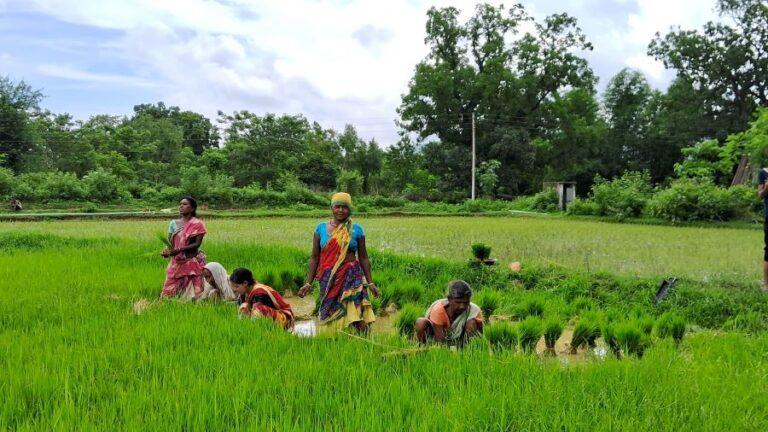
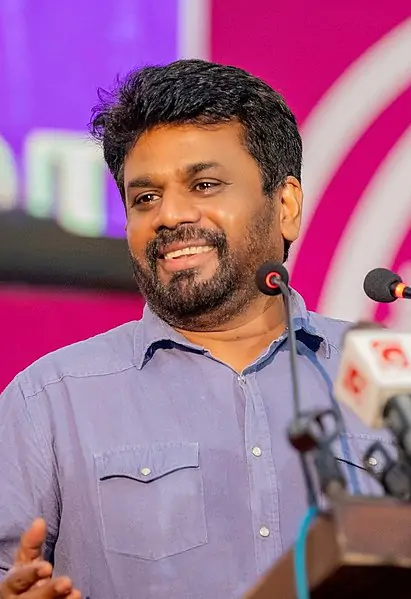
    In a significant move to support the agricultural and fishing sectors, Sri Lanka’s newly elected Leftist President Anura Dissanayake has instructed the treasury to reinstate subsidy programs halted by the Election Commission. Effective October 1, 2024, paddy farmers will receive an allowance of 25,000 rupees per hectare for the Maha season, which runs from September to March and coincides with the crucial northeast monsoon.

    This subsidy, aimed at enhancing the livelihoods of farmers, will be directly deposited into their bank accounts, according to the president’s media division. Dissanayake also announced a fuel subsidy for the fishing community, applicable to both multi-day and one-day vessels, ensuring that support extends to vital sectors of the economy.

    Former minister Kanchana Wijesekera expressed his approval, noting, “It’s good to see that schemes approved and allocated funds through the treasury… have recommenced under President Dissanayake.” The original subsidy programs were introduced in August 2024 but were put on hold by the Election Commission in the lead-up to the Presidential election.

    As Dissanayake prepares for the upcoming General Election on November 14, his National People’s Power party is striving for a two-thirds majority in Sri Lanka’s Parliament. The revival of these subsidy schemes marks a critical step in addressing the needs of the agricultural and fishing communities as the nation looks towards a more stable economic future.

    Sri Lanka’s New President to Expedite Foreign-Aided Energy Projects

    Anura Kumara Dissanayake announces a new committee aimed at accelerating approvals for international funding in the energy sector.

    In a bid to enhance energy infrastructure and development, newly elected President Anura Kumara Dissanayake revealed plans on Thursday to fast-track the approval process for foreign-funded energy projects. This initiative was disclosed during a meeting with senior officials from the Ministry of Power and Energy.

    According to the President’s Media Division, Dissanayake emphasized the critical need to expedite projects financed by the Asian Development Bank and other international loans. He announced the formation of a dedicated committee tasked with approving foreign-aid projects within a three-month timeframe to facilitate more efficient implementation.

    “By streamlining the approval process, we can ensure that foreign-supported projects are executed without unnecessary delays,” the President stated.

    During the meeting, Dissanayake also highlighted the importance of maintaining adequate fuel reserves to guarantee uninterrupted availability for the public and urged officials to carefully plan fuel procurement for the coming year. He further stressed the urgency of accelerating rural development projects to strengthen the rural economy by effectively directing funds to villages.

    India: Govt. Pushes for Unified Water Conservation Efforts

    The meeting brought together senior officials from various ministries, emphasizing a coordinated approach to prioritize the construction of rainwater harvesting systems designed to enhance groundwater levels across the nation.

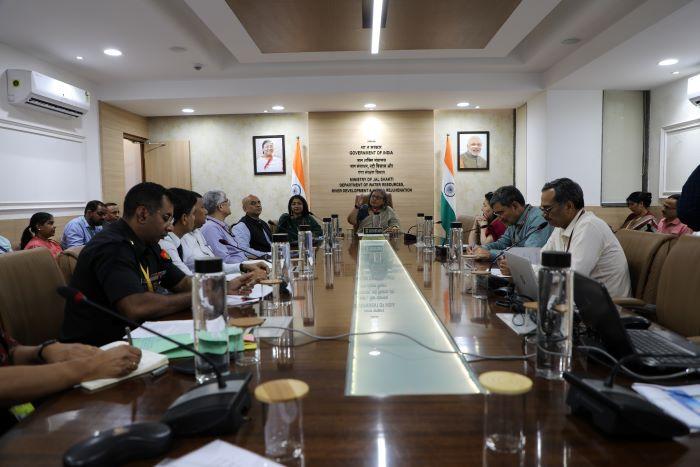
    In a significant move to enhance water conservation efforts, Ms. Debashree Mukherjee, Secretary of the Department of Water Resources, River Development & Ganga Rejuvenation, convened a high-level meeting today to streamline inter-sectoral collaboration for the construction of artificial recharge structures under the Jal Sanchay Jan Bhagidari (JSJB) initiative. This initiative is a crucial component of the Jal Shakti Abhiyan: Catch the Rain (JSA) 2024 campaign, launched by Prime Minister Narendra Modi earlier this month in Surat, Gujarat.

    The meeting brought together senior officials from various ministries, emphasizing a coordinated approach to prioritize the construction of rainwater harvesting systems designed to enhance groundwater levels across the nation. This initiative aims not only to address immediate water scarcity issues but also to promote sustainable water management practices.

    Action plan discussed:

    Participants discussed an action plan to assess Participants were urged to assess existing rainwater harvesting structures within their jurisdictions and formulate a mission-mode action plan focused on maximizing their potential for groundwater replenishment.

    Other issues discussed included:

    1. Role of Ministries: Each ministry was encouraged to leverage its current schemes and resources to facilitate the construction of artificial recharge structures, with a call for setting self-targets to expedite implementation and amplify impact.
    2. Community Engagement: Ministries, particularly those in education and youth affairs, were prompted to utilize their extensive networks to foster awareness and participation in water conservation efforts at the grassroots level.
    3. Affordable Solutions: Emphasis was placed on the construction of small, community-tailored recharge structures, with collaboration sought from public sector undertakings and industries to mobilize Corporate Social Responsibility (CSR) funds.
    4. Monitoring Progress: A real-time monitoring dashboard is being developed on the JSA: Catch the Rain portal, where Central Ministry Nodal Officers (CMNOs) will provide regular updates to ensure effective tracking of activities and outcomes.

    The meeting highlighted the urgent need for a unified governmental approach to prioritize water conservation as a national imperative. By fostering collaboration across various sectors, the JSJB initiative aims to create long-term solutions for water sustainability and resilience throughout the country. As water scarcity remains a pressing concern, the initiative stands out as a vital effort to secure a sustainable future for India’s water resources.

    Greenpeace India Welcomes India’s Leadership in signing the Historic UN Ocean Treaty

    This year, India has again suffered from extreme weather events causing too many casualties, meanwhile industrial overfishing, pollution and climate change impacts, such as rising sea levels and temperature, are dramatically affecting coastal fisheries and livelihoods.

    Greenpeace India on Thursday welcomed India’s officially signing the Global Ocean Treaty, also known as the High Seas Treaty or Agreement on Biodiversity Beyond National Jurisdiction (BBNJ). This milestone was achieved during the United Nations General Assembly yesterday in the New York time zone.

    Greenpeace India said this was a “significant step forward in ocean conservation.”

    Avinash Chanchal, Campaign Manager at Greenpeace India said: “By joining this historic effort, India has shown international leadership for marine biodiversity conservation as this new Treaty will allow the creation of large protected areas on the High Seas, beyond 200 nautical miles (or 370 kilometers) from the coastlines. Such large sanctuaries on the High Seas will support the recovery of marine life and increase its resilience to climate change. In return, a healthy Ocean is vital to protect the climate, and to support the livelihoods of millions of people in the region.”

    The Global Ocean Treaty, adopted in June 2023, will enter into force when at least 60 governments have written it into their national law and, as of today, only 10 countries have completed the ratification process.

    “India now needs to prioritize ratification of the Global Ocean Treaty and step forward as a regional driving force to implement bold measures for biodiversity protection and climate change mitigation”, says Avinash Chanchal.

    This year, India has again suffered from extreme weather events causing too many casualties, meanwhile industrial overfishing, pollution and climate change impacts, such as rising sea levels and temperature, are dramatically affecting coastal fisheries and livelihoods. Oceans and Climate are connected and supporting one another. Our leaders need to understand it and start protecting ecosystems that can best mitigate climate change and secure a sustainable future for all. Protecting the wide Ocean with a Global Treaty to create large scale sanctuaries on the High Seas is a good start, and one within reach.

    Now is the time to make history, said Chanchal. “Greenpeace India, is calling for the ratification of the Global Ocean Treaty to safeguard ocean biodiversity, support climate change mitigation and the future of the next generations,” said the Greenpeace India official in a press release.

    Planting the Rainbow Flag Firmly in Thailand

    In March 2024, Thailand’s House of Representatives approved a landmark marriage equality bill, later adopted by the Thai Senate in June. Expected to legalise same-sex marriage by the end of the year, Thailand will be the first Southeast Asian and third Asian country to do so. 

    By Peter A Newman and Holning Lau / East Asia Forum

    Thailand’s House of Representatives overwhelmingly approved a marriage equality bill in March 2024. Adopted by the Thai Senate in June, this law paves the way for the legalisation of same-sex marriage, likely by the end of 2024. Thailand will become the first country in Southeast Asia — and the third in Asia — to legally recognise same-sex marriage.

    Thailand is seizing the opportunity to close a substantial gap between its storied reputation as a ‘gay paradise’ and the experiences of many Thai LGBTQ+ people.

    Thailand’s culture of tolerance is often misread as a panacea for LGBTQ+ rights and inclusion. Many foreign tourists and migrants alike enjoy the experience of not feeling judged or forced to navigate their sexual orientation while traveling or living with a same-sex partner. This experience spans across everyday activities from hotel check-ins to company picnics.

    Yet tolerance of sexual and gender diversity has not been consistent across Thai society. And, importantly, tolerance is not the same as inclusion.

    Two published reviews of research and non-governmental organisation reports on Thai LGBTQ+ people’s lived experiences reveal that LGBTQ+ Thais suffer exclusion in various domains. This exclusion often begins in schools, where anti-LGBTQ+ bullying is pervasive and students are largely unable to wear uniforms that align with their self-identified gender. Troubling rates of anti-LGBTQ+ discrimination have also been documented across workplaces and healthcare settings. At home, many LGBTQ+ Thais face ostracism or, for some, outright rejection from their families. Responding to familial and social pressures — often to protect parents’ social image — LGBTQ+ Thais often carefully self-monitor to avoid disclosing their sexual or gender identity.

    Legalisation Same-Sex Marriage

    From this vantage point, the deep significance of marriage equality for Thai society becomes evident. The road to full inclusion for LGBTQ+ people in Thailand is still long. But marriage equality —approved in concert with equal rights to inherit property, consent to medical treatment for partners, benefit from marital tax savings and adopt children — carries enormous social and cultural significance.

    Legal recognition in the realm of the family plants the rainbow flag deeply in Thai soil. The deep cultural significance of LGBTQ+ inclusion in the family domain could help to catalyse LGBTQ+ inclusion in Thailand across other key aspects of life. Just as LGBTQ+ people merit dignity and equality in family life, they should be afforded dignity and equality in schools, the workplace, the healthcare system and the political system, including open representation in parliament.

    The legalisation of same-sex marriage in Thailand also carries significance for the rest of Asia. Importantly, marriage equality in Thailand — along with other recent developments in Asia — demonstrates that legal protections for same-sex couples are not a uniquely Western phenomenon.

    In 2019, Taiwan became the first jurisdiction in Asia to legalise same-sex marriage. In 2023, Nepal’s Supreme Court issued an interim order directing the government to register same-sex marriages. Also in 2023, Hong Kong’s highest court ordered the government to develop an alternative recognition system for same-sex couples, such as civil unions or civil partnerships. In July 2024, South Korea’s Supreme Court recognised rights for same-sex couples, holding that the state must provide health insurance for a gay man’s partner. Meanwhile, as litigation for same-sex marriage continues in Japan, local and prefectural governments have taken the initiative to grant partnership certificates to same-sex couples.

    Gender Recognition Law

    Opponents of LGBTQ+ rights in Asia often portray sexual and gender minority rights as cultural elements from the West that Asian societies ought not copy. But Thailand has not simply been copying the West. In fact, in significant ways, Thailand has been ahead of its Western counterparts.

    Thailand decriminalised consensual same-sex intimacy in 1956 — a law that had seen no actual prosecutions previously — decades before major Western countries. It was only in 1981 that the European Court of Human Rights ruled against the United Kingdom’s criminalisation of same-sex intimacy. The US Supreme Court’s landmark case decriminalising sodomy did not occur until 2003.

    In the last half decade, in response to concerted advocacy, Thailand’s Ministry of Education has taken steps towards incorporating positive representations of sexual and gender diversity into elementary and secondary school curriculums. In striking contrast, many US states have moved in the opposite direction, enacting ‘Don’t Say Gay’ laws to prohibit the representation of sexual and gender diversity in school curriculums.

    Situating Thailand’s marriage equality law within the country’s own history of law and policy reforms, it becomes apparent that marriage equality in Thailand amounts to much more than copying the West. Marriage equality in Thailand is a potent antidote to claims that LGBTQ+ rights do not belong in Asia.

    Now the task remains for Thailand to cultivate and strengthen the roots of LGBTQ+ inclusion established with same-sex marriage. Its next steps should include expanding legal protections — ​including passing a gender recognition law — and deepening social integration in education, economic affairs, healthcare and politics to achieve the full inclusion of LGBTQ+ people.

    Peter A Newman is Professor at the Factor-Inwentash Faculty of Social Work, University of Toronto and lead researcher of MFARR-Asia.

    Holning Lau is Willie Person Mangum Distinguished Professor of Law at the University of North Carolina School of Law.

    This piece has been sourced from East Asia Forum

    Image: Ted Eytan via the Australian Institute of International Affairs

    Sri Lanka: Slain Journalist Wickrematunge’s Family Appeals to New President for Justice

    Ahimsa Wickrematunge, Lasantha’s daughter, expressed a renewed sense of hope for justice following Dissanayaka’s election, which marked a significant political shift as the first leftist president in Sri Lanka’s history.

    The family of Lasantha Wickrematunge, the assassinated Sri Lankan journalist, made an emotional appeal on Tuesday to the newly elected president, Anura Kumara Dissanayaka, urging him to reopen investigations into the high-profile murder that has haunted the nation for over a decade.

    Wickrematunge, the founder and editor of The Sunday Leader, was killed on January 8, 2009, as he drove to work in Colombo. His assassination, widely condemned internationally, was attributed to members of a military intelligence unit connected to the powerful Rajapaksa family, who were in power at the time. The case has become emblematic of a broader culture of impunity regarding human rights violations in Sri Lanka, particularly against journalists.

    Ahimsa Wickrematunge, Lasantha’s daughter, expressed a renewed sense of hope for justice following Dissanayaka’s election, which marked a significant political shift as the first leftist president in Sri Lanka’s history. “We believe that this leadership will bring a fresh perspective to finally address the atrocities that have taken place in Sri Lanka’s recent human rights history,” she stated.

    Lasantha Wickrematunge was known for his fierce criticism of government corruption, including allegations against Gotabaya Rajapaksa, who was then the defence secretary. The journalist accused Rajapaksa of taking kickbacks related to arms procurement, including questionable deals involving second-hand MiG fighter jets. The gravity of his allegations positioned him as a target for retribution.

    Sri Lanka’s Troubled Past

    In the aftermath of Wickrematunge’s murder, his family sought justice by filing a lawsuit in a California court against Gotabaya Rajapaksa, who later became president himself. However, that case was put on hold when he acquired immunity in November 2019. The Rajapaksa family’s longstanding influence in Sri Lankan politics and military operations has long raised concerns about their involvement in a series of violent acts against dissenters.

    The outgoing administration, led by Ranil Wickremesinghe, did not take significant steps to reopen investigations into killings during the Rajapaksa era, including that of Wickrematunge and many other journalists. Dissanayaka’s election has prompted renewed discussions about the possibility of addressing past injustices and restoring accountability for human rights abuses.

    Wickrematunge was not just a journalist; he was also a politician and a vocal advocate for human rights. His assassination has been seen as a chilling indicator of the risks faced by journalists in Sri Lanka, where many have been silenced through violence or intimidation. Just days before his death, Wickrematunge was reportedly preparing to testify in a corruption case involving Gotabaya Rajapaksa.

    Human rights organizations and the United Nations have repeatedly highlighted Wickrematunge’s case as a symbol of Sri Lanka’s troubled past, where political dissent often led to violent retribution. The ongoing impunity surrounding his murder reflects a troubling trend in which state-sponsored violence against journalists and political activists continues to undermine the country’s democratic fabric.

    A Reminder of Unhealed Wounds

    In her statement, Ahimsa Wickrematunge called on the new president to demonstrate a commitment to justice. “We are looking for a genuine effort to investigate and hold accountable those responsible for Lasantha’s murder and the murders of countless others who stood for truth and transparency,” she said. The family hopes that under Dissanayaka’s leadership, there might be an opportunity for a new direction in governance that respects human rights and upholds the rule of law.

    The Wickrematunge family’s plea comes at a time when Sri Lanka is still grappling with the aftermath of economic turmoil and political unrest, which culminated in mass protests that led to the ousting of former president Gotabaya Rajapaksa in July 2022. The political landscape is shifting, and many Sri Lankans are eager for change and accountability.

    As the new administration settles into power, the Wickrematunge family’s appeal serves as a reminder of the unhealed wounds left by decades of civil strife and political violence. Activists and supporters of press freedom are already closely watching how Dissanayaka will address past grievances, especially concerning those who have been silenced by threats and violence.

    In a country where the assassination of journalists has often gone unpunished, the call for justice from Lasantha Wickrematunge’s family resonates beyond their personal loss. It speaks to the broader need for a transparent and just legal system that prioritizes human rights and accountability. As Sri Lanka embarks on a new political chapter, the hope for justice remains a crucial aspect of the nation’s healing process.

    Whether Dissanayaka’s government will rise to the occasion and confront the dark legacy of the past remains to be seen, but the Wickrematunge family’s appeal highlights the enduring quest for truth and justice in Sri Lanka.

    Image: Wikimedia

    Ozone Pollution Shrinks Tropical Forest Growth

    Ozone formed at ground level is an invisible pollutant with detrimental impacts. It reduces tree growth causing potential losses in carbon absorption. This could mean tropical forest carbon sink function is less effective than estimated

    By Claudia Caruana

    While the ozone layer in the atmosphere protects the earth from the sun’s radiation, at the ground level, ozone is a pollutant that reduces the growth of tropical forests and their ability to absorb carbon, new research shows.

    Tropical forests are vital “carbon sinks” – capturing and storing carbon dioxide that would otherwise stay in the atmosphere and contribute to global warming.

    According to the study, published in Nature Geoscience, ground-level ozone, which forms as a result of the burning of fossil fuels, has prevented the capture of 290 million tonnes of carbon per year since 2000.

    “Tropical forests play a crucial role in mopping up our carbon dioxide emissions,” said co-lead author Alexander Cheesman, a senior research fellow at the University of Exeter, UK and James Cook University, Australia.

    Ozone, which is also harmful to human health, is a short-lived molecule in the atmosphere but is continuously being formed by reactions with other compounds such as nitrogen oxides, he explained. It is formed by the combination of pollutants from human activities in the presence of sunlight.

    The researchers calculated that ground-level ozone reduces yearly growth in tropical forests by 5.1 per cent. In some regions the impact was greater, with Asia’s tropical forests losing 10.9 per cent of new growth.

    They estimated that ozone has resulted in a 17 per cent reduction in carbon removal by tropical forests so far this century. Monitoring ozone pollution and improving air quality will be vital to protect these carbon sinks, the researchers say.

    “Our ability to model and predict how the earth will react to a rapidly changing climate requires having a good understanding of how rapidly changing factors like air-pollution will impact systems in the coming decades,” said Cheesman.

    Carbon sequestration

    Co-author Flossie Brown, a professor of atmospheric chemistry at the Swiss public research university ETH, Switzerland, explained that under high ozone exposure the carbon removal ability of vegetation is decreased.

    Governments are increasingly putting emphasis on carbon sequestration by vegetation as a solution to climate change, noted Brown. However, tropical forests may contribute less to reducing climate change than previously thought, she cautioned.

     “Our research shows that ozone in the tropics can decrease the amount of CO2 tropical forests can remove. Without action to reduce ozone pollution, trees may absorb less CO2 than predicted,” said Brown.

    “Ozone concentrations across the tropics are projected to rise further,” due to increased emissions such as NO2 and chemical changes to the atmosphere as a result of global warming, she added.

    Improve monitoring

    The researchers say more work is needed to increase understanding of how changing air quality now and in the coming decades will impact tropical systems.

    Ozone, in particular, has often been neglected, said Brown.

    “Certainly, in some tropical areas, health impacts of ozone are overlooked by many as it is invisible,” she explained.

    She said governments, scientists, and institutions in the tropical regions were taking steps to improve monitoring of ozone pollution, and that “these measurements are vital to understanding ozone damage”.

    Lisa Emberson, an environmental pollution biologist in the Department of Environment and Geography, University of York, UK, told SciDev.Net the research provides important new evidence that tropical forest trees are as sensitive to ozone pollution as the more comprehensively studied temperate and boreal forests.

    “Given the crucial role we hope these tropical forests are going to play in carbon sequestration and in turn achieving net zero 1.5C climate targets, the new evidence provides a cause for concern that the carbon sink of these forests may be substantially less then envisaged due to the damaging effects of ozone pollution on tropical tree growth,” she said.

    The higher ozone concentrations associated with some Asian and Amazonian forest areas makes this ozone effect even more concerning, she said.

    Further studies are needed “to get a truer picture of the size and spatial magnitude of these effects across the range of tropical ecosystems found across the world”, she added.

    This piece has been sourced from SciDev.Net

    Image: Aulia Erlangga / CIFOR

    Summit of the Future: Time to Rethink ‘Outdated and Ineffective’ International Financial Architecture

    Only 44 delegations were present when the IMF was founded, compared to the current IMF membership of 190 nations. Yet developed countries continue to wield veto powers and outsized voting rights, while developing countries remain under-represented.

    Some of the world’s poorest countries spend more on debt repayments than on health, education and infrastructure combined, severely hampering their chances of developing their economies. At the Summit of the Future, reducing inequality and improving people’s lives by overhauling the entire international financial system will be high on the agenda.

    “The international financial architecture is outdated and ineffective and we are simply not equipped to take on a wide range of emerging issues,” UN Secretary-General António Guterres briefed on 12 September, as part of a global call for action to support the Summit.

    The issue of sustainable development and financing for development is a core theme of the flagship event, which began on Sunday, reflecting an urgent global situation for many poor countries facing unsustainable levels of debt that are crippling key areas for development, such as social protection and health care.

    Targets Missed

    The need for reform has been given added urgency by the rapidly approaching deadline to achieve the Sustainable Development Goals which make up the 2030 Agenda for Sustainable Development, created to set out measurable targets for building a better future by the end of the decade.

    The Goals were adopted by UN Member States in 2015, which means that in 2023 the halfway point was reached. The milestone was marked at last September’s SDG Summit, which was designed to give the Goals a much-needed shot in the arm, at a time when official UN statistics showed that only 15 per cent of the Goals had been met.

    A New Bretton Woods?

    In his policy brief on the subject, published in May 2023, the UN chief lays out proposals that could enable countries to pull their citizens out of poverty and reach their full potential, and calls for a “new Bretton Woods moment”, a reference to the groundbreaking post-World War Two international agreement that led to the creation of the International Monetary Fund (IMF) and the World Bank, organizations which decide how, and under which conditions, to lend money to countries in need of financial assistance.

    The context in which the IMF and World Bank were created is practically unrecognizable from today’s political and economic environment. For a start, only 44 delegations were present, compared to the current IMF membership of 190 nations. Yet developed countries continue to wield veto powers and outsized voting rights, while developing countries remain under-represented.

    The system, says Mr. Guterres, is now “entirely unfit for purpose in a world characterized by unrelenting climate change, increasing systemic risks, extreme inequality, entrenched gender bias, highly integrated financial markets vulnerable to cross-border contagion, and dramatic demographic, technological, economic and geopolitical changes.”

    The answers, according to the UN chief, involve ramping up financing to eradicate poverty and support sustainability, making the main decision-making bodies of the IMF and World Bank more democratic and representative, and creating a new, overarching, body to coordinate global economic decisions, with the power to act as an “Economic Security Council”.

    A Pact and a Pledge

    The proposals contained within the policy brief, and the pledges made at last year’s SDG Summit, form the basis of a series of discussions due to be held at the Summit of the Future, a landmark conference taking place at UN Headquarters in late September.

    They will also be reflected in the Pact for the Future, a document that will be adopted by UN Member States at the Summit and which represents, according to António Guterres, a pledge by all countries to “use all the tools at your disposal at the global level to solve problems – before those problems overwhelm us.” 

    In the Pact, signatory nations commit to taking “bold actions” to implement the 2030 Agenda for Sustainable Development, with a particular emphasis on ending hunger and poverty; reduce inequalities; and enhance ambition to address climate change.

    The Summit will build momentum towards the International Conference on Financing for Development (Ffd4), due to be held in Spain in June 2025.

    Underweight: A Persistent Negligence

    The gendered distribution of food within families continues to socialize girls to eat last and less, often surviving on leftovers after male family members had eaten. The practices persist as the girls are socially taught self-denial.

    By Rashmi Sinha

    One winter night in 2007, Rambha, a 14-year-old student at a Kasturba Gandhi Balika Awasiya Vidyalaya (KGBV), is rushed to a Medical College Hospital in Uttar Pradesh, India’s largest state. She has been complaining of a severe headache, body cramps, and fever. The diagnosis is acute anemia, with her hemoglobin (Hb) level critically low at 3.6 g/dL, compared to the normal range of 12-14 g/dL for her age. A blood transfusion saves her life, and with proper medical care, her health improves over the following months.

    Shabnam, a 15-year-old in the seventh grade, has her recurring headaches dismissed by her parents as excuses to avoid household chores. After joining KGBV, her schoolteacher takes her to a doctor, where her Hb level is found to be dangerously low at 3.8 g/dL. Targeted treatment and a nutritious diet eventually raised her hemoglobin to 8.6 g/dL, restoring her health.

    Mani, a 14-year-old from Bahraich (Uttar Pradesh), experiences frequent fainting spells that her family ignores. But at KGBV, she is diagnosed with tuberculosis. After treatment, her condition slowly improves.

    These are just a few of the many cases of adolescent girls suffering from severe anemia and malnutrition. For many of these girls, it was the proactive action of their school’s administration and regular health checkups that led to their diagnoses, most often for the first time. 

    Parental neglect is manufactured by their financial inability and social attitudes toward a girl child. For many families, daughters are seen as less deserving of resources, and when faced with the cost of medical care, abandoning them becomes the unfortunate path of least resistance. This abandonment reflects not only financial hardship but also deeply ingrained gender biases that perpetuate a cycle of neglect and malnutrition for girls. 

    Prevalence of anemia

    Much like their parents, the state too tends to assign only minimalistic and ritualistic attention without any functional accountability for results. Possibly, a reason, why despite so many programmes of the govt to end anemia and child protection, it persists and shows a significantly increasing trend (NFHS-5 2019-21).

    Routine medical check-ups in KGBV schools revealed that most girls who joined were severely underweight, anemic, with alarmingly low hemoglobin levels—a clear sign of chronic malnutrition. The prevalence of anemia led to various health issues: fatigue, weakness, breathlessness, palpitations, and an inability to concentrate in class. Menstruation, in many cases, exacerbated these symptoms, further weakening the girls.

    The gendered distribution of food within families continues to socialize girls to eat last and less, often surviving on leftovers after male family members had eaten. The practices persist as the girls are socially taught self-denial. As a result, malnutrition remains rampant among adolescent girls across all classes, castes, and ages, putting them at risk of severe health complications. 

    When a girl is diagnosed with a medical condition, the likelihood of her family seeking treatment is low. Local health centers and families often fail to recognize the severity of the problem, dismissing malnutrition as something that doesn’t warrant immediate medical intervention. 

    Mothers relying solely on outward physical appearance, are unable to understand and tackle the signs of severe anemia or malnutrition in their daughters. Accredited Social Health Activists (ASHA), Auxiliary Nurses & Midwives (ANM), Anganwadi workers (village-level child-mother caregivers), and Primary Health Centres are technically equipped to identify early signs of malnourishment and anemia. 

    But severe gender bias is failing girls completely on this. 

    Positive interventions

    The KGBV, initiated as part of the Government of India’s program to tackle bringing back dropped-out girls from most disadvantaged communities to formal education, was implemented in about thirty-three schools by Mahila Samkhya in Uttar Pradesh. As part of its residential school curriculum, it implemented structured health, and hygiene care interventions for girls, including a planned nutritional diet and outdoor sports. Within just three months, noticeable improvements were observed: the girls gained weight, their skin and hair became healthier, and their participation in school activities increased. The incidence of debilitating conditions decreased, and the girls’ overall well-being improved. This transformation was visible in their rapid outgrowing of clothes and shoes, perceptible signs of growth.

    Despite positive interventions like the above, the larger picture of gender-based malnutrition in India remains grim. Gendered starvation—where girls receive less food and nutrition than their male counterparts—is preventable, yet it persists. It requires gender-sensitive policies, targeted interventions, and adequate financial provisioning for sustainable change. 

    The National Family Health Survey-5 (2019-21), estimates that anemia prevalence among Indian adolescents aged between 15 and 19 years has slightly increased (girls: 55.8% to 59.1%, boys: 30.2% to 31.1%) from 2005-06.   It is 25.0 percent in men (15-49 years) and 57.0 percent in women (15-49 years). The stark difference between males and females shows the high levels of gender-based discrimination in intra-family food distribution.

    The Mahila Samakhya Uttar Pradesh experience demonstrates that targeted interventions, better resource allocation, education, and community awareness can save lives and empower girls to pursue their education and, ultimately, their potential.

    State must step in

    The journey is far from over, despite extensive government schemes aimed at providing free wheat and rice to 800 million people, the nutritional front remains weak. Large-scale food distribution programs do not necessarily translate into adequate nourishment for vulnerable groups, particularly adolescent girls.

    Addressing this ongoing crisis requires more than just food distribution—it demands gender-sensitive approaches across all programmes, holistic health and school-based interventions, and, above all, a commitment to ending the gendered deprivation of food and nutrition. Until these fundamental changes occur, the cycle of malnutrition will continue to endanger the lives of countless girls. We also, need to implement the programme of Anemia Mukta Bharat of GOI launched in 2018 with the highest precision and reach to all with the most rooted solutions.

    When a social and economic structure of society fails a family unit to fulfill all its basic responsibilities towards child care, the state must step in proactively and effectively to safeguard the child’s right to adequate health care and education with more stringent accountability for govt. programmes.  

    I had the opportunity of spending a few years of my professional journey with girls like Rambha, Shabnam, and Manju, as the Program Director of Mahila Samakhya Uttar Pradesh. It’s been more than 15 years since those critical interventions, and now, these girls must be approaching 30 years of age. I often wonder how their lives have unfolded—how the education and healthcare they received shaped their futures and, perhaps, how they are now passing it on to their children. Have they been able to break free from the cycles of deprivation that once threatened their life? 

    The thought of their underweight and the petiteness of their feeble bodies presses on me.

    To rephrase Gabriel Mistral,‘…many of the things we need can wait. The child cannot…her bones are being formed today, her blood is being made today. To her we can not answer tomorrow, her name is today.’

    Rashmi Sinha is Director at the Centre for Rural Policies and Studies, VillageNama. Formerly, she was Programme Director, Mahila Samakhya Uttar Pradesh and also a former UN Women India Consultant    l    Contact: [email protected]