More

    UN Proposes Global Tax Convention to Support Sustainable Development Goals

    The new tax convention is particularly significant for developing countries. An inclusive tax system is vital for these nations to strengthen their domestic resource mobilization and fund essential services aligned with the Sustainable Development Goals.

    By Eileen Travers

    The global tax system needed reform, and the UN answered the call on Friday with a blueprint for a new universal tax accord that represents an historic step towards changing the financial landscape.

    The aim is to help nations around the world boost economic growth and achieve the 2030 Agenda for Sustainable Development and its 17 goals.

    Why does a new convention matter?

    The UN tax convention means much to people around the world.

    A UN tax convention represents a major shift in how international taxation is approached, with the potential to significantly impact the architecture of global financial systems and how tax dollars are used for the public good.

    That’s why the UN’s Ad Hoc Committee to draft terms of reference for a UN framework convention on international tax cooperation concluded its second session by approving a package of guidance for the new treaty, taking a landmark jump towards building a legitimate, fair, stable, inclusive and effective international tax system.

    More inclusive and effective international tax cooperation is critical in enabling countries to respond to existing tax-related challenges, from digitalisation to global operations of large multinational enterprises, as well as to mobilise domestic resources and use tax policy for sustainable development. 

    What will a UN tax treaty cover?

    A UN framework convention should, among other things, establish a system that is inclusive, fair, transparent, efficient, equitable and effective for sustainable development, according to the Ad Hoc Committee’s terms of reference.

    That would include using approaches that will contribute to the achievement of sustainable development in three dimensions: economic, social and environmental.

    In addition, the framework convention should include commitments to achieve its objectives, from equitable taxation of multinational companies to addressing tax evasion and avoidance by high-net worth individuals – and ensuring their effective taxation in relevant Member States.

    Two legally binding protocols should also be developed simultaneously with the framework convention, including one to address taxation of income derived from the provision of cross-border services in an increasingly digitalised and globalised economy.

    How can a UN tax treaty help the Global South?

    An inclusive tax cooperation system can properly address the challenges of strengthening domestic resources to enable all countries to fund and promote policies aligned with the 17 Sustainable Development Goals (SDGs).

    “Only an international tax system that is fully inclusive will be legitimate and effective,” said Junhua Li, Under-Secretary-General for Economic and Social Development at the opening of the Ad Hoc Committee session.

    A global tax convention aims to ensure that large multinationals pay their fair share of taxes, regardless of where they operate, and is expected to generate significant additional tax revenues for many countries, especially those in the Global South.

    “The livelihoods and future of billions of people depend on governments being able to finance basic infrastructure, education, health services and climate action,” the Under-Secretary-General Li said. 

    Is there consensus on a global tax treaty?

    No.

    Developing countries largely support it, but some industrialised nations have expressed reservations, as reflected in the vote held in the Ad Hoc Committee on Friday.

    A total of 110 Member States voted in favour of the terms of reference for a new treaty, with 44 abstentions and eight nations voting against it (Australia, Canada, Israel, Japan, New Zealand, Republic of Korea, United Kingdom and the United States).

    Image: Dominic Chavez / World Bank

    Urgent Action Needed to Address South Asia’s Air Pollution Health Emergency: ICIMOD and HEI

    Leading regional and international public health and environmental scientists gathered in Kathmandu to push for progress in global pollution hotspots. India alone could save up to $1.3trillion in health benefits by 2030 by meeting air quality standards. Pakistan is estimated to lose $1bn a year in environmental degradation chiefly due to air pollution.

    Kathmandu-headquartered regional organisation the International Centre for Integrated Mountain Development (ICIMOD) has partnered with US-based Health Effects Institute (HEI), to drive action that tackles hazardous air pollution in Bangladesh, Bhutan, India, Nepal, Pakistan, and Sri Lanka, to improve public health across the region.

    The two organizations have come together to strengthen the skills of early-career researchers in air pollution and health in this global pollution hotspot and to raise awareness about the air quality crisis and accelerate action by convening regional medical experts, scientists, government decision-makers, and global thought leaders, with a specific focus on health and inequality.

    The Indo-Gangetic Plain and Himalayan Foothills (IGP-HF) region airshed includes some of the world’s most polluted countries, and air pollution in South Asia has risen more than 50 per cent since the start of this century. The average lifespan in South Asia is cut short by five years, compared to four months in America.

    “Air pollution costs the global economy $8 trillion a year, and in South Asia wipes out more than 10 per cent of gross domestic product per annum,” said Izabella Koziell, Deputy Director General of ICIMOD. “The longer-term health and productivity costs, and the fall-out from the temperature rises that air pollution accelerates, will be higher still. These are costs that low- and middle-income countries in this region can ill afford. Stakeholders from across the region simply have to come together to shift the dial on dirty air.”

    The poverty link

    While populations across the region are exposed to polluted air, exposure and vulnerability are greatest among those living in poverty – including those working long hours outdoors, communities living close to landfills or factories, or families unable to afford clean alternatives to solid fuels for cooking, lighting, or heating.

    “The moral and social case for action on clean air has long been clear, but the economic cost of this public health crisis is perhaps evenly striking,” Michal Krzyzanowski, Visiting Professor at Imperial College London said at a launch event for the new partnership in Kathmandu this week. “Studies in Europe find that for every euro invested in improving air quality, economies get €10 back in productivity and health.”

    India alone could save up to $1.3trillion in health benefits by 2030 by meeting air quality standards. Pakistan is estimated to lose $1bn a year in environmental degradation chiefly due to air pollution.

    Rapid industrialisation and population growth are key drivers of declining air quality in South Asia, with sources including transport, industry, agriculture, waste burning, and domestic solid fuel use.

    In the launch, HEI and ICIMOD brought together representatives from regional ministries of health, forest and environment, and medical research councils to explore the nexus between air pollution, health and social exclusion; with a particular focus on the role of physicians in building support for faster action among publics and policymakers. The event is supported by the United Kingdom Foreign, Commonwealth and Development Office (FCDO) under the Climate Action for Resilient Asia (CARA) initiative.

    A pernicious challenge

    A session on gaps in research on the nexus between pollution, health and social exclusion featured presentations from Ahsan Habib, from Dhaka University’s Department of Chemistry; Leki Dorji, from Bhutan’s Medical and Health Professionals Council; Ankit Viramgami, from India Council of Medical Research; and Meghnath Dhimal, from Nepal Health Research Council.

    Speakers included Michal Krzyzanowski, Visiting Professor at Imperial College London; Jill Baumgartner, Professor at McGill University; Om Kurmi, Associate Professor at Coventry University; and Narayan Babu Dhital, Assistant Professor at Tribhuvan University.

    Speaking at the opening of the event, Baumgartner said, “You look at the dramatic decrease in pollution in China over the last decade – where pollution has fallen 42 per cent – to see what’s possible with the right political will and public support. While pollution is a pernicious challenge, it is one that is eminently fixable, is hugely popular with the public, and where the long-term benefits of action far outweigh the upfront investments.”

    Kurmi, who has started a major family-cohort study of the health impacts of air pollution on children in two regions of Nepal, following similar research conducted in China, said, “Poverty is a huge driver of exposure to air pollution in South Asia. People working in polluting industries or with pesticides lack personal protective gear and are unable to afford the more drastic measures that more affluent families are adopting, such as buying air purifiers, moving out of urban centres, or sending children to schools outside cities. This lack of economic means further exacerbates existing inequalities – with early exposure resulting in health issues that ricochet down a child’s entire life-course and determine long-term socioeconomic outcomes.”

    South Asia: Two million deaths

    The HEI and ICIMOD partnership on inequalities, health and air pollution follows a high-level dialogue with key policymakers from both national and state and municipal governments across the IGP-HF in Bhutan this June, convened by ICIMOD and World Bank, which brought together development partners, and donors and ministries of energy and natural resources, environment, forests and climate change, science technology and environment and pollution control boards.

    Pallavi Pant, Head of Global Health at the Health Effects Institute and a co-organizer of the event said, “Global progress towards clean air shows that sustained, evidence-based programs can achieve clean air and improve health for all. However, in South Asia, more than two million deaths were linked to air pollution in 2021 alone, with many more people living with chronic diseases. In hopeful news, the research on the link between air pollution and health in the region has grown significantly, and the workshop will showcase some of the data that is available to inform action.”

    HEI has also recently developed a public database of peer-reviewed research on air pollution and health in South Asia (DoSAAH). It features more than 1000 studies from across the region and can be used by decision makers to inform policy action.

    The sustained focus on air reflects a ratcheting up of collective ambition to tackle soaring pollution in the IGP-HF zone, with greater understanding of how air pollution intersects with and compounds existing inequalities considered crucial in guiding the development of the most cost-effective and impactful interventions, policies, and plans.

    The regional momentum follows a step-change in global recognition of the health impact of climate policies, with health ministers attending the climate talks for the first time last year and the COP Presidency and World Health Organisation issuing a declaration on climate and health.

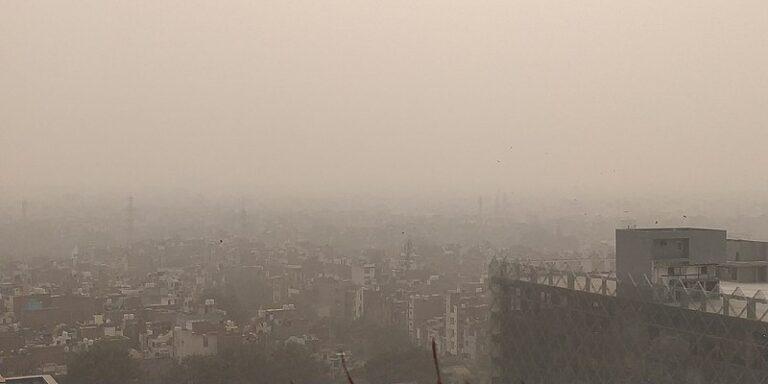
    Image: Delhi Pollution; Wikimedia

    Sri Lanka Launches Island-Wide Elephant Census amid Conservation Efforts

    The census comes at a critical time as Sri Lanka grapples with an escalating human-elephant conflict. The encroachment of commercial and agricultural development into elephant habitats has led to increased clashes between humans and elephants.

    Sri Lanka has embarked on a comprehensive census to count its wild elephants, marking the first such effort in 13 years. The Department of Wildlife Conservation initiated the island-wide enumeration on Saturday, aiming to provide a current assessment of the nation’s elephant population amid growing conservation concerns.

    The last census, conducted in 2011, estimated the wild elephant population at 5,879. However, since then, Sri Lanka has faced significant challenges, including high rates of elephant mortality due to gunshot wounds, electrocution, and collisions with trains. Government data reveals that the Anuradhapura District has experienced the highest number of tusker deaths.

    Deputy Commissioner of Wildlife for the Anuradhapura Zone, Keerthy Chandraratne, disclosed that 1,310 officers will be deployed throughout the Anuradhapura Wildlife Zone for the census. Officers are stationed in forests and near water bodies, known habitats for elephants. Across the country, 3,130 survey centers have been set up, with the census expected to conclude on August 19.

    The census comes at a critical time as Sri Lanka grapples with an escalating human-elephant conflict. The encroachment of commercial and agricultural development into elephant habitats has led to increased clashes between humans and elephants. This conflict is exacerbated by the shrinking of elephant habitats due to expansion in rice cultivation and other agricultural activities, particularly since the early 1980s under the Mahaweli River Valley irrigation program.

    Shooting, habitat destruction

    In addition to habitat loss, Sri Lanka’s leading Buddhist institutions have reported a shortage of ‘domesticated’ elephants during the peak perahera festival season, underscoring the impact of declining elephant numbers on cultural practices.

    Sri Lankan elephants (Elephas maximus maximus), a subspecies of the Asian elephant, are now classified as endangered due to their rapidly diminishing habitat. Historically, the island’s elephant population was significantly larger. In the nineteenth century, during British colonial rule, it is estimated that around 14,000 elephants roamed Sri Lanka. However, extensive shooting and habitat destruction reduced their numbers drastically.

    The Sri Lankan elephant population was approximately 19,500 in the early 19th century and saw a decline to around 7,000 to 8,000 by the 1920s. By 1969, numbers had dropped to between 1,745 and 2,455, and by 2011, the population had rebounded to 5,879. A 2019 estimate suggested a population of around 7,500, reflecting some recovery.

    The Department of Wildlife Conservation has been proactive in managing the human-elephant conflict through measures such as erecting electric fences. These efforts aim to mitigate the dangers posed by elephants encroaching on human settlements and agricultural lands.

    Despite these efforts, the ongoing expansion of commercial and agricultural projects continues to threaten elephant habitats. Many protected areas are small and fragmented, unable to support the extensive home ranges of elephants, leading to increased encounters with human populations.

    Conflict with humans

    The Sri Lankan elephant, noted for its larger size compared to other Asian elephant subspecies, is primarily found in the island’s dry zones, including national parks such as Udawalawe, Yala, Lunugamvehera, Wilpattu, and Minneriya. The population is now largely restricted to these areas, with a significant portion of their habitat lying outside protected zones.

    Efforts to promote nature tourism using elephants have been ongoing, but the reduction in habitat and increased conflict with humans pose significant challenges to conservation efforts. The census aims to provide a clearer picture of the current population, informing future conservation strategies and policies.

    As the census progresses, wildlife experts and conservationists hope it will lead to renewed efforts to protect Sri Lanka’s elephants and their habitats, ensuring that these majestic creatures can continue to thrive on the island.

    Image: Wikimedia image

    Yunus Criticizes Hasina’s Legacy of “Dictatorship”

    Muhammad Yunus has reasons to be bitter about Hasina and her Awami League. Earlier this year, a Bangladeshi labour court had sentenced him and three of his colleagues to six months in prison on for violating the country’s labour laws.

    In a dramatic briefing to foreign diplomats on Sunday, Bangladesh’s Interim Government Chief Adviser, Professor Muhammad Yunus, launched a scathing critique of former Prime Minister Sheikh Hasina’s administration, accusing it of systematically dismantling the nation’s institutions in a bid to retain power.

    Speaking at the InterContinental Hotel in Dhaka, Yunus described Hasina’s tenure as a “dictatorship” that has severely undermined the country’s judiciary and other key institutions. This briefing marks the first of its kind since the inception of the interim government, which took office following Hasina’s abrupt departure from Bangladesh on August 5.

    Yunus, who assumed his role at the behest of student activists, paid tribute to the students and others who sacrificed significantly during recent protests. “The judiciary has been broken,” Yunus asserted, highlighting what he sees as the extensive damage done to Bangladesh’s democratic frameworks under Hasina’s rule.

    The interim administration, according to analysts, aims to restore democratic processes and organize a free and fair election. However, the current situation in Bangladesh is described as unprecedented. The abrupt removal of Hasina has led to significant upheaval, with key figures from her government resigning under pressure from ongoing student-led protests.

    Recently, the Chief Justice of the Supreme Court, along with six of the seven justices from the Appellate Division, were forced to step down. Additionally, prominent officials, including the heads of the central bank, police, and military intelligence, as well as independent regulatory bodies and university vice-chancellors, have resigned.

    Restoring law and order

    Rezaul Karim Rony, editor of Bangladesh’s Joban magazine, commented on the situation, stating, “These resignations and purges were absolutely necessary. It’s important to understand that all these individuals were appointed by an autocratic regime and were beneficiaries of it.” Rony further emphasized that the removal of Hasina was the outcome of a widespread student-led revolution, describing the nation’s reaction as a “happy shock.”

    Despite the initial euphoria, Rony warned that the interim government would soon face substantial challenges from the remnants of the previous regime. He expressed a belief that a fully elected political government would be better positioned to tackle these issues than the current interim administration.

    Sharmeen Murshid, one of the 17 advisors to Yunus with a rank equivalent to that of a cabinet minister, echoed the sentiment that it is premature to discuss election timelines. “We have more pressing issues to address right now, such as restoring law and order,” Murshid said.

    The recent fall of Hasina’s government has also heightened public scrutiny of the police force, which has been accused of widespread corruption. Over 25 police officers have been killed in the unrest, and at least 30 police stations have been set ablaze. Police, including those handling traffic, were largely absent from the streets until the interim government began reforming the force on Tuesday.

    Murshid underscored that the revolution spearheaded by students demands comprehensive reform to prevent any future political regime from becoming autocratic. “If that requires time, we would urge all political parties and the public to be patient,” she said.

    Awami League reorganizing

    Political dynamics have shifted dramatically since Hasina’s departure. The opposition parties, particularly the Bangladesh Nationalist Party (BNP) and Jamaat-e-Islami, which were heavily repressed under Hasina’s rule, have pledged cooperation with the interim government. In contrast, the Awami League, which Hasina led, is reportedly attempting to destabilize the country.

    Sajeeb Wazed Joy, Hasina’s son, has been vocal in media outlets and social media from his base in the US, asserting that his mother has not officially resigned and remains the legitimate prime minister. His statements have included calls for Awami League supporters to regroup and prepare for a counter-revolution, while also urging BNP leaders to push for early elections.

    In response, there have been reports of Awami League supporters staging demonstrations and assaults in Hasina’s home district of Gopalganj, and unrest among the Hindu minority, traditionally aligned with the Awami League. While some Indian media outlets have reported violence against Hindus, local media have clarified that only two deaths — one police officer and one Awami League leader — occurred in these incidents. There have also been attempts by Awami League activists to incite sectarian tensions, though these have been intercepted.

    Analyst Shayan S Khan observed that the Awami League appears to be reorganizing despite early indications of dissolution. He noted, “At the moment, they are even more vocal than the BNP in calling for early elections.” Khan added that while the interim government has signaled a preference for reform over setting an election date, it will eventually need to establish a timeline for its governance to match the scale of its reform agenda.

    As Bangladesh navigates this period of intense transition, the interim government faces the dual challenge of stabilizing the country while laying the groundwork for a more democratic future.

    Convicted and under investigation

    Muhammad Yunus has reasons to be bitter about Hasina and her Awami League. Earlier this year, a Bangladeshi labour court had sentenced him and three of his colleagues to six months in prison on for violating the country’s labour laws. Yunus and his three colleagues from Grameen Telecom, one of the firms he founded, were accused of violating labour laws when they failed to create a workers’ welfare fund in the company.

    Sheikh Merina Sultana, head of Dhaka’s Third Labour Court, delivered the verdict. The court also fined Yunus 30,000 takas ($272).

    The court recorded evidence in the case filed by labour officials of the government in the space of four months. Yunus’s lawyers allege that the case’s proceedings were completed in a tearing haste.

    The 83-year-old Bangladeshi social entrepreneur, banker, economist and civil society leader, who said he would appeal the decision told reporters, “I have been punished for a sin I did not commit. If you want to call it justice, you can.”

    The court gave the founder of the Grameen Bank and his colleagues 30 days to appeal the verdict and sentence. It simultaneously granted them bail as well.

    Taking note of the government’s reletless actions against the Nobel laureate, 40 world leaders and Nobel laureates had written appealed to Bangladesh Prime Minister Sheikh Hasina over her government’s treatment of Yunus. They said that he had been unfairly attacked and repeatedly harassed.

    Sucking poors’ blood?

    Muhammad Yunus was awarded Nobel Peace Prize in 2006 for founding Grameen Bank and the pioneering the concepts of microcredit and microfinance. He showed the worth of lending to entrepreneurs from the poorest sections of Bangaldeshi society who were cast aside by the conventional banking system.

    But Yunus also earned the ire of Prime Minister Sheikh Hasina, who accused him of “sucking blood” from the poor. Prime Minster Hasina made several scathing verbal attacks against him.

    He was removed from the post of managing director in 2011 in a row over his retirement age. This, his supporters say, was done at the behest of the government.

    Muhammad Yunus has been embroiled in a longstanding row with the government. He is battling at least 168 cases, including alleged tax evasion and misappropriation of profits. The latest decision acrues from his role as chairman of Grameen Telecom, a nonprofit company.

    Embezzlement charges

    Earlier this year, Bangladesh’s Anti-Corruption Commission (ACC) had approved a chargesheet against Nobel Laureate Dr Muhammad Yunus and 13 others in a graft case. This is the latest addition to the legal troubles directed at Dr Yunus.

    The Commission cleared the way to submit the chargesheet against them after deputy director of ACC Md Gulshan Anwar filed the case with its Dhaka-1 integrated district office against Yunus and 12 others for allegedly embezzling Taka 250 million (25 crore) from the company on 30 May 2023.

    The charge against Dr Yunus is that he presided over Grameen Telecom’s 108th board meeting that paved the way for the company to open a bank account in a branch of the Dhaka Bank Limited. But, investigations revealed that the account was indeed opened a day prior to the meeting and that the decision of the meeting was only covering up the lapse.

    The ACC says that over Taka 260 million (26 crore) was transferred to the account on different occasions, as per ‘fake settlement agreements’ and decision of the board. But, before even distributing the share of the company’s profit to the workers, and letting them know, Dr Yunus, in collusion with others embezzled about Taka 250 million (25 crore) from the fund.

    Image: Wikimedia Commons

    Bold, New Chapter in India’s Vision for Agricultural and Economic Transformation: Narendra Modi

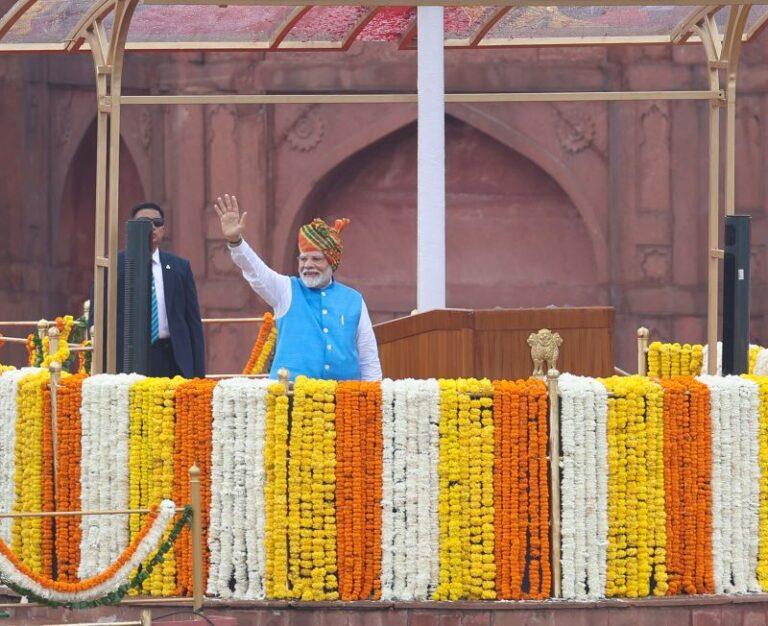
    In his address to the nation on the occasion of India’s Independence Day, Prime Minister Narendra Modi outlined a comprehensive vision for transforming India’s agricultural and economic landscape, addressing pressing social issues, and advancing the country’s global standing.

    In a powerful address to the nation on the occasion of the country’s Independence Day on Thursday, Prime Minister Narendra Modi outlined a comprehensive vision for transforming India’s agricultural and economic landscape, addressing pressing social issues, and advancing the country’s global standing.

    Speaking from the ramparts of the Red Fort, Modi emphasized the urgent need to modernize India’s agricultural practices, moving away from outdated traditions. He highlighted the government’s commitment to providing farmers with access to affordable loans, cutting-edge technology, and robust marketing support to enhance the value of their produce. This initiative aims to equip farmers with end-to-end assistance, ensuring their products reach markets efficiently and effectively.

    Acknowledging the deteriorating health of India’s soil due to excessive use of fertilizers, Prime Minister Modi expressed gratitude to the thousands of farmers who have embraced organic farming. He revealed that this year’s budget includes substantial provisions to promote organic agriculture, aligning with a global shift towards sustainable and eco-friendly practices.

    Global Organic Food Basket

    Modi projected India as a potential global leader in organic food production, positioning the country to meet the rising international demand for organic products. He envisioned India becoming the world’s organic food basket, capitalizing on the global trend towards holistic healthcare and organic consumption.

    Modi reiterated India’s commitment to addressing climate change through the Green Hydrogen Mission and other environmental initiatives. He expressed pride in India’s achievements, including surpassing Paris Accord targets and advancing renewable energy goals. The Prime Minister emphasized that India’s ongoing efforts are not just about meeting national objectives but contributing to global welfare and sustainability.

    With these ambitious plans and commitments, India is poised to embark on a transformative journey, striving to enhance its agricultural practices, bolster its global economic presence, and uphold democratic values while addressing critical social issues, he said.

    Empowering Youth and Women

    Modi reaffirmed the government’s dedication to improving the lives of farmers, enhancing village infrastructure, and providing access to healthcare, education, and employment opportunities. He highlighted the focus on women-led development, noting the significant strides women have made in various sectors, including defense, space, and entrepreneurship.

    Technological Frontiers

    On the technological front, Modi highlighted India’s progress from struggling with 2G to rolling out 5G, with ambitious plans for 6G development. He emphasized the country’s commitment to becoming a significant player in semiconductor manufacturing, AI, and Industry 4.0. The Production-Linked Incentive (PLI) scheme and Foreign Direct Investment (FDI) reforms have bolstered India’s manufacturing sector, setting the stage for it to become a global hub.

    Democratic Values

    In closing, Modi praised its role in uniting the nation and safeguarding the rights of marginalized communities. As India celebrates the 75th anniversary of its Constitution, he urged citizens and government institutions to fulfil their duties, emphasizing that collective responsibility strengthens democracy and promotes national progress. Modi also advocated for the establishment of a Secular Civil Code, moving away from discriminatory practices, and promoting equality and fairness across the nation.

    Global Rise in Heat Stress Threatens Workers’ Health and Safety, New ILO Report Warns

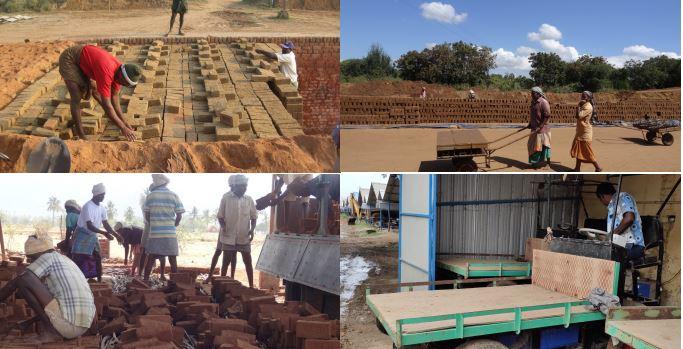
    In Chennai, a multi-component heat stress prevention plan was introduced at a brick kiln, including shaded work areas, improved sanitation, and electric vehicles to reduce manual labour. The plan led to a 57 per cent increase in productivity and significant improvements in worker health and safety.

    The International Labour Organization (ILO) has reported a significant increase in the number of workers globally affected by heat stress, an issue that poses severe health risks and potentially deadly outcomes. The ILO’s latest report, titled “Heat at Work: Implications for Safety and Health,” highlights that extreme heat is not just an environmental concern but a growing workplace hazard affecting millions of workers worldwide.

    The report underscores that heat stress, often referred to as a “silent killer,” can lead to immediate health crises such as heatstroke and, in extreme cases, death. Long-term exposure to excessive heat can also result in chronic health conditions affecting the heart, lungs, and kidneys. The ILO’s findings paint a concerning picture of how increasing temperatures are endangering workers in various regions, with some areas experiencing unprecedented levels of heat stress.

    According to the report, workers in Africa, the Arab states, and Asia and the Pacific are experiencing the highest levels of heat exposure. Specifically, 92.9 per cent of the workforce in Africa, 83.6 per cent in the Arab states, and 74.7 per cent in Asia and the Pacific are affected by excessive heat, surpassing the global average of 71 per cent reported in 2020. Notably, Europe and Central Asia have seen the most rapid increase in heat exposure over the past two decades, with a 17.3 per cent rise from 2000 to 2020, nearly double the global average increase.

    Heat stress year-round

    The Americas and Europe and Central Asia are also witnessing significant rises in heat-related workplace injuries. Since 2000, injury rates in these regions have surged by 33.3 per cent and 16.4 per cent, respectively. This increase is partly attributed to rising temperatures in areas where workers are less accustomed to extreme heat.

    The ILO’s report reveals that in 2020 alone, 4,200 workers died due to heatwaves, while a staggering 231 million workers were exposed to such conditions—a 66 per cent increase from 2000. However, the report emphasizes that the majority of heat-related injuries occur outside of heatwaves. Approximately 90 per cent of workers are exposed to excessive heat throughout the year, and 80 per cent of heat-related injuries occur during non-heatwave periods.

    The ILO Director-General Gilbert F. Houngbo stresses the urgency of addressing this issue. “As the world continues to grapple with rising temperatures, we must protect workers from heat stress year-round,” he asserts. “Excessive heat is creating unprecedented challenges for workers worldwide, not only during heatwaves but throughout the year.”

    Financial impact

    The financial impact of heat stress is substantial. The ILO estimates that improving safety measures to combat heat stress could save up to $361 billion globally in lost income and medical expenses. Low- and middle-income economies are particularly hard hit, with the costs of heat-related injuries reaching up to 1.5 per cent of national GDP.

    “This is not only a human rights and workers’ rights issue but also an economic one,” Houngbo adds. “Middle-income economies are bearing the brunt. We need year-round heat action plans and legislation to protect workers, alongside stronger global collaboration to harmonize heat stress assessments and interventions.”

    The UN Secretary-General, Antonio Guterres, echoes this sentiment, emphasizing the global nature of the crisis. “If there is one thing that unites our divided world, it’s that we are all increasingly feeling the heat. We must rise to the challenge of rising temperatures and step up protections for workers, grounded in human rights.”

    The ILO report also explores legislative measures across 21 countries to identify effective heat safety strategies. It builds on a previous report released in April, which highlighted the severe health risks of excessive heat affecting an estimated 2.4 billion workers. The April report revealed that excessive heat alone contributes to 22.85 million occupational injuries and 18,970 deaths annually.

    India: Brick kiln workers

    In India, recent studies have shed light on the severe impacts of heat stress on workers. A 2024 study of 800 pregnant women in India found that 47 per cent were exposed to excessive heat at work, leading to higher maternal body temperatures and moderate dehydration. Additionally, a study funded by India’s Department of Science and Technology focused on workers in brick kilns in Chennai. It found that 53 per cent of workers faced heat stress levels exceeding recommended limits even during cooler periods, with 83 per cent reporting adverse heat-related symptoms.

    India has implemented measures to address heat stress through its Factories Act of 1950, which mandates that the wet bulb temperature in workrooms should not exceed 30°C. The National Disaster Management Authority, in collaboration with the Ministry of Home Affairs, has also developed guidelines for managing heatwaves, emphasizing worker education, proper hydration, regulated work schedules, and necessary medical facilities.

    In Chennai, a multi-component heat stress prevention plan was introduced at a brick kiln, including shaded work areas, improved sanitation, and electric vehicles to reduce manual labour. The plan led to a 57 per cent increase in productivity and significant improvements in worker health and safety.

    These measures serve as a model for addressing heat stress in various industries and highlight the importance of proactive interventions to protect workers. As global temperatures rise, the need for comprehensive heat stress management strategies becomes increasingly critical to safeguard worker health and ensure workplace safety.

    Modi on India’s Vision for 2047: A Commitment to Development, Inclusivity, and Innovation

    While ending his annual speech from the ramparts of the Red Fort, Prime Minister Narendra Modi announced a mission to introduce one lakh young individuals into politics, particularly those from non-political backgrounds in a bid to refresh India’s political landscape.

    As India grapples with the increasing frequency and intensity of natural disasters, Prime Minister Narendra Modi on Thursday extended his heartfelt condolences to those affected. While addressing the nation on the occasion of the country’s Independence Day, the prime minister assured that the government stands in solidarity with disaster victims and emphasizes the urgent need for resilience and recovery.

    The Prime Minister’s address highlighted that the vision of “Viksit Bharat 2047” is not just a lofty slogan but a concrete goal underpinned by extensive planning and public participation. He commended the millions of citizens who have contributed suggestions toward achieving a developed India by the year 2047, the centenary of the country’s independence. This collective input reflects the dreams and aspirations of various segments of society, from the youth and elderly to farmers and urban dwellers.

    One of the key promises fulfilled under this vision has been the provision of electricity to 18,000 villages, addressing the needs of the 2.5 crore families that previously lived in darkness, he said. This initiative has significantly boosted public confidence in the government’s commitment to improving basic infrastructure. The successful expansion of the ‘Swachh Bharat’ mission has also seen a widespread embrace of cleanliness and environmental responsibility among citizens, spanning affluent urban areas to the most remote rural communities.

    Resistance to change

    The Prime Minister said that further strides have been made with the ‘Jal Jeevan Mission,’ which now ensures clean drinking water for 15 crore families. This achievement highlights the government’s focus on eliminating disparities in basic amenities, particularly among marginalized and underserved communities. The Prime Minister emphasized that these reforms aim to address longstanding inequities and improve living conditions across all societal strata.

    Acknowledging the challenges faced even decades after gaining independence, the Prime Minister criticized the prevalent attitude of complacency and resistance to change. He stressed the need to overcome this inertia to drive meaningful reforms and progress. He iterated that the administration’s commitment to addressing citizens’ hopes and demands has led to significant policy changes and improvements in various sectors, including infrastructure, healthcare, and education.

    Infrastructure development has been a cornerstone of recent efforts. The government has invested in modernizing railways, airports, ports, and broadband connectivity, ensuring that even the most remote areas benefit from essential services. Significant progress includes the construction of modern hospitals and schools, revitalization of water bodies, and installation of optical fiber networks in panchayats.

    A particular focus has been on the North East region, where enhanced medical infrastructure and road networks have integrated remote areas into the national mainstream. These developments aim to address the needs of the most disadvantaged groups, including tribal people and marginalised communities.

    The Prime Minister highlighted the impact of women’s self-help groups, noting that 10 crore women have become economically self-reliant. The allocation of funds to these groups has been doubled to support their ongoing activities and further promote economic independence.

    Political Reform and Inclusivity

    The Prime Minister outlined ongoing reforms aimed at reducing bureaucratic red tape and simplifying legal processes. By abolishing outdated laws and replacing them with a new criminal justice framework focused on justice rather than mere punishment, the government seeks to create a more efficient and fair legal system.

    Looking ahead, the government’s focus includes enhancing the education system to align with the needs of the twenty-first century. The introduction of a new education policy aims to retain talent within India and reduce the financial burden on families sending their children abroad for higher education. Additionally, the expansion of medical education with 75,000 new seats over the next five years is intended to address the current shortfall.

    The Prime Minister concluded by underscoring the nation’s aspirations and the commitment to accelerating progress in every sector. The vision for a “Viksit Bharat” includes not only economic growth but also a deep-seated commitment to equality and compassion. With ongoing efforts to foster innovation and address basic needs, India is poised to continue its trajectory toward becoming a leading global power by 2047.

    Turning to social issues, Prime Minister Modi called for a renewed focus on combating crimes against women. He stressed the need for swift justice and highlighted the importance of public discourse on punishing perpetrators to deter future offenses.

    Modi also addressed the persistent issue of corruption, condemning those who glorify corrupt practices. He pledged to continue his fight against corruption, emphasizing the need to restore faith in the system and create an environment where corruption is universally condemned.

    Ending his speech from the Red Fort, Modi announced a mission to introduce one lakh young individuals into politics, particularly those from non-political backgrounds in a bid to refresh India’s political landscape. This initiative, he said, aims to combat dynastic politics and caste-based discrimination, fostering a more inclusive and dynamic democratic environment.

    Yale Survey Reveals Diverse Climate Change Opinions Across India

    Levels of knowledge and perceptions vary significantly by region. Nationally, about 85 per cent of respondents are worried about severe heat waves and droughts, while 76 per cent are concerned about cyclones and 71 per cent about floods.

    A groundbreaking national survey has shed light on the varied opinions and levels of awareness regarding climate change across India. The study highlights significant geographic disparities in climate knowledge, perceptions, and policy preferences, offering a new tool for policymakers to tailor climate action more effectively.

    India, a nation acutely vulnerable to climate change impacts, has long been a crucial participant in global climate negotiations. The country has rolled out numerous national and state-level policies aimed at enhancing energy efficiency, developing clean energy sources, and preparing for climate-related impacts. Currently, 33 States and Union Territories have implemented state-level action plans to combat climate change. Despite these efforts, the survey reveals that public understanding and concerns about climate change are far from uniform across the country.

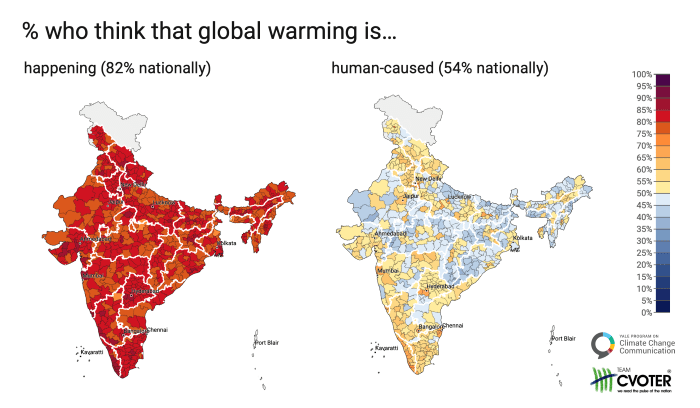
    The survey, titled ‘Variations in climate opinions across India’ carried out by the Yale Program on Climate Change Communications introduces the Yale Climate Opinion Maps for India that provides detailed insights into public responses to climate change across 34 of India’s 36 states and union territories. This pioneering tool offers a granular view of climate change knowledge, beliefs, risk perceptions, and policy preferences.

    Key Findings

    The survey shows that while a large majority of Indians are concerned about climate-related hazards, their level of knowledge and perceptions vary significantly by region. Nationally, about 85 per cent of respondents are worried about severe heat waves and droughts, while 76 per cent are concerned about cyclones and 71 per cent about floods.

    However, there is notable geographic variation in climate awareness. For instance, 52 per cent of people in Gujarat report knowing a lot or something about global warming, compared to just 33 per cent in Maharashtra. Additionally, people living in state capitals generally have a higher level of climate change knowledge compared to those in rural districts.

    When respondents were provided with a brief definition of global warming, 82 per cent acknowledged that it is happening. Yet, only 54 per cent attributed global warming to human activities, revealing a significant gap between public understanding and the scientific consensus, which attributes global warming primarily to human actions. For example, in Thiruvananthapuram, Kerala, 68 per cent of respondents recognize human activities as the primary cause of global warming, whereas only 43 per cent do so in Kheri, Uttar Pradesh.

    Risk Perceptions

    The survey also highlights the high prevalence of personal experience with climate change among Indians. A striking 78 per cent of respondents reported having personally felt the effects of global warming, a figure significantly higher than the 44 per cent reported in the United States. However, this experience varies widely, from 90 per cent in Haryana to just 49 per cent in Andhra Pradesh. Generally, northern states report more personal experiences with climate change compared to their southern counterparts.

    Despite varying personal experiences, risk perceptions about climate change impacts are more consistent. Nationally, 85 per cent of Indians are worried about global warming, and 74 per cent believe it will worsen heat waves. Concerns about climate change impacts are notably high in states like Kerala, Goa, and Punjab, while states such as Karnataka and Tamil Nadu exhibit relatively lower risk perceptions.

    The survey also underscores the regional differences in perceived climate risks. For example, drought is a major concern in the northwest, while flooding is more pressing in the east. The southern states face a mix of cyclone, drought, and flooding risks. Furthermore, plant and animal extinctions and food shortages are widely acknowledged as potential consequences of global warming, with 70 per cent and 64 per cent of respondents respectively, foreseeing these risks.

    Policy Preferences

    In terms of policy preferences, there is broad support for transitioning to clean and renewable energy sources. Nationally, 58 per cent of Indians advocate for reduced fossil fuel use, with majorities in all but 16 districts supporting this stance. Similarly, 59 per cent favour increased use of renewable energy. Support for these policies varies by region: Andhra Pradesh shows the lowest support for reducing fossil fuels (37 per cent), while Haryana demonstrates the highest support (70 per cent). Support for renewable energy is strongest in Goa and Kerala (72 per cent) but weakest in Assam (41 per cent).

    Implications for Policymaking

    Understanding these regional variations in climate change knowledge and opinions is crucial for effective policymaking. As India continues to develop and refine its State Action Plans on Climate Change and Net Zero targets, engaging with the public and addressing these regional disparities will be essential for the successful implementation of climate solutions.

    This survey provides a valuable resource for Indian policymakers and climate advocates, offering detailed insights into public perceptions that can inform more targeted and effective climate strategies across the country.

    With Fewer Than 100 Days to COP29, What’s on the Agenda?

    Creative solutions are needed, including from the private sector, to make Baku COP29 the ‘finance COP’, as it has been billed. Article 6 of the Paris Agreement could pave the way to better carbon markets, while the Loss and Damage Fund is yet to have meaningful impact.

    By Laja Barbarà and Ameya Hadap

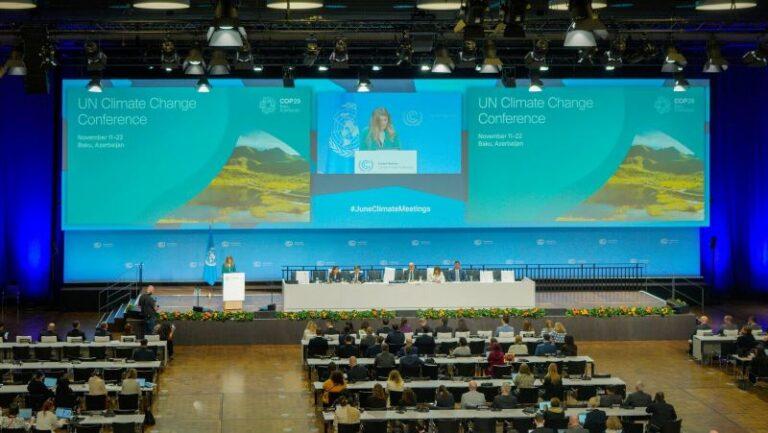
    The 100-day countdown to global climate conference COP29 began 3 August. The conference, scheduled for this November in Baku, is a key moment for leaders to make progress on climate commitments.

    Recently, COP29 President-Designate Mukhtar Babayev sent his first official letter to the conference’s parties and constituencies. In it, he outlined the priorities for action — as well as the remaining hurdles to achieving them.

    As his letter makes clear, we will need “all hands on deck” to successfully advance the event’s two “pillars”: the enhancement of ambition; and the enabling of action.

    Here’s what’s on the agenda — and what’s needed to move these priorities forward.

    What are COP summits?

    The Conference of the Parties (COP) is the group of nations that have signed the UN Framework Convention on Climate Change (UNFCCC), which was put together in 1992. It commits them to act together to stabilize greenhouse gas concentrations “at a level that would prevent dangerous anthropogenic (human-induced) interference with the climate system”. Since then the Parties, or nations, have met almost annually.

    The most recent COP, COP28, was held last year in Dubai and was the largest attended climate COP in history, convening 97,000 delegates, and more than 150 heads of state, along with negotiators, business leaders and non-state actors. The conclusion of the first ever Global Stock Take (GST) (a mid-term review of progress towards the 2015 Paris Agreement) was the event’s key outcome and the conference emphasized the need for determined action to make progress on renewable energy, a just transition and more.

    Here are the major priorities for COP29:

    1. Climate finance and “the NCQG problem”

    Many are calling COP29 the “finance COP”, seeing it as an opportunity to align climate finance contributions with estimated global needs. Yet despite this focus on unleashing funds, nearly every basic element of the New Collective Quantified Goal (NCQG) is still being contested, from the new target and the contributor base to the scope of the finance involved and the Paris Agreement articles in question. Over the next few months, attention will need to be focused on creative solutions to these issues.

    In addition, the private sector’s involvement needs to be ramped up; at the moment, many climate finance schemes have been devised by making assumptions about the behaviour of private capital, some of which have not held. The private sector is best placed to lay out the prerequisites for private finance to flow, so its input should be solicited quickly and systematically.

    2. Article 6: Fixing a sputtering engine for capital mobilisation

    In recent years, carbon markets have become a flashpoint in international climate policy, largely because of their mixed results. On the one hand, they have shown potential as a debt-free way to channel finance from heavy emitters to promising clean or green projects. On the other, a lack of rigour has meant that often, carbon markets do not drive real emissions reductions, instead pushing funds into unneeded or unverifiable places and enabling greenwashing.

    Article 6 of the Paris Agreement created principles for carbon markets and ways countries could cooperate to reach climate targets. While rules were agreed to at COP26, negotiation has been needed to establish the necessary guidance to operationalise it.

    A fully operationalized Article 6 would provide the basis for better quality carbon markets through reviewable bilateral agreements and a centralized multilateral marketplace. To get to that point, negotiators need to come to agreements on definition and content; project eligibility and review processes; and the ability to make certain information confidential, among other issues.

    Two successive COPs have failed to get Article 6 up and running, with countries and other entities striking some agreements in the meantime but no real scale being achieved. As anti-greenwashing sentiment continues to rise and companies back away from banner climate pledges, a well-functioning carbon market ensconced within the UNFCCC machinery is more important than ever.

    3. Growing the Loss and Damage Fund

    The amount currently pledged to the still-forming Loss and Damage Fund, whose board will be hosted by the Philippines, is tiny compared to estimated loss and damage needs worldwide. Before being able to grow that amount to anything meaningful, the fund needs to check off several boxes quickly.

    Ideally, in the next 100 days, the board should appoint an executive director. This process is up and running, but its conclusion will allow for a point person, empowered by a settled – if interim – hosting agreement at the World Bank, to engage in high-level discussions that could draw new waves of funding. In addition, efforts need to be made for active observers to have consistent access during the decision-making process.

    One of the key decisions, however, will be the involvement of the private sector. The Transitional Committee’s proposal recommended that the fund be able to receive financial inputs from “non-public and alternative sources, including new and innovative sources of finance.” Other non-climate funds, like Gavi and the Global Fund, are set up to receive private finance; to maximize its impact, the Loss and Damage Fund might consider following suit.

    4. Getting adaptation on track

    Adaptation has often been overshadowed by mitigation, yet it is crucial as climate impacts worsen. COP29 is a pivotal opportunity to prioritize adaptation and secure the necessary resources.

    With some climate change effects now inevitable, robust adaptation strategies are essential. National Adaptation Plans (NAPs) are vital tools, and COP29 should enhance support for their development and implementation, focusing on financial and technical assistance. Closing the adaptation finance gap is critical; donor countries must meet their commitments, and innovative funding mechanisms, including private sector investments, should be explored so that the most vulnerable countries can better prepare against climate challenges.

    What’s being neglected?

    A narrow focus on market- and investment-based solutions to the climate finance problem means certain other approaches risk falling by the wayside. A glaring one could be the advancement of an agreement to credibly phase out fossil fuel subsidies. At COP28, parties maintained the existing agreement on the phase-out of “inefficient” subsidies, but this language has arguably given too much cover to nations looking to prolong and defend their subsidy programmes. It also comes without a deadline, an action plan, or a way to measure progress.

    With fossil fuel subsidies reaching record levels in 2022, they should not slide off the docket to make room for other agenda items. (One could argue that subsidy elimination falls under “climate finance”, specifically under the Paris Agreement’s Article 2.1(c), which stipulates that all nations should make “finance flows consistent with a pathway towards low greenhouse gas (GHG) emissions and climate-resilient development”.)

    The finance lens also makes clear that not enough attention is being paid to finding comprehensive debt solutions. Debt relief and restructuring are some of the most powerful methods for freeing up fiscal space, stimulating activity, and reducing risk. As innovative tools like debt-for-climate and debt-for-adaptation swaps grow in popularity – and provide a pathway for funding projects that present a less-than-appealing return profile to private investors – parties should place them front and centre at COP29, to whatever extent possible. Without transformative action on sovereign debt, many developing countries will be locked into risk cycles, forced to choose between financial stability and climate action, and outcompeted in capital markets.

    ICMR, Panacea Biotec initiate Dengue Vaccine Phase 3 Clinical Trials in India

    Panacea Biotec has worked extensively on these strains to develop a full-fledged vaccine formulation and holds a process patent for this work. Phase 1 and 2 clinical trials of the Indian vaccine formulation were completed in 2018-19, yielding promising results.

    The Indian Council of Medical Research (ICMR) and Panacea Biotec have announced the initiation of the first-ever Phase 3 clinical trial for a dengue vaccine in India. This landmark trial will evaluate the efficacy of India’s indigenous tetravalent dengue vaccine, DengiAll, developed by Panacea Biotec. The first participant in this trial was vaccinated today at Pandit Bhagwat Dayal Sharma Post Graduate Institute of Medical Sciences (PGIMS), Rohtak.

    Commenting on this milestone, union minister of health and family welfare, J.P. Nadda, said, “The initiation of this Phase 3 clinical trial for India’s first indigenous dengue vaccine marks a critical advancement in our fight against dengue. It reflects our commitment to protecting our citizens from this pervasive disease and underscores India’s capabilities in vaccine research and development.”

    Nadda added, “Through this collaboration between ICMR and Panacea Biotec, we are not only taking a step towards ensuring the health and well-being of our people but also reinforcing our vision of Atmanirbhar Bharat in the healthcare sector.”

    Currently, there is no antiviral treatment or licensed vaccine against dengue in India. The development of an effective vaccine is complex due to the need to achieve good efficacy for all four serotypes. In India, all four serotypes of the dengue virus are known to circulate or co-circulate in many regions.

    Trials across 19 sites

    The tetravalent dengue vaccine strain (TV003/TV005), originally developed by the National Institutes of Health (NIH), USA, has shown promising results in preclinical and clinical trials worldwide. Panacea Biotec, one of three Indian companies to receive the strain, is at the most advanced stage of development. The company has worked extensively on these strains to develop a full-fledged vaccine formulation and holds a process patent for this work. Phase 1 and 2 clinical trials of the Indian vaccine formulation were completed in 2018-19, yielding promising results.

    In collaboration with ICMR, Panacea Biotec will conduct the Phase 3 clinical trial across 19 sites in 18 states and union territories of India, involving more than 10,335 healthy adult participants. The trial, primarily funded by ICMR with partial support from Panacea Biotec, is set to follow up with participants for two years. This initiative represents a significant step towards developing an indigenous vaccine for one of India’s most pressing public health challenges.

    The health minister said that this exemplifies the nation’s commitment to Atmanirbhar Bharat, adding that the initiation of Phase 3 clinical trial for India’s first indigenous dengue vaccine marks a critical advancement in India’s fight against dengue.

    Rising global incidence

    Dengue is a major public health concern in India. In adults, the disease can escalate into severe conditions like dengue hemorrhagic fever and dengue shock syndrome. The dengue virus has four serotypes, 1-4, with low cross-protection against each other, meaning individuals can experience repeated infections.

    India ranks among the top 30 countries with the highest incidence of the disease. The global incidence of dengue has been steadily increasing over the past two decades, with more than 129 countries reporting dengue viral disease by the end of 2023, according to the World Health Organization (WHO).

    Up to 80 per cent of infections in India are asymptomatic. Yet these individuals can still transmit the infection through the bite of the Aedes mosquitoes. Among the 20 to 25 per cent of cases where symptoms are clinically apparent, children are at a significantly higher risk of hospitalization and mortality.