More

    Expert Committee on Climate Finance Submits Report on Transition Finance

    Given GIFT-IFSC’s role as a gateway connecting India to the global economy, a key challenge is creating an enabling framework for transition finance in a way that attracts international investors while also considering India’s socio-economic realities.

    The Expert Committee on Climate Finance has submitted its first report on Transition Finance to K. Rajaraman, the Chairperson of the International Financial Services Centres Authority (IFSCA) on Monday.

    The Expert Committee on Climate Finance was constituted by IFSCA to provide a roadmap for IFSCA to develop a climate finance ecosystem and instruments with a special focus on transition finance as well as to provide recommendations on establishing a global hub for climate financing.

    The committee includes experts across policy think tanks, standard setters, consultants, industry, and global financial institutions.

    The Report on Transition Finance emphasises the role of transition finance in driving investments towards hard-to-abate sectors such as steel, cement, shipping, fertilisers etc. which are crucial for economic growth of India and other developing nations. The report offers strategic recommendations to IFSCA and policy makers by exploring global best practices and regulatory landscapes, to enhance the role of GIFT-IFSC as a gateway for attracting international climate capital flows in order to achieve India’s ambitious goal of achieving net-zero by 2070.  

    Given GIFT-IFSC’s role as a gateway connecting India to the global economy, a key challenge is creating an enabling framework for transition finance in a way that attracts international investors while also considering India’s socio-economic realities.

    The report proposes various alternative approaches for IFSCA to consider, aiming to support India’s journey towards net-zero emissions by 2070.

    The report has also delved into policy and regulatory levers in order to increase the mobilization of transition finance through financial instruments. It recognises the need for innovation not just in debt and equity instruments, but also in risk mitigation tools like insurance and guarantees.

    The report says that transitioning to a low-carbon economy essentially involves technologies that come in the form of hard physical assets. “In some instances, importing such technologies may become a necessity, while in others, India can play an important role as an exporter of certain technologies.”

    ‘Declare Health Emergency’ to End Hepatitis in Asia

    Hepatitis is now the world’s second deadliest infectious disease and seven of the top ten countries with highest hepatitis burden are from Asia Pacific. Pakistan looks to emulate Egypt’s success and eliminate hepatitis by 2030.

    By Joel Adriano

    Countries in Asia Pacific are unlikely to meet their commitment to eliminate hepatitis by 2030 unless they declare a public health emergency, as they did with COVID-19, a disease specialist suggested.

    Hepatitis – an inflammation the liver — is the second most deadly infectious disease in the world, surpassing tuberculosis and behind only COVID-19, according to the World Health Organization (WHO). It claims 3,500 lives each day.

    The WHO set a target in 2016 of cutting new infections by 90 per cent and deaths by 65 per cent before 2030, as well as treating 80 per cent of people affected, in order to end the disease.

    However, Saeed Hamid, professor and chair at the Department of Medicine at Aga Khan University, Pakistan, stressed during a 20 June forum on infectious diseases in Vietnam that, “at the current rate, most countries in the Asia Pacific will not meet the elimination target by 2030”.

    Despite progress in diagnosis and the drop in prices of testing and treatment, there is still a critical gap in coverage, said Hamid, whose research focuses on hepatitis. Far too few receive treatment and for those who do, if often comes too late, he explained.

    The disease is deadly because a person could be infected for years and the symptoms only emerge once the disease is in an advanced stage — which is why testing is crucial.

    “We need to declare an emergency in all of the high-burden countries,” Hamid said, citing the unprecedented rapid response countries adopted with COVID-19 which demonstrated “that it can be done with political will”.

    There are five main types of hepatitis virus, referred to as A, B, C, D, and E. Hepatitis A and B can be prevented with safe and effective vaccines, but there are no widely available vaccines specifically for the other types.

    Health service support

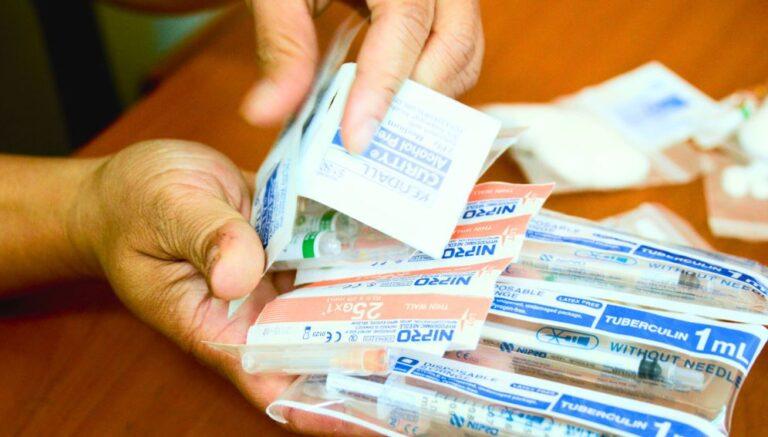
    The Asia Pacific region has the greatest hepatitis burden, with Pakistan now having the world’s highest number of hepatitis C cases at 8.8 million. Here, transmission of the disease is mostly driven by healthcare-related exposure, such as poor sterilisation of medical equipment, evidence suggests.

    “In Pakistan, three people are dying every minute from hepatitis, and these are preventable”, Hamid said.

    John Ward, director at the Coalition for Global Hepatitis Elimination, considered this as regrettable since “we have a vaccine for hepatitis B for 40 years now. In fact, it is one of the success stories we had”.

    He emphasised the need not just for testing but more critically accelerated treatment and health service support for those diagnosed with the disease. He also cited the importance of education and peer support to eliminate stigma associated with the disease, which prevents people from seeking treatment.

    Ward agreed that declaring a public health emergency would “capture the attention” and cause authorities to implement an immediate response.

    “However, with so many health issues and non-health concerns competing for limited resources it will be a challenge” for health experts to build national commitment towards hepatitis elimination by 2030, Ward said.

    Egypt’s achievement

    On the launch the Global Hepatitis Report 2024 in April, WHO director-general Tedros Adhanom Ghebreyesus said that every year viral hepatitis kills more than 1 million people globally and infects another 3 million, emphasising that these numbers might be underestimated.

    The WHO report highlighted ten countries responsible for two-thirds of global viral hepatitis B and C burdens: China, India, Indonesia, Nigeria, Pakistan, Ethiopia, Bangladesh, Vietnam, the Philippines and Russia.

    There were 304 million people living with hepatitis in 2022. Hepatitis B and C together are the most common cause of liver cirrhosis and liver cancer, which is now the third leading cancer in Asia Pacific.

    Hamid highlighted the success of Egypt in combating the disease. The country used to have the highest hepatitis C burden but saw a dramatic drop following its 100 Million Healthy Lives campaign.

    Egypt tested over 60 million people and treated more than 4 million people, resulting in a drop of new infections from 300 per 100,000 in 2014 to 9 per 100,000 in 2022. The goal for hepatitis C elimination is less than 5 per 100,000 new cases per year.

    Pakistan is aiming to replicate Egypt’s achievement with a massive hepatitis health campaign currently underway, Hamid said.

    This piece has been sourced from SciDev.Net

    Image: World Bank

    Firms With Women in Board Perform Better: NCAER Study

    Firms with women in board and in top management positions perform better, says a NCAER Study. The study says that such inclusion also reflect on the companies’ positive work culture, especially since the game-changing Companies Act (2013).

    The ‘woman director’ mandate under The Companies Act (2013) to address gender gap led to a remarkable rise in the share of women in board positions> This led to better economic performance and lower financial risk, particularly of large and medium-sized firms, says a study by the National Council of Applied Economic Research (NCAER).

    Within a year after the groundbreaking Act of 2013, the percentage of listed firms without women on board plummeted from 53 per cent to less than 10 per cent. The share of women in boards of companies went up from just over 5 per cent in FY 2013-14 to nearly 16 per cent in FY 2022-23, finds the study titled “Female Leadership in Corporate India: Firm Performance and Culture” for the India Policy Forum (2024) conclave, organised by NCAER. The paper found that younger and more educated women, compared to men, were joining the boardroom even before the mandate, and the gender gap for age significantly widened post-mandate.

    Women in top management positions also increased steadily, increasing from nearly 14 per cent to about 22 per cent during the same period. However, India still lags in the share of women in middle and senior management roles at only 20 per cent, compared to nearly 33 per cent for the world (as of 2019). Almost 60 per cent of the firms studied did not have any women in top management teams as of March 2023.

    Despite the positive developments over time, the top ten NSE-listed firms by market capitalization lagged. Eight out of the ten firms had lower shares of women on board compared to the average for other listed firms in FY 2022-23. Additionally, five of these top ten firms had no women in their top management teams as of March 2023.

    Higher economic performance

    Making a business case for appointing more women at the top in corporate India, the authors of the study, led by NCAER’s Professor (Dr) Ratna Sahay, found that “having at least one woman on board is associated with higher economic performance and lower financial risk, and this effect is significant for large and medium-sized firms.”

    After enforcement of the mandate, the paper says, gender gap in attendance of board meetings fell, and by 2020, the average share of meetings attended by men and women was almost equal. This means that women were playing a more meaningful role in board decisions.

    Correlate with employee ratings

    However, the NCAER study found that the mandate was not replicated in top management teams (C-Suite). More than half of the NSE-listed firms in the sample didn’t have even one woman in their top management teams, and about 10 per cent of firms had just one woman.

    The authors combined personnel-level data for 1402 NSE-listed firms over a period of 15 years (FY 2005-06 to FY 2019-20) with their performance indicators to see the impact of female leadership. To quantify and study organization culture, they built a novel database by scraping text information presented in more than 4 lakh company reviews by their employees. “Higher share of women in board positions correlate positively with employee ratings and sentiment scores. Employees are more likely to give higher ratings and use positive language to describe the positive aspects of their workplace culture in firms with higher share of women on boards, but only if the firm also has women in the top management team,” says the study.

    Finally, it found that “firms, on average, were appointing more women than mandated by the Act, suggesting the favourable impact of the positive experience gained by them and the positive signal of the government in recent years to promote women-led development”.

    Image: Hippopx

    Coal Ministry Holds Stakeholders’ Consultation on Draft Mining Plan Guidelines for Coal and Lignite

    Officials said that the forthcoming mining plan guidelines will uphold the highest standards of environmental stewardship, operational efficiency, and ethical mining practices, ensuring a sustainable future for the sector.

    The coal ministry held a stakeholders’ consultation on the draft mining plan guidelines for coal and lignite blocks for this year on Monday. The meet, under the chairmanship of additional secretary M. Nagaraju, witnessed the participation of 25 coal and lignite mining companies including PSUs, captive and commercial miners, and representatives from the state governments of Tamil Nadu, Chhattisgarh, Jharkhand, Meghalaya and Uttar Pradesh.

    Nagaraju highlighted the ministry’s dedication to enhancing the regulatory framework governing coal and lignite mining. He emphasised on the importance of balancing flexibility for coal mine owners with heightened responsibility and accountability. The revised mining plan guidelines aim to introduce stringent measures designed to optimise coal extraction while ensuring comprehensive applicability for all stakeholders.

    Officials of the ministry of coal presented the detailed presentation on draft guidelines. The new guidelines represent a significant stride towards fostering a sustainable approach to coal mining. The new guidelines emphasise responsible mining practices that support industry growth while prioritising ecosystem preservation, the officials said. The key elements include the mandatory inclusion of restoration, remediation, and regeneration measures in mining plans to ensure sustainable natural resource management. These measures aim to minimize environmental impacts, address community concerns, and promote continuous improvement in water quality monitoring.

    Coal ministry officials say that by raising accountability standards and optimising extraction techniques, the ministry seeks to align the interests of all parties while simultaneously advancing sustainable development within the sector.

    “The stakeholders’ consultation provided a platform for in-depth discussions and feedback from industry leaders and experts, setting the stage for a comprehensive regulatory framework that addresses contemporary challenges and aligns with global best practices in mining governance,” a statement released by the PIB said.

    Officials said that the forthcoming mining plan guidelines will uphold the highest standards of environmental stewardship, operational efficiency, and ethical mining practices, ensuring a sustainable future for the sector.

    Image: Hippopx

    UN Highlights Afghan Women’s Concerns at Doha Meeting

    The consultations follow talks in May 2023 and February 2024 and build upon the proposals outlined in an independent review on an integrated and coherent approach in line with the Security Council’s resolution.

    International envoys raised concerns about restrictions on women and girls in Afghanistan during meetings with the country’s Taliban leaders in Qatar, United Nations’ political affairs chief Rosemary DiCarlo said on Monday.

    Speaking in Doha after the Third Meeting of Special Envoys on Afghanistan, Ms. DiCarlo expressed deep concern over the situation of women and girls in the country, according to a UN press release issued in New York.

    “Running through all the discussions was the deep international concern – from special envoys and from me – about the ongoing and serious restrictions on women and girls,” she stated.

    “Afghanistan cannot return to the international fold, or fully develop economically and socially, if it is deprived of the contributions and potential of half its population,” asserted Ms. DiCarlo, the UN Under-Secretary-General for Political and Peacebuilding Affairs.

    The consultations follow talks in May 2023 and February 2024. They build upon the proposals outlined in an independent review on an integrated and coherent approach conducted by Feridun Sinirlioglu, in line with Security Council resolution 2679.

    Focused discussions with Afghan women and civil society are scheduled to take place on Tuesday.

    Ms. DiCarlo further stressed that the concerns and views of Afghan women and civil society remain “front and center”.

    “For the United Nations, the meaningful inclusion of women in political and peace processes is a guiding principle,” she said.

    “And while women and civil society were not sitting across the table from the de facto authorities the last two days, they made their voices heard. Civil society has a rightful role to play in shaping Afghanistan’s future,” she asserted.

    Heartbreaking

    Since the Taliban seized power in Afghanistan in August 2021, women and girls have faced systemic discrimination, including a ban on girls’ education.

    That ban is “heartbreaking”, Ms. DiCarlo maintained.

    “If you prevent half the population from education, from being involved in the economy and various professions, it just means that it delays the development of Afghanistan,” Ms. DiCarlo replied to one woman reporter.

    “Just imagine if you were only allowed to go through sixth grade, you would not be sitting here being a journalist, I would not be here being a UN official. [It is] heartbreaking frankly but let us see and let us keep at it, that is all I can say.We have to make clear how important is and how it is going to be better for Afghanistan.”

    She explained that in organizing the meeting, the UN “faced a very tough, maybe impossible, choice”, aiming to bring the Taliban and the special envoys together for direct talks.

    “Regrettably, the de facto authorities will not sit across the table with Afghan civil society in this format. But they heard very clearly the need to include women and civil society in all aspects of public life,” she said.

    She further emphasized that the meeting and process of engagement “does not mean normalization or recognition” of the Taliban de facto authorities.

    Ms. DiCarlo expressed hope that the exchanges on the various issues during the meeting “moved us a little closer” to resolving some of the problems devastating the Afghan people. “To conclude, I would like to reiterate the United Nations commitment to continue to support this process of principled engagement for the benefit of all Afghans,” she said.

    One in Three Adults at Risk For Lack of Enough Physical Activity

    Of concern, disparities remain between gender and age. Physical inactivity is still more common among women globally compared with men, with inactivity rates of 34 per cent compared to 29 per cent.

    New data show that nearly one third (31 per cent) of adults worldwide, approximately 1.8 billion people, did not meet the recommended levels of physical activity in 2022. The findings point to a worrying trend of physical inactivity among adults, which has increased by about 5 percentage points between 2010 and 2022. 

    If the trend continues, levels of inactivity are projected to further rise to 35 per cent by 2030, and the world is currently off track from meeting the global target to reduce physical inactivity by 2030. The World Health Organization (WHO) recommends that adults have 150 minutes of moderate-intensity, or 75 minutes of vigorous-intensity physical activity, or equivalent, per week. Physical inactivity puts adults at greater risk of cardiovascular diseases such as heart attacks and strokes, type 2 diabetes, dementia and cancers such as breast and colon.

    The study was undertaken by researchers from WHO together with academic colleagues and published in The Lancet Global Health journal.

    “These new findings highlight a lost opportunity to reduce cancer and heart disease, and improve mental health and well-being through increased physical activity,” said Dr Tedros Adhanom Ghebreyesus, WHO Director-General. “We must renew our commitment to increasing levels of physical activity and prioritizing bold action, including strengthened policies and increased funding, to reverse this worrying trend.”

    The highest rates of physical inactivity were observed in the high-income Asia Pacific region (48 per cent) and South Asia (45 per cent), with levels of inactivity in other regions ranging from 28 per cent in high-income Western countries to 14 per cent in Oceania.

    Gender

    Of concern, disparities remain between gender and age. Physical inactivity is still more common among women globally compared with men, with inactivity rates of 34 per cent compared to 29 per cent. In some countries, this difference is as much as 20 percentage points. Additionally, people over 60 are less active than other adults, underscoring the importance of promoting physical activity for older adults.

    “Physical inactivity is a silent threat to global health, contributing significantly to the burden of chronic diseases,” said Dr Rüdiger Krech, Director of Health Promotion at WHO. “We need to find innovative ways to motivate people to be more active, considering factors like age, environment, and cultural background. By making physical activity accessible, affordable, and enjoyable for all, we can significantly reduce the risk of noncommunicable diseases and create a population that is healthier and more productive.”

    Despite the worrying results, there are some signs of improvement in some countries. The study showed that almost half of the world’s countries have made some improvements over the past decade, and 22 countries were identified as likely to reach the global target of reducing inactivity by 15 per cent by 2030, if their trend continues at the same pace.

    Collective efforts

    In light of these findings, WHO is calling on countries to strengthen their policy implementation to promote and enable physical activity through grassroots and community sport and active recreation and transport (walking, cycling and use of public transport), among other measures.

    “These new findings highlight a lost opportunity to reduce cancer and heart disease, and improve mental health and well-being through increased physical activity,” said Dr Tedros Adhanom Ghebreyesus, WHO Director-General. “We must renew our commitment to increasing levels of physical activity and prioritizing bold action, including strengthened policies and increased funding, to reverse this worrying trend.”

    “Promoting physical activity goes beyond promoting individual lifestyle choice – it will require a whole-of-society approach and creating environments that make it easier and safer for everyone to be more active in ways they enjoy  to reap the many health benefits of regular physical activity,” said Dr Fiona Bull, Head of the WHO Unit for Physical Activity. 

    Collective efforts based on partnerships between government and nongovernmental stakeholders and increased investments in innovative approaches will be needed to reach the least active people and to reduce inequalities in access to measures promoting and improving physical activity.

    Image: Hippopx

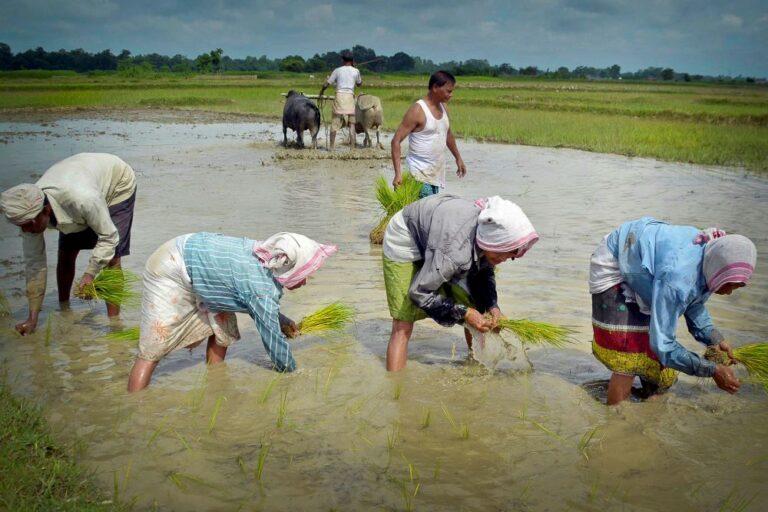
    Opportunity to Promote Natural Farming in Assam

    Union agriculture minister Shivraj Singh Chouhan told Assam agriculture minister Atul Bora that the central government will continue to provide all possible assistance to Assam in the interest of farmers and the agriculture sector in the state.

    Union minister of agriculture and farmers welfare and rural development, Shivraj Singh Chouhan, on Monday initiated state-wise discussions with the overall aim of rapid progress of the country’s agriculture sector.

    In this context, Chouhan met with a high-level delegation including Assam agriculture minister Atul Bora at Krishi Bhavan in New Delhi to discuss issues like promoting soil health, the pradhan mantri fasal bima yojana, increasing storage capacity and horticulture in Assam.

    Chouhan said that the interest of farmers and agriculture sector is paramount for the government and the union ministry will continue to provide full support to Assam on organising capacity building trainings and workshops.

    Natural farming

    Chouhan also mentioned the central government’s policy to promote natural farming and said that there is ample opportunity to promote natural farming in Assam.

    Like other North-Eastern states practicing organic farming including Sikkim, Assam has tremendous potential to practice organic farming practices including Zero Budget Natural Farming (ZBNF) more particularly in hilly ecosystem. Assam is naturally blessed with fertile lands and diversified agro climatic conditions.

    Assam has 272 lakhs farming households out of which 85.59 farming households are small and marginal having operational land holding of less than 1-2 hectares. The state is one of the top five states producing a diverse variety of crops around the year due to its fertile soil and diversified climatic conditions. An adoption of sustainable and profit earning technologies that are commensurate with principles of natural farming will be helpful to obtain desirable changes in socio-economic life of its farming population. These will help boost production and productivity.

    According to NITI Ayog, Natural farming is a chemical free alias traditional farming method considered as agroecology based diversified farming system which integrates crops, trees and livestock with functional biodiversity.

    Will work closely together

    The union agriculture minister emphasised on the need for creation of infrastructure like creation of dry storage, cold storage, processing units under the agriculture investment fund in convergence with schemes like the Mission for Integrated Development of Horticulture, the pradhan kantri krishi sinchai yojana and the pradhan mantri formalisation of micro food processing enterprises scheme of ministry of food processing industry for enhancing the post-harvest management capacity in the state and to minimise post-harvest losses.

    He said that the farmers of Assam will not be allowed to face any problem at the central level, adding that, for this, the central and state governments will continue to work closely together. Chouhan assured that the ministry of agriculture and farmers’ welfare will provide full support for the development of Assam’s agriculture sector.

    Image: Wikimedia Commons, Diganta Talukdar

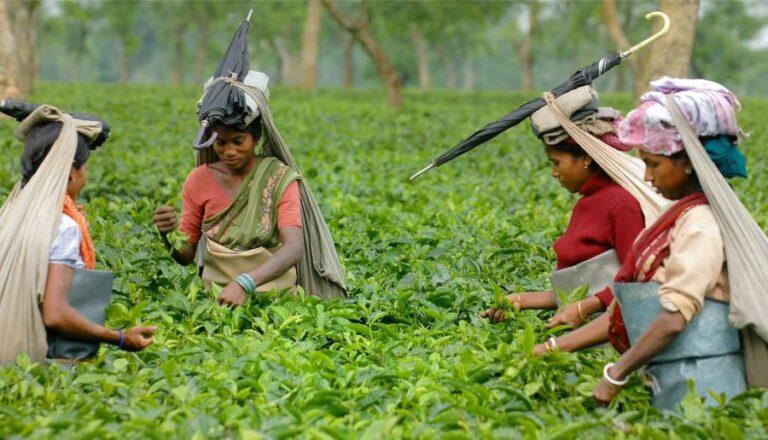
    Brewing New Markets for Nepal’s Tea Trade

    The trends are driven by an export strategy that seeks higher market diversification and the planned establishment of a tea auction house for improved pricing, all amid political uncertainties, trade tensions and the threat of stricter customs regulation in India.

    Visits by prospective Chinese buyers to Ilam, the tea capital of Nepal, against the backdrop of Nepali tea facing uncertain access to India caught the attention of the international media. Nepal has long sought to diversify its trade partners and secure alternative transit routes, an aspiration that long predates the freefall in China–India ties in the wake of COVID-19.

    Nepal’s southern border with India has been blockaded four times since 1960. Nearly two thirds of Nepal’s trade is with India and most of its imports from the rest of the world transit through its southern neighbour. The last blockade, which came on the heels of the devastating 2015 earthquakes, prompted Nepal to sign a transit agreement with China in 2016.

    Tea ranked tenth in Nepal’s export basket in 2022. The Himalayan nation exported tea worth US$32.5 million that year out of total merchandise exports of US$1.3 billion. In the decade to 2022, India absorbed on average 89 per cent of Nepali tea exports.

    Market diversification is taking place, albeit slowly. Data from Nepal’s customs department shows that India’s share dropped from 89.6 per cent in the 2019–20 fiscal year to 83.9 per cent in the first eight months of 2023–24. Meanwhile, China’s share rose from 0.21 per cent to a still minuscule 0.46 per cent.

    China has begun easing import procedures for Nepali tea at Nepal’s persistent request, raising hopes of tapping into the Chinese tea market. Tea is among the more than 8000 products from Nepal and other least developed countries that face zero tariffs in China. The Chinese buyers who visited Nepali tea gardens in March 2024 were visibly interested in orthodox and specialty tea.

    Restrictive measure

    Tea exports to China in 2022 amounted to US$70,000, half their 2017 value. The closure of the Nepal–China border in the wake of COVID-19 hit exports to China hard. Tea was no exception. In normal times, the bulk of exports to China took the overland route. In 2019, the land route carried about 70 per cent of tea exports to China. In 2020, 2021 and 2022, nearly all tea exports to China were airfreighted.

    Nepal’s tea export strategy sees an opportunity for Nepal to capitalise on the growing green tea market. It identifies China as an untapped niche market for Nepal’s orthodox tea. At present, India remains Nepal’s top destination for both crush, tear and curl tea and orthodox tea. The export strategy finds the prospect of market diversification higher for orthodox tea.

    In the 2022–23 fiscal year and the first 10 months of 2023–24, the unit price of Nepali tea in China was five times higher than in India. Small farmers have a significant presence in the production of orthodox tea. Aided by the availability of small processing equipment imported from China, small processors have also proliferated.

    Two dozen tea-laden trucks bound for the Indian market were held at the Nepal–India border for six days in April 2024 after Indian customs asked for laboratory test certificates for each truck’s content. Usually, a certificate based on samples from an export consignment would be sufficient for the customs clearance of additional consignments from the same consignor for six months. It takes between two weeks and one month to get the results from the designated lab in India. While Indian customs eventually cleared the consignments, tea exporters fear the restrictive measure could be introduced again.

    Substandard tea?

    The fear is not unfounded. Tea exports from Nepal have been subject to restrictions in India from time to time. In late 2021, India banned the blending of its prized Darjeeling tea with Nepali tea. The ban was lifted a year later on the condition that the blended product not be labelled as Darjeeling tea.

    Meanwhile, a June 2022 report of the upper house of India’s parliament calls for restrictions on imports of Nepali tea, including through the imposition of anti-dumping duties, a testing requirement for every import consignment and revision of the Nepal–India trade treaty that grants Nepali tea duty-free access to the India market.

    The report repeatedly alleges that Nepali tea is substandard without evidence, ignoring that tea exports are backed by certificates issued by authorised Indian labs and that Nepali tea bushes are much younger. It notes that Nepali tea is ‘inexpensive’ while advocating for anti-dumping duties, but does not mention the lower production costs in Nepal.

    Piloting a tea auction house

    Destination-market trade policy uncertainty hangs over Nepal’s exports of food and agricultural products. The need for a robust, up-to-date national quality regime backed by well-equipped, internationally accredited labs to prove compliance with the safety standards and technical regulations of export markets is recognised in Nepal’s trade strategy. This applies to exports to India or China. But market diversification reduces the cost of external trade policy shocks — especially when motivated by protectionism or geopolitics — and is a potential avenue for export growth.

    Nepal’s tea export strategy emphasises piloting a tea auction house to fetch better prices and diversify markets. Even as the strategy was being written, government agencies were reportedly working to set one up. Experts believe an auction house would be a game changer for the Nepali tea sector. But delays in the implementation of plans, policies and strategies are the norm rather than the exception in Nepal. Persistent problems faced by Nepali tea in its largest export market can be expected to provide fresh impetus to bringing the auction house idea to fruition.

    Paras Kharel is Executive Director at South Asia Watch on Trade, Economics and Environment.

    This piece has been sourced from East Asian Times of the Australian National University.

    Climate Change Undermines Human Rights: World Meteorological Organisation

    Protracted conflicts, economic downturns, high food prices are at the root of high global food insecurity levels. This is aggravated by naturally occurring phenomena like El Niño and La Niña and long-term climate change the effects of climate and weather extremes.

    The accelerating pace of climate change is undermining human rights across the board – including the most basic one of all: the right to life – World Meteorological Organisation (WMO) Secretary-General Celeste Saulo told a high-level presidential discussion at the United Nations Human Rights Council.

    “The world celebrated when the UN Human Rights Council passed a landmark resolution in 2021. This confirmed that a healthy environment is a human right. It marked a watershed moment in the fight against the triple planetary crisis of climate change, nature and biodiversity loss and pollution and waste,” she said.

    “But the time for celebration has passed.”

    “The climate crisis is THE defining challenge that humanity faces. It is closely intertwined with the inequality crisis. It has cascading impacts on food security, population displacement and migration, health, energy, water. Every single one of the Sustainable Development Goals is affected,” said Celeste Saulo during the panel discussion.

    Sea level rise is threatening the very existence of small island developing states. Heatwaves, floods, droughts, wildfires and rapidly intensifying tropical cyclones undermine multiple human rights – as witnessed by recent and ongoing extreme events, she said.

    The event was entitled “The link between climate change, food security and health security, and their impacts on the enjoyment of human rights.” It was convened by the President of the Human Rights Council, Omar Zniber, and included top human rights officials and heads of Geneva-based UN organizations and specialized agencies.  

    WMO’s annual State of the Climate reports highlight the socio-economic impacts of climate change and extreme weather, with input from the International Organization, UN High Commissioner for Refugees, World Food Programme, World Health Organization and more.

    Displacement

    Weather and climate change impacts trigger new, prolonged, and secondary displacement. They increase the vulnerability of people who were already uprooted by conflict and violence.

    At the end of 2023, almost three in four forcibly displaced people were living in countries with high-to-extreme exposure to climate-related hazards, according to UNHCR.

    Food security

    Food insecurity is on the increase.

    The number of people who are acutely food insecure worldwide has more than doubled, from 149 million people before the COVID-19 pandemic to 333 million and people in 2023, according to WFP.

    In 2022, 9.2 per cent of the global population, or 735.1 million people, were undernourished. 

    Protracted conflicts, economic downturns, high food prices are at the root of high global food insecurity levels. This is aggravated by naturally occurring phenomena like El Niño and La Niña and long-term climate change the effects of climate and weather extremes, she said. 

    Climate change is sabotaging people’s health and setting back public health progress. 

    This is not the future we want for our children. Our children have the right to live and thrive on a sustainable and healthy planet.

    However, there is hope. The transition to renewable energy can improve basic socio-economic rights – the right to development. 

    Renewable energy sources are available almost everywhere, making energy access more equitable and allowing countries to develop their economies.  Currently, more than half of Africa people lack the access to electricity, but Africa continent possesses some of the world’s greatest potential for solar power generation. 

    Such potential holds the key to alleviate poverty and support socio-economic development. “We are motivated by the fact that our work has a human dimension. To save human lives and protect human rights,” said Celeste Saulo.

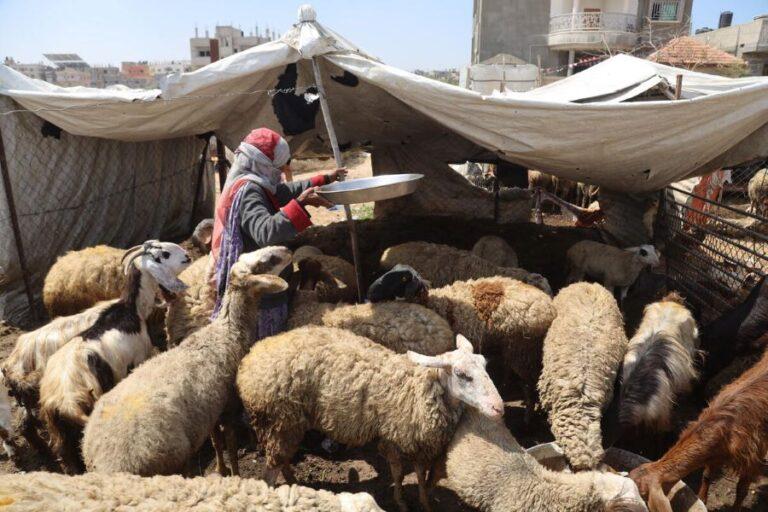
    High Risk of Famine Across Gaza: FAO Sounds Alarm

    The new data reveals that while the increased amount of food deliveries and nutrition services provided to the northern governorates have temporarily alleviated hunger conditions, the situation in the southern governorates deteriorated following renewed hostilities in early May.

    The Food and Agriculture Organization of the United Nations (FAO) has raised an alarm over high risk of famine across the whole Gaza Strip, “as long as conflict continues, and sustained and at-scale humanitarian access is restricted,” according to a new report published by the Integrated Food Security Phase Classification (IPC) global initiative.

    “We have observed high risk of famine over the last eight months due to relentless hostilities characterized by bombardment and ground operations as well as limited access to those in need of urgent humanitarian aid which have had severe impacts on the entire population of Gaza”, said FAO Chief Economist Maximo Torero while commenting on the IPC’s latest findings at a press briefing in New York. “The report clearly shows that once the flow of and access to food and water in the Northern Gaza improved, the risk of famine has significantly decreased, therefore the solution is clear.” 

    However, he emphasized that despite some improvements in the Northern parts during the period of analysis, the situation still remains very fragile, unpredictable, and critical, and any significant change may lead to a rapid deterioration into famine in Gaza. The Chief Economist added that in Northern Gaza especially the ground operations continue with high intensity triggering forced displacement thus further exacerbating the social and food security situation.

    With almost the entire population (96 per cent) facing high levels of acute food insecurity (IPC Phase 3 or above), any deterioration may push more people into catastrophic levels of hunger, for example, if the level of permits and access of trucks with humanitarian aid to Gaza declines and does not increase substantially, Torero warned.

    The new data reveals that while the increased amount of food deliveries and nutrition services provided to the northern governorates have temporarily alleviated hunger conditions, the situation in the southern governorates deteriorated following renewed hostilities in early May.

    According to the new IPC report, around 495,000 people or 22 per cent of the population are now experiencing catastrophic food insecurity (IPC Phase 5, Catastrophe) while almost entire population – 2.15 million people or 96 per cent – is facing Crisis levels of acute food insecurity or higher (IPC Phase 3+).

    Over half of cropland damaged

    FAO’s recent satellite data analysis reveals a continuous increase in damaged agricultural land, with over half the land damaged across the Gaza Strip or more than 57 per cent as of May 2024. Of these damaged lands, approximately 61 per cent are orchards, 19 per cent are vegetables and 20 per cent are cereals.

    This level of agricultural land damage is highly concerning, with a 33 per cent increase in damaged land since January 2024.

    The satellite images indicate that heavy vehicle tracks, razing, shelling and other conflict-related pressures have also significantly damaged agricultural infrastructure in the Gaza Strip. The analysis reveals damages to greenhouses of almost 33 per cent, to wells of more than 46 per cent, to solar panels of almost 65 per cent, and over 2,300 agricultural infrastructures.

    Food production at risk

    Agriculture in the Gaza Strip represents over 40 per cent of the surface area and contributes to approximately 20-30 per cent of daily consumption. The damage to the agricultural sector due to the hostilities is extensive, bringing crucial local production of fresh and nutritious food to a near total halt, decreasing the population’s access to essential food items required for a healthy diet. The livelihoods of vulnerable farmers, herders and fishers have been significantly impacted, posing serious problems for future recovery. 

    Households with high dependency on agriculture have experienced up to 72 per cent in income losses.

    The Port of Gaza City has been severely damaged, with most fishing boats destroyed. Animal inventories are seeing a sharp decline. A large share of meat and dairy producing livestock in Gaza have been slaughtered, consumed or damaged and lost due to conflict. 

    Emergency agricultural support

    FAO, like other UN and humanitarian actors, has experienced logistical challenges, particularly obtaining entry permits, to deliver agricultural aid materials into Gaza. Despite humanitarian access issues, the Organization is completing the distribution of 500 tons of fodder. As of 8 May, about 2 900 beneficiaries have been reached over two successive distributions.

    FAO is scaling up efforts to prepare essential food production inputs for transportation to Gaza by mobilizing advanced procurement arrangements once access is granted. These include procuring fodder concentrate, greenhouse plastic sheets, plastic water tanks, vaccines, energy blocks, plastic sheds, animal shelters, and veterinary kits.

    The new UN flash appeal for the occupied Palestinian territory (oPt) was announced on 17 April, extending until December 2024. In total, FAO is appealing for a total of around $40 million, with $29 million allocated for Gaza and $11 million for the West Bank. This funding will support 70 660 individuals with emergency agricultural support, including animal fodder and animal health inputs distributions; restocking lost livestock; and providing time-critical inputs to farmers.

    Image: FAO/Yousef Alrozzi