More

    World Bank Urges Maldives to Cut Costs, Implement Reforms

    World Bank highlighted the Maldives’ current economic and fiscal situation and provided recommendations to alleviate the challenges at present. Inflation is projected to rise in 2024 due to planned subsidy reforms. Difficulties in liquidity management and failure to implement fiscal reforms pose risks to the economic outlook.

    The World Bank has urged Maldives to cut costs and implement fiscal reform as soon as possible to improve the fiscal situation of the country. It said that a large portion of the state’s budget deficit last year was supplemented by the country’s central bank, Maldives Monetary Authority (MMA), while 30 per cent of the banking sector is being used to fund the government.

    Resident Coordinator for Maldives at the World Bank, Erdem Atas, said that the government heavily relies on MMA and the commercial banks to secure financing, and that 60 percent of MMA’s assets were invested as government’s security as of January 2024. He was unveiling the World Bank’s Maldives Development Update: Scaling Back and Rebuilding Buffers.

    Atas said that 30 per cent of the entire banking industry of the country is used on the government’s Treasury Bills (T Bills) and Treasury Bonds (T Bonds). This poses challenges to the economic development of the country, he said.

    The Maldivian government, until the end of 2023, printed money worth upto MVR 4.4 billion (USD 285.3 million) from the Public Bank Account.

    The Maldives experienced a slowdown in economic growth in 2023, despite an increase in tourist arrivals. The GDP growth rate was 4.0 per cent, well below the pre-pandemic trend.

    The increase in tourist arrivals did not lead to higher GDP growth due to a decline in spending per tourist. Inflation rose in early 2023 due to increased tax rates and high commodity prices, particularly in food and non-alcoholic beverages. The government managed to ease pressure on utility prices and transportation through subsidies.

    Also Read: Maldives: Tourism Slowing Down Due to Increased Demand for Guest Houses

    The country faced large external imbalances and a decline in foreign exchange reserves, leading to liquidity pressures. The fiscal deficit increased to 13.2 per cent of GDP, driven by high levels of capital spending and subsidies.

    The World Bank says that key reforms for stabilization were not implemented, resulting in the need for a supplementary budget. The Maldives Monetary Authority financed the budget deficit, and banks’ exposure to the sovereign stabilized.

    According to the global lender, the country has a high risk of debt distress and is vulnerable to domestic and external shocks. A large fiscal consolidation is urgently needed to ensure fiscal and debt sustainability.

    Tourism is expected to drive medium-term prosperity, but downside risks remain due to external and fiscal vulnerabilities. The baseline projections for GDP growth in the medium term are lower than previous forecasts due to expected fiscal adjustments and lower tourist spending.

    Inflation is projected to rise in 2024 due to planned subsidy reforms. Difficulties in liquidity management and failure to implement fiscal reforms pose risks to the economic outlook. Developing alternative growth drivers and supporting private sector job creation are crucial for long-term growth, the Bank said.

    Time to Reinforce Political Commitment within SAARC: Secretary General Golam Sarwar

    The SAARC Secretary General said that the recent positive gestures from both India and Pakistan with regard to the SAARC were indeed a good sign and he hoped that these gestures could potentially be served as ‘icebreaker’ in the future.

    By Zakaullah

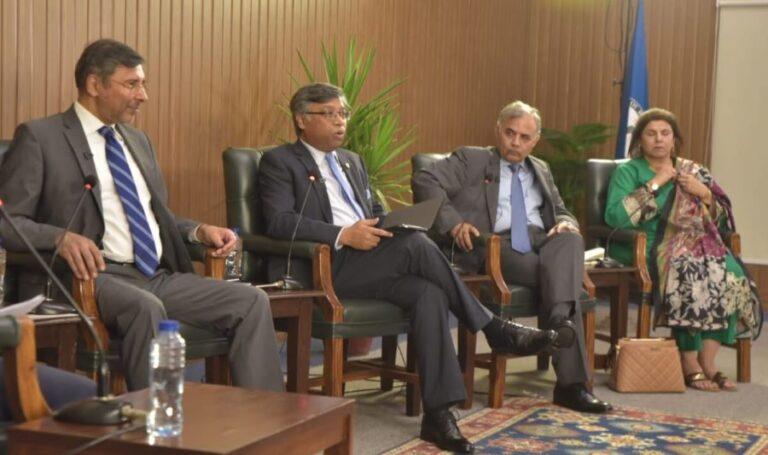
    SAARC Secretary General, Ambassador Md. Golam Sarwar on a visit to Pakistan called for a fresh and committed approach to address the challenges that have hindered South Asian for Regional Cooperation (SAARC)’s progress for decades.

    During an interactive session organized by the Islamabad-based Institute of Regional Studies (IRS) on Monday, he stressed that the organization’s future success depends on member states setting aside political differences and prioritizing regional cooperation.

    The Bangladeshi diplomat said that the recent positive gestures from both India and Pakistan with regard to the SAARC were indeed a good sign and he hoped that these gestures could potentially be served as ‘icebreaker’ in the future.

    In response to a question regarding the scope of cooperation within SAARC, the Secretary General said that the organization has broadened its cooperation spectrum in various development areas over the time. He specifically noted that food security and sustainable agriculture are central to SAARC’s collaborative framework, along with other significant areas of cooperation.

    The SAARC Secretary General acknowledged the challenges faced by the organization but stressed its unwavering commitment to achieving core objectives such as enhancing intra-regional trade, promoting people-to-people interactions, combating poverty, addressing climate change, improving public health, and advancing women and youth development. He also touched upon the progress achieved made in these key areas thus far.

    Renewed resolve

    Commenting on the Secretary General’s remarks, President of the Institute of Regional Studies (IRS), Ambassador Jauhar Saleem, said that the Secretary General’s remarks duly conveyed a sense of SAARC’s renewed resolve to tackle the challenges and continue its efforts to promote regional cooperation and development across a wide range of sectors.

    He further stated that ‘Pakistan is fully committed to the SAARC vision and has remained steadfast in promoting the SAARC objectives’.  at the event, senior journalist Shaukat Paracha, emphasized the media’s crucial role in advancing the SAARC agenda.

    He expressed concern over the lack of media focus on SAARC developments in recent years. Paracha proposed reviving the South Asian Free Media Association (SAFMA) to enhance media collaboration among member states, aiming to increase awareness and coverage of SAARC’s initiatives and activities while fostering closer ties between the people of member nations.

    Ambassador Ghulam Dastagir, former Director at the SAARC Secretariat said that there was a need to move beyond formal proclamations, and sincerely work on promoting the people-centric agenda of the SAARC. He identified several areas within SAARC that require comparatively little investments and efforts such as agriculture, medical cooperation, tourism, media cooperation, and women and youth development. He suggested that the SAARC member states should focus on these areas to make progress and benefit the people of the region.

    Dr Shaban Fayyaz, Associate Professor at QAU said that the visit of the SAARC Secretary General to Pakistan was a positive development for the region. It would help rebuild the confidence of SAARC member states in the organization, she added. She further stated that ‘people-to-people contact is the core of regional integration in South Asia, therefore, SAARC member states should facilitate visiting people through a more relaxed visa regime, she emphasized.

    Floods Continue to Batter Afghanistan

    The rains followed an uncharacteristically late winter and cold wave and have significantly impacted lives and livelihoods – particularly the agriculture and livestock sectors.  

    Relentless torrents of flood water from heavy rain wreaked havoc across Afghanistan over the past fortnight, the latest being central Afghanistan’s Ghor province late last week that killed over 300 and impacted 2,500 families, according to the World Food Programme.

    Besides, over 2,000 houses were destroyed and another 2,000 shops were submerged in the province’s capital, Feroz-Koh, according to the Taliban spokesperson for the region.

    This happened as the country continues to reel under floods from unseasonal summer rains that have destroyed homes and damaged farmland.

    The rains followed an uncharacteristically late winter and cold wave and have significantly impacted lives and livelihoods – particularly the agriculture and livestock sectors.  

    UN Special Rapporteur Richard Bennett tweeted on X, “Harrowing images of flood’s human toll and destruction in Afghanistan. Beyond search and rescue, ongoing support (is) needed to restore lives and livelihoods. He urged donors to provide more funds for humanitarian support.

    Also Read: Over 300 Dead as Floods Batter Afghanistan

    The BBC’s Pakistan correspondent Caroline Davies had tweeted: “Debris rubble and tree roots is all that remains in some parts of the villages in hit by flash flooding late last week.”

    According to the International Federation of Red Cross (IFRC), 25 out of 34 provinces have been affected. Thousands of displaced people have no homes to return to after their houses were swept away. 

    “The level of suffering in Afghanistan is already beyond words. Our emergency response will focus on life-saving essential needs, while also gearing to support affected households in early recovery as well as equipping first responders to cope better with rapid onset disasters in the future”, said Necephor Mghendi, Head of the IFRC Country Delegation.  

    WFP took to X (formerly Twitter) to showcase its work in the area of risk reduction in communities that were spared of the losses in the face of the torrential rains.

    “In Nangarhar and Baghlan, WFP protection walls saved over 870 families and 670 acres of land from being swept away by relentless torrents,” WFP said in a video over X.

    According to the United Nations, Afghanistan is one of the world’s most vulnerable countries to climate-induced disasters.

    Ranil Wickremesinghe Proposes Global Levy for Funding Climate Change

    The Sri Lankan President proposed a 10 percent levy on the annual profits of global tax evasion assets deposited in tax havens be charged to help fund climate change.

    Sri Lankan President Ranil Wickremesinghe on Monday came down heavily on the Global North for not walking the talk on climate change.

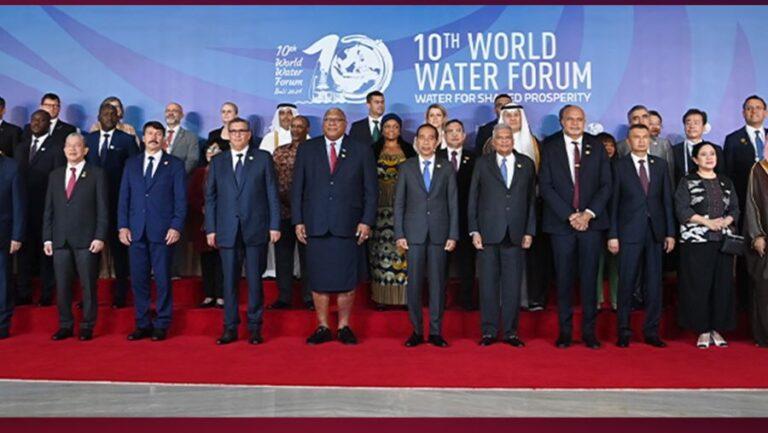
    Addressing heads of governments gathered at the World Water Forum in Bali, Indonesia, he castigated the Global North’s unwillingness to fund measures to avoid death and destruction caused by climate change.

    He juxtaposed this to the funding of the war in Ukraine to which international funds have been directed since it began over two years ago.

    “The Global North is willing to fund death and destruction in the Ukraine, but there is an unwillingness to fund measures to avoid death and destruction caused by climate change,” the Sri Lankan President said, according to a statement released by his office on Monday.

    As a solution, President Ranil Wickremesinghe proposed a 10 percent levy on the annual profits of global tax evasion assets deposited in tax havens be charged to help fund climate change. The annual profits from deposits in tax havens are estimated at 1.4 trillion dollars per annum.

    The President said this in the light of the long-awaited funding from the Conference of Parties held in Glasgow in 2021.

    Earlier this month, the President had told a forum in Colombo that Sri Lanka will sit out of the international climate summit, Conference of Parties, in future if there continues to be a lack of cohesion in solutions to tackle climate change among world leaders.

    “The global community has still not been able to come together on an agreement of how we are to deal with the challenges. From COP meeting to COP meeting we have gone there, and there is a lot of talk. But unfortunately, there has been no agreement,” Wickremesinghe had said while addressing the Code Red climate summit organized by the Ceylon Chamber of Commerce.

    “I don’t think we can go on and on meeting like this. In the next two meetings either we must come to some agreement or give this up. That’s what Sri Lanka plans to tell the COP.”

    Sri Lanka has consistently been placed among the top ten countries at risk of extreme weather events by the Global Climate Risk Index.

    India- Bangladesh Meet to Build Capacities of Civil Servants

    The National Centre of Good Governance has successfully conducted 71 Capacity Building Programs for 2660 Bangladesh Civil Service Officers from 2014 to 2024. The two sides have agreed to renew the collaboration for capacity building programs for 1500 civil servants for the period 2025-2030.

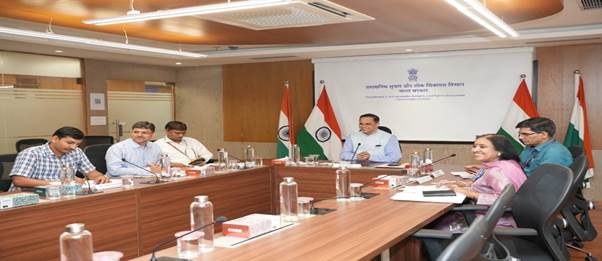
    A bilateral meeting between Secretary, Department of Administrative Reforms and Public Grievances, Government of India Shri V.Srinivas was held with Rectors (Secretaries) of four Capacity Building Institutions and Senior Officials of Ministry of Public Administration of Bangladesh Mr. Sukesh Kumar Sarker, Director General (Secretary), National Academy for Planning and Development(NAPD), Bangladesh on last week.

    The online meeting was attended by Md. Ashraf Uddin, Rector (Secretary), Bangladesh Public Administration Training Centre (BPATC), Dr. Md. Omar Faruque, Rector (Secretary), Bangladesh Civil Service Administration Academy (BCSAA), Dr. Md. Shahidullah, Rector (Secretary), National Academy for Development Administration (NADA), Bangladesh and Additional Secretary Ministry of Public Administration Dr. M. Ziaul Haque.

    Shri. N.B.S. Rajput, Joint Secretary, DARPG, other senior officials of the Department of Administrative Reforms and Public Grievances, DARPG, National Centre of Good Governance (NCGG) and the High Commission of India to Bangladesh participated in the meeting from Indian side.

    Discussions covered (a) conducting Capacity Building Programs for Faculty of Capacity Building Institutions of Ministry of Public Administration (b) Senior Executive Development Program (c) Alumni Meet of Bangladesh Civil Servants at NCGG (d) Participation of Bangladesh Civil Servants in the 27th National e-Governance Conference.

    Following discussions, it was agreed that NCGG will curate one-week capacity building program in NCGG for senior civil servants of Bangladesh, 2 two-weeks capacity building programs for faculty members of BPATC, BCS Administration Academy, NAPD and NADA of Bangladesh in the month of July and September 2024. NCGG will organize an alumni meet covering select alumni from 71 capacity building programs conducted for the senior civil servants of Bangladesh to enable shared learning experiences.

    It was also been decided that the DARPG will invite awarded Bangladesh civil servants as speakers to the 27th National e-Governance Conference. The National Centre of Good Governance (NCGG) has successfully conducted 71 Capacity Building Programs for 2660 Bangladesh Civil Service Officers from 2014 to 2024. The two sides have agreed to renew the collaboration for capacity building programs for 1500 civil servants for the period 2025-2030.

    UN Rights Office Urges Sri Lanka to Reveal Fate of the Disappeared

    The report outlined the extensive psychological, social and economic impact on the families, particularly on women who often become the primary breadwinners in challenging labour environments, including risks of sexual harassment and exploitation.

    The UN human rights office, OHCHR, has urged the Sri Lankan Government to take decisive action to uncover the fates and locations of tens of thousands of individuals subjected to enforced disappearances over the years and to hold those responsible accountable.

    The call accompanies the launch of a key report by OHCHR, highlighting also the need for the Government to acknowledge the involvement of State security forces and to issue a public apology.

    From the 1970s to 2009, Sri Lanka witnessed widespread enforced disappearances, predominantly carried out by the national army and associated paramilitary groups.  

    The Liberation Tigers of Tamil Eelam (LTTE) also participated in abductions, which, according to the UN Working Group on Enforced or Involuntary Disappearances, tantamount to enforced disappearances.

    OHCHR noted that despite some formal measures by successive governments, such as ratifying the International Convention for the Protection of All Persons from Enforced Disappearance and establishing the Office on Missing Persons and the Office for Reparations, “tangible progress on the ground towards comprehensively resolving individual cases has remained limited.”

    Ongoing suffering

    UN High Commissioner for Human Rights Volker Türk emphasized the ongoing suffering of families waiting for information about their loved ones.

    “This report is yet another reminder that all Sri Lankans who have been subjected to enforced disappearance must never be forgotten … their families and those who care about them have been waiting for so long. They are entitled to know the truth.”x

    Nearly 15 years after the end of the civil war, and decades since the first disappearances, Sri Lankan authorities continue to fail in ensuring accountability for these violations.

    “Accountability must be addressed. We need to see institutional reform for reconciliation to have a chance to succeed,” said Mr. Türk.

    Harassed and intimidated

    The report outlined the extensive psychological, social and economic impact on the families, particularly on women who often become the primary breadwinners in challenging labour environments, including risks of sexual harassment and exploitation.

    Many women seeking information about their disappeared loved ones have faced harassment, intimidation and violence from security forces.

    One woman recounted threats from the army and police, highlighting the dangers faced by those advocating for the disappeared.

    Families still waiting

    Under international law, the State has a clear obligation to resolve cases of enforced disappearances, which remain ongoing violations until clarified, according to OHCHR.

    However, many families still lack answers. A man testified before a national commission about his disappeared son, saying:

    “Two weeks passed, then two months, then two years. Now it has been 32 years, and I am still waiting.”

    Image: Dan Thomas/UNICEF

    Are Government Schemes Meaningful in the Absence of Land Rights?

    It is evident that the effects of the project are not uniformly distributed, as certain villages experience benefits while others continue to grapple with fundamental necessities like access to water. But the absence of land rights remains an underlying issue.

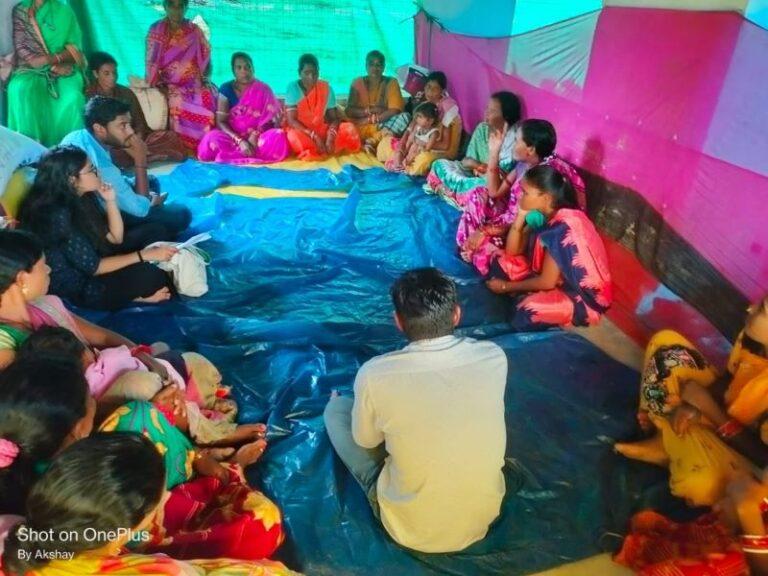
    The Agriculture Production Cluster (APC), a project designed for the tribal region of Odisha, works to promote synchronized farming practices and collective marketing. The project targets hilly, undulated, and topographically challenging areas with low crop productivity and limited irrigation, often leading to migration. In these areas, farmers lack organization and market connections. The APC project seeks to address these issues by focusing on capacity building, improving resource availability, connecting farmers to markets, and enhancing infrastructure.

    Its functioning involves organizing small and marginal farmers at the grassroots level into producer groups. Each group consists of around 130 women farmers. These producer groups then form producer companies, with 28 to 30 members from different producer groups. These producer companies play a central role in decision-making. They determine the choice of crops, market strategies, and product pricing. The core purpose of the APC is to create an organized structure for collective farming and to facilitate access to markets where farmers can sell their products at favourable prices.

    Kalahandi

    A distinct landscape emerges in the Paikbori SC colony, housing an exclusive enclave for the Scheduled Caste community in Lanjigarh Tehsil in Odisha’s Kalahandi district. The boundaries of this enclave are sharply defined, serving as a poignant reminder of social divisions within the village. A conspicuous pattern surfaces among the women farmers – the absence of individual land ownership. This void necessitates their engagement on lands owned by others for their agricultural pursuits.

    The significance of caste-based separation is underscored, reflecting an enduring adherence to purity and impurity rituals woven into the fabric of village life. During the course of data collection for a study on women farmers, an incident surfaced, illuminating the deeply entrenched nature of these caste-driven norms. For instance, a woman farmer named ‘Kulapi Nath’ denied to join a discussion already in progress within a household. This resonates as a stark example. The resources person says “ye ander nahi aa sakte” (they can’t entre in the house). Despite persistent entreaties, her non-participation underscores the unwavering grip of these norms, casting light on the omnipresence of concepts such as purity and impurity. The dynamics of communal fieldwork offer insights into paradoxical isolation. While working collectively in the fields, the scope for personal interactions remains constrained, signalling the pervasive solitude that permeates their experiences.

    Influence far from uniform

    Within the boundaries of Harihar Pur, a village underscored by its OBC demographic, an intriguing tale unfolds. In contrast to certain other village settings, the sentiment within the women farmer community here remains less than sanguine towards the APC initiative. A recurring refrain is that the programme has fallen short in nurturing its development trajectories.

    Delving deeper into their perspectives, it becomes evident that the absence of a robust knowledge and technical skillset for effective land cultivation serves as a stumbling block. These women voice grievances concerning inadequate financial resources, revealing that microfinance credits levy interest rates ranging from 10 to 15 per cent. The landscape of governmental policies and schemes further compounds their challenges, with a lack of favourability towards their aspirations.

    Unlike their sisters from the Scheduled Caste and Scheduled Tribe, these women farmers face an uphill battle to secure fertilizers and seeds at preferential rates through the APC channel. The village’s shortcomings are not confined to this sphere; a glaring absence of adequate irrigation facilities stands as a poignant testament to their predicament. In dissecting the impact of APCs across different villages, it becomes resoundingly clear that the influence is far from uniform. Despite these inadequacies within the APC program, the village is marked by its density and educational infrastructure, encompassing both public and private institutions. This distinct dynamic contrasts with the context the tribal villages of Khaman-Khuti, Kandha-Bori, and Sanjamkeheju.

    Kandha-Bori village

    Within the fabric of Kandha-Bori village, a distinct geographical tapestry unfolds, distinguishing it from its counterparts. Perched atop mountains, this locale inherently diverges from conventional settings. A notable facet emerges – a dearth of formal education among women farmers. The village’s unique terrain is mirrored by the distance that separates it from essential amenities such as schools and markets. A poignant illustration of the village’s character is encapsulated by the image of children journeying considerable distances on foot, signifying the village’s distinctive socio-spatial context.

    The perspectives and experiences of women within KandhaBori village, ensconced within the realm of the APC project, cast a positive hue on their journey. This project has a transformation in their decision-making agency, epitomized by their adeptness in bargaining for better prices, rendering them more assertive and responsive to external engagement. Notably, their cultivated crops have evolved into commodities with market value, thereby fortifying their social support network. Amid this narrative of transformation, challenges persist. A veil of insufficient financial resources shrouds progress, compounded by limited access to markets. These issues are emblematic of the nuanced landscape these women traverse. In the midst of this evolution, a fundamental question emerges – has their value as tribal members been recognized? Has their dignity witnessed an elevation as a consequence of this transformation?

    Khaman-Khunti village

    In the village of Khaman-Khunti, predominantly inhabited by the Schedule Tribe population, a prevailing sentiment of disappointment regarding the effectiveness of APC (Agriculture Production Cluster) development is evident. The community’s daily struggles to access basic necessities stand out prominently. The insufficiency of drinking water and irrigation facilities amplifies the challenges, significantly hindering agricultural pursuits and obstructing progress.

    Women in Khaman-Khunti village share compelling narratives, recounting the hardships brought about by the destruction of their brinjal crops. This unfortunate occurrence disproportionately impacts the farmers, who bear the full weight of losses without any mechanism for compensation from the overseeing nodal agency, as emphasized by the APC project manager. Thus, the fallout from such setbacks rests squarely on the shoulders of the farming community. Amid this backdrop, the women farmers of Khaman-Khunti find themselves at the periphery of APC development and government support. Their expressions of discontent and the prevailing sense of neglect underscore the intricate and multifaceted realities that shape their agricultural journey within the framework of APC initiatives.

    Sanjamkeheju village

    In Sanjamkeheju village, women hail from the Scheduled Tribe (ST) community, and are engaged in a dual spectrum of livestock and agricultural activities. In the wake of APC implementation, the transformative impact on the lives of women within this community becomes apparent. A distinct narrative emerges, painting a portrait of empowerment catalyzed by the APC project. Notably, the women of Sanjamkeheju village have embraced a trajectory of development through their association with the APC initiative.

    The journey of these women of Sanjamkeheju village is epitomized by their engagement in training facilitated by cluster coordinators, equipping them with enhanced skills and knowledge. As a result, they navigate the terrain of agriculture with an adeptness that transcends mere subsistence. The ripple effects of APC’s intervention are palpable. Women in this village command better prices for their produce, a testament to the positive shifts in their economic standing. Their access to essential farming inputs such as seeds and fertilizers, now available at minimal cost, further solidifies their newfound agency within the agricultural landscape.

    Absence of land rights

    It is evident that the effects of the APC project are not uniformly distributed, as certain villages experience benefits while others continue to grapple with fundamental necessities like access to water. To attain a more comprehensive understanding, the subsequent emphasis will be placed on the household survey to elucidate these patterns.

    A remarkable revelation arises from their narratives – despite their landless status, these women farmers resoundingly affirm economic uplift stemming from their association with the Agricultural Producer Company (APC). The collective discourse during focused group discussions brings to the forefront their access to credit, loans, and skill enhancement, the fruits of training imparted by APC cluster coordinators.

    Yet, a pivotal concern comes into focus – the stark absence of land rights. A divergence is evident when contrasting with the OBC and ST segments, which command ownership of their own lands and the autonomy to cultivate varied crops for self-sustenance. In stark contrast, these women farmers without any land rights find themselves dependent on the lands of others for their livelihood, painting a landscape marked by economic fragility. Their journey unfolds within the overarching quest for equitable land rights, a pursuit intricately interwoven with the complex caste dynamics that shape their reality.

    Jyoti studies at JNU. This piece has been extracted from her research report following her stint as an Abhijit Sen Research Intern with the National Foundation for India.

    Sub-Committee for GRAP Directs Agencies to Take Dust Abatement Measures

    The sub-committee for GRAP has undertaken a comprehensive review of the air quality scenario in the National Capital Region and has directed concerned Pollution Control Boards and stakeholders and agencies concerned to take urgent steps regarding dust abatement measures and their monitoring.

    Delhi’s overall Air Quality Index (AQI) clocked 243 (‘Poor’ category) on date as per the Daily AQI Bulletin from the Central Pollution Control Board (CPCB). Taking note of the increase in the average air quality of Delhi-NCR over past few days, the Sub-Committee for invoking actions under the Graded Response Action Plan (GRAP) of the Commission for Air Quality Management in NCR and Adjoining Areas (CAQM) accordingly met today to take stock of the current air quality scenario of Delhi-NCR and also assess technical as well as expert inputs related to forecasts for overall air quality of Delhi-NCR put forward by IITM/ IMD.

    While reviewing the air quality scenario in the region, it was informed that the wind direction and speeds are rapidly changing due to high convection rates and absolute dry conditions coupled with high temperatures leading to continued suspension of dust over the National Capital Region (NCR). Further, it was deliberated that higher instances of agricultural residue burning in and around NCR areas and also the forest fires in the nearby states could also be having an impact on the overall air quality of Delhi-NCR.

    The sub-committee for GRAP, after comprehensively reviewing the air quality scenario directed the concerned Pollution Control Boards (PCBs)/ Committee of NCR and the stakeholders/ agencies concerned to take following urgent steps:

    ✓ Conduct intensive drives at major pollution hotspots in the region focusing on dust abatement measures and their monitoring.

    ✓ Augment the number/ frequency of water sprinklers and mechanical road sweeping equipment in the region.

    ✓ Keep a close watch on fire instances and open burning of Municipal Solid Waste (MSW) in and around NCR, and ensure all preventive measures.

    ✓ Dust Control & Management Cells (DCMCs) in the Road Owning Agencies to keep a strong vigil on all road construction/ maintenance projects for effective implementation of the prescribed measures.

    ✓ NCR State PCBs/ DPCC to intensify enforcement mechanism of all dust control measures at C&D project sites.

    ✓ Flying Squads of CPCB to also intensify inspections for appropriate action against sites/ projects flouting the statutory directions of the Commission.

    With collaborative and concerted efforts of all concerned agencies, the overall AQI of Delhi can be improved in the coming days, the sub-committee said. Further, the sub-committee said it will be keeping a close watch on the situation and would frequently review the air quality scenario of Delhi-NCR accordingly.

    Educating the Mind Without Educating the Heart is No Education at All

    By Yasmine Sherif

    The words above, by the ancient Greek philosopher Aristotle, serve as a reminder that we still have a long way to go to in educating ourselves. In doing so, we will naturally ensure that the young generation can access an inclusive quality education and use their knowledge to build a world of justice, equity, peace and security.

    Yet, with brutal atrocities and horrific conflicts relentlessly spreading in Eastern Democratic Republic of the Congo, Gaza, the Sudan and Ukraine – in addition to another 50 devastating conflicts taking place around the world – we cannot say in all honesty that we are using our hearts. It would also be dishonest to claim that since the proclamation of the UN Charter in San Francisco we have built a world based on human rights, peace and security.

    Instead, the gulf between the rule of law and today’s wicked reality is only widening. In this dark abyss, millions upon millions of vulnerable and innocent children and youth are pleading for humanity and crying out for respect of their inherent human rights, starting with the foundational right to an inclusive quality education in a protective learning environment.

    We have created a divided, bitter world reminiscent of a bloody battlefield. A world of destruction, disregard for human life and the earth itself. One begs to ask the question whether it really matters if we have advanced in technology while we are losing our humanity. Or, as Martin Luther King Jr said: “Our scientific power has outrun our spiritual power. We have guided missiles and misguided men.”

    Victimized by wars

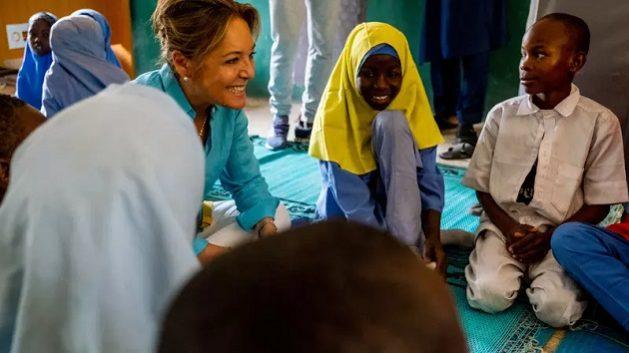
    Consequently, over 226 million children and adolescents currently living in these battlefields cannot access a quality education – with many also losing their mothers, fathers, siblings, limbs, homes and future. It is quite astonishing how destructive the mind can be in the absence of emotional intelligence or the education of the heart.

    Schools, teachers and students are purposely and blatantly targeted, adolescent girls are subjugated and pushed into the shadows, and both girls and boys are victimized by wars and systematic violations of their inherent human rights. It has been going on for so long now that the abnormal has almost become normal. This cannot continue.

    When will we respond to the universal and collective commitments outlined in the UN Charter, the Universal Declaration of Human Rights and the Sustainable Development Goals? When will we realize the right of every child to an education in a safe learning environment?

    It will only come the day that we begin to educate our hearts as well as our minds.

    An educated heart cannot turn a blind eye to the unrelenting destruction of human life or nature. An educated heart acts to prevent the growing inequities in the world. An educated heart finds it unbearable to ignore the right of 226 million children to a quality education.

    According to Education Cannot Wait’s strategic partner Educo, humanitarian appeals to meet education demands have dramatically increased more than sevenfold in the last decade – from US$517 million to US$3.785 billion – while contributions have only increased fourfold over the same period, from US$190 million to US$805 million.

    Cycles of violence

    The gap is daunting and the consequences for children caught in emergencies and protracted crises are beyond devastating. Indeed, this growing funding gap will result in dangerous consequences for the world. According to Educo’s analysis, “88 per cent of the countries and territories in humanitarian crises have significant or fundamental challenges for achieving the SDG goal (SDG4) for education.”

    In forgotten crises, such as Bangladesh, the Central African Republic, Chad, Lebanon, Yemen and beyond, we have instead contributed to creating a generational gap and perpetuating cycles of violence, poverty, forced displacement and further inequality.

    There is also a significant gap between the Global North and Global South. In OECD countries, around 7 per cent of GDP is spent on primary and secondary education per student every year. In some countries, such as Luxembourg, it rises to as much as US$25,000 a year per student.

    On the other hand, according to the IMF: “In sub-Saharan Africa, the median education budget was equal to about 3.5 per cent of GDP in 2020 – below the international recommendation of at least 4 per cent of GDP. Recent IMF analysis reveals that achieving the key Sustainable Development Goal of universal primary and secondary school enrollment by 2030 may require doubling education expenditures as a share of GDP, including from both public and private funding sources.”

    An educated heart cannot accept these figures and leave millions of young lives and the potential of their futures behind. The resources exist. Referring to Martin Luther King Jr’s quote above, the question is how we choose to use these resources. We can either continue on the path of destruction or take a more constructive and responsible approach.

    Educate hearts and minds

    By crowding in resources from the public and private sectors, we have the chance to educate both the hearts and the minds of an entire generation. A generation that may be the one establishing human rights, peace and security for all, while creating a world of shared values that rests on the rule of law, rather than the rule by force.

    In this month’s high-level interview with Amy Clarke, Co-Founder and Chief Impact Officer for Tribe Impact Capital LLP, we explore a promising new modality to connect private sector capital to sustainable results, environment and building a better world. In joining forces with Education Cannot Wait, Amy Clarke says: “As ECW works tirelessly to address the immediate educational needs of these children, it’s crucial we also forge a path toward a future that promises fairness, justice and equity.” As such, Tribe Impact Capital LLP stands out as one of our private sector partners that lead with both their heart and mind. They show us that it is indeed possible.

    It has been said that the longest journey we can make is the one between the mind and the heart. At this point in time, when the world is engulfed in utter destruction, when nearly a quarter of billion children and teachers are losing limbs, life and hope under the rubble of their targeted schools, it is time for us all to set sail on that journey.

    Yasmine Sherif is Executive Director Education Cannot Wait (ECW)

    This piece has been sourced from Inter Press Service.

    Poultry Industry Leaders Unite Over Industry Principles to Reduce the Need to Use Antimicrobials

    Collectively, these organizations reach over 100 countries and represent over 40 per cent of global poultry meat production spanning all sectors of poultry production from fully integrated systems to small farms.

    Antibiotics used to treat bacterial infections can contribute to antimicrobial resistance (AMR) that spreads amongst human, animal, and plant populations, weakening our ability to prevent and treat future infections. To effectively tackle AMR and reduce its impact on global health security, the USAID-funded Transformational Farm Output Risk Mitigation (TRANSFORM) project is leveraging multisectoral interventions using the One Health approach that recognizes the interdependencies between the health of humans, animals, and the environment. As part of TRANSFORM, the International Poultry Council (IPC) is driving global change within animal agriculture by uniting poultry industry associations and private sector organizations in supporting antimicrobial use stewardship principles that guide actions to avoid the need to use, but when needed, ensure proper use of antimicrobials.  

    Today, 11 poultry organizations are announcing their commitment to antimicrobial use stewardship principles that reduce the need to use antimicrobials at the farm level. These organizations are commended for recognizing the importance of antimicrobial use stewardship: 

    • Animal Husbandry Association of Vietnam (AHAV) 
    • Asociación Latinoamericana de Avicultura (ALA) 
    • British Poultry Council (BPC) 
    • Canadian Poultry & Egg Processors (CPEP) 
    • Cargill, Inc., a global agribusiness 
    • Chicken Farmers of Canada (CFC) 
    • Hoa Phat, a Vietnam-based company 
    • McDonald’s, a global foodservice provider 
    • Srinivasa Farms, an India-based company 
    • Turkey Farmers of Canada (TFC) 
    • Tyson Foods, a United States-based company 

    These organizations join eight others that have already adopted or endorsed the principles, including Brazilian Association of Animal Protein (ABPA), Federación Nacional de Avicultores de Colombia (FENAVI), Poultry Federation of India (PFI), Unione Nazionale Filiere Agroalimentari Carni e Uova (UNAITALIA), Thai Broiler Processing Exporters Association (TBA), Vietnam Poultry Association (VIPA), DABACO Group and Kenchic Limited.  

    “Each of the 19 organizations that have endorsed or adopted the antimicrobial use stewardship principles brings us closer to our goal of an industry-wide commitment,” said Robin Horel, IPC President. “We’re inspired by the private sector leadership that has been demonstrated thus far, and hope others are motivated to take action to proactively reduce risks to their flocks and beyond.”  

    Collectively, these organizations reach over 100 countries and represent over 40 per cent of global poultry meat production spanning all sectors of poultry production from fully integrated systems to small farms. Each of these organizations are demonstrating industry leadership in their commitment to these principles, recognizing that action starts at the farm. 

    By adopting or endorsing the principles, organizations are committed to encouraging or taking action that centers around four key points. First, organizations agree to take a risk-based approach around each instance of antimicrobial use and consider why, when, which and how much to administer. Second, organizations agree to adopt farm management practices that improve animal health and would reduce the need for antimicrobial use. Third, organizations commit to using antimicrobials only in compliance with national authorizations and, fourth, that antimicrobials critically important for human medicine should only be used under a supervising veterinarian’s diagnosis and oversight. 

    “Through the One Health approach, we know that human health is linked with the health of animals,” said Annie Kneedler, Chief of Party for TRANSFORM. “By advancing science-based antimicrobial use stewardship principles, we are able to create an ecosystem where animal health improves, the need for antibiotic use decreases, and animal production increases. These collective efforts contribute to the Global Health Security Agenda goals of reducing the risk of antimicrobial resistance and zoonotic diseases, lessening their impacts on the health of humans around the world.”  Led by a private-sector consortium that includes Cargill, Heifer International and IPC, TRANSFORM is working in Kenya, India and Vietnam to advance market-driven animal health solutions that increase global health security by combatting zoonotic disease and AMR. By working throughout the value chain, TRANSFORM aims to drive lasting, systemic change through on-farm practices, holistic animal nutrition research, antimicrobial use stewardship, and access to finance to support animal health and economic sustainability.

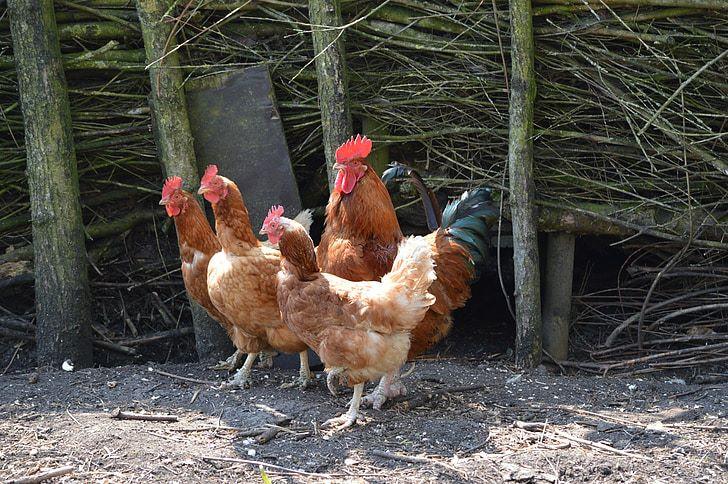
    Image: Hippopx