More

    Pakistan’s Election Outcomes Leave Many Unhappy

    Given these constraints, and the near impossibility of holding physical rallies, PTI used online opportunities. Khan kept up a virtual presence through AI-generated videos. WhatsApp was used to inform PTI supporters which independent candidates to vote for.

    By Andrew Firmin

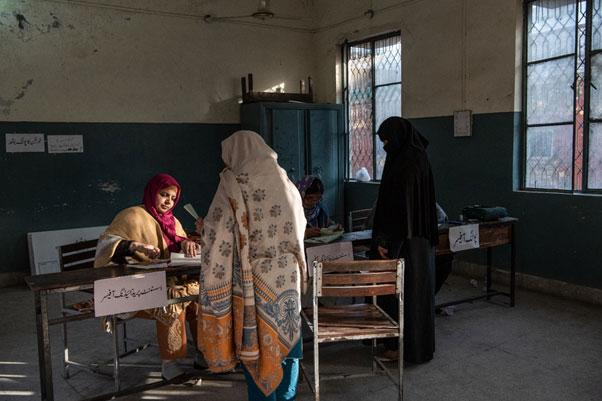
    Pakistan’s 8 February election has resulted in an uneasy compromise that few wanted or expected. There’s little indication the outcome is going to reverse recent regression in civic freedoms.

    Army calls the shots

    Around 128 million people can vote in Pakistan, but it’s the army, the sixth-biggest in the world, that’s always had the upper hand. In recent decades, it’s preferred to exert its power by strongly influencing the civilian government rather than outright military rule. Prime ministers have allied with the military to win power and been forced out when disagreements set in. No prime minister has ever served a full term.

    In April 2022, Prime Minister Imran Khan was ousted through a parliamentary vote of no-confidence. But it was common knowledge this was the military’s will. Khan, having cosied up to the generals to come to power in 2018, had publicly and vocally fallen out with them over economic and foreign policy. He had to go.

    Khan’s fall from grace was swift. He survived an assassination attempt in November 2022. In December 2023, he was barred from running in the election. Just ahead of voting he was found guilty in three separate trials, with the longest sentence being 14 years. Bushara Bibi, Khan’s wife, was jailed too.

    The army turned to a former foe, Nawaz Sharif, three times previously prime minister. After he last fell out of favour in 2017, he was forced out and found guilty of corruption. Yet for this election he’d evidently patched things up enough to become the army’s favoured anti-Khan candidate.

    A catalogue of restrictions

    But voters didn’t go along with the army’s choice. Candidates running as independents but affiliated with Khan’s Pakistan Tehreek-e-Insaf (PTI) party won the most seats, albeit short of an outright majority. Sharif’s Pakistan Muslim League-Nawaz (PML-N) came second, with the Pakistan People’s Party (PPP), its partner in the 2022 coalition of convenience that replaced Khan, third.

    This was a shock result, given the obstacles placed in the PTI’s way. The government postponed the election from November to February so, it said, it could hold a census. The suspicion was that the move was to allow more time to prosecute Khan and lean on his party’s politicians to swap allegiances.

    Sure enough, some PTI representatives were banned from standing and others faced harassment and violence seeking to persuade them to distance themselves from Khan. In the biggest blow, PTI candidates were banned from using Khan’s cricket bat symbol on ballot papers. Symbols are crucial for mobilising party support, since over 40 per cent of people are unable to read. PTI candidates were forced to run as independents.

    There was never any prospect of equal space for campaigning. Last year, the media regulator applied a de facto ban on mentioning Khan’s name on TV. In August 2023, it directed TV channels not to give airtime to 11 people, among them Khan and journalists considered sympathetic towards him. As the election neared, the military interfered in the media on a daily basis, telling them which stories to run.

    Given these constraints, and the near impossibility of holding physical rallies, PTI used online opportunities. Khan kept up a virtual presence through AI-generated videos. WhatsApp was used to inform PTI supporters which independent candidates to vote for.

    But constraints came here too. When the PTI organised an online rally in December, authorities blocked access to major social media platforms and slowed the internet down. On election day, they imposed a full internet and mobile data shutdown for the first time in Pakistan’s electoral history. The authorities claimed they’d done so on security grounds – the Islamic State terrorist group carried out two deadly bombings the day before – but it made independent oversight of voting and counting much harder. Further restrictions on Twitter followed after the results were out.

    This pressure on the PTI and its supporters came on top of the ongoing repression of civic freedoms by successive governments. Pakistani authorities have continued to criminalise, threaten and harass human rights activists, restrict online freedoms, intimidate journalists, censor media and violently repress peaceful protests, particularly by women’s rights activists and people from the Baloch and Pashtun ethnic groups.

    Uncertainty ahead

    Despite the highly unlevel playing field, results show that many took the opportunity the election offered to communicate discontent with military influence, a political establishment dominated by two families and the dire economic conditions. A youthful population has found something appealing in Khan’s fiery populist rhetoric.

    But what’s resulted is something few voters likely wanted. The PML-N and PPP quickly announced a resumption of their coalition. The PML-N’s Shehbaz Sharif, Nawaz Sharif’s brother, is set to return as prime minister. It would appear to be a coalition united by little more than a determination to keep the PTI out of power, suggesting a weak and fractious government will result.

    Strong opposition can be expected. PTI supporters aren’t accepting this quietly. The party claims rigged votes denied it more seats. Thousands have protested and numerous legal cases have been filed. Their claims were given credence when an official in Rawalpindi stepped forward to say he’d been involved in election rigging. One politician from a minor party also announced he was renouncing his seat because the vote had been rigged to exclude the PTI-backed candidate.

    Khan is no democratic hero. When he was in power and enjoyed the military’s favour, he used the same tools of repression now being applied to him and his party. Civic space conditions worsened under Khan and there’s been no let-up since.

    The bigger problem is a system where the military calls the shots, sets the parameters that elected governments must stay within and actively works to suppress dissent. With many young voters angry and wanting change, problems can only be building up for the future. It’s vital that civic space be opened up so people have peaceful means to express dissent, seek change and hold power to account.

    Andrew Firmin is CIVICUS Editor-in-Chief, co-director and writer for CIVICUS Lens and co-author of the State of Civil Society Report.

    This piece has been sourced from Inter Press Service.

    Image: Rebecca Conway/Getty Images
    Security Council Hears Gaza Famine ‘Almost Inevitable’ Unless Aid is Massively Scaled Up

    Some Council members proposed action plans to potentially end hostilities beginning with an immediate ceasefire and hostage releases while Algeria’s ambassador accused Israel of using starvation as a tool of war.

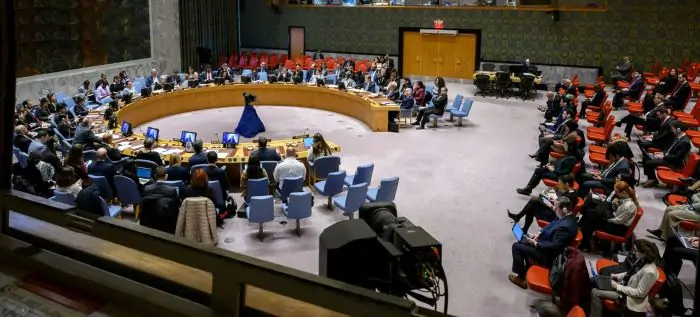
    Well over half a million Gazans are just a step away from famine, said senior UN humanitarians, briefing the Security Council Tuesday on food security in the stricken enclave. The deputy head of UN aid coordination told ambassadors that famine is “almost inevitable” unless aid can be scaled up immediately.

    The dire aid situation and increasing threat of famine was front and centre during an impassioned discussion in the chamber, led off by a detailed UN humanitarian update via videolink.

    A trio of briefers from the key UN aid agencies issued grim warnings to the Council on the situation facing civilians on the ground in Gaza.

    “If nothing changes, a famine is imminent in northern Gaza,” warned the World Food Programme (WFP) deputy executive director as at least 576,000 people are “facing catastrophic levels of deprivation and starvation” across the enclave, according to deputy chief of the UN humanitarian agency, OCHA

    FAO’s deputy director said that “essential first steps in eliminating a risk of famine” are a cessation of hostilities and restoration of humanitarian space to deliver lifesaving aid and restored basic services, like water and electricity

    Some Council members proposed action plans to potentially end hostilities beginning with an immediate ceasefire and hostage releases while Algeria’s ambassador accused Israel of using starvation as a tool of war.

    You cannot stay silent: Arab Group

    On behalf of the Arab Group, Tunisia Permanent Representative Tarek Ladeb said the spectre of famine looms in Gaza because of the inability of the international community to agree on an immediate ceasefire and the stubbornness of Israel, the occupying power.

    Hundreds of humanitarian aid trucks are piled up along the entry points without being able to enter the Gaza. This blockade silently starves and deprives the Palestinian people of all means of survival in flagrant violation of international law and international humanitarian law, he said.

    The international community and the Security Council cannot remain silent any longer.

    He told ambassadors the Arab Group reiterates the need to adopt an immediate ceasefire and to put an end to the plan of forced displacement of Palestinians from Gaza.

    The group also insists on the essential role UNRWA plays on the ground and warns against any attempt to broaden the mandate of the United Nations coordinator to the detriment of the Palestine refugee relief agency.

    Plans to open more border crossings: Israel

    Israel’s Deputy Permanent Representative, Brett Jonathan Miller, said his delegation is committed to improving humanitarian assistance in Gaza, easing the entry of aid at the Kerem Shalom and Rafah crossings, with further border crossing openings also under discussion.

    Indeed, there is “no limit” to the amount of aid that can be sent to the population of Gaza, he said, noting that most aid requests are approved.

    “These are the facts; no one can claim otherwise,” he said, adding that 20 bakeries in Gaza now produce more than two million pita breads a day.

    Claims made to the contrary inside the Council Chamber are just attempts to propagate Hamas lies and to distract attention away from the inability to efficiently distribute aid, he continued.

    Israel is not holding up the trucks waiting at the borders, he said, adding that, clearly, the delays in aid delivery are the UN’s fault. 

    In this vein, he said the problem of aid diversion in Gaza cannot be ignored. For its part, Israel will continue to demand the release of all hostages, he said, calling on the Security Council to do everything in its power to ensure their safety and wellbeing.

    Famine already underway: Palestine

    Permanent Observer of the State of Palestine Riyad Mansour told ambassadors that in reality, a famine is underway in Gaza and getting worse every day that Israel carries on its “criminal aggression”.

    “We must stop for a moment and consider what this truly means,” he said.

    “What it means to forage for food in the rubble, sand and trash, to eat animal feed or food ravaged by rats.”

    He said Israel was the architect of this human and humanitarian catastrophe, which it has purposely designed to collectively punish Gaza’s 2.3 million Palestinians. 

    That this catastrophic famine and genocide has been allowed to happen at all and continue for this long “brings shame on all of us, not least this Security Council”, Mr. Mansour added.

    Israel’s weaponization of food to punish the Palestinian people is not a secret. It was declared months ago, in October 2023 by the highest-ranking Israeli Government and military officials, some of whom publicly stated that such policies would hasten the decline of humanitarian conditions and provoke a mass exodus from Gaza or a so-called “voluntary migration” of this “demographic threat”.

    “This Council must uphold its responsibilities,” he said. 

    Rectifying the current abhorrent situation requires three immediate steps: a ceasefire now to halt the Israeli aggression; the unimpeded, accelerated delivery of humanitarian aid at scale throughout all of Gaza; and accountability measures for all the war crimes and crimes against humanity perpetrated by Israel. 

    Universal Connectivity Gets a $9 Billion Private Sector Boost

    ITU has called for $100 billion in overall investments by 2026 to provide the expertise and resources required to extend universal, meaningful connectivity and sustainable digital transformation to every corner of the globe to achieve universal connectivity.

    The mobile phone industry has pledged over $9 billion towards the goal of connecting the world, said the chief of the UN International Telecommunication Union (ITU) on Monday, addressing the Mobile World Congress in Barcelona.

    “Universal meaningful connectivity is within our grasp,” said ITU Secretary-General Doreen Bogdan-Martin. “Thanks to these new commitments, millions of people will benefit from accessible and affordable connectivity across the world.”

    Fresh investments from e&, China Telecom, Ooredoo and VEON build on strong industry support for the UN digital agency’s efforts to “connect the world”, she said.

    Bridging the digital divide

    Around 2.6 billion people remain offline worldwide, according to data from the specialized UN agency, which drives innovation in ICTs.

    As telecommunications infrastructure forms the backbone of connectivity and digital transformation, it is vital for closing the global digital divide and overcoming development impediments in areas from education and health to government services and trade, the agency said.

    To achieve that, ITU has called for $100 billion in overall investments by 2026 to provide the expertise and resources required to extend universal, meaningful connectivity and sustainable digital transformation to every corner of the globe.

    ITU also launched Partner2Connect in 2021 to reach this goal. Today, more than 400 organizations have committed to investing over $46 billion in the coming years to realize this shared vision.

    Fresh private-sector investments

    The fresh commitments aim to make strides across the world.

    That includes accessible and affordable network connectivity and digital services across countries in the Middle East, Africa and Asia as well as providing information and communication services to over 80 million people in remote villages across China and building infrastructure in Ukraine by providing connectivity and digital services essential to the country’s reconstruction.

    The UN digital agency also announced that it now has over 1,000 industry, academia and organizational members in addition to 193 Member States, a milestone in its 159-year-old history, ITU said. “This multistakeholder model of collaboration will continue to be a strong force in the UN system to bridge the digital divide and build an inclusive, safe and sustainable digital future for all,” the ITU chief said.

    WTO Negotiation Session on Fisheries Subsidies held at Abu Dhabi Ministerial Conference-13

    India reiterates that responsible and sustainable fisheries is a practice ingrained in ethos and practices of India’s large and varied fishing community.

    The WTO negotiation session on Fisheries Subsidies took place in the morning of 27 February in the ongoing Abu Dhabi Ministerial Conference-13.

    India has reiterated its long-held positions that responsible and sustainable fisheries is a practice ingrained in the ethos and practices of India’s large and varied fishing community. In that context, any comprehensive agreement on fisheries subsidies should keep in mind the interests and welfare of the fishing community that depends on the marine resources for their livelihood and sustenance.

    India stressed that historically, while subsidies to the fisheries sector has led to over exploitation, subsidies are also vital for developing countries and small economies to develop and diversify their fisheries sector as well as to protect the food security and livelihood security of their fishermen. This negotiation is linked to the concept of sustainability and as such, any comprehensive agreement on fisheries subsidies should be built on the principles of Common But Differentiated Responsibilities and Respective Capabilities (CBDR- RC). It should also incorporate the provisions of Special and Differential Treatment (S&DT) appropriately, as is the case for all WTO agreements.

    At the same time, for such an agreement to be effective and forceful in advancing the sustainability objectives, there is an urgent case for capturing non-specific fuel subsidies and transfer of fishing rights to corporate fishing under Government to Government (G2G) payments within the ambit of the disciplines. Equally important is the need to discipline subsidies given by the Distant Water Fishing Nations.

    India urged the members to introduce a moratorium on subsidies by Distant Water Fishing Nations for fishing or fishing related activities beyond their EEZs for a period of at least 25 years. India said that the Members should not lose sight of the harmful effects of subsidies for large-scale fishing on sustainable fishing and management of marine resources.

    India explained that the current approaches for addressing Over Capacity and Over Fishing (OCOF) is deeply flawed. Since the Members had agreed to using the affirmative determination approach for negotiating disciplines on the Overfished Pillar, there was no reason why the Members should not use the same approach in relation to the OCOF Pillar. In addition, the current approach of considering the annual aggregate value of subsidies grossly overlooked the intensity of subsidies, and other factors such as the size of the EEZ, long coastal line, population of small fishers and the per capita subsidies to fisher men.  India reiterated that the sovereign rights of Members for sustainable management of fisheries within their EEZs as provided under the United Nations Convention on the Law of the Sea (UNCLOS) should be duly recognized and protected.

    New Zealand to Repeal World-First Law Banning Tobacco Sales for Future Generations

    The Public Health Communication Center, a Wellington-based advocacy group called the arguments proffered by the government as “‘Zombie arguments’ that New Zealand’s smoke-free measures will boost illicit tobacco trade are false.”

    New Zealand is all set to repeal the world-first law banning tobacco sales for future generations – those born after 2009. The law was brought in by the previous government of Jacinda Ardern.

    The new coalition government elected led by Prime Minister Christopher Luxon  confirmed the repeal will happen on Tuesday as a matter of urgency, enabling it to scrap the law without seeking public comment, in line with previously announced plans.

    Even after the researchers and campaigners warned of the risk that people could die as a result, the new government is moving ahead with its decision. The Associate Health Minister of New Zealand Casey Costello has said that she will soon be taking a package of measures to the cabinet to increase the tools available to help people quit smoking. 

    Forbes.com quoted the Public Health Communication Center, a Wellington-based advocacy group calling the arguments proffered by the government as “‘Zombie arguments’ that New Zealand’s smoke-free measures will boost illicit tobacco trade are false…Good governments do not abandon popular and empirically supported smoke-free measures in response to threats that the illicit tobacco market might grow.”

    The organisation’s website says, “Government spokespeople have failed to provide either evidence or logic to justify the repeal of world-leading smokefree legislation. Instead, they have claimed that reducing retailer numbers will greatly increase crime, particularly ram raids targeting tobacco products, a claim based on anecdote.”

    The present coalition government argues that scrapping the law would bring in critical tax revenue from cigarette sales. It said that it would also prevent the creation of a black market. The government estimates that repealing the ban would preserve around NZ$1 billion in annual tax revenue.

    In an attempt to put opponents in the dock, the government questioned studies that showed the law would save the country’s healthcare system NZ$1.4 billion and reduce the number of deaths caused directly and indirectly from cigarette smoking or other forms of tobacco consumption.

    The tobacco-ban legislation, the world’s strictest ever law to prevent tobacco consumption was passed by the former labour government led by Prime Minister Jacinda Ardern’s Labor in December 2022. 

    Sri Lanka Set to Implement PPP in Water Supply

    The minister said that a water tariff formula has been formulated and will be submitted to the cabinet, parliament and COPE committee.

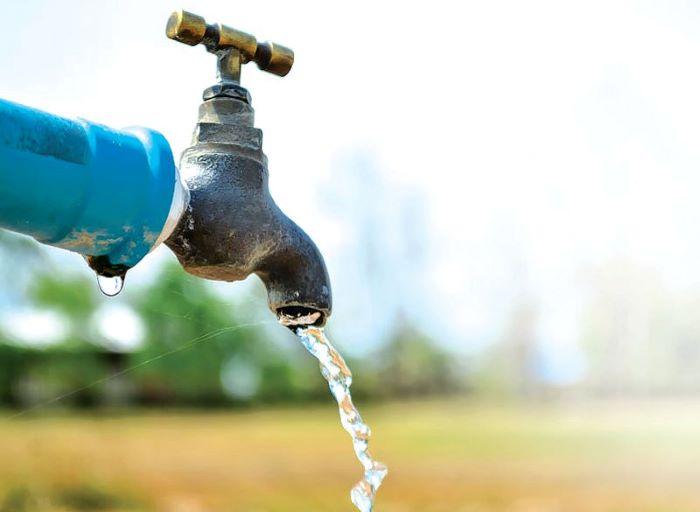
    A public private partnership model will set the path for Sri Lanka’s water sector, the island nation’s minister of water supply, Jeevan Thondaman informed at a press conference. The new modality will specifically focus on rural water supply, he said.

    “Not privatization, but public private partnerships,” Thondaman said at a press conference. “When we enhance private sector participation, we create a more competitive industry with better quality and cheaper prices.”

    He said that a water tariff formula has been formulated and will be submitted to the cabinet, parliament and COPE committee, he said.

    This follows discussions with the Japan International Cooperation Agency (JICA) and the Asian Development Bank (ADB).

    “Once this is in place, we will be able to attract investors to come on board,” the minister said. “The water sector till now has not had a PPP model – we want to bring in private public sector partnerships in rural communities’ water supply. We believe they will be able to work hand in hand with community-based organizations to provide water to those who need it.”

    The minister gave examples of top-down approaches that were making the water supply system dysfunctional.

    “I can give you one example, when you look at the water bottle that is being manufactured by the Water Board, you will see it’s from the Hanthana Estate; but people in Hanthana Estate still don’t have drinking water. There has been a top to bottom approach. Now we want to go rural first.” Most projects in the water sector had stalled post-crisis, Thondaman said, and the priority now was to resume them before attracting further investment into the sector.

    Aid Delivery to Gaza Falls by Half Since January: UNRWA

    Obstacles to aid delivery include lack of political will, the regular closing of the two crossing points into the enclave, as well as insecurity due to military operations and the collapse of civil order.

    Very little humanitarian aid has entered besieged Gaza this month, with a 50 per cent reduction compared to January, the head of the UN agency that assists Palestine refugees (UNRWA) said on Monday. 

    Writing on the social media platform X, UNRWA Commissioner-General Philippe Lazzarini said that “aid was supposed to increase not decrease” to meet the huge needs of Gaza’s two million people, who are living in desperate conditions.

    He listed some of the obstacles to aid delivery, including lack of political will, the regular closing of the two crossing points into the enclave, as well as insecurity due to military operations and the collapse of civil order.

    He said a ceasefire, along with “lifting the siege to allow meaningful lifesaving aid and commercial supplies, are long overdue”. 

    On average, nearly 98 aid trucks entered Gaza this month, UNRWA said in its latest situation report, issued on Monday. 

    The agency noted “significant difficulties” in bringing supplies through the Kerem Shalom and Rafah crossings due to security constraints and temporary closures. 

    “UNRWA has at times had to temporarily stop discharging supplies due to security concerns. Security to manage the crossing has been severely impacted due to the killing of several Palestinian policemen in Israeli airstrikes near the crossings recently,” it said. 

    Influx and airstrikes in Rafah 

    Ground operations and heavy fighting continue across the Gaza Strip, particularly in northern Gaza, Deir al Balah and Khan Younis, the agency reported.

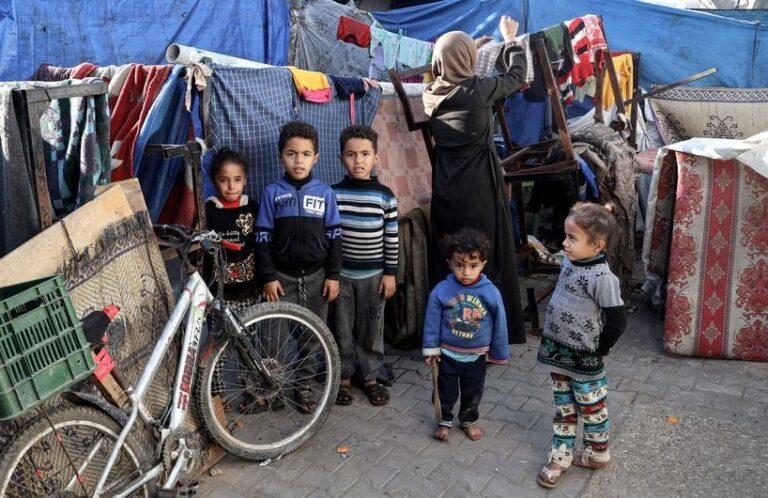
    People fleeing intense fighting in and around Khan Younis continue to head further south to overcrowded Rafah. Some 1.5 million Palestinians are sheltering in the city, which remains a focus of international concern amid the threat of an all-out Israeli offensive.

    “Increased airstrikes in Rafah, including in residential areas without prior warnings have heightened fears that they will further hamper overstretched humanitarian operations,” UNRWA said.

    At the same time, people have been moving out of Rafah towards Deir Al Balah and Nuseirat refugee camps in the Middle Area of Gaza, even though there are reports of further fighting and airstrikes in those locations.

    Over 75 per cent of Gaza’s population, up to 1.7 million people, have been displaced since the start of hostilities following the brutal Hamas-led terrorist attacks in Israel on 7 October.

    UN agencies continue to warn of the deepening hunger crisis in Gaza. More than two million people are facing crisis or worse levels of food insecurity, according to the UN humanitarian affairs office, OCHA. 

    Additionally, only one of the three water pipelines from Israel is operational, but at less than half capacity, 83 per cent of groundwater wells are not operating, all wastewater treatment systems are not working, and there is no access to clean water in the northern governorates.

    The protection and safety of humanitarian workers and medical personnel continues to be a serious concern, amid widespread hostilities and attacks.

    “We and our partners are doing all we can to provide food assistance across the Gaza Strip, despite major challenges, including ongoing airstrikes and heavy fighting,” OCHA said. 

    Last week, they reached 1.7 million people with food. 

    “To do more, we need safe and unimpeded routes in Gaza. We also need more trucks and fuel inside Gaza to ensure a consistent and dependable food supply,” the agency said. 

    Newborns dying

    OCHA together with UN health agency WHO, has supported the Palestine Red Crescent Society with evacuating 72 critical cases from Nasser Hospital in Khan Younis.

    The hospital still struggles to operate, with no electricity or running water, shortages of food and water supplies, the accumulation of solid waste, and the overflow of sewage. 

    Meanwhile, the UN Population Fund (UNFPA) reported on Monday that newborns are dying in Gaza because their mothers are unable to attend prenatal or postnatal check-ups, while bombings and anxiety are leading to premature births. The agency said there are only five beds for deliveries at the Al Helal Al Emirati maternity hospital in Rafah, one of the few remaining functioning hospitals in the enclave. Despite the lack of such basic supplies as sheets, the facility recently coped with 78 deliveries in one night alone.

    Moneylenders, Debtors Battle It Out on the Streets of Kathmandu

    The law has proven incapable of meeting the objectives it was framed for – the indebted people, who are back in Kathmandu, say that the law is a damp squib and no action has been taken against any moneylender so far.

    Laxmi Khanal

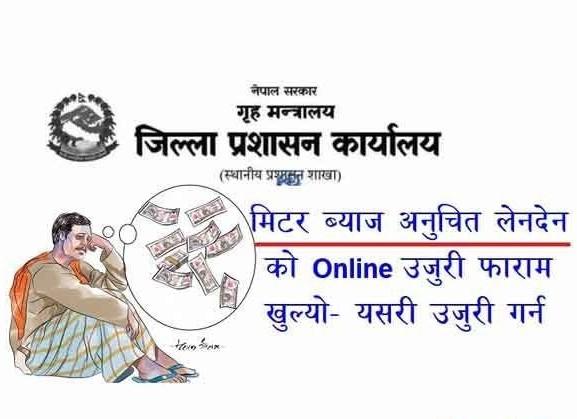
    The lens is back on Nepal’s informal moneylending sector, or simply put, the Nepalese moneylenders. Months after the Himalayan country’s legislature okayed a law for punishing moneylenders, their debtors are protesting in the federal capital city, Kathmandu, demanding implementation of the law. This has put the government in a spot.

    The protestors arrived and gathered in Kathmandu after marching for 23 days from various districts across the country last Friday.

    Participants taking part in the march launched in the initiative of the Usury Victims Peasants Workers Struggle Committee set out for Kathmandu on foot – a long journey for justice.  

    Nepal’s media seems divided – the nomenclature for the moneylenders varies. Some refer to them as loan sharks. Others call them usurers.

    The law, put in place in July last year, has provisions like rigorous imprisonment for up to seven years for usurers engaging in ‘unfair transactions’. (The bill terms forcible transfer of the debtor’s immovable property through the use of any kind of threat or violence or exploitation for the purpose of debt recovery as an unfair transaction.)

    But the law has proven incapable of meeting the objectives it was framed for – the indebted people, who are back in Kathmandu, say that no action has been taken against any moneylender so far.

    The debtors are now coming out and many have staged a sit-in against the loan sharks. According to the Rising Nepal newspaper, “in Sarlahi district alone, well over 700 usury victims have already come in contact with a committee that has been working against this form of exploitation.”

    Talk team formed

    Earlier, the Nepal government had claimed that it addressed the problems of usury victims. But, on Sunday, the government seemed to buckle as the debtors gathered in upmarket Baluwatar, next door to the Prime Minister’s official residence, to exert pressure on the government to “sustainably resolve” their problems – the Ministry of Home Affairs has invited the protesting usury victims for talks. The ministry has written to the ‘Struggle Committee’, calling them for discussions. (The ‘Struggle Committee’ was formed by the victims of extortionate money-lending.)

    A talk team has been formed, coordinated by a joint-secretary of the ministry of home affairs who will be assisted by two under-secretaries. The team has asked the protesting loan-shark victims to form a five-member talk team for a dialogue.

    “Informal talks are being held with the loan-shark victims at present,” the Rising Nepal newspaper quoted Ek Dev Adhikari, under-secretary at the ministry as saying. “We have urged them to sit for talk today itself if possible,” he said, adding that “they are in touch with us and undergoing internal discussions.”

    The ministry acknowledged that its attention was drawn towards callouts, sit-ins and demonstrations of the victims of extortionate money-lending.

    But the lack of political will was also obvious, as Adhikaris said, the ministry appraised that efforts were underway for reconciliation between the victims and loan sharks.

    On another plane, the government is also speaking of bringing in an amendment in the related laws and formation of a high-powered commission for the law to be implemented.

    The Nepal Police has been entrusted with the responsibility of registering the cases that eluded consensus between the lenders and debtors in accordance with the prevailing laws, while the Chief District Officers will monitor the process. The usury victims, however, have not agreed the ministry’s statement.

    India’s First Septic Tank Cleaning Robot Works Tirelessly

    Solinas, has developed the affordable robotic solution integrated Artificial Intelligence (AI) to inspect, clean, and manage confined space for sanitation purposes. It has helped clean up manhole blockages and has reduced sewer overflows in Madurai.

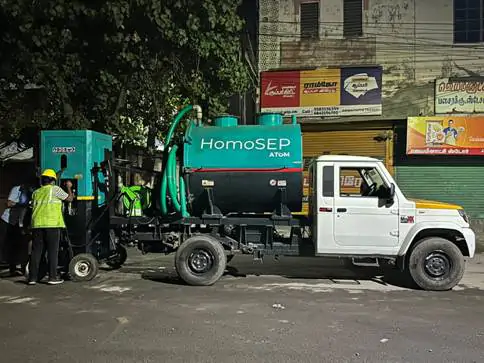
    India’s first septic tank/manhole cleaning robot is busy offering an end-to-end solution to eliminate manual scavenging in different corners of the country.

    The technology called Homosep Atom developed by Solinas, a startup incubated in the Department of Science and Technology (DST)-Technology Business Incubator (TBI) of IIT Madras, solves manual cleaning methods and transforms it to robotic cleaning methods. It has reached 16 cities in different parts of the country and empowers extensive blade cleanings, solid waste desilting, suction and storage – all in one device; thereby reducing the cost of owning multiple assets and promotes robotic cleaning in sewers.

    DST-Technology Business Incubators (TBIs) are established in Academic /Technical /R&D Institutions as part of the National Initiative for Developing and Harnessing Innovations (NIDHI) programme to support and nurture knowledge driven innovative start-ups into successful enterprises.

    Solinas, has developed this affordable robotic solution integrated Artificial Intelligence (AI) to inspect, clean, and manage confined space for sanitation purposes. It has helped clean up manhole blockages and has reduced sewer overflows in Madurai. The application of Homosep Atom was also extended to the intricate lanes of Chennai’s densely populated areas. Targeting septic tanks associated with large apartments, housing boards, and individual houses, the process has enabled municipalities to promptly and efficiently clean, clear, and transport waste to treatment plants.

    Besides, sanitary workers were empowered with manhole cleaning robots that helped them clean the manholes from outside and avoid going inside the toxic environment, thus providing dignity to the sanitary workers.

    Solinas is a deep-tech and climate tech startup born out of IIT Madras, founded with the intent to solve the challenges that revolutionizes the water and sanitation sector and improves the climatic conditions. The IIT Madras DST-TBI was also instrumental in advancing the product development of Solinas in the early stages.

    The startup specialises in developing miniature robots, including India’s first 90mm water robot and 120mm sewer robot, capable of navigating through pipelines below 100mm to address contamination challenges in water-sewer pipelines. The exposure it received through support from DST ensured that the solutions were both sustainable and scalable.

    Besides this flagship product, Solinas’s technologies solved some of the existing climatic challenges like water wastages, groundwater pollution, climate change and day-to-day human challenges like manual scavenging, drinking contaminated water, combined sewer overflows, etc.

    Helped save costs

    Technologies like Endobot and Swasth AI served as pipeline diagnostic tools capable of detecting and mitigating water contamination, wastages, and sewer overflows, often unnoticed due to underground issues like leaks, blockages, and tree roots in cities like Coimbatore.

    Solinas’s AI-based pipeline defect identification and assessment services has helped save costs, reduce resolution time, and improve drinking water supply to the entire Hubbali city which provided drinking water supply to more than 1000 households. Identification of flaws in the sewage pipeline for The Sewerage and Infrastructural Development Corporation of Goa (SIDGCL), led to quicker and more cost-effective solutions. Partnering with Chennai metro it helped identify key challenges of cross-contamination and illegal tappings, thus improving pipeline integrity and water access.

    “DST’s support for such startups is a major source of encouragement for youngsters who are inspired by the government start-up movement to develop their knowledge-based enterprises and solve societal challenges as well as contribute to the growth and development of the country,” said DST secretary, Professor Abhay Karandikar.

    668 Instances of Hate Speech Targeting Muslim in India, Says Report

    The research group said in a report released on Monday that about 75 per cent, or 498, of those incidents took place in states governed by the BJP – the maximum happening in the states of Maharashtra, Uttar Pradesh and Madhya Pradesh.

    Hate speech targeting Muslims in India rose by 62 per cent in the second half of 2023 compared to the first six months of the year, India Hate Lab, a Washington-based research group said on Monday. According to the group, there were 668 hate speech incidents targeting Muslims in 2023.

    239 (36 per cent) of the events included a direct call of violence against Muslims, the group said, adding that the Israel-Gaza war played a key role in the last three months.

    The research group said in a report released on Monday that about 75 per cent, or 498, of those incidents took place in states governed by the BJP – the maximum happening in the states of Maharashtra, Uttar Pradesh and Madhya Pradesh.

    In BJP-ruled states, around 11 per cent of events featured BJP leaders, whereas in non-BJP-ruled states, this figure rose to 28 per cent. BJP leaders were involved in delivering hate speeches at 100 (15 per cent) of the events. BJP legislator T Raja Singh spoke at 23 events, including 14 dangerous speeches with calls to violence against Muslims the report said, adding “Our report has found rapid growth of new Hindu nationalist groups and actors engaging in hate speech.”

    Hate speech events peaked between August and November, coinciding with the Vishwa Hindu Parishad-Bajrang Dal Shaurya Jagran rallies and state legislative elections in Rajasthan, Madhya Pradesh, Telangana and Chhattisgarh. Approximately 318 hate speech events, or 48 per cent of the total, took place during this period.

    “420 (63 per cent) of the events included references to conspiracy theories, primarily involving love jihad, land jihad, halal jihad, and population jihad,” the India Hate Lab report said. 169 (25 per cent) of the events featured speeches calling for targeting Muslim places of worship. 41 of the 193 (21 per cent) events that took place between October 7 (the day Hamas attacked Israel and the beginning of Israel’s war on Gaza) and December 31, 2023, mentioned the Israel-Gaza war to stoke hatred towards Indian Muslims.