More

    One Crore Households to get Rooftop Solar under Pradhan Mantri Suryodaya Yojana

    The scheme aims to reduce the electricity bill of the poor and middle class, along with making India self-reliant in the energy sector.

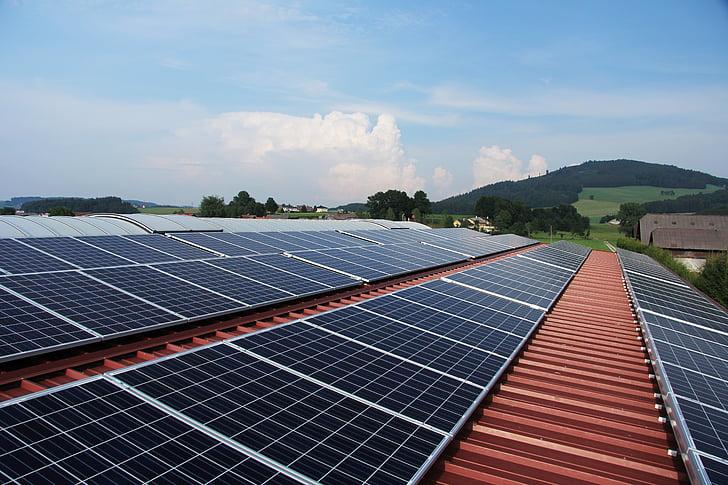
    Prime Minister Narendra Modi on Tuesday announced the ‘Pradhan Mantri Suryodaya Yojana’ under which one crore households will get rooftop solar electricity generation system.

    PM Modi said “today, on the auspicious occasion of the consecration of life in Ayodhya, my resolve has been further strengthened that the people of India should have their own solar roof top system on the roof of their houses.

    The first decision I have taken after returning from Ayodhya is that our government will launch “Pradhanmantri Suryodaya Yojana” with the target of installing rooftop solar on 1 crore houses.

    This will not only reduce the electricity bill of the poor and middle class, but will also make India self-reliant in the field of energy.”

    Earlier, the Prime Minister chaired a meeting to launch “Pradhanmantri Suryodaya Yojana” with the target of installing rooftop solar on 1 crore houses at his residence at Lok Kalyan Marg.

    During the meeting, Prime Minister said that the power of the sun can be harnessed by every household with a roof to reduce their electricity bills and to make them truly aatmanirbhar for their electricity needs.

    Pradhanmantri Suryodaya Yojana aims to provide electricity to low and middle-income individuals through solar rooftop installations, along with offering additional income for surplus electricity generation.

    The Prime Minister also directed that a massive national campaign should be started to mobilize residential segment consumers to adopt rooftop solar in large numbers.

    First Meeting of the Social Audit Advisory Body (SAAB)

    There was emphasis on the pivotal role of social audits in bringing transparency and driving corrective actions based on valuable feedback from citizens.

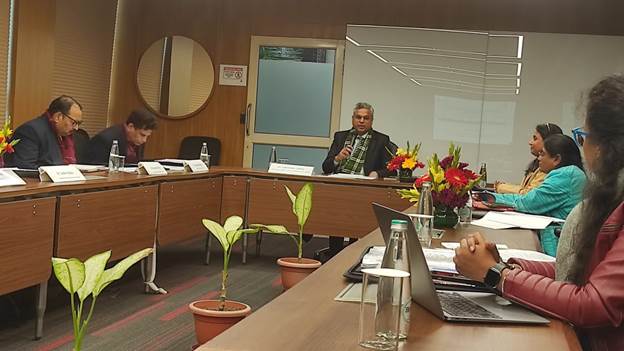
    The first meeting of the Social Audit Advisory Body (SAAB) was held in New Delhi last week. The meeting was chaired by the Secretary, Department of Social Justice and Empowerment. This advisory body, a first of its kind, has been established to guide the ministry in institutionalizing social audits for its various schemes.

    Representatives from key ministries and academic institutions, including the Ministry of Health and Family Welfare, Department of Persons with Disabilities, Ministry of Women and Child Development, Department of Social Justice and Empowerment, Ministry of Rural Development, National Institute of Rural Development, Tata Institute of Social Sciences, Delhi School of Social Work and Indian Institute of Public Administration are members of this advisory body.

    Ms. Pratima Gupta, Deputy Director General of the Statistic Division of the Department of Social Justice and Empowerment -cum – convener of SAAB presented an overview of social audits, emphasizing on the importance of this social accountability tool in promoting transparency and accountability.

    The Joint Secretary and Financial Advisor, Mr. Sanjay Pandey shared insights into the journey of institutionalizing social audits within the department, underscoring the commitment to ensuring effective implementation.

    In his keynote address, the Secretary, Department of Social Justice and Empowerment highlighted the transformative power of social audit processes in raising community awareness and amplifying the voices of citizens. He emphasized the pivotal role of social audits in bringing transparency and driving corrective actions based on valuable feedback from citizens.

    The Department of Social Justice and Empowerment has taken a pioneering step by establishing the National Resource Cell for Social Audit (NRCSA). NRCS will ensure social audits through dedicated Social Audit Units at the state levels. The NRCSA team presented the approach of social audit processes developed and implemented by the department and their significant impact on the schemes’ effective implementation.

    Members of the SAAB provided inputs to strengthen the social audit process and align it more closely with the principles of social justice. The Secretary-DoSJE commended the team for the new initiatives to social audits adopted and expressed his hope that the success of these social audits under Department of Social Justice and Empowerment could also serve as a guiding example for other government departments.

    Adrift at Sea for 28 Days, Struggles Continue for Sri Lankan Migrants

    Sri Lankan migrants who paid their life savings to people traffickers for perilous and unsuccessful sea crossings in an attempt to find a better life overseas have returned home thanks to the support of the UN migration agency, IOM.

    Selvan is heading out on his motorcycle to buy groceries from a nearby shop in the city of Jaffna in Sri Lanka, but the direct sunlight disturbs him, making it hard to concentrate, blurring his vision as his panic grows: he is back on a sinking ship packed with more than 300 other people, pounded by relentless waves, struggling to control his body.

    Steering his motorcycle through traffic, Selvan, 47, struggles for breath, hits the brake and snaps back to reality. The momentary relapse of post-traumatic stress disorder (PTSD) is not a new experience for him.

    In November 2022, he was one of 303 Sri Lankan migrants, including dozens of women and children, stranded on a sinking vessel in the waters between the Philippines and Viet Nam for 28 days before being rescued. Many others report having similar experiences.

    Thanks to the International Organization for Migration (IOM) and its partners, Selvan and many others chose a safe, voluntary passage back to Sri Lanka, where they are currently benefiting from the UN agency’s ongoing efforts to address the root causes of why they risked their lives on that perilous lifechanging journey.

    Financial crisis sparks dangerous rumours

    “The economic crisis took a toll on all of our lives,” said Selvan, a former well-respected warden at a well-known national college who spent his spare time rearing animals on a farm. “Even livestock farming became difficult when there was a ban on all imports, including fertilizers. My earnings as a public sector worker were not enough to survive.”

    Amid the crippling crisis, rumours flew around town of a large ship waiting offshore en route to Canada, he said.

    “I am a father of four and, as the sole breadwinner of the family, the responsibility for their wellbeing rests squarely on my shoulders,” he said. “Call it desperation, but I saw this as the sole lifeline to escape these financial hardships and get a job. I needed to find a way for my kids to continue their education.”

    Selvan chased the swirling townwide whispers. Tracking down an agent facilitating the journey, who demanded a hefty sum of $4,000, he staked everything on this endeavour, selling his house and his wife’s jewellery and leaving his permanent job, all in hope of a brighter future for his children.

    False promises

    The rumour spread. In another town about 50 km away, Ankita and her husband sold her small tailoring shop after languishing for months without customers. Using her house as collateral, she paid an agent $7,000 for them to stake a claim onboard a ship towards a better future.

    “We had no choice but to believe them,” she said, describing how the agent had arranged for travel to Myanmar, took away their passports to “process visas” and told them to wait in a small hotel room for months.

    “The visa never came and neither did our passports,” she said.

    Finally, the day of departure arrived. Instead of the promised “large ship”, a fragile boat awaited them which set sail overcrowded with passengers including 22 women and 14 children.

    ‘Everyone feared for their lives’

    On the second day of the journey, seawater started seeping into the boat, so the crew members fled in an emergency raft, promising to return with a new vessel; they never did.

    “When the boat crew didn’t return for days, we found ourselves stranded in the middle of nowhere,” Ankita said. “We were surviving on small packages of rations that we had brought for the journey.”

    Hunger gnawed at them throughout the days at sea, but the main problem was thirst. So, they collected rainwater in rusty buckets to drink, she said.

    “Everyone feared for their lives and regretted setting foot on board,” Ankita said, adding that 28 days would pass before a Japanese vessel responded to their distress signals.

    Multinational rescue mission

    The rescue mission was a joint effort, including Sri Lanka’s Navy and the regional Singapore-based Maritime Rescue Coordination Centres.

    Upon the migrants’ safe arrival in Vung Tao, Viet Nam, IOM deployed a protection team. Partnering with the Government and the Sri Lankan Embassy in Hanoi to provide such immediate assistance as food, medical aid and emergency shelter, the UN migration agency worked with authorities to help with the migrants’ voluntary return, said Sarat Dash, mission chief of IOM Sri Lanka and Maldives.

    “We coordinated closely with Sri Lankan and Vietnamese authorities for the issuance of temporary travel documents, as the smugglers had confiscated the migrants’ passports,” he said.

    The voluntary return occurred in two batches, with IOM facilitating medical check-ups and travel arrangements from Viet Nam back to Colombo, Sri Lanka, and onwards to Jaffna.

    “When IOM informed us of an opportunity to go back home, I accepted it in a heartbeat,” Selvan said. “But, as the day drew near, I experienced a mix of emotions knowing the country’s precarious financial situation and the fact that I had pawned all my life-long savings and house. It was my family’s encouragement that reaffirmed my conviction to go back and start afresh.”

    Rebuilding their lives

    Selvan’s struggle8s were far from over. Most of the returning migrants found themselves jobless and saddled with debt.

    “It wasn’t the scornful mocking from community members that bothered me; rather, it was not being able to get my job back, to which I had dedicated over 20 years,” he said, adding that he now works full-time on his farm, paying monthly instalments to clear his debts. “However, without a decent job and stable income, it leaves us with mere pennies to make ends meet.”

    The UN migration agency in Sri Lanka currently provides reintegration support and works with States and local authorities to provide basic psychosocial counselling, skills training opportunities and facilitate referral support, ensuring longer-term solutions for rescued migrants.

    Turning tides towards safe migration

    “The economic situation in the country remains fragile and volatile,” Mr. Dash said. “As these rumours gain traction, there is an urgent need for international cooperation to expand pathways for safe, orderly and regular migration, providing practical alternatives that could more effectively dissuade potential migrants from embarking on such perilous journeys.”

    While those who have returned insist they would never make the journey again, rumours of a new ship to Canada waiting offshore persist, with brokers lurking in the shadows and preying on people’s socioeconomic vulnerabilities.

    Selvan has words of warning.

    “Conduct thorough research, and always go through professional consulates,” he said. “My message to all aspiring migrants is never opt for irregular channels in your migration journey, and never blindly trust the rumours you hear.”

    Coal Based Power Generation in India Grows 10.13% During April-December 2023

    India is stepping towards self-reliance in coal sector. Coal Import for Blending decreased by 40.66% during April-December, 2023 as Compared to Corresponding Period of Previous Year

    Coal-based power generation in the country witnessed a remarkable growth of around 10.13 per cent during Apr-Dec’23, as compared to corresponding period of previous year while overall power generation grew 6.71% during the same period.

    The Domestic coal-based power generation during Apr-Dec’23 reached 872 Billion Units (BU), reflecting an increase of 7.14 per cent from the 813.9 Billion Units (BU) generated in the corresponding period of last year. This reflects an ample coal supply to meet the growing energy demand in the country.

    Coal import for blending has decreased substantially by 40.66 per cent to 17.08 MT during Apr-Dec’23 from 28.78 MT in the corresponding period of previous year, despite the escalating power demand. It showcases the nation’s commitment to self-reliance in coal production and minimizing overall coal imports.

    In India, power is generated from conventional (thermal, nuclear and hydro) and renewable sources (wind, solar, biomass etc.). However, the major source of power generation is coal and it accounts for over 70 per cent of the total power generation.

    Coal-based power generation in India has played a significant role in meeting the country’s energy demands. India is currently experiencing a substantial increase in power demand, driven by a combination of factors like industrial growth, technological advancements, population growth, economic development etc.

    The government persists in its efforts to further enhance coal production, aiming to increase availability and reduce dependence on imported coal, thereby safeguarding foreign reserves.

    Bangladeshi Fish Farms ‘Need Climate Data Support’

    Bangladesh is the fifth largest aquaculture producer in the world. But the country’s fish farmers are increasingly impacted by climate-driven events. The say climate information services are urgently needed to mitigate against fish losses.

    By Athar Parvaiz

    Bangladesh’s aquaculture sector lost US$140 million in a decade due to climate change, reveals new analysis, highlighting the need for better climate data services.

    Bangladesh is highly vulnerable to extreme weather events which are predicted to increase in the near and distant future, the study published in Climate Risk Management highlighted.

    It said effective climate information services could help fish farmers reduce aquaculture losses caused by such events.

    Flooding appears to be the most financially damaging and regularly occurring hazard for hatcheries, open water fish and shrimp, the study said.

    Between 2011 and 2020, floods resulted in the estimated loss of around 54,000 tonnes of aquaculture production, valued at US$93 million.

    Cyclones were the second most damaging, causing the loss of 12,000 tonnes of fish products, worth a total of US$24.8 million.

    “Climate information services are a potential climate-risk reduction approach that could de-risk the aquaculture sector by supporting fish farmers’ climate resilient decision-making and production management processes,” the study said.

    These services provide climate data that can support adaptation, mitigation and risk management decisions.

    According to the analysis, countries in the global South have tended to be slow in developing climate services for aquaculture due to lack of awareness about their economic benefits and the focus of such tools on crops.

    Peerzadi Rumana Hossain, WorldFish scientist and lead author of the study, said implementation of climate services in aquaculture depended on support from policymakers.

    “We have already worked with the Bangladesh Department of Fisheries on developing a few propositions for policy level inclusion,” Hossain told SciDev.Net.

    She said climate information generated by the Bangladesh Meteorological Department could be conveyed via the fisheries department to help the sector produce advisories and manage climate risks.

    “There is also a need for involvement and investment from private sectors for the sustainability of the digital platforms for providing climate information and advisory services to all value chain actors of aquatic food systems in the country to enhance climate services at scale,” Hossain added.

    Over 91 per cent of global aquaculture production (102.9 million tonnes in 2017) is currently produced in Asia, with Bangladesh ranking fifth globally after China, Indonesia, India and Vietnam.

    Fish and fish-based foods supply 60 per cent of the total daily animal protein intake for Bangladesh’s population, significantly contributing to nutrition and food security for the vulnerable and marginalised people of the country.

    Aquaculture and fisheries contribute nearly 26 per cent to the agricultural gross domestic product of Bangladesh, the study says.

    But fish farmers are increasingly impacted by climate driven extreme weather events, while data on climate variability – such as erratic rain, heatwaves and cold spells – in aquaculture are scarce in the country. This makes it challenging to evaluate climate risk management interventions, the analysts say.

    Hossain recalled how she and her co-researchers witnessed the loss of fish in a hatchery operation in south-western Bangladesh due to high temperatures and dry spells.

    She said the fish farmer told researchers that if he had known there would be no rain in June and temperatures would be that high (36-40C), he could have scheduled the fingerling stocking period earlier or later.

    Sudhir Kumar Das, professor of Fisheries Resource Management at West Bengal University of Animal and Fishery Sciences, said that fisheries policy should focus on promoting fisheries and aquaculture to achieve the UN Sustainable Development Goals.

    “Appropriate management of fisheries resources with emphasis on conservation of threatened fish as well as environment and social considerations need to be promoted in fisheries,” Das told SciDev.Net.

    This piece has been sourced from SciDev.Net

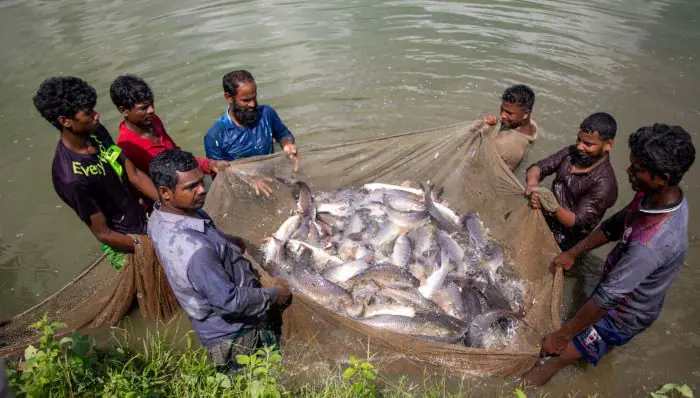
    Image: WorldFish, (CC BY-NC-ND 2.0 DEED)

    Elections Cast a Shadow of Uncertainty over Sri Lanka’s Economic Recovery

    With weak household spending and less than two months of foreign reserve import cover to deal with a volatile global economy, Sri Lanka’s recovery path is far from smooth.

    By Dushni Weerakoon / Institute of Policy Studies

    Nearly two years after announcing a debt default in the middle of a severe social and political crisis, the Sri Lankan economy is showing the first signs of recovery. Year-on-year inflation dropped sharply to a low of 1.5 per cent in October 2023 from its peak of 70 per cent a year earlier. Interest rates are edging down accordingly and the highly volatile currency is now fluctuating within an acceptable range.

    After the longest and deepest stretch of negative growth — lasting seven consecutive quarters — the economy finally returned to positive growth of 1.6 per cent in the fourth quarter of 2023. While the modest recovery may appear underwhelming, it still marks an important milestone for a country that suffered such a harsh economic setback.

    The architect of this semi-recovery, Sri Lanka’s President Ranil Wickremesinghe, is yet to declare his intentions as Sri Lanka heads into the all-important presidential elections in 2024, where voters will decide who will lead the country for the next five years.

    With the country’s Supreme Court apportioning responsibility for the crisis to the previous government led by former president Gotabaya Rajapaksa in a ruling handed down in November 2023, attention is turning to sustaining the recovery and deciding who can be best trusted to manage it. If polling numbers are to be believed, the front runner is from a Marxist-Leninist party — the Janatha Vimukthi Peramuna — which secured a mere 3.2 per cent of the popular vote in 2019.

    The turnabout largely reflects popular disgruntlement with the day-to-day struggles of falling real incomes and lost livelihoods. While tax increases, market-based pricing on fuel, a shake-up of the welfare system and a clampdown on spending under the terms of Sri Lanka’s Extended Fund Facility (EFF) with the International Monetary Fund (IMF) are repairing the country’s public finances, the average citizen has suffered deeply.

    Tax burden deeply unpopular

    Unlike in the past, where successive IMF programs were used to paper over problems and leave the job of overhauling the economy half done, this time around there is a critical need to convince Sri Lanka’s foreign creditors of its commitment to staying on course.

    A concern is the economy’s continued high exposure to external shocks as external debt restructuring negotiations drag on. In October 2023, there was marked progress as Sri Lanka reached a preliminary agreement with China’s Exim Bank and secured the agreement of other large bilateral creditors like Japan and India. Sri Lanka has yet to reach an understanding with the country’s bondholders. An October 2023 proposal by bondholders for GDP-linked bonds was turned down by the Sri Lankan authorities. Without a final restructuring agreement, dollar infusions from bilateral donors, development partners and private investors remain a trickle rather than a flow.

    It is also not helping that export earnings are falling. By October 2023, earnings had shrunk by over 10 per cent on the back of higher domestic production costs and sluggish global demand. While earnings from tourism and worker remittances are improving, the fact that vast numbers of Sri Lankans are leaving the country in search of better prospects is also of serious concern. With weak household spending and less than two months of foreign reserve import cover to deal with a volatile global economy, Sri Lanka’s recovery path is far from smooth.

    While the tax burden is deeply unpopular, Sri Lankans will have to live with higher taxes, a public spending squeeze and a drop in living standards regardless of the promises politicians make before the 2024 elections.

    Need for stronger institutions

    Sri Lanka received the second tranche under the EFF agreement in December 2023. Delivering on the EFF commitments is crucial to tapping further budgetary assistance from multilateral financial institutions and retaining the goodwill of Sri Lanka’s sovereign creditors. With hardly any room for policy manoeuvring on the macroeconomic front until the economy is on a surer footing, what the elections may disrupt is the more challenging regulatory reforms that could accelerate the recovery in lost output.

    Ranil Wickremesinghe is pursuing reforms to transform the land and labour markets, overhaul state owned enterprises and modernise the education system. Relaxing labour laws, expanding the private sector’s role in delivering tertiary education, selling government stakes in state owned enterprises or entering into regional trade agreements run up against vested interests. These initiatives will slow down in the run up to the election and whether they get picked up thereafter will depend on the electoral outcome. The strategy for now appears to be to ring-fence as much of the reform agenda as possible through legislation.

    The crucial 2024 elections will do much to decide Sri Lanka’s future. The focus is not only on the economy but also on the need for stronger institutions and governance mechanisms. Weaknesses in governance are largely faulted for triggering the economic crisis. All these issues may make voter behaviour more unpredictable and tempt presidential aspirants to make unrealistic promises in the hope of attracting votes.

    These claims and counter-claims will add to the uncertainties, but the grim reality for any eventual winner is that there is a gruelling recovery path ahead and any policy disruption will only make it that much more difficult.

    Dushni Weerakoon is Executive Director and Head of Macroeconomic Policy research at the Institute of Policy Studies of Sri Lanka.

    This piece has been sourced from the East Asia Forum of the Australian National University.

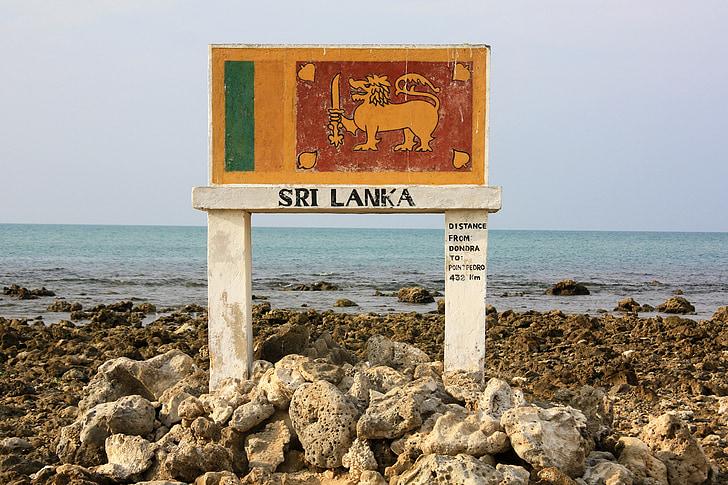
    Image: Hippopx — Creative Commons Zero – CC0

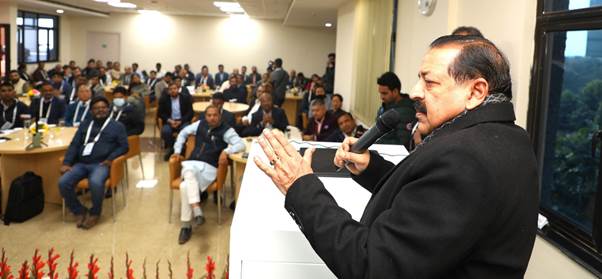
    UnionS&T Minister Calls Upon State Science Ministers to Adopt Centre’s Technology Practices in Governance

    Dr Jitendra Singh recalled that PM Modi had convened a Brainstorming Session in the year 2015 with ISRO and Line Ministries, that proved to be a turning point and today every Ministry/Department of the Central Government has at least one Space Project.

    Union Science and Technology Minister Dr Jitendra Singh has asked the State Science Ministers to adopt the Centre’s technology practices in governance and infrastructure development and implementation of welfare schemes.

    “While some States are proactively emulating the Center’s integrated approach, other States are lagging behind or slow in adopting the Best Practices,” he said.

    The minister was addressing an interactive session of Science Ministers from different States and Union Territories during the ongoing four-day “India International Science Festival”. He said that in the last 10 years, under Prime Minister Shri Narendra Modi, the Government has extensively used technology in good governance practices, flagship programmes such as infrastructure development, digital healthcare, digital education, PM Gati Shakti, DBT & SVAMITVA.

    Dr Jitendra Singh said, PM Modi has a scientific temperament and keenly promotes Science & Technology (S&T) based initiatives and projects.

    Dr Jitendra Singh reiterated that the nation has progressed a long way technologically and many programmes have been launched to make India a leader and destination for futuristic technologies. One such initiative is the setting up of 25 technology innovation hubs by the Department of Science and Technology (DST) across the country under National Mission on Interdisciplinary Cyber Physical Systems (NM-ICPS).

    Dr Jitendra Singh recalled that PM Modi had convened a Brainstorming Session in the year 2015 with ISRO and Line Ministries, that proved to be a turning point and today every Ministry/Department of the Central Government has at least one Space Project.

    “Every department is being guided by the S&T Ministry and Department of Space, as a result S&T is fast emerging as the backbone of growth & development of the country,” he said.

    Pioneering R&D work

    The Minister called upon the State Science Ministers to appoint a nodal officer to keep close liaison with the CSIR and other Central Government supported R&D institutions.

    “States and UTs can hold frequent interactions with the 37 CSIR laboratories spread across the country and 14 Institutions under the DBT to determine areas where the research projects can be used at various locations in the States and in promoting more Startups,” said Dr Jitendra Singh, noting that most states are not able to keep liaison with these institutes.

    Dr Jitendra Singh said, the success of Aroma Mission and Purple Revolution in J&K has resulted in over 3,000 StartUps engaged in Lavender cultivation alone. Aroma Mission is now being emulated in the North-Eastern Region while Uttarakhand and Himachal Pradesh have sent delegations to J&K to study the Lavender cultivation model and have evinced interest in emulating the Aroma Mission, he said.

    “It is very important to take a leaf out of best practices like the Aroma Mission which has spread from J&K to North East, the cleanliness drive across the coastal region, lake cleaning learnt from J&K & implemented in Manipur Loktak lake and connect similar missing links,” he said.

    The Union Minister said, a lot of S&T opportunities exist in the different corners of India and these can be harnessed for the benefit of the entire country.

    “Similarly, a lot of pioneering R&D work is being done by various scientific institutions across the country, for example the Technology Innovation Hub on Autonomous Navigation Foundation (TiHAN) at IIT Hyderabad has developed the first-of-its-kind, state-of-the-art Autonomous Navigation facility to develop unmanned ground and aerial vehicles while KPIT-CSIR in Pune has manufactured India’s first truly indigenously developed Hydrogen Fuel Cell Bus. States where these institutes are located can tie up with these institutes, Industry and Startups to promote mass manufacturing of these technologies and draw the maximum benefit. At the moment, such an integrated approach is lacking,” he said.

    Dr Jitendra Singh said, value addition from the States can enrich the S&T ecosystem and help transfer the benefits across communities.

    Referring to the ongoing IISF2023, Dr Jitendra Singh said, while the four-day mega event is an opportunity to learn from each other, the benefits should go beyond the four days and result in a system in which the states constantly learn from each other.

    Hindu Woman Doctor Confident of Election In Pakistan Polls

    After completing medical education in July 2022, she saw the issues women visiting hospitals faced and decided to enter politics instead of continuing her career as a doctor, as she believed issues needed to be resolved at the policy level.

    By Ashfaq Yusufzai

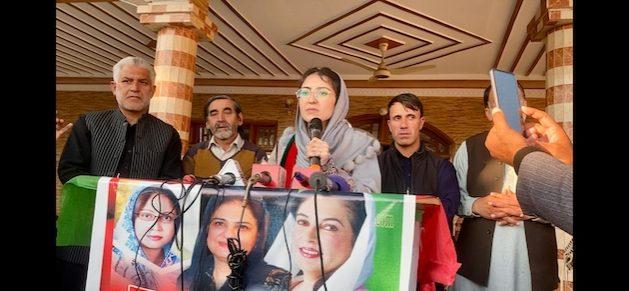
    A woman medical graduate from the Hindu community is making waves, as she is the first minority woman to contest the Pakistan Parliamentary election for a general seat, and she does so in the face of deep-rooted religious traditions and wealthy political opponents.

    Dr Saveera Parkash, a nominee of the Pakistan People’s Party (PPP) for the February 8 polls, is sure of her victory despite her religion.

    “I have been witnessing the support that I am getting from the Muslim-dominated district of Buner in Khyber Pakhtunkhwa province,” Parkash told IPS in an interview.

    “My slogan is addressing issues of pollution, women’s empowerment, gender equality, female representation, and their health issues, in addition to ensuring respect for all religions,” she elaborated.

    Born to a Christian mother and Hindu father, she has lived in a Muslim-dominated community; therefore, interfaith harmony is on her wishlist.

    “Interfaith harmony is extremely significant because we have seen enmity among different religious sects on flimsy grounds.”

    “We have to inculcate a sense of brotherhood among all schools of thought and pave the way for lasting peace in the area. We have to respect our religious places and shun differences, as all religions advocate peace and harmony,” she says.

    Candidates in Buner, one of the 36 districts of Khyber Pakhtunkhwa that remained thick with militants from 2007 to 2010, are likely to witness a hard contest as the women and youngsters have shown support for the first-ever minority female candidate.

    The Khyber Pakhtunkhwa Assembly, one of Pakistan’s four provinces, has 145 elected members, 115 regular seats, 26 reserved for women, and 4 for non-Muslims.

    Pakistan is home to 4.4 million Hindus, which is 2.4 percent of the total population.

    Her father, a medical doctor and late leader of the PPP and twice Prime Minister Benazir Bhutto, who was assassinated by militants in December 2007 in the garrison city of Rawalpindi, inspire her, she says.

    “While my ideal is Mother Teresa, my main focus will be women’s education. The overall literacy rate is 48 percent, but only 25 percent of females are literate; therefore, I want to spread awareness about the importance of women’s education,” she says.

    Additionally, it is very important to end favoritism and nepotism and ensure merit in the appointment of teachers, especially women.

    Promotion of women’s rights

    After completing medical education in July 2022, she saw the issues women visiting hospitals faced and decided to enter politics instead of continuing her career as a doctor, as she believed issues needed to be resolved at the policy level.

    “We need more women doctors, nurses, and paramedics to encourage female patients to visit hospitals. Currently, the number of female health workers is extremely low, due to which most of the women don’t come to hospitals because they don’t want to be seen by male doctors,” she says.

    “My big advantage is that I belong to a middle-class family, and the people will vote for me because I am approachable to my electorate.”

    The promotion of women’s rights is her main objective.

    “We have to scale up awareness regarding women’s rights to property inheritance and their right to education. I sense victory in the polls, as I know the people listen to me and would reject opponents for their bright future.”

    So, how does she feel the run-up to the election is going?

    “In our district, 75 percent of voters are under 30, and they are well-informed about the issues they are facing. I may be lacking wisdom and knowledge compared to senior politicians, but my sincerity will lead to my success,” says the 25-year-old, who routinely wears a headscarf.

    Because she is trying to reach a young electorate, her campaigning includes the wide use of social media, apart from the traditional approaches of public meetings and house-to-house canvassing.

    Highlighting corruption is also part of her election campaign.

    At the moment, she is concentrating on a smooth run-up so she can win popular support in her constituency

    “Voters in my constituency call me ‘sister’ and ‘daughter,’ which gives me immense strength,” she said.

    Parkash said she wanted to follow in the footsteps of her father, Oam Prakash, a retired doctor, and serve the people.

    Securing a space for women is vital for development, as they have been suppressed and neglected in all areas.

    She said “serving humanity is in my blood” due to her medical background, highlighting that her dream to become an elected legislator stemmed from having experienced poor management and helplessness in government hospitals as a doctor.

    Most people in the area endorse her candidacy, regardless of her Hinduism or political affiliation. Voters appreciate her bravery for challenging traditional policies

    The Election Commission of Pakistan makes it mandatory for all political parties to award 5 percent of seats to women in general seats.

    Political analyst Muhammad Zahir Shah, at the University of Peshawar, said that Parkash has created history by contesting the general election.

    “We have been seeing women becoming members of the assembly on reserved seats. They don’t contest elections but are nominated by parties on the basis of the seats they win in the election,” Shah said.

    In the past, some women have fought elections, but they were Muslim; therefore, they don’t draw as much media and public attention, but the case of Parkash is unprecedented.

    She is well educated and belongs to the Hindu community while standing for vote in an area where 95 percent of the voters are Muslims.

    “She is contesting on the PPP’s ticket, which isn’t a popular political party, but it seems that she will make her presence felt during the electioneering,” Shah said. Already, she has hit headlines, and if the election takes place in a fair and transparent manner, there is a greater likelihood that she will emerge victorious,” he said.

    Tripartite MoU for AI in Farming Between Government and Wadhwani Foundation

    A significant milestone is the development of ‘Kisan e-Mitra,’ an AI-powered chatbot addressing farmers’ queries about the PM Kisan Samman Nidhi scheme. This comprehensive solution is evolving to support other government programmes and has been accessed by more than 21 lakh farmers within two months of its launch.

    A tripartite memorandum of understanding was signed on Wednesday between the National Farmers’ Welfare Programme Implementation Society, IndiaAI under Digital India Corporation, and Wadhwani Foundation for furthering artificial intelligence in the agriculture sector.

    Manoj Ahuja, secretary of the ministry of agriculture and farmers welfare, emphasized AI’s game-changing role, citing capabilities in advisories, feedback collection, crop monitoring, yield prediction, pest control, and resource optimization. Mr Prakash Kumar, CEO of the Wadhwani Institute of Technology and Policy, expressed delight in embarking on a groundbreaking journey with the ministry, sowing the seeds of innovation and knowledge for a more prosperous and food-secure future.

    Per the MoU, Wadhwani Foundation will provide critical support in formulating and executing an AI strategy. The Foundation commits to assisting the Ministry in establishing India as a global leader in AI-driven digital agriculture transformation, aligning with the MeitY’s National Plan for AI. This collaboration marks a pivotal moment in India’s agricultural landscape, where Ministry has institutionalized the use of AI in transforming digital agriculture through the creation of an AI cell within the Ministry.

    The Ministry of Agriculture and Farmers Welfare, Government of India, is leveraging cutting-edge Artificial Intelligence (AI) technologies for the benefit of farmers and to increase overall productivity, the ministry said through a press release issued on Thursday.

    Additionally, the Ministry is developing a National Pest Surveillance System in collaboration with the private sector. AI and machine learning (ML) models detect crop issues, offering timely information to farmers for swift action. This initiative is expected to result in healthier crops, potentially boosting yields and improving farmers’ livelihoods.

    “As a pioneering force in the integration of AI, the Ministry is setting a precedent for leveraging advanced technologies to address the challenges faced by the farmers in India,” reads the press release. “It is championing the India Digital Ecosystem Architecture (InDEA) 2.0’s network approach, designed by the Ministry of Electronics & IT, Government of India.”

    A significant milestone in this journey is the development of ‘Kisan e-Mitra,’ an AI-powered chatbot addressing farmers’ queries about the PM Kisan Samman Nidhi scheme. This comprehensive solution, available in Hindi, Tamil, Odia, Bangla, and English, is evolving to support other government programmes and has been accessed by more than 21 lakh farmers within two months.

    India: Export Duty on Sugar-Derived Molasses

    The export duty is explained as a strategic move to address the sugarcane shortage caused by erratic monsoon rains. The government aims to regulate the supply and demand of commodities and ensure domestic availability in the election year.

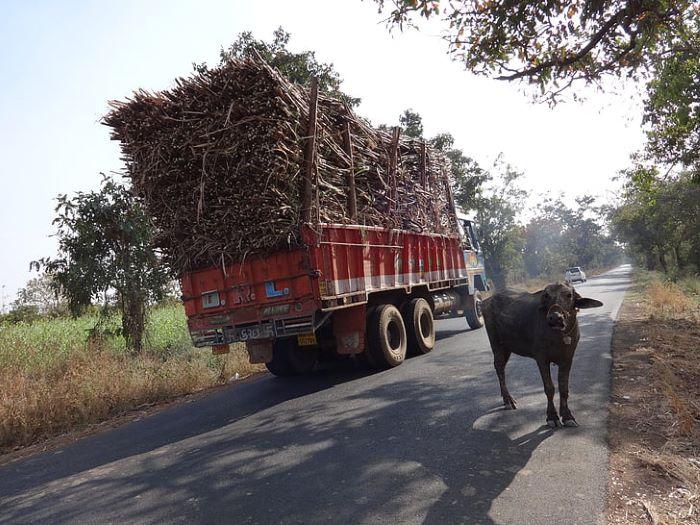
    Beginning Thursday, the government has effected a duty on the export of sugarcane molasses. India is the world’s largest molasses exporter and contributes about 25 per cent to global trade.

    “Erratic monsoon rains and the likelihood of a shortfall in domestic sugar production have led the the Indian government to impose a 50 per cent export duty on molasses,” a source familar with the development told OWSA.

    This is explained as a strategic move to address the sugarcane shortage caused by erratic monsoon rains. The government aims to regulate the supply and demand of commodities and ensure domestic availability in the election year.

    Molasses is used in the production of ethanol to promote a green economy. India is the world’s largest molasses exporter and contributes about 25 per cent to the global trade of molasses. Key buyers include the Netherlands, Philippines, Vietnam, South Korea, and Italy, with major exporting states being Maharashtra, Gujarat, and Karnataka.

    Among the total ethanol produced in the country, up to 30 per cent comes from cane juice, while over 60 per cent is derived from B heavy molasses. Ethanol from C-heavy molasses and grains accounts for the remaining percentage.

    In early December, the Food Ministry directed sugar mills not to use cane juice or syrup for ethanol production. However, in mid-December, the central government allowed the utilization of both juice and B-heavy molasses for ethanol production, with a capped diversion of sugar at 17 lakh tonnes for the current marketing season.

    India has already introduced 20 per cent blended fuel in a phased manner since April 2023, with widespread availability expected in the coming days. The introduction of E20 blending in petrol by the centre aims to reduce the country’s oil import cost, enhance energy security, lower carbon emissions, and improve air quality. The government advanced the target for E20 fuel from 2030 to 2025.

    Image: Hippopx — Creative Commons Zero – CC0