More

    Humanitarian Cash Not Accelerating Aid Delivery in Nepal’s Earthquake Response

    Evidence accumulated over the past decade shows that in most contexts, cash effectively and efficiently meets people’s food, nutrition and other related essential needs, says the WFP. But in Nepal, the advantages of cash are slow to be realized.

    By Marty Logan / IPS

    Delivering humanitarian assistance in the form of cash sounds great: recipients get to choose exactly how to spend their money and aid organizations can respond faster and better track their giving.

    But in Nepal, more than two months after a major earthquake killed more than 150 people and destroyed or damaged over 60,000 homes, what’s known as cash and voucher assistance (CVA) continues to play a minor role in the country’s disaster response.

    CVA distribution “should have started in a few days, seven at most,” says Safik Iraqi, Inter-agency Cash Coordinator of the international community’s Cash Coordination Group (CCG) in Nepal, “but it took 47 days.”

    “The more delays there are the more negative coping strategies the affected people will use,” adds Iraqi in an interview. These include borrowing from local moneylenders, buying poorly made items that won’t last, and selling household assets to raise money for necessities.

    To date, an estimated 9,000 households in Jarkot and 10 surrounding districts in Karnali Province have received some sort of CVA, while the vast majority of people have received at least minimal aid in-kind, such as food, blankets and warm clothing.

    November’s disaster was less destructive than the deadly 2015 earthquake and aftershocks, which killed about 9,000 people and damaged or destroyed 600,000 buildings. Cash transfers then “were a major and highly appropriate part of the response given the challenging logistics of delivering in-kind aid to remote mountainous areas,” found one report.

    2015 response promising

    But the analysis pointed out that the Government of Nepal and partners were not sufficiently prepared to use cash to its full potential. “This was due to a lack of government will and capacity, appropriate national disaster institutions, financial infrastructure and effective coordination arrangements among international actors.”

    “While there has been some progress towards being able to mount better, more efficient and large-scale cash responses in the future, cash preparedness still remains too low a priority in Nepal given the disasters that will continue to affect the country,” concluded the report.

    CVA actually refers to a variety of ways of getting money and goods into the hands of recipients, explains Bibhor Kayastha, chief executive officer of Aria Technologies, a private-sector business working with Mercy Corps.

    These include multipurpose cash assistance (with few or no restrictions on how it can be used), sectoral cash (designated for a specific purpose, like building a house), conditional cash (given for work, such as road building), vouchers that can be exchanged for a package of commodities and other vouchers that limit people to items on a list. Various modalities are being used in Jajarkot and other affected districts, he adds in an interview.

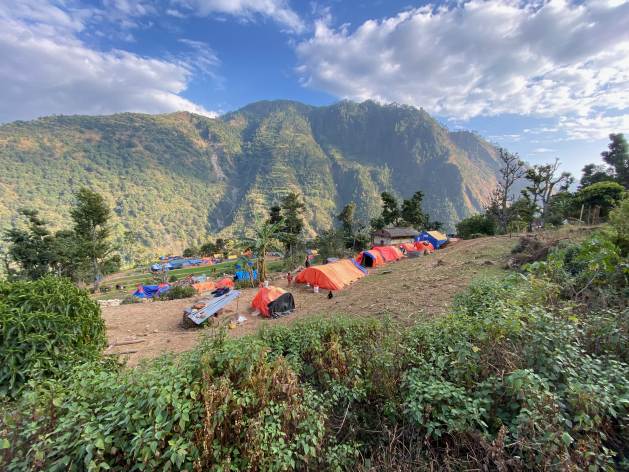
    The 3 November quake struck on the cusp of winter in Karnali Province, one of Nepal’s most remote and poorest areas, forcing many families into tents or simple plastic shelters. At least three dozen people have reportedly died since then, in part due to exposure.

    On 6 November the Government of Nepal approved the distribution of one month’s CVA to affected households. Based on a basket of consumer goods, it is worth 15,000 rupees, or about US$112.

    Ongoing scepticism

    One reason for the delay getting that money to quake victims was that some of the 8-10 agencies that considered using CVA were waiting for a market assessment to be finished, says Iraqi in an interview. Another is ongoing scepticism, among both the international community and officials in Nepal’s three levels of government — central, provincial and local — that CVA will be well used.

    The CCG’s Joint Market Assessment Report, #1 found that in both hardest hit districts, Jajarkot and neighbouring Rukum West, cash assistance was a priority among just slightly more than 1 per cent of respondents. Temporary shelter / house reconstruction, warm clothes and blankets, and food topped both lists.

    The Nepal Red Cross Society’s CVA was delayed because it had to provide immediate emergency aid, then do a detailed assessment of possible beneficiaries, says Sagar Shrestha, head of disaster management at the NRCS.

    “We had to evaluate 30,000 households. It was really challenging but we had very clear instructions from local governments about which populations to focus on. We did detailed data collection, with various indicators to identify the most vulnerable, such as pregnant women and the elderly. Out of these we selected the beneficiaries then we did a community engagement to get those names endorsed, and then we posted the lists publicly for feedback,” he explains in a WhatsApp interview.

    Dinesh Chaudhary’s wife died in November of an illness unrelated to the earthquake. While a hospital that treated her for over a month has erased his bills, and he’s borrowed from family and friends, he’s still in debt for her care. “Yes, 15,000 rupees would be useful. If they offer it we have to take it, no?” he tells IPS, sitting outside of his cracked mud and brick house in Nalgad Municipality, Jajarkot.

    Many of the small houses nearby have been visibly damaged, either completely crumbled or with only their bottom floor impact. The green and brown hillsides of this mountainous region are dotted with clusters of blues and yellows that signal relief tents.

    The UN World Food Programme (WFP) was one of the first organizations to provide CVA. It distributed the aid to 3,055 households in Jajarkot and Rukum West as multi-purpose cash assistance, which could be spent as recipients’ wished.

    Money transfer established

    More than two-thirds of the cash was transferred via money transfer operations, which normally cater to the families of local workers who migrate from Nepal to work as labourers in India, Malaysia or Gulf countries. In other cases, money was sent via local banks.

    Households with members from vulnerable or marginalized groups were prioritized, says WFP. They included Lal Bahadur, 36, who lives with a disability in Jajarkot. “I am here to receive nutritious food for my pregnant wife and daughter-in-law, who is nursing my 15-day-old grandson, ” he told WFP.

    The agency says that cash-based transfers now make up 35 percent of all its assistance globally. “Evidence accumulated over the past decade shows that in most contexts cash effectively and efficiently meets people’s food, nutrition and other related essential needs,” adds WFP.

    But in Nepal, the advantages of cash are slow to be realized.

    “Most people in Nepal think that CVA is ‘easy money’,” says Kayastha. “But the process is highly technical and controlled by things like Central Bank regulations, the Data Protection Act, and environmental factors that have to be taken into consideration.

    “A lot of misinformation”

    “The general perception,” he adds, “is that people will waste the money. But if you give it to the right person they will never go and drink (with it)… there is a lot of misinformation and even major stakeholders will just dismiss (CVA).”

    Iraqi says the combination of traditional mindsets and a lack of awareness about how efficient and effective CVA can be are major obstacles to expanding. “In my experience the units in charge of implementation disaster response are very much in favour but the rest are very much against it.”

    “There is a need for the government to understand the global standards used for CVA, its meticulousness, the evolution in technology for delivering CVA and the importance of a harmonized and coordinated approach. This will help it to see how CVA works in the humanitarian response works and how misuse (their biggest concern) can be tracked and addressed,” adds Iraqi.

    Another reason for CVA’s slow penetration is the ‘power game’ that is constantly played between Nepal’s political parties, often most actively outside the capital Kathmandu. In it, scoring political points is more important than “giving choice and dignity and quality of life, which is very frustrating for organizations and people like us,” said one interviewee, who asked to remain anonymous.

    Officials are slowly accepting CVA, says Santosh Pandey, country humanitarian focal point at Mercy Corps Nepal. “The government doesn’t always mean the federal government – many local governments have formulated very progressive humanitarian cash guidelines.”

    No one from the Government of Nepal was available for an interview for this article. The ministry of federal affairs and general administration is now drafting a policy on CVA for Nepal’s 77 local governments.

    Image: Dismantling a damaged home in Rukum West. Credit: Marty Logan / IPS

    This piece has been sourced from the Inter Press Service

    It is now Mandatory for Doctors in India to Mention Reasons For Prescribing Antibiotics

    This important instruction is contained in DGHS’ latest letter to medical colleges, medical associations, and pharmacist associations across the country.

    In a bid to tackle the misuse of antibiotics or antimicrobial drugs in India, the Directorate General of Health Services (DGHS) has made it mandatory for doctors to provide “exact indications” while prescribing antibiotics or antimicrobial drugs drugs.

    This important instruction is contained in DGHS’ latest letter to medical colleges, medical associations, and pharmacist associations across the country.

    More specifically, the DGHS has mentioned that pharmacist must now onwards dispense antibiotics only on the prescription of a qualified doctor and immediately halt the over-the-counter sale of antibiotics.

    “…it is important that doctors mention exact indication on their prescriptions while prescribing antimicrobials,” the DGHS letter says, adding that “it is an urgent appeal to all doctors to mandatorily mention exact indication/reason/justification while prescribing antimicrobials.”

    About 57 per cent of prescribed antibiotics fall into a category of drugs with a high potential for antimicrobial resistance (AMR) that generally have to be monitored for misuse, according to a report released earlier this month by the Union Ministry of Health and Family Welfare.

    The study was conducted by the National Centre for Disease Control (NCDC) under the ministry over six months from November 2021 to April 2022. The survey included 9,652 patients and 12,342 antibiotic prescriptions across 20 tertiary care institutes across the country. The sites showed a wide variation in prescription activity, ranging from 37 per cent to 100 per cent.

    The antibiotic prescriptions were classified based on AWaRe categories developed in 2017 by the World Health Organization (WHO) Expert Committee on Selection and Use of Essential Medicines.

    Image: Hippopx — Creative Commons Zero-CC0

    Stage-III of GRAP Revoked in Entire NCR with Immediate Effect

    Delhi’s average air quality index (AQI) clocked 318 today at 4:00 PM on Thursday. The dynamic model and forecasts for meteorological conditions and air quality index by IMD/ IITM indicates the overall air quality of Delhi is likely to stay in ‘Very Poor’/ ‘Poor’ category in the coming days.

    Delhi’s average Air Quality Index (AQI) on Thursday clocked 318 as per the daily AQI Bulletin provided by the Central Pollution Control Board (CPCB). In view of significant improvement in the average air quality of Delhi, the Sub-Committee for operationalization of actions under the Graded Response Action Plan (GRAP) of the Commission for Air Quality Management in NCR & Adjoining Areas (CAQM) met today to review the current air quality scenario in the region as well as the forecasts for meteorological conditions and air quality index made available by IMD/ IITM and accordingly take an appropriate call on the preventive/ restrictive actions under Stage-III of GRAP already in place in the entire National Capital Region (NCR) since 14.01.2024.

    While comprehensively reviewing the overall air quality parameters of Delhi-NCR, the Sub-Committee observed that AQI of Delhi has been progressively improving and has been recorded as 316 at 2:00 P.M. which is about 85 AQI points below the threshold for invoking the GRAP Stage-III actions (Delhi AQI 401-450) and preventive/ mitigative/ restrictive actions under all Stages up to Stage-III are underway, there is a likelihood of sustaining the improvement in AQI. The forecast by IMD/ IITM also do not indicate any significant deterioration and there is a likelihood of the AQI improving and remaining in ‘Very Poor’/ ‘Poor’ category in next few days.

    “Therefore, keeping in view the disruptive nature of restrictions under Stage-III of GRAP impacting a large number of stakeholders and public as well as considering the significant improvement in the average AQI of Delhi and also the forecasts by IMD/ IITM not indicating the average air quality of Delhi moving to ‘Severe’ category in the coming days for which forecast is available, the Sub-Committee for operationalization of actions under GRAP unanimously decided to revoke Stage-III of GRAP in the entire NCR with immediate effect,” said a PIB release.

    Actions under Stage-I to Stage-II of the GRAP shall however remain invoked and be implemented, monitored and reviewed by all agencies concerned in the entire NCR and agencies shall keep strict vigil and especially intensify measures under Stage-I & II of GRAP in order to obviate the implementation of Stage-III of GRAP actions owing to AQI level further slipping into ‘Severe’ category.

    Further, construction and demolition project sites and industrial units which have been issued specific closure orders on account of violations/ non-compliances of various statutory directions, rules, guidelines etc. under no circumstances shall resume their operations without any specific order to this effect from the Commission, officials said.

    Maldives Plans for a Floating Resort on Ecologically Significant Island Evokes NGOs ‘Concern’

    In a joint statement, the civil society organisations have called on the government of Maldives to declare HDH.Keylakunu as a nature reserve and halt any impeding development.

    A plan by the government of Maldives for a floating resort on an ecologically sensitive island has evoked ‘concern’ by a group of five prominent NGOs in the country.

    The #SaveMaldives Campaign includes the Association for Democracy Maldives, Beleaf Maldives, Ecocare Maldives, Transparency Maldives and Zero Waste Maldives.

    The NGOs have expressed apprehensions following the decision made by the country’s new Visitor Economy Council, headed by President Mohamed Muizzu, to develop a floating resort in the ecologically significant island of HDh. Keylakunu.

    “We are deeply concerned,” the NGOs have said in a joint statement calling on the government to halt any impending development activities at Hdh. Keylakunu and declare it a nature reserve to protect the rare wild mangrove forest and limit human interaction.

    Earlier in 2017, a similar decision by the ministry of tourism to add HDh. Keylakunu to a list of islands selected for bidding for tourism development was met with pushback from civil society organisations and environmental advocates, demanding the significant natural heritage of the island be protected and declared as a biosphere reserve. In December 2018, the Ministry of Environment declared the area as protected under the Law 4/93 – Environment Protection and Preservation Act.

    The joint statement says: “We observe with grave concern that consecutive governments are consistently encroaching on environmentally protected areas, which is decimating the living natural heritage and community livelihood resources of the Maldives.”

    “The last mangrove in Kaafu Atoll, situated in Huraa, has been undermined and endangered by reclamation,” the statement reads. “Multiple marine protected and sensitive areas in Addu Atoll Biosphere Reserve were subjected to irreversible degradation by reclamation in 2023.”

    Mangrove tourism

    Keylakunu is one of the only islands in the Maldives that is home to forest-like features with an abundance of Avecennia Marina (Baru Gas) mangroves, and the sole island ecosystem in our archipelago that harbors such an abundance with comparable density. The International Society for Mangrove Ecosystems recommended that the Maldivian Government make the island a biosphere reserve in 2001, noting that “a big beautiful mangrove forest dominated with Avicennia marina are not so many in the world nowadays” and that “once destroy such a beautiful mangrove forest dominated with Aviccenia marina, you may never have it again”.

    Mangrove forests are one of the most impactful carbon-trapping ecosystems. They are effective at locking away amounts of “blue carbon”, serving as an important ecosystem mechanism to address the climate crisis. Conservation and preservation of our finite ecosystems are tantamount to successful sustainable development, and we believe it is imperative that we stand firm against threats that devalue the ecological integrity of our resources.

    “Not only do we stand against the development of Keylakunu as an ecotourism destination, but we urge the government to carry the same sentiments; to recognize and to address the looming threats that the development of tourism and tourist activities continue to impose on our vital ecosystems; which include the recent impacts of sand mining, land reclamation and tree grabbing,” their statement reads.

    Image: Wikimedia

    More than 800 Expected to Participate in National Workshop on Healthy Village

    The workshop will exhibit the exemplary strategies, approaches, convergent actions and innovative models in context to convergent actions and best practices.

    Beginning Thursday, the Ministry of Panchayati Raj (MoPR) is organising a three-day National Workshop on Localization of Sustainable Development Goals in Gram Panchayats through Adopting Thematic Approaches on Theme 2: Healthy Village.

    The workshop will exhibit the exemplary strategies, approaches, convergent actions and innovative models in context to convergent actions; best practices; role of Panchayats in monitoring health parameters, preventive measures in combating communicable and non-communicable diseases and integration of Village Health Plan into Gram Panchayat Development Plan (GPDP).

    Different working groups will be formed with the participating States/UTs for the interactive group discussion on different aspects of the Healthy Village. Presentation will provide their insights on strategies, approaches and road map to envision healthy village through different promotive, preventive measures to reduce malnutrition, lifestyle diseases, vector born disease, measuring the important health indicators and the role of PRIs in ensuring accessibility of quality health services to the citizen.

    Topics like Role of Gram Panchayat in Preventive measures of Communicable and Non- Communicable disease; Availability and Accessibility of Quality Health care services; Addressing issues of the malnutrition for women, Children and adolescent; Palliative care for Elderly and people with special needs; Role of Gram Panchayats in combating Lifestyle disease. (Hypertension/ Diabetes/ Asthma etc.); Prevention and Treatment of substance abuse, including Narcotic drugs abuse, Harmful use of Alcohol and Tobacco and Sexual and Reproductive Health care services and Family Planning will be discussed during the programme.

    SDGs

    This workshop will provide a unique platform for collaboration, knowledge-sharing, and strategizing towards building a healthier tomorrow. Localisation of Sustainable Development Goals (LSDGs) aims to localize the global Sustainable Development Goals (SDGs) and address specific challenges and opportunities at the grassroots level. Theme 2 of LSDGs i.e. Healthy Village focuses on the holistic development of villages, with an emphasis on health and well-being.

    A host of Senior Officers of the Line Departments of Government of India and State Governments, representatives of NIRD&PR, SIRD&PRs, Panchayati Raj Training Institutes, United Nations/ national NGOs and around 800 elected representatives of Panchayati Raj Institutions from across the country are also expected to present in the program. The national workshop at Tirupati will bring together policy makers, government officials, experts, Panchayat representatives and stakeholders to deliberate on strategies and initiatives aimed at creating enabling environment, promoting local actions, mobilizing resources and fostering healthier rural communities.

    Elected representatives and Functionaries of Panchayati Raj Institutions, Officials from different Line Departments from the State of Andhra Pradesh will also attend the national workshop. Panchayats that have been conferred with the prestigious National Panchayat Awards on Theme 2: Healthy Village has also been invited to actively participate in the three-day national workshop focused on achieving the goal of creating Healthy Villages. The awarded/ well-performing Gram Panchayats will share their experiences in various aspects of Healthy Village and exchange learning of the best practices to transform healthier tomorrow through small video film presentation.

    Panchayats, UN Agencies and national organizations doing exemplary work for ensuring healthy lives and well being for all at all ages through different innovative models will also be present in the national workshop. Representatives of UN Agencies, Jhpiego, National Health Authority (NHA), National Institute of Health & Family Welfare (NIHFW), NIMHANS and the national Non-Government Organizations (NGOs) viz. Transform Rural India Foundation (TRIF) will also actively contribute and share their expertise to supplement the concerted actions towards Healthy Village.

    How Afghan Women Connect and Learn in the Face of Taliban Restrictions

    Social media has become a lifeline for many women and girls in Afghanistan but not all can afford it.

    The prevalence of social media usage among Afghan women and girls has surged since the Taliban assumed control of the country in August 2021. Faced with restrictions confining them to their homes, many women find solace in the messaging app WhatsApp.

    The Taliban’s prohibitions on women attending school, university, and work have spurred an increased reliance on WhatsApp for maintaining connections with friends, sharing thoughts and information, engaging in discussions, and even participating in foreign language online classes and accessing online libraries.

    Farhat Obeidi, 23, lives with his parents and two brothers in Kabul. She was a fourth-year psychology student at Kabul University when she was banned from attending university by the Taliban.

    “After we were banned from university, I couldn’t meet my friends anymore. I kept in touch with my friends through WhatsApp. We created groups, and our professors shared all the course materials with us through these groups. Even our friends who could not afford to have smartphones were in contact with us using the cell phones of their families, and they were able to take part in our online study groups”, Farhat says.

    Farhat says that the use of social media has helped in reducing the pressures and psychological problems caused by the unemployment of women and girls. Since the apps have no time and place restrictions, the women can stay connected also with friends and relatives who have immigrated. Using the app is safe and messaging is possible even when the internet connection is poor.

    Nilab Noori, a resident of Kabul, says that the easiest way to be in touch with a large number of friends and colleagues at the same time is to create groups on messaging app.

    “Although virtual communication can never be as effective as being present in the community, school and university, this method has helped women and girls to communicate with each other.”

    Power outages in Afghanistan prevent young people who study online from continuing their education. Another obstacle is the high price of the internet connection or its poor quality.

    “Since the majority of women have lost their jobs and income, and most Afghan families live below the poverty line, women can hardly afford the internet access”, Nilab says.

    Tamna Alkozi had to quit her online studies, because she could not afford the fast internet connection. She used to study at Coventry University of England online via Zoom.

    At the same time, Tamna was working as a volunteer in one of the non-governmental organizations. Her task was to run online educational programs related to the mental health of adolescents and young people. The organization paid for her internet usage.

    “After finishing my work, I couldn’t continue my studies because the Zoom program requires a fast internet connection which I couldn’t afford”, Tamna says.

    Sara (pseudonym) was a first-year student of a fine arts faculty who was banned from going to university.

    “Our professors left Afghanistan after the political changes and opened an online class for us from abroad. I had one online class a week, but I could not participate because I did not have internet access”, Sara says.

    The lack of security in cyberspace causes concern among women, especially activists. Those who live inside Afghanistan cannot express their opposition to the Taliban group even through social media because it will cause their account to be shut down and even get them arrested.

    Marina (pseudonym) is a journalist who works online under a pseudonym. “I used to share my reports with the media through WhatsApp, but my number was blocked and my account was deleted”, Marina says.

    When she asked the telecommunications company why her number was blocked, they told her that they had received an order from the Taliban, and they could not activate the number again.

    Marina says that several women’s rights activists who are imprisoned by the Taliban have been traced and arrested through social media. She says the Taliban is violating people’s privacy by checking people’s personal mobile phones and WhatsApp messages at checkpoints.

    Sexualized online abuse and hate speech targeting women in Afghanistan has significantly increased. Afghan Witness, an open-source project run by the non-profit Center for Information Resilience, collected and analyzed over 78,000 posts written in Dari and Pashto — two local Afghan languages — directed at almost 100 accounts of politically active Afghan women between June-December 2021 and the same period of 2022.

    The number of abusive posts tripled during that time. Afghan Witness said it found the online abuse was “overwhelmingly sexualized,” with over 60% of the posts in 2022 containing terms such as “whore” or “prostitute.”

    Some politically active women have decided to deactivate their social media accounts.

    Despite these challenges, the use of social media has seen significant growth in Afghanistan. A recent survey indicates that over nine million of the 40 million Afghan population use the internet and engage with at least one social media platform. The majority of young Afghans prefer Facebook, WhatsApp, Instagram, and TikTok.

    The author is an Afghanistan-based female journalist, trained with Finnish support before the Taliban take-over. Her identity is withheld for security reasons.

    Image: Learning Together

    The Discourse on Modern Forms of Slavery Needs to be Mainstreamed

    Due to the hierarchical and inter-generational discrimination they have faced, communities discriminated on work and descent have been and continue to be subjected to forced labour, bonded labour and other contemporary forms of slavery.

    By Paul Divakar Namala

    One of the overriding threats facing women and children in the South Asian regions is the risk of being driven into forced labour and trafficking because of their identity as Dalits. The threats of these sorts are not new to the communities discriminated on work and decent, including Dalits. However, the scale and severity have reached new proportions.

    Modern slavery occurs in a variety of situations in which victims are exploited for personal or commercial or sexual gain and warfare situations by the perpetrators. Among the forms of forced labour are bonded labour, debt bondage, forced child labour, sex trafficking, child sex trafficking, domestic servitude and unlawful recruitment and use of child soldiers. According to the 2021 global estimates of modern slavery, 50 million people were living in modern slavery. Among them, 28 million were in forced labour and 22 million were trapped in forced marriage. The number of people in contemporary slavery has risen significantly in the past five years. 10 million more people were in modern slavery in 2021 compared to the 2016 global estimates.

    The increasing number of victims of contemporary slavery suggest the need for effective implementation of the UN’s Sustainable Development Goals Agenda 8.7 which is dedicated to eradicating forced labour, ending modern slavery and human trafficking and securing the prohibition and elimination of the worst forms of child labour by 2025. Modern slavery poses a severe threat to the fundamental human rights of the affected people, particularly the CDWD. It pushes them into a vulnerable condition where they forced to compromise their rights to a dignified life.

    Research studies conducted exclusively in Nepal, Bangladesh and India have for long examined the manifestations of contemporary forms of slavery in the varied forms prevalent among CDWD. The issues are different – forced labour and trafficking among Baadi, Haliya, Harwa and Charwa community chiefly observed in Nepal; in Bangladesh, mainly Dalit communities working in the plantation sector in Bangladesh; and, Dalit communities engaged in manual scavenging works besides other forced forms of work in India are few that can be named

    Millions trapped in forced labour, trafficking

    A discourse around modern forms of slavery is important. Due to the hierarchical and generational discrimination they have faced, communities discriminated on work and descent have been and continue to be subject to forced labour, bonded labour and other contemporary forms of slavery. There are many dimensions of modern slavery and discrimination based on work and descent and its varied forms in the South Asian context. However, the much explored nexus between these communities and contemporary or modern slavery has to be highlighted by civil society.

    The relevance of such a discourse cannot be gainsaid. Today millions of children and adults are victims of modern slavery worldwide. Most of this exploitation is happening in the specific sections of work where millions of people are trapped in forced labour and trafficking. It is high time that the affected communities unite to fight against slavery and uphold their dignity. Civil society needs to engage in further research and advocacy to combat and eradicate forced labour and trafficking among communities discriminated on work and descent.

    Paul Divakar Namala is the Convenor of the Global Forum of Communities Discriminated on Work and Descent, across South Asia, Africa, Europe and Latin America.

    The Baloch Women From Pakistan Want Their Missing Relatives Back

    Divided by the borders of Iran, Afghanistan and Pakistan, Balochistan is the land of the Baloch, a nation of 15-20 million with a distinct language and culture. After the British withdrawal from India, they declared a state of their own in 1947, even before Pakistan did. Seven months later, however, Balochistan would be forcefully annexed by Islamabad.

    “We are the mothers, daughters and sisters of the missing and murdered Baloch. We are thousands.” Mahrang Baloch, a 28-year-old doctor from Pakistan’s Balochistan province, is blunt when introducing herself and the rest of a group protesting in central Islamabad.

    “We are asking for an end to enforced disappearances and extrajudicial killings. We also demand the elimination of private militias,” the young woman explains in a phone conversation with IPS.

    Baloch and the group arrived after a march that started in Balochistan last November. Nested in the country’s southeast and sharing borders with both Afghanistan and Iran, it’s the largest and most sparsely populated province in Pakistan, enduring the highest rates of illiteracy and infant mortality. It’s also the one most affected by violence.

    Mahrang Baloch stresses that the trigger for the protest was the murder of a young Baloch man last November while he was in police custody. Following a two-week sit-in, the group decided to take the protest beyond the local province, embarking on a march to the Pakistani capital.

    Clad in colourful traditional Baloch costumes and bearing portraits of their missing relatives, they received the warmth and support of tens of thousands along the way. However, the march was eventually blocked at the gates of Pakistan’s capital on December 20.

    It was then that a police cordon permanently cut off their path on the outskirts of the city. The protesters refused to disband, so security forces responded with sticks, water jets and made hundreds of arrests.

    Many women were dragged onto buses that took them back to Quetta, the provincial capital of Balochistan – 900 kilometres southwest of Islamabad. The rest set up a protest camp in front of the National Press Club, in downtown Islamabad.

    After spending several hours in police custody, Baloch was eventually released. “We have carried the mutilated bodies of our loved ones. Several generations of us have seen much worse,” the young woman stresses.

    She claims to be “mentally prepared” for the possibility of joining the long list of missing persons herself. “We have reached a point where neither forced disappearances nor murders can stop us,” adds the activist.

    Mutilated and in ditches

    Divided by the borders of Iran, Afghanistan and Pakistan, Balochistan is the land of the Baloch, a nation of 15-20 million with a distinct language and culture. After the British withdrawal from India, they declared a state of their own in 1947, even before Pakistan did. Seven months later, however, Balochistan would be forcefully annexed by Islamabad.

    Violence has been rife ever since.

    In a report released on January 2023, Human Rights Watch accused Pakistani security forces of committing “serious human rights violations which include arbitrary arrests and extrajudicial executions.”

    In November 2021, Amnesty International published a report, titled “Living Ghosts,” calling on Islamabad “to end policies of enforced disappearances as well as secret and arbitrary detentions.”

    Baloch human rights organization Voice for Baloch Missing Persons(VBMP) points to more than 7,000 missing people in the last two decades.

    It was exactly for that reason that Mahrang Baloch was first imprisoned at 13, when she was protesting the disappearance of her father, Gaffar Lango, in 2006 in Quetta. After his release, Lango would be kidnapped again three years later. His body was found savagely mutilated in a ditch in 2011.

    Next on the list was her brother Nasir, who was abducted in 2018. “That was a turning point for me. It was clear that no one was safe, that it could happen to anyone,” recalls the activist.

    This square-jawed woman has become one of the drivers of change that the traditionally conservative Baloch society is undergoing through civil platforms such as the Baluche Unity Committee (BYC). They launched this protest.

    From a less visible position, Saeeda Baloch, a 45-year-old Baloch woman who works for an NGO she prefers not to disclose, has devoted herself to raising funds to offer food and shelter to the participants. Her reasons are powerful.

    “My husband was shot to death in 2011 when he was working collecting information about the disappeared and the killed. Moreover, his brother and my nephew have been missing since 2021,” Baloch explains to IPS by phone from Quetta.

    He says the initiative has been highly successful “despite the violence they had to face in Islamabad.”

    “Women have taken to the streets, many of them spending sub-zero nights with their babies. I can’t think of a more eloquent image of the determination of our people,” says the activist.

    Solidarity

    It was not the first time that Baloch men and women marched to the capital of Pakistan to protest over enforced disappearances. In October 2013, an initiative that started in the permanent protest camp of Quetta turned into a foot march to Islamabad.

    It was led by a 72-year-old man known as Mama Qadeer. His son’s body was recovered 800 kilometres from Quetta, where he had been kidnapped. He had two gunshot wounds to the chest and one to the head, cigarette burns on his back, a broken hand and torture marks all over his body.

    The figures of the so-called Great March for the Disappeared were as impressive as they were terrifying: 2,800 kilometres in 106 days during which 103 new unidentified bodies appeared in three mass graves.

    “What differentiates both protests is the great participation of women in the last one and, above all, its leadership,” Kiyya Baloch, a Norway-based journalist and analyst of the Baloch issue explains to IPS by phone.

    “This last march has already become a movement. Other than gathering great support in Balochistan, the Baloch who live in the province of Punjab, historically more silent, have also mobilized for the first time,” the expert emphasises.

    The expert also highlights the support received from sectors of Pakistan’s also neglected Pashtun minority, as well as from international personalities including activists Malala Yousafzai and Gretha Thunberg, and the writer Mohamed Hanif.

    The renowned British-Pakistani novelist made public that he had returned an award he had received in 2018. “I cannot accept this recognition from a State that kidnaps and tortures its Baloch citizens,” Hanif posted on his X account (formerly Twitter).

    So far, the Pakistani government has turned a deaf ear.

    In a televised appearance in January, Pakistani Prime Minister Anwar-ul-Haq Kakar referred to the protesters as “relatives of the terrorists” before adding that “anyone who supports the protest or writes about it should join the guerrilla.”

    “Enemies of humanity”

    At 80 years old, Makah Marri set foot in the capital of Pakistan for the first time in her life in the heat of the protest. She does not even speak Urdu – the country’s national language – but she is a well-known face at the numerous protests for the missing held in Balochistan.

    She misses her son, Shahnawaz Marri. She has not heard from him since he was taken away in 2012. “What the relatives of the disappeared suffer is daily mental torture,” Marri recalls over the phone to IPS from Islamabad.

    The images of the old woman, lifting the photo of her son above her head or being treated on the floor after fainting, have gone viral on social media. Today, she takes advantage of the conversation with the press to ask the rest of the world for “attention and support” for their cause.

    The “enemies of humanity,” she emphasizes, not only took away her son, but also the father of her grandchildren.

    This piece has been sourced from Inter Press Service.

    Image: Baloch Yakjehti Committee

    e-SAKSHI Mobile Application Launched for Revised MPLAD Fund Flow Procedure

    The launching of e-SAKSHI mobile application for MPs under the MPLAD scheme will bring forth a myriad of benefits, revolutionizing the way they engage with and manage development projects in their constituencies.

    The Minister of State (Independent Charge) of the Ministry of Statistics and Programme Implementation (MoSPI) Rao Inderjit Singh launched the MPLADS e-SAKSHI Mobile Application for revised fund flow procedure under MPLAD Scheme on Tuesday. The launching event was attended by various dignitaries, including the Chief Statistician of India-cum-Secretary, Additional Secretary, and other senior officers of the Ministry, as well as senior officials of SBI and TCS.

    The objective of MPLAD Scheme is to enable the Members of Parliament (MPs) to recommend works of developmental nature with emphasis on the creation of durable community assets based on the locally felt needs. The revised set of guidelines aims to broaden the scope of the scheme so as to enable the MPs to recommend the developmental works as per the changing needs of the community; with an emphasis on improving the functioning, implementation and monitoring of the MPLAD scheme.

    The launching of e-SAKSHI mobile application for MPs under the MPLAD scheme will bring forth a myriad of benefits, revolutionizing the way they engage with and manage development projects in their constituencies, the PIB said in a press release. The mobile app would offer convenience and accessibility, allowing MPs to propose, track, and oversee the projects at their fingertips. This real-time access enhances decision-making processes, enabling swift responses to emerging needs or issues. The application will streamline the communication between MPs and relevant authorities, facilitating a more efficient exchange of information.

    Additionally, the mobile app will promote transparency by providing MPs with instant updates on the status and progress of their proposed projects. This transparency not only fosters accountability but also instills public trust in the allocation and utilization of MPLADS funds. Furthermore, the mobile application has the features for budget management, ensuring MPs can monitor expenditures.

    The entire process of recommendation under the revised guidelines will operate through the web portal as well as mobile application. This innovative technology solution aims to enhance transparency, accessibility, and efficiency in the execution of the MPLAD scheme.

    Almost 25 Crore People Escaped Poverty in Last Decade, Says NITI Paper

    About 24.82 crore people escaping multidimensional poverty with a fall in headcount ratio by 17.89 percentage points will also help in accelerating the achievement of Sustainable Development Goals.

    Indian Prime Minister Narendra Modi on Monday reiterated the government’s commitment to continue to work towards all-round development and to ensure a prosperous future for every Indian.

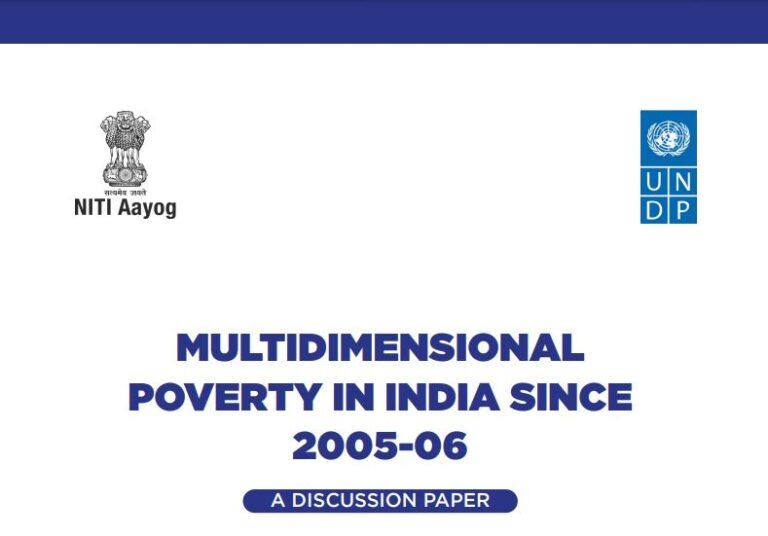
    He was commenting on a Discussion Paper released by NITI Aayog today on Multidimensional Poverty. The paper says that since 2005-06, India has registered a significant decline in the Multidimensional Poverty Index (MPI) from 29.17 per cent in 2013-14 to 11.28 per cent in 2022-23 — which is a reduction of 17.89 per cent. As a result 24.82 crore people escaped multidimensional poverty in last 9 years.

    PM Modi posted on X :

    “Very encouraging, reflecting our commitment towards furthering inclusive growth and focussing on transformative changes to our economy. We will continue to work towards all-round development and to ensure a prosperous future for every Indian.”

    The National Multidimensional Poverty Index by NITI Aayog uses the internationally acclaimed Alkire Foster methodology with a difference that National MPI covers 12 indicators while global MPI covers 10 indicators. This analysis attempts to study the decline in poverty rates and number of multidimensionally poor people across various time periods. The recent report on National MPI was based on National Family Health Surveys 4 (2015-16) and 5 (2019-21). Owing to lack of data for the years between 2005-06 and 2015-16 and after 2019-21 concerning the incidence of poverty levels, headcount poverty ratios for 2013-14 and 2022-23 have been estimated based on compound growth rate of the reduction in the incidence of poverty levels between 2005-06 and 2015-16 and 2015-16 and 2019-21 respectively.

    Methodology

    The latest NITI Aayog publication, ‘Multidimensional Poverty In India Since 2005-06 – A Discussion Paper,’ says, “Multidimensional poverty in India was found to decline from 29.17 per cent in 2013-14 to 11.28 per cent in 2022-23 with about 24.82 crore people escaping poverty during this period.”

    At the States’ level, Uttar Pradesh topped the list with 5.94 crore people escaping poverty followed by Bihar at 3.77 crore and Madhya Pradesh at 2.30 crore. All 12 indicators of MPI have shown remarkable improvement during this period.

    Traditionally, poverty has been measured by assessing monetary resources available for an individual or household. The monetary metric generally used were household income or consumption expenditure. However, this approach of measuring poverty has been criticized for not capturing the multiple deprivations which may be faced by individuals in their lives. Development not only constitutes economic progress, but also the process of expanding people’s capabilities to convert resources into valuable outcomes.

    The global Multidimensional Poverty Index (MPI) is based on the of Alkire and Foster (AF) methodology that identifies people as poor or not poor based on a dual-cutoff counting method. It follows the universally acknowledged metric designed to assess acute poverty, providing a complementary perspective to conventional monetary-based measures of poverty assessment.

    Global MPI uses 10 indicators covering three areas namely health, education and standard of living. Health dimension includes Nutrition and Child & Adolescent Mortality indicators, education dimension includes Years of Schooling and School Attendance indicators and standard of living dimension includes six household specific indicators namely, housing, household assets, type of Cooking Fuel, access to Sanitation, Drinking water and Electricity.

    Achieving SDGs

    But, in its pursuit of addressing the intricacies of poverty, both NITI Aayog and its predecessor, the Planning Commission, have systematically generated poverty estimates over time. Furthermore, NITI Aayog has been entrusted with the task of formulating an indigenized index for measuring multi dimensional poverty estimates as part of the Global Indices for Reform and Action (GIRG) initiative.

    The national MPI adopts the dual-cutoff approach of the AF methodology, consistent with the methodology used in the global MPI report. The national MPI retains all the ten indicators from the global MPI and incorporates two additional indicators, Maternal Health and Bank Accounts, in line with India’s national priorities.

    The NITI Aayog publication says, “Over the last nearly two decades, there have been substantial improvements in quality of lives of people with poverty levels declining sharply from more than 50 per cent to 11.28 per cent.”

    It says that India is all set to reach single digit poverty levels during 2024. The rate of decline in multi dimensional poverty has accelerated during the period 2013-14 to 2022-23. This is made possible by a large number of initiatives/ schemes of the Government targeted at improving specific deprivation aspects.

    About 24.82 crore people escaping multidimensional poverty with a fall in headcount ratio by 17.89 percentage points will also help in accelerating the achievement of Sustainable Development Goals. While the performance of States varies, some States which were historically having high poverty have made remarkable progress in bringing people out of poverty, thus reducing inter-state variations in multidimensional poverty.

    As the document says, “The Government of India has made significant strides in enhancing the quality of life for millions of individuals, with a focus on the SDG 1.2 target of halving poverty in all its dimensions. Initiatives such as Poshan Abhiyan and Anaemia Mukt Bharat have played a crucial role in addressing reach to health facilities, resulting in a substantial reduction in deprivation.”