More

    Sri Lanka’s Economic Performance Satisfactory, says IMF

    The completion of the first review allows for an immediate disbursement of US$337 million, bringing the total IMF financial support disbursed so far to US$670 million.

    The Executive Board of the International Monetary Fund (IMF) completed the first review under the 48-month Extended Fund Facility with Sri Lanka on Saturday. This paves the way for IMF to provide the island nation with access to about US$337 million to support its economic policies and reforms following on the aftermath of the economic crisis the island nation faced last year.

    Following the Executive Board discussion on Sri Lanka, Mr. Kenji Okamura, Deputy Managing Director, said, “(the) macroeconomic policy reforms are starting to bear fruit and the economy is showing tentative signs of stabilization, with rapid disinflation, significant revenue-based fiscal adjustment, and reserves build-up.”

    The completion of the first review allows for an immediate disbursement of US$337 million, bringing the total IMF financial support disbursed so far to US$670 million.

    The total amount of Sri Lanka’s EFF Arrangement is US$3 billion as of the time of programme approval on March 20, 2023. The programme supports Sri Lanka’s efforts to restore macroeconomic stability and debt sustainability, safeguard financial stability, and enhance growth-oriented structural reforms.

    Senior Mission Chief for Sri Lanka, Peter Breuer noted the encouraging signs regarding the program’s impact on stabilizing the economy, particularly in policy-oriented variables and fiscal areas, according to a statement by the president’s media division.

    The IMF said there was positive surprise on the country completing the first review under its program, during a meeting with President Ranil Wickremesinghe.

    Breuer told Wickremesinghe, “With respect to revenue collection, in fact, we had a meeting that showed very encouraging numbers that basically highlight that the policies you implemented beginning from after we reached the staff level agreement in the second half of 2022 are working, that they have the intended effect, that you’re collecting the revenue that’s needed to address the cause of the crisis. So, that really is very good news.”

    Commendable progress

    The IMF’s website notes that, “Sri Lanka’s performance under the programme was satisfactory. All but one performance criteria and all but one indicative targets were met at end-June,” it said.

    “Most structural benchmarks due by end-October 2023 were either met or implemented with delay. Notably, the authorities published the Governance Diagnostic Report, making Sri Lanka the first country in Asia to undergo the IMF Governance Diagnostic exercise,” the IMF’s statement on its website reads.

    According to the IMF, the Sri Lankan authorities have made commendable progress toward restoring debt sustainability, raising revenue, rebuilding reserves buffers, reducing inflation, and safeguarding financial stability. Strong commitment to improving governance and protecting the poor and vulnerable remains critical.

    The upcoming formal IMF reviews consultations will focus on the new public financial management law, potential conflicts with the public-private partnership law, electricity tariffs and urgent preparations for property taxation.

    The IMF pointed out the urgency of addressing fiscal matters, including amendments to the Banking Act and recapitalizing the banking sector.

    Further discussions between Sri Lanka and the IMF are expected to delve deeper into these key areas among other issues.

    Plates and Spoons to Tackle Malnutrition in Malawi

    After Cyclone Freddy ravaged Malawi, displacing families and threatening communities with malnutrition, a locally promoted project, Chithando, a offering cooking lessons and special plates, empowers communities to feed their children nutritious meals.

    By Charles Pensulo

    Plates and spoons designed to help people better feed their children are helping reverse malnutrition in the wake of Cyclone Freddy in Malawi.

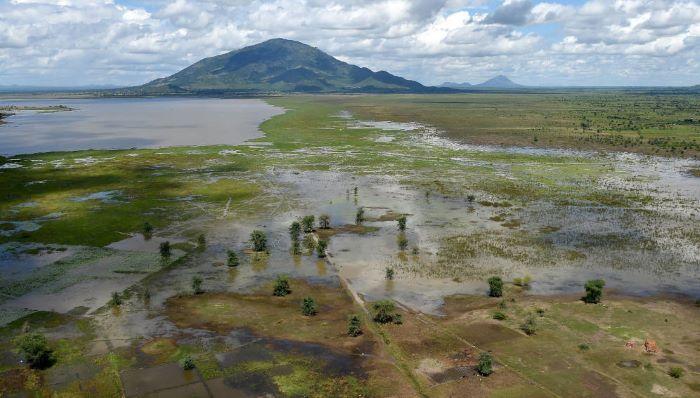
    Cyclone Freddy devastated Malawi in March 2023, impacting over 2.2 million people and displacing around 600,000 individuals who sought refuge in over 700 overcrowded camps across the country.

    Malnutrition contributes to an estimated 23 per cent of deaths of under-five children each year in Malawi, according to Unicef – the UN agency for children. Natural disasters like Cyclone Freddy impact on the ability of displaced people to access nutritious foods.

    To effectively respond to the impact of Cyclone Freddy, Unicef supported the Ministry of Health in Malawi to screen 2.4 million children for acute malnutrition.

    They identified and treated over 25,000 children for severe acute malnutrition and educated almost half a million caregivers of children aged up to 23 months on better infant and child feeding practices.

    Workers also provided iron and folic acid supplements to more than 54,000 adolescent girls to prevent anemia.

    John Kadulila, a local promoter of the project – known as Chithando – from the Nsanje district in Malawi, highlighted the significance of the feeding and learning sessions, where parents with malnourished children in villages come together to participate in cooking lessons.

    Plates and spoons

    The sessions involve preparing special meals using maize, groundnuts (peanuts), pumpkin leaves, and eggs. Specially designed plates and spoons with metrics and labels assist parents in following instructions for meal preparation.

    Kadulila told SciDev.Net that while some parents do not have enough food in their homes, other just need to be taught to prepare balanced meals.

    He said the specially designated plates show what type of food should be given to various age groups, the frequency, how to clean the plates, a picture of six food groups and a special spoon to show how thick the porridge should be.

    “The sessions have proved essential,” said Kadulila. “It has turned into an oasis for many families facing food insecurity.”

    Grace Takomana, the health, nutrition and gender focal person for the Hunger Project-Malawi, implementing the Scale UP Nutrition project, said the complementary feeding and learning sessions significantly reduced the risk of malnutrition and have also proven to treat moderate acute malnutrition.

    Takomana said that the intervention takes 12 days to kick in.

    “It starts with a nutrition screening exercise for admission into the feeding and learning sessions,” she said.

    “It is then followed by cooking demonstrations, feeding sessions and subsequent nutrition assessments to monitor changes in nutrition status.”

    When the weight of her baby drastically dropped following the floods – which wiped out her possessions, including crops at the farm, Lucia Samikuta, one mother, struggled to feed her five-month-old baby who was getting malnourished.

    Samikuta told SciDev.Net that the Chithando project – the food and the lessons – have assisted her in managing the condition of her five-month-old baby.

    “I think after 12 days, the child will be fine,” she said, smiling while feeding the baby from the yellow plate. “I am very confident about that.”

    This piece has been sourced from SciDev.Net

    Image: GovernmentZA (CC BY-ND 2.0 DEED).

    Maldives floods: Homes damaged, people relocated

    The army, police and Male’ City Council alongside public workers, has stacked 1,018 sand sacks for prevention in 152 areas including locations such as stores, schools and warehouses that reported flooding.

    The Maldives’ National Disaster Management Authority (NDMA) has said that last Friday’s floods have in Male have caused damages costing 1.1 million Maldivian Maldivian Rufiyaas to housing alone.

    The heavy rainfall and the resulting flash flood in Male’ has led to damage to households and essentials and structural damages as a result of the rainfall amounts to an approximated MVR 1.1 million.

    Financial assistance of MVR 711,541 is to be distributed to the assessed households with funds from the disaster humanitarian aid policy. The priority will be to reinforce homes that have undergone structural damages. This amount adds up to MVR 611,466. Damages to everyday household essentials measures up to approximately MVR 100,000.

    The Maldivian Red Crescent received 494 calls regarding the downpour. Within the 227 households that reported flooding and damage, the Red Crescent was able to provide aid to 193 households.

    The army, police and Male’ City Council alongside public workers, has stacked 1,018 sand sacks for prevention in 152 areas including locations such as stores, schools and warehouses that reported flooding.

    The government also shared that they relocated 110 people residing in 18 houses that suffered damage during the rainfall. The authority provided shelter and meals to the affected persons for a period of two days. These individuals have now been transferred back to their original residences.

    “These individuals were provided temporary shelter until they regain their standard conditions for living while their living quarters were rendered uninhabitable with a lack of cooking facilities, along with sleeping conditions and lavatory access,” the NDMA said in its statement.

    Existential threat

    The destruction to homes were this significant due to two flooding disasters occurring close together. December 31 also brought heavy rainfall and destruction to households. 20 homes that had previously reported damage then had been assessed once again following the Friday disaster due to further damage.

    The whole low-lying archipelago of the Maldives faces an existential threat from sea-level rise by the end of the century. Sea-level rise will further erode the retreating coast; and, combined with increasing intensity of rainfall, cause coastal flooding and saltwater intrusion, which will affect water security. Freshwater is limited across the islands, and especially in the remote atolls.

    Decreases in rainfall in the northern regions may place these islands at particular risk of freshwater insecurity, while a rise in extreme rainfall events will see increased flooding. In addition, the Maldives is projected to continue experiencing increased temperatures. Already a hot tropical climate, the rising temperatures will increase the number of ‘hot’ days and nights significantly. Increased global temperatures will also affect the sea surface temperature, which is very important for islanders who rely on the health of the surrounding oceans.

    Rainfall induced floods are the most frequent natural events in the Maldives. Rainfall induced floods (due to more days with heavy rainfall fall, >20 mm per day) as well as coastal flooding (due to sea-level rise) are predicted to increase in intensity. Apart from the Indian Ocean Tsunami in 2004, the country has rarely experienced major disasters. But, recent years have observed more losses and damages due to small-scale and recurrent hazards, such increased rainfall, cyclonic winds, storm surges, salt water intrusion and coastal floods.

    NITI Aayog organises National Workshop on “Strengthening Mental Health Services and Care in India”

    The purpose of the workshop was to elicit the views of States and other stakeholders on existing gaps and challenges under the District Mental Health Programme.

    NITI Aayog organized a national workshop on “Strengthening Mental Health Services and Care in India” at the National Institute of Mental Health and Neurosciences (NIMHANS), Bangalore on 9 January 2024, in collaboration with the Ministry of Health and Family Welfare (MoHFW) and the Department of Health and Family Welfare, Government of Karnataka.

    The purpose of the workshop was to elicit the views of States and other stakeholders on existing gaps and challenges under the District Mental Health Programme (DMHP) and also to learn from the States, their best practices, which can further be replicated in other States/UTs with their own contextualization.

    The one-day national-level workshop was chaired by Member (Health), NITI Aayog, Dr V K Paul. Those present included chairman and president, National Medical Commission, Dr B N Gangadhar; economic adviser, MoHFW, Indrani Kaushal; Director, NIMHANS, Dr Pratima Murthy; principal secretary (Health and Family Welfare) of the Karnataka government, Anil Kumar T K; senior officials from MoHFW, DGHS, ICMR, and States/UTs, as well as sectoral and technical experts from WHO India, UNICEF, and development partners who have been contributing in the space of primary healthcare and mental health. The workshop was conducted as a part of the NITI–State workshop series, an initiative under the State Support Mission (SSM).

    Tele-MANAS

    In the inaugural session, NITI Aayog made a brief presentation to set the context of the workshop, which was followed by a detailed presentation by MoHFW, highlighting the present scenario of the National and District Mental Health Program and the upcoming proposed strategies to strengthen its implementation. Principal Secretary (Health), Government of Karnataka gave a detailed presentation on “Moving beyond the Bellary Model of District Mental Health Program: Success story of Karnataka.” The presentation highlighted the various initiatives being undertaken by the state of Karnataka in addressing mental health concerns. The technical sessions concluded with a detailed presentation by Director, NIMHANS, elaborating the challenges, experiences and way forward under the recently introduced component of Tele-MANAS.

    The rest of the workshop was divided into four sessions, with a panel discussion and three interactive roundtable sessions, which focused on addressing challenges, sharing current initiatives and best practices in States/UTs, and paving the way forward for a holistic mental healthcare ecosystem in India. Participants in the sessions included senior leadership from MoHFW, National Medical Commission, States/UTs, sectoral experts from NIMHANS, TISS, and IBHAS, as well as representatives from WHO India, UNICEF, and key development partners.

    The delegates brought forth views on strengthening the District Mental Health Programme, especially with respect to infrastructure, HR, training, treatment and IEC; developing and scaling-up Primary Mental Healthcare through Ayushman Aarogya Mandirs; and rights of persons with mental illness, including reintegration, rehabilitation and empowerment. Participants from 31 States and UTs shared views from the ground and immediate challenges that need to be addressed.

    In the closing session, Dr Paul reiterated the opportunity to build and reimagine a new national mental healthcare programme that would address the huge unmet need for treatment of mental illnesses and disorders. He said that the way forward is to develop an overarching and holistic vision for inclusive and efficient service delivery, adopt an integrative approach by converging aspects of traditional medicine, and augment the mental healthcare workforce by optimizing post-graduate seats in psychiatry, psychiatric social work, and clinical psychology.

    PM to Release First Instalment to One Lakh PMAY (G) Beneficiaries on Monday

    With a budget of approximately Rs 24,000 crores, PM-JANMAN focuses on 11 critical interventions through nine different ministries. It is aimed to improve socio-economic conditions of the PVTGs by saturating PVTG households and habitations with basic facilities.

    Prime Minister Narendra Modi will release the first instalment to 1 lakh beneficiaries of Pradhan Mantri Awas Yojana – Gramin (PMAY – G) under Pradhan Mantri Janjati Adivasi Nyaya Maha Abhiyan (PM-JANMAN) on Monday via video conferencing. On the occasion, the Prime Minister will also interact with the beneficiaries of PM-JANMAN.

    A PIB release says that “in line with the Prime Minister’s efforts towards the vision of Antyodaya to empower the last person at the last mile, PM-JANMAN was launched for the socio-economic welfare of Particularly Vulnerable Tribal Groups (PVTGs) on 15 November 2023, on the occasion of Janjatiya Gaurav Diwas.”

    PM-JANMAN, has a budget of approximately Rs 24,000 crores. It focuses on 11 critical interventions through nine different ministries. It is aimed to improve socio-economic conditions of the PVTGs by saturating PVTG households and habitations with basic facilities such as safe housing, clean drinking water and sanitation, improved access to education, health and nutrition, electricity, road and telecom connectivity, and sustainable livelihood opportunities.

    CSR Not Charity But A Duty and Responsibility, Says Union Minister Dr Jitendra Singh

    India, having the most elaborated CSR mechanism, has set a benchmark in attaining sustainability goals and stakeholder activism in nation building.

    Corporate Social Responsibility (CSR) is not a charity, but a duty and a responsibility towards society inspired by the highest values of seeking to return to society a part of what we have received in whatever capacity and to whatever extent we can, Union Minister of State (Independent Charge) Science and Technology, MoS PMO, Personnel, Public Grievances, Pensions, Atomic Energy and Space, Dr. Jitendra Singh said on Saturday.

    Dr Jitendra Singh was addressing the gathering as Chief Guest at the Inaugural session of CSR Dialogue organized by Rambhau Mhalgi Prabodhini (RMP), at Thane, Maharashtra, to mark a decade of the implementation of CSR Act.

    Dr Jitendra Singh said social responsibility has been part of India’s sanskaar and ancient Indian tradition. The spirit of contributing towards the welfare of society is inherent to every Indian individual, but sometimes it needs an inspiration, provided an outlet and lead to direction.

    Dr Jitendra Singh said the best example of social responsibility is the appeal given by Prime Minister Modi to the well off citizens who could afford gas connection, to voluntarily surrender their subsidy to the benefit of the deserving and the poor. PM Modi’s call had an inspiring effect and in a short time span, 20 crore people gave up subsidies which were used for supporting the beneficiaries of the Ujjwala Yojana, he said.

    CSR contribution will increase

    Similarly, Swami Vivekananda had inspired Jamshedji Tata to spend on healthcare when he established pioneering institutions like the Tata Institute of Fundamental Research (TIFR), the National Center for Performing Art (NCPA) and the Tata Memorial Hospital, Dr Jitendra Singh said. Considering that contribution to society is not limited to the rich and the affluent, Dr Jitendra Singh said it is the duty of every citizen to work for uplift of society through whatever means he can.

    Referring to Science Social Responsibility, Dr Jitendra Singh said teachers and experts of science can utilize their experience to become researchers and set up Startups. Pointing out that India has a budget outlay of Rs. 25,000 crore under CSR Act, Dr Jitendra Singh said India has jumped from being the tenth largest economy to aspiring to become the largest economy in the world by 2030. In such a situation it is expected that CSR contribution will also increase manifold.

    “Let each one of us make every effort, not only should we contribute to CSR activity, but also inspire others. We should seek ways to contribute to society in different areas and create infrastructure and institutions for the Viksit Bharat @2047, ” he said.

    On April 1, 2014, India became the first country in the world to legally mandate corporate social responsibility. The rules in Section 135 of the Companies Act 2013 make it mandatory for companies of a certain turnover and profitability to spend 2 per cent of their average net profit for the past three years on corporate social responsibility activities.

    India, having the most elaborated CSR mechanism, has set a benchmark in attaining sustainability goals and stakeholder activism in nation building.

    From Buttocks to Electronic Bracelets: How Governments are Using Cybercrime Laws to Target Women and LGBTQIA+ People

    Many studies show how women and gender-diverse people are more commonly targeted by technology-facilitated violence. This problem is now further compounded by the legislative reaction of governments. Over 180 countries have passed alarmist laws on cybercrime and electronic evidence, and often use them as a weapon to silence women and LGBTQIA+ people.

    By Gaurav Jain

    In 2021, 34-year-old PhD student Salma al-Shehab was sentenced by Saudi Arabia to 34 years in prison and 34 years of travel restrictions for a cybercrime. In 2022, 73-year-old Olga Mata was confronted with a potential sentence of 10 to 20 years for what the Venezuelan government deemed a hate crime online. In 2023, 19-year-old Russian student Olesya Krivtsova was charged with the crime of “fake news” and “acts justifying terrorism” – charges that could mean a 10-year prison term.

    On the face of it, one would imagine these were dire crimes that warranted such severe punishment. But in each of these cases, the accused had merely posted social media posts critiquing the government – Krivtsova, an Instagram post criticising the Russian invasion of Ukraine; Mata, a TikTok video in which she made arepas (a popular Venezuelan dish) and gave them nicknames inspired by infamous Venezuelan political figures; al-Shehab, for having a Twitter account that followed and occasionally retweeted dissidents.

    A new APC and Derechos Digitales report entitled When protection becomes an excuse for criminalisation: Gender considerations on cybercrime frameworks shows that these are far from isolated cases. Around the world, governments are using cybercrime laws to criminalise women and LGBTQIA+ people, validate increased surveillance and reduce freedom of expression. As the report says, these laws criminalise “online discourse to an extent that exceeds current standards on freedom of expression.” The report details 11 cases in nine countries – Russia, Egypt, Jordan, Uganda, Saudi Arabia, Cuba, Venezuela, Libya and Nicaragua – and makes a timely and vital argument to rethink the nature of cybercrime legislation.

    Many studies show how women and gender-diverse people are more commonly targeted by technology-facilitated violence. This problem is now further compounded by the legislative reaction of governments. Over 180 countries have passed alarmist laws on cybercrime and electronic evidence, and often use them as a weapon to silence women and LGBTQIA+ people. These cybercrime laws are often ineffective and disproportionate and used by political and economic powers to silence critics and restrict civic space. They not only legitimise censorship and surveillance, they are actually used against those who invoke them for their protection. And so laws intended to fight disinformation are used to silence dissent.

    Back in 2008, APC published an edition of GenderIT.org on the issue of cybercrime legislation through a gendered perspective. The issue remains surprisingly pertinent, and now there is a United Nations effort to formulate a new global treaty on the issue, which is also problematic since a new convention might well lower the already problematic and insufficient standards set forth in the Budapest Convention that addresses cybercrime. In this scenario, the new report by APC and Derechos Digitales provides a timely intervention in the urgent debate on the need and efficacy of such laws.

    A growing menace to freedom

    The internet has been valorised for being an empowering place for women and queer communities, but it is also increasingly a place where they face technology-facilitated gender-based violence (TFGBV). Instead of the complex institutional work that is required to reduce gender violence, governments usually turn to criminal laws. However, this seemingly obvious solution is rife with danger for the very communities it is supposed to protect. Two stunning examples appear in the report.

    One is the case of Amal Fathy. In 2018. Fathy, an Egyptian human rights activist, posted a video on social media about her experience of being sexually harassed and criticised the government for not doing enough to protect women. Two days later, in a dawn raid, Fathy, her husband and their three-year-old son were arrested. Fathy was sentenced to two years in prison for “spreading false news,” the possession of “indecent material” and using the internet to “promote ideas and beliefs calling for terrorists acts” – based on the Egyptian cybercrime laws. Eventually, Fathy spent a year in jail – all for the crime of talking online about being sexually harassed.

    The second case is from 2021 when Yamen, a 25-year-old gay man in Jordan, filed a complaint with the cybercrime unit of the Amman police because a man he had met on a dating app was blackmailing him. He hoped that this specialised unit of the police would protect him from the man’s threat of disseminating an intimate video he had made without Yamen’s consent. The police turned around and accused Yamen himself of “soliciting prostitution online”. He spent a month in prison and had to pay a fine for his “crime”.

    As Derechos Digitales wrote earlier this year, these criminal laws around the world govern “a wide range of vaguely typified conducts, accompanied by lengthy sentences, [and] facilitate discretional interpretation, used by those who wield political and economic power as a legal tool to silence their critics.” In country after country, the gaping maw of power has been camouflaged with the protectionist rationale of cybercrime laws. These laws are often so vaguely worded and so broad that pretty much any online interaction can be cast in a criminal and anti-national light.

    Treated like a violent criminal

    In 2012, Yaremis Flores, a Cuban lawyer and former judge, was picked up off the street by state security and interrogated for two days about her journalistic work. Those who interrogated her wanted to charge her with the crime of disseminating “false news with the purpose of disturbing international peace or endangering the prestige or credit of the Cuban state.” Punishment could be prison from one to four years. She was eventually released, but that was not the case for Stella Nyanzi, a well-known feminist from Uganda who spent over 18 months in prison. She, too, was treated like a violent criminal, arrested in a dawn raid and placed in maximum security prison – because she had written that the president was no more than “a pair of buttocks” and that his wife was “empty brained”.

    When such cybercrime laws are invoked in the name of national interest and security, it often pivots on opaque claims of violations of public morality. When Haneen al-Abdali, a Libyan blogger, was arrested in February 2023, she was accused of insulting “the status of the chaste and dignified Libyan woman in our conservative society with acts and behaviours that are alien to us and offend our customs, traditions and true religion.” No details have followed. As the report says, “the analysis of freedom of expression from a gender lens is crucial to make explicit why the criminalisation of speech is such a serious concern for women and gender-diverse people. ‘Public morals’ and cultural values have been weaponised against them when they seek to express their identities, their sexuality, their views and opinions, especially when these views and opinions relate to gender-related issues.”

    This exploratory report reminds us that we must consider these varied contexts as the world progresses towards a new UN cybercrime convention, one that has the potential to reset national standards for cybercrime legislation.

    The Russian student Olesya Krivtsova came to the conclusion that she would not leave prison camp alive – she managed to escape and secretly crossed the border and now lives in Lithuania. One of the first things she did? Record a video of herself breaking the electronic tracking bracelet on her ankle. A powerful reminder of the digital tracking bracelets that cybercrime laws can become, and the risks of unwarranted international cooperation in this regard.

    Cover image via Stella Nyanzi’s X (formerly Twitter) account.

    This piece has been sourced from the Association for Progressive Communications and available in the creative commons 4.0 — https://creativecommons.org/licenses/by/4.0/.

    Cooperative Farming Makes Bangladesh’s Coastal Women Farmers Climate-Resilient

    Bangladeshi women cooperative farmers underwent training and support on climate-tolerant agricultural practices, which helped them cope with the adverse consequences of extreme weather events in the coastal regions.

    By Rafiqul Islam

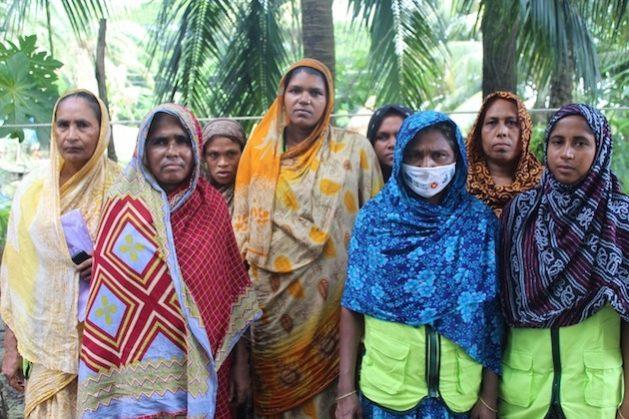
    In the past, Salma Begum, 40, lost her crops every year due to natural disasters. She lives with her five-member family in Ashabaria village under Rangabali upazila, a remote coastal island in Patuakhali district.

    “We did not have enough livelihood options in the coastal area where we live. Cyclones, coastal floods, and tidal surges have been having adverse impacts on agriculture, making it difficult for my wage-laborer husband to find work regularly,” she said.

    “We have no arable land either,” said Salma, a mother of three.

    Now, the Local Government Initiative on Climate Change (LoGIC) project, jointly implemented by the Bangladesh government and UNDP for delivering adaptation benefits to vulnerable coastal people, has ushered in a ray of hope for Salma and many others since they got training on climate-tolerant livelihood practices.

    After the training, eight women of Ashabaria village, including Salma, formed a group, and each member of the group received Taka 30,000 (USD 273) from the project’s Climate Resilient Fund (CRF) through their bank accounts. Later, they deposited the money in a group bank account.

    “With the money we received from the CRF, we first leased arable land from a local landlord at Taka, which cost us one lakh (USD 910), and we started climate-resilient agriculture under cooperatives last year,” said Salma, who is also the group leader.

    She said they sowed mug dal, also known as mung bean, and paddy on the agricultural land.

    “Because torrential rain damaged our paddy field just before harvesting the food grain, we were unable to make a profit from cultivating that paddy last year. But this year we earned a profit of Taka 20,000 (US$ 180) by sowing mug dal. We got Taka 2,500 each from the profit.”

    Shahnaj Akter, another member, said that before starting a new venture, they sit together and take any decisions in consultation with each other.

    “We work together on the crop field too. During the mug dal cultivation, we ourselves sowed and harvested the cash crop. And even we ourselves processed mug dal before selling it,” she said.

    Shahnaj said they also received training on sheep and duck farming and vegetable cultivation. Now she spends several hours a day at her homestead, where she has built a duck farm and is cultivating vegetables.

    “Now I have 20 ducks at my farm. I get eggs every day and sell them. I get meat too from my duck farm. So, I am now supporting my family financially by selling vegetables and eggs,” she said.

    “In the past, we led a miserable life as we did not have enough income. Now, after starting agriculture under cooperatives, we are now able to support my family,” said Rabeya Begum, a mother of five.

    Building Climate Resilience

    Led by the Local Government Division of the Ministry of Local Government Rural Development and Cooperatives, the LoGIC project is providing the Community Resilience Fund (CRF), aiming to help the most climate-vulnerable women build resilience to climate change by enabling them to take climate-adaptive livelihoods.

    Through this CRF support, the women apply community-based approaches to invest in climate-adaptive livelihoods like sunflower production, climate-tolerant rice, dal and watermelon cultivation, and more.

    Maksudur Rahman, the project’s community mobilization facilitator, said the climate-vulnerable coastal women developed business plans together and accordingly leased arable lands from landowners within their surrounding neighborhood. Later, they prepared the land for cultivating climate-tolerant crop varieties.

    “We provide technical support for them. The LoGIC project also facilitates market linkages and networking support for women farmers so that they can sell their agricultural products,” he said.

    Project coordinator AKM Azad Rahman said about 2,013 groups of women farmers have so far been formed under the project in the climate-vulnerable regions of Bangladesh, supporting around 35,000 women through the CRF scheme.

    Extreme Weather Hits Coastal Agriculture Hard

    Bangladesh is one of the most vulnerable countries to climate change, while cyclonic storms, flooding, and storm surges severely affect agriculture in the country’s coastal area every year. Once a natural disaster hits the coastal region of Bangladesh, it damages a huge area of crop fields, putting local farmers in peril.

    According to an estimate from the Department of Agricultural Extension (DAE), Bangladesh incurred crop loss worth Taka two billion due to the recent cyclone Midhili that lashed the country’s coast.

    The cyclone damaged 432.6 hectares of Aman paddy, and pea, mustard, Boro paddy seed beds, betel, and lentils were affected too.

    Mahmud Hasan, chairman of Maudubi Union Parishad at Rangabali, said climate change is severely affecting agriculture in the country’s coastal area.

    He said there is plenty of rainwater during the monsoon but a scarcity of water during the dry season.

    “Pulse and watermelon cultivation faces setbacks during the dry season for lack of freshwater as the groundwater level drops drastically at that time,” he said.

    Farmer Saifuddin Mito said they had to sow Aman paddy twice this year as their paddy seedbeds were damaged earlier due to excessive rainfall, resulting in an increase in the cost of crop production.

    This piece has been sourced from Inter Press Service.

    Image: Rafiqul Islam/IPS

    Crafting a New Livelihood in Afghanistan

    Wire weaving to make Gabion Boxes leads one Afghan woman to improve her family’s economic situation — Fatema could find little work after her husband died, leaving her dependent on aid from other villagers or humanitarian assistance. With this new wire weaving skill, she can now help support her family.

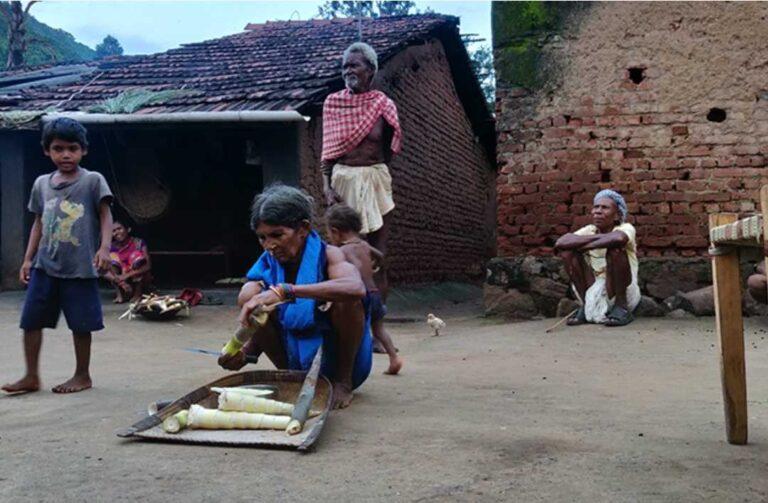
    Nestled under the looming ruins of the ancient Nariman fortress, the village of Cheshma Shirin (meaning “Sweet Source” in Dari) is home to Fatema and her three children. Like most of the other 250 inhabitants of this village, located 30 kilometres from the provincial capital Qala-e Naw, they belong to the Sadat tribe, a minority community in Afghanistan.

    These days, in order to make a living, Fatema spends her days weaving the wire mesh holding together the gabions, or cubic blocks of stones used to shore up the banks of the river, to protect the ancient village from flash floods and soil erosion. The gabions also form little dams to capture water from the increasingly erratic rainfall and irrigate the pistachio trees for which this province of Badghis in northwestern Afghanistan is renowned.

    Fatema learned this essential weaving skill through a World Bank-funded project of the Food and Agriculture Organization of the United Nations (FAO). This Emergency Food Security project focused on providing urgent and essential livelihood support and health services, in addition to food assistance, to the people of Afghanistan. It complements ongoing FAO programmes, funded by the Asian Development Bank and other resource partners, which combine immediate lifesaving and livelihood-protecting assistance with activities geared toward longer-term recovery and resilience-building.

    After Fatema lost her husband in a car accident, she was struggling to feed her children, with her eldest son having to quit school to help support the family. For years, Fatema could find little work and depended on the kindness of neighbors and occasional humanitarian aid. After the political turnover in August 2021, the family became even more dependent on the scant day-wages brought back by her son, in an increasingly cash-strapped economy.

    When FAO began the training in gabion weaving in her village, Fatema eagerly participated. Now, she is able to carry out the weaving work at home and receive wages from a construction company through funding from FAO, and this has made a huge difference in her economic situation.

    Extreme weather

    It is a necessary skill in an area that has suffered from increasingly extreme weather, with floods and droughts each in turn affecting the villages.

    Many of Badghis’ inhabitants have fled these extremes and their consequences, migrating to the nearby city of Herat, sometimes ending up in camps for internally displaced people. Devastating earthquakes in October 2023, that were also felt in Badghis, were the latest in a series of challenges.

    For Fatema, the FAO project offers an opportunity for her family to stay in their village rather than being forced to migrate.

    “The income I earn from this activity provides for my family’s immediate needs; but the results of this project, bringing water and income to our community, also allow my children to dream about a future in the village where they were born,” said Fatema.

    The lifeline of the village, its agrarian economy, relies heavily on irrigation, which has been one of the priorities of FAO’s work in the area, supporting both large and small traditional irrigation schemes in consultation with local communities to understand their needs.

    This allows the community to move beyond subsistence farming and diversify their vegetable gardens, improve crop yields and resume pistachio production previously decimated by drought. The surplus can then be sold on the market, but the village’s infrastructure, from storage and food processing facilities to transportation, will need to be developed next for these activities to truly be successful.

    With a steady source of income from her newly-acquired skill in gabion weaving, Fatema gains confidence with every twist and turn of her hands. Now she will also be able to ensure that her children can get the education they deserve. As for the village, she feels the construction of dams and investment in irrigation has given the community a sense of rebirth.

    The FAO Emergency Food Security project has enabled the rehabilitation of the village’s water resources while providing some much-needed cash to its men and women. But continued support will be crucial to prevent poor and food insecure populations from slipping into greater food insecurity. The agricultural sector, which is the backbone of the country’s economy, will need more investment if the improvements in lives such as those of Fatema and her family are to be sustained.

    Image: Wikimedia

    Forensics in Crisis over Lack of Data, Resources

    Forensic science can help protect the vulnerable but many Asian countries are hampered by limited data and resources, especially when it comes to the use of AI in solving crimes. Besides, officials in middle-income countries often resistant to new technologies.

    By Joel Adriano

    There was a big furore in the Philippines a few months back after a school student died, reportedly due to slapping by a school teacher during an exam.

    The official death certificate showed that the 14-year-old Francis Jay Gumikib died of brain swelling. But local forensic expert, Raquel Fortun, later pointed out that the death certificate didn’t specify the actual cause of the brain haemorrhage.

    Following an autopsy, the Philippine National Police (PNP) revealed that the student died of a rare congenital condition, and not due to the slapping. Gumikib suffered from an unusual twisting of arteries and veins known as arteriovenous malformation, and that one of the entangled veins ruptured, causing his brain to swell, leading to his death.

    The family initially refused to accept the findings and insisted that their son’s death was caused by the teacher’s slapping. The teacher is also facing separate charges of violation of anti-child abuse law.

    But after thoroughly explaining it to the bereaved parents, according to Police Major Sotero Rodrigo Junior, public information officer of the PNP Forensic Group, the family accepted the results and understood that there was no agenda behind the findings.

    This case highlights the critical role of forensic science in finding out the truth, in dispensing justice based on scientific evidence, and in relaying this to the general public to allay doubts, especially in countries with weak leadership and justice systems.

    Helping the vulnerable

    Forensic science is the application of scientific methods and techniques in solving crimes. It is critical in the administration of justice – to avoid innocent people being wrongly convicted while criminals escape justice, and to give closure for those seeking justice.

    It can involve scientists such as chemists, biologists, pathologists, doctors, dentists, psychologists, and computer experts, and covers techniques ranging from fingerprinting – first used to solve crime over 100 years ago – to modern technologies such as DNA analyses to solve crimes.

    Maria Corazon De Ungria, a molecular biologist and who heads the DNA Analysis Laboratory at the Natural Sciences Research Institute, University of the Philippines Diliman, said the public must be made to understand that forensic science is there to protect the most vulnerable.

    “People who are economically disadvantaged have limited resources and are unfamiliar with the processes of our legal system,” De Ungria said.

    What this means, explained Allan Hilbero, a regional trial court judge in the Philippines, is that even if the other party is well-to-do and can afford a very good private lawyer, scientific evidence is difficult to question, levelling the playing field in any court case.

    “Science doesn’t compromise; the findings are exact,” explained Hilbero.

    Moreover, forensics is intertwined with global commitments signed by countries including the 17 Sustainable Development Goals (SDGs).

    In particular, SDG 16 – Peace, Justice and Strong Institutions – implies forensic science is essential in achieving sustainable development, according to an article published in the journal Forensic Science International: Synergy.

    In the article, the authors point out: “The pursuit of justice is not only worthy in its own right, it is also crucial in eliminating violence against women and girls (SDG 5 – Achieve gender equality and empower all women and girls) and reducing inequality through provision of accurate evidence (SDG 10 – Reduce inequality within and among countries).”

    Easing congestion

    Yet legal cases in many developing countries could take years or even decades to resolve as courts are overloaded. In the Philippines, litigation cases take about four to seven years to finish, De Ungria said.

    One judge in a study said she has 295 pending cases. With at least one case filed daily in their courts, it is difficult for judges to keep up with workloads as each one needs time to study, making it difficult “to proceed with the disposition of cases at a faster pace”.

    The poor are unlikely to be able to bear lengthy trials due to their inability to earn income while in jail. Income loss is much harder for poor litigants, especially if they are the sole breadwinner, De Ungria said.

    “Unlike those with resources, the poor could end up in prison while awaiting trial because of their inability to put up money for bail,” De Ungria said. “So, any delay in court resolutions is simply anti-poor.”

    This is where forensics comes in.

    “Forensic science helps in deloading courts with cases that can be avoided in going into trials like paternity cases,” said Hilbero, who added that a simple presentation of DNA evidence is conclusive enough.

    Presentation of scientific evidence also helps speed up resolution of cases and address court congestion, unlike the traditional witnesses stand which takes a lot of time, he said.

    “Forensics is science trying to help or contribute towards improving the [justice] system,” De Ungria emphasised.

    Mass identification

    Asia Pacific is the most disaster-prone region in the world, commonly dealing with earthquakes, volcanic eruptions, heatwaves and droughts, floods and tsunamis, and extremely powerful storms. On average some 43,000 people in Asia Pacific are killed in storms, floods and landslides each year, according to the United Nations Development Programme.

    As such, forensics is very useful in mass disaster identification of recovered remains.

    Nor Aidora Saedon, director of the Forensic DNA Division, Forensic Science Analysis Centre, Department of Chemistry Malaysia, explained the country’s DNA lab was established just over a year after the 1993 Highland Towers tragedy, where 48 people were killed when a tower block collapsed.

    Forensics also became critically important in identifying thousands of casualties in Thailand following a tsunami on 26 December 2004. It played a crucial role in the identification of hundreds of victims in the Philippines after Typhoon Fengshen (locally named Typhoon Frank) in 2008, De Ungria added.

    Forensic science also plays a key role in the aftermath of natural calamities, such as the tsunami that hit Thailand in 2004. Image credit: Khao Lak Ausflüge (CC BY-SA 4.0).

    Then there are terrorist or conflict-related disasters.

    From the downed Malaysia Airlines flight 17 that was struck in 2014 by a missile while cruising in eastern Ukraine, killing nearly 300 people on board, to the brazen election-related mass killing of 58 people in Maguindanao, Philippines, in 2009 which included 32 journalists, the world’s worst single-day murder of media workers, forensics is often vital in prosecuting the perpetrators.

    However, De Ungria emphasised the need to come up with protocols concerning mass disaster identification to make the work efficient.

    Disaster areas should be treated much like a crime scene. As such you need to have protocols in place, such as area restrictions to avoid contamination, coordinated recovery efforts across different government agencies and organisations, and evidence processing.

    There are also questions surrounding the use of data or biological samples where privacy laws are in place.

    “For example, you can’t simply use the biological samples gathered from new-born screening [where babies are checked for genetic conditions] outside of the parents’ original consent,” De Ungria said.

    One option is to simply have the health department or ministry issue an ordinance to require hospitals to add a consent section in the new-born screening form to allow its use for human identification in disasters, said De Ungria.

    Is forensics in crisis?

    However, there are concerns that forensic science is in crisis and it is not progressing. Among the impediments to improvements in forensics is the “general resistance to change in the forensics community” itself as institutions and practitioners are conservative and are “used to doing things in a certain way”.

    “Different agencies do forensic science with varying levels of appreciation of what science is,” De Ungria explained while pointing out that some might have fallen behind the times.

    “For instance, our police still use the paraffin test which is no longer used globally,” she said, referring to an older test for gunpowder residues which has been replaced by chemical analysis.

    In Pakistan, local policemen are not properly trained in systematic processing of crime scenes, particularly on collection of evidence, which may result in contamination of evidence, researchers say.

    Science is advancing all the time, especially now in an increasingly digital age, which is why for older practitioners and others involved in the justice system, continuing training and education is an integral part of the work, De Ungria said.

    “This is why agencies must invest in the development of personnel.”

    In Malaysia, Saedon also emphasised the importance of collaboration to strengthen local forensic capabilities, such as through the contribution of organisations like the Asian Forensic Sciences Network.

    Formed in 2008, the network’s aim is to have a platform for forensic experts in Asia to come together to discuss, share and advance forensic sciences. From an initial six institutes from six countries, it has now grown to 70-member institutes from 18 countries.

    Another study described forensic science as “being in crisis” over the past two decades, which could undermine trust in justice systems.

    Part of the problem is the availability and quality of data, particularly in many developing countries in the Asia Pacific region, especially in rural areas.

    This lack of data makes it impossible to take advantage, for instance, of advancements in artificial intelligence, which is especially useful in its ability to process large amounts of data quickly from fingerprints to facial technology, leading to quicker resolutions of cases.

    Also, machine learning algorithms are less prone to human errors, misses and biases, leading to improvements in overall accuracy and reliability.

    In addition, forensics suffers from a piecemeal approach where different parts of forensic science are distributed between law enforcement, forensic services and the courts.

    Professor Ruth Morgan, writing for University College London news, said that the fragmentation of forensics “has led to a situation where the value of forensic science has not been effectively articulated or appreciated, which in turn has led to a situation where forensic science has not been a strategic priority”.

    Not independent enough?

    Another serious concern which could undermine trust on forensics is independence.

    In most Asian countries, forensics is part of the police bureaucracy and the prosecution arm of the state.

    But putting the police in charge of forensics perpetuates the general belief of conflict of interest and inability of experts to fulfill their tasks without pressure, especially in countries where the police are known for their brutality, abuses, intimidation or being used generally as instruments to suppress opposition.

    This is a problem for the Philippines where forensics is an organic part of the police organization, Hilbero said.

    “It would be better if forensics are separate or independent,” he said.

    With credibility and independence an issue with the police during the last administration under president Rodrigo Duterte, known for its drug wars, and police abuses continuing in the current administration led by Ferdinand ‘Bongbong’ Marcos Jr., one can’t fault people who will doubt forensic findings, commented a lawyer who asked not to be named due to a fear of losing job opportunities.

    The public must have complete confidence in the criminal justice system; otherwise, people will not report crimes, he added.

    However, in Malaysia, the set-up is similar to Singapore, where there is a clear separation and delineation of functions, Saedon explained.

    “We are under the ministry of science, whereas the police are under the [department of] home affairs. Then separately you have the judiciary”, she said. “This makes it more impartial and the police can’t dictate to us.”

    In the Philippines, some courts and parties have requested the conduct of forensic analyses in labs of independent academic institutions like the University of the Philippines (UP) which is not part of any law enforcement agencies.

    “UP can work with law enforcement agencies in a forensic investigation, and we stand by the results of our analysis generated using validated scientific protocols, independent of the prosecution or defense agenda,” said De Ungria.

    Shortages of staff

    De Ungria said forensic science is facing shortages of experts and a lack of funds, particularly in handling forensic casework.

    The DNA Analysis Laboratory in UP does not have funds to conduct actual casework. Hence, the high cost of DNA testing must be covered by either or both parties requesting the analysis, she explained.

    While in the Philippines the number of forensic personnel has more than doubled from about 1,000 a decade ago to around 2,400 at present, this is still far from enough to service some 110 million people, Rodrigo explained.

    One source with experience of police operations, who spoke on condition of anonymity, said they knew of someone who was handling over 200 cases.

    Forensic chemists are a particular problem, according to Hilbero, who said in Laguna province, where he is holding court, there are usually one or two chemists available in a province with 3.4 million people.

    In Malaysia, they have some 300 forensic experts with around 100 based in the main headquarters in Kuala Lumpur.

    “Ideally, one person should only receive 10 to 20 cases per month,” Saedon said. “At the moment in Malaysia, experts handle about 30 cases per month.”

    The situation can be time-consuming with forensic experts often called on in court to provide testimony, explain their findings, and help the court understand the importance of their evidence.

    Respect from peers

    Forensic scientists have long complained that their work is not always valued by their scientific colleagues because of its applied nature.

    “As scientist and educator, I see the need to strengthen the link of forensic science with the larger scientific community and broaden the dialogue,” De Ungria said.

    She emphasised that scientists can have a key role in solving crimes while also extolling the value of service, especially to students and young forensic scientists.

    “The quality of governance in any country is gauged by the way that the country watches the most vulnerable members,” she said.

    This piece has been sourced from SciDev.Net

    Image: Copyright: Dean Calma/IAEA Imagebank, (CC BY-SA 2.0 DEED).