More

    Inflation Phobia Hastens Recessions, Debt Crises

    Inflation phobia among central banks is dragging economies into recession and debt crises. Their dogmatic beliefs prevent them from doing right. Instead, they take their cues from Washington: the US Fed, Treasury and Bretton Woods institutions.

    By Anis Chowdhury and Jomo Kwame Sundaram

    Both Bretton Woods Institutions – the International Monetary Fund (IMF) and World Bank – have recently raised the alarm about the likely dire consequences of the ensuing contractionary ‘race to the bottom’. But their dogmas stop them from being pragmatic. Hence, their policy analyses and advice come across as incoherent, even contradictory.

    Ominously, the Bank has warned, “[t]he global economy is now in its steepest slowdown following a post-recession recovery since 1970”. As “central banks across the world simultaneously hike interest rates in response to inflation, the world may be edging toward a global recession in 2023”.

    Warning “Increased interest rates will bite”, the IMF Managing Director has urged countries to “buckle up”, acknowledging anti-inflationary measures threaten recovery. “For hundreds of millions of people it will feel like a recession, even if the world economy avoids” two consecutive quarters of contracting output.

    She also noted US Fed rate hikes have strengthened the dollar, raising import costs and making it costlier to service dollar-denominated debt. But reciting the mantra, she claims if inflation “gets under control, then we can see a foundation for growth and recovery”.

    This contradicts all evidence that low inflation comes at the expense of robust growth. Per capita output growth and productivity growth both fell during three decades of low inflation. Also, low inflation has not prevented financial crises.

    Even if growth recovers, recessions’ scars remain. For example, an IMF study found, “the Great Recession of 2007–09 has left gaping wounds”. Over 200 million people are unemployed worldwide, over 30 million more than in 2007.

    A 2018 San Francisco Fed study assessed the Great Recession cost Americans about $70,000 each. The Harvard Business Review estimated, over 2008-10, it cost the US government “well over $2 trillion, more than twice the cost of the 17-year-long war in Afghanistan”.

    Counting the costs

    “The human and social costs are more far-reaching than the immediate temporary loss of income.” Such effects are typically much greater for the most vulnerable, e.g., the youth and long-term unemployed.

    Studies have documented its harmful impacts on wellbeing, particularly mental health. Recessions in Europe and North America caused over 10,000 more suicides, greater drug abuse and other self-harming behaviour. Adverse socio-economic and health impacts are worse in developing countries with poor social protection.

    Interest rate hikes during 1979-82 triggered debt crises in over 40 developing countries. The 1982 world recession “coincided with the second-lowest growth rate in developing economies over the past five decades, second only to 2020”. A “decade of lost growth in many developing economies” followed.

    But Bank research shows interest rate hikes “may not be sufficient to bring global inflation back down”. The Bank even warns major central banks’ anti-inflationary measures may trigger “a string of financial crises in emerging market and developing economies”, which “would do them lasting harm”.

    Developing country governments’ external debt – increasingly commercial, costing more and repayable sooner – has ballooned since the 2008-09 global financial crisis. The pandemic has caused more debt to become unsustainable as rich countries oppose meaningful relief.

    No policy consensus

    The Bank correctly notes, “A slowdown … typically calls for countercyclical policy to support activity”. It acknowledges, “the threat of inflation and limited fiscal space are spurring policymakers in many countries to withdraw policy support even as the global economy slows sharply”.

    It also suggests, “policymakers could shift their focus from reducing consumption to boosting production…to generate additional investment and improve productivity and capital allocation…critical for growth and poverty reduction.”

    However, it does not offer much policy guidance besides the usual irrelevant platitudes, e.g., central banks “must communicate policy decisions clearly while safeguarding their independence”.

    It even blames “labour-market constraints”. For decades, the Bank promoted measures to promote labour market flexibility, ostensibly to increase participation rates, reduce prices, via wages, and re-employ displaced workers.

    Such policies since the 1980s have accelerated declining productivity growth and real incomes for most. They have reduced labour’s share of national income, increasing inequality. To make matters worse, the Bank misleadingly attributes many policy-induced economic woes to high inflation.

    In May, the IMF Deputy Managing Director argued wages did not have to be suppressed to avoid inflation. She called for central bank vigilance and “forceful” actions against inflation, which “will remain significantly above central bank targets for a while”.

    No more Washington Consensus

    In June, a Fund policy note advised allowing “a full pass-through of higher international fuel prices to domestic users”. It advised recognizing the supply shock causes of contemporary inflation and protecting the most vulnerable.

    But more alarmist Fund staff urge otherwise. In July, its ‘chief economist’ urged, “bringing [inflation] back to central bank targets should be the top priority … Central banks that have started tightening should stay the course until inflation is tamed”.

    Although he acknowledged, “[t]ighter monetary policy will inevitably have real economic costs”, without any evidence, he insisted, “delaying it will only exacerbate the hardship”.

    In August, the Bank of International Settlements (BIS) head urged shifting attention from managing demand to enabling supply. He warned central bankers had for too long assumed that supply adjusts automatically and smoothly to shifts in demand.

    He warned, “Continuing to rely primarily on aggregate demand tools [i.e., the interest rate] to boost growth in this environment could increase the danger, as higher and harder-to-control inflation could result”.

    But the BIS ‘chief economist’ soon urged major economies to “forge ahead with forceful” interest rate hikes despite growing threats of recession. He did not seem to care that the rate hike gamble to fight inflation may not work and its costs could be astronomical.

    Inflation fear mongering

    Influential economists at the US Fed, Bank of England, Fund and BIS fear “second-round” effects of mainly supply-shock inflation due to “wage-price spirals”.

    But Fund research acknowledged, “little empirical research …[on]… the effects of oil price shocks on wages and factors affecting their strength”. It found very low likelihood of such ‘pass-through’ effects due to significant labour market changes, including drastic declines in unionization and collective bargaining.

    It reported “almost zero pass-through for 1980-1999” and negligible effects during 2000-19, before concluding, “In a broad stroke, the pass-through has declined over time in Europe”. Similar findings have been reported by others.

    Reserve Bank of Australia (RBA) research found “the current episode has many differences to the 1970s, when a wage-price spiral did emerge”. It concluded, “There are a number of factors that work against a wage-price spiral emerging, … implying that the overall risk in most advanced economies is probably quite low”.

    Australian professor Ross Garnaut has suggested, “the spectre of a virulent wage-price spiral comes from our memories and not current conditions”. Sadly, despite all the evidence, including their own, the Fund and RBA still urge firm central bank actions against inflation!


    This piece has been sourced from Inter Press Service

    Image: Hippopx images, licensed to use under Creative Commons Zero – CC0

    Cambodia: Un-Backed Tribunal Ends with Conviction Upheld for Last Living Khmer Rouge Leader

    A former head of State, Samphan had appealed his conviction in what is expected to be the court’s final judgement. The court upheld his sentence of life imprisonment.

    The Extraordinary Chambers in the Court of Cambodia (ECCC) has upheld the conviction of the Khmer Rouge regime’s last surviving leader, Khieu Samphan. This brings to an end more than 13 years of hearings by the unique hybrid court, which was made up of both Cambodian and international judges and attorneys.

    The court reportedly cost as total of $330 million, since being established in 1997.

    Khieu Samphan’s 2018 conviction was upheld by the ECCC for genocide and crimes against humanity, committed during the late 1970s, during which nearly a quarter of the country’s population was killed.

    A former head of State, Samphan had appealed his conviction in what is expected to be the court’s final judgement. The court upheld his sentence of life imprisonment.

    When he was first convicted, the judgement emphasized that he had “encouraged, incited and legitimised” policies of the regime that led to civilian deaths “on a massive scale”.

    Three of the Khmer Rouge leaders were convicted, beginning with “Comrade Duch” who ran a notorious torture centre in the capital Phnom Penh, where all but 12 of its 20,000 inmates perished.

    Convictions

    Noun Chea, known as “Brother Number Two” in the hierarchy of the regime, was arrested in 2007, given a life sentence by the ECCC seven years later, and died in prison in 2019. The overall leader of the regime Pol Pot, died in 1998.

    According to news reports, 91-year-old Khieu Samphan, insisted during the tribunal proceedings that he was unaware of any “heinous acts” committed by other leaders of the Khmer Rouge.

    Under their rule, an estimated 1.7 million Cambodians died from execution, torture, starvation and neglect, in the form of diseases left untreated, in the quest to convert the war-ravaged nation into a rural utopia. Up to three million may have died overall during the reign of terror, according to the ECCC.

    It is estimated that some 20,000 ethnic Vietnamese and 100-500,000 Cham Muslims were also among those killed.

    Two of the five who were put on trial as part of the delayed tribunal proceedings, died before they could face judgement. Pol Pot had died before charges could even be brought.

    ‘Rethinking Tourism’ Must be Centred on People and Environment

    Tourism needs to be transformed as a means for equitable growth, where the unheard voices of vulnerable groups can be heard. People living in tourist destinations, especially the marginalised communities, must directly benefited from tourism.

    By Jyoti Shukla

    United Nations World Tourism Organisation (UNWTO) will commemorate the year’s World Tourism Day today. The occasion, this year, is themed on ‘Rethinking Tourism’. This theme is intended to allow us to pause, rethink and reflect on tourism. This has become an imperative after the pandemic and an opportunity to rethink and redesign tourism which could be for the benefit of local communities.

    A churning is expected across the world through various events and other intellectual discussions in keeping with this theme. The tourism industry’s contribution of Rs. 194 billion to India’s GDP in 2019, providing 8.8 per cent of total employment in 2019 seems impressive from a perspective of business as usual. Of course, this is a pre-pandemic data. But the moot question is – what percentage of this earning and employment has benefitted local communities?

    This must be asked in the backdrop of the government’s huge financial expectations from tourism in the country. On 20 September 2022, tourism ministers met in three-day national conference of state tourism ministers and adopted the ‘Dharamshala Declaration’, which mentioned that the Indian tourism industry is targeting to contribute USD 1 trillion to the Indian GDP by 2047.

    However impressive they might be, such targets, increasing numbers, or even tokenism are insufficient to ensure inclusive development in tourism. Though the ‘Dharamshala Declaration’ dwelled upon the plans for the expansion of the Indian tourism industry in terms of the sector’s economic contributions and infrastructural development, it largely remained silent over the voices of the people and impacts on the destination sites.

    Troubling examples

    The question of adverse effects on local residents of tourist destinations cannot be passed over in favour of the growth in GDP. There are various other impacts, many of these intangible in the immediate aftermath. Take for instance the depiction of a Jarawa girl by a tourist. The objectionable video filming of the Jarawa girl from a primitive and vulnerable tribal group was met with dismay globally. Besides, the incident raised severe concern over national and international tourism platforms.

    Similarly, the issue of coral extinction and other environmental problem due to the influx of tourism activities in Phi Phi Island of Thailand. The islands are running out of drinking water because of too many tourists. The tap water was contaminated with wastewater from the tourism industry and samples showed harmful and dangerous heavy metals, according to a study by the Kasetsart University.

    Besides issues around drinking water, pollution too has been troubling the islands’ local environment. Plastics, often because beach bars offer drinks in plastic cups and broken shards of glass are common.

    In Philippines, sewer and waste management systems were unable to cope with the influx of large numbers of tourists in the Boracay islands. Tourist arrivals between 2011 and 2017 swelled by 160 per cent, well beyond what the island could bear The sewer and waste management systems of the island eventually gave way as wastewater and solid waste from commercial establishments and residences created more than just a stink. In 2018, Boracay was temporarily closed to visitors for environmental rehabilitation.

    Impacts on communities

    Closer home again, the impact of the Uttarakhand flood calamity in 2013 on the tourism sector is no secret. Can anyone argue that the floods that had wiped away entire villages and small census towns and destroyed entire roads, cutting off large areas, as well as hotels and businesses and major pilgrimage centres like Kedarnath and Badrinath had nothing to do with the environmental exploits in the region? Travel agencies were left scurrying to rescue stranded and mass cancellations in the other hill stations of the state was followed by diversion of tourists to destinations in South-East Asia. Such financial repercussions certainly were avoidable if there was some attention to the limits of burdening the environment.

    Little has been learnt. The obsession with creating GDP-oriented infrastructure in the hills continues, as the disaster in Amarnath this year reiterates. The association of these disasters with uncontrolled tourism development cannot be ignored. The disasters have left it to the local people to resettle their lives.

    Moreover, the issue of displacement of tribal communities from protected areas, the conflicts over resources between the locals and tourists, the fragile ecosystem of mountains and the coastal regions with the influx of tourists and the issue of economic leakages in the tourism industry, especially in vulnerable communities are the unavoidable issues to be readdressed. Yet, if the ‘Dharamshala Declaration’ is the document to be trusted, this is being brushed under the carpet. Why, even the Atal Tunnel which connects Manali and Leh, has led to unprecedented number of tourists into the fragile ecosystem.

    Himachal Pradesh’s tourism ministry has initiated a new scheme called ‘Nai Raahein Nai Manzilein’ or ‘New Paths; New Destinations’. But there is no indication of sustainable pathways or of environmental and community centred goals in the government’s project.

    Boon or bane?

    SouthAsia is going through a turmoil due to diverse reasons from political to natural. Yet, planners see the region as one waiting for a revival of its tourism potential.

    There lessons here that planners in SouthAsia could replicate. Having realised that poorly planned and managed tourism has proven to have negative impacts on host communities and the environment, the Association of Southeast Asian Nations (ASEAN) is working to make tourism more sustainable. ASEAN has plans to shift to more sustainable forms of tourism with the ASEAN Tourism Strategic Plans for 2016–2025. Indeed, sustainable tourism is also among the broad strategies under the ASEAN Comprehensive Recovery Framework Implementation Plan, the grouping’s “exit strategy” from the pandemic.

    Tourism needs to be transformed as a means for equitable growth, where the unheard voices of vulnerable groups can be heard. People living in tourist destinations, especially the marginalised communities, must directly benefited from tourism.

    Historically, the tourism industry appears to be a boon for a few and a bane for the communities in the region. This year’s World Tourism Day is an important reminder to rethink the tourism industry as a symbol of inclusive growth, where the practical application of sustainable tourism development principles is put into practice.

    In words of the Secretary General of the World Tourism and Trade Organisation: “tourism’s relevance has never been clearer. The time is now to seize this opportunity to rethink how we do tourism”.

    With its emphasis on ‘Rethinking Tourism’ this World Tourism Day should be an opportunity to rethink the tourism industry in the context of the varied social and environmental impacts associated with the sector and clearly articulate the carrying capacities of the destinations. Let us not forget there is a term called ‘sustainable tourism’ and that it bears enormous meaning.

    The existing policies and processes to promote tourism need to be conscious about the nature, implications, and dependence of a community on tourism. As an Asian proverb goes, “Tourism is like a fire, you can cook your meal with it, or it can burn your house down”.


    Jyoti Shukla is associated with the New Delhi based Environics Trust. She is also pursuing her doctorate on tourism and its impacts in a village in Meghalaya.

    Ocean Scientists Measure Sediment Plume Stirred Up by Deep-Sea-Mining Vehicle

    A new field study reveals a previously unobserved fluid dynamic process that is key to assessing impact of deep-sea mining operations.

    Jennifer Chu  |  MIT News Office

    What will be the impact to the ocean if humans are to mine the deep sea? It’s a question that’s gaining urgency as interest in marine minerals has grown.

    The ocean’s deep-sea bed is scattered with ancient, potato-sized rocks called “polymetallic nodules” that contain nickel and cobalt — minerals that are in high demand for the manufacturing of batteries, such as for powering electric vehicles and storing renewable energy, and in response to factors such as increasing urbanization. The deep ocean contains vast quantities of mineral-laden nodules, but the impact of mining the ocean floor is both unknown and highly contested.

    Now MIT ocean scientists have shed some light on the topic, with a new study on the cloud of sediment that a collector vehicle would stir up as it picks up nodules from the seafloor.

    The study, appearing today in Science Advances, reports the results of a 2021 research cruise to a region of the Pacific Ocean known as the Clarion Clipperton Zone (CCZ), where polymetallic nodules abound. There, researchers equipped a pre-prototype collector vehicle with instruments to monitor sediment plume disturbances as the vehicle manoeuvered across the seafloor, 4,500 meters below the ocean’s surface. Through a sequence of carefully conceived manoeuvres. the MIT scientists used the vehicle to monitor its own sediment cloud and measure its properties.

    Their measurements showed that the vehicle created a dense plume of sediment in its wake, which spread under its own weight, in a phenomenon known in fluid dynamics as a “turbidity current.” As it gradually dispersed, the plume remained relatively low, staying within 2 meters of the seafloor, as opposed to immediately lofting higher into the water column as had been postulated.

    “It’s quite a different picture of what these plumes look like, compared to some of the conjecture,” says study co-author Thomas Peacock, professor of mechanical engineering at MIT. “Modelling efforts of deep-sea mining plumes will have to account for these processes that we identified, in order to assess their extent.”

    The study’s co-authors include lead author Carlos Muñoz-Royo, Raphael Ouillon, and Souha El Mousadik of MIT; and Matthew Alford of the Scripps Institution of Oceanography.

    Do also read: Civil Society Group Calls Out Seabed Authority for Lack of Transparency, Accountability, Participation

    Deep-sea manoeuvres

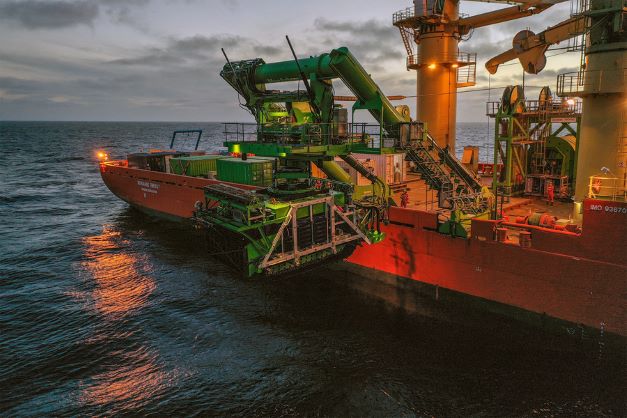
    To collect polymetallic nodules, some mining companies are proposing to deploy tractor-sized vehicles to the bottom of the ocean. The vehicles would vacuum up the nodules along with some sediment along their path. The nodules and sediment would then be separated inside of the vehicle, with the nodules sent up through a riser pipe to a surface vessel, while most of the sediment would be discharged immediately behind the vehicle.

    Peacock and his group have previously studied the dynamics of the sediment plume that associated surface operation vessels may pump back into the ocean. In their current study, they focused on the opposite end of the operation, to measure the sediment cloud created by the collectors themselves.

    In April 2021, the team joined an expedition led by Global Sea Mineral Resources NV (GSR), a Belgian marine engineering contractor that is exploring the CCZ for ways to extract metal-rich nodules. A European-based science team, Mining Impacts 2, also conducted separate studies in parallel. The cruise was the first in over 40 years to test a “pre-prototype” collector vehicle in the CCZ. The machine, called Patania II, stands about 3 meters high, spans 4 meters wide, and is about one-third the size of what a commercial-scale vehicle is expected to be.

    While the contractor tested the vehicle’s nodule-collecting performance, the MIT scientists monitored the sediment cloud created in the vehicle’s wake. They did so using two maneuvers that the vehicle was programmed to take: a “selfie,” and a “drive-by.”

    Both maneuvers began in the same way, with the vehicle setting out in a straight line, all its suction systems turned on. The researchers let the vehicle drive along for 100 meters, collecting any nodules in its path. Then, in the “selfie” maneuver, they directed the vehicle to turn off its suction systems and double back around to drive through the cloud of sediment it had just created. The vehicle’s installed sensors measured the concentration of sediment during this “selfie” maneuver, allowing the scientists to monitor the cloud within minutes of the vehicle stirring it up.

    For the “drive-by” maneuver, the researchers placed a sensor-laden mooring 50 to 100 meters from the vehicle’s planned tracks. As the vehicle drove along collecting nodules, it created a plume that eventually spread past the mooring after an hour or two. This “drive-by” maneuver enabled the team to monitor the sediment cloud over a longer timescale of several hours, capturing the plume evolution.

    Out of steam

    Over multiple vehicle runs, Peacock and his team were able to measure and track the evolution of the sediment plume created by the deep-sea-mining vehicle.

    “We saw that the vehicle would be driving in clear water, seeing the nodules on the seabed,” Peacock says. “And then suddenly there’s this very sharp sediment cloud coming through when the vehicle enters the plume.”

    From the selfie views, the team observed a behaviour that was predicted by some of their previous modelling studies: The vehicle stirred up a heavy amount of sediment that was dense enough that, even after some mixing with the surrounding water, it generated a plume that behaved almost as a separate fluid, spreading under its own weight in what’s known as a turbidity current.

    “The turbidity current spreads under its own weight for some time, tens of minutes, but as it does so, it’s depositing sediment on the seabed and eventually running out of steam,” Peacock says. “After that, the ocean currents get stronger than the natural spreading, and the sediment transitions to being carried by the ocean currents.”

    By the time the sediment drifted past the mooring, the researchers estimate that 92 to 98 percent of the sediment either settled back down or remained within 2 meters of the seafloor as a low-lying cloud. There is, however, no guarantee that the sediment always stays there rather than drifting further up in the water column. Recent and future studies by the research team are looking into this question, with the goal of consolidating understanding for deep-sea mining sediment plumes.

    “Our study clarifies the reality of what the initial sediment disturbance looks like when you have a certain type of nodule mining operation,” Peacock says. “The big takeaway is that there are complex processes like turbidity currents that take place when you do this kind of collection. So, any effort to model a deep-sea-mining operation’s impact will have to capture these processes.”

    “Sediment plumes produced by deep-seabed mining are a major concern with regards to environmental impact, as they will spread over potentially large areas beyond the actual site of mining and affect deep-sea life,” says Henko de Stigter, a marine geologist at the Royal Netherlands Institute for Sea Research, who was not involved in the research. “The current paper provides essential insight in the initial development of these plumes.”

    This research was supported, in part, by the National Science Foundation, ARPA-E, the 11th Hour Project, the Benioff Ocean Initiative, and Global Sea Mineral Resources. The funders had no role in any aspects of the research analysis, the research team states.


    Reprinted with permission of  MIT News 

    Image: Image: Global Sea Mineral Resource

    Non-communicable Diseases Emerge as ‘Top Killers Globally’ – WHO

    Authors of the report say that every two seconds, one person under the age of 70 dies of a non-communicable diseases – such as heart disease, cancer, diabetes and respiratory diseases. Almost nine in 10 of those deaths are taking place in low- and middle-income countries. 

    Non-communicable diseases or NCDs constitute one of the greatest health and development challenges of this century, the WHO says. Together, NCDs account for nearly three-quarters of deaths in the world, taking 41 million lives every year – outnumbering infectious diseases as the “top killers globally,” with one person under 70 dying every two seconds from an NCD.

    The WHO report says that non-communicable diseases (NCDs) – chief among them, cardiovascular diseases (heart disease and stroke), cancer, diabetes and chronic respiratory diseases – as well as mental health illnesses, cause nearly three-quarters of deaths in the world. Their drivers are social, environmental, commercial and genetic, and their presence is global. Every year 17 million people under the age of 70 die of NCDs, and 86 per cent of them live in low- and middle-income countries.

    The report, Invisible numbers: The true extent of noncommunicable diseases and what to do about them, highlights NCDs statistics to illustrate the true scale of the threats and risk factors they pose.

    The authors of the report say that every two seconds, one person under the age of 70 dies of a noncommunicable diseases – such as heart disease, cancer, diabetes and respiratory diseases. Almost nine in 10 of those deaths are taking place in low- and middle-income countries.

    Eliminating tobacco, harmful alcohol and unhealthy diets could prevent or delay NCD-related illnesses health and premature deaths, the report says.

    Disturbing statistics

    Against an 18 per cent global probability of premature mortality from NCDs, Papua New Guinea and the Central African Republic lead with 36 per cent of their population susceptible to deaths due to NCDs.

    Corresponding figures for SouthAsian countries vary – from a high of 35 per cent in Afghanistan to a healthy 19 per cent in Bangladesh. Against the probability of 22 per cent for India and Nepal, Pakistan has a probability of 29 per cent.

    As a region, SouthAsia is most vulnerable to deaths due to chronic respiratory diseases (CRDs). SouthAsian countries, individually, fall in the highest bracket of deaths due to chronic respiratory diseases, with Indians being most vulnerable to dying of CRDs.

    113 of 100,000 Indians die breathing bad air, compared to 100 in Myanmar and 99 in Pakistan. Globally, Papua New Guinea leads with 178 deaths due to chronic respiratory diseases, followed by India.

    Sharing the latest country-specific data, risk factors and policy implementation for 194 countries, the NCD data portal brings the numbers in the report to life.

    Moreover, it allows data exploration on cardiovascular diseases, cancer, diabetes and chronic respiratory diseases along with their main drivers and risk factors, which include tobacco, unhealthy diet, harmful use of alcohol and lack of physical activity.

    The portal spotlights patterns and trends throughout countries and allows comparison across nations and/or within geographical regions.

    SDG targets

    To date, only a handful of countries are on track to meet the 2030 Sustainable Development Goal (SDG) target of reducing early deaths from NCDs by a third.

    And yet, NCDs are at the heart of sustainable development and their prevention and treatment is a prime opportunity for investment that would have myriad impacts on economic growth, far outweighing the money spent. This major public health shift has gone largely unnoticed over the last decades.

    “It is a misconception” that they are “diseases of high-income countries”, said Bente Mikkelsen, WHO’s Director of Non-communicable Diseased, adding that a full 85 per cent of all premature deaths happen in low and middle-income countries.

    At a critical juncture for public health, WHO said that the new information offers a chance to address the issue and recommends spending more on prevention.

    Investing $18 billion a year across all low and middle-income countries could generate net economic benefits of $2.7 trillion by 2030.

    “As we continue to respond to this pandemic and prepare for the next, we have seen the critical importance of addressing a major risk factor in COVID-19 hospitalizations and deaths – non-communicable diseases,” said Michael Bloomberg, the WHO global ambassador for Non-communicable Diseases and Injuries.

    He maintained that they can often be prevented with investment in “proven, cost-effective interventions” and looked forward to continuing to make “life-saving investments in NCD and injury prevention” alongside WHO.


    Image: Marcel Crozet / ILO Photo

    How to Make COP27 a Success

    From melting glaciers to a ‘monster’ monsoon, record-breaking floods have left a third of Pakistan currently under water and the climate catastrophe is altering the monsoon pattern in South Asia, increasing the likelihood of fatal deluges.

    By Sohanur Rahman

    Each year, low-emitting countries like Bangladesh are the greatest sufferers and, paradoxically, pay the biggest price in losses and damages resulting from climate change.

    The most vulnerable communities are the ones who are facing the reality which the COP27 climate summit in Sharm-El-Shaikh is attempting to avert. According to the Centre for Policy Dialogue (CPD), Bangladesh is anticipated to experience an average loss worth US$2.2 bn per year, which is comparable to 1.5 per cent of its GDP, owing to floods.

    While the Centre for Environmental and Geographic Information Services (CEGIS) estimates that in the last 40 years alone, climate change has cost Bangladesh US$12 bn. This is triggering a 0.5 per cent to 1 per cent annual decline in GDP, which is predicted to reach 2 per cent by 2050.

    From melting glaciers to a ‘monster’ monsoon, record-breaking floods have left a third of Pakistan currently under water and the climate catastrophe is altering the monsoon pattern in South Asia, increasing the likelihood of fatal deluges.

    The entire region accounts for just a minuscule quantity of carbon emissions, with Pakistan and Bangladesh generating less than 1 per cent, but it is a ‘climate crisis hotspot,’ as recently noted by UN Secretary-General António Guterres as well as in the in Intergovernmental Panel on Climate Change (IPCC) report.

    Therefore, it only seems fair, that the rich polluting nations should pay climate reparations to vulnerable countries for their historical injustices.

    Last year, I spent two weeks in Glasgow for the COP26, hoping to bring positive news to the most affected communities. But sadly, it was a disappointment for all marginalised individuals as their voices were ignored during the summit. Although, at least, the youth were recognised for the first time at the COP.

    And yet, we young people were left feeling helpless and betrayed after COP26. The empty pledges, known as the Glasgow Climate Pact, will not protect our people from the global climate crisis.

    However, prioritising adaptation, COP26 established a comprehensive two-year Glasgow–Sharm el-Sheikh work programme on the global goal of adaptation. It contains an unprecedented ambition for developed countries to increase adaptation support to underdeveloped countries by 2025.

    Lack of accessibility and accountability

    The adaptation community contributed significantly, but primarily online and outside the negotiation rooms. The COVID-19 pandemic exacerbates the inaccessibility of climate discussions for individuals in the Global South along with systemic barriers. The disadvantaged and most affected must be allowed to participate in the COP process.

    Especially because solutions will not come just from the conference rooms packed with experts, large businesses, and government leaders, but they must also come from the ground.

    The world’s poorest have the most resilience and indigenous knowledge for dealing with crises. It is a way of learning by doing. We don’t know what will function, but we must try to adapt. Only those from vulnerable communities can teach the rest of the world about climate resilience.

    This worldwide catastrophe is the outcome of a faulty economic paradigm fuelled by capitalism, European colonialism, and the increasing domination of powerful men. Despite recognising the harmful consequences and viable remedies, the global community is not acting quickly enough to address the climate crisis.

    We are experiencing the same global catastrophe, but we aren’t in the same boat. It’s like we’re on the Titanic and the Global North is on lifeboats. Millions of people are drowning in the freezing water because the wealthy refuse to share, even though they are fully aware of the consequence. They can’t keep doing business as usual while greenwashing with empty climate summits.

    The youth: an untapped resource

    The unprecedented mobilisation like the global climate strike of young people around the world demonstrates the massive power they have to hold the world’s climate decision-makers accountable.

    Youth groups have previously shown that they are capable of acting and promoting climatic issues from frontlines to headlines. As youth representatives from Bangladesh, we spoke on stage during the COP26 to emphasise the need to make the COP accessible for young people and the need for transformative actions for a resilient future.

    The engagement of children and youth in climate actions is quite restricted in our nation. Young people on the front lines of disaster response and adaptation provide humanitarian assistance and lead adaptation initiatives as first responders. Bangladesh just finished its second term as president of the Climate Vulnerable Forum (CVF).

    While Ghana designated a youth ambassador before taking over the presidency, Bangladesh missed the opportunity to involve young people in the CVF. Still, at least it has committed to guaranteeing youth participation at the COP25 by signing the Children and Youth Declaration on Climate Action.

    Bangladesh has already labelled the long-term Delta Plan (BDP 2100) – a holistic plan to integrate the activities of delta-related sectors across the country – a gift and safeguard for future generations. But regrettably, it is ignoring the youth in the implementation process.

    Bangladesh has emphasised young people’s participation in the National Youth Policy and the National Adaptation Plan. However, successful measures to involve children and youth from the local, national, and global levels have yet to be witnessed. The government has not allowed young people to participate in the country’s delegation and negotiation processes.

    Youth participation in climate action is an undeniable element of inclusiveness. The young people must be included in the decision-making processes and even execution of climate policies, plans and projects partnering with young people at all levels.

    The youth is already doing its part, by convening frequent discussions and lobbying, closely working with key ministries and parliamentary platforms like Climate Parliament Bangladesh to engage young people in the driving seats on climate action. The government and other development partners must reciprocate.

    Need for more inclusion

    The upcoming COP27 must be more inclusive. A good start is the annual pre-COP which will include a Youth COP as well as an ‘#AccountabilityCOP’. But in the run-up to the conference, there must be more young people represented in national delegations and in meaningful engagement in sub-national, national, and regional talks.

    It must expand access to badges and financing for youth, particularly those from the Global South, and allow observers to actively engage in negotiating sessions.

    At the moment, we are worried that COP27 will be worse than COP26. There have already been requests that the venue is moved from Egypt due to concerns about human rights violations as a consequence of the country’s restriction on civic space and the lack of rights to free expression, association, and peaceful assembly, as well as the persecution of the gender diverse groups.

    Human Rights Watch already labelled Egypt’s presidency of the COP27 a ‘glaringly poor choice.’

    On the road to COP27, we young people will present our agenda and continue to advocate for effective outcomes. If global leaders play less on hypocrisy and invest more, COP27 can be a breakthrough in climate justice for vulnerable peoples. In addressing this catastrophe, we advocate for climate justice for all people everywhere which is a new frontier of human rights.


    Sohanur Rahman is the Executive Coordinator of YouthNet for Climate Justice.

    Source: International Politics and Society is published by the Global and European Policy Unit of the Friedrich-Ebert-Stiftung, Hiroshimastrasse 28, D-10785 Berlin.

    Have MGNREGA Workers Become Bonded Labourers?

    Millions of workers remain unpaid for their work for several months. Despite over Rs. 21,000 crores of pending wages, the allocation under MGNREGA is only Rs. 73,000 crores. In 2020-21 the spending under the schemes was over 1.1 lakh crore.

    Are MGNREGA workers paid for their work?

    The answer to this question seems to be in the negative – millions of workers have not been paid for their work for several months.

    The right to food campaign says that this has led to a situation of bonded labour under a government programme. Activists say that this is due to the existence of large scale, systematic corruption within MGNREGA in states like West Bengal.

    “Both, the union government and the state government have not been able to resolve the issues related to the release of payments which (have) led to a severe brunt on workers,” the right to food campaign says. “Around Rs. 2,700 crores of wages are pending since December 2021 alone in West Bengal.”

    While it provides employment and helps create rural assets, MGNREGA has been short-shifted by this budget. Despite over Rs. 21,000 crores of pending wages, the allocation under MGNREGA is only Rs. 73,000 crores. In 2020-21 the spending under the schemes was over Rs. 1.1 lakh crore.

    “The negative impact of the economic crisis that began even before the pandemic led to disruption has fallen disproportionately on those at the bottom of the pyramid,” the campaign has said in a press release.

    “Multiple reports and surveys capture the intense distress among the poor and marginalised sections of society exacerbated due to the pandemic and ensuing restrictions and further slowdown of the economy,” the release reads. “In this context, spending on social protection schemes such as the MGNREGA became especially important to improve rural distress.”

    Workers protest non-payments

    Wages worth Rs. 4,790 crores are pending from the union government as 2 September 2022. An analysis of over 18 lakh invoices for the first half of FY 2021-22 showed that the union government had processed only 29 per cent of the fund transfer orders within the mandated seven-day period.

    Besides, wages of NREGA workers have stagnated in real terms since 2009, the right to food campaign says. The average increase in NREGA wage rate across the country is 4.25 per cent, as opposed to government employees and pensioners getting a dearness allowance of 31 per cent.

    A negative net balance implies that there are pending wage and material payments to be made, along with arrears to be cleared, from current and previous financial years.

    Saying that it is the centre’s responsibility to disburse these funds in a timely and regular manner, the right to food campaign says that over Rs. 4100 crores is the net balance while 16 states and union territories have a negative net balance.

    “By now there is incontrovertible evidence that inadequate funding leads to massive delays in wage payments. Even the ministry of finance has acknowledged this,” The food campaigners say.

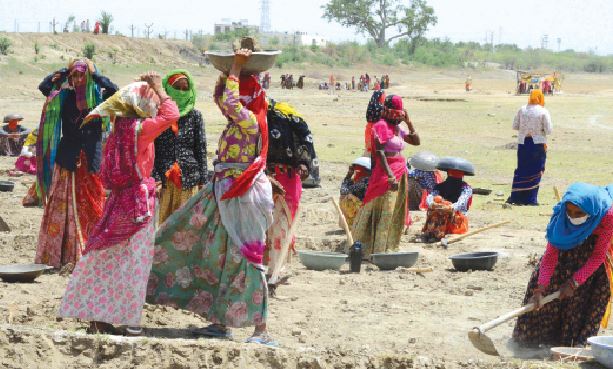
    Around 600 NREGA workers and their supporters from 14 states had gathered at Jantar Mantar early last month under the banner of NREGA Sangharsh Morcha to raise these issues and to demand the right to life with dignity.

    “We demand a revival of participatory anti-corruption methods, full support for social audits, abandonment of counter-productive technical fixes, and an end to the contractor raj where it prevails,” the campaigners say.

    Food campaigners’ demands

    Campaigners are demanding a guarantee of payment within 15 days for all NREGA workers and immediately clearing all pending wages, including pending FTOs. The campaigners say that automatic compensation for delays in wage payments, along with raising the compensation norm to 0.5 per cent (of the amount due) per day should be paid.

    Besides this, campaigners are demanding an increase in NREGA wages and ensuring that wages are no less than state minimum wages in any state.

    Stopping app-based two-times-a-day attendance system is important, the campaigners say. As per law, either the time rate system of payments the piece rate system must be followed. But both systems cannot be forced on workers (workers finish the work output for the day and go home).

    The right to food campaign says that an adequate budget allocation and release will ensure that employment can be provided on demand at enhanced wages, and has urged the governments at the centre and the states to resolve issues between them without hurting the workers’ right to work or their wages.

    Myanmar: From Bad to Worse, to Horrific

    The expert presented a grim assessment of 1.3 million displaced people; 28,000 destroyed homes; more than 13,000 children killed; a looming food crisis; and 130,000 Rohingya people in de facto internment camps.

    “With each report I have warned that unless UN Member States change course in the way they collectively respond to this crisis, the people of Myanmar will suffer even further,” the UN-appointed independent human rights expert Tom Andrews told the Human Rights Council in Geneva on Wednesday.

    He said that the conditions in the country have “gone from bad to worse, to horrific for untold numbers of innocent people in Myanmar” since its military launched its “disastrous” coup last year.

    The conditions have worsened, “by any measure”, he said.

    “Conditions have gone from bad to worse to horrific,” he said.

    Andrews presented a grim assessment of 1.3 million displaced people; 28,000 destroyed homes; villages burned to the ground; more than 13,000 children killed as the death toll for innocent people rises significantly; a looming food crisis; and 130,000 Rohingya in de facto internment camps while others suffer deprivation and discrimination rooted in their lack of citizenship.

    “Let me be frank: the people of Myanmar are deeply disappointed by the response of the international community to this crisis. They are frustrated and angered by Member States that are working to prop up this illegal and brutal military junta with funding, trade, weapons, and a veneer of legitimacy,” he spelled out before the council.

    “But they are also disappointed by those nations that voice support for them, but then fail to back up their words with action. The stakes could not be higher”.

    “Untold numbers of innocent people have been left without access to food, medicine, and the means to survive,” he said.

    Failed response

    Observing that the international response has failed, the UN expert said that “first and foremost,” Member States must more forcefully deprive the junta of revenue, weapons, and the legitimacy it needs to attack the Burmese and suppress their democratic aspirations.

    “Many in Myanmar have come to the conclusion that the world has forgotten them, or simply doesn’t care. They ask me why Member States refuse to take measures that are both possible and practical, measures that could save untold numbers of lives,” he said.

    “Frankly, I do not have an answer”.

    Reminding that the Human Rights Council is referred to as the UN’s conscience, he appealed to its members to “re-think status quo policies” that aren’t working and set a new course of action for UN Member States to stand with and for those are “fighting for their lives, their children, their future”.


    Image: Tom Cheatham  / World Bank

    Nepal’s President Puts Her Foot Down, Refuses to Sign Citizenship Bill

    If signed into law, the bill will grant citizenship rights to thousands of people, mostly of Indian origin. How the proposed law could help the ruling coalition at the hustings might be a matter of debate, but at the moment, the president has thrown the spanner in the works.

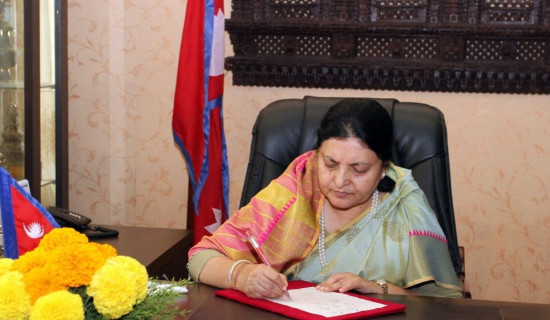
    Nepal’s president Bidya Devi Bhandari refused to sign an amended citizenship bill cleared by lawmakers from both houses of its bicameral rastriya sabha or national assembly.

    Political observers see a constitutional crisis in the making as the president, a constitutional head of state with no executive powers is putting the brakes on a legislative process.

    The president has powers to return a bill once – as she had already done with the bill that has the weight of the ruling coalition.

    If signed and approved to become a law, the bill will grant citizenship to over 500,000 people, giving the eligible among them the right to vote in the parliamentary elections due later this year when 275 seats in the national assembly will be up for grabs.

    More importantly, it will pave the way for thousands of Madheshis, or people of Indian ancestry to become citizens and to vote. The present law does, however, provide for women married across the porous international border between Nepal and India to opt for citizenship (People on both sides of the border have a shared culture and marriages across the border are commonplace.)

    The politics

    These new citizens can tilt scales in favour of the ruling coalition in the country’s Terrai plains bordering India.

    The proposed law will provide citizenship rights to children whose parents’ whereabouts are not known. It will also enable foreign nationals of Nepali origin to do business in Nepal.

    If the bill is approved and becomes law, it will allow tens of hundreds of Madheshi community members – a term to define those people in Nepal with Indian ancestry who mainly reside in the plains of the Himalayan nation — citizenship and voting rights.

    The Madheshis are often discriminated by the dominant ruling (upper) caste groups, often described as the Baun-Chettri combine.

    But the president has sought a thorough review of the bill, and political observers suspect her stand will help the country’s main opposition party, the Communist Party of Nepal-Unified Marxist Leninist (CPN-UML) led by former prime minister K P Oli, whose blames India for his ousting from power. Oli is known to use the nationalist card.

    The CPN-UML says that such an expansion of the voter base will support political parties attached to the present ruling coalition seen leaning towards New Delhi – a euphemism for parties compromising on the Nepali identity and Nepali national interests.

    KP Oli, the former prime minister, along with other opposition parties, said the analyst, is “using the nationalist card.”

    Oli and his party are demanding a tweaking of the bill, so that they do not appear altogether insensitive to the issue of nationality, a sensitive subject in the Terrai. They suggest that the bill could include a seven-year window provision for women of foreign origin to acquire Nepali citizenship.

    Grey area

    In the meantime, the president’s refusal to sign the bill into law threatens to become a big political issue that could well take the centre stage in the run-up to the elections.

    And though the Nepalese constitution provides for impeaching the president, an impeachment might well remain a pipe dream as the term of the lower house is approaching its end and the ruling combine cannot muster a three-fourths majority to impeach the president.

    President Bidya Devi Bhandari’s present term too will also end around the same time as a new lower house is elected.

    The other option the government has is to move court. But this is a grey area.

    Hijab Rules Must Go, Says UN Human Rights Office

    The death of a young woman in the custody of Iran’s ‘morality police’ has led to protests across the country. The government has come down with a heavy hand on the protestors, with security forces responding with live ammunition, pellet guns and teargas and arrests.

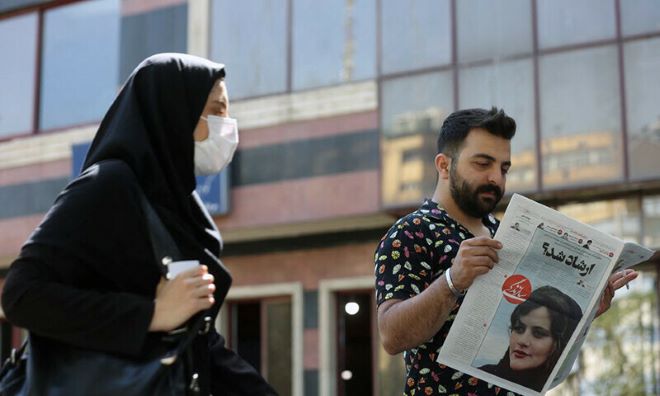
    Mahsa Amini, a 22-year-old Kurdish women, died in police custody on Friday, after she was arrested by Iran’s “morality police” (also called the “Guidance Patrol”) for wearing an “improper” hijab, the customary veil worn by Muslim women.

    The young women, also known among her friends by her Kurdish name Jhina, fell into a coma shortly after collapsing at a detention centre. Police explained away the death as one due to a heart attack – there have been no takers for this official version.

    The death has sparked large protests across the country as thousands have taken to the streets in cities across the country, including in Tehran, Isfahan, Karaj, Mashhad, Rasht, Saqqes and Sanandaj.

    The government has come down with a heavy hand on the protestors. Security forces have responded with live ammunition, pellet guns and teargas and at three people have reportedly been killed and several injured, and a number have been arrested.

    A blood-spattered images of a 10-year-old have gone viral over social media platforms. So have videos young men and women shouting slogans against the country’s clerical leadership.

    The government of Iran has dismissed the protests as “a plot by the enemy”. Lawmakers have also passed a legislation allowing police to send text messages to women in their cars, telling them to not to take off their hijabs while driving.

    Hijab rules should go

    In the meanwhile, as the protests draw more people even in the face of police high-handedness, the protesters have received support from the Office of the UN High Commissioner for Human Rights (OHCHR).

    In Geneva, Ravina Shamdasani, the spokesperson for OHCHR, said that there was deep concern at the violent response of Iran’s security forces to protests sparked by Mahsa Amini’s death.

    The OHCHR has expressed its deep concern at the violent response of Iran’s security forces to the protests. The acting High Commissioner for Human Rights Nada Al-Nashif, expressed alarm at the deaths in custody.

    OHCHR has come heavily on rules making it compulsory for women to wear the hijab.

    “The bottom line is that these rules should not exist, women should not be punished for what they are wearing”, Shamdasani said.

    “Women who defy these compulsory veiling rules should not be harassed, should not be subjected to violence and there needs to be a fair investigation.”

    Need prompt, impartial investigation

    Nada Al-Nashif said the 22 year-old’s “tragic death and allegations of torture and ill-treatment, must be promptly, impartially and effectively investigated by an independent competent authority, that ensures, in particular, that her family has access to justice and truth”.

    The acting rights chief also condemned the reported unnecessary or disproportionate use of force against those protesting the Kurdish woman’s death, inside Vozara Detention Centre, and called on Iran – a State party to the International Covenant on Civil and Political Rights – to respect the right to peacefully exercise freedom of expression, assembly and association.

    She also echoed previous concerns voiced by UN Secretary-General António Guterres over the ongoing repression of women human rights defenders, who object to compulsory veiling.