More

    PM Modi says Cities Cannot be Developed with Election-Centric Approach

    Addressing mayors of BJP ruled urban bodies, Prime Minister Narendra Modi called for a holistic approach to plan cities and urban spaces. 

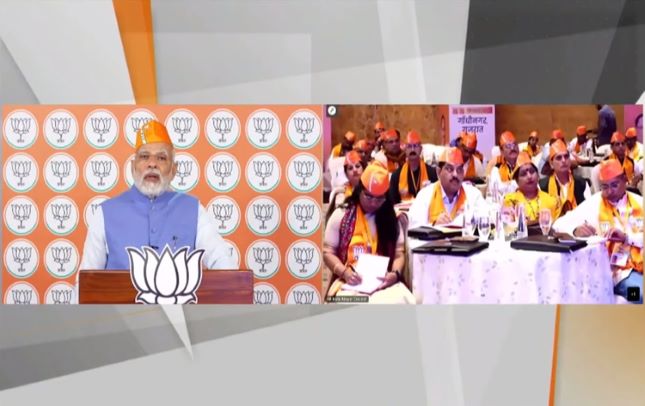
    Addressing mayors of BJP ruled urban bodies in Gandhinagar on Wednesday, Prime Minister Narendra Modi said that urban development cannot be done with just a single approach of winning elections. He lamented that decisions beneficial for cities are often not taken for fear that such decisions can lead to losing an election.

    He said representatives must not become election-centric and should instead focus on developing satellite towns, and proper urban planning with basic infrastructure like roads, streetlights, and water and sewerage systems. Modi also emphasised on infrastructure development of tier two and tier three cities that can help decrease the burden on big cities with large populations.

    As many as 118 Mayors and Deputy Mayors of BJP-ruled urban local bodies from 18 States and Union Territories are participating in the two-day conference being held in Gandhinagar, Gujarat.

    Talking about creating urban infrastructure for mass transport, the prime minister said a mere 250 kilometres metro rail network in 2014 has now expanded to more than 750 kilometres while work is on for another 1,000 kilometres.

    The government is developing 100 smart cities across the country and projects worth 75,000 crore rupees have been completed so far.

    The government has so far allotted 1.25 crore houses to the poor under the PM Awas Yojna (Urban). The budget for housing projects has been increased from Rs. 20,000 crores in 2014 to 2 lakh crore rupees, he said.


    Image: All India Radio

    Not Just Humans, Climate Change Has Made Plants Vulnerable as Well

    There is now evidence pointing to the role of climate change in worsening the vulnerability of the world’s plant resources to pests and disease – resulting in 40 per cent of crop yields getting lost to pests.

    By Osama El-Lissy and Nicola Spence

    Imagine a world where farms bear no crops, forests have no trees and nature exists without plants.

    Not only will our world look incredibly different, but humanity would likely cease to exist altogether. Plants provide 98 per cent of the air we breathe and 80 per cent of the food we eat. That’s how much our lives depend on plants, yet we often overlook how vital they are.

    Global plant resources are under threat from pests and diseases. Once plant pests are established in an area, it becomes nearly impossible and extremely costly to eradicate them. This sets back global efforts to achieve the Sustainable Development Goals by curtailing our ability to provide food security for all, protect our environment and biodiversity for future generations, and to ensure that crops and plant products are traded safely to help boost economic growth.

    Every year, the world loses  as much as 40 per cent of global crop yields or around US$220 billion due to plant pests. In Africa alone, nearly US$10 billion worth of annual maize yield is lost due to fall armyworm, a dangerous transboundary pest that has now spread in more than 70 countries. Reducing this menace will help alleviate hunger of the type faced by some 828 million people around the world in 2021, according to the latest report of the UN’s Food and Agriculture Organization.

    Invasive pests drive biodiversity loss

    Climate change has increased pest incursions, particularly in new places where they had not been detected previously but have now thrived. Changing temperatures, humidity, light and wind are the second most important factors for pests to disperse, next to international travel and trade.

    Invasive pests remain the main drivers of biodiversity loss. As the world becomes more globalised and interconnected, the increase in the movement of people and goods has been associated with the rise of the introduction and spread of plant pests across borders.

    That is why global frameworks are crucial such as the International Plant Protection Convention (IPPC), an international treaty ratified by 184 countries which makes provisions for the protection and safeguarding of plants and facilitation of safe trade.

    International Standards for Phytosanitary Measures — the gold standard in plant health — are in place for countries to adopt in their national legislation and import requirements. These standards range from pest surveillance, pest risk analysis, guidance for countries in developing pest eradication programmes, national reporting of important pests, and more.

    Global network of plant experts

    Building a global community of plant health experts and advocates is essential. The IPPC Secretariat works with partners and donors to develop standards, facilitate countries’ adoption of the Convention and implementation of standards, and build the capacity of national plant protection organisations.

    Guides, training materials and e-learning courses help these plant stewards effectively carry out their duties in safeguarding plants. Innovative tools such as the ePhyto allow countries to trade safely using digital phytosanitary certificates that make the trade in plants safer, faster and cheaper.

    Raising global awareness and action among the wider public is also important. In 2020, we celebrated the International Year of Plant Health through 680 events held in 86 countries.

    On 12 May 2022, the first International Day of Plant Health was declared following its adoption at the General Assembly of the United Nations in March. We thank the governments of Zambia and Finland as tireless champions in tabling the resolution at the Assembly, supported by FAO and the IPPC Secretariat.

    The IPPC Secretariat and the Department for Environment, Food and Rural Affairs of the UK this week partnered to gather the world’s best plant health experts and advocates. The first and largest International Plant Health Conference being held in London aims to address new and emerging challenges such as climate change impact, the increase in international trade, the rapid loss of biodiversity and new pest pathways such as e-commerce. We will explore more efficient policies, structures and mechanisms at the national, regional and global levels.

    Protecting plants equals protecting health

    Much work remains in protecting plants. Like some caution when bringing plants and plant products when traveling as these could carry plant pests and diseases. Likewise, we should be aware that buying plants and plant products online should come with phytosanitary certificates that attest they meet phytosanitary import requirements.

    E-commerce is an emerging pathway for the introduction and spread of plant pests. Online purchases cross international borders through mail or express freight systems via air freight or sea containers. These purchases often include but are not limited to, ornamental plants, soil from imported plants, untreated wood packaging materials such as pallets and crates and even novelty items such as seed-infused “plantable bookmarks”.

    Governments, legislators, policymakers and donors need to invest in research, outreach and in building the capacity of national plant protection organisations, and to strengthen pest monitoring and early warning systems.

    Industry actors and government partners need to adhere to international plant health standards to mutually protect our plants, food supplies and our economies.

    Protecting plants is essential to protecting human health, the environment, livelihoods and lives.


    Osama El-Lissy is the Secretary of the International Plant Protection Convention Secretariat.

    Nicola Spence is Chief Plant Officer of the Department for Environment, Food and Rural Affairs of the United Kingdom.

    This piece has been sourced from SciDev.Net

    Civil Society Group Calls Out Seabed Authority for Lack of Transparency, Accountability, Participation

    The Mineral Inheritors Rights Association, has voiced concern over the lack of transparency and accountability on the part of the International Seabed Authority that has permitted the Nauru Ocean Resources Inc. to undertake exploratory deep sea mining.

    Civil society activists are up in arms following the green light given by the International Seabed Authority (ISA) to the Nauru Ocean Resources Inc. (NORI) for undertaking exploratory mining in the deep-sea. The approval comes after ISA’s legal and technical commission (LTC) reviewed NORI’s environmental impact statement and the environmental management and monitoring plan.

    “On 5 September 2022, the Secretary-General notified the contractor of the recommendation of the LTC. NORI will now be able to conduct a test of mining components and their integration on board its vessel Hidden Gem and is requested to report on the result of the tests in the context of its compulsory annual report,” ISA’s statement read.

    India is a member of the LTC, which has 30 members with a fifth of them working for contractors for deep-sea mining companies. The LTC meets behind closed doors.

    NORI is a subsidiary of The Metals Company (TMC) and according to a report appearing in the New York Times, TMC has privileged access to exploratory data from the ISA.

    “This opaque process has been set out in detail in this letter from the deep sea conservation coalition to the ISA and the LTC,” say Indian activists opposing this move under the umbrella of Mineral Inheritors Rights Association (MIRA).

    “This decision is an extremely disturbing development, putting the ocean, climate and all living beings on earth at threat,” they say in a statement released by MIRA.

    Accountable to all humankind

    MIRA has voiced concern over the lack of transparency and accountability on the part of ISA, a regulatory body with the mandate to protect the oceans, the common heritage of humankind.

    “There is still no regulatory framework in place – neither civil society nor the people whose lives and livelihoods are at stake, are being consulted or are allowed to participate in the decision-making process,” the statement says, adding that “No documents related to this approval are in the public domain for public scrutiny.”

    Says Rahul Basu of the Goa Foundation, “The ISA is accountable to all humankind equally for its management of deep-sea minerals. Yet it favours some parties, and conducts its affairs in the shadows without public input or participation. If the ISA were truly acting for humankind, it would adhere to the highest transparency standards and join the extractives industries’ transparency initiative.”

    Moratorium on deep sea mining

    Climate campaign manager from Greenpeace India, Avinash Chanchal remarked, “We must stop the destructive deep sea mining industry that would be posing a huge threat to one of the most important, fragile, and least understood ecosystems on earth.”

    Arguing that deep sea mining can never be sustainable, Chanchal saysthat it would cause significant and irreversible damage to the oceans and the climate; impact the livelihoods of fisher communities and jeopardize food security.

    “Scientists have already warned that deep sea mining could even make climate change worse by releasing carbon stored in deep-sea sediments or disrupting the processes that store carbon. We should also keep in mind that fish and other marine creatures could be impacted by mining-generated noise and light pollution, as well as the discharged sediment from extraction and removal processes from the ships,” Chanchal says, calling for putting a moratorium on deep-sea mining.”

    Olencio Simoes, General Secretary of the National Fishworkers Forum feels that this could hit coastal areas. He said, “Deep-sea mining will lead to ocean pollution. We are also aware that the sea temperature has been rising precisely because of these kinds of explorations. Thus, such kind of mining without proper EIA (including a fair consultative process) or study will add to the ocean pollution, and this will eventually lead to rise in water temperature thereby endangering lives.”

    The activists have called on world leaders and the Indian government to support a moratorium on deep sea mining. “Unless and until there is a stringent regulatory framework in place, robust processes are adopted that are open, fair, inclusive and participatory, adequate scientific research on the consequences are done, the deep-sea mining proposal must be put on hold,” MIRA says.

    Reflections on High-Level Meetings of the UN General Assembly

    Much more goes on beyond the hall itself – the frenzy of the press in the broadcast trucks, security personnel on every sidewalk, military aides in dress uniforms, and an endless round of receptions and parties of every kind.

    By James Paul

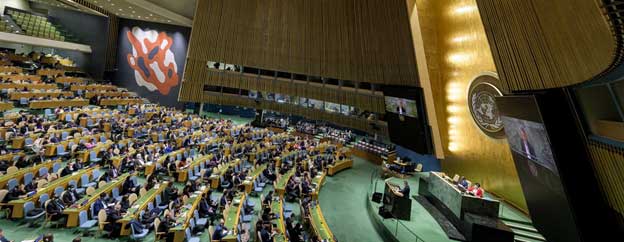
    The high-level segment of the UN General Assembly (UNGA) is famous for its fiery speeches and the colourful personalities assembled in the GA Hall. But much more goes on beyond the hall itself – the frenzy of the press in the broadcast trucks, security personnel on every sidewalk, military aides in dress uniforms, and an endless round of receptions and parties of every kind.

    One of the best-known events in this vast theatre is the showy motorcade that brings the President of the United States to the UN. Motorcycles from the New York police department, fifty or more in all, roar along in advance of the main presidential limousines. Police barricades line the streets. The sirens and roar of the engines reverberate wherever they go.

    The motorcade makes a great impression as it approaches UN Headquarters. No other leader comes even close to such a mighty entry scene. The UN itself faces temporary paralysis as the Presidential security system takes over.

    Once, I was standing on the corner of First Avenue and 45th Street when I saw a high-level UN official hurrying up. A policeman stopped him as he tried to get past the barricade and cross the avenue.

    “No one crosses the street now,” said the cop. “But I’m Under Secretary General Peter Hansen,” the man replied, “and I have a meeting in ten minutes with the Secretary General.”

    “Sorry, buddy,” said the cop, “I have my orders and no one, not even God Himself, goes across this avenue until I say so.” Hansen had to wait for at least twenty minutes until the US President arrived and disappeared inside. Then the Under Secretary-General was finally allowed to go across and carry on with his business.

    The impression made by a grand entry like this is well-known in the world of politics. During the colonial era in India, the British Viceroy famously entered the city of Delhi on grand occasions seated with his wife on an enormous, elaborately-bedecked elephant, accompanied by a whole cavalcade of other elephants, carrying maharajas and senior British officials.

    The grandest of these events were reserved for the investiture of the British sovereign and were known as darbars. Today, motorcycles create the awe and the President gets a smooth ride in an armoured limousine.

    Hundreds of lunches, dinners and grand receptions take place during the high-level period. The most unusual event I ever attended was a reception held in the Central Park Zoo, in honour of Denis Sassou Nguesso, the President of the Republic of Congo.

    The Wildlife Conservation Society, operator of the zoo, put on the event to “thank” the Congolese strongman for accepting a large sum of money to “protect” a part of the Congolese rainforest. The reception took place outdoors, around the famous sea lion pool. There were African drums, costumed dancers, musicians playing flutes, bright-coloured spotlights and a very restricted guest list.

    As I strolled around the pool, chatting with a few of the ambassadors present, I noticed a man standing at some distance from the others, apparently by himself. I walked over to speak to him when suddenly four heavily-armed security guards jumped out of the shadows and confronted me, their automatic weapons pointed menacingly.

    I soon realized I was heading towards President Sassou Nguesso himself, in his military dress uniform. His scowl turned to a smile and he waved away the guards, who disappeared again into the trees as I stepped forward. After some pleasantries about protecting rainforests, I took my leave. From Fifth Avenue, as I headed home, I could still hear the drums and see the orange spotlights.

    What were the sea lions thinking, I wondered?


    Jim Paul was longtime Executive Director of Global Policy Forum, based across the avenue from UN Headquarters. He was founder of the NGO Working Group on the Security Council and the Working Group on Food and Hunger.

    This piece has been sourced from Inter Press Service

    PM CARES Board Meets – Ropes in Ratan Tata, Sudha Murthy, Among Others

    The Fund is brimming with a total corpus of Rs. 10990.17 crores – up from Rs. 3076.62 crores in 2020. Its big ticket initiatives include its grant of Rs. 2000 crore for supply of 50,000 made-in India ventilators to government run-hospitals across the country.

    Prime Minister Narendra Modi on Tuesday chaired a meeting of the board of trustees of the PM CARES Fund. The prime minister is also the ex-officio Chairman of the PM CARES Fund. Other trustees attending the meeting were union home minister Amit Shah and the union finance minister Nrimala Sitharaman. A PIB-issued press release had no mention if defence minister Rajnath Singh, who is also a trustee of the fund, attended the meeting.

    A presentation on the various initiatives under the aegis of the PM CARES for Children scheme said that the fund is so far supporting 4,345 children.

    It was discussed that PM CARES has a larger vision on effectively responding to emergency and distress situations, not only through relief assistance, but also taking mitigation measures and capacity building.

    Prime Minister Modi also nominated three new trustees to the Fund by exercising his power to nominate new members to the board of trustees. These include industrialist and Tata Sons’ chairman emeritus Ratan Tata, former supreme court judge, Justice K T Thomas and former deputy speaker Kariya Munda. The trustees’ involvement in the fund is pro bono.

    Besides the new nominations, the trust also has appointed a board of advisors including Infosys Foundation’s Sudha Murthy, former CAG chief Rajiv Mehrishi and Anand Shah of Teach for India.

    Prime Minister Modi said that participation of new trustees and advisors will provide wider perspectives to the functioning of the PM CARES Fund and that their vast experience of public life would impart further vigour in making the fund more responsive to various public needs.

    Founded on 27th March, 2020, the PM CARES Fund is well funded with a total corpus of Rs. 10990.17 crores in 2021 – up from Rs. 3076.62 crores in 2020. While voluntary contributions have flowed in, a huge chunk of the funds has come from the CSR budgets of many business houses.

    The big ticket initiatives of the fund include its grant of Rs. 2000 crore for supply of 50,000 made-in India ventilators to government run-hospitals across the country and an allocation to state and union territory administrations for care of migrant labourers. The fund had also supported the development of COVID-19 vaccine with Rs 100 crores.

    Poor Hit Hardest by Pakistan’s Catastrophic Flood

    Official say that this year Sindh received at least five times more rain than the average monsoon. The total loss to infrastructure and economy is yet to be calculated as some parts of the country are still expected to witness rains.

    By Fakhar Alam

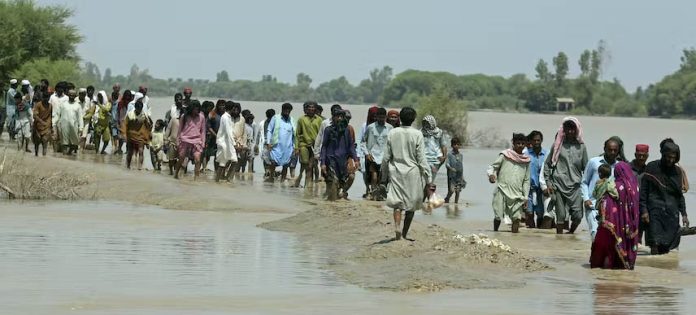
    Dawood Kandhro village near Naseerabad, about 43 kilometers from Larkana, was nestled on the banks of the Dhamrah Wah (canal). Was – it exists no longer.

    Most villagers were poor peasants with very little land. The canal embankment breached late August, unable to bear the pressure from millions of cusecs of water, flooding the village. The currents tore away their land and stripped the surroundings.

    Residents of Dhamrah Wah, some 400 families in all, are now camped in Karachi, hundreds of kilometres away. They have nothing to go back to.

    These women, men and children are the latest climate migrants.

    Shaukat Kandharo, a poor peasant from Dawoon Kandhro, said, “If the embankments of the canals were not breached, our village would not have been submerged.”

    “We lost everything when our homes were inundated. The flood waters left us only with the clothes we had on our person,” he said. “We lost livestock and the food-grains we had stocked”, he said.

    “People from adjacent villages brought us food and other essential items for us. They told us to leave this village and shift to another safe place because it was completely submerged.”

    “We are now at government school in Sachal Goth, Karachi and people from the Memon community are providing us with food.”

    The district administration has allowed them to stay at the government school – which has only one washroom.

    Another flood affected peasant from Dawood Kandhro, Ghulam Mohammad said, “we lost everything due to recent monsoon rains. We don’t have anything left to feed our family. We now have to start our life with nothing.”

    “We have to stand in long queues for foods and other things. Sometimes, we succeed in getting foods and other stuff. Most often, we fail.”

    Climate change

    For Shaukat Kandharo and Ghulam Mohammad, the cause behind their village getting wiped off the map is that neither the embankments were strengthened nor repaired for years.

    Experts, of course, fault climate change.

    Official say that this year Sindh received at least five times more rain than the average monsoon. The total loss to infrastructure and economy is yet to be calculated as some parts of the country are still expected to witness rains.

    Several cities and towns in Sindh province have been completely inundated. Standing crops over millions of hectares with food grain worth billions have been washed away.

    After devastating Larkana, the flood torrents raged in Dadu district where the water from the rains and overflowing rivers inundated the Mehar and the Khairpur Nathan Shah talukas of the Dadu district and later, the Sujawal Junejo taluka of Kambar-Shahdadkot district, sweeping away homes, farms, businesses, infrastructure and roads.

    The Sindh Provincial Disaster Management Authority says that the calamity has affected 1,07,48,295 from 5,727 communities or dehs of 102 talukas of 24 districts in the province. 7,06,6,787 have been displaced and 5,75,037 persons are in relief camps. Hundreds have died and many more have been injured. Livestock has perished.

    According to the World Health Organisation, more than 6.4 million people are in dire need of humanitarian aid in Pakistan. Environmentalist say that Pakistan is responsible for less than one per cent of greenhouse gases emissions, and yet it is among the top ten countries currently suffering from climate change.

    Creating Jobs in the Hills of Uttarakhand

    Jan Shikshan Sansthan’s skill development and entrepreneurship programme is helping unemployed youth, including school drop-outs, and women in the hill areas of Uttarakhand lead productive lives with economic reassurance.

    By Nitin Jugran Bahuguna

    Himanshi Dev, 21, of Bageshwar district in the hill state of Uttarakhand has had a tough childhood. Losing her father when she was ten, she and her brother were raised by their mother.

    This gutsy girl from a small village called Chalkana completed her schooling in 2018 and looked for jobs to be able to help out with the household expenses.  But as time went by, Himanshi realised that the labour market had little use for someone with only a high school degree.

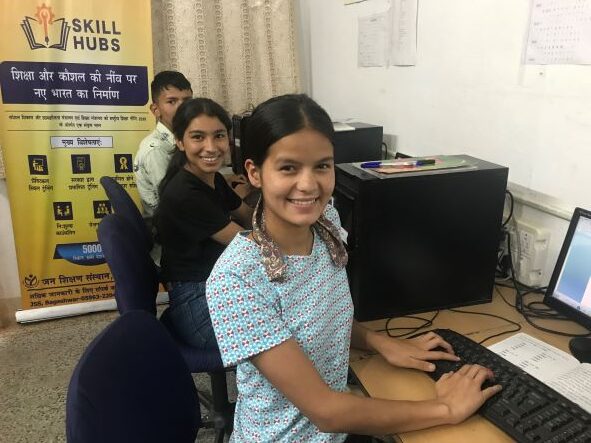
    She the heard of a skills development training programme being offered to women and youth in the district and immediately enrolled for the eight-month computer training programme. “I joined the Domestic Data Entry Operator (DDEO) course in 2020. It was a life saver because after completing the course, I was offered a job as faculty trainer under the programme,” she says.

    Unemployed youth, including school drop-outs, and women in Uttarakhand’s hill areas are now fulfilling their dreams of leading enriched and productive and economically reassured lives with the introduction of Jan Shikshan Sansthan’s (JSS) comprehensive skill development entrepreneurship programme imparting skills on medicinal plants, growing mushrooms, tailoring, making handicrafts, electrical technician and for diverse industries, including textiles and the IT sector.

    The JSS for Skill Development, functioning under the aegis of the ministry of skill development and entrepreneurship, is currently working in eight of the 13 districts of Uttarakhand.

    “We started our training programmes in Bageshwar district in Kumaon region in 2005 and till date have imparted training in various disciplines to 25,076 youth and women,” says Dr Jitendra Tiwari, Director, JSS, Bageshwar.  “While majority of our students are now enjoying economic success in home-based endeavours, at least 35 per cent of our total students are in the mainstream labour force.”

    Wide range of skill trainings

    Apart from the DDEO course in the IT sector, the comprehensive training programmes include tailoring, mushroom and medicinal plant cultivation, making bamboo and jute handicrafts like baskets, lamps, bags, wall hangings, office folders and other items; hand and machine-operated knitting and kalamkari work; training to guide tourists and work for the tourism and hospitality sector and prepare pickles, jams, juices and spices.

    After completing their training courses, successful candidates are issued certificates by the ministry of skill development and entrepreneurship. “The certificates are computerized and in our system and we send them to prospective employers,” states Tiwari. “We have found placements in different sectors for many of our former students.”

    The Sansthan’s focus is on the socio-economically backward and educationally disadvantaged groups in both urban and rural areas of the country. Its main target is to impart vocational skills to non-literates and neo-literates, including school drop-outs while prioritising women and minorities from villages and urban slums.

    Beena Verma, 37, of Mandelsera village near Bageshwar, was a late learner and enrolled in the knitting and jewellery making course only last year. “I could not join earlier as my children were still very young. But there is no age bar to learning and after completing the courses, I am now a trainer at JSS,” she says.

    For youngsters like Binita Pandey, 18, the programme offers potential entrepreneurs like her a holistic training starting with mastering the craft itself to understanding and handling business-related activities such as procuring raw material and the process for obtaining bank loans to start their own business.

    “I have always wanted to be a designer. After completing my four-month course in tailoring, I plan to avail of a bank loan to start my own boutique,” she reveals.

    Fruitful journey

    Kavita Dasila, 18, has enrolled in the computer course being conducted at the JSS centre here. Belonging to a village called Chaura, located 14 km away from here, Kavita rented a room in town to along with her cousin so the two could pursue their studies. Both girls are in the second year of their BSC degree course at a local college and are simultaneously enrolled in the JSS computer training programme.

    The best part of the course, in Kavita’s opinion, is learning how to type itself. “I like typing. My sister and I both realised the importance of computer training. It has become an important qualification for entry into the job markets, both in the government and private sectors,” she states.

    JSS has incorporated some information in their respective programmes on the business aspect to prospective entrepreneurs in areas such as marketing, production and sale.  But it is in the nascent stage, admits Tiwari adding that they have assisted many young women on how to go about availing of bank loans to start their own businesses.

    For Himanshi, the journey from computer trainee to becoming a trainer has been a fruitful one. And it got even better this year when she was inducted as a full-time staff member. “In April, I was offered the post of Field Assistant-cum-Clerk at the JSS office here, “she says with pride.


    Nitin Jugran Bahuguna is a Dehradun-based author and journalist covering human development issues.

    Resurrecting Data Regulation in India

    Data localisation can create a ‘honeypot of data’ — a concentration of information in one geographical location that increases the risk of data breaches and cyberattacks. Concerns over excessive tracking and data monitoring by the government are also not unfounded.

    By V Sridhar

    Data protection regulation in India has recently faced several setbacks. The Personal Data Protection Bill was introduced to India’s lower house on 11 December 2019. But the government withdrew the Bill after India’s Joint Parliamentary Committee proposed 81 amendments and 12 recommendations. A new bill with a more comprehensive framework, including modern digital privacy laws, will be released soon.

    There are some challenges and opportunities for the Indian government to consider before the new law comes to fruition. The first challenge is reforming the stringent but ambiguous data localisation regulations proposed in the earlier Bill, which restrict the cross-border data flows of Indian residents using servers located within the country.

    New Delhi claims that data localisation protects consumer privacy, improves state access to sensitive data to protect national security and ensures law enforcement agencies have access to data to detect financial fraud. But blanket restrictions on cross-border data flows affect the provision of digital services to consumers.

    Stringent data localisation regulations may reduce the international competitiveness of India’s service providers by hindering their ability to provide consumers with the best practices and technologies. India’s Information Technology industry benefits from the free flow of cross-border data. Data localisation can create a ‘honeypot of data’ — a concentration of information in one geographical location that increases the risk of data breaches and cyberattacks. Concerns over excessive tracking and data monitoring by the government are also not unfounded. The negative impact of data localisation on the export of information and communication technology services is well-researched.

    But regulators lack capacities

    The Indian government should revise data localisation regulations so that they do not hinder digital trade. One way to address this issue is to create a ‘trusted network’ of countries with which India can engage in cross-border data transfers, including by signing bilateral or multilateral agreements with the European Union, the United States and Quad countries.

    Exemption clauses in the old legislation provided the state with access to personal information in the name of national security, subject to appropriate authorisation. But more often than not these exemption clauses tend to be excessively used. Data subjects often have no recourse to address the misuse of their data besides judicial appeal, as demonstrated in the Puttaswamy versus Union of India case in 2012.

    The exemption clauses in the original Bill need to be made more precise. Ambiguity in the definition of the terms ‘grossly offensive’ and ‘menacing’ in Clause 66A of the Information Technology Act 2000 led to the arrests of two girls in Mumbai. The Supreme Court of India quashed Clause 66A in the Shreya Singhal vs. Union of India case in 2015. Well-defined privacy principles should mean that the state is treated like any other data fiduciary to protect the privacy of the data subjects.

    There is also a lack of enforcement of data laws and regulations in India. Though the Bill specifies penalties for the misuse of data like the European Union’s General Data Protection Regulation (GDPR), Indian regulators often lack the capacity and resources to audit data fiduciaries for regulatory compliance and enforce penalties for deviation.

    Privacy auditing. Societal safety, welfare

    The draft Personal Data Protection Bill was also criticised for its proposed Data Protection Authority (DPA). The DPA was to be constituted solely by government representatives, with the Cabinet Secretary as the Chairperson. That would render the DPA inseparable from the executive branch of government.

    It is time for the Indian Government to build adequate capacity in privacy auditing, either on its own or through public–private partnerships, to ensure the protection of data subjects. The DPA must be an autonomous entity staffed by a diversity of privacy experts from government, academia and industry. The GDPR requires its supervisory authority to be financially and administratively independent of the government, with members having no conflict of interest in the functioning of the authority.

    India’s governance framework for non-personal data (NPD) is also important. NPD is loosely defined as data that does not identify specific individuals. Many countries recognise NPD as a digital public good to be made available to the public and the private sector. India was one of few countries in 2020 to provide a legal basis for establishing rights over NPD — defining possible models for sharing NPD for social and economic value creation and associated regulatory mechanisms.

    India’s Joint Parliamentary Committee suggested regulating personal and non-personal data under one Act. Though there has been resistance from the data fiduciaries on information sharing and the right to use NPD, the government should include an appropriate NPD governance framework to unlock the value of NPD for societal safety and welfare.

    Having one of the largest Internet subscriber bases in the world, India has lost precious time in enacting an omnibus privacy and data protection law. That is one of the reasons why India is not on the list of countries that meet the data protection adequacy norms of the European Union. For data trade to prosper, New Delhi must expedite the proposed privacy and data protection law — moving India closer to meeting the European Union’s GDPR data protection requirements.


    V Sridhar is Professor at the Centre for IT and Public Policy at the International Institute of Information Technology, Bangalore.

    This piece has been sourced from East Asia Forum.


    Image: Hippopx: Licensed to uses under Creative Commons Zero – CC0

    UN Bans NGOs During High-Level Meetings of World Leaders— Triggering Strong Protests

    It is a lost opportunity for the UN and state diplomatic delegations to interact freely with civil society representatives who bring with them a wealth of expertise, on the ground experience and deep commitment to resolving global challenges in line with UN Charter principles.

    By Thalif Deen

    When world leaders, numbering over 150, make their annual political pilgrimage to address the General Assembly in the third week of September, the security at the world body is exceptionally tight.

    And this year is no exception.

    After two years of on-again and off-again lockdowns due to the COVID-19 pandemic, the UN Secretariat is back in full swing – but in a virtual high security war zone.

    The weeklong high-level meeting is scheduled to take place September 20-26, but civil society organizations (CSOs) have been barred from the UN premises September 16 through 30.

    Mandeep S. Tiwana, Chief Programmes Officer at CIVICUS, the global civil society alliance, told IPS the note (http://csonet.org/?menu=86) issued by the NGO branch of UN Department of Economic and Social Affairs (UNDESA) states that “as per standing practice”, access to the UN premises is restricted.

    From 16-30 September, says the circular, UN headquarters will be accessible only to UN staff and member delegations.

    “Suspension of the annual and temporary grounds passes of NGOs in consultative status with the Economic and Social Council (ECOSOC) during the UNGA session is not just perplexingly discriminatory but also counter-intuitive as it deprives the international community of the benefits of civil society engagement in times of immense mayhem, disruption and contestation globally,” said Tiwana.

    It’s a lost opportunity for the UN and state diplomatic delegations to interact freely with civil society representatives who bring with them a wealth of expertise, on the ground experience and deep commitment to resolving global challenges in line with UN Charter principles, he argued.

    “This cavalier attitude of the UN establishment once again highlights the critical need for civil society to have a champion within the system in the form of a UN Civil Society Envoy,” he noted.

    Crucial session

    Appointment of such an envoy, he pointed out, can help unblock bottlenecks that inhibit civil society engagement at the UN, promote best practices on people’s and civil society participation across the UN and also drive the UN’s outreach to civil society at the regional level.

    During an event marking the 75th anniversary of the UN Charter in 2020, Secretary-General Antonio Guterres said civil society groups were a vital voice at the San Francisco Conference (where the UN was inaugurated).

    “You have been with us across the decades, in refugee camps, in conference rooms, and in mobilizing communities in streets and town squares across the world.”

    “You are with us today as we face the COVID-19 pandemic. You are our allies in upholding human rights and battling racism. You are indispensable partners in forging peace, pushing for climate action, advancing gender equality, delivering life-saving humanitarian aid and controlling the spread of deadly weapons”.

    “And the world’s framework for shared progress, the Sustainable Development Goals, is unthinkable without you”, he declared.

    Still, all CSOs have been barred from the UN building during one of the most politically crucial General Assembly sessions.

    Louis Charbonneau, UN Director of Human Rights Watch said: “As you know, the UN Secretariat has an unhelpful policy of barring civil society organizations (CSOs) from UN headquarters during high-level week, so we won’t be in the building. But we will be around to answer questions or do interviews, when possible, outside of UNHQ.”

    “We’re also asking member states and the UN secretariat to end the senseless exclusion of civil society during one of the most important weeks on the UN calendar,” said Charbonneau.

    Tourists allowed

    In a subsequent email interview, he told IPS: “We have complained publicly about the terms of the UN General Assembly period ban on NGOs in the past, because it is arbitrary and sometimes extends past high-level week, which makes no sense”.

    “We are now calling on the UN to end the UNGA period ban altogether.”

    He said: “Our experience with the outrageous ban on civil society on the pretext of COVID-19 when everyone else – including tourists – was allowed back in the building made us realize there’s an urgent need for civil society to push back against attempts to marginalize NGOs at the UN.”

    “The way COVID-19 was used to keep civil society out of the UN when diplomats, UN officials and journalists were allowed back in confirmed our belief that it is high time for us to push to end the UNGA high-level ban and other senseless restrictions.”

    He pointed out that the Secretary-General’s “Common Agenda” is full of language about the importance of civil society.

    “Now it’s time the UN made their actions reflect the rhetoric, declared Charbonneau.

    Jens Martens, Director, Global Policy Forum Europe, told IPS the behavior of the UN and Member States towards NGOs has often been hypocritical.

    “On the one hand, they praise NGOs and declare that engaging civil society in the work of the UN is a top priority. On the other hand, they restrict or even prevent access for NGOs, as just now during the high-level week of the UN General Assembly,” he said.

    If Member States and the UN Secretariat are serious about their appreciation for NGOs, they should not treat them as potential security risks, said Martens.

    “Instead, they should facilitate access and create better working conditions for NGOs at UN headquarters”.

    The UN clampdown triggers the question: Are NGOs deemed security risks?

    While visiting heads of state, heads of governments, foreign ministers, ambassadors and other diplomats are permitted to move around freely and avoid security checks, most UN staffers resident UN correspondents and visiting journalists are deemed security risks and their movements curtailed and subject to restrictions— while UN retirees are barred.

    Failed 1964 bombing

    Incidentally, the only “terrorist attack” on the UN came from the outside, not from the inside.

    When the politically-charismatic Ernesto Che Guevara, once second-in-command to Cuban leader Fidel Castro, was at the United Nations to address the General Assembly sessions back in 1964, the UN headquarters came under attack – literally. The speech by the Argentine-born Marxist revolutionary was momentarily drowned by the sound of an explosion.

    The anti-Castro forces in the United States, backed by the Central Intelligence Agency (CIA), had mounted an insidious campaign to stop Che Guevara from speaking.

    A 3.5-inch bazooka was fired at the 39-storeyed Secretariat building by the East River while a vociferous CIA-inspired anti-Castro, anti-Che Guevara demonstration was taking place outside the UN building on New York’s First Avenue and 42nd street.

    But the rocket launcher – which was apparently not as sophisticated as today’s shoulder-fired missiles and rocket-propelled grenades – missed its target, rattled windows, and fell into the river about 200 yards from the UN building.

    One newspaper report described it as “one of the wildest episodes since the United Nations moved into its East River headquarters in 1952.”

    As longtime U.N. staffers would recall, the failed 1964 bombing of the UN building took place when Che Guevara launched a blistering attack on US foreign policy and denounced a proposed de-nuclearization pact for the Western hemisphere. It was one of the first known politically motivated terrorist attacks on the United Nations.

    After his Assembly speech, Che Guevara was asked about the attack aimed at him. “The explosion has given the whole thing more flavour,” he joked, as he chomped on his Cuban cigar.

    When he was told by a reporter that the New York City police had nabbed a woman, described as an anti-Castro Cuban exile, who had pulled out a hunting knife and jumped over the UN wall, intending to kill him, Che Guevara said: “It is better to be killed by a woman with a knife than by a man with a gun.”

    As a longstanding former UN staffer, long retired, remarked jokingly last week: “This must be the first known instance of gender empowerment at the UN.”


    This piece has been sourced from Inter Press Service.

    India-Bangladesh Trade to Switch Away from the US Dollar

    The decision was made in the run-up to the recent visit of Bangladeshi Prime Minister, Sheikh Hasina to New Delhi. The gesture is sure to draw Bangladesh closer to India and is part of Prime Minister Modi’s neighbourhood first policy.

    The State Bank of India has asked exporters to henceforth settle trade deals with Bangladesh in either the Indian rupee or in the Bangladeshi Taka rather than in US dollars, as has been the practice so far. This is being done to shield Bangladesh’s economy from the impact of its falling dollar reserves.

    India’s largest public sector bank’s missive to its branches says that they must avoid settling deals with Bangladesh in the dollar or in other major currencies.

    This is a big breather for Bangladesh. The country’s foreign exchange reserves had declined to $37 billion on Friday – from $48 billion a year ago. The higher import bills have made the dollar dearer – and the Bangladeshi Taka much weaker.

    Political ramifications

    The dwindling foreign exchange and rising prices, particularly inflated food and fuel prices has been a sour point in Bangladesh, especially in the aftermath of the Russia-Ukraine war. The political ramifications from a pressurized economy has fuelled Hasina’s political opponents in the Bangladesh National Party (BNP). It is no secret that India is more comfortable doing business with Sheikh Hasina and her Awami League part rather the BNP.

    The decision was made in the run-up to the recent visit of Bangladeshi Prime Minister, Sheikh Hasina to New Delhi. The gesture is sure to draw Bangladesh closer to India and is part of Prime Minister Modi’s neighbourhood first policy.

    This is also in keeping with India’s stance in Sri Lanka after an economic crisis imperilled the island nation. Memories of the empty shelves at supermarkets, long queues at fuel outlets and agitators taking over the presidential palace have not faded.

    India’s policy to be of help to its immediate neighbours also throws the spanners in the way of aggressive economic expansion by China in the region.

    Nepal too is in the doldrums, but it has a pressure valve – a long-standing agreement to trade with India in the Indian Rupee.

    And China’s closest ally in the region, Pakistan, is also in a crisis – fighting to stave a dire economic collapse and floodwaters, almost in the same breath.

    India’s helping hand from also gives Bangladesh some leeway in its negotiations with the International Monetary Fund (IMF) from which Bangladesh wants to borrow US $4.5, way above its entitlement.

    In the meanwhile, inward remittance worth over $1.0 billion US dollars arrived in Bangladesh during the first 15 days of September. Bangladesh had received remittances of $2.09 billion in July and $2.03 billion in August.

    The inflow remittance is possibly due to the depreciation of the Taka as a US dollar got over 103 Takas on Monday. The government expects the remittance inflow to cross $2.0 billion by end-September.