More

    Multi-Faith Team Urges Repeal of Blasphemy Laws – in the Name of Religious Freedom

    A delegation of human rights and religious freedom advocates is visiting the United Nations this week to increase support among UN Member States for the insertion of language in the UNGA resolution on extrajudicial, summary or arbitrary executions.

    By Christine M. Sequenzia and Soraya M. Deen

    In nations lacking certain religious freedoms, the bold multi-faith membership of the International Religious Freedom Roundtable’s Campaign to Eliminate Apostasy and Blasphemy Laws, would be forbidden.

    This archaic, and at times, violent fact is driving a biblical justice authority, an international activist and a team of culturally and religiously diverse advocates to raise their voices with member states, just before world leaders arrive for the high-level segment of the 77th UN General Assembly session which commences in New York City September 20.

    The trip will highlight the twelve nations currently imposing the death penalty for apostasy and blasphemy charges, calling for its immediate repeal.

    Freedom of religion or belief is universally regarded as fundamental human right and is protected by international covenants and national constitutions alike.

    However, courts continue to mete out unjustifiably long prison sentences and even death sentences to individuals for non-violent, victimless conduct such as committing blasphemy or apostasy.

    Recently, Nigerian humanist Mubarak Bala was sentenced to an unimaginable 24 years’ imprisonment for an allegedly blasphemous Facebook post he made expressing his disbelief in an afterlife.

    Though the death penalty is not actually imposed upon a convicted individual in a vast majority of cases, the sentence itself relegates convicts to years and decades of prolonged imprisonment on death row, denial of medical care while in prison, withholding of legal counsel, and endless interrogation.

    Danger for faith minorities

    Previously, Asia Bibi, a Pakistani woman, languished on death row for eight years on charges of blasphemy simply for drinking water from a canteen while picking berries with a group of Muslim women.

    After her release and acquittal in 2019, Asia was forced to flee her home country in fear of reprisal attacks by radical Islamists.

    In 2014, a pregnant Sudanese woman Mariam Ibrahim – who was imprisoned on apostasy charges for her marriage to a Christian man, and as a woman born to a Muslim father – was forced to give birth to her second child while her legs remained shackled to the cell floor.

    As a Christ follower, I am reminded of times when God revealed his heart for justice through stories like that of Esther, whom was strengthened to boldly intercede for an oppressed group of religious minorities.

    The time is now for United Nations Member States to do the same, through their set own of convictions, in an effort to create communities of human flourishing and safety for those who are persecuted for freedom of religion or belief.

    Speaking on Islam’s position on blasphemy, there is much evidence that Prophet Muhammad pardoned his worst critics. Blasphemy laws and inhumane punishments for blasphemy have no legitimacy in the Quran.

    The Quran does not command Muslims to kill blasphemers.
    Surah (verse) 4:140 of the Quran states – “If you hear people denying and ridiculing God’s revelation, do not sit with them unless they start to talk of other things…”

    There is no reference to killing and or issuing fatwas.

    Even where moratoriums on the death penalty exist, faith minorities and individuals who express views and perspectives deviating from those prescribed by the majority religion can be in tremendous danger.

    Fortified by lackluster laws

    Mauritania, which has upheld a moratorium on the death sentence since 1987, convicted blogger Mohamed Cheikh Ould Mkhaitir of apostasy and sentenced him to death as recently as 2014 for an article he wrote criticizing the use of Islam to justify the caste system in his country. Fortunately, Mkhaitir was released from prison in 2019.

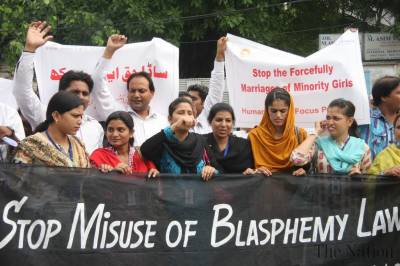
    In Pakistan, where the death sentence is often issued to perceived blasphemers – most often Christian and Ahmadi Muslim minorities – but not carried out– laws criminalizing apostasy and blasphemy embolden state and non-state actors alike to commit acts of violence against innocent civilians.

    In July 2021, a police constable slashed and killed a man named Muhammad Waqas who had been previously acquitted of blasphemy charges; the perpetrator explicitly stated perceived blasphemy as the crimes’ impetus.

    A few months later, in December 2021, a Sri Lankan national Priyantha Kumara was lynched by a mob and had his body burned by an angry mob in the Pakistani city of Sialkot.

    Kumara was a garment factory manager who had been accused of committing blasphemy after removing an Islamic poster from the factory’s walls to prepare for a renovation project.

    These non-state actors, fortified by lackluster laws, pose a serious obstacle to human rights, free speech and dignity, creating a system where sometimes even state supported religious leaders call for the death penalty and other inhumane punishments.

    A more recent and equally horrific incident occurred in Sokoto Nigeria, when young Christian college student Deborah Samuel Yakubu was stoned to death and set on fire by her very own Muslim classmates.

    Days prior, Yakubu had angered the perpetrators by questioning why her school course’s WhatsApp chat was being used to discuss contentious religious affairs rather than focusing on academic issues.
    Civil society initiative

    Currently, twelve nations that maintain the death penalty for apostasy, blasphemy, or both; these include Afghanistan, Brunei, Iran, Maldives, Mauritania, Nigeria, Pakistan, Qatar, Saudi Arabia, Somalia, United Arab Emirates, and Yemen. * [New Penal Code implemented in 2022 in UAE removes hudud punishments – including apostasy from the penal code]

    Additionally, approximately 40 per cent of UN Member States – some of them holding seats in the Human Rights Council – criminalize apostasy and blasphemy, despite their lack of the death sentence for such ‘crimes’.

    However, it is not without criticism and attention by human rights and religious freedom activists and even representatives of the United Nations who have emphasized the inhumanity of apostasy and blasphemy laws and called for their repeal.

    This includes the UN General Assembly, the UN Secretary-General, the UN High Commissioner for Human Rights, the Human Rights Council, and the Special Rapporteurs on freedom of religion or belief, and on extrajudicial killings, respectively.

    Now, civil society is taking matters into its own hands.

    Efforts to work toward the abolition of the death penalty for apostasy and blasphemy have been a bottom-up grassroots approach. This week, a delegation of human rights and religious freedom advocates is to meet to meet with representatives from the missions of numerous UN Member States, including Luxembourg, Canada, Nigeria, Sri Lanka, Niger, and Australia.

    Their goal is to increase support among UN Member States for the insertion of language in the UNGA Resolution on Extrajudicial, summary or arbitrary executions stating that “the death penalty should never be imposed as a sanction for apostasy, blasphemy, or other perceived religious offense.

    As a capstone to the multifaith, multicultural and multidisciplinary United Nations advocacy fly-in, the group will host an issue briefing pointing to the critical proposed resolution language, calling for the immediate repeal of the death penalty for apostasy and blasphemy charges.

    The briefing, which is open to the press, will spotlight survivors in their own voice. The development of pluralistic resilient communities which uphold basic human rights and allow for human flourishing amongst inevitable interdependent globalized societies depend on the undaunted actions those in power.

    We call upon all Member States to join us in this fight toward international religious freedom by supporting the IRF Campaign’s resolution language today.” More info here.


    Dr. Christine M. Sequenzia, MDiv. is Co-Chair, International Religious Freedom Roundtable Campaign to Eliminate Blasphemy and Apostasy Laws

    Soraya Marikar Deen, is a Lawyer, Community Organizer, International Activist; HumanRights & Gender Equity Advocate. She is also Co-chair Women’s Working Group @ Int. Religious Freedom Roundtable and Founder MuslimWomenSpeakers

    This piece has been sourced from Inter Press Service

    Using Artificial Intelligence to Protect Maternal Health

    An interdisciplinary team is developing a mobile health platform that uses AI to detect infection in Cesarean section wounds. The mobile platform uses artificial intelligence and real-time computer vision to predict infection in C-section wounds with roughly 90 percent accuracy.
    By Mary Beth Gallagher | Department of Mechanical Engineering, MIT

    The world is facing a maternal health crisis. According to the World Health Organization, approximately 810 women die each day due to preventable causes related to pregnancy and childbirth. Two-thirds of these deaths occur in sub-Saharan Africa. In Rwanda, one of the leading causes of maternal mortality is infected Cesarean section wounds.

    An interdisciplinary team of doctors and researchers from MIT, Harvard University, and Partners in Health (PIH) in Rwanda have proposed a solution to address this problem. They have developed a mobile health (mHealth) platform that uses artificial intelligence and real-time computer vision to predict infection in C-section wounds with roughly 90 percent accuracy.

    “Early detection of infection is an important issue worldwide, but in low-resource areas such as rural Rwanda, the problem is even more dire due to a lack of trained doctors and the high prevalence of bacterial infections that are resistant to antibiotics,” says Richard Ribon Fletcher ’89, SM ’97, PhD ’02, research scientist in mechanical engineering at MIT and technology lead for the team. “Our idea was to employ mobile phones that could be used by community health workers to visit new mothers in their homes and inspect their wounds to detect infection.”

    This summer, the team, which is led by Bethany Hedt-Gauthier, a professor at Harvard Medical School, was awarded the $500,000 first-place prize in the NIH Technology Accelerator Challenge for Maternal Health.

    “The lives of women who deliver by Cesarean section in the developing world are compromised by both limited access to quality surgery and postpartum care,” adds Fredrick Kateera, a team member from PIH. “Use of mobile health technologies for early identification, plausible accurate diagnosis of those with surgical site infections within these communities would be a scalable game changer in optimizing women’s health.”

    Training algorithms to detect infection

    The project’s inception was the result of several chance encounters. In 2017, Fletcher and Hedt-Gauthier bumped into each other on the Washington Metro during an NIH investigator meeting. Hedt-Gauthier, who had been working on research projects in Rwanda for five years at that point, was seeking a solution for the gap in Cesarean care she and her collaborators had encountered in their research. Specifically, she was interested in exploring the use of cell phone cameras as a diagnostic tool.

    Fletcher, who leads a group of students in Professor Sanjay Sarma’s AutoID Lab and has spent decades applying phones, machine learning algorithms, and other mobile technologies to global health, was a natural fit for the project.

    “Once we realized that these types of image-based algorithms could support home-based care for women after Cesarean delivery, we approached Dr. Fletcher as a collaborator, given his extensive experience in developing mHealth technologies in low- and middle-income settings,” says Hedt-Gauthier.

    During that same trip, Hedt-Gauthier serendipitously sat next to Audace Nakeshimana ’20, who was a new MIT student from Rwanda and would later join Fletcher’s team at MIT. With Fletcher’s mentorship, during his senior year, Nakeshimana founded Insightiv, a Rwandan startup that is applying AI algorithms for analysis of clinical images, and was a top grant awardee at the annual MIT IDEAS competition in 2020.

    The first step in the project was gathering a database of wound images taken by community health workers in rural Rwanda. They collected over 1,000 images of both infected and non-infected wounds and then trained an algorithm using that data.

    A central problem emerged with this first dataset, collected between 2018 and 2019. Many of the photographs were of poor quality.

    “The quality of wound images collected by the health workers was highly variable and it required a large amount of manual labor to crop and resample the images. Since these images are used to train the machine learning model, the image quality and variability fundamentally limits the performance of the algorithm,” says Fletcher.

    To solve this issue, Fletcher turned to tools he used in previous projects: real-time computer vision and augmented reality.

    Improving image quality with real-time image processing

    To encourage community health workers to take higher-quality images, Fletcher and the team revised the wound screener mobile app and paired it with a simple paper frame. The frame contained a printed calibration color pattern and another optical pattern that guides the app’s computer vision software.

    Health workers are instructed to place the frame over the wound and open the app, which provides real-time feedback on the camera placement. Augmented reality is used by the app to display a green check mark when the phone is in the proper range. Once in range, other parts of the computer vision software will then automatically balance the color, crop the image, and apply transformations to correct for parallax.

    “By using real-time computer vision at the time of data collection, we are able to generate beautiful, clean, uniform color-balanced images that can then be used to train our machine learning models, without any need for manual data cleaning or post-processing,” says Fletcher.

    Using convolutional neural net (CNN) machine learning models, along with a method called transfer learning, the software has been able to successfully predict infection in C-section wounds with roughly 90 percent accuracy within 10 days of childbirth. Women who are predicted to have an infection through the app are then given a referral to a clinic where they can receive diagnostic bacterial testing and can be prescribed life-saving antibiotics as needed.

    The app has been well received by women and community health workers in Rwanda.

    “The trust that women have in community health workers, who were a big promoter of the app, meant the mHealth tool was accepted by women in rural areas,” adds Anne Niyigena of PIH.

    Using thermal imaging to address algorithmic bias

    One of the biggest hurdles to scaling this AI-based technology to a more global audience is algorithmic bias. When trained on a relatively homogenous population, such as that of rural Rwanda, the algorithm performs as expected and can successfully predict infection. But when images of patients of varying skin colors are introduced, the algorithm is less effective.

    To tackle this issue, Fletcher used thermal imaging. Simple thermal camera modules, designed to attach to a cell phone, cost approximately $200 and can be used to capture infrared images of wounds. Algorithms can then be trained using the heat patterns of infrared wound images to predict infection. A study published last year showed over a 90 percent prediction accuracy when these thermal images were paired with the app’s CNN algorithm.

    While more expensive than simply using the phone’s camera, the thermal image approach could be used to scale the team’s mHealth technology to a more diverse, global population.

    “We’re giving the health staff two options: in a homogenous population, like rural Rwanda, they can use their standard phone camera, using the model that has been trained with data from the local population. Otherwise, they can use the more general model which requires the thermal camera attachment,” says Fletcher.

    While the current generation of the mobile app uses a cloud-based algorithm to run the infection prediction model, the team is now working on a stand-alone mobile app that does not require internet access, and also looks at all aspects of maternal health, from pregnancy to postpartum.

    In addition to developing the library of wound images used in the algorithms, Fletcher is working closely with former student Nakeshimana and his team at Insightiv on the app’s development, and using the Android phones that are locally manufactured in Rwanda. PIH will then conduct user testing and field-based validation in Rwanda.

    As the team looks to develop the comprehensive app for maternal health, privacy and data protection are a top priority.

    “As we develop and refine these tools, a closer attention must be paid to patients’ data privacy. More data security details should be incorporated so that the tool addresses the gaps it is intended to bridge and maximizes user’s trust, which will eventually favor its adoption at a larger scale,” says Niyigena.


    Reprinted with permission of  MIT News 

    Image: Partners in Health

    Care, Reforms Need to Take Center Stage for Smooth Implementation of Adoption Laws in India

    Given its permanency, adoption requires transparency and must be conducted ethically and must be in the best interest of a child. It is essential that more than one level of gatekeeping is involved before it is determined that a child is available for adoption.

    Prabhat Kumar

    India has a puzzling situation at hand. On the one hand, there are many parents willing and waiting to adopt a child. Yet, on the other hand, there are not many children available for adoption. And this is despite the 2020 World Orphan Report estimating the number of orphans in India at 31 million.

    There are huge number of vulnerable children who need proper care and protection. It is important to get a true picture of number of children who are orphaned/abandoned through a district level survey and update the data regularly.

    Mission Vatsalya (the new avatar of India’s Child Protection Services) also envisages to facilitate implementation of family based non-institutional services including sponsorship, foster care, and after care and all adoption matters as defined in the adoption regulations. One of the guiding principles of the care and protection of children under the Juvenile Justice Act asserts that a child shall be placed in institutional care as a measure of last resort. In this spirit, the Juvenile Justice (Care and Protection of Children) Act and the Model Rules framed there under accord priority to non-institutional care in the rehabilitation and reintegration of children through sponsorship, foster care, adoption and after care in a family and community-based alternatives for care.

    The Juvenile Justice (Care and Protection of Children) Amendment Act, 2021 that became effective on the September 01, 2022, authorizes the District Magistrate (including Additional District Magistrate) to issue adoption orders and provides that any person aggrieved by an adoption order passed by the District Magistrate may file an appeal before the Divisional Commissioner. There is lot of apprehensions and debate on this issue that is why it is important to understand adoption in detail.

    Policies

    Adoption, according to Juvenile Justice Act means “the process through which the child is permanently separated from his/her biological parents and becomes the lawful child of his/her adoptive parents with all the rights privileged and responsibilities that are attached to the biological child.”

    Given its permanency, adoption requires transparency and must be conducted ethically and, in the best interest of a child. It is essential that more than one level of gatekeeping is involved before it is determined that a child is available for adoption.  Child welfare committees play that role in India.  It should also include the active engagement of social workers who monitor the care of children.

    Likewise, the JJ Act prescribes in detail the process of declaring a child free for adoption and lays down eligibility criteria for prospective adoptive parents. Briefly, a child eligible for adoption includes any child under the age of 18 years who is an orphan – defined as a child without parents or guardians who are unwilling to take care; or a surrendered child – one who has been relinquished by parents or guardians because of their circumstances; or an abandoned child – viz, a child deserted by his/her parents’ or guardian.

    It is important to mention that no child can be adopted unless s/he has been declared legally free for adoption by the district child welfare committee. There is a punishment for illegal adoption in Section 80 of JJ Act. A prospective adoptive parent can also register online on the CARINGS portal of Central Adoption Resource Authority.

    Paradoxes

    The central adoption resource authority (CARA) is a statutory body of ministry of women and child development, government of India. It functions as the nodal body for adoption of Indian children and is mandated to monitor, regulate in-country and inter-country adoptions.  As per the information furnished by CARA, 26,734 prospective adoptive parents have registered with CARA and are waiting for referral for in-country adoption and 1,205 prospective adoptive parents are awaiting inter-country adoption (as on 16 December 2021). As per the information furnished by the ministry of women and child development, the average time taken for prospective adoptive parents to get a referral for children in the age group of 0-4 years is approximately two years.

    The situation of adoption in India can improve and be focused on the care and protection of children who are in difficult circumstances and need a community based and family care.

    At the district level, a meeting chaired by the district magistrate should be held every month to take stock of the situation and to ensure that orphan and abandoned children found begging in streets are produced before the child welfare committee and provided alternative forms of care and family environment after going through the proper individual care plan and social investigation report. It is important to prevent illegal and informal adoptions, if a child is found fit for adoption.

    Long-winded

    In India, CARA maintains data pertaining to adoptions taking place under the Juvenile Justice Act. It is important all forms of adoptions (irrespective of departments and law that enable them) are put on the child adoption resource information & guidance system (or CARINGS), an online platform to bring transparency in the adoption system and curtailing delays at various level. It can monitor all adoptions and keep a check on trafficking.

    It is important to keep track and conduct an assessment on weighing the changes and hence generate the evidence on what is working and what is not working well in the new system. This is also provided for following the recent amendment in the JJ Act and transferring the responsibility from courts to administrative authority (district magistrates and divisional magistrates).

    It has been widely said that when deciding on adoption, courts review documents, ensure necessary procedures have been complied with, and conduct an inquiry of the child and adoptive parents and ensure that adoption is for the welfare of the child. It is evident that the District Magistrates and the Additional District Magistrates and Divisional Commissioners would need a thorough training and orientation on such issues.

    Lastly, adoption related matters are presently being dealt with by two ministries, namely, the ministry of law and justice and ministry of women and child development. Under the government’s allocation of business rules of 1961, the legislative department is concerned with the Hindu Adoptions and Maintenance Act for the purposes of legislation only whereas the day-to-day functioning of JJ Act is monitored by the ministry of women and child development at union level. There is an urgent need to bring adoption laws under a single ministry for better monitoring and implementation.


    Prabhat Kumar works on child protection and safeguarding children in Asia.

    Image: Debmalya Seva Mission By Biswarup Ganguly

    ‘Massive COVID-19 Failure’ Sets Back Global Development

    A report by the Lancet’s Commission on the COVID-19 pandemic points to a ‘massive global failure’ that led to COVID-19 deaths and reversal of UN goals. It says that the WHO acted ‘too cautiously, slowly’ and must be reformed while calling for a boost to finances for SDGs, among other recommendations.

    Global failures on multiple levels led to a “staggering death toll” from COVID-19 and the reversal of advances made towards UN development goals, a report by the Lancet’s Commission on the pandemic says.

    “Too many governments have failed to adhere to basic norms of institutional rationality and transparency,” the commissioners wrote in the report published 14 September in the Lancet medical journal, calling for better multilateral cooperation to draw an end to the health crisis and tackle future threats.

    The virus has killed more than 6.5 million people and infected 606 million since the start of the pandemic in 2020, according to the World Health Organization (WHO).

    A study published May in BMJ Global Health found that people living in developing countries are nearly twice as likely to die from the disease compared with people living in high-income countries.

    “This staggering death toll is both a profound tragedy and a massive global failure at multiple levels,” said the 45-page Lancet report, addressed to UN member states, UN agencies and others groups, including the G20 and G7.

    It said the WHO had acted “too cautiously and too slowly” in matters like warning about the human spread of the virus, announcing a Public Health Emergency of International Concern, backing face mask use, and acknowledging airborne transmission.

    The WHO said in a published response that, while many of the Commission’s recommendations were aligned with its own assessments, the report also carried “several key omissions and misinterpretations”.

    Funding

    The Commission criticised a lack of international funding for low- and middle-income countries (LMICs) to tackle COVID-19 as well as failure to secure sufficient international supplies and equitable distribution of medicines, protective gear and vaccines.

    “Developing countries are inherently more vulnerable to global shocks than high-income countries,” said Jeffrey Sachs, chair of the Lancet Commission and a professor at Columbia University in New York, US.

    Sachs told SciDev.Net: “Effective responses to the pandemic, in terms of public health measures, for example vaccine coverage, and medical care, require financial and health-system resources that are mostly lacking in poorer countries.”

    The report looked at the first two years of the pandemic with input from 28 international experts and in consultation with more than 100 others.

    In the majority of countries, according to the Commission, the COVID-19 pandemic distracted “resources and policy attention” away from long-term targets, reversing progress towards the SDGs.

    Established in 2015 by the UN General Assembly, the SDGs comprise 17 interlinked international goals targeted to be achieved by 2030 to end poverty and make sure that “no one is left behind”.

    A group of 57 low-income countries – as defined by the International Monetary Fund (IMF) – face a financing gap of $300–$500 billion per year to achieve the SDGs, “and this gap has increased as a result of the pandemic”, says the report.

    South-East Asia saw huge variations in its capabilities in relation to health systems, as well COVID-19 treatment, transmission and deaths, the Commission said.

    In the first year of pandemic, countries like Malaysia and Bangladesh witnessed sharp increases in infections compared with Sri Lanka, Cambodia and Thailand, where contact tracing, face masks, and physical distancing were effectively implemented.

    Africa might have seen large waves of COVID-19 infection. However, most cases in the region were not reported, in part because they did not cause severe disease, the report suggested. In South America, confirmed new cases reached 60 per million population in May 2020, “and then never decreased below that rate until the end of 2021”, it adds.

    Gopal Sankaran, professor of public health at the West Chester University, US, told SciDev.Net that the COVID-19 pandemic took the world by surprise and low-income countries were no exception.

    Surveillance

    Lack of well-established health infrastructure, an overstretched health workforce, and inadequate surveillance contributed to the failure to mount and sustain an effective pandemic response, he said.

    “The interconnected sectors of health, education, and employment have experienced great setbacks [due to COVID-19] in most nations and more severely in [low-income countries] and LMICs, slowing, halting, or pushing back the progress in SDGs 3 [good health and well-being], 4 [quality education], and 8 [decent work and economic growth],” he said.

    On SDG financing, the Lancet Commission recommended increasing the cash available to countries. Sachs said he was “part of a UN process recommending an ‘SDG stimulus’ of around $500 billion per year for developing countries”.

    The Commission makes a number of other recommendations including that all the countries around the world should take up a “vaccination-plus strategy” – where widespread vaccination is combined with public health precautions and financial measures.

    It also calls for strengthening of the WHO as well as expansion of its Science Council.

    Thekkekara Jacob John, former professor of clinical virology at the Christian Medical College in Vellore, India, told SciDev.Net: “In my opinion, WHO has failed to work with low- and middle-income countries to make their health management systems robust enough to face regular or ‘mundane’ health problems.”


    This piece has been sourced from SciDev.Net.

    Image: Oxfam India

    Divorce is More Common in Albatross Couples with Shy Males, Study Finds

    In a long-studied population of wandering albatrosses, females are less likely to stick with a shy mate.

    By Jennifer Chu  |  MIT News Office

    The wandering albatross is the poster bird for avian monogamy. The graceful glider is known to mate for life, partnering up with the same bird to breed, season after season, between long flights at sea.

    But on rare occasions, an albatross pair will “divorce” — a term ornithologists use for instances when one partner leaves the pair for another mate while the other partner remains in the flock. Divorce rates vary widely across the avian world, and the divorce rate for wandering albatrosses is relatively low.

    Nevertheless, the giant drifters can split up. Scientists at MIT and the Woods Hole Oceanographic Institution (WHOI) have found that, at least for one particular population of wandering albatross, whether a pair will divorce boils down to one important factor: personality.

    In a study appearing in the journal Biology Letters, the team reports that an albatross couple’s chance of divorce is highly influenced by the male partner’s “boldness.” The bolder and more aggressive the male, the more likely the pair is to stay together. The shyer the male, the higher the chance that the pair will divorce.

    Effect of personality

    The researchers say their study is the first to link personality and divorce in a wild animal species.

    “We thought that bold males, being more aggressive, would be more likely to divorce, because they would be more likely to take the risk of switching partners to improve future reproductive outcomes,” says study senior author Stephanie Jenouvrier, an associate scientist and seabird ecologist in WHOI’s FLEDGE Lab. “Instead we find the shy divorce more because they are more likely to be forced to divorce by a more competitive intruder. We expect personality may impact divorce rates in many species, but in different ways.”

    Lead author Ruijiao Sun, a graduate student in the MIT-WHOI Joint Program and MIT’s Department of Earth, Atmospheric and Planetary Sciences, says that this new evidence of a link between personality and divorce in the wandering albatross may help scientists predict the resilience of the population.

    “The wandering albatross is a vulnerable species,” Sun says. “Understanding the effect of personality on divorce is important because it can help researchers predict the consequences for population dynamics, and implement conservation efforts.”

    The study’s co-authors include Joanie Van de Walle of WHOI, Samantha Patrick of the University of Liverpool, and Christophe Barbraud, Henri Weimerskirch, and Karine Delord of CNRS- La Rochelle University in France.

    Repeat divorcées

    The new study concentrates on a population of wandering albatross that return regularly to Possession Island in the Southern Indian Ocean to breed. This population has been the focus of a long-term study dating back to the 1950s, in which researchers have been monitoring the birds each breeding season and recording the pairings and breakups of individuals through the years.

    This particular population is skewed toward more male individuals than females because the foraging grounds of female albatrosses overlap with fishing vessels, where they are more prone to being accidentally caught in fishing lines as bycatch.

    In earlier research, Sun analyzed data from this long-term study and picked up a curious pattern: Those individuals that divorced were more likely to do so again and again.

    “Then we wanted to know, what drives divorce, and why are some individuals divorcing more often,” Jenouvrier says. “In humans, you see this repetitive divorce pattern as well, linked to personality. And the wandering albatross is one of the rare species for which we have both demographic and personality data.”

    That personality data comes from an ongoing study that began in 2008 and is led by co-author Patrick, who has been measuring the personality of individuals among the same population of wandering albatross on Possession Island. In the study of animal behavior, personality is defined as a consistent behavioural difference displayed by an individual. Biologists mainly measure personality in animals as a gradient between shy and bold, or less to more aggressive.

    In Patrick’s study, researchers have measured boldness in albatrosses by gauging a bird’s reaction to a human approaching its nest, from a distance of about 5 meters. A bird is assigned a score depending on how it reacts (a bird that does not respond scores a zero, being the most shy, while a bird that lifts its head, and even stands up, can score higher, being the most bold).

    Patrick has made multiple personality assessments of the same individuals over multiple years. Sun and Jenouvrier wondered: Could an individual’s personality have anything to do with their chance to divorce?

    “We had seen this repetitive divorce pattern, and then talked with Sam (Patrick) to see, could this be related to personality?” Sun recalls. “We know that personality predicts divorce in human beings, and it would be intuitive to make the link between personality and divorce in wild populations.”

    Shy birds

    In their new study, the team used data from both the demographic and personality studies to see whether any patterns between the two emerged. They applied a statistical model to both datasets, to test whether the personality of individuals in an albatross pair affected the fate of that pair.

    They found that for females, personality had little to do with whether the birds divorced. But in males, the pattern was clear: Those that were identified as shy were more likely to divorce, while bolder males stayed with their partner.

    “Divorce does not happen very often,” Jenouvrier says. “But we found that the shyer a bird is, the more likely they are to divorce.”

    But why? In their study, the team puts forth an explanation, which ecologists call “forced divorce.” They point out that, in this particular population of wandering albatross, males far outnumber females and therefore are more likely to compete with each other for mates. Males that are already partnered up, therefore, may be faced with a third “intruder” — a male who is competing for a place in the pair.

    “When there is a third intruder that competes, shy birds could step away and give away their mates, where bolder individuals are aggressive and will guard their partner and secure their partnership,” Sun explains. “That’s why shyer individuals may have higher divorce rates.”

    The team is planning to extend their work to examine how the personality of individuals can affect how the larger population changes and evolves.

    “Now we’re talking about a connection between personality and divorce at the individual level,” Sun says. “But we want to understand the impact at the population level.”

    This research was supported, in part, by the National Science Foundation.


    Reprinted with permission of  MIT News 

    Image: Hippopx, licensed to use under Creative Commons Zero – CC0

    Union Government, Assam and Eight Tribal Groups Signs Peace Agreement

    Terming this a historic day for the North East region, Amit Shah said that the agreement will prove to be another milestone in the direction of making North East region extremism free by 2025.

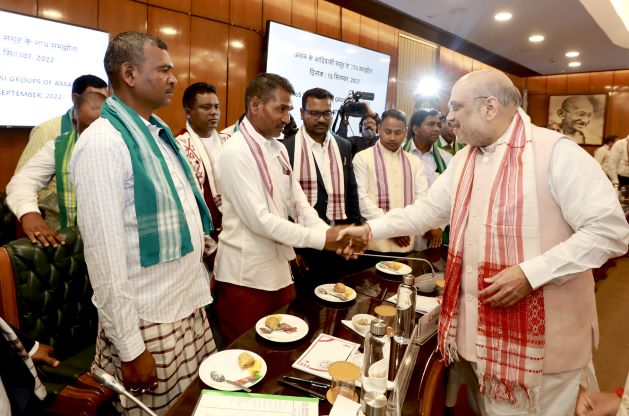
    A tripartite peace agreement signed on Thursday between the union government, the government of Assam and eight tribal groups of Assam to resolve the decade old crisis of tribal groups and tea garden workers in Assam.

    The agreement provides for the establishment of a Tribal Welfare and Development Council to ensure speedy and focused development of tea gardens.

    The agreement was signed in the presence of home minister Amit Shah by leaders of eight tribal groups – the Birsa Commando Force, Adivasi People’s Army, All Adivasi National Liberation Army, Adivasi Cobra Military of Assam and the Santhal Tiger Force.

    Terming this a historic day for the North East region, Amit Shah said that the agreement will prove to be another milestone in the direction of making North East region extremism free by 2025.

    The home minister said that 1,182 cadres of tribal group of Assam have shunned the path of violence by laying down arms and joined the mainstream, adding that the union government is committed to resolving all border disputes between the North Eastern states and all disputes related to armed groups by 2024.

    To this end, Amit Shah pointed to several agreements signed to ensure peace and development in the North Eastern region over the last three years. He claimed that the NLFT agreement in 2019, the BRU-REANG and the Bodo accord in 2020, Karbi Anglong agreement in 2021 and Assam-Meghalaya inter-state boundary agreement this year have resolved around 65 per cent of border disputes in the North East region.

    Reduced insurgency incidents

    Shah stressed that it is the responsibility of the government of India and the Assam government to fulfil the political, economic and educational aspirations of tribal groups. To this end, a special development package of Rs. 1,000 crores will be provided over a period of five years for infrastructure development in villages and areas with tribal populations.

    The union home minister underlined that around 8,000 insurgents have joined the mainstream since 2014 by laying down their arms. He said that the year 2020 recorded the lowest number of insurgency incidents in the last two decades. In comparison to 2014, there has been a 74 per cent reduction in the incidents of insurgency in 2021.

    Assam chief minister Himanta Biswa Sarma said the agreement will provide social justice and political rights to the people who have left the path of violence. He said, this agreement will also ensure the welfare of these people as they came into the mainstream.

    Pakistan Flooding Shows ‘Adapting’ to Climate Change Can Be a Dangerous Illusion

    The recent events in Pakistan illustrate the shortcomings of an adaptation strategy in the face of widespread devastation. Any notion of “adapting” to these events is tragically misplaced. We cannot, just as countries cannot adapt to the destruction of war.

    By Philippe Benoit

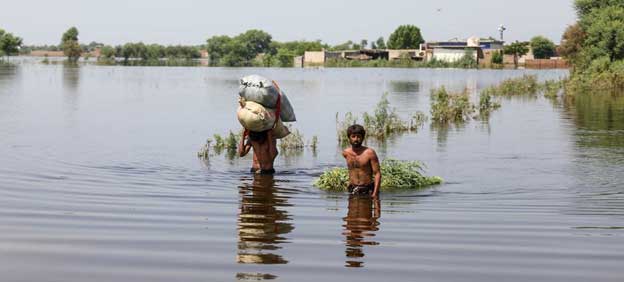
    One third of Pakistan is now under water. The scope of the destruction is difficult to fathom, not just the enormity of the devastation its people are facing today, but also the damage to its infrastructure, its buildings, and its economy that will weigh heavily on the country for months and even years to come.

    While experts may debate the extent to which greenhouse gas emissions impacting Pakistan’s weather patterns may be to blame, the scale of this devastation shows the shortcomings of invoking notions of “adaptation” as a meaningful strategy to respond to climate change’s destructive force.

    Pakistan is facing the type of large-scale destruction that is seen in wars — and not just any war, but total warfare that consumes entire regions and countries. This is what many countries suffered in World War II and others in more recent conflicts. In Pakistan, the cause isn’t an army, but a changing climate fuelled at least in part by the greenhouse gas (GHG) emissions clogging our atmosphere.

    A core strategic element of the international effort to address climate change is “adaptation,” namely action “to respond to the impacts of climate change that are already happening, as well as prepare for future impacts.” This operates in tandem with “mitigation” which focuses on reducing GHG emissions.

    Because our historical and future GHG emissions will produce some degree of climate change, we indeed do need to fund measures to respond to the inescapable changes in weather patterns and climate more broadly – even as, through mitigation action, we seek to lower our GHG emissions to limit how much our climate will change.

    Invest in climate resilience

    Yet, the recent events in Pakistan illustrate the shortcomings of an adaptation strategy in the face of widespread devastation. Any notion of “adapting” to these events is tragically misplaced. We cannot, just as countries cannot adapt to the destruction of war. They can resist, fight, look to recover, but the tragedy they suffer cannot be undone.

    And while the number of lives lost because of climate change arguably may presently be smaller than that wrought by war, the capacity of both to destroy property, livelihoods and economies is similar.

    The goals and elements proposed by the experts within the “adaptation” effort are the right ones. We must look to limit the losses generated by changes in our climate, to accelerate the recovery from extreme climate events, and even seek potential opportunities.

    We must invest in climate resilient infrastructure, drought-resistant crops and other strengthened agricultural practices, better weather forecasting capacity, tools to reconnect power supply more quickly, and in a multitude of other measures. And these efforts need to be adapted to the changes in our climate. Moreover, as climate specialists and others advocate, many more resources need to go into this area.

    But while technocrats and politicians of the past landed on this terminology of “adaptation”, what today’s events in Pakistan show is that you cannot truly adapt to climate change and its potential for widespread devastation — especially developing countries that do not have the financial resources to counter extreme weather events.

    ‘Adaptation’ – a misleading notion

    Even at a smaller scale across both developing and wealthier advanced economies, the rising number and severity of localized wildfires, heatwaves and floods are causing irreparable damage. People suffer loss. Although they might recover and rebuild their homes or businesses, there has still been harm and too often tragedy. People die because of climate change. Too much is lost forever.

    There has been growing discussion in the international climate arena around payments for “loss and damage” caused by climate change.  This type of funding, including for additional adaptation measures, can help — but it will not remedy the problem, especially given the potentially massive magnitude of the destruction.

    Pakistan cannot be expected to adapt to having one third of its country under water. Families should not be expected to adapt to the tragedy climate change can inflict.

    Let’s find another term that better conveys what is truly within our reach in responding to climate change so that we can have a clearer appreciation of the climate threats we face. The global community can indeed work to reduce the loss people will suffer and do a better job at helping them to recover and rebuild. But truly “adapting” to the devastation that climate change can cause is a dangerously misleading notion.

    Yes, there must be additional funding for adaptation and to help poorer countries respond to climate disasters. But what the events in Pakistan show is that so much more needs to be done to reduce GHG emissions and thereby limit the degree of climate change and accompanying destructive forces people will need to face.


    This piece has been sourced from Inter Press Service.

    Philippe Benoit  is research director at Global Infrastructure Analytics and Sustainability 2050.

    Image: Asad Zaidi / UNICEF

    Stethoscope ‘Still Useful’ to Detect Child Heart Problems

    The humble stethoscope remains valuable in detecting childhood heart ailments, especially as imaging the heart with echocardiography is costlier and burdens health systems. Scientists say that training doctors on physical exams for childhood heart issues ‘is still of value’.

    By Ranjit Devraj

    A traditional stethoscope and physical examination is 95 per cent accurate in detecting heart ailments in children and remains a valuable diagnostic tool in an era of increasing reliance on costlier echocardiography, a study suggests.

    Published in the British Medical Journal, the study says that the high accuracy of physical examination in differentiating the normal heart from the abnormal means the use of echocardiograms and associated expenses could be reduced.

    Echocardiography — which uses ultrasound technology to image the beating heart — is a standard tool that helps physicians visualise the size and shape of the heart, detect damage or abnormality to the valves and tissues and also determine the organ’s capacity to pump blood.

    In contrast, stethoscopes allow the doctor to hear sounds such as leaks, murmurs and irregular rhythms that indicate abnormalities in the heart, lungs and other organs. In existence for nearly 200 years, the stethoscope has come to symbolise the doctor’s profession and learning to use one is compulsory in medical schools.

    “Our paper compares the good old clinical examination of the child’s heart against the gold standard of echocardiography,” says Manu Raj, corresponding author and professor of paediatrics and consultant in public health research at Amrita Institute of Medical Sciences and Research Centre in Kerala, India.

    Raj describes the study — conducted at the paediatric cardiology clinic of a tertiary referral hospital in South India — as a “different way of looking at clinical skills in the current era of machine-based diagnosis”.

    “The evidence generated suggests that writing the obituary of the stethoscope is perhaps not justified as yet,” he told SciDev.Net.

    Important screening check

    Groups of children, totaling 545, with five common cardiac conditions were physically examined by paediatric cardiology fellows and consultants. The accuracy of physical examination by fellows and consultants was determined by comparing the findings with those using echocardiography.

    Physical examination could differentiate normal hearts from abnormal ones with an accuracy of 95 per cent for fellows and 96 per cent for consultants. For all abnormal hearts, the results showed the consultants doing better than fellows on sensitivity, specificity and accuracy.

    “The results of the study indicate that doctors are really good if trained well in physical examination of the little hearts for a cardiac diagnosis and also have the attitude to do it systematically,” Manu Raj said.

    Leading paediatricians were in general agreement with the findings of the study but emphasised the value of echocardiography in addition to physical examination of the child, including the use of a stethoscope to listen to sounds from the heart, lungs and intestines which may reveal abnormalities.

    “While physical examination remains the most important screening check, anything suspicious should be checked with echocardiography,” says Sujit Chowdhary, a paediatric surgeon at the Apollo Hospitals, New Delhi. “In my work, I use echocardiography to complete diagnosis to determine the risk profile, for making a detailed pre-operative evaluation and assessing post-operative outcomes — I consider that to be essential.”

    Beyond paediatric cardiology

    Dinesh Raj, paediatric consultant at the Holy Family Hospital, New Delhi, says: “It is true that clinical examination and diagnosis have taken a back seat because of the easy availability of confirmatory diagnostic tests. Given the huge patient burden, clinicians often resort to lab tests instead of relying on basic history and clinical examination on which the entire medical training is based.

    “Diagnosis of heart diseases in children is one situation in which a good history and clinical exam can lead to a correct diagnosis. The advent of echocardiography has certainly reduced reliance on clinical examination for childhood heart ailments,”

    He said one reason why doctors resort to echocardiography is the fear of litigation. “Doctors, these days, err on the side of over investigation, just for the sake of documentation so that they cannot be questioned later on if a heart lesion is missed,” says Raj. “Patients also feel satisfied when a laboratory test is performed to confirm a suspicious heart issue.”

    He also questioned the usefulness of a study conducted in just one institution, noting the wide-ranging quality of medical training around the world. “The physical examination and echocardiography were conducted by fellows and consultants trained in paediatric cardiology rather than by paediatricians and family physicians who typically have limited skills in the field,” he added.

    The authors of the paper admit that additional studies are needed to test the skills of general paediatricians in cardiac examination and to assess the impact of targeted training in the field. But they add that the results of the study suggest there is value in acquiring physical examination skills to diagnose cardiovascular issues.


    This piece has been sourced from SciDev.Net.

    Image: Hippopx, licensed to use under Creative Commons Zero – CC0

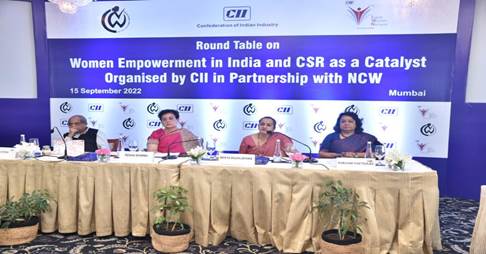
    NCW Roundtable on CSR Funds to Catalyse Women Empowerment Stresses on Collaboration

    The consultation discussed how to plan the use of CSR funds for ensuring holistic development of women. The deliberations centred on the role of CSR in achieving SDGs, women empowerment and the scope for creating collaborative spaces.

    Speakers at a roundtable organised by the National Commission for Women (NCW) on Thursday recognised corporate social responsibility as a means to tackle gender inequality. They were speaking at a roundtable on ‘Women Empowerment in India and CSR as a Catalyst’ organised by NCW in collaboration with Confederation of Indian Industry (CII).

    The consultative meeting had leaders from standard industrial bodies and heads of major corporate foundations. The consultation discussed how to plan the use of CSR funds for ensuring holistic development of women. The deliberations centred on the role of CSR in achieving SDGs, women empowerment and the scope for creating collaborative spaces.

    The meeting was chaired by Rekha Sharma, NCW chairperson along with Ashank Desai, co-chairman, CII national committee on CSR and was attended by CSR heads of 32 corporates besides other officials from NCW.

    Rekha Sharma touched upon various facets of women empowerment where industry can engage and collaborate and spoke of the scope of business and industry prioritising rehabilitation of survivors of domestic violence, livelihood generation of rescued women from human trafficking, skilling for disabled women, education of the girl child and involving in research and collection of data.

    “CSR is a new means to tackle gender inequality. Women empowerment across all sectors can be enhanced if corporates can identify common priorities and work together collaboratively in order to bring about major change that can be seen,” Rekha Sharma said.

    Participants discussed challenges in the way of empowering women in sectors such as skilling and shelter for trafficked women, financial inclusion and child support services for working women. Views were also sought and expressed on the government’s role in promoting women empowerment and how CSR can facilitate the empowerment.

    Unsettled Lives in a Troubled World

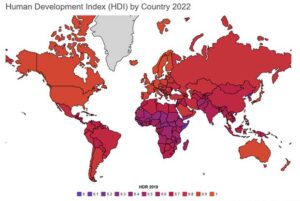
    The most under-developed nations in South America, the Caribbean, Sub-Saharan Africa, and South Asia, are hardest hit. For example, Pakistan – which already had a very low rating on the index, has fallen seven places lower and it now ranks 161.
    By Lorraine Farquharson

    Cross-continent vacations seem to be the norm once again with the lessening of COVID-19 while new cities are being built with skyscraping $4M condos shooting up in a matter of months, and just-out-of-University millennials launching into their careers with minimum start-off salaries of $75K.

    Sounds pretty good.

    Those scenarios present a shocking oxymoron to newly-released facts that shockingly, 90 percent of the world’s nations are currently undergoing gravely altered lives due to a downward spiral of human development over the past two years.

    According to the UN Development Programme (UNDP)’s annual Human Development Report (HDR) and Index (HDI), released 8 September, the percentage greatly exceeds any other reversals during the global financial crisis – setting the globe roughly six years backward. Therefore, the organization makes a solid global call for collective action.

    Results of the survey show that for the first time in 32 years of calculating the world’s well-being, nine out of every 10 countries have fallen backwards in health, education, and standard of living. The organization says that although there are many reasons for the degradation, continuous effect of back-to-back crises, such as the COVID-19 pandemic, are the most to be blamed.

    Achim Steiner, UNDP Administrator, pinpointed areas showing that human development has fallen back to its 2016 levels and that world leaders find themselves collectively paralyzed in making changes. Steiner added that the current state of regress thwarts the U.N.’s 2030 deadline at achieving the UN’s 17 Sustainable Development Goals (SDGs).

    Under-developed nations hit hardest

    Other draining factors include the exorbitant increase in cost of living; unemployment; artificial intelligence chosen over human activity rather than using it to maximize existing tasks.

    There is also digitalization – “a double-edged sword for mental wellbeing;” mental distress, which constrains freedom to achieve plus the climate and energy crises. But those get easily sutured up by subsidizing fossil fuels; lack of access to adequate resources, as well as persistent and growing inequalities.

    These all negatively affect and delay long-term goals as well as necessary systemic changes, and causes insecurity in both the leaders as well as the population.

    Speaking during the launch of the HDR, António Guterres UN Secretary General said the current crises creates an uneven economic recovery from the pandemic and is further exacerbating inequalities, leaving entire regions behind.

    “This is triggering spikes in food and energy prices, driving up inflation and drowning vulnerable countries in debt,” he said.

    The most under-developed nations in South America, the Caribbean, Sub-Saharan Africa, and South Asia, are hardest hit. For example, Pakistan – which already had a very low rating on the index, has fallen seven places lower. It now ranks 161, on the HDI, out of 192 countries, while Afghanistan rings in at the 180th position.

    The Report, titled “Uncertain Times, Unsettled Lives: Shaping our Future in a Transforming World” was released just a day prior to the UNDP’s high-level assembly of global leaders, the SDG Media Summit, highlighting those who are driving social change to advance the Sustainable Development Goals.

    Hope of positivity and promise

    Isis Jaraud-Darnault, Political Coordinator of The Permanent Mission of France to the U.N., spoke on France’s participation with the European Union to alleviate woes in the entire Horn of Africa region.

    France is especially aiding the food crisis in Somalia by dispatching a Special Envoy to the country, as well as keeping its promise to provide continuous financial aid (which has amounted to €61 million in 2022), and also launching a humanitarian airlift to provide emergency food and medicine, especially to areas hard to reach by road. “The international community must mobilize”, Jaraud-Darnault said. “France is taking its full part in this aid.”

    “Today, with one-third of people worldwide feeling stressed and less than a third of people worldwide trusting others, we face major roadblocks to adopting policies that work for people and planet,” says Steiner. “There is a skyrocketing perception of insecurity in most countries, even some high-ranking HDI ones.”

    Human Development Report 2022
    Nine out of every 10 countries have fallen backwards in health, education, and standard of living

    Despite the dark clouds, despair, doubts that grip many countries, along with the fact that recovery is uneven and partial, some seem to be dusting off their heels and getting back on their feet.

    The UNDP holds onto the hope of positivity and promise by expressing the sentiments that if futures are reimagined, refreshed and renewed; pathways carved and moulded; plans, goals and values are developed then there has to be an uptick – as nothing lasts forever – not even the bad.

    Guterres’ reiterated the Report’s clearly-stated steps forward to quench this conundrum, which was to “Double down on human development and advance policies around ‘The Three I-s’ – investment, insurance, and innovation.” He added, “We must invest in global public goods; expand insurance through social safety nets; and innovate, fostering new pathways and technologies.”

    The UNDP report depicts a totally overwhelmed global society staggering from crisis to crisis. Steiner adds. “This risks heading towards increasing deprivation and injustice and in a world defined by uncertainty, we need a renewed sense of global solidarity to tackle our inter connected interconnected, common challenges.”


    Lorraine Farquharson is a writer / essayist and an investigative freelance journalist seeking to raise awareness and lessen the woes of humanitarian issues. She has travelled to more than 30 countries and written articles for several international news organizations based at the United Nations.

    This piece has been sourced from Inter Press Service.