More

    Killings, Abductions Fuel Fear of Taliban Return in North-West Pakistan

    Swat was ruled unlawfully by Tehreek Taliban Pakistan from 2007 to 2010, when its militants were evicted through a military operation. Khyber Pakhtunkhwa, one of Pakistan’s four provinces, shares a long border with violence-stricken Afghanistan.

    By Ashfaq Yusufzai

    The killing of eight people by the outlawed Tehreek Taliban Pakistan on September 13 has given credence to the fear of a new wave of terrorism in the Swat district of Khyber Pakhtunkhwa.

    TTP claimed responsibility for the latest improvised explosive device (IED) attack on a vehicle. A former member of the peace committee, Idrees Khan, and two policemen were among the victims of the attack.

    On the same day, seven international cellular company staffers were allegedly abducted from Swat by militants demanding Rs10 million (about 42,303 US dollars) ransom.

    Murad Saeed, a former federal minister and lawmaker from Swat, said that he has led a campaign to get the government to put brakes on militants before they establish themselves and there was a repeat of the 2007 situation when the group killed soldiers, singers, and opponents. However, all his requests have fallen on deaf ears.

    “The militants are coming from neighbouring Afghanistan … The Taliban are sending threatening letters to people for extortion. They are kidnapping people for ransom,” he said.

    He said the residents would march to Islamabad’s capital unless the situation changes. “We need peace and prosperity and want the security agencies to stop the militants.”

    Saeed’s mother sustained serious injuries when the Taliban fired a rocket at his home in 2008. He said the residents wanted military action to clear the area of terrorists and warned of public reaction in case these acts of militancy didn’t stop.

    “People want peace at cost. We are united against militancy. Nobody will be allowed to disrupt peace in the area,” he said.

    Sabotaging hard-earned peace

    Swat was ruled unlawfully by Tehreek Taliban Pakistan (TTP) from 2007 to 2010, when its militants were evicted through a military operation. Khyber Pakhtunkhwa, one of Pakistan’s four provinces, shares a long border with violence-stricken Afghanistan.

    Following the Taliban’s rise to power in Afghanistan last year, militants started appearing again in Swat and other border areas.

    On August 10, the Taliban captured two officers, including one army and a police officer, in the nearby mountains of Swat and released their videos. Later, both were freed after a committee of local elders met the militants.

    The incident sent a wave of fear among residents, who had witnessed the worst form of terrorism in the past.

    “We have bitter experience of militancy when security personnel, singers, political leaders, and civil society members were executed in the main Bazaar of Swat. Taliban militants banned women doctors, nurses, and female teachers from work,” said Shafiq Khan, a resident.

    On August 12, scores of people staged street protests in different areas against the recent resurgence of militants.

    “We will not allow anyone to sabotage the hard-earned peace in the region,” Shafiq, a university student, said.

    The same day, Khyber Pakhtunkhwa police conceded the emergence of miscreants in a few hilly areas of Swat but said they were ready to deal with the situation.

    “Some residents of the Taliban, who were in Afghanistan, have arrived at Swat, but the situation was under the control,” a police statement said.

    Pressure through social media?

    Imran Khan, former prime minister, whose Pakistan Tehreek Insaf (PTI) party rules Khyber Pakhtunkhwa, expressed concern over the appearance of the Taliban. In a televised speech, he said that the militants were issuing threats to lawmakers of his party.

    “It’s a conspiracy against the Khyber Pakhtunkhwa government. Previously, the Taliban targeted the security forces and politicians as they considered them pro-US, but this government has long been opposing Pakistan’s siding with the US against terrorism; then why is the Taliban targeting this provincial government?”

    Salimullah Shah, a former education officer in Swat, recalls how militants banned women doctors, nurses, and teachers from working from 2007 to 2010.

    Maulvi Fazlullah led militants in Swat in 2007. He was later killed in a drone attack in Afghanistan in June 2018. He had also banned polio vaccination, due to which dozens of children were paralyzed. Pregnant women and girls’ education suffered for want of medics and teachers during the TTP’s illegitimate rule.

    Khan said that the Taliban had also banned barbers from shaving beards and women from leaving home without being accompanied by a close male family member.

    “Keeping in mind the past activities of the Taliban, people have decided to block their entry. Soon, the militants will flee the area due to tremendous public pressure, especially through social media platforms,” he said.

    Muhammad Abdullah, a political science teacher at the University of Peshawar, said that the government was silent over the matter. Still, social media pressure has become a vital force behind the protests.

    “The video clips circulating on social media showing the heavy presence of militants in Swat shows that militancy is likely to return if action isn’t initiated. Militants want to enforce their own brand of Islamic law, which the people will not permit,” he said.

    Small number, says ISI

    “The people still remember the ruthlessness of the Taliban in the past; that was the main reason due to the heavy protests,” Muhammad Abdullah said.

    Peace came after heavy sacrifices with residents disgraced, displaced, and killed.

    Khyber Pakhtunkhwa government’s spokesman Muhammad Ali Saif said every effort would be made to ensure peace and prevent terrorism.

    “The government is taking measures in collaboration with security outfits to apply brakes on miscreants and safeguard the residents,” he said.

    However, inter-Services Public Relations of the Pakistan Army rejected the assertion that the arrival of militants in Swat was destabilizing the area. It said the presence of a “small number of armed men on few mountain-tops between Swat and Dir districts has been observed,” located far away from the population.

    “Apparently, these individuals sneaked in from Afghanistan to resettle in their native areas. A close watch is being maintained on their limited presence and movement in mountains,” it said in a statement issued on August 13.

    According to the ISPR statement, “required measures are in place by all law enforcement agencies for the safety and security of people of adjoining areas. The presence of militants anywhere will not be tolerated, and they will be dealt with full use of force if required”.

    The Swat Qaumi Jirga held a meeting on August 17 to address recent developments in the area.

    Analyst Abdur Rehman at the Abdul Wali Khan University Mardan said that following the assumption of power by the Taliban in neighbouring Afghanistan last August, native militants of Swat wanted to reassert their illegitimate rule back home. However, the public’s outrage wouldn’t allow them to fulfil their ambitions, he said.

    He said people hadn’t forgotten the days when the Taliban openly slaughtered their opponents in the marketplaces. With its many musicians and dancers, Swat saw the execution of dancers and singers, forcing those surviving the onslaught to flee the area, he said.


    This piece has been sourced from Inter Press Service.
    Pakistan Floods: Participatory Community Actions Are History

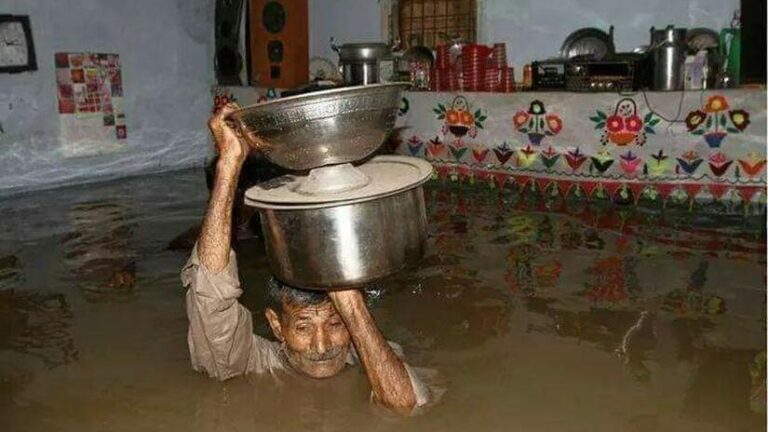
    “It was water all around. People were struggling for their safety in hope of some help. But, what we could find, was the ceaseless downpour compounding our problem,” recalled a daily wage labourer who could barely save his family from the flood waters.

    Shah Meer Jalalani’s heart wrenched as he saw his mud house flattened by gushing torrents from Suleman Mountain Range after torrential rains hit Pakistan’s Rajanpur district in the South Punjab region, inflicting loss to human lives and property.

    He could only rush to take refuge at a nearby 11 feet high knoll along with his family members leaving behind his valuables inundated by flood in his village Basti Sultan Nagar, a tribal area of Tehsil Jampur.

    His heart ached on seeing loss to his lifelong earning but saving his wife, his children and elderly parents was a sigh of relief for him. He had never thought to endure living on a knoll helplessly when water was all around with people running for their lives.

    “It was water all around. People were struggling for their safety in hope of some help. But, what we could find, was the ceaseless downpour compounding our problem,” recalled Shah Meer whose only earning was daily labour work.

    “Water was high enough to touch the mound top but there was space we could sit,” Shah Meer. “We spent two days without food when a rescuers’ boat found us, provided some edibles and took us to nearby Jampur-Harrand roadside dry place where we were also provided a tent to live.”

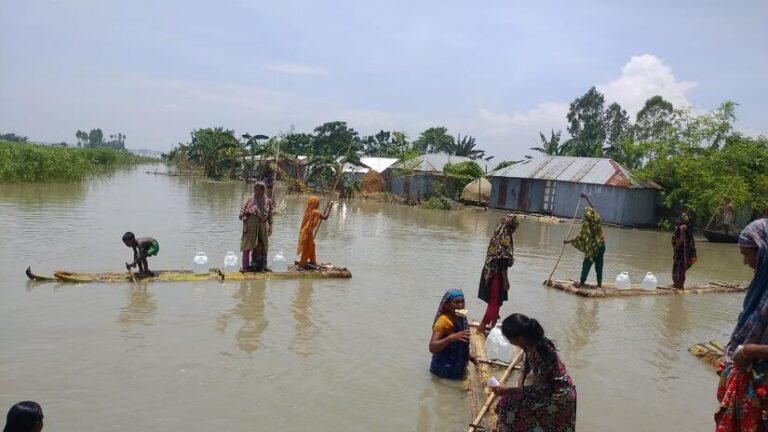
    Pakistan floods 2022
    People struggled to collect whatever they could lay their hands on and escape the flood waters.
    Millions left homeless

    The flood triggered by torrential monsoon rains over Suleman Mountain Range spared none, sweeping everything in its way submerging villages in Rajanpur and Dera Ghazi Khan districts besides a thriving city Fazalpur. It ravaged the lives of poor and white-collar communities alike.

    Rehmatullah Lashari, a local landlord of Basti Nawab, witnessed his riches turning into rags including five tube wells powered by solar system with a cost of 15 million Pakistani rupees to water his farmland.

    “My house and near ripe cotton crop has been swept away by flood. I cannot sow wheat on this soil due to water. Everything I had is gone now,” he said amidst fears that he could not be able to cultivate his land for months.

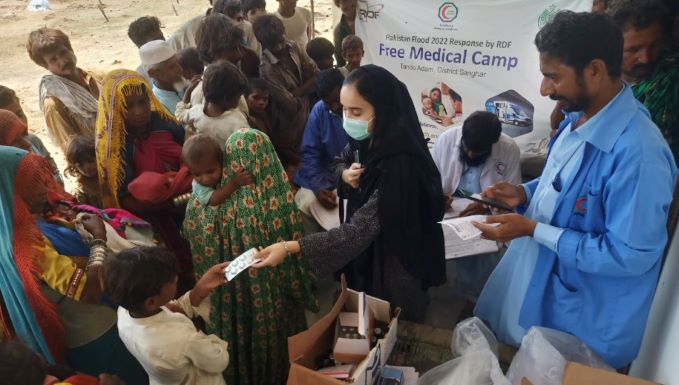
    The huge catastrophe has left millions homeless, compelling families to survive along roadsides and at relief camps, solely depending on aid for food and other needs.

    Aziz Ahmed Machi, a tailor from Rojhan Mazari met the same fate. The bread winner of 13-member family lost his house along with dowry of his daughter.

    Same happened with an elderly widow Sahab Bibi in mauza Rakh Azmat Wala whose a modest dwelling was wiped away during this catastrophe.

    “We were living happily in our two-room mud brick house but floods turned it all upside down sweeping dowry of my daughter,” Sahab Bibi said.

    Monsoon hill torrents

    Amidst the visits of the Pakistan president, the prime minister and the federal and provincial ministers and politicians and VIPs of every ilk, Pakistan’s national disaster management authority (NDMA) together with army-men and local authorities have been busy providing relief goods to the affected people.

    According to OCHA Humanitarian Advisory Team’s (HAT) situation overview citing National Disaster Management Authority (NDMA) report, floods affected over 33 million people across the country and around 4,70,000 forced to live in collective sites and many more displaced being hosted by other households.

    Many in Pakistan think on the same line. They feel that building more dams and deepening existing river beds that are rising due to silting is a panacea. This can be complemented with farmers growing climate resistant crops to cope with the challenge, they say.

    “Hill torrents often cause trouble during monsoon season but not to the huge extent witnessed this time in Rajanpur and DG Khan districts,” said a former Director General of Pakistan’s Intelligence Bureau, Sardar Hassan Akhtar Khan Gorchani.

    The deluge had ravaged his crops in Lalgarh village of Tehsil Jampur as the rain water overflowed from nullahs and tributaries flowing through the area.

    Vanishing community action

    Seeing the destruction of flood, he opines that de-silting the route of hill torrents and expanding their width besides building dams will be helpful to deal with future floods that could be as or even more menacing due to climate change.

    “Once 50-60 feet wide and enough deep, hill torrents routes now portray some ordinary nullahs after continuous silting and encroachment had shrunk their bed,” he remarked. At the time, there was community action to prevent a deluge from becoming too big to handle.

    Narrating a pre-partition practice during British Raj, the former civil servant who is now dabbling in politics, explained that farmers used to contribute in de-silting activities by digging soil and widening the bed. “These activities used to prove as a safeguard against torrents absorbing maximum flow of rain water.”

    But, in recent decades this practice vanished with bed level coming up and now even moderate rain exposes the adjacent area to flood, he said, arguing for speeding up construction of the ‘Maranj dam’.

    Infrastructure, clearly is seen as a supplement for community actions of yore. The cost of the first phase of the Maranj dam project Rs 350 million and a sum of Rs 255 million was allocated in 2020-21.

    “I have recently requested federal minister for water resources to speed up work on the project to save people from floods and produce cheap electricity,” Sardar Hassan Akhtar Khan Gorchani said, adding that in view of the recent heavy rains and floods and upcoming climate change challenges, authorities must evolve comprehensive and long term strategies to avert such catastrophe in future.

    The retired civil servant does not mention participatory community actions on his wish list.

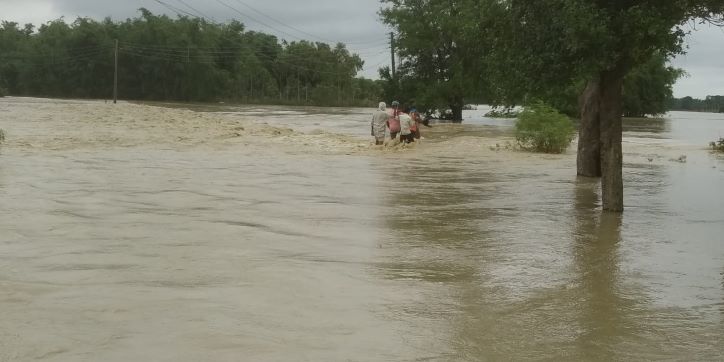
    Pakistan Floods 2022
    People were left to fend for themselves as flood waters inundated their homes.

    Putting Water on the Agenda at Egypt’s COP27

    Water looks set to be the key theme at COP27 as host country Egypt, ‘motivated to push for action’ plans to launch a water adaptation initiative at the UN climate summit, on issues such as climate finance.

    By Rehab Abd Almohsen

    In a packed room in Stockholm, delegates at World Water Week turned their attention to another major event on the horizon where water issues in the global South will loom large.

    “I’m coming from Egypt, and one of the most beautiful cities in Egypt, Alexandria, is threatened to be demolished because of the high level of the Mediterranean Sea,” said Sherif Eissa, assistant minister at the Ministry of Foreign Affairs in Egypt, the country that will be hosting the UN climate summit, COP27 in November.

    Sweden’s Crown Princess Victoria, sat on the front row, was among those attending the high-level panel discussion, which sought to look at how the momentum from other UN agendas could be harnessed ahead of a key UN water conference next year.

    Eissa announced some of the initiatives that will be launched during COP27 in Sharm El-Sheikh (6 to 18 November), a conference which would place special emphasis on Africa, he said.

    “What does Egypt have for the COP27?” he asked. “We have [an] initiative called AWARE, Action for Water Adaptation and Resilience. It will work in Africa especially in order to enhance exchange of information, capacity building and investment in water adaptation and water projects.”

    Invoice of climate change

    According to the UN’s Climate Action website, the AWARE initiative will look at how to reduce water losses, improve water-related policies and cooperation, and promote links between water and climate actions. And it will be starting with the world`s most vulnerable communities and ecosystems, in the African region, as a first step.

    In a separate initiative, Egypt is also focusing on the links between climate and conflict ahead of COP27, according to Eissa. “Egypt is preparing a concept paper with stakeholders from different parts of the world, in order to secure and to develop our peace-building capacities and abilities in order to face the climate challenges,” he said.

    Hani Sewilam, Egypt’s minister of water resources and irrigation, also highlighted the link between water and climate change, citing an example from his country.

    “In Egypt, we pay the invoice of climate change twice,” he said. “Ninety-seven per cent of our water resources [are] coming from the Nile River which means any climate change happening in the upper Nile on the source of the Nile, it affects us.”

    Sewilam stressed that Egypt is motivated to push for action at the UN climate summit. “We want to go for implementation and have clear actions, clear indicators and time plan to reach specific milestones.”

    He went on to outline three key issues he said Egypt wants to address at COP27: reduction of carbon emissions, scaling up adaptation efforts, and enhanced flows of appropriate finance.

    Water action decade

    This year is important to Egypt, says Eissa. He added: “COP27 is part of a long road, we have a continuous process of work that we need to take in order.”

    The number of attendees at this year’s COP will likely exceed that of COP26, held in Scotland last November, according to Eissa. “In Glasgow we [had] over 30,000 participants. I think Sharm El-Sheikh will be exceeding this number,” he told delegates to whom he extended an invitation to attend.

    COP27 attendance and the high cost of accommodation was a subject that came up in conversations in the corridors of World Water Week. As an Egyptian myself, I received a lot of questions related to finding an affordable hotel and whether participants from the global South will be able to attend.

    Eissa highlighted how preparation for the two big events, COP27 and the UN 2023 Water Conference, are done in coordination. “We will revise where we stand and what action plans we need in order to reach agenda 2030 successfully to keep and preserve this planet for the coming generations,” he added.

    The UN 2023 Water Conference will be held at the UN headquarters in New York, from 22 to 24 March next year. The event, the first of its kind since 1977, will focus on five themes proposed by Tajikistan and the Netherlands: water for health; water for development; water for climate, resilience and environment; water for cooperation, and the UN’s Water Action Decade.

    Eissa also talked about some of the informal activities related to water that will take place during COP27. Water Day will be one of the event’s thematic days, while Adaptation Day will also address water issues. Meanwhile, the Water Pavilion is billed as an innovative space where  governments and non-state actors can meet to drive forward urgent action to stop the depletion of freshwater resources and pursue a sustainable and resilient net-zero future.


    This piece has been sourced from SciDev.Net.

    New Study More Than Triples Estimated Costs of Climate Change Damages

    A new Nature study lends weight to the idea that federal agencies could be much more aggressive in regulating climate pollutants.

    By Dana Nuccitelli

    A peer-reviewed analysis by two dozen experts more than triples – from $51 per ton of carbon dioxide to $185 per ton – the federal government’s estimate of the “social cost of carbon” (SCC).

    The climate science, economics, and statistics experts’ paper in the prestigious journal Nature updates the best estimate of how much each ton of carbon dioxide costs society as a result of climate change damages. Their conservative best estimate is 3.6 times higher than the $51 value currently used by the federal government, and roughly 30 times more than the value previously adopted by the Trump administration.

    It’s a critically important number because federal agencies by law are to consider the costs and benefits of proposed regulations. For climate pollutant regulations, the benefits of future climate damages avoided are estimated via the SCC. A higher value would result in larger benefit-to-cost ratios, justifying more aggressive federal climate regulations.

    “It suggests there are many more actions we can take to curb carbon emissions that are going to be on the table that were not on the table before,” Stanford University economist Marshall Burke, not involved in the study, told the Associated Press.

    Choosing the right discount rate is critical

    The single largest factor contributing to the increase in the estimated SCC is the “discount rate.” This concept is premised on the premise that wages, the economy, and wealth grow over time – a trend that is expected to continue. Having an extra dollar today that can accumulate interest over time may thus be considered more valuable than a dollar received in the future. But in the case of an intergenerational problem like climate change, a high discount rate can also effectively discount the welfare of people born in the future.

    Previous best estimates of the SCC – including the current federal value of $51, originally set by the Obama administration – have tended to use a discount rate of 3 per cent. In 2017, the National Academy of Sciences published a report recommending how estimates of the SCC should be improved, including revisiting the question of discount rates.

    As three of the new Nature study’s co-authors wrote in 2021, the prior 3 per cent choice was based on the average interest rates of U.S. treasury bonds from 1973 to 2003, and is thus outdated. A 2017 brief from the White House Council of Economic Advisors found that based on lower interest rates in recent decades, the discount rate should be revised to about 2 per cent. A 2018 study also found “a surprising degree of consensus” for a 2 per cent discount rate in a survey of more than 200 publishing academics.

    This one change – revising the discount rate from 3 per cent to 2 per cent – by itself more than doubles the estimated SCC. How so? Because the bulk of climate damages occur decades in the future, and so discounting the value of future climate damages can significantly suppress estimates of the SCC. Using a two per cent discount rate, the study finds with 90 per cent confidence that the SCC is between $44 and $413, with the best estimate pegged at $185 per ton.

    The Trump administration had moved in the opposite direction, using discount rates of 3 per cent and a whopping seven per cent in its efforts to dramatically lower the estimated SCC to near-zero.

    Updated climate change damage estimates

    As recommended by the 2017 National Academy of Sciences report, the authors of the new Nature study also incorporated updated research regarding damages from four categories of climate change impacts: premature deaths caused by extreme heat, impacts on agricultural yields, energy use in response to temperature changes, and sea-level rise encroaching on coastlines. The former two impacts dominated the climate damage estimates, with heat-related mortality and reduced crop yields each accounting for nearly half of the total climate costs.

    The Nature study authors projected that net building energy use changes would result in relatively low costs based on a 2018 study. The explanation: While summer cooling demand increases in response to rising extreme heat, demands for in-door warming decrease as the world warms.

    The authors also projected sea-level rise damages to be relatively small, based on a 2016 study that evaluated the most cost-effective way each region could adapt to rising seas through a combination of coastal retreat and investments in coastal defences like sea walls. But that calculation assumes every country will adapt optimally, and does not account for the psychological and cultural losses associated with abandoning homes and other resources that are swallowed by the sea. The study found that a lack of optimal adaptation would increase sea-level rise costs by as much as a factor of seven.

    The Nature study based agricultural costs on a 2017 study that incorporated more than 1,000 recently published estimates of staple crop yield responses to changing temperature, rainfall, and carbon dioxide levels. The authors found that corn, wheat, soy, and rice yields are all projected to decline in hotter global temperature scenarios.

    Finally, they based heat mortality costs on a 2022 study that evaluated recent research on a broad set of heat-related health outcomes, including cardiovascular, respiratory, and infectious disease categories. One complication in this category involves having to translate an avoided premature death into a monetary value. Researchers approach this question by evaluating how much people would be willing to pay to reduce their risks of premature death in a given year. Heat mortality costs are thus not direct impacts on the economy, but rather the monetary value people place on living longer, healthier lives as a result of their being subjected to fewer punishing extreme heatwaves.

    The Nature study authors report that these updated climate damage assessments would increase the SCC by almost 60 per cent, although the revised discount rate is the primary factor behind its more than tripling to $185 per ton.

    Why this is still a conservative SCC estimate

    The study authors did not incorporate numerous other extreme climate damages such as worsening wildfires, droughts, inland floods, hurricanes, food and water insecurity, the mass migrations that such disasters could trigger, or the resulting suffering and trauma that are difficult to quantify in monetary terms. Even the costly crop yield loss estimates include just four major staple crops that account for 20 per cent of global agricultural production. As study co-author Frances Moore noted on Twitter, “There is still a lot missing from that list” of modelled climate damages.

    Additionally, a lower discount rate could be justified, for example if climate damages slow economic growth. Or perhaps future generations would prefer to sacrifice some monetary wealth in exchange for a world with less extreme weather disasters and a more stable climate. The Nature study estimated that applying a 1.5 per cent discount rate would raise the SCC to more than $300 per ton.

    What happens next?

    The Biden administration’s updating of the federal SCC was temporarily derailed in February by a lawsuit brought by several Republican attorneys general, but their challenge was thrown out a month later by a federal appeals court. The interagency working group performing the update may take the results of the new Nature study into account.

    The revised federal SCC, which is expected to be published soon, is anticipated to significantly increase the value from the current $51 per ton, and may yield an estimate similar to that in the Nature study. As the new paper’s authors wrote, such an action would justify stronger federal regulations on climate pollutants:

    “Our higher [SCC] values, compared to estimates currently used in policy evaluation, substantially increase the estimated benefits of greenhouse gas mitigation and thereby increase the expected net benefits of more stringent climate policies.”


    Dana Nuccitelli is research coordinator for the nonprofit Citizens’ Climate Lobby, is an environmental scientist, writer, and author of ‘Climatology versus Pseudoscience’. 


    This piece has been sourced from Yale Climate Connections.

    Image: Hippopx, licensed to use under Creative Commons Zero – CC0

    Every Minute Counts: Growing Community Ownership of Flood Early Warning Systems in Nepal

    The Koshi River can be a bane during monsoons. Now, in a unique experiment in early warning from ICIMOD, an alarm system programmed to alert communities as water levels rise is providing early warning to at-risk communities.

    By Sharmila Dhungana

    ‘We lose sleep when it starts raining.’

    This is a common refrain among the communities peppered along Khando River, a tributary of Koshi, which cuts through Saptari District in Nepal’s Terai. Flowing through China, India, and Nepal, the Koshi River sustains rich biodiversity and provides ecosystem services and much-needed irrigation for much of the year, but it can be unforgiving during the monsoon.

    In many areas of the Koshi Basin, communities live in constant fear of recurrent floods that wash away lives, homes, crops, livelihoods, and livestock. In desperation, communities have at times needed to scramble and resort to extreme measures for prevention. In the monsoon of 2019, Launiya Village experienced heavy flooding, breaching embankments built to protect low-lying areas from being inundated. Attempting to stall the huge gush of water, villagers lay on the ground alongside each other, building a human embankment. Some rushed to get sandbags to ward off the overflowing water. Kamal Kumar Mandal, newly appointed Ward Chairperson of Launiya, woefully recalls the incident: ‘We lay shivering on the ground at night – it was horrific.’

    When the waters recede, their destruction is laid bare and communities have to adapt – some way or the other. ‘The floods wipe away roads and paths,’ shares Arun Kumar Mandal, Chairperson of Tilathi Koiladi Rural Municipality. ‘Then I have to take longer routes to my office. What is usually a half-an-hour journey takes me hours.’

    In Nepal’s Koshi Basin, floods are an annual occurrence. Across the nation, floods cause over 175 deaths each year and economic losses exceeding USD 140 million. Furthermore, climate change and rising temperatures are likely to have a significant impact on the frequency and intensity of extreme flood events. With increases in extreme precipitation, flash floods are likely to become more frequent.

    Bringing a sense of calm and preparedness

    Disaster risk reduction is the need of the hour in low-lying, flood-prone areas in the Koshi Basin. Flood early warning systems, such as the Community Based Flood Early Warning System (CBFEWS), have proven effective across the Hindu Kush Himalayan region over the years. CBFEWS is an integrated system of tools and plans managed by and for communities, providing real-time flood warnings to reduce flood risks.

    Among various stakeholders involved in the implementation of CBFEWS, the community is at the heart of the technology’s impact and success. The system functions with a siren providing a warning when rising flood water levels are detected, with the information then being disseminated after verification by a caretaker to at-threat communities.

    ICIMOD Koshi River Early Warning
    The CBFEWS installed at Ratu River. As the water level starts rising, the alarm sets off, providing early warning to at-risk communities.

    There is growing appreciation for CBFEWS among riverine communities. Mahendra Bikram Karki, a local from Lalgadh, Dhanusha District, has been volunteering as a community caretaker for the last seven years. He is an eager spokesperson for the technology’s impact and effectiveness: ‘Earlier, we needed to be on constant watch – we had to travel to the river with torches in the dark, keeping a lookout for a flood for hours on end. But now that information is more accessible. The system has brought a sense of calm in our community.’

    Clear communication lines between upstream and downstream communities are crucial. Karki mentions that he is the first person whom people call once it starts raining. ‘I understand the agony of people living down the river when it starts raining heavily. I take my role in relaying information very seriously, and I am happy that I do my part to help keep people safe’, he shares.

    The formation of task forces has helped the downstream population become more prepared for flood events. Task force members help spread the early warning information through different communication channels, and they also support with evacuation, prioritising vulnerable groups such as pregnant women, the elderly, and persons with disability. Moreover, downstream communities also participate in mock drills and routinely identify safe spaces for evacuation.

    Impact and sustainability

    Mahendra Bikram Karki recalls relaying timely information during a horrendous Ratu River flood event in 2017, which allowed community members enough time to evacuate. Even a few additional minutes matter a lot. It can ensure that people have enough time to gather their loved ones, collect their valuables, and move to a safer location before the inundation. With floods in Ratu River a frequent occurrence, the CBFEWS acts as a safeguard for 62,000 people across 32 villages in Mahottari and parts of Dhanusha. The chief district officer, Nepal Police, and Nepal Red Cross Society also rely on the system for data and information.

    Nagdev Yadav, one of the local implementation partners from Community Development & Advocacy Forum Nepal (CDAFN), notes, ‘People might have lost their lives due to floods, but with CBFEWS installed, people have not lost their lives due to lack of information.’ However, implementation of CBFEWS is only just the beginning. For wider reach and impact of the technology, the focus must be on sustainability and scaling.

    This is where a wide range of stakeholders play a crucial role. In addition to the community itself, other key stakeholders include nodal authorities, private manufacturing partners, and development partners. Active leadership from various stakeholders for the sustainability of CBFEWS has been encouraging. Tilathi Koiladi Rural Municipality (in Saptari), Sabal Nepal (a local NGO), and ICIMOD have joined hands to contribute towards a basket fund.  In addition, Rajbiraj Municipality and Rupani Municipality have also expressed their commitment to contributing to the fund. The fund is used for the repair and maintenance of the system, reimbursement for caretakers, and capacity-building and sensitisation workshops. Deepak Jha, from Sabal Nepal, explains, ‘The local community and government recognise the value of CBFEWS, which is why they setup this fund as a sustainable functioning mechanism.”

    CBFEWS is clearly an important mechanism for disaster risk reduction – bringing together communities, local governments, and development organisations to combat the omnipresent threat of floods. Looking to the future, the system needs greater upstream–downstream and cross-border collaboration, good financial management, and strong buy-in from all stakeholders. All of this needs a clear view of the task at hand and a strong commitment to building networks, communication, and preparedness. After all, disasters don’t wait, and neither should preparedness.


    Sharmila Dhungana is a Knowledge Management and Communication Associate at ICIMOD.

    Images: Sharmila Dhungana / ICIMOD, and Rajesh Jha / Tilathi Koiladi Rural Municipality.  

    Flood-Hit Pakistan Faces Spread of Infectious Diseases

    Around 33 million people affected by floods in Pakistan are now vulnerable to various diseases. Millions need immediate assistance, especially as floods have damaged health facilities and the country faces outbreaks of several diseases like diarrhoea, dengue and COVID-19.

    By Zofeen Ebrahim

    Amid unprecedented floods which have affected 33 million people and damaged nearly 900 health facilities, Pakistan faces the risk of widespread outbreaks of diseases, including diarrhoea, dengue, malaria, polio and COVID-19.

    The floods have killed more than 1,300 people since 14 June and injured over 12,000, according to the country’s National Disaster Management Authority. The provinces of Sindh and Balochistan are the worst affected with floodwaters engulfing entire villages and wiping out standing crops.

    Mirza Nasir-ud-Din Mashhood Ahmad, special secretary at the Ministry of National Health Services, told SciDev.Net that with most health facilities damaged in the worst-affected districts, outbreaks of vector-borne diseases such as malaria and dengue are “imminent in the next few weeks”.

    Ahmad said Sindh is the worst affected as the waters here “will not dry for another three to four months”, hampering rehabilitation work and the restoration of health facilities. The province faces a “health emergency”, with the floods limiting access to a vulnerable population and worsening an already ailing health system, he added.

    Indrika Ratwatte, director for Asia and the Pacific at the UN Refugee Agency (UNHCR), says this will likely worsen conditions for nearly half a million displaced people and force more to abandon their homes.

    “People are facing many challenges in the informal settlements, camped along roadsides to escape surrounding flood waters, setting up shelters with whatever resources they have,” said Ratwatte, urging the international community to step up its support.

    Outbreaks reported

    The World Health Organization warned that ongoing disease outbreaks in Pakistan including diarrhoea, dengue fever, malaria, polio and COVID-19 are being exacerbated, particularly in the camps and places where water and sanitation facilities have been damaged.

    Public health in Pakistan was already considered compromised before the flood. About 38 per cent of children under five are stunted and the country has the world’s second-highest global burden of hepatitis C.

    With 116 of Pakistan’s 154 districts impacted by the floods and a third of the country submerged, many immunisation programmes have been disrupted.

    “Our vaccinators are working diligently to ensure that routine immunisation continues in the flood-affected districts where health facilities have been damaged,” said Muhammad Ahmed Kazi, director general of the Federal Directorate of Immunisation. “Immunisation is a priority and we must reach children in affected districts with vaccines, especially for diseases like rotavirus, typhoid and measles,” he told SciDev.Net.

    “Relief and rehabilitation in displacement settlements will remain a challenge; already disease outbreaks are being reported from most affected areas,” said Arif Jabbar Khan, country director of WaterAid Pakistan, adding that the risk of disease outbreaks will continue as long as people remain displaced. An estimated 500,000 people are currently sheltered in camps.

    Pakistan, floods, infections, diseases, diarrhoea, dengue, malaria, polio, COVID-19, WHO, women, children
    Infectious diseases follow Pakistan floods
    Women, babies at risk

    Khan said when people return to their homes they are likely to encounter deteriorated conditions, including contaminated water sources. “It is important that the water sources at the household and institutional levels are restored and decontaminated on an urgent basis,” he said.

    The camps set up to provide emergency shelter also face huge challenges. Maria Mushtaq who cooks and serves meals for internally displaced people in the Khairpur district of Sindh, said: “Even in the better organised camps functioning out of school buildings, the washrooms and latrines are not enough to cater to the huge numbers. Despite being cleaned every day, these camps are swarming with mosquitoes and flies.”

    Of the 6.4 million people in need of humanitarian assistance in Sindh, more than 1.6 million are women of childbearing age, said Sindh Health Minister, Azra Pechuho. He told journalists that there were at least 47,000 displaced, pregnant women at different camps around the province.

    The UN Population Fund has estimated that there are 650,000 pregnant women in the flood-affected areas of Pakistan, in need of skilled birth attendants, newborn care and support. Of these, about 73,000 are due to deliver this month. With almost one million houses damaged, the UN agency warns that women and girls are at increased risk of gender-based violence.

    The floods were caused by heavy torrential rains since June. The Pakistan Meterological Department’s monthly summary for August termed it the “wettest August since 1961”.  The monthly summary for July said that average rainfall in Balochistan was 450 per cent above average and 307 per cent above average in Sindh.


    This piece has been sourced from SciDev.Net

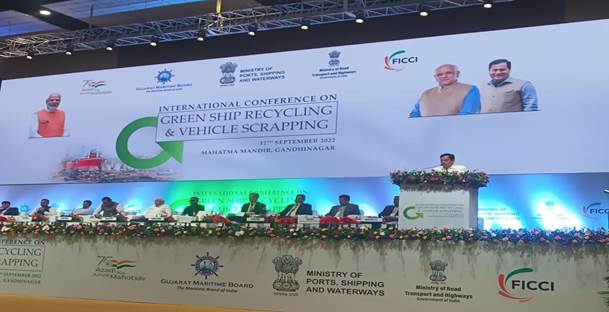
    Gujarat Plans to Emerge as Global Centre for Green Recycling, Vehicle Scrapping

    The international conference on green ship recycling and vehicle scrapping is being conducted to showcase the current status of ship recycling industry in Gujarat and the adoption of HKC Convention compliances.

    Union minister of ports, shipping and waterways Sarbananda Sonowal has said that Gujarat is the business gateway of India and one of the world’s preferred maritime destinations. He was addressing the international conference on green ship recycling and vehicle scrapping in Gandhinagar on Monday.

    Sonowal said that with a coastline of 1,600 km, Gujarat handles over 40 per cent of India’s cargo throughput and contributes 18 per cent of the total cargo transported using coastal shipping.

    He said Gujarat was the first state in the country to privatise the port sector, and by virtue of its strategic location, proactive policies, and robust infrastructure has emerged as the flag bearer of India’s maritime success story. Sonowal said India is a leading destination for ship recycling and the planned doubling of capacity of Alang-Sosiya shipyard in Gujarat will create a large number of employment opportunities and bring in more economic prosperity to Gujarat and the country.

    Taking about the Sagarmala Programme, Sonowal said it has given impetus to the thriving maritime sector in Gujarat with projects such as port modernisation, rail, road, cruise tourism, RO-RO and passenger jetties, fisheries, coastal infrastructure, skill development. There are 74 projects worth Rs. 57,000 crores under the Sagarmala Programme in Gujarat. Of these, 15 projects worth Rs. 9,000 crores have been completed; 33 projects worth over Rs. 25,000 crores are under implementation and 26 projects worth Rs. 22,700 crore are under development, he said.

    The international conference on green ship recycling and vehicle scrapping is being conducted to showcase the current status of ship recycling industry in Gujarat and the adoption of HKC Convention compliances. The conference is also facilitating discussion on how the EU shipping industry can take advantage of ship recycling facilities in Gujarat.

    PM Modi on India’s Dairy Sector : From Cooperatives to Pashu Aadhaar

    Stressing the use of modern technology, the Prime Minister said that India is building the largest database of dairy animals and every animal associated with the dairy sector is being tagged. “We are doing biometric identification of animals. We have named it – Pashu Aadhaar”, he said.

    Inaugurating the International Dairy Federation World Dairy Summit (IDF WDS) 2022 on Monday, Prime Minister Narendra Modi said, “The potential of the dairy sector not only gives impetus to the rural economy, but is also a major source of livelihood for crores of people across the world”, he said.

    The Prime Minister underlined the centrality of ‘Pashu Dhan’ and milk-related business in the cultural landscape of India, saying that this has given India’s dairy sector many unique characteristics. He pointed out that unlike other developed countries, the driving force of India’s dairy sector are small farmers.

    Explaining the second unique characteristic of the Indian dairy system, the Prime Minister iterated the huge network of dairy cooperative in India, saying that these dairy cooperatives collect milk twice a day from about two crore farmers in more than two lakh villages in the country and deliver it to the customers. India’s dairy sector is characterized by “production by masses” more than “mass production”. One cannot find such an example in the whole world elsewhere.

    He said that there is no middleman in the entire process, and more than 70 per cent of the money that is received from the customers goes directly into the pockets of the farmers. “No other country has this ratio in the whole world”.

    Rapid growth

    As another unique characteristic, the Prime Minister highlighted the power of women in the dairy sector, pointing out that women have a 70 per cent representation in the workforce in India’s dairy sector. “Women are the real leaders of India’s dairy sector”, he added, “Not only this, more than a third of the members of dairy cooperatives in India are women.” He said at more than 8.5 lakh crore rupees, the dairy sector is more than the combined value of wheat and rice – and that this is all driven by the women power of India.

    Modi underlined that the government has worked relentlessly to enhance the potential of India’s dairy sector since 2014. This has led to an increase in milk production thereby leading to an increase in the income of farmers. “India produced 146 million tonnes of milk in 2014. It has now increased to 210 million tonnes. That is, an increase of about 44 per cent”, he pointed out. He also mentioned that as compared to the two per cent production growth at the global level, India is clocking the milk production growth rate at more than six per cent.

    The Prime Minister said that the government is working on developing a blanched dairy ecosystem where challenges of the sectors are being addressed along with a focus on increasing production. Extra income for the farmers, empowerment of the poor, swachhta, chemical-free farming, clean energy and care of the cattle is interlinked in this ecosystem.

    He stressed that animal husbandry and dairy are being promoted as a powerful medium of green and sustainable growth in the villages. Schemes like Rashtriya Gokul Mission, Goberdhan Yojna, Digitization of dairy sector and universal vaccination of cattle along with steps like banning single-use plastic, are steps in that direction.

    Pashu Aadhaar

    Stressing the use of modern technology, Prime Minister Modi spoke of work being under way to build the largest database of dairy animals and tagging every animal associated with the dairy sector. “We are doing biometric identification of animals. We have named it – Pashu Aadhaar”, he said.

    Modi also stressed the growing entrepreneurial structures and said that the sector has seen more than 1,000 start-ups in recent times. He also talked about the strides in Gobardhan Yojna and said that aim is to reach a situation where dairy plants produce their own electricity from Gobar. The resulting manure will help the farmers also.

    Drawing an analogy to farming, the Prime Minister said that animal husbandry and farming require diversity, and monoculture might not be the only solution. he stressed that today, India is paying equal attention to both indigenous breeds and hybrid breeds. He further elaborated that it will also reduce the risk of damage caused by climate change.

    Prime Minister Modi said that a major problem affecting the income of farmers is animal diseases. “When the animal is sick it affects the life of the farmer, affecting his income. It also affects the efficiency of the animal, the quality of its milk and other related products”, he said, adding that that India is working toward universal vaccination of animals.

    “We have resolved that by 2025, we will vaccinate 100 per cent of the animals against Foot and Mouth Disease and Brucellosis. We are aiming to be completely free from these diseases by the end of this decade”, the Prime Minister remarked.

    He reiterated that India is working on a digital system which will capture the end-to-end activities of the livestock sector. This will provide accurate information needed to improve this sector, he said.

    United We Stand to Achieve Sustainable Development

    What works in one country may not work elsewhere, but true collaboration allows for learning from mistakes and sharing successes. This is where the UN’s expertise can ensure cooperation is demand-driven, in line with local expectations and needs, national development priorities, and relevant international norms and standards.

    By Deepali Khanna and Siddharth Chatterjee

    The world today faces a future that is in peril. Our challenges have become more complex and interconnected, as we see the impacts of the COVID-19 pandemic, an uneven economic recovery, a climate emergency, growing inequalities, and an increase in conflicts globally. This year also marks a grim milestone, with over 100 million people forcibly displaced.

    These events accompany increasing division in the community of nations which threatens to push the achievement of the Sustainable Development Goals (SDGs) further out of reach for the Global South.

    Adding to these crises, rising food and energy prices driven by the conflict in Ukraine, could push 71 million people into poverty, according to UNDP. The Global South, typically comprised of countries in South America, Africa, Asia, and Oceania, was already grappling with economic issues now exacerbated by the triple planetary crisis.

    With limited resources, high vulnerability, and low resilience, people in the Global South will bear the brunt of our inaction, on climate and elsewhere. Solely depending on external aid from the Global North or G7 countries cannot be the panacea. Here, countries of the Global South can empower themselves and combine efforts to achieve sustainable development.

    Cooperating to catalyse change

    In the face of global threats, international cooperation remains vital, as highlighted by the International Day for South-South Cooperation. South-South cooperation seeks to complement traditional development models by throwing light on the transformations needed to deliver on priorities, including the SDGs. It offers possible solutions from Global South to Global South.

    Countries of the Global South have contributed to more than half of global economic growth in recent times. Intra-South trade is higher than ever, accounting for over a quarter of world trade. It is time to further leverage these partnerships in the development space.

    We already saw this while many countries were trying to obtain COVID-19 vaccines. Citizens of low and middle-income countries faced systemic discrimination in the global COVID-19 response, leaving millions without access to vaccines, tests, and treatments. India sent over 254.4 million vaccine supplies to nations across the world, under Vaccine Maitri – a vaccine export initiative.

    Likewise, China has supplied over 200 million doses of vaccines to the COVAX Facility, in addition to providing millions of dollars in medical supplies to countries in the Global South, including in Africa, throughout the pandemic.

    Informing partnership models with Africa and China

    To advance development priorities, partnerships need to be rooted in shared interests that can lead to shared gains, as seen in traditional development models and assistance from the Global North. This dynamic needs to be at the core of the China-Africa relationship as well.

    China, an economic powerhouse, has the potential to advance development in the Global South, especially in Africa, by bringing its experience, expertise, and resources to bear, and its assistance must advance both its interests and those of the countries where it operates.

    Investments in shared goals are reflected in efforts by China to improve public health in Africa, including in the construction of the Africa Centers for Disease Control and Prevention in Ethiopia, and in clean energy, through projects such as the Kafue Lower Gorge Power Station in Zambia.

    China promises to invest US$60 billion cumulatively in Africa by 2035, directed at agriculture, manufacturing, infrastructure, environmental protection, and the digital economy. This is most welcome, and those planned investments must answer the needs of the local economies and societies.

    What works in one country may not work elsewhere, but true collaboration allows for learning from mistakes and sharing successes. This is where the UN’s expertise can ensure cooperation is demand-driven, in line with local expectations and needs, national development priorities, and relevant international norms and standards.

    Platforms like the Forum on China-Africa Cooperation (FOCAC) can work to improve that essential partnership. This mechanism has identified shared priorities like climate change, agriculture/food systems, global health, and energy security, among others, between China and Africa.

    For the first time in FOCAC’s history and with support from The Rockefeller Foundation, the UN in China is engaged as a strategic partner in this bilateral mechanism between China and Africa. The UN in China is continuing similar efforts in close consultation with relevant counterparts, including the China International Development Cooperation Agency.

    For The Rockefeller Foundation, it is a nod to its legacy in China dating back to 1914, rooted in redesigning medical education to improve healthcare and its current priorities to advance Global South collaboration, especially in public health, food, and clean energy access—all global public goods.

    Beyond the Global South: Action Together

    With less than eight years to achieve the SDGs, truly international cooperation is our only hope. Emerging trends in technology and innovation can get us there, along with enhanced South-South cooperation efforts. But doing so requires us to “flip the orthodoxy”, as UN Deputy Secretary-General Amina J. Mohammed advised.

    The Ebola crisis is an example of where global cooperation, including South-South cooperation, enabled Sierra Leone to defeat the disease’s spread, notably through a brigade of 461 health workers sent to Sierra Leone to support their overburdened system. Later, other countries made similar efforts to support Sierra Leone and nearby countries, such as Guinea and Liberia. This example shows the potential of South-South cooperation, but also triangular cooperation and North-South partnerships. Public-Private Partnerships (PPPs) are another mechanism for financing and capacity building.

    This can be seen in Kenya, where the Government and the UN System convened an SDG Partnership Platform with companies such as Philips, Huawei, Safaricom, GSK, and Merck. The outcomes include a downward trend of maternal and child mortality in some of the country’s most remote regions. Similar PPPs can hold promise in unlocking global progress on the SDGs.

    Today, while we face a more volatile world, the spirit of South-South cooperation shows a core value that we need: solidarity. As UN Secretary-General António Guterres said, “The last two years have demonstrated a simple but brutal truth – if we leave anyone behind, we leave everyone behind”.


    Deepali Khanna is Vice-President of the Asia Region Office at The Rockefeller Foundation. 

    Siddharth Chatterjee is the United Nations Resident Coordinator in China.


    This piece has been sourced from Inter Press Service.

    Bangladesh Shows How Long-Term Investments in Risk Reduction Save Lives, Says World Bank

    After 50 years of providing it support on climate resilience and disaster management, the World Bank feels that Bangladesh needs to continue investments to strengthen climate resilience in the coastal zones to protect the development gains.

    In a new report launched Monday, the World Bank says that despite vulnerability to climatic risks, Bangladesh has emerged as a global leader in climate change adaptation and is known for proactively investing in resilience.

    “It shows how long-term investments in disaster risk reduction save lives, reduce economic losses, and protect development gains,” the report says.

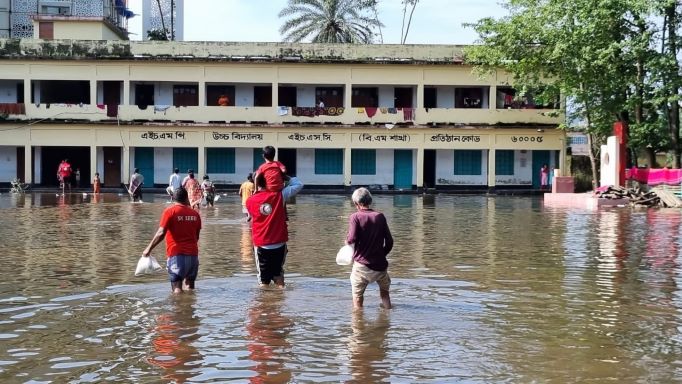
    This was possible due to a range of initiatives backed up by a strategic policy framework, from grassroots-level adaptation and community-based early warning systems to structural investments in infrastructure complemented by nature-based solutions and fostering innovation. Since independence in 1971, Bangladesh has reduced cyclone-related fatalities by 100-fold.

    The report, “Bangladesh: Enhancing Coastal Resilience in a Changing Climate” highlights the country’s journey to reducing vulnerability to climate change and recommends further actions towards improving the resilience of its coastal region.

    The report analyses the drivers of risks and examines how government initiatives have reduced these risks and offers new perspectives and innovative solutions.

    Bangladesh disaster risk reduction
    Long-term investments in disaster risk reduction save lives, reduce economic losses, and protect development gains.
    Invest in coastal resilience

    Yet, the report says that a rapidly growing population, environmental degradation, and increasing climate risks are putting pressure on the existing natural and infrastructure systems in the coastal zone, home to about 40 million people.

    This report, complementing the forthcoming Bangladesh Country Climate and Development Report (CCDR), says that Bangladesh needs to take further immediate actions to improve resilience, the report emphasises.

    The CCDR is the World Bank Group’s new diagnostic report that integrates climate change and development considerations.

    The report says that further investments in coastal resilience would produce an array of economic, social, and environmental benefits for Bangladesh.

    It lays out seven key recommendations to strengthen the resilience of the coastal region, including strengthening the operation and maintenance of infrastructure; recognising local knowledge; and utilising state-of-art modelling tools.

    Given the changing climate and dynamic coastal processes, a risk management framework should act as the guiding principle for adaptive delta management.

    Infrastructure investments need to be complemented with nature-based solutions. The coastal area can benefit from inclusive community participation and livelihood adaptation for sustainable resilience.