More

    Nepal’s Suicide Rate Spikes by 72 Per Cent Over a Decade

    According to the Epidemiology and Disease Control Division of Nepal’s health ministry, the suicide rate is increasing in the Himalayan country where 19 persons kill themselves daily.

    By Laxmi Khanal

    The suicide rate has increased by 72 per cent in a decade in Nepal from 11 persons a day ten years ago to 19 persons in the current year. As many as 53,298 people committed suicide in the last 10 years.

    The Epidemiology and Disease Control Division (EDCD) of the government of Nepal’s health ministry said in a press release issued Wednesday that the suicide rate is increasing in the Himalayan country where 19 persons kill themselves daily.

    Nepal Police data says that 6,830 people took their lives in the fiscal year in the current year. The number was 3,977 in 2012.

    The past decade has seen a plethora of issues that have caused mental health problems. Apart from psychological issues and chronic diseases, the COVID-19 pandemic and the impact the earthquake has had on people and families too has contributed to the escalation of mental health problems. EDCD also points to migration, urbanization, and social and financial imbalances as causes of suicide. Besides this, the long-term after impacts of the civil war that the country went through has also contributed to mental health issues.

    Those who have a history of suicide attempts, substance abuse, or mental health issues, have gone through major emotional turmoil, chronic illness and loneliness were reported to be at risks of suicide.

    A strategy

    EDCD said that a huge effort can help prevent the escalation of self-harm. For encouragement, it points out that there has been a decrease of 4.35 percent in the suicide rate this year compared to last year.

    The health body estimates that an individual succeeds in committing suicide after 20-25 failed attempts make it clear that early detection of suicide-oriented signs can lead to its prevention.

    The government has a strategy to work on mental health and has set itself a target to reduce the suicide rate from 16.5 per 100,000 people to 4.7 by the year 2030 – down from the current 23.4 out of 100,000 people.

    Nepal’s mental health survey says that 6.5 per cent of the population thinks about taking their own lives. It says that over four out of five of those taking their lives do so by hanging.

    Gender-wise, more men commit suicide (56 per cent). Women account for 33 per cent of the suicide deaths; adolescent girls seven per cent and adolescent boys 4 per cent. However, suicides account for a substantial proportion of deaths among women and young girls in the 15 to 45 year age group.


    Image: Hippopx, licensed to use Creative Commons Zero – CC0

    China Must Address Grave Human Rights Violations in Xinjiang, Say Rights Experts

    The statement of the 40 independent experts comes in the wake of the recent publication of a long-awaited report by the UN human rights office which documented “serious human rights violations” committed against the Uyghur and other predominantly Muslim communities in the Xinjiang Autonomous Region. 

    China must address grave human rights violations in the Xinjiang Autonomous Region and the world community must not turn a blind eye, a body of 40 independent experts has said.

    The statement of the independent experts appealing for addressing the issue of human rights of the communities in the Xinjiang Uyghur Autonomous Region (XUAR) comes in the wake of an earlier report of the UN human rights office. The report had found that “serious human rights violations” had been committed against the Uyghur and other predominantly Muslim communities of Xinjaing.

    In supporting the assessment, the experts highlighted the conclusion, which stated that “the extent of arbitrary and discriminatory detention of members of Uyghur and other predominantly Muslim minorities … may constitute international crimes, in particular crimes against humanity”.

    They drew attention to the report’s findings of credible allegations of patterns of torture or ill-treatment.

    These included forced medical treatment and adverse detention conditions, as well as incidents of sexual and gender-based violence such as invasive gynecological exams, and indications of coercive enforcement of family planning and birth control policies.

    They also welcomed the attention given to widespread misuse of counter-terrorism and counter-extremism laws, policies and practice.

    The group of experts who signed the statement consists of special rapporteurs or members of working groups who were appointed by the UN human rights council in Geneva. The experts have received mandates to monitor and report on various human rights concerns worldwide. The experts are not paid by the UN for their work.

    Policies that restrict rights 

    The experts were particularly concerned that both UN human rights mechanisms, in tandem with the report, demonstrated that China’s policies and practices have limited the legitimate exercise of numerous human rights.

    Among them is the right of religious and ethnic minorities to enjoy their own culture, to profess and practice their own religion, or to use their own language.

    The experts said they “support all the recommendations made by the UN Human Rights Office,” while also offering support to facilitate their implementation.”

    The experts called on the Chinese Government to invite UN human rights mandate holders to the country, and affirmed their availability to undertake visits, as well as to provide technical assistance and support to the authorities.

    The experts also repeated their call for the UN Human Rights Council to convene a special session on China, initially made in a June 2020 statement.

    They said the session should be held “precisely because key issues of concern, especially arbitrary detention, enforced disappearances, restrictions to movement, privacy, freedom of religion, freedom of expression are occurring in other parts of the country premised on grounds of national security”.

    The Human Rights Council should urgently consider establishing a mandate, or panel of experts, to closely monitor, analyse and report on the human rights situation in China, they added, while the UN General Assembly or Secretary-General should consider the creation of a special envoy.

    They also urged UN Member States, UN agencies and businesses to demand that China fulfills its human rights obligations, including during their ongoing dialogues with the government.


    Image: Wikimedia

    Flooding in Pakistan Shows That Climate Adaptation Requires International Support and Regional Co-Operation

    Despite the geopolitical tensions in the region, shared responses to humanitarian crises can be a mechanism to build mutual co-operation and trust.

    By Zafar Adeel  l  The Conversation

    The monsoon flooding in Pakistan has been referred to as a “monsoon on steroids” and described as a “monster monsoon.” These names reflect the wide devastation it has caused.

    This flooding has been fueled by the hottest weather recorded during March and April this year. This heat accelerated glacier melting in Pakistan’s north, followed by unprecedented rainfall patterns in many parts of the country during July and August.

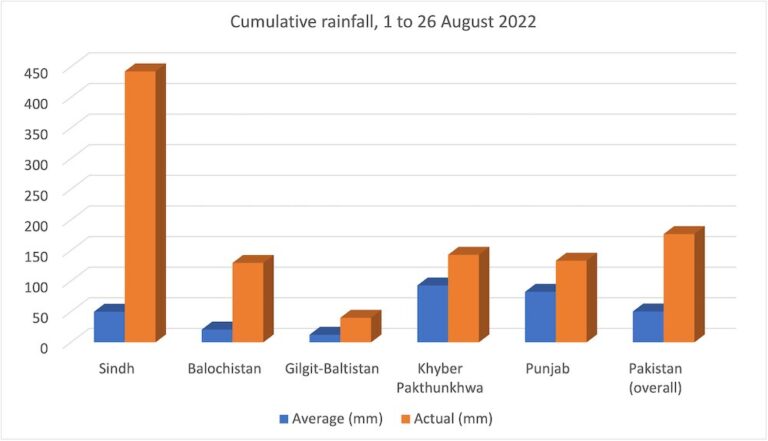
    Human-induced climate change has caused these unusual weather events: a one in 100-year heat wave and rainfall over nine times the average rainfall in the southeastern Sindh province.

    The loss of lives since mid-June 2022 currently stands at over 1,300. And it is estimated that the number of people affected by the floods is around 33 million.

    A fraction

    In 2019, Pakistan’s greenhouse gas emissions stood at about 433 million tons of carbon dioxide equivalents per year—this is 0.9 percent of the global emissions. While Pakistan contributes a small fraction of the global greenhouse emissions, it is disproportionately impacted by climate change.

    The onus of helping Pakistan recover from this tragedy, therefore, rests on the international community.

    Having studied the economic impacts of extreme floods in North America and the history of water management in the Indus basin (which lies between Pakistan, India, China and Afghanistan), I can safely state that the current estimate of US$10 billion in damages likely significantly underrepresents the comprehensive cost of this disaster.

    A more in-depth analysis is often required to determine the long-term impacts on infrastructure, loss of revenue due to supply-chain disruptions, costs of disruption to manufacturing and loss of productivity as people are displaced.

    Inadequate infrastructure

    In 2010, Pakistan was also hit with extreme flooding, which resulted in the loss of 1,985 lives and over US$ 10 billion in damages. These recurring events raise questions about systemic and strategic responses to mitigate against future flood events.

    It is apparent that flood management infrastructure is inadequate, and is compounded by the lack of capacity for timely responses from public authorities. In this specific situation, while the National Disaster Management Authority (NDMA) in Pakistan issued its earliest and somewhat generic alert about extensive monsoon rainfalls on June 28, it did not recognize the severity until mid- to late-July.

    While these alerts triggered responses by the NDMA for affected areas in early August, their aid was designed for tens of thousands of people, whereas those affected were in the millions. Pakistan’s armed forces stepped up to undertake a major role in the humanitarian relief efforts.

    Systematic building

    United Nations Secretary General António Guterres launched a US$ 160 million appeal at the end of August. The Canadian federal government announced $5 million in funding for humanitarian assistance, in addition to contributing to the U.N. emergency response fund.

    While these humanitarian initiatives are very important in addressing the immediate needs related to disaster relief, they pale in comparison to the scale of the upcoming challenge for Pakistan.

    The scope of the response needed to recover from this disastrous event is apparently beyond the capacity of various agencies in Pakistan. There is a need to systematically build Pakistan’s capacity to cope with climate change-related flooding in the future.

    This support needs to take the shape of financial resourcing, technical assistance and human capacity building. It should take two approaches. The first involves building effective early-response mechanisms that allow communities to react in a reasonable timeframe. At the same time, support should enhance water management infrastructure to manage excess water in flooding events and help with droughts in dry years.

    While the NDMA and the Pakistan Meteorological Department have made considerable strides in developing early-warning systems, significantly more needs to be done at the community level. There is a need for broad-based and grassroot-level community organizations that can support timely evacuation from flooded areas and provide immediate humanitarian assistance.

    Climate change adaptation

    In the 2015 climate conference in Paris, the world leaders committed to provide US$ 100 billion annually to combat climate change.

    Building Pakistan’s water infrastructure—particularly new water reservoirs and dams—falls under the overall theme of adaptation to climate change. While the funding mobilized since then has been a fraction of that commitment, a significant proportion should be directed to developing countries like Pakistan that are disproportionately impacted by climate change.

    There is also growing recognition that some of the responses to such natural disasters must come from within the region. Countries in South Asia, particularly those in the Indus Basin, should pool their technological, human and financial resources to mount more immediate and targeted disaster responses.

    Despite the geopolitical tensions in the region, shared responses to humanitarian crises can be a mechanism to build mutual co-operation and trust.


    This piece has been sourced from The Conversation 

    Image: Pakistan Meteorological Department

    Back to Stirring Chauvinism, Sri Lankan Politicians Question UNICEF Report on Malnutrition

    As Sri Lankan opposition members of parliament raked up the issue of an imminent child malnutrition crisis, a minister raised questions about a UNICEF report that ranked the island nation sixth in a global child malnutrition index.

    Participating in a debate on child malnutrition spinning out of Sri Lanka’s economic crisis, Sri Lankan ruling coalition politician and minister of plantation and industries, Ramesh Pathirana today questioned the UNICEF’s findings. He said that the data was outdated.

    The UNICEF report highlighted that over 5.7 million Sri Lankans, including 2.3 million children, were in need of urgent humanitarian assistance. It said that Sri Lanka figured among the top ten countries with the highest number of malnourished children and warned that the numbers could rise further.

    UNICEF’s report said that 15.1 per cent of the country’s children under five years of age were affected, adding for effect that “Sri Lanka has made no progress towards achieving the target for wasting.”

    “Children are disproportionately affected by the rapidly unfolding economic crisis in Sri Lanka,” the UNICEF’s report said. “Rising food and fuel prices, frequent power cuts, shortages of life-saving medicine, are impacting the poorest and most marginalized.”

    But Pathirana chose to tear into the UNICEF report as a sure way to deny the problem. “The data taken from countries relate to different years,” he said. He pointed out that India’s data was collected in 2017, choosing not to mention that Sri Lanka could not provide data for 2017 and that the island nation shared data from 2016. “There is a significant difference in the results and we can’t take this as a final report,” he said.

    “We can’t take this as a complete report,” he said, adding that the report has not indicated the situations in other countries and different ages.

    In its report, UNICEF had ranked Sri Lanka six among malnourished countries in the face of an economic collapse and runaway food inflation and shortages. The report had indicated a looming protein deficit as prices of food and protein went through the roof. Even fish was a luxury in the island nation as fishers did not have fuel to take their boats out to sea.

    Of the 12 global nutritional targets the report set out to assess countries against, Sri Lanka fared well on childhood obesity and exclusive breastfeeding. But the poor show on childhood wasting and anaemia were cause for concern, as also stunting and low birth weight.

    The minister insisted that Sri Lanka was moving away from malnutrition and said that the Sri Lanka Medical Research Institute data would provide a clearer picture.


    Image: Josh Estey / WFP

    Analysis of Email Traffic Suggests Remote Work May Stifle Innovation

    At MIT, social networks with “weak ties,” which help foster new ideas, declined during the COVID-19 pandemic, researchers report.

    Michaela Jarvis | MIT News Office

    The debate over what is lost when remote work replaces an in-person workplace just got an infusion of much-needed data. According to a study conducted at MIT, when workers go remote, the types of work relationships that encourage innovation tend to be hard hit.

    Two and a half years after COVID-19 shut down offices and research labs around the world, “we can finally use data to address a critical question: How did the pandemic-induced adoption of remote working affect our creativity and innovation on the job?” says Carlo Ratti, professor of the practice of urban technology and planning and director of MIT’s Senseable City Lab. “Until now, we could only guess. Today we can finally start to put real data behind those hypotheses.”

    The MIT researchers, with colleagues at Texas A&M University, Italian National Research Council, Technical University of Denmark, and Oxford University, analyzed aspects of a de-identified email network comprising 2,834 MIT research staff, faculty, and postdoctoral researchers, for 18 months starting in December 2019. All of the emails were anonymized and examined to analyze the network structure of their origins and destinations, not their content.

    Toward late March 2019, the COVID-19 pandemic abruptly ended much of the on-site research on MIT’s campus. With the shift to remote work, the new study shows, email communications between different research units fell off, leading to a decrease in what researchers call the “weak ties” that undergird the exchange of new ideas that tend to foster innovation.

    Co-location and ‘weak ties’

    Weak ties were defined as any connection between two people who had no mutual contact in the email network. In other words, two people, A and B, formed a weak tie if there was no third person C that both of them also contacted. “Strong ties,” on the other hand, which are the type of communication that tends to expose us to the same ideas repeatedly, increased. Over the course of the lockdown, the researchers found that “ego networks,” referring to an individual’s unique web of connections, became more stagnant, with contacts becoming more similar each week.

    The study was published in the August 22 issue of Nature Computational Science.

    The researchers hypothesized that physical proximity should play a role in the development of weak ties. As such, weak ties between researchers in physically distant labs, who would be unlikely to encounter each other by chance even when working on campus, should not have dropped significantly when workers went remote. The data turned out to support that hypothesis, the team reports.

    “Our research shows that co-location is a crucial factor to foster weak ties,” says Paolo Santi, researcher at MIT’s Senseable City Lab and at the Italian National Research Council. “Our data showed that weak ties evaporated at MIT starting on March 23, 2020, with a 38 percent drop,” he says. Over the next 18 months, the drop translated into an estimated cumulative loss of more than 5,100 new weak ties.

    ‘Propinquity’

    The idea that “weak ties” are conducive to innovation dates back to research published in 1973 by sociologist Mark Granovetter, who wrote that “an initially unpopular innovation spread by those with few weak ties is more likely to be confined to a few cliques. … Individuals with many weak ties are, by my arguments, best placed to diffuse such a difficult innovation.” Granovetter’s research was “just the beginning of a vast literature in sociology, which has subsequently confirmed and substantiated his ideas,” Ratti says.

    In an accompanying commentary article in Nature Computational Science, John Meluso of the University of Vermont calls the “weak ties” idea “one of the oldest theories in social networks,” while pointing out that what generates and maintains the ties has remained vague. He notes that the new study’s computational techniques shed light on the causal mechanism of “propinquity,” the idea that proximity increases the odds of creating new connections and strengthening existing ones.

    The researchers investigated not only the abrupt decline in weak ties when the MIT campus was shut down, but also the transition when researchers began returning to campus on July 15, 2021. A partial reinstatement of weak ties occurred after that point, the team found. With these findings, the researchers created a model that predicted that a complete return to the workplace would result in a “complete recovery of weak ties.”

    ‘Cafeteria effect’

    Ratti and his colleagues suggest that as companies and organizations refine their post-lockdown remote work policies, they should try to find ways to encourage serendipitous interactions across departments and research units to foster the spread of new and diverse information. As Ratti explains, those interactions create exposure for those involved to “a diverse set of people and ideas.” At the same time, the study authors acknowledged that remote or hybrid work offers advantages to individuals, especially in terms of flexibility.

    “Employers would make a mistake in discarding the newfound flexibility of the COVID-19 years,” Ratti says. “Our study hints at the fact that establishing a work balance trade-off by combining in-person and remote interactions among colleagues seems to be the optimal solution, which could inform the transition to a hybrid, post-COVID-19 ‘new normal.’”

    Achieving that balance could involve modeling the minimum amount of in-person work needed to keep weak ties activated. It could also involve transforming traditional office floor plans designed for individual tasks into “more open, dynamic spaces that encourage the so-called cafeteria effect,” in which people from diverse groups sit and converse together, or event-based spaces for different communities to converge, Ratti says.


    Reprinted with permission of  MIT News 

    Image: MIT

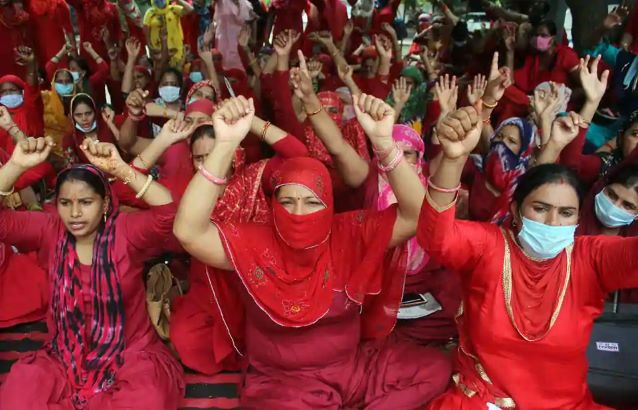
    Health Minister Speaks of Long-Awaited Incentives for ASHA Workers

    ASHA, or Accredited Social Health Activists have been demanding better remuneration for the past many years, but the health minister did not make any announcement on this long pending demand of the ASHA workers, save the mention of incentivisation.

    Chairing the seventh meeting of Mission Steering Group (MSG) of National Health Mission (NHM), union minister for health and family welfare, Dr Mansukh Mandaviya noted that India is the only country in the world with a four-layer health infrastructure in place with a 10-lakh strong ASHA workforce at the grassroots. “These powerful foot soldiers of our health force have played a pivotal role in India’s COVID management and COVID vaccination campaigns”.

    It was decided to incentivize ASHA for creation and seeding of ABHA IDs in various IT portals of the ministry of health and family welfare. But there was no mention of the exact nature and the quantum of the incentive. (ABHA, or the Ayushman Bharat Health Account is a 14-digit number that uniquely identifies participant in India’s digital healthcare ecosystem.)

    The health minister added that strengthening incentivisation of the healthcare workers who work with communities at the cutting edge can give an impetus to various programmes. He underscored moving ahead with sharpened focus on timely elimination of diseases such Kala Azar and Leptospirosis, as these diseases largely impact the poorest households and communities in the country.

    ASHA, or Accredited Social Health Activists have been demanding better remuneration for the past many years, but the health minister did not make any announcement on this long pending demand of the ASHA workers, save the mention of incentivisation.

    Notable achievements

    India is the only country in the world with a four-layer health infrastructure in place, Dr Mansukh Mandaviya said, adding that the workforce of ASHAs at the grossroots are powerful foot soldiers.

    “These powerful soldiers of our health force have played a pivotal role in India’s COVID management and COVID vaccination campaigns,” the health minister said.

    The minister spoke of a number of achievements of the government on the health front, in many of which the ASHA workers play a pivotal role. For instance, the minister alluded to the decline by 453 points in the country’s maternal mortality ratio (MMR) – from 556 per one lakh live births in 1990 to 103 in 2017-19. He said that seven states have achieved the SDG target of MMR.

    Similarly, Under-5 Mortality Rate (U5MR) too has declined from 126 per 1000 live births in 1990 to 35 per 1000 live births in 2019, he said, adding that eight states have achieved the SDG target of U5MR.

    In both cases, the ASHAs have played a central role that is well documented by various government and academic bodies.

    Additionally, the MSG discussed malnutrition among children, awareness and capacity for prevention and control of snakebite and reviewed the status of Prime Minister National Dialysis Programme.

    The NHM mission steering group also discussed prevalence of sickle cell disease among the country’s tribal population and it was decided to implement sickle cell screening programme in mission mode. It was also decided that all necessary actions will be taken up to end tuberculosis by 2025.

    Besides ASHA workers, the NHM has helped beef up the human resources in health with support for 3.16 lakh health workers, including doctors, nurses and lab technicians among others (but excluding ASHA workers) in states and union territories.

    Notably, the MSG was informed that the major interventions in health have led to reduction of out-of-pocket-expenditure (OOPE) from 69.4 per cent to 48.8 per cent as per NHA estimates.

    Bangladesh Minister says Line of Credit Projects Delayed Due to Indian Red-Tapism

    The minister said that he was hopeful that the issues will be resolved during Sheikh Hasina’s India visit. Over the years, India has supported the implementation of a number of projects in Bangladesh on line of credit terms.

    Bangladesh’s planning minister M A Mannan blamed the slow implementation of Bangladeshi projects under the line of credit (LoC) supported by India on Indian bureaucrats.

    Mannan was speaking to journalists at the Development Journalists Forum of Bangladesh,

    He said that Indian bureaucratic tangles slowed down the implementation of the Bangladeshi projects supported by New Delhi.

    “The LoC is a bilateral loan. It is bureaucracy-based. Our bureaucracy claims that the Indian bureaucracy is the main reason behind the delay,” he said. “The Indian side says Bangladesh’s bureaucracy is the factor.”

    “But, so far I know that the Indian bureaucratic tangles are slowing down the projects,” he added, hoping that the issues would be sorted out following Bangladesh prime minister Sheikh Hasina visit to India, currently under way.

    “We are hopeful of resolving the problems in implementing the LoC-supported projects in Bangladesh after the Prime Minister’s India visit.”

    Notably, the Bangladesh planning minister’s remarks coincide with agreements between the two countries on further cooperation, especially in the energy and transportation sectors. India and Bangladesh, on Wednesday arrived at an agreement to enhance the sub-regional connectivity in the energy sector by connecting the power grids of the two countries synchronously.

    The Bangladesh side also welcomed the gesture of India for providing 20 broad-gauge diesel locomotives on grant.

    Indian support for infrastructure

    India has supported the implementation of a number of projects in Bangladesh on line of credit terms over the years. A number of projects have to do with transport infrastructure. For example, the induction of a fleet of busses with support from India has helped improve transport in the country and also helped reduce pollution in the capital city, Dhaka. This project, implemented since 2011 is a visible symbol of Indian partnership with Bangladesh following the Bangladesh Road Transport Corporation (BRTC) seeking Indian help for fleet expansion. A Government of India supported Line of Credit (LOC) of USD 862 million paved the way for import of 290 Ashok Leyland buses from India.

    Likewise, the deployment of broad gauge diesel electric locomotives with support from India has also provided opportunities of safe, speedy and economical journey to train travellers in the country. A Government of India-supported Line of Credit (LOC) of USD 862 million extended to Bangladesh helped finance procurement of 10 units of broad gauge diesel electric locomotives from Indian Railways’ RITES Ltd.

    Prior to this too, Indian Railways had exported 10 metre gauge locomotives from its Diesel Locomotive Works (DLW) to Bangladesh in 1996. Over the years, Indian Railways have also exported broad gauge locomotives and railway passenger coaches.

    The construction of two rail bridges along the Dhaka‐Chittagong corridor with support from India are also considered landmarks of India-Bangladesh cooperation.

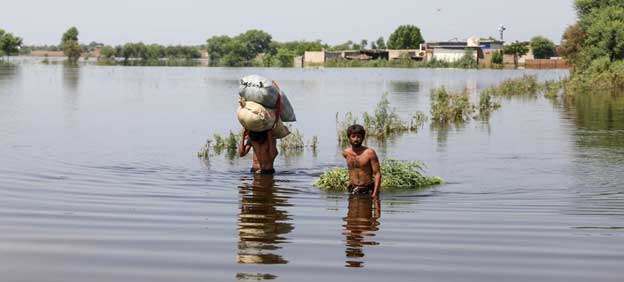
    Pakistan’s Climate Catastrophe: Lessons for the World

    The scale of the humanitarian crisis in Pakistan is unprecedented, with a third of the country under water and with more than 33 million people impacted, that represents 15 per cent of the total Pakistani population.

    By Robert Sandford

    Monsoon flooding has occurred often in Pakistan but never to the catastrophic extent presently happening.

    A distinguishing feature of this disaster is that no one blames the flooding’s unprecedented intensity and destructiveness on anything but climate heating. The clear link between the warming atmosphere and the frequency and duration of extreme weather events of this scale should not be lost on the rest of the world.

    Pakistan’s monsoon-related flooding in 2010 and 2011 was blamed by several observers on land-use changes that had altered natural drainage patterns, with some commenting that Pakistan and other countries most at risk from climate disruption were also the most dysfunctional.

    Five years later, however, researchers discerned the fingerprints of climate change all over those floods, which killed 2,500 people, displaced 27 million and caused economic losses estimated at USD 7.4 billion, setting back Pakistan’s development severely.

    Climate science confirmed that global warming was accelerating the global hydrological cycle and causing the loss of its relative stability and natural variability — “hydrological stationarity” — on which we had come to depend.

    Simple atmospheric science tells us that warmer air holds more water, about 7 per cent more per degree Celsius or about 4 per cent per degree Fahrenheit.

    In addition, satellite sensing has enabled us to recognize the existence and dynamics of atmospheric rivers — corridors of intense winds and moist air measured at 400-500 kilometres across and thousands of kilometres long.

    These atmospheric rivers can carry the equivalent of 10 times the average daily discharge of North America’s massive St. Lawrence River.

    Climate heating is causing these atmospheric rivers to become more powerful, more devastating, and more unpredictable.

    And when they touch down, they can cause rainfall of never-before-imagined intensity and duration, as experienced not just by Pakistan, but in highly developed countries including Australia, Canada and elsewhere.

    Climate refugees

    As this is written, a third of Pakistan is under water, at least 1,000 people are known to be dead, at least a million homes have been destroyed and 33 million people have become climate refugees.

    So just how much more intense was this year’s supercharged monsoon in Pakistan? In July, 2010, a record 257 millimetres of rain was recorded in one day. This year, Karachi recorded more than 400 millimetres in under 24 hours.

    Some 680 millimetres fell in Sindh Province, more than five times the average, with similar records set elsewhere. And it is not over.

    It doesn’t take much imagination to know what a flood disaster would look like if 400 or 500 or 600 millimetres fell on any part of the world in just 24 hours.

    And it is not just the behaviour of the monsoon that is changing. Weather patterns in Pakistan are increasingly unpredictable. This year, for example, the country essentially went from winter conditions directly into the intense heat of summer, which in much of Pakistan can mean temperatures of up to 50°C, more often now for weeks at a time.

    The cumulative and compound effects of this year’s whipsawing heat waves and hitherto unimaginable monsoon flooding have left the country on its heels.

    Government officials argue that Pakistan is unfairly bearing the consequences of irresponsible environmental practices elsewhere. Yes, they admit that corruption, unenforced building codes and rebuilding in known floodplains have had an impact on the country’s vulnerability, as they have in earlier floods.

    But Pakistan, they note, is responsible for barely one per cent of the global greenhouse emissions causing the climate change that is so clearly responsible for ferociously more powerful monsoons. In Pakistan’s view, the world should pay to restore the country.

    Slow, halt climate change

    In developing countries, climate disruption has devastating national effects: fiscal crises, unemployment, profound social instability, governance failure, interstate conflict, and terrorist and cyber-attacks.

    Several observers now hold that accelerated warming will weaken several developing world states until they are incapable of effective action.

    What we learn from Pakistan is that in a warmer climate, mega-storms are not just possible but inevitable, and they could happen as frequently as every 10 years. We simply cannot afford the infrastructure damage, economic disruption and human suffering that will surely accompany disasters of such greater magnitude. We have to see that, unless we act, that is what is coming.

    And yet developed countries are effectively getting nowhere in terms of climate action. That failure could cost us the world.

    Even just 1.1°C of warming is already causing a cascade of impacts which together are beginning to take a big economic toll. The cost of inaction is now clearly greater than the cost of climate action. And climate change is just starting to kick in.

    To prevent even greater disasters from happening, to save nations like Pakistan, we have to slow and halt climate change, developed countries must lead the way, and we need to do it now.


    Robert Sandford holds the Global Water Futures Chair in Water and Climate Security at the United Nations University Institute for Water, Environment and Health, based at McMaster University, Hamilton, Canada


    Image: Asad Zaidi / UNICEF


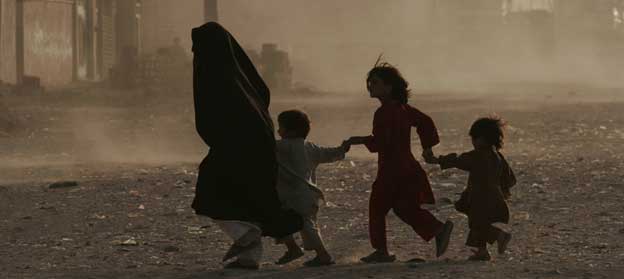
    Afghanistan: A Treasure Worth More than a Trillion Dollars

    How come the Taliban managed, in just weeks, to push Afghanistan’s economy into “free fall” as defined by the UN Emergency Relief Coordinator, already in December 2021 – that’s only four months since the power was handed to them?

    By Baher Kamal

    Both mainstream media, international bodies and human rights defenders continue to rightly denounce the Taliban’s inhuman abuses against the Afghan people’s basic rights, in particular those of women and girls.

    In doing so, they use a similar vocabulary, saying that since the Taliban “seized the power” on 15 August 2021 everything has collapsed. Shouldn’t it be more accurate to say that the power was “knowingly” “delivered” to them by the United States of America following negotiations between the two parties under Donald Trump’s administration?

    Other statements talk about how the Taliban’s regime has in just a few months erased with a stroke of a pen all the “great achievements” made over 20 years of US and allies’ massive military attacks on Afghanistan’s unarmed population.

    Has all this happened in just 12 months?

    How come the Taliban managed in just weeks to push Afghanistan’s economy into “free fall” as defined by the UN Emergency Relief Coordinator, already in December 2021 –that’s only four months since the power was handed to them?

    How come that in such a relatively short time the Taliban have hurled into hunger as many as 23 million people – around 60% of the total population?

    Have they in one year pushed over 6 million Afghans away to neighbouring countries like Pakistan and Iran?

    Then, how come that “Over one year after the Taliban takeover, an estimated 24.4 million people – 59 per cent of the population in Afghanistan – are dependent on international aid and emergency relief in their day-to-day lives,” as stated by the International Organization for Migration (IOM)?

    “Since August 2021, nearly all Afghans have plunged into poverty and the country has been facing the risk of systemic collapse,” states IOM.

    Add to this the reiterated UN disparate appeals for funding to provide “lifesaving” assistance to 21 million Afghans or 50% of the whole population.

    By the way: weren’t the United States who helped, funded –and armed– the Taliban “moderate” predecessors, over the 70s and 80s, to expel the Soviet Union’s troops from Afghanistan?

    Weren’t the US and allies aware that the “narco lords” in Afghanistan, the world’s largest opium producer, have also been providing money and weapons to the Taliban in exchange for protection?

    Operation “Enduring Freedom”

    Whatever the case is, the Afghan war narrative should also remind us of other “great achievements” made during the two-decade-long “Enduring Freedom” operation launched against this country by the then US president George W. Bush and allies.

    Has this Operation Enduring Freedom really brought food, health, education, safety, democracy, stability… and freedom?

    Regardless of the arguments used to “justify” them, wars are also a “good” business.

    Indeed new weapons have been tested; killing-drones perfected, troops casualties lessened; fully-equipped private armies made big profits as did the giant weapons industry. And the strategic concept of “war on terror” has definitely been settled.

    Another under-reported war trophy

    Anyway, there seem to be other under-reported “great achievements.” One of them appears to be Afghanistan’s treasure of precious mineral resources that the technology and war business needs.

    Just see this: the 2019 official report: Mining Sector Roadmap, published by Afghanistan’s Ministry of Mines and Petroleum [PDF], and introduced by the then Afghan president Mohammad Ashraf Ghani, states the following, among other facts:

    – Afghanistan has “extensive” mineral resources, located in every province of the country;

    – Afghanistan has world-class deposits of iron, ore, copper, gold, rare-earth minerals, and a host of other natural resources… And oil and gas;

    – Other minerals include aluminium, gemstones; lead, zinc, mercury; chromite; sulphur; hydrocarbons; asbestos; marble, lapis lazuli, emeralds and rubies; …

    – Afghanistan holds more than a trillion dollars worth of mineral resources;

    – Afghanistan “must’‘ leverage the expertise of the “private sector“ to harness the potential of its mineral sector, the official report highlights.

    This Afghan government official report was published in 2019, i.e., while the United States and allies were still ruling the country.

    Too many questions left unanswered

    Just take a look at what a brilliant analyst and Nobel Peace Laureate, John Scales Avery, wrote in his recent must-read article: Making Money from War.

    “If the aim of the “War on Terror” had been to rid the world of the threat of terrorism, acts like illegal assassination using drones would have been counterproductive, since they create many more terrorists than they destroy,” said Scales Avery, chairman of both the Danish National Pugwash Group and the Danish Peace Academy.

    “But since the real aim is to produce a state of perpetual war, thus increasing the profits of the military-industrial complex, such methods are the best imaginable. Urinating on Afghan corpses or burning the Koran or murderous night-time raids on civilian homes also help to promote the real goal, perpetual war,” said Scales Avery.

    Now back to the more than a trillion dollars worth of Afghanistan’s mineral resources –those that are much required by the giant technology and other business: would it be too naive to connect the dots?


    This piece has been sourced from Inter Press Service.

    Image:   Fraidoon Poya / UNAMA

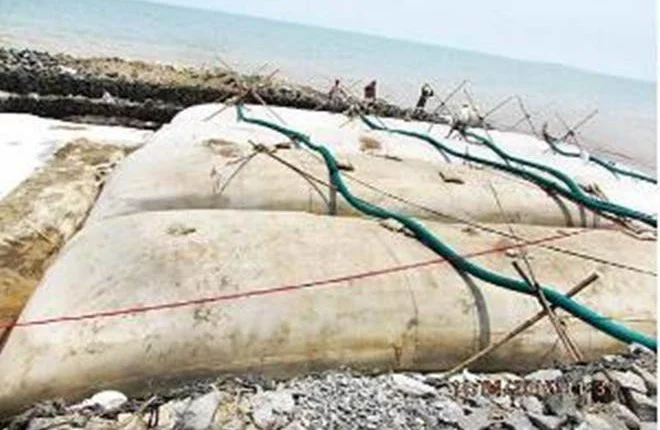
    Odisha Launches Rs 763 Crore Cyclone Resilient Saline Embankment Project for a Protective Shield

    The project is designed to withstand cyclonic storms of higher magnitude such as high wind speed and sea storm surges, mitigate floods by keeping flood waters within channel boundary, and protect public infrastructures and road communication from extreme storm during cyclone.

    The Odisha government has launched a Rs. 763.5 crore project to build 198.81 kilometre-long cyclone resilient saline embankments in four coastal districts of the state to protect agricultural land and habitation from tidal surge.

    The Water Resources Department has issued a notification on launching of the ‘Cyclone Resilient Saline Embankment Project’ to be implemented in the coastal districts of Balasore, Bhadrak, Kendrapara and Puri. A proposal in this regard had earlier received approval of the state cabinet in August, reports said on Monday.

    The state government has decided to fund the project from its own resources. Cyclone Fani in 2019, Amphan in 2020 and cyclone Yaas in 2021 have caused a substantial economic loss to the state as saline water entered into a large agricultural areas and villages.

    The project will be executed during the period from financial year 2022-23 to 2024-25 with an outlay of Rs 763.5 crore. The project seeks to raise and strengthen the saline embankments to sustain the impact of severe cyclones. The embankments will also protect the adjacent landmass and habitation from flood, saline ingress and tidal surge of Bay of Bengal in the four coastal districts, sources said.

    The project will benefit over 2.92 lakh people in 136 coastal villages of the four districts.

    Protecting habitations and farmland

    The project will also help to withstand cyclonic storms of higher magnitude such as high wind speed and sea storm surges, mitigate floods by keeping flood waters within channel boundary, and protect public infrastructures like school, hospital, anganwadi centre, utilities like electricity and road communication from extreme storm during cyclone.

    The proposed saline embankments would also protect nearby habitation, agricultural land from saline ingress. It will also help in early restoration of all forms of economic activities in the region after the cyclonic event.

    The state has made structural intervention in the form of saline embankments to the tune of 1,636 km in the coastal districts. However, the saline embankments of 156.17 km length have already been strengthened as per National Cyclone Risk Mitigation Project (NCRMP).

    Out of the remaining 1,479.83 km of saline embankments, a length of 416.01 km is vulnerable. Out of 416.01 km, 198.81 km is weak and extremely vulnerable, the notification said.

    Now, the state government has planned for raising and strengthening of 36 saline embankments measuring total length of 198.81 km to cyclone resilient standard to sustain the impact of very severe cyclone with speeds up to 250 km/hour and to protect the adjacent landmass and habitation from floods, saline ingress and tidal surge of Bay of Bengal.

    According to sources, upon completion of the projects, about 21,690 hectares of agricultural land will be protected from flood and saline ingress and 2,92,500 people in 136 villages in the above districts will be benefitted.

    Due to raising and strengthening of embankments, road communication, scope for fishing and eco-tourism will be improved, the sources added.


    This piece has been sourced from Odisha Bytes.

    Image: Courtesy Telegraphindia.com