More

    Are Philippines, Pakistan Set to Follow Sri Lankan Path to Economic Woes?

    Activists say that the Sri Lanka economic crisis is a cautionary tale for other countries of the global South, arguing for debt cancellation for people’s survival, not more loans and austerity as well as for a stop to strong-arm tactics to quell protests.

    By Mae Buenaventura

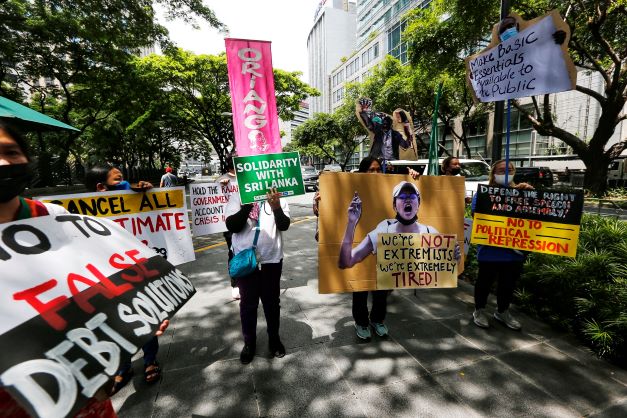
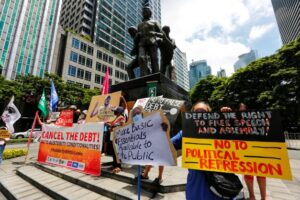
    Activists gathered on the streets of Philippines, Pakistan, Nepal and Indonesia on Wednesday to express solidarity with the people of debt-burdened Sri Lanka as they continue to suffer from acute fuel and food shortages. They warned that the Philippines and other Asian countries also risk a similar crisis. Simultaneous actions were also held in Sri Lanka.

    “We stand by the Sri Lankan people in the exercise of their rights to free speech and assembly. Teargas, water cannons, arrests, increased military surveillance and questioning of civil society leaders in response to people’s opposition have no place in a state that claims to be a democracy,” said Lidy Nacpil, coordinator of the Asian Peoples’ Movement on Debt and Development (APMDD) as she stressed the appeal for international support in the face of the Sri Lankan people’s worsening plight and denouncing the strong-arm responses of the Sri Lankan government to protests.

    “Sri Lanka is a cautionary tale for the Philippines,” said Nacpil, “Through this action, we highlight the many years of debt dependence, faithful compliance with lenders’ conditionalities, corruption and mismanagement which eventually brought Sri Lanka to the point of debt default. We are dangerously on the same path as public debt and debt service payments mount.”

    As of end-July, the Philippines’ debt stood at a historic PhP12.89 trillion, which includes recently incurred debts of PhP96.1 billion in the first month of the Marcos presidency, APMDD said. Total debt service in 2022 amounted to PhP1.35 trillion or 26.8 per cent of the total budget of PhP5.024 trillion. Next year, debt service is projected to rise to 29.8 per cent of the proposed budget, or PhP1.6 trillion, “’the highest yearly debt servicing on record,’” according to analysts.

    Sri Lanka’s borrowings went heavily into large scale infrastructure projects which have gone bust under the pandemic. Its debt-to-GDP ratio rose from 42 per cent in 2019 to 104 per cent in 2021. Up to $8.6 billion in debt payments fall due this year, but the country has less than $1.94 billion in its reserves.

    Debt IMF GDP Sri Lanka Philippines Pakistan
    Filipino activists hold a protest in Makati City on September 7, 2022 to express solidarity with the people of debt-burdened Sri Lanka as they continue to suffer from acute fuel and food shortages. Photo by Jimmy A. Domingo
    International solidarity

    Now in bailout negotiations with the International Monetary Fund, Sri Lanka faces austerity conditionalities typically attached to IMF lending programs. These include privatization of social services, cuts in public spending and regressive taxes such as Value Added Tax. Fiscal belt-tightening remains embedded in IMF debt restructuring despite experience showing that it heavily impacts the poor and marginalized, and further deepens inequality.

    Nacpil further highlighted the heavy impacts borne by Sri Lankan women. “One in four households in Sri Lanka is headed by women, of which half are widows, and face persistent difficulties of juggling family responsibilities with paid and informal, precarious work, discriminatory attitudes toward women, limited access to finances, and inadequate social protection, among others.” The toll on women and Sri Lankan working people will even be more severe.

    “Sri Lanka, the Philippines, Pakistan and many other global South countries share common problems that go beyond borders. And we are made to follow rules in policy-making arenas where we are not at the table. This has to stop,” Nacpil stated. “International solidarity enables us to be heard and amplify the issues and demands that would otherwise simply be ignored.”


    Image: By Jimmy A. Domingo

    The Right Policies Can Protect the Workers of Asia and the Pacific

    Our workers are generally ill-equipped to unlock new opportunities, fulfill life aspirations for themselves and their families but also to face ongoing challenges emanating from megatrends of climate change, ageing societies and digitalization.

    By Armida Salsiah Alisjahbana

    Most of the 2.1 billion strong workforce in Asia and the Pacific are denied access to decent jobs, health care and social protection but there is an array polices and tools that governments can use to remedy these deficiencies and ensure that the rights and aspirations of these workers and their families are upheld and that they remain the engine of economic growth for the region.

    A new report released on Tuesday, the Social Outlook for Asia and the Pacific: The Workforce We Need, offers tangible solutions to immediately address alarming trends that both preceded the new coronavirus and were exacerbated by the pandemic.

    While 243 million new people were pushed into poverty during the COVID-19 pandemic, half of all people in our region already had been surviving without cash, a third without necessary medicine or treatment and a quarter had gone without enough food to eat. This can lower productivity, which has fallen below the global average, but also tax revenues and future economic output.

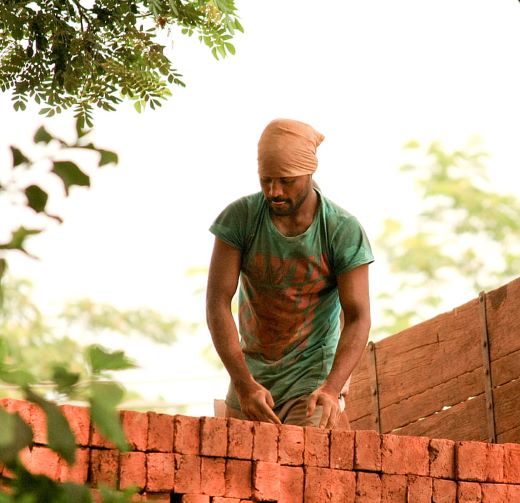
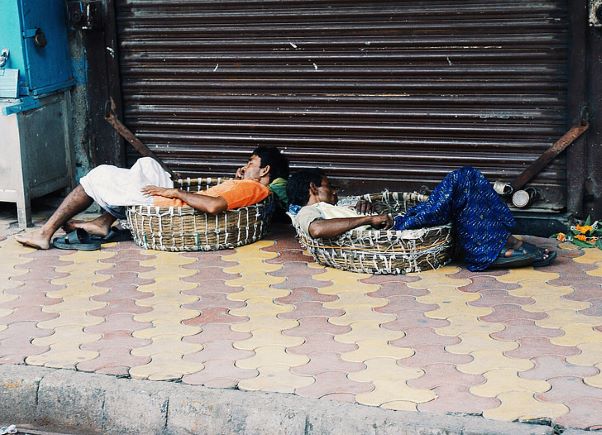
    With two-thirds of all workers in the region being employed informally, often with low wages, in hazardous working conditions and without a contract, half of our workforce are at the brink of poverty. People in our region are also at a higher risk of being pushed into poverty by health spending than anywhere else in the world, causing inequalities to further widen. With more than half of all people being excluded from social protection, pandemics, disasters economic downturns, or normal life events, such as falling ill, becoming pregnant or getting old often have detrimental impacts on households’ wellbeing and life prospects.

    Extend social health protection

    The reality is harsh: our workers are generally ill-equipped to unlock new opportunities, fulfill life aspirations for themselves and their families but also to face ongoing challenges emanating from megatrends of climate change, ageing societies and digitalization.

    Climate-induced natural disasters cause businesses to relocate and jobs to disappear, disproportionately affecting rural communities. Digital technologies are bringing disruptive change to the world of work and the digital gap is intensifying inequalities in opportunities, income and wealth. Population ageing means that the number of older people will double by 2050, making policies to support active and healthy ageing ever more urgent.

    None of these vulnerabilities are inevitable. With the right policies, our region’s workforce can become more productive, healthier and protected.

    First, active labour market policies, through life-long learning and skill development, can support a green and just transition into decent employment and improve access to basic opportunities and adequate standards of living. Harnessing synergies between active labour market policies and social protection can help workers upgrade their skills and transition into decent employment while smoothing consumption and avoiding negative coping strategies during spells of unemployment or other shocks.

    Second, extending social health protection to all can significantly improve workers’ health, income security and productivity. COVID-19 demonstrated the weakness of a status quo in which 60 per cent of our workers finance their own health care and receive no sickness benefits. A focus on primary health care as well as curative health protection is needed, also to support healthy and active ageing. People who are chronically ill or live with a disability must be included in health care strategies. Given the large informal economy across the region, extending social health protection is the key policy instrument for achieving universal health coverage in our region.

    Social protection schemes

    Third, building on the ESCAP Social Protection Simulator, a basic package of universal child, old age and disability social protection schemes, set at global average benefit levels, would slash poverty in our region by half. Our analysis also shows that social protection helps increase access to opportunities particularly for furthest behind groups. This income security would improve the workforce’s resilience. Extending social protection to all means increasing public spending by between 2 and 6 per cent of GDP, an investment well-worth its cost. The Action Plan to Strengthen Regional Cooperation on Social Protection in Asia and the Pacific can guide action towards broadening social protection coverage.

    With this information at hand, there is a long overdue need for action. The policy recommendations set out in the Social Outlook are a priority for most countries in the region. These require bold but necessary reforms. For most countries these reforms are affordable but may require a reprioritization of existing expenditures and tax, supported by tax reform. Decent employment for all and an expansion of social protection and health care should form the foundations of a strong social contract between the State and its citizens. One where mutual roles and responsibilities are clear and where our workforce is given the security to fulfil their potential and be the force for achieving the 2030 Agenda on Sustainable Development in Asia and the Pacific.


    Armida Salsiah Alisjahbana is an Under-Secretary-General of the United Nations and Executive Secretary of the Economic and Social Commission for Asia and the Pacific (ESCAP)

    This piece has been sourced from Inter Press Service

    Image: Hippopx, licensed to use under Creative Commons Zero – CC0

    Social Contract Needed to Lift Asia-Pacific Workforce Out of Poverty: UNESCAP

    Denied decent work opportunities and highly vulnerable to systemic shocks such as pandemics or economic downturns, workers in Asia and the Pacific are under pressure, according to a report launched on Tuesday by the UN Economic and Social Commission for Asia and the Pacific (ESCAP).

    “Our region spends less than half of the global average on social protection,” said ESCAP Executive Secretary Armida Salsiah Alisjahbana.

    “Almost 60 per cent of the population has no social protection coverage against normal life events such as pregnancy, child-raising, sickness, disability, unemployment or simply getting old”.

    The 2022 Social Outlook for Asia and the Pacific: The Workforce We Need was released at the seventh session of the UN Committee on Social Development, which is meeting to discuss regional strategies for building a healthy, protected and productive workforce.

    Vulnerable workforce

    The region’s workforce remains ill-equipped to respond to the ongoing and emerging mega trends of climate change, aging societies and digitalization.

    Two-thirds of the workforce, or 1.4 billion people, are employed informally and as a result, half are surviving on less than $5.50 a day.

    Far-reaching consequences have already resulted in Asia and the Pacific’s labour productivity to fall below the global average as sustainable livelihoods remain out of reach for millions, according to the ESCAP report.

    Moreover, during the COVID-19 pandemic, the lack of affordable health care and social protection contributed to pushing 243 million people into poverty.

    Solving problems

    Over the next three days, the bi-annual Committee will also review policies and good practices to further strengthen social protection, the situation of older persons, and disability-inclusive development in the region.

    “The pandemic has made it clear that no one is safe unless everyone is safe. Solving socio-economic problems entails working together, sharing responsibilities and distributing costs and burdens fairly and equitably,” said Committee Chair Ariunzaya Ayush, who also serves as Senior Advisor and Chief of Staff to the Prime Minister of Mongolia.

    “We stand ready to work with other member States and stakeholders to bridge the remaining gaps in order to better protect and empower the vulnerable so that they could enjoy a safe and dignified life in the society,” said Chuti Krairiksh, Minister of Social Development and Human Security of Thailand.


    Image: Hippopx, licensed to use under Creative Commons Zero – CC0.


    Rice Dwarfing Virus Threatens Indian Yields

    Southern Rice Black-Streaked Dwarf Virus, which was first discovered in China, has been detected in North India’s main rice-producing states and officials fear that up to seven per cent of the crop could be lost. The virus is affecting India’s famed, aromatic basmati rice.

    By Jitendra Choubey

    A plant virus disease first identified in China has been detected in north Indian paddy fields causing fears of reduced crop yields at a time when extreme weather events have already hampered grain production.

    Rice plants infected with the Southern Rice Black-Streaked Dwarf Virus (SRBSDV) exhibit dwarfism, stiffness, and darkening of leaves.

    The virus — transmitted by the white-backed planthopper (Sogatella furcifera) when it sucks on the sap of young plants — interferes with root development and plant growth.

    Detected in Guangdong Province in 2001, the disease was confined to China for the next few years before spreading to other countries such as Vietnam and Japan. A research paper shows that it can cause a 30 to 50 per cent reduction in rice yields.

    The Indian government fears that the outbreak might add to losses caused by erratic southwest monsoon rainfalls. The area under paddy cultivation has been six per cent lower this August compared to the same period last year. Rice accounts for 40 per cent of India’s total food grain basket.

    “Laboratory analysis showed the presence of virus in both the infected young plants and the body of the vector after the RNA was isolated,” Rajbir Singh, director, Agricultural Technology Application Research Institute, Ludhiana, Punjab told SciDev.Net.

    However, the virus was not found in the infected plant’s seeds and grains, said Singh, who heads an eight-member committee of experts formed 22 August by the Ministry of Agriculture and Farmers’ Welfare to assess the extent and severity of the disease. The team visited the 24 fields located in the three worst affected states of Punjab, Haryana and Uttarakhand.

    India rice paddy crop disease

    Waterlogged conditions

    Punjab has 2.7 million hectares under paddy, Haryana has more than 1.5 million hectares and Uttarakhand has around 2.8 million hectares. Punjab and Haryana alone contribute around 16 per cent of India’s total rice production.

    Collected samples sequenced in the laboratory showed the virus’s association with stunting symptoms. The team found that between two and ten per cent of rice plants were affected although in some fields the rate of infection was as high as 50 per cent.

    The team observed that most infected plants were those grown in waterlogged conditions where hybrid seed crops were planted early. “The incidence was mostly reported from crops planted in June while crops planted in July didn’t show signs of infection,” said Singh. “We also observed that the disease mostly affected hybrid seed crops.”

    Farmers have been advised not to flood their paddies with water and to monitor the plants for the presence of the vector on a weekly basis. They have also been asked to remove weeds and avoid the indiscriminate use of pesticides and fertilisers.

    When large numbers of the insect pests are spotted, pesticides such as triflumezopyrim, dinotefuran or pymetrozine may be sprayed at the base of affected rice stalks, officials say.

    Loss is certain

    The virus was found to be affecting both basmati (aromatic) and non-basmati varieties of rice. Investigations are underway to discover how the virus arrived in India and how it works against rice plants.

    “Currently, we assume that the vector is ‘long-range migratory’ in nature, which would probably come through human routes,” said Gopala Krishanan, principal scientist at the Indian Agriculture Research Institute, India’s premier agriculture research institution. “We are trying to decode the whole mechanism of the spread of the virus.”

    While it is known that infected paddy plants die, hitting crop production, neither officials nor scientists are ready to estimate the extent of possible loss.

    “Loss is certain, but we have no figures yet — it is still under monitoring and assessment,” said a scientist and member of the investigating committee, asking not to be named.

    Rice traders, however, expect that the virus could substantially cut crop production in Punjab and Haryana, often called the rice granaries of India. “Our assessment shows that the production of rice can be reduced by as much as seven per cent,” said Ashok Kumar Gupta, vice-president of Haryana Rice Millers Association.


    This piece has been sourced from SciDev.Net

    Image: Hippopx, licensed to use under Creative Commons Zero – CC0

    Eight International Development Priorities for the New UK Prime Minister

    While the FCDO’s long-awaited International Development Strategy was published in May, the vision it set out broadly failed to meet the scale of the global challenges Britain faces. These are the eight international development priorities the new PM should be addressing.

    By Melissa Leach

    The UK’s new Prime Minister (and former Foreign Secretary), Liz Truss, enters Downing Street with a full and urgent in-tray, dominated by the highest inflation rate for 40 years and concerns across the country about the cost-of-living crisis.

    Whilst urgent domestic policy is required, these national issues are symptomatic of a broader set of global crises, including the ongoing impacts of the COVID-19 pandemic and the war in Ukraine.

    Therefore, the Prime Minister also has an urgent foreign policy agenda to address, within which international development has a vital role to play.

    The FCDO’s long-awaited International Development Strategy was published in May, but the vision it set out broadly failed to meet the scale of the global challenges we face. These are the eight international development priorities we believe the new PM should be addressing:

    Climate justice

    Climate and environmental change are creating pervasive threats to the UK and all other countries, highlighted most recently by the UK’s record-breaking summer temperatures and the devastating floods in Pakistan. Ahead of the COP27 climate summit, where the UK hands over the COP Presidency to Egypt, the new PM should take the opportunity to show global leadership in the pursuit of climate and environmental justice.

    This means prioritising support for those most disadvantaged and already experiencing the worst impacts and ensuring that their voices and knowledge count in decision making. It also means investing in effective mitigation and adaptation initiatives, which are purposefully connected to interconnected issues, such as access to water, food, healthcare, gender justice, education and land rights.

    Health security

    The UK’s expertise and investment in tackling epidemics has been world leading. The production and roll-out of technologies such as COVID-19 vaccines, and in health systems strengthening and universal health coverage (UHC), are valued by low-income countries and have been a critical part of the UK’s soft power.

    As the COVID-19 pandemic proved how globally interconnected our health is, investment in future pandemic preparedness, that embraces institutional, knowledge and system questions (not just pharmaceutical interventions), and is guided by inclusive, localised and context-specific evidence, is critical for the UK, as well as globally.

    Multilateral Cooperation and the SDGs

    Universal challenges such as climate change and global health require co-ordinated international responses, which link local and national action with global level commitments and solidarities. Multilateral agencies such as the UN are best placed to lead these. Whilst there is room for reform, it’s short-sighted for the FCDO to have cut support for multilateral agencies without a clear assessment of the impact this will have.

    IDS research shows that today’s crises – conflict in Ukraine and Ethiopia, climate change induced floods and heatwaves, pandemics, and rising inequalities – are all interconnected and require a rounded response, not a strategy that handpicks a few priorities in isolation. The UN’s Sustainable Development Goals (SDGs) provide the framework for addressing development challenges as a whole and should be at the core of the Government’s strategic planning.

    Food equity

    Whilst exacerbated by the conflict in Ukraine, rising global food insecurity is the result of a vastly unequal global food system, where power is held by vested interests and low crop yields are aggravated by drought or flood, conflict, and economic instability.

    In the short-term, the UK needs to help stabilise global food supplies, but longer-term reforms are also needed, such as supporting more regenerative methods of food production and agro-ecological approaches that enhance agricultural biodiversity and resilience.

    By investing in ‘bottom up’ research working with smallholder farmers and pastoralists in low-income countries, the FCDO can help identify what works best where, preventing the ‘one-size-fits-all’ technological solutions that often cause more problems than they solve.

    China

    Development has a great role to play in support of UK diplomacy. For the UK-China relationship where official channels of communications and diplomacy may deteriorate, strong relationships fostered by development and knowledge exchanges provide alternative channels for constructive dialogue.

    There is particular potential around issues such as the vast Belt and Road Initiative, climate change, global health and the SDGs. Liz Truss is reported to be planning to take a more robust stance on the UK’s approach to China but we believe constructive dialogue with China around approaches to development co-operation should continue.

    Transparency

    In July, the department was downgraded in the Aid Transparency Index and the FCDO has been repeatedly criticised for its poor record on transparency since the DFID/FCO merger, including from the cross-party International Development Committee, Bond, the UK network of International Development NGOs and from the National Audit Office.

    At a minimum the FCDO must be transparent about forward-looking budgeting and provide public data on planned ODA spending. To ‘stand up for freedom around the world’ as set out in the International Development Strategy, the FCDO must lead by example and have a clear framework for transparency, monitoring and evaluation, by which it can be held accountable.

    Restoring 0.7

    Reducing the UK’s ODA budget from 0.7 per cent of GNI to 0.5 per cent in 2021 resulted in a real terms reduction of £4.6bn. This dramatically reduced the UK’s ability to deliver the high-quality aid and interdisciplinary research essential to improving the lives of people around the world. It also dismantled international science partnerships and damaged the UK’s global reputation.

    Other countries such as the US, Japan, Canada and Australia increased international aid budgets in light of COVID-19 and other global crises, yet the UK Government downgraded its contribution.

    Re-instating the Conservative manifesto commitment to 0.7, along with appointing an International Development Minister at FCDO would demonstrate to the rest of the world the UK’s commitment to international development, and tackling the challenges that affect us all – poverty and inequalities, disease and climate change.

    Investing in international research

    There is a vital role that the knowledge generated from UK-led international development research can play, with a threefold benefit to the UK as well as to global communities – contributing to the Government’s goal for the UK to be a science superpower, benefiting the UK directly through lessons learnt and new discoveries that can apply to challenges at home, and finding effective and value for money support for lower and middle-income countries.

    Whilst we welcomed the commitment to evidence and expertise in the International Development Strategy, this should go further. It is important to ensure that social science contributions are valued as much as technical science ‘solutions’. It is important to champion the importance of working with and from the perspectives of people living in poverty and marginalisation, and not overlooking the capabilities of low-income countries in generating knowledge for vital transformations.

    The commitments to UK science must be complemented by investing in the equitable, interdisciplinary and international research partnerships needed to find contextual solutions that will benefit marginalised people around the world, and in many cases, here in the UK as well.

    In conclusion, through UK-led international development, the new Prime Minister has the opportunity to help tackle the significant crises we all face. As new disasters around the world unfold with increasing frequency and severity, we are constantly reminded that the cost of delay or denial is far too high.

    Melissa Leach is Director, Institute of Development Studies, UK.

    This piece has been sourced from Inter Press Service.

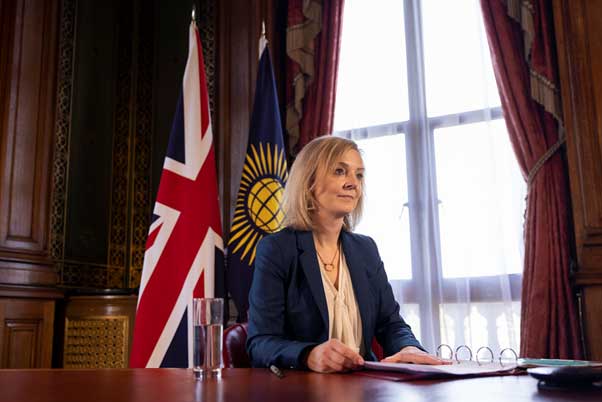
    Image: Simon Dawson / No 10 Downing Street / Flickr (CC BY-NC-ND 2.0)

     

    Committee Formed to Draft National Cooperation Policy

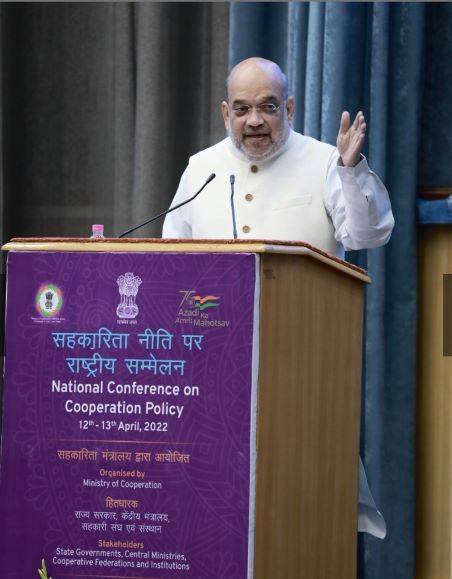
    Union home and cooperation minister Amit Shah today said that the document will provide an enabling framework in line with co-operative principles to realise the Prime Minister’s vision of ‘Sahakar se Samriddhi’, strengthening cooperative movement in the country, and promoting cooperative-based economic development model.

    Union home and cooperation minister Amit Shah on Tuesday announced the constitution of a national level committee for drafting of the national cooperation policy document. The new national cooperative policy is being formulated to realize Prime Minister Modi’s vision of ‘Sahakar Se Samriddhi’.

    The national level committee under the chairmanship of former union cabinet minister Suresh Prabhu, consists of 47 members from across the country. The committee comprises experts of the cooperative sector; representatives of national, state and district primary cooperative societies and government officials.

    The existing national policy on cooperatives was formulated in 2002. The idea was that cooperatives work as autonomous, self-reliant and democratically managed institutions accountable to their members while making significant contributions to the national economy. India has around 8.5 lakh co-operative societies with a member base of around 29 crores, spread across the length and breadth of the country. These co-operatives are engaged in varied activities like agro-processing, dairying, fisheries, housing, weaving, credit, marketing, to name a few.

    The new national cooperation policy document is being formulated with a view to fulfilling the mandate given to the new ministry of cooperation strengthen the cooperative movement in the country and deepen its reach to the grassroots.

    It will also promote a cooperative-based economic development model, creating the legal and institutional framework to help cooperatives realise their potential.

    NITI Aayog, BMZ start Dialogue on Development Cooperation

    German Federal Minister Schulze announced an additional funding of EUR 3.5 million in support of a green and sustainable development partnership, specifically for strengthening of implementation of SDGs and climate action at the level at the state level.

    NITI Aayog and the German federal ministry for economic cooperation and development (BMZ) told held the inaugural NITI-BMZ Dialogue on development cooperation to lay down a pathway to strengthen mutual cooperation between the two countries, particularly to reconcile the imperatives of dealing with climate change with the goals of Agenda 2030.

    The dialogue focused on five core areas of cooperation – sustainable development goals (SDGs), climate action, energy transition, emerging technologies and agro-ecology. Both sides deliberated ongoing engagements and identified potential cooperation in areas that can produce tangible outputs and learnings for India and Germany.

    NITI Aayog Vice Chairman Suman Bery drew attention to the Prime Minister Modi’s focus on individual responsibility for sustainable behaviour, embodied in his Lifestyle for Environment (LiFE) initiative.

    German Federal Minister Schulze today announced an additional funding of EUR 3.5 million to support a green and sustainable development partnership, specifically for strengthening of implementation of SDGs and climate action in the states.

    Federal Minister Svenja Schulze said, “India is a global partner for Germany, the EU and the G7. We are very serious about a real long-term cooperation with India to achieve the Paris Climate Goals, the SDGs and in particular a just energy transition in India.”

    G20 Presidency

    Hanging dense in the air as the virtual dialogue went on was India’s forthcoming G20 presidency.

    “An important basis for the long-term GSDP is to discuss and agree on transformational concepts and policies, be it in the energy transition, sustainable mobility, climate resilience or the agro-ecological transformation,” Schulze said. “We are very much looking forward to the Indian G20 Presidency in 2023 and are ready to support India for a strong agenda on climate action and sustainable development.”

    NITI Aayog Vice Chairman Suman Bery said, “Germany is one of India’s most important partners. Indo-German partnership is as an example of success in a complex world. NITI-BMZ Dialogue in Development Cooperation will help our two nations realise our potential in embedding climate action in the SDGs, energy, emerging technologies and agro-ecology”.

    NITI and BMZ reiterated their commitment on collaborating towards strengthening SDG localization at the city level and scaling-up SDG implementation in the context of climate change at the state level with capacity building and incentive systems for implementation.

    Both sides highlighted the need to deepen engagement on the Lighthouse Cooperation on Agroecology and Natural Resources and to collaborate on scaling up natural farming in India, strengthening research in different agro-climatic regions for natural farming practices, working towards standards and certification of natural farming products for facilitating export and evaluating impact of natural farming for mitigating climate change and adapting to climate risks.

    India and Germany signed a Joint Declaration of Intent on Partnership for Green and Sustainable Development (GSDP) on 2 May 2022. India and the G7 had also agreed to work towards a Just Energy Transition Partnership (JETP) during the last G7 summit in Schloss Elmau in June 2022.

    PM-SHRI Yojana for Development and Upgradation of Schools Announced

    More than 14,500 schools across the country will be developed as PM-SHRI Schools, the Prime Minister announced on the occasion of teachers’ day on Monday. 

    Prime Minister Modi on Monday announced the launching of the PM-SRHI yojna, a new centrally sponsored scheme for upgradation and development of more than 14,500 schools across the country by strengthening the selected existing schools from amongst schools managed by central government or state or union territory administration or local governance bodies.

    PM SHRI schools will showcase all components of the national education policy 2020 and act as exemplar schools and also offer mentorship to other schools in their vicinity. The aim of these schools will not only be qualitative teaching, learning and cognitive development, but also creating holistic and well-rounded individuals equipped with key twenty-first century skills.

    Pedagogy methods adopted in these schools will be more experiential, holistic, integrated, play/toy-based (particularly, in the foundational years) inquiry-driven, discovery-oriented, learner-centred, discussion-based, flexible and enjoyable, says the press release issued by the PIB. Focus will be on achieving proficiency in learning outcomes of every child in every grade.

    Assessment at all levels will be based on conceptual understanding and application of knowledge to real life situations and will be competency-based.

    Modern infrastructure

    The PM-SHRI schools will be equipped with modern infrastructure including labs, smart classrooms, libraries, sports equipment, art room etc. which is inclusive and accessible. These schools shall also be developed as green schools with water conservation, waste recycling, energy-efficient infrastructure and integration of organic lifestyle in curriculum.

    They will provide leadership in their respective regions in providing high-quality education in an equitable, inclusive and joyful school environment that takes care of the diverse background, multilingual needs, and different academic abilities of children and makes them active participants in their own learning process as per the vision of new educational policy.

    On the occasion, Prime Minister Modi tweeted: “Today, on #TeachersDay I am glad to announce a new initiative – the development and upgradation of 14,500 schools across India under the Pradhan Mantri Schools For Rising India (PM-SHRI) Yojana. These will become model schools which will encapsulate the full spirit of NEP.”

    A further tweet read: “The PM-SHRI schools will have a modern, transformational and holistic method of imparting education. Emphasis will be on a discovery oriented, learning centric way of teaching. Focus will also be on modern infra including latest technology, smart classrooms, sports and more.”

    “The National Education Policy has transformed the education sector in the recent years. I am certain that the PM-SHRI schools will further benefit lakhs of students across India in the spirit of NEP.”


    Over 24 Million Affected by Exposure to Ionizing Occupational Radiation

    Over 500 experts from all over the world are to exchange information and experiences on strengthening the protection of workers from radiation.

    An international conference on Occupational Radiation Protection organised by the International Labour Organization and the International Atomic Energy Agency began in Geneva on Monday to review international standards and recommendations on occupational radiation protection. Experts at the conference will also review what progress has been made over the past 20 years on the subject of radiation-related occupational health hazards and will identify priority actions leading to an improved global occupational radiation protection system.

    While radiation exposure is commonly associated with those working in the nuclear field or dealing with radioactive sources, workers in other professions, such as miners, aircrew, researchers, and even healthcare professionals can also become seriously affected if adequate measures are not taken.

    Workers, communities and environment

    Experts are also concerned about accidents in nuclear power plants that can have catastrophic effects not only for the workers but also for communities and the environment. Experts opine that strict preventive and control measures therefore need to be in place.

    “It has been a constitutional objective of the ILO since its establishment in 1919 to protect the health of workers,” said Vic Van Vuuren, Deputy-Director General for Policy Officer in Charge. “Today, we are still a long way away from this objective. Work-related deaths and injuries including those caused by exposure to radiation take a particularly heavy toll, especially in developing countries, where national systems for occupational safety and health are not well established.”

    “This conference will serve as an excellent opportunity to exchange knowledge and experience and set the course for further concrete progress in enhancing the radiation protection of workers in all industries and countries and in making working environments safer and healthier, notably though building a global preventative culture.”

    1960 convention on radiation protection

    In June 1960, the International Labour Conference adopted the Radiation Protection Convention, 1960 (No. 115) , and its accompanying Recommendation (No. 114) . The Convention applies to all activities involving the exposure of workers to ionizing radiation in the course of their work and provides that each Member of the ILO which ratifies it shall give effect to its provisions by means of laws or regulations, codes of practice or other appropriate means.

    It is the only international legal instrument that addresses the protection of workers against radiation. The Convention has been ratified by 50 countries .


    Image: J.R. Donovan /  IAEA

    Century’s First “Triple-Dip” La Niña Likely Say Meteorologists

    All naturally occurring climate events now take place in the context of human-induced climate change, which is increasing global temperatures, exacerbating extreme weather and climate, and impacting seasonal rainfall and temperature patterns.

    An update from the World Meteorological Organization late August says it is likely that the protracted La Niña event will last until at least the end of the year, becoming this century’s first “triple-dip“ La Niña, spanning three consecutive northern hemisphere winters (southern hemisphere summers).

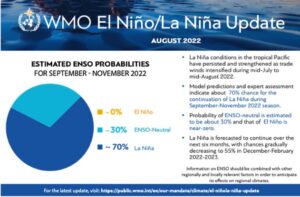
    The WMO El Niño/La Niña Update predicts the continuation of the current La Niña over the next six months, with a 70 per cent chance in September-November 2022 but gradually decreasing to 55 per cent in December-February 2022/2023.  It started in September 2020.

    La Niña conditions in the tropical Pacific have strengthened as trade winds intensified during mid-July to mid-August 2022, affecting temperature and precipitation patterns and exacerbating drought and flooding in different parts of the world.

    La Niña refers to the large-scale cooling of the ocean surface temperatures in the central and eastern equatorial Pacific Ocean, coupled with changes in the tropical atmospheric circulation, namely winds, pressure and rainfall. It usually has the opposite impacts on weather and climate as El Niño, which is the warm phase of the so-called El Niño Southern Oscillation (ENSO).

    Drought; above average rain

    However, all naturally occurring climate events now take place in the context of human-induced climate change, which is increasing global temperatures, exacerbating extreme weather and climate, and impacting seasonal rainfall and temperature patterns.

    “It is exceptional to have three consecutive years with a la Niña event. Its cooling influence is temporarily slowing the rise in global temperatures – but it will not halt or reverse the long-term warming trend,” said WMO Secretary-General Prof. Petteri Taalas.

    “The worsening drought in the Horn of Africa and southern South America bear the hallmarks of La Niña, as does the above average rainfall in South-East Asia and Australasia. The new La Niña Update unfortunately confirms regional climate projections that the devastating drought in the Horn of Africa will worsen and affect millions of people.”

    “WMO will continue to provide tailored information to the humanitarian sector and to support sensitive sectors like agriculture, food security, health and disaster risk reduction. WMO is also striving towards the goal that everyone should have access to early warning systems in the next five years to protect them against hazards related to our weather, climate and water,” said Prof. Taalas.

    World Meteorological Organisation El Niño; La Niña

    Global Seasonal Climate outlook

    El Niño and La Niña are major – but not the only – drivers of the Earth’s climate system.

    In addition to the long-established ENSO Update, WMO now also issues regular Global Seasonal Climate Updates (GSCU), which incorporate influences of all other major climate drivers such as the North Atlantic Oscillation, the Arctic Oscillation and the Indian Ocean Dipole.

    The ENSO and Global Seasonal Climate Updates are based on forecasts from WMO Global Producing Centres of Long-Range Forecasts and are available to support governments, the United Nations, decision-makers and stakeholders in climate sensitive sectors to mobilize preparations and protect lives and livelihoods.

    Despite the stubborn La Niña in the equatorial central and eastern Pacific, widespread warmer than-average sea-surface temperatures elsewhere are predicted to dominate the forecast of air temperatures for September to November. This will contribute to above normal temperatures over land areas, including much of the Northern Hemisphere.

    Precipitation predictions are similar to typical rainfall effects of La Niña, WMO says.


    Image: License to use Creative Commons Zero – CC0